by MarkLives (@marklives) Luca Gallarelli, group managing director of Ogilvy South Africa, has announced his resignation, 17 years after he first joined the ad agency. His last day in the office is today, Friday, 6 September 2019.
Comments Alistair Mokoena, Ogilvy CEO, “Luca has dedicated most of his working career to Ogilvy, and we will always be grateful for that. He’s part of the DNA here and we are sad to see him go. We will miss his love for creativity, his passion for people, his respect for team work and his commitment to client relationships. Luca is a great marketer and we have no doubt that he will be successful in his next adventure.”
Born in Port Elizabeth, Eastern Cape, Gallarelli completed a computer-science degree at Nelson Mandela University before shifting his focus to the world of advertising. He joined Ogilvy SA in 2002 as an account executive, straight from the AAA School of Advertising. Besides a two-year stint at The Jupiter Drawing Room (Cape Town), he has spent his entire working career at Ogilvy, where he eventually ran Ogilvy Cape Town as managing director for five years before being promoted to group MD in January 2018.
During his time at Ogilvy, he worked on local and international brands including SAB, Mondelēz, Investec, Audi, Volkswagen, Unilever, Coca-Cola, Gumtree, Investec and KFC. Under his leadership, Ogilvy CT achieved both commercial and creative success, including many years as South Africa’s no. 1 creative agency, several Loeries Grands Prix and a Cannes Grand Prix.
by MarkLives (@marklives) How are South African creative agencies faring in ensuring gender equity in the workplace? Are women enjoying the same opportunities and pay as their male colleagues — or are they still mired in gender bias, sexism and harassment? Without any real hard data available, Nino Naidoo of Duke is the next key female executive to give us her assessment of the state of adland.
Nino Naidoo
Nino Naidoo is a director and head of operations at Duke. For more than 20 years, she’s helped run, manage and organise some of the country’s biggest advertising and marketing institutions. She’s been doing it for so long that logistics and managing deadlines are a fundamental part of her. In Young Presidents’ Organisation (YPO), she has co-chaired an Education year and won a Best of the Best Award for a youth exchange programme which she ran at the end of 2017.
While there have been many notable changes in the 25 years since 1994, gender equality still falls somewhat behind race and culture. I have seen it play out in our industry, and am aware of many subtle and some not-so-subtle gender gaps, but I do believe there are ways in which we experienced industry women may assist others in traversing some of those issues.
Mentors
I’ve always been privileged to work alongside some exceptional female mentors who helped instill the right kind of business values, provided me with valuable advice, always had my back and, through their guidance and encouragement, gave me the confidence to stand up for myself. I do believe that having strong, female leaders who mentor others and lead by example is essential in creating a culture of equality. A collective voice can shout far louder than individual voices. All too often, women in business aren’t supportive of each other, choosing instead to compete with each other. This divisiveness doesn’t help our case in fighting for gender equality; it simply serves to bolster pre-existent prejudices.
The culture of an agency or business generally stems from the top. So, if you’re talking about a white boys’ club, it usually originates right from the highest level and you have a pretty good idea what that work environment will be like. Do your homework — find out what the culture of an agency is like before you opt to work there. What are the CEO and MD like? Are there any female leaders? Ask other women what their experience has been like. Is there anyone there whom you admire and look up to? We haven’t eradicated the gender beast — perhaps we never will — but we can choose to work in environments that foster the values and culture that best serve our needs.
And by no means whatsoever are we saying it’s okay for those environments to exist; it just means we don’t want to subject ourselves to spending our time there. Those dinosaur agencies will die a slow death on their own. Look for those fundamentally transformed agencies that walk the talk, that empower women and support them in ways that matter. If you can’t find one, no one says you can’t also get out there and create one, too.
Overcoming “motherhood penalties”
I don’t know that we will ever completely manage to overcome the “motherhood penalties”; it remains difficult to retain female talent because women remain the primary caregivers when it comes to raising families, regardless of how progressive our male counterparts are and are becoming. There’s certainly room for better childcare assistance, flexitime and less judgment for the women who work and parent and still manage to get the job done in amid an extremely strenuous juggle. What I do know is that an unfailing work ethic, committing to the absolute highest standards and always delivering the best possible work help to set the standards for how others treat you.
Also, if you’re the best in your field delivering incredible work, regardless of your gender, that agency is going to do whatever it takes to keep you there. Women very often underplay their worth — don’t be afraid to ask for what you believe you deserve. Men certainly aren’t.
As a female in senior management in our industry, you’re aware that you’re the exception; there are never as many women around the boardroom table as men. You become impervious to the relationship-building events that exclude women: the rounds of golf, the rugby and soccer matches at luxury suites.
Our most-important role
While we do need to address the gender bias, many women are afraid to speak up, preferring to protect relationships within the industry. But, while we look for ways to redress the imbalance, our most-important role is to show up despite the circumstances, produce incredible work, set a powerful example for those young women who look up to us and over-deliver on our promises.
Launched in 2016, “The Big Q” is a regular column on MarkLives in which we ask key advertising and marketing industry execs for their thoughts on relevant issues facing the industry. If you’d like to be part of our pool of panellists, please contact editor Herman Manson via email (2mark at marklives dot com) or Twitter (@marklives). Suggestions for questions are also welcomed.
The Broadcast Research Council of South Africa (BRCSA) is a non-profit, industry body that was incorporated in 2015 to cater to the audience research needs of the radio and television industry in South Africa. In 2016, it changed its policy about giving away TAMS and now only monthly reports, highlighting the top 20 or 30 primetime shows on several popular channels, are available.
by Johanna McDowell (@jomcdowell) Three senior marketers from RCL Foods, Diageo* and Absa attended our session last month, acting as our panel to discuss ideal agency models and best practice with more than 30 agencies — an issue that agencies globally are grappling with, particularly in this era of low growth and pressure on margins. The marketers were keen to engage with agency leaders on this, many of whom were in the room as they, too, are looking for innovation in this particular area.
Key points
These are some of the key points that came up:
1. What is a partnership? Agencies talk about wanting to be considered as partners for their clients. For a marketer, what does this mean?
For an agency to be considered as a partner, it needs to be the external expert. What a marketer wants is for the agency to understand the marketer’s business, as well as to really know its own agency’s capabilities. Marketers don’t want agencies to stretch their capabilities so that they can provide everything that a marketer desires — they want agencies to be experts in their particular areas and not “jack of all trades, master of none”.
2. Can a multi-agency scenario work? If there are several agencies in a marketer’s ecosystem, how can this work well?
There must be good contracts, say the marketers, and these contracts must clearly spell out what the agency workstreams are for each discipline. The marketers also want to know that the agencies will collaborate well, and be willing to do so with those clear guidelines and transparency.
3. Remuneration
Retainer vs projects, sustainability and cost-management. Always the hottest of topics, there was a great deal of discussion in this particular section of the masterclass. Agencies commented that clients are asking for more and more, and yet do not seem to want to pay more. The marketers were surprised at some of the comments as it seems that the agencies are not prepared to speak up with their clients and find ways to ensure that there’s enough payment and enough budget and that expectations are properly managed by both parties.
The importance of a thorough brief came up time and time again.
4. ZBB and its emergence in the past three years
Zero-based budgeting (ZBB) has meant that, every year, a marketer starts from zero and builds up the business case for the marketing budget. The days of a standard, year-on-year increase, are over. This means that results measurements and tangible results are more and more important to include in any proposals and implementation.
5. ‘In-housing’ services vs agency
The marketers understood that there’s a need and requirement for certain things to be done in house; both RCL Foods and Absa have in-house studios which take care of non-strategic matters, such as packaging changes where legal wording might need to be adapted. These internal studios are not designed to replace agencies in any way but to rather speed up minor changes that might be needed, and save time and costs. It’s very important that agencies should partner with their clients’ internal studios.
6. The ideal agency model — how do we get there?
Marketers need agencies to help the marketing community raise its skills and become more mature
Among younger and less-experienced marketers, there isn’t much respect for agencies and the consensus was that this is probably due to lack of real knowledge and maturity
Agencies need to raise their sense of self-respect
Agencies are invited to recommend to the marketing community how things should be financially, instead of believing that they’re imprisoned in an outdated, resource-based model of financing
Only agencies can decide on the ideal model — marketers can’t do this for agencies
Agencies must demand written briefs, along with proper scope of work, from their clients
In summary, as marketers are being challenged by their own organisations to think about brands as their own businesses, marketers have a different approach to their agencies; therefore, agencies need to be able to proactively respond to this.
by Paulo Dias (@therealptp) It’s been a while since I explored innovations in audio and radio marketing and advertising, and this month the column takes us from Australia to London via the South African N3 highway.
Coles Radio
Retail radio is a vibrant and interesting space, with a number of our big retailers opting for their own in-store radio stations. The programming varies from curated music playlists to mimicking traditional radio formats but I doubt anyone locally has aspirations other than giving you something to hum along to while trying on jeans or buying bread and milk. Not so Australian supermarket behemoth, Coles.
Launched in 2014 as a traditional in-store station, it decided to extend Coles Radio as a DAB station. DAB stands for “digital audio broadcasting”, is widely available in Australia in most cars and homes, and doesn’t require an internet connection. The supermarket station is currently the no. 1 DAB station in the country, with over 250 000 listeners. Fans of the station liked the easy-listening format and playlist while shopping and so took it home with them, along with the specials of the week.
It’s a branded content experiment that has become part of normal Australian life.
How often have we been on that N3 stretch between Johannesburg and Durban, and wondered about the landmarks on the way? N3 Radio brings you true stories of the places you’re driving past and news about what is coming up on the route.
N3 Radio is app-based and allows you to listen to an audio stream of a handful of popular stations — or you can choose from your own playlist of music, podcasts or audio books. If you’ve activated your GPS, when you’re in range of a landmark, you get location-based audio stories on topics such as the Spookbrug, Heartbreak mountain and historical battlefields. You may also opt in for news about promotions along the N3 route or info on where to eat, stay or play; most helpfully, you may choose to receive live traffic updates, too. The location-based stories are world-class and voiced by Proverb, David O Sullivan and Ashley Hayden.
When great audio content and technology meet, we all win.
Radio 1’s Hide & Seek
Winning was the order of the day on one of London’s biggest breakfast shows. Greg James and Nick Grimshaw’s Giant Game of Hide and Seek returned to BBC Radio 1 in late July 2019. It’s just that, a giant game of hide and seek (those familiar with the popular Fugitive promotion should relate) but, this time, famous radio presenters are the ones who need to be found. The whole station is disrupted and parts of London sent into turmoil as normal programming can’t resume until they are found.
I love the one-day takeover nature of the stunt as you don’t lose momentum, which is crucial in our attention-poor society.
The best part is that listeners didn’t do it for cash — BBC doesn’t do prizes — but to be part of a new experience.
James is doing amazing things on radio right now; earlier this year he locked himself in an escape room with a secret code. Listeners had to help him figure out the six-digit code in order to be released. Thirty hours later, he was out and a new standard in radio promotions was set.
There’s life beyond the 30-second spot and these are just some of the ways we can find it.
Paulo Dias (@therealptp) is the head of creative integration at Ultimate Media. He works closely with the programming teams at leading radio stations to help implement commercial messaging into their existing formats. He contributes the regular column, “Dear Radio”, looking at the changing radio landscape in South Africa, to MarkLives.com
by Carey Finn (@carey_finn) Award-winning local director, Zwelethu Radebe (@ZwelethuRadebe), talks about his arresting short film for SAB, Vuka, and balancing creativity with the constraints of commercial messaging.
https://youtu.be/PdVyCZC5yog
Q5: Could you talk us through the concept — and construction — of Vuka? Zwelethu Radebe: Vuka, the original idea birthed by the creative agency Joe Public, looked at exploring the effect alcohol abuse has on adolescents, particularly how it impacts their behaviour. The film begins in an audition room where five boys are auditioning to play the role of Tebogo Sibonelo. The boys and the viewer are unaware that the casting scenes in which these boys star stem from the director’s real-life experience — he is Tebogo Sibonelo. This shocking revelation is what drives home the film’s message of not repeating the mistakes Tebogo has made as a result of being exposed to alcohol from a young age.
Q5: Vuka makes the viewer uncomfortable on a visceral level. How do you, as a director, create that feeling? ZR: As a director, I always try to find the human truth in the moment, or scene, and exploit it as best I can for audiences to be convinced that what they are watching is real. I love to make things feel real through cinema.
Q5: In sharing people’s stories, through commercials or other media, what would you say is most important for the creative team to keep in mind? ZR: I think the most-important thing for a creative team to realise is that everyone involved wants to make a beautiful film; no one wants to kill the dream or vision. I think communication and collaboration [are] pivotal in sharing stories through whatever medium of motion picture — TV commercial, film etc.
Q5: How do you balance creativity with the constraints of commercial messaging? ZR: I think it’s in the very nature of advertising to communicate a message. The importance lies in how it’s translated and communicated. There are creative ways of doing that… and not so creative ways. It’s a constant search until it resonates with the targeted market. This is something I try [to] solve in the treatment phase and, once I find it, communicate it to an agency and use it as a theme for the commercial.
Q5: Finally, what career goals are you hoping to check off the list, going into 2020?
ZR: A goal I’ve set for myself, regardless of time, is doing work I’m not necessarily known for, such as a CGI piece that complements and enhances a human truth in a narrative form or a narrative-based car commercial.
Carey Finn (@carey_finn) is a writer and editor with a decade and a half of industry experience, having covered everything from ethical sushi in Japan to the technicalities of roofing, agriculture, medical stuff and more. She’s also taught English and journalism, and dabbled in various other communications ventures along the way, including risk reporting. As a contributing writer to MarkLives.com, her new regular column “Q5” aims to hone in on strategic insights, analysis and data through punchy interviews with experts in media, marketing and design.
by Marguerite Coetzee. What South Africa’s education system can teach brands and organisations about preparing for the next industrial revolution.
Standing in the halls of the first floor of a private school in Cape Town, I peer out of a classroom window: a leafy suburb below, and an informal settlement in the distance. The contrast of a town of tin shimmering in the morning sun and the cold colonial, wooden-floored, high-ceilinged school feels jarring. I wonder, if the present education system were originally established to prepare the youth for a world of work, what does it mean then for a seemingly static industry in an ever-changing world? How are children in South Africa being prepared for the current and future work environment, with a largely unmoving education?
Take note
If we take education to be a process through which children are equipped with the skills necessary to operate in the world into which they are born, grow and contribute, we can see knowledge as the tools with which they do so. It’s said that the education system is in crisis. While this may sound bleak, it’s an opportunity to change; crises propel evolution forward. By definition, a crisis is when a system no longer functions as intended and so new thinking is required to create and implement relevant solutions. This includes reframing and reorganising existing policies and problems. Order keeps the system together, disorder allows for change, and being on the edge of chaos results in complex behaviour. Our challenge is to shift our knowledge in a way that keeps it relevant to our changing environment.
Lesson 1: Shift from adaptation to agility
Dr Lize Barclay, University of Stellenbosch senior lecturer in futures studies & systems thinking, describes the changing education landscape as being influenced by the shift from the fourth to the fifth industrial revolution, and that Africa is lagging behind. As a result, African youth largely lack the necessary skills to adapt and prepare for various future possibilities in the world of work. In a time when the world is grappling with dissonance, disorientation, polarisation and more, “Africa is potentially well-positioned to navigate these profoundly different futures”.
The question to ask then is: How is your business preparing the youth for the future of work, and equipping them with the skills to survive in your organisation?
“The revolution devours its children” —Jacques Mallet du Pan, journalist.
Lesson 2: Shift from resilience to antifragility
Ideally, an organisation — as a system — should be antifragile. Nassim Nicholas Taleb, in his book Antifragile, categorises systems into three categories: fragile, robust and antifragile. His interest lies in the latter — that which benefits from disorder, volatility, and turmoil; that which is also measurable, unlike something like risk. What makes antifragility particularly interesting is that it appears to be immune to ‘prediction errors’ and ‘black swan’ events. Resilience refers to a system’s ability to absorb disturbances, to reorganise when it is undergoing change, and to retain some structure, function, identity and feedbacks. Fragility then refers to that which is destroyed in a state of change or chaos. Whether systems are receptive, resilient or resistant to change, if a system is in need of transformation, it should act when defiance is low.
The question to ask then is: How does your organisation respond to change?
“She was not fragile like a flower; she was fragile like a bomb” —Unknown.
Lesson 3: Shift from strategy to systems thinking
To have a systems-thinking mindset is to see the world, frame problems, and design interventions in critical and practical ways. Systems thinker and sociologist, Leyla Acaroglu, identifies six core concepts that shape this mindset:
interconnectedness (shift from a linear to a circular mindset where everything is dependent on something else for survival)
synethsis (seeing the relationships between the parts and whole)
emergence (the outcome of interactions)
feedback loops (re-inforcing or balancing to create stability or instability, self-correction or exponential growth)
causality(the influence of one thing on another), and
systems mapping(identifying and mapping elements within a complex system to understand how they interact). “To define a system, it must be both dynamic (constantly changing) and evolving (having emergent properties). It must be connected to elements, actors, agencies, nodes, stocks or ‘parts,’ and have a boundary”.
The question to ask then is: How would you define your organisation, as a living system?
“Simplicity is complexity resolved” —Constantin Brâncuși, artist.
Marguerite Coetzee is an anthropologist, artist and futurist who provides research and insight services through Omniology. FieldNotes, the latest series in her regular column on MarkLives, captures experiences from the field, shares the cultural lessons learned, and advises on qualitative tools, methodologies and frameworks when exploring the world of the consumer.
by Siwe Thusi (@Siwe_Thusi) The last year has been fascinating. Starting around June 2018, I had begun to experience an increasingly strong and deep need for something new: a new environment, a new account to work on, and an insatiable need to be stretched. Just over a year later, I’ve taken the plunge. A year? Well, yes. My internal thinking, wrestled through so much to meet my catalytic external reality. And then there’s all the in-between… So, yes, a year.
Think back to your first jump to something new after your first advertising job. I imagine that moving around agencies becomes easier after that but nothing is quite “like your first time”. Oh yes, we have all heard the worn-out “nothing happens inside your comfort zone” but so many people think that things are constantly happening in their comfort zones. The truth about those little things happening over and over is that, in aggregate, they seem big but they aren’t different.
Different is currency. It is awe-inspiring and a sexy catalyst to the work we aspire to make. Sometimes your first agency is the springboard to different; it’s the springboard to truly coming into your own. A month ago, this dawned on me in a “champagne-in-my-hand-at-my-farewell” way. It was scary — not the leaving of my job but the unknown of a second chapter — the next agency… the new ad-venture.
The numbers of your worth
Accountant brain
Know your worth… If I had 1-metre1 from everyone who’d said that to me during my job search process, I’d have a seat a Jigga’s2 billionaire table. But how do you quantify your worth in advertising really? Is it the awards you’ve won for the agency? Is it a meeting not starting on time because of a client’s flustered “Where’s Siwe? Isn’t she in this meeting? I want Siwe here, please”? Is the ability to drop mics and bombs of value in meetings? Is it the irony of what you do outside of the agency that raises ‘your price’?
My CA(SA) qualification also adds a spanner to the quantifying works. 2019 would see me five years into my career practicing as a specialist. That would make me a senior FM or a CFO (yes, respect me) and, according to Payscale research, with an average annual salary of R1 111 400 — a monthly gross of R92 616 and a monthly take-home of about R56 000 (cry with me).
Does the fact that I chose passion over money count? If the talent teams in advertising are shifting towards looking for people outside of advertising and hiring “fluid thinking”… has the industry done its homework in how to really assess “worth”?
All of these have some influence, yes, but when those are removed, what’s left? The conviction and self-awareness of what you can and can’t do. Note: not delusions of grandeur either, let’s be clear.
I’ve noticed that the main driver for jumping ship in the industry is dissatisfaction with a salary. Because that’s how the ‘I’m looking to move’ economy works — where the next agency will always be a willing participant in the Ad-Talent-esque bidding wars. And when that new salary jump happens, it carries with it the responsibility of conviction that you had in interviews to be proven in real life. That’s what I had to be so conscious of: What can I do well and, when I emerge into “different”, what will I contribute to my new job and the industry at large?
Because it’s “different” that is celebrated on David Letterman’s new series “My Next Guest Needs No Introduction” on Netflix (this is not an ad).
Your “different” should scare you. Your “different” is what gets your asking salary considered outside of Ad Talent’s “In 2018, a senior strategic planner in Johannesburg is paid a CTC of between R47 000 to R60 000 per month.” Your “different” should hold you accountable to what you’d said in your interview. Your “different” should be the ammo you need to ask for the worth that you’re convinced about.
Realism
Strategist brain
This is the ‘real’ about looking for another job in advertising (in life, actually). We all have some idea of an exit plan, the strategy to leave. The exit plan is usually about bursts of excitement and the prospects of a new life, muffled by a silent calm demeanor during work hours. It feels sneaky because this nearly new life plays out in parallel to your normal. It plays out after hours, in pockets of time during lunchtime, at tea-times and on sick-leave days. Hopping from one agency to the next, being careful not to make your decision known just yet. Choosing between where you want to work, based on the shortest proximity to your house or the opportunity itself. It’s exhausting, but exciting.
The thing is, in the interest of the not burning-your-bridges school of thought, there still has to be a level of respect to your current reality, the job that has helped pay your mortgage or rent for the past number of years. One day, I imagine a world where you could state your intentions of looking for something new and not fearing a passive/aggressive crucifixion of your decision to grow elsewhere. This is a lot of people’s lived experience. This is the realism of it.
And the ideal? I imagine a world where notice period is about being able to ask for mentorship, post the corporate breakup. I imagine a world of amicable agency breakups that allow for an agency makeup a few years down the line. This industry demands space for those bridges. True, some people’s experiences are a breakup from a toxicity or being treated badly… but the exit should create breathing room for a healthy industry event run-in, a healthy agency return or… a springboard to “different”, with old colleagues cheering on.
And now that I’m here, my new ad-venture will be “different”. And I can’t wait.
1 1-metre: South African slang for R1million 2 Jigga: Rapper Jay-Z
Siwelile Thusi (@Siwe_Thusi) is a qualified South African chartered-accountant-turned-creative-strategist who’s just joined M&C Saatchi Abel from FCB Joburg. She is also a working photographer and writer. Since mid-2015, she’s been in strategic planning, working on some of South Africa’s big brands in different categories and industries in the ATL and digital spaces. She contributes the monthly column “An Accountant in Adland” — exploring where, when and how the two ‘disciplines’ overlap… and why they should! — to MarkLives.com.
by Mukandi Siame (@Mukandii) In older forgotten times, you had to meet someone and shake their hand to know them. To understand them, you went a step further; you visited their home, met their children and shared a meal. Walking into a person’s home is an intimate act. You catch the natural scent that clings to all the furniture; you see glimpses of their memories on the photos hanging on the walls. From their taste in art to the quirky little things they never throw away, walking into someone’s home allows you to know them.
Today, knowing someone is easier and faster. All you need is the correct spelling of their name to type into a search engine and you are immediately in touch with their presence, their interests and their being. Is it still intimate? I don’t know. There are things we learn online that we’d never learn in person and the opposite is also true.
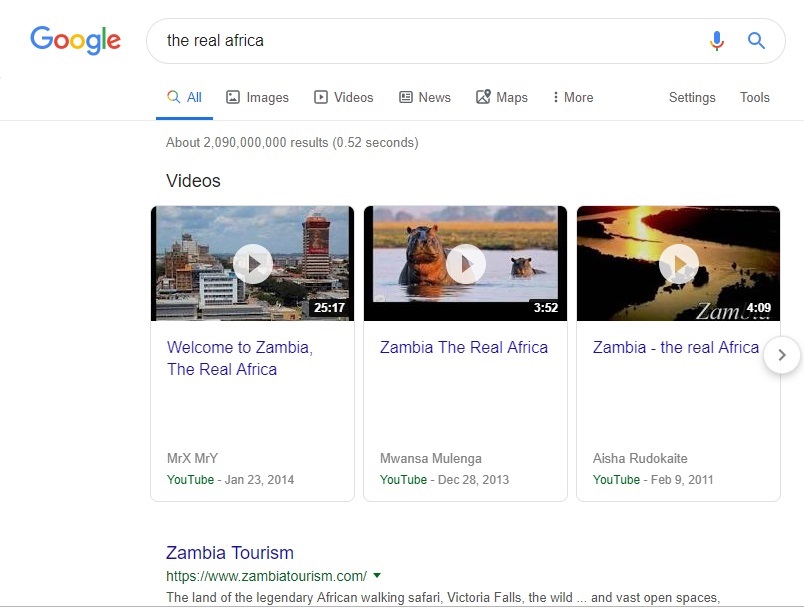
When you type “Zambia” into a search engine, you walk into its home. You’re instantly greeted with tourist-friendly imagery of the Victoria Falls and the Zambezi River. There are cityscapes with our humble Findeco House jutting upward and a few photos that smell like politics. If you have a good eye, you can catch Will Smith being a tourist in Zambia.
I once met an American lady who visited Zambia only because she typed “the real Africa” into a search engine and Zambia came up. She booked a flight and was so happy with what she found that she decided to move here permanently. The gravity of her life decision made me wonder what other faces Zambia had and what else would appear online. Would she have made the same decision if a flood of Zambian memes appeared instead of a graceful hippo relaxing in the Zambezi?
The internet is a wonderful place. The organic progression we’ve made in adapting the use of Google and social media into our daily lives allows for a higher level of interaction and discourse. There’s more to talk about, more to share, simply because there’s more to see.
When you type Zambian memes into a search engine, you soon realise that Zambia has become a gated community with many houses you could walk in. Each social media platform has its own demographic of users and each individual user has interesting things to say.
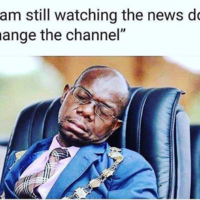
I’m ashamed to admit that sometimes I don’t watch the news. The news finds me in a meme and I learn how much the nation spent on fire trucks, who got kicked out of cabinet and which mayor was dozing in parliament. Memes have taught people to spell and act in public because everybody wants to laugh at a meme but nobody wants to become one.
When the term “meme” was birthed by biologist, Richard Dawkins, he was right to assume that memes would be a key form of how cultural information spreads by imitation. Within internet culture, the term is commonly used to refer to phrases, videos, images, or a combination thereof, that are widely propagated by internet users. Memes have become specific internet artifacts that hallmark special moments in film, media and life. The main construct is humour and there is a meme about anything and everything — even memes about memes.
Zambian memes have exposed the underbelly of culture. They are formed when people encounter something that they must share in the way one would share gossip with a close friend. There’s a form of intimacy shared in laughter, relatability and seeing your world through someone else’s eyes. Is love even love if you can’t share memes? Memes are the paintings on our walls showing who we are, where we have come from and where we are going.
The statistics on internet penetration, device usage and internet service provision in Zambia stand as testament to the different people who can now get a say in what describes the nation. For some, Zambia is still old-fashioned; for others, Zambia is a young nation with room for discovery and growth. Memes reflect the discussions that happen around public service, the economy, local events and politics. Global trends are instantly appropriated and shared, so everyone is caught up in them. In the world where information is power, we all have the power. Social media and meme culture have made it easier to move faster — together.
Brands and corporations alike are part of the meme culture by blending memes into marketing strategies and riding the viral wave to achieve their awareness goals. Memes are highly relatable, always trendy and a back-pocket tool for quickwitted marketers.
The delightful part about memes is that the good ones don’t even need high-quality stock images. It’s always the same cat with angry eyes, the same guilty dog, the popular baby or the Kermit the Frog we’ve known for years. Memes are born out of relatable, human moments that people capture and immortalise.
The Egyptians left us hieroglyphics that point to the lives they lived and what mattered in their society. In a strange, offhand way, memes do the same thing for our generation. Zambia is still a friendly nation. Zambia is still the real Africa but, now, we have memes on our walls that tell the story of who we are.
Mukandi Siame (@Mukandii) is building a whole new world as the social media executive at Adlab in Zambia, part of FCB Africa. Having held media and communications roles in the events management industry, she has had experience of interacting with the private and public sector in ways that give her perspective and interest in the human experience. Mukandi has a passion for impactful storytelling, fostering her team’s growth and sparking thoughtful discussions. African Echo seeks to unpack markets in Africa, highlight business opportunities and share insights into what works and what rebounds.
“Motive” is a by-invitation-only column on MarkLives.com. Contributors are picked by the editors but generally don’t form part of our regular columnist lineup, unless the topic is off-column.
by Sabrina Forbes.Red Cherry Interactive — which has just refreshed its brand and positioning, going full service — aims to create brand experiences that engage and entertain and has, over the past 25 years, worked with some of the biggest brands in the industry.
“All the insurers have at some point have used Red Cherry in order to better their leads, so African Bank, FNB, Nedbank, Old Mutual, Momentum, and iWyze, to name a few. Then we’ve got very strong, daily relationships with some of the big FMCG brands… Beyersdorf, which is the Nivea brand, and Tiger Brands, who obviously own a number of FMCG brands,” says Jenna Murray-Smith, Red Cherry Interactive group sales director. “Also, we’re very strong in the sweet and treats categories, having won awards for our animations. We’ve… done work with Nestle Procter & Gamble, Unilever, and Coca-Cola, [too].”
Branded content
As a Level 1 BBBEE agency that positions itself as being passionate about creating content that connects with consumers through storytelling, across multiple platforms, Murray-Smith explains that much of the work done is in the branded content space. For the team, it’s a way of breaking brands out of the clutter. Content has become increasingly important because organisations need to find a way for consumers to want to engage with their brands, she says: “We create something that people are interested in and what the brand wants but not [by] interrupting what the people want. Consumers worldwide are sharing close to 27m pieces of content a day.”
Past work for FMCG brand, Tru-Cape, shows the consumer the process each apple goes through from farm to table. The client’s main request was to educate consumers on the care that goes into getting their apples to stores. Murray-Smith recalls that, while the agency could have gone the usual route of creating a TVC, it decided not to. Knowing that fruit has an important youth target market, a mobile gaming application was built where users were educated on the farming process, from picking apples to washing and sorting and, finally, to refrigerated distribution. In order to move up the ranks in the app (available for both Android and Apple), you had to buy Tru-Cape apples in-store and use the tokens in the pack to advance. For Murray-Smith, this was an important campaign merging education and entertainment, something that her team constantly strive to do.
When it comes to main market messaging, especially in a country like South Africa with so many languages, she says that sticking to the normal, albeit tried and tested, route won’t always work. She details how a large insurance company approached it to generate content that would educate its target market on the importance of insurance but in ways that would resonate. The team created five-minute soapie-style dramas in different languages that flighted for six weeks on all vernacular radio stations around the country. The dramas portrayed real-life examples of how insurance can benefit your life when unexpected things happen. Murray-Smith mentions how many of the listeners of these specific radio channels have radio as their only form of entertainment and media, and were a lot more receptive to the brand message when it was in their language, as opposed to generic English scripted ads.
A third example of the type of work Red Cherry does is in the long-form, branded content space. For Murray-Smith, creating 24–48min long pieces may be more effective than generic TVCs. “Those shows are very beneficial in the way that, on TV, all consumers want to watch interesting programming. People don’t want to watch interesting ads,” she says, adding that you’ve got to create content that the consumer asks for instead of giving them content you want them to consume.
She is steadfast when it comes to working with brands that care about giving back; as a business, Red Cherry is very involved in the corporate social responsibility space. “If we can find a way to increase sales while doing good, we will do it. We follow a Robin Hood strategy: we’ll target those with money to bring a project or better improvements to impoverished communities. I don’t think there is any other production company that has focused more on corporate social responsibility than Red Cherry has,” she says.
Although many agencies talk about their family culture, it’s something that’s truly at the heart of the way the agency operates, says Murray-Smith, who has been with Red Cherry for 18 years. Every staff member is also on the same incentive structure that is actioned once they reach certain targets. For her, this is important in showing that, although you might not be a director of the business, your role is just as important as everyone else and your actions have an impact. Certain financial information, such as gross turnover minus cost of sales etc, is made available to every member.
Family-oriented
New CEO, Pheladi Mphahlele, who joined the team a year ago, says that one of the things that interested her in becoming a shareholder was how family-oriented the culture is while still being very serious about business. When it comes to the five female shareholders (Murray-Smith, production director Robbyn Burger, media director Faye Dawood, and finance manager and majority-stakeholder Aliki Frantzeskos), Mphahlele says that having a women-strong team of leaders is actually an advantage. They understand each other’s needs as businesswomen, mothers, wives, and individuals, and when one member requires assistance, they all step in to cover for her. Mphahlele has also introduced a share trust at 4%, which was recently opened for all employees who have been there for more than a year. “For us to have dividends, we have to all do well,” she says.
With the agency turning 25 this year, the team has looked at ways to expand its offering and, as of 31 August 2019, has repositioned itself as a full-service agency — a move that, for Mphahlele, is a natural evolution. “Over the years, we have successfully offered these services to our clients but have still largely been seen as a media and production house. We are so much more than that, and want the industry to see us for what we really are and the unique skills we bring to the table…
“It was time to look for opportunities and tell people all about us. If we’re waiting for other agencies to give us little briefs, who says we can’t go out there and go the extra mile because they end up coming to us, anyway, for everything that they are looking for. So, why not us? We have been doing it, though; we’ve just been shy or too nice. In the past we didn’t really go to clients because we had agencies giving us work. What we’re doing now is going out to clients and reintroducing ourselves. We’ve noticed a lot of clients knew who we are but saw us just as a production house,” she explains, adding that, while the agency’s done full-service work for existing clients and will begin there when upselling its new service offering, it’s also on the lookout for a client with whom it can start the journey anew, from strategy to execution, in order to prove its full-service mettle.
Upskilling
While current staff members have been upskilled to avoid last-minute scrambling and impulsive hiring, key staff members from other agencies have been brought in to assist, including creative talent such as Dana Cullinan and Tom Cullinan[both of whom were at The Jupiter Drawing Room (Johannesburg) on the creative management side for many years — ed-at-large], as well as strategy, PR and digital/social media expertise.
“They always saw us as implementers, as opposed to the people who came up with the ideas and strategy anyway. You know us as producing and executing your agency’s ideas; now you must view us as THE agency,” says Murray-Smith.
Key clients: Unilever, Coco-Cola, Tiger Brands, Nivea, African Bank, FNB, Old Mutual
Services: Strategy, creative, production, media, events, activations, digital & PR
“#Agency/BrandFocus” is an ongoing weekly series updating the market on ad agency performance, including business performance, innovation, initiatives, the work, awards and people.
Sabrina Forbes (IG) is an experienced writer covering the food, health, lifestyle, beverage, marketing and media industries. She runs her own full-stack web/app development and digital-first content creation company. For more, go to moonwrench.com. She is a contributing writer to MarkLives.com.

 — Sign up now for the MarkLives newsletter, including Ramify.biz headlines, emailed every Monday, Wednesday and Friday!