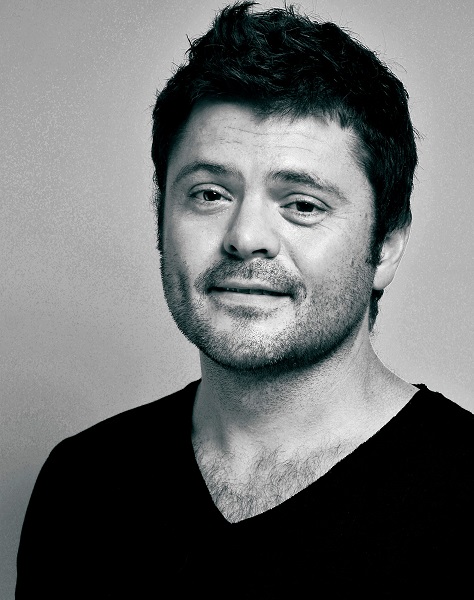
by Mike Silver (@stretchmike) In these frugal times, has the economy (and our dear leader) potentially given us the unexpected gift of shifting our thinking from equity to sales? Isn’t it about time big brands adopted an online startup mindset when it comes to engagement?
I’m not sure if you’ve noticed but things are pretty tough out there. Referring to brand budget cuts in this climate is like reminding us the Pope is Catholic. What’s surprising, though, is that, even in these tough times, measurement (and push to sales, specifically) is still often something forgotten. The logic that we’ll just do less of the stuff we didn’t really measure anyway seems to prevail.
Likeability vs profitability
The building-brand-equity argument is like that guy at the bar who buys everyone a round. Sure, they will love him in that moment. Hug him, high five him, maybe even a round of applause for his generosity… then they will get on with living their lives and paying for drinks of their own choosing.
I was sitting with the founder of an online retailer recently and was taken aback by the conversation. In the world of brand equity that I so often live in, he simply had no time for anything that didn’t tie back into sales. “Who cares if my logo is on a stadium banner?” he said, with his feet up. The man counts consumers, clickthroughs and conversions, and has no time for the fluffy stuff. We could probably learn a lot from our e-tail friends:
1. Hooks
Have you noticed how every e-tailer gives you a significant discount off your first purchase? They call it a ‘hook’. They take the significant hit up front, confident that you will keep coming back.
How might this look in a real world? Instead of giving one person the chance to win one trip to Sun City, how could you give away higher perceived value items to more people (if not everyone) to push instant sales? It’s a golden oldie, but Cadbury’s modified its product in-store and allowed you to write your name on chocolate, which resulted in huge in-store sales.
2. Sales-driven CRM
Brands feel self-conscious about sending mainly product-related content to consumers. Instead, we get carefully created content (with some hidden product features) that we enjoy for an hour, then forget. E-tailers are far more aggressive when it comes to driving sales with their content. In the activation space, we feel obliged to give away free tickets to launch and sponsored events.
While it’s not pure CRM, Torcida looked to create a two-way dialogue with convenience-store owners on an ongoing basis, specifically in efforts to increase sales and generate key insights and data.
3. Social media integration
Social isn’t about saying have a great weekend; it’s about pushing sales!
Fashion brand, Patagonia’s “100% for the planet” campaign was lead through social with all proceeds from Black Friday going to environmental causes. Cleverly, it ticked the social entrepreneurship, PR, equity and sales box (even though proceeds are being donated), while creating meaningful conversations for their fans.
What do you notice above? The consumer experiences a tangible benefit each and every time. Logos on football shirts are replaced by discounts online. Viral videos are ‘shoppable’, not just there to entertain you. CRM is a two-way street: you don’t just get to email me — you keep giving me something for my insights and purchases.
Leveraging off
As agencies, we understand the need to shrink our budgets. Marketing is famously the first thing to get cut. When consumers are cutting back themselves, marketeer briefs should really be leveraging off that insight around scarce resources. Ironically, we need to start thinking a little less robotically if we want to keep our jobs in the digital age.
Mike Silver (@stretchmike) is managing director of Stretch Experiential Marketing (www.stretchexp.com). He established Stretch — a communications agency specialising in developing strategies and concepts for integrated brand-experience campaigns — after working in sponsorship consultancy and experiential marketing in the UK. He contributes the regular “Brand Experience” column, focusing upon broader integrated ‘brand experiences’, to MarkLives.
— Sign up now for the MarkLives email newsletter every Monday and Thursday, now including headlines from the Ramify.biz company newsroom service!
When David Bowie passed away on 10 January 2016, he walked out of our lives with flair and in style, and Billboard celebrated this on its cover. It also writes in the tribute article that “he changed the look, sound, style, even the sexual identity of rock ’n roll, and did so with otherworldly fearlessness, impeccable flair and profound intellectual curiosity.” A great tribute and celebratory cover!
This is Billboard’s first appearance on this particular list.
On 12 June 2016, the world, and the gay community especially, looked at their news sources in shock, and even more fear, as we received the news that Omar Mateen had opened fire at Pulse, the gay nightclub in Orlando, Florida. Forty nine people were killed by him, and another 53 were injured. As a beautiful tribute, Time Out (New York) simply published 49 stars, in the colours of the rainbow flag — a poignant display of the horrible attack and the 49 lives lost, to be remembered for many, many years to come. Read more here.
This is Time Out (New York)’s first appearance on this list.
2016 was definitely overshadowed by the US presidential elections, and it was the talking point all around the world as we watched Hillary Clinton and (now president-elect) Donald Trump battle it out. Stylist made it clear whom it wanted as the new POTUS to walk into the White House, with brilliant use of tapestry, and a really clever cover line. Read more here.
The no. 7 position goes to TIME for its two Donald Trump “Meltdown” covers, as they go hand-in-hand; the second one (“Total Meltdown”) is even more impactful than its predecessor! I still believe the team planned right from the start that there would be two covers, as it was evident that he would self-destruct… Read more here.
After all the debating was done, and the US went to the polls and Donald Trump was chosen as president-elect, this cover brilliantly summarised the feeling, not just of many Americans and Democratic voters, but also of shocked onlookers without a voice from around the globe. Read more here.
Current POTUS, Barack Obama, may look out of that White House window, and know that the middle finger (from the previous cover) is not directed at him, and he should also feel extremely proud of his accomplishments and changes during his term. This black-and-white photograph, with touches of gold, is such a beautiful tribute to him, and the online story featuring his eight-year timeline is award-winning stuff! Read more here.
Art is extremely important, and should be supported, maintained and restored as best as possible. This cover not only illustrates the beautiful art piece but also the art of making/restoring it. Even though this is a reproduction of Michelangelo’s David, the magic is still there, and it’s captured brilliantly by the photographer, Maurizio Cattelan! Read more here.
The most creative publishing feat for 2016 is definitely Novum, as it took the printed form of magazines to a completely new level: 12 000 covers printed but then the artist, Felix Scheinberger, wait for it… hand-painted each and every one of them! Yes, they’re each 100% unique! Still don’t think it’s deserving of a no. 3 spot, or don’t believe me? Just look at this video… Read more here.
It’s probably one of the most-distressing covers and cover image of 2016, yet its impact isn’t lost, and its meaning is extra-strong because of the message from the director. Andrés Rodríguez stated in his letter, “Am I at risk for suggesting this cover? I think twice about it. Will I sell fewer copies? I think about it a third time. Will I lose advertisers?” After waking up one night and thinking “the world is upside down”, it sparked the idea of publishing the name Esquire “upside down”, and that he had to push the message as much as he could.
The cover line reads: “Breaking news: The world is upside down”
Kudos to him and the whole team, who were willing to take a massive risk. I truly hope it paid off in all possible ways. Read more here.
This is Esquire (Spain)’s first appearance on this list.
And so we come to the end of 2016, and the end of my top 10 list of best international magazine covers. As 2016 was dominated by the US presidential elections, and 2017 will probably be dominated by president Donald Trump, it’s safe to say that you might feel as if you’ve been punched in the face and in the gut by the onslaught of everything Trump-related… de Volkskrant’s Vonk supplement illustrated Trump perfectly with this yellow-and-orange boxing glove, and it’s an image that will stick with me for a very long time!
The coverline reads: “After the Blow — Even if Trump loses, there is no reason to take a sigh of relief.” He won, so you can expect many, many more blows… Read more here.
This is de Volkskrant Vonk’s first appearance on this list.
MagLove by @MediaSlut is a regular slot featuring the best local and international magazine covers every week, recognising well thought-out, powerful and interesting (and hopefully all three-in-one) covers and celebrating the mix of pragmatism, creativity and personal taste that created each of them. The anonymous (for now) blogger behind MediaSlut knows way too much for his own good about media in South Africa, magazines in particular. His mission is to show when SA magazines fail but, most importantly, also when they succeed. If you’re looking for a library about SA magazines and news, this is your one-stop pitstop.
— Sign up now for the MarkLives email newsletter every Monday and Thursday, now including headlines from the Ramify.biz company newsroom service!
by MarkLives (@marklives) The hottest primetime television shows on e.tv in South Africa revealed: TV ratings for the month of October 2016.
This year, the Broadcast Research Council of South Africa (BRCSA) has changed its policy about giving away TAMS and now only monthly reports, highlighting the top 20 primetime shows on several popular channels, are available.
The Broadcast Research Council of South Africa (the BRC) is a non-profit, industry body that was incorporated in 2015 to cater to the audience research needs of the radio and television industry in South Africa.
— Sign up now for the MarkLives email newsletter every Monday and Thursday, now including headlines from the Ramify.biz company newsroom service!
by Veli Ngubane (@TheNduna) With impressive track records in mainline agencies, high-school friends, Sifiso Nkabinde (@Sfinch_oro) and Thokozani Mashigo, are working together again. They’ve formed DADKA — the Somali word for people — which focuses upon finding “creative solutions for everyday people”, with Nkabinde and Thule Ngcese [also Young, Gifted & Killing It!] as the art directors and Mashigo as the copywriter. Clearly young and gifted, they tell us how they’re killing it! with projects ranging from developing an e-commerce platform to a township-clothing brand.
Veli Ngubane: Where did you grow up and how did your parents react when you told them you wanted to be a creative? SN: I was born in Soweto, Diepkloof Zone 6, and grew up in the East Rand in a place called Dawn Park. My parents never understood advertising; my mom’s idea of advertising was a person who paints wall murals in the townships — and, secretly, I still think she doesn’t know exactly what I do for a living — and my dad simply wanted someone who was going to contribute in the household. So, you can imagine how the conversation went when I told them about my career choice. They asked … how are you going make money? Are you going get a job? Why art? So you want to be an artist?
TM: I was born in Orlando West, Soweto, and grew up in a township called Vosloorus in the East Rand. My parents were not surprised at my career choice; I’ve always wanted to be in advertising, since I can remember.
VN: How did you a) get interested in advertising and b) break into the industry and land your first job? SN: a) I got my first break in advertising industry while I was still in tertiary, studying graphic design. My lecturer managed to get me an internship at Ogilvy Johannesburg for a month.
SN: b) I used my notepad to capture my experiences at Ogilvy; mind you, I thought I was only going to be there for only a month. Until Gerry Human, who was the ECD at that time, asked to have a look at my notepad (this way my last day interning there). After paging through my notepad, he told me that I should come work for Ogilvy Johannesburg when I’m done with my studies — that’s how I got my first break.
TM: a) I got interested in advertising at a very young age. I used to live near one of the most-popular main roads in Soweto (Khumalo Street); adjacent is the famous Vilakazi Street in Orlando West. Khumalo Street would always be lined with huge billboards selling different brands. To me, it was like mini-Time Square. The big billboards and the big lights and the brands made me fall in love with advertising.
I started showing further interest when copywriting was included as one of the tasks in a Grade 10 high-school assignment; that’s when I started showing more interest in writing for ads.
TM: b) I got my break in advertising a year after I matriculated. It was during my final years of completing a certificate in creative process with the Imagination Lab. I interned at Ogilvy Johannesburg as part of my two-week internship programme. After completing my one-year certificate, I was split between taking a scholarship at Vega or a three-month internship at Ogilvy Johannesburg. I chose the three-month internship at Ogilvy. My plan was to always go back to Vega but that changed when one of the ideas I came up with while interning won me my first Loerie in 2005. I never looked back.
VN: What are your specialisations/creative processes/mos- important tools of the trade? SN: I am an art director by profession: I have to come up with concepts and find the best way to articulate the concept visually, whether it be print or directing a TV shoot. Your brain needs be like a sponge to easily absorb what’s going on in the world. There are many different ways to articulate concepts that could be found on the internet but you need to train your eye to spot those opportunities. Adobe suite is one the key tools to have in your machine (laptop), and also [you must] do your research on past advertising work that has been done internationally; the Cannes archive is a good place to start.
TM: My creative process involves conceptualising an idea and putting it on paper and testing it on colleagues and then the final stage-making it come to life. To achieve this I need a reliable laptop; I prefer a MacBook Pro because it has all the program used in the industry. You need a reliable smartphone to stay in touch when you’re not at the office. Being mobile or having your own car is also an added advantage; a creative needs to be constantly out there attending gigs, events, concerts to stay relevant with the times. A bottle of tequila in the drawer always comes in handy.
VN: How did you meet? SN & TM: We went to the same high school so we’ve known each other for a long time.
VN: Tell me about your company, DADKA? SN&TM: DADKA is made up of three unique individuals — two art directors, Sfiso Nkabinde [and] Thule Ngcese, and copywriter, Thokozani Mashigo. The core focus for Dadka is “creative solutions” for everyday people. We don’t limit ourselves in the projects we take on — we can go from developing an e-commerce platform like Yumo to starting a township-clothing brand like VSLO; we just make sure that whatever we do or touch has some sort of impact on society.
VN: What inspired the name “DADKA”? SN&TM: “Dadka” means people in Somali; we chose an African name on purpose because we see ourselves as a company for Africa, not just for South Africa.
VN: What characteristics do you need to have to succeed in the advertising industry? SN: Research is key, fresh insight, ideas and, most importantly, execution! Execution! and love what you do! You can be a nice person and still survive in advertising but you need have thick skin.
TM: You have to know how to take criticism; being able to work in a team (being a team player); knowing how to manage time is also important. You also need to have an eye for good ideas.
VN: Any interesting hobbies/second jobs/bits of information that make you pop as individuals? SN: I am a co-founder of a township-empowering movement called Bee Empowered (NPO) which has taught me a lot about humility and the importance of skills-sharing and the value of partnerships, especially for black businesses. I am also a contributing designer on the VSLO Clothing brand.
Hobbies: I ride motorcycles any chance that I get; that’s my “me time” and recently I have started collecting bonsai trees — don’t ask why J …Just find them fascinating.
TM: I run my own clothing company called VSLO Clothing; we do pop up shops in Vosloorus and at major events. Planning on opening up Vosloo’s first concept store next year. I am also co-owner of an alcohol delivery service called Phuza Patrol. You can call it the Uber of alcohol delivery.
I am also a mentor to a few young creatives from the township who are interested in a career in advertising.
VN: What advice would you give to youngsters wanting to break into the industry? SN: We’ve all heard the saying ‘there is no new idea underneath the sun’; I somehow agree with that. So, for me, it’s about doing your research and finding a fresh insight usually leads to a great idea but, most importantly, execution can make or break your idea.
So you need to work hard, fight for what you believe in and stay hungry.
Remember you can be a nice person and still make it in advertising, so stay humble.
TM: Hard work always pays off. What you put in is what you will ultimately get out. Do not slack. Be the first to arrive at the office and the last to leave; always offer to help.
Personally, take what you do seriously; invest in your craft; try to read a book every month; subscribe to advertising and design publications; visit art galleries and other interesting places; and always, always have a notepad and pen handy.
VN: What is the South African advertising industry doing right? SN: Just [an] observation: in the industry, some of the big agencies have started incubating small black-owned agencies in their infrastructure, which is great for the future of advertising. That means that now the little guys now have the opportunity to pitch for business and to work on big clients. What it also means that now black creatives can run their own businesses doing what they love and produce the work that is relevant to the market.
TM: Most agencies are starting to incorporate and sometimes make digital central to their ideas; this is a major shift in the way we reach consumers and, despite the slow internet and lack of infrastructure in SA, we have managed to come up with great digital campaigns that can compete on an international front. We still can do better.
VN: What needs to change? SN: I have noticed that most TV ads that I see leave you unanswered questions at the end “like what is the idea?” I think we need get to thinking about the consumer and what is the key massege instead finding what’s cool and trending on the web and creating executions using that.
TM: For mainstream advertising, we need to go back to telling real stories, especially in the TV medium. Ads used to tell a story and connect with the consumer, and that made us fall in love with brands and that is what advertising is all about. Today, we see too much dancing and singing on ads and consumers getting offered free airtime at every turn. We need to go back to telling stories that will make consumers fall in love with brands again.
VN: What do you like most about advertising? What is most challenging? SN: I like [it] that advertising teaches you to think and question things. Lessons learnt can be applied to everyday life as well. The challenging part is getting the work produced and going through obstacles, but it’s worth it, once done.
TM: I like how an idea can go from your thoughts, to your notepad, to reaching millions of consumers in places you’d never imagine. What is most challenging as a creative is having to wear different caps to communicate to different consumers.
VN: What is your favourite ad campaign, past and present, and why? SN & TM: [Our] favourite ad campaign was the launch of Cell C back in 2005 or 2006. The campaign was fresh and I liked how one campaign was able to resonate with different target audiences. [We] still love the Vodacom “We’ve Been Having It” campaign. [Our] favourite ad campaign right now is the [“Inner Peace”] Chicken Licken campaign.
VN: Where and when do you have your best ideas? SN: Ideas come from everywhere: I’m always thinking about ideas, at home, stuck in traffic at a street cookout… literally everywhere.
TM: Everywhere! I’m always thinking about ideas. I always take notes on my phone or notepad. Ideas are everywhere so you always have to keep an eye out and your ear to the streets, so to speak.
VN: What has been the most-exciting project that you’ve worked on? SN & TM: So many come to mind; one that stands out was a campaign we did for Nissan when SA was hosting the AFCON tournament in 2012. The idea started out as a very small thought and it ballooned to a national campaign that got everyone from celebrities to politicians to look up.
VN: Do you have any new exciting projects you working on at the moment that you can share with us? SN & TM: Most of the projects we’re working on are still top-secret. [We’re] currently working on a campaign for a new product that will be launching in South Africa mid next year, so that’s a big one right now.
VN: What do you consider the most effective current form of advertising in South Africa? SN: TV is still the most effective followed by radio but, definitely, digital will be next big platform.
TM: TV is still the most effective for me, followed by outdoor and digital.
VN: Please can you supply two or three pieces of work you have been involved in?
https://www.youtube.com/watch?v=hd0eIWqNWbI
https://www.youtube.com/watch?v=VYxGptrTDIM
Veli Ngubane (@TheNduna) entered the world of advertising with a passion after completing his BSocSci (law, politics and economics) at the University of Cape Town and a post-graduate marketing diploma at Red & Yellow, where he also currently serves as advisory board chairman. He is the chief creative officer and founding partner of one of the fastest-growing agencies in the country, AVATAR. A full-service marketing agency with digital at the core, its clients include Brand South Africa, FOX Africa, National Geographic, SAA and Chevron. Veli hails from Kosi Bay in the rural KwaMhlaba Uyalingana area of KZN. In his monthly column “Young, Gifted & Killing It”, he profiles award-winning, kick-ass black creative talent in South Africa.
— Sign up now for the MarkLives email newsletter every Monday and Thursday, now including headlines from the Ramify.biz company newsroom service!
by Remon Geyser (@remongeyser)Today we’re digging deeper into the harder-to-measure, longer-term approach of emotive campaigns, and how easy (or difficult) it is to construct creative ideas that resonate in South Africa and beyond. So, this month, we consulted our marketing, advertising and creative professionals in Kenya, Ghana and Nigeria and looked at the beautifully scripted and shot Investec “Promaths” ad, which was aimed at the SA market.
We have recently been engaged in numerous conversations with our clients and creative community on the role of emotive advertising, ie campaigns whose primary focus and objective are to build a connection to a feeling, attribute or emotion, rather than drive sales. The conversations typically steer in the direction of when to use this style of ad, how to measure its efficiency and, interestingly how well do these campaigns travel to other countries?
Functional vs emotional
Some believe that it’s more scalable, when launching a Pan-African campaign, to focus upon the functional benefits and push a call to action (with some form of direct marketing); others believe in building the brand’s equity (a longer-term investment) through relevant and emotive advertising — connecting with the target audience on an emotional level and creating strong feelings towards a brand. Both sides (functional vs emotional) have their merits, so it’s difficult, if even necessary, to reach consensus. Have you been thinking about this? Let us know your thoughts at community at delvv dot io.
Let’s get back to our chosen ad, “Promaths” for Investec from Y&R South Africa and directed by Keith Rose of Velocity Films, which was MarkLives Ad of the Week in April 2016. [Will it appear in our MarkLives Ad of the Year Top 5? Find out next week — ed-at-large]. Are there similar themes that would allow this to stretch into other markets and reach some sort of media efficiencies? Let’s see.
Attributes and associations
To start the conversation, we asked the professionals what they felt when viewing the TVC.
Some professionals experienced negative emotions, due to their personal struggles with overcoming poverty — as this tone and imagery ignited those long-forgotten feelings of “Can I get out of this situation/Can I make it in this life?” They felt that there was a sense of sadness, losing hope and the difficulty of escaping the “slum life”. If that were the intention, then the creative team was successful in producing a foundational emotional structure that transcends borders.
Building upon the foundation, and providing a positive turn of events, the feelings of ambition and being inspired came through strongly, with a great life-truth told: “It will take sacrifices to get where you want to be.” For some, this created a sense of purpose and the longing to achieve something bigger in their lives, thus being very motivated to be successful. Clearly this TVC did a good job in evoking an emotional narrative arc of bad to good.
The professionals also mention that the big picture of what the TVC intended to communicate is clear: “to be ambitious and aim for success”. The script and voiceover work beautifully together, while the monochromatic filter creates a deeply moving atmosphere. One thing that stands out, however, is that the brand is not forced on the target market. That leads to the question: how forceful brands should be when talking to the consumer? How many ads can we think of offhand?
Messaging
However, the professionals feel that they were left clueless as to what the company, Investec, actually does. The TVC might not be very clear in its messaging at first glance; one needs to be constantly exposed to it in order to gain understanding.
There are possible learnings for Pan African advertising here, as some questions arise: Should a brand first be well-established before it moves towards emotive advertising? When a brand flights emotive advertising, should the messaging be simple and clear enough to be understood at first glance? Some interesting points on which to ponder
There is also a possible disconnect whether a qualification equals success. In real life, that doesn’t necessarily mean you have made it, so there is a missed opportunity to connect with “real” success. However, this also points to the lack of understanding of what the Promaths project is about — educational upliftment in maths and science. We’re once again reminded that an audience unfamiliar with a brand’s projects or initiatives needs to be educated before members can understand its marketing, especially when it’s emotive.
Creative gauge
Overall, this TVC scored immensely high in all regions, indicating that this has the potential to be a real winner — if education on the brand and its projects are first communicated, of course.
In Ghana though, creatives felt that the copy was lacking, even though the story was really strong. Despite the commentary on making the end result more “real”, measures on “realistic” and “inspirational” were the highest. To take it to the next level, some professionals feel that there is a need to depict good living for the achiever at the end — as that would solidify that she has really made it.
Although a minor theme, the sentiment with our Nigerian professionals is that this story needed to feature a male lead, as this TVC has the potential to alienate males. This may give the perception that the brand is female — balance is needed. A comment that males are driven by their ego, and TV boosts their ego, is noted. In the other markets, they felt that using a female lead conveys a strong message of defining a trustworthy and peaceful personality. Contextually it also makes sense as, sadly, in some regions, female education is denied.
Next steps
Our panel believe that this TVC has the potential to be a real hit.
This lends support to the belief that emotional ads CAN transcend borders if the idea resonates and the execution stays out of the way. This particular execution just needs some minor modifications, plus more education on the brand and its endeavours, to be successful.
Remon Geyser (@remongeyser) is a burger fanatic, wine connoisseur and eSports enthusiast (yes, a fancy term for playing computer games). He is also co-founder of delvv.io, heading up research, operations, product and culture. delvv.io provides creative expert feedback anywhere in Africa, in order to rock marketing ROI. Remon contributes the new monthly “Taking Flight” column, which provides Pan-African feedback on South African ads for other markets, to MarkLives.com.
— Sign up now for the MarkLives email newsletter every Monday and Thursday, now including headlines from the Ramify.biz company newsroom service!
by Oresti Patricios (@orestaki)Big budgets and big brands have made their mark as MarkLives.com counts down the top 10 adverts of the year for 2016, but integration and clever social media have also won through. The judges’ votes are in — and here are the commercials we thought were the pick of the crop this year.
Which brands are among the top 10 ads of 2016? This year, we judges — MarkLives publisher and editor Herman Manson, MarkLives editor-at-large Simone Puterman, MarkLives associate editor Mandy de Waal, writer Jon Pienaar and myself — had a hard time choosing our top 10. After perusing all the ads, each judge had to choose their top 10, and then points were awarded accordingly. The results were incredibly close, so much so that five ads have tied for sixth place!
Here, then, is the quintet of adverts that came in joint sixth-place, in no particular order — next week, MarkLives.com will reveal which ads came in the top five. Congratulations to the brands and agencies mentioned, and our thanks for the innovation, craft and excellence displayed.
Absa made our Ad of the Week three times this year, testimony to the great quality of work being put out by the bank and its creative partners in a particularly challenging market.
The ad we liked the most from Absa — whose Prosper campaign has been running since 2013 — is “The Girl Who Rewrote Her Future”. Produced by T+W, the 3.5min mini-movie takes the form of a first-person narrative and is based upon a true story. Senanziwe Ndlovu, as a young girl, had to look after her siblings after her mother died. Unable to pay the fees, she was kicked out of school but, thanks to an international NGO called Afrika Tikkun, she was able to continue studying. Ndlovu went on to receive a bursary from the school and became head girl, and matriculated with exemption. She wanted to study further and, once more, Afrika Tikkun came to her assistance with a bursary.
Afrika Tikkun is supported by Absa, and it’s great to see the red bank investing in educational initiatives that help our country’s youth to prosper. This tale is heartwarming and inspiring, building the brand as more than a faceless financial institution.
Joint #6. Social Test Drive by Ogilvy & Mather Cape Town for VW Amarok
Ogilvy & Mather Cape Town took the classic car test-drive to a new level for Amarok with an experiential campaign that did good while giving potential customers the best possible way of evaluating the car.
The idea was to get potential Amarok customers to take the 4×4 vehicle on a real-life test drive — but one with a purpose. The call to action asked people to apply not just for a turn to test the vehicle but to make a delivery to a worthy cause. This could be for school supplies, medical equipment, or even drinking water to a drought-stricken area.
The campaign used a microsite, socialtestdrive.co.za, to give more information and where people could sign up for a test-drive. This yielded a cool concept that got people driving the car brand, and also showed the power of the human spirit — people really can make a difference when they try.
As a campaign, it was really innovative thinking that provided positive associations with the brand.
Jet hit a homerun with its disruptive campaign for ‘Valentine’s Month’ that celebrated the diversity of women’s bodies and sent a strong message about body image to South Africans.
Joe Public’s integrated campaign for Jet’s fashion-for-every-body clothing line, which gained a huge amount of social media traction, used unconventional models: eight women of different shapes and sizes, some who were mothers, some young, some skinny, some well-endowed. Each model was dressed in lingerie, and given the opportunity to talk about their experience of body image. A graphic title was artfully added, and used the particular woman’s bra-size — with a creative twist. So, 40G became “40Gorgeous”; 32A was “32Amazing”; 32D was “32Divine”; 40F was “40Foxy” — and so on.
Videos shot behind the scenes were released on Facebook throughout the month of February. These shorts captured some of the fun that happened during the fashion shoots, and got each model to speak out about their personal experiences, both good and bad, as they came to love their own bodies.
With this campaign, Joe Public has cleverly positioned Jet as a champion of ‘real women’ in a market that is increasingly crowded. It’s a great way to differentiate the brand, and to promote self-love and body positivism. Kudos to all involved.
Joint #6. Post and Drive by DDB SA for Honda Motor Southern Africa
It is both ridiculous and unlawful for people to text or post on social media while driving. The risk to oneself, passengers, and others on the road is greater than many people think, as distracted driving may be fatal — if you take your eyes off the road for just three seconds at 60km/h, you have gone 50m. In just one second, barely enough time to glance at a GPS, and your 1.8 tonne metal box will have moved 17m. If a child runs into the road, or a car brakes in front of you, your impaired reaction time could mean death or serious damage.
Unfortunately, young people behind the wheel are more inclined to make a habit of texting while driving. Statistically, too, younger drivers are also worse at managing crisis situations in the traffic and are thus more prone to accidents. Aimed at this target market, DDB South Africa and Honda produced two print ads, beautifully composed and shot by David Prior, that use dark humour to illustrate the risks of driving and texting.
The copy of the one ad, called “Friends”, reads “Don’t post and drive”. The other ad, called “Followers”, features people following a hearse and reads: “Don’t tweet and drive”. Simple messages that hit home very powerfully, from a car manufacturer that clearly cares about road safety.
Joint #6. InstaGlad by DDB SA for Glad South Africa
DDB South Africa and Glad created a very smart, well-integrated, and highly social-media savvy campaign that raised awareness not only of the brand but also of the international problem of food wastage.
The average American family throws away some US$1600 worth of food every year, or 25% of all food bought. I haven’t seen local stats but imagine that, in some households, wastage would also be high. Keeping food fresh for longer may prevent some of this, as plastic wrap keeps oxidising elements out and prevents the food from spoiling quickly.
The Glad campaign used Instagram snaps of food, as shot by foodies locally and internationally, that were then taken through a Photoshop process that ‘preserved’ them in plastic. Two days later, the pics were posted back to the original Instagrammer, tagged with #NoWastedFood.
Everyday food lovers, as well as chefs and food critics, along with food celebrities, were targeted in this fresh, innovative and light-hearted campaign. Many of the Instagram foodies replied with remarks, meaning that the interaction was seen by that Instagrammer’s followers as well.
Keep an eye out for part 2 next Monday, 12 December 2016, when I’ll be counting down the top five and revealing the ad that we’ve chosen as Ad of the Year!
Ad of the Week, published on MarkLives every Wednesday, is penned by Oresti Patricios (@orestaki), the CEO of Ornico, a Brand Intelligence® firm that focuses on media, reputation and brand research. If you are involved in making advertising that is smart, funny and/or engaging, please let Oresti know about it at info@ornicogroup.co.za.
— Sign up now for the MarkLives email newsletter every Monday and Thursday, now including headlines from the Ramify.biz company newsroom service!
by TJ Njozela (@tj_njozela) Working in a creative industry isn’t always sunshine and roses. Not only do you have to be creative on demand, but there are time pressures brought on by tight deadlines. Sometimes, you may find yourself juggling more than one brief. So which of the two — talent or hard work — can help you get further?
Although natural talent is something most people wish they had, hard work ultimately takes your career much further than talent alone can.
Does this mean that natural talent is worthless? Not at all. What it means is that no-one should ever rely on talent alone, because the things that really matter when it comes to growing in your career have less to do with talent, and more to do with how much you’re willing to put in to get the job done. Here are three instances to prove my point.
Ideas don’t make themselves
No matter how ground-breaking an idea is, it takes a lot of hard work to bring it to life. Often, this means putting in the extra hours to make sure that every component and every detail are crafted to be the best they can be. While talent may come up with the idea fairly easily, distinguishing yourself as someone who can be counted on to hit the road running and see things through to the end puts you a step ahead of everybody else. Reliability, consistency, and commitment are all characteristics that may only be seen when you do the hard yards.
It’s easier to collaborate
Teamwork across different departments, from strategy to creative to traffic to production, is how agencies are able to work efficiently and give clients the creative ideas they need to stand out. Having natural talent will make you the go-to person for the particular skill that you’re talented in. Being a hard worker will make you the go-to person for everything else.
Simply by virtue of interacting more with the team, you’ll be able to build stronger and longer-lasting relationships with them. You’ also get a reputation for being dependable because you always go the extra mile to make sure you always deliver.
Better work
By constantly interrogating ideas, and looking at things from different perspectives, the work becomes richer and more insightful. By relentlessly working to make ideas better, you come out with unique creative output more often. Taking the time to strengthen ideas also inspires those around you to put in more effort. Hard work is contagious, which leads to an overall boost in the quality of creative.
TJ Njozela (@tj_njozela) is an award-winning senior copywriter at FCB Africa with several years of experience in the advertising industry. More than a writer, he is also a reader, a thinker, and an avid liker of things; and he once walked from Joburg to Cape Town in 30 days to raise funds to buy wheelchairs for people in need. #30Days30Wheelchairs. TJ contributes the regular “Agency Life” column, in which he gives career advice for working within the advertising industry, to MarkLives.
— Sign up now for the MarkLives email newsletter every Monday and Thursday, now including headlines from the Ramify.biz company newsroom service!
by Marthinus van Loggerenberg (@martvanlog) Everybody loves a good storyteller. Someone who keeps you on the edge of your seat. Someone who entices you with a bit of suspended disbelief. Perhaps someone who makes you sing along, or even change your value system. Or has a hamster drive a truck. If a brand is savvy enough to tell a compelling story that is worth someone’s time and evokes emotion or engagement, resonance is in the offing. Resonance is a beauty, because it builds brands strategically.
The problem: Exactly what is branded entertainment?
Branded entertainment seemingly holds varied meanings. Some might see it as a sophisticated form of product placement, product or brand integration or even sponsorship of an entertaining event or programme, for instance. Others see it as content generated by the brand but, in the same breath, use “branded entertainment” and “branded content” as synonyms.
Branded entertainment is also still in a process of finding its feet. Despite better work becoming more evident, PJ Pereira, CCO at Pereira & O’Dell (San Francisco), chair of the Branded Content & Branded Entertainment jury for the 2016 Clio Awards, said the following on 1 August 2016 about branded entertainment: “We’re still testing the waters and seeing what can be done, or can’t.”
Good creative work comes from a good understanding of a discipline. The lack of a cohesive understanding and application of branded entertainment in contemporary brand-communication practice erodes its core value, which is to break through clutter and unquestionably connect with target audiences and, thus, the potential for branded entertainment to achieve brand resonance is depleted.
You may compare this problem to an industry that, for argument’s sake, neither understands nor agrees on the fundamental principles of advertising or PR, with diluted or ineffective communication efforts as a result.
The possibilities
Jaime Robinson, co-founder and COO of Joan Creative, and multi international award winner for Intel & Toshiba’s The Beauty Inside branded-entertainment campaign, says that target audiences may have a greater affinity towards a brand that creates something brave and unique, saying “Thank you for having the courage to create something innovative and something new.”
Let’s take a step back and ask: so, if a brand were to create something completely original, meaning that it doesn’t not integrate itself in another’s entertainment narrative, what are the advantages?
You surely wants to plough your love, blood, sweat and tears into something that is not only going to meet your marketing and communication objectives but is also going to generate positive judgements and feelings towards your brand.
https://www.youtube.com/watch?v=ebhPlOj-lcQ
Brand resonance, as mentioned, is negotiated in a communication space by two fundamental achievements: an emotional connection and the audience engagement. Ricardo John, CCO at JWT São Paulo, Gold winner at last year’s Cannes Lions for the Coca-Cola Dolby Thirst Sound Experience branded-entertainment piece, provides a simple yardstick to assess a communication effort as branded entertainment: “Branded entertainment is every bit of advertising that you do that does not look like regular advertising and that establishes an emotional connection between the audience and, most important, the content that you place in it.”
As far as audience engagement is concerned, says Robinson, a sense of ownership can give you the ability to control your narrative to such an extent that you can “… get an audience member to choose to spend time with your brand and choose to engage with your brand in a way that they are letting your brand tell a story”.
You need to question product placement, product or brand integration and the sponsorship’s ability to tell such a story with a distinguishing chance of achieving brand resonance, even if done in a brand-aligned, sophisticated, responsible or ironic way. And, for academic purposes, should product placement, product or brand integration or sponsorship not just be what it says it is?
We, the brand-communication industry, sure like to overcomplicate things. But, in the same breath, we can’t be too hard on ourselves as branded entertainment is still experiencing orientation problems to some extent (it was only recognised by Cannes as a category in 2012, after all) before it can shake the “unconventional” and “alternative” label, while providing content that can do what we want or intend it to do: to resonate.
The premise
The validation for employing branded entertainment imbuing authentic narrative lies in the power of credibility. Credibility plays a definitive role in establishing trust, plausibility and believability. Two arguments regarding authentic practice in branded entertainment present themselves for gaining some determinative ground: an identity-based argument and a moral-based argument.
First, authentic branded entertainment benefits the brand by providing the opportunity to communicate its brand identity. Robinson denotes that the “theme of the brand” should stand firmly in the narrative, otherwise the brand will “waste its money”.
Damien Eley, ECD and founding partner at Mistress Los Angeles, and multi international award winner for the Mattel’s Hot Wheels for Real branded-entertainment campaign, says that, when creating a branded entertainment campaign, they will “… start building a narrative based on a truth. So, we always look at the inside — the truth that comes from the product or the business.”
Secondly, a brand has a rare opportunity to bare relevance to a target audience, but in a more profound way, as well-crafted branded entertainment narrative has the opportunity to carry emotional meaning in arresting attention, often getting the audience to spend valuable time with the brand, as mentioned by Robinson.
Once relevance is carefully considered and integrated into the narrative, the levels of engagement may be astonishing. The Beauty Inside allowed the target audience to play large parts of the role of the protagonist, a man who wakes up in a different body every day. Hundreds of submissions were received. The audience responded beyond expectation, unpacking their beliefs and motivations about their own identity issues, projecting and reflecting in a rather emotional way about their lives.
Robinson shares that the brand took a chance as it moved into a space that was different and challenging, a space where one can connect with the consumer in a meaningful and introspective way.
The notion from the brand was, on a value-level, “It is okay to talk”. To talk about “some truths about identity and gender identity and race and age and all those things.” You could say that alignment between the value system of the brand and of its target audience seemed to be splendidly in sync.
And the results don’t lie: there were 70m views, 26m interactions, 97% approval on YouTube, a 66% increase in brand perception for Intel and 40% for Toshiba, and 300% sales increase total.
How’s them apples? Marketing and communication objectives: tick. Strategically building your brand? Big tick.
Principles on parity: branded content vs branded entertainment
The difference between branded entertainment and branded content is also unclear and these terms are used interchangeably. The problem lies herein: branded content exists in various forms of content creation that includes branded entertainment — eg educational content or informational content, or even native advertising, advertiser-funded programming, viral videos, among others — and, therefore, it means different things to different people, leading to misunderstandings and confusion. These forms of content are not necessarily entertaining and do not necessarily have the same communication objectives as branded entertainment or may not necessarily achieve the potential for brand resonance, as in the case of branded entertainment because of its entertainment narrative as a requisite.
The approaches to branded entertainment and other forms of content differ. Brand-communication decision-makers ought to be specific in their understanding and approach of branded entertainment and other forms of content, depending upon the type of content. Branded content is brand-generated so it has the ability to employ an identity-based narrative.
However, other forms of content don’t necessarily employ narrative as a requisite, eg mere informative content. In a time of orientation and aiming to prove itself as a communication effort which has the ability to break through the clutter, branded entertainment should claim its own ground and be seen as a “particular offshoot of content marketing” with its main aim being entertain, as suggested by Jonny Rose, head of content at IDEO London.
The point
To maximise its strategic potential, brands should initiate, conceptualise and produce, or take on a leadership role in the production process of their branded entertainment ie to generate it from a zero-base strategic point of view. They must have the ability to showcase their brand-generated content on a communication platform that is ideally theirs ie media bought by them or a video brought by them, for instance.
This means that no integration would exist in the narrative of others as the brand isn’t integrated into another’s entertainment property. It may as well be that other brands may want to feature secondarily or in a supportive capacity to the brand in question, the latter only if they strategically complement the featured brand and if it strengthens target-audience relevance. In rare cases such as the Coca-Cola Dolby Thirst Sound Experience, the effort came across as being completely brand-initiated and authentic. Dolby ultimately served as an enabler and complementing co-brand for a powerful, multisensory sound experience.
This gives the brand credibility and control over the narrative and it has the largest potential to achieve consumer-brand resonance compared to a non-owned property. The half-time show at a sports event, for instance, is also an exception as, for that point in time, for the right audience it could deliver compelling entertainment that is completely unique to the brand. However, these exceptions should be few and far between in context of brand-identity based narrative.
Branded entertainment is a communication effort that employs compelling authentic narrative to achieve brand resonance. Branded entertainment is ultimately entertainment created for a target audience by a brand. It’s really as simple as that.
Marthinus van Loggerenberg (@martvanlog) is the senior strategic planner at FCB Cape Town. He obtained an MBA cum lLaude at the University of Stellenbosch Business School and is in the final phase of his PhD on brand strategy. He is also a published academic and writer. Prior employers include Musica and the Vega School of Brand Leadership. He specialises in brand narrative, branded entertainment, word-of-mouth marketing, trend forecasting and leadership development.
“Motive” is a by-invitation-only column on MarkLives.com. Contributors are picked by the editors but generally don’t form part of our regular columnist lineup, unless the topic is off-column.
— Sign up now for the MarkLives email newsletter every Monday and Thursday, now including headlines from the Ramify.biz company newsroom service!
Cheryl Hunter (shelflife at marklives.com)’s weekly pick of all things new — product, packaging, design, insight, food, décor and more!
Pet parents create content for Hill’s
No more plugs with SunStream
Heineken delivers Sol to South Africa
Pampered pets
Every pet lover wants to tell his or her rescue pet’s story, so using this passion to drive a campaign to promote the benefit of great nutrition is the idea behind the Hill’s Pet Nutrition promotion, with more than 1000 real-life stories uploaded.
The website, www.HillsTransformingLives.co.za, launched in August 2016 and features real pets, real pictures and real stories from pet parents across the country, creating a mosaic of rescue dogs, pampered pooches and fluffy felines. The mosaic is interactive and allows people to search for stories that may touch their heart. They may search for pets in their neighbourhood, pets with specific health conditions or even pets adopted from a favourite shelter.
Says Carolyn Herrick, general manager of Hill’s South Africa, “The reason we believe in our foods so passionately is because we’ve seen the difference it has made in our own pets. Go to our new website and read some of the touching and inspiring stories of how great nutrition made a profound difference in the lives of pets and their parents.”
The campaign is meant to be inspirational and supports Hill’s core mission — to help enrich and lengthen the special relationships between people and their pets. Herrick says Hill’s believes the right nutrition, combined with advice from veterinary professionals, may transform the lives of pets; and healthier and happier pets may transform the lives of pet parents.
The promotion has been managed internally, with an added incentive to upload stories: Hill’s is giving away 50 x R1000 vouchers until 31 December and one lucky pet parent will win a holiday worth R50 000.
Escaping to the sea or the bush this summer with a fully charged mobile phone should be easier, thanks to new SunStream technology, which streams the sun’s power directly into mobile phones.
No need to run around looking for a plug point; it’s as simple as connecting your phone to a SunStream via a USB cable and angling the panel directly towards the sun. SunStream technology converts sunlight to electricity instantaneously at a 99% throughput rate, making it the most-efficient mobile solar solution on the global market, according to its manufacturers.
Testing the rugged and waterproof #SUNSTREAM WORLD PANEL Solar Panels on the Cape Peninsula, near Simonstown, Cape Town, Western Cape, South Africa, RSA
The SunStream PLUS offers half an amp of power, making it the ideal mobile electricity solution for smartphones, bringing some phones up to full power within two hours.
SunStream PLUS is available at all Builders Warehouse and select MTN stores across South Africa.
Mexican beer, Sol, has arrived in SA just in time for the holidays, bringing the global brand’s spirit of freedom or “Espiritu Libre” in its signature glass bottle to join an ever-expanding local beer market looking for new flavours.
Born in the El Salto del Agua brewery near Mexico City in 1899, this beer was the work of a maverick German brewer who took inspiration from a ray of sunlight shining through a hole in the brewery’s roof — hence the name Sol, the Spanish word for “sun”.
Says Marcel Swain, marketing manager for new brands at Heineken South Africa, “The increasing popularity of Mexican beer presented a great opportunity for us to introduce Sol into the country. Following a strong international growth of 309% year on year, Mexican beers are seeing a similar trend in SA, with a 90% increase over the same period. Bringing Sol to local soil just made sense.”
Shelf Life is MarkLives.com’s weekly column covering all things new. Notify us of yours at shelflife at marklives dot com. Want to sponsor Shelf Life? Contact us here.
Cheryl Hunter (@cherylhunter) has written for the South African media, marketing and advertising industries for more than 15 years. A former editor of M&M in Independent Newspapers and contributor to Bizcommunity, AdFocus, AdReview and the Ad Annual, she has also produced for various television networks and currently consults on communication strategy and media liaison.
— Sign up now for the MarkLives email newsletter every Monday and Thursday, now including headlines from the Ramify.biz company newsroom service!
by Erna George (@edgeo23) In this season of giving and gifting, let’s have a discussion of about how to engage and get more out of partners and, most especially, our creative agency teams.
At the time of writing, I’d just spent a few days on a shoot and had some quality time with the agency team, connecting and just chatting about ‘stuff’. Some of this covered working together and how to engage and inspire creative teams. So how do we get the most from relationship and a willingness to go further together?
People are far from rational
In this discussion, Dan Ariely came up, the author of Predictably Irrational, which reviews economics in a different light. Ariely’s main thesis is that people are far from rational and many times will act against their best ‘monetary’ interests. He shows via various experiments that many people are driven more by social norms, and that this may often be more important than money (market norms) [Source: Predictably Irrational]. The value assigned to bartering of skills for doing good or for working on something breakthrough can’t always be measured in rands and cents. Money is a tough conversation for many.
A great example provided is imagine going to dinner at a mate’s place and, for whatever reason, you forget or don’t have time to get a bottle of wine or flowers and rather hand over to the host R80 as equivalent. How would you feel as the host? There is value assigned to you taking the time and making the effort to select a gift, rather than feeling as if all your effort was worth four brown notes.
The trade-off becomes an interesting opportunity. Think about relationships in nature with a symbiotic focus, such as the plover bird that feeds by cleaning the crocodile’s teeth. It’s the same in friendships; not everything is counted and tallied back. We know that, in return for a favour here and there, there is the value of sharing time, getting a strong supporter in tough times and more.
Yearn for great projects
Assigning a monetary value is not the only way to go. From my discussions with various agency people, creative teams yearn for great projects that provide the opportunity to make their mark, be it for social benefit or self-development. Think of the Jenna Lowe campaign run by MullenLowe in 2014.
Its creative team ran the campaign to encourage South Africans to sign up as organ donors. It was not a campaign the agency profited from but employees were energised and there was an excess of ideas, copy and mechanics. The buzz in the agency was palpable. The conversation of “we have an amazing opportunity to change people’s lives with this campaign but we need you to give some of your free time and amazing creative genius” is so much better than “we have a project but we can only pay you 10% of your usual rate”. The first conversation builds spirit; the second undervalues people’s time. The opportunity is to make your requests inviting and motivating.
While being inspirational is key if you need a freebie, it’s almost more necessary in the daily grind of keeping the relationship positive and appealing to agency and, more especially, creative teams. Offering the possibility of working on a big breakthrough project or a project with significant social impact may deliver so much more value to the people working on your business. Making a difference and personal- or career-development (and perhaps a little fame) are great motivators. You need people to want to work on your account, so that commitment and energy levels are boundless. This way the fountain of good work will keep flowing. The freedom and platform to do great work may galvanise people into positive action and keep relationships strong.
The trick
Overall, the minute we start focusing upon costs and hours, the relationship is teetering upon the edge of disaster and inspiration dies. Bartering and exchanging have been with us for the longest time, well before cold hard cash — think about back in the caveman day, where all one had were one’s physical attributes, abilities and luck.
The trick is to find the ‘thing’ that offers personal value to the person. You’ll need to leverage the relationship at times but I’m in no way encouraging blatant abuse of your agencies and their hunger to do good work; I’m suggesting that finding a key to unlock the hunger to do good work benefits both parties. Moving conversations beyond just money means that the focus moves beyond what will sometimes feel like a disproportionately negative ROI. When teams put their heart and soul into a project and it’s rejected, it’s seldom that any amount of money can make up for this.
Budget permitting, consider allowing the odd small project that feeds agency creatives’ spirits, or give leeway on some lesser details. This keeps hope alive. Think carefully about what benefit you are offering with every brief and what creative freedom of expression may be granted.
The challenge
The challenge to clients is: how do we keep people who want to make an impact energised? Answering this encourages the giving and sharing beyond what is written in a contract.
Consider lessons from nature and caveman days, where counting tit for tat would not ensure survival and success.
Write briefs with objectives and language that appeal to ‘social norms’ to engender commitment and inspire
Determine what the ‘trade-off benefit’ is beyond money to maximise engagement
Give a little (and loosen the reins) to get a lot in return
You see, there is benefit in looking back and learning from the old days. Happy giving!
Note: Thanks to Kirk Gainsford for a great conversation and book recommendation!
After starting at Unilever in a classical marketing role, Erna George (@edgeo23) explored the agency side of life, first as a partner at Fountainhead Design, followed by the manic and inspiring world of consultancy at Added Value. She has returned to client-side, leading the marketing team in the Cereals, Accompaniments & Baking Division at Pioneer Foods. Her monthly “Fair Exchange” column on MarkLives concerns business relationships and partnerships in marketing and brandland.
— Sign up now for the MarkLives email newsletter every Monday and Thursday, now including headlines from the Ramify.biz company newsroom service!


 Mike Silver (@stretchmike) is managing director of Stretch Experiential Marketing (www.stretchexp.com). He established Stretch — a communications agency specialising in developing strategies and concepts for integrated brand-experience campaigns — after working in sponsorship consultancy and experiential marketing in the UK. He contributes the regular “Brand Experience” column, focusing upon broader integrated ‘brand experiences’, to MarkLives.


![#AdoftheYear: South Africa’s best ads 2016 [part 1]](https://www.marklives.com/wp-content/uploads/2016-Ad-of-the-Year-Part-1-slider.jpg)