African innovation can’t be summed up in two words

by Chanty Gbaye. Recently, conversation has circulated online as to whether people such as Nicholas Kristof were too soon to popularise the phrase “Africa rising”. Some, such as the New York Times’ Jeffrey Gentleman, even suggested replacing “Africa rising” with “Africa reeling”. As a member of the African diaspora, I — and many other Africans across the world — know that a two-word catchphrase doesn’t capture the dynamic innovation coming from our people.

Taking a step back, the relationship between Africa and the global community has been heavily defined by humanitarian aid, rather than economic partnership. The leading cause of failure in Western aid programmes is a lack of contextual knowledge of African communities. The trend of offering money without local input is a trend that stunts African growth.

Looking forward, African youth on — and off — the continent are leading the charge for African development. Our youth offer optimism for the future of Africa. They include the Kenyan school girls who created an app helping users avoid long lineups for public transportation and South African Kiara Nirghin, a recent winner of Google Science, whose innovation uses different fruits to retain soil water while also combating the effects of droughts on crops. Hello Tractor, a company founded by diaspora youth, provides African farmers with energy-efficient tractors that are better equipped to handle the size of farms on the continent.

Increased access to cell phones for African youth populations is key to their work as well. With 298 000 000 African internet users and counting, mobile technology is taking over the continent. Even 70% of the poorest fifth of the population own mobile phones.

Although challenges to development may remain, Africa certainly is not reeling. Africans are constantly innovating and transforming their continent for the better. If anything, Africa is on the move, and the future of African development is filled with boundless opportunities.


Chanty GbayeChanty Gbaye is Fellow at Addis Ideas. Originally from Liberia, he is a political science major,  with a minor in communications and a concentration in public administration. To learn more about the online community connecting African innovators, go to addisideas.org.

“Motive” is a by-invitation-only column on MarkLives.com. Contributors are picked by the editors but generally don’t form part of our regular columnist lineup, unless the topic is off-column.

— Sign up now for the MarkLives email newsletter every Monday and Thursday, now including headlines from the Ramify.biz company newsroom service!

#OpenAfrica: VOD killed the video store

an #OpenAfricaMag feature by Jon Pienaar. Why you should say goodbye to your local video store (if you still have one), and hello to video-on-demand (VOD) — a look at which VOD players have entered the market and what this means for advertisers.

If you have young kids, be sure to take them into a video store and show them around, so that they can tell their kids about that archaic technology, where we actually had to buy or rent physical discs in order to watch a movie. That’s what technology pundit and researcher, Arthur Goldstuck, of World Wide Worx, advises. Because, in the foreseeable future, we are going to be getting more and more of our entertainment from “the cloud” and, in a few years, DVD will go the way of VHS. Eventually, even broadcast will be a thing of the past.

Disrupt

VOD is the technology that has started to disrupt our entertainment world. Instead of watching programming on TV, based upon what some network executive has determined people want to watch (at a time preordained by the network), you can use your fast broadband connection to stream what you want, when you want, to any number of devices — iPads, PCs, Smart TVs — anything with an internet connection. No decoder, no dish.

How does it work? Streaming shouldn’t be an alien concept. Simply put, a digitised video file is hosted on a site that delivers it in (almost) real time to your computer over the internet. Unlike a downloaded file, nothing is stored locally — but you can watch it, pause it, watch it again, as long as you have an internet connection. YouTube is a good example, and already there are full-length movies and documentaries on that platform. But, let’s face it, YouTube is a bit of a jungle. Myriads of video clips are uploaded by individuals, with all sorts of differing qualities. Finding what you are looking for can be a hit-and-miss affair, and content is often removed for copyright violations.

VOD services, though, are curated: much like a TV network, VOD providers purchase content from official channels — TV networks, film distributors, even other VOD services. Subscriptions are offered on a per-household basis, and some allow for multiple streams to multiple devices. The content is made available in the form of a digital ‘library’ that users can watch at their leisure. Some providers offer different levels of access, similar to pay-TV bouquets, and some provide specialist libraries, such as Nollywood, Bollywood or Afrikaans.

How does one connect? You need a fast broadband connection and a ‘smart’ (internet-enabled) TV. You may also watch on any number of connected devices, such as smartphones, tablets and PCs. Alternatively, there are media centres, such as the Apple TV, or you could repurpose a PC to send a signal to an older big-screen TV, or a large PC monitor.

Main driver

The main driver behind the revolution is the recent rollout of fibre-optic cable (known simply as fibre), which provides a faster, better and cheaper broadband experience than the ADSL that most people associate with the term “broadband”. Telkom has announced that some 500 000 homes will have access to fibre by the end of 2016, but Goldstuck points out that this figure could be optimistic. “At the moment, they say they have 38 000 homes with access. What’s not clear is whether that’s access or use. So what I believe it means is their fibre runs past that number of homes, and the reality is they have far fewer actual customers for fibre.”

But Telkom isn’t the only company digging up sidewalks and laying underground cables. Vumatel [which acquired aerial fibre provider, Fibrehoods in October 2016 — ed-at-large], the company that created the first fibre neighbourhood in Parkhurst, Johannesburg, aimed to have provided fibre to 30 000 customers by February 2016; MetroFibre Networx has set the target of 50 000 live connections by the end of 2018; and, although a there is a lot of activity in Johannesburg, there are rollouts also happening in Kimberley, Bloemfontein, Durban, Pretoria, Port Elizabeth, Cape Town and others.

“Each time another suburb signs on, it adds another three to six thousand homes to the list,” says Goldstuck, adding: “So chances are by the end of next year we will have close to half a million homes — that’s not Telkom alone, but in total.”

Netflix — one of the US’s largest VOD providers — shifted its timetable forward to launch earlier in 2016 than originally planned, as local South African media giants had already announced their intentions to enter the field.

Market entrants

One of the early entrants to the market was JSE-listed Times Media Group, with a service called Vidi, which promised to become “the premier media streaming service in South Africa”. This was followed by Altech’s Node, a set-top box that not only provides streaming video, but also hooks up with smart devices to become the ‘brains’ of a connected home (in anticipation of the much-vaunted Internet of Things, or IoT). But perhaps they came to market too soon, as there was very little uptake by the public (although there was not much marketing put behind the services). Node closed business in October 2015 and, in February 2016, shortly after the launch of Netflix, Tiso Blackstar, the investment company behind Times Media, announced the closure of Vidi.

ONTAPtv, backed by Hong Kong-based PCCW Group, and ShowMax, owned by SA media giant Naspers, are the current two major players in the SA market. These offer some niche programming, such as Cantonese, ‘Bollywood’, Zulu, Sepedi, Xhosa and Afrikaans content.

You may notice that there’s no mention of sport. South Africans love their live sport and, for now, that’s one thing that will give broadcast the edge: streaming technology, as it now stands, doesn’t cater for live events. It’s not impossible, however, and it’s just a matter of time before you will be able to ‘tune in’ (or log in) to any number of live events around the world.

As for prepackaged entertainment, South Africans, who once only had DStv and SABC to choose from, are now spoilt for choice — especially those who are ‘broadband-rich’. Netflix offers three plans, ranging in price from $7.99 (R124) to $11.99 (R186), while Showmax charges a flat fee of R99, and ONTAPtv has packages ranging from R39 to R89. ONTAPtv also offers single movies to ‘rent’ for 48 hours at between R15 and R25 [these prices were current at the time of the original publication of Open Africa — ed-at-large].

Advertising

Netflix hopes to encourage signups with a one-month free trial, Showmax offers one week, and ONTAPtv gives one the opportunity to sign up free for a limited selection of programming. Other brands to enter this market include cellular provider, MTN, with a subscription-based or rental VOD model called VU (formerly FrontRow). The data charges are zero-rated for MTN subscribers. DStv has also flirted with the market, offering a live streaming rent-to-view service called BoxOffice.

Netflix has always been free of advertising and, at this stage, most providers are following suit. For marketers, this means that product placement will become more common. The 2015 James Bond movie, Spectre, featured no less than six branded cars, three alcoholic beverages, and a long list of electronic devices and luxury items.

This doesn’t mean the end of advertising, however. In the US, Hulu offers the option of a discounted service with tailored ads. A study by the Advanced Advertising Media Project in the US, where test audiences had ads inserted in much the same way as they are in conventional TV, showed that consumers accept it as a logical part of the viewing experience.

In parallel to the legitimate services, there are also several streaming services that offer ‘pirated’ content for free. These have become popular with the younger crowd — the teens to early 20s — who may be reluctant to sign up with any one provider. As initiatives increase to clamp down on internet piracy, these services may prove to be unreliable, and the relative cost-effectiveness of a Netflix or ShowMax will probably convert most users to legitimate streaming options.

For those who do not have access to broadband, however, the standard broadcast services (state/national TV and subscription-based satellite TV) will have to suffice. Roll on, ubiquitous internet! VOD is just one more reason for everyone to have access to broadband.


Open AfricaThis feature first ran in Open Africa, the definitive guide to business, branding and marketing in Africa, brought to you by Ornico in partnership with GIBS Business School, with MarkLives.com as its official media partner. Download the entire publication free of charge (registration required).

— Sign up now for the MarkLives email newsletter every Monday and Thursday, now including headlines from the Ramify.biz company newsroom service!

SA TV Ratings: SABC 3 — top 20 primetime programmes Sep 2016

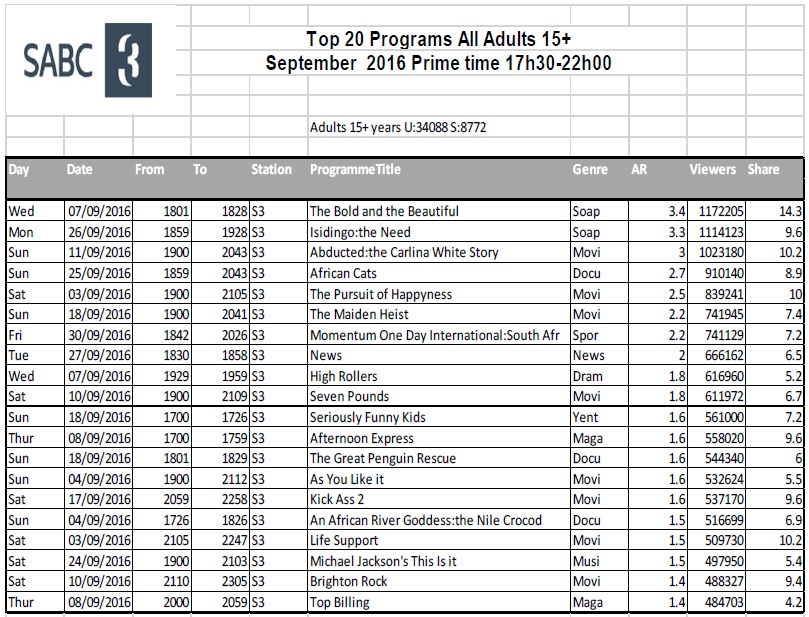
by MarkLives (@marklives) The hottest primetime television shows on SABC 3 in South Africa revealed: TV ratings for the month of September 2016.

This year, the Broadcast Research Council of South Africa (BRCSA) has changed its policy about giving away TAMS and now only monthly reports, highlighting the top 20 primetime shows on several popular channels, are available.

SABC 3

BRCSA TV Ratings September 2016 primetime SABC 3


Source: BRCSA September 2016

Broadcast Research Council of South Africa


The Broadcast Research Council of South Africa (the BRC) is a non-profit, industry body that was incorporated in 2015 to cater to the audience research needs of the radio and television industry in South Africa.

— Sign up now for the MarkLives email newsletter every Monday and Thursday, now including headlines from the Ramify.biz company newsroom service!


MagLove: The best magazine covers this week (25 November 2016)

by MediaSlut (@MediaSlut) Because of a string of bad news for South African magazine consumers, I thought I’d celebrate some of the beautiful SA covers that you’ll see on your shelves:

  • Eat Out
  • Fairlady
  • Financial Mail (South Africa)
  • Ideas/Idees
  • Intiem
  • MAN
  • Men’s Health (South Africa)

The bad news? On Wednesday, 23 November 2016, Media24 announced that it has “plans to relinquish” its international magazines TopCar, Top Gear and weekly fashion magazine Grazia. At the same time, it also announced it’s “considering the possible closure” of two of its very-popular and well-loved (according to me) titles, Lééf and Ideas/Idees.


Find a cover we should know about? Tweet us at @Marklives and @MediaSlut.
Pinterest icon Want to view all the covers at a glance? See our MagLove Pinterest board!


Because of a string of bad news for South African magazine consumers, I thought I’d celebrate some of the beautiful SA covers that you’ll see on your shelves. On Wednesday, 23 November 2016, Media24 announced that it has “plans to relinquish” its international magazines TopCar, Top Gear and weekly fashion magazine Grazia. At the same time, it also announced it’s “considering the possible closure” of two of its very-popular and well-loved (according to me) titles, Lééf and Ideas/Idees.


Eat Out 2017

Eat Out, 2017

If you only publish a magazine once a year, you have to make bloody sure that your cover is as striking and unique as possible — and Eat Out has done it again this year! Buy the digital issue here or head out to the shops to buy yours, so that you may also start highlighting your restaurants visits for 2017, like I have.

This issue was launched at its annual Eat Out Mercedes-Benz Restaurants Awards on Sunday 20 November; find its selection of South Africa’s Top 10 Restaurants here.


Fairlady, December 2016

Fairlady, December 2016: Melissa McCarthy

Fun, fit and fabulous on Fairlady! Melissa McCarthy rocks this magazine front and, from what I can see, this is the first time ever that this image of her has been used on a cover. I think she should be very happy with it, and should also share it with the world!


Financial Mail (South Africa), 17 November 2016

Financial Mail (South Africa), 17 November 2016

This cover actually made me buy this issue, and it was an extremely interesting read (now available online). Isn’t it great how all the brands (old and new) have been featured as part of a collage? And “AB InBev storms the ‘CASTLE’” is just brilliant!


Ideas/Idees, December 2016

One of the titles that could potentially be no more in the near (very near) future is Ideas/Idees magazines. I’m personally very sad to read about this, and I know several people who will share my sentiment, as the Ideas teams kept pushing the boundaries with each and every issue, and kept thousands of South Africans creative and busy, and hundreds of people actually started small businesses on the back of ideas they found in Ideas… I’m hoping someone will continue this strong and well-known brand so that we may see many, many more of these very, very creative covers…


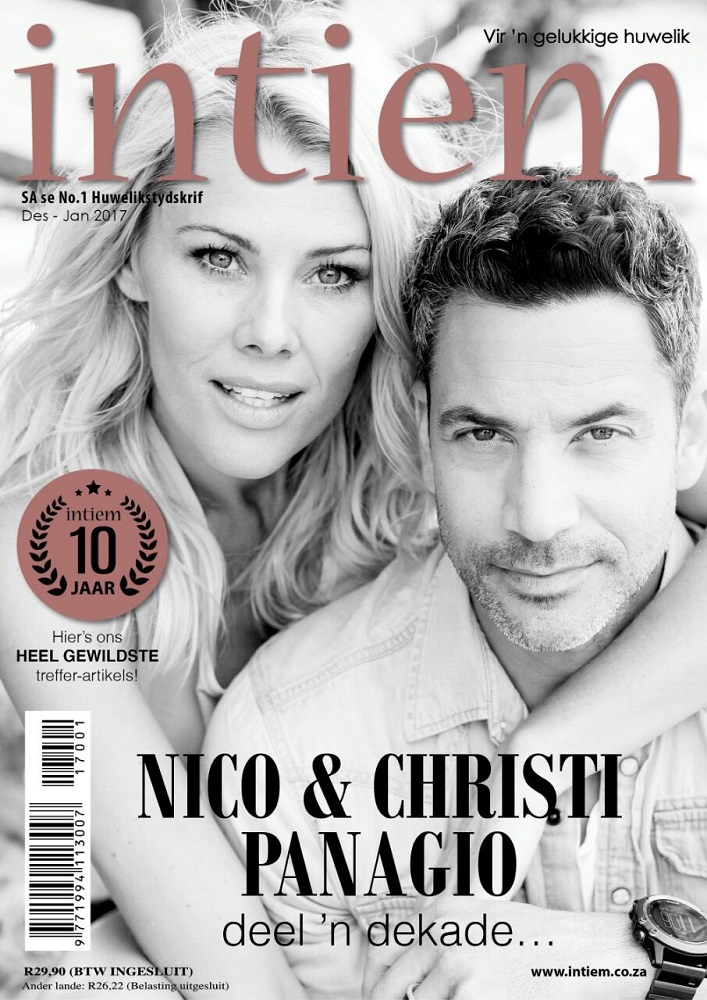
Intiem, December/January 2017

Intiem, December January 2017: Christi and Nico Panagio

I can’t believe it’s already 10 years since Intiem began teaching Christian couples how to reconnect and be intimate again! I have quite a few family members who subcribe to Intiem, and who vouch for their articles… I’ll leave it at that.

For its 10th birthday, the beautiful Christi and Nico Panagio feature on the cover in black and white, with a beautiful rose-gold foil print. This issue also features the most-popular articles from the past 10 years.

Congratulations, Intiem! May there be many more years of giving your readers pleasure…


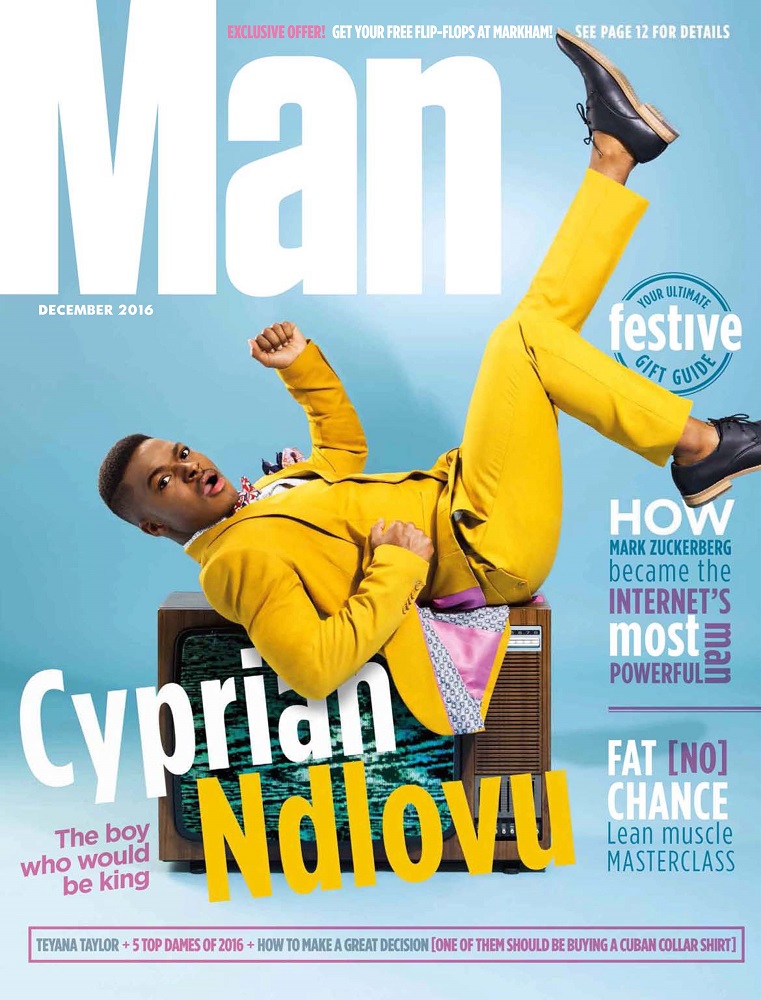
MAN, December 2016

MAN, December 2016: Cyprian Ndlovu

Looking bright and fresh here in his yellow suit is former Club 808 presenter, Cyprian Ndlovu. This TV host, radio DJ and producer, who has more than 55 200 Instagram followers, is being tipped by MAN editor, Ryan Vrede, to “break through and become an entertainment heavyweight in South Africa”. Vrede continues in his ed’s letter that “he’s got something, and we have got a gut feel that it is something special”. Just looking at this cover, and his presence on it, I have to agree…


Men’s Health (South Africa), December 2016

Mens Health South Africa, December 2016: Marco Klue

Marco Klue, a Men’s Health’ reader, is the title’s “Cover Guy Winner”. A very sought-after position by thousands of people but there’s only one who can take this title each year. Great job, Klue, and Men’s Health, too!


MediaSlutMagLove by @MediaSlut is a regular slot featuring the best local and international magazine covers every week, recognising well thought-out, powerful and interesting (and hopefully all three-in-one) covers and celebrating the mix of pragmatism, creativity and personal taste that created each of them. The anonymous (for now) blogger behind MediaSlut knows way too much for his own good about media in South Africa, magazines in particular. His mission is to show when SA magazines fail but, most importantly, also when they succeed. If you’re looking for a library about SA magazines and news, this is your one-stop pitstop.

— Sign up now for the MarkLives email newsletter every Monday and Thursday, now including headlines from the Ramify.biz company newsroom service!

Marcus Brewster joins Media Revolution

by Herman Manson (@marklives) Marcus Brewster, the founder of marcusbrewster Public Relations, is joining Media Revolution — a marketing and media services agency launched by Dharmesh Nagar seven years ago — as chairman emeritus. Brewster will be involved at a strategic level.

Marcus Brewster
Marcus Brewster

marcusbrewster becomes a ‘shop window’ to Media Revolution’s services: the brand continues to exist, and current and future clients, including those from the on-demand PR service launched by marcusbrewster earlier in 2016, will now be serviced by Media Revolution. The marcusbrewster staff members have all been retrenched.

Equity partner

According to Brewster, the process began 18 months ago when he started looking for an equity partner for the business he had launched in 1991. After meeting various agencies and coming close to several deals, Brewster was phoned by Nagar one Monday, who had heard that the business might be in the market. As it happened, a long negotiated deal had fallen through the Friday before.

Brewster says he is relieved to be “unshackled from the drudgery of running a company” and will instead focus upon expanding Media Revolution’s international client portfolio.

According to Nagar, Brewster is the right partner to add value and credibility to his company. In a tough economic climate, it has become important to partner with an established figure who can smooth entry into the local market.

Dharmesh Nagar
Dharmesh Nagar

MAC sector charter codes

Media Revolution is a Starcom MediaVest Group affiliate and serves that network in both Zimbabwe and Zambia. Current clients include Samsung, Hisense, Savanna Tobacco (Zimbabwe) and Fatti’s & Moni’s. It started in the media-buying space and gradually expanded its services to include creative, branding, events, digital, PR and media strategy. Today, Media Revolution employs 15 people.

Most of its attention has been focused upon servicing clients in several African markets outside South Africa. The barriers to entry locally remain high but Nagar is keen to grow its SA base, believing the new marketing, advertising and communications (MAC) sector charter codes will force clients to engage with smaller black-owned agencies (he describes much of the industry as continuing to be ‘colonised’).

More than just BEE credentials

He also says Media Revolution offers more than just BEE credentials; it adds value to client brands. It has invested heavily in the right people with the right skills — now it’s time for Brewster to assist in opening the right doors to other big client brands and strategically place the agency on the map and help it compete effectively in the SA marketplace.


Herman MansonHerman Manson (@marklives) is the founder and editor of MarkLives.com. He was the founding editor of media.toolbox (1998–2006) and Mobile.Works, and the co-founder of Brand magazine. He has served on the editorial boards of The Journal for Convergence, as well as of Fast Company South Africa. Winner of the 2011 Vodacom Social Media Journalist of the Year award, he was also a finalist twice in the Highway Africa Award for the Innovative Use of New Media in Africa (2003 and 2004). Over his 20-year-plus career, Herman has contributed to numerous journals and websites in South Africa and abroad, including the Mail & Guardian, .net, Intelligence, AdVantage, Men’s Health, Computer World and African Communications. He has consulted on web architecture to several financial institutions.

— Sign up now for the MarkLives email newsletter every Monday and Thursday, now including headlines from the Ramify.biz company newsroom service!

Young, Gifted & Killing It: Thabang Tipi Manyelo

by Veli Ngubane (@TheNduna) Thabang Tipi Manyelo (@tipidang) is a natural-born storyteller. He’s been telling stories for as long as he can remember. Then he made a life-changing discovery after happening to attend a Vega School open day: “I just couldn’t believe that there was a job that allowed you to write mini stories, and get paid for it!” Two Pendorings and a Loerie later, this young and definitely gifted copywriter has been killing it!

Look no further than Jabu’s Left Testicle to find out what he’s all about.

Veli Ngubane: Where did you grow up and how did your parents react when you told them you wanted to be a creative?
Thabang Tipi Manyelo: I grew up in Polokwane, Limpopo, and you can just imagine the “creative” landscape (or lack thereof) that side. I always joke that, if you want to be a “creative” in Polokwane you have two options: be an accountant or “the disappointment of the family”. Unfortunately, my parents passed away when I was eight, and I was raised by my grandmother who fully backed my desire to go to Vega (much to the disapproval of my aunts and uncles). Looking back, I bet my gran is smiling on some: “TOLD YOU! TOLD YOU!”

VN: How did you a) get interested in advertising and b) break into the industry and land your first job?
TTP: a) I’m saddened that how I got into the industry was purely by accident. I was on a gap year, trying to figure things out, and I found myself at the Vega Open Day. I’ve always loved storytelling and “creative writing” subjects, so I just couldn’t believe that there was a job that allowed you to write mini stories, and get paid for it!

  1. b) As life goes, I couldn’t afford Vega. The money my parents had left me could either pay for three years at UJ or one year at Vega. So my gran and I came up with a crazy plan. Don’t go to UJ for three years: go to Vega for one AND WIN AN AWARD THAT YEAR (no pressure) because we thought that’s the best way to ensure a bursary for the other two years. Crazy, right? I am grateful for my gran’s bravery because I won my first Pendoring Award that year and (like we thought in our plan) all the agencies lined up. I went with Draftfcb.

VN: What are your specialisations/creative processes/most-important tools of the trade?
TTP:

  • Think on your own. Think on your own for a long time. People are too quick to present “ideas”.
  • Be honest with yourself, the client, the consumer. You owe it to all three entities not to go with the conceptually bankrupt idea.
  • Present your idea! Selling an idea takes 30% idea and 70% presentation!

VN: What characteristics do you need to have to succeed in the advertising industry?
TTP:
(n + 1) This is the formula. “n” is the number of times you fail a brief. (n + 1) is thus the number of times you need to try again.

VN: What is the South African advertising industry doing right and what needs to change?
TTP: The SA ad industry knows how to make iconic product-moving work. Our agencies know how to make work that answers the brief, even if it means missing out on awards. Other countries are very award-centric. What needs to change is representation. The hands that work our industry don’t reflect our consumers.

VN: You have won lots of awards; what does it take to create award-winning work?

TTP: First, give the client THE BEST ITERATION of what they think they want. Now make the ad that you want! Because, more often than not, [at] the point where what your client wants and what you want meet, you’ll find awards on awards on awards.

VN: Do you have advice for upcoming youngsters in the advertising industry?
TTP: Make the ads that YOU LIKE. That YOU WANT TO SEE ON TV. Because that’s why we hire you. For you. Not for a B-grade “Grant Sithole” or “Brett Morris” knock-off. You!

VN: What is your favourite ad campaign, past and present, and why?
TTP: My favourite past campaign is the first Cannes Lions Grand Prix South Africa has ever won. It was a print execution called “Periscope” for Lego: one Lego piece on a blank background, and the tagline simply says: “Lego — Imagine…” This is an example of communication that speaks directly to the brand but, more importantly, [to] the little kid inside that doesn’t see a blank background but sees a battleground of a war they’re about to win. And that is what advertising is about — when you put client and consumer at the centre of communication.

My favourite present campaign is the second Cannes Grand Prix SA has ever won. The “Do It With” Lucozade campaign — but only the “Teleconference” execution. This is an example of great writing meets precise execution. People think it’s not that great. People don’t think its “smart” enough. They must shut up! I think that, if that ad was presented to you and you didn’t see the simple-yet-smart insight behind it (that everyone ignored), and you said “it’s not smart enough”, you would’ve deprived the world of great communication. Luckily, you weren’t the person making the call.

VN: Interesting hobbies/second jobs/bits of information that make you pop as an individual?
TTP: Music. And ridiculous online content that makes people happy. Just search “Game of Bones”.
VN: Where and when do you have your best ideas?

TTP: I walk. I walk and talk to myself. People [who] see me think I’m crazy. I’m thinking, “That’s Loerie Gold!”

VN: If advertising became obsolete, what would your next career field be?
TTP: Film. I’m a storyteller at heart and, if this calamitous day were to arrive, I’d find a way to keep telling stories.

VN: What has been the most-exciting project that you’ve worked on?
TTP: I won’t lie, it was a student project I did for OppiKoppi (my first award). To this day, I have never put that much of myself into any piece of work. It was raw, unrestricted and kept my heart pounding at every step of the way. I miss those “briefless” days.

VN: Do you have any new exciting projects you working on at the moment that you can share with us?
TTP: PieSlovakia&Dance. Remember that name. An entity that is about to revolutionise the online content landscape of this country. Truly South African stories strictly made for mobile. Damnit! I think I’ve said too much

VN: What do you consider the most-effective current form of advertising in SA?
TTP: Effectivity depends on the consumer’s ability to receive your message and, in our country, radio is killing it!

VN: Please would you supply two or three pieces of work you have been  involved in?

Cansa Testimonials
“Jabu’s Left Testicle”

Gill Stop The Nonsense
Man Campaign
“Loadshedding”

Coca-Cola Share A Feeling
Share A Coke Campaign
“Hey Nonhle”

https://www.youtube.com/watch?v=1xI08uyrZsE

Forgotten Anniversary
FCB Africa

Toyota Automark
JD’s dealership campaign
“Warranty”


Veli NgubaneVeli Ngubane (@TheNduna) entered the world of advertising with a passion after completing his BSocSci (law, politics and economics) at the University of Cape Town and a post-graduate marketing diploma at Red & Yellow, where he also currently serves as advisory board chairman. He is the chief creative officer and founding partner of one of the fastest-growing agencies in the country, AVATAR. A full-service marketing agency with digital at the core, its clients include Brand South Africa, FOX Africa, National Geographic, SAA and Chevron. Veli hails from Kosi Bay in the rural KwaMhlaba Uyalingana area of KZN. In his monthly column “Young, Gifted & Killing It”, he profiles award-winning, kick-ass black creative talent in South Africa.

— Sign up now for the MarkLives email newsletter every Monday and Thursday, now including headlines from the Ramify.biz company newsroom service!

#OpenAfrica: Media landscape changes, metrics remain the same

an #OpenAfricaMag feature by The Holmes Report. In-house communicators and PR agencies are now working across multiple channels, but remain challenged by an inability to develop new measurement models, according to the inaugural Global Communications Report, which is produced by The Holmes Report in conjunction with USC Annenberg Centre for Public Relations.

The Global Communications Report, a comprehensive worldwide survey of more than 1000 senior public relations executives, has already revealed the scale of disruption affecting the PR industry, the need for new talent and skills, and how media channels are being used and measured differently.

Traditional focus

Less than a third of the average corporate department’s media budget (31.9%) is today being spent on earned media — the traditional focus for corporate communications. Slightly more (32.1%) is being spent on owned media, such as websites and blogs, while 17% is being spent on paid media and 16.4% is being spent on shared media.

And in-house respondents expect the shift away from earned media to continue over the next five years. They project that, by 2020, slightly more than a quarter of their media budget (26.6%) will be focused on earned channels, with 31.3% to owned media, 22.8% — the biggest increase — going to shared, and 17.3% being spent on paid media.

“Given that paid media are likely to remain the most expensive, this raises questions about whether corporate communicators are underestimating the importance — or the budgetary impact — of paid channels,” said Holmes Report CEO, Paul Holmes.

In contrast, agencies report that more than 50% of their revenue is currently derived from earned-media activities, followed by 20.5% from owned media, 17.2% from shared media and 9.3% from paid media.

Future media mixHowever, looking to 2020, agency leaders also expect to see their revenue streams shift away from earned but it will still be the dominant revenue driver at 36%, while all of the other categories will grow — owned to 24.6%, shared to 24.2% and paid to 12.9%.

In total, PR executives predict that, by 2020, 63% of all media outlets will offer paid-placement opportunities, which may be a low estimate. Ironically, only 8% rank media-buying skills as an important staff skill for the future.

“We are seeing a significant across-the-board directional shift away from traditional media relations to owned, social and paid media,” said USC Centre for Public Relations director, Fred Cook. “Given the changing revenue model for the majority of media outlets, it’s surprising that the projected investment in paid media isn’t higher. Paid may be a missed opportunity.”

Data and analytics

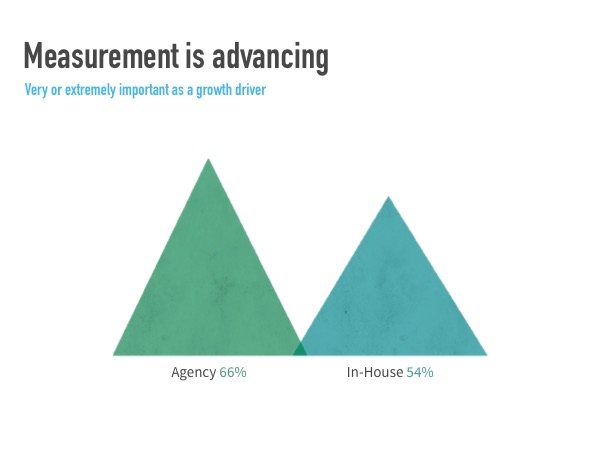
There is some encouragement where measurement is concerned: PR executives do see improved measurement and evaluation as a growth opportunity. It ranked third on a list of 18 potential growth drivers among agency respondents, compared to seventh when clients were asked where they expected to see growth.

Measurement is advancingHowever, current measurement models are still alarmingly focused on measures of output — such as total reach or total impressions — rather than upon business outcomes.

Agency and client-side respondents rated total reach as the most-common form of measurement (68%), followed by impressions (65%) and content analysis (64%), with less emphasis upon brand perception (47%) or attempts to measure return on investment (41%).

Surprisingly, 30% said they used advertising value equivalency (AVE) — considered a discredited metric within the industry — most or all of the time.

Social media measurement is equally unsophisticated. The most common metric reported by agency and client-side respondents is a simple count of followers (78%), followed by reach (77%) and interactions such as likes or comments (76%). By comparison, relatively few are tracking sentiment (62%); social listening, such as real-time monitoring on conversations (47%); or changes in opinion or action (36%).

Corporate and agency leaders ranked “using a unified index based on business interests” the lowest on the list at 25%.

“Measurement remains the holy grail in the PR industry,” said Cook. “Everyone agrees that it’s a huge growth opportunity but few seem to have figured out an integrated approach to determining the real return on investment for communications.”

For more insights, articles and analysis of the PR industry, go to www.holmesreport.com.


Open AfricaThis feature first ran in Open Africa, the definitive guide to business, branding and marketing in Africa, brought to you by Ornico in partnership with GIBS Business School, with MarkLives.com as its official media partner. Download the entire publication free of charge (registration required).

— Sign up now for the MarkLives email newsletter every Monday and Thursday, now including headlines from the Ramify.biz company newsroom service!

Beyond Borders: A tale of two cities

by Craig Page-Lee (@cpl_ignite) There is an abundance of large-walled communities and small cities springing up around the outskirts of old Cairo, specifically to the east of the city along Suez Road, the main corridor heading out of Cairo towards the Suez Canal.

I’ve recently been travelling on a regular basis to Cairo to work upon a few projects, specifically that of the branding and identity development of a visionary new city outside the amazing city of Cairo. Some of these wall-enclosed developments are visible from the sky when approaching Cairo International Airport, looking like a tapestry of desert-sand patches interwoven with man-made green landscaped gardens. Once on the ground and heading into the old city along El-Nasr Road, it’s hard to imagine that such oases exist in this incredibly dense, at times rudimentary, and over-populated city.

Context

It’s important first to contextualise Egypt, the country, and then make some comparisons between Cairo, Egypt’s biggest city, and Johannesburg, South Africa’s biggest city.

Egypt has been divided for administrative purposes along a complex set of rules and, instead of defining the geographic layout along the principle of provinces, Egypt is divided into “governorates”. Governorates are either fully urban or a mixture of urban and rural areas, with urban areas having a population density in excess of 1000 people/km2. Greater Cairo, consisting of Cairo Governorate (of which Cairo City is the capitol), New Cairo City, Giza, Shubra El-Kheima, 6th of October City and Obour City, collectively house a population estimated at 20.5m people. This area is also the largest metropolitan area in Egypt and the largest urban area in Africa.

The current population of Egypt is estimated as being around 84.73m people and is expected to grow to about 103.742m by 2025, with an average annual growth rate of 1.6. Cairo, the national capital of Egypt, is dusty, dense and chaotic, with around 9m residents living in the city and about another 2m commuting in and out each day. It is the most-densely populated city in Egypt, followed by Giza with close on 8m residents and then Sharqiya with close on 7m residents. Cairo houses in excess of 25% of the country’s employed population and contributes about 34% of Egypt’s total GDP. The Cairo Metro extends across the vast land mass in three different lines and carries almost 4m passengers a day

Comparisons

Compared to SA, Joburg has an estimated population of about 4.4m people, while the Greater Johannesburg Metropolitan Area has a population of about 8m. Even when including the outlying areas of the West Rand and Lenasia, the collective population is only in the region of 10.5m people, half of that of Greater Cairo.

As the 27th largest city in the world (2013), and commercial centre of not just SA, but Africa as a whole, Jozi contributes about 46.4% of Gauteng’s GDP, 17% of SA’s wealth and 7.7% of Africa’s GDP. It’s obvious to see that the abundance of natural resources and mining activities plays a huge role in positioning Johannesburg, and Gauteng, at the top of the Africa rankings.

Even though Egypt is still in a state of economic flux, entering into political uncertainty after the ousting of president Mohamed Morsi in July 2013, there is a sense of energy, pride and self-belief that permeates the air. I can only assume in a region still facing so many economic challenges, and with population figures so high, that this positive attitude is driving the population to seek self-betterment and, inevitably, making is lifestyle changes — such as moving away from the densely, overpopulated, grid-locked parts and seeking refuge in the new walled and gated communities that are advertised along every main road and vantage point across the city. These so-called ‘new cities’ all promise an integrated lifestyle, supported through the inclusion of different residential densities and housing types, office parks, retail precincts, schools, hospitals and dedicated green belts and parklands.

Sheer magnitude

One such city under construction in Cairo is the project that I have been working on from a brand and identity development point of view. Spanning some 562 500ha in area, “the mixed use project aims at creating a well-integrated and harmonious urban environment, primarily encompassing residential units in addition to green public areas, retail, entertainment, commercial and service zones, all of which contribute and offer all the requirements of a suburban life, yet is represented as a self-sufficient urban community.”

What is so incredible about this project is the sheer magnitude of the developer’s vision and the careful consideration taken in designing the town-planning aspects of the masterplan, thereby ensuring a fully integrated and self-sufficient community with all amenities catered for — from schools and hospitals, leisure and entertainment to retail and commercial and finally a mix of residential zones and building types, interwoven with parks, green belts and waterways. This is only one of many such developments being undertaken, or envisioned, including those by developers for the UAE.

The only truly integrated lifestyle community development that I can think of that compares to this development in Cairo is that of Waterfall Estate near Midrand in Gauteng. Although not an entirely walled and gated city (only residential zones are gated), the full extent of this mixed-use development most definitely imbues that of a small city. With over 2000 residential lots (including the retirement village), a hotel, the Mall of Africa (over 131 000m2 in size and the biggest single-phase-build retail mall in SA), an office park (over 38 000m2 of gross lettable area), hospital, schools and other mixed retail, entertainment and leisure activities in a predefined area, this most definitely symbolises what one would expect a small city to consist of. While slightly smaller in total land area (not necessarily total bulk or density), the development that I reference most definitely compares favourably in vision and objective.

For a country in such a state of flux and somewhat economic instability, the dream is becoming a reality and people are working hard to better themselves and move into a different economic status. Walled and gated communities represent this aspiration and hope, and are evidence of achievement for those living there. A far cry from the desperate need to move into such environments as a means of security and self-preservation, as is the case in SA. May Egypt continue to grow and prosper.

References


Craig Page-Lee 2016Craig Page-Lee (@cpl_ignite) is the former group managing director of Posterscope South Africa and is now an independent consultant servicing the broader brand, marketing and communications industry. His monthly column on MarkLives, “Beyond Borders”, focuses upon doing business in various African markets. Craig is always available for a coffee catch-up and chat (email craig at d-cifr dot com).

— Sign up now for the MarkLives email newsletter every Monday and Thursday, now including headlines from the Ramify.biz company newsroom service!

Africa Dispatches: Meditations on SA’s beautiful madness

by Mandy de Waal (@mandyldewaal) What is the relationship between commerce and art? And why should advertisers, brand owners and marketers take notice of local art?

Jozi painter, Robyn Field, is in love with the “crazy beauty of being South African”. The fine artist, who is in residence at August House in the CBD, says of this “crazy beauty”: “It’s a highly charged time. I struggle to process a lot of what’s going on,” adding that her art offers her a way to reflect upon what’s happening in this country. “I prefer creating paintings to listening to political debates or reading opinion pieces, which can become like a long trip into the echo chamber,” she says.

Lens

Her work, recently on display at Julie Miller Investment Art Institute at the Mall of Africa in Midrand, reflects this and offers a lens for people to look through at South Africa and the world. One of her pieces — United Decisive Action — displays a haunting, apocalyptic scene in fulvous shades with black definition. This piece is a ‘beautiful’ portrait of a recently bombed Homs, Syria, that speaks to humanity losing the ability to discern, in an age of social interaction, overexposure and the distance created by the real and the perceived.

“At the moment, social media features conceptually and visually in some of my work because public discourse in 2016 has been so bizarre. A lot of the strangeness has to do with digital communication,” Field says. “People are struggling to get their heads around how we talk to each other right now,” she continues, explaining that the changing modes of communication, human behaviour and the “weirdness” of this all saturates her work.

Despite the subject matter being contemporary, Field’s chosen medium is traditional. There’s nothing digital in the media she uses in her creative process, which is charcoal on canvas, ink or layers and layers of paint. “It has been good fun and cathartic to get well away from screens and pixels. I use traditional materials as a form of personal meditation, I guess,” the artist adds.

“Artists are reflective”

This accords with Field’s view that, in an era of social media where everything is fleeting, she believes that people should think as deeply as possible about the social issues that affect them politically and personally. “Artists are reflective, and so is their art. We take time over a piece while we engage with the theme. I’d like to think the viewer is encouraged to engage in a similarly reflective way with the artwork and the issue it explores,” she says. According to Field, this is particularly relevant in SA, a country divided. The artist says that this binary has caused an environment where “unbridled judgements” run away with us. “We could all do with some reflection, even on issues we believe we fully understand and feel very strongly about.”

Field reflects upon the rise of political art and its popularity, and says that art informs society and reflects popular beliefs and the emotion of a particular passage in time. She says this is more prevalent of young and emerging artists who become an important barometer for society’s emotions. “Professional artists by and large paint for the market they have developed for themselves,” she says. “Once an artist has reached a certain level, much has been invested in them, and many people’s reputations and careers rely on their continued success. Often the work can become irrelevant as the commercial wheel revolves.”

Fashion and trends

What, then, is the relationship between commerce and art? “Commercial entities always try and use art to ‘sex’ up their brand, especially in the context of launch functions and viral marketing,” Field responds, adding: “Some big brands have substantial art collections, but these are largely investment opportunities. In all but the most exceptional circumstances, the art is irrelevant.” Field believes that fashion and trends dominate corporate art.

Why should advertisers, brand owners and marketers take notice of local art? “If you want to stay in touch with how local societies are evolving — something brands and their agencies need to do — it is much quicker, cheaper and more intellectually effective to look at what young artists are doing than to arrange focus groups or rely on trend reports,” she says.

Field has spent years on the Joburg arts scene, chiefly as owner and curator of Unity Gallery, 2003–2013. Through this CBD-based gallery, Field worked with emerging artists to develop their careers, founded craft and design projects and partnered with NGOs to help them hold exhibitions and promote young talent. In recent times, she’s been focusing upon her own work.

Some of her pieces

From Those Fabulous Folk Who Brought You Apartheid

Robyn Field 2013 From Those Fabulous Folk Who Brought Your ApartheidInspired by the storm of (often violent) digital conversation sparked by an open letter to white people penned by social commentator, Gillian Schutte, this piece offers a snapshot of the emotional Zeitgeist of ‘702-land’. Screaming faces surround an African landscape vortex, which features the key aesthetic and political markers of the colonial spirit: an African bushveld devoid of Africans, traditional African fabrics and textures to be used in craft markets and clothing designs. The piece suggests that, for a lot of the time in South Africa, people are screaming in protest to save an Africa they have never actually been involved in, or understood.

Gentle Man

Robyn Field 2014 GentleManThe Joburg creative scene is filled with a lot of peace-loving, friendly, creative people, among them quietly spoken rastafarians and others of a rasta sensibility. It may come as a surprise, then, for city visitors and people of the development and NGO mind-set to find out that many of these friendly creatives are also very militant about many matters, from the highly westernised nature of development programmes through to the land — how it was taken, and when it will be returned. This piece captures something of this dichotomy, which has a distinctly Pan-African feeling to it. The figure is gentle and smoky, but he exists within the context of routine violence, surrounded by the guns we associate with Africa, child soldiers, armies and roaming militants. Look closer, and you’ll see his outline consists of a string of bullets.

Pyramid of Fools

Robyn Field 2015 Pyramid of FoolsThe cult of leadership has dire consequences, and yet across the world, belief in the hero leader (be that leader a CEO, a politician, an evangelist or philanthropist) has never been stronger. We ascribe all sorts of miraculous events to hero leaders, outcomes that really are the result of a far more-complex arrangement of circumstances and forces than we are willing or able to understand. Hero leaders seldom deliver hero results. Instead, the cult of the leader sees an inverted pyramid of vested interests surround the power. And then, when the leader is removed, as he or she eventually must be, chaos results. Dedicated to the (political) memory of Thabo Mbeki.

United Decisive Action

Robyn Field 2016 United Decisive ActionGlobal conflict (whether terrorism or collective military actions featuring several nation states, designed to ‘save’ a particular country) is generally described in confident, decisive terms. From Iraq to Libya to Syria to Nice, the verbiage is outrageously confident, given the chaos that results. The global public is gripped by it all, without understanding much of it. The narrative of chaos is addictive and widely shared, supported by images of war and destruction that may or may not relate to the text at hand, but that always fit into the category of poverty porn, war porn, terrorism porn and so forth. To steal the words of John Oliver, we seem to have an increasing tendency to bring our feelings to a fact fight. How addicted have we become to the feelings thrown up by social media debate and popular discourse? How estranged have we become from fact, balance and reason? The image plays with these ideas by presenting an uncomfortable slice of beautiful war imagery, this time from Homs, Syria.

Take Your Shit and Go

Robyn Field 2016 Take Your Shit and Go.

This piece explores the idea of Africa as currency — particularly for NGO types, Europeans, Americans, writers, artists and others who build careers upon the back of the idea of the dark continent and its development. The scene is rushing towards colonial opulence, a mansion rich with the treasures of conquest, from elephant heads to rare collectables. In the rear-view mirror, one of Joburg’s many recyclers drags the waste of upper-class life, pulled methodically from suburban garbage bins, to the depot to earn a scant living. The recycler marches across an early SA colonial landscape, one where the railway lines that facilitated the extraction of mining wealth from the country have barely been laid. The development of Africa, inclusive of the education and upliftment of the original inhabitants, has been a narrative trope for centuries. It has, indeed, formed the foundation of colonial and post-colonial economies. When all is said and done, however, the people who use this language are generally headed in a particular, self-serving direction. A direction which has surprisingly little to do with development, or the communities upon whose backs the protagonist’s career was built.

Izikothane

Robyn Field 2014 Izikothane

The Izikhotane phenomenon flickered strongly in the 2010–2014 years. It would see groups of young township residents battling against each other in the manner of a hip-hop or spoken word slam — but this time the contest was fashion and personal style and wealth. The protagonist with the fanciest clothes, the person able to demonstrate the greatest consumer opulence, would be the winner. Brands were king in this context. Shoes had to be Caravels or better. Custard had to be Ultra Mel. A battler would, for example, throw his or her Ultra Mel to the winds, to demonstrate just how little such a luxury item meant to them. Cash, equally, was sometimes burned (when the fad was at its height). The scene was infused with tragedy, as participants almost always came from poverty stricken backgrounds and were borrowing money from parents and grandparents to compete. This piece was born when a friend sent an SMS reading: “You won’t believe it, but there is actually Ultra Mel landing on my lounge window right now, as I type…”

Picture of Robyn Fields by Rethabile Phakisi.


Mandy de WaalMandy de Waal (now known as Charlie Mathews) is a writer based in KwaZulu-Natal, South Africa, as well as contributing editor to MarkLives.com through her monthly “Africa Dispatches” column.

— Sign up now for the MarkLives email newsletter every Monday and Thursday, now including headlines from the Ramify.biz company newsroom service!

Ad of the Week: Getting coached by Mr Mo

by Oresti Patricios (@orestaki) Satirical humour sometimes fall flat in advertising because it’s tricky to get right. But this couldn’t be further from the truth in the new King Price ad campaign, which ties in with the moustache-growing month of “Movember” and shows that South Africans can laugh at themselves.

King Price is smartly setting itself apart in the short-term insurance industry with an innovative approach that pushes at the boundaries and the constant, smartly executed, brand-building ensures top-of-mind awareness in a crowded market. By tying in with themes such as Movember, the brand builds an association with the target of a company that is friendly, relevant and approachable.

Peter de Villiers, aka “Div”, the man who replaced Jake White as coach of the Springbok rugby team, has taken up a new national position again. Div served as South Africa’s coach to the Springboks from 2008 to 2011, and became known for being outspoken when defending his own players, or accusing the All Blacks of cheating. He was also instrumental in transforming the game from its ‘whites-only’ heritage to being more inclusive.


Pinterest icon View all the Ads of the Week at a glance on our #AdoftheWeek Pinterest board!
YouTube icon Watch our 2016 #AdoftheWeek playlist on YouTube


This time, the coach’s new, somewhat unusual, role is that of moustache-aficionado and -expert, thanks to King Price. And he’s been provided with a script that should tickle the funny-bone of every South African — Div gives a dead-pan soliloquy that manages to mash the Movember message with otherwise serious topics.

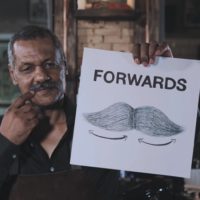
In the first ad, “Manage your Mo”, the target is “change management”. De Villiers introduces himself as a “renowned moustache expert”, and the location is, as one might expect, a barber shop. He waxes nostalgic over the good old days, “when we were feared and respected for our moustaches”. But things have changed. “Nowadays,” he complains, “even the Japanese make ours look weak” — referring, presumably, to the Rugby World Cup 2015, when Japan thrashed the Boks. But, he points out, “you can’t just blame the moustache… the moustache can only perform with good management.”

After a few more puns and double entendres, De Villiers concludes with: “Let’s get back to the basics… and see if we can manage to grow.” He then proclaims: “Manage your mo.”

For the second ad in this campaign, “Movember Growth”, Div subtly satirises the quota issue, transformation in sport and race relations. A tricky subject, but there’s no harm in poking a little fun at the vocabulary that has been created around the topic. This works like a charm because of his history with transformation in rugby — he was, after all, the first coach that wasn’t white.

“One of the most important things with a moustache is growth,” de Villiers declares, adding: “All hairs should be treated equally and be given equal-growth opportunities.” De Villiers has the perfect moustache for this, because his fine specimen has both white and black hairs. The former Springbok coach continues: “If there is a performing white hair, let him grow. If there is a performing black hair, let him grow. It’s not about a race: you want everyone to grow together.”

The next section plays with rugby phraseology, which ties in with Div’s role in transforming SA rugby. The script is peppered with terms such as “getting bullied at the mall [maul]” and “giving away your possessions”, which he delivers with a straight face. The speech ends with the message that it’s important to “stay mo-tivated”. Each advert in the series is completed with the hashtag #movember and the King Price logo.

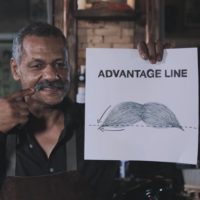
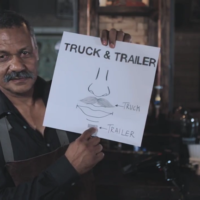
The third in the series, “Backline Movember”, talks about the various positions on the rugby field, and once again applies this to the moustache, with puns galore. The fourth ad, “Mo-vember Jargon” plays with some of the unique rugby technology, such as “TMO” and “Truck-and-trailer”.

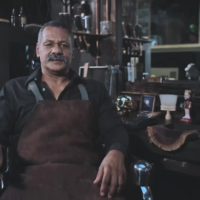
There’s a lot of attention to detail. The set is beautifully done — all dark and goth with a steam-punk edge, so the environment looks like the kind of place where a hipster or Boland rugby fan would feel equally at home. The background music is also one of those stirring, anthemic pieces that filmmakers might use for a scene of a political leader giving a speech about going to war, or a coach giving his team a half-time pep talk. This adds an extra touch of irony.

Using De Villiers is a clever move on the part of King Price. He wasn’t always popular in SA rugby, but he brought a passion and determination to transform the sport. It’s a risk that I believe has paid off: It’s his dead-pan delivery of wordplay and puns that really makes the comedy in this campaign; the script is well thought-out; the location is beautifully filmed; and the overall production is slick.

A clever campaign from what is fast becoming a great brand — I’ve no doubt that this calibre of advertising is its own reward. Now, excuse me, please, I’m going to put some growth serum on my mo; when compared to Div’s, the one I’m growing for Movember is still looking a little patchy.

Credits

Concept, direction & script: Bouwer Bosch, Bennie Fourie
In collaboration with King Price marketing team


Oresti PatriciosAd of the Week, published on MarkLives every Wednesday, is penned by Oresti Patricios (@orestaki), the CEO of Ornico, a Brand Intelligence® firm that focuses on media, reputation and brand research. If you are involved in making advertising that is smart, funny and/or engaging, please let Oresti know about it at info@ornicogroup.co.za.

— Sign up now for the MarkLives email newsletter every Monday and Thursday, now including headlines from the Ramify.biz company newsroom service!

Online CPD Courses Psychology Online CPD Courses Marketing analytics software Marketing analytics software for small business Business management software Business accounting software Gearbox repair company Makeup artist