Dear Radio: The podcasts that should be getting your attention…

by Paulo Dias (@therealptp) With so much fanfare, around-the-clock coverage and a trending hash tags aplenty, there was no way that you could have missed World Podcast Day on 30 September 2016. In case you did, however, 30 September was World Podcast Day, a day when lovers of podcasts like me celebrate with day-long street parties, in complete silence, as we’re all listening to podcasts.

The merits of podcasts have been debated as long as podcasts have been around, with as many fans as there are detractors. Every day, someone new is podcasting for the first time as the way podcasts are distributed becomes easier…and starts making some sense…the producers of the podcasts become more mainstream or more-mainstream people start producing podcasts and the content becomes more niche, engaging and richer.

If you’ve not yet jumped on the bandwagon or are considering doing so any time soon, here are some of the podcasts, both local and international, in no particular order, that should be first on your playlist.

CliffCentral

Take your pick. People are coming round to what CliffCentral is all about and I am glad. It’s audio content produced by and for very cool people. To paraphrase an ad campaign by a local streaming service, you want to hear about cars, there’s a show for that; you want to hear about sports, there’s a show for that; you want technology, self-improvement, comedy? There are shows for that, and more being added all the time. The people at Cliff Central want to eventually be running a show for every niche audience out there and they have a mix of experienced presenters alongside new blood who are trying different things all the time, which means a listening experience unlike anything you’re used to.

Serial

You’re not going to get through a list like this without bringing up the podcast game-changer. Do a quick Google Search to find out about the social impact this podcast series made when it was first released, then listen to it to understand why.

In the mid ’90s a high school student, Adnan Syed, was arrested and eventually jailed for the murder of his girlfriend. Years later, Sarah Koenig picks up the story and unravels it for us. It seems like an open-and-shut murder case and, by the end you may feel that it is, but on the way — you’ll meet a range of colourful characters and a set of bizarre circumstances, and question who exactly this podcast is all about.

Serial is podcast lingo-bingo — Sarah Koenig, This American Life, Adnan Syed — three names you can utter to come across as a podcast know-it-all.

Season 2 was the difficult second album but it is harshly treated by being compared to season 1.

If you don’t listen to any other series on this list, make sure you get some Serial in your life.

Love letters from the Front — BBC

If you love audio, you’ll love the craft and care BBC put into its productions. Love letters from the Front is an interesting series that tells the story of a WW1 soldier through love letters between him and his love back home.

Well-written, beautifully performed and produced, and just an all-round guilty pleasure.

Life — Primedia Broadcasting

Podcasting is seen as a challenger to the traditional linear way of radio broadcasting that tries to be all things to all people, so it’s welcoming that one of South Africa’s traditional broadcasting powerhouses enters the game with an offering such as Life.

Bringing you the same quality you expect from its on-air stations, particularly 702, Life commits time and energy to longer form storytelling and coverage over a number of topics.

The Adventurers by Sam Cowen and Pippa Green’s History for the Future are particular highlights.

Old Mutual Live

The only commercial entry on this list but also a series that features strongly and regularly on SA podcast rankings.

Old Mutual use Old Mutual Live as a way of highlighting its sponsorship properties by offering real useful advice and engaging content relevant to listeners interested in running, mountain biking and wine.

Brad Brown, Gerald de Kock and Jenny Cryws-Williams are the experienced presenters behind the mic, giving the range of Old Mutual podcasts real gravity and offering a product as strong as anything heard on-air or online.

If you’re in to mountain biking, running or wine — you can’t go wrong by adding these to your playlist.

Disclosure: Ultimate Media supplies the presenters and manages the recording.

The African Tech Round-up

There are very interesting things happening in tech across Africa, which give Andile Masuku and his team on the Africa Tech Round-up loads of content.

Well-researched and -produced and a real rich sound, this is a podcast with a truly African feel that is getting lots of attention around the globe due to subject matter and production value.


Paulo DiasPaulo Dias (@therealptp) is the head of creative integration at Ultimate Media. He works closely with the programming teams at leading radio stations to help implement commercial messaging into their existing formats. He contributes the regular column, “Dear Radio”, looking at the changing radio landscape in South Africa, to MarkLives.com

— Sign up now for the MarkLives email newsletter every Monday and Thursday, now including headlines from the Ramify.biz company newsroom service!

Emotional storytelling and what brands forget to tell

by Tenielle Maris. Human storytelling has the innate ability to make a brand more engaging and more authentic, if done in the right way.

It’s not new news that emotional campaigns and content are the ones that seem to get the most shares, the most views and the most talkability. We are all only too familiar with those ads that have caught our attention for the simple reason that they are the ones that resonated with us. The question is whether these big emotive pieces are truly effective in changing behaviour and — in a time where emotion seems to be the card being played by every brand — is it something that will begin to lose its effect?

Factors in decision-making

A professor of neuroscience at the University of Southern California, Antonio Damasio, argues that emotion is one of the most (if not the most) important factors in decision-making. He explains that our emotions and the value that we ascribe to a person or object are the consequences of our past experiences. If emotion has the power to unearth past experiences that are unique to each individual, it is no surprise that an emotive brand piece is the one that we will remember: suddenly that brand becomes personal.

Dove Portugal’s latest campaign, Real Beauty Beats, is emotional storytelling at its best and one that strikes a chord within me for the simple reason that I can identify, emotionally, with what Dove has to say.

Consumer psychologist, Peter Noel Murray, explores the role of emotions in influencing what we buy: an understanding of consumer purchase behaviour must be based upon knowledge of human emotion and consider the paramount influence that emotions have upon decision-making. For a brand to emotionally connect with a person, that brand needs to resonate with that person upon a level that is powerful enough to propel them to take action. In an era where the consumers are looking for ‘more’ of everything, is emotion really enough to convince someone to make a purchase decision?

The question remains

There’s no doubt that emotion plays a part in creating meaning and purpose for a brand in a person’s life, but the question remains whether marketers and advertisers have become so obsessed with creating an emotional connection that they have begun to ignore telling the world what their product or service actually does. When storytelling has been made the hero of so many campaigns, brand cues and benefits have become the secondary focus, added to the end of an advert as an afterthought.

In a recent article by Brand Strategy Insider, striking the right balance between product vs purpose is explored: “Too much product risks losing a sense of context of the bigger picture thinking that drives epic storytelling…too much purpose and the product itself risks getting lost in self righteous rhetoric…”

Coca-Cola’s bold move to launch a global ‘One Brand’ strategy makes the product a key feature of the brand’s storytelling. Rodolfo Echeverria, Coca-Cola’s VP of global creative, sums its thinking up perfectly: “We are integrating the product story with the emotional story much more than before. Overly emotional ads that get awards at the festivals don’t matter because the brand isn’t even related to the story.”

Reasons to believe

For emotive storytelling to add true value to a brand, beyond the emotional connection, then it needs to beautifully and seamlessly integrate the most distinctive reasons to believe into the brand message, to ultimately compel someone to take action.

With Christmas around the corner we can expect big warm and fuzzy pieces from brands hungry to connect with consumers on a deeper level, via good old nostalgia and emotional storytelling. I’m eagerly waiting, not only to indulge in these award-winning pieces, but also to find out how many brands actually get it right.


Tenielle MarisTenielle Maris is strategic director at TTL agency 34° in Johannesburg. Beginning her career in branding and communications, she has spent the last decade in the marketing industry where she has worked upon big brands spanning the African continent. Having found her passion in understanding what drives human beings to connect with particular brands, her time is spent getting up close and personal with the people whom brands are trying to connect with.

“Motive” is a by-invitation-only column on MarkLives.com. Contributors are picked by the editors but generally don’t form part of our regular columnist lineup, unless the topic is off-column.

— Sign up now for the MarkLives email newsletter every Monday and Thursday, now including headlines from the Ramify.biz company newsroom service!

Ad of the Week: Walking on sunshine

by Oresti Patricios (@orestaki) Vodacom, Ogilvy & Mather Johannesburg and Ian Gabriel of Giant Films team up with renowned dames of the South African entertainment industry — Usha Khan, Gaenor Becker, Abigail Kubeka and Elize Cawood — to deliver a fun road-trip story that is part Thelma and Louise and part Driving Miss Daisy.

Vodacom has produced entertaining ads throughout its existence, from the iconic Yebo Gogo campaign to the irritatingly memorable Mo the dancing meerkat. Even though it is the largest cellphone provider, it has taken cognisance of the competition from large and small alike, and has always been innovative and adventurous in its advertising. This latest summer campaign from the red cellphone company is no exception, and it starts with a TV commercial tied to an app and a celebrity road show.

The ad, Play Every Day, serves as a call to action for the Vodacom app, which is designed to be an easy way of checking your balances and doing basic tasks such as purchasing airtime, data and top-ups. The app now has the added opportunity of winning prizes, including electronic gadgets, holidays and data bundles. Each day, everyone gets one free spin of the wheel.


Pinterest icon View all the Ads of the Week at a glance on our #AdoftheWeek Pinterest board!
YouTube icon Watch our 2016 #AdoftheWeek playlist on YouTube


The TV commercial that tells this story is set somewhere in the Western Cape. It starts off in one of those classic little towns in the Klein Karoo, such as Barrydale, Montagu or Prince Albert. A red Mercedes 450SL (an R107 model from the mid-1970s, if I’m not mistaken) pulls up in a cloud of dust outside a house with a quick hoot. Inside, the character played by Khan jumps up and calls her dog, a gigantic poodle. She grabs her suitcase and heads out the door, forgetting the gift which is right there, with a big sign saying “Don’t forget”. The car is driven by Cawood, and they rush off to the next stop, which is a house from which Becker emerges.

The music is “Walking on Sunshine”, the appropriately bouncy and happy pop song made popular by Katrina and the Waves in 1983. It’s a sound that will resonate with many in the target demographic.

The montage of the trip follows, which is the red Mercedes making its way through the Swartberg Mountain Catchment area. (It’s a beautiful, rugged part of the country, with both the Swartberg Pass and the N12 road between Klaarstroom and De Rust to choose from for scenic drives: well worth a detour if you’re ever down Swellendam way.) Cellphones are much in evidence, as the three grandes dames take selfies and do video chats with Cawood’s “new man”. The montage includes a quick stop for a refreshing splash at a waterfall/natural pool, which looks like the Meiringspoort rest stop.

Then they continue their journey, until Khan’s character realises that she has left the gift behind. The car pulls over as they double-check in the boot. “What are we going to do?” says one. Just then, Cawood spots the Vodacom tower on the mountainside. She dives for cellphone. “Vodacom Play Every Day,” she declares. She presses a button on the app and “Aha! Look, we’ve won!” as the screen lights up with a picture of a tablet.

The day is saved! The three women continue their journey and they soon arrive in Cape Town (although, if you know the Mother City, you will notice they took the scenic route). They are greeted at the door by the “birthday girl”, played by Kubeka. They present the gift, to her delight. The scene cuts to the party in full swing, as the tablet is being used to take photos and movies of all in attendance.

Tech-savvy glam-grannies

Part of the charm of this mini-movie is in the way these popular ladies carry off their roles of tech-savvy glam-grannies. They are clearly having the time of their lives, and technology is there to enhance it, courtesy of Vodacom. The campaign will also be extended into the ‘real world’, with Vodacom sending the ladies (including Kubeka) on a road trip in December: two to the Western Cape and two to KwaZulu-Natal. Fans will be able to follow and connect with their favourite characters via social media.

What makes this ad particularly smart is that, by using ‘grannies’ who are not necessarily considered to be tech-savvy, Vodacom is saying that the app is simple and convenient enough for anyone to use it.

Advertisers are moving from a place where they are simply ‘pushing product’ to rather creating great customer experiences. This is everything from how the customer is treated when calling your customer service centre to how much your app benefits the customer. It’s great to see that Vodacom is putting this into practice with its app and its core messaging.

I’m also glad to note that the messaging isn’t only targeting a youthful, tech-savvy demographic, but also appealing to an older generation who is gradually accepting the benefits of internet-enabled technology (anyone who has helped to set up Skype or Facetime for granny and grandad to see and speak to their grandchildren will understand the joy that technology can create in someone’s life).

The bottom line? A well-executed, well-performed ad that entertains with a truly South African flavour, while respecting its audience and getting a simple message across. Clear communication with style and effectiveness.

Credits

Ad agency: Ogilvy & Mather Johannesburg
Art director: Errol Lepono
Creative director: Candice Hellens
Copywriter: Haydn Corke
TV producer: Helen d’Hotman
Senior group account director: Kim Kullmann
Production company: Giant Films
Director: Ian Gabriel
DoP: Willie Nel
Editor/post facility: Ricky Boyd, Deliverance
Final mix: Louis Enslin, Produce Sound
Music supervisor: Marc Algranti, Pulse Music


Oresti PatriciosAd of the Week, published on MarkLives every Wednesday, is penned by Oresti Patricios (@orestaki), the CEO of Ornico, a Brand Intelligence® firm that focuses on media, reputation and brand research. If you are involved in making advertising that is smart, funny and/or engaging, please let Oresti know about it at info@ornicogroup.co.za.

— Sign up now for the MarkLives email newsletter every Monday and Thursday, now including headlines from the Ramify.biz company newsroom service!

Shelf Life: Mo-tivating advice from King Price Insurance

Cheryl Hunter (shelflife at marklives.com)’s weekly pick of all things new — product, packaging, design, insight, food, décor and more!

  • King Price’s Movember madness
  • Popup podcasts from Exclusive Books and Ultimate Media
  • Inhouse designs John Brown UK

Priceless ’taches

Insurance brand, King Price, is set on defying the norm and making insurance less of a grudge purchase by continually engaging on topics that interest, inform or excite; and its latest video-parody in support of Movember, the annual moustache-growing event to raise awareness of cancer, is gaining ‘mo-mentum’.

https://www.youtube.com/watch?v=gEdaOMBeies

The campaign was conceptualised by director Bouwer Bosch and Bennie Fourie in collaboration with the team at King Price. They also developed the script and directed the videos.

Says Bosch, “Living up to King Price’s fun with a little madness value and building on the mo-growing spirit, we knew we had to get the ultimate moustache king to collaborate with us — former Springbok rugby coach, Peter de Villiers.”

In the first video, De Villiers encourages South African men not to be content with close shaves but to get back to a time when SA men were feared and respected for their moustaches, sharing his advice for maintaining a mo-tivating stash. Or was he talking rugby? “If you have an under-growing and under-performing moustache, you can’t just blame the moustache. It’s the management. The moustache can only perform with good management. You need the best clippers, scissors, combs and razors… you can’t use a stick and expect results.”

Now, he is back with advice on growing your mo because “you want everyone to grow together” to “one day champion a glorious moustache”. This time, he moves his attention away from the coaching team and tackles political issues on the field, motivating for all people of all colours to be afforded the same opportunities.

King Price Insurance will release a series of four videos this month…because it’s #snorre good idea to cut your mo this November.

kingprice.co.za • Facebook • Twitter


Festive Fun

As the holiday season approaches and, with it, the potential for some time out, South African book chain, Exclusive Books, has launched a festive popup podcast book show covering the latest bestsellers and interesting reads.

Ultimate Media has produced the podcasts, along with author, reader, reviewer and book event designer, Jenny Crwys-Williams.

Says Ultimate Media director, John Walls, “We’ve always maintained that podcasting is a big part of the future of broadcasting and this series proves that, with the right formula, you can ‘narrowcast’ content directly to a niche market. The right people, receiving the appropriate content. We are extremely proud to be a part of this production and who better to talk books than Jenny Crwys-Williams?”

Former radio personality Crwys-Williams is reviewing everything, from children’s books to crime novels, and interviewing some of the best authors in the business over a seven-week period leading up to the festive season. The podcasts are aired being weekly until 15 December 2016 and are available on all standard podcast subscription apps and platforms.

Soundcloud • iono.fm
exclusivebooks.co.za • Facebook • Twitter
Jenny & Co
ultimatemedia.co.za
• Facebook • Twitter


Office overhaul

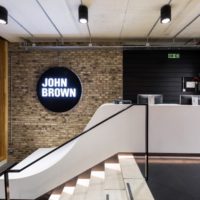
Following Inhouse Brand Architects’ redesign of John Brown Media’s Cape Town offices, it was invited to tender for the design of John Brown’s newly acquired Shoreditch offices — and won the London project.

Director of the London project Lawrence Holmes, creative director Aidan Hart, and associate director Jenine Bruce were tasked with designing an environment that would provide a visual representation of the John Brown Media story. The result is intended to do away with the idea of working in silos and to encourage integration among employees through an open-plan interface.

Inhouse’s design solution culminates in a contemporary working environment that integrates the professional and social spheres of office life — a balance that aims to promote greater productivity in the workplace.

inhouse.ws • Facebook • Twitter
johnbrownmedia.com
• Facebook • Twitter


Cheryl HunterShelf Life is MarkLives.com’s weekly column covering all things new. Notify us of yours at shelflife at marklives dot com. Want to sponsor Shelf Life? Contact us here.

Cheryl Hunter (@cherylhunter) has written for the South African media, marketing and advertising industries for more than 15 years. A former editor of M&M in Independent Newspapers and contributor to Bizcommunity, AdFocus, AdReview and the Ad Annual, she has also produced for various television networks and currently consults on communication strategy and media liaison.

— Sign up now for the MarkLives email newsletter every Monday and Thursday, now including headlines from the Ramify.biz company newsroom service!

Analysis: Multisensorial marketing — defining the absent presence

by Marguerite de Villiers. We as marketers need to take consumers’ senses into consideration if we hope to communicate effectively. But how are products that require particular senses marketed? When the channel is limited to sight and sound, as so many are, how do we represent the absent senses?

Humans are multisensorial beings. Some might argue that our sense are severely limited in many ways, but none would disagree that it is through our senses (and there are more than the five of sight, sound, touch, taste and smell which are usually taught to us in school) that we experience, interpret and express our world — it is how we interact with others and invest meanings in our actions.

Absent presence in multisensorial marketing is the technique of representing absent senses in the campaigns we develop. The challenge we are faced with is to use the senses in creative ways; to change the way we communicate and interpret meaning; and to transform the consumer experience.

Here are three very good examples of how some smart marketers have met the challenge.

Making sense of the senses

Our senses connect our external and internal worlds; they mediate our understanding and moderate our experiences. We decode meaning through our network of connections. These interpretations are influenced by our pre-existing knowledge, memories, preferences, assumptions, and experiences.

The role of the marketer and advertiser is to assist the consumer in making meaningful connections and associations. For example, Hennessy’s Odyssey XO short film takes the viewer on a journey through the product’s different flavour notes (called chapters here). Taste is communicated in a complex and layered audio-visual way to immerse the consumer in a multisensorial world.

Sensing the unseen

An absent presence is when the original object is absent, but something else is present in its place. When a product that requires taste or scent or touch is absent, we can reconstruct the experience of it through sight and sound. The marketer’s role is to mould the consumer’s interpretation and experience of what is being represented in creative ways.

Consider the Checkers’ Champion Boerewors campaign as an example. It sells the sizzle — both through the sound of boerewors on the braai, and in the repetition of the word ‘sizzle’ in a song. This activates specific taste and scent associations, drawing on the consumer’s existing knowledge and experience of a braai.

Transcending the senses

Marketing establishes a connection or communication between the external (a brand, a product, a service) and the internal (the consumer; their needs, desires, and sensory perception). It is no longer enough for us to market or advertise in one way — we need to make use of different senses to promote an absent product.

Consumers are increasingly looking for more holistic, innovative, and immersive experiences. Cue the Netflix Switch — it dims the lights, silences calls, orders takeaways, and turns on your shows. It is a bigger experience than just viewing; it incorporates the sense of touch. It transforms the concept of ‘Netflix and chill’ into a reality.


Marguerite de VilliersMarguerite de Villiers is an anthropologist at strategic marketing consultancy, Added Value.

“Motive” is a by-invitation-only column on MarkLives.com. Contributors are picked by the editors but generally don’t form part of our regular columnist lineup, unless the topic is off-column.

— Sign up now for the MarkLives email newsletter every Monday and Thursday, now including headlines from the Ramify.biz company newsroom service!

The Real McCoy: The changing nature of teams

by Sean McCoy (@TheRealMcCoyTRM) I have not often written on the issue of structure and find it opportune to do so after being inspired by the work of General Stanley McChrystal and his co-authors in a book titled Team of Teams. Yes, it does have a military link, however, not in the context of another dramatic war story but rather as a process of discovery and reinvention of the very nature of teams and structure, in order to remain relevant and effective. It tackles new rules of engagement for a complex world in a convincing fashion.

Revisiting history

While heavily influenced by the American involvement in the Middle East conflict, and Iraq in particular, the authors intersperse regularly with business-structure and team-composition discussion, going back as far as the influential work of Frederick Taylor on “ Scientific Management” in 1874 through the more-contemporary work of Professor Douglas McGregor in the 1960s around the “Theory X” and “Theory Y” approach to human resources, highlighting the evolution of modern management and the very nature of how we have organised ourselves — both in business and in the matter of military structures.

Our history points fundamentally to a command-and-control frame of thinking and operating: hierarchies, span of control, a complete focus on efficiency and the inevitable creation of silos and teams that have forgotten how to collaborate.

The limitations of this approach to structure are startlingly evident as McChrystal unpacks the reality of conflict in a modern and digitally connected world, acknowledging that the Joint Special Operations Task Force was simply being outmanoeuvred by a highly agile, networked enemy in the form of Al-Qaeda who, in a country such as Iraq, could be any one of 24m people who had a mobile phone and internet access to gain a basic understanding of industrial chemicals and bomb-making. A dramatically different operating environment in which the old structure was no longer working.

The order of things

And so, too, in business we so often see and experience the same limitations. Command-and-control structures have created organisations with massive back-office capability, systems, procedures and any amount of imaginable red tape, supposedly in pursuit of governance and compliance, that completely suffocate the ability to deliver what matters most — customer service.

Staff at the frontline are not empowered to make customer-centric decisions and deliver expected brand experience, let alone customer delight. Rather, they are preoccupied (and mandated) with serving the internal system in a top-down structure and ensuring that all the backend boxes have been ticked, often with very onerous processes, while the customer waits their turn and has to simply tolerate the service (or lack thereof). I am being deliberately dramatic, but it is hardly an exaggeration if you briefly transpose yourself into your own customer experience in any one of our major financial institutions in this country — real service and customer excellence have become a myth in the quagmire of financial systems.

There is hope

McChrystal describes the reinvention of special forces in order to become effective, rather than merely efficient — a focus upon doing the right things. In a highly simplified version of accounts, teams were reconfigured and the emphasis was placed on shared purpose, high levels of trust, adaptability and an increase in shared consciousness that created a team of teams. Far less emphasis upon command and control, and a greater degree of interdependence, capability of speed and ultimately empowered execution in pursuit of the mission. The enabling of individuals to make decisions and act in the direction of the cause seems to lie at the heart of this.

While they don’t make comparisons to the field of sport in the book, I am personally inclined to make the inference. Think of high-performance teams at the peak of their game, whether your preference is football, rugby, cricket, netball or any team sport for that matter. Individual excellence is liberated as part of a combined team effort — highly goal-directed and with a clear performance mandate, the collective energy is harnessed in pursuit of the greater purpose. To pick rugby as an example right now, one only has to look at the All Blacks as both a brand and a high-performance team on the brink of making history again. It doesn’t require discussion, it’s that clear.

Free to serve

While governance, legal requirements, regulatory compliance and simple matters of obeying the law are a clear need in business and should never be compromised, our current business models are no proxy to guarantee that organisational behaviour is totally under control as things stand; go back to Enron, think more recently of VW or ponder the endemic climate of corruption in South Africa and we have a case for change. Rather than deepen the levels of control, command and order, perhaps it is time to build purpose-led organisations, where leadership sets a direction and then gets out of the way, empowering people to deliver what was promised in the first place.


Sean McCoyDr Sean McCoy, MD and founding member of HKLM, is a prominent figure in the branding arena, with his expertise centered on client service, brand strategy and business development. He contributes the regular “The Real McCoy” column focusing upon internal branding to MarkLives.

— Sign up now for the MarkLives email newsletter every Monday and Thursday, now including headlines from the Ramify.biz company newsroom service!

#OpenAfrica: Kenya debates benefit of network ownership

an #OpenAfricaMag feature by Kentice Tikolo. The big guns of global advertising, PR and marketing entered Kenya some time ago, but lately they’ve been upping their stakes and the markets are seeing more mergers and consolidations. As multinational brands choose new agencies, and more global giants eye Nairobi for their next office, strategic PR and communications professional, Kentice Tikolo, calls for more-responsible market practices.

Africa on the shopping list

Africa is on the shopping list of big international advertising entities, and recent years have seen the likes of Sir Martin Sorrell’s WPP snapping up formerly independent agencies, PR and communications firms.

One of the biggest local acquisitions happened when the global communications giant took a 27.5% stake in Kenya’s Scangroup. A couple of years later, in 2013, it upped that stake to a majority share of 50.1%. In 2015, Scangroup adopted the WPP name, and announced that it had become “the largest marketing and communication group operating a multi-agency model across multiple disciplines in sub-Saharan Africa.”

In a statement after the tighter integration, WPP-Scangroup’s CEO, Bharat Thakrar, quoted a famous African proverb that goes: “If you want to go quickly, go alone. If you want to go far, go together.” Listed on the Nairobi Securities Exchange, WPP-Scangroup manages brand campaigns for the likes of Airtel, Coca-Cola, Emirates, Safaricom, Unilever and others.

As WPP-Scangroup extends its reach, footprint and power, the question that needs to be asked is: How good are these global acquisitions of local agencies for Kenya’s marketing and communication industry in specific, and the economy in general? I have spent a lot of time listening to industry concerns in my capacity as a former chair of the PR Society of Kenya.

Worried

Independents worry about the effects of monopoly and the massive leverage that multinationals operating in Kenya have. Bigger, globally aligned companies are able to negotiate discounts of scale, arrange preferential supplier relationships and set specific payment terms that work to their advantage. Independents, though, are forced to try and grow without the obvious advantage of size and global leverage.

Another big issue is the effect of global alignments — parent brands and agencies determine who gets to pitch on which accounts, and this means that local independent agencies don’t often get the opportunity to work on big global brands.

But it does enable good growth and revenues for those local agencies that are aligned with the world’s biggest communications companies, which means that, when it comes to rewarding staff, they can afford higher salaries, and impact the talent market. It is hoped that this does happen.

However, when the big agencies swallow up locals, more mergers take place, and this creates a tendency toward decreased competition and greater monopolies in the advertising sector in Kenya. As a result, local marketing companies suffer because they aren’t as well-capitalised as the bigger global players, and small-and-medium enterprises struggle because the bigger accounts go to the ‘big guns’ who’ve created huge companies that tend to take control of sectors of the local marketing and communication economy.

How relevant and local

What big global brands need to think about, when making the decision about who to work with from a marketing perspective, is how relevant and local their voices are, and whether their brands are growing with the Kenyan economy. Sustainability and inclusivity are important watchwords in Kenya, and multinational brands need to appreciate the effect they have upon local economies around the world.

What is critical is that multinational brands not only appreciate and communicate their relevance through their marketing and communication, but do so in their business practice. What real benefit is a Coca-Cola to Kenya if it doesn’t participate in helping to grow local marketing skills and engage with communications practices to the benefit of home-grown entrepreneurs?

I am not by any means advocating for market regulation, rather appealing to international PR and advertising giants — and the global brands — to look at innovative partnership models that will help grow the local industry, rather than build a big monolith that makes competition increasingly difficult for local communications entrepreneurs.

What firms such as WPP and Coca-Cola need to do is create more-inclusive and sustainable models of doing business that will truly benefit the industry, as well as service consumers. That’s how one grows an industry, its entrepreneurs, and a country — rather than focusing exclusively upon self-interested growth to the detriment of local businesses.


Open AfricaKentice Tikolo is a strategic PR and communications professional in Kenya. She is a former chair of the PR Society of Kenya.

This feature first ran in Open Africa, the definitive guide to business, branding and marketing in Africa, brought to you by Ornico in partnership with GIBS Business School, with MarkLives.com as its official media partner. Download the entire publication free of charge (registration required).

— Sign up now for the MarkLives email newsletter every Monday and Thursday, now including headlines from the Ramify.biz company newsroom service!

LIVE+ repositions to play in integrated space

by Herman Manson (@marklives) Since joining LIVE+ mid-2016, managing director Mpange Chapeshamano has been working hard to change the market’s perception of the agency to that of an integrated offering with a significant footprint across Africa, thanks to its links with Group Africa Marketing. Traditionally positioned as a specialist brand-activation business, this experience is a distinct competitive advantage that sets the agency apart as competes with integrated rivals.

Live+ logoThe agency forms part of Group Africa Marketing, which includes EXP South Africa, The Grind PR, Turnkey Logistics Solutions and New Era Agency. LIVE+ employs 15 people and its biggest clients include SABMiller (Castle Lager), Kimberly Clark (Huggies), Intel, Mondelēz South Africa and, most recently, the National Film and Video Foundation (as its full-service agency). Previously, Chapeshamano had spent time at SAB, as well as a number of agencies including Lowe Bull (now MullenLowe), Joe Public, Dashboard Africa and Africa Red (part of Ogilvy & Mather South Africa).

Back to basics

So far the realignment has been proving successful, says Chapeshamano. The business has gone back to basics by getting back into client diaries. Having done experiential and brand activation work as well as it has — which provides a track record of quick turnarounds, experience with big budgets and a focus upon measurement — means client trust has already been gained; this opens doors to gaining more integrated work. Clients are re-engaging with the agency as a result of the change, he says.

Access to various key African markets through Group Africa Marketing offices is an important selling point for the agency, which also prides itself in taking a Pan African view to marketing communications. The group has 20 owned offices in 17 counties, which cover most of the southern, eastern and western parts of the continent.

LIVE+ functions as the brand custodian for clients in markets where the group is active, working with local agencies. Clients only brief LIVE+ and it makes the work happen with partner agencies in other markets, says Chapeshamano.

The agency has a “can-do” culture and Chapeshamano believes that ideas may come from anyone on the team, with the creative team acting as curators. The plus sign in its name signifies that more are better than one, and collaboration is a cornerstone of agency culture. Content creation, curation and development are a key focus for the agency and its objective lies in creating connections between brands and consumers through meaningful interaction between the two.

Client case study: Intel

Info supplied by agency

https://www.youtube.com/watch?v=izkY-qIkN_4
https://www.youtube.com/watch?v=Q6aPH80sKqM
https://www.youtube.com/watch?v=Z3DFUOXvs2A

Context

Mobile continues to scale across the African continent and therefore technological devices such as computers, tablets, cellphones or even phablets have become a part of our everyday lives. We are truly living in a digital era where we often require some of these tools to work, play and live. With every consumer switching between two-to-three devices during a typical day, it sometimes becomes impractical to carry on a day particularly with the power challenges we experience on the continent.

Intel, through its revolutionary Core M processor, saw the opportunity to innovate in the two-in-one device category. How would a company known more for powering clunky business computers demonstrate innovation to South Africans and Nigerians? Its ability to power the dual functions of a laptop and tablet all in one, thereby making our lives easier.

Creative execution

A storytelling platform, driven by influential creative entrepreneurs, was used to educate consumers on the features and benefits of the partner devices, and the power that Core M processor has to sustain their dual functionality. The influencers tapped into the consumer’s emotional need to weave between productivity and recreation to show that Intel allows you to experience the “Best of Both Worlds”.

Through the hashtag #INSIDEOUT, a parallel was drawn between the creatives’ internal search for inspiration and how it would be brought to life through the power of Intel’s tiny processors, found inside the devices. The campaign was seeded across various social media platforms, and included a series of branded content videos.

Results

The campaign was driven on social media platforms, including Facebook, YouTube, Twitter and Instagram, as well as traditional media such as radio, print, billboards and outdoor media.  Intel was leveraged Intel, plus the influencers’ social media platforms, achieving a total campaign reach to date of 20 318 230.

YouTube: 9 211 655 impressions and 421 556 views
Social media: 1 004 936 people reached and 70 424 engagements
Radio reach: 7 968 000 (SA)
Google display: 4 600 000 impressions (SA)
Print: 360 000 (SA)


Herman MansonHerman Manson (@marklives) is the founder and editor of MarkLives.com. He was the founding editor of media.toolbox (1998–2006) and Mobile.Works, and the co-founder of Brand magazine. He has served on the editorial boards of The Journal for Convergence, as well as of Fast Company South Africa. Winner of the 2011 Vodacom Social Media Journalist of the Year award, he was also a finalist twice in the Highway Africa Award for the Innovative Use of New Media in Africa (2003 and 2004). Over his 20-year-plus career, Herman has contributed to numerous journals and websites in South Africa and abroad, including the Mail & Guardian, .net, Intelligence, AdVantage, Men’s Health, Computer World and African Communications. He has consulted on web architecture to several financial institutions.

— Sign up now for the MarkLives email newsletter every Monday and Thursday, now including headlines from the Ramify.biz company newsroom service!

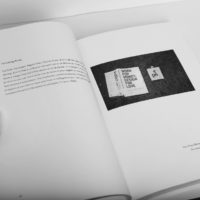
Guy With Camera — the book

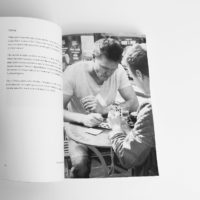
Andrew Bråuteseth, the photographer behind popular photo blog, guywithcamera.co.za, has launched a printed book featuring a wide scope of his photographic work.

Bråuteseth describes the journal as a “zeitgeisticial-gestalt snapshot of our [Cape Town] culture.” Images focus upon a number of his passions, including Cape Town, digital culture, advertising books, motorbikes and life on the internet.

The book will be available at most popular book stores including Exclusive Books, Woolworths and Bargain Books by 15 November 2016. It may also be purchased via his website. Recommended retail price: R390.00 (including VAT).

— Sign up now for the MarkLives email newsletter every Monday and Thursday, now including headlines from the Ramify.biz company newsroom service!

MagLove: The best magazine covers — Donald Trump

by MediaSlut (@MediaSlut) Once again, in the lead-up to Wednesday, 9 November 2016, as well as only a few hours after voting closed, there were some strong US election covers. Here are some of my recent favourites:

  • Adbusters
  • de Volkskrant Vonk
  • Libération
  • The Stranger
  • TIME

There’ve been some amazing covers over the past few months, some as striking as the strong messages they tried to send against Donald Trump, now president-elect. One might debate that all of the ‘negative’ publicity was free publicity in the end, which added up to him having been elected as the 45th President of the USA. You may also view more over at CoverJunkie, which will be continuing to upload more Trump-related covers over the new few days.


Find a cover we should know about? Tweet us at @Marklives and @MediaSlut.
Pinterest icon Want to view all the covers at a glance? See our MagLove Pinterest board!


Adbusters, Issue #129

Adbusters, Issue #129: Donald Trump

As I’m busy typing this, I’m watching on CNN all the protests happening as the aftermath of Trump being elected, with millions of people having this exact sentiment towards him and his party at the moment. 59 923 027 Democratic voters, to be exact. This issue is only available from 6 December, but may be pre-ordered already.


de Volkskrant Vonk, 5 November 2016

de Volkskrant Vonk, 5 November 2016: Donald Trump

At times, it did look more like a boxing match between the Republicans and Democrats, but kudos to de Volkskrant’s Vonk supplement for thinking of this absolutely brilliant visual to illustrate Trump! The coverline reads “After the Blow — Even if Trump loses, there is no reason to take a sigh of relief.” And then also something along the lines that the repercussions of his campaign will take a while to disappear.


Libération, 10 November 2016

Libération, 10 November 2016: Donald Trump

His hands, mannerisms and hair have become so symbolic that you don’t even need to see anymore to know whom they’re referring to. Scary. This amazing photograph is taken by photographer Damon Winter, who travelled with Trump for a year. When The New York Times opened its website free to everyone, it also featured Winter’s other photographs, and it’s really worth looking at if you’re still able to.


The Stranger, 2 November 2016

The Stranger, 2 November 2016: Donald Trump

Another example showing that you don’t need to see anything else, or anymore, to know whom the subject is. In the above-mentioned article featuring the photographs of Winter above, I read that Trump hates having photographs taken of him from the side…


TIME, 21 November 2016

TIME, 21 November 2016: Donald Trump

After all the confetti has been cleaned up, and the protests and initial shock hav died down, the reality is that he has been elected as the 45th POTUS. If I try to unsee and unhear everything about, and coming from Trump, over the past few months, this is actually a very “presidential” photograph and cover of him, and shows a glimmer of hope. It’s captured by TIME photographer, Chelsea Matiash, and now one can only hope that he will indeed be a president “for all”.

God bless America.


MediaSlutMagLove by @MediaSlut is a regular slot featuring the best local and international magazine covers every week, recognising well thought-out, powerful and interesting (and hopefully all three-in-one) covers and celebrating the mix of pragmatism, creativity and personal taste that created each of them. The anonymous (for now) blogger behind MediaSlut knows way too much for his own good about media in South Africa, magazines in particular. His mission is to show when SA magazines fail but, most importantly, also when they succeed. If you’re looking for a library about SA magazines and news, this is your one-stop pitstop.

— Sign up now for the MarkLives email newsletter every Monday and Thursday, now including headlines from the Ramify.biz company newsroom service!

Online CPD Courses Psychology Online CPD Courses Marketing analytics software Marketing analytics software for small business Business management software Business accounting software Gearbox repair company Makeup artist