Ad of the Week: Through the virtual looking glass

by Oresti Patricios (@orestaki) Augmented reality (AR) is hardly a new concept – it’s been tried before and often the results have been gimmicky. But I think Appletiser’s AR “Appletiser Collectables” campaign for the “Months of Love” really works, for various reasons.

Who doesn’t know that 14 February is St Valentine’s Day? But did you know that February, March and April have been designated the “Months of Love?”

Appletizer CollectablesIt seems that someone — probably a marketer — has decided that one day is not enough to celebrate romance, and that three months affords lovers and brands a much better time frame to connect. Well, for a marketing campaign it certainly makes sense.

When I think of Appletiser, the first thing that springs to mind is ‘a special occasion’, which is, of course, the brand promise.

Appletiser’s ads have firmly positioned this homegrown South African refreshment as the ideal soft drink to add some sparkle and fun to any celebration.


To tie this in with the Months of Love idea, Appletiser has released 275ml limited-edition Appletiser and Grapetiser bottles with 28 specially designed labels using fun, romance-related themes.

The campaign that ad agency TBWA\Hunt\Lascaris Johannesburg and digital animation company, Pollen, came up with, in order to enhance the limited-edition bottle, was to create an app that provides an augmented-reality experience.

By aiming a smartphone’s camera at one or two of these special bottles, the app superimposes animated characters onto the live background. With the bottles standing on a surface such as a table, the app uses the camera to interpret the environment, and the characters appear to walk from behind the bottle and move around on the table; sounds also complement the action.

APPletiser Bring the Romance to LifeEven if the camera moves around, the app cleverly tracks the movement so that the characters appear to be in the scene.

The campaign was kicked off with publicity on YouTube and targeted ads in mainstream magazines.

The hope is clearly that the bottles themselves will do the rest of the job. The app could be an icebreaker in a social situation such as a restaurant or a club, where sharing something on a smartphone can create a moment of fun and closeness.

When the app is pointed at one of the limited-edition bottles, it shows a different animation, depending on which label is used, and whether there are two bottles or just one. There are nine different episodes, featuring three characters.

The characters are a dashing (if slightly inept) Johnny Appleseed, who is wooing the slinky, sexy Apple Blossom; and there’s a mischievous QP1D, the bazooka-carrying, hovercraft-riding version of Cupid (who seems equally enamoured of the curvaceous belle).

The different episodes feature scenes such as Johnny sending a paper jet to Apple Blossom, which lodges in her hair, or Cupid sending Johnny a love-arrow, which turns his head into a great big heart that explodes… it’s pointless describing them, because it’s the animation that makes it funny.

Appletizer Collectables: QP1DAppletizer Collectables: Apple BlossomAppletizer Collectables: Johnny Appleseed
The characters are creatively conceived — they have distinct personalities — and the episodes have just the right balance of ‘cute’ and ‘sexy’.

I think this AR campaign this really works, for several reasons. First, it’s simple — the app loads quickly, and, as the software discerns the label, it gives visual feedback in the form of a countdown. Secondly, it’s playful and amusing and thus memorable. Thirdly, it encourages user interaction. Fourthly, it is very tied in to the branding of the product.

So, congratulations to Appletiser for taking a risk on a new medium, and to TBWA and Pollen for an execution that has set the bar for all future augmented-reality concepts. Now get your hands on some of those Appletiser bottles, download the app (Apple or Android) and be prepared for some fun.


Oresti PatriciosAd of the Week, published on MarkLives every Wednesday, is penned by Oresti Patricios (@orestaki), the CEO of Ornico, a Brand Intelligence® firm that focuses on media, reputation and brand research.


If you are involved in making advertising
that is smart, funny and/or engaging,
please let Oresti know about it at info@ornicogroup.co.za.


— MarkLives’ round-up of top ad and media industry news and opinion in your mailbox every Monday and Thursday. Sign up here!

Masterclass Notes: Getting the best out of your agencies

by Johanna McDowell (@jomcdowell) From a client perspective, non-delivery by the agency is a critical factor and the main reason for the end of a relationship. This emerged during the first of eight sessions of the IAS Marketers Masterclass, recently held in Johannesburg.

Laptop in Meeting Room by sixninepixels courtesy of FreeDigitalPhotos.net
Image by sixninepixels courtesy of FreeDigitalPhotos.net

The purpose of these masterclasses is to help marketer improve their understanding of and knowledge around everything that they may encounter during their day-to-day management of their marketing communication campaigns and their agencies.

The topic for the first class was: “Getting the best out of your agencies.”

Non-delivery

From a client perspective, non-delivery by the agency is a critical factor and the main reason for the end of a relationship. Non-delivery may include:

  1. Lack of consistency — campaigns or concepts might be wonderful and on track one week, and completely off track the next. This is hard work and creates unnecessary reverts, lengthening of approval times, re briefing etc.
  2. Poor time management, resulting in campaigns running late. This might be caused by late client briefing, or the agency’s failure to deliver a suitable campaign solution on time, thus necessitating more work and delays in campaign implementation, which then has a huge impact upon clients as they have their own sales plans that the organisation has to meet.
  3. Costing — when additional unexpected costs result in tensions and overruns on budgets. This is simply not allowed in the corporate environment:
    • Agencies might mistakenly believe that the client has a slush fund to cover “overages” but the reality is that marketers are heavily penalised, possibly even fired, if they fail to keep within the allowed marketing budgets.
    • What also happens is that agencies may be inconsistent with their costs (going back to point one) and this may also have a severe impact upon client budgeting.
    • If costs are not clear between each party, then both parties suffer in the long run.
  1. Lack of strategic input. Clients do expect agencies to understand their business and to be able to give strategic input; it is often the reason that a client will want the involvement of an agency in its marketing processes. Clients need to make it clear that this is a key component of the relationship — if it is. Equally, if agencies are not required to give strategic input, then they should be told this at the outset of the relationship.
  2. Failure to listen to the brief. This is often one of the reasons for delays in implementation of campaigns. The client briefs but the agency decides to do its own thing when it reverts. Or believes it may know better what client needs. Or simply does not pay enough attention to the detail. Or there may not even be a proper written brief which the agency can refer to and use for reverts.
  3. Poor creativity. This is a term that is often used but in reality is difficult to quantify or qualify. Again, what may be very creative for one client might be very average for another. Agency and client need to agree in advance of campaigns upon the level of innovation or input that they are looking for — especially in a situation where the briefs are coming from different departments than the central marketing department, for example.
  4. Change of agency personnel. The client-facing people in an agency are often the most important in terms of client maintenance. Equally if there is a strong creative or strategic connection, clients will be uncomfortable with an unexpected level of change. However, if change is managed well with proper handovers, so that clients do not have to keep briefing new team members on their business, then this will be obviated.

In turn, agencies talk about:

  1. Breakdown in communication. Often the outcome of the poor delivery above, it results in clients starting:
  • To not trust the agency — its timelines, costs, promises and strategies
  • To not relate to the people on their account — getting hugely irritated with the lack of delivery, poor interpretation of briefs, inaccurate contact reports and status reports, and vague costing.
  1. Poor relationship with clients: “They just do not like us”. This is a manifestation of the poor delivery, change of agency personnel, poor handovers, poor timekeeping, etc.

Service-level agreements

Both parties agree that a service-level agreement (SLA) is vital to the success of the relationship so that expectations are managed on both sides. The SLA needs to include:

  • Scope of work from client for the period (could be 12 months) with a detailed calendar of planned activity
  • Hourly rates from agency personnel
  • Names of agency staff/titles included in the agency team who will service the account
  • Expected outputs over a 12-month period
  • Measurements of success of campaigns
  • Normal turnaround times from brief to first presentation
  • Turnaround times for contact reports
  • Turnaround times for status reports
  • Frequency of meetings; venue for meetings
  • Evaluation of the relationship and how this will be done; frequency
  • Whether this will be linked to a financial incentive, enabling the agency to earn more with a positive results

While both parties know that this is the right thing to do, and a lot of time is often spent on the legal and financial aspects of the client-agency relationship, there is often a failure to commit to the agreed-upon deliverables in practice, eg lack of written briefs by client, poor time management by agency, and poor handovers when personnel on either side change.

Relationship tools

Also, there is often no formal structure for evaluating the relationship and the danger with this is that it might be tacked onto the end of a general meeting — not conducive to a frank discussion. There are several local and international client-agency relationship tools in the market place, and I recommend that clients and agencies use whichever one is most appropriate for their needs as part of their ongoing commitment to the client-agency relationship.

In this way, clients will get the best out their agencies, and an atmosphere of trust and professionalism will prevail.


Johanna McDowell


Johanna McDowell (@jomcdowell) is managing director of the Independent Agency Search and Selection Company (IAS), and she is one of the few experts driving this mediation and advisory service in SA and globally. Currently she is running the IAS Marketers Masterclass, a programme consisting of masterclasses held in Cape Town and in Johannesburg. Twice a year she attends AdForum Worldwide Summits.


— MarkLives’ round-up of top ad and media industry news and opinion in your mailbox every Monday and Thursday. Sign up here!

Tuned: The Millennial female

by Thabang Leshilo (@Thabang_Leshilo) Newly appointed UN Women Goodwill Ambassador Emma Watson’s #heforshe campaign; Nigerian author Chimamanda Ngozi Adichie’s essay, “We should all be feminists”; and the Grammy nomination for the Adichie-Beyonce Knowles collaboration have helped ensure that “feminism” has recently garnered more than its usual share of attention in many countries worldwide.

heforshe twitter searchThey’ve also set me to pondering the state of South Africa’s gender equality, what it means to be a female of my generation, and how marketers might think about connecting with us as consumers.

The state of our nation

South Africa is ranked 17th out of 136 countries in terms of gender equality, according to data from the World Economic Forum. However, gender equality is still an issue in the workplace, with women often earning less than men while doing the same job work. And gender-based violence continues to threaten all women in this country.

Despite this, what has been observed from previous research is that most South African women no longer feel a need to prove themselves to men. They are more independent (educational, financial, emotional) than ever before and they are becoming a force to be reckoned with in traditionally male categories such as beer.

“Who run the world? Girls!”

I have no doubt in my mind that female millennials would agree that there has never been a better time to be a female than today.

In my female peers, I see independence, strength of character, greater acceptance of self, confidence in our capabilities, drive and ambition. I see influencers who are not afraid to speak their minds and stand for something.

In our world today, it’s not about being female, but about making choices based upon what we want out of life and for ourselves.

Advertising campaigns such as Dove’s #realbeauty and Always’ #likeagirl have demonstrated a modern expression of feminism, inspiring and empowering millennial females today.

With increasing buying power and a strong influence upon purchase decisions, here are six things to consider when speaking to this demographic:

  1. Be real with her; she values authenticity and will not be impressed by stereotypical female images
  2. Don’t tell her what to do; she already knows what she wants and where she’s going
  3. Empower her to make the difference that she wants to see in herself and the world around her
  4. Inspire her with meaningful experiences at every touchpoint
  5. Keep her interested and she’ll spread the word; she has a powerful network of females who are always looking for ways to connect with each other
  6. Value her opinion; she’s independently minded and not afraid to express her true self.

Thabang Leshilo by Jeremy Glyn in June 2014 glynj@fm.co.za

Thabang Leshilo (@Thabang_Leshilo) is a project manager at strategic marketing consultancy Added Value. As a ‘next-generation’ marketer with fresh and curious eyes looking into the industry, she has a keen interest for brands that are culturally in tune with and able to integrate and immerse themselves into the everyday realities of the consumer. She contributes the monthly “Tuned” column, sharing marketing insight and analysis, to MarkLives.

— MarkLives’ round-up of top ad and media industry news and opinion in your mailbox every Monday and Thursday. Sign up here!

Grubstreet: Media lapses in reporting on children

by Gill Moodie (@grubstreetSA) The rule of thumb when it comes to reporting on children is think once, twice, three times about how you’re going to do — and then think again. And consult the South African Press Code or a media lawyer.

vintage childrenHowever, even though the revamped Press Code has tightened up on the portrayal of children — and is very clear that “exceptional care and consideration” must be exercised – our media still has serious lapses in this difficult area. The most recent lapse was the shocking front-page images (and a video put up on YouTube, now down) by the Kimberley-based DFA newspaper last month of an 18-year-old boy being raped by four others in a Northern Cape school hostel. (Click here for a City Press story).

There have also been eyebrows raised this year over the widespread use of a Facebook picture of the 16-year-old survivor of a family murder in the De Zalze estate in Stellenbosch. (Click here for a recent EWN story on the investigation.)

Other grey areas have cropped up in the story of the kidnapped Cape Town girl being found (she has been named by the family from which she was kidnapped; but the details of her current family and name have not been published) and You magazine’s story of an apparent separation of former cricket captain Graeme Smith and his wife.

The latter story was based on tweets from the couple, who have two children.

A case-by-case basis

Media lawyer Willem de Klerk says the portrayal of children is incredibly complex and that each situation needs to be thought through by media organisation very carefully from both a legal and ethical perspective.

“The statutory network kicks in mostly when there’s some sort of court process starting to happen or an arrest. If it’s outside that process, there seems to be very little statutory protection [of children] and then you’ve got to go to the Press Code, which to my mind is not quite clear. It compels the media to exercise discretion and it’s not quite clear what that discretion must be based on.”

For example, says De Klerk, even if you obtain parental consent to identify a child as directed by the Press Code, this is still a potential minefield.

“You get stupid parents who consent to things that they shouldn’t so you must still think if it’s actually necessary to show the child’s face or name him or her.”

William Bird, director of Media Monitoring Africa (MMA), believes the De Zalze girl should not have been named or her picture published while De Klerk believes there is grey area in the publication of the picture.

“Firstly, her parents are dead so you cannot get their consent and you would like to publish her picture (from a public-interest point of view) because she has been through a hugely newsworthy event. From a privacy point of view, you could pick up her photo from her open Facebook page and republish it. From a Press Code point of view, my argument would be the publication of her image cannot reasonably be harmful to her. She’s not associated with having committed a shameful act so she is a victim of a horrific crime and the public has empathy with her.”

On the other hand, he says just because children put themselves out there on social networks doesn’t mean it’s OK for you to republish.

Protection from themselves

Children deserve special protection – even from themselves sometimes, he says.

Bird and De Klerk both say there were many problems with the Jan Kempdorp video and pictures being published.

“You can never, ever in any way – directly or indirectly – identify the victim of a sexual attack,” De Klerk told Grubstreet. “And what was done to this boy certainly qualifies as rape under the law.”

“Some of my [media clients] asked me if they could take screengrabs of the video and we decided “No” because it is degrading to the dignity of the victim and even with the bystanders – these are all kids as far as we know and they may become co-accused people or witnesses – it’s certainly not in their interests to publish.”

“It really was the most extraordinary failure on so many levels of ethics and it goes against the basic principle of minimising harm,” Bird says of the video and DFA’s front-page treatment of the story.

“You have to ask to what extent does this kind of information drive the story forward. Do you really need to reveal [these images] to get people to identify with the horror of the experience? No, I don’t think so. Are there other ways you can portray the story? Yes, if you use a little bit of imagination.”

Both the DFA and Pretoria News ran apologies after Bird wrote to them to register his concern while the DFA has asked MMA to do training on the issue in its newsroom.

“The story itself was reasonable but they lost the plot with the images,” says Bird, adding that the terrible harm done to the boy and his family emerged in a City Press story after the breaking-news reports.

“I don’t know why this has happened and I’m even more hurt that my son’s picture has been splashed all over the papers,” the boy’s mother told City Press in this story. “The ordeal was enough for him. He wanted to come out and tell his story to warn other children, but now this whole thing has been turned around. I don’t know what to do and I need to be strong for him.”

Questions of race & class

There are also questions of race and class swirling around this issue, says Bird.

Even though the De Zalze case is more complex because the extended family has allowed use of certain information, the lack of graphic images emanating from the murder is striking in comparison with the Jan Kempdorp story.

“The difference is that we’ve not seen pictures of the bloody household or pictures of the dead parents or the girl in hospital. We’ve only seen pictures of her happy and smiling. They haven’t been deeply distressing and hurtful images. Yet you see this kind of thing when people tend to be poorer or black or from developing nations, where their right to dignity and privacy doesn’t seem to matter as much.”

On the Graeme Smith story, De Klerk says one has to remember that the children of celebrities do not choose to have famous parents.

While reporting on the public break-up of a celebrity couple is fine, one should take steps not to identify their children, says De Klerk. One shouldn’t publish pictures of the whole family to go with such a story or the children’s names or names of their schools. (You did not publish these details or their pictures.)

Both De Klerk and Bird point to the ultimate guiding principle on this issue: our Constitution, which says the best interest of the child is paramount.

“The way that I look at it we are all – the media included – under this general Constitutional imperative to ensure that the best interest of the child is paramount,” says De Klerk.

That the horse has bolted is no defence

Bird and De Klerk also say there is no defence in a news organisation saying that if the picture or information has been published by someone else, it might as well publish too.

“There’s not sufficient thought going into these processes,” says Bird, “and part of it, I suspect, is that we’ve lost a lot of experienced journalists in our media houses and this is one of the effects.

“These things are going to happen but then, for me, what becomes important is the things you do to make sure it doesn’t happen again.

“In as much as you want to report on something to convey the horror, you also have to realise that you’re reporting on the horror because someone’s life has been hideously changed and traumatised by an event. What you don’t want to be doing is to be contributing to that trauma.”

Regarding children, the Press Code says:

The Bill of Rights (Section 28.2) in the South African Constitution states: “A child’s best interests are of paramount importance in every matter concerning the child.” The press, applying the spirit of this section, shall therefore:
8.1 exercise exceptional care and consideration when reporting about children. If there is any chance that coverage might cause harm of any kind to a child, he or she shall not be interviewed, photographed or identified without the consent of a legal guardian or of a similarly responsible adult and the child (taking into consideration the evolving capacity of the child), and a public interest is evident.

8.2 not publish child pornography.

Child Pornography is defined in the Film and Publications Act as: Any image or any description of a person, real or simulated, who is or who is depicted or described as being, under the age of 18 years, engaged in sexual conduct; participating in or assisting another person to participate in sexual conduct; or showing or describing the body or parts of the body of the person in a manner or parts of the body of the person in a manner or circumstance which, in context, amounts to sexual exploitation.
8.3 not identify children who have been victims of abuse, exploitation, or who have been charged with or convicted of a crime, without the consent of their legal guardians (or a similarly responsible adult) and the child (taking into consideration the evolving capacity of the child), a public interest is evident and it is in the best interests of the child.

Grubstreet with BizNews logo


South Africa’s leading media commentator, Gill Moodie (@grubstreetSA) offers intelligence on media, old and new. Reprinted from her site Grubstreet with Biznews.


— MarkLives’ round-up of top ad and media industry news and opinion in your mailbox every Monday and Thursday. Sign up here!

The Business of Business: We need more women leaders in adland

by Jerry Mpufane (@JerryMpufane) We often say that the advertising industry is a people business, and that people are our greatest asset. This sentiment is true regardless of which lens is used to view the agency business, as is the case with many other professional services firms.

The creative solutions to the client’s business problems are produced by people. More often than not, clients come to us because of the people we keep. The subject of people is always pertinent, being a part of every conversation in the advertising agency business.

People Answers by Idea go courtesy of FreeDigitalPhotos.net
Image by Idea go courtesy of FreeDigitalPhotos.net

Calibre

The calibre of our client teams has a big influence on the success of the brands. However, we also know the pivotal role played by agencies in building the most successful and resonant brands. Advertising agencies don’t keep heavy-duty industrial equipment, nor do we keep tons of stock that is stashed away in dark warehouses. Success in our game is achieved only when the best people come forward and lead.

When it comes to the subject of people, decades’ worth of research has gone into what separates the winners from the mediocre. Every speciliased science into humans shares the same view. High levels of intelligence (IQ) are a critical skill, and an important requirement when mapping the agency’s talent requirements. Whereas we admire people with a very high IQ, there is another kind of smart that is the difference, namely EQ.

Internationally renowned psychologist Daniel Goleman helped define in modern times the subject of ‘emotional intelligence quotient’ (EQ).

IQ vs EQ

People with the highest levels of IQ outperform those with average IQ just 20% of the time, while people with average IQs outperform those with high IQs 70% of the time. In the field of behavioural sciences, this is a peculiar finding. This forced the likes of Goleman to dig deeper, and later conclude that beyond what a person knows (IQ), the critical factor is in identifying who that person is and how the person handles himself or herself and others (EQ).

Their studies of more than 200 organisations worldwide showed that 66% of the difference between top performers and average performers was due to emotional competence. Only 33% was due to technical skill. In top leadership positions, more than 80% of the difference was due to emotional competence.

Speaking to the Wall Street Journal, Jack Welch once said: “A leader has to have high levels of self-awareness and self-control. EQ is more rare than booksmarts; it’s actually more important in the making of a leader.”

Paradigm shift

The case for emotional intelligence supports a paradigm shift when it comes to defining the skills which can make or break organisations. This shift includes, among others, a reappraisal of the so-called soft skills. A positive attitude, team play, good communications skills, flexibility, adaptability and the ability to accept and learn from criticism are no longer soft. Of course, the smarts and a strong work ethic are a must.

EQ people build and deepen relationships more effectively.

Any functional area of the advertising agency business requires people with the smarts. But it would serve us well to consider that the best outcomes emanate from those people to dig deep and apply their EQ as a way of working. Emotions guide everything we do, because we human beings are innately emotional creatures. When we consider the proven impact of EQ people upon the success of any organisation, the ‘soft’ has become the most critical of skills sets.

Built upon storytelling

The advertising industry is built upon storytelling, a cornerstone of human existence — the ability to communicate and connect. The good ones among us tell stories that make you sit up, listen and understand. The even better ones tell stories that make you go and do something.

This brings me to the subject of women. Yes, women.

If research has found that women have an edge over men when it comes to expressing their emotions and perceiving the emotions in those around them, how come so few of them lead in the agency world? How come so few of them lead on the creative floor?

May well be better

Renowned philospher Gabriela Kilianova has applauded men’s abilities in storytelling. She has also published opinion from numerous studies that show that women are great storytellers, and may well be better than men at this craft.

Kilianova’s studies observe that humorous plots are more the domain of men in storytelling, while women are very good at telling magical tales.

Now, I do not wish to trivialise this subject, considering that I am not a scientist. There is, however, enough evidence that at the very least, without women story tellers, the advertising industry is deprived. And that we are, thus, doing a great disservice to our craft.


Jerry Mpufane, July 2014Jerry Mpufane has executive experience in both ad agency and client organisations. He’s only got one goal in life, which is to be an inspiring leader. Jerry is currently group MD, Gauteng of M&C Saatchi Abel. His monthly column on MarkLives, “The Business of Business”, focuses on what it takes to run a great AND sustainable ad agency.

— MarkLives’ round-up of top ad and media industry news and opinion in your mailbox every Monday and Thursday. Sign up here!

Interview: Neil Watson on the SA e-commerce boom

by Herman Manson (@marklives) Neil Watson, CEO of Digital Planet, is one of South Africa’s original ecommerce entrepreneurs. He helped launch Digital Planet, a leading local e-commerce and logistics solutions company, in 1999. Watson has 16 years experience in the local e-commerce market, giving him a unique view of a market he estimates at over R5bn in value.

MarkLives logoDigital Planet launched in 1999 — please give us some insight into how the company came about?
Back in 1998, the internet was in the middle of its first boom. Mark [Levy, business partner] and I were doing some travelling to the US, and it was clear the internet was going to be huge — so we started a company selling computers online. It was probably 12 years too early. Our operations and service department was done by one person for the first few years and they didn’t have much work to do.

Neil Watson
Neil Watson

MarkLives logoHow has your business evolved between then and now?
Over time, we’ve learnt all the lessons on how to run e-commerce in South Africa, from technology to logistics to customer service.We had to do it all ourselves and we soon realised that there was a market supplying these services to other companies. E-commerce service and logistics is a specialised industry and most companies aren’t geared to run it with their in-house staff. We now have a consulting department whose only purpose is to help our clients create an integrated online solution that works with their business model.

Our first major client was HP, who we built an online store for called hpshop. We built the online shop from nothing up to one of the biggest online IT e-commerce stores in the country — we still run it today. Eventually running other businesses’ e-commerce stores was a significantly bigger business than our own e-commerce store, so we decided to focus on that and close our own online store. It was the best decision we’ve made.

MarkLives logoYou’ve had a long term view on the local e-commerce market. What has been the most significant drivers for e-commerce adoption and growth in SA?
The government really let us down. Bandwidth costs and speed are the foundation of any e-commerce economy and, mainly due to poor government decisions, SA has been hampered in e-commerce growth.

Trust is a big deal in South Africa and it certainly impacts the speed of adoption. South Africans don’t feel safe and so their trust levels are low. We find the best antidote for this is having a positive personal experience. Customers usually get great service online and there are effective platforms for people to complain if they get poor customer service. E-commerce players are fanatical about their reputation as bad news can travel really fast online. Once most people have experienced online, they’re hooked. Receiving an online order is almost like getting a present from yourself.

Online banking has helped people feel more comfortable with financial transactions and is the first major step to transacting online. Smartphones have certainly helped but it’s still early days. On our sites, mobile traffic accounts for about 25% of traffic but its growing fast.

MarkLives logoHow big is the e-commerce market in SA today?
We estimate that online is approximately 1.3% of retail in SA at over R5bn.


MarkLives logoHow is mobile changing the commerce game in SA and across the continent?
Mobile search traffic on Google became bigger than desktop traffic last year in SA. From an e-commerce perspective, we’re seeing a constant growth every month. Mobile currently accounts for 25% of site traffic, up from 17% a year ago, but it only accounts for a small fraction of our sales.

For many people, smartphones are their introduction to the internet economy. Instant access to information changes the game and puts the power into the consumers’ hands. Gone are the days when retailers hold all the cards. With a few clicks you can check price and availability of almost any product. Prices are going to be under pressure and service levels will have to go up as competition becomes more fierce. Online education is already exploding and ultimately it will lead to a more prosperous Africa.

MarkLives logoHow competitive is the e-commerce market at the moment?
Our sites saw an average year-on-year growth of 40% in December [2014], with some well-established sites achieving over 70% year-on-year growth. That’s unheard of in traditional retail.

For anyone considering coming online, I’d say now is the time. Consumers are flocking online in droves and a site with a great value proposition and great customer service has a once-in-a-lifetime opportunity to be something big. There are only a few big players in SA so the market is wide open.

MarkLives logoWhat is your take on the kalahari.net/takealot merger?
I think it’s bad for consumers. The two largest online stores are merging and it will result in less choice and less competition for consumers. The real opportunity will be for the smaller e-commerce players to come and fill the void while Kalahari and takelot focus on merging and fixing their new larger operations.

I expect to see many of the international big players in SA in the next 12–24 months. The market is now big enough for Amazon to look seriously at expanding to SA. Takealot and Kalahari are probably running scared at the prospect.

MarkLives logoDo we have sufficient skills in the local market to build internationally competitive ecommerce businesses?
Stores like Mr Price have shown that South Africans have what it takes to build an international e-commerce business. There are, however, limited e-commerce skills in SA at the moment. When hiring our own staff we often spend months trying to find the right skills for our business (although we’re very particular about who we hire). However, with initiatives like Silicon Cape, we’re seeing fresh faces introduced into the industry all the time.

The relative weakness of our rand means our skills are cheap internationally, which offers a competitive advantage. SA’s biggest challenge is our physical distance from other countries. It adds an extra cost to logistics. Any significant international play will require international warehousing. We’re hugely optimistic about South African prospects world-wide.

— MarkLives’ round-up of top ad and media industry news and opinion in your mailbox every Monday and Thursday. Sign up here!

Ad Feature: Heroes & Zeros gets an upgrade

by MarkLives (@marklives) The Ad Feature by Primedia Broadcasting returns in 2015 with a new look, more content — and an expanded panel. Ad critic Andy Rice (@ricecommaandy) is joined by brand and communications strategist, Sizakele Marutlulle (@ZDivah), and EWN anchor, Jacob Moshokoa (@JayMoshokoa), to rate and slate the ads on their radar screen.

Ad Feature team 20 March 2015This week, the OLX TVC “#ReasonsToSell Son Leaving Home 2015”, the FIA F1 with Lewis Hamilton and Arnold Schwarzenegger, and magazine fashion ads (eg euphoria by Calvin Klein) make it on to the new Wall of Fame or Shame — but which one is rated Superhero, Hero or Zero? Rice also takes time to unpack the latest TVC for Santam, “One of a Kind”, with King James creative director Damian Bonse.

Find out why these all feature by watching “Does the Terminator hold the secret to the future success of F1?” below!


Ad Feature logoEvery week, discover the highs and lows of advertising in South Africa with The Ad Feature team from Primedia Broadcasting — consisting of ad and branding critic Andy Rice (@ricecommaandy), brand and communications strategist Sizakele Marutulle (@ZDivah), EWN anchor Jacob Moshokoa (@JayMoshokoa), and producer Gary Oberholzer (@goberholzer). For more, go to www.facebook.com/adfeature.

You may also catch Andy on The Money Show on 702 (@Radio702) and Cape Talk (@CapeTalk) on a Tuesday evening just after 7pm for the new feature #ButDoesItWork on The Money Show.

— MarkLives’ round-up of top ad and media industry news and opinion in your mailbox every Monday and Thursday. Sign up here!

MagLove: Happy 20th birthday, SA Rugby!

MediaSlut (@MediaSlut)’s choice of the best international and South African magazine covers this week:

  • Esquire
  • Foreign Policy
  • Stay Wild
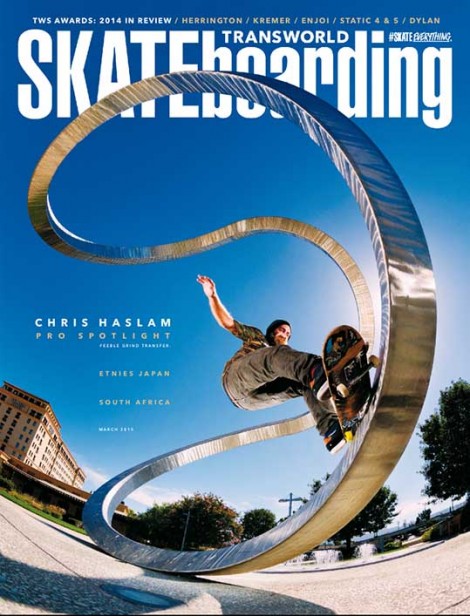
  • Transworld Skateboarding
  • SA Rugby

INTERNATIONAL

Esquire, April 2015

Esquire, April 2015Rolling Stone, 1968
If you were around in 1968, you might remember a specific Rolling Stones cover with John Lennon and Yoko Ono, naked (as above). Esquire has re-enacted this cover with Nick Offerman and Chelsea Handler.

It’s a pity that most people won’t get the reference immediately by just looking at the cover.

Read the original John and Yoko interview from 1968 here. 

FP (Foreign Policy)

FP (Foreign Policy)Foreign Policy magazine takes a bold look at the Global Crisis with this bold and very striking image!

Stay Wild, Winter 2015

Stay Wild, Winter 2015Great photography, not spoiled by even one cover line, which makes me want to be right there, right now. Yes, even if it’s cold like that.

Transworld Skateboarding, March 2015

Transworld Skateboarding, March 2015Amazing! That goes for the photograph, art-installation-turned-ramp, and layout.

LOCAL

SA Rugby, April 2015 (20th Anniversary Collector’s Edition)

SA Rugby, April 2015Happy 20 years, SA Rugby! To celebrate, it’s featuring “20 Best Boks since 1995”, with some featured on this green-and-yellow cover!

Read more about this issue, and the selected Boks, here.


Find a cover we should know about? Tweet us at @Marklives and @MediaSlut.
Want to view all the covers at a glance?
See our MagLove Pinterest board!


MediaSlutMagLove by @MediaSlut is a regular slot featuring the best local and international magazine covers every week, recognising well thought-out, powerful and interesting (and hopefully all three-in-one) covers and celebrating the mix of pragmatism, creativity and personal taste that created each of them. The (for now anonymous) blogger behind MediaSlut knows way too much for his own good about media in South Africa, magazines in particular. His mission is to show when SA magazines fail but, most importantly, also when they succeed. If you’re looking for a library about SA magazines and news, this is your one-stop pitstop.

— MarkLives’ round-up of top ad and media industry news and opinion in your mailbox every Monday and Thursday. Sign up here!

Creation: Be a kickass freelancer

by Artwell Nwaila (@artwelln) Six years ago I jumped into the freelance space and, as with many other things I do, I didn’t know what I was doing. I made a ton of mistakes and through that I harvested a load of learnings.

Although today I am back in the hustle and bustle of agency life, I still freelance and retain the same loyal clients from my freelance days.

FreelanceIn today’s post I share five points that make for good freelancing.

  1. Don’t be kak; be kif

When stepping into the fantastic yet daunting world of freelancing, you really have to ask yourself if you are kak or kif. Look at yourself in the mirror and really dig deep — be honest and ask yourself if the stench of kakness is within you. If you struggle to get an answer, ask me and I will tell you free of charge.

The reality is that freelancers who do well are those who are good. When I say good, I don’t just mean technically; I mean good at keeping deadlines, being professional and, most importantly, being good sellers. Luckily for me, I had more than enough time to learn these skills as I had work experience. So, no, kakness is not terminal.

  1. Get experience and specialise

There are very few creatives who get straight out of school and succeed in freelancing; they are out there but they all live in Komatipoort. Working in a real work environment allows you to understand general business protocol and systems. So, if someone says he or she is going to send you a meeting request, you don’t sit staring at your phone waiting for an sms. This actually happened to a freelancer I hired… Yes, you, John.

Once you are in the system, find a space in your field that you want to specialise in and build a name for yourself . How? Do what I’m doing now: write for publications on the topic, and attend talks and conferences. If you are a loudmouth like me, offer to be a guest speaker. If time allows, start your own blog where you educate the masses.

Although you are specialising, make sure that you have the skills to do other work with in your craft. Use the above techniques to draw attention purely to you.

  1. Charge according to your experience

Like the famous words of one of my earliest lecturers, who I think was senile and 90% of the time drunk: “Do not be a moron, know your worth and charge accordingly or you will die.”

Dramatic yet true is this insight (not the dying part). If you charge too little, you devalue the freelance community, which cripples everyone. If you charge too high, you’ll never get business.

If you are not sure how to charge, go onto forums and see what the current hourly rates are in relation to yearly experience.

  1. Freelance smart

People freelance for many reasons and the main reason is flexibility.

If you are really good freelancer, you will always be on demand. When you are at this level, you’ll probably find yourself signing a retainer agreement that will take up 90% of your time. It’s good money but it’s not flexibility at all —it’s a 9–5 disguised as freelancing.

If you reach this stage, be sure to freelance out some of your workload. Just ensure that the people you are hiring are as good as or even better than you. Remember that it’s your name and reputation on the contracts.

Also be transparent about who is in your freelance team. Clients find a certain level of comfort in knowing that there is more than one of you making sure their work is topnotch.

  1. Be seen

Besides going to the hottest talks and seminars, you also need to get onto the best directories where clients look for freelances.

Below is a list of websites that offer such services. You may thank me by buying me a beer when you see me — stay away from the light stuff; I’m not on a diet.

  • www.freelancer.co.za: people list any project they need done and receive bids from freelancers (you) within minutes. Proposals and prices are compared, and a freelancer is selected for the project.
  • www.freelancentral.co.za: an easy-to-use directory where clients search for freelancers
  • www.elance.com: an international platform with a huge database of freelancers. This opens up a unique opportunity for international clients.
  • www.peopleperhour.com: this tool allows local and international clients to pick freelancers according to their hourly rate.

Now you are kif.


Artwell NwailaArtwell Nwaila (@artwelln) is a creative director at Offlimit Communications, as well as founder and publisher of the award-winning SA Creatives (@thesacreatives), a network intended to help creatives move their professional lives forward through showcases, news and a freelancer directory. His monthly column on MarkLives, “Creation”, is a humorous take on life in the creative world, seasoned with practical advice based on experience.


— MarkLives’ round-up of top ad and media industry news and opinion in your mailbox every Monday and Thursday. Sign up here!

Shelf Life: Happy 50th, Lunch Bar! Here’s to much more munch, oviaas!

Louise Marsland (@Louise_Marsland)’s weekly pick of recent product, packaging, design and food launches:

  • An iconic Cadbury’s chocolate turns 50
  • Coca-Cola bottles up its artistic side
  • new reds from Glenelly, and
  • a shout out to brands which delivered in the #CapeFires

Out to lunch

Cadbury Lunch Bar 50th birthday 2015The Cadbury Lunch Bar is 50 years old and Cadbury is celebrating that over a hundred million Lunch Bars were sold in 2014 (300 000 a day!).

Launched in 1965 as the “much more munch” bar, since 2008 it has been South Africa’s no. 1-selling chocolate bar, as well as the second-largest chocolate brand after Cadbury Dairy Milk.

There have been some memorable advertising campaigns, most notably the one featuring Makathini [and son — ed-at-large] in various Scottish-themed commercials, which demonstrated the strength and ability that consuming a Lunch Bar would give (as only those of us over the age of 35 years will probably remember).


More recently, the brand was updated with new packaging in 2008 and a new giant Lunch Bar Man Size was launched, as well as the Laduma Lunch Bar for the 2010 FIFA World Cup, the limited-edition Lunch Bar Triple Choc in 2013 and the ‘Tumi’ commercial. It also received TGI Icon Brand status in the Chocolate Brand Category in 2014.

To commemorate its 50th anniversary, Lunch Bar is running a six-month integrated campaign, rewarding both consumers and trade for their loyal support over the past 50 years. Consumer celebrations kick off with the selling of Lunch Bar Man Size (62gm) at the regular bar (46gm) price of R6.99, while retailers will be given a dedicated month to exclusively celebrate Lunch Bar’s 50th anniversary with shoppers in the form of in-store promotions and activity. Various radio promotions nationwide will include giveaways of Kruger Rand coins and cash, as well as promotions throughout the year.

“Through these birthday activities we hope to give South Africans the opportunity to celebrate Lunch Bar’s Golden 50th Anniversary with us in a fun and engaging manner,” says Meredith Kelly, Mondelez SA category lead for chocolate.

But is it art?

Coca-Cola Bottle Art Tour: Robert Mars Coca-Cola Bottle Art Tour: Burton Morris Coca-Cola Bottle Art Tour: Michael Kalish Coca-Cola Bottle Art Tour: Kate BrinkworthCoca-Cola Bottle Art Tour: Pakpoom Silaphan Coca-Cola Bottle Art Tour: Jeff Schaller
To celebrate the 100-year anniversary of its memorable contour design bottle, the Coca-Cola Bottle Art Tour — a travelling art exhibition which includes an array of Coca-Cola themed art and historical artefacts — hit Cape Town and Johannesburg this month as the first leg of its world tour.

It most certainly is art, featuring 33 000 artworks by world-famous artists such as Burton Morris, Clive Barker and Norman Rockwell, plus South Africa’s Mbongeni Buthelezi. The collection was started in 1928 after the contour bottle gained recognition as a muse to artists and designers around the world.

The Coca-Cola contour bottle, described by the brand as “an enduring classic icon in the history of packaging design, remains a canvas for innovation today, including the development of the Coca-Cola aluminium contour bottle and varying package sizes”.

This, from the Coke archives, describes how it achieved pop culture icon status: “Throughout history, the Coca-Cola bottle has been dubbed the ‘hobbleskirt bottle’, named for the popular fashion trend during the 1920s, and the ‘Mae West’ bottle after the actress’s famous curves.”

The first contour bottle reference came from French Magazine La Monde in 1925. Andy Warhol is famous for using the Coca-Cola bottle in art (in his 1962 show ‘The Grocery Store’), but the first popular artist to incorporate the Coca-Cola bottle in a painting was Salvatore Dali, in his 1943 work, ‘Poetry in America’.

“The Coca-Cola contour bottle continues to be at the centre of the happiest moments shared by our consumers everywhere in the world today, as it were in 1915 when it was first patented,” comments Sharon Keith, marketing director of Coca-Cola South Africa.

New red vintages

Glenelly Lady May 2011Glenelly has released its new vintage red wines and the three tiers of wines are The Lady May, the estate’s flagship Cabernet named in honour of Glenelly’s Grande Dame; the Grand Vin De Glenelly range which includes a wooded Chardonnay and the signature red blend of the estate; and the Glass Collection single varietal range comprising an Unwooded Chardonnay, a Syrah, Cabernet Sauvignon and Merlot.

The first vines at this Stellenbosch wine estate were planted in 2004 after the estate was purchased and developed by French wine and art connoisseur, May-Eliane de Lencquesaing. It is part of the original Ida’s Valley Farm granted in 1682 by Simon van der Stel to French Huguenot, Franscois Villon. It was then owned by the Garlick family for a century.

De Lencquesaing has continued the three-centuries-old French heritage of winemaking in South Africa, planting 60ha of Glenelly with vines and 5ha with olive trees, as well as overseeing the construction of a 600-ton state-of-the-art cellar and tasting room. Luke O’Cuinneagain is the winemaker.

Glenelly’s wines are fermented naturally, with as “little intervention as possible” and “seek to achieve the perfect balance of French style and South African terrior”.

#Capefires thank you

Cape Fires 2015 Simply Asia 2For those of us caught up in the devastating fires over the past two weeks in the Western Cape, it was an experience like no other: heart-breaking and heart-warming at the same time. What was incredible to witness, personally, was how communities pulled together to support the fire fighters and volunteers, and how brands and big business contributed, too.

While working from the Noordhoek Command Centre staffed by volunteers in the community 24 hours daily, during the worst of the fires, I witnessed truckloads of food, medical supplies, equipment, etc being delivered from big retailers plus local traders and individuals. Putting out a call on social media for chainsaws to cut more firebreaks resulted in one brand, SAB, delivering a truckload of the much-needed machinery, as well as a man pitching up with his chainsaw “because his wife told him it was needed” after also seeing the appeal on Facebook.

So this is a personal shout out to the brands which listened and, with minimal fanfare, delivered. Thank you so very much, you are my heroes, too. I witnessed the positive effect some of those deliveries had, the cheers that went up, the hugs and wonder that everyone was being so generous.

Cape Fires 2015 Simply AsiaSimply Asia was one of those brands, providing 650 meals for fire fighters (pictured) and raising funds for the fire volunteer relief effort. Through its central kitchen and Lakeside franchise, Simply Asia fed more than 650 fire fighters and volunteers; and staff at their head office, Parklands and Benmore Gardens (Joburg) franchises personally raised more than R5 000 for Primedia’s Fire Radiothon Pledge.

*Consider donating to the Section 21 company, the Volunteer Wildlife Services fire fighting volunteers who support the fire fighters in fighting fires and are often the first responders. They need fuel, vehicles, uniforms and firefighting equipment. These are men and women with day jobs who put their lives on the line.


Shelf Life is a weekly column by Louise Marsland. Tweet new product, packaging and design launches to @louise_marsland Louise Marslandor email her at louise.marsland at gmail.com. Want to sponsor Shelf Life? Contact us here.

Louise has written about the FMCG, media, marketing and advertising industry for over 20 years as a former editor of magazines AdVantage, Marketing Mix and Progressive Retailing, as well as websites Bizcommunity.com and FMCGFiles. She also edited the weekly Wednesday Media & Marketing Page for The New Age newspaper. She is currently the publishing editor of industry trendwatching portal, TRENDAFRiCA, for consumer insight, research and trends in Africa; a regular industry columnist and speaker; a consultant on content strategy; and contributing editor to Fast Company South Africa magazine, which has just launched in South Africa.

— MarkLives’ round-up of top ad and media industry news and opinion in your mailbox every Monday and Thursday. Sign up here!

Online CPD Courses Psychology Online CPD Courses Marketing analytics software Marketing analytics software for small business Business management software Business accounting software Gearbox repair company Makeup artist