by Every Ad Agency (@EveryAdAgency) When it comes to evaluating and deciding whether creative employees are ready to make the jump up to the next level, there is always some difficulty involved. You look at productivity, enthusiasm, performance under pressure, and all sorts of measurables set out at the start of their employment.
Image by Sira Anamwong courtesy of FreeDigitalPhotos.net
But, at Every Ad Agency, we throw these traditional measurements out the window and really look at a few key indicators that show if someone deserves a promotion.
1. Commitment
Commitment comes first. How many times has the employee gone home? More than twice this week? No promotion.
Commitment is shown by tired faces, and puffy eyes that indicate the person in question has indeed only had a few winks on the boardroom table. A fresh change of clothes is normally a dead giveaway in showing no commitment.
Have you ever seen this person leave the office at 5pm? If the answer is yes, then the answer is no.
2. Timesheets
Another key indicator is timesheets. When somebody has filled out a full 45-hour week, warning lights should start flashing.
Promotion only becomes a possibility once six 11-hour days have been completed for five weeks in a row. Not only does this show great productivity, but immense profit for an agency’s bottom line.
3. Duration in position
Has the person in question spent enough time in their current position to validate a promotion? This is a very vital question to ask and industry norms are something to stick to.
Juniors simply cannot progress to a middleweight position if they haven’t spent time earning it as a junior for at least a period of six years.
The same applies to positions such as creative director. A person under the age of 40 simply does not have the life wisdom to sufficiently give guidance on work.
4. Aspirational
When in doubt, wait it out. The fewer promotions you give, the more sought after they will become.
There’s absolutely nothing wrong with sticking somebody in a position for close to a decade with an annual increase of inflation minus three. It reinforces the ethos that only hard work gets rewarded and it staves off laziness in an agency environment.
Primed for promotion? Probably not.
We are Every Ad Agency (@EveryAdAgency). You’ve either worked for us, with us or against us. What’s more, we make every advertising and marketing cliché work. Headquartered in Johannesburg; branches everywhere.
All these satirical “Bad ADvice” columns, which are exclusive to MarkLives, are written by the Chief Operating Creative Director in Charge of Ideas (COCDCI).
— MarkLives’ round-up of top ad and media industry news and opinion in your mailbox every Monday and Thursday. Sign up here!
by Oresti Patricios (@orestaki) A couple of weeks ago, South Africa ad agency Ireland/Davenport quickly spotted an opportunity to capitalise on the viral nature of #thedress for one of its clients — the Salvation Army’s Carehaven. The result is a campaign that is simple, smart — and the flash of inspiration is in the wording “black and blue.”
The viral growth of #thedress is inexplicable, but memes do have that tendency of taking on a life of their own.
Social media phenomenon
If you’ve just returned from a planet without internet, allow me to explain: a social media phenomenon took place recently, where people were arguing whether a particular dress were blue with a black lace trim, or white with a gold lace trim.
The argument arose partly because the photo was poorly shot — overexposed, with a tungsten source of light from above. Some people see it for what it is, which is blue and black; some see it as white and gold.
Uncountable social media debates led to scientists and photographers to weigh in with opinions on why certain people see it as white and gold, rather than blue and black. #thedress gripped the interwebs, made global news and, of course, was the source of much meme amusement.
The Salvation Army ad, which was released on social media and received widespread attention, portrays a curvaceous blonde model in an obviously white and gold version of the dress.
The headline reads: “Why is it so hard to see black and blue.” Look close, and you realise that the model has bruises on her body, as well as a black eye and a cut lip.
The epiphany is a shock to the system, because the scene is shot like a glamour pic, with a grey infinity curve and soft lighting. As your eyes focus upon the model’s face, you realise something is ‘wrong’ — there’s a moment of cognitive dissonance and you then spot the bruises, first on her face, then on the rest of her body.
Disturbing
It’s a disturbing double-take, enhanced by the wordplay of the headline.
The payoff line beneath the headline is: “One in six women are victims of abuse. That’s no illusion.” — referring to the explanation given by scientists and pundits for #thedress — it is, in fact, an optical illusion.
The Salvation Army’s Carehaven in the Western Cape looks after 50 abused women and their children. According to the Salvation Army website, “Carehaven provides safety, professional counselling, support groups/workshops, access to medical care and legal advice, HIV/Aids counselling and training, day care services for children, life skills and parenting training, development of practical subjects, spiritual encouragement and support, and love and care.”
The campaign was released within 24 hours of the meme going ‘viral’ on 26 February 2015— so it was still able to exploit the impetus within social media.
Global
By the evening of Friday 6 March, the campaign had been featured on CNN, NBC, The Telegraph, The Washington Post and Huffington Post, among others.
“Total reach for the ad is estimated to be well over 100 million,” says Philip Ireland, chairman of Ireland/Davenport Group.
The agency has even been approached by anti-abuse organisations around the world for permission to reuse the ad for their campaigns.
Virus, the specialist viral content marketing division of the Ireland/Davenport Group, was responsible for releasing and seeding the ad through various online channels.
All in all, this is a brilliant concept that capitalised on an international trend, using social media to disseminate a really important message — not just for the charity, but to champion women’s rights and to take a stand against the abuse of women.
Credits
Executive creative directors: Philip Ireland & John Davenport
Creative director: Wihan Meerholz
Art director: Caitlyn Goldring
Art director: Werner Cloete
Account director: David Sutherland
Photography production: Natalie Andrews
Photographer: Huw Morris
Model: Skye Capazorio
Retouching: Zelda Meerholz (The Post Office)
Makeup: Graeme Press (The Creature Shop SA)
Studio: Glo Studios
Ad of the Week, published on MarkLives every Wednesday, is penned by Oresti Patricios (@orestaki), the CEO of Ornico, a Brand Intelligence® firm that focuses on media, reputation and brand research.
If you are involved in making advertising
that is smart, funny and/or engaging,
please let Oresti know about it at info@ornicogroup.co.za.
— MarkLives’ round-up of top ad and media industry news and opinion in your mailbox every Monday and Thursday. Sign up here!
by Sean McCoy (@TheRealMcCoyTRM) No, this is not a dyslexic distortion of words but a deliberate play on the blurring of the boundaries between products and services and the increasing commoditisation of both — there is parity everywhere and the distinction between what a product is and what a service is has become as grey as the world of communication and branding itself.
Although the two are increasingly intertwined, the service component still represents the real opportunity for differentiation, as I have repeatedly suggested.
Image by winnond courtesy of FreeDigitalPhotos.net
Renting cars in Cape Town
This thought came back to mind following my recent arrival at Cape Town International airport for the annual Mining Indaba — a global industry showcase that sees the host city under siege, hotels charging double the normal rate and the car hire industry, the focus of my column this month, in the spotlight as it attempts to cope with the increased demand in a month that also sees fairly active levels of tourism post the peak December/January season.
All in all, it’s a pressurised time for the Mother City and the brands that engage in the visitor experience during this peak period.
The nature of the car hire industry exacerbates its commoditisation: each of the players has a similar-sized retail space, zoned along a similarly located strip for ease of access to the landing traveller. This is not always the case as, in other instances massive, rental premiums are paid for preferential locations to secure customer attention first.
Product is essential identical
Vehicles are categorised into similar bands and the product is essentially identical, as are the price points, to a large extent. Vehicle quality, general condition and maintenance are often variables — but an unacceptable one at that — a good, clean and safe vehicle should be a hygiene factor in the category and not a point of difference.
The key differentiator ultimately comes down to the service experience: how groomed, courteous, efficient, interested and client-focused the retail team is, and what the overall encounter is like for the client.
This is naturally facilitated and augmented by the quality of the retail environment and fit out; the efficiency and speed of the booking system; the quality of uniforms and people appearances in an industry that promotes this; and the little touches such as a city map, complimentary newspaper or cup of coffee while you queue.
In a complete rage
Sadly, during this visit, I encountered a little old lady in a complete rage at a service assistant over her booking that had gone missing, in spite of the voucher she produced, and why the company had been unable to help her in the last hour and 15 minutes that she had been there.
To compound the problem, the person trying to help her had no idea as to how to handle her agitation or resolve her problem and there was no manager or supervisor in sight to intervene.
To further dramatise the situation, this was a new service provider I had been trying, for the third time I might add, and the service problem remained the same, always blamed upon systems failures. Needless to say, I have defaulted to my original provider which has generally been good; I had made a poor judgement in being lured by this competitor in pursuit of a promised car hire experience that failed to materialise.
Can’t be a faddish effort
The principle of brand alignment or internal brand building cannot be an occasional or faddish effort at doing things differently.
As I have pointed out previously, it requires a visionary and deep-seated commitment on the part of the business to really differentiate through people and service; and to invest in this on a continuous basis.
A classic case study in tagline consistency in the category is that of Avis, which has not changed it in this country in over five decades. More to the point, it holds out a humble, yet transactional, promise of “We Try Harder”.
Even though it has to demonstrate that it is constantly trying and, therefore, still has to deliver on its commitment, there is something grounded and appealing in its commitment to strive to do it better — something that the car hire industry certainly could do — and something that we as brand builders need to constantly pay attention to.
Footnote:In my grumpy column focus of last month, picking on the apathy of an unnamed technology service provider, I am delighted to advise that I carried through on what consumers should do and voted with my wallet. My internet connectivity is in the process of being changed to what will hopefully be a better solution; and I have yet to receive a phone call from the managing director who continues to pontificate about the provider’s excellent service levels via all manner of communication platforms. Brand alignment is a construct he has yet to get.
Dr Sean McCoy, MD and founding member of HKLM, is a prominent figure in the branding arena, with his expertise centered on client service, brand strategy and business development. Sean has been chairperson for the Brand Council of South Africa since 2012. He contributes the regular “The Real McCoy” column focusing on internal branding to MarkLives.
— MarkLives’ round-up of top ad and media industry news and opinion in your mailbox every Monday and Thursday. Sign up here!
by Mongezi Mtati (@Mongezi) The age of social influence and the growth of platforms that enable individuals to self-organise with less effort than 20 years ago do not come without a darker side. Brands often find themselves at the mercy of individuals who wield more influence, far greater popularity and trust in their social circles than some of the most celebrated brands.
Call it a day
In most instances, it seems more logical to call it a day than to have a long drawn-out public spat with someone who may be more likely to become a hero in various blog posts the next day.
But that is not always the case.
There are instances when influence or the power to drive an action and rally a crowd are used negatively or, as with the recent pre-State of the Nation (SONA) address, they may reveal community concerns which need to be addressed.
The South African Presidency asked citizens on social media about what they think the president should talk about in his speech and, over 2000 mentions later on Twitter and Facebook, the people had spoken. Most of the comments pointed to unresolved issues from previous public appearances; the majority of those still went unspoken of in the address. It’s as if the nation pulled together to speak its mind, without fear or favour, and the campaign became an open forum for truths that went un-televised on the parliamentary channel.
Open dissatisfaction vs trolling
The open dissatisfaction of communities may often be confused with trolling because it’s easier to blame outside forces than it is to offer unparalleled service that builds an influencer base. People who stir up controversy just for the sake of attention from either a brand or its community (and often very successfully) — and then walk away with free products and as customer heroes — are the ones who misuse their influence. They are the trolls who tend attack brands.
The most common attributes among such brand bullies is that they tend to strike unprovoked and they distract both the brand and the community from normal day-to-day interactions.
But when your customer community feels part of the brand, when they have a sense of ownership, they come to the defence of the brand.
Take the high road
Coca-Cola came up with the idea to make the web a happier place, to offset all the hate and negativity on the social web by spreading smiles and “happiness”. It created its #MakeItHappy campaign that started with a commercial which aired at the 2015 Super Bowl and shows what happens when a bad moment is replaced with a good one.
It took to the social web with the same idea: if someone tweeted something negative and someone responded with the hashtag #MakeItHappy, Coca-Cola’s automated bot would revert with a ‘cute’ ASCII art picture composed of words to make you smile. On other platforms, such as Instagram, YouTube and Facebook, individuals needed to send a picture of themselves smiling and include the hashtag well. Coca-Cola even collaborated with some global influencers such as the famed Kid President.
Negative buzz
Everyone was on their way to a happier and smiling internet… until gossip site Gawker created its own automated system from its labs. It used the hashtag #SignalBoost, combined with #MakeItHappy and a quote from Adolf Hitler’s “Mein Kampf”. The result? A negative buzz as the cute ASCII cute animals were now quoting the worst and negative things using Coca-Cola’s brand.
Following several of these posts, Coca-Cola pulled the campaign and reported it publicly, telling AdWeek: “It’s unfortunate that Gawker is trying to turn this campaign into something that it isn’t. Building a bot that attempts to spread hate through #MakeItHappy is a perfect example of the pervasive online negativity Coca-Cola wanted to address with this campaign.”
Instead of taking the fight to the public domain and feeding the troll, it’s sometimes better be like Coke and take the high road. This is often the hardest decision, too, as the campaign may cost the brand a lot of potential buzz. (Also note that automation may cause problems in itself.)
Prepare for the trolls
Twitter CEO, Dick Costolo, has spoken to his team about the challenges that come with the abuse that Twitter experiences. The following is from an internal email which was later published on The Verge:
“We suck at dealing with abuse and trolls on the platform and we’ve sucked at it for years. It’s no secret and the rest of the world talks about it every day. We lose core user after core user by not addressing simple trolling issues that they face every day.
“I’m frankly ashamed of how poorly we’ve dealt with this issue during my tenure as CEO. It’s absurd. There’s no excuse for it.”
Brand communities are similar in that they have a responsibility to protect and guide their fans as they go about building a culture. Trolls, though, are looking for an outlet and stand to break the solidarity that has been created over time. Knowing this allows you to prepare for the attacks and abuse.
Protect the brand and your community:
Trolls scour the web for unsuspecting victims. Focus on the community by not feeding them with unnecessary attention.
Know when to take the high road and when to continue engaging. Draw that line upfront.
Have a plan in place for when they strike; it’s a matter of time ’til they do.
Know when to separate trolling from valid customer complaints or open conversation that needs answers for the whole community.
Reward your community members for the support; don’t shut up the trolls at the expense of loyal community members.
Mongezi Mtati (@Mongezi) is the founding MD of WordStart (www.wordstart.co.za). Apart from being a kiteboarding and sandboarding adventurer, Mongezi connects companies and brands with measurable word-of-mouth. He contributes the monthly “The Word” column on word-of-mouth marketing and social media strategy to MarkLives.
— MarkLives’ round-up of top ad and media industry news and opinion in your mailbox every Monday and Thursday. Sign up here!
by Herman Manson (@marklives) Twelve people and Mike Abel sat on the floor of an empty office in Cape Town’s De Waterkant. The office had no furniture, his agency no clients and the great recession was in full swing. That was five years ago, on the first day M&C Saatchi Abel opened its doors, which officially happened on 1 February 2010.
Abel, returning from a successful stint in running M&C Saatchi in Australia, also faced considerable detraction from rival ad execs, who in typically South African fashion scorned him for leaving and then scorned him for coming back. His old agency, meanwhile, made sure everyone knew his restraint of trade was still in place…
M&C Saatchi Abel briefing session: Day 1
Isolated
So isolated did the agency seem — and evidently feel — from the rest of adland that, when the now-defunct trade journal AdVantage dispatched this journalist to interview Abel in late 2010, the agency, invited to submit creative ideas for the cover image, sent an image of a black sheep…
It was promptly sent right back.
Which is just as well, as it turns out that the Lords Saatchi were more astute than the local trade when they gave Abel the nod to place his name next to theirs over the doors of their new SA agency. Or, as Abel quips, “In Australia I received a message from the lord [to launch the agency in SA] — the Lord Saatchi.”
A succession of business wins
Abel set about hiring a high-profile, high-calibre team early on that impressed clients and landed his agency a succession of business wins. These included Edcon, Nedbank, Deloitte Consulting, Heineken, Mr D (then Mr Delivery), Amstel Lager, Hollard, MWeb, Brandhouse, Primus, the Democratic Alliance (DA) and Takealot.com (to name but a few).
Competitors often refer to the aggressive style in which the agency pursues clients, but it is obviously an effective tactic in an increasingly competitive agency environment.
Revenue, five years later, stands comfortably in the R100-R125m band, and the group employs 185 people.
Abel describes the enemy of advertising as ‘the expected’. The reasons clients employ agencies have evolved from ‘advertising’ to growing their businesses.
So his agency recently helped the BOE brand merge into Nedbank Private Wealth, its task to manage a rebrand that not only reaches new consumers but keep all the old ones (it succeeded). It also involved in retaining the BOE staff and engaging them on the journey from BOE to Nedbank Private Wealth.
Takealot and Mr D
In another instance, ecommerce play Take2 was rebranded as Takealot.com. The problems that brand faced was less around communication, initially, and more about the lack of fast-delivery mechanism, as it had no effective network through which to deliver merchandise to consumers.
The agency has upped its profile at award shows as well, landing itself a Top 5 spot among South African agencies at both Cannes Lions (at no. 4) and then at the Clios. Tony Koenderman’s Creative Leaderboard for 2014 lists the agency in fifth place overall in South Africa.
It has achieved incredible award success — and, more importantly, street cred — with its Street Store project. A pop-up store for the homeless, the project aims to restore dignity to the homeless, and today a Street Store happens somewhere around the world every two days.
One agency, many offices
M&C Saatchi Abel is structured on a one-agency, multiple-offices approach — Johannesburg is already bigger that the Cape Town business and the group is in the process of constructing new offices in that city. It will also host a considerable selection of the group’s fast-growing African art collection. Last year, Jerry Mpufane joined M&C Saatchi Abel as group managing director for Gauteng, where he works closely with Gauteng CEO, Jacques Burger.
Its independent media business, M&C Saatchi Connect, seem to be gaining traction as well. Launched by Martin MacGregor in 2012, clients include Edgars, Hollard, Sissy Boy, financial services provider 10X, the DA and Takealot.com. The agency is billed as media-neutral — taking into account paid, owned and earned media.
M&C Saatchi Mobile is the UK-based full service mobile agency that is part of the M&C Saatchi network and which launched in SA in co-operation with M&C Saatchi Abel in 2012. Today, the mobile business is led by the UK team in the local market. Abel says he believes it is going well but that he is not operationally engaged.
M&C Saatchi Abel services mobile needs of its clients through its digital teams, and media through Connect. Zeyad Davids, who helped establish the local mobile business, has moved on to become chief sales and marketing officer, Africa at Virgin Active.
The group’s strategy for other parts of Africa is still evolving. M&C Saatchi Africa, which is run out of Cape Town, has had three MDs in as many years. But expect a stable hand in Jason Cumming, who recently left Leftfield (an agency better known for its work in Nigeria than in South Africa) to take the helm. Current clients include Mützig, a beer brand owned by Heineken; Gulder; Primus; and Amstel.
Against considerable odds
Abel and his team has built a remarkably successful agency in seemingly record time and against considerable odds. Its relevance, in contrast to a few years ago, seem in little doubt, and its legacy will certainly not be represented by that lost black sheep wondering off the pages of a magazine in an industry wilderness.
“I think our growth has given us great confidence in our model and offering,” says Abel, when asked for his expectations for the agency over the next five years. “We believe that, as more clients become aware of our unique approach to collaborative problem-solving, we can look forward to ongoing and increased relevance — and a lot more opportunities to create remarkable change for our client’s businesses through impactful solutions.”
— MarkLives’ round-up of top ad and media industry news and opinion in your mailbox every Monday and Thursday. Sign up here!
by DK Badenhorst (@BrandCultureSA) Brands have the benefit of not being asked to tell the truth, the whole truth and nothing but the truth. A brand can tell a story, but it doesn’t have to tell the whole story and sometimes it can tell a little more than just the story.
I’m certain that there are alternative theories as to what sets human beings apart but, as a semiotician, I’ve decided to focus upon symbols, language and our ability to pass meaning between separate familial or tribal groups, as well as between generations (even if separated by centuries).
Image by Stuart Miles courtesy of FreeDigitalPhotos.net
Serves us well
Our individual and collective memory has come to serve us as a species very well. Each generation doesn’t have to reinvent a wheel; instead, they can tap into our collective memory and build upon what we already know.
But can you really argue that memory and remembering is as basic and important an instinct as food and sex? Do we really crave information? Do we lust after memories?
When the Cannes Lions screened at the V&A Waterfront in Cape Town a year or two ago, I joined a creative team to see how good the advertising really was. There were a couple of strong ads but the biggest tearjerker was Takeaway.
It’s an ad that follows a son’s narrative as he explains what dementia has done to his father. An interesting visual effect shows how memory gets blotted out and we quickly realise how crucial even elementary memories are to our everyday living.
The commercial sinks deeper and deeper into sheer loss of memory, the severing of the link between signifier and signified. The world no longer has meaning; it’s just an endless collection of things. The father is rendered an invalid and, for the most, we sympathise with the son. That is until the father, in a haze of random things and events around him, spots a signifier with a tenuous link back to a meaning: a pair of dumplings is his son’s favorite food.
Genuine memories the true currency
Being remembered is important to us. But, as technology has taken over and Vodacom is often first to send you a happy birthday message, genuine memories have become the true currency. Memories such as “my son’s favourite food”.
But particular memories have their dark side. We remember the good, the bad and the absolutely mortifying.
The horror of being branded with the worst decisions you’ve ever made is becoming a reality for many people as their social media comments bring unexpected consequences.
But the one that should bring tears to your eyes are prison tattoos: people who served their time, who are supposed to be square with the house but have been literally branded an outlaw. Would they not dream of selective memory loss at a grand scale — to simply sever the link between prison tattoo and prison life?
What we CAN change
In Poland, a rehab center called Pedagogium acknowledges that, while we can’t change the link between tattoo and criminal, we can change the tattoo. In a modern world where tattoo culture has texture, artistry and granularity, there is more than enough opportunity to reshape a prison tattoo into a fashion tattoo.
The modern tattoo paradigms are not a simple binary (tattoo or no tattoo); it’s a complex world where people can disappear into a crowd, be forgotten and become anonymous once again.
In Masters of Sex, an American period drama TV series, character Jane Martin reviews the footage of her taking part in a sex study. The camera focuses on her hands gripping the sheets and her toes curling onto the soles of her feet. She’s mortified and asks that the footage be destroyed as she defends her personal, subjective memory of sexual encounters against the onslaught of a perfect and external memory.
Perfection is harrowing
While there is certainly more to Martin’s decision than merely defending memory, it does serve as an illustration of how an external and perfect memory is somewhat harrowing. An unalterable tattoo that points to prison and nowhere else. That sound clip where you say one thing and nothing else in a foreign, almost alien voice that is both you and not you at the same time.
This unalterable tie to a signifier that does not shift as the person (the meaning) shifts and evolves carries a tremendous social cost as well. Take a look at FoxP2’s Project Phoenix.
It tells the unfortunate story of a man who, through family tragedy, found his way from a rural, small town to one of South Africa’s gangster hot spots. Self-preservation inevitably led to tattoos, which, like national flags on a ship, declares affiliation and grants diplomatic immunity of sorts. But as the young man evolved, his tattoos did what tattoos do best: the remained the same leaving him literally branded a criminal.
The dialogue about us shapes us, whether it’s words or symbols, from others or from ourselves; they steer us, send us in a direction. And what we are echoes through societies, current and future. If we cannot loosen the tie between signifier and meaning, we end up turning these young men into society’s reluctant handicap.
Remembering facts can be harmful. Perfect recollection might not be what human memory is for; perfection almost feels like a perversion of memory.
In their book “The Invisible Gorilla”, Christopher Chabris and Daniel Simons argue that we remember what we think we saw, we remember what we thought we ought to remember and our memories change over time.
Modernity playing tricks
It would seem that modernity has played some tricks on desire for memory. Have Google and cellphone cameras done to memory what fast food chains did to caloric intake — too much, all the time? Has this memory fetish finally become a taboo? Is the search-engine giant buckling under EU pressure or a cultural shift as it agrees to people’s “right to be forgotten”?
What does this mean for brands?
To repeat myself, brands have the benefit of not being asked to tell the truth, the whole truth and nothing but the truth. A brand can tell a story, but it doesn’t have to tell the whole story and sometimes it can tell a little more than just the story.
Brands serve as a collective memory but, instead of a bank of facts, they have the freedom to be a bank of emotion and collective human experiences. They can be a collective memory of what people want to remember, rather than the ones they have to remember.
The most affordable recording device
This VW commercial comes from an age where the human brain was the most affordable recording device. Like a modern day cellphone, everyone had one and everyone had it switched on most the time.
As you can imagine, the commercial makes for a poor recollection of facts, statistics and data of late 20th century life in middle-class South Africa. But it’s an impeccable artifact of a very particular memory. It’s an emotional memory, not a factual one.
The evolution of brands has now left us in a place where brands are mimicking people. We manufacture personalities and, through social media, we even talk back. I’ve often compared it to the Day of the Triffids, where the plants finally lift their roots and walk.
If brands are going to walk like humans and talk like humans, they might as well go the extra mile and remember like humans.
DK Badenhorst (@BrandCultureSA) is a cultural insight and semiotics consultant who brings cultural context and long-term trend insights to brand communication. He contributes the monthly “Brand Culture” column, exploring the value and meaning interaction between brands and society, to MarkLives.com.
— MarkLives’ round-up of top ad and media industry news and opinion in your mailbox every Monday and Thursday. Sign up here!
by Herman Manson (@marklives) The One Club, a non-profit advertising organisation of One Show Awards and Creative Week fame, recently appointed Ross Chowles of The Jupiter Drawing Room (Cape Town) to its international board of directors.
Chowles went to his first One Show in 2001; since then, he has been 11 times, and is also a regular lecturer at the One Club’s workshops held annually in China.
Ross Chowles
The One Club itself has been active in China since 2001 through The One Show China, and opened a permanent office there in 2005. It views the country as a key player in the global advertising and marketing trade. Apart from the awards show, it offers a conference and accompanying workshop there.
Looking to extend reach
With an international board now in place, The One Club is looking to extend its reach into key markets, including South Africa (and eventually the rest of Africa).
Chowles says he has always been keen on bringing the workshop element of the One Show to SA. He has been involved with educational initiatives at his own agency, and through his Bright Talks initiative.
The difference between teaching to staff and teaching to students is that staff members don’t listen, quips Chowles. He is currently pulling together a five-day workshop to kick off in July 2015 that will link high-profile local creative directors and students in an intensive study session in Cape Town. The workshops will only be open to black students — a bid to help fast-track more black talent into local adland.
Critical of workplace transformation
Chowles is critical of current levels of workplace transformation in creative departments at ad agencies. He intends to rely heavily upon current black ECDs to inspire students and show them that there are viable career paths for black creatives within ad agencies.
The programme will take in 30 matric kids and young talent from local ad schools. Prospective programme participants will be asked to come up with ideas for a brief from one of the sponsors, and the top percentage will be invited for the actual course. They will work in teams on briefs, overseen by mentoring creative directors, with lectures in the evenings. The focus will be upon building knowledge and confidence among students.
In China, the workshop certificates have helped many candidates improve their job prospects improve, and Chowles hopes a similar phenomenon will take place locally.
Go beyond SA’s borders
Eventually, the plan is to take the workshops beyond SA’s borders — but is a long-term project for now.
Award shows have many positive contributions to offer the industry, says Chowles, including pushing teams to be more creative, but he warns against the pursuit of awards for the sake of them. He says that, although he represents the One Club in SA and is actively engaged with award shows, he resents the industry’ obsession with award rankings.
He is of the opinion that clients lose trust in agencies when so much of the work they see at some award shows consist of pro-bono work or just plain scam. Clients need to see work that works for them, he believes.
“Perverts our trade”
“A culture of winning (awards) at all costs perverts our trade,” observes Chowles. “Sometimes you win; sometimes you don’t,” he muses, “no point obsessing about it.”
Chowles hopes the One Club lectures, as well as a One Club creative director’s retreat he is planning for later in the year, will bring together senior industry players outside of actual award shows. “We need to interact as an industry beyond just the Loeries and share knowledge in a non-competitive environment,” he says.
— MarkLives’ round-up of top ad and media industry news and opinion in your mailbox every Monday and Thursday. Sign up here!
Volkskrant Magazine features an interview with its popular YouTuber, Enzo Knol. To go with this cover story, it’s turned its cover into a web browser, including new tabs featuring other stories!
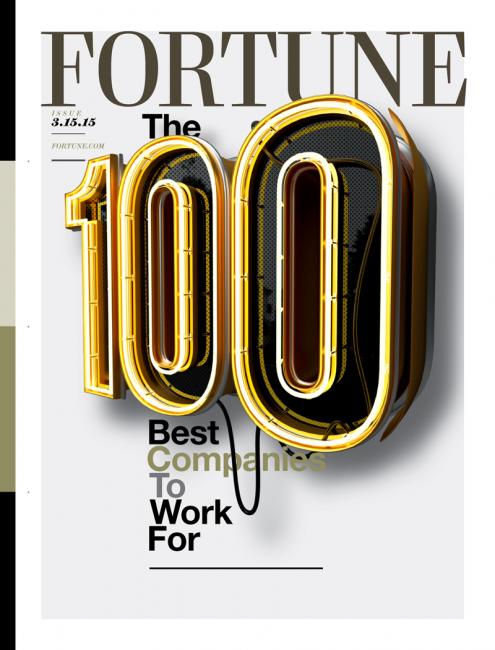
FORTUNE released its annual 100 Best Companies To Work For list, and to go with it, a five-way-split-cover, each illustrating “100” in a different and unique way.
Google comes out at no. 1 again, for the sixth year running, and Twitter has also made it onto the list at no. 24. Read the full list here.
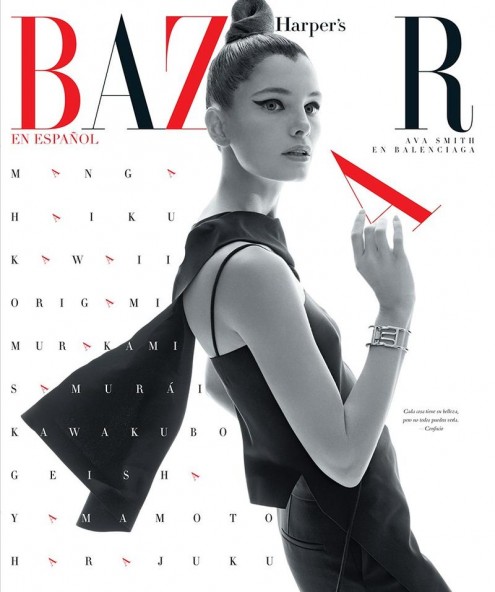
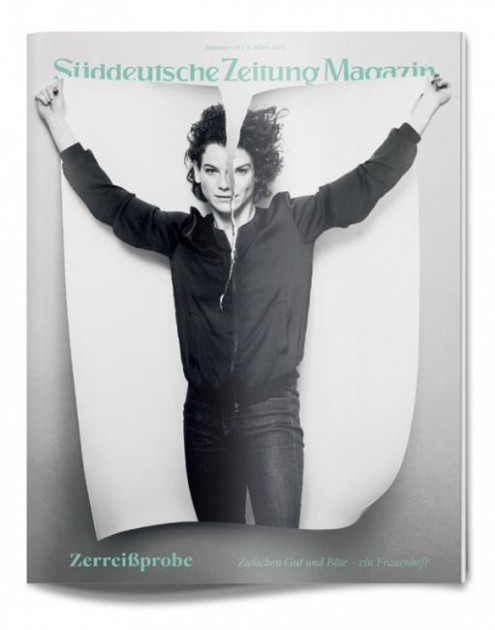
MagLove by @MediaSlut is a regular slot featuring the best local and international magazine covers every week, recognising well thought-out, powerful and interesting (and hopefully all three-in-one) covers and celebrating the mix of pragmatism, creativity and personal taste that created each of them. The (for now anonymous) blogger behind MediaSlut knows way too much for his own good about media in South Africa, magazines in particular. His mission is to show when SA magazines fail but, most importantly, also when they succeed. If you’re looking for a library about SA magazines and news, this is your one-stop pitstop.
— MarkLives’ round-up of top ad and media industry news and opinion in your mailbox every Monday and Thursday. Sign up here!
by Louise Marsland (@Louise_Marsland) This year it was Design Indaba’s own projects that attracted much of the attention:
Take 2 — giving life to used objects
the Most Beautiful Object in SA (MBOISA)
how Artymiss won creativity, and
Woolies takeout a win at DI 2015.
Create.Change
A few years ago at Design Indaba, trend forecaster Li Edelkoort told us to “go farming”. Frankly, many of us at the time thought she was a plough short of a barn. Worship her or troll her with witty asides, she did get it right, as current trends are reflecting that prediction.
From innovation in urban farming to prints with nature (flowers, trees, animals, birds, earthy tones, leaves), furniture and jewellery inspired by nature, in the shapes of nature, are still all about bringing the ‘outdoors’ ‘indoors’ for a while now. as was shown on the Design Indaba Expo this year.
It also all ties in with the move to lessen our impact upon the environment and create sustainable design solutions to societal ills — which is at the heart of Design Indaba philosophy. There was a liberal sprinkling of functional products and art made out of used material, the recycle/upcycle trend, and blended product use.
According to the organisers, one project, “Create.Change”, was born out of Design Indaba and Leg Studios’ “desire to tap into the innate creativity of local artists and harness this talent to Make.Change” — Design Indaba’s stated vision.
They challenged South Africa’s artists and creatives to create works of art from Leg Studios’ three-legged, flatpacked birch carry tables. Artists such as Renee Rossouw, Frank van Reenen, Unathi Mkonto, Lauren Fowler, Daniel Ting Chong, Dani Loureiro and more donated their time to the #MakeChange campaign.
At the expo, visitors were able bid for their table of choice and the money will be donated to provide children of a primary school in Grassy Park, Cape Town, with a sustainable and inspiring library.
“This project showcases how real change can be effected quite easily, through the combination of creativity, collaboration and commitment,” says Kim Seeliger, Design Indaba Expo manager.
The second life of objects
A Design Indaba project, “Take 2 — the second life of objects”, was a popular stand at the expo this year. It comprised a curated selection of furniture and functional homeware design, sourced both locally and internationally.
The point was to showcase how to “breathe life into old things”. Materials were repurposed and even the original function of redundant objects changed, such as the interesting chair made from an old supermarket trolley by The Red Dog, Quazi Designs’ cluster of pendant lights made of old newspapers, and the chandelier of hundreds of plastic bread tags.
Design Indaba wants us to think upon the following: “Do we need more new things when the old present such endless possibilities? How do we reincarnate products that already contain the DNA of their first life? Is trash the new raw material…?!”
Most beautiful
As always, the Most Beautiful Object in South Africa (MBOISA), chosen by local creative visionaries and then voted on by the public, sparked debate and interest in all things design. So many beautiful things this year… but the new Centenary Tree Canopy Walkway at the world-famous Kirstenbosch Gardens in Cape Town — the “Boomslang” as it is known colloquially — won the accolade this year.
The raised walkway through the garden’s arboretum, inspired by a snake skeleton, was a collaborative effort by architect Mark Thomas and structural engineer Henry Fagan. The total structure was also designed to be low-maintenance and low-impact.
Nominations included submissions by media, photographers and designers, as well as puppet provocateur Chester Missing (who, in my opinion, is also one of our treasured beautiful ‘objects’), and included ‘beautiful’ objects such as: “The Boran Bull”, an intricately beaded artwork by Ntombephi Ntobela of Ubuhle Beautiful Beads; Erre’s silk organza and leather floral dress from its Spring/Summer 2014 collection; and the Pace/MultiChoice Explora PVR decoder for its world-class software.
Then there was light…
The winner of the most creative stand on the Design Indaba Expo was Artymiss, a Cape Town-based design studio run by Pauline Irvine that creates laser-cut stationary. Boxes showcasing the work were individually lit, creating a halo effect around each intricate piece.
The stand took architect Peter Neokorides, of Green Way Interiors, a week to build.
“The lighting detail, not only for the product but also as decorative lighting, made the stand extremely easy on the eye and allowed the product to stand out,” interior designer Robert Sherwood, who judged the award, told Design Indaba.
Takeaway bites
No one is tied to anyone’s apron strings at Design Indaba as innovation flows freely and without restriction. Woolworths and Design Indaba collaborated once again on the traditional bag/T-shirt drop for full Design Indaba ticket holders and select media, except this year they did a branded apron instead of a shirt.
The stone-coloured apron was presented in a dinky takeaway lunchbox, wrapped expertly and, via a box wraparound, encouraged visits to the Woolworths Taste Design display outside the main auditorium, where a medley of flavour combinations were on offer in a unique taste experience.
Shelf Life is a weekly column by Louise Marsland. Tweet new product, packaging and design launches to @louise_marsland or email her at louise.marsland at gmail.com. Want to sponsor Shelf Life? Contact us here.
Louise has written about the FMCG, media, marketing and advertising industry for over 20 years as a former editor of magazines AdVantage, Marketing Mix and Progressive Retailing, as well as websites Bizcommunity.com and FMCGFiles. She also edited the weekly Wednesday Media & Marketing Page for The New Age newspaper. She is currently the publishing editor of industry trendwatching portal, TRENDAFRiCA, for consumer insight, research and trends in Africa; a regular industry columnist and speaker; a consultant on content strategy; and contributing editor to Fast Company South Africa magazine, which has just launched in South Africa.
— MarkLives.com is a proud Media Supporter of Design Indaba 2015. Get our round-up of top ad and media industry news and opinion in your mailbox every Monday and Thursday. Sign up here!
by Robert Grace & Diana Springer. “If you’re not in fashion, you’re nobody.” No, it isn’t a line from AbFab, but is a quote of Lord Chesterfield, said some 260 years earlier.
Perhaps it was being in Paris late last year over Fashion Week for the 2014 World Retail Congress that got the two of us thinking about the concept of brands needing to be “in fashion”.
Chesterfield’s statement so clearly defines the ultimate aim of marketing and advertising: constantly keeping the brands we work on current, in-favour, preferred, and hopefully even loved — essentially, in fashion. We’re not sure that Chesterfield could’ve foreseen just how hard that task would be in today’s world, where just about everything is available everywhere, all the time.
Less stylish, more substance
The World Retail Congress is admittedly less stylish than Fashion Week but probably with a lot more substance to be had. After heading from the likes of John Lewis, Tesco, Coke, Printemps and Louis Vuitton, what struck us is that there is something fundamental to brands that have the ability to stay in-fashion.
You may think that it requires being on top of, and adopting, the latest trends (maybe creating a few of your own), or religiously following popular culture. We argue that it’s only a part of it.
However, we just need to be reminded that Apple — easily one of the trendiest brands out there — is noticeably absent on two of the most popular platforms of our time: Facebook and Twitter. No, being in fashion is a lot more than just the technology you use (and far harder work).
One thing in common
Brands that stay in fashion have one thing in common: a clear and powerful purpose, which consistently allows them to present themselves in authentic, unique ways that keeps the brand wanted and chosen.
Disney has the unique ability to ‘suspend reality’ in just about every person on the planet. It’s taken one of its most compelling propositions, Cinderella, into retail spaces around the world with its Bibidi Bopidi Boutique It’s a space where little girls live out the ultimate fantasy of being transformed into Cinderella through a range of services where they’re pampered, made up and dressed as real-life princesses.
Clearly, this suspension of reality is working — the waiting list for the Harrods boutique is six months, with prices of up to R18 000 a go.
Delivering value
Being in fashion also demands delivering value. European discount food retailer Lidl understands that product and price alone don’t equal value (unless, of course, you are consistently the cheapest in your category — a rare feat).
Struggling with its ‘cheap’ image in Sweden, in late 2013 it set out to get back in fashion by convincing people that Lidl isn’t a compromise.
It opened a pop-up gourmet restaurant called Dill (a convenient play on its name). Headed up by leading chefs who secretly used products exclusively from Lidl, it became an instant success. Its little secret wasn’t made public until the popular pop-up shut its doors. [And then it won a few awards — ed-at-large.]
‘E-factor’
Johnnie Rush, from the Home Shopping Network, talked about the ‘e-factor’ where you create an emotion that leads to a sale. Brands that are in fashion acknowledge consumer needs and mindset, and are able to offer their consumers social currency — experiences and stories that move beyond the transactional.
Ann Cairne, the head of insight for Mastercard, echoed this sentiment — one of the biggest macro worldwide trends that is being seen in global spend is the shift away from commodities to experiences.
A great example of a brand that has acknowledged this shift is Shoes of Prey, an Australian (and soon-to-be global) retailer. Modern consumers desire personalisation and customisation, so Shoes of Prey tapped into this mindset by giving shoppers the ability to design their very own, one-of-a-kind, pair of shoes, both online and at David Jones. De rigueur indeed.
Living the brand
Disney has taken this even further with its D-Tech-Me studios, which print 3D replicas of customers as Star Troopers, Super Heroes or Princesses. Now that’s living the brand.
Every week, lululemon stores and showrooms push their products aside, unroll yoga mats and turn their spaces into instant yoga studios. The classes are complimentary and lead by instructors from local studios, building real brand communities and followers.
But perhaps, most importantly, staying in fashion requires you to consistently build social currency. It’s the value associated with your brand that is intangible, yet so desirable, that your audience is continually prepared to spend its hard-earned money on your brand, no matter what anyone thinks.
“Brings us to the forefront”
Enter CROCS — in our opinion, far from the fashion icons seen at Fashion Week. However, with 300 million pairs sold globally and revenue of US$1bn, we think that neither its customers, nor it, could care less. In fact, a senior executive at the congress commented, “We like that we have detractors; it brings us to the forefront”.
As much as these are global shifts, they are increasingly relevant locally. As South African consumers become ever more value-conscious — seeking out brands and services that deliver meaningful, tangible impact — brand owners need to push beyond the veneer of just advertising or dialing up the decibels of their ad spend to attract and retain consumers.
Easier said than done in a world of ubiquity.
Passport factors
So, the real challenge is finding a unique, authentic way to present your brand. Great product and price are becoming passport factors. You need a thorough understanding of why your customers should put you at the top of their list.
And that’s called purpose.
Robert Grace is group partner of strategy for the M&C Saatchi Abel Group in South Africa. Diana Springer (@Dispringer) is managing partner strategy for M&C Saatchi Abel Gauteng.
“Motive” is a by-invitation-only column on MarkLives.com. Contributors are picked by the editors but generally don’t form part of our regular columnist lineup, unless the topic is off-column.
— MarkLives’ round-up of top ad and media industry news and opinion in your mailbox every Monday and Thursday. Sign up here!


 We are Every Ad Agency (@EveryAdAgency). You’ve either worked for us, with us or against us. What’s more, we make every advertising and marketing cliché work. Headquartered in Johannesburg; branches everywhere.