Bad ADvice: The skill of scam

by Every Ad Agency (@EveryAdAgency) It’s an unnecessary harsh word in our industry and, at Every Ad Agency, we prefer not to use the term (we’d much rather refer to it as “out-of-scope opportunities”). But, for the purposes of this very useful article on how to win awards this way, we will refer to it as scam.

It takes a finely tuned, meticulous process but we believe we’ve cracked the code to winning big with scam:

Wolf In Sheep's Clothing by debspoons courtesy of FreeDigitalPhotos.net
Image by debspoons courtesy of FreeDigitalPhotos.net

1. Client approval

The first port of call is to show clients the work.

Now, they might say something such as “This isn’t even our CI” or “We would never flight this” but nobody likes a quitter. Whether they say yes or not is irrelevant — as long as they briefly saw it for a split second after a presentation that included ‘real’ work.

If all else fails, a low-res version of the work can always be emailed to a junior assistant brand manager for approval one day before the entry deadline.

2. Flighting

Flighting the work is very important as no awards show will ever accept something that didn’t run:

Make friends with community newspapers. This is a guaranteed way of running an ad. Size doesn’t matter. It’s perfectly fine to run a full colour DPS as a black and white classified in the South Coast Fever. Entry rules state that work must be seen by a “substantial audience” and, as of 2015, there are 27 869 people residing in Margate. You won’t get more substantial than that.

Radio entries may simply be flighted in-store at the local pharmacy to make sure it reaches broadcast.

3. Entry prep

The penultimate step is preparing entries.

  • Do NOT enter the original version. Rookie mistake.
  • Remove all client URLs, call to action, or taglines. Make the logo as small as possible. Judges want art, not an ad.

4. Contingency plans

Finally, be ready for the aftermath. There are two plans of action to have in place:

  • If you win, make sure the ad all of a sudden gets flighted everywhere. Send out press releases to Bizcommunity, MarkLives, The Media Online, The RedZone and Media Update — all with client quotes on how the brief came to be — and get Adlip and 10and5 to do a feature with the creative team.
  • If you get caught, blame the junior team.

Share your successful scamming tips with us on Twitter (@EveryAdAgency) and let’s make sure more agencies see metal this year.


Every Ad Agency logoWe are Every Ad Agency (@EveryAdAgency). You’ve either worked for us, with us or against us. What’s more, we make every advertising and marketing cliché work. Headquartered in Johannesburg; branches everywhere.

All these satirical  “Bad ADvice” columns, which are exclusive to MarkLives, are written by the Chief Operating Creative Director in Charge of Ideas (COCDCI).


— MarkLives’ round-up of top ad and media industry news and opinion in your mailbox every Monday and Thursday. Sign up here!

Ad of the Week: What makes South Africa unique

by Oresti Patricios (@orestaki) South Africa has many cultural ‘quirks’ that we, who live here, consider normal. Visitors enjoy finding out about them as it gives them a sense of ‘insider’s knowledge,’ of having been exposed to — and become part of — something special.

The new Santam TV commercial, created by King James Group, celebrates this specialness, holding up a mirror to South Africans of some of those things we find normal every day, but are totally weird and inexplicable to a foreigner.

King James Group TVC for Santam: “One of a kind”

The TV ad starts with a wintry scene in London: one man in a delivery van is telling another man about his holiday: “Sensational — the beaches. The sunshine. The women!” he raves.


The next scene is of a huddle of young Japanese women in a subway station, looking at photos on a cellphone. “It’s a road sign that says, ‘Hippo crossing’,” says the one.
Her friend laughs: “You lie. It’s Photoshop.”

Santam One of a Kind tvc screengrab road signIn the next scene, a father is telling his two young daughters: “You see, the baboons come into your house and trash everything!” The children are incredulous.

‘Chop en dop’

The following scene is set in a Scandinavian country. A man is telling his friends: “They love making fires everywhere. They call it ‘chop en dop’.”

The scene then cuts to an Indian suburb, where a young man is telling some onlookers: “They take a bakkie, fill it with water. All get in and drive to the rugby like that. They call it a ‘bakkuzi’.”

Santam One of a Kind tvc screengrab bakkuziAt this point, the ad changes pace, having established all its principal characters. Three South African concepts are explored that one would normally describe as negative: burglary, load shedding and car theft — or rather, the burgeoning industry that the latter has created: car guards.

It’s here, too, that the ad cleverly shifts the focus to topics that are more insurance-related, although it’s not an overt sell. The pace of the editing picks up as the common ideas are echoed around the world.

First, it’s a wintry scene where two women are speaking Russian. “They have beautiful homes, but with really high walls,” says the one.
“To keep something in or out?” asks the other.
The first woman shrugs.

Santam One of a Kind tvc screengrab power offThe next scene is also in Russian, or perhaps some other Eastern European language. “Sometimes they just switch the power off.”

A name for it

Cut to an English woman: “They even have a name for it…”
Cut back to the Scandinavian dinner table: “Load shedding.”
Cut to the Japanese lady: “Load shedding?”
Cut to two American women at a children’s basketball practice, laughing: “I could shed a little load.”

Then it’s back to the two Londoners, as they offload the contents of their van. “16 people in here?” the one asks.
“That’s right.”
“And they call it a mini-taxi?”
“That’s not the half of it mate. They’ve got these things — car guards.”
Scandinavian: “Car guards.”
Russian: “Car guards.”

Santam One of a Kind tvc screengrab getting oneBack to the Londoner: “Watch your car, make sure it’s still there when you get back.”
“Mate, that’s amazing!” exclaims his friend, “I’m getting one.”

The payoff line is: “A one-of-a-kind country needs one-of-a-kind insurance.”

Engaging ad

The ad is engaging because it offers South Africans a view of themselves from the outsider’s perspective, without any pandering or narcissism. As a nation we can laugh at ourselves, we can face our problems head-on, and we don’t need to make any excuses for what we are — just as crazy and contradictory as any other country in the world.

The message is solid and clear, and manages to tread that tricky line that insurance companies have to tread — selling peace-of-mind in case of tragedy, without necessarily scaring your potential customer.

It’s a huge improvement upon Santam’s previous campaign, where people in the street were hypnotised into thinking they were pregnant or old; many people I spoke to found that disturbing and ‘creepy’.

This is a feel-good, optimistic campaign that makes keen observations of SA society, with spot-on casting, acute copywriting and fly-on-the-wall style cinematography, and direction that pulls it all together into a cohesive whole.

It’s refreshing to see an insurance brand taking a risk in thinking laterally about its product, and doing marketing that gets people talking, with a smart, optimistic message.

Credits

Agency: King James Group
Chief creative officer: Alistair King
Executive creative director: Devin Kennedy
Art director/head of art: Damian Bonse
Copywriter: Devin Kennedy
Strategist: Nicky Rush
Client service: Amanda Stergianos
Agency producer: Caz Friedman
Music: Pulse Music
Sound engineer: Dave Harris (Freq’ncy)
Production house: 0307 Films
Director: Kim Geldenhuys
Producer: Tess Tambourlas
Editor: Ricky Boyd (Deliverance)
Post: Black Ginger


Oresti PatriciosAd of the Week, published on MarkLives every Wednesday, is penned by Oresti Patricios (@orestaki), the CEO of Ornico, a Brand Intelligence® firm that focuses on media, reputation and brand research.


If you are involved in making advertising
that is smart, funny and/or engaging,
please let Oresti know about it at info@ornicogroup.co.za.


— MarkLives’ round-up of top ad and media industry news and opinion in your mailbox every Monday and Thursday. Sign up here!

Ford agency Blue Hive opens 17th office in Johannesburg

by Herman Manson (@marklives) Following a strategy employed in numerous markets across the globe, WPP and the Ford Motor Company have announced the launch of its dedicated agency, Blue Hive, into the South African market.

In brief:

    • Ford’s dedicated ad agency, Blue Hive, has opened in Johannesburg
    • 17th global office and first in Africa
    • Joint venture between JWT, Wunderman Aqua, Mindshare and Meropa
    • New MD seconded from Detroit for next two years
Paul Venn. Image: Team Detroit.

All aspects

Blue Hive will handle all aspects of Ford South Africa’s marketing communications and is joint venture between Ford’s SA agencies: JWT, Wunderman Aqua and Mindshare (all members of WPP). Meropa, which handles Ford’s PR account, is also part of the venture, and the only non-WPP-aligned stakeholder.

The new office of Blue Hive is co-located in the building that houses JWT in Bryanston, Johannesburg. It will employ between 20 and 25 people. Chris Chadwick has been seconded from Detroit to serve as managing director for the next two years.

According to Paul Venn, president (global) at Team Detroit (Ford’s dedicated US agency), the SA office has been two years in the making, with plans drawn up a year ago and the agency finally becoming a reality about  a month ago. Moving staff from different agencies into the dedicated agency is usually a challenge — but Venn says 95% of employees who worked on Ford at the different agencies were willing to join Blue Hive.

No loss in revenue

In each market, the precise financial model is negotiated with the parties involved; none of the agencies lose revenue as a result of the launch of this dedicated agency.

Through Blue Hive, Ford is aiming to find a distinct competitive advantage, says Venn, by bringing together its agencies under one roof, allowing for better knowledge transfer and communication. It also takes inter-agency competition out of the equation, argues Venn, allowing all the focus to be on the client and the work being done for it.

The SA market is a significant one, says Venn, and he hopes Blue Hive will unlock its potential more fully for Ford. The SA agency will, when appropriate, serve Ford’s other sub-Saharan markets as well.

Growth in adspend

The brand has grown its market locally share from 7.8% in 2012 to 13.8% in February 2015, according to Mark Kaufman, Ford vice president of marketing, sales and services for South Africa and sub-Saharan Africa. Accompanying that growth in market share is growth in adspend — and the budget is now big enough to support a dedicated agency, says Kaufman.

A lot of that growth has been driven by the Ford Ranger, which will be a focus for Blue Hive both in South and sub-Saharan Africa.

— Get our round-up of top ad and media industry news and opinion in your mailbox every Monday and Thursday. Sign up here!

Fair Exchange: Are reward programmes for loyal consumers or new signups?

by Erna George. I’ve been reading Professor Byron Sharp’s book, “How brands grow”, which challenges marketers to take a more scientific approach to marketing. He asserts that loyalty is not a sustainable driver of brand volume growth, calling into question the longevity of loyalty programmes and stating that these may “work a little but have limited impact on overall loyalty”.

Incentive Definition by Stuart Miles courtesy of FreeDigitalPhotos.net
Image by Stuart Miles courtesy of FreeDigitalPhotos.net

Via brand case studies, consumers are described as being variable in brand choice and use. If true, this makes for an interesting quandary for those brands that have a high reliance upon programmes that offer value or rewards for buying more, staying longer or for current users only.

Having written about loyalty programmes previously, I have had to look at them from a different angle. Maybe it’s not about whether loyalty programmes work or not; maybe it’s about whether loyalty programmes do reward current consumers, as well as entice new users to the brand? Have participants in loyalty programmes been loyal consumers or those seeking a quick reward?

Why don’t they reward me?

I know I get annoyed at brands, to which I am ‘loyal’, that offer great rewards (vouchers, prizes, etc) only to those who sign on for new accounts. Why don’t they reward me, who has been with them for so long?

But how loyal am I, really? How frequently do I actually engage with the brand once I have signed up? Despite being a ‘loyal’ customer, there is only so much tomato sauce one person can eat or only so many of the same styles of jeans one can purchase from a retailer.

Recently, someone at work received a Yuppiechef delivery at the office. With it, she received a handwritten card stating that it was great to hear from her again, thanked her for the purchase and asked if her previous buy were still a delight. Upon chatting to my colleague, Yuppiechef is certainly not the only brand she purchases kitchenware from but she certainly enjoys each interaction with it.

That Yuppiechef had someone to look up, reference a previous purchase and handwrite a card feels more like a long-term connection than a purely transactional relationship. Yuppiechef has made many competitor brands feel as if they offer lesser experiences by comparison. [Please note that, in late February 2015, Yuppiechef announced that it would be scaling back on the handwritten cards for reasons of authenticity and sincerity — ed-at-large.]

Lock consumers in

Then there are brands that almost lock consumers in with special deals such as annual subscriptions — sign up for 12 months and pay for 11. These incentive systems will only stay successful if the service and experience are worth it.

Before renewing Sunday Times subs (which comes with The Times daily) recently, I questioned the expenditure as I’d missed out on reading it here and there, and the daily paper has often been so tightly rolled up that, when I try to scan the news, it promptly bounces back into an accordion-like tube structure — completely unreadable.

The ‘over-attentive’ call-centre agent called every few days to remind me to renew; I hemmed and hawed. The last time she phoned, I’d just had a pyjama Sunday when I read the paper with my first coffee before the house awoke (without having had to jump in my car). I signed up again.

Come the first delivery, the daily was, once again, rolled up to the width of a spaghetti strand and, upon contacting the call centre, gone was the attentive consultant. In her place was a non-interested agent who didn’t feel that my request — to ask the delivery person to fold the paper so that I may actually read it — was terribly important.

Several weeks later and I am beginning to wish I had invested in a set of encyclopaedias just to flatten my paper. So, next year, renewing will not be an option, even if an incentive is offered.

It is vital to lock people in with love, rather than handcuffs, for a long-term relationship.

To the max

Then there are consumers who work the brand-loyalty system to the max.

A few years ago, FNB offered unlimited visits to the Slow Lounge at airports for Platinum cardholders. A number of people I know rushed to sign up for FNB cards, not to switch their banking but simply to have this advantage. That FNB now limits the number of visits to the lounge, among other requirements, indicates that there may have been more than the few I know signing up for the card.

So what may have started as a great reward for loyal clients actually may have turned into an unintentional recruitment drive. I do hope that the penetration attained was long-term enough to be worth the irritation to the more long-standing card holders [I remember many complaints on social media about the lounges being overcrowded and too full to get into — ed-at-large].

On a lighter note, a friend told me about a trip to The Point (a mall in Seapoint) on Valentine’s Day. He hates paying for parking at a mall where he is about to spend a fair amount and, upon reaching for the ticket, was pleasantly surprised to find “Free for you to have wonderful Valentine’s Day” taped across the parking machine.

Now, it is unlikely he will be parking there every weekend but, not only has he mentioned this story to many people, each time I have to pay for my parking I remember The Point. Again, it has repositioned what ‘my’ brands do to delight their patrons.

The most successful

Loyalty activities that appear to be most successful are those which people talk about (creating brand awareness) or show the brand’s differentiation from the market and entice new users. So perhaps Professor Sharp has something in his thinking:

  • Relying upon a smaller base of consumers to buy more is not feasible as there is a limit to how much a loyalist can consume
  • Given we are a young democracy and income levels are diverse, for some brands there are still many untapped consumer segments
  • Only enticing and rewarding new users could leave established consumer bases feeling less treasured

Perhaps the sweet equaliser is that promotions or activations must both deliver new customers and delight the loyal.


Erna George


Erna George is the new director of strategy at Lowe Cape Town. She has worked with diverse brands and categories — from FMCG, alcohol and agriculture to financial services and entertainment — in countries across many geographies, including South Africa, Mozambique, Nigeria, Kenya, India, Philippines and Brazil. She contributes the monthly “Fair Exchange” column, concerning business relationships and partnerships in adland, to MarkLives.


— MarkLives’ round-up of top ad and media industry news and opinion in your mailbox every Monday and Thursday. Sign up here!

Dissident Spin Doctor: A strong reputation isn’t built through PR

by Emma King (@EmmainSA) There has been many a client which has asked how it could build its profile and reputation, asking me to “PR” it and make it a loved household name. And it would be easy enough to sell a PR approach that promised a bunch of press releases in return for instant fame and adoration.

megaphoneBut those brands that are loved and revered are not those which have sent out a million statements about how great they are or what they have achieved.

They are the ones that have quietly gone about doing their job really well, and growing the reputation and column inches as a result.

Proven time and time again

And this is important, not only for the CEO’s ego, but also for the bean counters behind the scenes, because it has been proven time and again that those companies that have a good reputation benefit in a myriad of ways — from attracting (and more importantly) retaining the best talent through to a strong bottom line.

Let’s look at a South African success story for some insights. And what better than South African Breweries (SAB), which has grown from being a small local brewer to a world leader?

Obviously, there’ve been a number of business decisions made along the way that made it the force to be reckoned with that it is today — from water-tight and extensive distribution channels to strong and innovative brand development and marketing.

At the core

But at the heart of this is the aim to be a company that has an authenticity at the core, whether it be using its flagship brand Castle to join the fight against rhino poaching or building ways into the management and building of its breweries that have an understanding of sustainable growth at its core.

It would have been easy to slap a “Responsible Drinking” logo on every drink and tick the box of “good marketing”. But, instead, funds are channelled into carefully researched, on-the-ground projects — from educating taverners on responsible trading to the development and funding of entrepreneurs and startups.

The resulting effect is a place in which employees and consumers have a sense of pride and ownership, and that loyalty pays off multiple times over when the end of the year’s financial results comes in.

Many learnings

The learnings for us, as communicators, are many.

First, I would say that it doesn’t matter how good a PR team you have on board if the core of your offering is not strong and authentic; it will never gain traction. We all know that famous saying about the futility of polishing things that rhyme with words.

Secondly, there needs to be an inherent understanding — in the boardroom — that there’s a value in a strong reputation that cannot be measured. And that the PR or marketing team is not the custodian of this — it lies instead with the whole management team, who needs to let the philosophy and values run through everything that is done.

And, lastly, it is the understanding that the reputation of a brand or business is not made through press releases and holding statements in times of crises. It is made up of all of those little moments and encounters that people have with it — from what they read in a newspaper or see on social media down to their impression when they arrive in your reception or how they are greeted by your security guard.

Emma King


Emma King (@EmmainSA) is the owner and MD of The Friday Street Club (@TheFridayStClub). Previously, she was head of PR at The Jupiter Drawing Room (Cape Town). She contributes the monthly “The Dissident Spin Doctor” column on PR and communication issues to MarkLives.com.

— MarkLives’ round-up of top ad and media industry news and opinion in your mailbox every Monday and Thursday. Sign up here!

Media Redefined: The AR is dead, long live media planning

by Martin MacGregor (@MartMacG) Media investment is the largest line item in a marketing budget. Finance and procurement know this, and are putting marketing under increasing pressure to justify investment on audience reach, without demonstrating tangible impact on the business bottom line.

Martin MacGregorThe opportunity cost of media spend comes under scrutiny when, for example, placing three TV ads in 7de Laan on SABC 2 costs the same as setting up a decent website for the company. Or when running a price promotion has the same knock-on margin as telling people about it. In fact, for just three weeks on radio, a company could afford a senior staff member for a year.

Rising costs and fragmentation

Coupled with rising costs of media inventory comes the fragmentation of audiences. People are choosing to consume content in their own time in niche interest spaces, rather than in the mainstream, general environments it has been traditionally served. Building advertising traction against fragmented audiences is more difficult and more expensive.

Hence the popularity of digital media.

In the past, digital has contributed to audience fragmentation more extensively than any other media touchpoint. But, with the advent of programmatic buying, inventory can be bought and optimised based on consumer response, such as clicks, which ultimately acknowledge that the ad has been seen.

Businesses can then calculate the value of a click or lead to their companies, weigh this up against the cost of the inventory and work out the return on their media rand. Programmatic buying sees digital attracting a growing share of media budgets across the world.

Global question marks

But there are global question marks over the impact of straight banner advertising, and it has been recognised that multimedia synergy can be more impactful in delivering complex communication objectives.

The problem is that the way traditional media performance is measured is difficult to link back to business performance. Today, audience research is used to inform how advertising is served across TV, radio and print touchpoints. And, when compared to response-based planning on digital platforms, planning using ARs is blunt and inadequate.

In South Africa, we have advanced audience-based methodologies that account for the demographic diversity of our country. In the past, this research was owned by both marketers and media owners, each on opposite sides of the trading field, thus keeping results honest and credible. Sadly, from 2016, media owners are taking over the data and the media planners will be left using performance metrics controlled by those selling the inventory.

This aside, the best indication of advertising success using audience-based measurement is how many people were potentially reached by the ad, and also maybe how many times they had the opportunity to see it.

Doesn’t make sense

Some media agencies table these results alongside other performance metrics such as PR value, digital impressions and social media metrics in neat dashboards to summarise the impact of the campaign. However, it doesn’t always make sense to table results that have been sourced differently alongside each other, unless you understand the impact each of those efforts have had on the business or brand.

Things start getting interesting when campaigns are designed to deliver measureable results. For example, when TV ads call for sms response, or radio ads encourage web traffic. If the business is set up to convert these leads into customers, the value of that consumer can be tracked back to the media investment.

Next-level media planning will take clients’ response data, isolate it from non-communication-related factors, and attribute the effect back to the media input, be it on TV, radio or print. By doing so, budget may be optimised based upon the lowest cost-per-lead. Efficiencies can be measured across channel, daypart, day of week and time of year, while different campaign requirements and brand objectives will influence the source of the response.

Over time, benchmarks can be developed for different industries and media planners can provide sharper, business-based projections that marketers can sell into their financial counterparts.

Response-based planning

Response-based planning across multimedia touchpoints is already being applied for some insurance brands. It is proven that audience-based planning delivers only 18% of the leads generated by response-based planning, suggesting that using ARs to plan media may deliver reach, but not necessarily the right kind. Response-based planning neither discriminates against age, race nor income, but instead optimises plans against environments that deliver people who are likely to respond to the brand call to action.

Often these environments are not primetime media buys, but rather off-peak or unexpected genres. Primetime inventory not only costs more because it delivers bigger audiences, but also because it attracts demand from advertisers. By veering away from premium primetime buys, response-based planning may save the advertiser up to 40% on inventory costs.

Response-based planning opens up markets where audience measurement is fragmented and biased. For a long time, the media landscapes for African countries have presented a black hole for media planners. If response data can be linked to advertising pressure, through attribution modelling, it will be possible to project accurately the ultimate touchpoint mix and budget requirement across any border.

Thus the future of media planning will be response-led. Audience-based research will be used to determine the verticals to fish for responses, but merely as a guide for human discretion. Premium buys will still have significance for their association value in building brand equity, and it will be up to the media planner to decide the appropriate balance between efficiency and environment buys, based upon the brand’s objectives.


Martin MacGregor (@MartMacG) is managing director of Connect, an M&C Saatchi Company, with offices in Johannesburg and Cape Town. Martin has spent 18 years in the industry, and has previously worked at Ogilvy and was MD of MEC Nota Bene in Cape Town. He will contribute the monthly “Media Redefined” column, in which he will challenge norms in the media space, to MarkLives.com.

— MarkLives’ round-up of top ad and media industry news and opinion in your mailbox every Monday and Thursday. Sign up here!

Clicks2Customers: Global success with its engine room in SA

by Herman Manson (@marklives) Vinny Lingham launched search-engine marketing software agency, Clicks2Customers, in 2003. It was an early entrepreneurial enterprise from the man who would later launch Yola and Gyft, and also star in the South African edition of The Dragon’s Den.

Clicks2Customers logoAttracted investment

At the same time as setting up Clicks2Customers, Lingham launched a holding company called incuBeta. By 2006, Click2Customers had become a significant search affiliate in the UK in the travel space. It would draw early investment from TEIM Ventures.

TEIM Ventures, with the Oppenheimers as shareholders, had made their money in the telecoms trade — when TEIM took a stake in Incubeta, the Oppenheimer Fund exercised its right to come in (it had right to follow any TEIM investment). TEIM had its own fund which looked at investments in smaller high-risk enterprises with high-return opportunities, of which incuBeta was one.

By 2005, the investment funds’ share in the business had grown from 25% to 51%.  Current Clicks2Customers CEO, Jonathan Gluckman, would later convert his shares in TEIM into Incubeta shares. By 2007, HBD had made a R25m investment in the company, which then had an annual turnover of R50m. It employed 50 people in Cape Town, Johannesburg and London. According to Gluckman, at the time of the Oppenheimer family investment, returns stood at a promised 40%.

Flying high

The company was flying high, and even talked about a listing on the JSE to help finance growth in the US and European markets. But, six months later, the business was virtually dead.

Agency networks had stepped into the market and search affiliates were at a distinct disadvantage — holding few or no direct client relationships themselves. The business lost 10 of its top 12 clients to agencies over the course of a year, losing R8m in 2007.

Gluckman, who was heading up global business development for Clicks2Customers at the time, realised that the company had to evolve into a fully-fledged digital agency if it were going to survive. Having spent time in the US and UK markets, Gluckman saw how digital outfits there were managing the cycle, which was already swinging away from ad agencies that were not delivering on the deep technical knowledge they had promised clients.

Set about reinventing

Gluckman set about reinventing Clicks2Customers as a performance agency, rather than as an affiliate agency, in a bid to go head to head with the big agencies. Clicks2Customers got lucky in that it quickly gained Walmart, Overstock and Zappos — all three top 30 retailers in the USA. It won these clients as they had gone through the same process of moving from the big affiliates to the large agencies, but found that the agencies couldn’t deliver same performance as the super affiliates, says Gluckman.

The reason is that search is a quantitative space, not qualitative. “However, we couldn’t get traction beyond the companies that knew us as an affiliate — and came back to us,” he adds.

Unfortunately, the US part of the Clicks2Customers was failing, in part due to a lack of staff on the ground, the competitive environment and that the business was backed by rands, not dollars. Gluckman thought its focus should shift to emerging markets.

The departure of Lingham

It was this belief, coupled with his attempts to transform Clicks2Customers into an agency, which eventually lead to the departure of Lingham. The investors then took control of Clicks2Customers in return for giving up several IncuBeta subsidiaries at the time. Both the Oppenheimer fund and HBD eventually divested from the business.

Clicks2Customers soon won the SEO account for South African Tourism and expanded its operations to Australia, shortly becoming that country’s leading retail search-engine marketing agency, winning the business for four of its top 10 online retailers.

In 2011, it opened in Asia and won the business of Standard Chartered Bank; it now does business across 14 Asian countries and has offices in Malaysia, Hong Kong, Singapore and Shanghai. It’s also back in the black.

Offices around the world

The agency’s engine room sits in SA, explains Gluckman, but it generates most of its revenues from outside of the country. Currently, Clicks2Customers has offices in Australia, the UK and the US, as well as its four Asian offices.

It’s the international business interests, especially in developed markets, which gives the agency an edge in its core developing markets, Gluckman believes. Digital is becoming less about search; instead, attribution modelling and user experience (UX) are gaining traction, especially in developed markets. Clicks2Customers is investing in these streams today to ensure it stays ahead in the digital game.

With R700 million in annual billings (turnover, not revenue), the agency has its legal headquarters in the UK. It employs 100 people in Cape Town and another 30 internationally. Data informs all decisions, and digital is viewed not as a branding channel but as an acquisition channel, according to Gluckman, who says that the agency has pushed spend into back-end systems, rather than the front-ends of campaigns.

In the pipeline

Its expansion into developing markets continues, with a new office having opened in Kenya in September 2014, as well as entry into Turkey. A number of other market entries are in the pipeline. Gluckman’s ambition is to build the largest search agency globally and he describes incuBeta as a global business built on SA expertise.

The agency has kept a relatively low profile inside South Africa, in part to protect itself from staff poaching. Gluckman says he has lost only one campaign manager to a ‘mainstream’ agency in the past decade.

Because SA has essentially been the driver for the agency’s global ambitions, the agency has not been as active as it perhaps should have been in building a local client base; this is set to change with the announcement of new country manager in the near term. Relationships have tended to be indirect — according to Gluckman, three of the country’s top five media agencies currently outsource search to Clicks2Customers.

Compete on more than price

He is critical of current local levels of SEO training, saying staff members at Clicks2Customers spend six months to a year in training before they take on accounts. He believes the country should compete on more than price; it should be competing on the depth of its skills base.

It’s also on depth of skills that specialist agencies such as Clicks2Customers will compete with full-service agencies in future. The latter are good at some things but not at everything — and, as the digital marketing environment becomes more sophisticated, he believes agencies such as his hold the competitive advantage.

— MarkLives’ round-up of top ad and media industry news and opinion in your mailbox every Monday and Thursday. Sign up here!

Shelf Life: PS, there’s a new ad from Keith Rose!

Louise Marsland (@Louise_Marsland)’s weekly pick of recent product, packaging, design and food launches:

  • Robertson Winery adds to its family
  • P.S. Friends forever
  • Engen 1-Card makes inroads, and
  • SchoolMedia calls on brands to support sports initiative in schools

Meet the new Fat Bastards

Fat Bastard Pinot Noir RoséFat Bastard Merlot
Fat Bastard wines have launched two new members of the family, a Merlot and a Pinot Noir Rosé.

The Merlot is described as ruby-coloured with a ripe berry flavour, inviting a palate of “blackberries, plums and black cherries with soft, rounded tannins”. The wine was aged in small oak barrels for 16 months.

The Fat Bastard Pinot Noir Rosé is cold-pressed to extract the salmon colour. The aromas are described as “ripe sweet strawberry and watermelon, wrapped in a floral overtone… ending on a zippy note!”

If you’ve ever wondered who Fat Bastard wines are named after, it’s actually the wine itself. It comes after a big discovery (in winemaking circles) that leaving the wines on the lees for longer than usual, allowing it to develop more fully and completely, creates a full-bodied wine — “a fat bastard of a wine”.

The newly launched Merlot retails at R95 — R100 and the Pinot Noir Rosé is R75 — R80 in store. The total range produced from Robertson Winery includes a Sauvignon Blanc, Chardonnay, Pinot Noir, Pinotage, Shiraz and Cabernet Sauvignon, in addition to the new releases.

P.S. Keith Rose has a new ad

Cadbury has launched its stirring new P.S. commercial, directed by Velocity Film’s Keith Rose, with a media drop that included a large box shaped like a book with a selection of the P.S. chocolate bars and a P.S. chocolate ‘bar’ memory stick — I’m such a sucker for these things.

Cadbury PS media drop 1Cadbury PS media drop 2: memory stickCadbury PS media drop 3: selection of chocolates
The new ad is storytelling at its best from the great Keith Rose as only he can do it, and tells the story of two friends, Lindi and Khanyi, who have a fall out.

“This commercial follows on from the previous, successful ad in the ‘There’s a story behind every P.S.’ series,” says Tracy-Lynn King, Ogilvy creative group head and the copywriter.

Georja Bunger, the art director and also a creative group head at Ogilvy, adds, “While the previous ad was a love story, this commercial focuses on two best friends. We wanted to do something that was brave for a chocolate brand, but also felt very sincere and captured what Cadbury P.S. is all about; which is real, human connections.”

The “There is a story behind every P.S.” commercial with the “Unwrap The Story” competition (total prizes of R50 000) runs until 31 March 2015. Viewers are invited to unpack the reason for the girls’ fallout. For more, go to www.facebook.com/CadburyPS or www.pscadbury.co.za

Engen card rolls out

Engen 1-cardThe branded Engen 1-Card, offering cashless fuel payments across Africa for commercial customers has been expanded to further territories, including Burundi, Democratic Republic of Congo, Gabon, Ghana, Mauritius, Mozambique, Reunion, Rwanda, Tanzania, Zambia, and Zimbabwe.

The 1-Card was developed for peace of mind and control for fleet managers, and has been rolled out on the continent over the past four years.

Administered by Engen, the 1-Card costs a fraction of bank-issued petrol cards and has no transactional fees or monthly administration charges to customers. The system can be tailored to the individual needs of each fleet — whether a pre or post-paid account is preferred. Fleet managers have improved control over fleet expenses as they can now determine when and where each 1-Card can be used, as well as how much can be spent on the card. In addition, fleet operating businesses are able to receive a monthly itemised report with an overview of fuel expenditure.

The system uses an advanced technology platform which is able to accommodate offline functioning. The chip technology on the 1-Card ensures that all of the information needed at point of sale is stored on the card, necessary in areas where connectivity is unstable at times. This information is relayed to Engen’s servers at least once a day.

Brand sports support needed

SchoolMediaSchoolMedia is calling upon brands to invest in sports at schools in poorer communities to encourage healthier living in poorer urban communities, which are most at risk of chronic non-communicable diseases, such as stroke, smoking related cancers, lung disease, nutrition-based diseases.

Education is a huge issue, with a shortage of information, equipment and facilities at many schools — and this is where brands can make a difference.

Khethi Ngwenya, owner and managing director of SchoolMedia (the in-school media placement and advertising company), is working in partnership with the National Association of School Governing Bodies and has access to a network of over 9 000 schools nationwide. Ngwenya aims to expose the youth to a more healthy and active lifestyle.

“We believe that children need to positively contribute to our future economy. Children are vulnerable at an early age and become exposed to drugs. Additionally, living a balanced lifestyle is not top of their priorities and SchoolMedia feels this needs to be tackled by spreading positive messages,” Ngwenya explains.

The SchoolMedia team has noticed that schools which provide and cater for sports activities generally have healthier learners. They also obtain higher pass rates and lower levels of misbehaviour. Research quoted states that childhood health is reaching critical levels in South Africa, with one in five children either overweight or obese due to poor diet and lack of exercise. In 2015, 21.8% of school children did not pass matric.


Shelf Life is a weekly column by Louise Marsland. Tweet new product, packaging and design launches to @louise_marsland Louise Marslandor email her at louise.marsland at gmail.com. Want to sponsor Shelf Life? Contact us here.

Louise has written about the FMCG, media, marketing and advertising industry for over 20 years as a former editor of magazines AdVantage, Marketing Mix and Progressive Retailing, as well as websites Bizcommunity.com and FMCGFiles. She also edited the weekly Wednesday Media & Marketing Page for The New Age newspaper. She is currently the publishing editor of industry trendwatching portal, TRENDAFRiCA, for consumer insight, research and trends in Africa; a regular industry columnist and speaker; a consultant on content strategy; and contributing editor to Fast Company South Africa magazine, which has just launched in South Africa.

— MarkLives’ round-up of top ad and media industry news and opinion in your mailbox every Monday and Thursday. Sign up here!

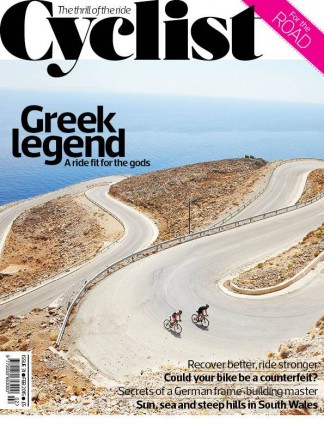
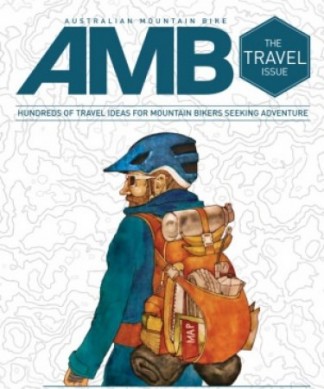
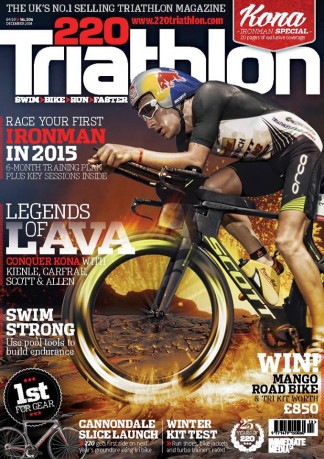
MagLove: The best cycling-related magazine covers

MediaSlut (@MediaSlut)’s choice of the best cycling-related covers…

This coming Sunday, 8 March 2015, thousands of cyclists will hit the beautiful roads of Cape Town in the Cape Town Cycle Tour, but because of the devastating fires the past few days in and around Cape Town, it’s resulted in the organisers having had to cut the race from a 109km looped path to a 47km circular path.

To celebrate the beauty of this sport, I am dedicated this week’s post to various beautiful and striking bicycle-related covers that have been published recently.

I’m sure these covers will evoke the same emotion to cyclists as Playboy does to others ;-)

Cyclist, February 2015

Cyclist, February 2015Ride Cycling Review, Issue 5

Ride Cycling Review, Issue 5Australian Mountain Mike (AMB), Travel Special 2014

Australian Mountain Mike (AMB), Travel Special 2014Bike, November 2014

Bike, November 2014Bike, March 2015

Bike, March 2015ProCycling, October 2014

ProCycling, October 2014220 Triathlon, December 2014

220 Triathlon, December 2014Steel, Issue 09

Steel, Issue 09The Ride Journal, Issue 04

The Ride Journal, Issue 04Rouleur, December 2014

Rouleur, December 2014


Find a cover we should know about? Tweet us at @Marklives and @MediaSlut.
Want to view all the covers at a glance?
See our MagLove Pinterest board!


MediaSlutMagLove by @MediaSlut is a regular slot featuring the best local and international magazine covers every week, recognising well thought-out, powerful and interesting (and hopefully all three-in-one) covers and celebrating the mix of pragmatism, creativity and personal taste that created each of them. The (for now anonymous) blogger behind MediaSlut knows way too much for his own good about media in South Africa, magazines in particular. His mission is to show when SA magazines fail but, most importantly, also when they succeed. If you’re looking for a library about SA magazines and news, this is your one-stop pitstop.

— MarkLives’ round-up of top ad and media industry news and opinion in your mailbox every Monday and Thursday. Sign up here!

OFyt and Bletchley Park in merger

by Herman Manson (@marklives) OFyt and Bletchley Park, two agencies of roughly equal size, have merged in a bid to catapult the combined business into a more substantial agency play.

In brief:

    • Two agencies merge; will trade under OFyt name
    • New Johannesburg MD appointment to be announced shortly
    • Combined agency employs 70, with offices in Cape Town and Johannesburg

The combined agency will trade under the OFyt name and employ 70 people in Cape Town and Johannesburg. Clients include Kia Motors, adidas Originals, ADT, Pam Golding Properties, RGBC (Jack Daniel’s, Hennessy, Moët & Chandon, etc), and Rhodes Food Group (Bull Brand, etc), among others.

OFytPeople

Ofyt (Old Friends Young Talent) was launched in 2012 by Jono Shubitz, a former ECD of Ogilvy Cape Town and chairman of OgilvyOne and Ogilvy Interactive SA; Gary Leih, a former group MD of Ogilvy South Africa and chairman and CEO of Ogilvy Group UK; and Paul Newman, a former marketing director at Nationwide. In 2014, it won Breakthrough Agency of The Year at Tony Koenderman’s AdReview ceremony.

Bletchley Park relaunched four years ago under MD Jonty Fisher, after trading as Traffic for over a decade.

Newman is now group MD​ and Leih the CEO. Fisher takes on the role of group strategy Director. Greg Burke is retaining his role as ECD of the OFyt office in Johannesburg, while Kelly Putter becomes ECD of the OFyt Cape Town. Shubitz serces as chairman and Head of People Development. Four staff members have been retrenched due to duplication of roles. The Bletchley Park team has already moved into OFyt’s offices in Muizenberg, Cape Town. A new MD appointment for Johannesburg will be announced within the next two weeks.

Equity has been divided among the partners of both businesses.

Similarities

According to Ficher the two agencies had experienced a similar growth trajectory recently. Both had built a decent client roster and done well in pitches but often fell to the wayside because larger clients believed they lacked scale. The new 70-person agency hopes to address this perception and win over larger clients.

For Leih and the OFyt team, the merger with Bletchley Park offers not only scale but also a succession plan, plus a much-needed middle-management layer in an agency known for its wealth of experience in senior management, combined with a youthful, intern-driven employee base.

The two agencies had also held similar views on collaborating with clients beyond communication strategy to look at broader strategic marketing solutions, says Fisher. “Beautiful Problems, Indelible Truths” —  the mantra of Bletchley Park — will become embedded as the ethos of OFyt as well.

OFyt is known for its efforts in addressing the slow transformation in advertising agencies’ creative departments. Hence, 26% of the equity of OFyt is held by the OFyt Trust and proceeds from the trust are used to educate and support young, historically disadvantaged talent on an ongoing basis.

BEE

The new agency retains its level 1 BEE rating and is looking to launch* a satellite office in Khayelitsha, Cape Town, later this year. A partnership with Learn to Earn, a non-profit skills-development and job-creation organisation, is meant to further stimulate new talent growth, as well as make a difference in the community. It will focus on finding marketing solutions for local businesses.

According to Leih, the agency will remain independent — having spent years at multinationals, he has no intention of returning there. There are plans to launch a number of new divisions in joint ventures with a series of high-profile specialists; details will be revealed over the course of the next few months.

Building a 70-person agency in three years certainly speaks to both an appetite in the market for independents — even more so if they can achieve scale — and the business success of an agency emerging out of Muizenberg, and focused upon doing good and doing well.

* Updated 2015/04/15: This story originally stated that OFyt ‘will be’ launching a new agency in Khayelitsha. Learn to Earn and OFyt has since requested a factual correction to our article saying the launch of an agency in Khayelitsha was merely a point of discussion at the time of writing.

— Get our round-up of top ad and media industry news and opinion in your mailbox every Monday and Thursday. Sign up here!

Online CPD Courses Psychology Online CPD Courses Marketing analytics software Marketing analytics software for small business Business management software Business accounting software Gearbox repair company Makeup artist