Thinking TV: Exploring the BRCSA TAMS panel universe update

by Inge Hansen (@mecnotabene) What with the SAARF TAMS contract having now come to an end, the industry has seen a TAMS panel universe update under the newly formed Broadcast Research Council of South Africa (BRCSA), created to service the audience research needs of the radio and television industry.

While still awaiting its formal registration as an NPO, an industry roadshow was undertaken in March 2015 to update the industry on the health of the current TAMS panel and present the data changes that occurred with the 2014A Universe update on 2 February 2015.

Broadcast Research Council of South Africa (Broadcast Research Council of South Africa (BRCSA)

Good news

The good news is that, following the panel expansion that began in 2013 — as well as adjustments to panel tenure and other multiple factors — the weighting efficiency of our panel is currently sitting at 78% (February 2015) above global best practice of 70%.

This brings with it data stability, with the maximum daily weight for individuals also dropping from 99 000, in some cases, to a maximum of 25 000. Weighting efficiency refers to a statistical measure that indicates how closely the sample proportions match the Universe proportions, as well as the complexity of the weighting system.

Other changes

So what are the other changes that we are seeing?

One of the major effects of the above is the drop in the average time viewed across channels. This is because that, in order to increase panel efficiency, households which had been on the panel for 10+ years, which were older in age and heavier TV viewers, have been removed. New households added to the panel are generally younger and tend to be lighter TV viewers, resulting in a drop of -9.8% year-on-year for average time viewed across both Pay and FTA Networks.

With viewing habits changing, in order to see the impact that other TV activities (ie streaming, watching DVDs) are having, the BRCSA will soon be offering a new reporting measurement that can split total screen share and total broadcast share. This will enable the industry to see at what rate these other activities are growing, and the effects on traditional broadcast television.

The data also reveals an increase in the household universe of 1.5% (192 735 households) and individuals have increased by 0.86% (371 019 individuals).

DStv

DStv penetration continues to grow and has increased by 14% since the last update (2 million individuals), with Compact Bouquet sales contributing heavily to this and shifting audiences away from free-to-air programming. It is important to note, however, that as TAMS uses last year’s audited subscriber figures for its DStv universe, this data has a lag of roughly a year and therefore penetration continues to be understated.

The largest change that can be seen is in the increase of LSM 1-4 individuals, which can largely be attributed to a revamping of LSM variables and adverse economic factors. As a knock-on effect, we see a decline in other LSMs, with LSM 5 (-2.4%) and LSM 10 (-9%) being particularly affected, which will have implications for ratings in these segments. In addition, although in recent months we have seen a decrease in Afrikaans programming from stations, there is an uplift of 4.87% for Afrikaans speaking individuals.

The flux that we see within our LSM segmentation, which is easily shifted with our ever-changing socio-economic climate, does prove a challenge for the continuation of data. The BRCSA has advised that it is looking into alternate measurements and global best practice as a result, as it is clear— due to continuous fluctuation and incorrect reporting — that income would not be a stable measure.

Other planned improvements

Other planned improvements from the research council include better measurement during loadshedding periods, with Unitam meters now being able to report activity through battery back-ups.

Ultimately, the effect on everyday planning in terms of the Universe update depends on whether your plan includes the more heavily affected areas ie LSM1-4. As notice of the upcoming universe change had been delayed, there was limited time to incorporate any thinking into TV plans made for early 2015, with SABC EBD having closed on 5 December 2014.

Going forward, as the industry received from SAARF, the BRCSA will continue to compile a comprehensive list of outside factors that influence campaign outcomes, such as news and sporting events, which can be found on its website.

Set a good grounding

Taking these into account — along with scheduling changes (such as we have seen from e.tv recently), as well as the performance and knock-on effect of new local shows ie Ashes to Ashes — will set a good grounding for planning in these interesting times for television.


Inge HansenFollowing two years at Media24 scrubbing for insights within the magazine division, Inge Hansen joined Nota Bene as an A&I analyst in March 2013. Working across multiple clients, including FMCG, alcohol and petroleum, she has the luxury of working with teams to develop robust insights that drive strategy while keeping abreast of media trends the world over. Inge loves having her pulse on the media landscape but far prefers raising her pulse mountain-biking on weekends. She contributes Thinking TV, a monthly analysis of South African TV viewership figures, to MarkLives. Follow @mecnotabene for regular media updates.

— MarkLives’ round-up of top ad and media industry news and opinion in your mailbox every Monday and Thursday. Sign up here!

Ad agency NGAGE finds niche in industry

by Herman Manson (@marklives) Industry increasingly has to actively engage with an ever-wider array of stakeholders, but few ad agencies have the specialist knowledge to fully grasp the technical details and legislative responsibilities of corporations active in the mining, construction or engineering fields.

Russell Tandy (managing director: NGAGE) and his wife, Renay Tandy (director: public relations at NGAGE) identified a gap in the market in 2008, a year after setting up their own ad agency, NGAGE.

NGAGE hardhatMarketing background

Russell had come from a marketing background at a software development specialist active in the mining industry. Renay was a trade journalist at Creamer Media (publishers of Engineering News & Mining Weekly), followed by a short stint as PR manager for Comair.

NGAGE started life as a PR agency but kept having to pitch against larger and much more established firms. The duo decided to focus on a core differentiator and an area in which both had specialist experience — industry.

They quickly started picking up industrial clients and, by 2012, had won a Gold PRISM 2012 Award for Best Small PR Consultancy as well as for Best PR Professional in Media Liaison. It was breakthrough for a four-person agency, and gave it the boost it needed to expand NGAGE’s services to include advertising. Award success continued into 2013, when it won a Gold PRISM 2013 Award for ‘Launch of a New Product’ (for the launch of the Hyundai R1200LC-9 Excavator).

Integrated

Russell Tandy
Russell Tandy

The agency has been focusing on becoming a truly integrated business and has expanded its skills base to include PR, advertising, marketing services, digital, social media, multimedia and investor relations.

NGAGE started life in the Tandy’s home but, by 2008, it had moved into its own offices — just as the global recession kicked up a gear, resulting in the loss of 60% of its client base. It forced the agency to engage with clients outside of its original focus area of mining, so was actually a blessing in disguise, according to Russell.

Today, the agency employs 35 people and clients include Bosch, international manufacturing and engineering company DCD Group, professional services firm SMEC, Afrox and 32 other industrials groups.

Moving towards greater engagement

Tandy says industrial groups are moving towards greater engagement with society, especially with the rise and amplification of social media. Even so, they tend to speak to smaller groups of people and face communication challenges as the trade press comes under increasing pressure (with respect to the decline of print).

The agency is forming partnerships with other specialist industrial agencies on the continent and expanding alongside clients; it already has partnerships in place in Nigeria and Tanzania.

Russell says he has found ad-industry associations closed off to the needs of smaller specialist agency issues — even agency accreditation is a difficult process. As NGAGE grows, so too will its engagement with the advertising community.

In the meantime, it continues to enlarge its offering while retaining specialist expertise to industrial clients.

— MarkLives’ round-up of top ad and media industry news and opinion in your mailbox every Monday and Thursday. Sign up here!

Ad Feature: Do sex and technology gel? Even Durex doesn’t think so!

by MarkLives (@marklives) In this week’s Ad Feature, we have three Heroes on the new Wall of Fame or Shame! Durex’s latest long-form work, dealing with the effect of technology on relationships, also makes an appearance.

Ad critic Andy Rice gives Hero status to Grey South Africa’s latest print work for Human Rights Day for client Tabasco; EWN anchor Jacob Moshokoa is loving the Nike/ShelfLife 25psi popup store in Braamfontein, Johannesburg, and marketing consultant Sizakele Marutlulle goes offshore to award Tostinos’ latest work, which she thinks is cute enough to be called a Hero.

Thisile Mtyeku of Durex tells us about the thinking behind its long-form work, #Connect.

Find out why these all feature by watching “Do sex and technology gel? Even Durex doesn’t think so!” below!


Ad Feature logoEvery week, discover the highs and lows of advertising in South Africa with The Ad Feature team from Primedia Broadcasting — consisting of ad and branding critic Andy Rice (@ricecommaandy), brand and communications strategist Sizakele Marutulle (@ZDivah), EWN anchor Jacob Moshokoa (@JayMoshokoa), and producer Gary Oberholzer (@goberholzer). For more, go to www.facebook.com/adfeature.

You may also catch Andy on The Money Show on 702 (@Radio702) and Cape Talk (@CapeTalk) on a Tuesday evening just after 7pm for the new feature #ButDoesItWork on The Money Show.

— MarkLives’ round-up of top ad and media industry news and opinion in your mailbox every Monday and Thursday. Sign up here!

MagLove: Luscious illustration and simplistic typography

MediaSlut (@MediaSlut)’s choice of the best international and South African magazine covers this week:

  • Metropoli
  • Stylist
  • Variety
  • ELLE South Africa
  • Joburg Style

INTERNATIONAL

Metropoli, March 2015

Metropoli, March 2015An apt illustration from Metropoli celebrating “The Dream of Martin Luther King”!

Stylist, 25 March 2015

Stylist, 25 March 2015What do you do if you’re bored at a meeting or at work, or just want to pass the time? You doodle. Or “the art of procrastination”, as Stylist would refer to it.

Variety, March 2015

Variety, March 2015With the launch of Fast and the Furious 7 (1 April 2015 in South Africa!), the death of Paul Walker, who played the character Brian O’Conner, is on movie fans’ minds.

Variety’s Vin Diesel cover, with the cover line “The Fast and the Serious” is really touching, but the article is even more so.

LOCAL

ELLE South Africa, April 2015

ELLE South Africa, April 2015Such a fun cover with bright colours, funky use of the letters in the logotype, a beautiful model and fashion that all scream “SOUTH AFRICA!” to me.

Joburg Style, March–May 2015

Joburg Style, March–May 2015A strong cover for Joburg Style magazine, featuring a great profile shot of “King Kahn” (Kahn Morbee from ex-Parletones), with strategic use of simple typography. Read the full digital issue here.


Find a cover we should know about? Tweet us at @Marklives and @MediaSlut.
Want to view all the covers at a glance?
See our MagLove Pinterest board!


MediaSlutMagLove by @MediaSlut is a regular slot featuring the best local and international magazine covers every week, recognising well thought-out, powerful and interesting (and hopefully all three-in-one) covers and celebrating the mix of pragmatism, creativity and personal taste that created each of them. The (for now anonymous) blogger behind MediaSlut knows way too much for his own good about media in South Africa, magazines in particular. His mission is to show when SA magazines fail but, most importantly, also when they succeed. If you’re looking for a library about SA magazines and news, this is your one-stop pitstop.

— MarkLives’ round-up of top ad and media industry news and opinion in your mailbox every Monday and Thursday. Sign up here!

Smart Africa TV: Destination marketing with Earth TV

by Russell Southwood (@BalancingActAfr) In this video interview, we talk to Arseny Veber, project manager at Earth TV, about:

  • live streaming views and weather;
  • why Earth TV is the biggest broadcast camera network;
  • where it has cameras located in Africa; and
  • the kinds of deals it does with different organisations.

Smart Monkey TV logoRussell Southwood (@BalancingActAfr) is the founder of Balancing Act and the web TV channel Smart Monkey TV (@SmartMonkeyTV), and has been an analyst in telecoms, internet and broadcast in Africa for the last 15 years. Smart Monkey TV aims to capture the energy at the crossroads between African culture and technology. MarkLives is syndicating content from Smart Monkey TV on a weekly basis for the column “Smart Africa TV”.

— MarkLives’ round-up of top ad and media industry news and opinion in your mailbox every Monday and Thursday. Sign up here!

Brand Politics: Whose heritage is it, anyway?

by Alistair Mackay (@almackay) Where do events such as #RhodesMustFall leave heritage brands*? Mass protests, a social media storm and the occupation of the administration building have pushed UCT’s transformation record into the national spotlight, throwing up some interesting questions for these kind of brands.

What do you do if you were the favourite brand of an old generation of consumers who are increasingly out of touch with reality? Or of a specific segment of South Africans? Can you celebrate your brand history and story, as communication advisors love to say these days, while remaining relevant in a market that’s changing as quickly as ours?

And can you reinterpret history without becoming inauthentic? Is it easier for a global brand to talk heritage than it is for a local one, considering our deeply problematic past?

Strategies to remain relevant

I imagine all heritage brands have had to develop strategies to remain relevant: Nik Naks, for example, seem to have altered the race of the Nik Naks man over the years, in a move to be more inclusive;

Nik Niks packaging
Castle Lager has done an excellent job at positioning itself as a heritage brand for all South Africans, rather than the white ones of a century ago;

Castle Lager Vintage AdCastle Lager Modern Ad
and Volkswagen seems to have done a pretty good job at surviving its own dodgy brand history (Hitler was involved in the development of Volkswagen).

Brand stories can be powerful, memorable and good for business. They help to give a brand character, context and meaning. Here are some thoughts on building and celebrating that brand heritage without sparking a protest or a bucket of faeces.

1. Include the excluded

If your brand has an iconic and beloved history amongst a particular set of people, don’t assume that goodwill has transferred to other groups of consumers you are trying to reach. Find ways to incorporate the symbols, rituals and stories of those who were excluded from your brand in the past. Look for commonalities across all of SA’s cultures to build a broader brand heritage. Listen to the consumer; don’t speak on behalf of them.

Met eishOne of the brandy category’s biggest challenges, for example, is the fact that it is such a celebrated part of Afrikaans culture. You can see brands such as Klipdrift trying to broaden this heritage appeal with campaigns like “met eish, ja” that use humour and goodwill to bring together two very different SA cultures.

2. Keep the present better than the past

A great brand story helps connect with consumers and stand out from the clutter, yet it is not enough to drive sales or earn loyalty if your current offering is anything but brilliant.

Consumers want to know what you’ve you done for them lately. Don’t take your eye off product and service excellence; focus messaging upon the present, not the past. How can you help your consumers achieve their goals? The rest is embellishment.

Old Volkswagen adVolkswagen, for example, only really broke into the US market in the 1960s due to a lingering resentment towards Germany, and, unlike car brands today, its communication steered clear of any reference to the brand heritage. It focused on the benefit to the customer: the Beetle was cute, well-made, durable and inexpensive — and won over the trendsetters.

3. Know where your new customers are coming from

It’s all well and good to have a loyal following of consumers who adore your brand but, if that market is shrinking, it’s important to identify future growth markets and put plans in place to win them over.

I remember an amused German telling me once that Jägermeister was what old German grannies used to drink. Now it’s a party drink, which is handy for the brand since there aren’t nearly as many grannies in Germany as there are students across the world.

South African academic institutions have been far too slow and reactive in identifying the needs, expectations and symbols of their new “customers”. The #RhodesMustFall protest is not about the statue of Cecil John Rhodes at the foot of the Jameson stairs. It is about a sense of exclusion and alienation that black students feel at the university. It is about the slow pace or lack of transformation of the faculty and the institutional culture. It is about, as one student leader said, the fact that “black people can’t be proud of UCT”.

The original target market of Rhodes — colonialists and imperial sympathisers — simply isn’t there anymore.

4. Revolutionise to keep up

FNB social bankingFNB is the oldest bank in South Africa, but it’s a cutting-edge, technological, modern bank that won an award for being the most innovative bank in the world in 2012.

The time may be right for a dramatic brand identity overhaul, or an entirely new product and service offering. It requires skill to know which is the baby and which is the bathwater, but all old brands will need to throw something out as the decades go by.

Identify current consumer needs, blockages and outdated conventions and make the changes required while keeping the brand purpose core to any innovation.

Conclusion

In a country that is transforming as quickly as ours, brands run a great risk of failing to keep up and becoming out-dated, irrelevant or even off-putting. Like German brands coming out of WWII, there are some serious reputational risks from SA heritage.

That doesn’t mean ignoring history, however, and I do think it’s possible to weave a brand story that unifies, rather than divides. If UCT had worked harder to include those who felt excluded, and had developed symbols and an institutional culture that celebrates the history, traditions and stories of their “new customers”, there would not have been a crisis on its hands.

The golden rule of branding is to make your customer feel good about having chosen you. That applies as much to cars as it does to banks, brandies and educational institutions. A brand’s heritage is useful only if it can help to achieve that.


*A heritage brand is a brand that trades on its history to connect with consumers — telling stories about its legacy, craft, provenance, founders and journey to date — as well as brands that come to symbolise a particular heritage (such as Castle’s “South Africanness”).


Alistair MackayAlistair Mackay (@almackay) is marketing manager and head of content at Yellowwood, (@askYellowwood) a leading marketing strategy and brand development consultancy. He has experience both as a brand strategist and as the digital media manager for the Democratic Alliance, and believes that innovative, insightful and generous marketing is both good for business and social change in South Africa. He contributes the monthly “Brand Politics” column, exploring lessons brands can learn and apply from politics, to MarkLives.

— MarkLives’ round-up of top ad and media industry news and opinion in your mailbox every Monday and Friday. Sign up here!

Shelf Life: New positioning for heritage Cape brand

Louise Marsland (@Louise_Marsland)’s weekly pick of recent product, packaging, design and food launches:

  • 330-year-old Boschendal brand refreshes
  • Nando’s goes uptown, and
  • Momentum’s foray into fashion.

Vintage Boschendal brand repositions

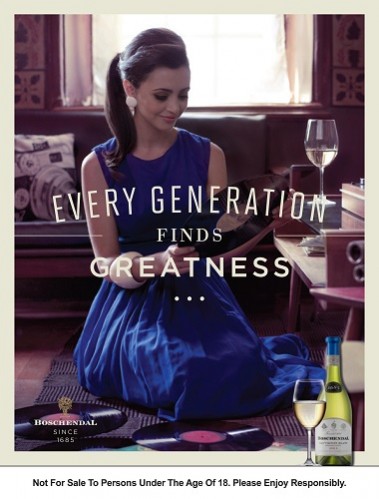
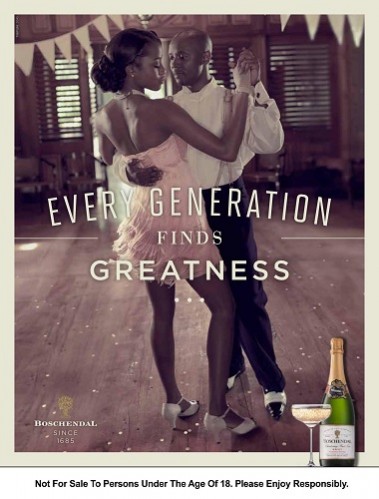
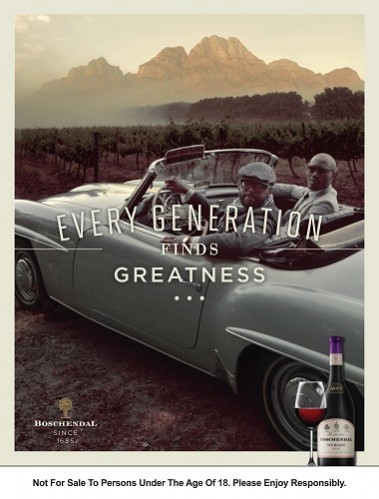
One of South Africa’s oldest iconic brands, Boschendal, is in the process of launching a new brand positioning and marketing campaign to reflect the brand’s 330-year heritage and substance. Just released is a new ‘Vintage’ campaign for the globally renowned wine brand, created by TinFish Advertising, with the message, “Every Generation Finds Greatness”.

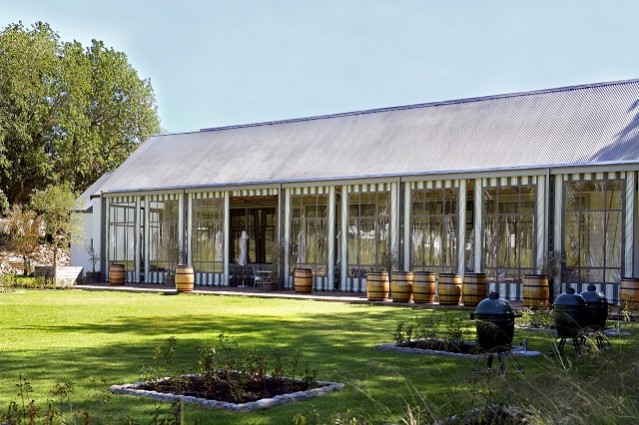
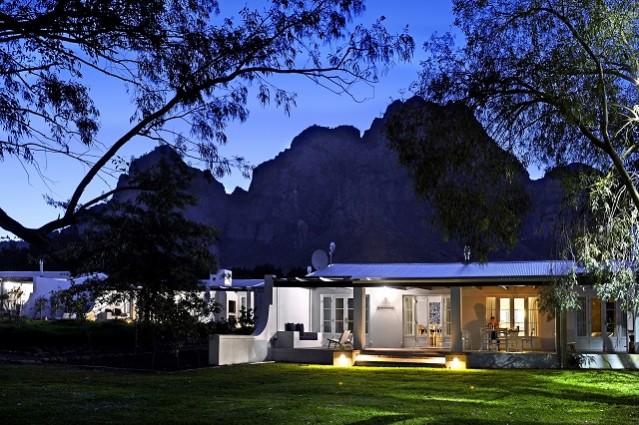
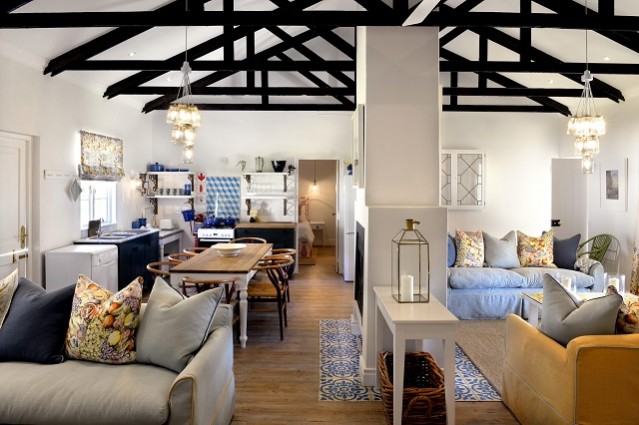
The Boschendal farm estate, established in 1685, has also renovated its 200-year-old farm cottages for guests; opened a conference centre, the Olive Press; and refurbished its restaurant, The Werf, which will reopen in time for the Easter weekend. All this is in line with a return to its heritage roots… “slow living”.

The brand is being repositioned as “wholesome, accessible” with a history and heritage that will also appeal to a younger South African consumer — the sought-after millennials.

Boschendal Vintage Vinyl AdBoschendal Vintage Dance AdBoschendal Vintage Car Ad
“We are bringing it back to the farm. All the food in the restaurant will be produced from the estate — fruit from our trees, herbs from our gardens, our own cattle, our vines — a true South African farm-style, more-humble approach,” explains Boschendal marketing manager, Ben-Johann du Toit.

“For over 300 years, our winemakers and cellar masters have passed on their secrets to creating great wine, from generation to generation. This new positioning aims to capture that sense of history, but for today’s generation of wine drinkers… [the new generation] that we don’t think many brands speak to right now.

“Millennials like to experiment; they like brands that tie in with their lifestyle; it is more about the values of the brand. The wine category can be intimidating, so we are trying to show them a brand that is true to its origins, is really accessible and has a history.”

Boschendal Olive Press restaurantBoschendal Cottages exteriorBoschendal Cottages interior
Boschendal will celebrate its 330-year milestone in July 2015 with the launch of a special vintage-inspired bottle, designed by Anthony Lane Design in collaboration with Consol Glass.

TinFish Advertising creative director, Shaun McCormack, adds that the campaign is meant to articulate the value of things with age with a quality and style. “[It] seeks to blow the dust off a venerable South African brand and generate a reappraisal of Boschendal by the new generation of wine drinkers. The fit with their fascination with all things vintage, and everything that that represents, is perfect. Nostalgic, yes. A time when things were made by art, not by marketing.

“But, ultimately, it’s fundamentally an issue of quality. Quality of design, quality of materials, quality of craft and quality of spirit are as relevant now as they always were. The best measure of greatness is time.”

The new TVC and print campaign are supported by in-store elements, trade presenters and digital extensions.

Take a seat with Nando’s

Nando's Blackheath sit-down restaurant 1. Pic by Malan Kotze PhotographyNando's Blackheath sit-down restaurant 2. Pic by Malan Kotze Photography
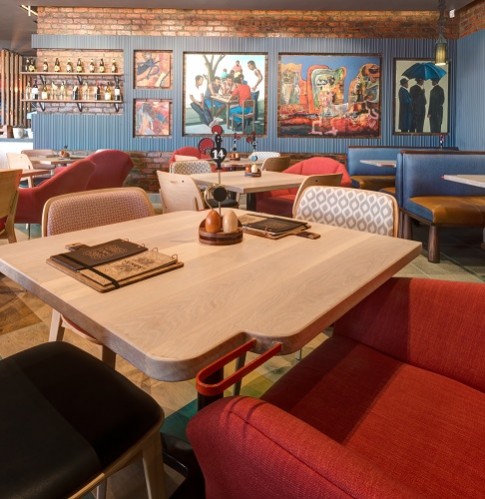
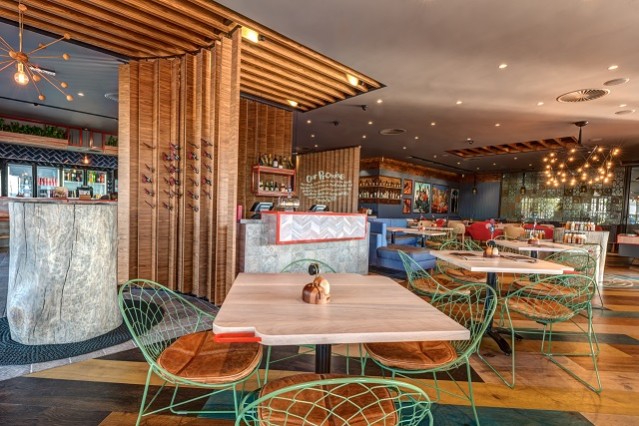
Nando’s has begun trialling its sit-down restaurant model in South Africa, with the first concept store having opened in Blackheath, Johannesburg, last month, designed by Design Partnership. It is a total departure from the usual Nando’s takeaway store and fast-food seating.

The space, which is colourful, quirky and textured, means to use comfort as the driver to help convert traditional takeaway customers into restaurant patrons.

“Blackheath is Nando’s first experiment with dissolving takeaway into sit-down and our challenge was to spread Nando’s renowned spirit of generosity while creating a new experience for consumers,” says Callie van der Merwe, Design Partnership CEO.

“We love that Nando’s as a brand is willing to tinker and play around with traditional wisdom; we love that it is happy to challenge traditional thinking; and we are thrilled that they have entrusted us to partner with them to bring their new vision to life.”

One of the drivers for the design of the store includes growing the site as a trial model to roll it out into other centres, also with the aim to increase the share of wallet and returns for the store.

According to Yatish Narsi, Design Partnership’s creative lead, the agency completely has reimagined the take-away experience and blurred the lines between the takeaway and sit-down areas: “We started with the exterior and ‘Nandoed’ the entire façade, rather than simply placing a standard sign, so immediately consumers are aware that this is a Nando’s.”

The design has been further modified to suit the new desired operational requirements, with a host introduced to greet customers and direct them to either takeaway or seated service. A new ‘to go’ bar concept has been introduced, serving complimentary spiced nuts in comfort rather than having customers wait in a queue.

Integral to the design is the patterning and weaving in local furniture and treatments to ensure a strong Nando’s flavour throughout — from chilli plants above the counter to the coloured timber floors, ombre chairs, loose bunks and special new tables (with special built-in handbag hooks).

Be Seen or be dead

Momentum "Be Seen" by Craig JacobsIn an effort to combat road deaths in South Africa, of which a significant number are pedestrians each year, short-term insurer Momentum initiated a new campaign, ‘Be Seen on the safe side’, at the recent high-profile SA Fashion Week, in order to provide reflective clothing to selected schools and solar lighting in needy communities.

The campaign aims to “measurably and sustainably impact the safety of South Africans in the places they live, work and shop by making them more visible,” says Momentum CEO, Brand Pretorius.

Momentum has partnered with fashion entrepreneur, Craig Jacobs, to bring “to light” the idea of being seen and safe through the reflective apparel, which is fashionable, too. The reflective gear will be available from September in store, but Momentum will be donating the ‘Be Seen’ clothing range to learners of selected schools in communities that should benefit from being more visible when commuting by foot.

The brand has also initiated a social nomination campaign whereby people can highlight notably unsafe locations in need of “being seen to alleviate unnecessary tragedies”. This will include the provision of solar lighting for communities with minimal public lighting and the like.

A recent global road safety report by the International Transport Forum shows SA to be the worst out of 36 countries when it comes to road fatalities. According to Arrive Alive, 35-40% of road deaths in South Africa are pedestrians.

This same report also estimates that the economic impact of these road crashes equates to a strain on the national economy of hundreds of billions of rands. “In the insurance sector, these road deaths and car accidents become a drain, and it is up to us and all South Africans to bring these numbers down,” says Pretorius.

Head of marketing at Momentum, Marius Lock, adds that, to really make a difference, Momentum has to try to change behaviour and this campaign is hopefully the start of something that will lead to a safer South Africa.


Shelf Life is a weekly column by Louise Marsland. Tweet new product, packaging and design launches to @louise_marsland Louise Marslandor email her at louise.marsland at gmail.com. Want to sponsor Shelf Life? Contact us here.

Louise has written about the FMCG, media, marketing and advertising industry for over 20 years as a former editor of magazines AdVantage, Marketing Mix and Progressive Retailing, as well as websites Bizcommunity.com and FMCGFiles. She also edited the weekly Wednesday Media & Marketing Page for The New Age newspaper. She is currently the publishing editor of industry trendwatching portal, TRENDAFRiCA, for consumer insight, research and trends in Africa; a regular industry columnist and speaker; a consultant on content strategy; and contributing editor to Fast Company South Africa magazine, which has just launched in South Africa.

— MarkLives’ round-up of top ad and media industry news and opinion in your mailbox every Monday and Thursday. Sign up here!

Media Future: Samsung, Alcatel, target SA market in mobile war

by Arthur Goldstuck (@art2gee) The annual Mobile World Congress in Barcelona saw one of the biggest mobile device launch days ever, with South Africa now a priority territory.

When 10 of the world’s largest mobile manufacturers launch new devices in the same 24-hour period, it’s clear that battle has been joined in one of the most competitive markets in the world.

Samsung Galaxy S6 2Samsung, Alcatel, HTC, Sony, Microsoft, Acer, Lenovo, Huawei, LG and ZTE all unveiled new flagship smartphones,  tablets or smartwatches at the recently held Mobile World Congress (MWC) in Barcelona.

Most eyes were, as usual, on Samsung, both to see what the world’s smartphone leader would come up with next, and for a sense of whether it has been able to play catch-up with deadly rival Apple once again.

It didn’t disappoint on either score, although there were few surprises. In the same way as Apple’s launches nowadays confirm rumours and expectations, it’s become difficult for Samsung to pull any rabbits out of the hat.

The biggest surprise was probably that the Samsung Galaxy S6 and S6 edge were smaller than their predecessor, if only marginally so. At 5.1-inches compared to the S5’s 5.2-inches, it bucked the trend of ever-larger smartphones. However, it was set apart by the introduction of a curved screen comprising a second display area – a feature that previously had only been seen on the large format Samsung Note Edge, launched late last year.

The user can decide whether the edge screen occupies the left or right side of the phone’s display, giving the device a symmetry that was lacking in the Note Edge. Neither of the phones resembles their predecessor, overcoming one of the biggest criticisms of the S5, which was almost indistinguishable from the S3 and S4 at a glance.

More notably, the phones represent a leap from the S5, which proved something of a damp squib last year due to its sense of “sameness”. This time round, there is a sense of looking further than just the phone itself, with the introduction of Samsung Pay, a direct challenge to the Apple Pay service currently being rolled out in the United States.

It combines fingerprint recognition, near field communication (NFC) for making payments with a tap of the phone on an NFC payment device, and a technology called magnetic secure transmission (MST) that allows the phone to be used for credit card payments on old-fashioned magnetic stripe machines.

From a South African perspective, the most significant aspect of the phones is that the local release will occur simultaneously with the global release across 20 countries on April 10. This positions South Africa as a priority market for Samsung.

A brand that has been quietly emerging from under the radar to become one of the most serious challengers to the leaders has taken a similar view of South Africa.

Alcatel OneTouch is now the fourth biggest smartphone manufacturer in the world, from being almost invisible just three years ago.

It launched its new OneTouch idol3 flagship phones on Sunday with the intention of offering premium quality devices at mid-tier prices. As with Apple’s iPhone 6 release, it has produced both a 4.7-inch and 5.5-inch version. And like Samsung, it has included South Africa in the first wave of releases.

The phones will be released in this country around May as part of a global launch across 30 priority markets. The larger of the units will probably cost around R3000 – a quarter of the R12 000-plus price-tag expected for the Samsung S6 edge.

The idol3 is premised on being the “Zara of the mobile world”, inspired by the fashion brand’s focus on bringing the latest fashions to market at accessible prices, while continuing to innovate in its own right. So, for example, it offers the best camera experience in its price range, with a 13 Megapixel rear camera and a feature called Fast Face Focus, which detects faces in 0.15 seconds. Along with HDR real-time video at 30 frames per second, it has the potential of changing the status of mid-tier smartphones.

HTC, Acer and Lenovo all released new handsets at MWC, while Acer, LG, and Huawei revealed new smartwatches. Huawei and Sony kept their new smartphone plans under wraps, but the latter made a splash with the new Xperia Z4 tablet. Its 6,1mm thickness once again gives Sony bragging rights for the thinnest 10-inch tablet in the world, yet able to claim 17 hours battery life.

Acer intensified its focus on new categories outside the laptop, showing off its smartwatch capabilities with the Liquid Leap. More significantly, however, it released a range of new smartphones, led by the Liquid M220, the first in the Liquid range to run on the Windows Phone 8.1 operating system. It will also be upgradable to Windows Phone 10, representing a shot in the arm for Microsoft as well as to its own credentials as a broad-based consumer electronics brand.

Camera power was a standout feature of the new phone launches, with Samsung in particular making a point that the 16 Megapixel rear camera and 8 Megapixel front camera on its S6 phones produced superior images to anything the iPhone could deliver.

However, the most serious camera claims were made by HTC, which launched its new flagship, the One M9, packing a 20 Megapixel rear camera. Until now, only Sony had standardised on that size. Combined with an automatic photo editing app called Zoe and high-quality audio, the multimedia credentials gave the M9 a place among the standout devices at MWC.

Even Microsoft was in on the mobile action yesterday, firmly consigning the Nokia brand to mobile history by unveiling two new Microsoft Lumia devices. The 64 and 640XL also take a dual-device strategy, with a 5-inch and 5.7-inch version, both running Windows Phone 8.1 and upgradeable to Windows 10 when it arrives.

The smartphone war was supposed to be over a long time ago. In Barcelona, however, the troops are digging in for a long battle ahead.

Arthur Goldstuck heads up World Wide Worx (www.worldwideworx.com) and is editor-in-chief of Gadget. He is a consulting editor to MarkLives and our media tech columnist. Follow him on Twitter on @art2gee. This article has been republished from Gadget.

— MarkLives’ round-up of top ad and media industry news and opinion in your mailbox every Monday and Thursday days. Sign up here!

Owen Kessel Leo Burnett appointed lead agency for Dimension Data

by Marklives (@marklives) OwenKessel Leo Burnett (OKLB) has been appointed the lead, through-the-line agency for Dimension Data, following a six-way pitch in December 2014.

Owen Kessel Leo Burnett logo“Dimension Data are excited about working with OKLB to take our brand into a new space that we believe will resonate with our target audience,” says Candice Segar Head of Marketing for Dimension Data Middle East & Africa. “The team at OKLB really managed to understand our brand challenges and have come up with a sound plan to drive innovative and creative ideas in a space that is hungry for fresh design.”

“Client experience may lie at the centre of the Dimension Data offering, but the real business benefit that the company offers is an ability to drive technology innovation with true business transformation; all with the primary aim of facilitating the most fundamental relationships of all: those between humans,” says OKLB CEO Felix Kessel.

“We are committed to creating an open, engaging conversation that not only gives the Dimension Data brand a voice of its own, but that also provides a platform for interaction between the brand and its various stakeholder groups.”

— Get our round-up of top ad and media industry news and opinion in your mailbox every Monday and Thursday. Sign up here!


Bad ADvice: The great of integrated

by Every Ad Agency (@EveryAdAgency) Integration. It’s what’s hot on the streets right now. At Every Ad Agency, we’ve made sure to purchase at least 14 digital agencies in the coming months to fully integrate our service offering to clients.

This is not to say our existing digital expertise is lacking anything; we’ve fully cracked the code on integrating digital into our advertising marketing mix.

3d Chain Breaking by David Castillo Dominici courtesy of FreeDigitalPhotos.net
Image by David Castillo Dominici courtesy of FreeDigitalPhotos.net

The simple truth

Outdoor should always be digital. It’s the simple truth. Thus, we have happily agreed to include on every billboard at least a website address, the link to the client’s Facebook, Twitter, and LinkedIn profiles, and an augmented reality experience you can scan while driving past at 120km/h. A truly safe and immersive experience right there in your vehicle.

We’ve taken Print to the next frontier. All our print campaigns going forward will be lead by a user-generated content (UGC) competition, where we ask native millennials to take selfies of themselves holding our print ad in front of their faces. This immediately takes the client’s media spend from print advertising and turns it into an earned media extravaganza, with ROI going through the roof.

Our biggest secret thus far is the use of Google Plus. Many see this amazing social network as the ugly stepsister of the social media landscape but we’ve changed this. Exclusivity is what it’s all about, and — with literally nobody ever using Google Plus — we have created circles of curated consumers for our clients to target with status updates that 98% of the world will never see.

Trendsetting

We believe that it won’t be long before others follow our trendsetting on this front.

Of course, all of the above might seem daunting to many in our industry today, but that has quickly been negated by the buying spree of digital shops. This is done by throwing wads of cash at a young hot digital agency, giving it your agency name but also making sure you keep it at arm’s length so as not to upset the old-guard of traditional ECDs in your current agency.

This new buzzword, “arms-length integration”, will soon become standard for all the big traditional players in the agency business.

This might seem a ridiculous statement but the value added is immense. The capability of inserting URLs at the end of a TV commercial and dropping a hashtag in the left-hand corner of the screen is something you can’t buy, or can, kind of.

Nothing a client likes more

For last-minute impressing of the client, these are also the people you want in your corner. There’s nothing a client likes more than hearing its engagement rate went up by 10% or its Twitter following skyrocketed by 300% (even if it only had one follower to begin with).

At the end of the day, integrating is as simple as doing everything on every channel, and asking everyone to follow you everywhere.


Every Ad Agency logoWe are Every Ad Agency (@EveryAdAgency). You’ve either worked for us, with us or against us. What’s more, we make every advertising and marketing cliché work. Headquartered in Johannesburg; branches everywhere.

All these satirical “Bad ADvice” columns, which are exclusive to MarkLives, are written by the Chief Operating Creative Director in Charge of Ideas (COCDCI).


— MarkLives’ round-up of top ad and media industry news and opinion in your mailbox every Monday and Thursday. Sign up here!

Online CPD Courses Psychology Online CPD Courses Marketing analytics software Marketing analytics software for small business Business management software Business accounting software Gearbox repair company Makeup artist