Tuned: L’Oreal, in touch and in tune with African hair

by Thabang Leshilo (@Thabang_Leshilo) It’s Saturday and I’ve made the dreaded monthly trip to my hair salon in Johannesburg’s bustling and trendy Braamfontein from my apartment in Greenside. In the midst of the organised chaos that afternoon, it’s the new L’Oréal Professional African Salon Institute that catches my attention as I drive out. “Why is that?” you might ask.

Thabang LeshiloBraamfontein, directly across from Park Station (Jozi’s central railway station), is a densely populated space filled with a diverse group of people constantly moving in and around from all over South Africa and the rest of the continent. After Eight, as Grace the owner has creatively named it to emphasise her unique selling point, is one of roughly 75 downtown salons specialising in ethnic hair.

All pursuing attention

Among the juxtaposed makeshift African hair salons, trendy cafes, spaza shops and vintage boutiques, brands — such as KFC, Vodacom, Nike, FNB, McDonald’s, Puma, and Virgin’s Branson Centre of Entrepreneurship – all pursue the attention of upwardly mobile African consumers and compete with high noise levels from a multitude of different sources.

Everyone is selling and pushing their agenda aggressively, from churches and magic healers of any ailment (including reproductive complications) placing flyers and posters on every surface to the Asian retailer with disposable fashion at a bargain and the street vendors who have fresh fruit and loose cigarettes on offer just outside the Pick n Pay. It’s a wonder how any communication gets through to anyone.

Brands so often talk at or to consumers through a number of communication channels, but they don’t necessarily talk with them in an ongoing conversation. Consumers are becoming smarter than that and they can tell the difference when brands are purely speaking to them through advertising and promotional activity, and when they are genuinely being engaged in a meaningful conversation.

Building credible relationships

But back to the L’Oréal Professional African Salon Institute that’s caught my eye. As a woman who has been braiding her hair since the age of six, I can tell you that ethnic hair care is certainly not a territory that L’Oreal is famous for among African consumers. So where and how would it even begin to go about building a credible relationship with consumers?

According to Elle magazine, this institute is part of a global network of L’Oreal training institutes and the first of its kind in Africa. The training centre aims to address job shortages and a lack of financial means for education by offering a flexible approach to training at an affordable rate.

“Many hairstylists in South Africa are self-taught, so there’s a need for more professionally trained hairstylists in the industry,” Jane Maclaren-Taylor, L’Oreal professional products division general manager, tells Elle.

Spillover effect

Although this may not be an income-generating investment, the presence and premium experience of a professional hair institute dedicated to African hair will build the brand’s credentials in African hair care, and, despite the institute being primarily targeted at budding hairstylists, its presence in the hub of an African hair district will certainly have a spillover effect.

L’Oreal’s approach is ingenious: it has naturally integrated and immersed itself into the everyday world of the consumer, and any thoughts or perceptions that consumers might have previously held about the brand not being for them may very soon change.

L’Oreal has not only understood the cultural nuances of its consumers; it has gone a step further by acknowledging the importance of this craft that is African hair care. Aspiring consumers in an emerging market, particularity in the beauty and hair care category, are looking to be educated and inspired by the way a brand looks, behaves and interacts with them.

Gateway for engagement

The institute is a gateway for consumers to engage with the brand on a very personal and intimate level in a very familiar environment, without L’Oreal having to aggressively sell its agenda. By understanding the relationship between people, the things they buy and their social environment, L’Oreal’s presence allows for an organic dialogue to begin between the brand and consumers and, in time, build credibility.

In summary, brands need to create meaningful and interactive touch points that are rooted in cultural understanding.

By understanding how people engage with things within their world and environment, brands can very naturally immerse themselves into the everyday life of a consumer and build an authentic relationship that gives meaning to the brand and keeps consumers engaged — just like L’Oreal is doing with its Professional African Salon Institute.

Thabang Leshilo (@Thabang_Leshilo) is a project manager (brand) at strategic marketing consultancy Added Value South Africa. As a ‘next-generation’ marketer with fresh and curious eyes looking into the industry, she has a keen interest for brands that are culturally in tune with and able to integrate and immerse themselves into the everyday realities of the consumer.

— MarkLives’ round-up of top ad and media industry news and opinion in your mailbox every three work days. Sign up here!

Design Annotator: 16 Jozi galleries, a music hackathon and the InAWE Residency

by Uno de Waal (@Unodewaal) Today’s Design Annotator, featuring the best from 10and5 this week, includes:

  • 10and5logosmall1A tour of the David Krut print workshop in Maboneng
  • An architectural case study combining traditional materials with modern technology
  • Our last Instagram Takeover in collaboration with Ford, featuring the guys from Beatenberg
  • InAwe Stays residency with artist Fort Rixon
  • A series of 10 books showcasing the city of Joburg and its people
  • 16 gallery spaces and art museums to visit in Jozi
  • ‘City of Gold Diggers’, a Foreign Neighbours exhibition featuring Jana + Koos

Made in Maboneng | David Krut Print Workshop

The David Krut print workshop in MabonengOver the past 30 years, David Krut has played a significant role in promoting contemporary South African art and artists through printmaking, art book publishing and education. Today, the David Krut organisation encompasses several exhibition spaces, a book store and print workshop.

We spoke to Jill Ross (master printer) and Mary Wafer, who run the David Krut Print Workshop in Arts on Main. They very kindly let us into their world of inks, presses, plates and washes, and provided some insights on professional printmaking.

Stand 47 — A case study house

Stand 47, a case study houseStand 47 is an architectural case study located on Monaghan Farm in Gauteng. The concept home, envisioned by developer Gavin Rooke, is a fresh take on what constitutes upmarket South African residential architecture.

The Stand 47 case study takes traditional materials, components, functions and processes and attempts to use them in a different way together with modern design principles, state-of-the-art materials and technology.

Find out what it took to make Stand 47 a reality.

#10and5Takeover | Instagramming with Beatenberg

#10and5Takeover - Instagramming with BeatenbergTo conclude our first-ever series of Instagram Takeovers in collaboration with Ford, Matthew Field, Ross Dorkin and Robin Brink — from SA’s favourite pop band, Beatenberg — took over the Between 10and5 Instagram feed.

Armed with our login details and a brand-new spacious Ford Torneo, they showed us what local creatives get up to in their free time.

See what Beatenberg got up to during its #10and5Takeover.

Presenting: Fort Rixon at the InAWE Residency

Together with InAWE Stays, we’ve just launched an InAWE Residency Programme in celebration of Cape Town’s reign of World Design Capital in 2014!

The first of our eight participating creatives is Fort Rixon, an artist and purveyor of hand-rendered afrographics who has 21 visas, three passports, and one foot in Europe and one foot in Africa.

Read more about the InAWE Residency with Fort Rixon.

Break.Make.Create. | Hack A Beat, Hack A Track, Hack A Pella

Break Make Create — Hack A Beat, Hack A Track, Hack A PellaThis June, Hellocomputer has organised South Africa’s newest hackathon — Break.Make.Create. This event, which will be hosted in Cape Town 5—6 June, will allow all creative and technical-minded people to take part and have a chance to showcase their talent and to share their innovative ideas.

The theme for the hackathon will be music, and the aim is for groups to ‘Break. Make and Create’ original prototypes that relook one’s experience with music.

Find out how to register for Hellocomputer’s two-day hackathon.

Wake Up, This Is Joburg | A series of 10 books about a city and its people

Wake Up, This Is Joburg — A series of 10 books about a city and its peopleWake Up, This Is Joburg is a brand-new series of ten books celebrating the raw beauty of the city of gold. Written by urban planner Tanya Zack and photographed by Mark Lewis, this series showcases Joburg dwellers and their unique and remarkable ways of making a living, and a life.

Some of them are fresh meat in Joburg, and others grew up there, but all of them have found truly intriguing ways of inhabiting this urban jungle. The series will be released in a sequence throughout the rest of the year and next, with the first four books already finished.

View some images from the first four books from the series ‘Wake Up, This Is Joburg‘.

16 gallery spaces and art museums in Jozi

16 gallery spaces and art museums in Jozi

Winter will soon be upon us, but that doesn’t now mean that there is nothing happening in the city. On the contrary, there are many gallery and museum exhibitions happening year round that could make for an interesting alternative.

To make it a bit easier, we’ve decided to put together a list of 16 galleries and museums in Jozi that we think are worth checking out.

‘City of Gold Diggers’ | A Foreign Neighbors exhibition featuring Jana + Koos

City of Gold Diggers flyerAs part of the Foreign Neighbors initiative, Jana + Koos will be presenting a collection of work titled City of Gold Diggers, JHB Hates You in New York City.

The show consists of mixed-media photography and graphic design digital prints, as well as installation and video art of which the pair have the following to say:

“Like many people living in Johannesburg, we’re not from here. It’s not an easy place to make it but it’s rewarding in unexpected and sneaky ways. It’s the place where the gold diggers unite. It’s a jumble of contradictions as it tries to figure itself out and it is this flux that inspires us daily, and is the root of most of the personal work and side projects we do.”

Catch a sneak peek from the upcoming exhibition, and find out more about City of Gold Diggers.


Uno de WaalDesign Annotator is a regular column on MarkLives featuring the top design work from South Africa’s biggest online creative showcase, Between 10 and 5, which is curated by publisher Uno de Waal (@Unodewaal), inaugural South African winner of the British Council South Africa‘s Young Creative Entrepreneur (#YCE) Digital Publishing Award in March 2014.

— MarkLives’ round-up of top ad and media industry news and opinion in your mailbox every three work days. Sign up here!

Indy Ad Exec: Why ad agencies don’t collaborate

by Tom Fels (@thomasfels) For centuries, humans have achieved more collectively than would have been possible individually. From running down prey in the days of the caveman to building the Egyptian pyramids, our very existence, as well as our pinnacle achievements, has largely been a result of collaboration.

Tom FelsWhy then, in this day and age, in one of the most innovative fields of the economy, are advertising agencies averse to collaborating with their peers? And, given the right circumstances, what amazing new results could be achieved through effective partnering?

No, not you

Before we get ahead of ourselves, let us acknowledge that there are indeed some ad agencies (more globally than locally) that have championed incredibly successful collaborative partnerships across brands, and sometimes even across borders.

I’m sure we’ll continue to look to you for advice on what to do and avoid any demonstrated acts of what not to do. Needless to say, you’re still ahead of the game.

Brand collaboration works

We’ve seen excellent examples of collaboration between compatible brands that have accelerated their marketability significantly.

From no-brainer brand-to-brand initiatives to brand-celebrity partnerships such as H&M’s insanely successful Stella McCartney line, there is no question that co-creation can produce more desireable outcomes. And, in the creative fields, look no further than Pharrell Williams and Daft Punk to prove that mixing genres and create fresh new sounds have grown their cachet.

So back to our question: how come advertising agencies haven’t kept pace when it comes to co-creation?

Fear at the heart

The collaboration debate comes down to a single factor: fear.

Let us not forget that agencies are largely direct competitors focused on their own growth and success. There are processes, intellectual property and cultural nuances specific to each agency that provides them their competitive advantage, and which they therefore naturally seek to protect. Given this, all too often marketers fail to appreciate the gravity of what they are asking their agencies to do when requesting collaboration.

Imagine Nike inviting adidas over to its innovation lab for a workshop on trying to produce a better running shoe? On one hand, it sounds ludicrous while, on the other, the imagination starts to flow… the results could be spectacular. But, no, we don’t expect that meeting to happen soon.

And so you may equally begin to understand why traditionally agencies, given the choice, would rather focus inwardly than open their doors to their competitors.

Marketers create the right factors

Fear aside, given a suitable set of circumstances aimed at fostering the achievement of a shared goal, one can expect better, more-cohesive thinking than through individual effort alone.

Marketers have an enormous responsibility in creating this framework, which starts with addressing the elephant in the room — who gets paid. For naturally effective collaboration, everyone should get paid. Yes, everyone.

Loss of income is the root cause of any agency hesitancy around co-creation. The rest flows naturally from this: the creation of a shared vision, support processes, role clarification, accountabilities, output expectations and so on.

Agency ownership

Given the natural evolution of communication servicing structures, while recognising it isn’t for everyone, the majority of agencies are posed with an exceptional opportunity to break the mould and truly own collaboration. To put on a pair of big-girl pants, to take the direct approach and lead both clients and agency partners — for there are no half measures when it comes to collaboration — either you’re in or you’re out.

To my mind, it is not only an opportunity but also a responsibility, given the rapid pace of change in the industry and the continually depleting value extraction agencies are currently faced with.

Without a significant readjustment, we will more likely be victims to a predictable future than pioneers of a new age in creativity. And that is something I personally am far more fearful of.

With a decade of local and international experience in leading independent brand consulting, design, shopper marketing and integrated advertising roles, Tom Fels (@thomasfels) has gained a deeply relevant understanding of the dynamics of independent agencies. His skills are put to work daily as group managing director of MACHINE.

— MarkLives’ round-up of top ad and media industry news and opinion in your mailbox every three work days. Sign up here!

Brand Politics: Seeing red — what EFF teaches us about brand-building

by Alistair Mackay (@almackay) It was impossible to watch the swearing in of our newly elected Parliamentarians last week without having your senses affronted by a bright red block of people. The Economic Freedom Fighters (EFF) MPs stood out like an axe wound in the decorum of the National Assembly, their symbolic domestic worker and labourer uniforms catching attention and capturing imaginations.


Masterful marketing

Capturing attention is something that the EFF has done brilliantly well since it was founded. In nine short months, it has dominated headlines and front-page photographs; it has become a household name; and it persuaded more than a million South Africans to vote for it — and all of that without a fraction of the budget of the more-established players.

However you may feel about its politics, the EFF is a master of marketing.

I can think of very few brands that have risen to prominence as quickly as it has. Even Google and Facebook, the textbook meteoric risers, took a few years to establish themselves. The EFF has done it by applying some fundamental marketing principles, and some clever guerrilla-marketing tactics.

Ruthless focus and a strong point of view

The EFF is unbelievably focused with its messaging. Its philosophy is simple, and its policy position may be summed up in a sentence or two. What it stands for is not only crystal clear, it is specific — it involves things to be done, not just ideas.

Where other parties suffered at the polls because of their vague, catch-all policies, the EFF understands that, if you try to stand for everything, you actually stand for nothing. Sometimes nuance and wider appeal have to be sacrificed for the sake of brand clarity.

And the EFF’s point of view is unapologetic and bold. While I don’t think it would benefit private-sector brands to adopt hostility and confrontation such as that, fearlessness and controversy can be very powerful ways to build a brand.

Nando’s, for example, “takes a stand against bland” and tackles some pretty thorny issues, such as xenophobia. Its fiery, irreverent communications have earned it a spot as one of South Africa’s favourite brands.

You can’t stand out if you don’t have a strong point of view, and I reckon most brand managers in this country need a much greater appetite for risk.

Empathy

Empathy isn’t the first word you think of when you imagine the EFF. But empathy doesn’t have to mean being touchy-feely.

The EFF understands the frustrations and anger of the marginalised and excluded. Its empathy about the conditions of their lives is what allows it to position itself as genuine ‘customer’-champions. It comes across as authentic because it spends time with the communities in Marikana, for example. It feels their pain and it is going to fight to alleviate it.

Frustrations are an excellent way to deepen insight into customers as well. Instead of just analysing purchase behaviour data or asking customers what they need, brands that have a solid understanding of what frustrates their consumers (about their current products, the category in general, or the tasks that they are struggling with) can better innovate to remove those frustrations.

Upsetting conventions

Because the EFF approaches politics as an outsider trying to upset the system, it is quick to identify conventions that stand in its way and to speak out against them or simply ignore them.

Where other political parties try to get into the public consciousness with press releases, the EFF built a house for a poor family in front of the Palace of Nkandla. Where other parties raised millions for elections and election campaigning, the EFF accused the IEC of being anti-poor for requiring registration fees. And, most recently, when other MPs dressed formally and sought to look respectable in Parliament, the EFF rocked up in overalls.

In every instance where the convention is overturned, the EFF is reinforcing its brand proposition as a champion of the poor. If other brands approached their own categories as outsiders and challengers, it would enable them to disrupt the conventions and position themselves as customer champions. Capitec and, increasingly, FNB are doing it. Cell C is doing it.

Who’d have thunk it?

Whoever would have thought that Juju would provide such a compelling best-practice for marketers in the capitalist machine?

Alistair MackayAlistair Mackay (@almackay) is marketing manager and head of content at Yellowwood, (@askYellowwood) a leading marketing strategy and brand development consultancy. He has experience both as a brand strategist and as the digital media manager for the Democratic Alliance, and believes that innovative, insightful and generous marketing is both good for business and social change in South Africa. He contributes the monthly “Brand Politics” column, exploring lessons brands can learn and apply from politics, to MarkLives.

— MarkLives’ round-up of top ad and media industry news and opinion in your mailbox every three work days. Sign up here!

BrandMapp steps into market research breach

by Herman Manson (@marklives) WhyFive, the market research firm launched by Stuart Lowe, the former MD of media house Ramsay Media, is stepping up its market presence as the sector faces uncertainty about the future of AMPS.

The company has been rapidly expanding its product base, as well as its core team, which now includes Brandon de Kock, former group content director at RamsayMedia; Gordon Hooper and Alan Todd, both from Bateleur Brand Planning (both are shareholders in WhyFive with its online research methodologies, as well as Bateleur — focused on traditional methodologies); and with Megan de Kock managing sales.

BrandMappBrandon de Kock takes up the position of director of storytelling and will be responsible for bringing a storytelling component into the research by helping formulate the right questions, gathering key insights and connecting these into a strategic application. He says a lot of data is available in the market but little of it is put into insight. He aims to convert data into insights, and insights into strategy, with storytelling bridging the gap.

Lowe says the group initially focused on glossy, beautifully produced reports, such as its Body Image Reports, but these have proven cumbersone and slow. They didn’t move terribly well. Now, his team is focused on ensuring they stay ahead of the curve in terms of online methodologies. Globally, 27% of research spend goes online, while in South only about 1% (Esomar MRIndustry Survey 2013) of the R2.2 billion market has gone online.

Esomar MR Report: Global Spend by Research Method 2012

Lowe believes SA will rapidly catch up with global trends in terms of the shift online — especially in researching higher LSM consumers — and wants to be well-positioned to benefit from growth in this arena. Online is simply cheaper (about 10% of the cost of traditional research methodologies), deeper (more time available with consumers), wider (massive samples), faster and better (improved processes), says Lowe.

WhyFive does bespoke (ad hoc) surveys, syndicated surveys and also offers ad hoc data services (such as survey design). Syndicated products include The SA Cool Survey, The SA Retail Shopper Report, The Ubuntu report and BrandMapp, among others.

WhyFive’s key product is BrandMapp, rebranded from TopEnd, with its focus on higher LSM consumers. Lowe says BrandMapp “fills the gap at the upper half of the economic spectrum that other research surveys fail to adequately describe”. It covers those earning R10 000 a month and more, with a sample size of 20 000.

Segments covered by BrandMapp

According to Lowe, around 1.6 million households (10.8% of the total) have a combined income greater than R25 000 a month. They account for 50% of all consumer spend in SA or R1000 billion of SA household expenditure a year. The middle income grouping (R10k – R25k) represents 20% of households and R800 billion in spending power. Both segments are covered by BrandMapp.

So, 4.3 million (out of 14.5 million) households account for 86% of household expenditure. The other 70% of South Africans have a combined household expenditure of R300 billion.

It’s the 70% that attracks most attention in services such as AMPS but, if you market to the higher income 30%, BrandMapp, with its focus on that market, offers the better data and insights, Lowe insists (see chart below). BrandMapp covers more than 300 measures and 750 brand filters.

If the bulk of your revenue is generated in LSM 1-5, his offering is not the proposition you are looking for, although this might soon change if a number of partnership proposals are put in place. If its LSM 6 and up — BrandMapp has stepped into the breach left by the uncertainty over the future of AMPS, Lowe says.

AMPS v BrandMapp wealth sample size

— MarkLives’ round-up of top ad and media industry news and opinion in your mailbox every three work days. Sign up here!

Bottled water is the marketing trick of the century

by John Jewell, Cardiff University Writing in the Daily Telegraph Dr Phil Hammond, the GP, comedian and columnist wonders whether we have all swallowed the “water con”. Have we, he asks, abandoned rational thought?

The answer to this question, at least in terms of the way we purchase and consume bottled water, is emphatically: yes. Consider the jackson-lake-80570_640probability, in the US, that in the next few years bottled water will overtake carbonated soft drinks as the largest beverage category. American consumers spent US$11.8 billion on bottled water in 2012, drinking an average of 140 litres each.

In the UK, the market is worth £1.6 billion per year and Britons drink more bottled water than fruit juices or wines and spirits. Consumption per person exceeded 34 litres in 2012, up from 26.9 litres in 2001. That growth shows no sign of slowing either, as consumption is set to reach 40 litres per person by the end of the decade.

Given the fact that UK tap water is widely considered to better for you than the bottled variety and subject to more stringent safety checks, why do we insist on purchasing something which is up to 300 times more expensive than what comes out of our taps?

According to Richard Wilk, professor of anthropology at Indiana University, bottled water is the most revealing substance for showing us how the global capitalist market works today. “In a sense”, he says:

We’re buying choice, we’re buying freedom. That’s the only thing that can explain why you would pay money for a bottle of something that you can otherwise get for free.

Why we buy is indeed explained, at least in part, by the triumph of advertising and marketing. Bottled water has become the indispensable and freely available attribute of those wishing to demonstrate their health and sophistication. Evian, for example, have long used the slogan Live Young which according to the company is the expression of Evian brand values, including origin, health and youth. The connotations of immortality are never far away from a brand which suggests its product’s “naturally pure and mineral-balanced water supports your body’s youth”.

The key to the marketing of bottled water is that it is a healthy alternative. But to what? As marketing expert Kathryn Hawkins has pointed out, bottled water is not sold as an alternative to tap water, but as an alternative to fizzy drinks. Hawkins highlights the Nestle Pure Life campaign which attempted to persuade mothers to replace one sugary drink each day with the company’s water products.

But the truth is, in the UK as it in the US, public tap water is of outstanding quality. In July 2012 the Drinking Water Inspectorate published samples from 1.9m tests in England and Wales which showed 99.96% compliance with legal standards – and as the Ecologist illustrated, the figure has been above 99% for nearly 20 years.

But image is paramount, of course, especially when you are trying to sell something which is essentially free, so packaging assumes primary importance. Advertising campaigns for Norwegian mineral water Isklar have emphasised it’s icy, pristine “pure glacier” quality, while the UK’s Highland Spring boasts, “Bottling water products from natural sources is all and everything we do. It’s our focus. Our specialism.”

Such marketing implicitly contrasts the purity of the product with the artificiality of modern life. The purchase of bottled water allows us to communicate our uniqueness and the care we have for bodies and the environment.

And herein lies the problem. The packaging and marketing may suggest the beauty of the natural world but the reality has severe ecological consequences. The BeCause Water movement for water sustainability states that almost 3m tons of plastic are used to produce bottled water worldwide and 80% of this ends up in landfills. The Pacific Ocean now has an area twice the size of Texas called the Great Pacific Garbage Patch which is made up of plastic deposits.

There is a sense that things might be changing – that the environmentalists may yet win over the marketers. Last year the Ecologist magazine called the British public’s “love affair” with bottled water a national scandal. Professor Paul Younger, a specialist in water resources and groundwater engineering was quoted as saying, “The bottled water industry is very largely a scam, and a very expensive one at that, in terms of both money and extravagant carbon footprint.”

This is certainly the view of Elizabeth Royte, author of Bottlemania: How Water Went on Sale and Why We Bought It. She contends that, like an iPod or a mobile phone, a bottle of water is “private, portable and individual”. And if ever there were an unholy trinity emblematic of a disposable culture, I suppose this is it.

John Jewell does not work for, consult to, own shares in or receive funding from any company or organisation that would benefit from this article, and has no relevant affiliations.

This article was originally published on The Conversation.
Read the original article.

— MarkLives’ round-up of top ad and media industry news and opinion in your mailbox every three work days. Sign up here!

Smart Africa TV: Digital content marketing in Tanzania

by Russell Southwood (@BalancingActAfr) In this video interview, brothers Hafiz and Nadeem Juma, of the AIM Group, a digital content agency in Dar es Salaam, discuss the rapidly growing market for content in Tanzania, the explosion in blogs, and breaking the ‘cartel of distribution networks’.

They talk about:

  • commissioning content, with the aim of developing a ‘hybrid Netflix strategy’,
  • the example of live-streaming the Kilimanjaro music awards to 20,000 paid viewers on mobile, and
  • finally, they discuss their new strategy of investing in content start-ups, as an alternative to VC/angel investment.

Key quote: ‘There is a dire need in the Tanzanian market for content that is not issue-driven or donor-funded, or for that matter, cheap — but is relevant and informative. We can fill a vacuum in that space’


Smart MonkeyRussell Southwood is the founder of Balancing Act and the web TV channel Smart Monkey TV, and has been an analyst in telecoms, internet and broadcast in Africa for the last 14 years. Smart Monkey TV aims to capture the energy at the crossroads between African culture and technology. MarkLives is syndicating content from Smart Monkey TV on a weekly basis for the column “Smart Africa TV”.

— MarkLives’ round-up of top ad and media industry news and opinion in your mailbox every three work days. Sign up here!

MagLove: The beautiful game, beautiful bodies and beauty queens

by MediaSlut (@MediaSlut) My choice of the best international and local covers in MagLove this week:

  • in (LAN in-flight magazine)
  • VOGUE (Spain)
  • The Modernist (Dictator issue)
  • ShortList
  • rooi rose

INTERNATIONAL

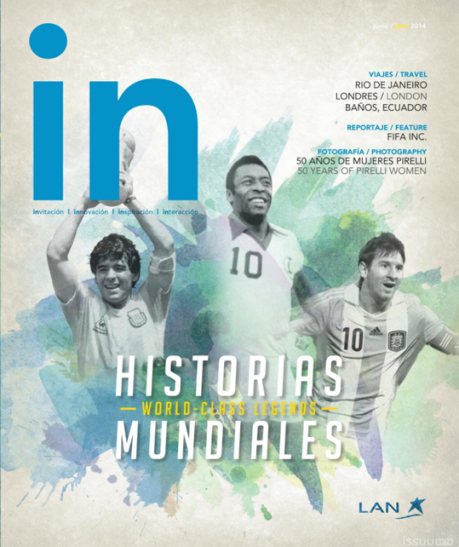
in (LAN in-flight title), June 2014

in (LAN in-flight title), June 20142014 FIFA World Cup Brazil-fever is really heating up, with more and more magazines showing creative executions on their covers! “in”, the in-flight magazine for LAN, did a beautiful waterpaint-inspired cover with some of its “world-class legends”.

VOGUE (Spain), June 2014

VOGUE (Spain), June 2014And how does a fashion title such as VOGUE get in on the 2014 FIFA World Cup Brazil action…?

It gets soccer star Cristiano Ronaldo to pose completely naked with Russian supermodel Irina Shayk, with Peruvian celebrity photographer Mario Testino to capture “the moment”. Win-win all around, I say!

The cover lines “Amor and Futbol” translate to “Love and Football”.

You can read more about this cover right here.

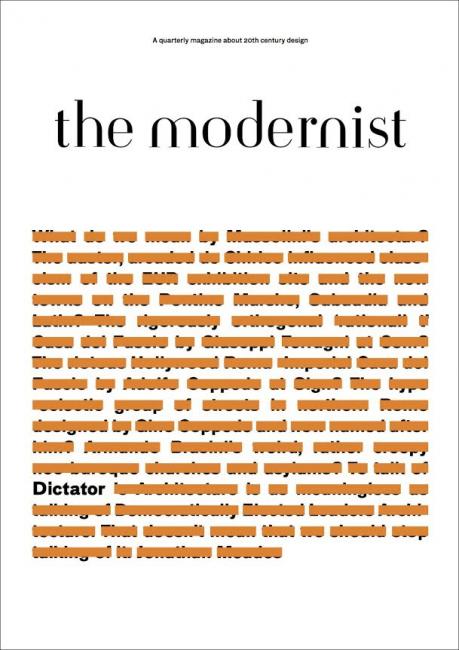
The Modernist, Issue 10

The Modernist, Issue 10I’m not sure what words are hiding behind the censored lines but it’s clear that this is The Modernist’s “Dictator” issue, as the message is strong (and cleverly done).

This from its website: “From the vysotki of Stalinist Moscow and the TV tower of Communist Prague; from Mussolini’s EUR and Hitler’s Westwall; to Berlin’s Checkpoint Charlie and Charlie Chaplin’s Great Dictator, we bring you our un-redacted Dictator issue…”

You can read more about this issue here.

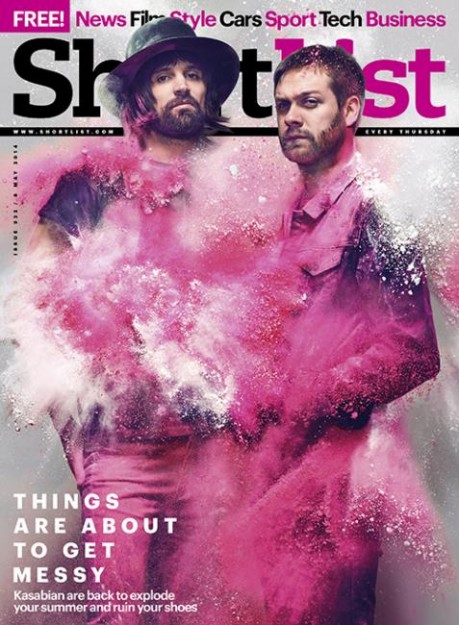
ShortList, 8 May 2014

ShortList, 8 May 2014Things really did get messy with the Kasabian boys! But a brave cover concept, and brave and willing subjects, turn this into one mind-blowing cover!

And if you think this was done with Photoshop, have a look at some of the extra pictures on the blog of the photographer Levon Biss.

This execution reminds me of one of my Sexiest Covers for 2013: the Bobby van Jaarsveld topless My Tyd (Rapport) cover… Just not as much powder involved as with ShortList :-)

LOCAL

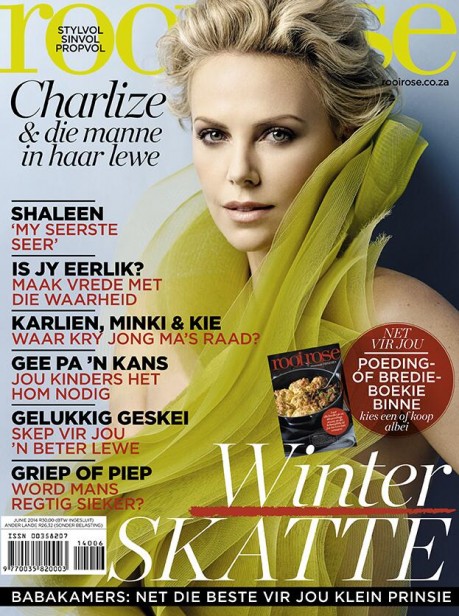
rooi rose, June 2014

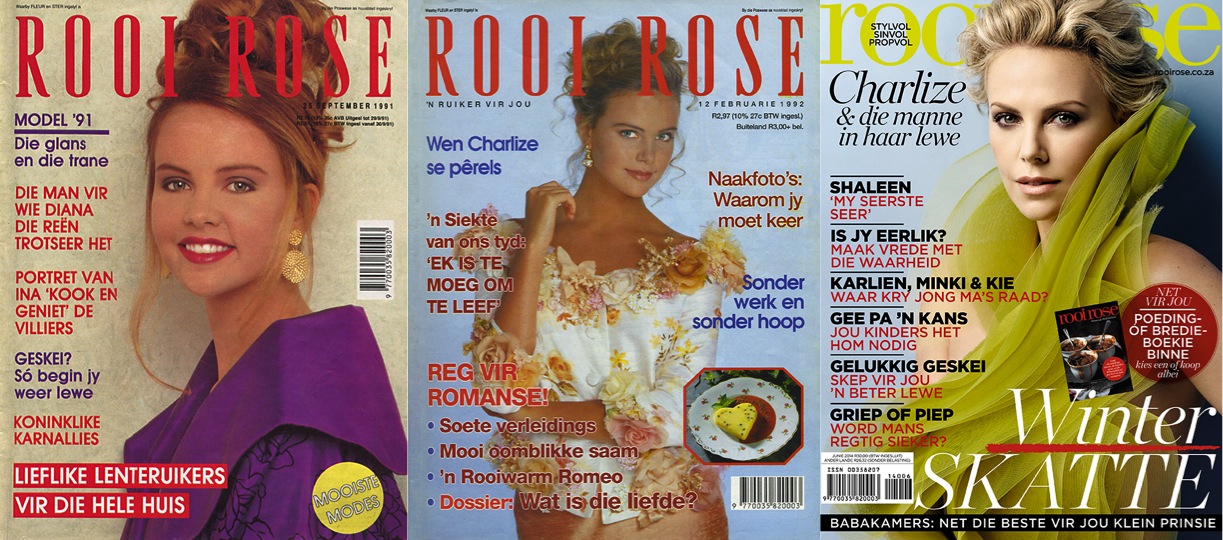
rooi rose, 6 June 2014I think any cover which Charlize Theron appears on is a great cover, including and especially the latest one of rooi rose!

But what makes this even more special, and in case you didn’t know, is that rooi rose was also the very first magazine cover that Theron appeared on. Ever.

It all started in 1991, when she was 15 and won a rooi rose Model of the Year competition, and the rest is history…!

If you’re a fan of hers, make sure you look at my post which includes her first two rooi rose covers, but also her very first article in 1991…

Charlize Theron on rooi rose magazine covers


Find a cover we should know about? Tweet us at @Marklives and @MediaSlut.
Want to view all the covers at a glance?
See our MagLove Pinboard!


MediaSlutMagLove by @MediaSlut is a regular slot featuring the best local and international magazine covers every week, recognising well thought-out, powerful and interesting (and hopefully all three-in-one) covers and celebrating the mix of pragmatism, creativity and personal taste that created each of them. The (for now anonymous) blogger behind MediaSlut knows way too much for his own good about media in South Africa, magazines in particular. His mission is to show when SA magazines fail but, most importantly, also when they succeed. If you’re looking for a library about SA magazines and news, this is your one-stop pitstop.

— MarkLives’ round-up of top ad and media industry news and opinion in your mailbox every three work days. Sign up here!

The Ad Contrarian: New CMO = new agency = new campaign (= sh*t)

adcontraby Bob Hoffman (@adcontrarian), San Francisco Bay  I am not a fan of either the talking-animal or the talking-baby genre. They’ve been done a million times and rarely have they been anything but awful. However, every now and then someone does it well. They take a clichéd idea and make it into something good.

One of the cases in which talking babies were done well was E-Trade. Before I go too far, they weren’t all gems. But some of the writing was excellent and very entertaining. I don’t know who the writer(s?) were, but at some point Grey had some excellent talent on this business.

But, as always, good advertising can’t withstand the relentless onslaught of baboons in the marketing suite.

A couple of years ago I wrote the following…

Marketing people just refuse to leave shit alone. Somewhere they got the idea that everything they see needs to be changed and everything they change is an improvement…

Whenever I read in the trades that a successful advertiser has hired a new CMO, I know a festival of laughter is on the way. They (the new CMOs) always say the same thing: 

“X Corp has been very successful. I am not here to change that. My focus is just on making sure that we ______.”

Amazingly, making sure that they ________ always seems to require that they change everything.

Recently E-Trade got a new CMO, which, of course, meant a new agency which, of course, means a new campaign. And what an inexcusable piece of excrement it is.

Of course, this horrible, disgraceful, odious (am I making myself clear?) campaign is being justified with the usual steaming pile of hogwash about “consumers” and “research” and “control” and “spaces.”

Just reading this crap is so depressing. It has to make anyone with a sense of what advertising should and could be disgusted that advertising decisions are in the hands of such philistines.

When are these people going to learn that a distinctive campaign idea is worth ten-thousand of their vacuous strategy documents and hinky research reports?

The new CMO, in the time-honored tradition of insolent duplicity, gives the old campaign the obligatory counterfeit high praise while sticking an ice pick in the heart of something good in support of something unspeakably horrible.

I hate to do this to you, but take a look at this monstrosity and try not to lose your breakfast.

And if the spot isn’t bad enough, these flat tires have sullied the name of my company (Type A) for their loathsome new campaign, “Type E.”

There are so many things I want to punish these people for.

The Ad Contrarian is Bob Hoffman (@adcontrarian), the author of The Ad Contrarian and 101 Contrarian Ideas About Advertising. This column has been republished from his blog The Ad Contrarian.

— MarkLives’ round-up of top ad and media industry news and opinion in your mailbox every three work days. Sign up here!

Heroes & Zeros: Yellow Pages — Andy Rice pays tribute to David Abbott

Andy Rice (@ricecommaandy) talks about his best advert of the week — Yellow Pages — in tribute to British ad legend David Abbott, who passed away earlier this week, and his worst ad of the week — Emirates — with Jenny Crwys-Williams (@jcwLIFE) during The Ad Feature on Talk Radio 702 (@Radio702).

Find out why these brands feature in this week’s Heroes & Zeros webisode by watching below:

For a fresh look at the world of advertising, Jenny Crwys-Williams of 702 Talk Radio chats to advertising critic Andy Rice on The Ad Feature, every Wednesday 2.30pm — 3pm. The filmed Heroes & Zeroes will appear on MarkLives every week as a webisode.

— MarkLives’ round-up of top ad and media industry news and opinion in your mailbox every three work days. Sign up here!

Online CPD Courses Psychology Online CPD Courses Marketing analytics software Marketing analytics software for small business Business management software Business accounting software Gearbox repair company Makeup artist