by Dan Herman (@elhermo) What can we, as brands and marketers, do to navigate the minefield that the online environment has become? How do we turn back the tide of brutality and negativity, and drive digital back towards the ideal it was intended to be? How do we stay relevant and be heard without contributing to the turmoil?
Brands need to wake up to the fact that they need to follow (and lead) consumers to new digital spaces. While doing so may be a step into the unknown, new platforms remain a key opportunity to create new and engaging social experiences that is on the consumer’s terms.
Image by Stuart Miles courtesy of FreeDigitalPhotos.net
Abuse of data
The rise of commercial and governmental abuse of data in digital, combined with consistent increases in cyber-bullying on social networks, has resulted in the creation of a hostile playing ground where consumers are the primary victims of a networked system gone awry.
Intended to be a space for conversations and connections, the digital world has become chaotic; it’s a place in which the fight for the soul of our connected world is occurring.
The internet itself has become a weapon that is effectively being wielded against its users. Our usage has created a data-driven digital economy where customer information is the primary profit-making mechanism for digital giants, such as Google and Facebook, which collaborate with brands and marketers to inundate users with unabated marketing messages and lead-generation campaigns.
Online bullying
Further to this, online bullying is having a devastating impact on users’ enjoyment of digital platforms, as evidenced by Dick Costolo, CEO of Twitter, admitting that the network has not been effective in curbing abusive, racist and sexist behaviour on its platform. This failure has resulted in the withdrawal of prominent users from Twitter, most notably Zelda Williams, daughter of the late Robin Williams, as a result of unrestrained user abuse.
Consumers are fleeing from brands who invade their privacy, and from trolls who hurl invective all over this space without consequence. Users are now looking for safe havens in anonymous platforms, such as Whisper and Secret, as well as ad-free platforms, such as Ello. These alternative spaces are meant to provide respite from the digital conflict and noise. Their growing popularity demonstrates that they are much needed.
People using online platforms are suffering from post-traumatic stress disorder (PTSD), inspired by the invasive data collection and unrestrained cyber-bullying [here’s an example from science fiction and fantasy fandom — ed-at-large].
Content shock
A major symptom of this syndrome is “content shock” and it occurs when the amount of content that exists is disproportionate to the ability of the user to consume said content, resulting in their developing the ability to tune out all the content that is not relevant to them. A major casualty is the average human-attention span.
As mentioned earlier, anonymous social platforms are on the rise — Snapchat is one such platform which has seen substantial global growth. In South Africa, it has consistently ranked in the top 30 most-downloaded iPhone apps over the past two years. By exploring engagement opportunities on emerging platforms like Snapchat, we should be able to create experiences that consumers don’t run away from.
Secondly, a way to overcome content shock is to foster a true sense of intimacy with consumers. The new trend of hyper-personalisation provides unique insight into how to drive a genuine one-to-one connection with consumers.
Smartly aligned
TD Bank, a leading US financial services provider, developed over 100 pieces of hyper-localised video content in order to improve customer experience at each one of its branches. This content was aligned smartly with a user’s specific intent to seek a local bank in a way that was relevant, without coming across as being contrived.
A brand that appears when needed, and in a personalised and relevant way, will win over customers in this age of marketing inundation and content overwhelm.
Thirdly, to build consumer trust, brands will need to use data in ways that add genuine value, without coming across as a privately owned big brother.
Adding value
Netflix is a powerful example of a company using data to add value. By analysing user preferences, Netflix established that its viewers were consuming content that starred Kevin Spacey, was directed by David Fincher and was of the political genre. Following this analysis, it then commissioned the Netflix Original Series “House of Cards”, which has since garnered critical acclaim and won multiple awards.
It is clear that through the responsible use of data, brands may create real value for consumers, but may also generate commercial success.
The challenge has been set: brands will need to go to extraordinary lengths in order to achieve a genuine connection with users, but it is only through this real and personal connection that we will overcome the blight of content shock.
Brands need to stand up
Finally, brands need to stand up against the dangers of cyber-crime by creating digital experiences that not only maintain the integrity of their campaigns but don’t invite abuse towards consumers. The continued growth of abusive online behaviour makes it an imperative for brands to unite with consumers in the fight against abuse. They need to do this by monitoring social conversation, driving positive sentiment and delivering content that adds value.
Fundamentally, whatever digital conversation we create needs to be put forth in an authentic and credible voice that matches a brand’s tone and moral standpoints.
It is possible to turn the tide if we find ways to reach out and connect in authentic, real ways with people tired of seeking digital refuge. It won’t be easy. Brands and marketers need to put their pre-conceptions aside and deeply consider what works for their consumers. If they don’t, they may become the next major casualties of the digital warzone.
Dan Herman (@elhermo) is a lead strategist at Aqua, South Africa’s largest digital agency. His academic background includes an honour’s degree in English literature from Wits, a postgraduate diploma in management from Wits Business School and a master’s degree in Media Theory & Practice from the University of Cape Town. Email him at danielh@aquaonline.com. Facebook: Facebook.com/elhermo. Snapchat: elhermo23
“Motive” is a by-invitation-only column on MarkLives.com. Contributors are picked by the editors but generally don’t form part of our regular columnist lineup, unless the topic is off-column.
— MarkLives’ round-up of top ad and media industry news and opinion in your mailbox every Monday and Thursday. Sign up here!
by Oresti Patricios (@orestaki) Certain brands just ‘get it’. Just what ‘it’ is, however, is hard to describe: it’s not in any marketing manual or brand bible. ‘It’ is what it is.
Marketing is about so much more than sending out messages through the tried (or tired) and tested channels. Brands that interact with their customers, that add value to their customers’ lives, that give something without asking for anything — not even loyalty — in return, these are brands that ‘get it’.
Ballantine’s Scotch Whisky is a brand that has used an imaginative, cross-market, brand-building campaign to create an image that is fresh, new and in tune with the modern generation. The slogan is “Stay True,” and this refers initially to the idea that Ballantine’s respects its roots.
Ballantine’s is an old company, with a heritage that goes back to 1827, when George Ballantine started blending whiskies from all over Scotland, and allowing them to age — something of an innovation, according to the Ballantine’s official history, outlined in a video on its website.
Heritage is important when it comes to something such as whisky, but it’s also important to appeal to a generation of future whisky drinkers.
A companion, satirical video on the site talks about throwing away George Ballantine’s original recipe and creating a rave generation-friendly blue bottle. In reality, the brand has stayed consistent in quality for over 180 years, earning it top awards around the world from whisky connoisseurs.
To expand on the ‘Stay True’ slogan, Ballantine’s has teamed up with the Boiler Room, an online community of underground music fans and artists, with an international following. ‘Underground’ music is all about emerging artists who are creating new styles and sounds, as well as more-established artists experimenting with music. It includes such strange styles as Doom Drone, which can best be described as deconstructed heavy metal, as well as the more mainstream, danceable styles such as dubstep, house and electronic music.
The Boiler Room organises Stay True events, from London to Berlin to Austin (Texas), and now even Johannesburg. The most-recent event featured Jozi-based DJs and performers such as Black Coffee, Culoe de Song, Okmalumkoolkat, Black Motion and DJ Shimza. The Johannesburg event was about more than just providing a great club experience for a few fans; the music was streamed live on the Boiler Room site, and a local director was commissioned to produce a video.
Arcade Content director, Lebogang Rasethaba, didn’t want to simply chronicle the event. In researching, he quickly discovered the one thing that unifies all South African music — dance. The video became a documentary about dance — especially urban style dance styles that come out of the township, which complement new South African music. Apart from the DJs and producers involved with the Stay True event, he also interviewed people such as Jarrel Mathebula of the Indigenous Dance Academy from Tembisa, Vinny da Vinci of the House Africa recording label, and Siphiwe Mpye, who was the first spokesperson for Yfm radio, and co-editor of Ymag.
These interviews form the basis for an insightful look into the energetic and constantly changing dance scene that is so specific to young, urban, hip South Africans. Unlike the rest of the world, where music styles dictate the dance, SA urban dance drives the music, and is equal in importance. Music producers have to be cognisant of current trends in dance, when they are composing new pieces.
Ballantine’s is being really smart about how it engages with this target market, which is the hip, trendy, urban sophisticate. It participates in events that will be of interest to these individuals, and focuses on people who ‘stay true’ to their calling.
The whisky brand also sponsors other events, some of which are not music-related. For example, Ballantine’s asked world-renowned ‘GIF-ITI’ artist INSA to create a range of 12 totally unique limited edition bottles of its Finest blended Scotch Whisky. Photographed together they make up an amazing animated GIF.
The same artist was assisted by Ballantine’s to create the world’s largest GIF, which was a massive painting on an open space on the ground in Rio De Janeiro. Each day a team had to repaint the image, change a little, and over a series of days it was photographed by a satellite.
So let’s raise a wee dram to the innovative folks at Ballantine’s — for supporting the artists who do ‘underground’, unusual things. The world is a better place for creative thinkers, and the brand is definitely making an impression in the hearts and minds of the fans.
Slainte. Here’s tae ye.
Credits
Director: Lebogang Rasethaba
Cinematography: Motheo Moeng & Lebogang Rasethaba
Editor: James O’Sullivan
Sound: Mpho Nthangeni
Producers: Imke Nina Gehring & Jack Hart
Additional camera: Mavric de Beyer
Line producer: Vjorn du Toit
Final mix: Tymon Smith
Production house: Arcade Content
Ad of the Week, published on MarkLives every Wednesday, is penned by Oresti Patricios (@orestaki), the CEO of Ornico, a Brand Intelligence® firm that focuses on media, reputation and brand research.
If you are involved in making advertising
that is smart, funny and/or engaging,
please let Oresti know about it at info@ornicogroup.co.za.
— MarkLives’ round-up of top ad and media industry news and opinion in your mailbox every Monday and Thursday. Sign up here!
We reveal the best-watched shows of the week before (in this case, 6 April–12 April 2015), where they ran and how many South Africans tuned in to watch:
Top 20 — adults and kids
Top 10 SABC1 — adults and kids
Top 10 SABC2 — adults and kids
Top 10 SABC3 — adults and kids
Top 10 e.tv — adults and kids
Top 10 Mzansi Magic — adults and kids
Top 10 M-Net — adults and kids
Top 20 shows across channels (national — adults age 15+)
Variable
TVR %
Ranking
Description (grouped)
Channel
Level 1
Level 2\Activity
(r) Live + VOSDAL
1
GENERATIONS THE LEGACY
SABC 1
Soap opera
Local
18.5
2
UZALO
SABC 1
Drama
Drama
16.0
3
SKEEM SAAM
SABC 1
Drama
Drama
15.5
4
DEATH OF A QUEEN
SABC 1
Drama
Drama
14.8
5
TEMPY PUSHAS
SABC 1
Drama
Drama
14.3
6
MUVHANGO
SABC 2
Drama
Drama
14.0
7
ZULU NEWS
SABC 1
News
News
11.0
8
THANDEKAS DIARY
SABC 1
Reality
Reality
10.7
9
POWERBALL
SABC 2
Variety
Variety
10.4
10
XHOSA NEWS
SABC 1
News
News
10.1
11
JIKA MA JIKA
SABC 1
Music
Music
9.8
12
ITHUBA LOKUGCINA
SABC 1
Drama
Drama
9.7
13
SCANDAL
e.tv
Drama
Drama
9.6
14
ZAZIWA
SABC 1
Variety
Variety
9.1
15
SKEEM SAAM -R
SABC 1
Drama
Drama
9.0
16
MOPHEME
SABC 2
Drama
Drama
8.9
17
SELIMATHUNZI
SABC 1
Variety
Variety
8.8
18
FRIENDS LIKE THESE
SABC 1
Variety
Variety
8.3
19
EMZINI WEZINSIZWA -R
SABC 1
Sitcom
Sitcom
8.0
20
NYAN NYAN
SABC 1
Reality
Reality
7.7
Top 20 shows across channels (national — kids age 4–14)
The Broadcast Research Council of South Africa (the BRC) is a non-profit, industry body that has recently been incorporated to cater to the audience research needs of the radio and television industry in South Africa.
— MarkLives’ round-up of top ad and media industry news and opinion in your mailbox every Monday and Thursday. Sign up here!
by Sean McCoy (@TheRealMcCoyTRM) For all the systems investment, development and focus by business, these are enablers and not the answer to service differentiation — at the end of the day, it is people who make the difference, no matter the industry.
This was brought to mind again in some contrasting experiences of late. Staying with the automotive-related industry of last month’s column, I recently experienced the worst of contact-centre systems.
Image by Stuart Miles courtesy of FreeDigitalPhotos.net
A leading vehicle financier, partnering with a leading short-term insurer, needs to audit and verify that annual insurance over the vehicle is intact. This need is fully understood and it is important that it covers its own exposure as much as the prized vehicle asset in the hands of an owner. What is incomprehensible, however, is how its system goes about it — note system, not people!
Self-imposed additional penalty
The system alerts you to the necessity as client to do this administration. It continuously reminds you, even once you have attended to the matter and, to add insult to injury, it goes ahead with a self-imposed additional penalty insurance premium to your asset financing account, ignoring that you have attended to the matter.
In the above example, the burden is placed upon the customer to try undo this chaos and to go through repeated contact-centre discussions trying to do so. This is an example of systems at their worst and people unable to navigate toward solutions on behalf of the consumer. It’s a highly frustrating situation that highlights the particular challenges faced in contact-centre environments, and negates all the marketing communication promises made aggressively by both leading brands.
Building scale and efficiency in administrative processes are necessary, but organisations need to learn to do this in a real service-centric fashion.
At the complete other end of the spectrum, recently I witnessed the simplistic impact that people can have in basic service encounters.
Very impressive people counters
As part of my early morning Sandton traffic strategy, I arrived at the Holiday Inn Garden Court well ahead of schedule for my nearby meeting, to have breakfast and use the time productively. In a competitive and commoditised industry — what is different about a room, bed and breakfast? — I experienced very impressive people encounters at every contact point of my visit, starting with reception staff to the team hosting a very busy breakfast area and rounded off, most impactfully, by a client-centric maintenance man changing light bulbs in the bathroom.
Every which way I turned in this environment, people were attentive, polite, friendly and engaging — once again, clear signs of training in the hospitality sector and a real sense of purpose among this team — an absolute delight to experience and now a future feature of my ongoing early-morning traffic routine when travelling to the area.
To complete my faith in this approach and to conclude this month’s article positively, service commitment was further reinforced, following a visit at the weekend of writing, to a large nearby Pick n Pay retail outlet (generally an experience I prefer to avoid, if at all possible). I was more than pleasantly surprised by the teller experience, which I have known to be problematic in the past.
Unlike anything I have ever witnessed
The woman in question was not the friendliest personality in town, but this may have been a function of her complete focus. Her speed and efficiency in processing two trolley loads of purchases was unlike anything I have ever witnessed in a retail store — three of us unpacking the trolleys struggled to keep up with the pace at which she was scanning and moving goods along her system. A real service delight in a channel often notorious for inefficiency, surly staff attitudes and generally poor service levels!
I did finally mange to bring a big smile to her face when I told her that she was the undisputed world champion of tellers and that she had shattered all existing teller world records.
The essence of the matter is that internal branding is fundamentally a people issue. Systems and structures must be robust and supportive but they are not the alternative to well-trained and highly engaged people; after all, people are even behind the development and delivery of most system and service structures.
And this is not only applicable to the hospitality or retail industry, I might add.
Never been truer
The traditional cliché held out by most organisations that people are their most important asset has never been truer — power to them.
Dr Sean McCoy, MD and founding member of HKLM, is a prominent figure in the branding arena, with his expertise centered on client service, brand strategy and business development. Sean has been chairperson for the Brand Council of South Africa since 2012. He contributes the regular “The Real McCoy” column focusing on internal branding to MarkLives.
— MarkLives’ round-up of top ad and media industry news and opinion in your mailbox every Monday and Thursday. Sign up here!
by Thabang Leshilo (@Thabang_Leshilo) The South African music festival of the past was a simple thing, featuring a few local acts performing to a small crowd of enthusiasts. Today, festivals such as Oppikoppi and AfrikaBurn are the stuff that legends are made of.
Thousands of festivalgoers walking through their gates, and dominating their collective psyche for weeks before and after the event.
This increase in festival attendance is also evident globally, with heightened demand giving rise to numerous new, if smaller, festivals.
What’s all the fuss?
So, what’s all the fuss about and what’s driving this trend?
In an article from American media and trend reporting company, PSFK, Marie Kunz reported that online ticketing and registration platform for music festivals and concerts, Eventbrite, had studied over 20 million social media conversations for a 12-month period in an attempt to explain the explosion.
The analysis determined that millennials are the driving force behind the growth in attendance, and that their high engagement in social media before, during and after the musical events has changed the entire experience.
Online conversations drive ticket sales
According to the research, online conversations between millennials — 75% of music festival posts on social media come from millennials aged 17–34 — has helped drive up ticket sales. Importantly, 23% of these posts were made by fans who did not physically attend the event but participated remotely in live streams on YouTube, TV and other channels.
Kunz also conceded that technology is a key player in the rising popularity of EDM, or electronic dance music. EDM, a form of music that became a hit online, has garnered many millennial fans and reinstated the godly status of the DJ.
Internationally, EDM festivals such as Tomorrowland and MysteryLand rank high in the ‘most buzzed about’ music festivals. Locally, EDM festivals such as Ultra and Sensations pull in large crowds that often don’t even know what the lineup is and simply turn up to enjoy the overall experience.
Fully immersive experiences
As a millennial who’s all about the experiences and a regular goer of Oppi and The Burn, I can certainly attest to these fully immersive experiences that extend beyond the physical festival.
Millennials naturally seek authentic and meaningful experiences, and they want to engage with brands that create unique, fresh and meaningful experiences. Even more so, they aspire to be part of the brand story in any way possible.
For music festivals, technology and the youth’s adoption of social media truly do have the power to drive business impact — but only if the experience is worth sharing and the organiser gives them creative licence to tell their side of the story or brand experience.
Keep in mind
Three things to keep in mind about this group of consumers:
They always share their brand experiences, be they good or bad
They want to create, produce and share their own content based on their personal experiences, and will do so on a number of different social media platforms, and
Over time, they will expect to be part of the experience at every stage, be it before, during or after.
Thabang Leshilo (@Thabang_Leshilo) is a project manager at strategic marketing consultancy Added Value. As a ‘next-generation’ marketer with fresh and curious eyes looking into the industry, she has a keen interest for brands that are culturally in tune with and able to integrate and immerse themselves into the everyday realities of the consumer. She contributes the monthly “Tuned” column, sharing marketing insight and analysis, to MarkLives.
— MarkLives’ round-up of top ad and media industry news and opinion in your mailbox every Monday and Thursday. Sign up here!
by MarkLives (@marklives) In the latest Ad Feature, branding expert Andy Rice gives a report back after his visit to the US, looking at how different television advertising there is to what we get here in South Africa, and the three-person panel chooses one Superhero and two Heroes.
For the Wall of Fame or Shame, where ads come to impress or depress:
Marketing consultant Sizakile Marutlulle chooses the new KFC Doritos Crunch burger
Rice selects the airbnb Cuba ad on the Wall Street Journal back page, and
EWN anchor Jacob Moshokoa is inspired by the Nike #Masters ad that tracks Rory McIlroy’s journey from a curious small boy watching Tiger Woods until the day they share the fairway.
Watch below to find out how which rates as what!
When it comes to American TV advertising, Rice comments on election campaigns, the “most-bizarre format” for promoting prescription drugs; and his vote for the worst payoff line for the decade (hint: it concerns Subaru).
Enjoy the show!
Every week, discover the highs and lows of advertising in South Africa with The Ad Feature team from Primedia Broadcasting — consisting of ad and branding critic Andy Rice (@ricecommaandy), brand and communications strategist Sizakele Marutulle (@ZDivah), EWN anchor Jacob Moshokoa (@JayMoshokoa), and producer Gary Oberholzer (@goberholzer). For more, go to www.facebook.com/adfeature.
You may also catch Andy on The Money Show on 702 (@Radio702) and Cape Talk (@CapeTalk) on a Tuesday evening just after 7pm for the new feature #ButDoesItWork on The Money Show.
— MarkLives’ round-up of top ad and media industry news and opinion in your mailbox every Monday and Thursday. Sign up here!
by Johanna McDowell (@jomcdowell) LONDON: Saving the best until last seemed like the order of Friday’s agencies for the AdForum Worldwide Summit London. There were astonishingly good presentations by all three, diverse thinking and in depth creativity. We were ‘bowled over’.
VCCP
First up was VCCP, a very British agency with five offices on two continents: London, Berlin, Prague, Madrid and Sydney. Ranked no. 6 in the UK, VCCP employee churn stands at 19%, which is 11% below the industry average.
Clients include EasyJet, Meerkat Movies and O2 (its founding client). Its work is, quite simply, brilliant with one of its best campaigns for O2, “Be more dog”, winning accolade after accolade in the effectiveness space. It is opening in the US soon and, unlike the majority of its competitors, will be on the West Coast.
Exposure
Then on to Exposure, an agency born as PR and grown into integrated, and thus perfectly delivering on the “ideas that talk” concept that is the agency’s mission. With offices in London, New York and Tokyo, the agency has clients such as Microsoft and Jaeger on a worldwide basis, and both clients were prepared to stand up and provide great testimonials for the agency.
This was the only agency that did this at this summit — third-party endorsement is always a ‘standout’ item. “No one is more networked than Exposure,” said Colin Henry, CEO of Jaeger.
Exposure is strong on collaboration and always looks for “earned” media coverage, as opposed to bought — but, if it has to, it will also engage in bought media.
Forsman & Bodenfors
Final agency of the morning was Forsman & Bodenfors, the Swedish agency based in Gothenburg (Sweden’s second city). It talked to us about wanting to work with us as consultants as it sees our role as guiding the clients to select the appropriate agencies.
Exceptional work, exceptional methodologies and people — this agency is the most-creative agency (based on strength of wins) in the world with clients, such as Volvo Trucks and Volvo Cars, World Food Forum etc.
Highly successful financially, it shared its thinking with us in terms of what it wants to see as a totally different way of working with creative work, and illustrated this with some excellent examples around culture and thought.
Such was the level of this discussion, that the consultants — normally quite a chatty crowd — listened intently to probably one of the global masters in this area. I will be sharing some of the discussion with agency subscribers at our next agency masterclass next month.
Transfixed by its successes
Forsman is not an agency for every client, and it is very, very selective regarding clients it works with, but not in an arrogant way at all — with the greatest humility. Owned and run by the employees, Forsman is an agency to keep on watching; we have seen it three times at AdForum Summits and, every time we see it, we are transfixed by its successes.
Johanna McDowell is managing director of the Independent Agency Search and Selection Company (IAS), which stands at the forefront of the complex world of agency selection in South Africa, and she is one of the few experts driving this mediation and advisory service in SA and globally. Twice a year she attends AdForum Worldwide Summits as an international consultant, which helps her lead the SA advertising industry forward to keep in line with international trends and remain competitive. Follow her on Twitter at @jomcdowell.
— MarkLives’ round-up of top ad and media industry news and opinion in your mailbox every Monday and Thursday. Sign up here!
by DK Badenhorst (@BrandCultureSA) The latest Santam TV ad (“One of a kind”) seems to have found a warm space in the hearts of South Africa. This is despite showing how people talk about us behind our back, discussing not necessarily what makes us good but what makes us different or unique.
And, to be honest, the qualities listed range from good (‘beaches’ and ‘women’) and neutral (“they call a fire a ‘chop & dop’”) to bad (crime and energy shortage). Nevertheless, the ad has warmed South African hearts and made people proud to be South African.
It seems odd. Why do we panic when we hear about a potential power grid collapse but feel great when foreigners say “they call it load shedding”. Why do we lament our security issues and hate how communities are driven apart by walls yet our eyes light up when foreigners can’t figure out whether it is to keep something in or out? (In reality, the answer is both.)
A peculiar patriotism
South Africa has a peculiar patriotism, one that’s almost militant. Blog posts confessing an expat’s regrets in leaving and their longing for the sunshine and the manicured lawns get sent around via social media years after they’re first posted — I’ve been receiving a particular one for a few years now.
In the same way, people who claim that they’ve defended the country either by putting a whiny expat in his or her place or by arguing the case for our country is about as close as the average person gets to being a national hero.
It’s idealism at its best and it opposes materialism. I don’t mean materialism in the sense of ‘things are all that matter’; rather, that we can understand the world through our experience, that we should live from our experience up, instead of from our ideas down.
SA patriotism is idealistic in that it has decided that SA is the best and, no matter what evidence is presented, it shall be believed that SA is the best and it shall be defended at all cost. Our hopes inform our experience, not the other way around.
What is the right question?
However, the question is never: “Why are people being so irrational?” That is almost certainly the wrong question. It is: “In which world view is that a rational thing to do?” This is the job of cultural intelligence, not seeing through someone else’s eyes but rather thinking with someone else’s mind — seeing the seemingly irrational as rational.
In order to understand the reason that this Santam ad has received so much traction, despite kicking us in the shins, it’s important to wind back the clock.
If you close your eyes and listen to the cadence and the framework of the ad, it really is the language of the late nineties/early noughties. Thabo Mbeki’s “I am an African” speech might have kicked it off with a verbal montage of the things that make us African, the things that unite us despite (or because) of our differences; it declares that SA belongs to all who live in it and we all may claim the status of being African.
It was a beautiful time for SA. It was a great time to be an African and, more specifically, a South African. This particular speech (that is, compared to Martin Luther’s “I have a dream”) was presented by Mbeki, who at the time was vice president.
We could all still remember the late former president Nelson Mandela dancing with Springbok rugby captain Francois Pienaar; we were still in a daze from not having a civil war; we were basking in the limelight — everyone was a bit euphoric we all got along so well.
Spiral Dynamics
Underneath it all, we were, in terms of evolutionary human development model Spiral Dynamics, running a blue engine. Spiral Dynamics is an interesting system that shows how societal values shifts as they are exposed to new ideas and changing circumstances. It’s not a system that offers right or wrong; instead, it provides a framework through which we may map society, figure out where we are and understand the world around us.
For simplicity’s sake, it’s easiest to think of “vMemes” as destinations along the spiral that stands for certain values.
Blue believes in bringing order and stability to all things. It values self-sacrifice for the greater good. In blue, we must control our impulses, enforce good principles and righteous living and, above all, we must look to a bigger plan that assigns all to our places. Blue is not rebellious; it surrenders to authority, and is very often driven by guilt. The Dutch Reformed Church (NGK) is very blue.
Mandela took over from the apartheid world, leading a group of people which was either moving from red into blue (newly liberated) or which was simply very blue (white middle class).
‘Blue’ guilt
The dominant vMeme was blue. Guilt was a huge theme in SA. People were looking to leadership and to their religions to bring order. Group identity — belonging to something bigger — is important to blue, which is why we were hard at work creating a new collective identity: The Rainbow Nation.
This sense of belonging also explains why Mbeki’s speech was received so well: it gave us all the right to be part of something bigger, something with meaning and something that gave us our place in the order of things.
It is also important to note that SA leadership of that time (and the public sentiment) incorporated the green vMeme, too, in as much as people were united for a cause, and this cause or ideal overshadowed the blue hierarchy and authority.
For a very long time, SA was not a country of worldly pleasures; it was a place where everyone had to sacrifice something to be part of the bigger whole. It was an appropriate vMeme for a country that had just rescued itself from red chaos and blue oppression.
This SAA commercial demonstrates the era particularly well. It’s also the original cultural language that the Santam ad leverages – taking peculiarities and using it as signifiers for the group.
Blue looks for purpose and often finds it in a deity or an ideal. This commercial speaks to our looking to a bigger entity but not quite knowing what it is. It answers a question with a ‘because’ but we never hear the question.
Completely illogical
It’s a completely illogical phrasing: because we do this and yet we do that. It’s nonsensical as a sentence structure but it makes perfect sense as an emotional declaration of unity under something bigger (in this case, our national flag).
In almost religious fashion, the commercial ends with children next to water, reflecting the deity in the sky.
A more lighthearted take on this is “Met Eish” that shows how our differences and misunderstandings make us unique. Klipdrift also taps into a truth that, no matter what we do, there is a bigger whole that we belong to that will always make things work out.
This take is also more green as it touches upon on a bigger ideal and how being together serves a purpose; it’s not simple obedience to a higher order.
A third one (and I’ll conclude my history lesson here) concerns people who do not know their place in society. Rule-breakers, nails that stand out or tall trees.
What makes this one interesting is that it would be taboo making fun of wealthy businessmen today; however, a decade or so ago, they were fair game and the conformist walked away the victor. Also interesting to note is how the hierarchy behind the airline counter jumps into action to put the rambunctious passenger in his place.
Advertising tradition slowed down
This tradition of advertising slowed down as South Africa started moving towards orange (think BMW, power suits and Wall Street). Ads of recent years, such as Amstel’s “The Boxer” and Bell’s “The Reader”, still have this element of community, sacrifice and duty but no longer to the end of serving a god or a bigger whole; it’s about self-improvement.
Self-sacrifice was on its way out; self-expression and achievement were on the horizon. A comic take on this may even be seen in this Bantam commercial, where the blue hierarchy is entertained for the sake of orange aspirations.
President since 2009, Jacob Zuma himself operates from a red place —coming from a long history of rebellion, fighting to be free from all constraints; unconcerned with consequences that may never come; and driven by the desire for honour, reputation and respect. He also appears to have surrounded himself with people who believe that same thing, collectively working towards a place where Zuma is respected and protected from shame.
Whereas blue fears guilt, red fears shame. Zuma seems more obsessed with shame (going after cartoonist Zapiro, or The Spear painting) than he does with guilt (explaining Nkandla).
Interestingly enough, I believe that the Economic Freedom Front (EFF) political party is much more in tune with middle-class South Africa: a blue mentality that uses uniform for solidarity and offsetting red jealousy.
A moral assertion
It then makes perfect sense to see EFF members slam their fists on the table, not trying to shame Zuma but to hold him accountable. “Pay back the money” is a moral assertion and even the repetitive nature of it is in line with blue’s inclination to recite truths handed down through hierarchy.
For the EFF, Nkandla is a guilt issue (while Malema himself is a rebellious red, he carries the mandate of a hierarchical blue following – something which he seems to be deeply aware of).
Mmusi Maimane of the Democratic Alliance (DA), who spoke about Zuma ‘getting away’ for far too long, also talks to guilt and what one ought to do. This is blue guilt addressing red chaos.
As an aside, it’s worth noting that Zuma can laugh because guilt does not translate in a red world. So, while we see a man being confronted with his negligent behavior, Zuma sees enemies trying to conquer and shame him.
Gradually turning SA red
Zuma is gradually turning SA red as violence picks up, MPs get thrown out of Parliament without discussion, and statues are threatened with being torn down (Arab Spring attitude) [and the outbreak of xenophobia again this week — ed-at-large].
Into this world, Santam and its ad agency, the King James Group, has introduced “One of a kind”. At this point, I’m hoping you’d be able to see why this ad is being defended by a large portion of South Africans.
The context of the ad highlights a bigger world, where people look at ‘us’ (the international world looking at us). This creates fertile soil for any ‘community-building’ concept. Foreigners are talking about us; they are saying things about us. This phrasing of, first, identifying ‘us’ as a separate entity and then giving us a unique label is a recipe for success in a blue world.
South Africa does have many such blue pockets — Afrikaans is an example of blue South African culture. The phrase “mense soos ons” (“people like us”) captures this sentiment really well; it’s a very warm Afrikaans phrase. Belonging and fitting in unlocks doors in blue communities and either respecting ‘mense soos ons’, or by sincerely trying to fit in, may make you the beneficiary of an almost biblical generosity (see “Met Eish”).
May be construed as insulting
The argument, however, is that the commercial may be construed as insulting.
Some hide their criticism behind a smiley face (“did they mention the president without matric J”, as seen on Twitter) in an attempt to point out the obvious while still not breaking rank (blue/orange). Others are blatantly stating how absurd it is that we are proud of “being unique”, reminding us of the picture with the bent fork: unique isn’t always better.
Yet being better is not the point. Community is. Being labeled as an entity is. The anecdotes that are being shared about our country are being shared in a fictional global world. But the audience is not intellectualising it. They are not thinking about it; they are being emotional about it – we feel united. We don’t want to think that electricity is a disaster; we want to feel as if there is hope – and the commercial ticks that box. The speed of the language, the kind smiling voice and the series of random but recognisable qualities put a smile on the viewer’s face.
It is also important to keep in mind who is talking here. Santam is an old, stable and reliable insurance company that has been around since the beginning of time [March 1918, to be exact — ed-at-large]. It is establishment; it orders the world; it sacrifices the now for future reward. It is a deeply blue company. Blue is stable and epitomises the description ‘salt of the earth’.
Loadshedding is no joke
The criticism that we should not laugh at loadshedding does have merit. SA does have an orange interest – the individualists, the mavericks and, in stereotypical terms, the business people. Loadshedding is no joke. It places a serious cap on growth, it dissuades investors and it makes us thankful for something every South African should (in the year 2015) be able to take for granted – we cannot be bedazzled by electricity if we want to call ourselves a modern country.
For orange, the loadshedding message should have been “chaos stimulates innovation” or even talking to wind farms and the solar projects in SA.
This particular commercial is, however, a blue message and is therefore a story of unity and community. Like the “Feed a child” commercial, the actual signifier (in that case a black child and, in this case, the term loadshedding) carries too much other meaning and gravitates away from the intended meaning of ‘unique quality’ to ‘something that is wrong with us’. Nevertheless, it is important to take the message for what it is – it’s not a harmful message; it’s one of solidarity.
In my reading, I came across a chilling phrase: “When conflicts break out within blue however, they are vicious because both sides know too much about how to hurt the others deeply. The brothers may never speak again and the Civil Wars are the least civil of all” (from “Spiral Dynamics” by Don Edward Beck and Christopher Cowan).
Reconsider where we are
It seems fitting to end the article with a quote — blue is one for scripture, after all. But it should prompt us to reconsider where we are.
Brands can play an important role in shifting moods, recontextualising a situation and creating language that moves the conversation of unity forward, rather than polarising our nation and driving people further apart.
What I find most revealing about the Santam ad is that, despite everything that is wrong, we South Africans seem to be more desperate for a national identity than we are for lower crime rates and a stable electricity supply. Or maybe we simply believe that a sense of unity and working together is the first step in solving all our other problems.
DK Badenhorst (@BrandCultureSA) is a cultural insight and semiotics consultant who brings cultural context and long-term trend insights to brand communication. He contributes the monthly “Brand Culture” column, exploring the value and meaning interaction between brands and society, to MarkLives.com.
— MarkLives’ round-up of top ad and media industry news and opinion in your mailbox every Monday and Thursday. Sign up here!
by Herman Manson (@marklives) How can brands access content from global entertainment companies such as Sony, Disney, Paramount, MGM, Fox, Universal or Warner Bros? How many legal hoops would they need to jump through to… give it away free to their customers?
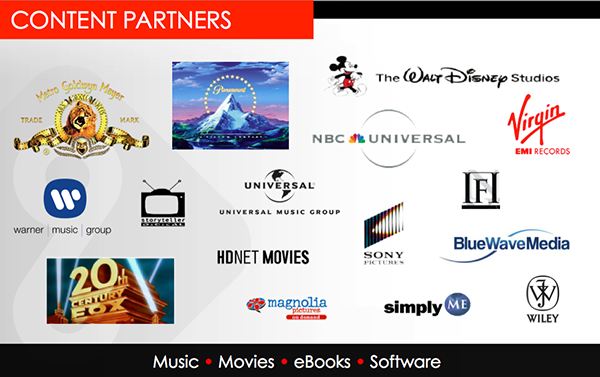
There must be a legal joke in there somewhere. But let’s skip the lawyers, because a white-label content management and distribution company, called Red Touch Media, now offers brands the rights to relevant content from the labels and entertainment brands listed above, and more, directly.
Red Touch Media, which is headquartered in Salt Lake City, Utah, recently opened is South African office (Red Touch Media Africa) under the leadership of Hennie Theron. Born in Namibia, Theron is a partner in the SA business.
The US business launched in 2001 by offering consumers the ability to compile their own play lists and burn a CD, legally, at kiosks (burning CDs is no longer a service offered by the company). This is what launched it into the content management game; it had to acquire rights to all the content it was loading onto those kiosks.
Branded for individual clients
Today, it offers brands access to content via retail kiosks, content portals and e-stores, as well as mobile devices. All of these are branded for individual clients. In addition the company provides content management services for customers to manage their in-house content. In South Africa, the first five kiosks will soon be rolled out by one of three clients already signed up by Theron.
On one end, Red Touch Media Africa offers brands and retailers an online retail or digital in-store presence (through kiosks). These may sell video content, ebooks, software and music. With kiosks, customers can download the content onto USB devices or directly onto their phones (all content sits in a cloud). Movie rentals are also available, and are timestamped to expire two days after being rented.
The kiosks remove the need for people to use their own bandwidth to download content, according to Theron.
He sees kiosks selling music and books or renting movies as viable options for retailers which already offer similar hard-copy products. Kiosks could also be a way for brands to pull customers into their physical stores more often through free download offers which have to be done in-store.
At the other end, Red Touch Media clients pay an initial development fee, a monthly management fee, a content licensing fee and for their own hardware. The SA business holds regional content rights for Africa, and Theron sees a lot of potential for building brands through content offerings across multiple southern African markets.
Local content offered
Red Touch Media also offers local content on its system, and is signing labels and entertainment brands in local markets — especially in Nigeria and South Africa.
The group’s initial focus was breaking into the US market, especially since this would help it secure access to content and test its product offering. This done, it started looking at other markets to enter.
In the US, clients include a sports-pub chain that offers content as part of a loyalty system, a number of book stores, and a group offering content in US prison systems through device rentals — a diverse set of clients. The thread that ties them together is the realisation that people require access to quality content, and Red Touch Media makes it easy and convenient for its clients to offer this to their own customers. It grows their brands and offers consumers a legal and convenient way to access content.
Convenience, says Theron, is a major factor in Red Touch Media’s offering: he foresees a time when people will pop into a store for milk, bread and a movie — all in one space.
— Get our round-up of top ad and media industry news and opinion in your mailbox every Monday and Thursday. Sign up here!
I’m surprised that the New York Times Magazine covers a British-angled story on its cover, but it did it bloody well! Everything form the picture (if it’s Photoshopped, it’s brilliantly done!), to the cover line “Her Majesty’s Jihadists”. Clean and simple.
It’s not the best cover design out there, but it definitely gets the message across, and that’s exactly what TIME set out to do: Black Lives Matter. Notice the full stop. Cover lines don’t have full stops usually, so it’s clear that the magazine is indirectly saying “Black Lives Matter. Full Stop!”
On a clear Saturday morning in North Charleston, S.C., a police officer drew his .45 caliber Glock service sidearm, braced his arms in a shooter’s stance, drew a bead on a fleeing suspect and fired.
Not once. Not twice. Eight times. The sound was almost like a string of firecrackers. Pop-pop-pop-pop-pop-pop-pop. Then, after the briefest of pauses, one more pop. Somehow, Walter Lamer Scott, 50, managed to keep moving away from the lead hailstorm, but the last shot finally crumpled him. He died a short time later with multiple bullets in his back.
I read on CoverJunkie that, for this cover featuring Netherlands illustrator Peter van Straaten (who turned 80), Volkskrant Magazine actually used one of his own drawings, and photographed and Photoshopped him in. Definitely a great idea for titles such as Big Issue and some customer titles, and think of South African artists such as Lorenzo Nassimbeni who this would work perfectly with…
The customer title covers keep on impressing us this week (last week we also featured two)! Cape Union Mart’s The Intrepid Exporer features a great action shot from The Volvo Ocean Race, with tons of emotion, and seething themes for the issue. Read the issue free on Apple of Android.
Diners Club South Africa’s Signature magazine targeted this one perfectly at its target marget, probably making everyone one (including me, and I don’t even play golf!) want to be right there, right now. Only thing that would have made it better is a little golf player somewhere in the picture to give it some warmth.
MagLove by @MediaSlut is a regular slot featuring the best local and international magazine covers every week, recognising well thought-out, powerful and interesting (and hopefully all three-in-one) covers and celebrating the mix of pragmatism, creativity and personal taste that created each of them. The (for now anonymous) blogger behind MediaSlut knows way too much for his own good about media in South Africa, magazines in particular. His mission is to show when SA magazines fail but, most importantly, also when they succeed. If you’re looking for a library about SA magazines and news, this is your one-stop pitstop.
— MarkLives’ round-up of top ad and media industry news and opinion in your mailbox every Monday and Thursday. Sign up here!


 Dan Herman (@elhermo) is a lead strategist at Aqua, South Africa’s largest digital agency. His academic background includes an honour’s degree in English literature from Wits, a postgraduate diploma in management from Wits Business School and a master’s degree in Media Theory & Practice from the University of Cape Town. Email him at danielh@aquaonline.com. Facebook: Facebook.com/elhermo. Snapchat: elhermo23