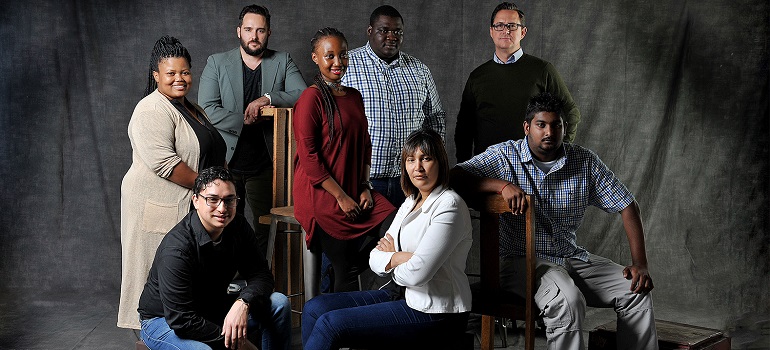
SA TV Ratings: SABC 1 — primetime top 20 for Oct 2017

by MarkLives (@marklives) The hottest primetime television shows on SABC 1 in South Africa revealed: TV ratings for October 2017.

In 2016, the Broadcast Research Council of South Africa (BRCSA) changed its policy about giving away TAMS and now only monthly reports, highlighting the top 20 or 30 primetime shows on several popular channels, are available.

SABC 1 October 2017

BRCSA TV Ratings October 2017 primetime SABC 1Source: BRCSA October 2017

Broadcast Research Council of South Africa


The Broadcast Research Council of South Africa (the BRC) is a non-profit, industry body that was incorporated in 2015 to cater to the audience research needs of the radio and television industry in South Africa.

Sign up now for the MarkLives email newsletter every Monday and Thursday, now including headlines from the Ramify.biz company newsroom service!

Dissident Spin Doctor: A lament for the dying art of craftsmanship

by Emma King (@EmmainSA) In a time of conversations being led by little yellow smiley faces, are we losing the art of craftsmanship and being a wordsmith? And does this matter?

I recently picked up a beloved book from my childhood: Roald Dahl’s “Enormous Crocodile”. I hadn’t looked at this book for decades but, after opening its pages, I was instantly transfixed by its beautiful, and witty, language. He writes about the crocodile being “a wicked beastly beast”, “a foul and filthy fiend” and how the other animals in the jungle hoped that he got “squashed and squished and squizzled and boiled up into crocodile stew”. How wonderful and delightful to read, despite it being aimed at children. I would be hard-pressed to find many adult books today written in such enticing English.

Around the same time that I picked up this old book, I also paged through a UK high-end fashion magazine, which offered a contrast. Silly articles about silly people and brain-deadening lists of acronyms, peppered with lolzes. To be fair, I like a fluffy celeb piece as much as the next person but, in this case, there were “features” that were so badly written that, if they had been Google-translated from Greek, I wouldn’t have been surprised.

Is this really an issue?

So, is this really an issue? Does caring about this make one a miserable old nit-picking fuddy-duddy? Maybe so, and millennials may snigger behind their hands as much as they like. And, yes, language does — and should — change and develop over time.

Some years ago, we all thought emoticons were weird childish things that only kids (or maybe the Japanese — just check out Guadatama for reference) would find relevant. But, these days, everyone, including my pensioner mother, litters their communications with said little faces. Execs at Facebook recently talked about this, how language is moving towards simplification and how emoticons represent an intuitiveness that transcends language and political borders. Brands are following suit; there are some that now run transactions and customer services not just through bots but through a predetermined set of emoticons.

Perhaps this simplification is not a dumbing down but rather a move, driven by globalisation, to the creation of a way of communicating that breaks down barriers to a common understanding that is accessible to all. But, hell, how I miss some of the craftsmanship of our past.

There is an argument that, before we simplify, we need to have mastered the complex. Picasso, known for his crazy, stylised artworks, had mastered incredible realism in painting before he moved onto his famous stylised works. It was this that made him a master — he had perfected the perfect, and so moved to something that could be expressed better through simplification and stylisation. That’s what makes him a genius, rather than artists who used simplification because they were unable to master the complex.

Supposed to be experts

The same could be said about language.

In our industry, yes, it is important for us to be able to communicate in a way that is accessible to all. The problem is that many people in our industry perhaps are unable to communicate in any other way. This is an issue because we are supposed to be experts in communications, and our clients are paying us for this expertise.

Maybe no one cares. But maybe they do.

I stopped visiting a local restaurant because its awfully sub-edited (or lack thereof) menu pissed me off every time I went there. I couldn’t keep looking at “chocolate mouse” or “snail’s in Garlic butter” without having something inside me die. Said restaurant is now out of business. Perhaps the lack of care in the menu translated into the general lack of care to its overall business.

While 90% of the population may not notice or care, 10% do. We recently started working with a client that demands a certain level of care and craftsmanship in writing. In our first meeting, I was handed the following quote by art critic Robert Hughes, which has set the tone for the rest of the working relationship:

“I am completely an elitist, in the cultural but emphatically not the social sense. I prefer the good to the bad, the articulate to the mumbling… I love the spectacle of skill… I don’t think stupid or ill-read people are as good to be with as wise and fully literate ones…”

Change and accept? Or not?

As with the articles in the UK fashion magazine mentioned before, I see countless examples in our industry of shoddy writing and a basic lack of understanding of grammar. I have heard time and again of agencies lamenting the lack of copywriters entering the industry and have seen too many examples to mention of “communications experts” publishing pieces that show an eye-watering lack of a basic understanding of grammar.

Where is the problem coming in? Is this a failure of teaching in our schools and tertiary educations? I certainly see countless examples of graduates who have no understanding of the different between “peek” and “peak” or who love to use random apostrophes or capital letters for no apparent reason. Or is it this same old argument of “millennials being different”? Again, perhaps so. The people who literally never read a book (or magazine or back of a cereal packet) seem to be demonstrably more so than those who do.

Maybe we just need to change, and to accept the move towards a future where we communicate in a new kind of sign language based around yellow faces and little pictures of monkeys covering their eyes in shame? Or maybe not. Because if Dahl could use beautifully crafted and intelligent language to thrill children and adults alike, decade after decade, could we not do the same?


Emma KingEmma King (@EmmainSA) is the owner and MD of The Friday Street Club (@TheFridayStClub). She is allergic to bad grammar and ampersands, but likes working her way through piles of novels and travelling the globe. She contributes the monthly “Dissident Spin Doctor” column on PR and communication issues to MarkLives.com.

Sign up now for the MarkLives email newsletter every Monday and Thursday, now including headlines from the Ramify.biz company newsroom service!
The heart of BEE is our own minds

by Jarred Cinman (@jarredcinman) This piece is not for people who are outraged by black economic empowerment (BEE) or who actively believe that black people do not deserve any kind of redress. Those people aren’t even in the starting blocks. They require both a history lesson and a serious examination of their conscience. This piece is for those who desire transformation but for whom it keeps feeling just out of reach.

Needs to be said

What I’m going to say is going to make a lot of people uncomfortable. In discussions of race, this is inevitable — but it needs to be said, anyway.

I write this under the shadow of another race-driven debate, namely that of the recent Jacques Pauw book and the reactions of so-called “Black Twitter”, some of whom have accused him of racism and conflating blackness with corruption. This is no place to debate such things but I mention it because it bears noticing how rapidly and easily issues of race emerge in this country. It is a lens that demands wearing and it colours many situations in our shared lives.

Like the men who have stepped up to acknowledge their role in harbouring (or being) sexual aggressors, I need to step up to acknowledge my complicity in perpetuating a lack of opportunity and recognition for black people in the advertising business. That there is nothing deliberate or intentional in my actions doesn’t change the truth. I was born with white privilege and it has shaped my life and benefited me every day that I’ve been alive.

BEE — for me — is a structured way of trying to right some of the wrongs committed in this country. However, it can only ever redress the visible signs of prejudice and disadvantage. The real problem is deep in our psyches. The most dangerous form of racism is the subtle kind, the kind that escapes even your own contemplation. There is a test you can do online that detects hidden prejudice — toward women, Jews, black people and other historically oppressed groups. It’s sobering to take because even I, who has tried to eradicate my prejudice for my entire adult life, scores the same as the less enlightened.

The real BEE problem

And so we come to the real BEE problem. Not changing your company or your practices, but changing your mind.

It starts with acknowledging the trap that we’re all in. Raised apart, with different languages and cultures, but thrown together in artificial communities we call workplaces. My company’s formal time (meetings, work areas and so forth) looks like a beautiful New South African utopia. Informal time (lunch or Friday drinks) looks like relics from a segregated past. There is little overt racism in this. People have nothing against each other. When I speak to people in the business, they tell me that in downtime they want to speak to people with whom they have a lot in common, who get where they come from and share their life experiences. It is sad to see that, even in 2017, comfort rarely crosses racial lines.

There is real work to be done in breaking through this very natural and human response. It can’t be as saccharine as diversity training and forced team-building. But, as business owners, we do need to create shared spaces and new memories that break down biases.

Next, you have to confront your own privilege. This is a complex matter because privilege is not unique to white people. These days a lot of black people have grown up across the class line with as much wealth and opportunity as any white person. But — sadly — the affinity between class and race mostly holds; if you’re white, you have a near zero probability of living in Alexandra or Tembisa or Soweto and relying on minibus taxis for transport.

Truth

My father was a working-class man by any country’s standards; he fixed trucks, didn’t have much education and never found great success. Still, I lived in a comfortable home in a tree-lined street, my family always had two cars and were within easy driving distance of shops, parks and schools. When I wanted to go to university, I was able to access bursary funds without much trouble — and always had enough money to support myself over those years. I don’t feel like I came from privilege — but the truth is I did. My parents got jobs that black people couldn’t get for no reason other than their skin colour. We had a network of other people who could help in a myriad ways — and that network was extended when I went to university and started my own career. I have worked in this industry for over 20 years and made few close black friends. As a corollary, black people never made a close friend of me.

No-one wants to feel that you are a product of unfairness. Even people who inherit billions want to believe (I’m sure) that they are legitimately wealthy. If not, they would — and sometimes do — give their money away. And so people who are the products of privilege want to fight that label. Apartheid is over, no-one blocks the progress of black people anymorein fact they now have an advantage when going into the job market.

This is just not true — and the ad industry, as with so many others, must come to accept that. By extension each person in this industry must come to accept that. When you’re sitting around a senior meeting surrounded by only white people, that’s not because everyone had a fair shot and the white people just happened to win.

This kind of prejudice is hard to beat. Being able to understand how your background, language and experience gives you an advantage, and how someone else’s holds them back, is of paramount importance. Gaining an understanding of those details is a product of deep introspection and a lot of engagement in uncomfortable and awkward conversation. But there is no substitute.

Sacrifices

Lastly, you have to be willing to make sacrifices. When people who have stuff hear about a group that wants to take it away from them, they get nervous. Nationalisation scares people because it’s stupid and will fail, but it also scares them because they worry that their things are going to get taken. Ex-Zimbabweans are rightly horrified by the Mugabe regime’s redistribution of land and plunging of the country into destitution; but they are also just angry that they lost their stuff.

No-one wants less. If you have a nice car and a nice house and opportunity to travel and enjoy fine food and wine, you don’t want that to end. The great fear in the middle class — and the wealthy class — is that, by sharing more equally, we will lose what we have.

When poor people — and let’s face it, they are disproportionately also black people — talk about changing the economic environment, what they mean is: we have too little, and it’s unfair. And while pure capitalists want to cling to the notion that everyone has a chance to fight their way out of the swamp and into the big leagues, there are real structural disadvantages that prohibit it.

Humanity hasn’t invented a good economic system that prioritises fairness and equality. The current system is concentrating wealth in a tiny number of hands. That’s also not something one can fix in one business or one country or one year. But, at the heart of BEE, and at the heart of non-racism (and all the other nons), is a willingness to sacrifice some of what you have so that others may also thrive. This attaches to everything from what one’s pays one’s staff to how you help people advance their careers, who is promoted, and who isn’t, and many other things.

Long way to go

None of this is simple. What is clear is that we all have to burst the bubbles we’re living in. There are many voices out there in the world — and in here in our own businesses — that are saying enough is enough. It’s time to actively support people of colour, the disabled, LGBTQ, women, religious minorities and so on. Their anger is palpable and the opportunity is clear. If you want to win in advertising or any other business, you have to figure out how to decode your own predispositions and become truly inclusive.

I have a long way to go. And, BEE Level 1 or not, so does my business. I hope I can change enough in the remaining years of my career to see the real transformation happen. And I hope the industry that I love and which has been so generous to me can change with me.

See also


Jarred CinmanJarred Cinman (@jarredcinman) is a longstanding member of the South African digital industry, having founded one of the first professional web service firms, VWV, in 1995 and the chair of the Interactive Advertising Bureau (IAB) South Africa until 2016. These days, Jarred is co-chief operating officer at VML Y&R Africa Group.

“Motive” is a by-invitation-only column on MarkLives.com. Contributors are picked by the editors but generally don’t form part of our regular columnist lineup, unless the topic is off-column.

Sign up now for the MarkLives email newsletter every Monday and Thursday, now including headlines from the Ramify.biz company newsroom service!

Let South Africa’s Black Friday faux pas be a valuable CX lesson

by Julia Ahlfeldt (@JuliaAhlfeldt) Thirty-four seconds. That’s all it took to exasperate thousands of South Africans who stayed up past their bedtime to cash in on the Black Friday bonanza. By 12:00:34, social media was abuzz with outbursts about Takealot, Superbalist, Dion Wired and Foschini’s disastrous server crashes that stopped shoppers at the e-door as the clock struck 12, all fired up but nowhere to go. By 9am, little had changed, except shoppers were now empty-handed and tired….

In Takealot and co’s defence, they stayed up through the night to communicate to customers about the unforeseen situation. This likely helped mitigate the reputational onslaught that followed in online media articles the next day. Yet, it blatantly exposes a serious oversight on the brands’ part: They simply were not ready for the rush.

In a digital age, where customers expect things to “just work”, ease of use and delivering on promises are two non-negotiables. Unless you were living under a rock in the week leading up to Friday, 24 November 2017, it was impossible to miss the Black Friday mania.

Creating a frenzy is all well and good but only if supply can meet demand.

A valuable lesson

This embarrassing Black Friday faux pas is not an isolated incident. Every day, brands and businesses let their customers down.

A sector that is infamous for its questionable customer experience is banking. Traditional incumbents Absa, Standard Bank and Nedbank have been no less than slated by customers on social media, thanks to long queues, slow issue resolution and app glitches. This was made loud and clear in the 2017 Brandseye Banking Sentiment Index [full disclosure: Julia Ahlfeldt contributed to this index by providing a customer experience (CX) lens to the data].

Customers negatively rated the Big 5 banks with a dismal average — 10 NPS (Net Promoter Score). To put this in context, their American banking peers scored a collective +26. They also performed poorly against the NEE (Net Experience Effect), my barometer for customer experience health. This was thanks to a collective score of -57 for resolving customer complaints and -75 for ease of use. The etailers’ Black Friday boo-boo is likely to have scored as dismally, if not worse.

Who’s getting it right?

Fortunately, not all local brands are following suit. There are plenty of proactive CEOs and CMOs who take their customers’ experiences very seriously. These are the businesses that put customer care at the centre of their operations, and seek to solve customer problems — be it stock availability, prices or tech issues — ahead of their own.

Historically, the customer-care department was regarded as a cost-centre and under scrutiny by the CFO to maintain slim margins. Within this context, customer support isn’t the focus for innovation or investment, and so teams are often ill-equipped to meet customer expectations and are too detached from decision-making to have their input heard. But a few — take Discovery or Yuppiechef for instance — are heading in the right direction.

While not perfect, Discovery has done a great job of understanding how to make its customer journey easy and seamless. The addition of claim drop-off points means that customers don’t have to go through the hassle of scanning and emailing claims. Its client portal is linked with its app and user devices, enabling customers to have a single view of their products and provides a one-stop hub for most common FAQs.

Similarly, Yuppiechef CEO Andrew Smith’s recent acknowledgement that “they were wrong” about ecommerce being the future of retail in SA was a humbling move and, one I suspect, reaped reputational dividends among its customers. Who doesn’t respect a healthy dose of humble pie? Its flagship bricks ’n mortar Willowbridge store shows that it is on the money with an omnichannel customer experience that indulges South Africans’ entrenched mall culture. At the end of the day, enjoying a cappuccino and a shopping spree on a Saturday morning is still a way of life for many, despite the accessibility and convenience of online everything.

Make every day matter

Server crashes aside, what I take away from Takealot’s Black Friday fiasco is a stark reminder that every interaction with a customer counts. Customers — that is, you and I — are savvy, connected and demanding. We’re spoilt for choice and have brands falling over themselves to make a sale, making us even more discerning and intolerant. Why put up with shoddy service when a similar product may be purchased elsewhere? While South Africans may be a persistent bunch — Takealot recorded R87m in sales from 52 000 orders despite itself (up from R56m in 2016) — we’re also not fools. The brand experienced technical glitches in previous Black Fridays, which it promised to overcome in 2017 by upgrading systems. The sheer volume of shoppers, some of whom were likely keen to buy online for the first time to get their share of up to 80% off, was impressive but should have been foreseen.

To make up for the lack of sleep that their customers experienced on the morning of the 24th, the etailers will need to make 100% certain that, in future, their technology works, that complaints are quickly resolved and that their promises are fulfilled every other day of the week. Not just on Black Friday. Customers can forgive but they don’t easily forget. Neither does social media. Twice burnt, thrice shy?

Last week’s events are poignant reminders that there are humans behind brands, and errors can and do happen. But, as customers, we expect a level of empathy, service and respect in our purchasing interactions. It’s our hard-earned money, after all, and, when armed with a credit card at midnight on a Thursday, we expect things to go our way, especially when promises have been made about this year’s experience being “fired up” and ready to handle the crowds. We may only hope for a smoother Black Friday next year.


Julia AhlfeldtJulia Ahlfeldt (@JuliaAhlfeldt) is a certified customer experience professional (CCXP). She consults to blue-chips and multinationals, and advises them how to retain relevance and increase profits by transitioning from inwardly focused silos to being dynamic and customer-centric. She has worked with Virgin Active, Momentum, Absa, and American Express, Ross Stores and JP Morgan Chase in the US, among others.

“Motive” is a by-invitation-only column on MarkLives.com. Contributors are picked by the editors but generally don’t form part of our regular columnist lineup, unless the topic is off-column.

Sign up now for the MarkLives email newsletter every Monday and Thursday, now including headlines from the Ramify.biz company newsroom service!

Ad of the Week: Sanlam, Cape Town encourage us to sing for our shower

by Oresti Patricios (@orestaki) Do you sing in the shower? Sanlam, City of Cape Town, Cape Town Tourism and King James Group think you should — and here’s a song or two to keep that shower short and save water.

Sanlam and its ad agency King James has teamed up with Cape Town to help motivate people to save more water than ever before. The Western Cape is experiencing one of its worst droughts in recorded history, and Capetonians have had stringent water restrictions put in place to try and avert a crisis. In an attempt to encourage people to reduce water usage voluntarily, the Cape municipality has embarked on several campaigns to raise awareness. Two-thirds of water consumption, reportedly, is by the residential sector so, although business, industry and government have been asked to limit consumption, the city also has to create ongoing awareness among ordinary people of the need to save water, and the latest target the city has set is 87l per person per day.

One of the obstacles that the city has found has been a kind of ‘conservation fatigue’; for a long time now, people have been encouraged to save water, and it feels for many that there is no reward at the end of the road. Enter Sanlam, which is injecting some fresh impetus into motivating people to save water. The financial services provider has its headquarters in Cape Town, so it’s no wonder the crisis is something that has pushed some buttons at the company. The idea is not so much to raise awareness as to provide a practical solution that everyone may take part in, and have fun while doing so.


Pinterest icon View all the Ads of the Week at a glance on our #AdoftheWeek Pinterest board!
YouTube icon Watch our 2017 #AdoftheWeek playlist on YouTube


Showers are typically the home’s third-largest users of water, after toilets and washing machines. The average shower flows at almost 8l per minute so, if you’re spending 10 minutes in there, that’s 80l down the drain. (By the way, the average bath is 136l, so the tub is out of bounds for Capetonians, at least for a while.) If everyone were to reduce the time taken to shower, including turning off the water while soaping, shampooing and scrubbing, thousands of litres of the precious liquid would be saved. The campaign? A ‘two-minute shower song’. Simply download a song from one of the participating artists, and jump in the shower. If you manage to finish your daily bathing by the time the song ends, well done! Sanlam also provides other water-saving tips on its website.

A broad cross-section of SA music artists took to the studio to create special two-minute tracks of some of their best-known songs for you to sing along to. There’s Mi Casa with the funky song “Nana”; GoodLuck’s pop song “Taking it Easy”; venerable oldies of SA rock, the Springbok Nude Girls, with a zany song called “Bubblegum on my Boots”; rapper Youngsta with “Wes Kaap”, Jimmy Nevis crooning “Daydream”, and even alt-rockers Desmond and the Tutus singing “Teenager.” Francois van Coke, Rouge, Fifi Cooper and Kwesta have also contributed tracks. It’s a broad range so, whatever your taste in popular music, there’s bound to be something for you.

The campaign has even caught the attention of TIME, which featured it in the world/climate change section of the website this month.

This is a great campaign —it communicates a simple message, in a fun way, with a clear call to action. Even if people don’t go to the trouble of downloading the song, at least this will make them that much more aware of how they may help in a small way, every single day, by just keeping the shower short. (It may also ease tensions in the morning, if you’re living in a household with more family members than bathrooms.) So, hop into that shower, and sing. And remember: every second — and every drop — counts.

Credits

Agency: King James Group
Chief creative officer: Alistair King
Executive creative directors: Damian Bonse, Dan Pinch
Creative directors: Damian Bonse, Jared Osmond
Copywriters: Susan van Rooyen, Emma Drummond, Kirsti Rivett, Jared Osmond
Art directors: Moe Kekana, Damian Bonse
Production: Ananda Swanepoel, Kathi Jones
Client service: Sean Hanekom, Kirsten Bohle, Qanita Smith, Roxy Hancke, Yonela Bungane, Rosie Frost
Senior digital project managers: Rehaanah Hendricks, Emma Rasmussen
Website: Genie Botha, Pete Blaszkiewicz, Chloe Igo, Liezl Fourie, Dan Zoeller
PR: Lauren Volmink, Bukelwa Monqo, Julie Etheridge, Samantha Corbett
Music production company: We Love Jam
Music producer: Jeremy de Tolly
Music supervisor: All ten artists did their own songs. De Tolly did masters for their tracks.


Oresti PatriciosAd of the Week, published on MarkLives every Wednesday, is penned by Oresti Patricios (@orestaki), the CEO of Ornico, a Brand Intelligence® firm that focuses on media, reputation and brand research. If you are involved in making advertising that is smart, funny and/or engaging, please let Oresti know about it at clientservice@ornicogroup.co.za.

Sign up now for the MarkLives email newsletter every Monday and Thursday, now including headlines from the Ramify.biz company newsroom service!

Down the rabbit hole of the summer ad campaign

by Ndumiso Ndlela (@ndundlela) The great summer ad campaign idea is not inspired by where you end up in the rabbit hole but the process in the journey. It is the discoveries along the way that will inform one that resonates with your audience or community. After a few trips down the rabbit hole, some key findings remain the same.

The fondest memory I have of summer is eating a banana-boat dessert after a long day of swimming at the Durban beachfront pools. The water would turn a slight yellow colour by 1pm on any given day, because who could be bothered to go to the nearby public toilets and lose a moment of fun? As a toddler, the season was all about sun, beach sand, family time and ice-cream. The teenage years were about how far out I could swim into the Indian Ocean and discovering the bikini was the best fashion item ever created. Nowadays, I look forward to sundowners and enjoying the sea breeze when I go home for the year-end break. These drinks by the beach seem to taste even better after spending months down the rabbit hole of the summer campaign.

Rabbit hole

The term “rabbit hole” comes from Lewis Carrol’s book, “Alice’s Adventures in Wonderland”, in which a young girl called Alice falls down a rabbit hole and meets some strange and interesting creatures while having surreal experiences along the way. The fall down the rabbit hole may start from the first brainstorming session you have around the summer campaign. You start on a path with a clearly defined goal but the direction will change several times along the journey.

One road will lead you to old ideas that have been used countless times; you keep falling until you are back to your childhood memories, thinking where can you put the banana-boat dessert in the campaign. The direction changes again until the rabbit hole leads you to somewhere unexpected. In this new unknown place, you might meet Donald Trump in a red Baywatch speedo.

Essence of summer

The childhood memories I have of summer are not exclusive. The feelings and emotions induced by the word itself are similar for so many of us. It’s a time for colour and excitement, a season that comes with a sense of freedom and discovery. We are young again in the summer, and the nights and days belong to us to do with them as we please. Sometimes, it’s about your brand capturing the essence of summer and creating content that authentically speaks to some of these intangibles.

The story

What story is your brand telling the audience in summer? Are we taking a road-trip back home and rediscovering old places? Will your content pillars focus on summer freedom and travel, or trying new things like shark cage diving and encouraging your community to share their moments? Do you focus on one family member, such as mom, and how she can have the best summer with the kids at home? Find that story that is relatable to your audience that you can ride like a wave throughout your summer campaign period.

Important summer days

There are days during the South African summer that many brands may view as an opportunity to really amplify their content and message, whether it’s the end of the school term, 16 December (Day of Reconciliation) when the whole province of KwaZulu-Natal seems to be at the beach front, or the day after Christmas (Day of Goodwill). The content creators and marketers who are looking to take full advantage of the summer season will find clever and unique tactics to align with the standout days of the summer.

I can’t tell you what makes a really great summer campaign but there are things to consider in having a fighting chance to be memorable. You must remember that habits change with seasons. People want to be outdoors in summer so they won’t be in front of their TV screens and laptops. But they will always be on mobile.

What is the state of mind of your audience at that specific time of year? You may need to try harder to get their attention.

Lastly, it might be in the brand’s best interest to jump down the rabbit hole of the summer campaign at the start of winter.


Ndumiso NdlelaNdumiso Ndlela (@ndundlela) is a storyteller at heart. As head of digital for DNA Brand Architects, his passion is to help brands navigate the digital landscape and creating ground-breaking, innovative and award-winning content.

“Motive” is a by-invitation-only column on MarkLives.com. Contributors are picked by the editors but generally don’t form part of our regular columnist lineup, unless the topic is off-column.

Sign up now for the MarkLives email newsletter every Monday and Thursday, now including headlines from the Ramify.biz company newsroom service!

Fair Exchange: Can marketing people effectively market themselves?

by Erna George (@edgeo23) I’ve been sitting through interviews recently and, as always, there have been highs and lows. Whether internal candidates or external, do marketing people know how important it is to market themselves? More importantly, do they know how to do this?

It was so frustrating as it was clear that many didn’t know how to tell their brand story to impact the interviewer’s decisions. It’s like a plumber with a constantly dripping tap at home. Why would you not use your skills for your own progression?! If a marketing person can’t market themselves, why should the interviewer have faith in their marketing skills? Understanding and articulating clearly your proposition or USP makes you stand out.

Qualifications and work experience

(Please note I am excluding appearance, which must be a key consideration as it’s the packaging for your brand). What gets you through the door is your qualifications, balanced with evidence of your work ethos. While today, regarding qualifications, it has become more common to have a post-graduate specialisation or even MBAs or students part way through an MBA, studies without application of these does make interviewers somewhat wary. Being able to show some work experience, be it waitressing or vac-work in a big conglomerate, shows your ethic towards hard work. Work experience shows you have practical understanding of the working world — building relationships, feeling a room, understanding a system.

While these are things of the good ol’ CV, often I start with such questions as this is where you should be most confident and fluent in the story of you. As the foundation of the story of you, it should set up your approach, your beliefs and provide a sense of fit with culture. Being able to express the highlights, development areas and strengths in a clear, succinct or compelling manner speaks volumes of your ability to tell brand or business ‘narratives’ in the workplace to influence stakeholders and team members. Do you have your elevator sales pitch about who you are, where you are from and what you offer — your brand story and the reason to believe?

Doing research about the business you are interviewing for is not a nice-to-have. Showing an application of knowledge to the organisation’s specific business scenario, brands and culture is a key way to market your ability. Not only does it make judging the candidates easier for the interviewer but, for you as the candidate, you learn if the organisation is right for you. Understanding the business’s approach to marketing and more about its brands will help you understand if you have the appetite for working there.

Sense-check

This sense-check is not about ‘sin’ industries (alcohol or cigarettes) clashing with values; it is about understanding you will flourish where you fit, find a stake for growth or find joy. Some people find the world of brands (no matter what the context) highly engaging, while others seek something more specific, be it something with purpose, a cool factor or something precise or ‘zen’. Be clear on what you want and how you will be able to make impact in this world; this makes you and what you want real. What will your stake be so that you are 100% engaged? Talking about brands in their context and, in particular. showing passion for the company’s brands might be the difference between a second interview and a regret. Showcasing what the organisation might expect or get from you offers it a view of the benefits to it for employing you.

These principles also apply to internal interviews. Yes, promotions or movements may happen as a result of displayed competence, and sometimes there is an interview.

Don’t approach this with less preparation than you would a new company interview. At various points in my career, the misguided confidence of some internal candidates have often surprised me — you cannot treat these interviews as fait accompli. Preparedness and effort show a hunger for the position and a respect for the organisation. There is even greater onus on you to know more about the brands, their financial performance and your thinking in relation to brands and the execution of their campaigns. Have examples ready of what you have achieved in the organisation, campaigns you have worked on and the teams you have led.

Aspects

Give strong consideration to how can you show aspects of:

  • Your financial understanding
  • Passion for brands and how they work (strategic thinking)
  • How you engage with internal and external stakeholders or partner agencies

Examples and solid knowledge leave no room for guessing about abilities, so prepare, prepare and prepare. Don’t underestimate your response to any question; it all builds the picture of you and the fit with the person the organisation already experiences. Beware of stretching reality, as inconsistency is very easy to identify if words, actions and CV don’t match. Consistency showcases what your truth or USP is — are you the strategic thinker, the creative executor, the analytical strategist? The business may then assess if what you have to offer is needed and how or where it best fits.

There’s a perception that marketing people are more vibrant and dynamic so, when someone doesn’t this mould, it does make some hesitate. We are thankfully beyond the days of not looking beyond the strict mould, so what will be of greater consequence is how you engage and how you speak of your journey. You must shape the way you tell the story to be an authentic reflection of what you have to offer.

‘Brand You’

It will take time to develop ‘Brand You’ but this is what will facilitate your career progression — leaving a clear vision of you, building your reputation and resulting in strong, positive references and testimonials. (Don’t forget how you build and profile yourself on social media, as cyber-checking is done — if not by HR. then by fellow employees)

  1. Uncover your elevator sales pitch — tell your story in a compelling way
  2. Book-smarts without some application won’t be enough — have examples at the ready
  3. Build consistency and become known for something specific and distinct

Lastly, remember that not every marketing position is good for you and what you offer, in the same way that you won’t be right for every position. And that’s okay. Find the right target audience, in the right place, and bowl them over with a well-articulated you.


Erna GeorgeAfter starting at Unilever in a classical marketing role, Erna George (@edgeo23) explored the agency side of life, first as a partner at Fountainhead Design, followed by the manic and inspiring world of consultancy at Added Value. She has returned to client-side, leading the marketing team in the Cereals, Accompaniments & Baking Division at Pioneer Foods. Her monthly “Fair Exchange” column on MarkLives concerns business relationships and partnerships in marketing and brandland.

Sign up now for the MarkLives email newsletter every Monday and Thursday, now including headlines from the Ramify.biz company newsroom service!

I’m a baby-boomer agency boss managing millennials

by Fiona Hitchcock (@siodev) Millennials are the generation that increasingly are becoming my generation of choice when hiring. Is this a good or a bad thing?

My partner and I founded a branding and design agency three years ago. I am the client partner and MD, and a baby boomer. My creative partner, who is Gen X, is energised by young creative talent and thinking, which is fortunate, considering that more-experienced designers expect salaries that no small startup can afford, with many not matching their talent with their salary expectations.

As the client-service component of the partnership, I’m faced with the scenario of not being able to afford client-service people who have been in the industry for 15–20 years. While many good client-service people have defected to the client side, old hands at the job may often be cynical, burnt out and not open to change — the first two are characteristics I see often in myself. I do work hard to manage them, primarily by being a strong advocate of change and working hard to remain relevant in an industry that is changing and evolving and, in so doing, keeping myself inspired and energised.

Longer to adjust

My partner, although Gen X, has proven to be an excellent leader of millennials. Being creative and eccentric, he thrives on their dynamic, high-energy, ‘full of ideas’ enthusiasm. It is I, a baby boomer, who has perhaps taken longer to adjust. Being extremely hard-working and having sacrificed a great deal for my career, I have felt in the past that juniors should “pay their dues” and that sometimes there is a lack of work ethic and commitment in the workplace. But, always game for a challenge, and determined to master this quandary that I often find myself in (how to keep the young, talented staff on my payroll), I have come to understand that I can’t confuse individual characteristics such as immaturity, laziness or extreme confidence with generational traits.

Whereas baby boomers tend to see a 60-hour work week as a prerequisite to achieving success, many hard-working millennials tend to prefer a more-balanced life that includes reasonable working hours — with occasional periods of overtime and a working weekend. Does this mean they contribute less? As I work more and more with millennials, I have come to think not. In fact, I am starting, at last, to take a leaf out of their book and enjoy a more-balanced lifestyle myself.

In my research, I’ve found many contradictory points of view, leading to the belief that we must be circumspect with stereotypes and that it’s more important to judge the individual. I remind myself of the prevailing wisdom about the generation, using this understanding to try and make the workplace more stimulating and enjoyable while understanding that it’s the quality of work and the meeting of deadlines that is the important frame of reference, rather than hours spent at a desk or computer.

Not mutually exclusive

Google, the no. 1 place to work for the eight time in 11 years (Fortune 100 Best Companies to Work For 2017), says that you don’t need to be at your desk to come up with the answer and that work should be challenging and the challenge should be fun. Canteens, recreation facilities, working in clusters, healthy snacks, Friday drinks — the idea that work and play are not mutually exclusive is exactly what the doctor ordered, when it comes to employing millennials.

Millennials like to collaborate and want to make friends with people at work. Millennial employees interact well with diverse co-workers and want to enjoy their workplace. They are a social generation, talking to their co-workers and making friends, which is a great thing as this can help build upon a company culture that will certainly be driven by the founders and directors but will also develop organically over time, enhanced by this social propensity of the younger staff. The challenge in a small startup is providing the space for a social environment, when the staff complement is small, and investment in hard work and long hours is necessary to build the business. It’s another challenge but not impossible to overcome. Growth is the obvious solution.

Millennials seek leadership and structure from their older and managerial co-workers but like you to encourage and respect their ideas. They want a challenge and don’t want to experience boredom. A letter I received from a designer, who resigned after two years for a lot more money than we could afford at the time, stated that she had always admired my management technique and the way I prioritise things so flawlessly. I keep this card on my desk to remind myself that I shouldn’t be tentative around my younger staff, hesitant of doing or saying the wrong thing, being a typical baby boomer — that they want to learn from me and my partner, that they respect our experience and skills — as long as we respect their ideas and points of view.

Understanding and learning

We must share our experience and wisdom while being open to the fresh perspectives offered by our younger employees. If their ideas are not on track with the problem at hand, they should be guided by explanation of why their idea is perhaps not the best idea at the time. This leads to understanding and learning, which is what they are hungry for. Millennials, overall, relate far better to a coaching style of management than to a more-traditional, top-down, authoritative approach, typical of baby boomers.

Todd Adkins said: “In a world that never stops changing, we need leaders that never stop learning”. I constantly remind myself of this.

Of course, the need for constant stimulation and the avoidance of boredom has led to a perception that younger staff are job-hoppers. One study states that 75% of millennials will have between two and five employers during their lifetime. Personally, I think this is a good thing. Spending too many years in one job may lead to complacency, politicking and entitlement, irrespective of capability and expertise.

Putting paid to stereotypes

There are also many statistics existing that seem to put paid to this stereotype. One research study stated that “49% of millennials in our research say they would like to stay with an organisation for more than 10 years.” Ten years can’t be considered job hopping.

Another point of view stated that “[i]f they find a good job fast after graduation, and they feel valued and appreciated in that role, they will typically stay for a long time. They will become institutionalised fairly quickly and be keen to progress within their current organisation, rather than seeking roles externally.”

What if it is actually we, as employers, who are failing to create a working environment that meets the needs of this generation? They are extremely ambitious and eager for their careers to take off. They want to be challenged and want to constantly be learning — so they go from one company to the next looking for an organisation that can fulfill them professionally. The only way to end this pattern is to provide millennials with clear career paths and development opportunities. The challenge in a small startup is that, until you reach the rapid growth-phase, it’s difficult to keep your young talent that you invest so much into.

Grown to appreciate

So, in truth, even though I have been a late starter in getting to grips with managing millennials, I have grown to really appreciate the spin they put on our studio and client service department. I admire their self-confidence; I try and match their life balance; I’m in awe of their digital know-how; and love how it contributes to expanding our design capability. I’m proud of the contribution that my partner and myself can make towards the development of their careers.

As our company goes from strength to strength, we will strive to ensure that our junior (and other) staff will always be valued and appreciated, and that there will be mutual respect and understanding; and I am confident that we’ll be rewarded with staff who match their career progression with our organisational growth.

References

  • Forbes
  • Guardian
  • LA Times
  • Wall Street Journal


Fiona HitchcockFiona Hitchcock (@siodev) is the managing partner branding and design consultancy, Hitchcock Michalski. She has over 25 years of experience in brand strategy and architecture, identity and brand design, environmental and signage design, and website and social media design, as well as solid experience in advertising, communication, classical marketing and print production. She has worked extensively in Africa, primarily Nigeria and Mauritius, but also Rwanda, Botswana, Zimbabwe, Kenya, Namibia, Mozambique, and Morocco.

“Motive” is a by-invitation-only column on MarkLives.com. Contributors are picked by the editors but generally don’t form part of our regular columnist lineup, unless the topic is off-column.

Sign up now for the MarkLives email newsletter every Monday and Thursday, now including headlines from the Ramify.biz company newsroom service!

Shelf Life: Creating an edge for Hunter’s

Cheryl Hunter (shelflife at marklives.com)’s weekly pick of all things new — product, packaging, design, insight, food, décor and more!

  • Hunter’s EDGEs into world of beer with Net#work BBDO & Bioscope Films
  • Primedia delivers radio to road
  • Nespresso expands in South Africa

Cider with an edge

Hunter’s EDGE, considered a category breaker as a premium cider created using traditional beer hops, has launched a new TVC aimed at challenging the status quo of the traditional beer world.

https://youtu.be/kfJZ4Urxfg0

Says Morne van Greunen, Hunter’s marketing manager, “The TVC communicates how EDGE has reinvented the hop from the traditional world of beer into the refreshing world of cider.”

The commercial’s opening scene is a monk pouring freshly harvested hops into a bag. As the camera pulls way, viewers are teleported 100 years later to a portrait of a burly German man in lederhosen as he contemplates a hops bud while rolling it between his fingers. The commercial progresses another 100 years once again to a buxom maid, laden with tankards in each hand. To introduce EDGE, the TVC cuts into a hop exploding into a golden cider liquid and then imploding back on itself into a Hunter’s Edge bottle.

Conceptualised by Net#work BBDO, directed by Fausto Becatti and produced by Daniel Kaplan (both from Bioscope Films), the ad took two days to shoot around various sites in Cape Town, including historical buildings such as Rhodes House, The Kimberley Hotel and the Crypt, a beautiful jazz club below the St George’s Cathedral. The final scene, featuring millennial contemporaries, was shot at Green Point Park.

According to Van Greunen, the brand has positioned itself as a preferred choice for those willing to explore the new and unconventional, to be bold individuals and to be confident to choose both the crisp refreshment of cider and the easy drinking taste of hops.

huntersedge.co.zaFacebookTwitter
networkbbdo.co.zaFacebookTwitterRamify
bioscopefilms.co.zaFacebookRamify


Radio to road for SA

Primedia’s broadcasting and outdoor divisions have come together to offer a responsive multiplatform client campaign that is billed as a South African first: “Radio to Road”.

The offering enables an advertiser to create a campaign that reaches motorists in their cars on two major platforms, radio and billboards, simultaneously. As the radio promo starts to play, it triggers the same campaign creative to roll out on digital billboards across the region in which the station broadcasts.

Says Mark Jakins, Primedia Broadcasting CCO, “We know that our stations — 702 and 947 in Gauteng, and Kfm 94.5 and CapeTalk in the Western Cape — have very high incidences of in-car listening in the regions we broadcast to, so our listeners are actively tuning in when they drive, and this is an opportunity to directly amplify an advertiser’s message with audio and visual reinforcement in the same moment — a great innovation by the team.”

Synchronising radio spots with digital slots on the urban digital network, which claims unique monthly audiences of more than 1m, may allow audio-visual dominance and introduces a dynamic aspect to campaigns.

The first campaign began rolling out last week with MINI through its agency, Vizeum, in Gauteng and Cape Town. Says Kelvin Storey, Vizeum MD, “In our ongoing quest to innovate and strengthen the relationship between media owners and our clients, I am very excited to test this first-to-market marriage of radio and digital OOH. The world around us is grasping the concept of digital and the role thereof, so it’s not just about being mindful of digital channels, but of being mindful of digital intertwined within the traditional space.”

primediabroadcasting.co.zaTwitter


New Nespresso stores

Nespresso is expanding its stores across South Africn in response to the rising consumer demand for quality coffee.

Cresta Nespresso boothNespresso has a total of 11 stores now open in SA, including six boutiques and five booths, with the newest additions located at the recently revamped Cresta Shopping Centre and Eastgate Mall in Johannesburg. The new Nespresso Booths will offer the same bespoke coffee experience offered by the Nespresso Boutiques, and will provide an additional outlet and recycling drop-off point for used Nespresso capsules.

The coffee brand will increase its availability further with numerous booths scheduled to open nationwide within the next few months.

buynespresso.comFacebookTwitter


Cheryl HunterShelf Life is MarkLives.com’s weekly column covering all things new. Notify us of yours at shelflife at marklives dot com. Want to sponsor Shelf Life? Contact us here.

Cheryl Hunter (@cherylhunter) has written for the South African media, marketing and advertising industries for more than 15 years. A former editor of M&M in Independent Newspapers and contributor to Bizcommunity, AdFocus, AdReview and the Ad Annual, she has also produced for various television networks and currently consults on communication strategy and media liaison.

Sign up now for the MarkLives email newsletter every Monday and Thursday, now including headlines from the Ramify.biz company newsroom service!

New agency BE catapults young talent into owner-managers

by Herman Manson (@marklives) Conversation Lab, a full-service digital agency headquartered in Durban and with offices in Cape Town, Johannesburg and London, has taken seven of its young black managers and given them majority ownership in their own agency: BE — a play on black empowerment but also on being bold, confident etc.

Taking middle management and catapulting them into owner managers of their own shop is an unconventional strategy but it addresses gaps in the current empowerment model employed by agencies, which often sees the majority of their staff members overlooked in favour of a one or two senior managers.

Conversation Lab logoSafety nets

It comes with plenty of safety nets for the new owners of BE agency, says Kevin Power, co-founder and managing director at Conversation LAB. BE will be 51% black-owned by former Conversation Lab staffers, with the agency-holding company retaining the remaining 49%. Each of the staffers will hold a 5% stake outright — no cash required and no loan to repay. The only catch is that they “pay it forward” later on in their careers by creating opportunities for other deserving candidates.

Conversation Lab offers BE access to all its infrastructure, including offices and support staff. Should any of the new owner-managers decide they would rather return to the mother agency, their previous contracts resume, which is also the case should the agency fail for any reason. According to Power, the move is designed to offer black staff an equal footing and opportunity in owning a stake in their own agency. The aim is to transform their lives.

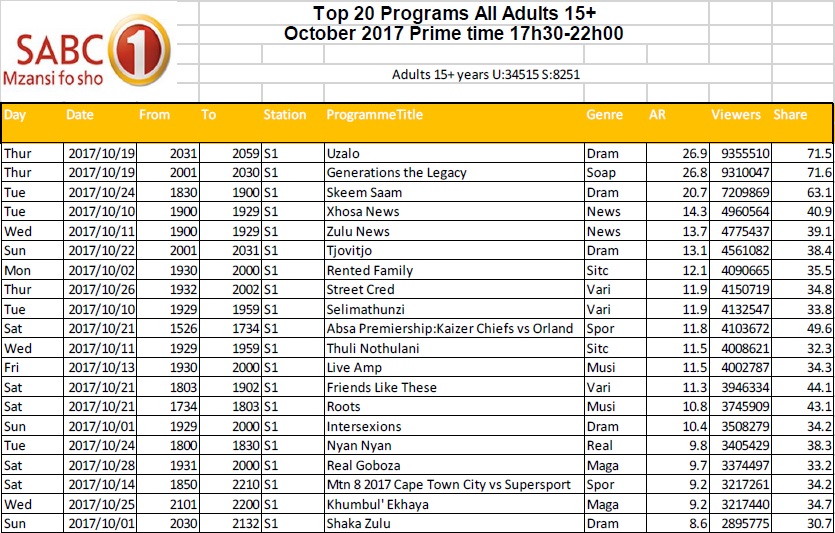
Back row L-R: Jon Oliff (Conversation LAB/BE, head of technology); Siyabonga Ntamela (BE, senior art rirector), Kevin Power (Conversation LAB/BE group MD). Middle row: Kitty Mkhize (BE, account manager), Silindile Nkosi (BE, copywriter). Front row: Mark Stuart (BE, developer), Saudiqua Simpson (BE, senior SEO manager), Kevindren Govender (BE, technology lead). Absent: Samad Yakob (BE, SEO and UX manager).
Back row (L-R): Jon Oliff (Conversation LAB/BE, head of technology); Siyabonga Ntamela (BE, senior art rirector), Kevin Power (Conversation LAB/BE group MD). Middle row: Kitty Mkhize (BE, account manager), Silindile Nkosi (BE, copywriter). Front row: Mark Stuart (BE, developer), Saudiqua Simpson (BE, senior SEO manager), Kevindren Govender (BE, technology lead). Absent: Samad Yakob (BE, SEO and UX manager).

The seven staffers picked to take up initial stakes in BE are:

  • Siya Nhlanhla: senior art director (with Conversation LAB for three years). He was awarded the first bursary to Vega given by Loeries in 2008 for creative talent from previously disadvantaged backgrounds. Nhlanhla then joined FCB as a junior art director and spent four years there in Johannesburg and Durban. He joined Conversation LAB in December 2014 and has won loads of awards from Smarties, Assegais, New Gen and more.
  • Silindile Nkosi: copywriter (Conversation LAB for two years). She started with Conversation LAB in social media after leaving Gorilla and has won a clutch of awards, including New Gen Awards Silver for best social media manager.
  • Khethelo “Kitty” Mkhize: account manager (with Conversation LAB for 2.5 years). She has worked in digital for leading Unilever agencies, including The Hardy Boys.
  • Saudiqua Simpson: senior search manager (with Conversation LAB for one year, based in Cape Town). Over the last 10 years, she has worked at several large digital agencies for premium clients such as Metro.co.uk, Capitec Bank, RE/MAX, Pam Golding, Woolworths and Deloitte. Simpson heads up the SEO function out of the Cape Town office.
  • Samad Yakob: senior search manager (with Conversation LAB for three years). He has worked in SEO and technology for over 10 years, and has spent his last three years with CLAB as a lead SEO manager.
  • Kevindren Govender: technology lead (with Conversation LAB for 1.5 years). He has been the back-end solutions developer for Conversation LAB.
  • Mark Stuart: developer ( with Conversation LAB for one year). He is part of the Facebook Bot Developers panel and has recently returned from the Africa Summit in Namibia. He has just launched ADvTECH’s new BOT technology for online leads — an industry first in South Africa.

The seven shareholders will eventually be expanded to 10. This could potentially include an MD, although Power, who will serve as MD in the interim, hopes the appointment will be made in-house, depending on the skill sets of staff currently working at the agency.

Investing in a new generation

Conversation Lab, through BE, is investing in a new generation of black agency leaders, says Power, in new small business owners and in industry transformation. BE’s new owner managers will receive hands-on training on how to run a business. BE doesn’t have a rigid business plan but then neither did Conversation Lab, which has been built into a 75-person shop within five years. The idea is to learn, grow and adapt.

BE will be actively pitching for new business, and has the backup and skill sets held within Conversation Lab available to it as required. BE is positioned as a full-service digital agency.


Herman Manson 2017Herman Manson (@marklives) is the founder and editor of MarkLives.com.

Sign up now for the MarkLives email newsletter every Monday and Thursday, now including headlines from the Ramify.biz company newsroom service!

Online CPD Courses Psychology Online CPD Courses Marketing analytics software Marketing analytics software for small business Business management software Business accounting software Gearbox repair company Makeup artist