
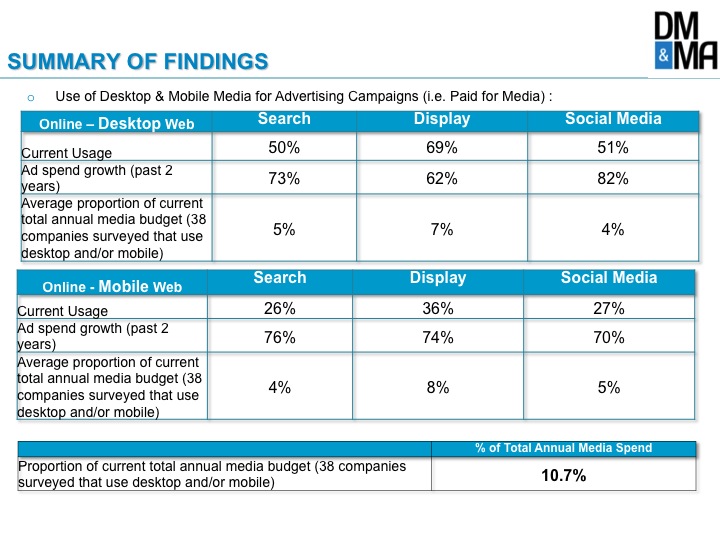
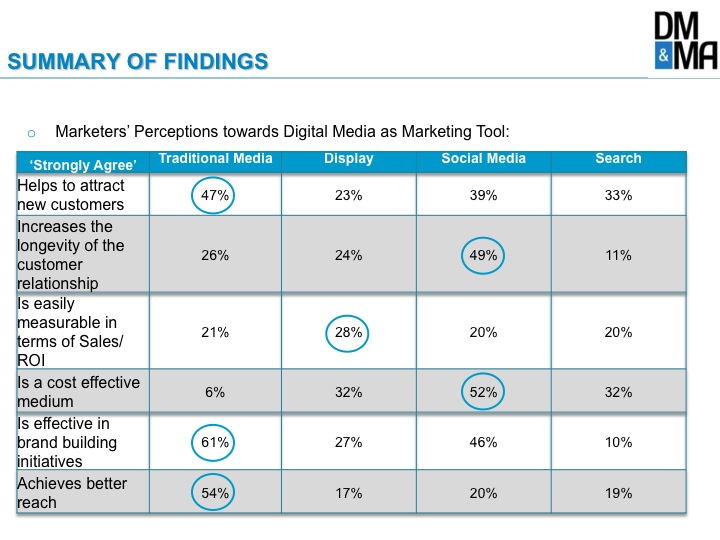
The Digital Media and Marketing Association (DMMA) recently commissioned Analytix BI to conduct a research study to help the digital industry better understand the digital ad spend trends of South Africa’s top advertisers.

Independent industry news for marketing, advertising & media execs
The Digital Media and Marketing Association (DMMA) recently commissioned Analytix BI to conduct a research study to help the digital industry better understand the digital ad spend trends of South Africa’s top advertisers.
MarkLives.com is introducing a new regular slot onto the site dedicated to featuring the best local and international magazine covers every week. We recognise well thought out, powerful and interesting (and hopefully all three in one) magazine covers and celebrate the mix of pragmatism, creativity and personal taste that created each of them.
“I take my hat off to magazines who go the extra mile with covers, and who think longer than a few minutes about a cover-concept,” says magazine blogger MediaSlutZA, who will be curating the section. “If the end product conveys the theme for the issue just by looking at it once, it has won me over and the Art Director needs to get a pat on the back.”
Shot Covers – International (September 23 – September 29)


Shot Covers – South Africa (September 23 – September 29)


Visit Billboard, NYT Style Magazine, Wired, SA Rugby, Marie Claire and Elle Decoration
– The (for now anonymous) blogger behind MediaSlutZA knows way too much for his own good about media in South Africa. Magazines in particular. His mission is to show when South African magazines might fail, but most importantly, succeed. If you’re looking for a library about South African magazines and news, your one-stop pitstop is MediaSlutZA. #MagazinesForTheWin
– Find a cover we should know about? Tweet us @marklives and @mediaslutza

Bester Burke put together this tactical Green & Gold advert, wishing the Bokke good luck for the 2011 RWC Tournament.
Creative team: Beate Lyster and Elsa de Bruyn
Last week MXit was bought out by Alan Knott-Craig Jr’s World of Avatar – at a time when it faces its greatest challenges. He talks frankly about competing with BBM and WhatsApp – and more – with ARTHUR GOLDSTUCK.
Africa’s biggest social network, MXit, has been bought out by World of Avatar. WoA’s head, Alan Knott-Craig Jr, will be taking over the reins of

CEO at MXit from founder Herman Heunis. The new boss outlined his thoughts about the burgeoning competition from other instant messaging services and social networks in a Question and Answer session with Arthur Goldstuck:
AG: While our research shows MXit penetration in the 16+ market rising from 24% to 49% over the coming year, the BBM increase from 3% to 19% is exponential and suggests its eating heavily into your user base. How do you intend to address the challenge from BBM right now, in the immediate short term?
AK-C: BBM is seen as the primary immediate competitive threat. Internal research has shown that people move from MXit primarily because the BBM user interface is far more friendly than the MXit For Blackberry app. The recent release of Version 6 includes an entire revamp of the user interface of the Blackberry app. Customer feedback to date has been excellent, with many customers actually returning to MXit because their friends are still in the MXit community. Apart from usability, there is a “coolness” factor associated with BBM that we will address in due course. During our due diligence, all customer research showed that the importance of “coolness” was over-estimated. Customers choose an IM application based on technological reliability, user interface, and where their friends are. MXit already owns the social graph. The core technology is robust and scalable. More focus will be placed on the user interface going forward.
AG: In subsequent years an equivalent challenge will come from WhatsApp and its successors. What is your medium-term strategy or plan or thinking in terms of addressing this challenge?
AK-C: WhatsApp is the strongest threat in the medium-term, primarily because it is handset-agnostic. In a South African context it seems to have a strong hold on users of the iPhone, but for the vast majority of phones it is unusable due to the unavailability of a Java client for feature phones. While we have a window of opportunity, it is imperative that the iOS and Android app for MXit are drastically improved at least to match the features and usability of WhatsApp. MXit’s greatest strength remains in its dominance of the social graph, and the strength of the network effects within the MXit community.
AG: Do you see Facebook as competition or potential collaborator, either in the short or long term? And do you think it’s the future of social networking in Africa?
AK-C: We see Facebook as a long-term threat. Its recent forays into instant messaging show it has woken to consumers’ need for communication and not only sharing. How we negate and overcome the Facebook threat is the subject of our core strategy, and as such is confidential. Suffice to say that Facebook remains too data-intensive for most consumers in Africa and is not considered an immediate IM threat, but we certainly recognise their dominance of the global social graph.
AG: What style of management will you bring to MXit as CEO?
AK-C: I believe in partnering. A platform strategy will be implemented and this will free MXit resources to focus on the core of the business, namely: Being a communications platform. I am no engineer, but my COO, Dr David Weber, is an accomplished engineer with a speciality in digital signal processing and 20 years of experience in managing large groups of software engineers. My focus is very much on building a larger MXit eco-system whereby partners can make money while we continue to connect Africans to one another and the rest of the world.
AG: You’ve obviously been watching this space for some time. What are the major trends and changes you’ve observed?
AK-C: Localisation is the key. This is where MXit has a significant advantage in an African context.
AG: How do South African users of MXit differ from those in other countries?
AK-C: Not much. We have not had sufficient time to analyse the data to this extent, but we have every intention of making more use of the data generated by MXit. As a matter of interest, MXit handles an average of 700 million messages per day.
AG: How will MXit respond to the dramatic changes occurring now with smartphones not only evolving but also about to replace feature phones completely? And what role do you see for MXit in the tablet environment?
AK-C: We will place huge focus on developing world-leading front-ends for Android, iOS, and Windows Mobile. Instant messaging is only a component of successful social network applications in the developed world. We will be extending the bouquet of MXit features to be able to satisfy the needs of all users, regardless of where they are on the social-economic pyramid.
AG: With mobile payments being the flavour of the moment, and a clear development path for MXit, how do you see the future of MXit in the mobile money arena?
AK-C: This is a crucial cog in the future plans of MXit. The current data on Moola usage is confidential (due to share sale agreement) but, once we have taken official control, we will definitely pay more attention to ensuring MXit can be used to facilitate easy payments, without contravening any Reserve Bank rules.
* Arthur Goldstuck heads up the World Wide Worx hi-tech market research organisation and is editor-in-chief of Gadget. You can follow him on Twitter on @art2gee. Reprinted from Gadget.
Expensive Internet access in South Africa means free WiFi has never been common. In New York, security concerns have the same effect, but free WiFi still abounds, writes ARTHUR GOLDSTUCK. So who will become the venues of choice for WiFi-hungry mobile workers?
They call New York the city that never sleeps. It was obvious why during a visit last week: day and night the throngs of people walking its most famed streets barely lets up. The buzz of activity and the hum of communications fills the air. Even when you don’t see it, still it’s there. Manhattan hosts probably the most intense concentration of wireless Internet access points, or WiFi hotspots, per square mile in the world.
Stand outside almost any building in the city, activate the WiFi setting on the device, and count the number of networks within reach. It often runs into the dozens.
One thing is striking about these networks, however: almost every one of the WiFi access points has a lock next to the name, indicating that it is a secure hotspot, and you need a password or “key” to unlock access. This is completely counter to the image the city has built up around the world of having unlimited free Internet access, literally pouring into the streets.
Mention this to the locals in the information or technology industries, and their eyes practically mist over as they wax nostalgic over a time when WiFi first began spreading across the city.
“Aah, those were the days,” they almost say, as they recall a time when most hotspots were open, unsecured. Throughout the city, you could be confident of firing up your laptop and connecting instantly – and at no cost – to an Internet hotspot owned by a business or individual.
That was before there was much awareness of security as well as of abuse of networks. Kids (and not a few adults) downloading movies from your hotspot and sharing their downloads with the world through file-sharing systems are a sure source of jamming up your Internet access to the point of making it almost unusable.
Some restaurants that had used free WiFi as a marketing ploy responded to this threat by shutting down their Internet services, or at least locking it down. Many others, even in the busiest of business districts, shun the concept altogether.
“We are about food, not laptops,” was a typical comment. In the emerging age of tablet computers, tbey are not changing their tune.
That has left a huge opportunity for more visionary groups, like Starbucks and Ruby Tuesday, to become the venues of choice for WiFi-hungry mobile workers. Today, they are almost the only sure-fire avenues for getting reliable free WiFi in New York.
Major tourist attractions also offer a service, but can be very spotty. At Rockefeller Plaza, if you are in the right spot, reception is superb. But the right spot – as your WiFi-enabled phone will tell you – can be in the middle of a pedestrian walkway. Others, like Times Square’s free WiFi, are so congested they are unusable.
It is ironic that the early proliferation of free WiFI was a direct result of cheap, high capacity Internet access in the United States.
In South Africa, most urban WiFI has always been secured with the virtual lock, and has tended to be excessively expensive when you attempt to unlock it. Precisely because the cost of Internet access has meant that it has not been viable to use it as a marketing tool.
Yet, there are establishments – ranging from McDonalds in Sandton to the coffee lounge at the Hyatt Regency in Rosebank to the trendy Scusi restaurant in Parkview – where that is exactly what they do offer.
But such establishments are rare, and they shut down at a respectable hour. In other words, even where we do have free WiFi, it all but keeps office hours.
* Arthur Goldstuck heads up the World Wide Worx hi-tech market research organisation and is editor-in-chief of Gadget. You can follow him on Twitter on @art2gee. Reprinted from Gadget.
Arthur Groenewald, Creative Director at TBW Smith Jones Wallace Broadbent and Ndimande, arrived at his disciplinary this Tuesday hearing wearing a black beret. Questioned by media journalists about his head gear Groenewald stated the item was ‘in line with his life as a conceptual revolutionary.’
Groenewald – chairman of the Young South African Creative League – has been brought before the TBW Smith Jones Wallace Broadbent and Ndimande Disciplinary Committee on multiple charges, including bringing the company into disrepute, storming into an executive level brainstorming session and announcing a planned Young South African Creative League intervention of sub-standard agencies in Zimbabwe, Angola and Mozambique.
“We will never abandon the creative revolution,” a defiant Groenewald said at the league’s press conference. “If it means we need to infiltrate these countries to ensure an end to meaningless brochures and toilet paper ads, then so be it. Our cadres are ready to be deployed.”
His assertion was given resonance by the arrival of three thousand drunk graphic designers and copywriters, bussed to Hyde Park by the youth league from regions as distant as the Northern Cape. The unruly demonstrators set up an industrial strength sound system and ran riot across the normally subdued Hyde Park streets, propelled by high energy trance music. Protesters hurled lollipops through agency windows and threatened to create advertising anarchy until their leader was exonerated.
Groenewald made a half hearted call for calm mid way through the day as several agencies bosses were threatened in colloquial phraseology they were unable to understand. The youth leader asked creatives to restrict themselves to formal English and to refrain from graffing area walls with rouge copy and imagery. The call had immediate impact. Groups of advertising youth retreated to various street corners where they changed to hip hop music and held impromptu cyphers – featuring the ongoing use of rhyming couplets – for the rest of the afternoon.
Groenewald was asked to remove his beret at the disciplinary hearing by agency bosses, but refused, citing his track record as an experiential marketing revolutionary as justification for his atire.
The outcome of the hearing is uncertain, with agency leaders reportedly divided over the role Groenewald should play at the agency. His notorious hi-jacking of a major sanitary pad account on behalf of the agency has split executive opinion. Half the agency’s board members wish to distance themselves from Groenewald’s initiation of mass social media complaints by 12 year old school girls. But insiders says the other half of the board is less morally alarmed by recent events and would relish the chance to use Groenewald’s street cred and viral power to gain more accounts, in the FMCG sector specifically.
Groenewald, for his part, remains adamant that young creatives should play a larger role at his agency, and across the industry in general. He reiterated ongoing calls for earlier bar opening times, the provision of free Sennheiser headphones to all creatives and a broad based relaxation of rules against sexual coupling on office premises.
“We are the youth and we are not scared of wielding our power,” Groenewald said, concluding his tirade at the press conference by removing and replacing his beret over a largely bald 39 year old head. “We are the only ones who understand hip hop, who know a broken beat from a break beat and who can great each other in all the official languages. The imperialist agency bosses cannot continue to reap their profits without us, so they will need to compromise.”
After the day’s proceedings a TBW Smith Jones Wallace Broadbent and Ndimande spokesperson announced that the venue for the hearing had been moved to Port Elizabeth, and that the next sitting would take place ‘sometime after January 2014.’
– Andrew Miller has been a media and corporate ghost writer for the last 13 years. He used to write marketing satire under the John Doe pseudonym for Brand Magazine and Media Toolbox. When not releasing communications bile, Andrew runs Newtown’s Unity Design, a socially orientated arts and media company. Catch up with Unity on Facebook and Twitter.
Matthew Bull, former chief creative officer of Lowe & Partners (an Interpublic Group company) and founder of South African agency Lowe Bull, has teamed up with Andrew Whitehouse, executive creative director at FoxP2, to launch a New-York-based agency, The Bull-White House, which will be a sister agency to South Africa’s FoxP2.
The Bull-White House is being backed by MDC Partners, a company known for its holdings in the marketing communication sector, and whose investments include stakes in agencies such Crispin Porter and Bogusky, Anamoloy, 72 and Sunny, as well as Kirshenbaum Bond Senecal + Partners.
 The backing of MDC Partners plays a key role in getting the new agency off the ground, says Bull, “because it gives us street cred pretty quickly, but also because they are a like-minded company, unlike the other banks that own advertising agencies.”
Whitehouse joins Bull in New York in October 2011. The agency launches with a beer brand from AB Inbev (the brewers of Stella Artois, Beck’s and Budweiser) and social media company Syncapse as its first clients. Whitehouse will maintain a stake in both FoxP2 and The Bull-White House.
The agency name is a play on those of Bull and Whitehouse (and will allow them to shout “I’m in Da House!” whenever they get into the office, jokes Bull).
Whitehouse was one of the founders of FoxP2, which is considered one of SA’s most creative agencies – it finished on top of the rankings at the recently-held Loerie Awards. Justin Gomes, another co-founder and creative director of FoxP2, stays with the local agency.
Gomes and Whitehouse are often viewed as a single creative force. Whitehouse says he has been gradually withdrawing from the local agency over the past year as the partners prepared for his move to the US.
Gomes and Whitehouse established their creative partnership in 2000 at Lowe Bull Johannesburg, where they came up with the revolutionary campaign which would remake the fortunes for Dulux. Both were later headhunted by TBWA Paris before they moved to Lowe New York.
Whitehouse was approached by Bull about a year ago with a proposal to help set up a new shop in New York. FoxP2 will give The Bull-White House access to SA creative talent, which Whitehouse describes as “fresh, hungry creative” through a regular resource swop. FoxP2 staff is expected to visit and work at the NY agency and vice versa.
Both agencies are excited about the deal, says Whitehouse, who stresses the move is a positive for FoxP2, rather than a loss. FoxP2 MD Charl Thom agrees, saying the local agency is well-established and has been ready for change.
The partnership between FoxP2 and The Bull-White House is a practical and emotional one, rather than one involving a shareholding, confirms Bull, who also says FoxP2’s independence is one of its core strengths.
“FoxP2 is at a point now where our SA business structure and product offering is extremely well-established,” says Thom in the media statement announcing the news, which broke in the US and in SA within a few hours of each other. “We’ve been very measured in our growth, but with our recent new business wins and award showings, the timing feels right to broaden our horizons.”
According to Bull, his journey towards The Bull-White House started when he sat down for drinks with Chuck Porter, chairman of Crispin Porter and Bogusky and chief strategist at MDC Partners. Being an entrepreneur at heart but working for others he had been unhappy for some time. Explaining this to Porter, Porter asked him what he really wanted to do then, and Bull answered that he wanted to open his own shop in New York.
Porter answered Bull then and there that MDC Partners would want to build that agency with him. A meeting with MDC Partners CEO Miles Nadal followed and the rest is history in the making.
Bull and Whitehouse is joined by Lee Davis, a former group account director at Wieden + Kennedy in New York and ex-new business director at JWT New York, and a young creative team. The Bull-White House will initially be based in New York’s West Village before moving to new premises on 24st between 5th and 6th Ave.
Originally published on Bizcommunity.com Marketing & Media | South Africa – click to see more comments.
Regular readers would have noticed that MarkLives recently launched a new look web site. It builds on a proud history with the tech, media and marketing communications industries that stretches back to 1998 when the predecessor to this site, media.toolbox, was launched.
 In ’98 media.toolbox started as one of the first columns in a print magazine dedicated to covering the then emerging new media economy. I soon launched it as an email newsletter as well. It grew quickly and later became part of the Media Africa group. media.toolbox interrupted publication in 2006 when I turned my attention to a print product called Brand but relaunched in 2008 as MarkLives.
Recently MarkLives has reached a point where it was appropriate to reintroduce it to the industry as a content resource for industry insight and news (as opposed to PR) and many of the original writers from the media.toolbox days, including Andrew Miller and Arthur Goldstuck, are back on these pages.
The new slicker look is thanks to the efforts of 60 layers of cake Cape Town who redesigned the website over the past couple of months. Digital Producer Danny de Nobrega says from a visual perspective the site was designed to deliver content in an engaged and reader-friendly way. “We started by establishing a visual identity for Marklives.com that reflects its position as independent mouthpiece of the industry. The simplistic, yet striking visual identity was adapted throughout the site and is reflected in both the look & feel and navigation experience.”
A shout out also goes to 60 layers’ Interactive Director Michael van den Heerik and design & coding wizard Altus Brand as well as the rest of the 60 team.
Keep an eye out – it’s only gonna get better.
Herman
Breaking news: Matthew Bull, former chief creative officer of Lowe & Partners (an Interpublic Group company) and founder of SA agency Lowe Bull, has teamed up with Andrew Whitehouse, Executive Creative Director at FoxP2, to launch a New York based ad shop, The Bull-White House (a third partner, Lee Davis, ex Wieden + Kennedy, is also on board). The agency will be a sister agency to South Africa’s FoxP2. The new agency is being backed by MDC Partners.
MarkLives caught up with Matthew Bull for a quick progress update on launch of The Bull-White House. For the news story click here.
MarkLives: Why did you decide on bringing in Andrew as a partner for your new shop in New York?
Matthew Bull: Obviously I’ve known Andrew and Justin for ten years since they worked for me at Lowe Bull. Both did incredible work for me and Andrew and I enjoyed a close relationship from word go. My respect for his creative ability and personal integrity are huge and, when I was thinking about a partner, I only had one thought. Him. I really believe he’s one of the world’s best creative talents.
MarkLives: Some might raise an eyebrow at launching a new agency in the current global economic environment – you are obviously confident of the timing?
Matthew: Look, the economic environment is what it is and we have to adapt to it – like playing golf in the rain. I believe, if you produce excellence, you’ll prosper, regardless of the economy – obviously though, in a more buoyant economy it’s a touch easier. I also firmly believe that tough times reveal the best of you, and, by extension, the best of an industry.
MarkLives: As your South African sister agency what do you expect FoxP2 to bring to your new agency?
Matthew: In a word, talent. FoxP2 have loads of it and I believe the relationship will grow that talent base. This deal is all about opening doors, both for the people of The Bull-White House, and the people of FoxP2. We’ll always be there to help them when they need us, and vice versa. Starting next week with our first brief.
MarkLives: You are launching with two client brands (a beer brand from AB Inbev and social media company Syncapse)
– does this mean you have a premises and staff in place and are ready to roll?
Matthew: We do. We have offices in the West Village in New York which we will be in for six months before moving to new premises on 24st between 5th and 6th Ave – great space which has tenants in who are leaving in Jan [2012]. Right next to Eataly so we won’t go hungry. As for people, our third partner is Lee Davis, ex Wieden + Kennedy (he’s the suit), my assistant at Lowe Christina Jones is joining us to keep us all in shape and on time, and we have a young creative team joining us as well.
MarkLives: What are your growth expectations for The Bull-Whitehouse over the medium and long term?
Matthew: I don’t really deal in expectations, more like ambitions. We obviously have financial targets we aim to hit, but more important to me is the quality of our work, and how it has been received in the marketplace. Within the first year we want to have made our mark and then we’ll take it from there. With an agency like ours – that promises high level creativity – if we deliver that, I’m pretty confident we’ll reach our business targets.
See my story breaking the news in the SA market on BizCommunity and visit AdAge which is breaking the news in the States.
 City Press is launching a high quality magazine to be inserted with the Sunday newspaper. The new magazine, i, will be produced for City Press by New Media and the first issue will appear on Sunday, 2 October 2011. It will be distributed with the paper in Gauteng and KwaZulu-Natal; other regions will follow later.
The new title, a large-format 32-pager, will be in the vein of the UK markets’ high-end Sunday magazine reads and will be a proper consumer magazine, rather than another traditional newspaper insert. The name reflects a message of personal power but is also the universal symbol for information.
Content marketing firm New Media will produce the new weekly, with publishing director Andrew Nunneley saying City Press decided to entrust the magazine project to magazine publishers. The deal between the newspaper and New Media, both part of the Media24 empire, is similar to any other content marketing deal, which usually consists of a basic fee plus commission on ad sales.
New Media’s content director Clare O’Donoghue says i will be a hybrid product not seen in the South African Sunday market before. It will be visually driven, with high-end production values, printed on decent paper stock. The cover will be printed on thicker stock than the inside pages.
Content will cover everything from culture and celebs to sport, food and fashion. Features will have a quirky and off-beat style, rather than plain old-style reporting. The front and back of the book will be built around columns, all single page reads, with longer features tucked in the middle.
Celeb interviews will take an ‘insider’ angle and there will be a significant focus on fashion and style. One of the aims of the team is to find and showcase local fashion talent in these pages.
The magazine is positioned as a deliberate breather in the larger newspaper reading experience but is also designed to be relevant all week long, so that readers will want to hold onto their copies until the next issue arrives. Stories will often be linked to current events to ensure content stays relevant past each Sunday.
The newspaper’s current entertainment supplement 7 will continue publishing and will also keep the current TV guide, puzzles and other Sunday newspaper regulars. The teams of i and 7 will engage to ensure there are no duplicate content. O’Donoghue says this was unlikely to happen in any case, as 7 has a review style while i will focus on feature-type reads.
Nunneley says discussions between New Media and City Press had been on-going for some time before the deal was struck. City Press had conducted research indicating its readership want a more aspirational lifestyle element to their Sunday reading experience, alongside the current hard news focus of the paper. The paper itself wants to deepen its relationship with its readers, as well as to broaden its appeal to a younger and more contemporary audience.
i was conceptualised over a four-month period by a team of senior New Media staffers, while a new editorial team for the magazine is still being put together.
Nunneley says that winning i will mean that New Media will make a number of appointments to editorial, sales and other support departments. While he would not specify the time period of the contract, he did says New Media is in it for ‘at least 18 months, this is not a short-term, here-today-gone-tomorrow project’.
The initial limited geographic footprint is based on distribution practicalities and because the business model works better on a smaller print run, but it’s planned that the magazine will roll out to other areas of the country in due course. KZN and Gauteng are considered key growth areas for City Press, which currently has an ABC-certified circulation of 149 586 (April 2011 – June 2011).
City Press has seen its circulation decline from 176 025 in 2010 and 181 816 in 2009, as it is in the middle of a radical repositioning aimed at capturing a broader piece of the Sunday market. The paper had also had implemented a new circulation and distribution platform “which suffered teething trouble”, Haffajee told Bizcommunity.com earlier this year.
If done right, the new magazine supplement ups this Sunday read considerably. City Press retails for R10 and few decent magazine reads can be had for that price these days. Also, consider how sought-after a copy of Business Day’s monthly Wanted supplement has become (only available to Business Day subscribers)?
Originally published on Bizcommunity.com Marketing & Media | South Africa – click to see more comments


