Ravi Naidoo talks Martha and a billion bucks

by Herman Manson (@marklives) Ravi Naidoo launched South Africa’s signature event for the global design stage, the Design Indaba, in 1995, with 200 attendees at the Mount Nelson Hotel in Cape Town.

The Indaba, and Naidoo, has come a long way since then, adding events that celebrate design to the now hugely prestigious ravi naidooannual conference, including simulcasts to several cities, an expo, a curated film festival and a music event, A Taste of Sónar, which also has a strong visual component.

Combined more than 52 000 people interacted with events around the 2012 Design Indaba. Of those 3000 attended the film festival at the Labia in Cape Town and 2800 attended simulcast screenings of the conference in Cape Town, Johannesburg and Durban.

Over the past four years Design Indaba has also contributed a Billion Rand (including R300 million this year) to the economy according to research findings by a UCT Graduate School of Business report. Naidoo says these are not thumb-suck figures on average spend per visitor to the city, but is based primarily on hard sales figures from the expo floor, which so far this year exceeded R200 million, and attracted 40 232 visitors.

Naidoo spends as much as three months a year travelling to creative events around the globe, representing not only the Design Indaba, but also the South African design community. Naidoo describes this ‘ambassadorship’ as a “lovely self imposed job to have.”

Naidoo also underscores the importance of maintaining a commercial link between commerce and design, saying the sponsorship of the conference by major brands such as ABSA, MTN, Grolsch and Woolworths shows the value brands are placing on design and creativity in business.

In terms of the expo, which this year featured 367 exhibitors, Naidoo says he has seen the emergence of classically trained artisans over recent years as opposed to “hobbyists and tinkerers” who tended to dominate in its early years.

For the conference Naidoo tags speakers during his travels, sometimes booking them up to two years in advance, depending on their fit with a specific emergent theme for an event and their schedules.

Architects, like Francis Kéré (Burkina Faso), have been stealing the show over the last three years at least, and tend to be the ones who get delegates to their feet for standing ovations. Naidoo attributes this to cities being the most important theatre for design right now. “Solving problems in cities means solving many of the problems we face today, be in terms of housing, food security, education or a sustainable environment – and if the design theatres are cities then architects are their biggest actors,” says Naidoo.

Naidoo chooses architects with creative potency and a sense of empathy in their work which plainly speaks to delegates.

He meets all the invited speakers personally and refuses to work through booking agents. He and his staff travel the world listening, watching and identifying the best speakers available, and Naidoo believes you can only benchmark against the best by being there yourself and experiencing what the world has to offer.

He finds it unfortunate that so many in the creative industry never make it to events other than award shows – “creativity doesn’t live in Cannes,” says Naidoo, referencing that most famous of advertising award shows.

Instead he prefers ‘forums for sharing’ be they music festivals like Sonar in Barcelona or the Mistura food festival in Lima, Peru (it showcases Peruvian ingredients, traditional dishes and culinary trends). It’s authentic creativity Naidoo spends his time finding.

This brings us to glitter pork, cupcakes and Martha Stewart. Stewart, a formidable business and design force in her own right, sparked the first and only delegate walk-out in the history of Design Indaba in 2010 with a presentation so disconnected from her audience that delegates in both the simulcast room and the main auditorium simply got up and walked out in droves. They congregated around a Twitter fall reading insulting tweets (dubbed a twitterslap) from delegates sticking it out inside.

“Listening to Martha talk about her new paint line is as exciting as watching it dry!” tweeted one delegate. A new hashtag, #marthaescape, was born that day.

For Naidoo it must have been a harrowing experience, although commercially astute, his enthusiasm for the event goes well beyond money in the bank, and it is obviously a passion. Yet during our interview he is the one who brings up the subject (I was one of those delegates sticking it out with Martha and tweeting away), saying he wants to invite her back to redeem herself. Stewart is amazing one-on-one says Naidoo, she blew him away at their initial meeting, and he had hoped she would unpack the alchemy possible between enterprise and creativity. If she does return she hopefully will do so without her corporate minders.

Naidoo is most proud of the Design Indaba’s  Your Street project because it really manifests what Design Indaba is all about – making a difference on the ground. For designers it offers an opportunity to be relevant and involved in their communities. The challenge offers designers to make a tangible difference in their immediate community by “loving and improving” their street. The initiative has been rolled out in Jozi, Cape Town, Durban and now in Eindhoven, Holland.

Your Street is about incentivising the future we want to see, says Naidoo, rather than reward what is already past (like at those other ‘creative’ award shows he doesn’t need to add).

Next year Design Indaba will be doubling the size of the music festival and is already negotiating the acts. The conference simulcast will be expanded to Windhoek and the intention is for it to ultimately be broadcast into ten cities across the continent.

For the Design Indaba its range of former speakers also serves as ambassadors for the event, hooking in more experts, and it is great to see that brain trust engaging with South African audiences. Hopefully the Indaba will leverage their practical skills to a greater extent through workshops – like with Your Street the event can make a difference to the local design economy beyond inspiring design solutions by also contributing to the practical upskilling of  creatives.

– Industry news you’ll make time for. Sign up for our free newsletter!

Video interviews from the Cannes Lions advertising festival

Adlip, the industry video interview site, attended the recent Cannes Lions Advertising festival and filed the following reports.

We catch up with Chris Gotz and Tommy Le Roux behind the scenes at Cannes.

With a few gold Lions in his own hands for DDB, Grant comments on brands who piggy back on social issues and acknowledges and shows S.A. work.

Unilever Chief Marketing & Comms Officer Keith Weed, talks about winning a Creative Effectiveness Cannes Lions Grand Prix and the Creative Vision for Unilever.

Unilever Chief Marketing & Comms Officer Keith Weed, talks about winning a Creative Effectiveness Cannes Lions Grand Prix and the Creative Vision for Unilever with a message for South Africa.

Shelley-Ann talks to us about the Design Grand Prix, the crossover we’re seeing between Design & Advertising and SA’s disappointing number of entries.

Great lessons learnt in the judging process – with real insider info and advice by Livio Tronchin for future S.A. Cannes Promo & Activation entrants …

All videos sourced from Adlip.

New normal quite good at Y&R

by Herman Manson (@marklives) Just over a year ago Y&R, let’s be honest, looked like a mess, at least from the outside. No they won’t say it, but after the exit of Frasier Lamb, and the disastrous strategy of non-communication it employed in a market filled with speculation and uncertainty, coupled with a mini-guerrilla war inside the agency that was playing out quite publicly, the broader perception on the state of the agency in the marketplace wasn’t positive. And in this industry perception counts for quite a bit.

The agency brought in as its new CEO Andrew Welch, a brand expert from Landor Associates in London, to set things back on track, and working closely with new ECD Graham Lang, Y&R has been reorganising its business to the extent that it recently landed the Telkom account, meaning it now handles two of the  5  biggest advertising accounts in the country (the other being Pick n Pay).

Welch, who joined in May a year ago, quite likes the new normal at Y&R, having helped the agency transition to what he calls Y&R 2.0.

Considering the internal goings on at Y&R at the time bringing in somebody with an outside view was probably the best thing the agency could hope to do. Welch realised the need for change, while also acknowledging the positives built up over the past several decades within the company, if the business was going to be taken to the next level. It needed to expand its strategic thinking, create more compelling creative and transition from ATL to through the line, says Welch.

Since Welch signed up Y&R has steadily been building its though leadership profile, is competitive in the awards stakes and has been winning business and attracting talent, all key points on Welch’s road map for the agency. It is also becoming an exporter of thought leadership to the international network.

Welch says that while many knew of the agency very few people really knew it. It’s something that is changing as the agency builds on its strengths, extends it offer and gains confidence in its own voice.

Welch says the agency required clearer leadership and objective setting when he arrived and those elements have now been put in place.

It’s an agency for grown ups, says Welch, who takes obvious pride in the seniority of his management team and their extensive experience across disciplines.

Welch also beefed up the strategy department, bringing in Michael  Cathie , the ex-COO of Microsoft South Africa and a former communications director at Cadbury’s, as Group Executive Strategy Director. The creative department is managed by Graham Lang, who was tasked with rebalancing the creative offering across the Johannesburg, Cape Town and Durban offices while Rui Alves serves as ECD for Y&R in Johannesburg.

Strong MD positions were also created in each office tasked with managing local clients while also forming a more cohesive national offering. Melanie Behan manages Johannesburg, Natalie Tudhope  is Cape Town and Lindsay Leppan manages Durban.

Building a greater sense of Y&R nationally will contribute to a cross-fertilisation of ideas across the offices and aims to create a sense of ‘oneness’ Welch says was not there before.

In Cape Town the agency has moved into new offices, Durban is moving soon and the Johannesburg office is undergoing an extensive refurbishment, says Welch. It’s part of a focus on creating local environments that inspires staff and physically manifest the agencies renewal.

HR, which Welch sees as central to building the Y&R community, no longer sits on the periphery, and finance have also been beefed up. The agency is also extending its shopper capabilities and is seeking greater integration between its traditional and shopper solutions.

In a bid to foster deeper client relationships Managing Partners have been appointed to specific client accounts, tasked with building the structure and integrated teams able to respond to client needs. They serve as a single point of contact for clients and have considerable authority – including being able to build on their teams from the wider Y&R talent pool.

It’s a model Welch believes makes the agency more accountable to clients. In a world where marketing offices have become something of a revolving door the agency gets to step up as a repository of knowledge and brand DNA.

Welch admits Y&R has some way to go on its digital offering but says it has made decent strides in this area over the past twelve months.

The new business, especially the Telkom win, is testimony to the changes wrought at Y&R, says Welch. The agency was also recently appointed as the lead agency for the  Jaguar Land Rover account and won the business of law firm Cliffe Dekker Hofmeyr.

While happy with the progress Y&R has made over the past twelve months Welch admits more work needs to be done if it want the become the agency in South Africa. This includes further investment in shopper and digital capacity and greater focus on strategic and creative thinking and insights for clients. It also needs to become a greater part of the fabric of the creative community in South Africa.

Y&R South Africa currently employs 175 people. They are a mix of old agency hands and new people brought in by Welch and Lang. The biggest challenge he has faced these past twelve months, says Welch, is insuring they all feel part of the new Y&R community, and ensuring a dual culture doesn’t evolve within the agency.

For Telkom he sees massive opportunity saying it has the potential to once again become an iconically South African brand. The agency is building a team and structure in Johannesburg dedicated to the account.

News from adland you will make time for. Stay up to date with our weekly mailer. Subscribe here. It’s free!

Winning work: Gold winners from SA at the Cannes Lions

Wimpy “Braille Burger” by Metropolitan Republic (One gold, one silver)

Source: YouTube

One of my favourite campaigns and possibly the smartest one I’ve seen in a while won a Gold at Cannes. Watch the Cannes Lions Branded Content & Entertainment winning Carling video. By Ogilvy Cape Town.

Source: Adlip

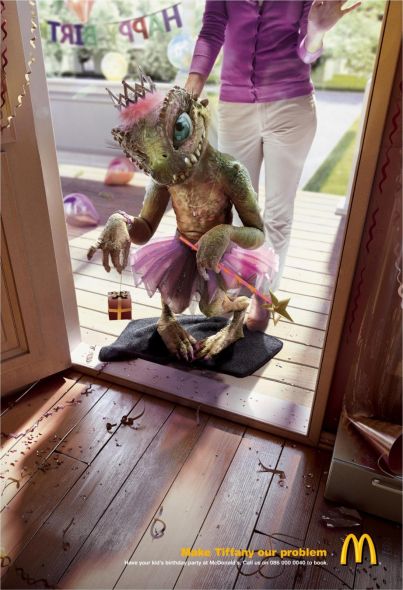
McDonald’s, Kids Party, DDB Johannesburg (Gold x 2 – Press)
“Make Tiffany/Theodore/Billy our problem. Have your kid’s birthday party at McDonald’s.”

Mercedes Benz, NET#WORK BBDO Johannesburg (Gold x 2 – Radio)

Magazine covers With love from Oz

MarkLives.com runs a regular slot featuring the best local and international magazine covers every week. We recognise well thought out, powerful and interesting (and hopefully all three in one) magazine covers and celebrate the mix of pragmatism, creativity and personal taste that created each of them. By media blogger MediaSlutZA.

Being in Australia on vacation, I’m lucky enough to go to my absolute favourite magazine shop, Mag nation, and browse some of the best magazines from all over the world. Magazines that I’ve never seen, or even heard of. Because of my fascination and inspiration to Australia, I thought it would be fitting to dedicate this weeks’ selection of favourite covers to Australian based titles.

INTERNATIONAL
Frankie, July / Augutst 2012

There’s something special and unique about this Australian based niche-style title. I was in-store the morning the magazine arrived from the printers and it immediately caught my eye. It’s well worth a look at their past covers as well…

Marie Claire, July 2012

Big news in Australia currently is gay rights and marriage equality. It’s on all the talk shows, debate shows, newspapers and tv news. The campaign is called “I Do” and has been running in Australia for a while now but I found it gutsy of Marie Claire to also support this movement. But not just by being a media sponsor, but shouting it from the roof and blasting it on their latest cover.

Smith Journal, Winter 2012

A very interesting and unique magazine ‘for discerning gents (and ladies who like reading about discerning gents)’, as described on their site. It’s a pitty that we don’t get these magazines in South Africa, or even better, have our own similar version, because I’m definitely seeing a need and market for a similar title in South Africa. The same with Frankie. The cover I found unique, interesting, and creative in it’s simplicity.

Yen, Issue 56

I haven’t had the priveledge of browsing through Yen yet but I quite like the idea of leveraging off the ‘celebrity’ on the cover even further by placing a signature on the cover. It just adds a certain something new to the cover, and a personal touch.

– The (for now anonymous) blogger behind MediaSlutZA knows way too much for his own good about media in South Africa. Magazines in particular. His mission is to show when South African magazines might fail, but most importantly, succeed. If you’re looking for a library about South African magazines and news, your one-stop pitstop is MediaSlutZA. #MagazinesForTheWin

– Find a cover we should know about? Tweet us @marklives and @mediaslutza
Sign up for our free newsletter!

Breaking now: Speculation rising that Draftfcb is in advanced discussions to buy Hello Computer

by Herman Manson (@marklives) Market speculation that Draftfcb is in advanced discussions to buy Cape Town based digital agency Hello Computer has been notched up a level as the parties are believed to have entered a due diligence phase.

Draftfcb isn’t allowed to confirm or deny market speculation as it is part of the Interpublic Group of Companies which is listed on the New York Stock Exchange. While any potential acquisition by Draftfcb South Africa is unlikely to affect the stock price in New York the local company has to abide by the regulations governing listed companies there says Draftfcb South Africa Group CEO John Dixon.

It is unclear how a purchase, should it in fact take place, would affect Mesh – the digital agency already owned by Draftfcb.

Hello Computer was launched in 2005 by its ECD Mark Tomlinson and employs a team of 40 in Johannesburg and Cape Town. The agency won a Grand Prix at the 2011 Loerie Awards for work it did for Musica. The Loerie Awards 2011 official rankings ranked the agency as the top digital agency of the year.

Hello Computer Managing Director David Moffatt declined to comment for this article but admitted he was aware of wide-spread speculation in the market relating to the possible sale of Hello Computer tp Draftfcb.

In an interview a year ago Tomlinson commented that Hello Computer believes clients are increasingly seeing the value in specialist digital agencies, especially as direct relationships remove additional ‘management’ mark-ups by ad agencies. This helps make Hello Computer financially competitive and skirts “fundamental structural issues” many ad agencies face, Tomlinson said at the time.

– Industry news you’ll make time for. Sign up for our free newsletter!

Mike Abel: Opinions on Advertising

by Mike Abel, MD, M&C Saatchi Abel  “Reserving judgments is a matter of infinite hope” ­ – F.Scott Fitzgerald

The Great Gatsby is bound to be one this years’ biggest movies care of Baz Luhrman and Leonardo DiCaprio. This particular line from the book has stuck with me ever since I first read it in 1985 as part of English 1 at the now appropriately named, Nelson Mandela Metropolitan University ­back then it was simply UPE ­ and visited that year by a celebrated Tannie Elize Botha (wife of the unpleasant Groot Krokodil), but we’ll save that mike abelmisadventure for another day…

So why has this line stuck with me all these years?

We get a similar but stricter instruction from even higher authority in the New Testament’s Matthew 7:1-3 “Do not judge. Or you too will be judged”.

Given South Africa’s unsurprising, recent furore around The Spear painting (don’t sigh, this article isn’t about that well-hashed piece of art) there seems to be an awful amount of judging going around – one way or the other.

So I guess the big question then is when to judge and when not to?

Whilst F. Scott Fitzgerald’s sentiment is certainly noble, it isn’t entirely practical in all senses. In the book it revolves around seemingly entrenched rubbish like a waspy class system (that is still engrained in some parts of the world) or any other form of intolerance.

The first obvious judgment on my part, is that the world be a far better place if it were intolerant of intolerance, specifically with regards to race, religion, sexual orientation, gender and freedom of speech. Nothing new there, but worth stating.

However, when one speaks about freedom of speech, it also needs to not infringe on the dignity of one’s biblical “neighbours”. Freedom of speech is about the right to verbal self-expression without consequence versus the unfettered right to malign someone.

Having made those points, and being in the advertising industry, I’ll now quickly escape this world of deeper philosophical ruminating and return to the far more superficial one, in which I feel far more comfortable.

The judgments I refer to here are about creative work, ideas, pitches and award shows. It’s in the very nature of our business to judge. What will work and what won’t. In this industry, heeding F.Scott’s sage advice will catapult you onto the scrap-heap of mediocrity. You need to have an opinion. Preferably, a strong one.

One of the web’s many dictionaries defines an opinion as “a belief or judgment that rests on grounds insufficient to produce complete certainty”.

So there we go, back to the word “judgment”.

What is the benefit of being a judge if you can’t pass judgment? This is where human nature often interferes with what a “judgment” may indeed be intended to be. Inherent in this word is supposedly an expectation of expertise, ability and objectivity i.e. no personal or vested interest in the outcome of the decision – so as to eliminate as far as is possible, all the many shapes, forms and variables of prejudice and preconceived ideas. This is surely why America has both judge and jury, although I am certainly not suggesting by this example that America is non-judgmental, or is…

So how many judgments that get made daily by your Creative Director, Client, Suit, Pitch Consultant or Award Judge do you truly respect as being level-headed, considered or entirely fair?

I ask this because so many outcomes in our industry are ultimately based on quick, subjective authority, on historical perspective, existing paradigms, subconscious prejudice and self-interest, that it sometimes is near impossible to “separate the wheat from the chaff”.

I’ve commented on this before but it bears repetition. It has apparently been proven that (insecure?) fault-finders are generally regarded as being more intelligent and discerning than those blessed with a more easy-going and confident ability to appreciate good work and thinking at face-value.

How’s that for sad?

The industry (and world in general) needs a compass for what constitutes as good judgment.

Here are my five pointers:

1. Is the information I’m being presented with, fair and accurate?

2. Do I like and/or trust the person sharing this information/opinion/work? If the answer is no, then I definitely need to cut that person extra slack in my assessment of what they’re presenting.

3. Is there a benefit beyond the simple job at hand that would sway my opinion? E.g. is the one idea likely to work harder but the other more likely to get some form of  recognition i.e. an award?

4. Is the work relevant, original and interesting? You need all three, I’m afraid, for it to be impactful.

5. Am I doing what’s right? Namely, is it moral and ethical? There are many things that may be deemed legal – like “vendor bidding” at auctions – that are neither moral nor ethical but are judged to be so by an industry versus a good value-system and moral compass.

So perhaps young F.Scott Fitzgerald was one step ahead of us when he wrote that line.  Because I think he may indeed have understood how human nature in and of itself, removes objectivity from the word judgement. Our industry would be better served by the true notion of “assessment” versus the currently flawed nature of judging.

Reprinted from the blog of Mike Abel.

Stay up to date with our weekly mailer. Subscribe here. It’s free!

The Gate Keeper (Chapter 3: In which ideas form)

by Andrew Miller TBW Smith Jones Wallace Broadbent and Ndimande is an agency in crisis. Their ‘basket of boutique services’ strategy has bombed. Only a massive new project can keep the doors open – all eyes are now on the corporate tent at Mangaung. Far in the background, an emergency replacement executive PA with decades of experience makes important decisions. Interns rise, board members take unexpected steps and things begin to change…

The fat men put out a call for Mangaung concepts. Mama E engineers an opportunity for the intern, and Phil the graphic designer struggles to look up.

Chapter 3
In which ideas form

Vati marched back through the front entrance, past the bar, which smelled suspiciously like vomit, and into the open plan offices where her team resided.

“The old lady says they’ll throw them back before lunch,” she announced to the boys, who did not respond, or even look up. “She said they looked like complete kak.”

Silence.

She thought seriously about crying. Or screaming. Or stamping her feet. Instead she seated herself carefully at the three inches of Formica they called her desk, shook her mouse awake and pretended to check her email. She wished she too had headphones. Not that she was completely into music or anything, but for the status, of course, and for the sense of work they created. She too wanted to bop her head abstractedly while looking up at the ceiling in a serious yet creative manner. She vowed that if they extended her internship – although she couldn’t think of a single reason why they would, nor a single thing she had done in her time at the agency that would warrant an extension – the first thing she would do would be to buy one of those funky green and pink pairs of skater headphones. Skeletons or something.

“What the f*#!k is up with those people in corporate?” Simon Shone pulled his Sennheisers over his neck, leaned dramatically back in his chair and waited for a reply. Seconds dribbled by. He held his pose and eventually, reluctantly, Phil the graphic designer pushed an earphone off his left ear and said “Eh?”

Vati speared the ball of her semi heeled right foot into the floor and ground her teeth. Three months. And counting.

“They’re demanding, and I quote, ‘concepts for Mangaung that will allow a financial services brand to take up a viable position in the corporate tent. Such concepts should, ideally, centre on youth development, entrepreneurship, women empowerment and / or sustainability.’ ” Simon Shone snorted theatrically. Phil cocked both eyebrows and replaced his left headphone. Vati waited for someone to ask her what she thought.

Back at the executive offices, Mama E typed furiously on her keyboard.

Dear Diary

Well really they’re like a bag of  Jelly Babies these days. The colours, the clothes, the attitudes, the digital this and that. It makes me realise how dull it actually all was in my day. Even as we thought we were, well, so out there, actually we were just a dull, predictable and unknowingly conservative slab of Top Deck.

And, if I’m honest, I must admit this is a little tougher than I had thought. Age is not irrelevant in this business. I do have stabs of regret. If Gerald hadn’t been such an idiot I wouldn’t have to be here.

Still, they’re my Jelly Babies now, and I must deal with them. I liked that little one who came through on Friday. He said we need fresh young black talent for Mangaung, and she looked bored out of her mind. I should push her. Lord, they talk about Mangaung like we used to talk about the Loeries…

Vati clicked Get Mail for the seven thousandth time. Only this time, miracle of miracles, a message dropped into her in-box. It was from Melinda Ensworthy, whoever that was.

—–Original Message—–

From: Melinda Ensworthy [mailto:melinda@tbwsjwbn.co.za]
Sent: Tuesday, June 18, 2012 10:45 AM
To: Vatiswa Magubane
Subject: meeting

Dear Vatiswa

I would like enquire as to your availability for a strategic planning session in the executive boardroom at 7:30 am tomorrow morning.

Please will you let me know if you can fit this into your schedule.

Regards
Melinda

Simon Shone glanced over at the intern, who appeared to be very busy doing something. He couldn’t imagine what. He hadn’t included her in a single thing. Not from spite as much as from fear. Heads were rolling all the way down Jan Smuts – the last thing he needed was someone on his turf who could speak all the official languages.

She looked nice enough, of course. Personality wise, and physically there were no questions – none at all. He wondered briefly how Phil the graphic designer had got so lucky.

Phil, for his part, was too nervous to even look up. It had been almost two weeks since the snogging and she had barely said his name, let alone looked him in the eye.

Part 1 & 2. Part 4: June 27th.
Author: Andrew Miller Illustrator: Lebohang Goge

Video interview site Adlip relaunched, signs FNB as co-developer

by Herman Manson (@marklives) Adlip, the advertising industry site known for its video interviews with creatives and industry executives, has received a major upgrade after owners John and Sonya Culverwell inked a sponsorship and co-development deal with banking group FNB.

The revamped site is positioned as a gateway for consumer engagement on advertising created and flighted locally, as well as a go-to resource for those interested in insights from senior marketers, brand owners and creatives involved in advertising communication.

Adlip launched three years ago after a conversation between John and Sonya on the lack of video interviews, and the word from the proverbial horse’s mouth, on John’s favourite sports websites. The conversation soon turned to the ad industry, in which both are employed, and three glasses of wine later a business was born.

Sonya is a creative director with years of experience in the ad industry, which she entered in 1980, having worked at FCB Lindsay Smithers, Ogilvy, TBWA Hunt Lascaris and Grey before launching her own agency, Dojo115. John is a partner in Sonovision Studios, a recording studio known for its work in radio commercials and sound work for TV (the studio is also a shareholder in Adlip). It’s a business that started 40 years ago doing programming for Springbok Radio.

The site started life courtesy of a Joomla template and has, Sonya admits, been held together with duck tape and chewing gum over the last few years. Adlip has been managed by John and Sonya as a sideline to their day jobs. It was slow to gain traction initially, and for the first 18 months saw no revenue. It only changed once the Creative Circle signed on to support the initiative and ten of its member agencies agreed to provide a subscription to the site that the business started to generate some cash flow.

The deal with FNB is a major coup for the site and the bank has signed up as a sponsor and co-developer as part of its pro- South African innovation brand positioning. sonya culverwell

The bank was intrigued by the consumer aspect of the site – John describes the ad business in terms of a triangle with advertising agencies,
client brands and consumers all tied closely together, and the site will be promoted to consumers as a means to engage with ads and those who make them more directly. FNB will encourage its database of customers to try the site for themselves.

In terms of content, the site launch co-insides with the Cannes Lions advertising festival and Adlip will be filing video interviews with South Africans there as well as jury presidents, trying to capture the whole experience from a South African point of view, while still profiling winning work.

New sections to the site includes Braglip, which will encourage creatives to upload their own work, Brandlip which will focus on interviews with marketers, and a blog section* with contributions from the Creative Circle and individual creative directors. More specialist sections will be rolled out in time.

According to John viewers are relating to the video interview format because it allows them to ‘meet and relate with real people.’ Growing john culverwellbandwidth, increased interest in and familiarity with online video content is an international trend that also hitting the South African market.

The sponsorship roster on the site is expected to jump from 10 to 25, according to John, which allows for further re-investment in the business.

Adlip, through its combination of trade and consumer engagement, and with its focus on video content and wide social spread, is uniquely positioned in the South African media landscape. It’s an interesting experiment in the future of media that will be watched closely by the broader media industry for insight into the development of the content market.

* Adlip will also feature news content from MarkLives.

– Industry news you’ll make time for. Sign up for our free newsletter!

Agency strategy insight: Managing 100% growth over 9 months

by Herman Manson (@marklives) You’ve just doubled your revenue over a nine month period and grown your staff by 60%. For any ad agency managing such rapid growth is a tall order. Now you have to ensure the market doesn’t perceive you as having grown too fast, you need to convince existing clients that the attention they are receiving won’t diminish in the least and that the core of senior agency personnel won’t be over-stretched, all while joe publicplanning new business units and international expansion.

The team at Joe Public are juggling all of the above, with some success it would seem, while remaining true to their people centric growth philosophy. It’s a philosophy that have taken the business to new heights, as their growth figures show, in a tough market, and made them stand out in an industry where most of the recent buzz has centred on Cape Town agencies.

Joe Public MD Gareth Leck says it has been a break-through year for the agency after it won the Jet ATL business earlier in the year. The agency name also keeps popping up on shortlists for important pitches.

Joe Public is managing the rapid growth through owner managed subsidiaries, like its brand and design studio, Shift, launched in January. It already employs a staff of 10. The agency has a stake in the business, but the culture remains entrepreneurial, and the team manageable in size. Similarly its BTL specialist agency, Ignite (which employs 8), has signed up clients such as such as Anglo American, SAB, Colgate Palmolive, Foodcorp, Jet and Unilever.

Both Shift and Ignite sees strategy born with assistance from the main agency with work then fed through to them. Leck says the model offers clients seamless integration between the specialist division and the main agency. It also allows for personal, owner-managed relationships, and the smaller teams allows staff to function in units rather than be set adrift in a large pool of talent.

According to Leck Joe Public has a history as primarily an above-the-line agency, but for him that translates into much greater scope for growth – he believes Ignite could grow to a 100 person agency in the next couple of years – becoming a driver for most of Joe Public’s future growth.

Ignites’ philosophy is summed up nicely in its ‘Igniting growth’ positioning. “Igniting growth means leaving behind the expected below-the-line structures to create growth platforms that change the category’s playing fields,” reads an email Leck later forwards on the thinking behind Ignite.

“This takes quality thinking. Something we passionately believe in. In fact we believe that the quality of our clients’ ROI depends on how much our thinking can elevate their brand’s influence in its category, through quality interactions and marketing innovations. We call this Return On Ignition.

“Ignition thinking is the understanding that below-the-line doesn’t have to be a slave to short-term imperatives. It’s our belief that below-the-line is a space where long-term growth platforms are created. Because we know a quick fix is unlikely to create sustainable growth.”

Shift has been working on clients ranging from Assupol and Clover to Cobra, DialDirect, Ebucks, Fifa.com, Foodcorp and Jet. Shift used to run as a unit within Joe Public but was in January spun out as a new business under Maciek Michalski. “Our design solutions (at Shift) are based on sound strategic insights and ideas explored in collaboration with our strategic department,” says Leck.

Meanwhile the Amsterdam agency, part of Joe Public United, has also quickly grown to ten, and has been appointed as a roster agency for Unilever.

Leck says that Joe Public as an agency took five years to gain traction with larger client brands, so seeing the Joe Public affiliated start-ups working with the brands they do, has been affirming from a both a personal and strategy perspective.

Next year will see Joe Public launch a specialist PR business as well as a digital offering on the same principle as Shift and Ignite.

Joe Public has set itself on a growth course, by growing its clients and its people, which in turn, it believes, will grow the business. It’s an approach that is resonating with clients, and the approachable good naturedness of the founding partners helps, for sure.

Leck says the business is not chasing growth at all costs. Rather growth is the end result of the strategies, philosophy and people it has put in place inside its own business. “We have always been a business by and for people,” says Leck.

In the age where brands, including agency brands, need to be more than skin deep, the Joe Public brand shows no sign of failing on its bargain to grow people and clients or in its belief that what goes round come round.

– News from adland you will make time for. Sign up for our free newsletter!

Online CPD Courses Psychology Online CPD Courses Marketing analytics software Marketing analytics software for small business Business management software Business accounting software Gearbox repair company Makeup artist