The Sell: Is a Cannes (Lion) on the shelf worth two cans in the basket?

by Mimi Nicklin (@MimiNicklin) As June drew to a close it had been hard to avoid following anything but the glamorous and mysterious week in the south of France for which our industry awaits all year long. Facebook pages fill with photos of nightlong parties by a pool, and Twitter feeds clog with daylong gossip from a #darklylitjudgingroom.

[pullquote]This year more than others, there have been various articles from global CMO’s about the power of creativity in selling, but there is still a massive void in the winners when it comes to campaigns that really drive wallets to open and baskets to fill.[/pullquote]

Meanwhile, here we are on the southern tip of Africa awaiting the moment of inspiration and admiration as the news of the winners reaches us. With 35,765 entries across 17 categories this year, and more seminars than ever before, the spectacle doesn’t need to be seen personally to be believed. The power of this awards’, unlike any other, is quite literally one that infiltrates the agency bar and boardroom alike, and as the lucky ones who made it over tred back to SA soil we revel in the tales and tattles of what is ‘really celebrated at Cannes.’

So I am hooked, a believer, a follower and a future attendee (!) but I also find myself asking how we balance the recognition for creativity, with our constant fight for value adding work that sells to shoppers as well as consumers. This year more than others, there have been various articles from global CMO’s about the power of creativity in selling, but there is still a massive void in the winners when it comes to campaigns that really drive wallets to open and baskets to fill. I spent time reviewing the cases across categories and more often than not the work, whilst tweeted, shared, entertaining and envy worthy, could not necessarily claim that it sold anything more than a well loved, and in the case of Coca Cola in India & Pakistan, a much needed and treasured, smile.

Invaluable and undeniable brand value yes, but can this be deemed an entire success if the work didn’t drive shoppers to buy more, more often or indeed more loyally, and change the bottom line?

So, the question I ask myself is, is a Cannes Lion on the shelf (of the agency reception) equal in value to two more cans placed habitually, or even promotionally, in every basket? Quite honestly, I would argue that in fact the real winners are only those that manage to balance the two, proving that the highest forms of creativity not only shift mindsets but shifts stock!

So therefore,the answer is yes, the value of the golden Lion on your shelf can absolutely value the sales that came before it, and these winners do exist. There are brands this year who proved the ability to harness the power of creativity in driving shoppers’ decisions,and make winning at Cannes match the value of the proverbial ‘selling of more cans’ aligning to business, as well brand, objectives.

To prove it and without further ado, here are my top 3 shopper worthy winners:

1) John Lewis – UK

john lewis

A long-standing personal favourite, John Lewis’s marketing is built upon deep human truths that make for compelling viewing. Quite simply this is a brand that has managed to convert pulling at the heartstrings above the line,into pulling you in store and opening up your wallet. The brands’ campaigns since 2009 consistency prove the power of emotional connection in converting shopper behaviour, and with £400m in extra profit (that’s £5 profit for every £1 spent!) arguably no other brand better shows the power of creative marketing that literally makes“million of people cry, and then buy.”

(Full Case & Video)

2) Coca-Cola Share A Coke – Australia

coke

This feels like an old campaign following the sheer number of meetings I have sat in and benchmarked against Coca Cola’s abilityto tailor literally millions of SKU’s and place names on packs, personalizing the brand and giving people a reason to choose Coke at the shelf.  This year however, they were awarded not only for the consumer impact, the ability to create social currency and impact on popular culture, but their ability to drive sales. With the wet summer and poor economic conditions that the brand had faced, they stood to lose 1.5 million unit cases. Not a very happy outlook. However this ingenious shopper campaign saw them quite literally driving people to the shelf on mass, entirely turning around the bottom line forecasts. The campaign generated 2.5 million unit cases higherthan predicted, and a made for happy Australian shoppers and retailers, proving that while price matters, value beyond cost reigns supreme when done creatively, even in tough economic times.

(Full Case & Video)

3) 7Eleven, 7Election, USA

7 election

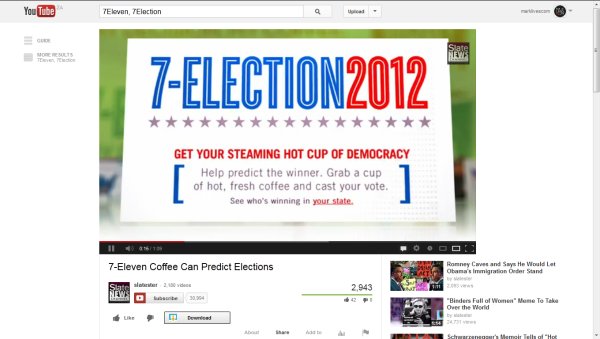
Finally, and possibly the strongest at driving ‘feet in door’ was 7Elevens phenomenal campaign that used cultural currency of the time, the presidential election, to change people’s coffee choice!

No easy task when the link between coffee and politics is not all together overt on any normal day!

The “7-Election” campaign however made the turning of coffee counters, in thousands of stores, into mock “polling booths” into a shopper choice that made a personal statement well beyond their basket contents.  Shoppers could “vote” by choosing a blue Democratic cup or a red Republican cup and in doing so, their shopping decision became a personal opinion, an expression and a conversation starter. Quite simply, your choice of coffee held much higher value that the liquid in the cup – a lesson in adding value beyond price or prizes.

So, when is the purchase decision of a caffeinated hot drink worth so much more than the heat it is served at? When the brand sees over 7 million coffees bought during the campaign period and media nationwide following the hands of the nation carrying branded coffee cups reaching everywhere from The New York Times, CNN and celebrity homes. This is one campaign that made shopping just that little bit more fun than functional.

(Full Case & Video)

So there we have it, proof that there are cases, and long may it last, where a Cannes Lion on your shelf is absolutely worth the two extra cans it drove into the basket.


mimiMimi Nicklin (@MimiNicklin) followed her passion and experience in the consumer, retail and shopper space from regional roles in Europe and Asia, to South African shores in 2010. Having led global brands through the line for Procter & Gamble, and two of London and Hong Kong’s top agencies, her background gives her an international perspective to add to her depth of SA understanding. She serves as strategic director and a partner at 34 Group. Mimi contributes the monthly “The Sell” column concerning shopper marketing to MarkLives.

Design Annotator: Beer campaigns and street art

uno de waalDesign Annotator with Uno de Waal is a  new column featuring the top design work from South Africa’s biggest online creative showcase, Between 10 and 5, curated by Publisher Uno de Waal @Unodewaal. 

Street art and graffiti has often received a bad reputation by being classified as vandalism. If you feel the same way, have a look at r1’s beautiful street interventions – it could very well change your perception of what is traditionally considered as street art. For some reason the beer industry has been upping their game – this week we’re featuring two new beer campaigns, one being an interesting longer-format TV ad and the other a physical/digital implementation – definitely an interesting way to market beer. We’ve also completed the Dutchmann Racing Poster series – 10 of South Africa’s top illustrators created posters for the Dutchmann racing team. Have a read and let us know what you think in the comments.

The Dutchmann Racing Poster Portfolio

Paul-Garbett-Dutchmann-poster

Through its projects and initiatives, Dutchmann is a platform that connects master craftsmen with contemporary designers and artists, creating collaborations that fuse craft-based practices with progressive ideas. In 2012 they presented Delft, a collection of Spider Murphy surf boards customised in blue and white by contemporary artists. They’ve recently revealed the results of this year’s efforts: The Dutchmann Racing Poster Portfolio.

View all the Dutchmann posters by other artists.

New Amstel TVC | The Chef

https://www.youtube.com/watch?feature=player_embedded&v=nFCSZSqSskk

As part of an ongoing brand campaign Amstel presents The Chef, a new TV commercial that follows their award-winning ad The Boxer. The ad will flight on national TV next week Thursday for the first time.

Read the comments on the new Amstel TV Commercial

Jason Larkin | After The Mines

 After-the-mines-book
This past Saturday Fourthwall Books presents After the Mines, a publication by British photographer Jason Larkin. The incisive and wide-ranging photographic project explores the vast waste dumps created by Johannesburg’s gold mining industry.

Castle Lite Extra Cold Mind Reader

Castle Lite recently introduced their Extra Cold Mind Reader conceptualised, developed and designed by Hellocomputer, and built by Thingking. The innovative world first is a digital mind reader that tests a user’s mind control, and rewards them with an extra cold Castle Lite draught poured to a percentage that matches their score.

See how the Castle Lite Mind Reader was put together.

CTFM ‘Fresh’ TVC

https://www.youtube.com/watch?feature=player_embedded&v=8gkHwIkIiDI

Lowe Cape Town recently released this TV commercial for their client Cape Town Fish Market saying:

The Cape Town Fish Market is on a big drive to educate people about how fresh its fish is compared to that of some of its competitors, which is actually frozen. Because when the Cape Town Fish Market says fresh, it means fresh from the sea, not “fresh” from the freezer. We created this tongue-firmly-in-cheek TV ad to help people tell the difference between fresh and “fresh”.

 Read more comments about the new CTFM TV commercial

Featured: Interventions by r1

 OLYMPUS DIGITAL CAMERA
Coming from a fine arts background, r1′s work ranges from sculpture to street art murals to installations; all usually found in public spaces. Originally from South Africa (and having recently returned) he has made England home for the last several years. Having lived in both places, his work has connections with various cultures.
– Uno de Waal is the publisher of creative showcase 10and5.com.– Industry profiles you’ll make time for. Sign up for our free newsletter!

The Dissident Spin Doctor: Dear brand manager — vanilla is irrelevant

by Emma King (@EmmainSA) I’m sure I’m not alone when looking back to high school days, and remembering that feeling of a desperate need for acceptance, that envy of the popular girls who hung around at school discos with identikit blond hair and mini-skirts, while dating the surfers.

[pullquote]So, brands need to move away from grouping people by demographics, and instead group them by communities. And communities are formed around behaviour, rather than round geographical locations, or ages, or racial classifications. Value for a brand should not be measured by how big their communities are, but instead on how the brand responds to these behaviours.[/pullquote]

I wasn’t part of that gang, but neither was I an outcast – instead I floated around in between groups with the rest of sporty people, misfits, bookworms, artists and emos. The regular bog standard school kid.

Looking back isn’t it funny how many of those ‘cool’ kids are so mind-numbingly dull now? The hot surfers are fat and bald, while the cool girls are suburban housewives, contemplating the spread of their mid-riffs and comparing bowel movement of their kids.

Now it’s the oddballs, the geeks, who are living exciting and amazing lives. One bookish girl I went to school with has published a number of novels; another is head fashion buyer for a top UK high street chain; a number of them have opened their own successful businesses. They got there because they honed in on their unique thing – their passion for books, or their funny drawings and oddball outfit choices.

The point is that in the compulsion to be cool, to be the popular ones, perhaps those cool kids forgot how to develop a personality. They tried to be everything to anyone, to conform to the appeal of the masses and not to stand out. They became vanilla.

I wonder sometimes whether this is true, too, for brands.

In those dark old days of marketing – pre social media and digital revolution – it made sense. Creating and airing a TV ad was extortionately expensive. Print and radio only slightly less so. But those mediums reached loads of people, so there was a ‘spray and pray’ mentality. Shout the message far and wide, and make it as generic as possible in order to ‘appeal’ to as many as possible. Make it vanilla.

The thing is, we don’t need to do that anymore.

With our digital landscape and social media, we can be as niche as we want to. And in a million different ways instead of one.Emma King

I like the analogy of geek-like person who’s obsessed with an obscure genre  of music or band. In the past, the band probably couldn’t market itself very much. Local music stations wouldn’t have played their music, as such a small percentage of their audience wouldn’t have liked the music. There would have been no point in them be featured in or advertising in a music publication for the same reasons.

But when social media opened up the internet, it allowed all sorts of people from around the world to connect and form communities. And suddenly these geeks, alone in their physical communities, could be part of a huge virtual community of like minded people. The obscure band that appeals to those people suddenly had a big community of people that it can talk too, without having to ‘waste’ communicating to the generic public. And these people – from millions of different walks of life – are united, for a time, in a shared behaviour.

The problem, then, is brands continue to apply the traditional model of communication to social media. They try to build as many likes as possible and they make information, ‘content’, as wide reaching and generic as possible in order to appeal to as many people as possible.

But, as my old colleague, Richard Stacy (who’s just published a book on social media based on his principle of ‘The Three Percent Rule’ – in which he advocates ignoring 97% of your audience) notes, that’s not what social media is made for.

It’s about creating one or two connections, with the relevant people, rather than a million connections with randoms.

So, brands need to move away from grouping people by demographics, and instead group them by communities. And communities are formed around behaviour, rather than round geographical locations, or ages, or racial classifications. Value for a brand should not be measured by how big their communities are, but instead on how the brand responds to these behaviours.

This translates through to traditional PR and media relations too. My little PR soul shudders when I see generic press releases farmed out to the media outlets which have the biggest reach.

We need instead to look at how we can identify and work with communities, how we can build relationships with them, and how we work out who or what influences them. And as much as those communities may be a bunch of journalists, the communities may just as likely be a group of people who are patriotic about a country; a club of car enthusiasts; some geeks obsessed with an obscure band; or a physical community (for example in a suburb near a good school).

To go back to the cool kids at school analogy, then.  Brands who want to succeed in the digital space, and the new world of PR, need to become MORE specific, not less. As we form our decisions based on multiple outlets and touch points, instead of a few, and as we create more and more communities around us according to our shared behaviour and beliefs, a brand that becomes generic -vanilla – will become irrelevant.

It’s not the person with the most friends that is the most powerful. It’s the one that is the most unique that can become something strong.

Emma King is Head of PR at The Jupiter Drawing Room (Cape Town). She is a columnist for MarkLives on PR and communication issues. You can find her on Twitter at @EmmainSA

– Industry news you’ll make time for. Sign up for our free newsletter!

The Herald finds its niche

grubstreet

by Gill Moodie (@GrubstreetSA) In this punishing media market of falling circulation, you really have to hand it to the newspapers that have arrested the decline.

Times Media Group’s The Herald in Port Elizabeth is one of a clutch of daily papers in South Africa that have achieved this (the others are the the heraldSowetan and Die Burger), which is no mean feat for editor Heather Robertson as the Eastern Cape’s biggest city is a hotly contested market.

The Herald – with its newsroom now merged with sister Saturday title, the Weekend Post – has to slug it out with Media24’s Son and Die Burger’s Eastern Cape edition because many newspaper readers in PE are comfortable reading in English and Afrikaans. The Daily Sun (also owned by Media24) and fellow Times Media titles such as The Times and the Sowetan have also made inroads in the market.

Nevertheless, the most recent ABC figures – for the first quarter of this year – put The Herald’s total circulation at 23 372 compared with 23 568 in the same period of 2012.

The drop of about 200 papers for The Herald equates to stability in a devastating quarter when other dailies reported large losses, most notably the Daily Sun that lost 20% of circulation, The Star which fell 14% and the Pretoria News that shed 12%.

And this is not a new trend for The Herald although the paper would have done well out of its excellent coverage of the PE-based family of Reeva Steenkamp, the slain girlfriend of Oscar Pistorius, in the first quarter. For most of last year, the paper was either stable or sales were slightly up.

In addition, The Herald  has also been winning journalism awards such as the “hard news” category in the recent Standard Bank Sikuvile awards – not easy for a regional paper with a small newsroom.

Robertson attributes this happy turn of events to a couple of things:

1. Her editorial has stabilised since she took over in August 2010 and coalesced into a team. (It’s not easy attracting experienced journalists to work in the Eastern Cape so you have to grow quite a few of them yourself.)

2. There is a weekly meeting of herself, the head of circulation, marketing manager, advertising and general managers to study the circulation trends, share information and plan ahead, for example, identifying areas where there should be more postering or street sales or special editions and wraps. “We put the pressure on ourselves,” Robertson told Grubstreet. “We do not want to see a newspaper that was started in 1845 dying. We want to survive and be relevant today and into the future.”

3. The paper’s focus on core strategic areas such as local government, crime and court reporting is paying off.

“We take local government very seriously,” said Robertson. “Where the Daily Dispatch (a sister Times Media paper in East London) has a much broader reach and I envy them for that, we are very much a metro newspaper and we don’t have that wide stretch of the Eastern Cape that the Dispatch has or the proximity to Bhisho (the provincial government capital that is half an hour’s drive from EL.)

“Our strength is to be local so we’ve really got to the bottom of what’s going on in this municipality to the extent that we are respected across the board – by the ANC and the opposition – but also hated across the board, which I think is a good space to be.

“Despite all the competition in our market and from online, we are concentrating on basic, solid journalism – not on ideas that pop up in your head – but on building real contacts and it’s about the talent that we have here, growing them and giving them the space to explore their own passions.”

There is a staff member tasked with looking after long-term investigations for the paper, she said, and a reporter who reports the longer-term stories.

Robertson said that when she took over the editorship, she commissioned research into why the paper’s circulation was declining.

“I needed to find out why from the readers… The view from the research was that The Herald was considered to be 1). A white newspaper; and 2). A very suburban newspaper. A lot of black people in PE were falling out of our daily net.

“Six months after I started we had a massive brainstorm among the staff to get them to understand who the target audience is, what is it that they are interested in, what is it that they would like to be reading about, how should we be telling stories. The key is to tell stories in a way that is accessible and compelling and to use good visuals.

“I envy the Media24 titles with their graphics people. We don’t have that,” Robertson said. “We have a very young team but they are very keen.”

The paper – which was redesigned in March 2011 to make it more visual and accessible – has, in fact, grown its black readership so that it now makes up 60% of the total.

The signs of growth started coming in 2012, Robertson said.

The next challenge is how to grow circulation – and Robertson believes the key will be to deliver more hyperlocal news in strategic ways, more news through cellphones (the paper doesn’t have a mobisite yet or apps) and to build on engagement with the readers.

“I think the one thing we do very well is stay in touch with our readers,” she said. “We have one of the biggest letters pages (in SA papers). We have a full letters page every day and between 30 and 50 SMS comments on stories every day. We have a really vibrant Facebook site (while the majority of the paper’s content is behind a paywall on its website) and we are on Twitter.”

The Herald’s Facebook page has more than 16 700 members and its Twitter account has more than 4 800 followers.

Just because there is an online paywall, Robertson said, doesn’t mean the newsroom isn’t integrated. The philosophy is that the paper’s unique content is not given away for free but aggregated content goes online.

Further, if a story breaks the reporter will do it for online that day and broadcast it via social networks but they must give “the depth, the interviews, the why, the motive for the next day (in the paper)”, Robertson said.

There is no online editor at The Herald but everybody works for online and print, Robertson said.

“That’s what’s so much fun. At bigger newspapers everything is segregated. My colleagues at The Times, for instance, have nothing to do with online and yet it’s such an exciting part of the news.

“But what is most important for us is that we are a local newspaper and we must never lose sight of that and of the people we serve… If there is a big, national news story like Pistorius we’ve got to localise it and identify that unique angle that is relevant to our people.”

– SA’s leading media commentator, Gill Moodie, offers intelligence on media – old and new. Reprinted from her site Grubstreet.

Sign up for our free newsletter!

When Stuart Lowe asked Why? five times

by Herman Manson (@marklives) Stuart Lowe, the former MD of media house Ramsay Media, sits in his newly furbished home office and proudly shows off the first report of his new research venture, WhyFive.

The SA Body Image Report 2013 focuses on body image perceptions of a wide cross section of reasonably affluent, economically active South Africans, and offers insights into the market for fashion, health and beauty products.

The report showed that nearly 80% of us would like to look better. “If you’ve ever wondered why the health and beauty industry is Stuart_Loweso enormous,” the report quips, “now you know.”

People’s reasons for exercising was quite interesting – 51% of respondents exercised to keep toned and fit (so it’s a ‘maintenance job’ rather than a ‘repair job’), and 50% said it relieved stress and improved their mood. Improving fitness was ticked by 46% of respondents, while only 42% said it was to keep their weight in check  and only 28% said they exercised to lose weight (the report speculates that perhaps ‘people are increasingly realising that losing weight is a pleasant by-product of a healthy lifestyle’ and not just exercise). Close to ten percent picked ‘to socialise.’

Lowe left Ramsay Media in late 2012. There were a number of reasons for him leaving, including that he wanted to build something that he could have a stake in, his sense of a disconnection between the shareholders at Ramsay (who is gearing up to sell their stake in the business, something they had denied they were planning to do during his tenure, according to Lowe) and members of the management team, disquiet about the fate of analogue dependent media business in the digital age as well as his daughter Jenna’s fight against Primary Pulmonary Hypertension (read her blog raising awareness on the illness).

The research business that Lowe co-founded, alongside Gordon Hooper and Alan Todd, is called WhyFive, because Lowe says if you ask ‘Why?’ five times, any question will be fully answered.

WhyFive is a reseller of RamsayMedia Research Solutions’ (RMRS) TopEnd research product. WhyFive doesn’t offer research services – it produces and sells market reports aimed at specific vertical markets. Lowe hopes to take cost effective insights to market – the Body Image report sells for R27 000 per report and Lowe expects to sell between 20 and 25 copies of the current report.

Lowe describes the WhyFive methodology as digital (research is conducted online), inexpensive, in-depth (it takes 20 – 40 minutes to complete a typical survey) and with a fast turnaround time. Concept to data to insight takes anywhere between 2 weeks and 2 months ensuring the reports are as relevant as possible.

WhyFive is currently working on several research reports including ‘The Retail Shopper Report’ – focused on retail across all categories. Lowe expects a total sample size of between 25-30 000 on this report (Body Image had around 1600). The reports don’t only contain data but also analysis – or as Lowe puts it – ‘data with soul.’ A report on ‘Cool’ with a link to youth brands is also on the cards.

Ultimately, Lowe would like to build WhyFive out on the model used by Mintel in the States – reports in various verticals available for sale online. The business is being built on low overheads and will follow a collaborative model with around ten people spending some of their time on work for the company. Once he has proof of concept Lowe will take the business into other African markets.

– Industry news you’ll make time for. Sign up for our free newsletter!

Tech Law: Is your marketing strategy diabetic?

by Paul Jacobson (@pauljacobson) One of the behaviours I haven’t really understood completely is why agencies and their clients don’t seem to grasp the importance of adequate legal frameworks to effectively support their social marketing and collaborative business initiatives? What has been clear is that very few marketers understand just how important it is to have good legal advice and frameworks and they frequently use something that looks right so they can tick the legal compliance box. Unfortunately that isn’t a very good solution because even the best intentions won’t be much help if they are also woefully uninformed. Most marketers that we have dealt with seem to be aware of the need for some sort of legal structure for their work and yet they just don’t take sufficient steps to understand their risks and cater for them.

This conundrum inspired me to use a personal health issue as an oddly apt metaphor for what seems to be going on at the recently held Paul JacobsonAdvertising and Marketing Law Conference. For about as long as I can remember, I haven’t paid much attention to what I have eaten or been too concerned about how much I have exercised. My idea of going to gym until about December 2012 was making sure I visited enough times to retain my discounted membership through Discovery Vitality (Discovery isn’t paying me for this post or is even aware of it). I should have paid more attention because my family had a pretty long history of diabetes, high cholesterol, cancer, heart disease and one or two other conditions. I was also advised to cut back on my sugar intake a couple times over the years and I agreed there was merit in doing that but the risk just seemed to be too remote.

My Story

On about 5 February 2013, my wife and I went for a Vitality assessment. I thought the result would be similar to last year’s assessment where my key metrics were ok (except for slightly elevated cholesterol) except I expected to learn that I had lost some weight due to increased water intake since December and a couple substantive gym sessions over the holidays. I did see a couple differences between my February assessment and my May 2012 assessment. My weight was down (about 3kg), so was my waist measurement and body mass index measurement but my cholesterol was up about 0.7 mmol/l and, more significantly, my blood glucose was up from 5.5 mmol/l last year to 15 mmol/l in February. The norm is between about 4 mmol/l and about 6.5 mmol/l. That was alarming but, not understanding how this works at the time, I attributed that to not having fasted before the assessment and having had two cups of tea with two spoons of sugar that morning. Just the same, I was told to go for a fasting test the next morning to check.

The next morning, I went for a fasting pin-prick blood glucose test at my local pharmacy clinic and the test revealed about 13.1 mmol/l. Clearly something wasn’t right and I called my GP who ordered me in right away for further tests. He came back to me the next day with a diagnosis of type 2 diabetes (no doubt about it) and a test result of 12.7 mmol/l with a medium term average of over 8 (if I remember correctly). My life changed almost immediately. I started exercising more frequently and regularly, changed my diet almost completely and started testing myself and tracking my progress (my diabetes seems to be under control, thankfully). I also discovered that what I thought was a slightly elevated cholesterol level is actually far too high in conjunction with my diabetes and that places me at risk of something called metabolic syndrome.

Now, almost four months later, I am in better shape than I have been in decades (literally). My diabetes is with me now for the foreseeable future and I have to be pretty vigilant about my diet, injuries and a variety of other risk factors. On the whole, I am better off than I was at the beginning of the year but this was not something I expected to have in my life at 37.

Diabetic Marketing

So what does this have to do with social marketing? It occurred to me that what most marketers are doing is analogous to what I did for years. I see the big contributor to my diabetes onset as being unrestrained consumption. In a sense, this is what marketers active on the social Web are doing too. They work in a fascinating and engaging space and often do so with little regard to the legal consequences of their campaigns. Marketing online seems to be perceived as being immune to conventional risks and I often read advice from prominent agency “gurus” who speak about how various forms of engagement can address discontent and cure a brand’s problems. I’m too young to remember much of the 70s but when I think about what the hippies of the 60s and 70s must have been like, I look at some of these apparently authoritative marketers and social media strategists because they may as well have flowers in their hair when they talk to their clients.

That said, there are many instances where positive feedback on Facebook or a “Hi Bob, please DM us your email address and we’ll resolve your complaint” direct message on Twitter can defuse a sticky situation but the world is more complex than that and so are the people who have varying expectations of brands. Sentiment in a tweet can ravage a company’s share price and this can literally happen in seconds as many traders increasingly rely on artificial intelligence and automatic sentiment analysis for share trades, let along human traders reacting to humans coming together under a share #Acmebrandsucks hashtag. Reputational risk is only one of the many risk factors marketers need to be mindful of and they just don’t have the knowledge to anticipate and cater for a growing number of legal and compliance requirements and considerations that apply to their work as much as a traditional offline marketer (if such a beast still exists in large numbers).

We were privileged to listen to Michael Judin speak about corporate governance issues relating to the social Web and one of the principles he highlighted under the current Companies Act was the Business Judgment Rule (Samantha Buchler wrote about the rule in a post titled Business Judgment Rule – Valuable Protection for Directors Against Liability on the Jacobson Attorneys website) which comes to the assistance of directors who conduct a reasonable degree of due diligence in carrying out their duties. Directors who fail to do so, could find themselves in some pretty hot water under the Companies Act (penalties can include personal liability and prison sentences). This rule highlights the potential and very real risks to company directors who fail to inform themselves about their legal compliance and governance requirements as well as the risks their companies face through poorly informed marketing campaigns. The rule also highlights the extent to which marketers acting on behalf of these companies could find themselves liable for their failure to take reasonable steps to inform themselves about the legal ramifications of their work and the potential impact on their clients.

Put another way, not taking an active interest in the legal risks and possible consequences of their unrestrained consumption could leave companies and their agencies unnecessarily exposed to liability, monetary losses and reputational harm. This is a case where, like diabetes, prevention can be more effective than the cure but it requires diligence, entrenched processes and educating yourself (or even taking good advice from experts in the space). Taking steps to manage the fallout after an incident may be enough to keep a company standing (and often provides fodder for revealing case studies) but is it enough to say “We’ll just take our medicine if this goes badly, not that it will because we know what we are doing”?

I love the social Web. It is a diverse, dynamic and exciting space where people can engage in so many different ways. It is a fun space to be in but there are real-world implications too. The question to ask yourself, as a company representative or marketer, is whether you are doing enough to educate yourself about the risks and are taking informed and calculated risks? If the answer is no, it is probably just a matter of time until you receive a rude awakening like I did in February 2012.

Paul Jacobson is founder and director of Web•Tech•Law. Web•Tech•Law / CC BY-SA 2.5

– Industry news you’ll make time for. Sign up for our free newsletter!

MagLove: Jared Leto Candy

MarkLives.com runs a regular slot featuring the best local and international magazine covers every week. We recognise well thought out, powerful and interesting (and hopefully all three in one) magazine covers and celebrate the mix of pragmatism, creativity and personal taste that created each of them. By media blogger MediaSlut.

INTERNATIONAL

CANDY, Summer 2013

candy

Looks like just another fun cover, fun magazine with a fun girl, right? Well, CANDY is “the first transversal style magazine.” This is their 6th issue, they only printed 1 500 copies of this issue, and it’s non other than Jared Leto on the cover! Love it! And if you browse through this issue, I’m sure you’ll also agree that the magazine is actually very serious about what they are doing, and they are doing an amazing job at supplying a title like CANDY to such a niche market. Art.

Esquire (Malaysia), July 2013

Esquire Malaysia

Esquire Malaysia is doing an amazing job with their covers, and in breaking the mould with what mass-consumer-covers  tend to look like. I’m loving how they keep re-creating their covers, and the way the their cover lines are displayed! Also see their May 2013 cover as well as their June 2013 cover;

The New Yorker, 8 July 2013

New Yorker

I think this The New Yorker cover celebrating marriage equality in the States is absolutely amazing. I’ll let the cover, the image (by Jack Hunter), and the message talk for itself…

SEPP, Issue 7, 2013

sepp_title_2013

SEPP seems to be a soccer magazine, but the reason why I chose it as one of my favourite covers, is because they are also doing something unique and new that I haven’t seen done before; all the main information about the magazine is … squished really in the masthead SEPP. It’s not the best design, or use of font, but it’s something new and I’m sure it will spark something else and even better in the near future.

LOCAL

Mango Juice, July 2013

Mango Juice 7 July 2013

This is definitely my favourite in-flight magazine cover for the month, and probably one of my favourites for the year. For the July 2013 cover of Mango Juice, I’m told by Ingrid Jones the editor that the cover is really hand-knitted by Laduma, especially for Mango Juice, after being profiled in the same issue. Laduma is a designer who works with traditional Xhosa patterns for his male jersey line. It made me think a bit about the VISI 64 cover where readers could physically hand-knit their own VISI cover… I’m loving the creativity in the South African magazine industry at the moment!

– The (for now anonymous) blogger behind MediaSlut knows way too much for his own good about media in South Africa. Magazines in particular. His mission is to show when South African magazines might fail, but most importantly, succeed. If you’re looking for a library about South African magazines and news, your one-stop pitstop is MediaSlut. #MagazinesForTheWin

– Find a cover we should know about? Tweet us @marklives and @mediaslut
Sign up for our free newsletter!

Shelf Life: Trail blazing snail

Louise Marsland’s (@Louise_Marsland) pick of new product, packaging and design launches.

Snails and robots are back on our screens to launch new products in the FMCG and office space; on pack promotions still work; and Pyrotec produces a coder to increase product output.

Trail blazing snail

Yogi Sip snail

Yogi Sip has launched two new flavours in the market: Cookies and Cream and Cappuccino with a new campaign, featuring a… snail. Yup, a snail.

The press release describes Danone Southern Africa as “blazing a trail” in the area of digitally animated television commercial work with this latest campaign and the snail as “endearing”. Those are descriptors one would not normally associate with a snail, but I’m reliably informed that the animation work done by digital content creation studio Luma on the campaign conceptualised by Y&R pushes the boundaries.

Riverstone Films briefed Luma to breathe life into the human-sized snail which is a “visual metaphor for the plummeting energy levels experienced during the mid-afternoon slump” at work. Okay then.

The brief was to communicate the brand’s promise that Yogi Sip is the ‘sip snack that keeps you going’.

Combining a natural on-camera performance with creature effects that could not be shot in live action, Luma completed the illusion by using 3D animation to lend natural movement to the snail’s tentacles.Aimed at an active, youthful (16 – 24 years) target audience, the creature effects were created by veteran puppet-maker and animatronic whiz, Roger Titley. The commercial was directed by Riverstone’s Jeremy Holden for Y&R Johannesburg and the creative director was Bibi Lötter.

“I’m very demanding when it comes to the visual effects in my commercials,” said Holden.

Transformed office space

AngelShack robot 1

Angel Shack is a range of modular office furniture that aims to transform the office space with a transformer robot (oh dear – ed.).

Yes, another one. And a SWAT team. No angels. But robots are still pretty cool and this office furniture company will certainly get attention by using a robot to promote its new GameChanger range of shape-shifting office furniture that can transform any work space.

The commercial was shot over two days with a film crew and a radio-controlled helicopter fitted with a camera, supplied by Visual Air Production. The intention was to emulate the blockbuster production style that viewers are used to seeing on the big screen, while demonstrating the furniture range’s remarkable ability to take the shape of almost any office environment.

Directed and shot by Johnny Cohen of EyeMagnet, the commercial is a combination of live action and computer-generated images that were created and animated by the team at Blade Works, led by Shaun Froneman, while the compositing, finishing and visual effects supervision were handled by Jean du Plessis of Blade.

The ad is currently on rotation on CNBC.

Lunchtime

Lunchbar promo

In its biggest promotion to date, Cadbury received over 1.1 million entries in its Lunch Bar Lottery promo. R500 000 in cash was shared by 100 winners.

Consumers needed to purchase a specially marked promotional Lunch Bar pack and SMS the last six digits of the barcode to the number on pack.

The promotion featured across four Lunch Bar sizes– Lunch Bar Large, Lunch Bar Dream Large, Lunch Bar Man Size and Lunch Bar Mini. The Lunch Bar Lottery promotion was supported by high-impact in store displays, a television commercial and national radio spots.

“We are thrilled with the number of entries received and very happy to have given Lunch Bar consumers the chance to win their share of such a mammoth cash prize,” said Andrea Fell, Kraft Foods senior brand manager: chocolate bars.

New laser coder launched

Coding sample product

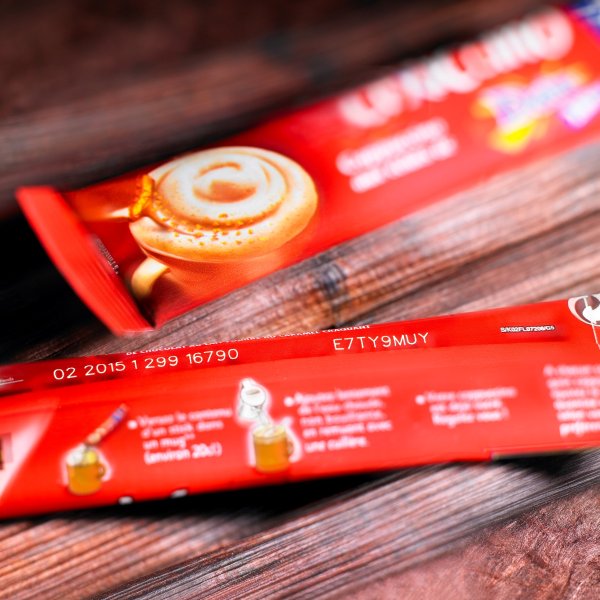
PyrotecPackMark, the brand within Pyrotec that supplies coding and labelling equipment, has just released its Markem-ImajeSmartLase C150 and C350 Laser Coders. Laser coding is a permanent coding solution for producing date and batch codes, ensuring complete traceability. A key advantage of this option is that it eliminates the need for messy and expensive consumables. However, the primary benefit of the C150 and C350 is its  99.6% availability ratio.

“The unavailability of a coder refers to the proportion of a timespan that a system is unavailable or offline. This is usually a result of the system failing to function because of an unplanned event, or due to routine maintenance. With the C150 and C350, manufacturers can be assured of a reliable, high-performance laser that is able to cope with even the most demanding production lines,” explains Brandon Pearce, General Manager of PyrotecPackMark.

The SmartLase C150, C350 and C350L have been specifically configured for the food industry, and are equipped to code paper-based containers or packages such as those used in frozen food, confectionary or dried process goods. These coders increase the character printing capacity of one code from 30 to 120 characters. For the beverage industry, the C150S and C350S are specifically designed to code PET bottles and increase the output rates from 1200 to 1800 bottles per minute. The C350 is also ideal for coding labels.

Louise Marsland– Shelf Life by Louise Marsland is a weekly column on MarkLives. Tweet new product, packaging and design launches to @louise_marsland or email her at louise.marsland at gmail.com.

– Want to sponsor Shelf Life? Contact us here.

Louise Marsland has written about the FMCG, media, marketing and advertising industry for 18 years of her 25 year media career as a former Editor of magazines AdVantage, Marketing Mix and Progressive Retailing; as well as websites Bizcommunity.com and FMCGFiles. She currently edits the weekly Wednesday Media & Marketing Page for The New Age newspaper; and is the co-founder and Publishing Editor of SA’s newly launched industry trendwatching portal, TREND. at www.trendlives.info, in partnership with MarkLives.com.

– Industry profiles you’ll make time for. Sign up for our free newsletter!

Media Future: The fastest growing categories of online sales in South Africa

New research reveals that one of the fastest growing categories of online sales in South Africa is practically invisible, writes Arthur Goldstuck (@art2gee).

Online shopping is usually associated with electronics, books, clothes and groceries, to take some examples of physical goods being bought on the Web and delivered in the real world. But the biggest growth trends are in an invisible market that comprises both purchase and delivery in the virtual world.

[pullquote]World Wide Worx research shows that R3,6-billion was spent in online retail – that is traditional retail products bought online – in 2012. This is expected to rise by around 25% in 2013. Despite the increase, though, the number of people shopping online has barely shifted – around 2,2-million.[/pullquote]

When MasterCard released the findings of its annual Online Shopping Survey last week, it focused on the highlight of the research: that 91% of South Africans who shop online are highly satisfied with their overall experience. This means that, once people are persuaded to shop online – and that takes some doing – they are generally happy with the experience. There are many exceptions, as suggested by the 9% or 1 out of 10 who are dissatisfied with their experience.

The real test of satisfaction is, of course, the returning customer. And here the picture is enoraging but not as massively positive: 76% of respondents return to an online shopping site that they have used before.

The highest spend by online shoppers is, not surprisingly, on travel products: air tickets, travel and accommodation. Behind these come concert Arthur Goldstuckand event tickets, and coupons from group buying sites. Arguably, all of these are virtual products that do not, up front, involve a physical purchase. But all do result in a physical outcome: a plane trip, a hotel stay, or a group purchase of a physical product.

But what comes next in the shopping popularity chart is entirely invisible: products or services in online or virtual worlds. This refers specifically to buying and downloading online games and purchases made within the games. It is these in-game purchases, for example, that are driving the massive revenues reported by the Chinese online portal Tencent, part-owned by South Africa’s Naspers. In the group’s annual results announced this week, it reported that Tencent and Russian portal Mail.ru had contributed R7,9-billion to the group’s R50-billion revenue.

The dynamics of in-game purchases are fascinating, particularly in China. It is one thing for companies like Tencent to generate billions from selling virtual assets that enhance the online experience. It is another story altogether when it becomes a viable career option to go full-time into gaming and acquire, trade and sell virtual assets. Because it often requires hours of dedicated gameplay to acquire such assets, many players would rather pay someone to do it for them.

That culture has not yet emerged in gaming in South Africa, but the willingness to pay for in-game items is clearly on the rise.

This suggests that, in future, mobile apps and purchases within those apps will also become a significant area of online spending for South Africans. Right now, it lurks near the bottom of the hit parade, behind music downloads, cosmetics and movie tickets. But given the rapid rise of smartphone and tablet use, we can expect apps to feature far more prominently next time round. Invisible retail may well, eventually, become the dominant form of e-commerce. But it will only happen once more people are willing to break the ice of online shopping.

World Wide Worx research shows that R3,6-billion was spent in online retail – that is traditional retail products bought online – in 2012. This is expected to rise by around 25% in 2013. Despite the increase, though, the number of people shopping online has barely shifted – around 2,2-million.

The MasterCard survey in fact shows a slight decline in the proportion of highly active Internet users who shop online – from 58% to 54%. The two sets of data are not incompatible though. World Wide Worx research shows that the number of people who have been online for more than five years – broadly comparable to the number of highly active Internet users – is rising fast. It will grow from 3,96-million in 2012 to 4,6-million in 2013. It means that, if the number of shoppers remains fairly stable, then the proportion of active users shopping will in fact decline – as confirmed in the MasterCard study.

This poses a challenge to online retailers to take advantage of the growing number of active users who have the propensity to shop online but have not actually done so. They need to be converted by incentives, special offers and an unbeatable experience.

“Even though shopping online means that consumers are saved the inconvenience of parking, queues and crowds, they still prefer online stores that offer extra added value, with 65% of respondents indicating that promotional offers, discounts or free gifts are important when it comes to choosing an online retailer,” says Philip Panaino, division president of MasterCard South Africa.

* Arthur Goldstuck heads up World Wide Worx (www.worldwideworx.com) and is editor-in-chief of Gadget. He is a Consulting Editor to MarkLives and our media tech columnist. Follow him on Twitter on @art2gee. Reprinted from Gadget.

Industry news you will make time for. Subscribe here. It’s free!

Why advertising is business insurance

adcontra

by  Bob Hoffman (@adcontrarian), San Francisco BayOn April 23 of this year, Apple reported…

“We are pleased to report record March quarter revenue thanks to continued strong performance of iPhone and iPad,”

This report was remarkable for two reasons: First, it is generally believed that Apple has not introduced any new products or features of major interest to consumers in about two years. This in an industry whose oxygen is new products and features.

Second, it is also believed that Apple’s advertising has fallen from the lofty standard it had established over previous years, to a point that it is now inferior to its rivals in the tech industry.

So how did they achieve record revenues?

I am not qualified to comment on the product part of the equation, but I do have a strong opinion about the advertising part.

The answer is this: advertising serves two functions. The first function is the one that every marketer focuses on — sales. But the second one is at least as important. Advertising is business insurance. Advertising builds equity so that when you have a fallow period you still can generate income.

This is how Apple was able to report record revenue during a period of widely acknowledged creative foundering.

One of the reasons people continued to spend their money to purchase Apple products was not likely the result of advertising that they ran in that quarter. It was because of the advertising that Apple had run the previous 25 years. It bought them insurance.

Apple products were still believed to be technically superior, even though that is questionable. Apple products were still believed to be of higher quality, even though they may not have been. (Ironically, Apple’s toughest competitor, Samsung, is also one of its primary suppliers.)

The hundreds of millions Apple spent on “insurance” over the years paid off with billions in sales in the first quarter of 2013.

It is the rare marketer that truly understands this aspect of advertising value.

Several months ago I wrote about Coca-Cola’s “senior manager for marketing strategy” who ragged on social media because, “We didn’t see any statistically significant relationship between our buzz and our short-term sales.”

It’s not my habit to be defending social media (much of which I consider misguided and ineffectual) but the prevailing attitude among marketers that everything is immediately measurable completely ignores the insurance value (or in marketing jargon, “brand equity”) that accrues to them through advertising.

One of the frustrating aspects of business is that when marketers engage in advertising most don’t understand what they are buying or appreciate what they are getting.

– The Ad Contrarian is Bob Hoffman, is the author of The Ad Contrarian and 101 Contrarian Ideas About Advertising. Reprinted from his blog The Ad Contrarian.

– Industry profiles you’ll make time for. Sign up for our free newsletter!

Online CPD Courses Psychology Online CPD Courses Marketing analytics software Marketing analytics software for small business Business management software Business accounting software Gearbox repair company Makeup artist