Attrition, Talent, & Transformation in the Digital Industry Part II

Yesterday Prakash Patel, CEO of Prezence, looked at how and why the new millennial generation of talent in the marketing industry, and doubly so in the digital industry, seems to think that anything longer than 1.5 years in one job is a lifetime. We’ve also seen how this trend, which the industry has been complicit in creating, has affected not only agencies but the industry as a whole.

Now, having pointed out the elephant in the industry, Patel explains why he doesn’t just see it as a problem, but also an opportunity for the industry to motivate staff, and give them a purpose in their jobs.

The research described in the video is fascinating. It demonstrates how time and time again, regardless of where experiments to test this are done, the idea that if you pay more, people will produce more, is proven entirely wrong the moment that a job requires even the most minimal amount of thinking.

What motivates us?

When looking at what satisfies us in a given career, it’s vital to have a job with a purpose that stirs you every day.

I am not being naive as I totally appreciate the value of salary expectations and rewards. And yes, that means being able to do the basic stuff from writing briefs, contacts reports and marketing plans to the more exciting stuff like strategising for a brand, all of which can only come with experience.

A great video worth viewing (and sharing) is taken from a talk by management expert Dan Pink on “the truth about what motivates us” (see YouTube or watch below).

The research described in the video is fascinating. It demonstrates how time and time again, regardless of where experiments to test this are done, the idea that if you pay more, people will produce more, is proven entirely wrong the moment that a job requires even the most minimal amount of thinking.

Essentially, money isn’t the all-powerful motivator we like to see it as.

The research shows that purpose in what we do is most important when it comes to our motivations. Take what makes a prakash patelgreat teacher for example. They don’t do the job for money, but rather the purpose of being a teacher growing the next generation.

I think this is phenomenal. Even more so in our industry where creativity and innovation, driven by passionate people who must have a purpose in what they are doing, are our currency.  If you’re time-watching, then this isn’t the industry for you. To be successful in this industry, you can’t just chase the money. You must chase the career.

For instance, a recent innovation activity we have started at Prezence, driven by our Creative Director Lizané Connoway, is what she calls “Play Days.” From visiting a museum or writing their own song, once a month Lizané asks her creatives to take the day away from the office and to do something within the creative space they haven’t done before. The only requisite is that they then share what they have done (check out one of our creative’s play day outcomes here).

I intend rolling this out to our technologist/apps department and all business area in the coming year.

Transformation

From sponsoring students from previously disadvantaged backgrounds and/or setting up a non-poaching policy charter for all members, it would be great if transformation became part of the purpose and mission of a “constitution” for official bodies like the DMMA.

The digital industry, like the rest of South Africa’s business world, has made steps towards transformation. But steps are not enough.

Rather than working together as an industry, individual companies are taking on the challenge of transformation in isolation. More can be done and should be done in collaboration with one another. As an industry, maybe by collaborating with official bodies like the Digital Media & Marketing Association (DMMA), we can speed up transformation through growing the talent pool, as opposed to fuelling this trend of poaching.

We should be encouraging and investing in the future of our industry – the youth, students, graduates, and in particular previously disadvantaged groups  –  to help grow our industry and help fill the gap from the bottom up.

However, this can only be done if we all buy into it.

From sponsoring students from previously disadvantaged backgrounds and/or setting up a non-poaching policy charter for all members, it would be great if transformation became part of the purpose and mission of a “constitution” for official bodies like the DMMA.

For now our commitment as Prezence Digital is taking part in the Primedia Bursary Programme with the University of Cape Town, where youth will be given full bursaries and allocated mentors to help guide and develop them. This programme is overseen by the Primedia Foundation which awards bursaries with the aim of addressing the critical skills shortage in South Africa.

This part of my work gives me the greatest hope, reward and job satisfaction.

The passion shown by the 16 students we interviewed at the beginning of this year was heartening, encouraging and reassuring. They just wanted an opportunity to improve their lives and make their families proud.

What humbled me, however, was listening to students who while themselves were in need of help, still selflessly helped others. That, to me, is the root of transformation. As an industry, and as a country, we can all learn from this attitude.

Ultimately, like the rest of the economy, we must reflect the realities of South Africa’s population breakdown. Not only in terms of our workforce, but also ownership. In the short term, however, people who are active in this industry must be representative of South Africa in all senses – be it in racial or gender breakdowns.

As with the development of any industry, these people ultimately need to become its leaders.

If we as an industry plan on growing and providing digital solutions for the majority of South Africans, nothing will give us more knowledge into what the majority of South Africans want and need than just being reflective of that population.

So IMAGINE… if every agency of a certain size and revenue took on at least one graduate from a previously disadvantaged background, what a difference it would make to our industry and country at large!

Just imagine.

Yes, people will come and go and that’s part of growing and learning. But people can also stay and grow.

What we make of it is up to us.

To those starting out in the industry – although joining the current recruitment merry-go-round may be tempting, building a career is far more worth it. The joy and fun of working in advertising is something I would recommend to anyone, but to make the best of it, patience is crucial.

Purpose is what must drive you. The rewards will come in many forms.

– Industry news you’ll make time for. Sign up for our free newsletter!

Covering Mandela health, reporters face various obstacles

grubstreet

by Gill Moodie (@GrubstreetSA) The classic Hollywood image of pushy reporters stabbing each other in the back and stepping over the body in the quest for an exclusive is often just that: a celluloid stereotype.

And it’s when the story becomes really difficult – such as with the ailing Nelson Mandela – that you find journalists sticking together and helping each other out with information, leads on the next development and contacts.

This may lead to some homogeneity of the news – and aside from Debora Patta’s scoop for CBS of Mandela’s ambulance Cape-Times_20130626break down, we haven’t seen many exclusive breaks in the Mandela story over the past month. In fact, the lack of genuine scoops is an indication of how challenging it has been to cover this story.

In both Pretoria – where Mandela has been in hospital for a month – and in the Transkei –  where reporters are racing between Mthatha, Qunu and Mvezo covering the family fight over the remains of Mandela’s three children – journalists are battling with a lack of official information or are being chased away by police and security guards.

But amid the confusion, two local journalists told Grubstreet last week that the packs of foreign and local reporters are friendly and collegial with each other.

“You do have to help each other out although we are all also chasing scoops,” said Loyiso  Mpalantshane, who is in the Daily Dispatch’s Mthatha bureau.

He estimates that were about 50 local and international journalists in Mthatha [during the week of July 1]  and running between Qunu and Mvezo.

“It’s hectic in terms of work but at the same it’s quite exciting. There is a lot of secrecy around the Mandela family and there is heavy security. At Qunu you’ve got police officers manning the entrance 24 hours a day and at the Great Place (of Mandla Mandela) at Mvezo there are security guards so we’re being chased away most of the day.

“It really depends on the number of contacts you have and if you have any people on the inside… The best bet is to get the information and then confront the Mandelas to confirm or deny – and in most cases they do confirm.

“And we also depend on sharing information among ourselves and sticking together and listening to the word on the street and sharing ideas.”

While some of the action took  place in the Mthatha high court, the situation in Mvezo is difficult because the people of the area are not keen to talk to journalists.

Mandla is known for being easily irritated, Mpalantshane says, and the villagers are worry about appearing to undermine his authority while those who are close to Mandla such as people from the traditional council or those involved in Mvezo community projects are talking in support of Mandla.

The steel fence around the Mvezo homestead that was broken open so dramatically with a pick axe last week by a sheriff of the court so that the three Mandela children’s bodies could be exhumed and moved back to Qunu only went up two weeks ago, he says.

“We were told it was to prevent the prying eyes of the media and tourists,”  Mpalantshane says, “and people they say who come in and take pictures without asking permission.”

Sowetan reporter Lindile Sifile told Grubstreet that one of the most exhausting things about covering events in Mthatha has been the large amount of driving on bad roads and, in fact, he was involved in a car accident between Mvezo and Qunu last week though he was not seriously injured.

Fellow journalists stopped to help after the accident, Sifile said, and gave him and the others from the wrecked car a lift.

Dramatic stuff! The pick axe to the Mvezo Great Place gate.

“We are journalists and we are competitors,” says Sifile, “but at the end of the day we are communicating with each other.” Especially in the evenings when the journalists gather to have dinner at the only restaurant in Mthatha, Mike’s Kitchen.

Things outside the Pretoria hospital were also a bit chaotic last week, says eNCA reporter Sibongile Mkani-Mpolweni, because of the well wishers  who keep coming and going.

“They come in groups and in buses,” she says. “On Thursday there were people from an old-age home dropped off and NUM members and then Cosatu members so people keep coming and then they sing and pray. And then there are individuals coming with their children and bouquets  and messages written on paper wishing Mandela well.  The international media is all over the place…and then there are those that are selling ANC gear and Mandela stuff.

“It looks a newsroom outside the hospital,” Mkani-Mpolweni says. “The international media have tents because there is no parking so they have been camping out in their spots for days. Our satellite van has been there since the 8th (of June, when Mandela was hospitalised) and we’ve hired security to guard it because we don’t want to move it. ”

People who live in the Arcadia flats around the hospital are charging the media to use their toilets, she says, or to use their parking spaces.

For the journalists in Pretoria, getting information out of the presidency is proving a challenge for everybody.

“You have to phone (presidential spokesman) Mac Maharaj and sometimes he doesn’t answer, says Mkani-Mpolweni, “or the presidency will tell you: ‘Wait for a statement. We’re not saying anything at the moment. We will release a statement when the time is right’.”

– SA’s leading media commentator, Gill Moodie, offers intelligence on media – old and new. Reprinted from her site Grubstreet.

Sign up for our free newsletter!

OwenKessel: do the right thing, kill those silos


ok1

by Herman Manson (@marklives) Own what you choose to be and be good at it. And do the right thing. With these two simple rules, Felix Kessel and Vaughan Owen set out five years ago to a build small but successful agency that tends to punch well above its weight. The Johannesburg based OwenKessel currently employs 40 people with revenue of R20 million and billings of R50 million. It holds the Business Day account as well as Amstel Lager, LG South Africa Consumer Electronics and Diageo Reserve amongst others.

The business launched after Kessel and Owen both left Ogilvy Johannesburg to go on their own. Kessel had been ECD at Ogilvy Brand Activation and Owen a Creative Director. Both were looking for something more entrepreneurial and wanted to shape a more honest agency environment.

They were tired of the continued perseverance of silos within the agency structure, in spite of most agencies preaching 360 vision, and a lack of Owenkessel Logomedia agnosticism that they believed held back effective communication. Kessel believes the people that write the TV ad should be involved in writing the Facebook campaign and insists they do at his agency.

Kessel says he often looks at the work that is produced for clients in adland and feels embarrassed. “Many brands have audiences of hundreds of thousands of people over which they exert some influence. They owe those audiences great communication – less than that is theft (of people’s time),” says Kessel.

In another analogy Kessel says, if you as a parent want to get your kid into the best school possible, surely, when you sit down for the entrance interview you would sell your kids abilities at 200% rather than at 30%. He feels the same about brands and agencies – if you are not selling that brand at 200% you should not be taking money from its owners.

Kessel says OwenKessel isn’t positioned as a service provider but as a product business – their product being great communication. Vaughan adds that OwenKessel agrees that marketers know their markets – but it takes a step back to interrogate whether they operate in the correct market, and what others are available to them.

The agency recently set up an office in Cape Town (where it employs a team of 5) with Ben Wren, ex 60 layers of cake, as MD. Wren ran the office for about three months before accepting his current position as Group Managing Director at Trigger Isobar. Today the Cape Town presence operates as a satellite rather than a fully-fledged office, but Kessel says this will change should they find another dynamic MD partner.

On the reasons for Wren leaving, Kessel admits errors on the side of OwenKessel, saying if you put people in charge you should allow them the freedom to manage the business. “We understood why he left,” says Kessel. It wasn’t a fun time, he adds, but he believes they have learned that they needed to relax their own management style as the business expands. It’s one of the harder parts of being entrepreneurs – but essential past a certain point in the growth of a business.

Kessel says it’s important for agencies “not to believe your own BS.” “We’ve become so good at selling BS that we are now selling ourselves that way,” says Kessel. Pin who you are to the mast and you will find people who identify with your message. It attracts the right talent and clients, keeps you grounded, and most importantly for Owen and Kessel – it’s the right thing to do.

– Industry news you’ll make time for. Sign up for our free newsletter!

Attrition, Talent & Transformation in the Digital Industry: The Elephant in the Room

Prakash Patel, CEO of Prezence, looks at attrition, talent and transformation — the “elephant in the room” — in the marketing industry in this first of a two-part series.

With the emergence of new technologies and mediums, old business models may be defunct. But I can assure you that the old business working ethos is still desperately needed if businesses are to survive in today’s hectic world.

They say ad years are like dog years. I say in digital, it’s that to the power of two.

In a career spanning three decades, I have worked full time for only six established companies (including my own company). That basically averages four years per company.

This would have been unthinkable to my father, for whom a job was a job for life. I remember him asking me why I was leaving a perfectly good job, and me responding that it was to ‘pursue a new challenge or opportunity’. We could only make peace by agreeing to disagree.

I guess the same can be true of today’s young working generation, for whom the average time spent at a company is about 1.5 years. To this new generation, anything more than that is a lifetime.

They say ad years are like dog years. I say in digital, it’s that to the power of two.

Don’t get me wrong or think I’m being naïve. It’s great when people move on to pursue new challenges and greater opportunities, or move on when things haven’t worked out. Having said that, the true reasons for this employee churn in the industry aren’t those.

The true reasons are frightening, costly, and challenging.

Without prejudice or disrespect to anyone, we are creating an industry of mediocrity if nothing more than an online profile could lead to somebody being seen as an amazing person who has achieved much in little time.

I ask myself: “Is it the culture? Is it the work? Is it the leadership? Is it even me? Or, perhaps, is it just the new way I need to accept, like my father had to, with my generation?”

This alarming attrition rate is something others and I have never witnessed before. Although it’s making a few astute head-hunters very rich, I feel it’s holding back our potential as an industry. And although we don’t discuss it in public, I’m going to lay it bare.

In spite of the many great things we at my agency do for our team: paying well, treating employees fairly, encouraging innovation, having company-sponsored lunches twice a week, and allocating the last Friday of each month to invite guest speakers to inspire and mingle with – last year we had an attrition rate that ran into double digits.

By the way, these are perks most players in the industry provide to their teams. The question then remains: Why the attrition rate?

This isn’t a problem that only we’re facing. I’ve spoken to lots of senior leaders in advertising, locally and overseas, and one of the biggest challenges leaders face in any organisation, let alone advertising and in particular digital, is one of staff attrition.

There you go. I’ve said it again, “ATTRITION”. Doesn’t pointing out the elephant in the room make us feel better?

I remember reading an article by Herman Manson about Saving NATIVE which looked at the process and evolution prakash patelNATIVE went through during its establishment. Manson highlighted the issue of attrition. Another article, this time by Alistair Mokoena, also picked up on this.

They aren’t alone, and neither am I – it’s an industry phenomenon that we need to face up to and tackle.

The repercussions this situation holds for agencies individually, and for the industry at large, cannot be underestimated.

Potentially mediocre workforce

Without prejudice or disrespect to anyone, we are creating an industry of mediocrity if nothing more than an online profile could lead to somebody being seen as an amazing person who has achieved much in little time.

Personally, one thing I loved about my background is the solid training we got.

More like an apprentice, we worked our way up within an organisation and in doing so were mentored and taught the basics, from writing briefs through to running brainstorming sessions and basic business etiquette, giving us the foundation we needed to succeed and ultimately build a solid career based on solid experiences.

In today’s industry with its high employee turnover, it frightens me that people aren’t facing up to challenges or learning how to deal with those challenges anymore. To say nothing of learning the basics. In some cases, they’re just running with no feet on the ground or wanting everything now!

In today’s industry with its high employee turnover, it frightens me that people aren’t facing up to challenges or learning how to deal with those challenges anymore. To say nothing of learning the basics. In some cases, they’re just running with no feet on the ground or wanting everything now! Admittedly, sometimes it is time to move on, but please be patient when you are starting out in your career.

I hear so many people talk about being a strategist after only being in the industry for a year. For me it was the years working on brands that gave me the insight and understanding of what brand values meant, and what drove the brand platform. If you aren’t spending the time working with a brand, then I feel you may be missing a huge opportunity in learning how to strategise.

What I am suggesting is that patience and building a career has to be the main aim, rather than just chasing the money. Facing and overcoming challenges early in a career will only put you in a better position later on when you’re the mentor or manager – a rewarding privilege.

No references

Out of all the people I have seen leave (and for valid reasons), none of their prospective new employers has called for a reference. This is frightening. Surely if the person you are about to employ is worth it, then contacting his or her previous employee is just basic human capital practice?

LinkedIn surveys and references may look good, but what’s wrong with the traditional ways of obtaining references? Recently I was requested to provide references for virtual colleagues on LinkedIn, yet I had no clue whether the person was good at their day job. How can I grade someone I had never worked with? Don’t believe everything you read online.

Here are a few facts about where we as an industry stand today.

Fact 1:

There is a huge shortage of talent in our industry. There are more jobs than people. So what are we doing? Head-hunters scroll LinkedIn profiles, use PNET and find staff, recommend staff and all it does is circulate the attrition from one agency to another.

In short, it’s all poach, poach, poach.

Fact 2:

A talent in today’s digital space can become a “guru” in less than a few years – whether he’s a bad egg or not. And that goes for anyone from account executive to the head of an agency’s digital division.

In the past, if I reviewed a potential candidate for employment, someone moving jobs every year wasn’t given a second look. In today’s workforce, it’s a common trend.

So do I say no, or do I partake in this orgy of recruitment? I must admit I have changed some of my old ways. When employees want to leave, I do ask about the reasons why. If the reasons are good, there’s nothing I can do to make them stay, and I won’t be selfish in trying to keep them if they are offered a really good opportunity. I would encourage and really wish them well.

But it’s not all bad news. Tomorrow  I want to explore how this elephant in the industry could be an opportunity.

– Industry news you’ll make time for. Sign up for our free newsletter!

MagLove: Gary Player, naked and 77, puts the rest of us to shame

MarkLives.com runs a regular slot featuring the best local and international magazine covers every week. We recognise well thought out, powerful and interesting (and hopefully all three in one) magazine covers and celebrate the mix of pragmatism, creativity and personal taste that created each of them. By media blogger MediaSlut.

INTERNATIONAL

ESPN, August 2013

ESPN


ESPN 1

ESPN 2

ESPN 4


ESPN 5

ESPN 6

ESPN 7

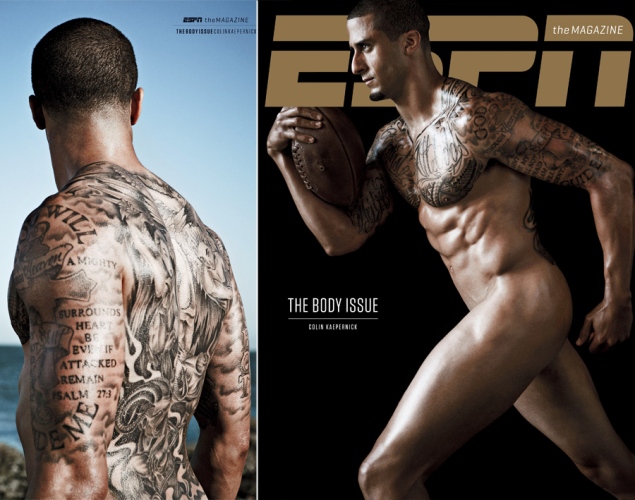
ESPN’s annual Body Issue (in it’s 5th year already…) is hitting the shelves today (Friday 12 July) in the USA. And once again, in true ESPN Body Issue fashion, they have some of the best sports stars on a whole range of covers, all in the nude, making us mere mortals feel guilty about our own bodies. But who’s cover is the most talked (and joked) about? The cover with Gary Player… Personally, I think he looks great, and puts most people his age (77!) to shame. Scrap that, he puts most young guys to shame…

ESPN 8

To view the behind-the-scenes video of Gary Player, and all the other stars, while shooting their covers, just click here.

The sports starts on the covers, and featured in the magazine, includes Colin Kaepernick, Matt Harvey, Kerri Walsh Jennings, Giancarlo Stanton, Swin Cash, Courtney Force, John Wall, Vernon Davis, John Isner, Sydney Leroux, Kenneth Faried, Carly Booth, Joffrey Lupul, Elena Hight, Agnieszka Radwanska, Chris Sharma, Daila Ojeda, Miesha Tate, Marlen Esparza, Tarah Gieger and Gary Player.

To view a slideshow of some of the amazing and beautiful photography in this issue you can just click here. A must-see…

VARA GIDS, 13 July 2013

VARA

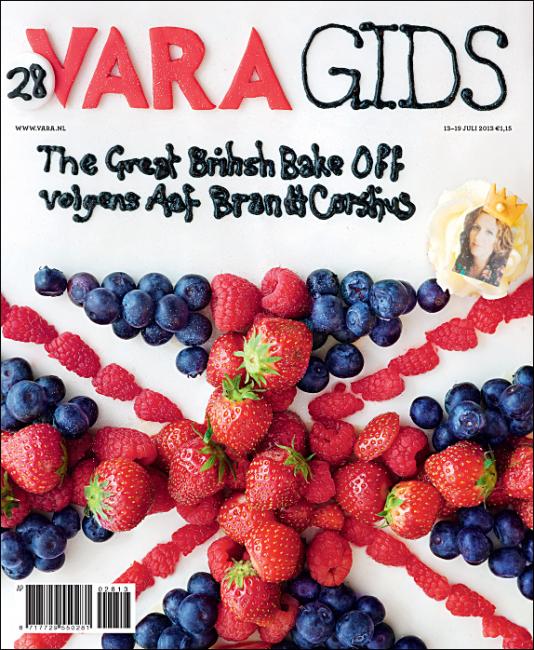
This TV guide magazine isn’t just you normal TV Guide as we know it in South Africa. Their covers are almost always creative and unique. For this cover, they’re featuring The Great British Bake Off, and baked the whole cover, including the masthead. We’re seeing more of more of these types of playful covers…

Cuisine, July 2013

Cuisine

This New Zealand cooking magazine has dome something I’ve never seen before, or thought of as a possibility for a cover; they’ve created a bookstand, with the masthead on top of the bookshelf, and the main stories are either featured as the cover of a ‘cook book’, or the ‘spine’. I think it’s very smart!

– The (for now anonymous) blogger behind MediaSlut knows way too much for his own good about media in South Africa. Magazines in particular. His mission is to show when South African magazines might fail, but most importantly, succeed. If you’re looking for a library about South African magazines and news, your one-stop pitstop is MediaSlut. #MagazinesForTheWin

– Find a cover we should know about? Tweet us @marklives and @mediaslut
Sign up for our free newsletter!

MarkLives Best Read June 2013

The ten best read stories on MarkLives during the month of June.

WPP buys NATIVE, joins agency to VML network
Digital agency NATIVE, one of the last major independent digital agencies in South Africa, has been bought by WPP. VML, one of WPP’s digital marketing agencies and part of the Y&R network, has acquired 76% of NATIVE for an undisclosed amount. NATIVE will be rebranded NATIVE VML. Its current management team stays in place.

Ogilvy Cape Town MD to leave agency, country
Ogilvy Cape Town MD Gavin Levinsohn is resigning his position at the end of the year to emigrate to Australia, MarkLives has confirmed. The news was announced to Cape Town staff earlier this week.

Ramsay shapes up to sell
Ramsay Media is being whipped into shape in preparation for the sale of shares currently held by the Ramsay family (mostly through a family trust).

Die Burger’s excellent front-page design pushes visual journalism
There is one consistently excellent stand-out newspaper when it comes to front-page design among South Africa’s dailies – and that is Die Burger in Cape Town. So my ears pricked up when I read that the title’s chief sub, Johnn-Grant Munro, picked up the Standard Bank Sikuvile journalism award recently for lay-out and design.

Time For Sorrell To Go
There is a small group of men who have ruined the advertising industry. They have made it leaner and meaner. They have made it more efficient. They have made it more productive. They have squeezed all the fat out of it. They have also squeezed all the life out of it.

Ad of the Week with Oresti Patricios – Nando’s Hot Old Spice Spoof
Nando’s is renowned for its in-your-face ads that elicit a guffaw, because the brand often rips off popular culture icons and, delightfully, other ads.

New CT shop grabs World Design Capital Cape Town 2014 ATL account
MetropolitanRepublic (Cape Town) has won the Design Capital Cape Town 2014 ATL and branding account beating both FoxP2 and M&CSaatchi 2014 World Design Capital Cape TownAbel. Quirk won the digital business beating Infestation and Gloo.

The agency Gen Y built
It’s the tale of many a start-up. A strat guys meets a creative and they see synergies in the services they offer, so they launch a business together. Usually it’s people that have done their time in the corporate world, spent some time in an agency, and have a pretty good relationship with somebody on client side. A bit of wink-wink and nudge-nudge later they are in business with, presto, a launch client (ever notice how often that clients sits on a booze brand?).

Exposing ‘& Anonymous’
There’s a new idea in town. And it’s been rounded up by a balaclava-cladded trio, who would prefer to remain anonymous. By Kim Penstone

Hermaneutics: 24.com closes down Afrikaans news portal to save paywall strategy
Media24 owned 24.com has decided to close down Nuus24 – the Afrikaans edition of news24.com – strating July 1. The group recently announced that it would be rolling out paywalls on the websites of its Afrikaans language newspaper sites (for Die Burger, Beeld and Volksblad).

– Industry news you’ll make time for. Sign up for our free newsletter!

Shelf Life: Edcon squares up for ecommerce

Louise Marsland’s (@Louise_Marsland) pick of new product, packaging and design launches.

International design success for Porky Hefer; artful potato chips from McCain; Jacobs coffee pops into odd spaces to brighten your day; and Edcon begins rolling out its online shopping sites.

Designer success

SouthernGuild_Porky Hefer_Audrey Esca

South African designers achieved success at their inaugural showing at the famous Design Miami/Basel Design Fair in Basel, Switzerland, recently. A popular item was Porky Hefer’s hanging leather ‘nest’ named Audrey Esca, which sold for $17 000 to a Formula 1 racing driver.

The Southern Guild gallery, which cultivates the careers of emerging contemporary designers,  showcased works by Brett Morris, Dokter& Misses, Gregor Jenkin, John Vogel, Bronze Age and Andile Dylavne, amongst others, at the annual fair.

“We are thrilled with the response we received this week to the pieces we exhibited from 16 of our leading designers at Miami/Basel, arguably the most important design fair in the world – our mission is to educate a global market on the truly unique South African design vision and voice. We are extremely grateful to the DTI for making this possible,” commented Trevyn McGowan, Southern Guild founder and director.

An international roster of nearly 50 historic and contemporary galleries from 13 countries participated.

Truly beautiful stuff! And as my 18-month-old says, “Want, want, want!”

Potato art

27030_Female_275x210.indd

You say potato… and I say sculpture?!

To promote the launch of its “healthier” frozen oven chips option, McCain’s and agency King James commissioned a professional sculptor to carve sculptures in potatoes, creating potato art featuring toned looking men and women for Planet Fitness gyms across Joburg.

McCain original Oven Chips’ boasts the tagline “only 3% fat for a healthier you” across all campaign messaging and activations to encourage the more health-conscious consumer to incorporate chips into their meal plans as well.

“Food art has become a growing trend and we decided to tap into this art form in order to illustrate the goodness of potatoes and promote the 3% fat campaign message. Research shows that taste is the most important factor South Africans take into consideration when buying food, but increasingly we are seeing that consumers want options that allow them to follow a healthier route. The campaign stresses that with McCain Oven Chips they can incorporate chips into their meal plans without the guilt and highlight that potatoes can offer great health benefits too,” said Greg Foster, marketing manager of McCain Foods South Africa.

Pop-up coffee

Jacobs Connect 1

Jacobs coffee is bringing coffee to the downtrodden office worker with their snazzy Jacobs Connect Café Mobile Vans in Joburg, Pretoria and Cape Town.

You’ll be ambling along to work, dragging your feet past grey office buildings, when suddenly! There it is! A gleaming green van, the aroma of coffee filtering through the morning smog to immediately brighten your day!

The fully kitted out vans, complete with fake grass and garden furniture, are self-contained sampling units.

The activation partners were Stretch Marketing and MD Mike Silver says the top line strategy was around creating “moments of connectedness” with consumers and to allow people to escape their offices or from the burden of grocery shopping, for a moment, to connect with others around a cup of coffee.

Jacobs senior brand manager Taki Tsanwani explains: “The Jacobs Connect Café concept is so simple – what more do you need than the taste and aroma of Jacobs coffee and a place to enjoy it?”

Yep, it’s as simple as that. And you never know where they will pop-up next (cue exciting movie music!).

Edcon squares up for ecommerce

RedSquare website

Fontera Digital Works, appointed as an ecommerce provider to Edcon, has just launched the first website for Edcon for the Red Square brand.

To date, Fontera has built over 50 international ecommerce sites, such as Harvey Nichols, Matthew Williamson, Myla and Smythson. It is headquartered in Cape Town, with offices in Atlanta and London.

Fontera CEO, Simon Leps, believes the company’s international experience and success in the area of ecommerce integration and development, positions Fontera as the salient provider in being able to offer world class, cost effective and scalable digital solutions to retail brands looking to embrace ecommerce in South Africa.

Fontera is the first African partner of the Magento platform – the eBay-owned and largest ecommerce software platform in the world currently.

The Red Square site is built on Magento and retails the in store products online, with Thank U card account holders also able to receive points when shopping online. The focus of the Red Square development was to deliver an upmarket and uncomplicated online shopping experience, as well as to include “on trend” smart capabilities, such as the ‘free  samples’ functionality whereby customers get to select three free samples from the catalogue and add them to their order.

“Our unique proposition lies in the fact that we offer fully integrated, strategic and bespoke solutions to help businesses achieve their operational goals – we don’t use a template solution – and our international experience, retail marketing team and expert user experience group allow us to assist, design and deliver a seamless move from traditional retail to full ecommerce capability,” explains Leps.

Edcon ecommerce executive, David Gibbons, said Fontera’sMagento expertise was key to building a foundation for Edcon’s ecommerce platform for Red Square and for their future ecommerce sites.

Louise Marsland– Shelf Life by Louise Marsland is a weekly column on MarkLives. Tweet new product, packaging and design launches to @louise_marsland or email her at louise.marsland at gmail.com.

– Want to sponsor Shelf Life? Contact us here.

Louise Marsland has written about the FMCG, media, marketing and advertising industry for 18 years of her 25 year media career as a former Editor of magazines AdVantage, Marketing Mix and Progressive Retailing; as well as websites Bizcommunity.com and FMCGFiles. She currently edits the weekly Wednesday Media & Marketing Page for The New Age newspaper; and is the co-founder and Publishing Editor of SA’s newly launched industry trendwatching portal, TREND. at www.trendlives.info, in partnership with MarkLives.com.

– Industry profiles you’ll make time for. Sign up for our free newsletter!

Social Media Gets An Ass-Whooping From Google, Email

adcontra

by  Bob Hoffman (@adcontrarian), San Francisco Bay Over four years ago, in a post entitled Looking For Volunteers, I wrote the following…

“TAC predicts that when the frenzy over Facebook, Twitter, and other social media calms down and the dust clears, email and search will continue to be the dreariest and most productive forms of online advertising.”

In an article on Monday  entitled “Email Is Crushing Twitter, Facebook for Selling Stuff Online” Wired had this to say:

“An endless stream…of advice from marketing consultants warns businesses that they need to “get” social… Despite the hype… it’s relatively antique tech that appears to be far more important for selling stuff online.

Wired’s source for this article was a company called Custora that studied “72 million customers shopping on 86 different retailer sites.” Their conclusion: search and email are far more effective at generating sales results than Facebook, Twitter and banner ads.

This chart summarizes their findings:

custora_1-660x438

Here’s a little recap of what Wired reported:

  • “Over the past four years, online retailers have quadrupled the rate of customers acquired through email”
  • “Facebook over that same period barely registers as a way to make a sale, and the tiny percentage of people who do connect and buy over Facebook has stayed flat.”
  • “By far the most popular way to get customers was “organic search,” according to the report, followed by “cost per click” ads (in both cases, read: Google)”
  • “Email customers were nearly 11 percent more valuable than average. Facebook customers were just about average. Twitter customers, meanwhile, were 23 percent less valuable than average during the two years following that first click.”
  • “Custora found that Google’s ads… lead not only to clicks but to purchases”

Now, of course, this shouldn’t surprise any of the brilliant readers of The Ad Contrarian. We explained why Google was so effective and Facebook was such a whack-off in this post almost two years ago.

Social media may very well be the most over-hyped of all the online advertising miracles. Which is like being the deadest guy in the graveyard.

– The Ad Contrarian is Bob Hoffman, is the author of The Ad Contrarian and 101 Contrarian Ideas About Advertising. Reprinted from his blog The Ad Contrarian.

– Industry profiles you’ll make time for. Sign up for our free newsletter!

Ad of the Week with Oresti Patricios – “The Chef”

MarkLives Ad of the Week with Oresti Patricios – “The Chef”

Amstel Lager’s main brand differentiator has been the promise that it is “slow-brewed”, which allegedly produces a better tasting product. This beer has always been a little more expensive than the other mainstream brands, and has traditionally occupied a prestige space that is somewhere between the imported and the local brands.

The concept of taking time to achieve true quality has been re-interpreted in the latest campaign, which tells realistic life ad of the weekstories of ordinary people who have to pay their dues to achieve their goals.

Humans are storytelling animals: telling a story has been proven to be the best way to engage an audience, be it in a presentation, a speech or a commercial. This campaign has used that to draw in its audience and make a very definite impression.

The first in the series told the story of a boxer who failed at first, but through mentoring and hard work he achieved his dream of being a champion.

The second ad recounts he tale of a young man, Simphiwe Nzima, who dreams of being a chef. He inveigles his way into a job as a dishwasher in a top restaurant. While he works, he watches how the kitchen operates, and learns.

When the chef catches Simphiwe trying his hand at chopping vegetables during the lunch break, he gets given a chance as an apprentice… and so his journey begins.

The commentary is done in a first-person narrative style – with a twist. First we hear his voice in isiZulu, but it is then supplanted by an English translation. This dual narrative continues throughout: It’s a clever way of lending authenticity to the copy.

The treatment and style of both “The Boxer” and “The Chef” is identical. Ad agency OwenKessel kept the same team, led by director Greg Gray of Velocity Films, with ace cinematographer Paul Gilpin creating a beautiful, moody atmosphere.

The colour grade is very desaturated, with just a few colours being allowed to key through, almost like spot-colours. In this way, the eye is drawn in to certain elements, like the ingredients, and of course the distinctive green of the Amstel Lager bottles which the protagonists are seen drinking from (always outside the context of work).

Simphiwe is very subtly seen to age throughout the story: he starts off clean-shaven, and by the end he has a full beard. In fact, on repeated viewing, you’ll notice that in the opening shot, where he starts to tell his story, it is the “old” Simphiwe loading vegetables into a smart 4×4, so in fact the whole story is told in flashback: a very smart and engaging device.

Apart from the narration and spots of sound—such as snatches of dialogue, relevant sound effects—there is a driving musical soundtrack, courtesy of Asaf Avidon and the Mojos, called “One Day/Reckoning Song”, which has apparently been an international YouTube hit. The lyrics tie in with the message, the repeated “one day” speaks to Simphiwe’s dedication and tenacity, as he builds himself up to the “one day” that he opens his own restaurant.

As in “The Boxer”, the message is clear and simple, tying in to the product. As Diederik Vos, Marketing Manager for Amstel at Brandhouse Beverages (Pty) Ltd says, “He is taking his time to learn the tricks of the trade, that will help him become a great chef. And it’s not easy. Just like there are no shortcuts or quick fixes to brewing a good beer. That’s how the story of Simphiwe and Amstel are really connected – they both take their time to achieve true quality.”

The local beer market has become crowded in recent years by the proliferation of craft beers: small brands that once were outliers but have now come to occupy the same prestige space as Amstel Lager; to the point that they are now available in restaurants. In this commercial, Amstel Lager has very cleverly consolidated its position in this end of the market, recapturing the hearts and minds of its target market with a stylish, engaging campaign.

Watch the 130” commercial at: https://www.youtube.com/watch?v=nFCSZSqSskk
Watch the 60” commercial at: https://www.youtube.com/watch?v=K8uBeVAK8ZY
Watch the 30” commercial at: https://www.youtube.com/watch?v=23vOD2uKbIE

Ad of the Week is published on MarkLives every Wednesday. See past selections here.
Oresti Patricios is the CEO of brand and reputation analysis company Ornico.

– Industry profiles you’ll make time for. Sign up for our free newsletter!

Mac, how hard is it to be honest and open about Mandela?

grubstreet

by Gill Moodie (@GrubstreetSA)I was very touched – as I’m sure were many other viewers  – by the interview on eNCA last Friday by Annika Larsen with former Rivonia trialist Denis Goldberg after he visited Nelson Mandela in hospital.

I don’t think I am only South African hack – or ordinary citizen – who is mystified by the lack of official information from the presidency and its chief spokesman, Mac Maharaj, on the how our former president is doing in hospital… especially after the confusion last week when Mandela family court papers filed at the Mthatha high court claimed that doctors had advised that life support be switched off.

Goldberg said he wanted to set the record straight – and that he does in this interview!

He talks sympathetically and frankly about Mandela being responsive but gravely  ill – but that there has been no general organ failure so there is still hope that Mandela may recover. When Goldberg says at the end of the interview: “What a fighter. What a fighter, that man is”, I don’t think I was only viewer who got teary-eyed.

And so it was left to Goldberg to give  the nation information that we can trust, cutting through the machinations of the family  and aloofness of the presidency.

To speak simply and honestly about Mandela’s condition  – how hard can that be, Mac?

Did that nation fall apart after Goldberg did so? No, I think we were comforted by his honesty and humanity.

If you wish to control the flow of information, then control it with intelligence and compassion (for both Mandela and the nation).

Journalists covering Mandela have told me that they are constantly phoning the presidency for updates or confirmation of mandelathings they are picking up but are usually told that they must wait for a statement – and that the presidency will make a statement when the time is right.

Why in the world the presidency doesn’t just hold a daily briefing and be honest about what is going on is beyond me?

Even if it’s only to say there is no change, it would be better than keeping us all wondering and worried, especially with the bizarre fight going on with the Mandela clan serving  to confuse things.

The presidency’s feckless management of the information around this month-long saga (yes, Mandela has been in hospital for that long!) points to a lack of depth and quality in that highest office of the government, a cursory understanding of communication and a complete misreading of the mood of the nation.

In the meantime, thank you Mr Goldberg!

– SA’s leading media commentator, Gill Moodie, offers intelligence on media – old and new. Reprinted from her site Grubstreet.

Sign up for our free newsletter!

Online CPD Courses Psychology Online CPD Courses Marketing analytics software Marketing analytics software for small business Business management software Business accounting software Gearbox repair company Makeup artist