The Ad Contrarian: eBay — paid search is worthless

adcontra

by  Bob Hoffman (@adcontrarian), San Francisco Bay A study done by eBay on the effectiveness of paid search for established brands has found it to be worthless.

The eBay study called Consumer Heterogeneity and Paid Search Effectiveness: A Large Scale Field Experiment (no, I’m not kidding) concluded…

  • There is no short-term value in brand keyword advertising.
  • Stopping brand keyword advertising resulted in no detectable drop in traffic and sales.
  • The non-brand keyword experiments show that SEM had a very small and statistically insignificant effect on sales.

According to the study…

“eBay historically managed over 170 million keywords and keyword combinations using algorithms that are updated daily and automatically feed into Google’s, Microsoft’s and Yahoo!’s search platforms.”

Presumably, eBay commissioned the study to figure out how much of their search money was being wasting. Their conclusion seems to be: all of it.

Now before you read the entire study, just a warning. It is written in that academic style that makes your brains fall out, and includes sentences like this…

“The instruments isolate the exogenous experimental variation in spending to estimate the causal impact of spending on changes in revenue.”

Which I think means something like this…

“We wanted to see whether paid search is worth anything or is just another online whack-off.”

It also has formulas like this…

I don’t have room for the rest of the formula, but I’m sure you can work it out for yourself.

Also, the author seems dangerously fond of the word “endogeneity,” which I have always felt is inappropriate in polite company.

After wading through several pages of this stuff, I think the most useful piece of information is this — eBay concludes that people who click on a paid search listing are just looking for a shortcut to a website which they would find anyway. So why pay for it?

I have no idea whether this study is worth anything or not, but I’m hoping it starts a great big shit fight between eBay and Google, which would be tremendous fun to watch.

Near the end of the paper the authors pose this rhetorical question about paid search:

“…why do well-known branded companies spend such large amounts of money on what seems to be a rather ineffective marketing channel?”

And they answer thusly:

“…Google offer analytical advice that is not consistent with true causal estimates of ad effectiveness.”

Which I think means something like this…

“Google is full of shit.”

Read more: Google keyword advertising is waste of money, says eBay report – The Guardian

– The Ad Contrarian is Bob Hoffman, is the author of The Ad Contrarian and 101 Contrarian Ideas About Advertising. Reprinted from his blog The Ad Contrarian.

– Industry profiles you’ll make time for. Sign up for our free newsletter!

Design Annotator: Creative Entrepreneurs and Mandela’s Legacy Posters – plus Men with Beards

uno de waalDesign Annotator with Uno de Waal is a  new column featuring the top design work from South Africa’s biggest online creative showcase, Between 10 and 5, curated by Publisher Uno de Waal @Unodewaal. 

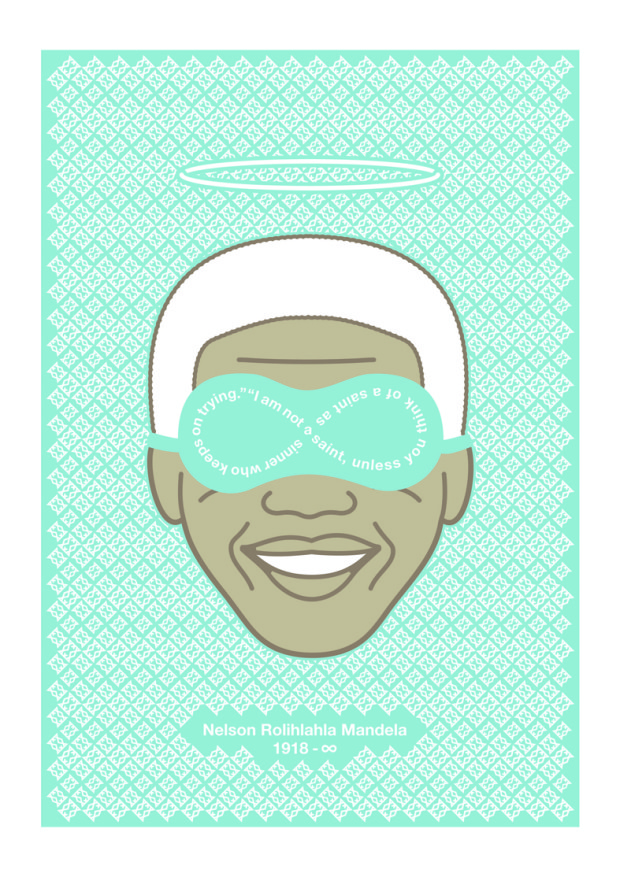
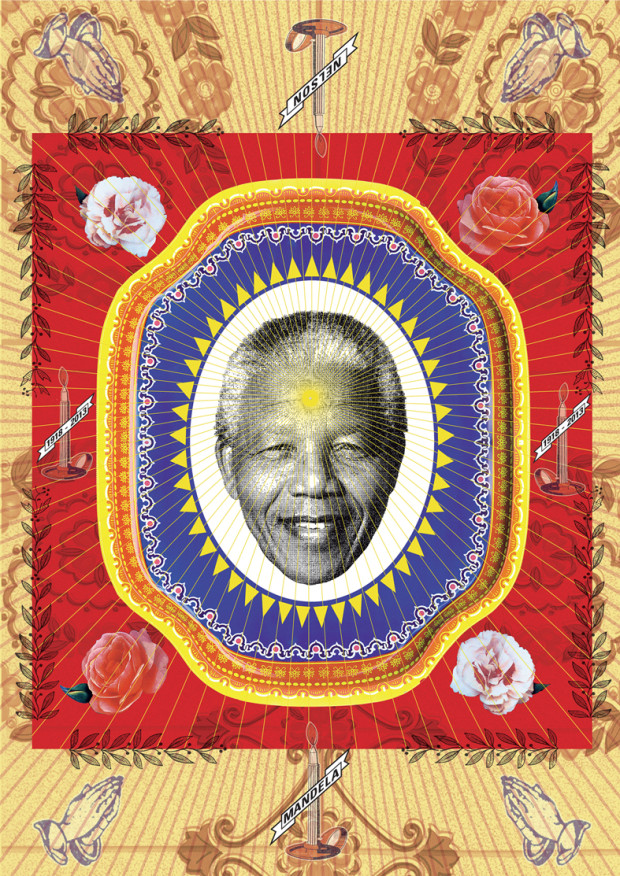
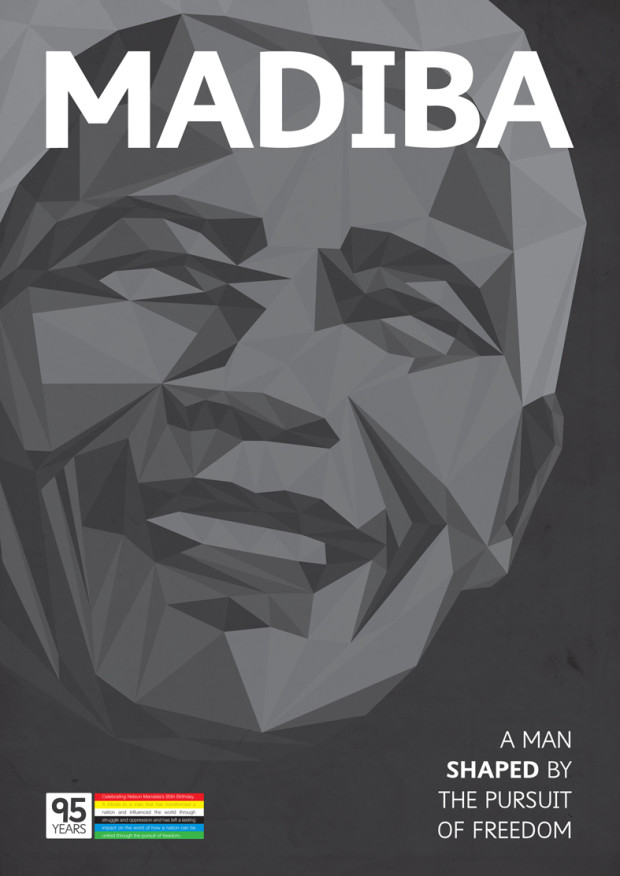
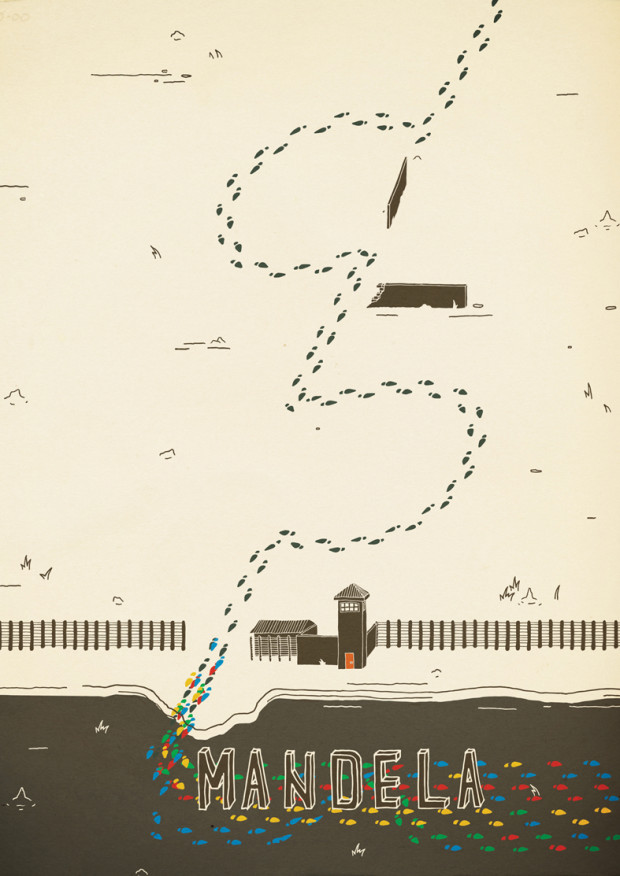
One of our most anticipated projects has completed and the response to the Mandela Poster Project could not have been better. The Mandela Poster Project honours Nelson Mandela’s legacy in a series of poster tributes. I’m a huge fan of the work produced, and we’ve curated the posters that we liked the most. Some of South Africa and the Worlds best illustrators contributed to the project – definitely one to check out.  Probably the funniest projects we’ve featured this week has been Bernard Brand’s photo’s of dudes with beards. Bernard has amassed a collection that would make any hipster-loving copywriter crazy with envy. Our last video is from the electronic music act PHFat – their latest video is an eery black and white semi-horror. This month is also 10and5 Self Starter Series. We’ve delved deep to find South Africa’s top creative entrepreneurial talent. Our first interviews are with Dion Chang of Flux Trends and Ross Drakes of Nice Work. Check out more of the great work that South African creative entrepreneurs are doing in our Self-Starter section.

 Bernard Brand Take Photo’s Of Dudes With Beards

Dudes with beards

Ranging from the manicured to the monstrous, facial hair is the focus in freelance photographer and beard-bearer himself Bernard Brand’s latest body of work, Dudes with Beards. Bernard debuted the series of beautifully-lit portraits at an exhibition in Pretoria over the weekend.

Check out more dudes with beards.

Creative Entrepreneurs – Self Starters

Augustine-profile-shot

Our series of Creative Entrepreneurs kicks off with the local Durban Street Tours and we do an interview with Dion Chang – one of South Africa’s leading trend analysts as well as Ross Drakes who helped kickstart creative agency Nice Work. We also show a collection of new business in the fashion and product design world. There’s a lot more to come in our series and we hope to inspire more South African’s to start their own creative business.

Featured: David Brits

VRYSTAAT.-INK-ON-FABRIANOjpg

David Brits is a young South African artist who graduated from Michaelis in 2010. In the three short years since he has participated in a number of group shows and two solo exhibitions; an exploration of conscription during the Apartheid era titled VICTOR VICTOR at Brundyn + Gonsalves in 2011, and 1969 currently showing at Grande Provence Gallery in Franschoek. The shows title marks the year that his grandfather led a rescue mission to the most remotely inhabited place in the world, Gough Island.

The most amazing thing about David’s work is that while it looks like simple dot matrix print-outs, the work is actually hand-drawn ink drawings.

Have a look at more of David’s amazing work.

Strukt[uur] | Designed Objects Exhibition

struktuur-objects

The Industrial Design B.Techs (4th year students) at CPUT are exhibiting their first products of 2013 this week. Opening on Thursday evening, Strukt[uur] will see six designed objects on exhibition and for sale at Object House, Woodstock.

Mandela Poster Project | The Artwork

Sindiso-Nyoni-Zimbabwe
Bradley Kirshenbaum
Bradley Kirshenbaum
Celeste Burger South Africa BEFORE-AND-AFTER
Garth Walker
Garth Walker
Lauriel Coscia
Lauriel Coscia
Marco Cannata
Marco Cannata
Wessel Matthews
Wessel Matthews

In May of this year, a group of South African designers came up with the Mandela Poster Project; an idea to celebrate the life of Nelson Mandela by collecting 95 exceptional posters from around the world. In 60 days more than 700 posters honouring Madiba’s lifelong contribution to humanity were submitted by designers from more than 70 countries. The collection was curated and 95 posters will be exhibited around the world and eventually be auctioned by the Nelson Mandela Children’s Hospital Trust to raise funds. Further plans are underway for a limited edition publication showcasing 500 of the poster submissions.

See the rest of the Mandela Poster Project work.

PHFat ‘House of Clashes’ Music Video

https://www.youtube.com/watch?feature=player_embedded&v=leYU1jVwJxw

PHFat’s latest music video made by Travys Owen for their single ‘House of Clashes’ was released this morning. The track is the first single off their new album ‘HAPPINESS MACHINES’ which launches soon with parties in Cape Town, Pretoria and Joburg. It will also be made available for free download at www.phfat.co.za from the 22nd of July. The team behind the video describe it as combining lo-fi aesthetics with Surrealist Art House, cheesy horror and Tragi-Comedy. They said, “It was directed with a strong focus on off-kilter portraiture, jarring composition and opposing combinations of beauty and gore. The video is a representation of everything the song says, everything the band enjoys and everything the director has been dying to try.”

Absa L’Atelier Awards 2013

Pauline Gutter
The 2013 Absa L’Atelier Art Competition winners have been announced. Pauline Gutter from Bloemfontein won the overall award and main prize with her piece, Die Huweliksaansoek. Mongezi Ncaphayi from Johannesburg was awarded the Gerard Sekoto Award, and the two Merit Awards went to Jaco van Schalkwyk and Kathleen Sawyer. The work produced by this young group of artists is incredible and I can’t wait to see more of the works being produced.Check out the rest of the winning work from ABSA L’Atelier Awards 2013


10and5logosmall1


– Uno de Waal is the publisher of creative showcase 10and5.com.

– Industry profiles you’ll make time for. Sign up for our free newsletter!

Fair Exchange: Your brand in Africa — global guest or global bully?

by Erna George One of my pet hates is those global brands who arrive on our shores thinking they can fill a gap in any market in Africa without altering their product, packaging or communication.

While possibly an acceptable position in 1995 when our country was making its way back into the global economy, this has been a no-no for some time.

[pullquote]Some brands have adapted to local conditions and got it right. Take Handy Andy, for instance. Elsewhere it goes by the name of Cif (pronounced ‘siff’). Not here. No explanation necessary.[/pullquote]

I remember those horrible pink ads for that detergent with the mismatched lips and voice-over that harked back to the days of simulcast TV. Lucky for it, that brand delivered on promise and garnered consumer buy-in (not forgetting, of course, that choices were a little slimmer back then). Today, the brand has locally-made communication and is ostensibly making good money, if the prices it is asking are anything to go by.

Don’t get me wrong; it is great to have access to world class brands and offers, but it is critical to ensure world class branding is also delivered because Africa has become incredibly sophisticated when it comes to brands.

Some brands have adapted to local conditions and got it right. Take Handy Andy, for instance. Elsewhere it goes by the name of Cif (pronounced ‘siff’). Not here. No explanation necessary.

Immersing in local markets with consumers, or partnering local experts, to ensure you know the local context and nuances enables global brands to win.

What thrills me is that I see far fewer poor examples of this. And when I compare that pink detergent launch to what Ariel is doing in South Africa as well as what I saw it do in Kenya when I was working there recently, I get goose bumps.

If memory serves me right, this is Ariel’s second attempt at the South African market, but this time I get the sense that they are ready for war, and they have a multi-pronged approach to take them into battle.

For credibility, they have used a trusted local spokesperson (Noeleen Maholwana-Sangqu) in conjunction with a leading independent laboratory. For demonstration purposes, they’ve used real people to make real South African stains and then do a handwash. Both compare Ariel’s performance to the leading brand.

Added to this are the usual price promotions and ensured distribution in key channels. What I think has excitement is the introduction of a new format for machines  – my own husband rushed out and bought a pack after seeing the commercial, despite my recent purchase of the monthly detergent!

All-in-all, it’s a very compelling campaign that takes on the likes of Omo and Skip with their long history in South Africa.

While in Nairobi, I picked up on a ‘green wave’ comprising numerous billboards and great merchandising in the Nakumatt (the equivalent of Pick n Pay or Shoprite in Kenya). I was also told how Ariel has actively targeted house-helpers who do the handwashing to demonstrate how powerfully it cleans while being gentle on hands. Now Kenyan house-helpers are actively asking for Ariel to replace the historical brand on the shopping list – the wave builds.

Interestingly, on the plane recently, I sat next to someone who had a note with a headline that said something like ‘Ariel has overtaken OMO in erna georgeone month’. Now, I am not in habit of reading other people’s information, so I did not read any further.

But, let’s muse what this could mean. The headline could apply to sales, shelf space or myriad of other measures … but something must be working.

The established brands have reacted and are working hard to protect their space. I know, there’s been a flurry of increased OMO advertising and price promotions recently. Let’s watch this space to see the outcome.

Not every journey starts this well. I think the challenge for global brands is the battle between the efficiencies a single brand and communication piece brings versus the cost of ensuring local relevance. What needs to be added to this equation is the benefit of matching target market needs and local nuances.

With increased relevance the potential for success increases. While a single brand name can be in order, a different expression for communication or packaging is sometimes needed to match your target market requirements.

Of course there is space for global brands ‘selling’ international aspirational appeal, but often there are still some tweaks that need to be made whether it be on pack size, or where distributed, or something else to ensure it lands well in their country of choice.

Some of the brands who are not getting it right are from the beauty industry, which seems to continue to promote the western context of beauty. A case in point is those hair relaxer ads that show black women with long, flowing locks. My friends have certainly snickered at this saying ‘how do they expect us to buy this, it looks like it works for weaves, not her real hair!’

Fast food brands seem to get this ‘global brand made locally relevant right’ quite often. One of my pastimes is to visit MacDonald’s or KFCs in other countries to see what’s on the menu. Often, it’s the usual big Mac or Family bucket PLUS rice or pap instead of more European chips. And chopsticks instead of plastic forks!

For locals, there is something familiar that speaks to them. For the brand, there’s just enough to benefit from ubiquitous global communication with enough local flavour to ensure relevance.

If you’re on a team that’s bringing a global brand to Africa, consider that global muscle + respect for local markets = a winning formula.

Consider:

  • What about the current mix can be used and what aspects need tweaks?
  • Have I looked or taken into account – local cultural and societal context or nuances?
  • Which the local traditions, habits or heroes I can borrow to land the brand well?

Erna George is the business director heading up quality research at brand development and marketing insight consultancy Added Value. She works with diverse brands and categories — from FMCG, alcohol and agriculture to financial services and entertainment — in countries across many geographies, including South Africa, Mozambique, Nigeria, Kenya, India, Philippines and Brazil. She contributes the monthly “Fair Exchange” column about business relationships and partnerships in adland to MarkLives.

Industry opinion you’ll make time for. Sign up for our free newsletter!

Ad of the Week with Oresti Patricios – Yawn for a Cuppa Joe

Ad of the Week with Oresti Patricios – Yawn for a Cuppa Joe

For many FMCG products, the best way to win customers is to let them experience the brand directly. To interact with it, taste it, touch it and hopefully to watch as people come away with an enjoyable, happy memory of the experience.

Brand activation in the form of in-store promotion—if done correctly—has been shown to work well in consumer research. So much so that these activations can even convert customers from entrenched or established brand allegiances. However creating activations is labour intensive – much more work than creating a commercial that is flighted for maximum reach and penetration, and is therefore more financially lucrative for the agency.

That said, real world experiential branding can have a limited reach, so it must be part of the broader marketing mix. It also works if brand activations are in themselves creative and clever, and can drive social media campaigns that broaden their reach and engagement.

One way to extend the reach of an activation exercise is to make the experience fun and memorable enough for the conversation to continue red eyebeyond the original event. In DouweEgberts’s recent activation, conceived and produced by Joe Public, the ‘zinger’ was the addition of technology that allowed users to interact with the brand in a fun way.

A coffee machine with DouweEgberts branding was placed at OR Tambo International Airport. But there was no coin-slot: all the tired travellers had to do was what comes naturally after a long and exhausting flight: yawn.

Facial recognition software would then trigger the mechanism, and the free coffee would be dispensed. The cups were custom branded with the DouweEgberts logo and the slogan “Bye bye red eye.” The ‘red eye’ is the slang used to describe any flight that departs horribly early, or terribly late. The very phrase is derived from the condition one gets from taking these flights – you know the feeling, when your eyes get all red and sensitive.

“Our rationale behind this exciting activation idea for DouweEgberts is simple, yet highly effective,” says Joe Public’s Chief Creative Officer Pepe Marais. “Local and international travellers are often tired and jet-lagged. So why not offer them a free cup of great coffee at the airport?” he explains.

DouweEgberts is a company that traces its origins to a grocery store started in 1753 in the Netherlands, which makes it 250 years old. For centuries it has been trading in, and processing coffee, tea and tobacco. In 1978 it was taken over by Consolidated Foods, but after 35 years became an independent Dutch company again, trading under the name D.E Master Blenders 1753 NV – DE for short. Currently it produces a number of products, but most notable are its coffee (which has retained the DouweEgberts brand-name), and the Senseo coffee machine which—at least in Europe—has competed strongly with Nespresso.

In my mind DouweEgberts has always had something of an ‘oldeworlde’ image, but activations like this definitely modernise its image. Its website boasts of using sustainable coffee and tea in energy-efficient machines. Which is very 21st century and environmentally friendly and all that.

The facial recognition-powered coffee dispenser is a very smart experiential marketing exercise, as it allows the public to taste the product in a familiar environment, and in all likelihood talk about the experience for some time afterwards.

The ‘candid camera’ style video that was shot and posted on YouTube and the Facebook page is also fun to watch. It starts off with amusing shots of travellers dozing off in the departures lounge, and then progresses to people discovering the machine and trying to find out how to get it to work. Then there are great visuals of people’s surprised faces as they discover the trick to getting the free coffee – all in all a feelgood spinoff of the original, that allows Facebook followers to feel part of the program, even if they weren’t able to be directly involved.

Fun, funky, exciting, interactive: great ingredients for an uplifting brand activation.

Ad of the Week is published on MarkLives every Wednesday. See past selections here.
Oresti Patricios is the CEO of brand and reputation analysis company Ornico.

– Industry profiles you’ll make time for. Sign up for our free newsletter!

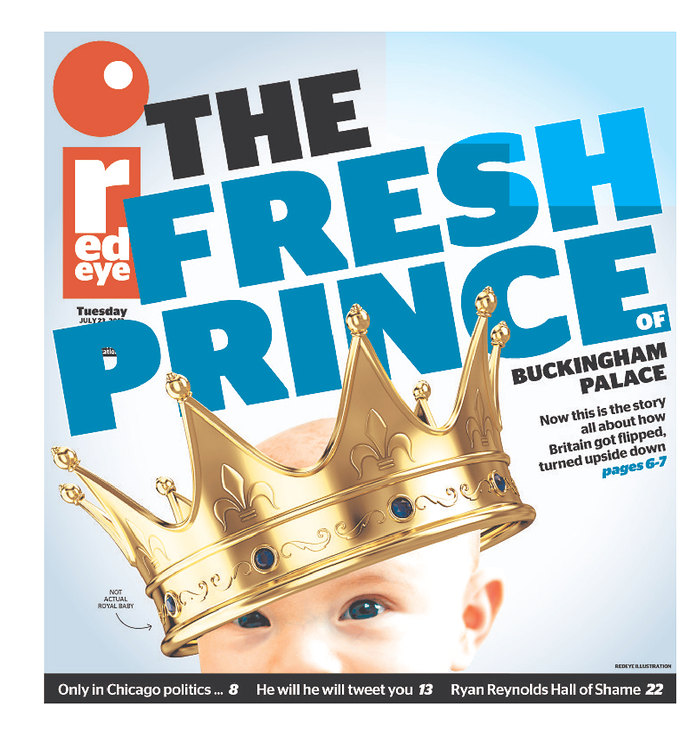
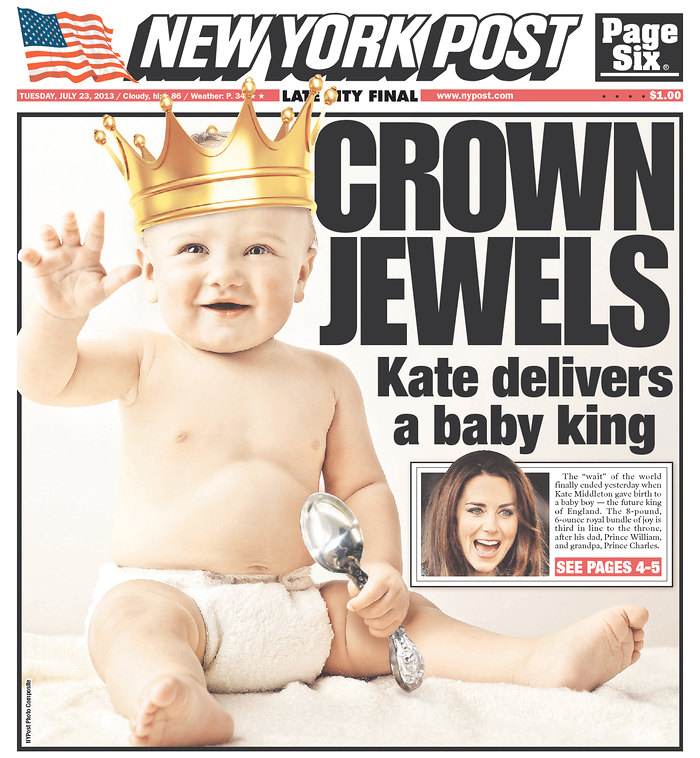
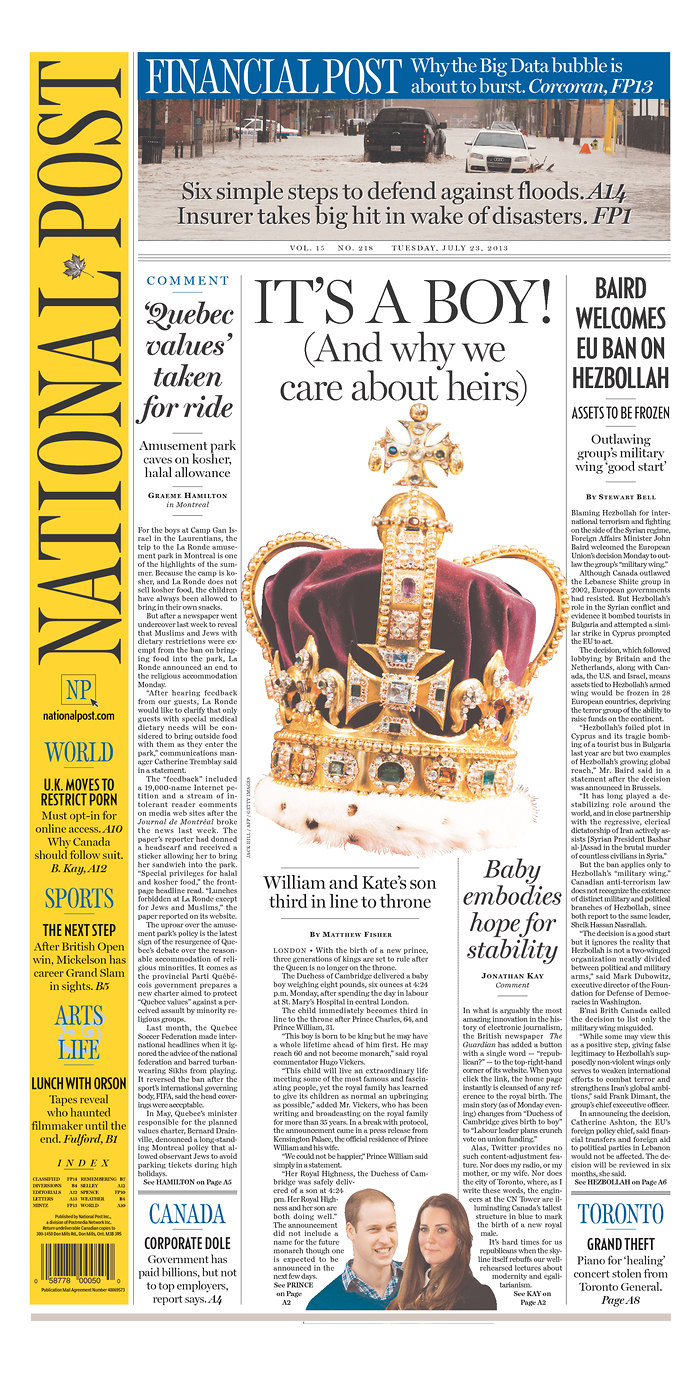
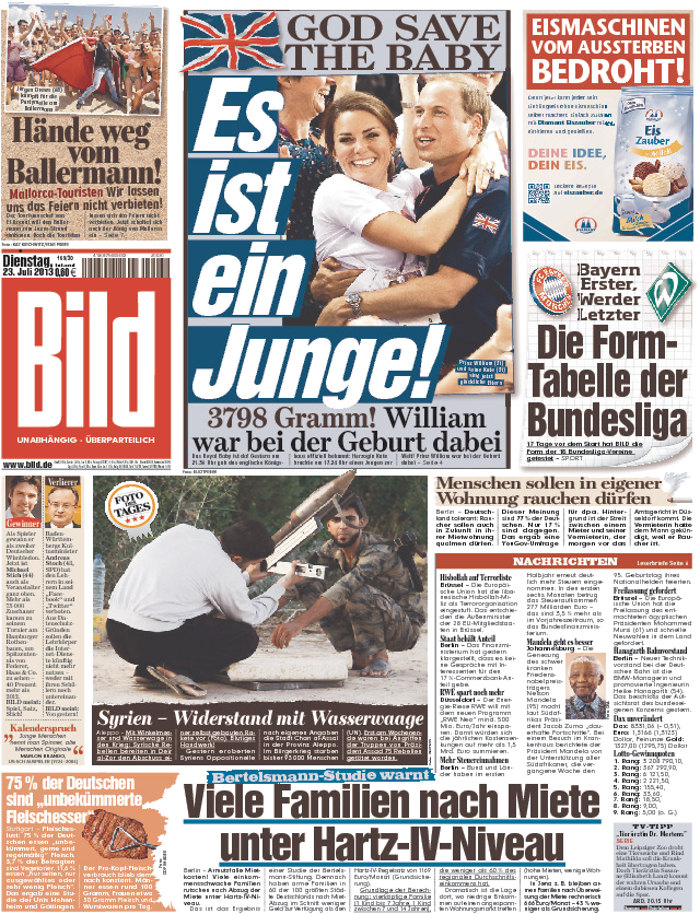
Royal baby front pages: It’s a bloke! to The Fresh Prince (and the odd princess)

Idaho Press-Tribune, published in Nampa, Idaho USA

ID_IPTRedEye, published in Chicago, Illinois USA

IL_REMetro – Boston Edition, published in Boston, Massachusetts USA

MA_METDetroit Free Press, published in Detroit, Michigan USA

MI_DFPStar-Gazette, published in Elmira, New York USA

NY_SG

New York Post, published in New York, New York USA

NY_NYP

Philadelphia Daily News, published in Philadelphia, Pennsylvania USA

PA_PDN

Victoria Advocate, published in Victoria, Texas USA

TX_VAUSA Today, published in McLean, Virginia USA

USATThe Courier-Mail, published in Brisbane, Australia

AUS_CMThe Sydney Morning Herald, published in Sydney, Australia

AUS_SMHKleine Zeitung, published in Graz, Austria

AUT_KZDe Standaard, published in Brussels, Belgium

BEL_DSWaterloo Region Record, published in Kitchener, Canada

CAN_WRR

National Post, published in Toronto, Canada

CAN_NPBILD, published in Berlin, Germany

GER_BILD

Morgunbladid, published in Reykjavik, Iceland

ICE_MORGIrish Times, published in Dublin, Ireland

IRL_IT

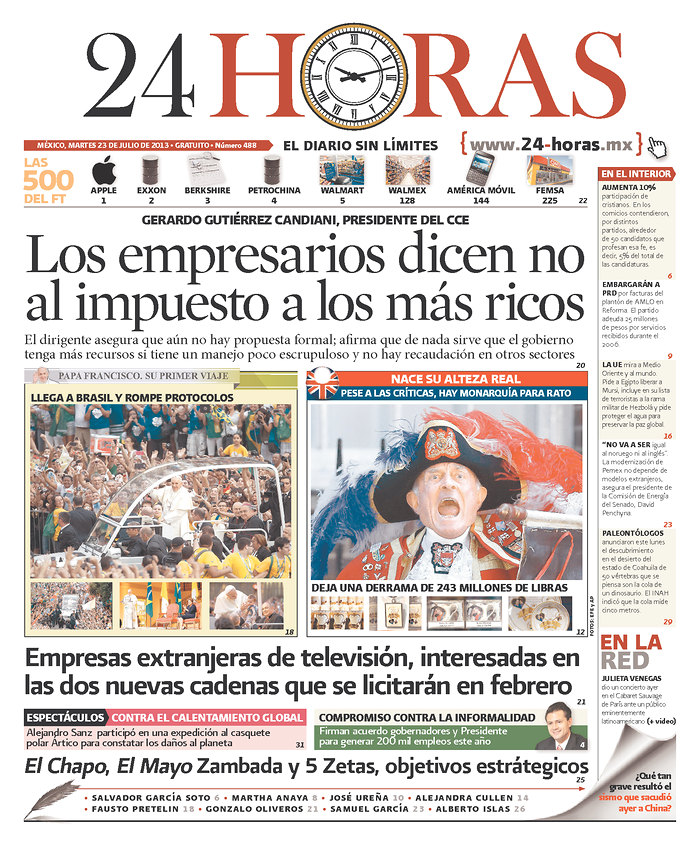
Diario 24 Horas, published in Mexico City, Mexico

MEX_D24HThe Witness, published in Pietermaritzburg, South Africa

SAF_TWThe Guardian, published in London, UK

UK_TGDaily Mail, UK

1

Front pages sourced from Newseum, Grubstreet

– Industry news you’ll make time for. Sign up for our free newsletter!

Millennial Ad-Grad: Marketing lessons from Brand Obama

by Faheem Chaudhry (@FaheemChaudhry) Arguably one of the most memorable arrivals to South African shores in recent years was that a few weeks back of US President Barack Obama – the man who during his first presedential election captured the imagination of the world through his message of hope and change for all. While President Obama always has and always will have his fair share of critics, I found myself captivated by his trip, his message for our country, simply, by brand Obama.

As disciplines, politics and marketing are social science cousins. In fact, politics is marketing. It’s about projecting and selling an image, talking faheemto human aspiration and bringing people together through common interests and shared values.

But what underpins brand Obama? And what we as marketers can learn from his brand?

Relevance to audience reality

The US President talks the talk of his audience. When Obama stood up to address a crowd at UCT, he was speaking to business leaders, politicians, students, alumni, lecturers, university chancellors, you & I. Yet, every aspect of his delivery, regardless of the topic, resonated with everyone in the room. The audience was completely engaged from start to finish as Obama weaved his way through a variety of key topics. He opened the address by greeting Jameson Hall in almost every official South African language. It may seem like an obvious opening, but few are able to deliver it with the relevance and panache that Obama did. He even mispronounced a few greetings, but still charmed the crowd; he wasn’t talking to us, he was talking with us.

But Obama’s ability to captivate the audience in our own terms isn’t some arbitrary feat. Him and his team do their homework. They spend hours mining out the colloquial terms of the time, and make an effort to integrate local relevance into talks with global context. The result is an audience positively positioned to his message, feeling understood and open to listen.

As marketers, while we may endeavor to speak to our core audiences in the most relevant way, we often slightly miss the mark. Focusing on the most relevant ways to engage with the target markets of our brands should be a non-negotiable, and the time and effort that goes into the back end of this, should be shared by all responsible for communicating a brands proposition.

Talking to human truths

Obama is perhaps best known for his belief in the power of human collaboration over conflict [for an alternative view see here]. He calls it a Yes We Can attitude. From his days in the US senate running for the Presidency, to his various talks in our country a few weeks back, Obama always talks to values that we all share. Not just values that US citizens share, but values that bind societies together.

“Hope is what led me here today – with a father from Kenya, a mother from Kansas; the belief that our destiny will not be written for us, but by us; by all those men and women who are not content to settle for the world as it is; who have courage to remake the world as it should be”

This depth of communication is critically important to brands of any form, whether people or products. The most captivating brands have always been those unpinned by powerful human truth over more service level benefits.

Disney and imagination. Coca-Cola and happiness. Dove and personal beauty. We’re captivated by these brands for the same reason we’re enthralled by brand Obama; they speak to the underlying drivers of human choices, decisions and behaviour.

The most powerful brands; brands that play a role in society beyond business, are founded on this principle. As marketers, if we can push ourselves to develop brand propositions that talk to deep layers of human truths, we’ll build more meaningful engagement with consumers. Obama understands this about his business; best we start trying harder to understand it about ours.

The power of the youth

Obama’s election strategists very early on identified the youth as the most important audience for him to garner support from. While his competitors focused on the retention of the current electorate, Obama focused on acquiring support from the most powerful untapped resource in his market, the power of the youth. The millennials who were politically apathetic and disinterested became the core of his campaign, and ultimately were the reason for his success. He understood the issues closest to their hearts, and offered them tangible, believable values to buy into.

As marketers in South Africa, we find ourselves operating in a country where a third of our population is under the age of 15 years old. Furthermore, the rapid growth of our middle class is largely due to an increase in young, educated lads and lasses entering more formal employment.

For the majority of brands navigating our market, constantly looking for the audience that offers the greatest opportunity for bottom-line growth, the power of the South African youth should never be overlooked. We’re a hungry market, a brand conscious market, and a market waiting to be more relevantly spoken to.

Conclusion

Brand Obama is arguably one of the most memorable of our time. Many of the principles that his messages are founded on apply to brands of any shape or form. His ability to deliver communication to his audience with complete relevance, authenticity and memorability is an asset we can all learn from. As marketers, our role at the end of the day is to get consumers to buy into a set of values. A set of values that our brands embody. Delivering this through powerful human truths that speak to our core audiences with complete relevance is a critical step in us enjoying the same end success that brand Obama does.

– Faheem is a passionate marketer at M&C Saatchi Abel. With a focus on the future, his aim is to better entrench the importance of creative thinking to solving critical business problems. Find his past columns here

– Industry news you’ll make time for. Sign up for our free newsletter!

Communication failure: ‘Brand Obama’ tired and tarnished

hopeless

by Kevern Verney, Edge Hill University An illustrious predecessor of Barack Obama once wrote: “I am a great believer in luck, and I find the harder I work, the more I have of it.” But Thomas Jefferson didn’t have to live with today’s 24-hour media cycle – and while there’s no evidence that the current US president’s capacity for work has in any way dissipated in recent months, his luck – and more importantly his knack for media management – appears to have.

[pullquote]Over the past five years, the narrative offered by the Obama administration has often been less than appealing. As I wrote a few weeks ago on this site, the President’s defence of drone strikes and his twin failures to make any real progress on gun control and the closure of Guantanamo Bay prison have put his love affair with the liberal media in the US under a great deal of strain.[/pullquote]

Take Obama’s recent visit to Africa. The only news anyone really wants from Africa right now concerns Nelson Mandela. The symbolism of Obama’s visit to Senegal’s slave ports has been swallowed up in the bedside vigil the whole world is keeping for Africa’s greatest statesman.

The situation is fraught with risk for the US president. Any visit to Mandela’s bedside risks being seen as a cynical move by Obama to boost his flagging popularity, while his speeches will be analysed for signs that he is trying too hard to link his own civil rights credentials to those of South Africa’s first and most beloved black president. Meanwhile, away from Mandela’s hospital bed, Obama faces hostile criticism of US trade policies and a “NoBama” campaign organised by South Africa’s biggest trade union. (For an alternative view read this)

Hitting a wall in Berlin

In recent months, Brand Obama has taken a few knocks, prompting speculation as to whether he has somehow lost his mojo. Nothing illustrates this as well as the president’s recent visit to Berlin at the time of the G8 summit.

When Obama first visited Berlin during his 2008 presidential campaign he enjoyed the kind of adulation normally reserved for Hollywood “A”-listers or rock stars. His abilities as an orator were matched by a personal style that became known as “Obama cool”. A crowd of 200,000 gathered to hear him speak.

This time around, when Obama made his Brandenburg Gate speech, he did it to an invited audience of just 4,500. Speaking from notes, because of a faulty autocue, and visibly perspiring in the heat, he looked anything but cool. The press reaction, both at home and abroad, was muted.

Some commentators, like British journalists Louise Boyle and Nile Gardiner, and George Will and Ed Rogers in the Washington Post, were downright hostile. Another media event had backfired on the president. So what went wrong? Team Obama can’t be blamed for the technical problems or the weather. But they can be expected to have foreseen that Berlin was always going to be a difficult gig.

For a start there was the venue. The Brandenburg Gate is a reminder of the East-West divide in the city during the Cold War and is an important symbol of western democratic values and American ambitions.

In 1963 it was where John F. Kennedy gave his Ich bin ein Berliner speech pledging American support to West Germans against communism. It was there in 1987 that Ronald Reagan challenged Soviet leader Mikhail Gorbachev to “tear down this wall”. Living up to that sense of occasion was always going to be a big ask.

Revisiting the scene of a personal triumph was also going to be problematic. Although Obama was already a US Senator in 2008 he had only recently emerged on the international stage. That sense of newly discovered talent no longer applied in 2013. Obama’s opening remark that he didn’t “look like previous German and American leaders” may have been true, but it was a line his audience had heard before.

He had a dream …

In 2008, when he spoke at the Victory Monument in Berline’s Tiergarten, Obama generated impossible hopes of a new era of American leadership if he was elected. He appeared to offer solutions for all the world’s problems, from the wars in Afghanistan and Iraq to the global economic crisis and climate change. Once in office it was inevitable he would disappoint.

Over the past five years, the narrative offered by the Obama administration has often been less than appealing. As I wrote a few weeks ago on this site, the President’s defence of drone strikes and his twin failures to make any real progress on gun control and the closure of Guantanamo Bay prison have put his love affair with the liberal media in the US under a great deal of strain.

Nothing has tarnished Brand Obama more than the recent revelations about the US National Security Agency’s Internet surveillance programme, PRISM.

During his Berlin visit German Chancellor Angela Merkel questioned Obama about online surveillance of German citizens. The president met with headlines in one Berlin newspaper challenging him to “open this gate” alongside a picture of Guantanamo. Amnesty International organised a protest against the base near his hotel.

Meanwhile there were some un-Obama-like gaffes: at the G8 summit in Northern Ireland the president embarrassingly forgot the first name of the British Chancellor of the Exchequer, George Osborne, repeatedly calling him Jeffrey. Jeffrey Osborne is one of the President’s favourite soul singers.

And, of course, a failure of luck – as when the landmark decision to begin talks with the Taliban, announced while Obama was in Northern Ireland with other world leaders, was greeted by the object of this concession with a fresh round of violence in the Afghan capital Kabul.

Gallup’s Obama approval poll, which has rated the president’s performance since he took over in 2009, has shown his public approval falling steadily over the past five years, from 68% the day after inauguration to 50% now. Disapproval has also risen steadily – from 12% to 43% over the same period.

Perhaps Obama isn’t so different from other American presidents after all.

Kevern Verney is a Co-Investigator of the Arts and Humanities Research Council funded Research Network on the Presidency of Barack Obama.

The Conversation

This article was originally published at The Conversation.
Read the original article.

– Industry news you’ll make time for. Sign up for our free newsletter!

“Die Burger’s almost like Riaan Cruywagen” says editor Bun Booyens

grubstreet

by Gill Moodie (@GrubstreetSA) Media24’s Die Burger joined an elite group of newspapers this year that are showing signs of arresting circulation decline, which is really something to crow about in this grim market.

As sales were falling across the board, the ABC circulation figures for the second half of last year showed that Die Burger – which has  Western bun booyensCape and Eastern Cape editions (the latter grew out of Die Oosterlig)  – was slowing its downwards trajectory. Then in the latest set of ABC figures – for the first quarter of 2013 – Die Burger (Western Cape) netted 51 516 compared with 51 232 in the same period of 2012.  It’s Port Elizabeth-based Eastern Cape sister  posted 10 721 circulation compared with 10 748 the corresponding period of the previous year.

So stability in a devastating quarter for newspapers, in which the Daily Sun lost 20% of circulation, The Star fell 14% and the Pretoria News  shed 12%.

I’m sure the excellent reporting and run of exclusive breaks on the Oscar Pistorius story in the first quarter that Die Burger carried (from its sister paper Beeld) helped  to buoy sales. And indeed, Die Burger’s Cape Town-based editor, Bun Booyens, is cautious about singing his newspaper’s praises.

“Let’s be sober about this. I think a lot of these are lapsed subscribers that we’ve won back,” he told Grubstreet last week. “We suffered some real subscriber damage with the Cycad software problem (Media24’s CRM programme that governed subscriptions and distribution). I suspect the gains we made were lapsed subscribers, among others, who we won back – which is in itself encouraging.”

Booyens says that in a peculiar way, the 2010 Cycad drama – which affected all the Media24 papers to the extent that Koos Bekker, CEO of Media24 parent company Naspers, described it as a “bloody mess” –  had a silver lining for his team at Die Burger.

“The surprising thing  was that whole debacle showed the tremendous brand loyalty Die Burger enjoys because people were calling in and were angry and frustrated, often beyond the point of dignity,” says Booyens, who was made editor in 2010 after  editing the travel magazine, Weg & Go, though he had been a reporter and assistant editor at the Die Burger previously.

“But it wasn’t directed at Die Burger as a newspaper but at somebody, somewhere else who was defaulting on their delivery or messing up their account details… If anything positive came out of that episode, it was a better understanding of just how deeply embedded Die Burger is as a brand in its community.”

One of the key aspects that connects the paper to its readers, says Booyens, is that it is a regional paper – rather than a city paper – that distributes as far north as  Upington and Port Nolloth and past Port Elizabeth – and covers issues in these areas too.

Die Burger understands, he says, that many of its readers – even those in Cape Town – have roots in and a connection to the country areas.

“If it rains in the Oosterberg, Die Burger is glad on behalf of its readers. It understands the soil as it were.

“Die Burger’s almost like (retired TV-news anchor) Riaan Cruywagen. People don’t mind hearing bad news as long as they hear it from Riaan Cruywagen. Die Burger has been a witness to many things and a prism – and it has broken news to them in a way that has made it acceptable.”

Booyens says another thing that made a big difference is that the night office – which used to be removed from the newsroom – moved back last year.

“I think we’ve re-established the newsroom and the feeling that there is a sense of common purpose… I do think that the physical fact that everybody sits together has had a marked affect,” he says.

A distinctive feature of Die Burger under Booyens is its consistently excellent  design and very accessible infographics  – a product of Booyens’ collaboration with the chief sub plus getting the newsroom to think visually.

Booyens says he think the emphasis on visual has made the jobs of the journalists more fun – and given them more direction. Die-Burger_20130215

“If something significant happens then everybody runs in all directions and there is a huge spasm for news gathering. I do think what Die Burger has learned is the discipline to do the news gathering but meet the story half way – with a few people closing a door and asking: ‘Right, exactly how much space do we have? What will go on what page?’  Every time we’ve done that, it’s led to clarity and calmness. If someone in the field knows they have 500 words, it helps them to know what they need to get there.”

Booyens believes that covering the Oscar Pistorius story that dominated every media platform in the country for weeks really helped the paper to crystallise thinking about where newspapers best fit in.

“I think in the past three or four months we have really understood  that – and this sounds harsh – we are not interested in what is happening today. We are interested in what happens in Touws River tomorrow morning.

“For decades, journalists instinctively understood what news was,” Booyens says, “but these days you can’t make that assumption. In our case (as a newspaper), you have to really think about what people will hear on the radio when they drive home, what they will see on seven o’clock news and what they will hear tomorrow morning by the time they get their newspaper?  It’s basically about developing second and third angles and being more interpretative.”

What does the fact that Die Burger’s website – with sister titles Volksblad and Beeld – went behind a metered paywall in April mean for Booyens as an editor?

He believes that  Afrikaans news is gravitating towards a more premium offering – rather than being fast and first with the news. “I think it will gravitate towards being exemplary journalism or, otherwise, people will find the news by default elsewhere.

“So I’m all for the paywall and really looking forward to shifting the news towards very premium, which doesn’t mean highfalutin. It means being very clear about what it is that we want to communicate and being very clear about who we are communicating with.

“I think the challenge ahead is for the marketing and advertising people (of newspapers) to really understand what the digital future is going to be demanding from them because it’s just not the  rate card/LSM 8 approach that will sustain us.”

Booyens also talks about the shift in thinking of newspapers’ “readership” (of a print edition) to  “audience” that is reached across multiple platforms.

“While my job is to maintain the circulation and I do think we are taking baby steps in the right direction,” he says, “at the same time I think that as a newspaper and as a company we are doing well online by having really smart people working on our apps and really smart people developing what we could ultimately sell as a total audience.”

– SA’s leading media commentator, Gill Moodie, offers intelligence on media – old and new. Reprinted from her site Grubstreet.

Sign up for our free newsletter!

Grey closes Joburg agency, looks to buy another

by Herman Manson (@marklives) Grey Group, a WPP agency network, has closed its Johannesburg agency. No reason was given for the decision and the network has so far failed to clarify what happened with staff or clients. It also would not respond to an allegation in Business Day that the CEO of the agency, Derek Shorkey, had already left the country by the time news of the closure became public. Shorkey is listed as being in London on his Linkedin profile, which still lists him as CEO of the South African operation.

Owen Dougherty, Chief Communications Officer at Grey Group, says the network will regroup in South Africa and either acquire or build a new greyintegrated agency, describing it as a key market.

“Grey is committed to Africa and has been increasing its footprint on the continent in recent years to meet rising demand from multinational and local clients,” reads a statement released by Grey Group. “Grey today is working across West and East Africa with a presence in 11 markets including Nigeria and Kenya.”

“Africa is a huge and compelling opportunity for us,” said David Patton, President and CEO of Grey Group Europe, Middle East and Africa (EMEA). Africa’s fast economic growth, political stability, burgeoning middle class and expanding talent base make it key to our business development strategy. We intend to create a new integrated agency hub in South Africa as swiftly as possible.”

– Industry news you’ll make time for. Sign up for our free newsletter!

Newsjacking: a fad or the future for marketing?

by Richard Gruner, University of Melbourne A newsworthy event is happening right now. And another, and another — it never ends.

This is vital not just for feeding our 24-hour news cycle and hungry media corporations, but increasingly also for marketers working for all sorts of brands. That’s because every news story has the potential to attract the same people firms wish to reach and talk to, and is therefore an opportunity to be “newsjacked”.

[pullquote]Yes, brands can be relevant, thrill, amuse, surprise and excite their stakeholders. This is part of a widely discussed shift toward a new logic of marketing, based on intangible resources (instead of a mere exchange of money for goods), relationships, and the co-creation of value. But is there enough “real” co-creation of value happening?[/pullquote]

Newsjacking. It means injecting a firm’s ideas or angles into breaking news to generate media coverage for your brand. A prominent example of this is when officials at the London Olympics mixed up the Korean flags, and optometrist Specsavers moved in with their slogan: “Should have gone with Specsavers”.

Bestselling marketing author David Scott explains that these stories do not even have to directly relate to your business. When Kate Winslet was  staying with Sir Richard Branson at a private retreat, lightning set their home on fire, and Kate rescued Branson’s elderly mother from the blaze. That’s not only a story that will attract attention and interest, but the London Fire Brigade saw an opportunity here to run a story on their website, offering the actress a chance to train with their firefighters. I don’t think she ever took them up on the offer, but with little or no investment, the fire brigade had unprecedented media exposure and interest in their work. Newsjacking on fire.

Newsjacking should happen in near real-time to be executed well. It demands a fluid, creative team that can go from idea, to concept, to market in less than 48 hours. Of course, social media can accelerate this process. It can take weeks or even months for a print ad to get published, but to inject content on your Facebook fan page only takes a few minutes. And yes, as Simms says, if you do it right it’s an easy way to build consumer affinity, affection and saliency for your brand.

Energy drink brand Red Bull was a step ahead last year when they decided to be the news instead of merely “jacking” it. Red Bull’s space diving Felix Baumgartnerproject saw skydiver Felix Baumgartner fly about 39 kilometres into the stratosphere over New Mexico and then parachute to Earth, breaking the sound barrier and several other world records.

A lot more is happening, though. Just like news stories break every minute of every day, marketers innovate relentlessly. Researchers at Lancaster University have recently invented software that locates shoppers’ faces and tracks eye movements captured on camera. This technology allows for video screens to change their content depending on what shoppers are looking at in a store or on a screen.

But instead of exploring further where marketing is headed and how innovative emerging marketing techniques work (and how they can easily backfire or, even more likely, have little or no effect at all), let us look at where marketing should be headed.

Yes, brands can be relevant, thrill, amuse, surprise and excite their stakeholders. This is part of a widely discussed shift toward a new logic of marketing, based on intangible resources (instead of a mere exchange of money for goods), relationships, and the co-creation of value. But is there enough “real” co-creation of value happening?

Probably not. Most firms still seem to think that their sole purpose is to make money — the more the better. This narrow view shaped the actions of most firms that focus on their balance sheets and maximising shareholder value. While this view can lead to innovative communication campaigns in an attempt to stand out of the crowd, it leaves little space “for companies to face the fact that they command enormous resources that influence the world for better or worse and that their strategies shape the lives of the employees and consumers on whom they depend”, says Rosabeth Kanter.

Perhaps managers should be more concerned about balancing public interest with financial returns, and a little less about whether or not their strategies capture consumers’ attention and whet their appetite for new products.

I am talking about firms getting out there and making the news, like Red Bull, only in a more meaningful way. Coffee importer Sustainable Harvest, for instance, emphasises transparency and allows consumers to trace their product across the entire supply chain. They are also handing out iPads to their coffee farmers to further improve the traceability and sustainability of their products. This is perhaps not as “sexy” a news story as Red Bull’s excursion into space, but more replicable, meaningful and, incidentally also profitable. (Sustainable Harvest grew more than five-fold over the last years.)

Companies will always have an agenda, but it should go beyond financial concerns. Purely financial concerns can drive firms such as Nestlé to advocate even the privatisation of water. Have a look at this interview if you struggle to believe it. Corporations that make a turnover of US$65 billion dollars and, at the same time, reckon that people have no right to water unless they pay up, is not what consumers are looking for [Peter Brabeck-Letmathe offers a rebuttal here].

Consumers crave firms that act in the public interest. Whether managers support these actions with the latest marketing fad or more traditional means may, at least in the long-term, not matter all that much. And newsjacking — though potentially somersaulting a brand into the collective conscious — is but one of the latest fads in marketing; a fad that likely fails to engender true consumer loyalty.

Richard Gruner does not work for, consult to, own shares in or receive funding from any company or organisation that would benefit from this article, and has no relevant affiliations.

This article was originally published at The Conversation.
Read the original article.

– Industry news you’ll make time for. Sign up for our free newsletter!

Online CPD Courses Psychology Online CPD Courses Marketing analytics software Marketing analytics software for small business Business management software Business accounting software Gearbox repair company Makeup artist