The Word: Conversion more important than going viral

by Mongezi Mtati (@Mongezi) “Can you make us go viral?” That’s what some clients still ask whenever we talk about social media and interacting with brand evangelists. It’s a popular buzzword and every brand wants a piece of it. However, going viral, though great for the ego, is often short-lived and may not cause a long-term impact and organise your customers into a community.

Mongezi MtatiI recently looked at what made Wren Studio’s campaign viral and all the other platforms that helped to spread it. Melissa Coker, a consultant to brands and the founder and creative director of Wren, explained to Business Insider that it released video content for three years with each new collection. With the First Kiss video, it intended to create something to which people would respond emotionally.

The brand understood that the short film — which is what it set out to create — had to appeal to its target audience without screaming at them to buy something. It was part science and part understanding its customers, which led to massive coverage on various news sites such as The New York Times, Wall Street Journal, CNN and Fast Company.

While it’s exciting when your content goes viral, it’s often only a hit when Buzzfeed releases the likes of The 100 Most Important Cat Pictures of All Time (which has received more than six million views to date, according to the website).

In the case of Wren Studio, it linked it back to itself and that led to a reported increase of 14 000% visitors to its website, 96% of whom were new to the site, and increased its sales figures by 13 600%. The locations of the new customers and whether they returned to the site are yet to be shared.

Most viral content, aside from raising local and global awareness, starts a conversation and allows a brand to connect with new customers.

Stanford computer scientist Jure Leskovec and his team studied some of the variables that make viral worth sharing between various networks. Some of their findings point to the time at which content is shared, grammar used and captions. Leskovec used a machine-learning algorithm to predict the spread of content over time and found that it could be repeated.

Don’t just make a noise; change behaviour

Brand advocates, the passionate people who spread every new product of their favourite brands and speak of it as though it were the gospel, organise themselves and rally the masses far from the web. The message that brands share takes on the nature and language of the community.

The upside is that, as a community, your brand evangelists have a better chance of growing and buying more products. They are more likely to defend a brand they love and feel passionate about, or to challenge a product release that does not meet their expectations.

Most brands reach out to their evangelist communities as an afterthought, as part of a campaign that they intend to reach the masses with. But customer-led communities are as valuable in the process of co-creating both a product offering and the buzz that follows.

Aside from being passionate about the brands they gravitate towards, people are part of multiple niches and knowing which ones they fall into could spread your message across a wider captive audience.

Organising a community

The balance between buzz and sales is often difficult to measure and, as such, most brands end up leveraging the exposure as a way to raise awareness. At its foundation, buzz has the ability to organise people behind a message or a brand and convert them.

Brands such as Weight Watchers have realised that the value they assign to brand evangelists, and to the communities that they build, is worth more in the long term.

When the weight-loss brand launched its pop-up Feel Good Café in London, it turned to social brand evangelists. It realised that engaging customers through a social in-store model would be more effective than raising awareness and possibly drowning in the sea of content that we consume.

Instead of following the model of launching a store through messaging that reaches a large audience who then trickle into its store, it let new and existing customers try its products. The brand started with an existing community that was either willing to try its offering, or had tried it before and wanted to improve results.

The solution was to let customers sample food from the café, which they then photographed and shared via social media — they created content that was spread by people in their networks.

In Nielsen’s ‘Global Trust in Advertising and Brand Messages’ 2013 report, it shows that consumer opinions are 84% more likely to be both trusted and acted upon by their peers — as compared to the 62% level of trust that people place on brand messaging on television.

Engaging a community

Stokvels are a common denominator in most South African townships, where people meet either monthly or quarterly and invest as a group, representing a common interest for the collective. Recent research by African Response, as detailed in this Business Day article, shows that South Africa’s stokvels represent approximately 8.6 million individual members and are estimated to be worth R25 billion.

While not all stokvel members know each other, they have come together with a common goal, saving their hard-earned money and making bulk-purchasing decisions, investments and, upon occasion, loans to their members. This informal-sector community is full of potential evangelists, who have influence across a vast segment of the population, and are ready for engagement.

The African Response survey estimates that, on average, stokvel members belong to 1.3 stokvels with an average of 31 members, where some go up to 100 members. These groups represent an unengaged — by brands, at least — 23% of SA’s adult population.

The survey also found that there are about 421 000 stokvels nationally, which can be a sustainable and growing channel for brands which approach groups on a personal basis with a customisable offering.

Influencers vs brand evangelists

Influencers are generally approached by a number of different brands because of their large following on various platforms and they may help raise awareness, whereas brand evangelists are already passionate and talking about their favourite products. As a marketer, you should convert more influencers and organise the masses into brand evangelists.

It is a customer-led community, not going viral, that converts more strangers into passionate evangelists over time and that generates trusted conversation about your brand.

Mongezi Mtati (@Mongezi) is the founding MD of WordStart (www.wordstart.co.za). Apart from being a kiteboarding and sandboarding adventurer, Mongezi connects companies and brands with measurable word-of-mouth. He contributes the monthly “The Word” column on word-of-mouth marketing and social media strategy to MarkLives.

— MarkLives’ round-up of top ad and media industry news and opinion in your mailbox every three work days. Sign up here!

Design Annotator: Creative duos, pattern lab and perfume mastery

by Uno de Waal (@Unodewaal) This edition of Design Annotator includes:

  • 10and5RR Studio, a pattern lab focused on the new South African aesthetic
  • A glimpse into the daily life of master perfumer, Tammy Frazer
  • 14 local creatives doing great work in pairs
  • Lucie de Moyencourt’s experience at the InAWE Residency
  • Film, photography and styling by the trio known as ‘Wild Spaghetti’
  • 365 days in infrared photographs by Kate Davies
  • The current window design at Stable — ‘This Is Africa’
  • Reasons to enter the Sasol New Signatures Competition, and
  • Homegrown highlights from the 16th Encounters Documentary Festival.


Renée Rossouw Studio, a South African pattern lab

Renee Rossouw - RR StudioRenée Rossouw is a Cape Town-based architect working at SAOTA while running RR Studio, a South African pattern lab, as a side business.

The studio. which was founded in 2013, is dedicated to creating work for and in South Africa, focusing on the conception of a new SA aesthetic. The patterns that RR Studio creates are graphic and colourful, and are applied to a variety of mediums from wallpaper to ceramics.

Rossouw fills us in on her background, process and what’s next for RR Studio.


My Day Job: Tammy Frazer, perfumer at Frazer Parfum

Tammy Frazer, perfumer at Frazer ParfumOwned by master perfumer Tammy Frazer, Frazer Parfum is a perfume house in Cape Town specialising in handmade natural fragrances.

Frazer personally sources the raw materials for each of her perfumes, all of which are handmade by Frazer herself in her Rose Street factory. She moved into the factory about a year ago, where she recently opened a retail shop, too.

We paid a visit to the Frazer Parfum factory and retail shop to get a glimpse into a day in Frazer’s life as a perfumer.


Dream Teams! | 14 local creative duos

South African Creative Duos - Jana + KoosIn the spirit of collaboration, we’ve taken a look at some local “dream teams” who are producing outstanding work in pairs.

Covering the fields of photography, fashion, design and illustration, take a look at 14 of our favourite South African creative duos.


Lucie de Moyencourt at the InAWE Residency

We’ve recently launched our InAWE Residency Programme, in collaboration with InAWE Stays, to celebrate the Mother City’s year as World Design Capital 2014. After Fort Rixon, the second of eight local creatives selected to participate was an architect by trade and artist by nature: Lucie de Moyencourt.

De Moyencourt’s hand-painted illustrations are inspired by the people and places she encounters, and so, during her InAWE Residency, she created a set of illustrations depicting the complicated, mysterious shapes of the rocks on Table Mountain.

Read more about De Moyencourt’s InAWE Residency.


Film, photography and styling with Wild Spaghetti

Wild SpaghettiWild Spaghetti is a Cape Town-based creative collaboration specialising in motion picture and photography. Originally comprising accomplished photographer and filmmaker Fiona MacPherson and young stylist and all round creative Art Mataruse, they’ve just added a new retouch artist to their team who goes by the name of James Fox.

Fresh from their latest project with Opulent Living Magazine, we caught up with the Wild Spaghetti trio to find out more about their work.


365 days in infrared photographs by Kate Davies

365 Days in Infrared Photographs by Kate DaviesAt the beginning of this year, Kate Davies began a 365 project with a twist, by deciding to shoot it entirely in infrared.

Nearly half way through, the project is a growing window into Davies’s life, and the images she has taken so far include intimate snapshots of people and places that are important to her. Although it’s a lot more emotional an experience than she ever would have imagined, hers primary aim is to keep each image honest.

Find out more about Davies’s 356 Days in Infrared project and see some of her images so far.


‘This Is Africa’ window design at Stable

This is Africa - Stable (3)Stable is a collaborative exhibition platform showcasing innovative SA design. ‘This Is Africa’, its current window design by DEEP, is a vibrant celebration of our continent and can be seen at its 65 Loop Street store.

See the rest of the window display and catch a few more things that have recently captured our attention in the latest Oh Wow! round up.


The Sasol New Signatures Competition

Sasol New Signatures CompetitionEntries for the annual Sasol New Signatures Competition are still open!

Not only is it the longest-running national art competition in SA, it is also the only major competition for new artists which provides an important opportunity for them to showcase their work for the first time.

The grand prize includes R60 000 and the opportunity of a solo exhibition. Find out how to enter this year’s Sasol New Signatures.


SA highlights at the 16th Encounters Documentary Festival


The 16th Encounters South African International Documentary Festival began on 5 June 2014 and runs until 15 June in Cape Town and Johannesburg.

This year’s lineup boasts five world premieres from top South African filmmakers: Behind The Lens, Crumbs — Toppling The Bread Cartel, Diaries of A Dissident Poet, Spring Queen and The Vula Connection.

While the festival shows important documentaries from around the globe, these are the South African highlights.


Uno de WaalDesign Annotator is a regular column on MarkLives featuring the top design work from South Africa’s biggest online creative showcase, Between 10 and 5, which is curated by publisher Uno de Waal (@Unodewaal), inaugural South African winner of the British Council South Africa‘s Young Creative Entrepreneur (#YCE) Digital Publishing Award in March 2014.


— MarkLives’ round-up of top ad and media industry news and opinion in your mailbox every three work days. Sign up here!

No-frills alternatives are helping our favourite brands survive

By Andrew Hughes, Australian National University Only a few years ago jokes about home brand products were quite common. Having a blue and white or red and white dinner meant enjoying generic brand fare that night around the table.

But the recent intensification of the supermarket wars has seen the introduction of more sophisticated and aggressive branding strategies by Coles and Woolworths.

Most recently the retail war went to another level with Woolworths signing a 3 year private label bread deal with current private label no name 2supplier George Weston Foods, which gives both supplier and retailer more certainty in their marketing and operations strategies.

The supermarket war has never just been about the market share held by Coles and Woolworths. It has also been the perfect opportunity for the retailers to attack premium or name brands by introducing several brands in many categories.

And brand name producers, aware of the growing difficulties of competing against supermarkets, are quietly tweaking their business models.

More recently introduced generic products look and taste nearly the same as the premium brand offerings, but with a significant price advantage. In other words, they are copy cats, trying to take advantage of the minor but noticeable difference and the differential threshold that exists in all of us and in all products we consume. That is, if we can notice this difference, then we will probably also notice the difference in price, product, place and promotion between brands as well.

The supermarkets aim to steal market share from premium bands and move to an overall market share of roughly 20-25% for home brand products in each category. Some have predicted this may even rise to 40-50% by 2020.

This would mean billions in new revenue for the supermarkets, and with an increased market share, more influence to put pressure on the margins of the name brands. The viability of name brands depends on wide profit margins – if they go so can entire product lines.

Without that profit, these companies are not able to invest in new production technologies, premium product ingredients or the marketing that helps differentiate their brands from others.

Don’t fight it, feel it

Name brand producers are now realising that home brands will not cede market share quickly. Competing directly with new premium home brand offerings could mean a lengthy price war with an uncertain result.

Instead, another solution has dawned: the business model is being adapted to accommodate making home brand products for supermarkets and then offering a premium brand.

By controlling the production of the home brand, these producers can also make sure it tastes significantly different to the premium brand offering, which makes up most of their market share. Some consumers will always prefer, and pay for, the taste of the name brand over that of the home brand.

Producers make money two ways – profits on margin and profits on turnover. Rarely is both possible. But by producing the supermarkets’ home brand products alongside its premium offering, name brand manufacturer can make the margin profit on the name brand product, keep the brand value high on the books, and make a nice profit from a high volume, low margin strategy on the home brand product.

This model makes it difficult for other name brand producers to knock the company out of the market because of the strength in volume and in margins, even if the margin strategy is essentially a niche offering.

This means supermarkets are now some producers’ best friends, giving them the opportunity to not just access the market but to also make profit two ways without harming the name brand.

Such good friends

For supermarkets, this change has meant a greater control in the supply chain than ever before as suppliers now no longer see them as competitors but very valuable customers. They can start raising the margins and volume as new generic brand product lines are introduced, stretching further and deeper into key categories.

This makes home brands very valuable customers of the suppliers. Retail outlets with already very small market share such as Aldi and Metcash, will be placed under further pressure on prices as the larger retailers can use volume and margin to target them, even if they introduce their own generic brands or use unknown brands to take market share at the low end of the price spectrum.

Core ingredient suppliers like farmers will also feel sustained pressure on their own margins as long-term contracts give very little room to move and not much incentive to invest in their business operations.

Then there is the danger of the taste between name and home brands no longer being able to be discerned or noticed by consumers, which would mean at the end of the day that price would probably win and therefore the home brands would obliterate most of the share of the name brands.

And for us humble consumers? Well whilst we still remain loyal to the name brands by nearly two thirds, more and more are willing to put up with a “close enough is good enough approach” that will see the continued growth of the generic brands.

Andrew Hughes does not work for, consult to, own shares in or receive funding from any company or organisation that would benefit from this article, and has no relevant affiliations.

This article was originally published on The Conversation.
Read the original article.

— MarkLives’ round-up of top ad and media industry news and opinion in your mailbox every three work days. Sign up here!

Media Future: Optics Valley and the future of tech innovation

by Arthur Goldstuck (@art2gee) A trip to the Lenovo factory in Wuhan, China, was a reminder of the impact of scale in high-tech.

Most Westerners have never heard of Wuhan, but this city of 10-million is the economic capital of central China, and has quietly been building that country’s own version of Silicon Valley. Lying at the intersection of the Yangtze and Han rivers, the high-tech hub is called Optics Valley of China. What it may lack in originality, it more than makes up for in potential.

wuhan
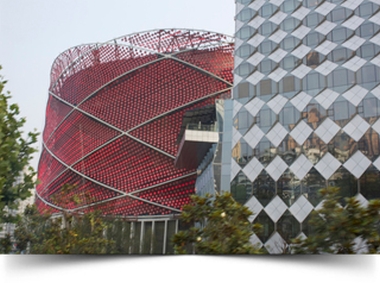
Ultra-modern buildings are a characteristic of Wuhan’s rapid development. PIC: Arthur Goldstuck

Last year enterprises based in Optics Valley generated income of more than 650-billion Yuan – that’s just over a billion dollars – and it’s growing at 30% a year. They filed 10 000 patent applications in 2013, and their talent pool is fed by 52 local colleges and universities. Its 1,2-million students give Wuhan the largest student body in China – and produces 200 000 graduates a year.

Throw into this mix an annual Government grant of more than 2-billion Yuan to support independent innovation and enterprise development, and you begin to get a sense of the scale of what is likely to emerge from Wuhan in the near future. You also realise just what impact such scale can make on an industry.

Right now, Wuhan is both China’s main producer of fibre optic materials, and home to the world’s largest desktop computer production facility. Owned by Foxconn, that facility is called the Wuhan Science & Technology Park, and accounts for more than half of global production of desktop PCs.

With Foxconn regarded as the home of generic devices, however, that honour didn’t draw much attention to Wuhan itself. But the arrival of Lenovo has changed things, with the construction of its Wuhan Industrial Base. It is the heart of Lenovo’s Mobility Business Group, responsible for the company’s smartphones and tablets.

Significantly, it is not only a production facility: it hosts research and development too, along with marketing for mobile devices. Lenovo last year became the world’s biggest manufacturer of traditional computers – desktop and notebook machines. Speaking in Wuhan recently, chairman and CEO Yuanqing Yang stated a clear intention of adding tablets to this leadership in the short term, and smartphones in the long term.

The high-tech factories are at the heart of Lenovo’s competiveness.

According to Aymar de Lencquesaing, president for Lenovo’s Europe, Middle East and Africa region, Lenovo bucked the trend a decade ago for hardware manufacturers to go “fabless” – disposing of their fabrication capacity. By outsourcing, they improved their balance sheets, but lost the ability to innovate.

“Lenovo kept their factories and, in hindsight, that proved to be a very smart deal. Sometimes innovation can be very simple, like the Yoga notebook. Experimenting with a simple hinge mechanism has regenerated a product category, the clamshell notebook, that has been the same for the past 25 years.”

In Lenovo’s factory, the production lines are vast, efficient, and clinically clean. Testing chambers that would not look out of place at a NASA space centre push devices to extremes of endurance. Unseen elsewhere in the complex, research teams work on ideas small and large that the world may never see, and some that could change the world.

Now do the arithmetic for the whole of Wuhan, where five new enterprises open every single day: Multiply small ideas by big factories by exploding innovation. Multiply the result by a further three or four years, and Wuhan will be on everyone’s high-tech radar.

Arthur Goldstuck heads up World Wide Worx (www.worldwideworx.com) and is editor-in-chief of Gadget. He is a consulting editor to MarkLives and our media tech columnist. Follow him on Twitter on @art2gee.

This article has been republished from Gadget.

— MarkLives’ round-up of top ad and media industry news and opinion in your mailbox every three work days. Sign up here!

WeChat South Africa wants your brand

by Herman Manson (@marklives)  WeChat, a social media and messaging app backed locally by media giant Naspers, entered the South African market in 2013. WeChat South Africa MD Brett Loubser says the local business spent its first year focused on brand building and gaining traction with new users.

Unfortunately, WeChat does not break down its global user base, so we have to take it at its word that its reception in the SA market has been particularly warm. But research conducted by third parties, such as researcher World Wide Worx, seems to support Loubser’s enthusiasm.

WeChatWorld Wide Worx found that more than half of SA adult cellphone users living in cities and towns (10.6 million SA adults) are using the more established WhatsApp messaging platform on their phones. WeChat, meanwhile, had already hit 5% of the market by February, and this is expected to rise to 13% in the next 12-18 months.

Critical mass

You would think that 5%+ market penetration in such a short time is something to gloat about — but Loubser laughs out loud when it is put to him and implies that it is already much higher. Loubser believes the platform will achieve ‘critical mass’ within the next year.

Naspers owns a significant stake in Tencent, the Chinese technology giant that owns WeChat, as well as the instant messaging application QQ, with its 808 million active monthly account holders. WeChat had around 355 million monthly active accounts at the end of 2013 Q4, of which a 100 million was outside China.

WeChat, entering its second year in the market, is shifting focus from just brand awareness to differentiation. It needs to get its message out to the market that this is not simply a messaging app, although it does that, too, but a social and content platform as well.

Brett LoubserFeature-rich social sharing, focused on user privacy

The app is feature-rich, set up for social sharing yet much more focused on user privacy than rivals such as Facebook (which incidentally now owns WhatsApp), says Loubser. Messaging will focus on the app’s blend of functionality and privacy, which is particularly of high relevance to a younger audience.

“This is a mobile-only environment,” he says. “There is no website version of your social feed. This isn’t going to stay on the internet forever.”

While person-to-person communication is at the core of WeChat, the platform (not a utility!, reminds Loubser) allows opportunities for third parties to create engagement with users.

Unradio on WeChat

A case in point is DJ Gareth Cliff, whose new ‘unradio’ offering CliffCentral.com – streamed live through an official account on WeChat (WeChat is a sponsor of the new venture).

“What excited me about this partnership with Gareth Cliff was that, in one swift movement, we could communicate that WeChat is far more than just a messaging app. When the biggest DJ in the country chooses your all-in-one social platform to launch his new station, you know you’re on the right track,” Gerjo Hoffman, marketing manager of WeChat in South Africa, said in a statement to the media.

There is space on WeChat for content marketing as well. Brands can set up pages with assistance from the WeChat team. It has already hosted content for Big Brother Mzansi and Survivor SA to deliver high-quality user experiences through branded-content channels for each show (Naspers also owns satellite TV platform Multichoice, on whose channels both shows are broadcast). Several radio stations already broadcast via WeChat, and News24 and Pricecheck also push content through the app.

Revenue

The app has a built-in QR reader, meaning we might finally seem some uptake on those codes; very few consumers have bothered to download QR readers independently. WeChat itself generates revenue through freemium games and the sale of emoticon ‘stickers’ but there isn’t a cost for brands to come on board.

As with all social platforms, managing brand reputations through WeChat can be tricky. It hasn’t stopped brands such as McDonalds, Pepsi and Burberry already giving it a go in China.

— MarkLives’ round-up of top ad and media industry news and opinion in your mailbox every three work days. Sign up here!

Africa Dispatches: Know where to grow

a Mark Magazine: Africa Dispatches feature by Mandy de Waal (@mandyldewaal) Reductive perceptions of Africa persist, but numbers shatter continental clichés. In the next five years, over half the world’s fastest-growing economies will be African.

Egypt’s spiral of despair, the Ebola outbreak in Guinea, sectarian violence in the Central African Republic and terrorism in Kenya. In the ‘man bites dog’ universe of world news, dictators and destruction are the fodder that fuel a hungry global media machine.

Know Where to GrowBut away from the cliché-confirming global media headlines, there’s a different Africa, a continent where the sweet spots emerge. The African Development Bank says that the continent could push for year-on-year growth rates of between 5% and 7% or more, numbers sluggish Western economies would envy.

In the ’90s, the continent’s average GDP growth rate was just over 2% and Africa’s inflation rate was massive — an average of 27% — peaking at over 40% in the mid-’90s. So what’s changed?

One word that describes the difference is China.

African countries, particularly South Africa, Angola, the Democratic Republic of Congo and Equatorial Guinea, have developed massive trade ties with the world’s second-biggest economy, The links here are so strong that economists now say: “If China catches a cold, expect Africa to sneeze too.”

“China has become a major development partner of sub-Saharan Africa. It is now the subcontinent’s largest single trading partner and a key investor and provider of aid,” states global economic think-tank, EcoMonitor, adding: “Growing links with China have supported economic growth in sub-Saharan Africa. But the burgeoning commercial and financial ties between the developing subcontinent and the world’s second-biggest economy carry risks.”

China’s trade with Africa brings growth, but if the East Asian giant contracts, some regions on the continent won’t escape the fallout.

If there’s a slogan Western brands should tattoo on their souls as they seek growth in this emerging market, it is ‘Africa isn’t a country’. Knowing where and how to grow on the market means seeing beyond lazy headlines and assumptive clichés. Nouriel Roubini, one of the world’s most influential economists, warns often of the folly of lumping countries in Africa together. “One definition of an emerging-market economy is that its political risks are higher, and its policy credibility lower, than in advanced economies,” says Roubini. All the more reason not to be reductive.

SA was the continent’s darling in recent decades. Fueled, in part, by the world’s love affair with Mandela and the massive post-apartheid investment influx, the southernmost country on the continent became the America of Africa — the arrogant ‘superpower’. But the tide is turning.

Today, SA is a territory Roubini labels one of his “Fragile Five”. The land of Jacob Zuma is in a class with India, Indonesia, Brazil, and Turkey because, like the others, it has — as Roubini writes — “twin fiscal and current-account deficits, falling growth rates, above-target inflation, and political uncertainty from upcoming legislative and/or presidential elections this year.” Roubini calls SA “over-hyped”and predicts GDP will slow sharply.

What makes sense then is for local brands to look for growth beyond home grounds. SA aside, in its 2013/2014 “Where To Invest In Africa” report, Rand Merchant Bank (RMB) lists the continent’s most-attractive investment destinations as Nigeria, Egypt, Ghana, Morocco, Tunisia, Libya, Ethiopia, Tanzania and Kenya.

Despite what Roubini says, SA is still the most attractive country in Africa according to RMB, but continues to lose ground to Nigeria, the merchant bank’s second most-attractive investment destination in Africa. “Of the 52 African countries ranked, 42 showed an improvement in their investment attractiveness this year,” says Celeste Fauconnier, Africa Analyst at RMB.

Fauconnier says the report shows that sharp improvements were seen in some of the continent’s most-troubled countries such as São Tomé and Príncipe, as well as Gabon, Cameroon, Sierra Leone, the Democratic Republic of Congo, Mauritania and Liberia. “Those slipping backwards include Algeria, Angola and Equatorial Guinea,” she notes.

And what about the land that gave the world Mandela? “South Africa remains Africa’s best investment destination but its attractiveness continues to decline, which implies it’s losing ground on a relative basis as other countries improve,” she adds, and explains that Africa is at a critical point in time when it needs to boost industrial development and curb its infrastructure deficit, if it is to transform its growth spurt into a sustainable trend.

RMB Report

Data shows a new reality but reductiveness is still rampant when it comes to the continent. “Skepticism, and the outdated image of Africa as a poverty-stricken, disease- and conflict-ridden basket case that informs this skepticism, still runs deep,” states professional services firm, Ernst & Young, in it latest Africa attractiveness survey.

“There is, unfortunately, still enough bad news in Africa to reinforce the negative stereotypes,” the survey reads. “The reality of such a vast and diverse continent is that as much as we may want to celebrate the many economic success stories — from Botswana to Mozambique, to Zambia, to Rwanda, to Angola, to Nigeria, to Ghana, and so on — there are also several states that remain fragile.”

In Africa, the progress of the many is undermined by the failures of the few. “It is too often the failures — increasingly the exception rather than the norm — that dominate the news headlines and reinforce outdated stereotypes,” the EY report says, and then adds: “Whichever way one analyzes it, the numbers tell us that a diverse and critical mass of African economies are consistently outperforming those in other, more celebrated regions of the world.”

Pockets of sensation might skew perceptions but the bald numbers will sift sensation from truth. IMF data for 2001 to 2010 shows six out of the 10 fastest-growing economies were in Africa. IMF’s most-recent forecasts show 11 of the world’s 20 fastest-growing economies in the next five years will be African.

Africa’s sun is rising, and rising. All that brands need to know is which countries to grow with.

Print

This feature first ran in Mark Magazine: Africa Dispatches — the sister print magazine of marklives.com. Sample or buy the launch issue of Mark: Africa Dispatches #1 here.

Mandy de Waal

Mandy de Waal. Curious scribbler. Born-again atheist. Author on training wheels. Thought activist. Amateur human. Collector of stories. Lover of the long form. Consulting editor to MarkLives.com. Editor of Mark Magazine: Africa Dispatches.

— MarkLives’ round-up of top ad and media industry news and opinion in your mailbox every three work days. Sign up here!

Mark: Africa Dispatches focuses on brand building in key African markets

South Africa’s authoritative online marketing news and analysis brand ventures into print with the launch of Mark Magazine’s Africa Dispatches, a design-intelligent annual print offering authored by top journalists.

mark1Mark: Africa Dispatches — the first of what will be a series of annual print products from the publishers of MarkLives.com, the authoritative online voice on marketing and advertising in South Africa — has been launched.

Mark Magazine, a content-rich and design-intelligent print magazine, premiered at the end of May 2014, when it was mailed directly to an audience of senior marketers and agency executives. This first print issue focuses on the growth of economies in Africa and brand building in key markets on the continent.

Mark: Africa Dispatches is published in tabloid format on newsprint and has been carefully designed not only to carry insightful content but to pull readers in visually through the smart use of fonts and colour.

“The global map is changing”

Explains project editor Mandy de Waal: “The global map is changing. Africa’s growth rates speak for themselves, and so the world is moving to a new future where thermark2e will be two brand binaries: those who come open, curious and excited to grow with Africa, and those who are chained by legacy perceptions, projections and prejudices.”

“Mark: Africa Dispatches delivers thoughtful content to marketers with design prowess. It is speaks to the marriage of the ideals that considered content and thoughtful design will redefine what ‘trade’ publishing is all about,” she continues. “At MarkLives.com, we believe that publishing in the marketing sector needs to be redefined and that smart people in the industry will orbit to intelligent publishing and reward it.”

Mark: Africa Dispatches is the first of several planned forays into the print environment from trade website MarkLives.com. The intention, according to publisher Herman Manson, is to differentiate starkly from other titles in what has been a staid trade-print environment. Breaking news, investigative content and design excellence has proofed the success of the news site; the same investment in quality content and design characterises this mark4first issue of Mark Magazine.

“Inspiration from African graphic language”

The design team for Mark: Africa Dispatches was headed up by Dani Loureiro of Machine. “The design of the first issue relies heavily on illustrated typography to engage the viewer while speaking to the content of the article,” she says. “The typographic direction takes inspiration from African graphic language like geometric patterning, irregular hand-drawn letters and spaza shop signage, which works nicely with the bold colour palette.”

The first issue contains:

  • An exclusive excerpt of Nigerian-American journalist Dayo Olopade’s debut book about breaking the rules in modern Africa. Called ‘The Bright Continent’, in the book Olopade offers a refreshingly hopeful view about the commercial map of Africa.
  • mark5The inside story of HKLM’s growth in Africa from Sean McCoy.
  • Brand confessions from Romeo Kumalo, chief operating officer of Vodacom International Business, who discusses the primary mistakes the mobile giant made in Africa.
  • The territories Celeste Fauconnier, Africa Analyst at RMB, recommends for brand growth, and much, much more.

“You can’t ignore Africa. You can’t ignore Mark Magazine’s Africa Dispatches, which has the smartest thinking and insights about branding on the continent delivered with design that will take your breath away,” says De Waal.

An electronic edition of Mark Magazine is available for preview and purchase here.

Follow MarkLives on Twitter, Facebook, Google+, LinkedIn, Pinterest and YouTube. Sign up here for an email round-up every three working days.

Images: Machine


Print

Buy a digital copy of Mark Magazine: Africa Dispatches — the sister print magazine of marklives.com – for only R30. Sample or buy the launch issue of Mark: Africa Dispatches #1 here.

Mandy de WaalProject Editor: Mandy de Waal. Curious scribbler. Born-again atheist. Author on training wheels. Thought activist. Amateur human. Collector of stories. Lover of the long form. Consulting editor to MarkLives.com. Editor of Mark Magazine: Africa Dispatches.

— MarkLives’ round-up of top ad and media industry news and opinion in your mailbox every three work days. Sign up here!

MagLove: The maddest Kardashian Kover ever!

by MediaSlut (@MediaSlut) My choice of the best international magazine covers in MagLove this week:

  • MAD Magazine
  • FORTUNE 500
  • Forbes (Spain)
  • HITCHED (Australia)

INTERNATIONAL

MAD Magazine, August 2014

MAD Magazine, August 2014I think this is my favourite Kim Kardashian and Kanye West cover so far. Yip, definitely!

Having been bombarded with Kardashian Kovers on a weekly basis, even in South Africa, this is really refreshing to see.

I’ve always loved how MAD Magazine has been playing around with all things pop culture! This issue will be out on 16 July 2014.

FORTUNE 500, 2014

FORTUNE 500, 2014 (animated gif of five covers)Five different FORTUNE 500 covers, all representing one of the five big money-making industries.

It’s really clever how it’s incorporated the “500” into each relevant environment!

Forbes (Spain), 10 June 2014

FORBES (Spain), 10 June 2014: Cristiano Ronaldo FORBES (Spain), 10 June 2014: Lionel Messie
Staying with the money-titles, but moving to the soccer-theme, we have the Spain issue of Forbes looking at the business that is FIFA, with split covers featuring great graphics of Lionel Messie and Cristiano Ronaldo.

I like how its continued the elements used in its pictures in its logo.

HITCHED (Australia), Issue #5

Hitched (Australia), Issue 5I’ve never heared of the Australian title Hitched (The non-bridal bridal magazine), and it seems like it will also be the last time; it’s busy with a transition to the name HOORAY!.

I just absolutely love the campness of the fabulously illustrated cover by Marc Martin, and the subtle message it sends…


Find a cover we should know about? Tweet us at @Marklives and @MediaSlut.
Want to view all the covers at a glance?
See our MagLove Pinboard!


MediaSlutMagLove by @MediaSlut is a regular slot featuring the best local and international magazine covers every week, recognising well thought-out, powerful and interesting (and hopefully all three-in-one) covers and celebrating the mix of pragmatism, creativity and personal taste that created each of them. The (for now anonymous) blogger behind MediaSlut knows way too much for his own good about media in South Africa, magazines in particular. His mission is to show when SA magazines fail but, most importantly, also when they succeed. If you’re looking for a library about SA magazines and news, this is your one-stop pitstop.

— MarkLives’ round-up of top ad and media industry news and opinion in your mailbox every three work days. Sign up here!

The Ad Contrarian: Steve Jobs hated “Branding”

by Bob Hoffman (@adcontrarian), San Francisco Bay Here at The Ad Contrarian Worldwide Headquarters, we have always taken a sceptical view of brand babble.

While we appreciate the value that certain types of brand equity confer, we are appalled by the misunderstandings and misrepresentations The Ad Contrarian logoof how brands are built, and the dreadful lexicon of “branding.”

Our views on the topic are summed up in a few little axioms we trot out whenever the subject surfaces:

“We don’t get them to try our product by convincing them to love our brand. We get them to love our brand by convincing them to try our product.”

“A strong brand is a byproduct. It comes from doing other things right. Make sure your product is excellent. Make sure you’re taking good care of your customers. Make sure your ads differentiate you. That’s what builds brands.”

Now, when you’re a dumb-ass blogger, it’s nice to have pithy little statements like that. But it’s a lot nicer when you find that your views are shared by someone with actual, functioning brains.

That’s why an article I came across recently was particularly gratifying.

The article, at Business Insider, was called “The Two Most ‘Dreaded, Hated’ Words At Steve Jobs’ Apple.” 

And what were these two words? According to Allison Johnson, VP of Worldwide Marketing at Apple from 2005 to 2011…

“…the two most ‘dreaded, hated’ words at Apple under Steve Jobs were “branding” and “marketing.”

The article goes on to quote Johnson…

“…we understood deeply what was important about the product, what the team’s motivations were in the product, what they hoped that product would achieve, what role they wanted it to have in people’s lives

…The most important thing was people’s relationship to the product. So any time we said ‘brand’ it was a dirty word.”

Back in 2009 I wrote a post that included the following

Apple’s advertising is always about product benefits and differentiation. It is never idiotic “branding”… No lifestyle bullshit… And always done beautifully.

Just goes to show, sometimes even bloggers can be right.

The Ad Contrarian is Bob Hoffman (@adcontrarian), the author of The Ad Contrarian and 101 Contrarian Ideas About Advertising.

This column has been republished from his blog The Ad Contrarian.

— MarkLives’ round-up of top ad and media industry news and opinion in your mailbox every three work days. Sign up here!

Online CPD Courses Psychology Online CPD Courses Marketing analytics software Marketing analytics software for small business Business management software Business accounting software Gearbox repair company Makeup artist