Heroes & Zeros: Durex & Ocean Basket — best & worst ads of the week

Andy Rice (@ricecommaandy) talks about his best and worst ads of the week — Durex’s #DontFakeIt and Ocean Basket’s Prawn Extravaganza — with Jenny Crwys-Williams (@jcwLIFE) during The Ad Feature on Talk Radio 702 (@Radio702).

Find out why these brands feature in this week’s Heroes & Zeros webisode by watching below:


For a fresh look at the world of advertising, Jenny Crwys-Williams of 702 Talk Radio chats to advertising critic Andy Rice on The Ad Feature, every Wednesday 2.30pm — 3pm. The filmed Heroes & Zeroes will appear on MarkLives every Friday morning as a webisode.

— MarkLives’ round-up of top ad and media industry news and opinion in your mailbox every three work days. Sign up here!

SAARF/MarkLives #Top40TVratings: #WorldCup ratings drop-off continues

by SAARF & MarkLives (@marklives) The World Cup ratings drop-off continues this week on our national TV ratings chart for the week of June 30–July 6. The first week of the 2014 FIFA World Cup nabbed five of the Top 10 slots on SAARF/MarkLives #Top40TVratings national chart but this declined to only one Top 10 spot the following week, for the game between Brazil and Chile, and only five of the top 20 slots. This time, we have one Top 10 spot (Argentina vs Switzerland) and four games have made it into our Top 20.

Documentary Courage of your Convictions, broadcast on SABC 2, made an entry into the no. 4 slot. SABC 2, which is hosting a lot of programming moved from SABC 1 to make way for World Cup coverage, grabbed the five top slots and seven of the top 10 programme ratings. etv took two spots and SABC 1 one.

Satellite dishThis weekly roundup of South Africa’s TV audience viewership, a collaboration between the South African Audience Research Foundation (SAARF) and MarkLives, reveals the best-watched shows of the week before, where it ran and how many South Africans tuned in to watch.

We offer two tables, the first covering all households — free-to-air viewing (the various SABC channels and e.tv) as well as the DStv platform — and the second charting the best-watched shows on the DStv network of channels only.

SAARF/MarkLives #Top40TVratings Chart: 30 June –6 July 2014

Market Target Activity
National Total Indv (incl guests) Live + VOSDAL
Counter Description (grouped) Channel Level 1 Level 2\variable (r) AMR % AMR SHR %
1 GENERATIONS SABC 2 Soap opera Local 21.2 9 098 038 63.13%
2 MUVHANGO SABC 2 Drama Drama 14.0 6 016 215 48.09%
3 TEMPY PUSHAS SABC 2 Drama Drama 13.8 5 939 112 43.16%
4 COURAGE OF YOUR CONVICTIONS SABC 2 Documentary Documentary 9.9 4 252 280 31.61%
5 GA RE DUMELE -R SABC 2 Sitcom Sitcom 9.7 4 155 954 42.64%
6 POWERBALL SABC 2 Variety Variety 9.5 4 059 222 36.59%
7 RHYTHM CITY e.tv Drama Drama 8.7 3 724 808 28.81%
8 FIFA WORLD CUP L ARGENTINA/SWITZERLAND SABC 1 Sport Football (soccer) 8.6 3 695 118 27.55%
9 SCANDAL e.tv Drama Drama 8.4 3 606 549 25.75%
10 SPEAK OUT SABC 2 Actuality Actuality 8.4 3 606 055 26.05%
11 FIFA WORLD CUP L ARGENTINA/BELGIUM SABC 1 Sport Football (soccer) 8.0 3 441 624 29.33%
12 FIFA WORLD CUP L FRANCE/NIGERIA SABC 1 Sport Football (soccer) 7.9 3 391 071 25.86%
13 SKWIZAS SABC 2 Sitcom Sitcom 7.8 3 330 893 26.42%
14 ZAZIWA SABC 2 Variety Variety 7.7 3 299 270 23.79%
15 OH SCHUCKS HERE COMES UNTAG e.tv Movies Comedy 7.7 3 297 535 27.96%
16 FIFA WORLD CUP L FRANCE/GERMANY SABC 1 Sport Football (soccer) 7.4 3 178 112 24.95%
17 MILLENNUIM MENACE SABC 3 Movies Comedy 7.4 3 175 078 26.00%
18 FORCED LOVE (DRAMA) SABC 2 Drama Drama 7.1 3 058 292 31.12%
19 MY PERFECT FAMILY SABC 2 Sitcom Sitcom 6.9 2 954 050 20.75%
20 FAMILY BONDS SABC 2 Sitcom Sitcom 6.7 2 858 728 20.87%
21 WWE WRESTLING SMACKDOWN e.tv Sport Wrestling 6.6 2 850 879 21.77%
22 7DE LAAN SABC 2 Soap opera Local 6.6 2 816 001 21.84%
23 THOLA SABC 2 Drama Drama 6.5 2 803 703 32.08%
24 EMZINI WEZINSIZWA -R SABC 1 Sitcom Sitcom 6.5 2 772 536 43.14%
25 MUVHANGO -R SABC 1 Drama Drama 6.4 2 734 032 42.64%
26 LOTTO DRAW LIVE e.tv Competition Competition 6.3 2 697 809 25.31%
27 FIFA WORLD CUP L BRAZIL/COLOMBIA SABC 1 Sport Football (soccer) 6.3 2 684 432 37.08%
28 XHOSA NEWS SABC 2 News News 6.1 2 633 989 19.44%
29 SPY KIDS e.tv Movies Family 6.0 2 573 738 28.53%
30 GENERATIONS -R SABC 1 Soap opera Local 5.9 2 525 972 42.62%
31 GA BOSE GANGWE SABC 2 Drama Drama 5.9 2 518 631 24.16%
32 MOESHA SABC 1 Sitcom Sitcom 5.9 2 516 896 40.40%
33 SELIMATHUNZI SABC 2 Variety Variety 5.9 2 511 469 17.52%
34 ZULU NEWS SABC 2 News News 5.8 2 501 065 18.47%
35 NEWS e.tv News News 5.4 2 305 627 17.70%
36 EAGLE EYE e.tv Movies Action/adventure 5.1 2 168 498 26.92%
37 FIFA WORLD CUP L GERMANY/ALGERIA SABC 1 Sport Football (soccer) 5.1 2 167 984 38.02%
38 VUKA KLEVA -R SABC 1 Documentary Documentary 4.9 2 118 700 33.89%
39 MUVHANGO -R SABC 2 Drama Drama 4.8 2 078 703 29.99%
40 CUTTING EDGE -R SABC 1 Actuality Actuality 4.7 2 022 162 32.69%


DStv platform only

Market Target Activity
DStv Total Indv (incl guests) Live + VOSDAL
Counter Description (grouped) Channel Level 1 Level 2\variable (r) AMR % AMR SHR %
1 GENERATIONS SABC 2 Soap opera Local 15.8 2 128 660 45.43%
2 MUVHANGO SABC 2 Drama Drama 10.3 1 397 671 32.96%
3 ISIBAYA Mzansi Magic Variety Variety 8.2 1 102 961 24.21%
4 GA RE DUMELE -R SABC 2 Sitcom Sitcom 6.1 821 166 23.36%
5 POWERBALL SABC 2 Variety Variety 6.0 815 566 20.80%
6 RHYTHM CITY e.tv Drama Drama 5.8 783 467 17.53%
7 SCANDAL e.tv Drama Drama 5.6 762 569 16.29%
8 7DE LAAN SABC 2 Soap opera Local 5.2 704 309 15.79%
9 TEMPY PUSHAS SABC 2 Drama Drama 5.0 674 752 14.83%
10 SPEAK OUT SABC 2 Actuality Actuality 4.5 603 060 13.01%
11 FIFA WORLD CUP L ARGENTINA/SWITZERLAND SABC 1 Sport Football (soccer) 4.2 562 022 12.56%
12 FORCED LOVE (DRAMA) SABC 2 Drama Drama 4.1 551 907 17.05%
13 ZAZIWA SABC 2 Variety Variety 4.0 539 190 11.53%
14 FIFA WORLD CUP L ARGENTINA/BELGIUM SABC 1 Sport Football (soccer) 4.0 538 855 13.13%
15 COURAGE OF YOUR CONVICTIONS SABC 2 Documentary Documentary 4.0 537 918 11.69%
16 NEWS e.tv News News 4.0 536 226 12.02%
17 FIFA WORLD CUP L BRAZIL/COLOMBIA SABC 1 Sport Football (soccer) 3.9 525 862 19.39%
18 GOOD DEEDS (MOV) Mzansi Magic Movies Drama 3.8 515 419 12.52%
19 OUR PERFECT WEDDING (MAG) Mzansi Magic Magazine Magazine 3.8 509 414 11.56%
20 FIFA WORLD CUP L FRANCE/GERMANY SABC 1 Sport Football (soccer) 3.8 507 238 11.52%
21 MY PERFECT FAMILY SABC 2 Sitcom Sitcom 3.7 496 070 10.59%
22 FIFA WORLD CUP L FRANCE/NIGERIA SuperSport 3 Sport Football (soccer) 3.7 495 095 11.01%
23 THOLA SABC 2 Drama Drama 3.5 476 777 15.39%
24 FIFA WORLD CUP L BRAZIL/COLOMBIA SuperSport 3 Sport Football (soccer) 3.5 470 229 17.52%
25 FIFA WORLD CUP L FRANCE/NIGERIA SABC 1 Sport Football (soccer) 3.4 463 585 10.31%
26 FIFA WORLD CUP L ARGENTINA/BELGIUM SuperSport 3 Sport Football (soccer) 3.4 461 863 11.18%
27 FAMILY BONDS SABC 2 Sitcom Sitcom 3.4 456 894 9.74%
28 FIFA WORLD CUP L FRANCE/GERMANY SuperSport 3 Sport Football (soccer) 3.3 451 488 10.26%
29 VODACOM SUPER RUGBY 2014 BULLS VS STORMERS SuperSport 1 Sport Rugby(all) 3.2 436 773 11.73%
30 FIFA WORLD CUP L ARGENTINA/SWITZERLAND SuperSport 3 Sport Football (soccer) 3.2 434 606 9.70%
31 GA BOSE GANGWE SABC 2 Drama Drama 3.2 433 129 11.40%
32 NOOT VIR NOOT SABC 3 Music Music 3.2 428 004 9.20%
33 CLASH OF THE CHOIRS SOUTH AFRICA Mzansi Magic Music Music 3.0 404 299 9.24%
34 SELIMATHUNZI SABC 2 Variety Variety 3.0 401 594 8.52%
35 THE BOLD AND THE BEAUTIFUL SABC 3 Soap opera International 2.9 390 478 9.89%
36 MILLENNUIM MENACE SABC 3 Movies Comedy 2.9 390 047 8.78%
37 ZULU NEWS SABC 2 News News 2.8 376 053 8.15%
38 MUVHANGO -R SABC 1 Drama Drama 2.7 369 184 17.46%
39 FIFA WORLD CUP L NETHERLANDS/COSTA RICA SuperSport 3 Sport Football (soccer) 2.7 366 594 17.63%
40 XHOSA NEWS SABC 2 News News 2.7 363 766 7.98%

How to read the tables:

AMR% refers to the number of people in a target market who were watching an event ie programme, expressed as a percentage of the population for that demographic: “On average, 16.3% of adults aged 15+ who watched TV from 28 Jan-3 Feb 2014 watched Society on SABC 1”.

AMR is the number of people in a target market watching a specific event ie programme per minute, expressed in absolute figures: “On average, 1, 541, 066 adults aged 15+ who watched TV from from28 Jan-3 Feb 2014 watched Society on SABC 1”.

Share % (SHR %) is the share or proportion of the available audience (people watching TV at that time) that a specific channel/programme has achieved at that time: “Society achieved a share % of 52.59% from 28 Jan- 3 Feb 2014 on SABC 1″.

saarf 150SAARF is the name by which the South African Audience Research Foundation is familiarly known. SAARF’s main objective is to direct and publish media audience and product/brand research for the benefit of its stake-holders, thereby providing data for target marketing and a common currency for the buying and selling of media space and time. SAARF has thus the responsibility to measure the audiences of all traditional media such as newspapers, magazines, radio, television, cinema and out of home media.

— MarkLives’ round-up of top ad and media industry news and opinion in your mailbox every three work days. Sign up here!

Shelf Life: Lay’s ball of a time with Messi

Louise Marsland (@Louise_Marsland)’s weekly pick of recent product, packaging and design launches:

  • Portable mobile-charging station launched
  • Kauai banters with Tim Noakes
  • Lay’s gets Messi
  • Woodbender’s new tub chair

Recharging station for hire

RiCharge Super StationRiCharge
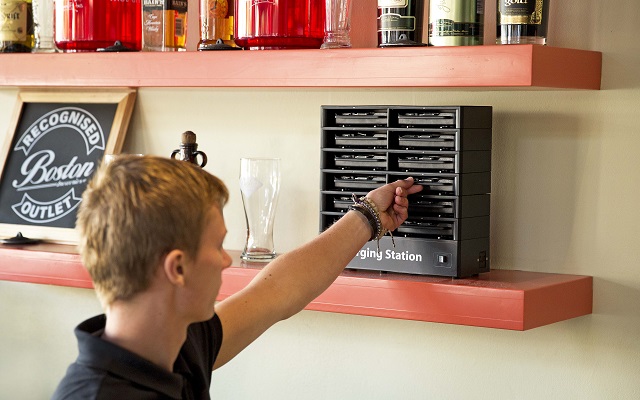
Manufacturer and supplier of mobile-charging solutions, RiCharge, has launched the Super Station, a tablet- and smartphone-charging solution for Africa. RiCharge currently exports to 12 countries internationally and has now released the Super Station in South Africa.

The RiCharge Super Station is described as the ultimate charging solution, able to charge up to 12 devices simultaneously. Each drawer comes equipped with built-in charging tips, capable of charging any device. It can also be custom branded.

“With its compact stylish design and super-fast charging, your device isn’t compromised and you are able to charge right at your desk, in your pocket or your handbag. The Super Station has become the perfect charging solution for schools, universities, hotels, restaurants, hospitals, bars and gyms,” says founder Janine Regtien.

Other RiCharge products include the Solar Charging Umbrella, Table Top Chargers and Pocket Chargers.

The RiCharge Super Station is also available to hire — conference organisers in our industry, please take note!

Banting on the menu

Kauai Original Eating Plan cauli-rice
Prof Tim Noakes’ “banting” food revolution, also known as the Original Eating Plan, has now reached fast-food outlets, albeit healthy fast-food, such as Kauai, which launched its new Noakes Diet-friendly products at Kauai Canal Walk in June 2014.

Kauai is the first national brand to introduce cauli-rice — a Banting staple — onto its menu. The Original Eating team has also reviewed the Kauai menu offering and made recommendations to adapt some of the items to be compatible with the Original Eating guidelines.

Kauai co-founder and chief innovations officer, John Berry, explains: “We always strive to respond to our customers’ needs and thus wanted to offer those who are following Original Eating some tasty, convenient, on-the-go options, which suit their lifestyle.

“Our carb-conscious customers will be able to enjoy our Madras Style Chicken Curry Bowl or the Thai Green Curry Bowl with cauliflower rice now. Perfect for these cold winter days. We’re also busy trialling a new wrap, with 10g of carbs and we’re working on developing a couple of new smoothies.”

Lay’s gets Messi

Lay's limited edition with Lionel MessiThis 2014 FIFA World Cup may not be as high on our agenda as ours was in 2010, but some brands have been having a ball of a time. Global snack brand Lay’s recently launched an integrated marketing campaign featuring international soccer superstar, Lionel Messi, which included his being featured on a limited edition Lay’s bag of chips in the large- and party-bag range.

The campaign was influenced by a fun television commercial launched in the build-up to the world cup.

In addition, Lay’s launched a digital campaign in June which played on the theme of the commercial. Named ‘Grab a Chip’, consumers were driven to a Facebook app where they were encouraged to post videos of their best attempt to ’grab-a-chip’ and compete with other uploaded videos to secure a top spot among fans.

Impactful in-store point-of-sale, including 3D elements and an interactive digital and below-the-line campaign, further engaged fans.

[Lay’s is not a 2014 FIFA World Cup sponsor and does not claim any links between its ad campaign and the World Cup — ed.]

New bentwood Milano Tub

Woodbender Toscana Genoa and Milano Tub chairCape-based solid bentwood furniture manufacturer, Woodbender, has introduced an elegant extension to its Milano range, the tub chair.

The Milano Tub sits with two similar tubs, the Genoa and Toscana, but differs in the defining characteristic of the Milano’s elongated vertical slats that meet the base ring. The vertical slats are meant to create elegant lines and style, and to allow the Milano Tub to be well-suited to a modern formal interior when dressed in luxurious fabric.

The Milano Tub is versatile and can be used in many different applications, ranging from a feature piece in a lounge, in a foyer, in a spacious bathroom or bedroom, in a restaurant waiting area or in hotel room. It can also be customised with fabric and timber finishes.


Louise MarslandShelf Life is a weekly column by Louise Marsland on MarkLives. Tweet new product, packaging and design launches to @louise_marsland or email her at louise.marsland at gmail.com. Want to sponsor Shelf Life? Contact us here.

Louise has written about the FMCG, media, marketing and advertising industry for 19 of her more-than-25-year career as a former editor of magazines AdVantage, Marketing Mix and Progressive Retailing, as well as websites Bizcommunity.com and FMCGFiles. Until its cancellation, she edited the weekly Wednesday Media & Marketing Page for The New Age newspaper. She is currently the publishing editor of industry trendwatching portal, TRENDAFRiCA,for consumer insight, research and trends in Africa.

— MarkLives’ round-up of top ad and media industry news and opinion in your mailbox every three work days. Sign up here!

Motive: ‘East Rand Monster’ and the citizen journalism fail

by Andrew Trench (@andrewtrench) The age of the citizen journalist has dawned, media theorists argue, and they may be right, but shadows fall across the landscape as the new sun rises.

Anyone can publish almost anything these days. Media explodes on blogs, websites and social media networks by millions of content producers, very few who are journalists or connected in any way to “old media”. This is a good thing, right? Well, not always. Let’s examine a case study.

Beeld 2014/05/28Recently, The Witness’s sister publication Beeld broke a sensational story about an East Rand father who had been arrested after it was discovered he had kept his wife and children in effective captivity for years, subjecting them to shocking torture and abuse.

“Old media” platforms like newspapers, television and radio, studiously avoided identifying the man or his family members due to legal restrictions that prevent the publishing of the identities of juvenile victims of crimes or any information that may indirectly identify them.

There are also well-established media ethics on this issue. But these considerations matter naught in the world of citizen-produced media.

The day after the “East Rand Monster” story broke, I came across a Facebook page that contained photographs of the accused in this case, his full name, his occupation and many other personal details, including the identities of family members.

Readers of the page were exhorted to share the information across social networks with as many people as possible. Dozens of readers of the page were posting comments of their personal interactions with the man and of other details of incidents of alleged abuse that they had witnessed (but never bothered to report to the authorities).

When I last checked, nearly 30 000 people had shared this information, and so, in theory, hundreds of thousands of other readers had seen it too.

I posted an indignant comment pointing out the ramifications of this. I didn’t think anything would come of it. Surprisingly, a few days later the images that had been posted had been altered “on legal advice” to disguise the faces of the man and some of his family members, but the damage is already done.

The “East Rand Monster” example illustrates the tension between “old” media and the “new”. The rules that apply to journalists technically also apply to others who are not journalists but who are, in effect, doing journalism.

The problem is that few of these “content producers” know the rules or, if they do, believe the rules don’t apply to them.

These ethical rules exist for a good reason in mainstream media. They are designed to give life to the ethical imperative of “limiting harm”.

This was something we had to consider in the story, which Jeff Wicks has been reporting, involving allegations of torture during initiation rituals at a leading Pietermaritzburg school.

The child victim of these alleged acts has been identified by The Witness, but only after agreement with the boy’s mother who, in fact, insisted on it, as she was concerned that other victims of these practices who remained at the school would be suspected of having broken ranks and would be further victimised if she did not go public with her and her son’s identity.

These ethical questions are part of the daily bread of traditional media. Sometimes we get it wrong, but these issues are front of mind in our work; hardly the case for enthusiastic amateurs pumping out material with nary a thought.

Don’t get me wrong. I am no Luddite when it comes to the democratisation of media, but I also think that if you want to drive a car, you should take some time to learn the rules of the road.

andrewrenchAndrew Trench (@andrewtrench) is the editor of The Witness and this is an edited version of his weekly column, published 3 June 2014. Click here for his blog. Reprinted with permission from Grubstreet.

“Motive” is the new by-invitation-only column on MarkLives.com. Contributors are picked by the editors but don’t form part of our regular columnist lineup.


— MarkLives’ round-up of top ad and media industry news and opinion in your mailbox every three work days. Sign up here!

The Sell: It’s not just Lion-shaped awards that count…

by Mimi Nicklin (@MimiNicklin) In June 2014, brands and agencies alike watched the global stage as the 61st Cannes Lions rolled out shiny gold statues to the most inspiring and creative work worldwide. There will have been multiple opinions on the most, and the least, deserving, but in my column I want to look at a winner of an entirely different awards ceremony: The Effies.

The most effective work worldwide

This award show rewards shopper marketing, and not just consumer marketing, and is busy defining the most effective work worldwide.

Of the many inspiring winners, I want to focus upon Coca-Cola’s Effortless Meals campaign with Walmart in the USA. This campaign pretty much puts into action every principle of shopper marketing I preach, and has tons of learnings for us here in South Africa, where “shopper” is becoming the word of the day! We have a long way to go until our brands get retail partnership right and begin to include the retailer EARLY in their planning models.

So, this case highlights that it’s not just the world’s creativity we should be inspired by but its strategy to drive sales, too.

Background

The background is that Coke had been seeing volumes decline in its biggest retailer, Walmart. Simultaneously, Walmart had a standing issue where it was struggling to drive moms into its Deli aisle, with only one in five shoppers visiting this part of the store. [*While moms were loyally shopping in Walmart for their groceries, they were not seeing Walmart as an option for ready-made, hot or ready to heat fresh (deli) dinners.]

Coke saw Walmart’s deli ‘issue’ as an opportunity to help its most important retail client while reversing a downturn of its own. True shopper-marketing strategy.

Coke knew that it can sell more product when it remind moms to buy Coke with family meals, and that it is currently the most-drunk drink, second to water, at family dinner tables.Its goal was therefore to develop a programme (and not a promo!) that would get Walmart’s existing shoppers over to the deli where they could “effortlessly” buy dinner and Coke — increasing the servings of both the food and the drink.

In-store triggers

coke 3Coke’s research had shown that “effortless meals”, which help time-starved moms please their families, work as a trigger for shoppers in-store. Quite simply, an emotional solution would be the most powerful way to drive purchase in-store.

Coke also knew that, to truly change behavior, the message must reach the shopper mom wherever she was along her path to purchase – at home watching TV, in her car seeing outdoor/hearing radio, in the store or on her phone, where she could see digital and social ads.

The creative work smartly put mom at the centre (and bravely de-emphasised both Coke and Walmart), leading with emotion before function, and was first aired during Olympics and American Idol. This may have not been Cannes Lions-winning consumer TV but this was given the same love when it came to media spend and reach! (Imagine that, South Africa!!)

Tailored to shopping needs

The brand tailored radio to the weekend, weekday and “unexpected friends over for dinner”occasions, ensuring that, whatever purchase mission mom was on, there was an ad targeted at her and her shopping needs.

“When dinner time sneaks up on you, Coca-Cola and Walmart have got it covered with Effortless Meals for less than $10! With a trip to the Walmart Deli, you can nail dinner every time. Smile — it’s Coca-Cola.”

In store, Walmart worked with Coke to convert the entire deli section into an Effortless Meals arena. With the use of Coke-branded signage to create the feel of a Quick Service/Fast Food Restaurant, the entire shopping experience was changed.In turn, Coke achieved a level of branding it had never seen before in over 3000 stores!

Icing on the shopper cake

The final icing on the shopper cake was that Coke linked bonus points on MyCokeRewards for purchases of Effortless Meals, ensuring the campaign was even more rewarding.

The campaign saw phenomenal results for both Walmart and Coke, and has been rolled out to a three-year partnership,showing that when shopper marketing really is planned for joint success, it works!

In turn, this work won Gold in the Retail Roll Out category, as well as Bronze for the Multi Brand Shopper Solution category at the 2014 Shopper Marketing Effie Awards.

Higher on SA’s agenda

SA is busy counting the number of creative awards we brought home but surely it’s time for us to put awards such as the Effies and APEX [South Africa’s awards ceremony that honours “both strategic and creative effectiveness — ed-at-large] higher on our agenda?

After all, selling substantially more of a brand people were already loyal to in a store they already visited has got to be worthy of our attention, right?

Mimi NicklinMimi Nicklin (@MimiNicklin) followed her passion and experience in the consumer, retail and shopper space from regional roles in Europe and Asia, to South African shores in 2010. Having led global brands through the line for Procter & Gamble, and two of London and Hong Kong’s top agencies, her background gives her an international perspective to add to her depth of SA understanding. She serves as strategic director and a partner at 34 Group. Mimi contributes the monthly “The Sell” column concerning shopper marketing to MarkLives.

— MarkLives’ round-up of top ad and media industry news and opinion in your mailbox every three work days. Sign up here!

Ad of the Week: Ever heard of a laptop billboard?

by Oresti Patricios (@orestaki) Going to the movies these days isn’t perceived as the ‘big event’ it once was.

As a child, I remember the excitement of getting my 50c pocket money, which would buy a friend and me bus tickets, popcorn and movie tickets, and still have change left over. A few years later, Ster Kinekor introduced the Kiddies Club. Growing up, the flicks were a great place to take a date, or meet up with a group of friends. Whether it was the drive-in or a cinema, going out to see a movie was always something special.


But times have changed. Radically. As Faith Popcorn predicted way back in the nineties, ‘cocooning’ has seen people opting for more in-home entertainment. Let’s face it, we are spoilt for choice, from a selection of satellite TV channels to all that the internet has to offer. Why go out, when your comfy couch is at hand, there’s beer in the fridge, your favourite pizza place delivers, and you have a 4K screen that takes up half of your wall?

One of the bigger challenges for the cinema industry has been the ‘small screen’ – the laptop that now doubles as a media centre, and with the availability of illegal downloads and internet streaming services such as Hulu and Netflix about to arrive in SA, cinemas have to fight to keep audiences.

Even though I work in the industry, sometimes we overlook great campaigns. But fortunately awards shows can bring these lost gems back into sharp focus for me. This campaign, by FoxP2 for Ster-Kinekor, which ran late last year, won second place in the recent Creative Circle’s Ad of the Year in the Out of Home category, giving me another chance to look at it for Ad of the Week.

FoxP2 created a quirky but clever billboard campaign that enjoyed considerable user attention, especially amongst this tech-savvy target market. A 63 metre long billboard was placed on one of Johannesburg’s busiest highways. The wording, in HUGE block caps was: “NAME THE MOVIE PLAYING ON THIS LAPTOP”. Beneath that was the call to action: “and you could win tickets to see it on a screen 1795 x bigger.”

Mounted on the billboard was a laptop, with a trailer for an upcoming movie playing. The laptop looks ridiculously small, compared to the lettering on the billboard, and the point is amply made: watching movies on a small screen is no substitute for ‘the real thing’. In fact, FoxP2 claim that only 12% of the people got the answer right.

laptop billboard

Cinema chains are working hard to bring that old sense of a special occasion back, working on what it does best: watching a movie in a darkened cinema is a more immersive experience, with 3D and surround sound that makes it that much more engaging. Ster Kinekor has now introduced Imax 3D – an even more high-resolution image, with improved 3D and a digital projection system.

Content-wise, high impact action blockbusters are what gets bums into seats, especially amongst the target market of teens-to-twenty-somethings, who have disposable income and are more inclined to go out to socialise than their older, stay-at-home parents.

Theatres have also been modified to provide a more comfortable experience. Seats are wider and more plush than in bygone years. There is the option of sitting in a “love seat” – a double seat for two without a divider: ideal for a date night.

Loyalty card systems and collaborations with companies like Edgars and Vitality provide incentives for the cost-conscious, providing innovative, value added marketing that incentivises increased attendance.

In an attempt to target a more sophisticated market, Ster Kinekor has rolled out “Prestige Theatres” in three major centres. These are smaller theatres with plush leather seats, little side-tables and an overall more luxurious ambience.

Other innovations include promotions, like free premieres, and special events, like the free screening of ‘Mandela: Long Walk to Freedom’ on Mandela Day this year.

Getting back to the ad, FoxP2 claims that it produced 131 255 engagements through social media, and Ster Kinekor experienced a 52% increase in cinema attendance for the period. To be fair, I’m not sure how much of that also had to do with the release of some big-budget hits like ‘Gravity’, ‘Captain Phillips’ and ‘Ender’s Game’, but I think it was a well-focussed campaign that was right on message and on target.

Big up to FoxP2 for a really smart campaign.

Oresti PatriciosAd of the Week, published on MarkLives every Wednesday, is penned by Oresti Patricios (@orestaki), the CEO of Ornico, a Brand Intelligence® firm that focuses on media, reputation and brand research.


If you are involved in making advertising that is smart, funny and/or engaging,
please let Oresti know about it at info@ornicogroup.co.za.


— MarkLives’ round-up of top ad and media industry news and opinion in your mailbox every three work days. Sign up here!

Ogilvy apologises for, withdraws controversial Feed A Child ad

by Herman Manson (@marklives)  Ogilvy Cape Town, the agency behind the controversial new Feed a Child campaign, has apologised for giving offence and confirmed that the ad has, in consultation with its client, been withdrawn. The ad showed a wealthy white woman treating a black child like a pet and feeding him bits of food off her plate. In one scene the boy licks her fingers clean. ‘The average feed a childdomestic dog eats better than millions of children,” the ad concludes. It then urges viewers to make a donation to NGO Feed a Child.

Writing on the Daily Maverick journalist Richard Poplak argues that you (or in this case Feed a Child) don’t offer dignity by negating dignity. “The black boy/dog is played by a real child, and although he is acting out a role and (presumably) being paid for it, the set-up feels remarkably like exploitation,” writes Poplak. “All of the power lies in the hands of Feed A Child; the boy’s debasement is the point of the commercial. When we use black children as fodder—as mineworkers or Nike shoemakers or to sell “sustainable solutions” to people with credit cards—the ethical lines fray.”

Luca Gallarelli, Managing Director at Ogilvy & Mather Cape Town, says that he is “disappointing that the message has become completely overshadowed by the controversy” as the commercial was “developed with the aim of drawing attention to the important issue of malnutrition in South Africa.”

Gallarelli confirmed that the ad is being investigated by the Advertising Standards Authority of South Africa after an official complaint was filed and as a result, and in consultation with Feed a Child, the agency took the decision to stop flighting the commercial.

“While clearly designed to have the viewer sit up and take notice, it was never anyone’s intention to cause offence, but rather raise awareness for what is a massive societal issue in SA,” says Gallarelli. “We do however as Ogilvy & Mather Cape Town apologize to those who found the execution distasteful.”

feed 3 feed 2

The ad can still be viewed on YouTube (but might not be there for long)

— MarkLives’ round-up of top ad and media industry news and opinion in your mailbox every three work days. Sign up here!

The Word: Less is more

by Mongezi Mtati (@Mongezi) In theory, the more people a brand reaches, the more likely it is to increase sales and grow an evangelist movement that ensures more future sales.

Based upon that, we create more content and buy more space to interrupt people. We fill every inch in sight with even more brand-related messaging, scream at potential customers for attention and repeat the formula for the next launch.

But, contrary to popular theory, a recent experiment has shown that, the less you shout, the more people spread your content more effectively.

Narrowcasting vs broadcasting

Alixandra Barasch, a doctoral candidate in marketing, and associate professor of marketing, Jonah Berger, conducted six studies into how the size of an audience affects the way consumers share content. They found that, when people communicate with a larger audience (broadcasting), the message tends to be focused more on the individual communicating as opposed to sharing useful content for the recipient. It was also found that talking to a single person (narrowcasting) leads people to sharing useful information for the recipients.

The study further revealed that posts on social media, because they tend to involve a large audience, shift people towards sharing self-presentational content. For brands, this means people in larger audiences share less-useful information and authentic views.

This study gives insights that are contrary to marketing and advertising principles that encourage reaching a wider audience with the same message.

The Dog's Bollocks - The YardThe Dog’s Bollocks way

The Dog’s Bollocks is one of the best burger joints in South Africa — if the recommendation of colleagues who frequent Cape Town is anything go by.

Unlike traditional fast-food places and restaurants, it serves less food and builds more meaningful connections with customers. It has built a community by stepping away from the norm and creating a brand-evangelist community that spreads its message.

Following the conversation with colleagues, I looked for The Dog’s Bollocks on the web and there were only reviews about it. It didn’t have a website, only conversations by people — from bloggers to food journalists. It was as though it did not want to be found, similar to Fight Club, except everyone who knew about it had broken the first two rules. It was the Facebook page led me to it.

Against the grain

After 30 years in the restaurant business, Nigel Wood, the founder of The Dog’s Bollocks, decided to go against the grain. He prefers to only be known as The Dog’s Bollocks. He attributes its successful growth to the fact that its customers feel as though they are part of an exclusive, but also open, community. It’s as though they’ve found a secret tribe, where getting one of the burgers is even more priceless, as only 50 burgers are made between 5pm and 9pm.

According to Wood, these 50 burgers also contribute towards their being the best in South Africa. He shares that, on one of the restaurant’s best days, the burgers sold out at 5:03pm –just three minutes after opening.

When asked how The Dog’s Bollocks and its lunchtime sister eatery, known as The Bitch’s Tits are marketed, he says, “We don’t market. In fact, we avoid marketing at all costs – aside from our Facebook page.” He adds that he pays his staff to get people to come back, spreading the word nearly organically through a small but gradually growing audience.

In a recent interview with Popular Aesthetics, Wood shares how they started and what sets them apart.

The name, as it turns out originates from British slang which, according to Urban Dictionary, means; “….to be the best. It comes from the habit of male dogs licking their testicles (bollocks) and that they must taste good as they spend so much time in this activity.” The female version, as described by Wood, is the bitch’s tits.

Let your community spread the word

The idea of narrowcasting, in the age of nearly-endless access to various media, seems contrary to the logic of wanting to spread a message across large audiences. The six studies that went into the Broadcasting and Narrowcasting: How Audience Size Affects What People Share research talk to how we communicate as consumers. We naturally want to share useful information, more so far from the masses.

Brand evangelist movements grow from one person who’s had a memorable experience to another. They come out of the human need to share useful information — similar to chatting with colleagues.

Mongezi Mtati


Mongezi Mtati (@Mongezi) is the founding MD of WordStart (www.wordstart.co.za). Apart from being a kiteboarding and sandboarding adventurer, Mongezi connects companies and brands with measurable word-of-mouth. He contributes the monthly “The Word” column on word-of-mouth marketing and social media strategy to MarkLives.


— MarkLives’ round-up of top ad and media industry news and opinion in your mailbox every three work days. Sign up here!

Grubstreet: M&G — subtly different for now; dramatic changes to come

by Gill Moodie (@grubstreetSA)  The Mail & Guardian did an interesting, off-agenda thing recently — it launched an African news website totally distinct from its own online offering — but then the M&G specialises in doing things differently.

It was the first South African news publication to go on to Kindle and one of the first to have a paid-for iPad edition.

Last year it took the unusual step of appointing its online editor, Chris Roper, editor-in-chief while bringing in The Witness’s Angela Quintal in as print editor.

mgIt recently put the paper’s cover price up to R35, which is high in South Africa – even for a weekly. The Sunday Times, for instance, is R19 and City Press is R14.50.

Launched in May, the Mail & Guardian Africa website is a separate business unit run out of Nairobi. M&G Africa’s editor is Charles Onyango-Obbo, co-founder of Uganda’s leading independent title, the Monitor, and Anastacia Martin is the division’s MD.

Once teething problems are out of the way, Roper told Grubstreet  the aim is to have more collaboration between Mail & Guardian SA, M&G Africa and M&G owner Trevor Ncube’s Alpha Media Holdings in Zimbabwe that owns NewsDay.

Although there will be some cross-purposing of copy, M&G Africa will have different content to M&G SA and the plan is to start small and use mostly contributors.

Following trends in the US and Scandinavia, the aim of the business model is not to rely on advertising and sponsorship as the main source of revenue while continent-wide conferencing and events will be a key part of the revenue mix.

In fact, events and conferencing is already an important part of M&G SA’s revenue. They do three to four events a month, Roper told Grubstreet.

“The important part (of M&G Africa) is the content. The eventing is to make use of the brand cachet in Africa,” he says. “The real point of this is to get Mail & Guardian content — investigative and analytical — from and for the continent in a very objective way. We’re not saying “Africa is rising” and we’re not saying “Africa is terrible”. We’ll be covering things in the same way we cover South Africa, which is to focus on what things mean to the people to whom the things are happening.

“But today you have to make sure that you’re using your brand to bring in as much revenue as possible. It’s not just about content and covering news. It’s also about your effect on society, your authority and how much people trust you.”

While Quintal oversees the paper, it is the job of Roper — who was very successful as the head of M&G online, growing traffic with a major revamp — to make the M&G a digital-first operation and strategise for the future because, the company recognises, there is no strategy without digital.

The previous M&G editor-in-chief Nic Dawes — who is now at the Hindustan Times in India — had an online background too and between him and Roper (as online chief), the M&G had become a converged newsroom although a small one.

“We’re redesigning the website and that is basically to make the architecture of the website and the newspaper fit the digital-first strategy,” he says. “If you repurpose people in the newsroom and you reassign people, you need to get the end product to match what the output’s going to be. And that’s proving to be quite tricky.”

Building a new subscription system — and developing M&G Africa at the same time — has been an ambitious task for the M&G because it is a small operation with a handful of developers so projects have had to be staggered.

So how is the more concerted digital-first drive under Roper going?

“We have no way of bundling our products, for instance, all the information about who our iPad subscribers, our iPhone app subscribers and so on,” Roper says. “We need a new subscriptions systems so we can go to people and say: ‘If you buy the iPad product, you get the newspaper for free or vice versa’. We haven’t quite nailed down what that model’s going to be but we’re putting in the capability to make that decision.

“Because of that, the redesign of the website is going to happen at the end of year — and it will be a dramatic redesign — and then we’ll redesign the newspaper early next year.”

While the website traffic is still on the upwards trajectory (although M&G online doesn’t sell advertising on the basis of volume of traffic but on knowledge of its audience), its circulation was down in the most recent set of ABC figures — for the first quarter of this year — at 44 266 sales compared with 45 279 in the corresponding period in 2013.

It is possible that the drop was in reaction to the cover-price increase. In the previous quarter — the fourth quarter of 2013 — the paper was up at 51 551 sales from 48 999 year-on-year, suggesting that readers approve of Quintal and Roper’s editorial choices.

Under the two, the front pages are certainly less heavy on the forensic investigative work that is the M&G’s hallmark.

“We’re doing things like getting in Mark Gevisser on how to write profiles to mixing up the content slightly — all kinds of things to make the paper’s voice and the digital voice mix a little,” Roper says. “The problem is that people always try to fit in the most that they can into a newspaper whereas we’re trying to make print-orientated people understand that things can go online.

“The readers still think it’s more important if it goes in the newspaper, I think. It’s a slow process but I think people are getting to understand that it doesn’t matter where a story starts its life as long as it’s out there.”

“We’ve also done all this (reader) research and discovered that Mail & Guardian readers are optimists — which I would never have thought — so we’re trying to move into a much more solutions-based journalism space,” he says. “It’s quite a different newspaper but in a subtle way. Hopefully in a few months’ time it will be quite dramatically different.”

GrubstreetSouth Africa’s leading media commentator, Gill Moodie (@grubstreetSA) offers intelligence on media, old and new. Reprinted from her site Grubstreet. This piece was published first on Journalism.co.za, the website of Wits University’s journalism school.

— MarkLives’ round-up of top ad and media industry news and opinion in your mailbox every three work days. Sign up here!

Africa Dispatches: Continental analysis

a Mark Magazine: Africa Dispatches feature Accurate research can change the economic fortunes of entire countries. Just ask Nigeria. Mandy de Waal (@mandyldewaal) sorts the good numbers from the bad.

The new king is NigeriaSouth Africa was once the king of Africa, and bore the title: ‘The Country With The Largest Economy in Africa’. No longer. The new king is Nigeria.

SA was Africa’s biggest economy with a gross domestic product (GDP) of about US$384 billion in 2012. By comparison, the most populous country on the continent, Nigeria, had a GDP of just US262 billion.

“The new GDP number for Nigeria was released today. It is 80.3 trillion naira [5.125 trillion South African Rand] for 2013,” writes Morten Jerven, economic historian and author of Poor Numbers: how we are misled by African development statistics and what to do about it. “Nigeria overtakes South Africa,” Jerven states.

GDP — the monetary value of a country’s goods and services — is globally recognised as a means of economic ranking. Nigeria, unfortunately, was tracking its GDP using a base year for national accounts that was horribly outdated. A revision yielded new figures, and saw SA topple off the top spot of the continent’s economic rankings.

“Does it seem to you that the Nigerian economy suddenly is growing faster?” asks Jerven, who answers his question by saying that, using the old figures, the country’s growth was 10, eight and four percent in 2011, 2012 and 2013 respectively. “On the new series we have 17, 13 and 12 percent growth for the same years.” The difference between 10 and 17 percent for investors is massive. The big lesson here is how poor numbers hamstring a country.

Jerven’s study of the production and use of African economic development statistics reveals how patchy the continent’s economic data is, and how crucial it is that this changes. The reason for these numbers being poor, says Jerven, is not just one of technical accuracy but also because the “arbitrariness of the quantification process produces observations with very large errors and levels of uncertainty”.

Poor numbers don’t only bedevil economic data but have a ripple effect through marketing, media and brand research as well. SA has a census every 10 years, but the undercounts are large by global comparison, says Paul Haupt, who in April 2014 became the first-ever executive director of the Pan African Media Research Organisation (PAMRO).

“Global undercounts are set at between two percent or three percent, so there’s a 98 percent accuracy,” he says, adding: “In SA, the undercount is about 14 percent.” The starting point for media and other marketing research is the census, and a lack of data is often driven by a lack of money. The Catch-22 is that good numbers bring more money.

“The major problem we see in many parts of the continent is that very little money is available for research,” says Haupt. “If people don’t believe data, it is incredibly difficult to get them to commit.”

“Media research only came to most of Africa quite late. If you look at the roll-out of studies like Amps across Africa, it only started with Zimbabwe in the ’90s, then rolled out across Ghana and Kenya,” Haupt explains. “For both investors and brands, countries need research that’s credible. When it comes to information transparency, good governance is everything,” he says.

According to Haupt, SA, Nigeria, Kenya and Ghana are among the continental hotspots with the better data. It should come as no surprise that these regions are doing well economically.

Print

This feature first ran in Mark Magazine: Africa Dispatches — the sister print magazine of marklives.com. Sample or buy the launch issue of Mark: Africa Dispatches #1 here.

Mandy de Waal

Mandy de Waal. Curious scribbler. Born-again atheist. Author on training wheels. Thought activist. Amateur human. Collector of stories. Lover of the long form. Consulting editor to MarkLives.com. Editor of Mark Magazine: Africa Dispatches.

— MarkLives’ round-up of top ad and media industry news and opinion in your mailbox every three work days. Sign up here!


Online CPD Courses Psychology Online CPD Courses Marketing analytics software Marketing analytics software for small business Business management software Business accounting software Gearbox repair company Makeup artist