Brand View: The brand evolution of Windhoek Lager

Windhoek Lager labelFollowing the First World War, two colleagues from the Deutsche Afrikabank, Carl List and Hermann Ohlthaver, set out to start a business partnership, Ohlthaver & List Ltd — where the legacy of Windhoek Beer began. In 1920, the two men used their business acumen to consolidate four existing breweries, together becoming the founders of South West Breweries (SWB).

Alan Roberts, Windhoek marketing manager at brandhouse, and Anton Twigg, global marketing manager for Namibia Breweries Limited, provide a visual case study of the brand’s evolution over the years.

Timeline

1920s:

  • German bankers Carl List and Hermann Olthaver found a brewery and begin brewing Windhoek beer according to the Reinheitsgebot, the way Windhoek is still brewed today.

1940s:

  • During the Second World War, when it became difficult to find the best ingredients, they choose to halt brewing for a short time, rather than to use inferior ingredients.
  • Advertisements appear in the German newspaper Allgemeine Zeitung.
1948-9: Old Brewery Building
1949-50: Windhoek Brewery — inside
1945: Allgemeine Zeitung

1950s:

1950s: Old Brewery — inside
  • Beer deliveries to Ovamboland.
  • The brewery is in full swing.

1960s:

SWB Walvis Bay
SWB has a state-of-the-art showroom in Walvis Bay
  • Karl Werner, List’s son, takes full ownership of SWB in 1965.
  • In 1968, SWB amalgamates with Hansa Brewery in Swakopmund, expanding even further. The merger is an instant success and makes SWB the sole national brewer in Namibia. The Windhoek brand grows beyond Namibia’s borders and later distribution begins to Angola — with the assistance of mine-proof delivery trucks!

1970s:

  • Windhoek Beer celebrates its 50th birthday and gets a commemorative watermark (which sticks because consumers do not want to see it taken off the label!)

1980s:

  • With brewing capacity stretched and plans to grow market share further, construction of the new, state-of-the-art brewery begins in 1981 and is finished in 1986.
  • In 1984, Windhoek Light is launched. In 1986, after much intense negotiation by the brewery team at the time (which includes founder Carl List’s step-grandson), SWB is granted permission to transport Windhoek Beer into SA.
  • By the mid-1980s, the Windhoek brand we know today is well-established.
  • In 1985, Windhoek is introduced in cans for the first time.
1982: Store visual
1982: Store visual
  • Brown beer bottles are still high-fashion.
  • Windhoek beer is delivered to SA troops across the border in armoured trucks during the war.

1990s:

  • Once Namibia gains independence in 1990, SWB is renamed Namibia Breweries Limited — opening further African markets for the brand, as well as some further afield, such as Russia.
  • Windhoek beer celebrates Namibian independence and its own 75th birthday with a number of commemorative packs and celebrations.
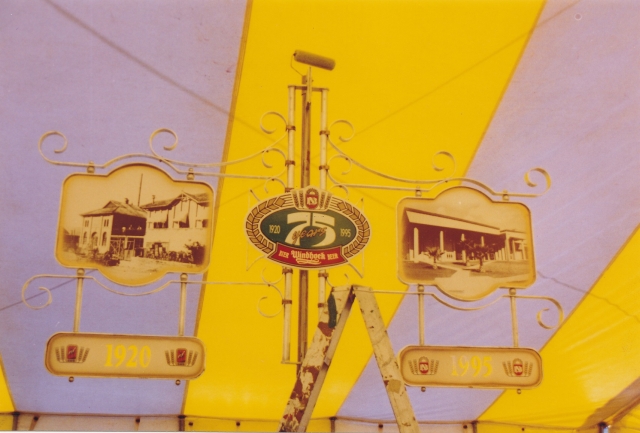
1995: 75th anniversary of Windhoek beer
  • The essence of brewing according to the Reinheitsgebot is used at the core of a marketing campaign in 1992 for the first time and has remained a central tenet of the brand’s identity and promise to consumers ever since.
  • Late 1990s: move to green dumpy bottle and cream rectangular label with slanted neck label; introduction of Reinheitsgebot logo; introduction of the Windhoek flourish.
  • 1999: introduction of Windhoek Light.

2000s:

  • Most of the innovations are smaller, convenience-based changes, for example, an easy-pour can with a wider spout.
  • Windhoek introduces 440ml cans — a move which is spear-headed by Windhoek Draught. This format has become incredibly popular within the beer category as a whole, with most brands offering a 440ml option. Windhoek Lager is now also available in a 440ml can.

Package evolution milestones

  • 1950: Commemoration of the brewery’s 30th anniversary
  • 1970: Move to watermark for 50th anniversary of brewery
  • 1990: Independence Lager to commemorate Namibia’s Independence
  • Late 1990s: Move to green dumpy bottle and cream rectangular label with slanted neck label; introduction of Reinheitsgebot logo; introduction of the Windhoek flourish
  • 1999: Introduction of Windhoek Light
  • Early 2000s: Move to green long-necked bottle; square “75” label to round/oval
  • 2003: introduction of Windhoek Draught in a can
  • 2006/7: Further development of the Reinheitsgebot emblem and copy
  • 2007: Change from 340ml to 330ml
  • 2011: Current packaging launched

Launch date: unknown (mid-century)

Windhoek Pilsner bottle: mid-century

Description: Windhoek Pilsner was, in all likelihood, a variant produced by the Hansa Brewery in Swakopmund, which later became part of the SWB group. The label has the triangle SWB logo on the left. The Hansa Brewery was used to brew Hansa Pilsner (the rights of which were later sold to SABMiller), and hence the assumption that this originated from that brewery.

Launch date: unknown — post 1970 but before 1990
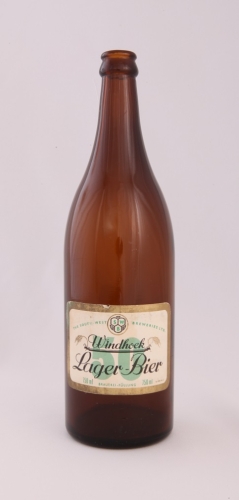
Windhoek Lager-Bier bottle: 50 years of Namibian Breweries

Description: An interesting icons on this label is the “50” watermark, which was put on the label to commemorate the 50th anniversary of the brewery. The SWB logo (South West Breweries) indicates that this label was used before 1990, when SWB changed its name (and icon) to Namibian Breweries Limited (NBL). This is a 750ml Returnable Bottle — the shape of which was only recently phased out.

Launch date: early 1990s

Windhoek Lager bottle: the dumpy — early 1990s

Description: Affectionately known as “The Hand Grenade”, this was the bottle shape that most consumers would have been introduced to for the Windhoek brand. The short, stubby shape was quite common in SA at the time, and eventually was phased out when global bottle-shape trends moved towards taller, more slender shapes with longer necks. It was a 340ml Non-Returnable Bottle (NRB).

Brown glass was commonly used for beer, and it was only towards the mid-to-late ’90s that green glass came to define “premium” and most brands moved into green glass. Brown glass is, in fact, much better for the shelf-life of beer: it lets in less light and UV, and consequently the beer is less likely to become “light struck”, a condition whereby the beer acquires a slightly musty taste after exposure to strong light.

However, consumer preference is for green glass, hence the reason that Windhoek uses the darkest green glass that can currently be manufactured at scale in SA.

The watermark commemorates the 50 years that Windhoek Lager had been brewed, which technically happened in 1970. The precursor breweries to the current NBL were established in 1920. However, there was strong consumer resistance to any attempts to remove the “50” watermark, so it hung around for long after the 50th anniversary had come and gone!

Note: at this stage, the “Windhoek” name is used without the double flourish (which has subsequently become an integral part of the brand iconography). The double flourish was only added in the mid-90s, although one can see that already the brand had adopted the Germanic/Gothic script which has become part-and-parcel of the brand identity.

The label shape was driven less by consumer preference or marketing insights than by production requirements, which dictated that you could have only one label shape across all products.

What is interesting is that there is no Reinheitsgebot symbol. While the beer was always brewed according to the Reinheitsgebot, this only became a central tenet of the brand’s positioning towards the late ’90s. This was also the first pack to show the “new-and-improved” NBL crest, which replaced the SWB brewery logo in 1990 when Namibia became independent.

Launch date: mid-1990s

Windhoek Lager bottle: mid-90s

Description: Referred to as the “Ecopack”, this pack was a returnable 340ml launched in Namibia. This was the first attempt to align the packaging across Namibia and other markets (primarily SA). Unfortunately, this bottle was short-lived: trade and consumer resistance to the smaller format and the hassles of managing returns led to it being discontinued within a few years.

This was the first introduction of the “racetrack” design that had become the standard in beer packaging across the globe. The slightl- off label shape was dictated by bottle shape, and the need to minimise label-application change parts. The design was developed by an in-house design team, and was also the first time the “Windhoek flourish” was rolled out in Namibia.

Launch date: 1995 — commemorating five years of independence

Windhoek Lager bottle: 1995 — five years of Namibian independence

Description: This was a limited-edition bottle for the celebration of the fifth year of Namibian independence. Never really commercially available, it was used as a promotional tool.

This bottle is also a good example of how “The Hand Grenade” bottle shape was evolved to become taller, with a longer neck. It also signals the move to green glass, which was soon to become the norm for the Windhoek trademark.

From an iconography point of view, it is interesting to note the absence of the NBL crest or RHG shield. As this was a limited edition, we suspect there was less effort put into maintain consistency of the brand icons — especially the blue and red brand name!

What is significant is that this was the first use of foil on the Windhoek range — a practice that never really took off. This pack was only available in Namibia.

Launch date: 1995

Windhoek Lager bottle: 1995 — 75 years of Namibian Breweries

Description: This is another limited-edition bottle to commemorate the 75th anniversary of Namibian Breweries. By now, embossing had been brought onto the bottle.

Launch date: 2008

Windhoek Lager bottle: 2008 — 750ml returnable bottle

Description: A 750ml returnable bottle, this shape replaced the old returnable bottles.

Significant is the prominent RHG logo, which indicates the increased emphasis that was being placed on the “100% Pure Beer” positioning of the brand. This label is a later evolution of the same design that was applied on a square label; at some stage, marketing must have managed to convince production that they should invest in new label applicators, thereby allowing for die-cut label shapes.

By now, Windhoek was conforming to the internationally recognised “racetrack” designs of most European beers, and the Gothic script and double flourish were already well-established.

This pack was replaced by the current packaging of 2011.

Launch date: current

Windhoek Light bottle: currentWindhoek Draught bottle: currentWindhoek Lager bottle: current
Description: The current bottle shape for Windhoek Lager and Windhoek Light has been around for about 10 years. Windhoek was one of the first brands in SA that moved away from the short dumpy-shaped bottles to the long-necked bottle that has come to define the premium beer category. We think the rationale behind this shape is that the longer neck speaks more to ‘sophistication’ than masculinity, and has become a passport factor for any beers that want to play in the premium category.

Following up, Windhoek Draught was the first in SA to go with the “broad shoulder, narrowed waist” shape — a trend that many other brands have subsequently followed. The intention was to create a strong, masculine-shaped bottle that was still distinctive from all the others.

If a natural beer like Windhoek is exposed to sunlight, it very quickly develops a condition called “light-struck”, which gives it a “wet-cardboard” taste and smell. In order to minimise the impact of light, we have opted for the darkest green glass possible, specially formulated to limit the effect of UV rays and sunlight upon the beer.

In Brand View, the editors of MarkLives.com invite brand managers to share the visual and marketing history of their brands with readers. This column is by invitation only and is not paid for.

— MarkLives’ round-up of top ad and media industry news and opinion in your mailbox every three work days. Sign up here!

Dissident Spin Doctor: Measuring the success of PR

by Emma King (@EmmainSA) Back in the prehistoric days of public relations (where we used to fax out mass press releases to long-suffering newsrooms), clients measured us purely on the thud of press cuttings we dumped on their desk at the end of each month.

Those clients that knew a thing or two about PR would also measure us against AVE (the dreaded Advertising Value Equivalency measure).

Our calls for PR as a discipline to be taken seriously, with the gravitas of others in our field (read: advertising, design, etc) were balanced emma kingupon a random way of measuring success, based upon how many mentions in the traditional media we could land — often without any understanding of the role that relationships, news creation and creativity could play.

Have we progressed?

How fabulous, you would think, that in this day and age, with our understanding of integrated communications and of how people are influenced, we have progressed, and have stood up to play a serious and meaningful role in the communications game.

Oh wait…

Just when we think that we have moved on from being deemed a success purely against a bunch of newspaper clippings, I find myself coming time and time again against scenarios that make little sense. And these bore me to death and make my heart sink a little.

What the boss wanted

I had a conversation the other day, for example, with a client who admitted that what it wanted (and needed) was for a PR partner to drive conversations about its brand and start people reconsidering it again. But that the boss just wanted “a pile of press cuttings delivered to them with a thud each month”.

And, yes, press coverage about a brand can and does have value.

But measuring success purely on the quantity of media cuttings is silly at best, and problematic at worst.

Variables to take into account

This is because it doesn’t take into account many variables, such as whether that media coverage is “good” or “bad” for the brand. Whether it delivers against key messages. Or even if that messaging is effective in driving whatever behavioural change we are wanting.

And what about those cases when a bad story has been kept OUT of the media or minimised? How is that measured, when quantity wins over quality every time?

So, if this is problematic, how should we be thinking and how should we be measured?

What we have to do

First, we have to stop operating in silos, and PR has to be part of the initial creative and planning process. If we continue, as an industry, to allow ourselves to be dragged in at the end of campaign planning, we will always be relegated to simply “sending out a press release about the campaign”.

This means we will always be seen as a support act, only bringing value to the table by being able to bring in “free advertising”.

Secondly, we need to show our value by being more than just about media relations and press releases. This means, on one hand, moving from thinking like journalist to acting like journalists — which means creating content that can be consumed, rather than feeding ideas to the media for them to create and curate.

It also means, on the other hand, that we need to use our talents — for building relationships, measuring reputation, steering conversations and knowing what is newsworthy — for more than simply getting press cuttings in a newspaper, instead of, say, digital and social media outlets.

Thirdly, and most importantly, we need to start looking at how we can measure success over and above the dreaded AVE. For me, that means measuring ourselves against actual business or communications objectives — whether that be, for example, driving sales, growing awareness, driving engagement (which doesn’t mean getting a million ‘likes’ on a Facebook page) or changing legislation.

When briefed by a new client or on a new campaign, why not ask “What do we want people to actually do?”, along with “What does success look like?”, instead of “How much media value do you want?”

In this way, we can create campaigns based on interrogating what value we can add, and we can start to be measured against tangible objectives that make sense.

Starting block

If we are to allow our discipline to have the gravitas that others do, we need to start acting like serious, and clever, consultants.

We have a great starting block — we inherently know how to form relationships and we understand what news and content is interesting and what isn’t.

But we need to move on to adding real value. Sending out press release to all and sundry, and wafting around at an event with a clipboard, are just not going to cut it anymore, I’m afraid.

Emma King (@EmmainSA) is the owner and MD of The Friday Street Club (@TheFridayStClub). Previously, she was head of PR at The Jupiter Drawing Room (Cape Town). She contributes the monthly “The Dissindent Spin Doctor” column on PR and communication issues to MarkLives.com.

— MarkLives’ round-up of top ad and media industry news and opinion in your mailbox every three work days. Sign up here!

Grubstreet: Weideman — ‘Marketers are cutting back on ad spend’

by Gill Moodie (@grubstreetSA)Naspers, the giant multinational that owns Media24, released its annual results recently – always the biggest event of the year for listed media companies in this country. Because of its remarkable success in markets such as China, Russia and India, the South African division out of which Naspers grew is often ignored at results time. Grubstreet interviewed (via email) Media24 CEO Esmaré Weideman about how it fared in the greater group and in a tough market.

GILL MOODIE: The annual results said that although subscriptions in the news division were up, circulation declined and ad revenue was under pressure. Where do you think this ad revenue is going if digital advertising is not picking up enough to compensate for the loss in print?

Esmare WeidemanESMARE WEIDEMAN: There are two reasons for the pressure on ad revenue: the changing media landscape and the economy. The latter is easier to explain: marketers are simply cutting back on their ad spend. Things get more interesting when you look at the evolving media landscape. Electronic media, TV in particular, is having a good run and takes a huge chunk. Digital ad spend too is growing in leaps and bounds but is still priced well below other mediums and will remain so for the foreseeable future.

MOODIE: I have an idea that content marketing might be hoovering up ad spend too, for example, Woolies today is able to reach customers directly through its own magazine, social media, its website & email newsletter while Foschini, for example, has its vast stable of custom magazines for which club members actually pay for.

WEIDEMAN: Yes, that is indeed another reason for the pressure on ad spend. Many retailers are doing their own thing, either in print or on social-media platforms. Custom publishing is on the up and at Media24, through New Media Publishing, we get quite a chunk of this. “Traditional” print media — consumer magazines and newspapers — remain a very strong contender for marketing budgets though, and the teams who realise advertisers are looking for more innovative, interesting, targeted and measurable campaigns — in print or including print — are the ones who are getting their slice of the pie. Another big trend internationally, and picking up in South Africa, is marketing campaigns involving events.

We have incredibly powerful brands with long-standing relations with millions of readers, and advertisers realise this, so increasingly marketers are utilising the power of these brands to speak to customers at events. A current case in point is the huge Days of the Dinosaur exhibition in Johannesburg, then Cape Town, brought to South Africa by Huisgenoot, YOU and DRUM in association with Cell C.

MOODIE: There was mention in the results of transforming the news business into a 24-hour offering spanning digital and print platforms, with new video recording studios in Jo’burg and Cape Town. Can you give me more details about this?

WEIDEMAN: Yes, exciting times indeed! Let’s talk video first. 24.com already produces and broadcasts more than two hours of video per day and the audience growth is looking good. The cost of serving this content is currently quite high and we look forward to government’s progress in driving a telco strategy that will provide faster and cheaper broadband to more people. We believe video offers us a strong value proposition to bring broadcast (and print) advertisers into a digital environment with a targeted and engaged audience.

The multimedia teams at Media24 News — the division previously known as Newspapers! — are also producing great work. Beeld ran an interesting experiment during the Oscar Pistorious trial, broadcasting 30 minutes of live analysis from their studio in (Media24 HQ) Media Park each day of the trial. The content was excellent — who better to get into a studio for analysis than the journalists who were in court that day? The audience was small but hey, it was a milestone for us and an indication of things to come.

As far as a 24-hour digital-first news operation across all our publishing units is concerned, we are working on it! Our heads are in the right place but the execution is not yet good enough. Of course the truly digitally minded teams at 24.com have been doing it for years and do it very well but in the traditional print businesses we have some way to go. There are some exciting new developments happening so watch this space.

MOODIE: What can you tell me about the recent review of Volksblad’s news operation and the talk that the paper might be shut or downgraded to a regional issue of Beeld?

WEIDEMAN: There was so much misinformation around this issue, it’s actually scary. We continuously review the performance of all our properties, print and digital, as is our job. Much as we are passionate about all our brands, we have to keep emotion in check when we do this. As a management team we have to focus on strategies to position the company for long-term sustainability. We have shareholders to whom we are accountable, such as the Welkom Yizani shareholders, for whom we have to create value in Media24 over the long term.

MOODIE: Tim du Plessis told me recently that Rapport is still a very profitable newspaper. Why is it able to buck the trend of declining ad revenue, in your view?

WEIDEMAN: Sunday newspapers generally fare better than dailies. The cost base is also lower. Rapport delivers a unique and highly desirable audience to advertisers. It competes very well in value and maintains high standards of editorial quality. Rapport is an important contributor for Media24. So too, by the way, is City Press.

MOODIE: The magazine division did well in the annual results, retaining ad-market share and I see digital sales were up? Can you tell me more about the digital sales. I presume they relate to the bundled digital deals on offer in the past year?

WEIDEMAN: Yes, they had a great year. John Relihan, the CEO of the magazine division, runs a tight ship, has done a lot to adjust his cost base over the years and has great brands in his portfolio. Digital sales showed excellent growth across the board. MyEdit, our content aggregator, is showing a lot of promise and the digital magazine bundles have attracted a solid audience but we find that the growth is increasingly coming from subscriptions to individual titles. As smartphone penetration increases and once broadband becomes more affordable, we believe digital subs to our titles will accelerate.

MOODIE: Spree is showing growth although off a small base. Can you give me some insights into the challenges of growing the e-commerce wing and what you’re pleased about and what’s working well there? 

WEIDEMAN: Spree has gone from zero to hero in a very short time and we are very pleased with this. Our efashion store was actually only launched under the Spree brand in April last year, following the promise shown when we tested it on SARIE.com, and it is now the biggest online fashion store in South Africa. We believe the success comes from a really good curated collection, excellent customer service, fast delivery and the buy-in from our magazines whose fashion editors select their own Spree offering for publication in print and online.

The challenge going forward is to scale the business fast. As the customer and supplier base grows rapidly, Spree’s operations need to scale accordingly to ensure the same great quality products, fulfillment and customer service.

MOODIE: Naspers has prioritised e-commerce internationally as a future growth area. How important do you envision e-commerce will be to the future of Media24?

WEIDEMAN: We’re taking baby steps compared to Naspers! Most of the Naspers e-commerce aspirations in South Africa fall under Kalahari, with efashion now consolidated within Media24 because it is so closely linked to our core expertise and our brands. We will continue to explore opportunities related to that.

MOODIE: 24.com is showing good audience growth among mobile users – and the Election 2014 app was amazing work from your team. 

WEIDEMAN: Thanks. The News24 election app was the best piece of digital publishing we’ve done, I believe. On the day after the elections, we had 22-million page views across the 24.com platforms. To put this in context, the previous high was 7-million on a day in the week after Oscar shot Reeva Steenkamp. It was phenomenal. Our official company strategy is: “Reshaping Media24 to remain relevant and useful to consumers and clients”. The election app just shows what can happen if we think “relevant and useful” and execute properly. Kudos to the team!

MOODIE: Where is 24.com’s mobile growth coming from? From the News24 mobisite and apps? I’d love to know about successes among the apps.

WEIDEMAN: Mobile is a prime focus across our digital-media businesses. We are seeing much faster growth in the entry-level smartphone market, primarily on Android devices. This — tied to higher customer education, a pass-on factor (where old phones with apps installed are handed down to a new generation of smartphone users) and good marketing through our digital platforms — is leading to very encouraging growth.

GrubstreetSouth Africa’s leading media commentator, Gill Moodie (@grubstreetSA) offers intelligence on media, old and new. Reprinted from her site Grubstreet. This piece was published first on Journalism.co.za, the website of Wits University’s journalism school.

— MarkLives’ round-up of top ad and media industry news and opinion in your mailbox every three work days. Sign up here!

Brand Politics: After-sale marketing — where political branding falls down flat

by Alistair Mackay (@almackay) Political parties really don’t get after-sale marketing. The moment immediately after an election is critical for the establishment of trust between the party and those who voted for it. Voters (first-time or swing voters, in particular) need to feel reassured that they made the right choice.

Alistair MackayBuyer’s remorse

Just as with consumers after having made an important and expensive purchase, emotions run high after an election and the risk of “buyer’s remorse” is real. This is exactly when political parties should do all that they can to eradicate any lingering uncertainty on the part of their voters, make their supporters feel proud and that they did the right thing by choosing them.

And, yet, in the weeks following our 2014 election, we saw squabbles, infighting and finger-pointing. Mamphela Ramphele announced that she would not be going to Parliament — removing what was for many voters their sole reason for voting Agang. It was then reported that she was suspended from the party, and counter-reported that those who had called for her suspension were expelled. She has since officially withdrawn from party politics.

There may be many things that Agang voters may be feeling right now, but reassured is almost certainly not one of them.

Similarly quick to disappoint

The DA has been similarly quick to disappoint, with the almost immediate resignation of its popular parliamentary leader, and an ugly and vicious public spat involving the party leader in the media. After winning over 31% of the province, its Gauteng Premier candidate abandoned the province for Cape Town.

The ANC hasn’t melted down in quite so spectacular a fashion, but has done little to show leadership or gratitude to the voters who returned them to government. Under-performing minsters have been reappointed to Cabinet positions, Nkandla remains ignored and evictions have followed the election — in both DA and ANC provinces.

Citizens’ experience of political parties either ends or falls apart once they have made that X on the ballot. Instead of reassurance, voters get dirty laundry and broken promises. I have no doubt this is partially responsible for the high levels of apathy and disillusionment that many voters feel. And from a political branding point of view, it is a colossal stuff-up.

Marketing doesn’t end

In the private sector, good marketers understand that the moment of purchase is only part of the customer’s journey with a brand. Marketing doesn’t end once the customer parts with his or her money, because those who have chosen to buy a certain brand are much more likely to pay attention to that brand in future.

They are the low-hanging fruit, and winning them over to repeat purchase is much easier than earning the attention of new potential customers all the time.

It’s also only after the moment of purchase that a customer really begins to build a relationship with a brand. While they are using a product, they are building a perception of its quality. While they are telling their friends about the purchase, they are listening to their friends’ opinions of the brand. And while they are calling the support centre for help with setting up or to report a problem, they are establishing a relationship that can either build powerful loyalty or make them resolve never to buy from that brand again.

Powerful brand love

Great marketers seize the post-purchase moment as an opportunity to secure powerful brand love.

Even the most steel-hearted among us can’t help but feel warm, fuzzy and special upon opening a package from Yuppiechef, for example. It’s wrapped in brightly coloured gift paper; there’s a cute little fridge magnet; and a quirky, silly and adorable card, thanking you for shopping with them. It’s hand-written and personal, too [I’m been wanting to buying something from Yuppiechef for ages just to experience all of this — ed-at-large].

Yuppiechef went to all of that marketing effort after you had already purchased the product, because it knows that you’ll feel special, tell others about it and that it will be top of mind when you want to buy kitchen products again.

It’s an experience

Car brands do it, too. Both Volkswagen and BMW (and perhaps the others do, too) make you feel like a kid at Christmas when you buy one of their cars. The whole thing is draped in cloth and topped with a giant bow that you pull off dramatically to reveal your new favourite toy. Sometimes a bottle of bubbly is popped.

It’s an experience, not just a hand-over of paperwork and keys.

Elections are the all-important ‘moment of purchase’ in political branding. It’s the moment when voters make their decision. If political marketers spent the month after an election ensuring that their voters felt good about themselves for having chosen them, they wouldn’t face such a long, hard battle to win over people’s trust again during the next election.

They could learn a thing or two about customer retention from the Yuppiechefs and BMWs of this world.

Alistair Mackay (@almackay) is marketing manager and head of content at Yellowwood, (@askYellowwood) a leading marketing strategy and brand development consultancy. He has experience both as a brand strategist and as the digital media manager for the Democratic Alliance, and believes that innovative, insightful and generous marketing is both good for business and social change in South Africa. He contributes the monthly “Brand Politics” column, exploring lessons brands can learn and apply from politics, to MarkLives.

— MarkLives’ round-up of top ad and media industry news and opinion in your mailbox every three work days. Sign up here!

Smart Africa TV: Alan Knott-Craig Jr on Project Isizwe

by Russell Southwood (@BalancingActAfr) In this video interview, Project Isizwe‘s founder Alan Knott-Craig talks about:

  • what Project Isizwe does; Alan Knott-Craig Jnr
  • how many people now have internet access through it;
  • who uses the internet through its coverage and what they use it for;
  • how the business model works;
  • what the municipalities are charged;
  • and his plans for rolling out outside of South Africa.

Smart MonkeyRussell Southwood is the founder of Balancing Act and the web TV channel Smart Monkey TV, and has been an analyst in telecoms, internet and broadcast in Africa for the last 14 years. Smart Monkey TV aims to capture the energy at the crossroads between African culture and technology. MarkLives is syndicating content from Smart Monkey TV on a weekly basis for the column “Smart Africa TV”.

— MarkLives’ round-up of top ad and media industry news and opinion in your mailbox every three work days. Sign up here!

MagLove: Surprising simplicity and the naked truth

by MediaSlut (@MediaSlut) My choice of the best international magazine covers in MagLove this week:

  • Homespun (Australia), July 2014
  • New Scientist, 12 July 2014
  • Newsweek, 18 July 2014
  • Sport (UK), 11 July 2014
  • Time Out (New York), 10 July 2014

INTERNATIONAL

Homespun (Australia), July 2014

Homespun (Australia), July 2014The perfect example of when the theme of an issue is married perfectly with the cover lines and the main cover image!

New Scientist, 12 July 2014

New Scientist, 12 July 2014What with so many diets making waves again and creating a lot debate (think Banting…), I found this cover very relevant and also very smart (while staying extremely simple).

Newsweek, 18 July 2014

Newsweek, 18 July 2014Another weekly that drew my attention, mainly because of very smart cover line usage and image selection, is Newsweek.

It makes you question what the face of Terror looks like, without any answer being given but rather opening the debate.

Sport (UK), 11 July 2014

Sport (UK), 11 July 2014

For its issue showing the game between Germany and Argentina, Sport created quite a beautiful illustration of the Maracana Stadium while using the official colours of Brazil, which I thought all worked together very well!

Time Out (New York), 10 July 2014

Time Out (New York), 10 July 2014Every year we see dozens of magazines going the “Sex Issue” route, and everyone trying to stand out because of stiff [pun intended? — ed] competition…

One of my favourite “Sex Issue” covers must be the New York (note: not Time Out — New York) 29 July 2014 cover — pure art!

For this Time Out New York cover, there seems to be a big article entitled “The naked truth about SEX”, and I doubt the editorial team could have screamed it more on the cover!

It was actually fun looking at every person… Or am I the only one? ;-)


Find a cover we should know about? Tweet us at @Marklives and @MediaSlut.
Want to view all the covers at a glance?
See our MagLove Pinboard!


MediaSlutMagLove by @MediaSlut is a regular slot featuring the best local and international magazine covers every week, recognising well thought-out, powerful and interesting (and hopefully all three-in-one) covers and celebrating the mix of pragmatism, creativity and personal taste that created each of them. The (for now anonymous) blogger behind MediaSlutknows way too much for his own good about media in South Africa, magazines in particular. His mission is to show when SA magazines fail but, most importantly, also when they succeed. If you’re looking for a library about SA magazines and news, this is your one-stop pitstop.

— MarkLives’ round-up of top ad and media industry news and opinion in your mailbox every three work days. Sign up here!

Nollywood drives growth in Nigeria

a The Africa Annual feature by Jon Pienaar. The Nigerian film industry has finally been recognised as a key economic driver in what is now Africa’s largest economy. We take a look at Nollywood.

It’s old news that Nigeria has overtaken South Africa as Africa’s largest economy, but what is a revelation is that the value of the economy now includes data that has not been included before. Theses figures come from sectors that include telecommunications, airlines, information technology and, importantly, Nollywood. In fact, the country’s homegrown film industry now accounts for around 1.3% of Nigeria’s GDP (Gross Domestic Product.)

Nollywood graphic from The Africa Annual“It comes as no surprise that data from Nollywood has been included in the recalculated GDP figures for Nigeria,” says Jason Njoku, co-founder and CEO of Nigerian online film phenomenon iROKOtv. “It has been growing steadily for the past 20 years and can legitimately be uttered in the same breath as the likes of Hollywood.” Njoku says that when it comes to sheer output, some 1,500 to 2,000 movies are made in Nigeria every year.

Njoko entered the Nollywood industry in December 2010, after he could not find any Nollywood movies online for his mother who was living in the UK. Having realised how popular Nollywood films were outside of Nigeria, Njoko thought it inconceivable that films that were so sought after were so inaccessible. He flew to Lagos and after immersing himself in the industry, negotiated Africa’s first content-partnership deal with YouTube. This company streamed full-length Nollywood movies online under the name of Nollywood Love.

The Nigerian Diaspora could not get enough and Nollywood Love was an overnight success. In January 2012, the company launched its own movie streaming platform, iROKOtv, and reached 500,000 registered users in under 6 months. In December 2011, iROKO Partners moved into the Nigerian music scene and iROKING was born. The platform showcases the most popular West African singers and manages and monetizes the video YouTube sites for many of the industry’s top artists.

“Nollywood is the most hard working, brutal and dynamic of industries that Nigeria has spawned. It is an economic miracle that the industry has not only flourished, but grown exponentially, considering the conservative budgets movie producers have to work with, as well as the antiquated methods of distribution that held the industry back for so many years,” says Njoku.

“Nollywood has been, for too long, actively discounted as a potential industry for growth in Nigeria. Investors at home and abroad were unwilling to invest, putting their money in traditional sectors such as agriculture, oil and property. In 2010, iROKOtv secured ‘series A’ funding of US$ 3 million from US-based Tiger Global, the very first significant, multi-million dollar investment into the industry, which is really quite astonishing,” Njoku states.

Since its first round of venture funding four years ago, Njoku and his team secured a further US$ 19 million venture capital investment, bringing the total invested in the operation to US$ 21 million. These investments are undoubtedly a testament to Nollywood now being considered by the international investor community as a very real and exciting investment prospect in Africa.

“Thanks to the movie producers, actors and distributors who have helped to put Nigeria on the map culturally, and who, with their creativity and dedication to their art, are helping to drive the economy upwards,” says Njoku.

iROKOtv is the world’s largest online distributor of African content, with a Nigerian movie ‘Nollywood’ catalogue of 6,000+ movies.

The Africa Annual

This feature first ran in The Africa Annual published by Ornico with MarkLives.com as its official media partner. Read or download the full magazine via Issuu.

— MarkLives’ round-up of top ad and media industry news and opinion in your mailbox every three work days. Sign up here!

Heroes & Zeros: best (Lunch Bar) & worst (brand Oscar Pistorius) ads of the week

Andy Rice (@ricecommaandy) talks about his best and worst ads of the week — Cadbury’s Lunch Bar and brand Oscar Pistorius — during The Ad Feature on Talk Radio 702 (@Radio702).

Find out why these brands feature in this week’s Heroes & Zeros webisode by watching below:

For a fresh look at the world of advertising, Jenny Crwys-Williams of 702 Talk Radio chats to advertising critic Andy Rice on The Ad Feature, every Wednesday 2.30pm — 3pm. The filmed Heroes & Zeroes will appear on MarkLives every Thursday morning as a webisode.

— MarkLives’ round-up of top ad and media industry news and opinion in your mailbox every three work days. Sign up here!


Shelf Life: Spreading the marge market

Louise Marsland (@Louise_Marsland)’s weekly pick of recent product, packaging and design launches:

  • Willowton spreads its brand footprint
  • new vintages from Glenelly
  • cheers from Drostdy Hof this winter, and
  • new commuter ad options in Cape Town.

Spreading the marge market

New Sunfoil Margarine 500gWillowton, best known for its Sunfoil sunflower cooking oil, has launched another brand into the spreads category with its Sunfoil brick margarine.

Sunfoil cooking oil is a 40-year-old South African brand from Willowton, which also produces Nuvolite, Sunshine D and D’lite spreads. The Willowton Group is described as having become South Africa’s largest sunflower seed crusher and a leading FMCG competitor.

The new Sunfoil margarine is touted as ideal for baking, frying, spreading, melting and use in sauces. It is packaged in the red and gold of the Sunfoil brand and comes in 500g and 1kg bricks. It includes vitamins A, D and E.

According to Shoaib Moosa, Willowton Group director of sales and marketing, the rollout of the new product began in March 2014 and would continue with in-store promotions, giveaways and 30g sample sachets.

Glenelly releases 2013 whites

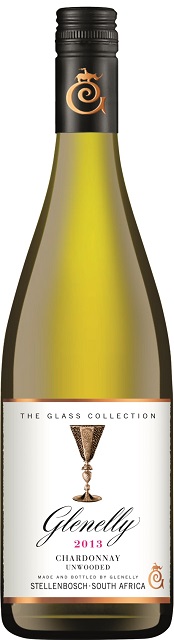
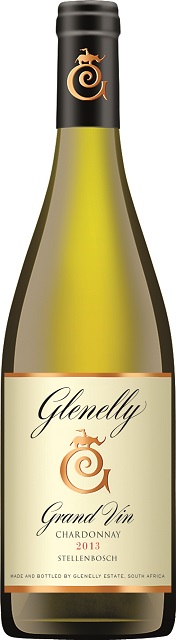
Glenelly Glass Collection Chardonnay Unwooded 2013 Glenelly Grand Vin Chardonnay 2013

Glenelly, the Stellenbosch wine estate with a French flavour, has released the latest vintages of its two different styles of Chardonnay: Glenelly Grand Vin Chardonnay 2013 and Glenelly Glass Collection Chardonnay 2013.

Glenelly Grand Vin Chardonnay 2013 is described as “an elegant yet opulent wooded Chardonnay made in a complex mineral style with lots of lemon zest for freshness” with a “bright crisp colour”; and Glenelly Glass Collection Chardonnay 2013 as “unoaked and lively and packaged with screwcap closure to preserve the fresh citrus notes” and with a slight green hue. There are also hints of toasted almond and vanilla and perky citrus in the Grand Vin Chardonnay!

Wine brand descriptors are always so evocative and, according to Glenelly winemaker, Luke O’Cuinneagain, “The 2013 harvest at Glenelly produced wines of distinction, with great balance and complex aromatics.”

The Glenelly Grand Vin Chardonnay 2013 retails nationally for approximately R140 and the Glenelly Glass Collection Chardonnay 2013 retails nationally for around R65.

Atlantis bus route open for business

Atlantis MyCiTi route commuter shelterIn addition to the current MyCiTi media offering, which includes commuter shelters and bus advertising on all routes that make up the Bus Rapid Transport network in Cape Town, Provantage Media Group can now offer advertising on MyCiTi buses travelling along the new Atlantis Route.

The new addition also means that Provantage Media Group can now offer advertisers various branding platforms along the route including bus backs, interior panels, exterior panels and commuter shelters.

“Buses and commuter shelters are hardworking advertising platforms in that they expose brands to consumers for many hours each day. Furthermore, because they are exposed to the same consumers each day, the platforms stimulate high brand recall and positive brand resonance,” says Skhumbuzo Nkosi, director at Provantage Media Group.

Winter warmers

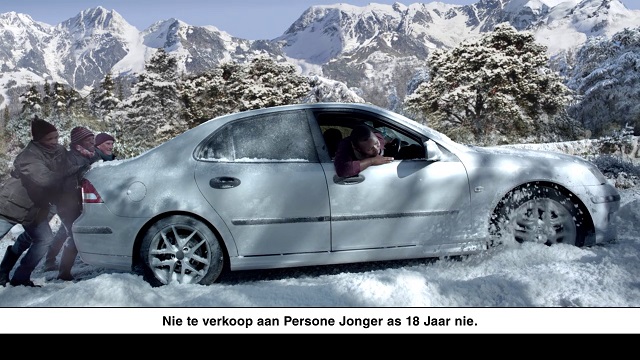
Winter takes the leading role in a new TVC for Drostdy Hof wine, in a departure from the usual ‘picture perfect sunshine’ wine ads. The TVC, which launches this month nationally, also serves as the launch of the brand’s new Pure Country positioning and elegant new packaging.

The Drostdy-Hof commercial relishes the rain, the snow and even ice, because of their impact on the mountain streams in the Winelands. Once the weather warms, the crystal clear water feeds the vineyards.

To make the point, locals living close to De Oude Drostdy, home of Drostdy Hof wines in Tulbagh, are shown battling to push a car out of the snow, struggling to dig through the layer of ice covering the soil, and finding their clothes frozen stiff on the washing line.

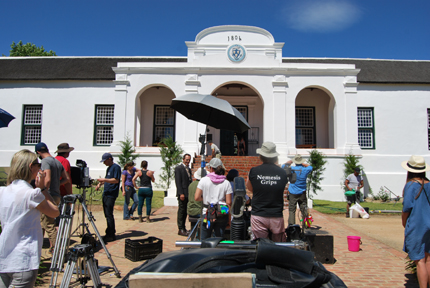
Local personalities from the area were used in the commercial, which was shot in Tulbagh.

Drostdy Hof TVC shootThe cold also tells another story, explains global marketing manager for the brand, Deidre Samson: “The winter cold encourages the vines and the fruit trees to go into proper dormancy, conserving their energy before they go into their next cycle of growth. It’s also good for flavour development in the ripening fruits.”

The commercial was shot by Bester Burke Slingers, which closes shop end-July.


Louise MarslandShelf Life is a weekly column by Louise Marsland on MarkLives. Tweet new product, packaging and design launches to @louise_marsland or email her at louise.marsland at gmail.com. Want to sponsor Shelf Life? Contact us here.

Louise has written about the FMCG, media, marketing and advertising industry for 19 of her more-than-25-year career as a former editor of magazines AdVantage, Marketing Mix and Progressive Retailing, as well as websites Bizcommunity.com and FMCGFiles. Until its cancellation, she edited the weekly Wednesday Media & Marketing Page for The New Age newspaper. She is currently the publishing editor of industry trendwatching portal, TRENDAFRiCA,for consumer insight, research and trends in Africa.

— MarkLives’ round-up of top ad and media industry news and opinion in your mailbox every three work days. Sign up here!

SAARF/MarkLives #Top40TVratings: Laduma!!! Germany vs Argentina within Top 5

by SAARF & MarkLives (@marklives) The 2014 FIFA World Cup peaked at its highest position so far on our SAARF/MarkLives #Top40TVratings national chart for the week of July 7–14, what with the Germany vs Argentina finally making it to no. 5 in our Top 10. On our DStv chart, Germany vs Argentina made it to no. 4 via Supersport, and no. 10 via SABC 1.

On the national chart, Brazil vs Germany and Netherlands vs Argentina came in at no. 15 and 17, respectively, with Brazil vs Netherlands trailing at no. 35. In comparison, on the DStv chart, Brazil vs Germany came in at no. 14 via SABC 1 and at no. 18 via SuperSport; Netherlands vs Argentina to no. 20 via SABC 1 and no. 21 via SuperSport; and Brazil vs Netherlands  came in at no. 32 via SABC 1 and at no. 38 via SuperSport.

Satellite dishThis weekly roundup of South Africa’s TV audience viewership, a collaboration between the South African Audience Research Foundation (SAARF) and MarkLives, reveals the best-watched shows of the week before, where it ran and how many South Africans tuned in to watch.

We offer two tables, the first covering all households — free-to-air viewing (the various SABC channels and e.tv) as well as the DStv platform — and the second charting the best-watched shows on the DStv network of channels only.

SAARF/MarkLives #Top40TVratings Chart: 7–14 July 2014

Market Target Activity
National Total Indv (incl guests) Live + VOSDAL
Counter Description (grouped) Channel Level 1 Level 2\variable (r) AMR % AMR SHR %
1 GENERATIONS SABC 2 Soap opera Local 21.3 9 156 240 66.09%
2 TEMPY PUSHAS SABC 2 Drama Drama 14.8 6 348 957 49.37%
3 MUVHANGO SABC 2 Drama Drama 13.6 5 820 334 49.14%
4 COURAGE OF YOUR CONVICTIONS SABC 2 Documentary Documentary 11.1 4 762 554 36.19%
5 FIFA WORLD CUP L GERMANY/ARGENTINA SABC 1 Sport Football (soccer) 10.2 4 377 568 50.14%
6 FAMILY BONDS SABC 2 Sitcom Sitcom 10.0 4 283 349 31.86%
7 RHYTHM CITY e.tv Drama Drama 9.9 4 254 855 35.03%
8 SCANDAL e.tv Drama Drama 9.7 4 142 554 31.00%
9 MY PERFECT FAMILY SABC 2 Sitcom Sitcom 9.6 4 119 223 30.99%
10 POWERBALL SABC 2 Variety Variety 9.6 4 116 294 38.24%
11 GA RE DUMELE -R SABC 2 Sitcom Sitcom 8.6 3 690 667 37.05%
12 SELIMATHUNZI SABC 2 Variety Variety 8.5 3 659 263 27.21%
13 SPEAK OUT SABC 2 Actuality Actuality 8.2 3 533 024 25.91%
14 ZAZIWA SABC 2 Variety Variety 8.0 3 443 556 26.64%
15 FIFA WORLD CUP L BRAZIL/GERMANY SABC 1 Sport Football (soccer) 8.0 3 417 309 48.34%
16 SKWIZAS SABC 2 Sitcom Sitcom 7.8 3 362 599 26.13%
17 FIFA WORLD CUP L NETHERLANDS/ARGENTINA SABC 1 Sport Football (soccer) 7.8 3 354 875 51.60%
18 ZULU NEWS SABC 2 News News 7.3 3 126 176 24.77%
19 SPY KIDS II:ISLAND OF LOST DREAMS e.tv Movies Action/adventure 7.3 3 116 409 32.83%
20 XHOSA NEWS SABC 2 News News 7.3 3 112 288 23.72%
21 SWEET ‘N SHORT e.tv Movies Comedy 7.1 3 060 786 27.91%
22 7DE LAAN SABC 2 Soap opera Local 7.0 3 024 257 24.89%
23 XHOSA/ZULU NEWS SABC 2 News News 6.6 2 826 598 22.60%
24 FORCED LOVE (DRAMA) SABC 2 Drama Drama 6.6 2 823 719 31.55%
25 GA BOSE GANGWE SABC 2 Drama Drama 6.5 2 787 220 29.09%
26 VOLCANO e.tv Movies Action/adventure 6.4 2 726 375 26.00%
27 NEWS e.tv News News 6.3 2 710 615 22.13%
28 MUVHANGO -R SABC 1 Drama Drama 6.1 2 611 045 43.98%
29 EMZINI WEZINSIZWA -R SABC 1 Sitcom Sitcom 6.0 2 577 812 42.26%
30 THOLA SABC 2 Drama Drama 6.0 2 556 677 27.09%
31 VODACOM MILLIONAIRES e.tv Competition Competition 5.9 2 514 587 21.71%
32 MOESHA SABC 1 Sitcom Sitcom 5.7 2 454 016 41.36%
33 NEXT OF NEXT WEEK e.tv Advertisement Advertisement 5.6 2 420 924 22.81%
34 GENERATIONS -R SABC 1 Soap opera Local 5.5 2 367 515 43.27%
35 FIFA WORLD CUP L BRAZIL/NETHERLANDS SABC 1 Sport Football (soccer) 5.4 2 307 316 31.67%
36 LET’S STAY TOGETHER e.tv Sitcom Sitcom 5.0 2 139 254 17.17%
37 WWE WRESTLING RAW e.tv Sport Wrestling 5.0 2 128 293 27.65%
38 GHOST WHISPERER SABC 2 Drama Drama 4.9 2 117 536 18.96%
39 THE BOLD AND THE BEAUTIFUL SABC 3 Soap opera International 4.9 2 088 921 20.04%
40 SA’S KITCHEN QUEENS e.tv Reality Reality 4.8 2 069 031 18.42%

DStv platform only

Market Target Activity
DStv Total Indv (incl guests) Live + VOSDAL
Counter Description (grouped) Channel Level 1 Level 2\variable (r) AMR % AMR SHR %
1 GENERATIONS SABC 2 Soap opera Local 16.0 2 168 583 47.87%
2 MUVHANGO SABC 2 Drama Drama 10.0 1 350 359 33.41%
3 ISIBAYA Mzansi Magic Variety Variety 7.5 1 017 653 23.17%
4 FIFA WORLD CUP L GERMANY/ARGENTINA SuperSport 3 Sport Football (soccer) 6.9 933 654 30.31%
5 SCANDAL e.tv Drama Drama 6.7 901 150 20.25%
6 RHYTHM CITY e.tv Drama Drama 6.4 869 891 20.33%
7 POWERBALL SABC 2 Variety Variety 5.9 802 492 20.90%
8 TEMPY PUSHAS SABC 2 Drama Drama 5.8 787 371 17.80%
9 GA RE DUMELE -R SABC 2 Sitcom Sitcom 5.6 761 446 21.53%
10 FIFA WORLD CUP L GERMANY/ARGENTINA SABC 1 Sport Football (soccer) 5.6 758 613 22.86%
11 IDOLS YR 10 Mzansi Magic Reality Reality 5.6 755 340 18.91%
12 7DE LAAN SABC 2 Soap opera Local 5.3 715 236 16.72%
13 SPEAK OUT SABC 2 Actuality Actuality 5.2 699 179 15.69%
14 FIFA WORLD CUP L BRAZIL/GERMANY SABC 1 Sport Football (soccer) 5.1 693 865 24.91%
15 COURAGE OF YOUR CONVICTIONS SABC 2 Documentary Documentary 5.1 682 477 15.39%
16 FAMILY BONDS SABC 2 Sitcom Sitcom 4.7 631 578 14.55%
17 NEWS e.tv News News 4.6 627 386 14.65%
18 FIFA WORLD CUP L BRAZIL/GERMANY SuperSport 3 Sport Football (soccer) 4.6 618 005 25.53%
19 SELIMATHUNZI SABC 2 Variety Variety 4.6 615 633 13.28%
20 FIFA WORLD CUP L NETHERLANDS/ARGENTINA SABC 1 Sport Football (soccer) 4.5 605 350 25.54%
21 SuperSport 3 Sport Football (soccer) 4.4 599 536 27.02%
22 MY PERFECT FAMILY SABC 2 Sitcom Sitcom 4.4 590 297 13.45%
23 FORCED LOVE (DRAMA) SABC 2 Drama Drama 3.9 520 576 17.04%
24 ZAZIWA SABC 2 Variety Variety 3.8 514 074 11.60%
25 THOLA SABC 2 Drama Drama 3.6 486 555 13.90%
26 ZULU NEWS SABC 2 News News 3.5 472 053 11.01%
27 VODACOM MILLIONAIRES e.tv Competition Competition 3.4 461 748 11.04%
28 XHOSA NEWS SABC 2 News News 3.3 447 124 9.92%
29 OUR PERFECT WEDDING (MAG) Mzansi Magic Magazine Magazine 3.3 440 505 10.19%
30 GA BOSE GANGWE SABC 2 Drama Drama 3.2 429 160 12.65%
31 SWEET ‘N SHORT e.tv Movies Comedy 3.0 408 102 10.78%
32 FIFA WORLD CUP L BRAZIL/NETHERLANDS SABC 1 Sport Football (soccer) 3.0 400 168 14.48%
33 SPY KIDS II:ISLAND OF LOST DREAMS e.tv Movies Action/adventure 2.9 394 339 11.20%
34 THE BOLD AND THE BEAUTIFUL SABC 3 Soap opera International 2.9 388 702 10.16%
35 ISIDINGO:THE NEED SABC 3 Soap opera Local 2.8 383 718 8.76%
36 XHOSA/ZULU NEWS SABC 2 News News 2.8 379 826 8.82%
37 VODACOM SUPER RUGBY 2014 SHARKS VS STORMERS SuperSport 1 Sport Rugby(all) 2.7 369 587 8.38%
38 FIFA WORLD CUP L BRAZIL/NETHERLANDS SuperSport 3 Sport Football (soccer) 2.7 367 837 14.99%
39 MUVHANGO -R SABC 1 Drama Drama 2.7 358 875 17.54%
40 NOOT VIR NOOT SABC 3 Music Music 2.7 358 837 8.13%

How to read the tables:

AMR% refers to the number of people in a target market who were watching an event ie programme, expressed as a percentage of the population for that demographic: “On average, 16.3% of adults aged 15+ who watched TV from 28 Jan-3 Feb 2014 watched Society on SABC 1”.

AMR is the number of people in a target market watching a specific event ie programme per minute, expressed in absolute figures: “On average, 1, 541, 066 adults aged 15+ who watched TV from from28 Jan-3 Feb 2014 watched Society on SABC 1”.

Share % (SHR %) is the share or proportion of the available audience (people watching TV at that time) that a specific channel/programme has achieved at that time: “Society achieved a share % of 52.59% from 28 Jan- 3 Feb 2014 on SABC 1″.

saarf 150SAARF is the name by which the South African Audience Research Foundation is familiarly known. SAARF’s main objective is to direct and publish media audience and product/brand research for the benefit of its stake-holders, thereby providing data for target marketing and a common currency for the buying and selling of media space and time. SAARF has thus the responsibility to measure the audiences of all traditional media such as newspapers, magazines, radio, television, cinema and out of home media.

— MarkLives’ round-up of top ad and media industry news and opinion in your mailbox every three work days. Sign up here!

Online CPD Courses Psychology Online CPD Courses Marketing analytics software Marketing analytics software for small business Business management software Business accounting software Gearbox repair company Makeup artist