Ad of the Week: Flights of imagination

by Oresti Patricios (@orestaki) It’s time for Ad of the Week and, this week, prepare to have a good belly laugh, thanks to the new campaign created for Student Flights by the specialist travel company’s advertising partners, TBWA\Hunt\Lascaris.

The more I watch these ads, the more I reckon these are the kind of commercial that could get a lot of traction on YouTube.

Student Flights: GrandmaThe campaign features two television adverts for Student Flights (www.studentflights.co.za), a travel service that offers specials on overseas trips for “students and young people”. (Here we’re looking at a target market of 18–35 year-olds — although the company won’t turn away slightly older folk like me).

Looking for an unusual travel experience

Student Flights is part of the Flight Centre Travel Group, which operates in some 11 countries worldwide. Brands within the group target different markets and, in the case of Student Flights, it’s the youthful market that is also price-conscious but may be looking for an unusual travel experience. It even features “work-to-stay” holidays, such as au pairing.

What makes these two spots really enjoyable is the way in which they incorporate their simple, yet direct, message into the context of the destinations.

They were both produced by TBWA\Hunt\Lascaris Johannesburg through production company Bouffant, and directed by Dean Blumberg.

TBWA\Hunt\Lascaris Johannesburg TVC for Student Flights: “Grandma”

The first ad, called “Grandma”, starts with a close-up on a grey haired, little old lady. Her eyes stare off into the middle distance, as if she’s dreaming of some distant memory. The music kicks in, and it’s a disorientating piece, with a slowed-down vocal track.

Student Flights: Grandma - payoff lineAs the shot tracks back to reveal the full scene, it becomes clear that ‘Grandma’ is sitting alone in a coffee shop. In her hand is a chocolate brownie. As the background action comes into focus, it becomes evident that everyone is smoking — but not cigarettes: joints, hookahs and pipes.

Grandma is still staring into the distance, but now we realise that it’s no innocent cookie she’s been eating, and it’s no ordinary coffee shop. Everyone in the place is having a great time, except for poor Grandma. The title flashes up: “Travel before it’s not fun anymore”, followed by the price for the Student Flights package to Amsterdam.

Authentic feel

The whole ad is done in one shot, from extreme close-up to wide. The set design is perfect and, although the Amsterdam ‘coffee shop’ I once visited was somewhat darker and dingier, it has an authentic feel, from the décor to the costumes and casting — especially the guys in the background with dreadlocks and rasta beanies.

The offbeat humour of the ad, along with its slightly taboo subject matter, makes for an ideal message to this audience.

TBWA\Hunt\Lascaris Johannesburg TVC for Student Flights: “Grandpa”


Student Flights “Grandpa” directed by Dean Blumberg from Bouffant on Vimeo.

The second ad follows the same basic format, starting on a close-up of ‘Grandpa’.

Student Flights: Grandpa - ping pong ballAs the shot widens, it becomes clear that the poor old guy has somehow found himself in a strip joint. The look of dismay and horror on his face is classic, and the reason is made clear once his hand comes into view, as he is seen to be holding a ping-pong ball.

It’s also apparent from the neon signage and the nationality of the young ladies dancing in the background that Grandpa is in a Thai strip club (and, if you haven’t heard about the Thai strippers’ prowess with a ping-pong ball, I’m certainly not going to go into that kind of detail here).

Payoff line says it all

Once again, the payoff line says it all — “Travel before it’s not fun anymore” — followed by pricing for a special Student Flights package to Thailand.

I’ve watched these ads a few times now, and they certainly hold up to repeated viewings — despite the fact that they are a single shot, with a simple message.

Each time, there’s something else to notice, be it in the background action, or simply the dead-pan expressions on Grandma and Grandpa’s faces. One almost expects to see a glimmer of a smile, but, no, the performances are spot-on.

Imagination is everything

Imagination is everything in advertising, and this campaign by TBWA\Hunt\Lascaris undoubtedly shows that South African creativity is world-class.

They’re the type of commercial that will hold their own in an awards show, whether it’s in Cannes or London, and still do the hard work of selling a service and pitching a brand perfectly.


Oresti PatriciosAd of the Week, published on MarkLives every Wednesday, is penned by Oresti Patricios (@orestaki), the CEO of Ornico, a Brand Intelligence® firm that focuses on media, reputation and brand research.


If you are involved in making advertising that is smart, funny and/or engaging,
please let Oresti know about it at info@ornicogroup.co.za.


— MarkLives’ round-up of top ad and media industry news and opinion in your mailbox every three work days. Sign up here!

Tuned: Authenticity the ‘BOS’

by Thabang Leshilo (@Thabang_Leshilo) South Africa’s emerging middle market is being short-changed by the mass-produced, ubiquitous global brands, and it should look to brands that espouse authenticity for greater satisfaction. Hands down, a Corona and pair of Havaianas are far more — well, far more. And local brands can deliver the ‘gees’, too.

Imported brands have always held caché for the market; products as mundane as washing powders, toothpastes and cornflakes are elevated when they wear an international label.

Thabang Leshilo by Jeremy Glyn in June 2014 glynj@fm.co.zaSense of ‘cultural exchange’

Recently, however, there’s a sense of ‘cultural exchange’ — brands achieving success because of a local heritage, roots or authenticity. There are fashion brands from the Australian Outback that simply offer cotton and leather, and a great story. There are those flip-flops from Brazil and there’s a South African iced tea that’s just the ‘BOS’. It and its cultural appeal are the focus of this month’s column.

According to a release issued by BOS brands, the ready-to-drink (RTD) ice tea market at that time was the second-fastest growing category in the global soft drink market (sitting only behind Asian specialty drinks) and was forecast to grow by 40% by 2015. At 8% growth a year, it’s significantly outpacing the energy drink market, which is at just 4% a year.

While the big giants of the multibillion dollar beverage industry continue to power through with all their might to take advantage of this growth (economies of scale, massive spending power and highly developed management structures), unexpectedly, it’s been a young brand with a great entrepreneurial spirit that’s really stirred things up.

Global ambitions

Within 14 months of launching, BOS Ice Tea established national distribution in over 1 200 outlets, including Woolworths, Makro, Engen forecourts and a wide range of delis, bars, restaurants and canteens. Its local success has attracted global investors, allowing BOS to realise its global ambitions and venture into the international beverage space.

Refreshing and inspiring in its approach and behaviour as a business, credibly positioned as an ‘ethical’ brand and a true maverick, it embodies everything that is contemporary marketing. It’s ethical, business-savvy, creative and original.

First off, the product is on-trend and is the authentic hero. As a loyal fan, I personally attest to this. Made only from natural ingredients, lower in sugar, and free of colourants, flavourants, caffeine and preservatives, BOS Ice Tea offers a healthier alternative to the masses of soft-drink choices out there.

Consumer shift in lifestyle choices

Recognising the consumer shift in lifestyle choices both locally and abroad, BOS appeals to a more global mind-set of health conscious and environmentally-aware youth, who also just happen to be über-stylish. These consumers, whether in South Africa or Holland, have bought into the idea that healthy can also be cool.

Secondly, it embraces technology — it’s connected and youthful. Witness the launch of the world’s first Twitter-activated sampling vending machine; it is evident that the brand likes to engage, have fun, give joyful experiences and share a sense of life and living.

BOSSEWA at BOS Earthwave 2012Thirdly, it tells an African story, with youthful, clean and compelling design. Through its Afro-pop inspired design, the brand tells a narrative of contemporary Africa for other cultures around the world to experience. The potent symbols of African mythology, the lion and Sirius — the brightest star in the night sky — are set against a backdrop of bold African colours that reflect the flavours and functions of the range.

Local is lekker

Yes, local is lekker, and BOS Ice Tea has managed to make the Rooibos we all know and love super cool and trendy around the world by simply staying true to its roots.

BOS is proud to have developed and launched an authentic, joyful, healthy African brand — and a range of premium quality products which add value to African raw materials in Africa and create jobs for its inhabitants.

“We are in effect trying to execute a land grab — for BOS to lay authentic claim to global leadership in the Rooibos-based ice tea market worldwide.” — BOS co-founder Richard Bowsher.

People want both

Despite living in a world of mass consumerism, there is no real battle between global and local brands. According to a report issued by the Brand Channel, in the end, people want both — brands that make them feel part of a wider international community and brands that root them in their home culture.

We need more local brands like Bos Ice Tea, brands that create more meaningful, authentic and cultural brand experiences that can be proudly exchanged with the rest of the world.

We may be at the tip of Africa, but with an entrepreneurial spirit, high levels of optimism and a sense of African pride that is shared by other young people across the content, we have the potential to start putting more authentic African brands out there.

Thabang Leshilo (@Thabang_Leshilo) is a project manager (brand) at strategic marketing consultancy Added Value South Africa. As a ‘next-generation’ marketer with fresh and curious eyes looking into the industry, she has a keen interest for brands that are culturally in tune with and able to integrate and immerse themselves into the everyday realities of the consumer. She contributes the monthly “Tuned” column, sharing marketing insight and analysis, to MarkLives.

— MarkLives’ round-up of top ad and media industry news and opinion in your mailbox every three work days. Sign up here!

Media Future: How SA accesses the Internet

by Arthur Goldstuck (@art2gee) South Africa’s latest General Household Survey show healthy connectivity growth, but the full story is less encouraging.

It was the best of stats, it was the worst of stats. The General Household Survey 2013, published lby Stats SA, offered the happy news that 40,9% of South African households have Internet access – up from 35% in the 2011 Census.

However, this is a tale of two statistics: the connected household, and the connected individual. And the two look nothing like each other.
Workstation HPFirstly, household connections are defined as households where at least one person has Internet access – and not necessarily within the house. So the 40,9% of households – a total of 15,107-million were estimated for 2013 – could amount to as few as 6,178-million people. And that, in population terms, given a 2013 population of 52,982-million, could represent just 11,6% of the population!

That’s a long-winded way of saying that equating household penetration with population penetration, which regularly happened after the 2011 Census, can give a severely skewed picture of connectivity in the country.

Fortunately, the Household Survey goes to some lengths to protect analysts and media from making the same error this time round, making it clear that the 40,9% figure represents households where at least one member has access anywhere.

It then provides a startling – and far more realistic – insight into households with access in the home itself. No more than 10% of households have access within the home – representing a minuscule 1,5-million homes.

So where do the rest get their access? The Household Survey has the answer to this question, too: 30,8% of households report someone in the home having access on a mobile device, 16,% says someone has access at work, and a surprisingly high 9,6% report access at an Internet café.

This means that almost as many households get their access from an Internet café as in the home itself. This is deeply revealing. Internet cafes are inconvenient and expensive, yet remain heavily utilised.

The reason? Mobile access is even more expensive, and often far less reliable.

Indeed, in every country in Africa where the mobile Internet has resulted in an explosion in access – South Africa, Nigeria and Kenya in particular – the quality and cost of that access often leaves much to be desired. So, while a high proportion of people have access, they use that access sparingly – typically for social networking. The real downloading and surfing happens at work and in the Internet cafes.

In rural areas, the household is even more isolated: only 2% have Internet access in the home, versus 16,4% in major metropolitan centres and 9,2% across urban sprawls. The proportions improve for mobile access: 17,9% in rural areas, compared to 37,2% and 35,3% respectively for metro and urban.

Neither work access nor Internet cafes help close the gap: only 3,2% of rural households have a member with access at work, and a mere 2,6% at Internet cafes.

So let’s celebrate improving connectivity in South Africa, but remember: terms and conditions apply.

Arthur Goldstuck heads up World Wide Worx (www.worldwideworx.com) and is editor-in-chief of Gadget. He is a consulting editor to MarkLives and our media tech columnist. Follow him on Twitter on @art2gee. This article has been republished from Gadget.

— MarkLives’ round-up of top ad and media industry news and opinion in your mailbox every three work days. Sign up here!

The Real McCoy: The tale of Tim

by Sean McCoy (@TheRealMcCoyTRM) This is the story of Tim — an everyday guy doing an everyday job. The difference, however, is that Tim has the foresight, interest and passion — and possibly even the training — to do his everyday job well and in a way that makes a difference to the company that he works for.

See, Tim is a real person and happens to be a petrol attendant at a forecourt that also goes under a real brand name, Engen.

Sean McCoyRepresenting the brand extremely well

This isn’t free publicity for the fuel retailer but rather acknowledgement for an individual who is representing its brand extremely well and driving fuel sales through his behaviour — if only through my repeat purchase and concerted effort to keep returning to his station.Albeit that fuel purchase is often driven primarily by convenience, otherwise defined as an amber warning light on your dash.

For now, the location of the forecourt will be kept anonymous in order to protect the innocent people involved in delivering service excellence.

So why the marked commentary about something seemingly so routine? Well, it’s exactly that.I happened to stumble upon Tim at this particular outlet, following a flashing-amber-light episode and having to pull in for the obligatory refuel.

Tim is a large and imposing man who sidled up to my car with a real presence and disarmed me with the most amazing charm and competence in this somewhat routine transaction. His greeting was warm and courteous, and we engaged in meaningful conversation about life and the universe while he went about his business — not just the filling of the tank, but diligently doing each of the other checkpoints on the vehicle — tyres, water, oil, front windscreen and rear window cleans.

Largest tip ever

The transaction was swiftly concluded, similarly with a smile and good cheer, and I was off the forecourt in minutes, clearly impressed and having left Tim with the largest tip I ever recall giving to a petrol attendant.

Needless to say, I returned a week later to prove to my cynical self that this was a flash in the pan and I caught Tim on a good day when he was in the right frame of mind and wasn’t particularly busy.

To my surprise, the service experience was no different and I got exactly the same treatment and consistency of delivery that had first impressed me.The exchange was once again very positive and we both benefitted — me through service delight and he with a handsome tip again.

The conclusion to this story is that I now make every effort possible to proactively refuel there when I can and consciously swing by to actively seek out and connect with Tim when doing so. And, during this repeat cycle, Engen too derives the benefit of my custom, not necessarily due to any commitment to the brand on my part but because I consciously aspire to this very positive service experience.

Is common business sense common business practice?

This apparently obvious point can easily be construed as common business sense. The question is, is it common business practice?

The commercial landscape is littered with stories of highly underwhelming service encounters and far longer war stories of failed promises and shattered brand relationships. Dramatic at one level but very real at another and, without doubt, consumers whenever vote with their wallets and engage another offering in the hope of a better promise delivered.

No matter how profound or creative our advertising and communication campaigns may be, the rubber hits the road (in keeping with the automotive theme) at the point of service or product experience; or ‘moment of truth’ in marketing speak.

And this is not just for the grumpy and intolerant.

Similar sentiment

In the recent Sunday Times Generation Next 2014 brand youth survey conducted by HDI Youth Marketeers, the findings echo a similar sentiment. Across the three key segments surveyed — kids, teens and young adults — all three rated good service as the lead indicator of word-of-mouth marketing among their circle of friends, with an average across the groups of 77.6% and a particularly high rating of 87.6% amongst young adults.Ahead of dimensions such as product quality, celebrity endorsement or how the brand makes them feel.

Clearly, the market of the future will only get more demanding of the right service levels from brands and will hold them accountable to the brand promise they make in their marketing communication activities.

In a world of increased product and service parity; and in many instances service apathy, service experience is undoubtedly a key differentiator and an opportunity for competitive advantage in most categories: a simple matter of aligning the internal brand and service delivery with the external promise to market.

Making the difference

Let’s face it, to most motorists fuel is fuel, is fuel — in this instance, Tim is clearly making the difference.

Dr Sean McCoy, MD and founding member of HKLM, is a prominent figure in the branding arena, with his expertise centered on client service, brand strategy and business development. Sean has been chairperson for the Brand Council of South Africa since 2012. He contributes the regular “The Real McCoy” column focusing on internal branding to MarkLives.

— MarkLives’ round-up of top ad and media industry news and opinion in your mailbox every three work days. Sign up here!

Motive: Feed a Child and the cost of getting cultural language wrong

by DK Badenhorst. There is no way to tell the story of starving children in a lovely way. There is just no nice way of saying ‘millions of children eat less than a domestic dog’. But a cultural understanding of your market will make you aware of any minefield you’re heading into. And don’t assume that, because you are from the place, you’ll know.

Sparked outrage

A recent ad from Feed a Child has sparked outrage amongst South Africans. The one-minute commercial depicts a black child living as a domestic animal in the home of a clearly upmarket residence. The storyline is simple: the average domestic dog eats better than millions of children.

Somehow, this ad has pushed a button for South Africans, who claim that it’s comparing black people to dogs, opening up the slow-healing wounds inflicted between 1948 and 1994. The anger and shock have not been focused on the disturbing fact about child nutrition; instead, they’ve been about the child being black.

Not that this is the first ad that has had white or black people in it. Countless fashion and fragrance ads depict white people as wealthy and an equal amount often show black people as labourers, lower-income earners and even homeless.

The outrage feels a bit like a mother being concerned about her new carpet when her child has a gaping wound from a gunshot inside the home. Yes, the carpet is new, but you might want to secure your child’s survival first.

Open up some elbow room

To elbow open some space for my point of view, I’d like to take a look at this Levi’s ad that ran in that dreadful period when we all started getting to terms with what Ninja Loans meant.

Levi's "This Country Was Not Built By Men in Suits"The ad reads: “This country was not built by men in suits.” A brilliant line that resonates with the past and the present.

People harbored a resentment towards men in suits – they were, after all, the people who, with a sleight of hand, managed to steer the global economy into a recession.

But then there is also the cowboy. And few things are more American than cowboys.

The Levi’s ad manages to capture the entire story of the cowboy in one image: the bachelor on a mission. At home in the wild, working hard to ensure that good prevails and that a future gets built.

The power of cultural narrative

This strong sense of personal freedom and adherence to reputation still drives the American red states and Steven Pinker writes some fascinating insights about it in his book “The Better Angels of Our Nature”. It’s easy to spot this in the Levi’s ad and you’d be excused for staring at communication for a little while longer than you should. It’s tempting to let your mind drift over the next hill to see what awaits our hero.

This is the power of a cultural narrative.

But what narrative did the Feed a Child ad tap into? Unfortunately, not the pet one.

The first problem is that, as a species, until quite recently, we’ve been treating each other like animals. The result? There are too many real narratives to remember and they completely overshadow the hypothetical narrative that argues that ‘if millions of kids were treated like this, they’d still be better off’.

So what do we see?

Not the same visual language

A lot of it probably lies in the performance of the child: there is a subservience that makes you think of a home-slave bringing his owner a newspaper, rather than a joyful dog executing his morning chore.

Core to the dog bringing a paper is happiness and reckless joy; core to the narrative of a slave is hopelessness and a complete absence of free will. The analogy simply does not carry the same visual language.

The cultural language of pet ownership and newspapers in the morning.
The visual language of the commercial for pet ownership.

One does not have to dig too far to find the visual language of this commercial, not in pet ownership or starvation, but in slavery and oppression. The lacklustre glare, the sitting at the mistress’s feet, the eating out of her hands, the fearful and anxious glance from behind a chair all speak of that most dreadful instinct that our ancestors had to oppress and to make others conform.

Whether the modern day language is accurate or not is not the point. In our visual language, these images will carry the meaning of oppression and race discrimination, regardless of what else you want it to say. You simply cannot wring a different meaning out of a sign.

So how can this story be told?

Example one: The Boxer

I’ve written on political narratives in advertising before, using the example of Amstel’s The Boxer.

The narrative of ‘I have to fight hard to make it in life’ is a minefield of suffering, racism and apartheid stories. But Amstel did a brilliant job by borrowing from language that was forged by hard-working, failure-denying, stair-running Rocky Balboa.

It’s a strong narrative that can get you away from ‘the struggling black man’ to ‘an honest man on a mission’.

Example two: The Reader

Bell’s recently did a brilliant piece of work called The Reader. If you do not struggle to hold a tear back in this commercial, you either don’t understand the concept of having a father or you have no real emotion to speak of.

Here, too, you can see the potential for a narrative around the illiteracy of the apartheid generation. Instead, the commercial manages to thread its story around the pride and love of a father and a son’s appreciation of his father boldly stepping into his world. It’s no longer about the disempowerment of old people; it’s about the boldness of a father who cannot be deterred from wanting to understand his son’s world.

How to understand culture

We take culture for granted and, in order to understand it, first you should step out of it, disconnect and step back in with an objective mind.

Secondly, a semiotic analysis often yields some interesting pitfalls or inefficiencies. You want to say ‘power’, but you’re simply saying ‘reckless’. Or, in this case, you’d like to communicate ‘hungry child’, but you ended up communicating ‘oppression’.

This is a message worth sharing. South Africa needs to know that so many children are living in such conditions. The message is also not just an empty appeal to emotion; it’s a genuine effort from an NGO to increase donations in order to feed more children.

Decoding culture allows you to make sure that both the sender and the receiver of your message has the correct software needed to ensure that the message received contains the same information as the message sent.

Brands should aim to mirror language. Brand messages should carry clear, reliable and relevant meaning that help people make the statements they feel they should, but sometimes struggle to articulate.

DK Badenhorst

DK Badenhorst is a cultural insight and semiotics consultant who brings cultural context and long-term trend insights to brand communication.

“Motive” is the new by-invitation-only column on MarkLives.com. Contributors are picked by the editors but don’t form part of our regular columnist lineup.


— MarkLives’ round-up of top ad and media industry news and opinion in your mailbox every three work days. Sign up here!

Print mags transition to digital with Zeddit #interview

by Herman Manson (@marklives) Zeddit aims to help print media transition to digital channels. We aren’t talking websites or digital flip-page magazines but taking the print product, and all the resources pushed into its content and production, and leveraging them online in a way that makes the best use of the functionality and readability of the web.

ZedditJonathan Harris, the CEO of Zeddit, has a long history in print media. He launched Real magazine, a black women’s general-interest title which took on the established media houses in South Africa, in 2004. Media24 bought into the magazine and promoted Harris to CEO of Thought24 which published True Love, Move! and Real magazines. He also ran Media24’s Developing Market Division but left at the end of 2011 to launch his own entrepreneurial venture.

MarkLives recently chatted to Harris to find out more about how the Zeddit platform aims to leverage the social power of magazines to make them more engaged with readers and easier to find in the online wilderness.

MarkLives: What is Zeddit and what are its objectives?
Jonathan Harris: Zeddit is a better digital magazine platform built to merge print and digital content into one feed and improve discovery, revenue and engagement.

From websites to social media and apps, magazine content is increasingly fragmented making it hard to manage and monetize. By creating a single feed publishers can leverage all of their content all in one place. The result? More power, less fragmentation, better monetisation.

ML: Will your primary customer base will be print publishers?
JH: Most publishers these [days] have print, web and app — so our market is strictly magazine publishers managing the transition to digital.

Jonathan Harris, founder of Zeddit

ML: Part of your offering is the ability to convert pdf files into a web-friendly format. Doesn’t that simply bring a print-design ethos to a digital environment and, if so, why would that be good?
JH: Longer-term magazines will no doubt be designed responsively using HTML5 or a similar format, but we are not close to that yet, so the asset most publishers have is still the pdf. It is the foundation for most replica apps, which are the dominant magazine-app format. We convert pdfs to html rather than large image files, which most apps solutions rely on, but our approach is actually very different because of the way we deliver the content via a feed.

I think the biggest problem facing magazine publishers isn’t page design but the legacy of the issue as a delivery format. It’s a counter-intuitive container for any form of digital content. By breaking magazines down into a feed of articles and creating non-linear (not front-to-back) ways for readers to navigate them (article links, hashtags, links to writer profiles) we create an experience that is built for digital.

It also means publishers can leverage all of their content to improve discoverability and create a feed that’s dynamic. We enable them to curate articles from current and previous issues by giving them the flexibility to publish individual articles whenever they like.

ML: Your platform seems to be doing the exact opposite of the Zinios of the world. What’s wrong with their models?
JH: Their models are constrained by the old print-business model, and have not moved to reflect the changing nature of content discovery and engagement. For example, content is a publisher’s best marketing tool, right… so making sure articles get discovered is priority number one. But the legacy model means articles get lost inside issues, buried in digital newsstand apps, published once and are pretty much impossible to find! That’s very limiting for effective content marketing.

One of the things we do to change this is use rich meta data and the latest integrations with platforms like Flipboard, Pinterest (article pins) and Twitter (Twitter cards) to enable publishers to very quickly create a network of articles that are shareable, all link back to their magazine feed and drive great social discovery.

ML: How will media clients be able to monetise their content on Zeddit?
JH: Overall, we’re looking to generate higher, better-quality traffic to magazines. This is monetisable in a number of ways when you begin to explore the analytics around this traffic. From a pure ad perspective, however, publishers can still include their print ads when they add articles — so more eyeballs. These are actually better-value eyeballs as you can report detailed daily data on how that article performed, based on readers’ actions and page views.

Secondly, as part of our Advanced Publisher Program (APP), our platform enables native advertising. Publishers can do their own deals, we don’t touch the revenue, and advertisers can post native ads against individual articles, which then become part of the feed. These contributions all have detailed reader-action data attached to them that can be reported daily.

Thirdly, also part of our APP, we enable publishers to serve ads into their feed wherever and whenever they want.

ML: You talk about blurring the lines between readers and writers. It doesn’t seem like something many editorial teams would embrace — what is the case you put to them?
JH: So here you are talking about reader contributions, also part of our APP. Zeddit allows editorial teams, by default, to add contributions like posts, images, video and links to published articles. As far as including reader contributions, editorial teams can set different levels of control over what gets published and I have actually found that this gives them the level of comfort they need to begin to experiment with this. Some teams are happy to leave readers to post whatever they want, others decide to approve every contribution. We make it easy for them to do that.

What teams do recognise is the value of their audiences as potentially rich content producers — this thinking has been advanced by Forbes, Huffington Post and Gawker Media. The bottom line is they know that, if they don’t find ways to get readers more involved with their magazine using tools like contributions, other competing digital spaces will do.

This type of content is also really powerful. For example, instead of publishing an article once and forgetting about it, contributions create a way to develop stories on the social web. They also promote sharing, help new readers discover magazines and build engagement as readers follow contributors/magazine bloggers. But that’s only part of the story. By focusing on activities that are brand-building, published, and republished articles and contributions create high-quality organic links to article feeds and build all-important reputation for magazines with Google. Currently, this isn’t happening effectively enough. It’s early into launch so these signs are very encouraging.

ML: Have you started signing up publisher clients yet?
JH: We are talking to publishers and starting trials with some household names. We are also seeing small- and medium-sized publishers creating magazine feeds.

ML: Once most publishers have transitioned from print to digital, what happens to your business model?
JH: Well, if we’ve been part of that there is a return for us there, and that transition is a very long slow curve. But I guess the question is: What kind of business are we long-term? Like any business that has a social component, our long-term value is data and analytics — I’d like us to be amongst the businesses that begin to see a rich-data map of reader actions/connections (not just page views/downloads etc) around magazine content — from there, better content discovery and delivery based on specific interests and building hyper-targeted native and traditional ads are two good outcomes that have value. No one is doing this yet so it’s wide open. I think magazines are a potentially rich social space, given the deeply engaged reader verticals; someone just has to connect the dots.

ML: Will you ever offer a sales-house function with revenue share for your publishing partners?
JH: That’s hard to say, but I don’t think a revenue-share model is a good one long-term; it’s messy and higher risk. I guess I would come back to my previous point about data and how that is used and then valued.

ML: How did you manage to get back for this venture? Can you tell us a little more about Zeddit journey as start-up so far?
Bootstrapped to date. The journey started back in 2012. I built a product that, at the end of the year, I felt wasn’t disruptive enough. It was a hard decision but I decided to kill that and build something I felt was trying to answer some of the toughest questions about the future of magazines and [being] first to market was important to me; we’ve achieved this.

ML: Why did you decide to base yourself in New York?
JH: Actually started in Singapore for the emerging business and development environment. I now have a presence in London and New York on the client-facing side. As far as me personally, I will be based in London for the next six months, travelling between there and NYC.

— MarkLives’ round-up of top ad and media industry news and opinion in your mailbox every three work days. Sign up here!

Smart Africa TV: Angel Fair intros entrepreneurs and VCs

by Russell Southwood (@BalancingActAfr) Co-founder of Angel Fair, Eric Osiakwan, talks about:

  • the idea behind Angel Fair and the events it has already run; Angelfair-Lagos
  • forthcoming events in Lagos, Johannesburg and Cape Town;
  • what type of person is an angel investor in Africa;
  • and advantageous changes in investment law in South Africa.

Smart MonkeyRussell Southwood is the founder of Balancing Act and the web TV channel Smart Monkey TV, and has been an analyst in telecoms, internet and broadcast in Africa for the last 14 years. Smart Monkey TV aims to capture the energy at the crossroads between African culture and technology. MarkLives is syndicating content from Smart Monkey TV on a weekly basis for the column “Smart Africa TV”.

— MarkLives’ round-up of top ad and media industry news and opinion in your mailbox every three work days. Sign up here!

MagLove: It’s Body Issue time again with ESPN

by MediaSlut (@MediaSlut) My choice of the best international magazine covers in MagLove this week:

  • ESPN (Body Issue)
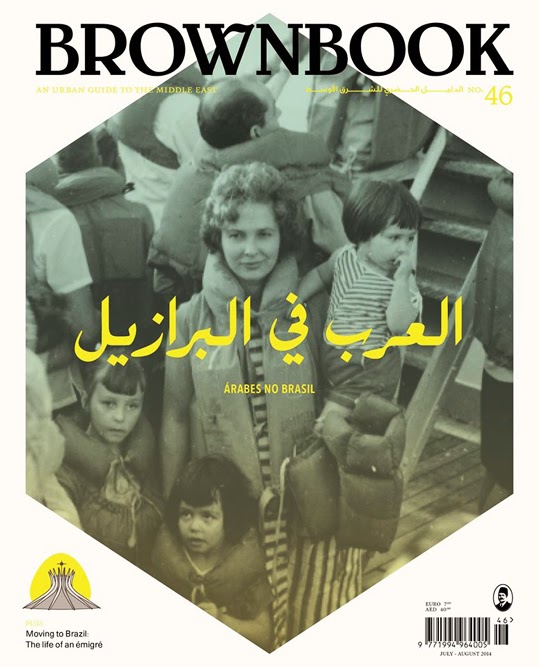
  • Brownbook
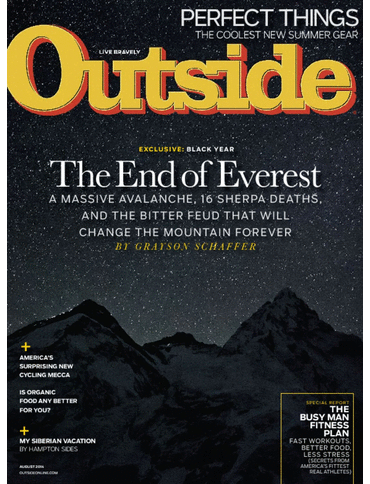
  • Outside
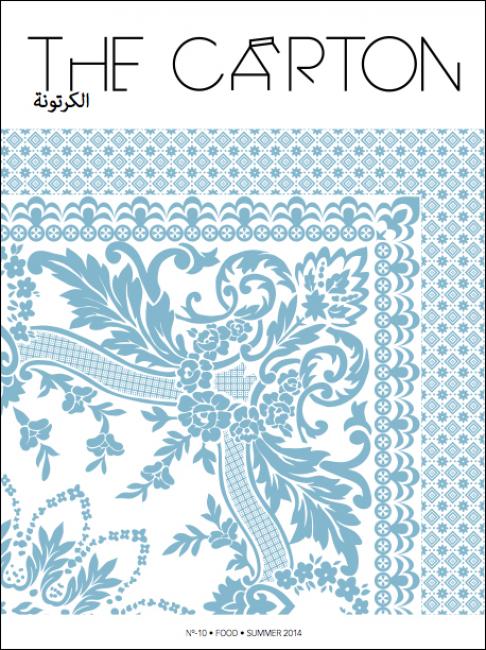
  • The Carton
  • Esquire (Philippines)

INTERNATIONAL

ESPN, August 2014

ESPN Annual August Body Issue 2014: Prince FielderESPN Annual August Body Issue 2014: Michael Phelps
ESPN Annual August Body Issue 2014: Jamie AndersonESPN Annual August Body Issue 2014: Venus WilliamsESPN Annual August Body Issue 2014: Marshawn LynchESPN Annual August Body Issue 2014: Serge Ibaka

Now in its sixth year, the Annual August Body Issue is always a big talking point! Read more about it 2013 Body Issue (remember Gary Player in the buff!?) right here.This year, it has six personalities on six different covers and, even though I think last year’s were stronger, I still think these are great!

The covers star Marshawn Lynch, Serge Ibaka, Jamie Anderson, Venus Williams, Prince Fielder and Michael Phelps (hottest/best cover out of all of them!).

View behind-the-scenes pictures and videos right here.

Brownbook, July/August 2014

Brownbook, July/August 2014

I’m not familiar with the title but, according to its website, it’s “the essential guide to contemporary Middle East and North Africa”.

Something with the cover image and design treatment just strikes me!

And a very interesting image used for an issue that seems to look at emigrants/emigration…

Outside, August 2014

Outside, August 2014A GREAT cover to accommodate its investigative article about the future (or end?) of Mount Everest and the tourism that goes with it…

The Carton, Summer 2014

The Carton, Summer 2014

Yip, The Carton is a food magazine, even though it doesn’t scream it on the cover but has a simple design instead…

But the reason that I’m including this issue/magazine is because of its smart and fun logo! Spot the carton ;-)

Esquire (Philippines), July 2014

Esquire Philippines, July 2014

For its Food and Drink issue, Esquire Philippines has taken a bold and risky move by turning the tables but still staying fashionable while looking like a pig (and having one on your head…).


Find a cover we should know about? Tweet us at @Marklives and @MediaSlut.
Want to view all the covers at a glance?
See our MagLove Pinboard!


MediaSlutMagLove by @MediaSlut is a regular slot featuring the best local and international magazine covers every week, recognising well thought-out, powerful and interesting (and hopefully all three-in-one) covers and celebrating the mix of pragmatism, creativity and personal taste that created each of them. The (for now anonymous) blogger behind MediaSlutknows way too much for his own good about media in South Africa, magazines in particular. His mission is to show when SA magazines fail but, most importantly, also when they succeed. If you’re looking for a library about SA magazines and news, this is your one-stop pitstop.

— MarkLives’ round-up of top ad and media industry news and opinion in your mailbox every three work days. Sign up here!

Publicis buys Prima Integrated Marketing

by Herman Manson (@marklives) Publicis Groupe has just announced several acquisitions in emerging markets in Latin America and Africa. Locally, it has acquired South African below-the-line digital agency, Prima Integrated Marketing (Prima), which was founded in 1994 and employs 50 people. Clients include Adidas, BMW, MINI and Virgin Active.

Publicis Groupe logoThe agency will be rebranded as Prima Arc and will become part of the Publicis Africa Group network. Managing director, Peter Farrel, retains his position.

Stake in AG Partners

Publicis Groupe also announced it has taken a stake in AG Partners, a pan-African network of 14 communications agencies across 13 countries, including Benin, Burkina Faso, Cameroon, Central African Republic, Chad, Congo, Democratic Republic of Congo, France, Gabon, Mali, Niger, Senegal and Togo. Each of these entities will work directly with the multi-door Publicis Worldwide operation in Africa.

In Mexico, Publicis Groupe has acquired digital agency Lead2Action — to be integrated into Publicis Mexico.

Actively acquiring

Both WPP and Publicis have been actively acquiring agency properties in the country over the past several months, with more deals in the pipeline. WPP just relaunched Grey into South Africa by buying out and rebranding Volcano. WPP also recently bought into Cerebra and Native; Publicis Groupe recently bought out OwenKessel and merged it with Leo Burnett, as well as digital agency Lighthouse Digital, which has become part of Publicis division Starcom MediaVest Group. In December 2013, Publicis also bought out digital agency Synergize to sit within Saatchi & Saatchi South Africa.

— MarkLives’ round-up of top ad and media industry news and opinion in your mailbox every three work days. Sign up here!

Groupon SA offers more than a budget deal

by Herman Manson (@marklives) Groupon has moved away from its ‘deal-a-day’ group-buying business model that launched it onto the global and local market. Today, the site still offers deals to consumers but feels more like a marketplace.

Groupon logoOn an organisational level, the focus has shifted to becoming sustainable. The company has also announced its intention of becoming a service provider for local merchants by providing them with a tablet point-of-sale (POS) system, aimed at small- and medium-sized retail outlets, called Gnome (pronounced “Genome”), in addition to Breadcrumb, a POS system aimed at high-end restaurants.

Of course, all this data it’s collecting from merchants on consumer behaviour will feed back to its own customer-relationship management systems. This in turn will assist with the group’s aim to build customised deals for consumers.

South African operation

In South Africa, Groupon entered the market through the acquisition of local group-media buying site Twangoo, which was launched by Wayne Gosling and Daniel Guasco.

Groupon today (Thursday, 10 July 2014) announced that Guasco and Gosling are to step down from the company after their three-year lock-in terms expired. Emilian Popa is set to become the new country manager for Groupon South Africa.

MarkLives interviewed Guasco and Gosling at the end of May and we have decided to place the interview today in light of the changes announced by Groupon.

Massive scaling

In its two-year of operation, the local company saw massive scaling, says Guasco. It ended its first year in operation with 100 employees. By the end of year two, it would employ 200 people. In 2012, it spent R70 million on online advertising, making it one of the largest online advertisers in the country — something that assisted the company in building a database on five million consumers.

By the start of 2013, the organisation started focusing on setting proper processes and procedures in place. The liquidation of a key logistics supplier in December 2012 had dented the local business’s reputation, as did its failure to manage merchant clients overextending themselves, which resulted in poor service levels and negative customer experiences for consumers.

The SA company revisited its corporate structure, introduced new processes, cut spending and reduced staff numbers (to around 112 currently). It also refocused on key regions, dropping smaller cities such as East London, Nelspruit and Bloemfontein (for local deals, national deals are obviously accessible to countrywide), reducing its local city locations from 12 to nine.

Shifted focus

It shifted focus on improving consumer relationships by managing more closely merchant partners’ ability to deliver on consumer promises. In short, the business had to dramatically increase its value offering to clients, admits Guasco.

This meant fewer emails and a greater focus on personalisation plus the localisation of offers. Merchants now sign up to contracts that offer a short-term push, with follow-ups two months later, to allow them to manage volumes better. Deals are capped, based on merchant capacity.

The global organisation’s new merchant POS systems, currently being tested in the US, will also find its way to SA shores in due course.

Corporate journey

Through its corporate journey, the company has emerged from a group-buying website to become a local retail business, says Gosling. “We want to be everything to a merchant on the technology side, offering POS through to booking/reservation systems.”

Guasco says the company still gets push-back from traditional retailers, but notes there are few organisations that can move 50 000 units for a FMCG brand. The brand is responsible for ‘hundreds of millions’ worth in turnover every year and remains one of the biggest online retail businesses in the country.

It currently has 900 deals live at any given moment and adds between 40-50 new deals every day. The average basket size in the site can range from R400-R500. Product prices range from as low as R50 to as high as R50 000. The site has even offered deals on beds, which did surprisingly well, according to Gosling. Cruises are also proving wildly popular.

Entered the premium market

Groupon has also entered the premium market, with deals for higher end brands not running on the main site but emailed directly to select customers.

Gosling says the SA operation is in the black and that its international parent is happy with its progress. The local ecommerce space remains an exciting and viable one, adds Guasco, and Groupon will continue to play an important role in its growth.

— MarkLives’ round-up of top ad and media industry news and opinion in your mailbox every three work days. Sign up here!

Online CPD Courses Psychology Online CPD Courses Marketing analytics software Marketing analytics software for small business Business management software Business accounting software Gearbox repair company Makeup artist