#AgencyLeaders2016: Most admired ad agency in South Africa

by Herman Manson (@marklives) Today  we reveal which were the agencies most-admired by their peers in South Africa during 2016.

Every year since 2012, MarkLives has been polling South Africa’s top agency leaders to find out what they think of their competitors, whom they see as effective managers and great creative leaders, and where they believe their future competition is likely to come from. First we announced the 2016 regional results from Cape Town, and last week we announced the 2016 regional results from Johannesburg. This week is dedicated to national results.

2016 regional polls recap

  • Cape Town: Here the 2016 vote went to King James Group (Cape Town), with Ogilvy & Mather Cape Town the runner-up and FoxP2 contending.
  • Johannesburg: For 2016, the most-admired ad agency in Jozi was FCB Africa, with the runner-up being Ogilvy & Mather Johannesburg.


The most-admired ad agency in South Africa

King James Cape Town. Source: Facebook.

King James Group

The agency most admired by its peers in Cape Town in 2016, votes by Joburg execs for King James Group took it over the line in our national poll. After successfully settling the Sanlam business, the independent agency took on another giant piece of business during 2016 in the form of Pick n Pay (the account is shared across both the Cape Town and Joburg offices).

The group concluded two acquisitions in 2016: SOC, now rebranded as Punk Media in Joburg, added digital media planning, buying and analytics capability, while Flnt&Tnder, which merged into Punk Jozi in a share swop deal, provided an empowerment impetus.

The group grew by 34% (GP/revenue) vs previous year (only six months of PnP revenue).


Previously

Joe Public United took top honours in 2015. From 2012, up to and including 2014, O&M Cape Town was the top-rated agency in SA for three years running.


The runner-up

FCB Johannesburg

FCB Africa

FCB Africa emerged as the most most-admired ad agency in our 2016 Jozi poll, and its executives featured in both our polls for most-admired creative leader in SA (Ahmed Tilly, FCB Africa joint CCO, named as runner-up) and agency boss in SA (GCEO and GCCO Brett Morris).

Our poll took place shortly before the FM AdFocus Awards announced FCB Africa as its large agency of the year and the agency gained significant momentum after winning the massive Barclays Africa Group consumer advertising account. It also completed an important BBBEE deal that saw it becoming majority black-owned and with increased black-female ownership.

Previously

In 2015, King James Group was our runner-up. In 2014, results replicated 2013 exactly — with Joe Public Group as runner-up and joint second runners-up were FoxP2 and King James. In 2012, our inaugural poll, the runner-up was King James Group.


The contenders

FoxP2 logo Joe Public United

FoxP2 & Joe Public United

Previously

In 2015, FCB Africa, Ogilvy & Mather Cape Town and Y&R South Africa were all named contenders.


How the poll works

Towards the end of 2016, South Africa’s agency leaders were invited to nominate their most-admired agency in SA, the most-admired creative leader in SA and the most-admired agency boss in SA. We also asked them which agency did the best at digital integration and which agency they saw as the one to watch in the future. Nobody could nominate his or her own agency or staff members. All the nominations were then tallied up for the final result. The editors of MarkLives had a single vote in the poll. The most admired agency of the year is disqualified from the One to Watch category; votes cast in its favour in this category is discarded.

Note: Runner-up(s) will only be named if they achieved a good nomination tally relative to the winner’s position. Contenders are named if they stood out significantly above other nominees, but weren’t able to close in on the winner’s tally.

See previous poll results for South Africa:


Herman MansonHerman Manson (@marklives) is the founder and editor of MarkLives.com.

— Sign up now for the MarkLives email newsletter every Monday and Thursday, now including headlines from the Ramify.biz company newsroom service!

Ad of the Week: This is about us!

by Oresti Patricios (@orestaki) When European brands start invading your country and your market, what do you do? You remind everyone why your brand is so great. You speak to your market with an inclusive message that makes everyone feel part of a movement that is bigger than all of them. You beat the drums to remind the world the reason that Tusker is the king of Africa.

The oldest, and best-loved, beer in East Africa, Tusker — the beer brand owned by East African Breweries Limited — has been raising its metaphorical fists for a “bare knuckled fight for the control of Kenya’s lucrative alcoholic drinks market”, according to Kenya’s Daily Nation. This feature on the ‘beer wars’ states that the newcomers are courting taverns, restaurants and consumers with “endless promotions and price cuts, billboards and the media”. The battle lines have also been drawn in court over distributors, and who controls what turf. East African Breweries Ltd is hitting back hard, and part of this is an advertising campaign that employs higher-purpose marketing that talks, as Cheryl Hunter writes here on MarkLives in Shelf Life, of togetherness.


Pinterest icon View all the Ads of the Week at a glance on our #AdoftheWeek Pinterest board!
YouTube icon Watch our 2017 #AdoftheWeek playlist on YouTube


This particular ad from Net#work BBDO and director Dan Mace of Groundglass tells the story of a sound recordist, known as Kaki, who travels around Kenya to collect the sounds of all the different tribes and regions. The 60-second ad starts with a close-up on the letters “US” of Tusker, with the voiceover, “What if all of us came together, to do something incredible?” This is followed by a fast-paced montage, set to the music created by Kaki. City scenes, a ‘tuk-tuk’ taxi, followed by a sped-up shot through the city streets, match-cut to a zoom-out shot to the top of a building, where a group of people dance in unison.

“An anthem, made from all of us,” the commentary continues. Now the montage takes us on a journey through various ethnic groups throughout Kenya and their traditional musical instruments: drums, flutes, stringed instruments, cow-horns … and then other sounds, such as spears clashing, vocal sounds, soccer balls, motorcycles, grain being ground — all combine to build a ‘sound canvas’ that is only, purely, Kenya.

Kaki and his boom-microphone is glimpsed in a couple of places, and then the scenes transition to the studio, where the sounds are being processed and morphed into something else, with electronic beats added. This pushes the story to a more urban environment, and the montage becomes more urban, with breakdancers, taxi-drivers, cricketers with their pads over their traditional garb… the ‘crack!’ of a cricket bat on ball provides a musical punctuation point, and the montage speeds up to match the more ‘electro dance’ soundtrack that emerges.

The song is now fully formed, with all the previously recorded sounds making up part of the whole. The montage moves to the various areas once more, where the differently attired people are all dancing to the beat of the song. The montage climaxes with a match-cut sequence of different people toasting with a Tusker bottle — the hand that extends from the camera’s perspective holds a bottle that is matched in movement by the happy, smiling people in the frame. The commentary concludes, “Here’s to the ‘us’ in every Tusker,” — and the camera zooms out from the ‘US’ of the label, to a full pack shot, with the same slogan.

The producers of the video, Groundglass, have also published a ‘behind-the-scenes’ version that tells more about Kaki’s innovative approach to sound. It really is worth a look!

The advert is loud but subtle. It is a war cry that’s all about national pride. The “us” in the commercial is Tusker, but it’s about the bigger battle. This war is about buying local, about supporting home brands, and about investing in the regional economy by staying true to Tusker. As we’d say back home, the message is ‘local is lekker’. It is a clever, inclusive message that is borne of the purpose of tribe, the statement that there’s no place like home.

At heart, we’re all patriots; we all want to belong; we all want to be a part of something that’s bigger and greater than us. This is a cunning campaign that is all about harnessing the power of purpose and national values.

I’ve been reading Purpose: The Starting Point of Great Companies by Niko Mourkogiannis. In it Mourkogiannis writes: “Not all companies have a Purpose—but enduringly successful ones do. Purpose.” What’s startlingly evident from this commercial is Tusker’s purpose, which is evident in the brand’s slogan: “Refresh Your Roots”. Brewed from 100% African ingredients that are locally sourced, Tusker is reminding the market that it’s the home team, and that the home team must win on home turf. Cheers, East African Breweries, Net#work BBDO, and Groundglass. Here’s to the us in every glass!

Credits

Client: Tusker (Diageo)
Agency: Net#work BBDO
Production company: Groundglass
Director: Dan Mace
DOP: Fabian Vettiger
Editors: Stephen du Plessis, Gareth Kaatze
Post production: 2+3 Post Productions
Producers: Janette de Villiers, Vjorn du Toit
Agency producer: Caroline Switala
Creative director: Tim Beckerling
VFX: Blake Prinsloo
Music: Simon Ringrose (Sibot x Toyota)
Sound: Rob Brinkworth
Grade: Nightshift Pos


Oresti PatriciosAd of the Week, published on MarkLives every Wednesday, is penned by Oresti Patricios (@orestaki), the CEO of Ornico, a Brand Intelligence® firm that focuses on media, reputation and brand research. If you are involved in making advertising that is smart, funny and/or engaging, please let Oresti know about it at info@ornicogroup.co.za.

— Sign up now for the MarkLives email newsletter every Monday and Thursday, now including headlines from the Ramify.biz company newsroom service!

The RealMcCoy: Ford fires up the new year (too soon?)

by Sean McCoy (@TheRealMcCoyTRM) The start of the new year has had no shortage of brand action and the prevailing focus of this column, the internal brand, has hit the ground running – as it so often does.

Ford kicked off 2017 by setting the world alight (pun intended). At the time of preparing this article, the media was awash with commentary, social media outrage and legal intervention as the motor manufacturer astounded with a very inadequate response to the Kuga crisis and resultant obliteration of vehicle asset value, not to mention the tragic loss of life and outright damage to property in several instances. One might argue that its behaviour is neither as malicious nor downright devious as that of the VW executives with respect to the emissions scandal, but the actions (read internal branding) are regarded as fundamentally unacceptable.

As if the US carmaker’s woes are not enough, Brand America is under siege as President Donald Trump takes office and all hell is breaking loose on a number of fronts. The internal American psyche suddenly becomes very disparate, notwithstanding that they voted him into power, as does the global view of his decisions and leadership behaviour. “America first” is clearly his political mantra as I suggested in an international column late last year, but he has a long journey ahead of him insofar as the national internal brand is concerned.

Behavioural economics

The points above are divergent and clearly big issues – macro in the case of the broader American issue but micro to an extent within the Ford organisation. What part of culture, values and organisational purpose allows this kind of behaviour and suggests that it may be even remotely acceptable? Indicators may offer that people are disempowered, disenfranchised or simply disengaged, and the end result is prevalent in product or service outputs. Head of business psychology at University College London (UCL), Professor Tomas Chamorro-Premuzic, suggests that less than a third of the world’s workforce is currently engaged, which mirrors the various global surveys conducted by the likes of Blessing White, who will concur. He suggests that this is worsening and refers to the “disengagement epidemic”.

This is fascinating in the context of a world where purpose-led businesses are increasingly de rigeur and we should have fully resolved the issues surrounding poor line management with the plethora of MBA output, leadership-development courses, mentoring and the increased attention to management coaching. Our leadership should be first-class and yet he maintains that one of the key reasons for the high level of global disengagement remains a result of poor leadership and management. One might argue that Ford perpetuates this sentiment.

Outsourcing the disengaged is not a solution. To the contrary, we need to own the challenge of organisational behaviour and culture, and hardly outsource it. The reality, however, is that we continue to do so in pursuit of all the MBA-speak – outsourcing, business-process efficiencies, resource optimisation, bottom-line performance and so the briefcase words go on. Nevertheless, we are only compounding the dilemma.

Back in the USSA

No, not a play on the Beatles equivalent for the former Soviet State, but a return to the beginning of the story and all things American. At the time of finalising this article, Ford has come out publicly opposed to Trump’s immigration clampdown and further opposing the travel ban, suggesting that “respect for all people is a core value of Ford Motor Company.” It is a great pity indeed that it chooses to be selective and ignore the plight that Kuga owners find themselves in, and have been so slow to respond in attending to the direct needs of its primary client base.

To end on a double irony, at exactly the same time, 2016 vehicle sales have been reported and VW has surpassed Toyota with a total of 10.3m units sold across its portfolio last year – with the key markets being the US and China. How fickle or forgiving or downright naïve we can be as consumers! Internal brand and organisational behaviour should matter and companies (or nations) and their leaders should remain accountable. It looks as if the rest of 2017 will be interesting, judging by our very turbulent start.


Sean McCoyDr Sean McCoy, MD and founding member of HKLM, is a prominent figure in the branding arena, with his expertise centered on client service, brand strategy and business development. He contributes the regular “The Real McCoy” column focusing upon internal branding to MarkLives.

— Sign up now for the MarkLives email newsletter every Monday and Thursday, now including headlines from the Ramify.biz company newsroom service!

Beyond Borders: Control, alt, delete and the future

by Craig Page-Lee (@cpl_ignite) All in all, 2016 was a tough year, not just for many of the world’s economies but most definitely for some of the world’s leading brands. Take Samsung, for instance, with the exploding batteries in the Samsung Note 7 and, closer to home again, the ongoing debacle around Ford Kugas bursting into flames due to overheating and the dreadful reputation management by Ford South Africa in this regard — again, not just at a dealership level, but at the mother-brand level.

Such incidents have a profound impact on the brands in question and the sad reality is that ‘brands in trouble’ often spells trouble for the media and advertising industry. Incidents as noted above will most definitely have led to major campaigns being pulled and crisis management being the order of the day. Even product variants within the respective organisations mentioned will inevitably feel the pain in the short-to-medium term.

No matter what the pundits say, tell or forecast each preceding year, the reality of the impact on the industry may only be assessed at the end of that particular year, so let’s wait and see what the direct market impact on these particular brands is at the end of 2017.

And what have industry experts from around the world been saying on what to expect in the advertising and media industry in 2017? A collection of thoughts and themes follows:

Digital advertising growth

Starting with digital is obvious, and it goes without saying that 2016 was unquestionably “a year of growth and transformation for digital advertising”, with overall global revenues up 19.1% up on the same period reported in 2015.

Overall growth in global adspend is forecast to slow to anywhere between 3.6% to 4.2% in 2017; it is predicted that digital advertising will grow by 13.6% from 2016 to 2017,, with digital-based ad sales becoming the Top Media category in 2017. The average increase includes all digital formats (desktop, search, mobile, social), with desktop being identified as the only format to experience a substantial negative growth rate (-4.7%).

While accurate figures detailing 2016 growth — specifically for the South African market — are not readily available, it is worth revisiting the digital advertising spend report released by PwC, on behalf of the IAB SA, as a reminder of the rapid growth (36% year-on-year growth) that the industry experienced to year-end 2015. What’s important to highlight here is that “mobile saw the biggest growth at 182%, followed by online at 68% and search at 22%. South African advertisers spent R2.35-billion in 2015 on paid search. Online advertising (display and video) generated R952-million, which equates to 27% of total spend. Excluding search, R181-million was reported as being spent on mobile advertising.”

I doubt that we’ll see such extreme levels of growth again going into 2017 — even if only because economic growth in SA is reflected as flat-lining and we would therefore expect a serious contraction of marketing budgets across all sectors. Digital advertising will nevertheless continue to erode spend in traditional areas, and mobile is probably going to be the big winner again, leveraging off the rapidly increasing migration to demand-side platforms (DSPs) and ad exchange buying.

“The continued strong growth in internet advertising comes at a time when traditional media struggles to hold onto its audience share. Social media, in particular, has filled in that gap by enabling advertisers to reach consumers in new ways.”

— David Silverman, partner, PwC

That said, some important statements have been made regarding the inundation of digital advertising being served to consumers, with the reassurance that “the trend toward fewer, better ads will drive our industry forward by forcing us to deliver more engaging creatives with less disruption to user experience.” I genuinely hope that this is the order of the day in the not too distant future.

Brands that genuinely respect and understand the nature of digital and use it to engage in purposeful conversation and build entrenched relationships with consumers, as opposed to using digital as a spam-filled shotgun approach, will win in the immediate short-term. To this extent, ad-blockers will not be on the minds of consumers who believe their brands of preference are making the engagement and brand conversation more purposeful.

The power of mobile

With the above in mind, the perfect segue is to what is being said around the ubiquitous mobile device.

We all know that people are spending an inordinate amount of time immersed in the mobile devices, which presents a great opportunity for brands to connect with those consumers and for advertisers to leverage off of this platform. What is interesting to note is that adspend on mobile was only at 18% of total digital adspend in the US in 2016. This is forecasted to grow by over 34% in 2017, which should see mobile adspend reach at least 25% of total digital adspend in the US by the end of the year.

Just to contextualise the reality of the statement that “the ubiquitous mobile has become an extension of ourselves”, according to Digital Trends, “on average, Americans spend a whopping 4.7 hours a day on their phones. Whether you’re browsing the web, scrolling through Facebook, or playing a riveting game of Candy Crush, you most likely check your phone about 40 times a day,” reports business2community.

Mobile manufacturers have to constantly improve performance of their devices to keep up with the operating requirements of the more-powerful apps being deployed around the world and, as we know, consumers expect instant interaction and engagement with the websites (delivering rich animation at times), apps and programmes that they run on their devices. A perfect example of this is evident in the way that Google has deployed AMP (Accelerated Mobile Pages), selecting mobile optimised websites over those that aren’t in the search result, or app indexing.

Technology is therefore changing at a rapid rate and, to a large degree, obsolescence is built into the handsets, feeding the concept of disposable consumption in technology.

Coming closer to home again, and with the understanding that there were over 86m mobile connections (mobile connections as a % of population 156%) in SA in 2016, with 92% of the adult population owning a mobile phone, it’s obvious to see why connection to the internet in SA is predominantly via a mobile handset and, in turn, why mobile adspend is going to see substantial growth during the year ahead.

The power of big data

Data enables brands to deliver the relevance that consumers expect, but only if supported by an effective data-analytics capability. Many marketers are still in the wilderness on what to do with the rich data at their disposal and how to use it effectively to deliver positive outcomes and actionable insights, eg, in the form of ‘the right message, at the right time, in the right format’, or ‘how to deliver a consistent experience across the entire consumer journey’.

Data needs to be readily available for marketers and analysts to use in reaching consumers in the right mind-state and shaping brand conversations, but obviously in accordance with the ever-increasing and stringent regulatory controls set in place to protect consumers.

Data protection and e-privacy are also currently under critical review — specifically in Europe — and the parameters guiding how that data can be used may change the game for good, especially if marketers are unsympathetic to those controls and devious in how they monetise the data and on-sell segments of the databases, which inevitably leads to harassment of consumers. This in turn impacts on customer satisfaction and often leads to consumers eliminating those brands from their repertoire for extended periods — sometimes for good.

In short, a simple guide on data usage requires that marketers must

  1. Clearly state what the customer’s data is being used for
  2. Destroy that data if it was a “once-off” usage campaign or
  3. Destroy that data if the customer decided to opt out of our database — this is something that hardly EVER happens

Transparency

My penultimate is probably the hottest topic in the industry at the moment, that of fake news sites.

I believe that some self-regulation is required in this regard and that media agencies need to scrutinise all channels and platforms that they buy media across, especially the many broadcast channels carrying live-news bulletins, to ensure that their clients’ marketing budgets don’t go to supporting the global proliferation of fake news and other falsely hyper-inflated and sensationalised stories. It is up to all in the advertising and related industries to hold up industry integrity and only support channels and platforms that understand the importance of truth and factual delivery of news and other content.

When brands lie to consumers, they are eventually caught out and those brands die. The same must apply to other areas of the industry and it is up to each and every one of us to ensure that this happens, otherwise the predictions and speculations for each year need to take on a new measure, namely that of most untrusted channel delivering endless columns of blatant lies!

The other areas of the industry that will continue to gain much attention, and inevitably experience rapid growth over the year ahead, are as follows:

In closing, we need to ensure that SA agencies and clients alike embrace the reality of entrenching diversity across the industry and enabling emerging black talent to become genuine owners of the future of the industry. This is a prediction that we all need to support and monitor on the journey ahead.


Craig Page-Lee 2016Craig Page-Lee (@cpl_ignite) is the former group managing director of Posterscope South Africa and is now an independent consultant servicing the broader brand, marketing and communications industry. His monthly column on MarkLives, “Beyond Borders”, focuses upon doing business in various African markets. Craig is always available for a coffee catch-up and chat (email craig at d-cifr dot com).

— Sign up now for the MarkLives email newsletter every Monday and Thursday, now including headlines from the Ramify.biz company newsroom service!

Shelf Life: NicHarry.com socks it to Valentine’s Day

Cheryl Hunter (shelflife at marklives.com)’s weekly pick of all things new — product, packaging, design, insight, food, décor and more!

  • Nic Harry Socks propose choice
  • Sasko and Liquorice create love letters from moms
  • More smiles from Ivohealth and Sunstar GUM

Sexy socks for your Valentine

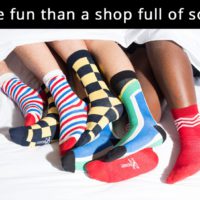
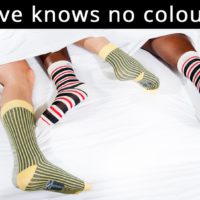
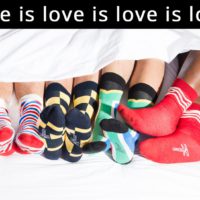
The message this Valentine’s Day from South African entrepreneur, Nic Haralambous, is to celebrate love every day in every way. This is demonstrated by his cheeky ad campaign for Nic Harry Socks which showcases men and women of all sexual orientations and racial backgrounds sharing a bed.

Owner of premium men’s socks and accessories company NicHarry.com, Haralambous has built his business on the philosophy that men have the right to choose. It’s this viewpoint that has given birth to his “Month of Love” campaign, which sees men sporting a variety of brightly-coloured and patterned socks in celebration of individuality and choice. The in-store campaign, which was shot by Haralambous himself, challenges the status quo and encourages people to think about Valentine’s Day in a new light.

Haralambous founded NicHarry.com in 2012 because he was tired, as a male, of not having enough choices when it came to shopping and of being judged for the less conventional or different clothes he chose to wear. He asks: Why can’t men dress differently? Why are most men forced to wear the same thing as their work colleague’s day in and day out? Because it’s what’s deemed by society as ‘appropriate’ attire for a man? Doesn’t society realise that men are the new shoppers?

It’s because of these unanswered questions that ‘the right to choose’ is the central business theme of NicHarry.com.

Haralambous believes that ecommerce in South Africa is a tough place to build and scale a business, and advises that the key to success is to have both an online and offline presence: “The future of retail is not pure-play anything. You can’t exclusively be online and you can’t exclusively be offline in bricks and mortar. The best retail businesses are going to figure out how to mould the two experiences together.”

The first physical Nic Harry store opened in August 2015, followed by store openings in Cape Town and Pretoria, with a new store opening tomorrow, Wednesday 15 February 2017, at The Zone @ Rosebank, Johannesburg, and another one in March 2017.

“We’ve started in South Africa and produce our core products locally. When we move and scale abroad, the goal will be to do the same when we’re able to. Produce local, sell local, act global.”

The luxury brand also offers men’s accessories, including funky-looking pocket squares, scarves, cufflinks, shoelaces, ties and umbrellas.

nicharry.com • Facebook • Twitter


Smart lunchboxes full of love

Bread and flour producer, SASKO, and digital agency, Liquorice, recently launched a Lunchtime Love Letter campaign using RFID-enhanced lunchboxes to send video messages from mothers to their kids to make the first days of school a little easier.

According to SASKO, its bread is the most consumed in lunchboxes. Add to that the brand understanding that every meal prepared by moms is made with love and care, and you have a challenge to Liquorice: Make the first day of school more special.

The story begins on the first day of school, with moms getting ready to send their children to Grade 1 at Westcott Primary School. “We knew that a lunchbox packed by mom with their favourite sandwich makes the first day easier, but we wanted to add something extra to the lunchbox; an experience that would bring a smile to the children’s faces,” says founder and CEO of Liquorice, Miles Murphy.

Each mom was given a special lunchbox with a unique RFID microchip and asked to record a message to her child — a few words of encouragement to get their little ones through that first day, tears-free. At lunchtime, the kids took their lunchboxes to the SASKO Care Station to reveal the special video message from mom, which they watched while eating their sandwiches.

sasko.co.za • Facebook • Twitter
liquorice.co.za • Facebook • Twitter


The quest for fresh breath

February sees National Fresh Breath Week and love in the air, at least for fans of Valentine’s Day, sparking a new campaign from dental hygiene product, Sunstar GUM, and distributor, Ivohealth, in support of Operation Smile South Africa.

Take the Sunstar GUM #FreshBreathQuest this month to find out how fresh your oral-care knowledge is and win prizes worth R15 000. Each time someone completes the simple online quiz, Sunstar GUM donates a toothbrush to Operation Smile South Africa.

ivohealth.co.za/freshbreathquest
ivohealth.co.za
southafrica.operationsmile.org
gumbrand.com


Cheryl HunterShelf Life is MarkLives.com’s weekly column covering all things new. Notify us of yours at shelflife at marklives dot com. Want to sponsor Shelf Life? Contact us here.

Cheryl Hunter (@cherylhunter) has written for the South African media, marketing and advertising industries for more than 15 years. A former editor of M&M in Independent Newspapers and contributor to Bizcommunity, AdFocus, AdReview and the Ad Annual, she has also produced for various television networks and currently consults on communication strategy and media liaison.

— Sign up now for the MarkLives email newsletter every Monday and Thursday, now including headlines from the Ramify.biz company newsroom service!

#AgencyLeaders2016: Most admired creative leader in South Africa

by Herman Manson (@marklives) Today we reveal which agency creative leaders were most-admired by their peers in South Africa during 2016.

Every year since 2012, MarkLives has been polling South Africa’s top agency leaders to find out what they think of their competitors, whom they see as effective managers and great creative leaders, and where they believe their future competition is likely to come from. First we announced the 2016 regional results from Cape Town, and last week we announced the 2016 regional results from Johannesburg. This week is dedicated to national results.

2016 regional polls recap

  • Cape Town: For 2016, Alistair King, King James Group founding creative partner, has been voted most-admired creative leader by agency leaders; Tseliso Rangaka, ECD at Ogilvy & Mather Cape Town, is our runner-up.
  • Johannesburg: Ahmed Tilly, joint CCO at FCB Africa, and Pepe Marais, CCO of Joe Public United, have tied for the top spot in the city in our latest poll.


The most-admired creative leader in South Africa

Alistair KingAlistair King
Founding creative partner
King James Group

Alistair King easily took the title as Cape Town’s most-admired creative leader in our regional 2016 poll, and takes the national title for a second year in a row. Although King James Group lagged on creative rankings (it ranked 15th in the Loeries Official Ranking 2016), the group’s work for retail giant Pick n Pay has been well received. His ability to infuse a new sense of energy into what are sometimes considered to be rather staid brands, such as those of PnP or Sanlam, earns him the title.

Previously: King took the crown in 2015. Chris Gotz, previously Ogilvy & Mather South Africa CCO, won in 2014 and again in 2013. King took the vote in our inaugural poll in 2012.


The runner-up

Ahmed TillyAhmed Tilly
Joint chief creative officer
FCB Africa

Ahmed Tilly, recently appointed joint CCO at FCB Africa, was the top creative leader in Jozi in 2016, according to our regional poll. Tilly left the agency he co-founded, Black River FC, to join fast growing FCB. He is best known for work he did on Nando’s, including the iconic “Last Dictator Standing” (our Ad of the Year for 2012) and the Nando’s diversity advert.

Previously

Graham Lang, CCO, Y&R South Africa, was our runner-up in 2015. In 2014, it was Pepe Marais, Joe Public founding partner and CCO. In 2013, it was Justin Gomes, FoxP2 ECD. Mike Schalit (Net#workBBDO South Africa), Chris Gotz (Ogilvy Cape Town), Pete Case (Gloo) and Tilly (then Black River FC) all tied as runners-up in 2012, our inaugural poll.


The contender

Molefi ThuloMolefi Thulo, creative director, Ogilvy & Mather Johannesburg

Previously

In 2015, the contenders were Brett Morris, GCEO and ECD of FCB Africa; Jonathan Deeb, ECD of FCB Africa; Fran Luckin, ECD of Grey South Africa; Justin Gomes, ECD at FoxP2; and Pepe Marais, founding partner and CCO of Joe Public.


How the poll works

Towards the end of 2016, South Africa’s agency leaders were invited to nominate their most-admired agency in SA, the most-admired creative leader in SA and the most-admired agency boss in SA. We also asked them which agency did the best at digital integration and which agency they saw as the one to watch in the future. Nobody could nominate his or her own agency or staff members. All the nominations were then tallied up for the final result. The editors of MarkLives had a single vote in the poll. The most admired agency of the year is disqualified from the One to Watch category; votes cast in its favour in this category is discarded.

Note: Runner-up(s) will only be named if they achieved a good nomination tally relative to the winner’s position. Contenders are named if they stood out significantly above other nominees, but weren’t able to close in on the winner’s tally.

See previous poll results for South Africa:


Herman MansonHerman Manson (@marklives) is the founder and editor of MarkLives.com.

— Sign up now for the MarkLives email newsletter every Monday and Thursday, now including headlines from the Ramify.biz company newsroom service!

#AgencyLeaders2016: Most admired ad agency boss in South Africa

by Herman Manson (@marklives) Today we reveal which agency leaders were most-admired by their peers in South Africa during 2016.

Every year since 2012, MarkLives has been polling South Africa’s top agency leaders to find out what they think of their competitors, whom they see as effective managers and great creative leaders, and where they believe their future competition is likely to come from. First we announced the 2016 regional results from Cape Town, and last week we announced the 2016 regional results from Johannesburg. This week is dedicated to national results.

2016 regional polls recap

  • Cape Town: For 2016, James Barty, King James Group co-founder and CEO, has been voted as the most-respected agency boss by his Cape Town peers; Mike Abel from M&C Saatchi Abel is our runner-up.
  • Johannesburg: Here it’s Brett Morris, GCEO & GCCO of FCB Africa, with Gareth Leck, Joe Public United CEO, as runner-up. Our contender for 2016 was AVATAR CEO Zibusiso Mkhwanazi.


The most-admired agency boss in South Africa

Brett Morris October 2016 by by Jeremy Glyn.Brett Morris
Group CEO & group CCO
FCB Africa

It’s the second time in three years that Morris has emerged as the most-admired agency boss in the country, taking the most nominations in our poll by a comfortable margin.

During the course of 2016, the agency which he leads, FCB Africa, announced a major empowerment deal, making it majority black-owned for the first time; his agency landed the sought-after Barclays Africa Group consumer advertising account; and Ahmed Tilly, the co-founder of Black River FC, was headhunted as joint chief creative officer, alongside Jonathan Deeb. He was also the 2016 FM AdFocus Industry Leader of the Year.

Previously

In 2015, James Barty, co-founder and chief executive of King James Group, emerged as our most-admired agency leader for South Africa. In 2014, Gareth Leck (Joe Public United) and Morris tied for joint honours. In 2013, it was Gavin Levinsohn, ex-MD of Ogilvy Cape Town. In 2012, our inaugural poll, it was Barty.


The runner-up

James BartyJames Barty
Co-founder & chief executive
King James Group

Barty emerged as our most-admired agency boss in Cape Town and is the runner-up in our national poll. King James Group picked up the giant Pick n Pay account in early 2016. The group has grown by 34% (GP/revenue) vs last year (only sixth months of PnP revenue).

Previously

In 2015, Gareth Leck (Joe Public United) tied with Mike Abel (M&C Saatchi Abel). In 2014, the runner-up was Barty. Leck was the runner-up both in 2012 and 2013.


The contenders (tied)

Zibusiso Mkhwanazi

Mike Abel

Zibusiso Mkhwanazi
CEO & co-founder
AVATAR

Mike Abel
Co-founder & CE partner
M&C Saatchi Abel

AVATAR CEO, Zibusiso Mkhwanazi, emerged as a contender in our national poll. In 2016, revenue growth exceeded 100% and the agency head-count now stands at 69.

In January 2017, it was announced that Mkhwanazi and Ngubane had acquired a significant minority stake in M&C Saatchi’s South African agency network. This has allowed M&C Saatchi PLC to acquire a 20% stake in AVATAR from Avatar Investment Holdings.

Mike Abel should have had a terrible year when his agency lost the giant Edcon account, but he and his team turned things around when it took Sun International, Superbalist.com, Lancewood Cheese, Twinsaver and additional work from Heineken (including launching Strongbow into the SA market).

Abel was also instrumental in the deal, announced in January 2017, for Avatar Investment Holdings, owned by Zibusiso Mkhwanazi and Veli Ngubane, to acquire a significant minority stake in M&C Saatchi’s SA agency network. This has allowed M&C Saatchi PLC to acquire a 20% stake in AVATAR from Avatar Investment Holdings.

Previously

In 2015, the contenders were Graham Warsop, founder and chairman of The Jupiter Drawing Room and Le Patron of Utopia; Charl Thom, CEO of FoxP2 Group; and Ahmed Tilly, ECD of Black River FC.


How the poll works

Towards the end of 2016, South Africa’s agency leaders were invited to nominate their most-admired agency in SA, the most-admired creative leader in SA and the most-admired agency boss in SA. We also asked them which agency did the best at digital integration and which agency they saw as the one to watch in the future. Nobody could nominate his or her own agency or staff members. All the nominations were then tallied up for the final result. The editors of MarkLives had a single vote in the poll. The most admired agency of the year is disqualified from the One to Watch category; votes cast in its favour in this category is discarded.

Note: Runner-up(s) will only be named if they achieved a good nomination tally relative to the winner’s position. Contenders are named if they stood out significantly above other nominees, but weren’t able to close in on the winner’s tally.

See previous poll results for South Africa:


Herman MansonHerman Manson (@marklives) is the founder and editor of MarkLives.com.

— Sign up now for the MarkLives email newsletter every Monday and Thursday, now including headlines from the Ramify.biz company newsroom service!

Brands will get even more ‘real’ in 2017

by Tenielle Maris. Consumer psychology studies, for the longest time, have told us that human beings see brands as an extension of themselves, as a personal platform for self-expression. Fast forward to 2017 — consumers are smarter and more demanding than ever before: no longer satisfied to follow blindly, obsessed with asking “why?” and expecting more-riveting and -intricate reasons from brands in return.

Blurred lines

The blurred lines between digital and physical worlds have driven this very behaviour, especially concerning millennials, where a brand’s purpose needs to be beautifully and conveniently ‘on show’ at all times to inform consumer decision-making. What this means for ad folks in 2017 is that there has never been more of a demand for those brands that are authentic and quintessential in some shape or form.

What brands need to realise, however, is that the very definition of authenticity has evolved: there has been a shift from finding a USP to establishing a real and relevant reason for being. Mass consumerism has been replaced by the demand for artisanal, craft and handmade goods, where consumers are choosing to buy into something because of the story behind it. Understanding how something is made, who made it, what it stands for and how that product plays a bigger role in the world are the things that are fuelling purchase decisions.

According to an article published by Forbes in 2016 on creating authentic connections with consumers: “Brands and retailers will need to continue to find new ‘authentic’ and stealthy marketing channels, as consumers increasingly reject traditional marketing and increasingly turn to social media as their resource for all types of information, including trends, products and reviews.”

Influencers

The penny is dropping for marketers and advertisers around the globe that it’s not about a brand influencing people but rather it’s about the person behind that brand (AdAge, October 2016). According to the findings of a study conducted by the Keller Fay Group in 2016, real-life influencers — who are passionate about what they are recommending — have significantly more influence on purchase decisions than celebrity endorsers (Adweek, March 2016).

Just when you thought that influencers were only reserved for advocating the hottest fashion labels, more and more industries are turning to the right kind of influencers to connect with their target audiences on a deeper — and more authentic — level: in 2016, Quantas Airways partnered with one of Australia’s most-influential personalities to create the type of content that would connect with their online audiences like never before; meanwhile, Alaska Airlines leveraged travel and adventure micro-influencers to generate hype and excitement amongst varying niche markets around their beautiful travel destinations.

When every brand is trying to be more ‘real’ than the next, the risk is that authenticity may very well become commoditised and the value proposition somewhat diluted. The challenge for brands is to consistently conduct themselves in a way that embodies the very essence of what being a human brand is all about: one that speaks the truth, owns up to mistakes, shows how it has improved and does what it says (Trendwatching 2015). It’s no good simply telling your audience that you are authentic, rather, it’s about doing what you say and, simultaneously, doing it in a captivating way.

Being true

If there’s one thing that brands should embrace this year, it is to relay their purpose and meaning by being true in every sense of the word. Brands that therefore commit to not deviating from the ‘reason’ that they exist, and avoid becoming disingenuous when speaking about the things that they think their audiences want to hear, are the ones that are going to win the hearts of consumers as they embark on their personal and convoluted journey of finding their real and authentic self.


Tenielle MarisTenielle Maris is strategic director at TTL agency, 34°, in Johannesburg. Beginning her career in branding and communications, she has spent the last decade in the marketing industry where she has worked upon big brands spanning the African continent. Having found her passion in understanding what drives human beings to connect with particular brands, her time is spent getting up close and personal with the people whom brands are trying to connect with.

“Motive” is a by-invitation-only column on MarkLives.com. Contributors are picked by the editors but generally don’t form part of our regular columnist lineup, unless the topic is off-column.

— Sign up now for the MarkLives email newsletter every Monday and Thursday, now including headlines from the Ramify.biz company newsroom service!

Fair Exchange: Reviewing client-agency relationships for growth

by Erna George (@edgeo23) Open discussions and feedback in the moment are critical for any agency-client relationship, so that the year-end review is a summation of the year and simply a closing of the loop.

Entering into any appraisal or review, joint or not, may feel daunting: these days, reviews tend to be less subjective and more comprehensive, with 360-degree feedback from multiple parties or specialist insight/consultant agencies to conduct the exploration. The way around this is to ensure no surprises at a single yearend review session.

However, many may doubt the process as they view that the power sits with the client. The challenge is how to balance the power so that everyone gets the most of the session and the relationship is strengthened.

What’s good for the goose is good for the gander

The first consideration is that you need to find a way to apply the rule that what’s good for the goose is good for the gander. This is not a one-way communication or feedback session and cannot be hindered by the principle of the customer is king. The focus must be about uncovering better ways of working and optimising processes so that agency teams are inspired to deliver more.

A fear-based setting could make the agency feel less stable about its future and therefore less honest in its feedback. A cautious agency neither challenges the status quo nor pushes boundaries towards innovative and excellent solutions. These are not agency reviews. The opportunity is a client-agency review — a review of the relationship, the process and the outputs from the joint efforts. This is where a formal questionnaire helps.

This questionnaire is completed by both sides of the team (at all levels), and collated and analysed by an expert researcher to determine a report of the results. Having just used a similar process, I can vouch for it and what really worked is a level-playing field created by the same questionnaire completed on both sides, using a combination of absolute scoring for a conclusive view and open-ended questions for clarification. This ‘facilitated’ output is somewhat like a moderator for a research group and helps ensure feedback is building, even if the end point is a parting of ways. Both voices heard equally for best results.

Not the remit of senior leaders only

Secondly, you must think through who is involved. Reviews should not be the remit of senior leaders only.

Assistant brand managers and junior account executives are part of the relationship. While creative and strategy are key, sometimes it is the administration that puts a damper on efficiency — timelines not delivered, invoices processed late, contact reports not delivered so actions are missed, while smaller support issues are chatted about in corridors and may fester and become significant frustrations.

Involving the junior team also invites them to learn about how good relationships are built and judged beyond the admin details. Learning both perspectives, and what builds and breaks successful relationships, makes for better briefs, better interactions and better clients. Share the process to ensure good learnings throughout the organisations and that the relationship is clear for the full team.

Face-to-face feedback

While there could be many more recommendations, my final one is about face-to-face discussion of the review. Scores and a few words of written feedback are too easy to hide behind and may be worse than no review at all. The only time a review is useful is if learning and clear action points come out of it. Email and social media have reduced the need for personal interaction. A quick WhatsApp replaces a quick call as an update or email to provide in-depth reverts. These cursory exchanges are detached and do not foster relationship-building; they may even be destructive as it is so easy to type a note in anger.

We are people, dealing with other people. The more we practice giving and sharing feedback, the better we will be at it, and the big reveal on how the relationship is going doesn’t have to wait for the yearend review. While there may not always be significant issues, there is always room to grow or to understand how to exploit what is working to an even greater extent. Imagine putting the good stuff on steroids…unlocking the best of the best.

As feedback becomes more commonplace and easy, relationships will deepen, the agency team will learn more about the brand and will be more inspired, and clients will continuously get more from their agency — a positive virtuous circle.

Principles to keep in mind

Remember some principles:

  1. Level the playing field for great dialogue and open two-way feedback
  2. Include members from all levels in the team for learning, and
  3. Get rid of the technical wall and connect face-to-face

Keep in mind that it is the team that delivers the result of great advertising, promotions that grow volumes or packaging that grabs shoppers’ attention. A review of the team dynamics and how each party is doing in the partnership may only ensure that everyone’s game is lifted.


Erna GeorgeAfter starting at Unilever in a classical marketing role, Erna George (@edgeo23) explored the agency side of life, first as a partner at Fountainhead Design, followed by the manic and inspiring world of consultancy at Added Value. She has returned to client-side, leading the marketing team in the Cereals, Accompaniments & Baking Division at Pioneer Foods. Her monthly “Fair Exchange” column on MarkLives concerns business relationships and partnerships in marketing and brandland.

— Sign up now for the MarkLives email newsletter every Monday and Thursday, now including headlines from the Ramify.biz company newsroom service!

SA TV Ratings: e.tv — primetime top 20 for Nov, Dec 2016

by MarkLives (@marklives) The hottest primetime television shows on e.tv in South Africa revealed: TV ratings for November and December 2016.

Last year, the Broadcast Research Council of South Africa (BRCSA) has changed its policy about giving away TAMS and now only monthly reports, highlighting the top 20 or 30 primetime shows on several popular channels, are available.

e.tv December 2016

BRCSA TV Ratings December 2016 primetime etv

Source: BRCSA December 2016


e.tv November 2016

BRCSA TV Ratings November 2016 primetime etv

Source: BRCSA November 2016

Broadcast Research Council of South Africa


The Broadcast Research Council of South Africa (the BRC) is a non-profit, industry body that was incorporated in 2015 to cater to the audience research needs of the radio and television industry in South Africa.

— Sign up now for the MarkLives email newsletter every Monday and Thursday, now including headlines from the Ramify.biz company newsroom service!

Online CPD Courses Psychology Online CPD Courses Marketing analytics software Marketing analytics software for small business Business management software Business accounting software Gearbox repair company Makeup artist