Thinking B2B: The importance of ATL in B2B marketing

by Warren Moss (@warrenmoss) There’s a popular belief that business-to-business marketing should use predominantly below-the-line (BTL) marketing in order to reach and engage with its audience. The rationale for this is that, because B2B audiences are smaller than those in B2C, you can market more directly using BTL, and generate meaningful and measurable results. While this is absolutely true in many respects, it’s very difficult to generate true trust and chemistry between a brand and its target market when you’re only communicating BTL.

In my opinion, it’s much more meaningful to view potential partnerships through the lens of values, rather than through the lens of price or capabilities. As author and speaker Simon Sinek says, “People don’t buy what you do, they buy why you do it” — in B2B, that’s probably truer than in any other category. Companies have core values and, if those values resonate with you, the likelihood of your switching to the product or service they are selling is significantly higher.

Pitching

Pitching is a pure example of B2B marketing. My view is that, if you’re at a pitch stage, you’re there because the prospective buyer already believes that you have the capability to do its work, otherwise you wouldn’t be there. So, it’s actually listening to the pitch to see whether you’re aligned in terms of its values. It’s asking: is this the agency that can take our brand to the next level? If it believes you can work well together and that you’re the best fit for them, then it’ll hire you.

However, in the absence of this 90-minute pitch, when you, the B2B seller, have no lengthy opportunity to talk about your beliefs and values, how do you go about marketing yourself?

Above-the-line (ATL) is a great place for that, because it offers platforms whereby you can invoke a reaction and a connection between a brand and a person. With ATL advertising, you can create this connection by delivering a beautiful story in a 30-second TV ad or in a well-thought-out print, billboard or radio ad.

However, when using ATL, the call to action should never be, “Come and buy from me”. It should instead be, “Do you agree and do you believe what we believe?” Once you’ve identified that the audience believes in what you do, it’s much easier to have the price and capabilities discussion.

Not for everybody

On the other side of the coin, you’ve all had experiences in pitches where you don’t get appointed or where you walk away because you don’t share common beliefs. That’s okay, because you’re not for everybody, and neither is your product or service; the trick is finding the people it IS right for, and then marketing effectively to them.

In summary, it’s time to think of B2B marketing beyond the scope of always using BTL, because that’s an old-fashioned and ineffective view. It’s no longer about giving someone free rugby tickets and expecting them to choose you as a supplier. It’s about demonstrating shared values between the brand and target market — and ATL marketing is one of the most-impactful ways to do this.


Warren MossWarren Moss (@warrenmoss) is the CEO and founder of Demographica, a multi-award winning full service agency that specialises in the B2B category. He is the chair of both the Direct Marketing Association of South Africa (DMASA) and the Assegai Integrated Marketing Awards (Assegais), as well as the only African to judge the B2 Awards, which recognise the top performing B2B marketers in the world. Warren contributes the monthly “Thinking B2B” column, which looks at the latest trends in B2B communications and explains why it is fundamentally different from B2C comms.

— One subscription form, three newsletters: sign up now for the twice-weekly MarkLives newsletter, including Ramify headlines; The Interlocker, our new monthly comms-focused mailer; and/or MarkLives Zambia!

Content algorithms shouldn’t be influenced by profit-making

by Oliver Sauter (@worldbrain) To effectively sort fact from fiction in the fake-news war, we need to give people the technologies and mental tools needed to think for themselves.

You’re a journalist. Tick tock. The clock on the wall watches you. Your deadline for an article on the Cape Town water crisis looms. You’ve scoured mountains of data but need a particular factoid to establish a key point. You saw the research a week ago but can’t recall the domain, now that you need it.

Sorting fact from fiction

A Google search of “Cape Town water crisis” yields over 5m results. Poring over them, you confront your next problem: sorting fact from fiction. The Cape Town water crisis is fiercely contested by a number of political actors. “Lies, misinformation, genuine errors and conspiracy theories”, Daily Maverick’s Rebecca Davis writes, flow hard and fast.

WorldBrain Memex was born when I tried, and failed, to sort fact from fiction in the genetically modified organism (GMO) debate. I realised my ignorance — and the amount of work it took to understand this topic — made it easier for me to be misled. This was 2013,  long before the spectre of fake news saturated our headlines.

Today, humanity is getting to grips with how dangerous the fake news problem is. In its latest report, Freedom House says democracy faces its most-serious crisis in decades. In the report, Freedom on the Net 2017: Manipulating Social Media to Undermine Democracy, the advocacy group reveals that “online manipulation and disinformation tactics played an important role in elections in at least 18 countries over the past year.” Freedom House states this has contributed to an overall decline in internet freedom.

Critics

But it’s not just critics outside of the social titans that hold this view. In January 2018, former Facebook product manager and head of civic engagement, Samidh Chakrabarti, admitted that Facebook (the world’s biggest social network with over 2bn users) was not good for democracy. In a blog post, Chakrabarti confessed that his company had been “far too slow” to recognise the manipulation of the platform by “bad actors”.

Facebook’s solution? Changing its algorithms and hiring some 10 000 more staff to fight fake news. But, days later, it was revealed that Facebook allowed “dangerous fake news about vaccines to go viral”. In this same week, Vanity Fair labelled Google’s salvo against fake news, an app called Bulletin, a “fake news disaster waiting to happen“.

I believe that the way the giants of the social media are trying to solve the misinformation is a waste of valuable resources. And it can likely make matters worse. The go-to strategy is to spend massive amounts of time and money to employ factcheckers and curators to deal with the rising mass of content. In tandem Facebook, Twitter and Google are using new kinds of artificial intelligence to filter ‘good’ from the ‘bad’.

Inherently biased

Determining what is quality — and what is not — as an answer to the fake news crisis means the game is already lost. Any perspective that claims to be a single source of truth or that makes a judgement about quality is inherently biased. As such it is at risk of being rejected by those who don’t share this bias, especially with emotionally loaded topics. This can lead to increased tribal thinking and filter bubbles.

One-sided arguments or single sources are never a good way of understanding societal issues. To understand issues deeply, one needs to have easy access to — and to draw from — as many perspectives as possible. After all, democracies function best with diverse media and an electorate whose opinions are based on a multiplicity of diverse perspectives.

The underlying problem the social media giants have to fight against is that clickbait and sensationalism is baked into their business model. Facebook, Twitter and Google can’t enjoy massive engagement — and profits — by countering misinformation at a deeper level. To effectively counter misinformation, the algorithms used to deliver content should not be influenced by profit-making.

Cognitive dissonance

Fixing the fake news crisis would mean the social giants would need to bring users face-to-face with cognitive dissonance, which would be bad for business. Cognitive dissonance is that uncomfortable feeling one has when considering two conflicting ideas, beliefs or values, or when established beliefs are challenged by new information.

My approach is to make it 10x faster for people to grasp the complexity of content they consume, and topics they research. To form better opinions, I want people to get deeper insight, faster understanding and to digest as many diverse perspectives as possible.

This is the second goal I’m working on. There’s a way to go but my understanding is that countering fake news means empowering people to embrace cognitive dissonance and have access to diversity of thought — people need to be able to think for themselves.

Suggested reading


Oliver Sauter Olive Sauter (@worldbrain), a media entrepreneur, has been working on a solution to misinformation since 2014, before fake news became a thing He is the founder of WorldBrain.io, the creators of Memex: a free, private browser extension that solves one of the most-frustrating experiences of doing online research: organising and finding websites again. Memex reduces the time it takes to research, thus giving knowledge professionals more time to focus on writing. Or relaxing.

“Motive” is a by-invitation-only column on MarkLives.com. Contributors are picked by the editors but generally don’t form part of our regular columnist lineup, unless the topic is off-column.

— One subscription form, three newsletters: sign up now for the twice-weekly MarkLives newsletter, including Ramify headlines; The Interlocker, our new monthly comms-focused mailer; and/or MarkLives Zambia!

EXCLUSIVE: BBDO folds CT agency into main op

by Herman Manson (@marklives) BBDO South Africa has folded its Cape Town agency, 140 BBDO, into its primary agency, Net#work BBDO, in Johannesburg. Net#work BBDO will now operate on the one-agency-two-offices model, with Cape Town taking on an operations and services role, and creative and strategy sitting in Jozi.

Pod structure

The entire agency has been moving towards a pod structure, where full-service pods are built around a primary client but which then also service several smaller clients (as VML South Africa is doing). The Cape Town office essentially becomes an operations pod, losing its executive creative director and managing director. Mike Schalit, founder and CCO at BBDO SA and Africa, however, remains based in Cape Town and managing the CSI pod within BDDO’s SA network.

Boniswa Pezisa
Boniswa Pezisa, BBDO South Africa group CEO.

According to Boniswa Pezisa, BBDO South Africa group CEO, the Cape Town office retains 24 staff members, down from 34 before the restructuring took place. The 140 BBDO brand will also be phased out.

Most agencies are restructuring as a way to more effectively deliver on client needs and BBDO is no different, says Pezisa. She declined to comment on whether processes at Distell — which is widely believed to be consolidating the number of agencies it works with — have played a role in the decision to fold Cape Town into the main agency. Distell has been an anchor client of 140 BBDO.

Pan-African

The group remains focused on building a strong pan-African agency, says Pezisa, with closer association between various offices.

In late 2017, Y&R South Africa shut down its Cape Town office before the entire operation was finally incorporated into VML SA earlier this year. In Jozi, The Jupiter Drawing Room (Johannesburg) also closed its doors last year.


Herman Manson 2017Herman Manson (@marklives) is the founder and editor of MarkLives.com.

— One subscription form, three newsletters: sign up now for the twice-weekly MarkLives newsletter, including Ramify headlines; The Interlocker, our new monthly comms-focused mailer; and/or MarkLives Zambia!

Dissident Spin Doctor: When polony spin-doctoring gets lethal

by Emma King (@EmmainSA) When you work in the PR or corporate communications industry, you don’t see a brand crisis like other people do. You don’t wonder if your dicky stomach means you’re dying of listeriosis or where you can drop your polony off for a refund; instead, you get fascinated by the little things that are done well — or not — by the brands in managing the crisis and, often times, feel just that little bit thankful it’s not you up there in the firing line.

Don’t get me wrong; I don’t have much sympathy for Tiger Brands. At the time of writing this, there is a fair amount of confusion in terms of who knew what and when they knew it and, if Tiger Brands is to be believed, if it is even to blame for the biggest listeriosis outbreak on record anywhere.

Some things can’t be denied

Investigations will be done, the details will be confirmed, and people will be blamed. But, even at this stage, there are some things that can’t be denied. People have gotten sick, and people have died, while corporates have seemingly carried on with business as usual instead of acting fast and decisively.

And these people are some of the most vulnerable in our society — children, the elderly, the sickly, the pregnant — as well as those more widely impacted (small businesses which have sold stock that they now need to replace or refund, for example).

Whatever the outcome is, and whether Tiger Brands is found to be responsible for the outbreak or not, its clinical responses have come across as uncaring and cold. And when people’s lives are lost (again, those of the most vulnerable in society), this can’t but harm the business in the long term.

At times like these, it’s always helpful to think back to the golden rules of crisis management and communications:

  1. Act quickly and decisively

According to allegations, Tiger Brands first became aware that its products were contaminated on 14 February 2018 but didn’t react until the health minister announced on 4 March 2018 that its products were the source of the outbreak. As well as this, the minister first stated at the beginning of December last year that the bacteria likely originated in “a food product that is widely distributed and consumed by people across all socio economic groups” and, on 4 January 2018, said that it was likely to be “a single widely consumed food product or multiple food products produced at a single facility.”

One may go back and forth as much as one likes on dates and who knew what when but the fact of the matter is that as soon as processed meat was flagged as potential issue, one would assume that this would raise concern and a crisis-mitigation plan would be created to be implemented at the business — whether its specific products were involved or not.

  1. Take responsibility

The statements issued to date from Tiger Brands have avoided taking any responsibility. There is no doubt that it is leaning heavily on its lawyers and proceeding with carefully worded statements: non-committal and sticking instead strictly to facts without committing to any responsibility.

One the one hand, this is wise, as it’s likely that it will be facing a class-action lawsuit or two in the near future. On the other hand, if there is any inkling of truth to the allegations, it needs to take responsibility — and fast.

  1. Apologise and fix the problem

People are surprisingly forgiving when someone makes a mistake (perhaps debatable in this case, where lives have been lost). But only when someone takes responsibility, apologises and then demonstrates what is being done to fix it.

The big brand fails in time of crisis are often not because of what the business did but how they managed it. A case in point that I always remember is the huge BP oil spill in in 2010. Its CEO was pictured during this time looking happy and relaxed on a yacht (ironically in sparkling clean sea water) while, on the other side of world, thousands of litres of oil spewed into the water of the Gulf of Mexico.

  1. Show some humanity

The lawyers will always err on the side of caution but there is little to be lost in showing some humanity. Tiger Brands has been quick to issue statements that debate what strain of the bacteria has been found or not, and denying links to its products — but not to recognise the impact this has had on people, families and livelihoods.

Let’s remember it all again:

  • Small traders living on the breadline have suffered a debilitating loss of business.
  • People have gotten sick.
  • People have died.

Whether Tiger Brands is found to be at fault or not in the long run, this is not something that should be spin-doctored away.


Emma KingEmma King (@EmmainSA) is the owner and MD of The Friday Street Club (@TheFridayStClub). She is allergic to bad grammar and ampersands, but likes working her way through piles of novels and travelling the globe. She contributes the monthly “Dissident Spin Doctor” column on PR and communication issues to MarkLives.com.

— One subscription form, three newsletters: sign up now for the twice-weekly MarkLives newsletter, including Ramify headlines; The Interlocker, our new monthly comms-focused mailer; and/or MarkLives Zambia!

Back2Basics: B2B — Bollocks-to-Bullshit

“Oh man… the bullshit piled up so fast in Vietnam, you needed wings to stay above it.” — Captain Willard, Apocalypse Now.

by Mark Eardley (@mdeardley) In B2B, the primary buying motivators are not based on emotions.

Gyro, a respected B2B agency, recently reported the findings of a survey concerning the dynamics of buying decisions. The survey’s goal was to reveal what’s wanted from vendors by the people who influence and make those decisions. The answers were revealed by Kenneth Hein, gyro’s global chief communications officer. Apparently, buyers want the same as players of Dungeons and Dragons. They want partners who will stand alongside them in a fellowship of adventure: “Willing to cast spells, fight orcs and, in turn, share in our victories. Even though it is business, it’s not about weighing numbers, metrics or being rational. It is about feeling. It has to feel right.”

Numbers, metrics and being rational

Can a senior player in an agency of gyro’s stature — and one of the team who worked on the report — believe that (honest) B2B buying decisions aren’t principally motivated by numbers, metrics and being rational?

The procurement departments of, say, automotive manufacturers don’t buy components because of emotional connections with the people selling them. No manufacturer will ever say their next generation of cars will feature chocolate brake pads because the folks from Choco-Brakeo are affable.

Being affable won’t motivate people to buy from you. Even in B2C, people don’t buy houses based on how much they liked the agent. We don’t buy cars because the sales person was nice. Other criteria are more important in our decision-making. Whether or not you like the agent or the sales person just isn’t a primary motivator.

In B2B, the primary buying motivators are not based on emotions. Choco-Brakeo’s pads will never be bought in preference to those from a Ferodo or a Girlock. Buying decisions are made on the basis of what differentiates one supplier from its competitors. If all the motivators — from how well the supplier understands the customer’s needs and mirrors their corporate values, through to questions of service, quality, time and price — are met in exactly the same way, the decision may well go to smiley Jill’s firm rather than frowny Jack’s.

People buy success

‘People buy people’. Contrary to all the nonsense supporting that adage, in B2B, people do not buy people. They buy success. They buy products and services that contribute to their professional success and the commercial success of their organisation. Prove how you will deliver greater success than your competition and you’ll be on course to win the decision.

According to gyro’s Group. Mind. Set: How Group Dynamics Impact B2B Decisions.: “A world alive with connectivity is becoming numb to businesses and brands. Now more than ever, emotion is the key to igniting business decisions.”

That’s the intro to the download link for gyro’s report. Holding my nose against the odour of this statement concerning emotion’s rise to pre-eminence, I downloaded and read it. There are no new ideas here but some established ones are nicely reinforced. I’m always keen to hear what motivates buying decisions and who supports them. These decisions create sales. It’s hyper-essential for marketers to understand what drives customers to make them. gyro’s report is about how marketers — rather than customers — think B2B buying decisions are made. The survey on which it’s based may have asked the right questions but it asked the wrong people.

The great majority of decision-makers aren’t marketers. Equally, a lot of decision-influencers, like commentators in the media, industry analysts, trade bodies and sector peers, don’t even work within the customer.

Don’t lose focus

In comparison to Hein, Christoph Becker, gyro’s CEO and chief creative officer, gives a grounded summary of the report in a Forbes article. He advises marketers not to lose focus on the cardinal rules that govern modern B2B.

Lots of people believe and respect what gyro says. This means its voice carries authority. It also carries responsibility. Gyro’s authority was diluted when it ignored that responsibility and spouted all that rot about orcs, spells and the irrelevance of numbers, metrics and rationality.

Maybe I should embrace such absurdities and convert to the age-old belief that bullshit baffles brains. Until that dark day dawns, I’ll keep the wings I need to stay above it. And look down on it.


Mark EardleyMark Eardley (@mdeardley) advises B2B companies on how to govern their marketing to attract and retain profitable customers; several of his clients have grown to become market leaders. He and Charlie Stewart have written Business-to-Business Marketing: A Step-by-Step Guide (Penguin Random House), which offers practical, actionable advice on how to make marketing make money. His monthly “Back2Basics” column covers how B2B companies and their agencies should manage their marketing.

— One subscription form, three newsletters: sign up now for the twice-weekly MarkLives newsletter, including Ramify headlines; The Interlocker, our new monthly comms-focused mailer; and/or MarkLives Zambia!

Hidden Figures: An invitation to care

by Musaba Kangulu (@ThatTypeOfMoose) At a time when women are publicly calling out abusers as never before and expressing their collective anger, I would like to use this year as a starting point to ‘churn’ all of that into action: a specific kind that will see Hidden Figures encompass a different approach.

Last year, Hidden Figures was specifically aimed at raising awareness through the celebration of unsung heroines in the marketing industry. But having then worked in the advertising and corporate world for some time, I’d noticed a pattern whereby the system had failed to actively celebrate women who work behind the scenes, despite the vital role they play in the delivery of exceptional work. The truth is, there’s been a lot of raising awareness from many different industries when it comes to gender inequality. Right now, it feels as if “I’m aware now. So now what?”

Whether you’re fighting for diversity in boardrooms, equal pay, reproductive rights or wanting a better understanding of movements such as #MeToo and #TimeIsUp and why they’re so fiercely appreciated by women from around the world, this column will engage it.

You’re not obliged to read or share the content; however, I’m extending an invitation, once again, for you to care. If we’re to have these conversations to create true cultural change, we must talk with the man on the street, in our lives, our colleagues and friends. Equally, we need to have the conversation with the women in our lives to examine why, when we’ve seen sexual misconduct or harassment, we’ve often looked the other way when it didn’t impact us directly.

It’s so important to be made consciously aware of what is happening on a global scale. It’s no longer about the what but the how. If that comes in the form of shedding light on uncomfortable conversations and welcoming respectable debates from both genders, so be it.

In the words of Oprah Winfrey: “A new day is on the horizon.”


Musaba KanguluA firm believer in women using their diverse skill set to push distinctive thinking as a way to deliver new insights to the table, Musaba Kangulu (@ThatTypeOfMoose) now finds herself in a tech-consulting role that allows her to use digital transformation design thinking to improve organisation operational and decision-making structures. Tapping into human experiences and harvesting customer input with technology development practices is a sure way to grab her immediate attention. She contributes “Hidden Figures” to MarkLives.com.

Sign up now for the MarkLives email newsletter every Monday and Thursday, now including headlines from the Ramify.biz company newsroom service!

Shelf Life: Trend Tracker launched to provide local data

Cheryl Hunter (shelflife at marklives.com)’s weekly pick of all things new — product, packaging, design, insight, food, décor and more!

  • Liquorish Ink launches Trend Tracker
  • Shoprite’s trucking heroes
  • ROAD research positions OOH

African insights

Strategy and media consultancy, Liquorish Ink, has launched a trends division called Trend Tracker to identify and provide local trends that are relevant in the African context.

Knowing what trends affect your industry may provide vital insights into formulating a strategy that will propel you towards opportunities and steer you away from negative and wasteful initiatives, but trend data is only as useful as it is relevant to your industry and audience. Says Leigh-Anne Acquisito, Liquorish Ink CEO, “The reality is that brands need local, bespoke trend data to help them focus on strategically navigating current and new business environments so that they can build better, more-resilient, and more-sustainable brand relationships with their clients and the environments within which they operate.”

Trend Tracker focuses on identifying key trends from across the African continent and delivering insights to help companies redefine the markets they operate in, embrace new ideas, and grow: “Teams operating in Kenya, as well as South Africa, diligently track trends and create reports around the specific needs of their clients, allowing companies and brands to examine the implications of their strategic choices, create new experiences, and open doors to opportunity for themselves.”

Liquorish Ink has created a variety of reports on local industries, including communications and technology, consumer and retail, fashion and beauty, and food and fragrance. These may be downloaded free of charge.

Looking to the consumer and retail industry in South Africa, Trend Tracker reports indicate that, in 2018, given the increased access to information, especially through the rise in popularity of the smartphone, consumers can easily verify how brands behave externally and internally, how their products are sourced and made, and how they treat their employees. That’s why it is important for brands to genuinely meet customers’ expectations of transparency and honesty brands in order to reap significant rewards.

liquorishink.co.zaFacebookTwitter


Fleeting heroes

Africa’s largest retailer, the Shoprite Group, is celebrating real heroes making a real difference in their communities by showcasing their stories on its truck fleet that traverses the length and breadth of South Africa.

Shoprite Act For Change Mama MickeyWorking alongside communications agency, Ninety9c (99c), the Shoprite Group’s delivery trucks are getting facelifts. The first features the image of Mickey Linda, a pensioner from Khayelitsha who feeds 250 people daily. Mamma Mickey, as she is known, opened her soup kitchen in 2009. On her first day, she fed 40 people using only her monthly government grant but more hungry people came to her for help and she struggled to provide for everyone. In 2015, Shoprite heard about her and, as part of its commitment to fight hunger sustainably, the retailer established a food garden on her premises. Today, she uses the vegetables grown in this garden to cook daily nutritional meals.

Says Linda, “Working with Shoprite is a blessing because I can now feed 250 people. It’s an honour to be part of their mission to #ActForChange in communities.”

The primary function of these is to deliver fresh produce at the lowest prices but they are also moving billboards that share the stories of the heroes with whom Shoprite partners to act for change. The partnerships provide effective and sustainable solutions to short-, medium- and long-term food scarcity needs across Africa; empower women; develop skills through training and R20m in bursaries; and create change in communities.

shopriteholdings.co.zaFacebookTwitter
99c.co.zaFacebookTwitterRamify


Taking a ROAD trip

By making use of satellite data, as used by the likes of Google and Facebook, for delivering big data, the Out Of Home Measurement Council (OMC) has implemented one of the largest travel surveys in market — ROAD — revealing deeper insights of geographical audiences and an improved understanding of how to reach audience sets.

OMCSA Roadside Outdoor Audience DataThe methodology includes combining traffic flows, visibility, big data, satellite imagery, and consumer travel patterns to create a comprehensive traffic model which, when further combined with the location of media owner billboard panels, creates a more-accurate representation of out-of-home (OOH) audiences.

Findings reveal that OOH offers a total reach of 89% in Gauteng, followed closely by the other provinces. The main driver of trips is shopping at 81% followed by visiting friends at 43%. On weekends, 61% of women go to the shops but what’s even more interesting is that men aren’t far off at 59%.

Other interesting facts the data revealed are that, on average, people spend 58 minutes travelling to and from work, with the Western Cape worse affected by traffic, spending an average of 77 minutes; 37% of them use their own cars and 47% use minibus taxis.

Says Howard Lonstein, Outdoor Network marketing manager, “ROAD demonstrates how OOH enhances and compliments other media channels, in particular mobile, digital and TV, by positively influencing elements, such as reach and frequency, impacting top-of-mind messaging, which in turn influences [the] role OOH plays in the media mix and the level of spend allocated to OOH.”

omcsa.org.zaFacebookTwitter


Cheryl HunterShelf Life is MarkLives.com’s weekly column covering all things new. Notify us of yours at shelflife at marklives dot com. Want to sponsor Shelf Life? Contact us here.

Cheryl Hunter (@cherylhunter) has written for the South African media, marketing and advertising industries for more than 15 years. A former editor of M&M in Independent Newspapers and contributor to Bizcommunity, AdFocus, AdReview and the Ad Annual, she has also produced for various television networks and currently consults on communication strategy and media liaison.

Sign up now for the MarkLives email newsletter every Monday and Thursday, now including headlines from the Ramify.biz company newsroom service!

#AgencyLeaders2017 Jozi: Agency diversity & transformation

by Herman Manson (@marklives) Today, we announce the Jozi winner of our new Agency Diversity & Transformation award. Instead of only naming the agency here, we invited it to share with us what agency diversity and transformation means to it — the business, its people and its clients.

During the course of 2017, this agency, in the minds of its regional peers, made the most-significant contribution to agency diversity and transformation in the City of Johannesburg. While many of our voters would have focused on BBBEE as a primary criteria informing their votes, a positive contribution to gender and LGBTQI diversity would have come into play in some votes.

Last week we revealed the Cape Town winner and, before that, we revealed the most-admired agencies and agency leaders in South Africa’s primary ad markets of Cape Town and Johannesburg, as well as nationally, over several weeks.


Agency diversity & transformation (Jozi)

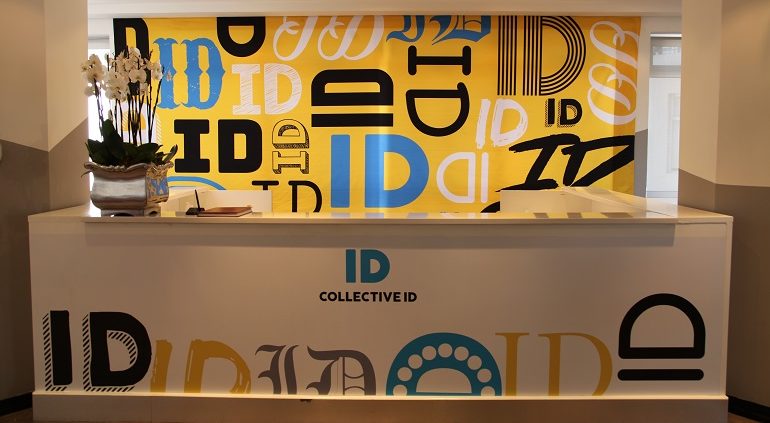
Collective ID receptionCollective ID

by Qingqile Mdlulwa, Sharon Bergmann, Brenda Khumalo & John Davenport (@CollectiveID_SA) Formerly known as Ireland/Davenport, our transformation journey began some years ago through the implementation of a robust transformation strategy. We wanted to comply with the Marketing Advertising and Communications BBBEE Charter and, better still, achieve a Level BEE 1 score. Consequently, in April 2017, our black ownership had grown from 21.5% to 52.60%; and, in October 2017, we renamed ourselves Collective ID in October, appointed new managing partners, Brenda Khumalo and Qingqile ‘Wingwing’ Mdlulwa, and achieved a Level 1 BBBEE rating.

In line with our objectives, Khumalo was identified as a future leader, given the chance to spread her wings, and then offered the opportunity to come back and lead the team. A former group account director with Collective ID, she’d left the agency in 2015 to pursue opportunities at Ogilvy & Mather South Africa and TBWA\Hunt Lascaris before returning to Collective ID in March 2017 as client service director. She has since been promoted to managing director, with a focus on leading and growing a dynamic and diverse team of young creative professionals. We believe her journey is an example of what can happen as a result of good mentorship and sound investment in talent.

Mdlulwa, our executive creative director, believes that, to stay competitive, businesses should perpetually transform and innovate. Global research has shown that non-homogeneous, culturally diverse teams are simply smarter. Nowhere is that more pertinent than in a creative environment. Working with people who are different from you challenges and may even shift your regular way of thinking, enabling you to learn. That is the approach we embrace at Collective ID.

John Davenport, our executive director and co-founder, has always recognised the need for diversity within the slow-transforming advertising industry. Diversity fuels the future — the recent debacles with Dove and H&M speak directly to what happens when there is lack of diversity. The world is a melting-pot of cultures; we need sufficient awareness and understanding of different viewpoints in order to connect effectively with a wide range of people. We invest a lot of time and energy into mitigating against having cultural blind spots within the agency environment, and on behalf of our clients.

Developing leaders

Collective ID executives shoot
L-R: Qingqile Wingwing Mdlulwa, Sharon Bergmann, Brenda Khumalo and John Davenport, the executives of Collective ID.

A common complaint in the ad industry is that it’s tough to find young black talent. The reality is that they are right in front of us. All we need to do is to look within our own agencies and make the commitment to grow our people. And it’s not a case of ‘any black person will do’. Approaching diversity as a box-ticking exercise is a sure way to fail; we have inculcated it within our strategy and it forms a firm part of our recruitment practices.

We give preference to talented previously disadvantaged Individuals, and encourages an inclusive culture with an emphasis on employing people based on their fit and form a strong part of the collective.

Although time is a scarce resource in the agency world, mentorship and training remain key focuses in the success of our transformation strategy. We recognise that mentorship works only when real amounts of time are set aside for meaningful interaction with juniors in order to help them grow.

Among our most exciting initiatives is our incubator project, which has been set up to offer guidance to young black-owned agencies. It’s a relationship that has seen Book of Swag, a team of youth culture insight specialists, be incubated by the agency for four years and, as a result, grow its head count from three to nine.

Approximately three years ago, several agencies were looking to employ the Book of Swag team but they didn’t want jobs; they wanted their own business. This provided a wonderful opportunity for us to partner with a team of young talented black creatives that bring their own skill sets to the table, and to help them to achieve their business goals. It’s a different way of looking at empowerment and building sustainable dreams, and we want to encourage other established agencies to do the same.


How the poll works

Towards the end of 2017, we invited agency executives to nominate their most-admired agency, creative leader and most-admired agency both in their region (Johannesburg or Cape Town) and nationally. We also asked them which agency did the best at digital integration and at transformation (a new question), and which agency they saw as the one to watch in the future. Execs couldn’t nominate their own agencies or staff members. All the nominations were then tallied up for the final result. The editors of MarkLives had two votes in the final poll.

Note: Runner-up(s) will only be named if they achieved a good nomination tally relative to the winner’s position. Contenders are named if they stand out significantly above other nominees but weren’t able to close in on the winner’s tally. The most-admired agency of the year is disqualified from the One to Watch category; votes cast in its favour in this category are discarded.

See also


Herman Manson 2017Herman Manson (@marklives) is the founder and editor of MarkLives.com.

Sign up now for the MarkLives email newsletter every Monday and Thursday, now including headlines from the Ramify.biz company newsroom service!

Unorthodoxy: Proving we’re worth it

by Gau Narayanan. As the ad agency, how do you prove the value of an idea and monetise its contribution to a client’s business? Agencies come up with business- and brand-transforming ideas which they execute to drive fame for clients’ brands and grow their business. But getting paid fairly is easier said than done.

The $bn question

For example, an agency in the UK once developed an idea called “Try something new today” for a UK supermarket. It won an IPA Effectiveness Gold, helped deliver £2.5bn incremental revenue across three years for the retailer, and the idea permeated throughout the organisation as HR used ‘trying something new’ as a KPI for all managers.

I’d say the agency added value and helped marketing deliver for the business. So, what was the commercial value of that idea? How was the agency rewarded for this idea, given the above impact, and how did it charge for its intellectual property? If you solve that, you’ve really answered the $bn question.

For now, let’s imagine it were the age-old formula:

Fee = scope of work
Scope of work = [(resource hours x resource hourly rate) x margin] + bonus

Convincing clients to pay for the value we add is hard, because measuring it is hard, even in extraordinary examples such as these. So, what about the ordinary and the day-to -day work we do?

A broken model

What is clear is that the current client-agency commercial model favours working slowly, forces the agency to add layers, and results in duplication of resource to justify hours and fees. In a word, it is broken. Analysis by Michael Farmer, who has been looking at this for a while, shows agency fees declining while scopes of work have increased; the nett result is we need more from agency talent for less, and that’s why our best talent is leaving.

I think agencies and clients need to react quickly. Collectively, we need to do three things to fix the broken model, and they are inter-related:

  1. Clients must prove the effectiveness of marketing and the agency’s contribution
  2. Agencies need to radically change the way they work
  3. Both parties need to align on the principles of value exchange

Proving our effectiveness

The first question I’d ask us to think about is whether the agency is a cost-centre or a value-centre to the client. To answer this, we need to objectively measure the contribution marketing makes to the top and bottom line. For this, we need clear, robust measurement tools and methodologies. Is what we have good enough? To what degree do we look at econometric modelling and rely on meaningful business metrics (rather than likes and lols)?

If we get this right, we can assess the impact of marketing on the brand, the brand on the business and, crucially, the agency’s impact on the marketing. This key task rests with the client as they have access to the research budgets and tools, brand data, conversion as you go down the funnel and, crucially, business results. The agency may partner the marketing department but the willingness to prove its efficacy should rest with marketing.

A rethink of the agency operating model

Commercially, agencies are incentivised to work slowly, which is counter-intuitive and counter-productive to both agency and client P&Ls. The faster they solve problems, the better; so they need to embrace the principles of lean and agile and solve quickly. Gather the right people around a problem so that this may be done, through intensive periods of strategic and creative development that bring the client to solve business and brand problems in two days, rather than two weeks. It isn’t necessarily cheap upfront but it is faster overall and, as the client is involved, the solution is more likely to be right, facing fewer barriers from the wider business.

That’s where the efficiency in resources deployed comes in and, more importantly, there is a speed-to-market advantage. Agencies already do this in pitches but they should make this the way they work all the time. And, helpfully no one will argue with the above — not the client, not agency teams, not agency management and not the networks. When agencies do this well, they get to better ideas faster and, by involving clients, these ideas have a better chance of making it through internal stakeholders. It’s a win-win: better ideas live and get to market faster, which positively impacts brand and business, which is good for the client. And the agency will be more profitable as the process is more efficient.

The principle of value exchange

As stated above, marketing needs to be valued by the C-suite and the agency needs to be valued by marketing, procurement and the business. If the agency isn’t valued, then there’s a problem but, if it is, then we need to look at what value is being added and whether the agency is paid commensurately. Just as in paying their own executive bonuses, clients should reward the agency for their role in driving growth, rather than trying to squeeze them. A degree of maturity and mutuality needs to accompany objective data on business results, brand scores, and agency performance. If clients aren’t willing to give financial credit where credit is due, then the model will continue to stay broken.

Remuneration models

First, here’s a useful article by Angelika Kempe here on MarkLives, outlining the various remuneration models, that’s well worth a read. Increasingly, we are seeing a blended model featuring scope-based income relating to resource hours (basic fee); agency delivery and performance (soft measures); brand results (medium measures); and business results (hard measures). We’re rightly seeing more of the fee moving to medium and hard measures, aligning agency remuneration with metrics clients are judged on. And to further drive this alignment, there is often agency and client skin in the game in the form of a bonus or malus component. The above is moving in the right direction but don’t we need to look at more-radical ways of tackling how agencies are paid?

Below are a couple of ways to change things up but we need the above three things to happen before we can assess feasibility:

Fewer hours = more $$$

What if the contracts embraced lean and agile working? The agency gets paid more the quicker it solves problems. So, if a completed campaign took three months and 250 hours, rather than the six months and 500 hours quoted, the agency should earn more, not less, as long as it delivered for the client!

Client revenue = agency revenue

Or, even more radically, how about a fee-based on a percentage of client sales, with clear caveats of a minimum and maximum income and accounting for forces that are out of the agency’s control or influence? This is the most-direct sense of mutuality and partnership. Clearly, it would need to be carefully worked out to ensure the client is getting fair value and the agency is paid appropriately.

However, I still haven’t answered the $bn question.

What is the value of an idea?

What is the value of Just Do it or Think Different to Apple and Nike, and what were the two agencies’ commercial contribution to that? It’s clearly very difficult to calculate. However, I do know that those two relationships have stood the test of time and both the agencies and clients have profited from this relationship. It seems paying the agency fair value has to start with the principle of valuing the agency in the first place.


Gau NarayananAfter 13 years at AMVBBDO in London, Gau Narayanan came to South Africa to become MD of Net#work BBDO and regional director for BBDO Africa in December 2014. His monthly “Unorthodoxy” column on MarkLives questions the orthodoxy of how we thought marketing and advertising worked, looking instead at best practice from the world of behavioural economics, neuroscience and data from the IPA that shows us how marketing and communications works and how it can help the business.

Sign up now for the MarkLives email newsletter every Monday and Thursday, now including headlines from the Ramify.biz company newsroom service!

Online CPD Courses Psychology Online CPD Courses Marketing analytics software Marketing analytics software for small business Business management software Business accounting software Gearbox repair company Makeup artist