Andrew James: Web designer that crowd funded first album (and it rocks)

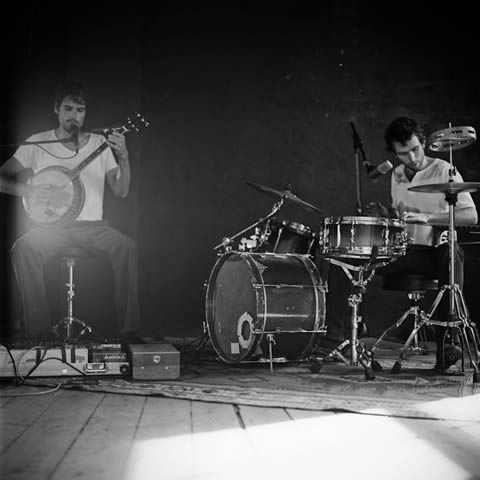
By Andy Davis. Back in 2008 Andrew James ditched his career in web design and has been resolutely plucking away at a career in music ever since. He got some attention with a colab with Gary Thomas called Cabins in the Forest, a few years back and has since gone solo. In 2010, Aron-Turest Swartz (previously of Freshlyground) introduced him to James Van Minnen, and they ended up working with Aron on their first album, Red in Tooth and Claw. We spoke to Andrew James about money, art and being a swamp folk, roots rock outfit, steeped in americana-influences while living in Vredehoek.

Andy Davis: Nice album. I hear a lot of influences on it, from John Butler Trio to Dave Matthews and beyond, but a lot of it is your own. Who are your biggest musical inspirations?

Andrew James: In my formative Years: Paul Simon, Cat Stevens, Nirvana, Pearl Jam & Nick Drake. I used to be a huge Dave Matthews fan back in the day. I loved the way he played polyrhythmic vocal melodies and guitar riffs. John Butler, Ben Harper and Xavier Rudd convinced me to start playing the lap slide and Kelly Joe Phelphs and Debashish Battacharya gave me deeper insight. Locally Micanic, Van der Want and Letcher and more recently Guy Buttery were huge inspirations to me. Then you would have to throw in some Jose Gonzalez, John Smith, Gomez, Ani Di Franco, Damien Rice, Kaki King, Iron and Wine, Jeff Buckley and Wilco for good measure.

I always felt that Cabins in the Forest was like two alleycats mewling. It often seemed like you guys were playing independently of each other, kind of trying to one-up each other. Is that an accurate assumption? Did you have a very competitive relationship with Gary Thomas? Why did you break up?

The duo was essentially two guys who both wrote songs, sang and liked to bust out on acoustic guitars – so the reason for the break up was that there wasn’t enough space for us both to fully express ourselves. I wouldn’t say it was ever a massive ego fight or really competitive but yes, I would agree that you can hear how the sonic landscape is a bit crowded when you listen to Cabins. My relationship with Gary these days is good. There was perhaps a period where we were both on a mission to go out a claim our space as solo artists but that seems to have settled now that we are both recognized. I have a lot of love and respect for the guy.

Tell me about Guy Buttery. How instrumental was he in your growth as a musician?

Guy and I met about 4 years ago. I was blown away the first time I saw him play. Guy plays fingerstyle guitar, which means he uses a thumbpick (pick attached to thumb) and his fingers to pick and strum (as opposed to a plectrum). Many fingerstyle guitar players also have long nails on their picking hand, often acrylic. At the time I was getting into open tunings and fingerstyle playing and Guy was instrumental in giving me advice and putting me onto a whole range of ridiculous, inspirational guitar players. He really helped me to raise my game as a guitar player.

Open tunings involve tuning the guitar to an open chord so that even without pressing any strings you get the chord. There is something so hypnotic about open tunings, you get such rich overtones from the instrument. Acoustic guitars just love open chords, it is what they were built for. I actually haven’t written anything in standard tuning in years. All the songs on this album are in open tunings.

This style of playing led me to the lap slide. Lap slide is what I play in the “Swansong” video. The guitar is played flat on the lap and the strings are raised 1cm off the fret board and a solid metal bar is used to slide on the strings. It also involves open tunings and heavy right hand picking technique.

When we first met you were a full time illustrator / designer, what made you go to music full time?

I have always wanted to do music full time. In a sense I have been doing it with full intention for a while but just not “full time”. It’s just the practicalities of earning a living that get in the way.

Do you make enough money from music to survive?

No, not yet. I make about half of what I need, the rest comes from freelance web design work.

How do you approach your albums? Do you have a specific process?

They are all different. I can tell you how we approached this album. I spent about 6 months writing and collecting songs. I recorded rough versions of these and then would listen to them over time and pick out the songs that really spoke to me. I originally approached James (the Steady Tiger) to work on the album as a session musician. Guy Buttery (acting as producer/engineer) and I recorded a bunch of songs to a click track and then tried to record drums and percussion to it after the fact. The result being an insipid and lifeless record.

We realized that the material had to be brought to life by gigging the songs first and that the recording had to capture the essence of live performance. The vibe that happens on that take were you were both really feeling it and not thinking at all about the results. James wanted in on the project and so the band was born. We gigged the material for 6 months and recorded it 6 months later, together in one room. The approach was to not use click tracks at all and as far as possible record everything in one take. We ended up tracking vocals separately for about half the tracks but there was alway a bedrock that was live and organic and full of “vibe”.

We also don’t have any bass guitar so we actually had my guitar plugged into an extra bass amp. We ended up mixing the signals in post and getting some incredible bottom end out of the acoustic guitars.

Were you trying to achieve anything specific with this. Is there a theme?

Not so much a theme. Maybe a vision. We wanted to marry craft and songwriting with the nuance of improvisation and layered guitar sound and textures. I use a loop station to do this live and everything we put on the album is reflective of what we do live (excepting the odd backing vocal, shaker or cello here and there). We also choose to not use bass guitar and this left a space for us to stretch what we were doing with our instruments. All the songs on this album are composed in open tunings and i often carry the bass lines in the guitar playing.
Would you describe this as particularly African or South African music. If so what typifies that?

Not stylistically. James uses darbouka, cajon, udu and frame drum which is a mixture of North African, Spanish and Middle Eastern percussion instruments. I am influenced by Americans, Australians and Indians in my guitar playing so it really is a complete mixture of global sounds. I do believes that the stories are authentic, and in that, there is something African and South African. As far as possible I try to retain a South African singing accent when singing but also believe there is a neutral singing accent that just works and there is nothing wrong with that.

A lot of South African music takes it’s cues from international trends. Which means invariably our music is typified as a weaker version of stronger originals from elsewhere. Do you agree?

I agree that there is a fair amount of weak SA music but I don’t think taking cues from international trends is the problem. We live in a global village. Musicians world over take their cues from international trends. I think it is our market and industry that doesn’t foster enough inspiration, competition, infrastructure etc. This is what results in music that lacks authenticity. Complete originality doesn’t exist there is only authenticity in terms of how you interpret your influences and express them. “It’s not where you take things from but where you take them to,” to quote Jean-Luc Goddard.

Do you think South African musicians need to engage with the culture and traditions from this place – or is it OK to just be influenced by international trends?

It is a nuanced subject. I don’t think you need to play maskandi or sing about apartheid to be authentic as a SA musician. I believe people can smell a fake a mile off so it doesn’t matter if your musical influence is american rock bands as long as you are being authentic in your stories and how you express yourself through that genre. If your songwriting is coming from your head it will sound mimicked and second rate, If you are coming from an authentic place then your stories will have a “South African” feel to them. They will be true to you and your life and people will resonate with that.

What’s your personal approach to making music?

I try to get out the way of myself and when I do it comes through effortlessly. This however is easier said than done.

Are you happy with this album? Is this the pinnacle of your musical career or just a milestone along the path?

I am very happy with this album. It is the first album I can actually say that about, so yes, it’s a pinnacle of sorts but I intend to do many more albums and want to always grow and explore as an artist. So I am hoping that the pinnacle is still some way in the future. I might hope that this is a seminal album.
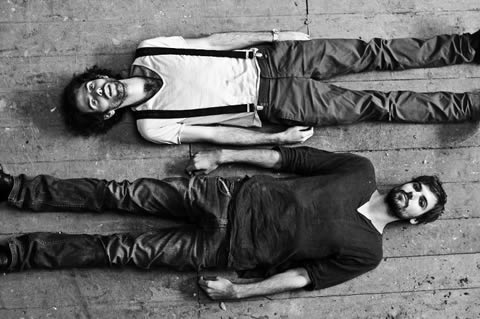
Tell me about Aron Turest-Swartz (formerly of Freshlyground). He produced Larry Joe which was kind of a mainstream South African acoustic pop and R&B album. Now he’s just done yours. Are you a pop project? What did he bring to the production?

Aron produced an album for a local band called Red Earth & Rust which was what sold me on his creativity. Larry Joe may be pop but going back to what I was saying earlier, it’s incredibly authentic and Aron has an ability for recognizing this in others and bringing it out of them. He is an incredibly facilitator. You see, I don’t think our album needed the kind of production that a pop album needs. All the creativity was already there, it mostly needed someone to act as a midwife to the “birth”. Aron was instrumental in keeping a constant vision and intention for the album. He was able to create a space for us to express the songs as honestly and organically as possible.

Is there anything else you want to tell me about this record?

The album was partially crowd funded. We raised R40 000 by pre-selling album on indiegogo.com. We decided that we wanted to hire a producer and an amazing studio and we asked for the help and our friends and fans responded.

– Download half the album here for free, gratis and Mahala.

– Buy the full album here.

*Opening image © Adriaan Louw, additional photography © Greg Lomas and © Amor Coetzee.

Reprinted from Mahala with permission.

A taste of (fast) things to come

“When are we going to get decent broadband?” is the connectivity question ARTHUR GOLDSTUCK hears most often. He has a few answers.

Not a day goes by that I don’t hear this question: when are we getting decent broadband in South Africa?

The answer, usually, is one that the questioner doesn’t want to hear: we already have decent broadband.

Of course, everything depends on where you live and what you can afford.  But my response is usually a further question: what speed ADSL is offered on your local exchange? And typically, the answer is: “I don’t know”.

That immediately brings up an obvious word of advice: “Find out.” That’s usually accomplished by visiting a Telkom customer centre. And there, many people with fixed lines discover that they do in fact have decent broadband; no one bothered to tell them.

The truth is, Telkom are quietly upgrading all their exchanges. Many can already offer up to 4Mbps speeds. Those at the front of the upgrade queue, however, are running at 10Mbps.

Bearing in mind that the most widely accepted definitions of broadband put it at 1 or 2Mbps, fixed line users have joined the broadband revolution – even when they don’t know about it.

Typically, Telkom offers the humorously named “Fast ADSL” at 384Kbps, “Faster ADSL” at 1Mbps, and “Fastest ADSL” at 4 or 10Mbps. If you’re on 4Mbps, and the exchange is upgraded to 10Mbps, you’re automatically upgraded without a rental increase. The ADSL rental component rises through the three tiers from R152 to R289 to R413. The question about “decent broadband”, then, really becomes the question of “affordable decent broadband”.

And no, we don’t have that yet.

For that reason, the market is watching closely what happens next. It is called LTE, which stands for Long Term Evolution, but is just a technical name to describe the next generation of mobile broadband. We will come to know it as 4G.

Right now in South Africa, you are not formally allowed to call it 4G unless it is a specific version of LTE known as LTE Advanced. The International Telecommunications Union has formally defined the standard, but in many countries, like the United States, technologies that are older and a little slower are marketed as 4G without the sky falling in on the providers.

Those are the boring aspects of 4G. The exciting part is what the user will experience. MTN is giving the market a taste of the future with the launch of a small pilot LTE network, available in the vicinity of 100 base stations erected around the Johannesburg area.

The network is accessed through a 4G USB dongle, which is just a little bulkier than one of the typical 3G modems sticking out of laptops everywhere. The version in use for the MTN LTE network is the Huawei E398, which offers a theoretical maximum download speed of 100Mbps, and an upload of 50Mbps. It is also designed to fall back on 2G and 3G networks when 4G is not available. However, during the pilot, it will only connect to LTE towers. MTN says its network will currently support up to 70Mbps, but users will more typically experience up to 40Mbps.

Does it live up to those expectations? Does it just. My average download speed on the modem, across a variety of venues, has been 28Mbps. Uploads average 18Mbps. My best speed, achieved at Melrose Arch, saw the downloaded data screaming in at 40Mbps, and the upload rising to 28Mbps. It was almost frightening, it was so unreal.

What can you do with such speeds? High-definition movies come to mind instantly. More practically, it means downloading software or updates can be near-instant. The 105MB file size of the latest version of iTunes was crunched down the airwaves in less than 30 seconds. The massive 800MB update for the iPhone and iPad operating system, iOS 5, took all of three minutes.

The sad 4G news is that it is unlikely to go commercial for at least another year. But, come 2013, our data dreams will start coming true.

* Arthur Goldstuck heads up World Wide Worx (www.worldwideworx.com) and is editor-in-chief of Gadget. Follow him on Twitter on @art2gee. Reprinted from Gadget.

The start-up shop that landed an airline

Angela Jayne Collins had left agency life to become a freelancer, but got her timing all wrong, for soon the Great Recession would roll over and work would dry up. Her partner, Patrick Robertson, a creative director, lost his job soon after. All that was left to do was, well, to start their own agency.

Both had extensive agency experience and between them had spent time at a number of agencies including The Jupiter Drawing Room, Hunt Lascaris, TBWA Maher Bird and M&C Saatchi London, where they worked on various top brands including MTN, Vodacom, PlayStation and Mercedes-Benz. Now to land an account, in the middle of a recession, and save their home from the bankers.

Collins had happened to hear that the budget airline 1Time had gone out to pitch and, together with Robertson, cold-called the airline to ensure their offer got reviewed. It worked. They were still in the car heading home just after the pitch when the call came back that they had got the job.

So was DaVinciEdisonBell born, and its first client was an airline. How is that for a real-life feel-good story? And it wasn’t even penned by a copywriter.

The agency launched in June 2009 with 1Time (the airline has just renewed the contract for another two years) and would add Royal Enfield, Builders Warehouse, Cartrack, CNBC Africa, 1Time Holidays and a law firm to its portfolio. It also does pro-bono work for Kidney Beanz Trust, for whom it spent six months chasing down EMI for permission to feature the Coldplay song Fix You in the TV ad (free, of course). The boutique agency currently employs six (including the two founders).

Kidney Beanz TV Ad from DaVinciEdisonBell on Vimeo.

Collins says they prefer to be small and nimble; make use of freelancers, whom she pays COD; and focus on offering value, great client relationships and great work. Relationships are built on mutual respect between everybody involved, from the client through to the most junior person on her staff. The agency wants to do things differently and, instead of spending money on going to the Loeries, the agency treated staff to a weekend away at a French-style guesthouse.

The agency has been keeping a low profile but is ready to shift gears, with a move to Cape Town on the horizon, and offices that aren’t the upper floor of the Collins/Robertson home.

A press release announcing the 1Time account win describes Collins’ “energy and focused excitement,” but you only really know what that means when you meet her in person. It’s a little disconcerting at first, especially in laid-back Cape Town, where she whirred through a presentation of the agency’s work amid funny looks from surrounding tables (the laptop’s audio might have been a little loud – but at least I heard everything quite clearly!) at the V&A Woolworth’s coffee shop.

It really is the work that hooks you (and clients); these folks are good, and seem guided by gut instinct. Overall it’s impressive, considering the tight budgets and quick turn-around times the agency works on. All Collins wants is a foot in the door and five minutes of your time.

Collins’ PA and DaVinciEdisonBell creative consultant, Andrea (Andy) East – not really trying to suppress a knowing grin when glancing at our fellow diners – perfectly expresses the agency’s vibe when she discusses our clients’ and ‘our culture’ – they are proud of what they achieve at DaVinciEdisonBell; they are often given free reign (responsibly, Collins adds) to prove and expand their abilities; and they take ownership of what the company produces.

It is refreshing to hear and shows both management skill and the reality of small agency life – you learn hard and you learn fast (not to mention a lot).

“We are very resourceful people,” adds Collins, who says it sometimes feel like two people doing the work of 20 (in one Builders Warehouse TV commercial, agency staff, including the CD, played the actors to get around a tight budget), but ultimately the learning experience and end product make it all worthwhile.

Collins hopes DaVinciEdisonBell will grow to around 30 people in time, across offices in Johannesburg and Cape Town, and that its name will become as well-known within the industry as its work has already become.

Bizcommunity Originally published on Bizcommunity.com Marketing & Media | South Africa – click to see more comments.

Magazine covers we love (this week)!

MarkLives.com runs a regular slot featuring the best local and international magazine covers every week. We recognise well thought out, powerful and interesting (and hopefully all three in one) magazine covers and celebrate the mix of pragmatism, creativity and personal taste that created each of them. By media blogger MediaSlutZA.

INTERNATIONAL

Computer Arts, December 2011

Computer Arts

What drew my attention to this cover, was that the ‘phone’ and ‘apps’ weren’t computer generated, but rather physical wooden objects and little blocks. Much more effort than just making something on the computer. Much more appreciated.

Dazed & Confused, December 2011

Dazed

For Dazed & Confused’s 20th Anniversary season the editors created 20 different covers! Photographer and co-founder of the magazine, Rankin, must have been a busy boy! But what makes it even more awesome, is that when you look at the covers next to each other (see more here) you find that they’re all shot in the same way. It is extremely striking. But wait, there is more; each unique cover has a gatefold pull out, which features 20 rising stars chosen by each celebrity, resulting in a ground-breaking portrait of pop culture heroes of the future.

New York Times Style Magazine, Winter 2011

NY Times Style

Is it real, or computer generated? Water balloons or glass? I don’t care. It’s pretty to look at, and makes me look and look. Wouldn’t mind something like this as an art installation in my flat…

LOCAL

Elle Decoration, December / January 2012

Elle Decoration 9 Dec Jan 2011

Who doesn’t want to sit with their feet in the sand the whole day during summer? This cover screams summer and beach holiday to me, and the colours just all work together. Definitely one of my favourites.

Eat Out 2012


Eat Out

One could see that a lot of effort and thinking went into this cover. It’s a great concept which I’ve seen before so anyone can do it. But to pull it off is something different.

Huisgenoot Tempo, Summer 2012

Nothing revolutionary I know. But I will bet you that this issue of the Afrikaans music focussed Huisgenoot Tempo will fly off the shelf and will be a best seller. It’s perfectly targeted and marketed at their readers. And actually not just their readers but for a wider audience as well …  I’ve seen the inside feature of this story, and it definitely doesn’t disappoint.

– The (for now anonymous) blogger behind MediaSlutZA knows way too much for his own good about media in South Africa. Magazines in particular. His mission is to show when South African magazines might fail, but most importantly, succeed. If you’re looking for a library about South African magazines and news, your one-stop pitstop is MediaSlutZA. #MagazinesForTheWin

– Find a cover we should know about? Tweet us @marklives and @mediaslutza

What the POI Bill says about the gradual erosion of our democracy

The Protection of Information Bill has just been steamrolled through and rubber-stamped by Parliament – a body tasked with balancing the demands of the executive with the best interests of their constituents – something it has consistently failed to do. In favour – and seeking the favour of – the executive.

For me, this is really the debate civil society should be having – how some of the institutions set up to protect the democratic system we value so highly have failed in their task – while others are gradually being diminished in a war of attrition that will see the executive emerge as more powerful than our constitution allows or public will favours.

The proportional representation voting system the country adopted with the advent of liberation from apartheid effectively removed public representatives from their constituencies – members of parliament (MPs) get picked off electoral lists rather than being elected directly. It means our MPs are less engaged with their constituents and less reliant on serving them to get re-elected. Their sole aim seems to stay as high up on electoral lists as possible, and to do so, of course, you serve the party rather than the people.

The government has long been irked by an independent judiciary.

At Polokwane, it resolved that “[w]hilst justice is an exclusive national competency, there is a need to look at the matter carefully in the context of co-operative governance with particular reference to access and equity. We reaffirm the need for everyone to respect the rule of law and the independence of the judiciary, especially in so far as the adjudicative function of the courts is concerned. The judiciary must adjudicate without fear, favour or prejudice, but should also respect the areas of responsibility of other arms of the state and not unduly encroach in those areas.”

In George-Bush talk, that’s down with the activist judges, activist meaning anybody that doesn’t follow the narrowly defined political agenda of executive choice.

And so it proved when the executive skipped over Dikgang Moseneke, the deputy chief judge of the Constitutional Court of South Africa, to promote Justice Mogoeng Mogoeng to the post of chief justice, reportedly because comments by Moseneke on the independence of the judiciary angered the ruling party. This after the Presidency tried to extend the term of office of chief justice Sandile Ngcobo – something considered constitutionally problematic by legal experts.

When talking about the media, the ANC noted at Polokwane that “some fractions of the media continue to adopt an anti-transformation, anti-ANC stance.”

“The ANC is faced with a major ideological offensive, largely driven by the opposition and fractions in the mainstream media, whose key objective is the promotion of market fundamentalism, control of the media and the images it creates of a new democratic dispensation in order to retain old apartheid economic and social relations,” delegates at Polokwane noted in a paranoid tone, taken up by minister of state security Siyabonga Cwele to legitimise the Protection of State Information Bill in its current form.

Delegates then held up the financially failing and scandal prone SABC (it’s the most optimistic turn of phrase I could think of in relation to the public broadcaster) as an example of what the media should look like in South Africa. “There is a strong public broadcaster [the SABC] on whom millions of our people daily depend for information, and which has an important role to play in the deepening of democracy and involvement of the people in the process of social and economic change.”

Delegates also called for “social cohesion” – really a call for no dissent – when it was said, “Building social cohesion and promoting values of a caring society are an essential part of the battle of ideas and must underpin and inform the manner in which the media operates.”

Like Parliament and the judiciary, the media is supposedly one of the safeguards we have come to rely upon against any executive excess. While Parliament and the judiciary operates within the sphere of government, with its rules and regulations and political deployments, media stands outside, and offers perspectives and insights the politically whipped MPs dare not utter, and where processes, rules and etiquette silence judges, who can only rule if a case made its way through the lengthy corridors of the law.

The media has always been the outsider, closer to the rabble (said with fondness) than the powerful, and with more freedom to call it as it sees it.

When we talk about the gradual decline of the institutions meant to protect democratic ideals, we are also talking about the media.

While many journalists and editors slog away at what they see as their duty – to inform the public and expose the misuse of power – they are for the most part commercial enterprises run by hard-nosed bean counters or those peddling for political influence. Media houses that run respected newspapers with long and proud journalistic histories also run tabloid newspapers with little interest in ethics of any kind. When these organisations speak out for media freedom, they seem two-faced and this undermines public sympathy for their cause.

And yet there is no point in talking about tightening legislation around how the media operates unless we also talk about strengthening democratic institutions and countering the increasingly centralised power of state in the offices of the executive.

The assault on democratic systems of governance is a global phenomenon – look no further than the turmoil roiling Europe as governments step down in Greece and Italy, to be replaced by unelected leaders tasked with enforcing austerity measures imposed by unelected bodies such as the IMF and the ECB.

Or to the UK, where successive leaders have built an effective surveillance state, and talk of cracking down on social media during times of civil disobedience is as rife as in the backrooms of the authoritarian regimes in Iran, Saudi Arabia and elsewhere. Modern US electoral politics are built on fear and colour-coded security levels, while oversight slips on increasingly secretive and powerful security agencies.

The rise of the Occupy Wall Street movement, of people-power in countries through-out the Middle East and North Africa, the mass protests we are seeing in the EU countries worse affected by the continuing global financial crisis (the sovereign debt crises, such as the mortgage and credit crisis, are part of a larger systematic failure in the global economic model, rather than an event to be viewed in isolation), are testimony that no government can afford to lose sight of the fact that its citizens are not its subjects.

The gradual criminalisation of society through mountains of legislation, affecting everybody whether they are kids downloading music on the Internet or drivers that forgot their ID cards at home, or by making it illegal to access information in the public interest, are obvious examples of the erosion of personal freedom of citizens.

Individual rights protect us against abuses of power by the government or a momentary political majority. How many are we prepared to lose before anger overcomes the fear?

In the Daily Maverick, Jay Naidoo, a former general secretary of the Congress of South African Trade Unions (COSATU) and government minister, writes that even as Tunisia ranked very high on the Mo Ibrahim index of development “the frustration with a predatory elite around the dictatorship of Ben Ali drove a revolution that has redefined the 21st century and brought down seemingly invincible dictators.”

“The reason for the revolution was an anger against a secretive state that took away the voice of people – and sheltered an increasingly corrupt and intertwined economic and political elite who controlled the state,” writes Naidoo.

“Mahmoud Bouzizi was our Hector Pieterson, and his fiery sacrifice opened the floodgates of democracy. The slogan was explicit – social justice, freedom and democracy – all essential ingredients of the right to know and express our voice. Our policymakers in our Parliament must sit up and understand how this became a powerful spark for revolution.”

The legislation you gradually let trickle through erodes not only the hard-won freedoms we enjoy but also society’s patience. The voiceless shout the loudest and with their fists raised.

Bizcommunity Originally published on Bizcommunity.com Marketing & Media | South Africa – click to see more comments.

The silence on COP17 and its unintended lesson for South Africans

South Africans have an extraordinary social conscience, says Thomas Kolster, the Danish communications consultant and author of the soon-to-be released book The Bible of Goodvertising (from Thames & Hudson) who is visiting South Africa in the run-up to the COP17/CMP7 conference being held in Durban, 28 November – 9 December 2011. Which is why the lack of public debate on and interest in COP17 here is so surprising to him.

After all, climate and social issues are closely interlinked, the poor and middle-income groups are feeling the pain inflicted by, for instance, steadily rising food prices and lack of access to clean water (be it drought in some areas and flooding in others – also see infographics on the condition of SA rivers and SA food production).

State of some South African rivers.
State of some South African rivers. Copyright Graphics24. Reuse without permission not allowed.
cop17, food production
Meeting SA’s food needs. Copyright Graphics24. Reuse without permission not allowed.

Which is why Kolster noted what many SA communication professionals and journalists have ignored to date: that South Africa’s hosting of the COP17 hasn’t been celebrated as another coup for the country often portrayed as chaotic and criminal in international media reports, or as another indicator of its rising influence in emerging market and world affairs, or an opportunity to educate South Africans in the importance and benefits of economic and environmental sustainably.

Visible marketing efforts to tie in with the goals of COP17 (assessing progress made in dealing with climate change) have not yet rolled out (if they will at all), news media have started covering the run-up to the event but still offer little in terms of educational features, and government seems too busy with adding layers of security around Durban than engaging locals in the process.

This is the Conference of the Parties (COP17’s official name), rather than a conference of the people in more than just name, and this partly explains the lack of engagement by South Africans in what (the few who have an opinion on it) already view as a failed political process.

“The Green Gap”
An infographic exploring the differences that Chinese and American citizens have towards sustainability. Information from “The Green Gap” report by Ogilvy Earth. Copyright Ivan Colic, Designgap.

Of course, the IP lawyers have also put a damper on any sense of COP17 whoop whoop, with a seven-page terms of use document for the COP17 logo: “The South African Government is entitled to sue anyone who copies the COP17/CMP7 logo. In addition, if anyone knowingly trades in goods featuring an unauthorised copy of the COP17/CMP7 logo, this will be a criminal offence. The COP17/CMP7 logo will enjoy legal protection.”

Kolster says in Denmark, host of COP15 in 2009, the event that sparked his interest in the climate change debate and lead him to COP17 in South Africa, business went to considerable effort to show that they bought into the need to run sustainable enterprises – and not only during the course of the event. It changed business practice at ground level in the host city.

If consumers care, business needs to care, says Kolster, who recently penned a call to action for Bizcommunity.com which stated: “The competition is no longer about being bigger, better or cheaper, but what difference you want to make for people and planet.”

Marketers should not confuse the lack of conversation around the event with South Africans not caring about sustainability. They care very much, if the communication is made relevant to them. If Pick n Pay is going to advertise food, why not discuss and advertise healthy food, asks Kolster.

Or take the cellular providers and banks that are urging consumers to switch to ‘greener’ electronic billing communication but doesn’t feed their economic benefits through to consumers. Why shouldn’t going green(er) be equated with economic benefit to consumers if you are genuinely serious about environmental sustainability?

Here, retailers still see ‘green’ and ‘organic’ foods as the basis for a higher price point, adds Kolster, while in Europe this practice is fading; the ‘wheel of good’ as Kolster phrases it, has turned, and greater adoption are eroding the higher pricing, to the benefit of consumers.

Healthy food should not be the domain of the well-off, Kolster points out, leaving me to ponder why SA marketers still communicate that it does. And how blatantly this exposes the siloed approach to marketing in this country.

For Kolster, the failing of politicians on issues such climate change – and he acknowledges that COP17 will likely result in more stalemate and

Cop17 logistics
COP17 logistics. Copyright Graphics24. Reuse without permission not allowed.

partisanship, empty promises and little implementation on whatever is agreed – simply highlights the importance for people to take matters into their own hands.

Vote for change with action; that really is the challenge Kolster is throwing at the feet of citizens, both private and corporate. People want to make a difference. Look no further than the global Occupy Wall Street movement, which is very much about standing up for the vulnerable against perceived corporate excess, and whose influence is being discussed in terms of decades rather than months.

If the people are there, and your business and communication needs to be where they are but aren’t, ask yourself why they’re not! Then take action to address the gap.

Kolster views the corporate world as an arm of society, not as something arrayed against it, and says it operates with a licence from society, a licence that demands a return not only for shareholders but for the communities where they trade.

Communication can raise awareness and spur action – drivers for change. Kolster says he doesn’t mind if that change benefits your bottom line – it’s all part of the sustainability process – but communicate for the benefit of consumers(and their environment), rather than simply consumption.

People and business are not that different, says Kolster; at the end of the day both look at their wallets when making decisions. As consumers shift spend towards products that offer tangible benefits for consumers and their environment alike, business will have to follow. Of course, there are risks inherent in following the market, rather than helping set the pace (by ignoring COP17 for instance), which marketers need to take cognisance of.

Kolster also argues that, as host nation, Government needs to take some responsibility to involve citizens in a global debate that affects their

COP17 in numbers
The Durban climate summit in numbers. Copyright Graphics24. Reuse without permission not allowed.

future. Rich or poor, we are all in this – it’s a challenge that goes beyond the politics of wealth or race, age or gender. It’s an opportunity for a cross-section of South Africans to speak with one another and together, yet it’s allowed to slip through our fingers.

Don’t blame the politicians, says Kolster; if nobody does anything, nothing will happen, so less complaining and more action are required from civil society. Change will never be driven by politicians. Again – the power rests in our hands.

Kolster cites Nedbank’s solar billboards as an example of advertising that makes you think twice about what communication can really contribute. Yes, it’s small in scale – but it’s a step in the right direction. Now if only somebody would take a leap!

In India, solar power is being offered by NGOs and small entrepreneurs as a way to bring electricity to 300 million Indians still off the national grid. It’s not free, but its competitive with current alternatives such as black-market kerosene, and the government there hopes the off-grid solar yield will quadruple to 200 megawatts within two years through tax credits and other incentives aimed at both consumers and solar panel manufacturers.

As brands make up an ever-larger part in the valuation of corporations, they have become an Achilles heel for executives – protecting shareholder value now very much equates with protecting the brand – and the rise of social media means companies are treading carefully through the minefield of consumer activism. It’s forcing change in itself – social media is bringing people power to the fore like never before (for Kolster, social media power represents true democracy).

People-power has arrived, enabled with technology, and companies – as an extension of the society in which they operate – need to adapt their operations and communication to this reality. Like politicians, they can be voted out by citizens (who votes with their wallets), something the politicians and other talking heads at COP17 might do well to remember themselves.

Infograpics reproduced from Designgap and Graphics24 with permission.

Bizcommunity Originally published on Bizcommunity.com Marketing & Media | South Africa – click to see more comments.

Black Tuesday

Update 3:54 11/11/22

What the POI Bill says about the gradual erosion of our democracy BizCommunity

The Protection of Information Bill has just been steamrolled through and rubber-stamped by Parliament – a body tasked with balancing the demands of the executive with the best interests of their constituents – something they it has consistently failed to do. In favour – and seeking the favour of – the executive.

For me, this is really the debate civil society should be having – how some of the institutions set up to protect the democratic system we value so highly have failed in its task – while others are gradually being diminished in a war of attrition that will see the executive emerge as more powerful than our constitution allows or public will favours.

MPs vote in favour of info bill News24

MPs have voted overwhelmingly in favour of the protection of state information bill, despite attempts by opposition parties to postpone the vote. A total of 259 yes votes were received, with 41 no votes and 32 abstentionsA total of 259 yes votes were received, with 41 no votes and 32 abstentions.
Archbishop Tutu condemns South Africa ‘secrecy bill’ BBC

Nobel Peace laureate Archbishop Desmond Tutu has strongly condemned a new media law, which South African MPs are set to vote on shortly.

Updated 9:07 11/11/22

‘Black Tuesday’ protests to mark likely passing of South African secrecy bill The Guardian

Critics say legislation before MPs poses threat to freedom of expression and will put too much power in government hands.

“For years newspaper readers have feasted on a diet of corruption and financial scandals. The ANC is now attempting to muzzle the press, critics argue, so the powerful can line their pockets with impunity. The new laws would make it a crime to leak, possess or publish information deemed classified by the government, with whistleblowers and journalists facing up to 25 years in jail.”

The bitter triumph of small minds Sunday Times

“There have been times when the publication of sensitive information has been done in the public interest. The leaking of evidence in the form of wire-tapped phone calls between government officials demonstrated that the prosecution of President Jacob Zuma was politically motivated.

The airing of this information played no small part in Zuma’s remarkable political comeback, which resulted in him rising to the highest office in the land.”

South Africa to Adopt Secrecy Law That May Stifle Graft Probes Business Week

“The law may raise doubts among investors about the government’s public commitment to fight corruption. The state’s relationship with the media has deteriorated as newspapers reported on scandals involving senior officials including President Jacob Zuma. Charges of corruption, racketeering, fraud, money laundering and tax evasion against him were dropped on April 6, 2009, just weeks before he was appointed president.”

The secrecy bill: Welcome back, Magnus Malan & Adriaan Vlok by Jay Naidoo (Daily Maverick)

As a citizen I am deeply disturbed by the battering-ram approach towards passing the Protection of State Information Bill into law. It fails to realise that transparency is a foundation of the democracy we fought for. Our struggle against apartheid was a struggle for voice. That principle should not be betrayed.

“I have spent time in Tunisia this past week at a food-security conference organised by the Mo Ibrahim Foundation. I interacted with leaders that drove the “Arab Spring”. The reality is that Tunisia ranked very high on the Mo Ibrahim index of development. Yet the frustration with a predatory elite around the dictatorship of Ben Ali drove a revolution that has redefined the 21st century and brought down seemingly invincible dictators.”

Updated 7:20 am 11/11/22

Day  of reckoning for democracy Business Day

Every MP who presses the green button to vote “yes” for the Protection of State Information Bill will at that moment take personal responsibility for the first piece of legislation since the end of apartheid that dismantles an aspect of our democracy.

Editors’ plea on secrecy bill Times LIVE

Mark this day. Depending on the actions of the 400 MPs in the National Assembly at 2pm, it will end as a day of triumph or of shame for our adolescent democracy.

Black Tuesday: Test of SA’s democratic principles Mail & Guardian

The passing of the secrecy Bill today would mark the beginning of the end of the freedom of information we cherish as a pillar of our democracy.

Black Tuesday protest declared against “Secrecy Bill” (Daily Maverick)

The latest news in the ongoing controversy surrounding the Protection of State Information Bill is that MPs will vote on the matter on Tuesday. The National Press Club has dubbed the day “Black Tuesday” and called on South Africans to don black as a form of protest; the Right2Know Campaign is organising multiple simultaneous pickets and Public Prosecutor Thuli Madonsela has set up a team to investigate concerns around the bill. Whatever happens on Tuesday, South Africans fighting for access to information will not be silenced.

Media to march against secrecy Bill vote (Mail & Guardian)

The South African media are set for mass protest on Tuesday as the controversial Protection of Information Bill (POIB) is put to a vote in Parliament’s National Assembly in Cape Town.

S.Africa’s ANC under attack over ‘apartheid’ secrecy bill (AFP)

CAPE TOWN — South Africa’s ruling ANC came under fresh attack Monday as it readied to muscle a controversial secrecy bill through parliament that activists and editors say will stifle investigative journalism.

The Protection of State Information Bill will be put to vote Tuesday, carrying jail terms of up to 25 years despite fears that it is a threat to the country’s hard-won democracy.

The “ANC is taking South Africa back to the suppression of free expression of apartheid,” Nobel literature prize winner Nadine Gordimer told AFP.

South Africans embracing mobile apps

The latest download statistics from the Vodacom App Store reveal much about The South African mobile market and its users, writes ARTHUR GOLDSTUCK.

As the mobile app markets of the world begin to change how phones are used, South Africans too are embracing the app.

Vodacom revealed this week that their own shiny new App Store – it was launched in September – has already had 429 000 visits, and almost every visit has resulted in a take-away – with 400 000 downloads so far. The apps are a mix of free and paid-for downloads. MTN has launched a pilot app site, called apps@play, but for now all apps are free while they test the concept.

Why should a local operator launch an app store, when the global equivalents, especially the Apple App Store and the Android Marketplace, have more than a billion apps between them?

“The biggest advantage is that we are able to work with different platforms,” says Prins Mhlanga, Vodacom’s Managing Executive: Digital Media. “An Android Marketplace can only address Android users, Apple’s App Store can only serve Apple users. We can address all the popular platforms.”

The result, says Mhlanga, is that the local app store more closely reflects the phones most commonly used for apps. It also highlights the fact that conventional phones, known as feature phones – as opposed to smartphones – are a key market for app developers.

The downloads from the Vodacom App Store provide fascinating insights into the phone lives of heavyweight South African users – those most likely to be early users of an app store.

The phone most often used on the Vodacom App Store so far is indeed a smartphone: the BlackBerry Curve 8520. But the next two are feature phones:  the Samsung SGH-E250, and the Vodafone 543 (made by ZTE). They are followed by the Nokia E63 smartphone, the Samsung Star GT-S5233, and another BlackBerry, the new Curve 9300.

These five phones all have two things in common: they are low-cost alternatives to similar but more feature-rich and expensive phones; and they are wildly popular among teenagers and young adults. The E250 was, for a long time, the single most popular phone in the youth market, until it was supplanted by the Curve. But, despite the fact that it is already four years old, it still has enough of a market for Samsung to keep shipping it into South Africa.

The list sheds a bright light on mobile trends in South Africa. Clearly, the youth segment is the most likely to be the early adopters of the apps. And clearly, low cost does not equate to low usage: these are high-end users of semi-low-end phones.

The operating systems or platforms for which apps are downloaded are also revealing: the three most popular local apps are for the “store launchers” for three different platforms on the app store. That’s no surprise. The surprise is the fact that the most popular of the three is for the Java version of the store. That’s the platform most commonly used on feature phones. BlackBerry is in second place here, followed by Nokia’s Symbian.

In terms of conventional options, the most popular local app is the News24 ap for BlackBerry, beating out MXit for Java and the K53 app for Android, created by local developers Lucky Mobile.

The list of most popular international apps is led by Facebook Chat – for Java. This means that low-end users are embracing Facebook on their phones.  The next most popular imported app is Mario55, a clone of the Super Mario Brothers game. Another surprise: it is the BlackBerry version that is most popular.

Ironically, the developer market has not caught onto the popularity of BlackBerry in South Africa. According to Mhlanga, most developers are working in Java and Android. Vodacom has introduced a developer programme, he says, to help software creators navigate the steep learning curve of app development, and to keep them abreast of market trends and demand.

“Part of the objective of the programme is to make sure all users are looked after in making sure the store is compatible with all handsets.”

He does not believe the Android obsession among developers is altogether misplaced.

“Java will be around for quite some time, but I see Android becoming more popular in the next couple of years, BlackBerry is still growing because of their offering and how they are tackling market at the moment.”

The store hosts more than 160 000 apps, while MTN’s apps@play pilot store carries around 120 000 apps. MTN are being tight-lipped on its performance so far, but the device and platform trends are likely to mirror those of Vodacom. With every month, the number of South Africans picking up the app habit will accelerate and this, too, will become app country.

* Arthur Goldstuck heads up World Wide Worx (www.worldwideworx.com) and is editor-in-chief of Gadget. Follow him on Twitter on @art2gee. Reprinted from Gadget.

Does the Apple iPad still set the benchmark for tablets?

ARTHUR GOLDSTUCK considers whether the Apple iPad still sets the benchmark for the Gadget Ten Question Tablet Test.

The tablet revolution of the second decade of the 21st century may have started with the iPad, but the iconic device came after many failed tablet ventures – including Apple’s own Newton. Even Microsoft came up with a variation five years ago.

This history holds one of the first lessons of the iPad: it was not an immaculate conception that came into the world fully formed with no labour pains. It was a result of numerous and elaborate improvements. That, in turn, means it represents a moment in the evolution, rather than revolution, of a device category. The revolution was in design – all the elements gelled into a device that anyone could use; and in marketing – it was a device every iPhone user would want to use, along with everyone else who laid eyes on the device.

The iPad 2 holds rather different lessons. It shows that even the supposedly perfect gadget can always be improved. And that, even with a device that has electrified the market, there is room for alternatives that fill the gaps left wide open.

The Gadget Ten Question Tablet Test reveals where the iPad 2 leaves the gaps.
1. The sound of one-hand tapping (Can you comfortably hold it in one hand and operate it in the other?)

There’s a reason Apple have put so much energy into the design of covers that allow you to stand it up in almost any direction. And why iPad cases are among the most popular Apple accessories on the market. This gorgeous device, Apple fans will tell you, was not made to be pawed but to be caressed. Consequently, it needs to be placed on an appropriate surface to get the most out of it –partly because it is a little heavy to hold in one hand and operate with the other.

That said, the iPad was the first computer ever to adapt its monitor to the position in which it was held. In whatever way it is positioned, the screen image instantly orients itself to be upright. Yes, the other tablets do that too, but few as instantly as the iPad.

Typing on an iPad, however, is no pleasure. The design of virtual keyboard is the prime reason we recommend that anyone who needs to produce complex documents should revert to a laptop. But there is one small change that would make all the difference: allow users to place the cursor where they wish, and insert what they wish. It is deeply frustrating, when attempting to correct mistakes, to be forced either to accept a spellchecker recommendation, or to struggle with manipulating the cursor into the right spot – and then only to be allowed to backspace-delete. With the iPad’s famed ease of usage and lightness of being, this is one inexplicable nod to the dark side.

Score: 8/10.

2. The Angry Birds test (How responsive is the device in interactive tasks?)

The iPad 2 hardware runs on a 1 GHz dual core Apple 5 system on a chip (SoC). It’s also described as a package on package (PoP). If you want the technicalities, the chip is a dual-core ARM Cortex-A9 MPCore CPU with NEON SIMD accelerator and a dual core PowerVR SGX543MP2 GPU. Want a translation? Serious fire-power. Other tablets that come with a 1 GHz chip tend to lag behind the iPad, since it’s not merely about the chip, but about all that integration.

Ironically the processor is manufactured by arch-rival Samsung – but from Apple’s design.

This processing power means the iPad packs serious punch in any multimedia applicaton that needs serious punch. Or catapult.

Angry Birds was practically made for this device, and the iPad’s performance here shows up most other tablets, including its closest rival, the Samsung Galaxy Tab 10.1. Run them side by side, and you realize the catapult gets a little sticky on the Galaxy. With the iPad, there is never a moment’s doubt that it will handle whatever is thrown at it with elegance and speed.

Score: 10/10

3. The tablet gender test (Can it multi-task? Hint: males can’t.)

The iPad is male. In the past, it wouldn’t let you so much as look at another app while you’re running your current operation. Now, thanks to hormone replacement therapy from the new iOS 5 operating system, you get to double-tap the main control button to show a ribbon of open apps along the bottom of the screen and to switch between them. You close them by holding your finger on the icon and then clicking on the minus button. A very elegant solution (thanks to @RobinMeisel for pointing that out on Twitter). However, the ability to manage apps in the ribbon remains limited. On this score, the Android 3 tablets tend to be ahead of Apple. But hey, look at the positive side: it’s something to get the media excited about for the next edition of the iPad.

The single-button approach is part of the charm of the iPad, though. It means there is no learning curve whatsoever. You click the button, or you tap the screen. But once you’ve learnt to use the device after the first 60 seconds, you do want to get more out of it.

Score: 7/10

4. Testing by the book (Can it replace novels and textbooks?)

Apple is known for its powerful and effective ads, but one of the best ads yet to reference the brand was for the Amazon Kindle. It showed a man lying down on a deckchair by a pool and pulling out his iPad, all the while glancing smugly at a woman reading on a rival device. Then social disaster strikes. The glare of the sunlight on his screen makes it impossible to read a word. He calls over to the woman, asking how she can read in the sun. She smiles ad says simply, “It’s a Kindle”.

That ad only tells half the story, though. In normal light, however, reading on the iPad is a spectacular experience. When it comes to textbooks, newspapers and magazines, the iPad offers an experience that is superior to the original printed format. The Kindle merely matches the original experience – albeit with massive capacity that you couldn’t match in a personal library.

The bottom line is, most reading occurs in normal light – or should, say the optometrists – and that is where the versatility of the iPad overcomes the natural reading of the Kindle (we’ll review the Kindle in more depth soon).

Score: 8/10

5. Live long and prosper (How’s the battery life?)

One of the crucial breakthroughs for the iPad was its battery life: 10 hours. The iPad 2 initially appears to have poor battery life, but after fully charging and fully de-charging a few times, it appears to perform to promise. In standby mode, I’ve gone a week without using it (Yeah, I know, but some of us have to work), and come back to find almost no loss in battery status.

Score: 9/10

6. It’s all about You(Tube) (How well does it handle online video sites?)

For a device that doesn’t support Flash, Apple does a remarkable job with video, and especially YouTube. Demonstrating the depth and range of music videos on YouTube, recently, no other tablet matched the experience on the iPad.

Score: 8/10

7. The retro test (Can it replace your radio? TuneIn Radio reveals all.)

TuneIn Radio installs quickly and seamlessly on the iPad. Using the iPad’s location information, it instantly displays all local stations, from 5FM to Chai FM and hundreds of international station in dozens of categories and sub-categories. Bye bye FM.

Incidentally, pushing the all-doing Control button to exit the app won’t silence the audio. You have to stop it in the app itself.

Two mono speakers behind a single grill make for a simple approach to audio – although it does result in a mildly tinny sound. The sound offering is backed up by a Volume button below the top right corner, and stereo audio-out socket on the top left. Bluetooth enables wireless headphones. If you want to make your own sounds, a microphone is also built in. It may seem like the bare minimum, but touches all the bases most users need.

Score: 8/10

8. On target (Is the on/off switch easy to find and use in the dark?)

The On button protrudes slightly above the top right corner, and can’t be missed, even in the dark. However, it does get hard to find when you’ve been tilting the device in all directions and forget which side really is Up.

Score: 8/10

9. Keep control (How effective are the control buttons – hardware and software?)

Control buttons? We don’t need no stinkin’ control buttons, as a Mexican bandit might once have said in a movie. The most compelling feature of the iPad is its sheer simplicity. It is the reason this is the number one choice for schools looking at rolling out tablets, despite it costing far more than low-end 7” devices. For the power user, however, the lack of virtual control buttons becomes a hindrance, and needs to be addressed when that multi-tasking gap is also repaired.

Score: 8/10

10. The iPrice Test (Is it competitively priced?)

Traditionally, Apple computers were far more expensive than equivalent devices from other manufacturers. That has changed in recent years, and the iPad has led the charge down the price ladder, although not down the quality ladder.

It is deeply ironic, then, that almost every other tablet entering the market to take on Apple has been more expensive. That’s like giving up the battle even before you’ve fought it, but still sending armies onto the field to be wiped out. The exception has been Amazon, which announced its Kindle Fire would cost $200 – less than half the price of the cheapest iPad. Motorola followed by announcing a cheaper Xoom. And finally, the rest of the industry is waking up. French electronics company Archos has announced an 8” tablet for under $300 and a dual core 1.5GHz tablet for less than $400.

In other words, price pressure has finally arrived, but that has not yet reduced the demand for the iPad at current prices.

Score: 9/10

The bottom line

The iPad narrowly edges out the Samsung Galaxy Tab 10.1 as the best tablet we have yet tested. The benchmark device retains its status, but by a slim, reachable margin.

Overall score: 83/100

* Arthur Goldstuck heads up World Wide Worx (www.worldwideworx.com) and is editor-in-chief of Gadget. Follow him on Twitter on @art2gee. Reprinted from Gadget.

Online CPD Courses Psychology Online CPD Courses Marketing analytics software Marketing analytics software for small business Business management software Business accounting software Gearbox repair company Makeup artist