The Ad Contrarian: The five dumbest ideas about online advertising

adcontra

by  Bob Hoffman (@adcontrarian), San Francisco Bay The phenomenal rise of the internet as a medium of communication, information, and entertainment has given rise to some equally phenomenal conceptual flops about advertising.

Back in the day, online advertising was going to “change everything.” It has changed nothing. Advertisers are still mostly doing on the web exactly what they did in traditional advertising — bugging the shit out of us with the crumbiest, most annoying ads possible in all the places we are most likely to be bugged and annoyed. Oh yeah, and millions of pages of self-serving “content” that no one pays any attention to.

Here at The Ad Contrarian Global Worldwide Headquarters, over the past six years, we’ve been chronicling the fantasies and delusions about web advertising that pass for “thinking” in marketingland.

Today we take inventory of these dumb ideas. We have selected our 5 favorites and we present them to you in one neat little bundle, in no particular order, but numbered to keep you on track.

Here are The 5 Dumbest Ideas About Online Advertising 

1. Interactivity

The hypothesis behind this daydream was that the same consumer who was frantically clicking a TV remote to escape from advertising was going to merrily click a mouse to interact with it. Marketers and agencies bought into this baloney big time. It didn’t take long for it to become clear that no one wanted to interact with ads. The poor bastards trying to sell this stuff quickly changed the nomenclature from “interactive” advertising to “display” advertising. Fortunately for them, most of the flat tires who pass for “marketing experts” were too confused to realize what happened. The good news for the ad industry is that no matter how ineffectual banner advertising is, it just keeps growing and spinning off money. The rate of interaction with banner ads is below one click in a thousand. This is not interactivity. This is absence of interactivity.

2. The death of television 

From Let’s Just Declare TV Dead And Move On, TechCrunch, November 2006…

“..the writing is on the wall…at the end of the day, people want to consume content without the friction of having to sit down in front of a television at an appointed time….There is a fundamental shift in consumer behavior going on…”  

In the 7 years since TechCrunch and the rest of the pundit digerati declared TV dead, viewing has been at its highest level ever in history. Other than that, they nailed it.

3. Permission marketing

The concept here was that the “interruption model” of advertising was no longer viable and was being made obsolete by the web. The mantra was that “the consumer is in charge” and in order to be successful you had to charm “the consumer” into giving you “permission” to market to her. This has proven to be thoroughly wrong. In fact, the aforementioned banner advertising — the poster child of the interruption model — is growing at alarming rates and is in danger of taking over the entire Internet unless Brad Pitt gets in there and stops it.

4. The conversation

This “big idea” posited that consumers want to have online conversations with marketers, and online engagement with brands. It turns out that even consumers aren’t that stupid. This nonsense completely misinterpreted the relationship between consumers and the vast majority of the stuff they buy. It assumed every brand was Nike or Apple. The facts tell the story very clearly: the engagement rate for posts of the top 200 brands on Facebook is under 1/2 of 1%. Conversations? More like monologues.

5. Convergence

If you believed the experts and pundits, TV and the web should have converged a long time ago. There have been a thousand different set-top boxes and gizmos that were supposed to effectuate this convergence. We were supposed to be watching all our favorite TV shows on YouTube and Hulu without the annoying interference of advertising. Convergence is nowhere near a reality. According to the latest data I can find from Nielsen, TV constitutes 98% of video viewing. Less than 2% of video is viewed on line, despite all the porn you’re watching.

Now that you’ve read this and are feeling particularly smug because you figured this stuff out yourself a long time ago while your boss was deluded by the fantasies of web magic, let me give you a little advice. Do not take this and show it to her and say “see, I told you.” You will only succeed in getting your ass fired for being a “Luddite dinosaur.” Because no matter how dumb these ideas are, I guarantee you, your digital maniac of a boss is dumber.

– The Ad Contrarian is Bob Hoffman, is the author of The Ad Contrarian and 101 Contrarian Ideas About Advertising. Reprinted from his blog The Ad Contrarian.

– Industry profiles you’ll make time for. Sign up for our free newsletter!

Green Sky Thinking: We are as we eat

by Colwyn Elder (@colwynelder) A couple of months ago, beef burgers in the UK were tested and found to contain horsemeat. Uproar ensued and we watched retailer response play out with curiosity and disdain in equal measure.

[pullquote]Of course, this calls to question what exactly makes up the other 53% of a value burger? In South Africa, similar testing found evidence of water buffalo, donkey and goat meat in food products that included beef burgers, sausages and deli meats.[/pullquote]

Tesco used full-page ads in national newspapers to apologise for selling burgers found to contain 29% horsemeat; whilst Waitrose, given a clean bill of health during the scandal, used the opportunity to talk quality over price (you get what you pay for, after all) and enjoyed an 11% uplift in sales as a result. The media backlash was broad and varied. Food critic, Giles Coren slighted the lack of public knowledge: “What on earth did you think they put in them? Prime cuts of delicious free-range, organic, rare breed, heritage beef, grass-fed, Eton-educated, humanely slaughtered, dry-aged and hand-ground by fairies…?”; whilst the Food Standards Authority qualified standard vs. economy beef burgers as needing to contain a minimum of 62% vs. 47% beef, respectively.

Of course, this calls to question what exactly makes up the other 53% of a value burger? In South Africa, similar testing found evidence of water colwyn elderbuffalo, donkey and goat meat in food products that included beef burgers, sausages and deli meats. The study confirmed that mislabeling in South Africa is commonplace, with undeclared soya, gluten, pork and chicken posing “economic, religious, ethical and health impacts”. Media furor and details aside, there’s a bigger picture here that says we have become increasingly disconnected from the food we eat.

The cause of this disconnect is rooted in rapid urbanization, together with the growth of supermarkets making increasingly processed foods more widely available and at relatively lower prices. Simultaneously, increasing time constraints have resulted in less cooking at home (and from scratch), whilst the consumption of convenience foods, fast foods and takeaways has increased. As a result, we eat a lot of food-like products, but less real food.

In “The Hungry Season” local author, Leonie Joubert talks to this problem within the context of Food Security: “processed foods are filled with fat, sugar and salt, which makes food taste good and makes us feel full, yet lack the nutrients we need to make us healthy…these foods are cheaper and easier to get hold of, give us empty calories that satisfy cravings now, but that leave us undernourished in the long term.”

Over recent years the sustainability movement has served to reconnect people with where their food comes from, what’s in it, how and where it’s grown and its nutritional content. Supermarkets often showcase the provenance of foods, such as Elgin free-range chicken; Pick n Pay’s country-reared lamb or beef, and Woolworths’ rBST hormone free milk and yoghurt. The growing popularity of farmer’s markets, neighbourhood goods markets, the ‘grow your own’ trend and urban farming such as Oranjezicht City Farm, has all contributed to this movement. But the criticism of course, is that generally the people who are interested in where their food originates are those who can afford to be interested. Leonie Jobert agrees that, “in poorer communities it is easier and cheaper to find tasty fast foods than it is to prepare proper healthier options at home”. What’s more, it’s seen to be aspirational.

Abalimi Bezekhaya (‘Farmers of the Home’) is an urban agriculture project, based primarily in the communities of the Cape Flats such as Nyanga and Khayelitsha. The main objective is to give residents access to ‘local fresh food and nutrition security’, through a combination of subsistence plots and community gardens. In other words, residents are encouraged and supported to grow their own organic vegetables and the scheme is sustaining thousands of individuals and families. Some of these micro-farmers are now producing more than enough to feed their families, at which point the Harvest of Hope marketing project steps in, providing an outlet for excess produce by selling weekly organic vegetable boxes to affluent families in Cape Town’s Southern Suburbs. The beauty of this project is that it represents one of those wonderful win-win situations where everyone benefits. The project addresses three of South Africa’s most chronic problems: unemployment, racial disempowerment and nutritional inequality, whilst the customers of Harvest of Hope weekly organic box scheme obtain their healthy vegetables in a socially and environmentally responsible way.

With ever-increasing food prices, supermarkets will continue putting pressure on their suppliers, whilst battling to offer best value and meet consumer demand for cheaper prices. Against this backdrop micro farming like the Abalimi model could go a long way to achieving the goal of food security. At the same time it is creating awareness and reconnecting us with where our food comes from. If you really want to be sure what’s in your beef burger, then best you make it yourself.

Y&R strategy director Colwyn Elder (@colwynelder) has 17 years of experience in strategic planning, together with specific credentials in sustainability communications, social marketing, corporate social responsibility and cause-related marketing. She contributes the monthly “Green Sky Thinking” column on sustainability issues to MarkLives.

Sign up for our free newsletter!

Ad of the Week with Oresti Patricios – Miracle on the Hudson

Ad of the Week with Oresti Patricios – Miracle on the Hudson

If this advert doesn’t bring tears to your eyes, or at the very least a lump to your throat, perhaps you need to check yourself in for some psychological observation. It’s rare that an advert gives me a sucker punch, but the new television for Nedgroup did just that. It took my breath away and reminded me of what a powerful story can do to communicate brand values.

Brandlab, with production company Giant Films produced the fantastic high-drama recreation of a story that captured the world’s attention a couple of years ago. It is the story of a dramatic event that made global headlines on January 15 2009, when Captain Chesley B “Sully” Sullenberger made an emergency landing of his Airbus A320-214 in the Hudson River, in New York. The ad celebrates this veteran pilot’s heroic and professional actions in the face of extreme danger, actions based on rational thinking and experience that saved the lives of 155 people.

The message of the commercial is: “In the right hands, anything is possible.”

Filmed in New York City, the ad starts with aerial footage over the city, and follows the flight path of the plane. Cut to Capt. Sullenberger, on flight1549location on the banks of the Hudson. “It was an ordinary winter’s day,” he tells us. Cut to various scenes of typical wintry New York activity: taxi drivers getting into their cars; kids crossing the street with their teacher; a dancer rehearsing. A plane takes off, and air traffic controllers speak to the pilot of Flight 1549.

“I guess I had spent my whole life preparing for that moment,” says Sully, as we see a flock of wild geese flying into the path of the airplane. The bird strike puts both of the engines out of commission, and the plane starts descending towards the city.

People on the ground look up at the stricken Airbus – its engines spewing smoke – as it flies low over buildings in New York. There is a great shot of the plane passing the tall windows of a dance studio, and the dancers carrying on obliviously, as the drama unfolds outside their class.

The advert cuts to the air traffic controller saying, “He said he was going into the Hudson.” The plane ‘ditches’ into the water, sending out huge waves and sprays of water. “I’m not a hero,” declares Sully, “I’m just a pilot who used 30 years of experience to do my job.”

The screen then fades to the Nedgroup green, with the text, “In the right hands, anything is possible.”

“The point of the commercial,” said Brandlab’s creative director, Mark Fisher, “was to create an analogy or a metaphor for best-of-breed. True stories that were inspirational and relevant and spoke to our target markets.”

The director of the piece, Ian Gabriel, seemed to have thoroughly enjoyed adding this project to his already illustrious career, saying, “To make a true story about a heroic event in New York is like three highlights on top of each other.”

On the aerial shoot day, the camera was mounted on a highly technical rig, the same used for the ‘Superman’ movies, so that they could follow the exact flight path of the plane to the place where it landed on the Hudson.

The wintry atmosphere of New York is beautifully captured in the cinematography and the grade. Shooting in New York is neither simple nor cheap, and part of the logistics entailed fulfilling all sorts of legal requirements and getting the New York Police Department to assist with the street scenes.

Post production was done in Cape Town, where the 3D wizards at Black Ginger added the CG airplane into the aerial footage, and created the spectacular splashdown.

The CG is seamlessly integrated; and it shows that we are up there with the best in Hollywood when it comes to special effects. The soundtrack is well crafted, with a simple, nostalgic piano piece threading through, while snatches of location sound give each scene a realistic feel.

To support what is a magnificent commercial, Nedgroup Investments has created an interactive, flash-based web page dedicated to the story, with background information about the events of the day and those involved. It is well designed and takes one on a virtual journey through the event and Nedgroup products in an engaging way.

One comes away from this 45-minute epic feeling inspired and amazed at the true-life heroism of this pilot and his crew, much as one was watching it on the news at the time. In terms of getting the message across for the brand, I think this is one heckuva powerful, engaging way to do it.

Ad of the Week is published on MarkLives every Wednesday. See past selections here.
Oresti Patricios is the CEO of brand and reputation analysis company Ornico.

– Industry profiles you’ll make time for. Sign up for our free newsletter!

Design Annotator: Art and Entrepreneurs

uno de waalDesign Annotator with Uno de Waal is a  new column featuring the top design work from South Africa’s biggest online creative showcase, Between 10 and 5, curated by Publisher Uno de Waal @Unodewaal. 

I have no doubt in my mind that anyone who is interested in running a successful creative business would find inspiration and resources from our series of Creative Entrepreneurs. Last week our focus was on fashion start-ups and today we’re bringing you some of the coolest start-ups and projects in the art world. If you are interested in starting your own creative business, or any business at all really, have a look at the course from StartupCherry, a very insightful course on how to start a sure-fire business success.

We also chat to Nick Ferguson, partners with Barry and  Jody who are behind some of Cape Town’s most interesting rejuvenation projects. Lastly, we are incredibly excited to see the roll out of the 21 Icons project from photographer and filmmaker Adrian Steirn. His first portrait is of Nelson Mandela and if it’s anything to go by, the next 20 icons will be just as captivating.

21 ICONS: Nelson Mandela

NELSON_MANDELA

The 21 ICONS South Africa series launched yesterday featuring the man who inspired the entire project, Nelson Mandela. 21 ICONS is a series of iconic, black and white portraits and short films by pre-eminent photographer and filmmaker Adrian Steirn and production team Gingko Agency. The conceptual portraits and personal short films each feature a remarkable South African icon who has devoted their life to struggle for the greater good of mankind.

View the behind the scenes from 21 Icons and follow the rest of the project.


Self-Starters: Art

Kalashnikov-Gallery

Our next list of Self-Starters features those who’re doing things differently for themselves in the world of art. Whether it’s facilitating craft and design collaborations, running an independent gallery, creating specialised arts publishing, or representing a collective of independent illustrators; these people are each doing something unique in the arts world.

 See the rest of the entrepreneurs in the art world.

Self-Starters: The Woodstock Exchange

Woodstock-Exchange

What do The Old Biscuit Mill, Indigo Properties, the Daddy Long Legs chain of off-beat accommodation and The Woodstock Exchange have in common? They’re all owned by the same three people. Nick Ferguson, Barry Harlen and Jody Aufrichtig know a thing or two about urban development, and about creating vibrant mixed-use spaces in unlikely areas. For our Self-Starters series, we chatted to Nick to find out more about the newest development in their portfolio, The Woodstock Exchange.

 Read the rest of the interview with the guys behind the Woodstock Exchange.

Self-Starters: StartupCherry

start-upCherryStartupCherry in Johannesburg is a specialist training service that focuses on the ‘science of startups’. They help people become successful Self-Starters, by giving them the specialised skills and knowledge to be able to transform their ‘aha moment’ into a functional and lucrative business.

Unfortunately the latest event has already happened but have a look and see if you would like to sign up for the next course.

OPEN DESIGN Cape Town 2013: Design Is For Sharing

CTDF pic 01Take: a group of inspired people – innovators, educators, changemakers and entrepreneurs – who believe in making design and the thinking that goes along with it widely accessible. Add: a city positioning itself as a one of creative innovation, with design at the centre of its continued evolution.

 Read more about the OPEN DESIGN conference happening in Cape Town from the 21st till 31st of August.

SCOUT: An Exhibition by Driehoek

fireposter_rgb

Driehoek is an illustration collective by Pretoria-based art and design duo Megan Bird and Lizaan Visser. Their second exhibition and first of 2013, SCOUT, opens at Wolves this Friday.

As the title suggests, the exhibition is themed around exploration, adventure and good-old fashioned scouting.

Find a sneak peek on 10and5.


10and5logosmall1


– Uno de Waal is the publisher of creative showcase 10and5.com.

– Industry profiles you’ll make time for. Sign up for our free newsletter!

Saarf/NAB fight explained: It’s about who owns the data

by Gill Moodie (@GrubstreetSA) Understanding how the South African Audience Research Foundation (Saarf) puts together its research is difficult enough so if you’ve been scratching your head lately over the battle between the National Association of Broadcasters (NAB) and Saarf, then you are not alone.

The NAB – which represents the radio and television media owners – resigned recently from the Saarf board (as of the start of next year), leaving many in media wondering what this  means for the future.

So what is going on here?

Is it a battle for control of Saarf – and, therefore, how audience is measured? Will the NAB come back to Saarf and, if it doesn’t, what will replace Saarf’s research on South Africa’s TV audience  (called Tams) and for radio (called Rams)?

Media planners need research to decide where best to spend advertisers’ money so where is this all going?

Grubstreet has learned that the NAB’s walk out was prompted by extreme frustration on its part that it only had two places on the Saarf board, which consists of representatives of the media owners, advertisers, media planner and marketers.

The broadcasters contribute a lot of money to Saarf (78% of the total, according to the NAB) and, sources say, the terrestrial channels led by e.tv were unhappy with Saarf’s research methodology, which they believe is skewed towards urban audiences.

Because urban audiences are wealthier than those in rural areas, this tends to favour Naspers’ pay-TV behemoth, DStv MultiChoice.

The NAB felt its voice wasn’t being heard (it wanted six seats rather than two) and it threw down the gauntlet and walked out, prompting media planner Gordon Muller to write this on his blog:

“The sight of a bunch of grown-ups squabbling over the funding of media data under the Saarf banner leaves me incredulous. Each convinced that they are not getting their “fair share” they would rather pollute the sandpit than let anybody else play in it. Unlike my grandchildren though, these giants of the industry focus their squabbles on the price of everything, and show little regard for the value. And when confronted by concerned onlookers they all point at the other and default to the time honoured IME solution. It Wasn’t Me! With toddlers it’s understandable. With adults it’s simply called greed. I’ve no idea what the solution is but at least with grandchildren you can stick them in the naughty corner.”

It is conceivable that the NAB will be appeased and come back into the fold before the end of the year but those close to Saarf are not hopeful.

So where does this leave media planners and advertisers in 2014?

saarfscreengrabRichard Lord, associate media director at The MediaShop media-planning firm, says it is business as usual for the moment but “there will be ramifications down the line.  One of the big issues, however, is that it doesn’t just affect Tams and Rams but it also affects Amps because 75% of Amps funding comes from the NAB.”

The NAB will have to come up with an alternative to Saarf’s research, he says, although this should not ideally be done the media owners themselves but by an independent agency.

“It is difficult to comment without knowing what they are going to propose and put on the table,” Lord says, “and the whole situation might be resolved although that’s looking unlikely.”

Muller, an independent media planner, told Grubstreet: “I need to use research. That is not in question. What is in question is whether Saarf, as its currently constituted and currently managed, is the best mechanism for producing that research.

“In attempting to fix this problem, I believe that marketers and media agencies need to eliminate one scenario: the scenario where media owners produce their own research without the checks and balances provided by a central industry resource. That’s not to say all media owner research lacks validity but it has the potential to do that.”

Muller believes it is instructive to ask why the print-media owners (represented by the PDMSA industry body) have been happy to stay in Saarf while the NAB has walked out?

“NAB feels that Tams under-reads their audience and they want to create currency which will normalise their audiences. PDMSA has an Amps  currency which offers 30/40/50 readers per copy. Nobody in their right mind would walk away from that. If the industry did due diligence on readership figures, PDMSA would also pull out of Amps.

“The bottom line is that, despite the protestations of marketers, media owners fund Saarf/Amps/Rams/Tams and they can do what they want with it,” Muller says. “Until marketers start taking control of their own destiny again (and the Marketing Association of SA is trying to do just that) then media owners will run the show. Nobody cares about the Saarf board. They care about who owns the data.

“We need TV data,” he says. “If it isn’t Tams then it will be something else that does what Tams does. I understand that NAB favours the UK BARB approach. TV planning isn’t totally reliant on Saarf/Tams but it is reliant on data. Saarf is utterly intransigent when it comes to anything which challenges its own view of life and its special relationship with Nielsen. Having said that, the data is a long way from being useless as critics would have it… The real danger lies in the abuse of data by unskilled, untrained media planners rather than in the data itself.”

– SA’s leading media commentator, Gill Moodie, offers intelligence on media – old and new. Reprinted from her site Grubstreet.

Sign up for our free newsletter!


Dear Digital Grandad: Should my agency have a blog?

MarkLives’ digital agony uncle @DigitalGrandad1 is now taking questions on all issues digital. Tweet them to him or email DigitalGrandad@marklives.com.

DigitalGranddad

Dear @DigitalGrandad, One of the kids in the office asked me why our agency don’t have a blog. I need an answer that doesn’t make me seem old or lazy.

Dear Old and Lazy

As the saying goes, It’s never too late to teach an old dog new tricks, as I am sure you are not Lazy!

I think it is great that you have people in your company that are asking questions about how to further market your company and/or share what you are doing as a cutting edge agency with your intended target market. So without sounding lazy or old, you can share your wisdom, teach and mentor the young enthusiastic kid that ‘LIKE’ anything in Marketing, you can’t just say yes without having a strategic plan. Your answers ‘Old Dog’ should be around planning, for example:

“Great Little One! I am so glad you asked that question. It is something I have been meaning to look into for ages. However, we don’t have a plan yet. So lets start this journey together, by doing some research and at least answer the following questions:

1. Why should we want to do a BLOG? It can’t because other people are doing it.
2. What will be the core objective behind the blog e.g. expert opinion, sharing case studies or?
3. What will the KPI be to deem the blog successful.
4. Who within the organization will be committed to doing the blog on a regular basis. I don’t want a half attempted blog, with no content or ownership.
5. What will be the content plan be for the next 3 months?
6. Who will contribute to the blog?
7. What will our governance policy be?
8. How will it integrate with our other Marketing efforts for example our website, social media sites etc.
9. How much will it cost to set up? Can it be integrated into our digital assets?
10. How will we market the blog?

Once we have answered these questions, then I am happy to endorse and support as a strategic initiated with a true plan.”

Regards,

@digitalgrandad1

DigitalGrandad is a Marketing Professional with over 140 dog years of practical digital experience working with both global and local brands. From SME’s through to Multinational’s and across industry sectors he has seen and embraced the changes technology has given to us to better our lives. Yes he remembers the old days, but is now a firm traDigitalist born through traditional marketing.

If you have a digital dilemma and are too afraid to ask your boss or your agency, but feel you need to ask for some straight no-nonsense advice, please email me at DigitalGrandad@digitalgrandad.com with your question, or better still tweet to @digitalgrandad1. I’ll answer one every week on MarkLives.com.

– Industry news you’ll make time for. Sign up for our free newsletter!

The Real McCoy: The vital role of leadership in internal branding

by Sean McCoy (@TheRealMcCoyTRM) The Airbus A330 had just reached cruising height when the tannoy crackled into life.

Not the captain this time, but a passenger who explained that he was flying with his 80-year old mother so he was well aware of how much more comfortable first class was for the elderly. “Will six of you in economy who think you’re the oldest travellers, please stand up.  I’ll fetch your bags – you’re joining me up front.”

And down the aisle sauntered Richard Branson with his trademark grin – clearly relishing the moment, the applause and Sean McCoythe brand love.  It was classic Branson, leading from the front.

The Virgin brand is fun, cheeky, challenging, pioneering, reliable and genuine, like its leader.   But whilst there’s probably no better example of a company leader who is so true to their brand’s personality – building a sustainably strong brand takes much more than charisma.  It takes time, commitment, resources and most importantly, it takes a visionary leader who recognises that brand strength is built from the inside out.

Internal branding – when organisational capabilities and culture align with the external brand promises – makes it possible for customers’ expectations to be met.  And that’s what a strong brand does.  It delivers on its external promises – every time.

If the CEO thinks internal brand alignment is a touchy-feely issue, one for the back burner when the going gets tough and definitely not a funding priority – then it’s tickets.  And that’s not first-class tickets to the destination of choice either.

Leadership dictates the level of commitment to internal branding, what resources are invested in the process and where it sits on the corporate agenda.

Under the right leadership, companies can undergo substantial organisational transformation which  sees brand values and culture become central pillars of the corporate strategy.  Such leaders inspire and drive the required changes in behaviour, culture, processes and actions.

A leading bank’s offer to ‘Make Things Happen’ resulted in considerable changes to the company’s performance and ultimately ensured its survival.

And just in case you were wondering…I wasn’t one of the lucky upgrades (way too young for that!) – but you can bet your bottom dollar that every one of the 300 others on the flight plus the thousands of others who’ve heard the story,will choose Virgin.  That’s true brand leadership.

Dr Sean McCoy, MD and founding member of HKLM, is a prominent figure in the branding arena, with his expertise centered on client service, brand strategy and business development. Sean has been chairperson for the Brand Council of South Africa since 2012. He contributes the regular “The Real McCoy” column focusing on internal branding to MarkLives.

— MarkLives’ round-up of top ad and media industry news and opinion in your mailbox every three work days. Sign up here!

Publicis Omnicom merger creates world’s largest ad group


omnicom publicis

Two of the world’s largest agency networks are merging. Omnicom owns three global advertising agency networks in BBDO, DDB and TBWA as well as media services firms OMD and PHD. The group reported worldwide revenue of $14.2 billion in 2012. Publicis owns the Leo Burnett, Saatchi & Saatchi and Publicis networks and media agencies ZenithOptimedia and Starcom Mediavest. In 2012 it reported revenue of €6, 6 billion.

The “merger of equals” will create the Publicis Omnicom Group with a market capitalization of $35.1 billion and combined 2012 revenue of $22.7 billion. Omnicom CEO John Wren and Publicis Groupe CEO Maurice Lévy will serve as co CEOs of the combined group for the 30 months, following which Lévy will become non-executive Chairman and Wren will continue as CEO. The company will have a single – tier board with 16 members, consisting of the two co-CEOs and seven non-executive directors from each company.

Publicis Groupe and Omnicom shareholders will each hold approximately 50% of the new company’s equity and it will be listed on the NYSE and Euronext Paris. ‘Future scalability and internal synergies’ are expected to generate “efficiencies” of $500 million.

The transaction is still subject to approval by the shareholders of both companies as well as numerous regulatory approvals.

More coverage:

Update July 29

Business Insider: Here’s The Big Downside To The Publicis-Omnicom Merger

There will be layoffs. The companies said in their press release that they expect to get $500 million in “efficiences.” That means job cuts. 60-70% of holding company operating costs are salaries. So $300 million of those efficiencies are likely to be duplicate salaries that can be cut. If you assume that the fully loaded cost of an employee is about $200,000 per year (including benefits), then that could mean up to 1,500 jobs lost.

Wren said there were about $6.5 billion in overlapping revenue on shared clients. He added that he did not believe the conflicts — in which the company finds itself serving two rival clients — would result in material losses. But tell that to Coca-Cola, which is now required to tell its marketing secrets to Publicis’ Leo Burnett, all the while knowing that Pepsi is listening to advice from Omnicom’s TBWA. These two agencies are now a mere phonecall apart.

AdWeek: Leaders Unveil Publicis Omnicom Group

“They are making it clear that a primary motive for the merger is achieving scale in media buying,” said Dominic Proctor, global president of WPP’s GroupM media unit. “However, neither Omnicom nor Publicis was able to bring their investment teams together effectively as individual companies, so it will be fun to see if they can now do it together. Getting scale in media investment management is critical for clients, but it only works if it all joins up. We welcome a competitor in this space.  Media investment management relies heavily on scale, but scale counts for nothing if it continues to be disparate.”

“During the press conference, Lévy and Wren did not seem overly concerned about anti-trust hurdles despite the fact the deal faces scrutiny in 41 countries. Wren said, “We don’t expect anything overwhelming.” He also said he didn’t know what divestitures might be necessary as part of that review, noting that the companies had been well advised by “very expensive attorneys.” What’s more, he described talk that Publicis Omnicom Group would control 40 percent of U.S. advertising as “fantasy.””

Bloomberg: Publicis-Omnicom Deal Sees Levy Oust Adland King Sorrell

“The transatlantic tie-up of Publicis Groupe SA (PUB) and Omnicom Group Inc. (OMC) pushes the reigning king of adland, WPP Plc’s Martin Sorrell, into a spot he hasn’t been in in over four years: runner up.”

““What will WPP say in a world where they’re not the biggest? A version of Omnicom agency DDB’s line: When you’re only No. 2, you try harder?” said Nick Jefferson, managing director at marketing and advertising company Gyro in London.”

Digiday: The Winners and Losers of Publicis Omnicom

“Smaller agencies will gleefully point to the 130,000-employee behemoth as all that’s wrong with the mechanized, commoditized ad world. The sheer amount of bureaucratic infighting during an integration will provide an opening for rivals. What’s more, the clear conflicts this presents will provide an opening for WPP and other rivals to swoop in to woo away big clients. Brad Kay, president of independent shop SS&K, summed it up this way: “To-do’s for small, independent agencies: 1) review client list of Omni-Pub; 2) identify top talent; and 3) exploit six months of utter distraction.””

“What’s funny about these kind of gigantic corporate chess moves is they feel so abstracted from the day-to-day reality of the business. Advertising is actually a very simple business. Agencies help their clients grow their businesses by building great brands and finding new customers. And yet very often the maneuvers of the ad-holding companies — adding complexity upon complexity, reshuffling org charts, etc. — do very little to help achieve this. It’s hard to see how Publicis Omnicom will improve the work their agencies do.”

Update: July 28

The Drum: Why industry should be concerned by Publicis Omnicom Group formation

“First there’s the duopoly the merged entity will create – creating a sector essentially owned by two holding companies in WPP and whatever the new Publicis / Omnicom group will be called.”

“Perhaps the largest conflict with the merger is Pepsi / Coca-Cola. How will that be handled? Those of us that have been in large agency groups know how weak conflict preparation and defence can be across same-group-owned companies, let alone two merging giants.”

“I’ve been worried for a few years now that true entrepreneurialism is dying in the industry. Where is the incentive to grow and build a business to compete with the biggest when the biggest are so gargantuan that there’s no chance you’ll ever catch up?”

Reuters: Havas CEO questions Publicis-Omnicom merger rationale

“I’m not sure this is in the best interests of their clients or their talent,” Havas chief executive David Jones said in a statement. “Clients today want us to be faster, more agile, more nimble and more entrepreneurial, not bigger and more bureaucratic and more complex.”


MagLove: Sex (and the magazine cover)

MarkLives.com runs a regular slot featuring the best local and international magazine covers every week. We recognise well thought out, powerful and interesting (and hopefully all three in one) magazine covers and celebrate the mix of pragmatism, creativity and personal taste that created each of them. By media blogger MediaSlut.

REMEMBER TO VISIT OUR ARCHIVE OF PREVIOUS FAVOURITE COVERS…

INTERNATIONAL

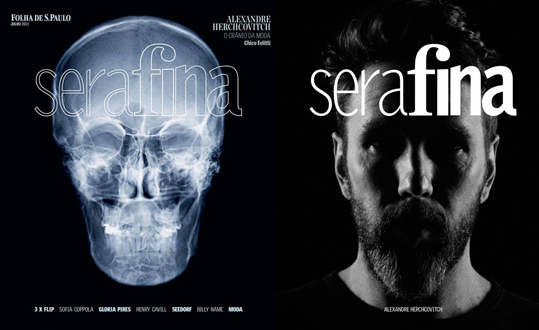
Serafina, July 2013

Serafina 2

I like what Brazilian magazine Serafina has done with this double-cover – a simple concept that works. You might spot that they also used the x-ray ‘version’ of the logo “Serafina” for the first cover.

New York, 29 July 2013

New York

We’ve seen quite a few very creative SEX covers. A Sex Issue is always a best seller, but how do you ‘illustrate’ that it’s a sex issue without offending too many people, or being banned/censored on-shelf? You do what New York magazine did, and use a beautiful artwork (Medusa II, 2012, by artist Leah Yerpe)! It not only looks like an orgy, but it’s also really beautiful to look at, and no one can’t say that it isn’t Art… You can view this and other artwords in this range by Leah Yerpe, right here.

Here is a preview of the content from the New York website:

Sex: Theory & Practice

Twentysomethings can never, ever leave their lovers; fetishism tries in vain to give Freud the slip; a klatch of pickup artists (plus The Rules’ authors) spar over what counts as relationship success. 
PLUS: lusty micro-memoirs of first times, sneaky cheating, and trysts everywhere from the office to a church.

The Advocate, August / September 2013

The Advocate

The August 2013 cover of The Advocate will definitely strike a cord with a few people! It’s a striking cover and explores being black and gay in America today, following the murder of Mark Carson, a 32-year-old black gay man from New York City,  in “gay-friendly Greenwich Village by homophobes wielding a 38-caliber revolver”… You can read the complete article here.

Tom Tom, Issue 13, 2013

Tom Tom

Don’t worry, I’ve also never heard of Tom Tom Magazine, but you might find it interesting to know that it’s “A Magazine about Female Drummers”… I know, right? There’s a magazine for everything! This digital magazine doesn’t produce the best covers necessarily, but I absolutely love (LOVE!) their logo design, and for that reason I thought it’s worth including it on my list. Have a read for free.

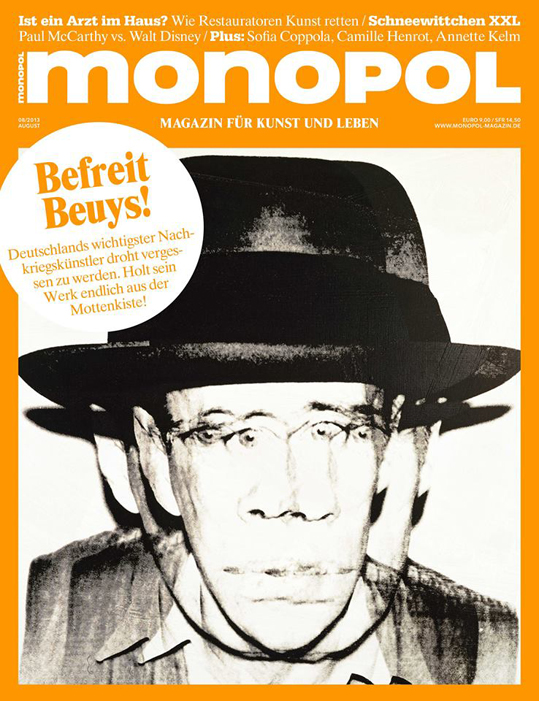
Monopol, August 2013

Monopol

Another one of those covers that gives me a headache, but no one can’t say that it won’t draw your attention… Now pass me a Grand-Pa…

– The (for now anonymous) blogger behind MediaSlut knows way too much for his own good about media in South Africa. Magazines in particular. His mission is to show when South African magazines might fail, but most importantly, succeed. If you’re looking for a library about South African magazines and news, your one-stop pitstop is MediaSlut. #MagazinesForTheWin

– Find a cover we should know about? Tweet us @marklives and @mediaslut
Sign up for our free newsletter!


Shelf Life: Do the right things

Louise Marsland’s (@Louise_Marsland) pick of new product, packaging and design launches.

A warm and fuzzy welcome for new employees at Prezence Digital; Joe Public smells the coffee; Baileys goes 3D in Africa; and Nike gets the boot.

Welcome to Prezence         

prezence welcome pack

Pack1                                             

New employees at Prezence Digital are certainly not put into a box or labelled as such. Instead, they are made to feel as welcome as possible with a specially designed ‘Welcome Pack’ at their desks on their first day in the office.

The Welcome Pack is a thoughtful, designer box containing an elegant wood-effect pen, notebook and cup flask set, as well as a cuddly microwaveable ‘huggy bear’ to keep you warm at your desk!

The pack also includes a memory stick with all you need to know about Prezence, from sick days to parking, perks, the Prezence cafe and people, roles and processes.

Prezence CEO, Prakash Patel, says the objective is to make new employees feel welcome and to “drive and entrench, in a creative way, our Primedia values from day one”.

“We want to make new employees feel that not only have they joined a company that cares, but a company that makes you feel at home and welcomed from the moment you are shown your desk. We all know that empty first day nervous feeling sitting at an empty desk. What better than to have a present waiting just for you!” Patel says it is their “very own random act of kindness”.

It is also about walking the talk, as they do talk about people as their greatest assets and want to ensure that they do feel that way. “For me it was about going that extra length as any new employees are our future,” Patel adds.

It’s a yawn with Joe Public

Douwe Egberts 3

‘Smile and the world smiles with you’; yawn and… you get a cup of coffee!

We have all experienced that bleary-eyed early morning at the airport catching an early flight we wish was a little later, yawning away, stumbling in search of the nearest coffee and a chocolate chip muffin (well, that’s me anyway).

In a meeting of creative excellence and technology, Joe Public have produced an activation for Douwe Egberts coffee that produces a piping hot coffee for tired travellers at ORT – all triggered by a yawn.

Innovative and specially developed face recognition software has been used in the activation to detect the exact moment of the yawn, dispensing a hot cup of coffee. Watch the video here on our Ad of the Week section.

Agency credits go to: art director Freda Raubenheimer; copywriter Jeanine Vermaak; agency producer Debbie Miller; producers London Models; chief creative officer Pepe Marais; software developer Neil Hoy; client service Nina Kohler; and media strategist Jodi Calvert.

Baileys goes 3D

Baileys

Baileys launched a new bottle into Nigeria and Kenya with women as the target audience.

Aegis Media was tasked with the launch and came up with a creative concept and execution plan within 72 hours. They are proud of the fact that three of their network brands worked as an integrated unit: Posterscope, Isobar and Carat.

As Bruce Burgess of Posterscope SA explains: “If we didn’t win their hearts by being spectacular, brave and true, we risked being ignored.  As women in Nigeria and Kenya become more independent, they are increasingly identifying themselves with aspirational and premium international brands to portray their personality and style. Their exposure to big, premium technology led experiences is somewhat limited, however, their engagement with various social platforms is significant.

The creative team took this insight and did the new Baileys bottle reveal with a larger-than-life 3D building video projection – taking the concept of a big brand billboard, but with a digital twist.

“A bespoke three minute animation was created by Isobar for each market, taking into account consumer preference and the unique shape of each iconic building. These animations were then projected onto the individual buildings using 3D projection technology at launch events in the heart of Lagos and Nairobi,” Burgess elaborated.

They wanted to get across the core brand values of Baileys: warmth, style and spirited elegance and the concept was for Baileys to ‘own’ the night, using 3D video projection technology never before used in Africa and local music artists. The sites chosen were the Muri Okunola Park, Victoria Island, Nigeria and the Teleposta Towers, Nairobi, Kenya.

“Launching our new bottle was an opportunity for us to do something that was bold, different and engaging,” said Richard Walker, Baileys marketing manager, Africa.

View the activations in Nigeria

and in Kenya.

Nike gets agile

Nike

These boots are made for playing soccer, speed on the field and sexy footballers.

The game is changing. Players want to be fast and sportswear companies like Nike have to take cognisance of the needs of the game.

Nike Football design director Denis Dekovic, began by looking at the attacking forces in today’s game. “The game is changing. It used to be that speed was the focus of the attacking side of the game, but now everybody has pace.”

The Nike Hypervenom is designed to help footballers be quick, agile and flexible in the game.

“Players want to be quicker, not just in a foot race, but quicker with the ball at their feet in small spaces. They want to create chances from nothing.”

The Hypervenom’s upper is created using the new ‘Nikeskin’ system – a soft, supple mesh bound with a thin polyurethane film and finished off with Nike All Conditions Control technology (ACC) to provide the same level of foot-to-ball control in both wet and dry conditions.

Nike worked with some of the world’s top podiatrists too.
Louise Marsland– Shelf Life by Louise Marsland is a weekly column on MarkLives. Tweet new product, packaging and design launches to @louise_marsland or email her at louise.marsland at gmail.com.

– Want to sponsor Shelf Life? Contact us here.

Louise Marsland has written about the FMCG, media, marketing and advertising industry for 18 years of her 25 year media career as a former Editor of magazines AdVantage, Marketing Mix and Progressive Retailing; as well as websites Bizcommunity.com and FMCGFiles. She currently edits the weekly Wednesday Media & Marketing Page for The New Age newspaper; and is the co-founder and Publishing Editor of SA’s newly launched industry trendwatching portal, TREND. at www.trendlives.info, in partnership with MarkLives.com.

– Industry profiles you’ll make time for. Sign up for our free newsletter!

Online CPD Courses Psychology Online CPD Courses Marketing analytics software Marketing analytics software for small business Business management software Business accounting software Gearbox repair company Makeup artist