The Ad Contrarian: 10 TV Spots We Don’t Need To See In 2014

by Bob Hoffman (@adcontrarian), San Francisco Bay Here at The Ad Contrarian World Headquarters we are trying to do everything possible to re-establish the idea that ads should be interesting.

Our thinking is that maybe if we make ads interesting we can get all the data monkeys to shut up for a few minutes. adcontra

In order to inspire creative people to do better, here are 10 TV spots that we’ve all seen a thousand times and we really don’t need to see again in 2014.

If you can resist the urge to re-make these spots this year you will make yourself a better creative person and keep us TV viewers from killing ourselves.

Thanks in advance.

10 TV Spots We Don’t Need To See In 2014

1. The two-white-guys-and-one-black-guy-go-to-a-bar spot.

2. The automotive sales event spot that makes fun of automotive sales event spots.

3. The soda spot where multi-ethnic people from all over the world jump around while a pop star sings.

4. The spot about how I have to plan now for my retirement.

5. The spot in which two famous athletes compete by doing something stupid.

6. The spot where a precocious 9-year-old helps out her clueless dad.

7. The girls-night-out spot.

8. The spot about how I can bank from anywhere using my cell phone.

9. The spot where the titles move around in all directions and give me a fucking headache.

10. The spot in which people of all sizes and colors repeat each other’s words and finish each other’s sentences.

Every one of these spots sucks. They suck now, and they sucked 30 years ago when they were invented.

Please help us all out by taking a vow not to make any of these spots again in 2014.

The Ad Contrarian is Bob Hoffman (@adcontrarian), the author of The Ad Contrarian and 101 Contrarian Ideas About Advertising.

This column has been republished from his blog The Ad Contrarian.

— MarkLives’ round-up of top ad and media industry news and opinion in your mailbox every three work days. Sign up here!

The Word: Peer-to-peer recommendations cut through the noise

by Mongezi Mtati (@Mongezi) We trust each other more than the brands that compete for our ever-dwindling attention spans. We also have more choice in terms of the media we consume, selecting what, when and how we view it, and as such are able to avoid brand messaging, unless we choose to specifically engage with our favourite brands via social media platforms.

If you are managing a brand, statistics point to word of mouth and authentic peer-to-peer recommendations as an effective solution, which means you need to trust your brand evangelist community and educate them enough to talk about you. At the very least, you should start building an inner circle.

Mongezi MtatiThe power of context

Content has always been king and, as a result, we created so much of it that the king is getting dethroned.

Word of mouth goes beyond the standard content that brands share with evangelists. It even goes as far as removing the brand’s input completely and instead builds more socially accepted context. The social web then accelerates these conversations that are assisting brands in their efforts to expand their reach through communities, as opposed to once-off campaigns.

A recent Trust in Advertising Report released by Nielsen shows that 84% of customers globally trust peer-to-peer brand and product recommendations, an increase of six% since the 2007 edition of the report. It also reveals that consumers in Africa are 85% more likely to take action, following product recommendations.

Don’t be confused

Having a social media strategy in place is not the same as generating positive word of mouth. While conversations and positive recommendations may occur in both instances, conversations taking place on brand-originated social media platforms are relatively protected as they are often moderated. Negative commentary is not generally acknowledged or, in many instances, allowed to appear.

Word of mouth cannot be controlled. It is an organic flow of conversation, in which brands are discussed, compared and commented upon openly and honestly (for the most part), without a marketer in sight.

It is for this simple reason that consumers are more likely to trust and act upon the recommendations of their peers.

The value of engagement

Recently, two complaints about a well-known financial services brand and a seafood restaurant chain caught my eye. In both instances, the brands were perceived to be in the wrong and, while I followed the conversations, I noticed that no one shared a positive view; no one stood up for the brands.

For the influencers who started the conversation, it is not likely that their brand experience would have been salvaged and their negative experiences filtered down to their followers.

I wonder how the conversation would have changed, had there been some positive feedback from a brand advocate to turn the conversation around.

This thought bring up online reputation management, which would have alerted both brands and enabled them to engage with these unhappy customers, possibly altering their experience to a more favourable one and potentially converting these existing customers into advocates.

These advocates would, in future, perhaps speak up for the brands when opinions are sought. They might even voluntarily and spontaneously generate positive word of mouth through their now-improved brand experience.

Influence not reliant upon a huge following

In both these cases mentioned above, the individuals had less than a thousand followers, so many would argue that the reach was not significant.

Potency and reach are not, however, reliant upon the number of followers, but rather upon the trust that they generate within their communities and how their communities carry their message across their own platforms.

In this instance, the influencers were both highly trusted by the communities that they lead and, in addition, were both followed by media outlets that have a likelihood of picking up the mentions and creating stories from them.

Statistics reveal that between 20 and 50% of purchasing decisions are made as a result of spontaneous conversation and personal recommendations. If “half of all advertising is wasted”, then it is highly likely that the other half is driven by peer-to-peer recommendations. Failure to engage and interact with current and potential evangelists could mean you lose out on the potential for extended reach and, as a result, lose out on sales.

Cut through the noise

Word of mouth is easier to measure online than offline. According to Keller Fay, however, it is only estimated to be about 10% of the overall conversation. Brands that have learned to engage and interact with evangelists, brands that embrace the consumer-generated messaging experience, estimate that only 8% of the conversation started is negative.

A good example of community-driven word of mouth can be found in the Critical Mass bike ride, a global night ride which takes place on the last Friday of the month. The popularity of this event globally has spread by word of mouth; there is neither official leadership nor membership; and rides have occurred in more than 325 cities around the world — since it started in San Francisco in 1992.

Here at home it journeys through the streets of Johannesburg 6-10pm, is open to all, and averages around 1100 cyclists. It is word of mouth that has helped to grow this entertaining event within a focused niche community.

Customers and community members are constantly sharing their experiences and attention spans rarely favour the highest bidder. It is their conversations that are cutting through the noise of traditional brand communication. Isn’t it time brands listened and began building trust, instead of buying space in front of eyeballs?

Mongezi Mtati (@Mongezi) is the founding MD of WordStart (www.wordstart.co.za). Apart from being a kiteboarding and sandboarding adventurer, Mongezi connects companies and brands with measurable word-of-mouth. He contributes the new “The Word” column on word-of-mouth marketing and social media strategy to MarkLives.

— MarkLives’ round-up of top ad and media industry news and opinion in your mailbox every three work days. Sign up here!

Shelf Life: Incredible Connection pilots high-fashion stores

Louise Marsland (@Louise_Marsland)’s pick of new product, packaging and design launches this week:

  • Incredible Connection rebrands with pilot high-fashion stores and a new retail philosophy;
  • Sodastream bubbles on about its new brand ambassador; and
  • Magnum uses tweets as currency to sweeten brand awareness.

Incredible new stores

Incredible Connection: new retail store designIncredible Connection: new retail store design
The fashion retail experience is the inspiration for Design Partnership’s rebrand of Incredible Connection stores in order to create a retail-rich environment for customers to get to grips with technology and products across a wide range of categories.

“Technology is touching so many more consumers than previously. As Incredible Connection’s customer profile has shifted to become more inclusive, so the male-dominated and geeky environment of the ’90s has had to give way to a more retail-driven space.

“Technology is also crossing over into so many non-traditional technology areas that brands like Incredible Connection will soon find themselves competing with retailers it did not expect to. To this end, the new design puts the customer journey closer to that of a fashion retailer than its previous grocery/hardware store look and feel,” explains Design Partnership creative director, Yatish Narsi.

The brand was originally conceived in the ’90s, with the retail experience based on the ‘gateway’ and ‘best buy’ models. At the time, laptops, PCs and all their add-ons and peripherals were the mainstay of the technology retail experience. While laptops and tablets remain key contributors to the brand’s business — and will continue to do so as these categories mature in South Africa — the growing global post-PC era means there are hundreds of new technology opportunities to take advantage of, from intelligent devices of every description to fashionable, technology-enabled wearables.

Transition

“In many ways the new Incredible Connection design has been set up as a transition between these retail opportunities. Services and solutions are key bridges that help manage this transition, and a real innovation with the new stores is the consolidation of all the previously scattered service offerings like credit, connection, sales support and Techxperts into one central feature,” Narsi adds.

This represents the heart of Incredible Connection’s new unique value proposition (UVP)… customers with any questions or queries now only need to find one location to get what they need. The other categories have been rationalised and segmented in a way that makes sense for the consumer and are located around this central hub. The new product categories that continue to emerge in the face of this rapid divergence will systematically be added to the hub.

The new stores boast an entire product-display philosophy that governs this aspect of the experience. They also feature a ‘grocery’ area: a headquarters for all the consumables and peripherals that are becoming a new reality with all the new gadgets emerging, and high bay gondolas, which free up floor space and increase density for the creation of new retail focal points.

One such area is the smart centre to display smart TVs bundled with other complementary products, such as home WiFi and router solutions, games consoles, hard drives, etc. The addition of Techxpert support and connectivity means that customers can shop for complete smart solutions, all in one place.

Three pilot test stores have been set up in Secunda (Mpumalanga), Rosebank and Cradlestone (Gauteng).

Scarlett Johansson for SodaStream

Scarlett Johansson, global brand ambassador for Sodastream

The revitalised Sodastream brand, which is cool again, has fired one of the first salvos for Superbowl Sunday by announcing that actress Scarlett Johansson is its first global brand ambassador and will be appearing in the brand’s Superbowl ad on 2 February 2014.

The Superbowl ad premiere kicks off the multi-year partnership, which sees Johansson appearing in brand advertising as the face of Sodastream.

“We are thrilled to welcome the remarkably talented Scarlett Johansson into the SodaStream family,” states Francois Dippenaar, MD of SodaStream South Africa. “Scarlett is a long-time user and genuine fan of our products, a role model for healthy body image and a champion for environmental responsibility, making her the perfect choice for our global ambassador. She truly embodies our brand values.”

Tweet currency

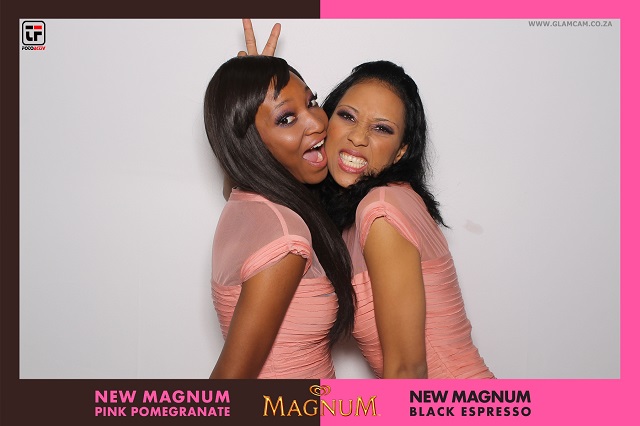
Magnum Glamcam

After the launch of Magnum Pink Pomegranate and Magnum Black Espresso last year with an integrated campaign featuring TV, radio, digital campaigns and mall awareness, a Twitter auction took place, using tweets as actual currency. Primedia Unlimited’s TLC Glamcam was part of the below-the-line campaign to generate awareness around the auction.

The Twitter event and the physical auction took place at Sandton City, where the live Twitter feed was broadcast to consumers. Consumers following @MagnumSA had to use dedicated hashtags to tweet the items up for grabs that they wanted to win. Those who took part had to tweet as many times as possible in 15 minutes.

“Glamcam captured photos of the auction and ensured brand activation through sharing Magnum moments, whilst its set created a fun vibe at the events with spectacular backdrops and awesome photos,” says Primedia Unlimited’s Group MD, Brett Tucker.

The campaign saw a significant uptake of the brand and product, as well as increased social media activity on Facebook and Twitter.

Louise MarslandShelf Life by Louise Marsland is a weekly column on MarkLives. Tweet new product, packaging and design launches to @louise_marsland or email her at louise.marsland at gmail.com. Want to sponsor Shelf Life? Contact us here.

Louise has written about the FMCG, media, marketing and advertising industry for 19 of her more-than-25-year career as a former editor of magazines AdVantage, Marketing Mix and Progressive Retailing, as well as websites Bizcommunity.com and FMCGFiles. She currently edits the weekly Wednesday Media & Marketing Page for The New Age newspaper and is the publishing editor of industry trendwatching portal, TRENDAFRiCA, for consumer insight, research and trends in Africa.

— MarkLives’ round-up of top ad and media industry news and opinion in your mailbox every three work days. Sign up here!

Media Future: Tapastic founder on the the resurgence of webcomics

by Arthur Goldstuck (@art2gee) Chang Kim, founder of Tapastic, described as the “YouTube of Comics”, shares the secrets of his inspiration.

How did your love for comics begin?

When I was growing up I read a lot of “education comics”. Many of the important things in life that I still remember to this day Chang Kim Founder&CEO Tapasticcame from comics. That’s how my love for comics began; the love which was obviously rekindled recently by the resurgence of webcomics.

Which are your favourite classic comic books?

Some of my favorite “print comics” are actually what can largely be categorised as “newspaper comics” — think Calvin and Hobbes. I also still love quotable comics like The New Yorker’s daily cartoon. Sunday newspapers used to feature cartoons from some of the most amazing comic creators — I wonder how many of them are successfully adapting to the fundamental shift to digital.

Are there special aspects of Korean comics culture that motivated you?

In Korea webtoons, webcomics, are read by the vast majority of the population. Because of growing up with Korean webcomics I knew there were better ways to bring digital comics to everyone than how they are currently found and read in the US. It’s in part to that cultural experience and my involvement with Blogger that the idea for Tapastic, a YouTube-style service built for comics, was conceived.

In what way do you see webcomics as the evolution of graphic novels? Or is it merely the next stage of traditional comic books?

Webcomics are both. Graphic novels are an evolution of classic comics which are an evolution of newspaper comics. However, all there exist side by side so the evolution of webcomics is influenced by how each creator connects to the comic medium. You are what you read. Digital platform comics will pull influence from graphic novels, classic comics, newspaper comics and webcomics.

What was the inspiration for Tapastic?

My personal experience as a webcomic reader. I enjoy the content, but had to go through so much work to be an avid reader, constantly re-bookmarking my place and having to remember to return on certain days among many other difficulties. As I continued to look into the state of webcomics in the US I realised that there were a great deal of inefficiencies for both the readers and the publishers and want to change that.

How do you think it is achieving your vision?

Step by step we’re building a platform and a community for comics that brings us one foot closer to the next step. We’ve become home to over a thousand series and hundreds of thousands of regular readers in about a year. We have higher traffic than DC Comics and every other independent comic community and publishing platform. Readers and creator/publishers alike are happy with the direction we’re moving in and every day we gain more momentum.

How have the artists benefited from their involvement in Tapastic?

Because Tapastic is inherently a collective the first benefit is their ability to connect and collaborate with other artists on the platform behind the scene. We know there have been several cases where creators became “pen pals” chatting on Facebook and sharing their experiences on Tapastic. Many creators have also benefitted financially by migrating their readers and continuing to build up their audience to become eligible for and earn advertising revenue and individualised monthly minimum guarantee contracts based on their continued performance. It’s always nice to have a little security.

Are there any notable success stories yet of Tapastic launching artists into the mainstream?

Not yet into the mainstream if you define that by getting a job with existing print publishers, but we’ve brought many underdogs into the forefront like Devin Bosco Le of Randomphilia.

Where do you see Tapastic in five years from now?

I can’t give away everything but I do see Tapastic at the forefront of independent digital publishing. I see it as something that becomes part of our daily conversations discussing our shared experiences reading the visual stories that creators provide for us from and to a worldwide audience.

Where do you see the comics genre a decade from now?

I see the medium of comics more integrated with other pop culture, not just the storylines. More and more homes will have tablets and smartphones which teens and young adults will use to consume the majority of their entertainment including comics. I also see comics becoming more and more integrated with technology with a tasteful amount of interactive elements. The kids that grow up with them will most likely be unfamiliar with monthly paper comics the same way teens today have no idea what floppy disks are.

What are your favourite gadgets, and why?

The new Samsung Galaxy Note 3. The new Note series features this technology called “S-Pen”, which at first seems nothing more than a dumb plastic stylus pen, but is actually jam-packed with technologies that effectively turn your mobile device into a comic creation tool. The original technology is actually licensed from Wacom, the company behind Bamboo tablets which are the de facto creation device for many (if not most) of digital comic creators.

Arthur Goldstuck heads up World Wide Worx (www.worldwideworx.com) and is editor-in-chief of Gadget. He is a consulting editor to MarkLives and our media tech columnist. Follow him on Twitter on @art2gee.

This article has been republished from Gadget.

— MarkLives’ round-up of top ad and media industry news and opinion in your mailbox every three work days. Sign up here!

Ad of the Week: Richelieu’s rollicking round up

by Oresti Patricios (@orestaki) Just when you thought you’d seen all the “Best of 2013” lists and articles, here comes Richelieu with a loony parody of Katy Perry’s “Roar” that takes more than a few pot shots at the events of the past year.

The campaign was conceived and created by South African digital agency Liquorice, which enlisted the talents of infamous comedy duo ‘Derick Watts and the Sunday Blues’.

Miles Murphy, Liquorice’s managing partner, explains: “We’re hugely proud of pairing up two great South African traditions: sipping a Richelieu and having a laugh. It’s a look back at everything that made this year awesome. And weird. But mainly awesome.”

Liquorice ad for Richelieu: “Richelieu Round Up 2013 (Katy Perry Roar Parody)”

The four-minute video shows the duo doing a ‘live’ presentation of the song for what appears to be the Richelieu board — or perhaps it’s the marketing team. Actually, it’s in all likelihood a team of actors.

Regardless, they’re all drinking brandy, surrounded by French flags, and looking quite bored by the prospect of being sung to by two young white men with a boom box.

An outrageous, over-the-top performance

What follows is an outrageous, over-the-top performance, with the duo mischievously changing into the various characters they sing about. The pop-culture celebrities who get the thick edge of the wedge from the comedians include Lance Armstrong and Sachin Tendulkar, as well as Oprah, Justin Bieber and (of course) Miley Cyrus.

A rap break in the middle portrays Kanye West getting the idea for his child’s name from a GPS instructing him to head “north west”.

Richelieu Round Up: Royal baby parodyThe royal baby gets a mention, too, with the duo wondering if his hair will be ginger, like his uncle Harry. “The last thing that we need,” the lyrics go, “Simply Red sitting on the throne.”

Naturally, the Richelieu board/marketing team greets the performance with a shocked and stony silence, followed by: “There’s no ways we are going for this.”

It’s all quite silly and irreverent, and a great, light-hearted start to the year. It indicates a willingness upon the part of Richelieu to play a little with its image and aim for a new, younger target market.

Brave salvo

It’s a brave salvo, because good quality brandy (or cognac) is traditionally sold to a more mature drinker, and this could be perceived as an attempt to be “hip and happening”. But I think the campaign succeeds, simply because of the irreverent and YouTube-ish way in which it approaches the topic.

Brandy is not a big seller worldwide, although it has gained some popularity in China. In SA, it has something of a poor image to overcome. Cheaper brands are meant only to be consumed with mixers. The joke goes that it belongs to the ‘1-2-3 culture’ — 1-litre brandy, 2-litre Coke, and a 3-litre Ford.

Nonetheless, sales are improving due to the rise in ‘mixology’ culture, where cola is not the only option. Despite this, sales figures are still inferior to whiskey and other spirits, so there is definitely room for improvement. The younger market, with its greater disposable income, would thus be a slam-dunk, as long as the marketers can overcome the image problem.

Richelieu Round Up: Miley Cyrus parodyLoosening up, shedding the tie and doing Miley Cyrus twerks might just be the answer for this brand, if it’s to grow its market and take on the competition.

Regional humour

If there’s any complaint that may be laid against the ad, it might be that the humour is very regional. The whole production has a very “Cape Town” vibe about it. It’s likely that if Richelieu wants to attract the younger crowd in Jozi, it’d have to go a very different route — culturally, Cape Town and Jozi are becoming ‘like two different countries’.

While Richelieu needs to be commended for supporting local talent and being brave with the whole YouTube attempt, it would do well to understand this cultural chasm. This is something that all Cape-based brands will need to understand. The experience of life in Cape Town and Jozi are worlds apart — so, too, are the people who populate the disparate cities.

That said, this shouldn’t deter adventurous marketers from taking risks to attract new audiences, and hats off to Richelieu for doing exactly that.

Oresti Patricios

Ad of the Week, published on MarkLives every Wednesday, is penned by Oresti Patricios (@orestaki), the CEO of Ornico, a Brand Intelligence® firm that focuses on media, reputation and brand research.


If you are involved in making advertising that is smart, funny and/or engaging,
please let Oresti know about it at info@ornicogroup.co.za.


— MarkLives’ round-up of top ad and media industry news and opinion in your mailbox every three work days. Sign up here!

Prezence loses CEO and deputy

by Herman Manson (@marklives) Prezence CEO Prakash Patel and Deputy MD George Reed have both resigned from the agency. Patel leaves at the end of February and Reed at the end of January. Prezence parent company Primedia has appointed Manny Texeira as acting CEO effective 1 March, while Chris Vermeulen has been appointed Chief Operating Officer for the company effective immediately.

Prakash Patel
Prakash Patel

Patel has been with the agency for just over two years and will pursue new ventures in product development and consulting when he leaves. Reed, who has been with the agency for eleven years, is moving to client side.

The agency, which has carved itself a niche as a leader in mobile app development, employs just over 40 people. Key clients include Ster-Kinekor, BidorBuy and Diner’s Club.

Patel says his career highlights at the business includes developing it from a development house to agency with a great, award-winning, creative team. Patel says the business is profitable, streamlined and well positioned for the future.

Texeira is a former COO of Ster Kinekor and has been with Primedia since 2007. Vermeulen was Executive Creative Director at Primedia’s Flying Circus business since 2012.

— MarkLives’ round-up of top ad and media industry news and opinion in your mailbox every three work days. Sign up here!

Visual Sip: Peter Lord on Morph 2.0

by Tim Robinson (@burningpoint) As a child, you’re likely to remember afternoons in front of the TV watching the antics of a transformational clay character, Morph, and his sidekick gang. The simplicity of story and uniqueness of technique made Morph a household hit in South Africa and the UK.

Recently, Visual Sip spoke to Peter Lord, the creator of Morph and founding partner of Aardman Animation (which brought us Wallace and Gromit, Shaun The Sheep, Chicken Run, The Pirates and more), about the new Morph series to be released online in 2014, what it means to update a 37-year-old icon for modern times (will Morph have an Instagram account?) and what role crowd-sourcing ideas will play in the new series.
While Visual Sip aims to make all interviews 3-5 minutes, sometimes one just has to sit back for a little longer (in this case, 17 minutes) and listen to 40 years of TV and Film wisdom.
Audio disclaimer: this is a Skype interview.

Tim Robinson


— Tim Robinson has spent 14 years in the marketing, design, digital and TV industry, and currently works with brands wanting to produce content in the convergent media space of digital and video. Robinson contributes the new monthly “Visual Sip” column to MarkLives.com, in which he talks to industry leaders about their stories, technologies and trends in the industry — a coffee-break-length conversation about the emerging industry of broadcast on the web and video strategy.

Millennial Ad-Grad: Lessons from digital activists

by Faheem Chaudhry (@FaheemChaudhry) The new world of marketing, the world that we as the next generation are going to operate in, is one that will be defined by conversation and dialogue — about brands and business, as well as social and economic issues at large. As the next generation, communities built around shared interests and shared values will be at the heart of the way we plan brands.

Faheem ChaudhryDrive real change

Shared interests and values are becoming a core characteristic of the young consumer market.

In recent years, the power of online communities has never been more prevalent than in their use of social and digital activism to drive real change in the physical world. Digital activism is now part of youth and popular culture.

As marketers, understanding the fundamental drivers of human behaviour lies at the very core of our discipline. Being fully in tune with the mind-set of young people will ultimately determine our ability to craft and create communication that is the most resonant.

Below are a few examples of powerful digital activism that I believe hold invaluable lessons for marketers learning and building their careers today.

1.       From online to real world: The Arab spring

The first time the power of an online community got my attention was when I was travelling through Cairo in 2011. Walking through Tahrir Square, I was little aware of the fact that, a day later, the seemingly quaint, touristy heart of Cairo would be turned into the focal point of the country’s revolution.

Needless to say, 24 hours later I found myself wheeling my suitcase through a crowd half-a-million people strong, waving flags and chanting sentiments of disapproval for the Hosni Mubarak regime.

A Facebook page called ‘‘We are all Khaled Said” was created after the young Egyptian businessman died at the hands of local police. (There is some controversy whether this page was actually created/administrated by 30-year-old Google executive Wael Ghonim, who’d been angered by the continued social oppression of young Egyptians.)

The page gathered some 500 000 members, simply by tapping into a widespread sentiment of government disapproval at the time. Social media became mainstream, as young people fought against the state-controlled traditional media channels.

No evidence is greater in showing the ability of digital activism to be stronger than the power shown by the Egyptian people in 2011. As marketers, the core lesson here is the power of an online community to drive change in the real world.

When people with shared values congregate around a common cause online, the effect they can have on the real world is of a scale and speed like never before. Understanding how to mobilise a key audience online and drive them into real, tangible action in the real world is a powerful skill for anyone in the persuasion game to master.

2.       Tapping into global youth psyche: Russell Brand

On the topic of revolution, Russell Brand may have started one a few weeks back after his interview with the BBC’s Andrew Paxman caught the online world’s attention. Brand is fast becoming known for being outspoken on a number of social and economic issues affecting the working class in particular.

The destruction of the environment, income disparity and a small group of politicians working for large corporations were Brand’s biggest complaints, and the reasons he said he refuses to vote. While this was met with both praise and criticism, there’s an interesting lesson here for millennial marketers.

We’re operating in a communication world where thought leadership and opinion around topics of global importance can be spread within a matter of minutes. The implications and effects of this on youth culture and behaviour can’t be overlooked.

Brand tapped into the current feeling of global youth unrest and large scale dissatisfaction. And they watched listened, nodded and shared Brand’s sentiment.

As the next generation of marketers, having our fingers on the digital activism pulse at every moment is critical to us fully understanding the psyche of consumers out there — they can be pulled and persuaded to act within minutes.

3.       Potent relevance to market: Anonymous

Perhaps the most successful consistent use of digital activism belongs to the worldwide group known as Anonymous. From its role in Occupy Wall Street to consistently challenging the Church of Scientology, Anonymous is an online group of techies who call themselves ‘‘Hacktivists”.

Rejecting all organisations that it deems to be corrupt and against the best interests of the people, Anonymous successfully rallies hundreds of thousands of people worldwide in an instant, driving them towards protests and disapproval for a wide range of causes.

As marketers, there is a core lesson we can learn from Anonymous. It understands issues that are of potent relevance to people out there. It taps into passion points, of dissatisfaction, and leverage the human truths that underpin them to drive people to mass action.

As marketers, understanding our audiences to this extent, and then giving them the tools to act in the real world, is a powerful way to turn a community of people into a community of loyal advocates. In a world of marketing where conversations are king, knowing how to engage and empower advocates will be a firm competitive advantage.

From message dictation to message discovery

As the communication industry moves on a journey from message dictation to message discovery, there is much marketers may learn from other disciplines of persuasion. Perhaps the most powerful persuasion community in the modern world are those of digital activists, as massive communities are established, engaged and empowered to drive action in an instant.

As the next generation of ad-grads, we’ll need to be constantly plugged into this, analysing, understanding and leveraging the mood of the moment.


Faheem Chaudry (@FaheemChaudhry) is a passionate marketer at M&C Saatchi Abel. With a focus on the future, his aim is to better entrench the importance of creative thinking to solving critical business problems. Faheem contributes the monthly “Millennial Ad-grad” column to MarkLives.

— MarkLives’ round-up of top ad and media industry news and opinion in your mailbox every three work days. Sign up here!

Agency Leaders: 2013’s most-admired ad agency in Cape Town

by Herman Manson (@marklives) It’s always good to know what the boss thinks. Having polled Cape Town’s agency leaders, we can now tell what those leading the city’s ad agencies think of their competitors, whom they see as effective managers and great creatives, and where they believe their future competition is likely to come from.

How it works

Cape Town’s agency leaders were invited to nominate their most-admired agency in Cape Town, the most-admired creative director in Cape Town and the most-admired agency boss in Cape Town. We also asked them which agency did the best at digital integration and which agency they saw as the one to watch in the future. Johannesburg agencies received a similar form for their city.

Executives in both cities received a request to similarly vote for those they most admire on the national stage (ignoring where an agency is headquartered), and Durban execs were invited to participate in the national poll only.

Nobody could nominate his or her own agency or staff. All the nominations were then tallied up to see whom adland’s highest decision-makers most admire*.

We kick off our poll results in Cape Town and will release results for Johannesburg on 20 January 2014 and for our national poll, which reveals South Africa’s most-admired agency leaders, on 27 January. You may find our 2012 results here.

Most-admired agency

Ogilvy
Most admired: Ogilvy Cape Town.
Runner-up: FoxP2

Cape Town’s ad execs picked Ogilvy Cape Town as the ad agency they most admire. The agency has seen two years of awards success: in 2012, it was its ‘Be the coach’ campaign for Carling Black Label that gave the agency its integrated creative credentials; this year, it’s been Volkswagen’s ‘Street Quest’ campaign and ‘Send your FB profile to CT’ campaign for Cape Town which garnered acclaim.

Ogilvy Cape Town picked up the following pieces of integrated pieces of business over the past year: Flying Fish Flavoured Beer — SAB, WeChat — Naspers, News24, Careers24, RubyBox — Media24, DirectAxis and PSI (USAID-funded condom launch for Salama condoms into Tanzania).

Gavin Levinsohn, who lead the agency for most of the past five years, stepped down in 2013 to emigrate to Australia where he now leads branding and design agency Moon Communications. Luca Gallarelli stepped into Levinsohn’s shoes on 1 Nov 2013.

Runner-up FoxP2 caused waves when it opened shop in Johannesburg in early 2012 under the creative leadership of Grant Jacobsen, landing Liberty as a founding client. FoxP2 group MD Charl Thom manages both the Cape Town and Joburg agencies at the moment.

The agency group won an impressive roster of new clients including Liberty, Stanlib, Cipla Pharmaceuticals, Diageo (Africa): Bell Lager, Harp Lager, Gilbey’s, Master’s Choice and Dove from Unilever.

Ogilvy Cape Town attracted 54.5% of the vote, FoxP2 attracted 27.3% of the vote and King James attracted 18.2% of the vote.

Most-admired creative director

Chris Gotz
Most admired: Chris Gotz,
CCO of Ogilvy & Mather South Africa.
Joint runners-up: Justin Gomes, ECD at FoxP2, and Graham Lang, CCO at Y&R South Africa.

The creative director at a Cape Town agency who was most admired by the city’s agency chiefs was Chris Gotz, chief creative officer of Ogilvy & Mather South Africa.

Gotz is behind some of the most-acclaimed advertising work produced in the country over the past several years, including Carling Black Label’s ‘Be the coach’, VW’s ‘Street Quest’ and Cape Town’s ‘Send your FB profile to CT’. Gotz, who also chairs the Creative Circle, has had a rocky relationship with media covering the industry, including MarkLives, but this has been outweighed by his integrated thinking on big campaigns.

Justin Gomes (executive creative director at FoxP2) and Graham Lang (chief creative officer Y&R South Africa) were joint runners-up.

Under the creative guidance of Gomes, FoxP2 has always punched above its size and continues to do so. The agency won a Loerie Grand Prix for its Frank.net radio campaign, ‘Death doesn’t have to try very hard’.

Under Lang, Y&R South Africa is enjoying a creative revival. Work on Land Rover, Playboy and SKYY have all been well-received by the industry.

Gotz pulled 60% of the vote, emerging as the clear winner, with Gomes and Lang polling 20% each.

Most-admired agency boss

Gavin Levinsohn
Most admired: Gavin Levinsohn, ex-MD,
Ogilvy Cape Town.
Runner-up: James Barty, co-founder and chief executive,
King James Group.

Levinsohn spent four years and 10 months leading Ogilvy & Mather Cape Town as managing director and, under his tenure, the agency was lauded for its integrated thinking. Levinsohn recently left the country to join the Moon Communications Group in Australia as its CEO.

Comments Adeshia Singh, MD at Singh & Sons (Levinsohn was a co-founder of the agency before he joined Ogilvy): “Gavin is a great ad guy who happens to be great at business.  He has a real love and respect for the end product , whether it’s  great advertising, design or digital work.  And that love of great comms is essentially what drives the ways he works.  I think that’s what he brought to Ogilvy.  A real heart for great  work.”

James Barty is the co-founder and chief executive of the King James Group and runner-up in our poll. King James ventured into the Johannesburg market in 2013 with the launch of King James II, under the leadership of Rob McLennan and Graeme Jenner. The Joburg agency’s staff complement already stands at 15 and continues to grow.

Levinsohn drew 55% of the nominations, followed by Barty (27%) and Pete Case (18%), CEO and founder of digital agency Gloo (the agency recently moved its headquarters to Johannesburg, but Case remains active in the Cape Town office).

Most-integrated

Ogilvy
Most integrated: Ogilvy Cape Town.

The agency pulled 92% of the nominations cast in this category. The only other agency to receive nominations was Machine.

One to watch

Machine Agency
One to watch: Machine.
Runner-up: MetropolitanRepublic Cape Town

Lead by Adrian Hewlett, Machine continues its evolution from its digital and BTL roots into an integrated agency. Recent account wins include the Miller Genuine Draft BTL account, the Nando’s digital account and integrated project work for Adidas.

Machine won more than 70% of the vote. Runner-up MetropolitanRepublic Cape Town took the rest.

*Only agencies or agency staff who received more than a single nomination were included when we worked out voting percentages.

— MarkLives’ round-up of top ad and media industry news and opinion in your mailbox every three work days. Sign up here!

Smart Africa TV: Social media and change in Angola

by Russell Southwood (@BalancingActAfr) In this interview, Miguel Gomes, editor of Novo Jornal, talks about:

  • the number of Internet users in Angola;
  • the rise of smartphone use;
  • the use of social media to campaign for access to water and electricity and for jobs for young people; and
  • a new website that provides reviews of restaurants and places to go out to in Luanda.

Smart MonkeyRussell Southwood is the founder of Balancing Act and the web TV channel Smart Monkey TV, and has been an analyst in telecoms, internet and broadcast in Africa for the last 14 years. Smart Monkey TV aims to capture the energy at the crossroads between African culture and technology. MarkLives is syndicating content from Smart Monkey TV on a weekly basis for the column “Smart Africa TV”.

Online CPD Courses Psychology Online CPD Courses Marketing analytics software Marketing analytics software for small business Business management software Business accounting software Gearbox repair company Makeup artist