by Herman Manson (@marklives) The Vodacom loss accounts for about 40% of Ireland/Davenport’s revenue, MD Sue Napier confirms, and will result in the agency contracting in size.
It’s too soon to confirm the number of staff affected at this stage. Napier says the agency will do everything it can to help affected staffers and to mitigate disruption at the agency — it has already reached out to Ogilvy & Mather South Africa, which will be taking over the account, on the possible placement of staff there.
According to Napier, delivering the news of the account loss was a devastating experience but that it’s the nature of the advertising business: agencies grow and contract as they win or lose business. Ireland/Davenport won the Vodacom business from Draftfcb South Africa (now FCB SA) in 2013.
Ireland/Davenport will be handing over the account to Ogilvy over the course of the next three months as it works off its notice period.
The announcement was unexpected and driven by Vodacom’s global head-office, say Napier, as it rationalises and consolidate costs. Ogilvy already handles Vodacom’s digital and retail portfolios.
Napier says the agency will now focus on rebuilding but does so off a secure foundation and with a decade of experience. She sees this as a challenging time but one that allows for the evolution of the business. She remains optimistic about its prospects, saying the agency has earned its reputation in the market.
The agency learned a lot through its work on the Vodacom business, says Napier, and wishes both the client and its new agency well for the future.
Ireland/Davenport continues to serve a range of clients, including BMW South Africa (which is currently in a mandatory pitch), Avis, Budget Car Rental, Plascon, Discovery and Fox International, among others.
— MarkLives’ round-up of top ad and media industry news and opinion in your mailbox every three work days. Sign up here!
Cheryl Hunter (shelflife at marklives.com)’s weekly pick of recent product, packaging, design and food launches:
Weylandts launches Tastemakers
Brandhouse mixes it up
Source Africa opens in Cape Town
StreetSmart hits the R10m mark
Talking taste
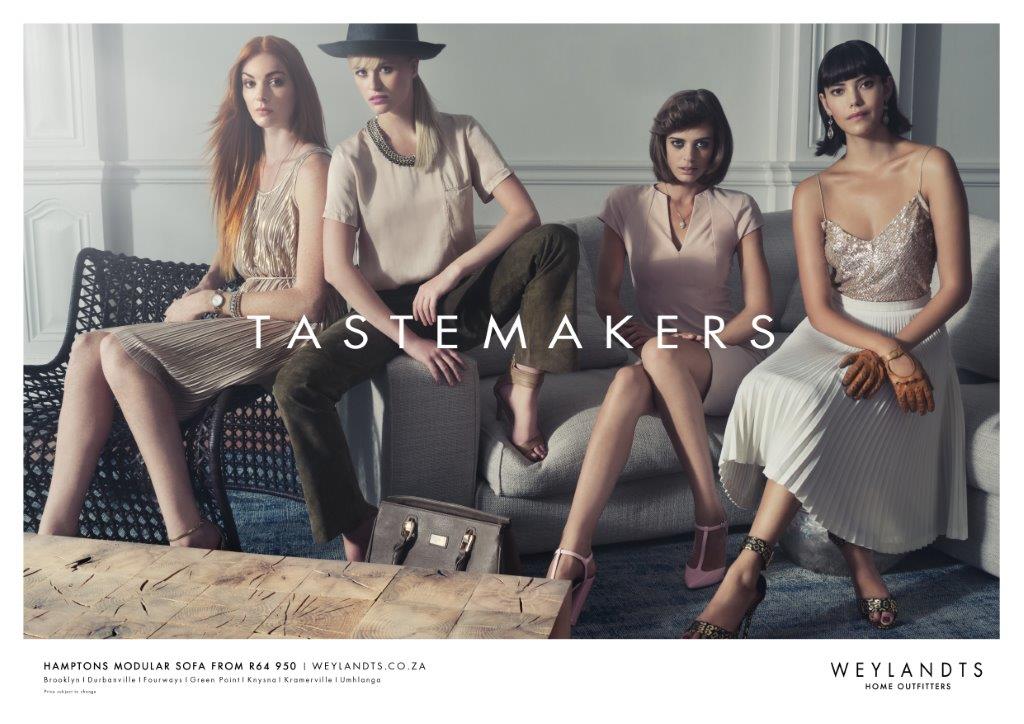
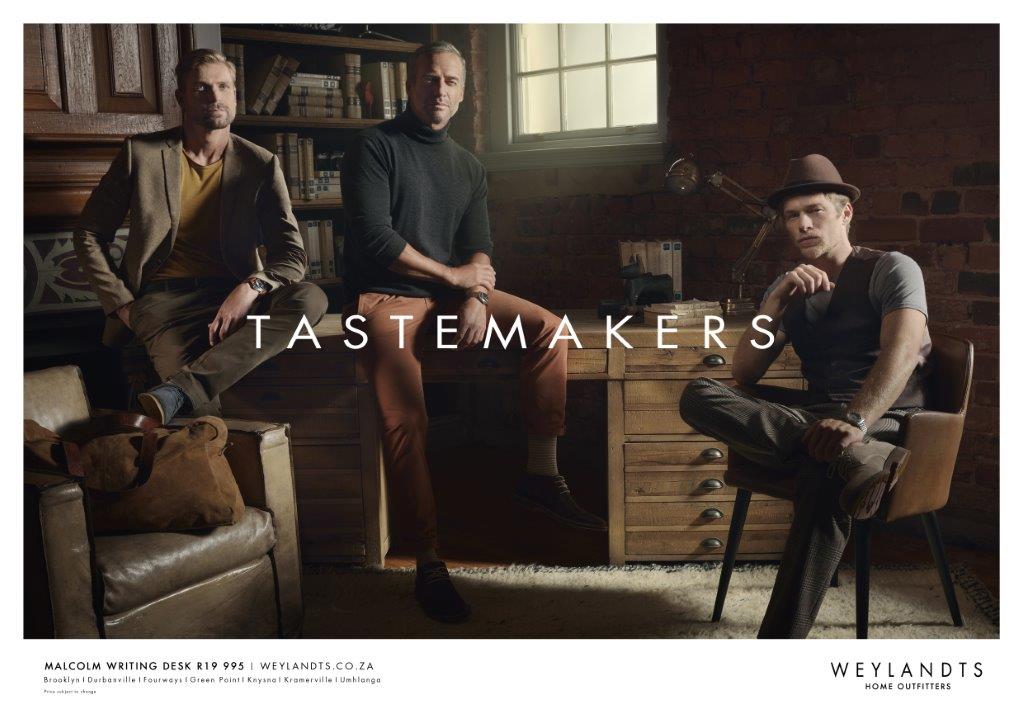
Furniture and décor retailer Weylandts has launched “Tastemakers”, the first campaign created by its new in-house advertising team — a solution it says has provided inspiring, fresh ideas.
Weylandts marketing director and former MD of TBWA\Cape Town, Tim Culley, told Marklives that the team is located in the Weylandts head office: “We work amongst the product, employees and brand. We know more about it than we have ever come close to knowing about any of our clients when we were servicing them as an external service provider. The insights this generates to kick-start the creative ideas are priceless.”
According to Culley, the simple economics of having a creative team focusing eight hours a day on one brand, rather than sharing resources and creative thinking among four, eight or 20 clients, has established a significant cost saving for the client.
The concept of Tastemakers was born from the insight that great taste is something that can set any home apart from many others, and is something that cannot be out-spent: “Sure, everyone likes to have money to spend on their home but, if you have great taste, you can make any home look amazing, no matter what the budget,” he says.
The team is headed by former creative director of TBWA\Hunt\Lascaris in Johannesburg, Renier Zandberg, who says the concept cements the brand’s position atop the furniture and décor list for trendsetters, designers and architects to visit to make any space look amazing. It speaks to the brand’s ability to create looks across its five Lifestyles by curating items from all over the world.
Culley adds, “The in-house agency has such a strong vested interest in the effectiveness of the work. We directly benefit if the work does well and sales increase. Gone are the days of waving the work goodbye the minute it is in the can or sent to media.”
The #weylandts campaign includes TV, outdoor, radio, press and print.
Not so neat
Brandhouse has launched a new website to encourage the young and trendy to experiment with whisky flavours and banish pre-conceived purist notions around only drinking whisky neat.
According to Brandhouse, stylish young consumers are becoming discerning whisky drinkers and are happy to mix it up, but flavours need to be chosen carefully. It’s really about experimenting.
Whisky connoisseur, Marsh Middleton, says while it’s true that mixing a whisky with something such as ginger ale or lemonade will mask some of the flavours, the younger and more vibrant whiskies tend to hold their own and enhance a drink when mixed:
“Only if a whisky is aged to soft perfection would I say you can choose to drink your whisky neat. For most whiskies, a little water releases energy and activates an aroma explosion. Maybe a bit of an overstatement, but indeed more aromas are identifiable when you add a drop of water or two.
“Don’t be too prescriptive. Try it a couple of ways and experience the flavour variations for yourself.”
New-age connoisseurs may visit flavoursofwhisky.co.za to discover whether they like the flavours of honey and chocolate or “RICH”, which means they’d probably like “Ring the Bells”, a fusion of Bells Extra Special and tonic water. Those with a fruity palate would be categorised as “FRESH” and might savour “J Lo”, a mix of J&B Rare and Lemonade.
Smoky and woody flavours offer a “Johnnie Classic” or “BOLD” profile (Johnnie Walker Black Label and water), while the “VIBRANT” flavours such as zesty spices and pepper will enjoy Johnnie Walker Red Label and ginger ale — a “Johnnie Ginger”.
There’s also a competition to win a R20 000 whisky tasting
Source Africa, pan-Africa’s largest textile, clothing and footwear trade event, opened in Cape Town this week with more than 1 600 international and regional buyers and over 200 African exhibitors, including Mauritius, Lesotho, Botswana, Swaziland, Madagascar, Mozambique, Tanzania, Ethiopia, Nigeria and Zimbabwe.
Taking place 9–11 June 2015 at the Cape Town International Convention Centre (CTICC), the event aims to increase market share for the continent, as well as develop regional trade between African countries.
Says Geerish Bucktowonsing, Enterprise Mauritius manager, “South Africa is a very important market for Mauritius and Source Africa is the ideal platform for our manufacturers to network with local, regional and international buyers all under one roof. Our focus is on strengthening our visibility in South Africa and positioning Mauritius as a reliable sourcing destination for quality and high-end products.”
The African Growth and Opportunity Act (AGOA), a US Government trade preference programme, offers certain African producers the opportunity to export a myriad of products including apparel, textiles and footwear, to the US, with up to 35% reduction in duties. As a result, several recognised US brands and retailers are already sourcing from the region and taking great advantage of savings upon both labour and duty rates.
William Scalco, organiser of Source Africa, says: “With the African apparel and footwear industry emerging as a key stakeholder in the international market, Source Africa provides the perfect opportunity for manufacturers, wholesalers, brands and retailers to seek opportunities and sustainable partnerships with key players in this ever-evolving sector.”
StreetSmart South Africa, a hugely successful community initiative that turns 10 this year, has raised nearly R10m in partnership with restaurants for organisations assisting SA’s most vulnerable children.
StreetSmart-participating restaurants display a StreetSmart card on the table, informing patrons that a voluntary R5 donation will be added to their bill. There is also the option to give more than R5 (or not give at all).
This donation is registered separately in the restaurant till and StreetSmart collects the funds. Every rand raised goes to carefully selected beneficiary organisations which provide programmes for vulnerable and marginalised children, focusing upon education, skills development and family reunification.
R5 may seem very little to give; yet, the initiatives and programmes funded by StreetSmart prove that a little goes a long way. In 2014 alone, over R1m was disbursed to beneficiaries. What makes it more powerful is that the funds collected in the local areas are ploughed back into beneficiary organisations in the vicinity of the participating restaurants.
Comments StreetSmart SA chairperson, Melanie Burke, “Raising nearly R10m over 10 years, R5 at a time from donations by diners, is no small feat and we are so grateful for their generosity and the commitment of our participating restaurants, giving responsibly to meet a real need in society.
“StreetSmart makes it possible for anyone to make a difference, simply by choosing where to dine, namely at a participating StreetSmart restaurant.”
To quote Archbishop Emeritus Desmond Tutu, founding patron of StreetSmart SA, “Do your little bit of good where you are. It’s those bits of good put together that overwhelm the world.”
Shelf Life is MarkLives.com’s weekly column covering new product, packaging, design and food launches. Notify us of yours at shelflife at marklives dot com. Want to sponsor Shelf Life? Contact us here.
Cheryl Hunter (@cherylhunter) has written for the South African media, marketing and advertising industries for more than 15 years. A former editor of M&M in Independent Newspapers and contributor to Bizcommunity, AdFocus, AdReview and the Ad Annual, she has also produced for various television networks and currently consults on communication strategy and media liaison.
— MarkLives’ round-up of top ad and media industry news and opinion in your mailbox every Monday and Thursday. Sign up here!
by Sean McCoy (@TheRealMcCoyTRM) The recent acquisition by Brait of 80% of Virgin Active for a sum of £682m (R12.2bn) puts into perspective the value of the Virgin brand and the particular impact of its unique corporate culture, embodied in the founder himself, Sir Richard Branson.
The success of Virgin Active in South Africa is profound, given the anecdotal story that Madiba called Branson at the time of Health & Racket going to the wall and asked him to come save the day.
The rest, as they say in the classics, is history — Branson paid attention, took up the opportunity and applied the Virgin magic to build out a great business in this country and one which continues on its phenomenal growth trajectory, both here and internationally, as one component of a highly diversified business.
Resonates compellingly
The story of Virgin and Branson, the character and entrepreneur, is well-documented and manifests in many business-success case studies. What resonates most compellingly is the story of culture — the zest, energy, dynamism, entrepreneurship and tenacity lived by Branson and expressed deeply throughout the business.
Not everything he has touched has turned to gold and that is very much the journey of the entrepreneur; he has, however, displayed a boldness and courage that resonates across the organisation. Who after all, would launch a brand new and untested airline and take on the mighty British Airways… and call it Virgin!
Closely paralleled to this culture has been a deep-seated commitment to customer service and the people who deliver it. When referencing the brand guidelines document, it is more about culture and service than it is about a book of rules and identity policing.
The most important asset
The Virgin ethos suggests that they should be generous in the experiences that are created for customers, looking at the entire customer journey and seeing how to make the pain-points positive. The guidelines are thoughtful and make the experience feel abundant. Furthermore, they focus upon people and culture, highlighting the obvious fact that people are the most important asset in a business and the ultimate reason behind every brand and business success.
The Virgin philosophy suggests that the best people be found to work with and that they should be kept happy and inspired. And, very importantly, fun is emphasised— how many organisations focus on that today?
Staying with the international airline industry for a moment, Ryanair has undergone a change of heart. Long held out as the global benchmark for low-cost airlines and the primary competitor to EasyJet, it has often been accused of being arrogant and brash. This brand was even despised by customers, who begrudgingly used it based upon the sheer attraction of its pricing and for no other reason, certainly not the customer experience.
Changed the business
A year ago a shift in strategy has repositioned the brand and fundamentally changed the business. Michael O’Leary unveiled the ‘Always Getting Better’ plan, in what was deemed a revolutionary change to the organisation, with a focus upon fixing the things that customers don’t like, such as its hard-line cabin baggage allowance and the introduction of allocated seating.
This shift from price to value for money and a move towards a customer focus has lifted results in the last year significantly — it is three times ahead of projected revenue, with a lift in profitability of some 66% — sizeable gains in anyone’s language.
While Ryanair has shifted its emphasis from pure shareholder returns to that of employees and customer service, Virgin has managed to consistently strike the balance between doing good, making money and having fun.
Success in business
This often-complex topic it put into simple perspective and summarised by the brand owner himself:
“Success in business is all about people, people, people. Whatever industry a company is in, its employees are its biggest competitive advantage.” — Richard Branson
No matter how else we try to package or rationalise it, the stark reality is that people deliver profit in business — perhaps we should be paying that more attention.
Dr Sean McCoy, MD and founding member of HKLM, is a prominent figure in the branding arena, with his expertise centered on client service, brand strategy and business development. Sean has been chairperson for the Brand Council of South Africa since 2012. He contributes the regular “The Real McCoy” column focusing on internal branding to MarkLives.
— MarkLives’ round-up of top ad and media industry news and opinion in your mailbox every Monday and Thursday. Sign up here!
by MarkLives (@marklives) Vodacom will be consolidating its advertising and communication portfolios into one agency group, moving its above-the-line account from Ireland/Davenport to join its digital and retail portfolios at Ogilvy & Mather South Africa.
“Decisions such as these are never taken lightly, and while Ireland/Davenport has delivered exceptional communications over the past three years that have served the brand incredibly well, we understand the commercial reasons and needs that have led to this decision,” says Ireland/Davenport MD, Sue Napier.
“We are incredibly proud of the work we have produced on Vodacom, both from a creative and an effectiveness perspective.”
Napier adds that, while “the end of the Vodacom tenure is a loss to the agency, management is intent on mitigating the effects on both its general operations and with respect to staff.”
Ireland/Davenport won the Vodacom account from Draftfcb SA (now FCB SA) in 2013.
MarkLives’ round-up of top ad and media industry news and opinion in your mailbox every Monday and Thursday. Sign up here!
by Oresti Patricios (@orestaki) In this, the age of Siri and Google Now, we are becoming increasingly used to interacting with machines with artificial intelligence (AI). But because this is an emerging novelty — the internet of things isn’t in full swing yet — there is still a degree of novelty and fun associated with this technology.
In an online activation campaign for the new BMW i3 electric car, NATIVE VML has built a dedicated microsite (www.bmwi3.co.za) that targets a niche audience: the luxury-brand car buyer with a preference for ‘green’ and sustainable alternatives. The aim of the microsite is very simple — BMW wants to get people to book a test drive.
BMWi3 microsite screengrab
NATIVE VML’s idea has been to build AI into the website, making it completely different to all the other car-brand sites one finds.
When first arriving at the site, the visitor is asked for a name. Click on the microphone icon, and the AI will do its best to recognise your name. From then on, you will be addressed personally by the BMW i3. Voice-recognition software allows you to ask questions, which the AI interprets and answers using a synthesised female voice — the ‘voice’ of the BMW i3. Ask her what her range is and she’ll tell you: “My range is 130 to 160km. With the Range Extender, a range of 240-340km is possible.”
Ask her about safety, and the page will change to illustrate the carbon-fibre passenger cell that protects all occupants in case of an accident, while her voice will guide you through the information.
If you’re not sure what to ask next, there are some suggestions to click on, and the BMW i3 voice will talk you through her various features.
It’s all just this side of uncanny, as you talk to your screen and this slightly robotic voice answers back. But it is entertaining enough for you to find out more than you thought you would want to know about this electric car. There are also embedded videos showing various aspects, such as the manufacturing process of the carbon-fibre body.
Here’s a little ‘conversation’ that I had with BMW i3’s online brand:
Me: How much do you cost? BMW i3: I am available from R525 000. Me: Wow. Isn’t that expensive? BMW i3: I think you’ll find my long-term running costs quite economical.
Hybrid cars have been around for a while, but purely electric cars have only been placed on the South African market recently by major manufacturers, as a ‘green’ alternative. While these car brands have received acceptance among the ecologically conscious market overseas, there is a certain amount of buyer scepticism locally.
Electric car brands are perceived as slow and impractical. They have a relatively short range, and will always rely upon an electricity source, so given the situation with Eskom, South Africans haven’t necessarily been as keen as their European counterparts.
The idea of using AI to ‘humanise’ the car on this microsite goes a long way to breaking down some of that initial psychological resistance to the idea of an electric car.
To add a little fun, the AI was given some semblance of humour. For example, if you ask her to marry you, she will suggest that take her for a test drive first.
The microsite provides something of a ‘human touch’ to the process of finding out about the car, and NATIVE VML reports that, since the soft launch in March, the site has attracted more than 18 000 unique visitors with a conversion rate of 4%, and 728 test drives booked.
So, at the end of it all, I feel like I’ve had an entertaining time with a sexy-voiced robot.
Now that’s what I’d call sheer advertising pleasure.
Ad of the Week, published on MarkLives every Wednesday, is penned by Oresti Patricios (@orestaki), the CEO of Ornico, a Brand Intelligence® firm that focuses on media, reputation and brand research.
If you are involved in making advertising
that is smart, funny and/or engaging,
please let Oresti know about it at info@ornicogroup.co.za.
— MarkLives’ round-up of top ad and media industry news and opinion in your mailbox every Monday and Thursday. Sign up here!
by Artwell Nwaila (@artwelln) Over the years I’ve been fortunate enough to work with super-talented creatives. So talented that you’d think by now they would be the talk of the town by now but they aren’t – no-one knows who they are.
In the past, this would be acceptable because being well-known was 70% knowing the right people and 20% flirting and 10% luck.
Image by Vlado courtesy of FreeDigitalPhotos.net
Today, we have social media on our side and it’s possible to get your personal creative brand out there and use that to boost your career. Let’s look at five steps to boost your creative reputation on the interwebs.
A quick disclaimer: I’m not saying popularity is everything. *giggles on the side*
Zone in on a specialty
Start by identifying a gap that lack experts. Focus upon this specialty and research it thoroughly.
When I say identify a gap, I am referring to a gap that is in your industry, something that you’re already well skilled in.
Now that you have identified it, get even more skilled in it.
Identify platforms to share your specialty
The questions you should ask yourself:
Who am I wanting to talk to ?
Where do they hang out online?
What tone do they relate to?
Answering the above will lead you directly to the correct online platforms.
If you’re struggling to get the correct answers, do a little bit of stalking — just make sure it’s not me because I will stalk you back.
Hide or delete the digital platforms you don’t want being seen
If you’re serious about being taken seriously and eventually becoming a thought leader, you need to start doing some cleaning up.
If one of your specialty platforms is not Facebook, use your security features to hide your profile from the public. If your Twitter is filled with Steve Hofmayer retweets, quickly do some deleting.
Once you have done your spring-cleaning, you need to maintain a spotless record. Trust me, stupid behaviour online will always come back to haunt you. You may blame Google for that.
Separate your personal and speciality talk.
Avoid talking business on personal platforms; rather create groups and pages where people may subscribe and engage with you.
You do not want to post a professional post on your personal account and cc industry leaders, only to get a comment from your baby’s mama demanding her maintenance…
This really happened to a Facebook post I was cc’d in. Instead of us talking about his topic, we had a mass intervention for him to pay his maintenance.
Be consistent
Post regularly on the set topic; you want to make sure that you are the go-to person when it comes to your topic. Also, find other groups within the same industry and regularly contribute there.
Once you’ve built your reputation solidly, do what I’m doing now: write for relevant publications and get read by all the people who matter. You will then be well on your way to finding the dream job, business deal and that hot stalker you’ve always dreamt of.
In conclusion, I’d like to add that the above steps will only work if you also make an effort to go to networking events and do real-time connections. The steps I have recommended will get you to the events; the rest is up to you.
Artwell Nwaila (@artwelln) is a creative director at Offlimit Communications, as well as founder and publisher of the award-winning SA Creatives (@thesacreatives), a network intended to help creatives move their professional lives forward through showcases, news and a freelancer directory. His monthly column on MarkLives, “Creation”, is a humorous take on life in the creative world, seasoned with practical advice based on experience.
— MarkLives’ round-up of top ad and media industry news and opinion in your mailbox every Monday and Thursday. Sign up here!
by Alistair Mokoena (@AlistairMokoena) There’s nothing better than trust from clients. We all know that most clients have a lower threshold for risk than their creative partners. When clients trust your opinion and judgment, they let you decide what great creative looks like. They let you do brave work, and they follow your lead when it comes to proactive work.
Key ingredients
In advertising, the key ingredients to gaining client trust include being faithful and sincere when dealing with clients, as well as always proactively anticipating and providing for clients’ needs.
Image by David Castillo Dominici courtesy of FreeDigitalPhotos.net
Being faithful and sincere means:
Charging clients fairly
Being honest about lead times
Not handling conflicting clients
Doing an honest day’s work
Treating clients with respect
Doing the above results in trust and love from our clients. Anticipating client needs’ means:
Asking the right questions ahead of time
Proactively solving clients problems instead of waiting for a brief
Always thinking long-term instead of focusing on the “now”
Having a bottom drawer full of ideas
A really good understanding
To be able to anticipate clients’ needs, you must have a really good understanding of their businesses and the categories in which they operate. You need to understand their business issues in totality, and not just their marketing and communications challenges.
I’m a big fan of agency-generated briefs or even co-created ones. The days of agencies sitting patiently waiting for briefs from clients are long gone. Clients expect us to get on with the business of solving their issues.
The reason you hire domestic help for your home is for the helper to take the away burden of cleaning the house, doing the laundry and cooking. In the beginning you might provide detailed and prescriptive instructions to her about what you want but, with time, you expect her to know what you want and how you want it. That means you eventually expect your helper to take the initiative and use her knowledge of you to anticipate your needs.
Guilty of waiting for briefs
It’s the same with agencies. Clients do not want to brief us at every turn. We should know their business well enough to propose proactive solutions that, firstly, solve business problems and, secondly, bring us fame as agencies.
Many of us are guilty of waiting for briefs instead of being proactive. And when we do decide to supply proactive ideas, they are positioned as opportunities to win awards, as opposed to business solutions that have huge creative potential. A subtle but important difference.
I think it’s important to realise that brands outlive the people who take care of them. Ours is to take good care of them and pass the baton onto the next brand custodians. We must think long term. Memory structures are built through consistency and patience.
Long-term brand strategy
As agencies, we have to insist upon clients providing us with a long-term brand strategy and, in return, we must develop long-term communications strategies so that we achieve consistency long after we are gone.
We need to get into the habit of leveraging our creative energy and momentum to develop a large number of creative ideas for the bottom drawer. We, together with our clients, are guilty of getting tired of ideas long before consumers do. We need to avoid this.
We need to let ideas live for long and plan for the proceeding phases now. Instead of waiting for the next brief, we should come up with the ideas now and bank them for future use. It’s infinitely easier and safer to tweak these ideas at a later stage than to conceptualise new ideas later.
Two main benefits
There are two main benefits to having a bottom drawer full of ideas. First, it helps you achieve consistency in that these creative ideas will be based upon the same strategic platform. Secondly, you will free up your studio to work on other jobs, spend time crafting their work, spend time gathering inspiration or spend time reflecting upon learnings. This way, you will always be prepared for your client.
Winston Churchill spent the majority of his time preparing for impromptu speeches. We need to do the same. We know what the scope of work looks like. Let’s gear up for it so we can delight and surprise our clients with solutions before they ask for them. This approach, in my view, will bring us success.
After all, fortune favours the prepared.
Alistair Mokoena (@AlistairMokoena) — a Unilever-trained Chartered Marketer with lots of blue-chip marketing experience — joined Ogilvy & Mather Johannesburg as MD in January 2015). Formerly, he was MD of FCB Joburg. One of his favourite pastimes is driving around in the bush, photographing wild animals. Alistair, who switched from client- to agency side at the end of 2012, contributes the monthly “The Switch” column, covering relationships inside agencies and between agencies and clients, to MarkLives.com.
— MarkLives’ round-up of top ad and media industry news and opinion in your mailbox every Monday and Thursday. Sign up here!
by Craig Page-Lee (@cpl_ignite) What will the ad agency of the future look like, and will we see the emergence of the “full-service agency” again — or not? These were key discussion points at the recent Advertising Week Europe 2015 festival.
The conversation was robust and forthright, and the various agencies participating were obviously territorial in their approach and partisan to their respective discipline (media, advertising, digital etc) being identified as the “lead agency” in the agency of the future model.
Consolidation of views
It is important to note that the commentary and context provided is a consolidation of views expressed by the various speakers, notes from conversations that I had, and some personal points of view.
I’d like to open with a contentious question: “Do creative agencies really know what job their advertisement is trying to achieve with the consumer and what is the right media to do this?”
Taking into account that dialogue exists in different places at different times, and that the consumer can talk back to advertisers (allowing genuine one-on-one dialogue), I’d be bold enough to say, “No.”
Tainted
Why? We all know that the separation of media and communications strategy from the creative agency resulted in the “just-in-it-for-the-big-TVC” reputation that has tainted the advertising agency world for so long now. Add that the technology revolution and digital evolution (delivered by “digital specialists — creative or other”) are happening at such a rapid pace, it’s no wonder the role of the creative agency is being questioned in the agency of the future model.
What is obvious is that bringing the disciplines of creative and media and communications strategy together again will help the advertising agency develop an in-depth understanding of consumer behavior and, one hopes, the knowledge that the brand-experience journey informs where the conversation meets the consumer (the media plan).
This, in turn, informs which format and how the brand message needs to be delivered and. ultimately, what the creative execution needs to be, as it’s most definitely not a series of TVCs cut down to fit the multi-screen reality on one end of the spectrum, nor a ‘still’ repurposed as a double-page Sunday Times spread or billboard face at the other end.
Key points
Some of the key points coming out of the conversation which will most definitely shape the agency of the future, or that current advertising agencies need to be aware of, are as follows:
Consumers do and can be trusted to make their own content — the question here is whether brand owners are ready to deliver content and relevance that go beyond the story, and what role does the creative agency play in this regard?
How are advertising agencies structured to deliver advertising purposed and in the right format in real-time to meet the ever increasing demands of programmatic and real-time buying? All such formats need to be contextual and situational, which again places pressure upon the creative agency to deliver more than just the “big TVC” solution
The role of a creative leader is not to have all the ideas; it’s to create a culture where everyone can have ideas and feel that they’re valued
It should not be about whether it’s the “creative or media agency” — it is about the “connections agency” and how brands connect with consumers through media (content) that is most important
Clients want talent and it doesn’t matter if it’s not all under one roof — it doesn’t have to be a one-stop-shop approach as clients buy best-in-class delivery relative to discipline
Clients can only buy what’s for sale — whether under one roof — or the place where the media and creative converge “understanding” exists
Media should drive creative, not fit media into a creative idea — you consume media, not creative
Creative snobbery looking down on the media department/agency still exists — I reckon it’s a while off before this genuinely disappears
The non-coming together of agencies is forcing clients to build their own in-house departments — my thoughts: RIP media and advertising industry
It doesn’t work when client has to marshal the agency relationship — it’s up to us as agencies to grow up and be selfless partners
Are clients’ internal tools, “brand keys” and models impacting upon agency relationships and how the best work could be delivered?
Do clients want agencies to be fully part of the relationship, or do they actually still want to be in control?
Many clients are bringing more of the agency services in-house — a good learning here is for the client to question what you need to do every day vs sometimes, and if it is everyday/operational, then the client will inevitably keep it in-house
So should media be harnessed back to the creative function? In my opinion, NO!
Co-exist
The two need to co-exist, with interchangeable and amorphous teams that are structured to meet the makeup and ethos of the client’s organisation — and, most importantly, to meet the client’s business needs. The media department, however, cannot be too obstructive by putting the media channel before the idea.
Who takes on the role of client lead remains the mystery, as the media department was always relegated to the basement in the full-service agency of yesteryear, while the creative department and client-service teams always had the best views and maximum perks. Just watch any episode of Mad Men.
The makeup of the agency of the future, whether defined as a full-service agency model or not, will obviously need to be very different to the traditional agency model that prevails today, with the capabilities to deliver across the channel of digital deeply embedded into the core service delivery and strategic capability of the agency.
Emphasise
In closing, I’d like to emphasise the point made by one of the creative-agency delegates that “ideas do come from everywhere, but creative is really only delivered by creative people.”
As much as this may be true, creative can only be effective when it meets the consumer at the point of engagement (with the right message, in the right tone and in in the right format) and shapes behavior to the point of consumption. This is where media really comes into its own.
That said, and taking the above into account, consumers will actually influence the makeup of the agency of the future.
Craig Page-Lee (@cpl_ignite) is the group managing director of Posterscope South Africa. He has over 21 years of working experience across the disciplines of architecture and retail design/brand communications and marketing management/advertising and media, across 11 pan-European and six pan-African regions. Craig’s monthly column on MarkLives, “Beyond Borders”, focuses on doing business in various African markets. Don’t forget to tune into his #eBizRetail slot on www.ebizradio.com.
— MarkLives’ round-up of top ad and media industry news and opinion in your mailbox every Monday and Thursday. Sign up here!
by Mandy de Waal (@mandyldewaal) Danny @dislekcia Day is sitting in The Cape Quarter — that old part of Cape Town that’s been gentrified. It is a crisp winter’s afternoon and there’s something wildly alive about the game designer’s charcoal eyes. The reason for this could be what’s happened during the last few years since we’ve talked.
The game is now winning awards and taking the ‘indy’ world of cyber-play by storm. It is the new local-to-global computer-game success story.
“What is Desktop Dungeons?” you may ask, dear MarkLives.com reader who doesn’t play much more than Candy Crush Saga online.
“Why, young Padawan,” I reply. “For the uninitiated, this is that most perfect tool of procrastination. Desktop Dungeons is a space where you get to kill goats [goats, yes goats — who knew there’d be quite so many goats?], slay dragons, steal loot, and go on infinite quests.”
And if you have a job and you must still work, you can play this PC or Mac game in short bursts. As in during a 15-minute coffee break.
[On 28 May 28, the roguelike should have become available on iOS and Android, meaning that gamers who can’t get enough of Desktop Dungeons are able to play it on their tablets as well. Which means you’ll be able to get in a quick game during comfort breaks.]
The game that Day, Luck and Joubert made is a fighting, exploring, thieving, and strategy immersion mashed with incredible humour which means much, much fun. The more you play, the smarter you can get — and the smarter you get, the more fun you can have.
Minecraft acquired for US$2.5bn
Why is it important for you to know about a game called Desktop Dungeons? The answer in one word is Minecraft — that cubist virtual world in which people play by breaking and building things. A computer game created by Swede, Markus ‘Notch’ Persson, Microsoft acquired Minecraft in September 2014 for US$2.5bn.
The stats for Minecraft are stupefying. At the time of writing this, some 19 642 382 people had bought either the PC or Mac version of the game. In the 24 hours before, 7 915 people bought the game.
Similarly, the international gaming industry is beyond huge — bigger in revenues than the US film industry, earning an estimated US$76bn per year. In SA alone, PricewaterhouseCoopers estimates that R1.4bn is spent on video games for computers, cellphones, tablets and consoles. And there are people in the local computer/video game sector who contest PwC’s figures.
Danny Day. Pic by Jon Pienaar.
Day cautions that PwC’s numbers are no real indication of the current state of game development in the country. “Of that R1.4bn, none of it goes into the local scene,” he says, adding: “It’s all going to big international corporations — big international distributors and hardware sellers. Very little of it actually stays in the country, even in the retail space, because your mark-ups are so small.”
Big money
The big money for local game devs is coming for those who crack it on curated game portals.
Make Games South Africa (MGSA), the association of independent game developers, ran a survey this year to get an idea of the size and scope of the local industry. There were 40 active game-development companies that responded, which overall have directly created 253 jobs, showing a 5% growth from 2014. Together the organisations released a total of 67 games in 2014, and the declared value of these organisations is about R53m, an 82% growth from last year.
But let’s get back to Desktop Dungeons, the indy game that could.
Desktop Dungeons was conceived in early 2010 when Joubert put a rough prototype of the game on a local game development forum. The game was an immediate hit with the other forum users, and it exploded outwards from there. Day and Luck, who also frequented the same forums, took notice, and realised the game’s potential. They invited Joubert to join their game-development company, QCF Design, so together they could finish the game, and take it to the next level.
The alpha version of Desktop Dungeons was completed at the end of 2010, and the three decided that the company needed to attend the Electronic Entertainment Expo (E3) in Los Angeles to showcase and raise funds for further development.
“Begged, borrowed and stole (air-miles)”
“We begged, borrowed and stole other people’s air-miles until we could eventually afford one ticket,” Day says, who was chosen to go to the expo.
PayPal had recently launched in SA, so the decision was made to put a pre-order on their site. “By the time I got off the plane in Dubai, we could afford the entire trip. By the time I had completed the leg to Los Angeles and dashed to E3 to start demoing the game, we could pretty much afford to continue developing the game for the next year,” he continues.
“The pre-orders worked well for us and we turned this into an open beta, and for the next two-and-a-half years we released a new version of the game every Friday to our beta subscribers. People could buy the game for US$10, or US$20 if they wanted to support us. Some 13 000 people bought the game that way,” Day details.
At E3, Desktop Dungeons was spotted by a game scout for Steam. A digital distribution company based in the US, Steam is the world’s largest online distributor of video games for personal computers. Some 4 500 games may be found on Steam, which boasts a community of 125m active users, with anything from 6m to 9m people playing concurrently.
Dream distribution network
For game developers, this platform is the dream distribution network. What Netflix is to movies, or Amazon is to books, Steam is to games.
Now let’s look at Desktop Dungeon’s numbers. Day says that 13 000 people bought the game on pre-order over the two-and-a-half years of beta testing. “But we sold more than that on Steam in our first week of release… in our first month I think we did about R1.4m in terms of revenue, and it just kept growing from there.”
To create ‘spikes’ of interest, Steam holds regular promotions. Says Day: “We were on sale as part of the Steam holiday sale on the first of January 2014, and I think we did R1m in eight hours.” Day is characteristically disarming about this success, saying, “I was a little bit freaked out. But that’s the dream, and that’s why I say that building your own IP is way more lucrative than doing other things.”
Now let us start thinking about a ‘moral’ for this story.
Put the ABCs aside
Traditional advertising agencies, researchers and media types are still crunching the numbers from television, and billboards and print. Perhaps it is time to put the ABCs aside for a bit, to start hanging around Steam and trying to find out how the game ecosystems work. Hook up with the peeps from Super Friendship Arcade who are promoting local indy games. Or connect with Make Games South Africa.
For marketers, the portable, video and computer games world is going to be a tough nut to crack, and the sooner you enter and try to understand this world, the better. Future marketing will include games, but unlike the other media, the game devs, the online markets and the players will be the gods of those worlds — they will determine the rules for entry.
For those brands that make the effort, the reward could be legion. There will be goats, and many, many more rewards. So be curious and go play. You’ll be glad you did.
Mandy de Waal is a writer based in Cape Town, South Africa. Follow her on Twitter at @mandyldewaal or at MandyLdeWaal [@] gmail.com.
— MarkLives’ round-up of top ad and media industry news and opinion in your mailbox every Monday and Thursday. Sign up here!
by Herman Manson (@marklives) Once Springleap was famous for the funky but rather expensive T-shirts it produced through crowd-sourced design. Now the business has dropped clothing and embraced a new research-centric role under MD and head of commercialisation, Trevor Wolfe, through focusing upon its creative insights division, plus offering an alternative to conventional research panels.
Having launched the T-shirt business in 2009 — bringing threadless.com to South Africa, really — its founders soon realised that fashion retail was a tough game, especially in SA where the local clothing industry was well on its way to collapse [helped on by cheap imports from China].
New ways of leveraging
What with a database of some 17 000 designers, the company soon turned its attention to finding new ways of leveraging its powerful design community into a broader marketing play. Initially it did this by activating design competitions through its community of designers on behalf of sponsoring clients.
Now it’s ditched both with the help of US$1.1m in seed money from new investors and Wolfe, a native of New Mexico in the US, who previously served as director of marketing at New York-based Moveline, a moving app/website.
Wolfe was also senior marketing manager at Gerson Lehrman Group (a membership-based marketplace for business expertise) and marketing manager at WPP-owned Kantar Video. Today, he heads up Springleap in SA while founder Eran Eyal is raising finance in the US.
Nobody every called him back
Upon joining Springleap 15 months ago, Wolfe initially hired a sales team to sell its co-creation offering to clients; the company was crowd-sourcing design solutions for agencies and brands. He says meetings always went well but nobody ever called him back.
Trevor Wolfe
He then switched track from sales to customer development — Springleap still had a network of creatives; now he asked clients how they would like to access that talent base.
The answer turns out to be two-fold. First the company launched its insights division in January 2015; according to Wolfe, it allows Springleap to use creatives for their minds and not just their pens!
Monthly trend reports
Using its network of creatives to build up market intelligence, this is pulled into monthly trend reports. The first three market reports are already up and running, having launched in March 2015. Five more monthly reports on other key African markets will soon be rolled out.
For the SA report, the company worked with 50 creatives from around the country to gather on-the-ground intelligence on local brand activity and emerging trends; local media influencers, personalities and social media were also identified. Trends were also dissected by the creatives (they were paid for their services).
Reports are sold onto agencies and may be used in multiple departments (yes, most agencies still have multiple departments), including strategy and creative. Currently, the reports sell for R10 000 a month and may run to as much as 160 pages.
Panels of local creatives
The other part of the new offer is an innovative take on consumer panels by essentially replacing these with panels of local creatives.
Because Springleap knows its designers well, it is able to create panels with relevant category experience that can test marketing concepts or creative work. Panels also offer feedback on local market conditions, client products and brands, category competitors, etc. They may serve as an additional review process for agencies and brands looking to find local nuances, be that in Alex or Alexandria.
Springleap has creatives available throughout Africa and the Middle East, enabling concept testing across multiple markets (the service is called Sense Check). According to Wolfe, most of its current work tends to be pan-African.
Scaling as a global business
Wolfe says that Springleap intends scaling as a global business; its network of 22 000 creatives are currently spread over 30 African markets (and 60 markets globally). It is quickly expanding that base and, as more funding comes on board, will scale into the US. For now, key markets for the company include SA, the Middle East, Kenya, Nigeria, Ghana, Uganda, Mozambique, Namibia and Angola.
Wolfe acknowledges that repositioning Springleap in the market as a creative research house is tough going, especially given its well-publicised T-shirt design legacy. SA agencies are also more focused upon improving excellence, rather than innovation, so getting them to take a leap of faith isn’t easy. Even so, the company turned its first-ever profitable month in January 2015, and the trend reports are at a stage where they are financing themselves.
Springleap is currently raising another US$1m to finance expansion into the US and possibly Asia, he adds.
‘Meta-consumers’
He believes creative minds add a different perspective and beat plain consumer testing by a wide margin. He calls his creatives ‘meta-consumers’: people entrenched in marketing and branding, and with a unique ability to review brands and products and articulate their insights.
Agency clients include OFyt, Ogilvy & Mather SA, Platinum Seed, Integer and Saatchi & Saatchi Brandsrock. Brand clients include Builders Warehouse, Clover and Nestle. Springleap employs 16 people at offices in Cape Town, Johannesburg and New York.
Herman Manson (@marklives) is the founder and editor of MarkLives.com.
— MarkLives’ round-up of top ad and media industry news and opinion in your mailbox every Monday and Thursday. Sign up here!

 According to Napier, delivering the news of the account loss was a devastating experience but that it’s the nature of the advertising business: agencies grow and contract as they win or lose business. Ireland/Davenport won the Vodacom business from Draftfcb South Africa (now FCB SA) in 2013.
 Napier says the agency will now focus on rebuilding but does so off a secure foundation and with a decade of experience. She sees this as a challenging time but one that allows for the evolution of the business. She remains optimistic about its prospects, saying the agency has earned its reputation in the market.