#SouthAfricanTVratings: 18–24 May 2015 (week 21)

by MarkLives (@marklives) See which were the most popular shows on South African TV for the week of 18–24 May 2015! Using data supplied by the new Broadcast Research Council of South Africa (BRCSA), this #SouthAfricanTVratings column is a weekly roundup of SA’s TV audience viewership.

Red alert satellite dish transmission data on red background by 2nix courtesy of FreeDigitalPhotos.net
Image by 2nix courtesy of FreeDigitalPhotos.net

We reveal the best-watched shows of the week before (in this case, 18–24 May 2015), where they ran and how many South Africans tuned in to watch:

  • Top 20 — adults and kids
  • Top 10 SABC1 — adults and kids
  • Top 10 SABC2 — adults and kids
  • Top 10 SABC3 — adults and kids
  • Top 10 e.tv — adults and kids
  • Top 10 Mzansi Magic — adults and kids
  • Top 10 M-Net — adults and kids


Top 20 shows across channels (national — adults age 15+)

Variable TVR %
Ranking Description (grouped) Channel Level 1 Level 2\Activity (r) Live + VOSDAL
1 GENERATIONS THE LEGACY SABC 1 Soap opera LOCAL 16.2
2 SKEEM SAAM SABC 1 Drama Drama 15.0
3 UZALO SABC 1 Drama Drama 14.8
4 MUVHANGO SABC 2 Drama Drama 13.0
5 MFOLOZI STREET SABC 1 Drama Drama 12.6
6 TEMPY PUSHAS SABC 1 Drama Drama 12.0
7 ZULU NEWS SABC 1 News News 9.9
8 XHOSA NEWS SABC 1 News News 9.7
9 SCANDAL e.tv Drama Drama 9.5
10 SES TOP LA SABC 1 Sitcom Sitcom 8.6
11 SELIMATHUNZI SABC 1 Variety Variety 8.5
12 STUMBO STOMP SABC 1 Variety Variety 8.2
13 JIKA MA JIKA SABC 1 Music Music 8.2
14 FAN BASE SABC 1 Music Music 8.1
15 POWERBALL SABC 2 Variety Variety 8.0
16 THE PERFECT SISHEBO SHOW SABC 1 Magazine Magazine 7.3
17 FRIENDS LIKE THESE SABC 1 Variety Variety 7.3
18 SKEEM SAAM -R SABC 1 Drama Drama 7.2
19 MODERN FAMILY e.tv Drama Drama 6.8
20 WWE WRESTLING RAW e.tv Sport WRESTLING 6.6

Top 20 shows across channels (national — kids age 4–14)

1 GENERATIONS THE LEGACY SABC 1 Soap opera LOCAL 16.9
2 SKEEM SAAM SABC 1 Drama Drama 16.5
3 UZALO SABC 1 Drama Drama 14.7
4 MFOLOZI STREET SABC 1 Drama Drama 12.4
5 TEMPY PUSHAS SABC 1 Drama Drama 12.2
6 MUVHANGO SABC 2 Drama Drama 11.7
7 ZULU NEWS SABC 1 News News 10.7
8 XHOSA NEWS SABC 1 News News 10.3
9 JIKA MA JIKA SABC 1 Music Music 10.2
10 SES TOP LA SABC 1 Sitcom Sitcom 9.8
11 SCANDAL e.tv Drama Drama 9.4
12 FAN BASE SABC 1 Music Music 9.4
13 STUMBO STOMP SABC 1 Variety Variety 8.9
14 SELIMATHUNZI SABC 1 Variety Variety 8.2
15 THE PERFECT SISHEBO SHOW SABC 1 Magazine Magazine 8.1
16 WWE WRESTLING RAW e.tv Sport WRESTLING 6.6
17 REAL GOBOZA SABC 1 Magazine Magazine 6.5
18 SUNDAY LIVE SABC 1 Actuality Actuality 6.5
19 WIPEOUT USA SABC 2 Competition Competition 6.4
20 RHYTHM CITY e.tv Drama Drama 6.4

Top 10 shows across SABC1 (adults)

Variable TVR %
Ranking Description Day of week Level 1\Activity (r) Live + VOSDAL
1 GENERATIONS THE LEGACY Monday Soap opera 16.5
2 SKEEM SAAM Wednesday Drama 15.8
3 UZALO Monday Drama 15.1
4 MFOLOZI STREET Thursday Drama 12.6
5 TEMPY PUSHAS Friday Drama 12.0
6 XHOSA NEWS Thursday News 10.7
7 ZULU NEWS Wednesday News 10.0
8 ZAZIWA Thursday Variety 9.2
9 SES TOP LA Monday Sitcom 8.8
10 SKEEM SAAM -R Wednesday Drama 8.6

Top 10 shows across SABC2 (adults)

1 MUVHANGO Thursday Drama 14.3
2 POWERBALL Friday Variety 8.7
3 MOFEREFERE LENYALONG Monday Sitcom 6.3
4 SPEAK OUT Thursday Actuality 6.0
5 MUVHANGO -R Wednesday Drama 5.6
6 MUVHANGO -O Saturday Drama 5.6
7 MILLENNUIM MENACE Saturday Movies 5.2
8 7DE LAAN Thursday Soap opera 5.1
9 DITLABONYANE KE DITLABOIMA Friday Drama 5.1
10 WIPEOUT USA Saturday Competition 4.8

Top 10 shows across SABC3 (adults)

1 THE BOLD AND THE BEAUTIFUL Wednesday Soap opera 4.8
2 ISIDINGO:THE NEED Wednesday Soap opera 3.6
3 MUSIC Tuesday Music 3.4
4 DAYS OF OUR LIVES Wednesday Soap opera 3.2
5 ISIDINGO -R Tuesday Soap opera 2.9
6 KOJAK Tuesday Drama 2.4
7 7DE LAAN -R Tuesday Soap opera 2.3
8 MIAMI VICE Wednesday Movies 2.0
9 MAGNUM P.I. Thursday Drama 2.0
10 ISIDINGO -O Sunday Soap opera 2.0

Top 10 shows across e.tv channel (adults)

1 SCANDAL Wednesday Drama 9.9
2 MODERN FAMILY Sunday Drama 6.8
3 RHYTHM CITY Wednesday Drama 6.8
4 WWE WRESTLING RAW Sunday Sport 6.6
5 THE DARK KNIGHT Sunday Movies 6.5
6 E NEWS EARLY EDITION Sunday News 5.8
7 LOTTO DRAW LIVE Saturday Competition 5.5
8 GROWN UPS Saturday Movies 5.4
9 I SHOULDN’T BE ALIVE DIVE OF TERROR Sunday Documentary 5.3
10 ENEWS PRIME TIME Sunday News 5.2

Top 10 shows across Mzansi Magic (adults)

1 ISIBAYA Thursday Variety 2.4
2 OUR PERFECT WEDDING (MAG) -R Sunday Magazine 2.2
3 ZABALAZA Friday Drama 2.2
4 LOVE BACK -R Sunday Drama 1.0
5 DISKI DIVAS -R Sunday Variety 1.0
6 DATE MY FAMILY Sunday Reality 0.9
7 ISIBAYA – O Sunday Drama 0.6
8 AYEYE Sunday Drama 0.5
9 HOT PLATE:CATERING ESKASI -R Sunday Reality 0.4
10 ISIBAYA – R Thursday Drama 0.4

Top 10 shows across M-Net (adults)

1 CARTE BLANCHE Sunday Actuality 0.9
2 DIVERGENT Sunday Movies 0.6
3 MY STORY Sunday Reality 0.3
4 MODERN FAMILY Wednesday Drama 0.3
5 TWO AND A HALF MEN Wednesday Sitcom 0.3
6 MASTERCHEF AUSTRALIA Monday Magazine 0.3
7 THE FIXER (DRAMA) Thursday Drama 0.3
8 THE BLACKLIST Wednesday Drama 0.3
9 CHICAGO FIRE Tuesday Drama 0.2
10 NCIS:LOS ANGELES Tuesday Drama 0.2

Top 10 shows across SABC1 (kids)

1 SKEEM SAAM Friday Drama 17.6
2 GENERATIONS THE LEGACY Tuesday Soap opera 17.3
3 UZALO Tuesday Drama 15.8
4 MFOLOZI STREET Thursday Drama 12.4
5 TEMPY PUSHAS Friday Drama 12.2
6 ZULU NEWS Friday News 11.4
7 XHOSA NEWS Thursday News 11.2
8 ZAZIWA Thursday Variety 10.2
9 JIKA MA JIKA Friday Music 10.2
10 SES TOP LA Wednesday Sitcom 9.9

Top 10 shows across SABC2 (kids)

1 MUVHANGO Thursday Drama 12.4
2 POWERBALL Friday Variety 6.8
3 WIPEOUT USA Saturday Competition 6.4
4 MOFEREFERE LENYALONG Monday Sitcom 5.6
5 MUVHANGO -O Saturday Drama 5.1
6 SPEAK OUT Thursday Actuality 5.1
7 MILLENNUIM MENACE Saturday Movies 5.0
8 DITLABONYANE KE DITLABOIMA Friday Drama 4.4
9 MUSIC Saturday Music 3.9
10 MUVHANGO -R Tuesday Drama 3.8

Top 10 shows across SABC3 (kids)

1 THE BOLD AND THE BEAUTIFUL Tuesday Soap opera 3.3
2 ISIDINGO:THE NEED Wednesday Soap opera 3.0
3 MUSIC Monday Music 2.5
4 SERIOUSLY FUNNY KIDS Saturday Children’s programs 2.1
5 HANNAH MONTANA FOREVER Sunday Children’s programs 2.0
6 THUNDERCATS Sunday Children’s programs 1.9
7 WHICH WAY Saturday Children’s programs 1.9
8 ISIDINGO -O Sunday Soap opera 1.9
9 IMAGINATION MOVERS (DISNEY) Sunday Children’s programs 1.8
10 DAYS OF OUR LIVES Friday Soap opera 1.5

Top 10 shows across e.tv channel (kids)

1 SCANDAL Tuesday Drama 9.8
2 RHYTHM CITY Thursday Drama 6.7
3 WWE WRESTLING RAW Sunday Sport 6.6
4 E NEWS EARLY EDITION Sunday News 6.0
5 GROWN UPS Saturday Movies 5.9
6 LOTTO DRAW LIVE Saturday Competition 5.8
7 MODERN FAMILY Sunday Drama 5.6
8 SPONGEBOB SQUAREPANTS Saturday Children’s programs 5.1
9 GLUMPERS Saturday Educational Program 5.1
10 DORA THE EXPLORER Saturday Children’s programs 4.8

Top 10 shows across Mzansi Magic (kids)

1 ISIBAYA Monday Variety 2.6
2 OUR PERFECT WEDDING (MAG) -R Sunday Magazine 2.3
3 ZABALAZA Friday Drama 2.2
4 DISKI DIVAS -R Sunday Variety 0.9
5 LOVE BACK -R Sunday Drama 0.8
6 DATE MY FAMILY Sunday Reality 0.7
7 HOT PLATE:CATERING ESKASI -R Sunday Reality 0.4
8 BIG BROTHER MZANSI Monday Variety 0.3
9 THE JERRY SPRINGER SHOW Friday Magazine 0.3
10 AYEYE Friday Drama 0.3

Top 10 shows across M-Net (kids)

1 CARTE BLANCHE Sunday Actuality 0.2
2 MY STORY Sunday Reality 0.1
3 TWO BROKE GIRLS Saturday Sitcom 0.1
4 MASTERCHEF AUSTRALIA Friday Magazine 0.1
5 PENTHOUSE NORTH Friday Movies 0.1
6 MARVEL’S AGENTS OF SHIELDS -R Sunday Drama 0.1
7 MODERN FAMILY Wednesday Drama 0.1
8 GREY’S ANATOMY -R Tuesday Drama 0.1
9 THE BLACKLIST Wednesday Drama 0.1
10 AMERICAN CRIME Tuesday Movies 0.0

Source: 2015 Week 21 TV Audience Report


Broadcast Research Council of South AfricaThe Broadcast Research Council of South Africa (the BRC) is a non-profit, industry body that has recently been incorporated to cater to the audience research needs of the radio and television industry in South Africa.


— MarkLives’ round-up of top ad and media industry news and opinion in your mailbox every Monday and Thursday. Sign up here!

Ad Feature: Advertising where you’d least expect it!

by MarkLives (@marklives) In the latest Ad Feature, branding expert Andy Rice, marketing consultant Sizakele Marutlulle and EWN anchor Jacob Moshokoa hand out two Heroes and a Zero!

Ad Feature team 29 May 2015For the Wall of Fame and Shame:

  • Rice Zeros a Dell billboard on the highway to OR Tambo Airport
  • Moshokoa awards Hero status to Allan Gray’s latest TVC advertising its student recruitment drive
  • Marutlulle treats them to the Australian PSA — hidden inside an adult movie.

Enjoy the show!

Australian PSA:

Play with Yourself | Case Study from M&C Saatchi Sydney on Vimeo.

Ad Feature logoEvery week, discover the highs and lows of advertising in South Africa with The Ad Feature team from Primedia Broadcasting — consisting of ad and branding critic Andy Rice (@ricecommaandy), brand and communications strategist Sizakele Marutulle (@ZDivah), EWN anchor Jacob Moshokoa (@JayMoshokoa), and producer Gary Oberholzer (@goberholzer). For more, go to www.facebook.com/adfeature.

You may also catch Andy on The Money Show on 702 (@Radio702) and Cape Talk (@CapeTalk) on a Tuesday evening just after 7pm for the new feature #ButDoesItWork on The Money Show.

— MarkLives’ round-up of top ad and media industry news and opinion in your mailbox every Monday and Thursday. Sign up here!

Inside Rogerwilco — SA’s Drupal specialist

by Herman Manson (@marklives) Charlie Stewart met Jakes Redelinghuys soon after Stewart, a Scot, and his South African-born wife moved to South Africa. Both men were dropping off kids at the local crèche.

Stewart helped Redelinghuys build up SuperVision, a creator and distributor of biometric applications. With new investors on board, the duo planned an exit strategy (they both prefer working for themselves) and a new digital agency called 2Stroke was born. For its first two years, 2Stroke would be a part-time gig while Stewart and Redelinghuys exited SuperVision.

Charlie StewartDrupal

Its initial focus was on web development but Stewart soon realised the business needed to differentiate itself. Drupal, an open-source content-management platform, offered the company a platform on which to build its specialised offering.

Drupal had already taken off in the US and Europe, and Stewart and Redelinghuys knew it was a matter of time before it spilled over onto SA shores. The strategy worked; today the agency, rebranded as Rogerwilco in 2014 (the name is derived from the classic two-way communication to confirm that a message has been received, understood — Roger — and will be complied with — Wilco), is a leading Drupal development agency in SA and employs nearly 30 people.

But, at the beginning, it was tough going: neither of the founders could pay the business the attention it deserved. They had also decided to base the business in Durbanville outside of Cape Town and initially recruiting new talent, who might live in Durbanville but did not necessarily want to work there as well, was an issue.

Having the last laugh

No matter, Rogerwilco is having the last laugh on that score, as Cape Town becomes progressively more congested, finding talent willing to stick around close to home has become much easier.

Having set itself up as Drupal specialists, the agency soon landed Media24 as a major client. It also started building out its SEO capacity (it’s a Google Partner). The SEO business is interesting in itself: it’s not simply about technical optimisation at Rogerwilco — it’s also about content.

Rogerwilco logoTo support usability, customer interaction and credibility with Google itself, Rogerwilco has built up a custom-content team that works closely with its search optimisation team. Stewart says most content on the internet is crap, and Google is getting better and better at filtering this down in its search results. Google doesn’t like content that’s been replicated from other sources, so creating your own content makes sense — as long as it adds value to end-users (and not just SEO rankings).

Design, photography and video

The content division is being built up from text to include design, photography and video. It’s on the ecommerce side where custom content offers another real advantage to clients. Stewart says lots of ecommerce plays simply copy and paste manufacturer-supplied content, both images and text, on their sites. As we’ve already established, Google doesn’t like replication, and usually this content contains no call to action for consumers.

While content and SEO are a good growth market for Rogerwilco, Drupal and engineering complex content platforms remain the primary focus of the business:

  • For NEPAD (New Partnership for Africa’s Development), the agency set up geo-spacial technology to highlight the location and inter-dependencies between large infrastructural projects funded by the AU.
  • For The University of Cape Town (UCT), it built a central content-management system and admin dashboard that managed all 550 individual UCT websites, ensuring they comply to UCT policies, security, procedures, processes, roles and responsibilities and frameworks.
  • Associated Media is one of a number of publishers Rogerwilco advised on SEO. The agency provided detailed guidance to help the company move a number of its sites, including Cosmopolitan, to a new platform in late 2014.

Says Stewart, “Part of the advice was around mitigating traffic loss during the move while the bulk of the effort went into planning the new sites’ architecture to make it easier for search engines to crawl and pinpoint what the various content pages were about and why they were relevant to people’s searches.”

Up 116%

Six months after the move, Cosmo’s organic search traffic is up 116%.

According to Stewart, the benefit of specialisation is critical to the success of Rogerwilco. While other agencies consolidate to win accounts, Rogerwilco has been able to pitch on and win big brand projects because of its specialist knowledge. These brands include Sanlam, Wesbank, Sage and Red Bull.

Rogerwilco recently moved into office space previously occupied by Mark Shuttleworth (not the garage, the two joke). Culture is important and the agency offers weekly massages, yoga classes and regular visits by health professionals that advise individual staffers on healthy living. Rogerwilco is not a sweat shop and Stewart will defend the healthy lifestyle of team members. Churn is relatively low compared to the the rest of adland, he says.

Small business

Stewart, fresh from the UK, and Redelinghuys, an engineer rather than an adman, didn’t have entry points into the market when they launched, so they did a lot of small jobs for small businesses when they started out. It taught the agency the value of return on investment by holding it accountable to small business owners (people who really feel when money leaves their back pockets).

The agency still services some of those original small businesses; Stewart says he hasn’t found anyone he would trust sufficiently to hand them over to. Three of the five clients signed in its first year of operation (1998/9) are still with Rogerwilco.

The rebrand from 2Stroke came about because the partners felt that the market saw the agency as an unsexy production house, compromising their ability to build a brand, secure big brand projects and their ability to hire staff. It meant the business often had to compete on price — a slippery slope, says Stewart.  But it was also a reflection of its growth.

New plumage

“By 2014 we’d been in business for six years and had outgrown those awkward ‘teenage’ years that emerging companies go through — our team had expanded to 30 or so faces; our clients were increasingly looking to us for consultancy and advice, rather than just production; we were winning awards; we’d moved into sparkly new offices,” says Stewart. “We’d turned from the duckling into the swan and felt that the time was right for us to put on some new plumage.”

The rebrand has helped reposition the agency with a more-strategic orientation. In 2014, revenue grew by a third, as did the group’s headcount.

Herman Manson (@marklives) is the founder and editor of MarkLives.com.

MarkLives’ round-up of top ad and media industry news and opinion in your mailbox every Monday and Thursday. Sign up here!

MagLove: Upside down, bold and rare

MediaSlut (@MediaSlut)’s choice of the best international and South African magazine covers this week:

  • Little Brother
  • MAXIM (US)
  • Newsweek
  • Oklahoma Today
  • Zigzag

INTERNATIONAL

Little Brother, Issue 5

Little Brother, Issue 5I spotted Little Brother on popular magazine website MagCulture, and the covers of this little Canadian “essays, stories, photography” magazine really draws me in with its simple colour and design. Read more about this little pocket rocket right here, with a great review by MagCulture and detailed pictures of what may be expected.

MAXIM (US), May 2015

MAXIM (US), May 2015Singer Charli XCX turns it up[side down] on the May 2015 cover of MAXIM, definitely turning some heads with this shoot! Read the full article and view the picture gallery, here.

Newsweek, 29 May 2015

Newsweek, 29 May 2015A very text-heavy Newsweek cover, as it clearly wants to make a statement with its cover story “GMO Scientists could save the World from Hunger, if we let them”…

A most interesting read, on a very important topic, hopefully making a change with the boldness of this cover.

Oklahoma Today, May/June 2015

Oklahoma Today, May/June 2015We’re seeing more and more of these covers where the coverline(s) and logo of the magazine blend in appetisingly with the surrounding. How much of it is photography and how much Photoshop, I’m not sure but, if I have to choose between Rare and Well Done, it’s definitely the latter (even though it’s the former on the cover ;-)!

SOUTH AFRICAN

Zigzag, June 2015

Zigzag, June 2015For its Reader Issue, one of the cover-lines reads: “What you think about…” Just like it’s done with the cover image, I’m turning the tables and saying what I think!

It’s something refreshing and cool! Not merely the typography but the angle (direction) of the image is fresh, with the buildings in the background instead of stretched-out ocean/waves. Usually, the surfer’s face is shown, so in this instance they’ve literally turned their backs on us (in a good way).


Find a cover we should know about? Tweet us at @Marklives and @MediaSlut.
Want to view all the covers at a glance?
See our MagLove Pinterest board!


MediaSlutMagLove by @MediaSlut is a regular slot featuring the best local and international magazine covers every week, recognising well thought-out, powerful and interesting (and hopefully all three-in-one) covers and celebrating the mix of pragmatism, creativity and personal taste that created each of them. The (for now anonymous) blogger behind MediaSlut knows way too much for his own good about media in South Africa, magazines in particular. His mission is to show when SA magazines fail but, most importantly, also when they succeed. If you’re looking for a library about SA magazines and news, this is your one-stop pitstop.

— MarkLives’ round-up of top ad and media industry news and opinion in your mailbox every Monday and Thursday. Sign up here!

Media Future: E-commerce in South Africa is broken — but fixable

by Arthur Goldstuck (@art2gee) It’s deeply ironic that South Africa’s biggest retailers tend to have a dismal presence online. The leaders in e-tailing in this country are often the online-only or “pure-play” e-commerce businesses that have not needed to integrate groaning old systems, complex inventory and creaking company structures.

Overall growth of online retail in South Africa is healthy, registering a massive 35 per cent leap in 2014, compared to 7,5 per cent for traditional retail. However, it continues to come off a low base, reaching just R6-billion, according to World Wide Worx data released in May 2015. That sounds high, but it’s a mere 0,8 per cent of total retail, which was expected to reach R750-billion last year.

This is despite massive investments made by the likes of the Tiger Group, with R1-billion pumped into Takealot.com, the intensive marketing campaigns of Netflorist and OLX, and the presence of global players in Gumtree (US-based eBay), Zandos (Germany’s Rocket Internet) and Groupon (US-headquartered).

Part of the problem lies in the concept of the digital participation curve, a model developed by World Wide Worx to show how long it takes for new Internet users to become comfortable  enough with the digital world to start shopping online. Typically, it takes users an average of five years online. It means that, of the 16,2-million South Africans online at the end of last year, only 5,3-million were ready to shop online. And that only means they had the propensity to shop online. This propensity still has to be converted into shopping behaviour.

According to data gathered by Ask Afrika’s TGI, 3,225-million South Africans were shopping online in 2014. In other words, only 60% of those who are willing to shop online have been convinced to make the leap.

What will it take not only to convert the rest, but also shorten the curve and grow the user base more rapidly?

The answers are fairly obvious, but easier said than done: provide an indisputable value proposition, meaning pricing and service that makes online shopping the obvious route; provide a seamless, smooth and even enjoyable experience; understand customers needs and desires before, during and after the purchase; and appreciate that the website is part of an ecosystem that goes beyond just the buyer and seller.

The first one is easy: daily discount and social deal sites have traded heavily on just that comcept. However, their focus has been on price to the exclusion of most other factors, and they have come down to earth after initially growing stratospherically. For big companies, the rest is exceptionally difficult – but only if they choose to make it difficult.

E-commerce platforms and tools have been in place for more than a decade, led by the likes of Magento, Shopify and IBM’s WebSphere. In many cases, however, these still result in much painful trial and error.

Even when they do get the implementation right, they find that these platforms don’t facilitate the creation of an e-commerce ecosystem. They tend to miss a crucial piece of the puzzle: data analytics that allow for an understanding not only of shopping behaviour, but also of the customer experience. That understanding must begin long before the customer arrives on the site, and not end when the transaction is completed.

At the IBM Amplify e-commerce conference in San Diego last week, the software and services giant unveiled two ecommercenew tools that approach the customer experience as a journey. Crucially in this journey, analytics becomes not only a data gathering exercise, but also a means of turning data into action. Site appearance, product mixes and promotions, and personally tailored offerings, can be amended on the fly.

The first of the new products, Journey Designer, is described as “a virtual whiteboard where practitioners on multiple teams within an organisation can collaborate with a single view of a customer’s journey to make more informed decisions”. Essentially, it should mean an end to silo-based e-commerce design, where one division or department decides how a site should function, and other sections of a company are frozen out of the process even where they are critical components of the customer experience.

The second product, Journey Analytics, allows marketing and sales teams to “visualise and quantify actual customer journeys”. The idea is that the data gathered from and about the customer and the broader ecosystem should help the retailer deliver more relevant experiences, based on anything from behaviour on the site to the emotions of customers, thereby increasing conversion and building brand loyalty.

Both of these are geared towards an emerging understanding of “omni-channel retail”, which is distinct from “multi-channel retail” in that it is not about having a range of channels, but about having all these channels seamlessly integrated.

That is precisely where e-commerce in South Africa is broken. In particular at large retailers, the online presence is regarded not only as a separate business, but often as a competing business that is cannibalising physical stores. That concept is completely alien in the world of omni-channel shopping. The idea of pitting divisions against each other may work at a General Electric, where the Destroy Your Business strategy evolved into Grow Your Business. But retailers often don’t have the luxury of the long-term vision that made that strategy possible.

At the same time, they can no longer afford to operate in silos that pretend the Internet is something out there beyond the realms of customer engagement.

In his keynote address at the Amplify conference, Deepak Advani, General Manager of IBM Commerce, put out a simple question that is most revealing when a retailer can’t answer it: “How is your customer feeling today?”

“When you start putting different kinds of data together, you start to get a feel for what customers are doing, how they are doing it and, most important, why they are doing it,” he said. “We need personal, relevant and in-context conversations on that journey.”

Later, he elaborated in an interview: “A lot of people talk about social and about engagement. But sometimes they use aggressive marketing tactics from the old world and use the new medium and expect it to work the same way. If you’re engaging in social, you have to be authentic. You’re still marketing to individuals, but instead of going with aggressive sales offers, you have more success if you understand what makes the customer tick.”

This is the problem that a conventional e-commerce platform cannot solve. It is even more challenging when one considers the key factor behind social-driven shopping:

“People are more and more relying on word of mouth and putting far more emphasis on someone they trust,” said Advani. “Instead of a brand doing aggressive sales tactics, the more that brands are authentic in engagements with consumers, the more effective they are going to be in selling.”

Arthur Goldstuck heads up World Wide Worx (www.worldwideworx.com) and is editor-in-chief of Gadget. He is a consulting editor to MarkLives and our media tech columnist. Follow him on Twitter on @art2gee. This article has been republished from Gadget.

— MarkLives’ round-up of top ad and media industry news and opinion in your mailbox every Monday and Thursday days. Sign up here!

Masterclass Notes: Procurement — friend or foe?

by Johanna McDowell (@jomcdowell) UK marketing procurement specialist, Tina Fegent, is one of the few marketing procurement specialists in the world and is uniquely positioned to bridge the gap between agencies and marketers, as well as the latter’s procurement people.

Fegent was recently in South African for the second IAS Marketers Masterclass session on 3 March 2015 in Johannesburg.

3d Image Supply Chain Issues Concept Word Cloud Background by David Castillo Dominici courtesy of FreeDigitalPhotos.net
Image by David Castillo Dominici courtesy of FreeDigitalPhotos.net

Leading-edge input

Her masterclass provided some excellent — and very leading-edge — input on the role of marketing procurement, how it is not easily understood and a perspective on how agencies see procurement.

There were very differing views on procurement practices within the 11 corporate companies represented by the marketers attending this masterclass. What was so interesting was that each organisation shared a different experience of the impact of procurement upon its marketing work and, in many cases, the relationships between marketing and procurement inside the various organisations were new.

Statistics

Fegent·gave the marketers a comprehensive overview of how to improve marketing procurement practices, sharing some interesting statistics:

  • Marketers appreciate procurement more because they’ve been under growing pressure from senior management to improve efficiency and effectiveness
  • Procurement does things, such as negotiating and holding agencies accountable, that marketing would prefer not to do itself
  • Despite the closer relations, the survey finds goals of marketers and procurement people still diverge
  • Cost reduction and risk mitigation are top priorities of procurement people
  • Sales or market-share increases and improving marketing ROI are top concerns of marketers

Role of procurement

The role of procurement is to contribute to the overall profitability of the organisation:

  • Management of the organisation’s external resources (suppliers)
  • Responsibility for managing costs acceptable to the business and representing good value
  • Ensuring quality and delivery are not compromised
  • Responsibility for developing and implementing sourcing strategies for all external spend
  • Ensuring corporate and departmental governance principles are adhered to
  • Project management skills — working collaboratively with internal and external departments
  • Ensuring appropriate levels of contractual coverage are implemented and managed
  • Minimisation of risk and maximisation of value

Best-in-class

And does it work? What does best-in-class marketing procurement look like?

  • Relationships with stakeholders and agencies are key
  • Understanding and experience of the market are vital
  • Ability to use procurement tools and processes with flexibility— not tight and regimented
  • Creativity in all aspects of the negotiation

At the end of the session we concluded that procurement — especially marketing procurement — is still in the very early stages in South Africa, although we do have the Chartered Institute of Procurement and Supply Chain here and it is very current; marketers have varied experiences with procurement within their organisations; and certain of the organisations have developed their marketing procurement specialists, although all acknowledge there is a lot to learn still

Much greater levels of interaction

At the end of the agency session later that day, we noted that agencies seem to have much greater levels of interaction with corporate procurement than the marketers do within their own organisations.

It is very much a work in progress.


Johanna McDowell


Johanna McDowell (@jomcdowell) is managing director of the Independent Agency Search and Selection Company (IAS), and she is one of the few experts driving this mediation and advisory service in SA and globally. Currently she is running the IAS Marketers Masterclass, a programme consisting of masterclasses held in Cape Town and in Johannesburg. Twice a year she attends AdForum Worldwide Summits.


— MarkLives’ round-up of top ad and media industry news and opinion in your mailbox every Monday and Thursday. Sign up here!

Shelf Life: Search, click, buy — restock

Cheryl Hunter (shelflife at marklives.com)’s weekly pick of recent product, packaging, design and food launches:

  • South Africa gets first ‘repeat shopping’ portal
  • A magical chocolate journey with Cadbury Dairy Milk [view TVC], and
  • 24ct debuts online with gold bars, diamonds and jewellery

Out of stock? Stockbox

Stockbox.co.za homepageIn response to the increase in online shopping, stockbox.co.za has launched an online shopping portal with a unique difference: ensuring that essential products, from coffee to condoms, are delivered on a repeat basis.

stockbox.co.za makes getting daily essentials simple and easy with its customisation tool. Simply put, the customer product-usage cycle allows for a more-convenient shopping experience as users can tailor orders to suit.

When adding a product to one’s cart, one is prompted to select a frequency, eg “two months”. This means the product will be delivered every two months. This is automated and one will receive an email the day before delivery as a reminder of which items are on their way.

Comments founder, Stefano Sessa, “The last-minute scramble is a challenge faced by all of us. The truth is, the vast majority of consumers are simply time-poor. It has been our goal to bring South Africans a superior and innovative online shopping portal which saves time and is delivered directly to your door, enriching the online shopping experience.”

Launched in May 2015, the top sale items so far have been classic home essentials: condoms, soap, toothpaste, toilet paper and black bags. Sessa suspects, however, that this will change over time.

Shipping for orders of a minimum of R200 or more is free, nationwide.

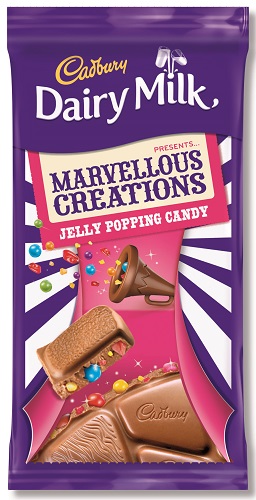
Mondelēz makes Marvellous Creations

Cadbury Dairy Milk Marvellous Creations Jelly Popping CandyCadbury Dairy Milk Marvellous Creations Cookie Gummy Crunch
Chocolate fans should be sure to head to the latest pop-up store in Sandton City, Johannesburg, this month, where being showcased is the World of Marvellous Creations — the most successful Cadbury chocolate slabs ever launched in Oz and the UK.

The two variants of Cadbury Marvellous Creations— Jelly Popping Candy and Cookie Gummy Crunch — made it onto SA’s retail shelves during May.

When the Marvellous Creations brand launched in Australia in 2012, it was the most successful confectionery launch ever, achieving 9% market share within a year. Launched a year later in the UK, repeat purchases soared and 6% market share was achieved in less than a year. Category growth accelerated from 7% in 2013 to 10% in 2014, according to Meredith Kelly, Mondelēz SA category lead for chocolate.

Inside the pop-up store, the Candy Trail allows visitors to create their own treats by mixing ingredients and smothering them in melted chocolate. The experience is topped off with a “marvellous family portrait” shared online.

Those outside of Gauteng may share their favourite combination of ingredients on www.marvellouscreations.co.za and the person with the winning combination will win his or her own Marvellous Creations chocolate, made for him or her by Cadbury.

Help share the joy on Facebook and on Twitter with @Cadbury_SA using #MyMarvellousCreations

Access to the store (open 23 May–21 June 2015, 9am–8pm daily) is easy: buy a slab of Marvellous Creations chocolate, available at retail stores for R29.99, and get automatic entry for two people.

All that glitters IS gold

24carat.co.za minted bar24carat.co.za officially opened the virtual doors of its new luxury online boutique last week, 21 May, offering minted gold, platinum, and silver bars, diamonds, bespoke jewellery and precious keepsakes.

24carat.co.za is reportedly the first private SA platform where one can buy minted gold bars. Metal Concentrators (MetCon) — the mother company of 24carat and SA’s largest independent precious metal refinery Metcon — was the first refiner to receive a licence to manufacture and sell these items. Until 2008, it was prohibited for anyone in SA to buy or trade in these bars.

24carat.co.za also sells certified diamonds; handcrafted and bespoke jewellery, designed by some of SA’s best designers; and medallions.

Bernard Stern, co-founder of MetCon, says: “Our 10g, 50g, and 100g minted gold bars, as well as our medallions, are made of 99.99% pure gold, which is the equivalent of 24 carat and the highest level of gold purity one can get. To compare, Kruger Rands are only 91.67% gold, or 22 carat.”

He stresses that the gold used for 24ct.’s assortment of bars, jewellery, and medallions is ‘honest’ gold: “Metcon’s core business is the recycling and refining of precious metals such as gold.

“Last year, the Responsible Jewellery Council awarded us a double responsible practices certification. This means that the gold we are working with is mostly recycled and guaranteed free of conflict and human rights abuse. So, apart from buying something beautiful that will stand the test of time, you are purchasing something that is ethically and morally sound.”

As part of the bar range on offer, 24ct. is also offering 99.9% silver and 99.95% platinum bars. Go to 24carat.co.za or join the conversation on Facebook.com and on Twitter @24ctZA with #OutofAfrica.


Cheryl HunterShelf Life is MarkLives.com’s weekly column covering new product, packaging, design and food launches. Notify us of yours at shelflife at marklives dot com. Want to sponsor Shelf Life? Contact us here.

Cheryl Hunter (@cherylhunter) has written for the South African media, marketing and advertising industries for more than 15 years. A former editor of M&M in Independent Newspapers and contributor to Bizcommunity, AdFocus, AdReview and the Ad Annual, she has also produced for various television networks and currently consults on communication strategy and media liaison.

— MarkLives’ round-up of top ad and media industry news and opinion in your mailbox every Monday and Thursday. Sign up here!

Media Future: QR Codes invading — even if you don’t know it

by Arthur Goldstuck (@art2gee) A funeral director in Gauteng uses it to help mourners find the right funeral; a shopping mall in Cape Town employs it to help shoppers build wish lists for gifts; and across the country, it’s beginning to appear on business cards.

QR codeIt’s called a QR Code, which stands for Quick Response Code, but most people will know it as a square, barcode-like pattern seen at points of sale or in apps like  BlackBerry Messenger. The latter represented many South Africans’ first exposure to QR Codes, when it became the quickest way to add a friend on BBM.

The upcoming release of the Online Retail in South Africa 2015 study by World Wide Worx will shed light on the take-up of QR Codes, providing the first insight into one of the most mysterious emerging area of ecommerce: the QR Code.

In the past year, QR Codes have quietly gained new life as mobile apps like SnapScan roped it in for payments at small merchants, flea markets and the like.

By the end of 2014, more than 2,1-million South Africans were using QR Codes, even as a debate raged around the question, “Are QR Codes dead?” Of these, 1,1-million were male, with female users only marginally behind, at 1,04-million.

Mobile payment systems are quickly becoming mainstream, and it will be fascinating to see how the more mechanical systems like QR Codes compete. Ideally, there should be room for any system, with each one finding its ideal niche. But there are no certainties in a sector that is moving so fast.

One aspect of QR Codes that is achieving consensus is where it does NOT work. Billboards along a highway probably represent the single most bizarre category of QR Codes. They carry the assumption that motorists will activate a QR Code app on their phones, focus on the billboard and follow the relevant link that is opened, all in the time it takes to drive past the billboard.

Better examples abound. In the USA, Wal-Mart uses it in store to guide shoppers to virtual “pop-up stores” that exist for a specific promotion. In Germany, bus passengers use them to simplify route planning. In the United Kingdom, supermarkets use it to provide additional nutritional information on food – including an edible QR Code used on rice paper.

QR Code usage is strongly age-related, with 673 000 users in the peak age group of 25-34. In contrast, the 15-24 segment amounts to only 471 000, while 494 000 are aged from 35 to 44. A similar amount – 425 000 – makes up the 45-65 age group. Usage drops significantly with retirement age: the 65+ age group comprises 88 000 users.

qr code users

A detailed breakdown of QR Code usage and demographics will be included in Online Retail in South Africa 2015.

The report is based on primary research by technology market research leaders World Wide Worx, as well as collaboration with Ask Afrika, the leading market research organisation on the continent. Data from Ask Afrika’s Target Group Index (TGI), a research project with a sample of more than 15 000 respondents annually, will provide demographic and behavioural components of the report.

“TGI is a single-source database that provides brand and product consumption trends for South African consumers, coupled with detail around spending and retail shopping habits of South Africans that can be tracked over time,” says Andrea Rademeyer, CEO and founder of Ask Afrika. “It allows us to build benchmarks and currency data which are both reliable and up-to-date.”

World Wide Worx is partnering with Ask Afrika to refine the communications, electronics and technology elements of TGI, in order to produce the most detailed picture yet of the digital habits of South Africans. The TGI research is conducted in two six-month “waves” every year, with a nationally representative sample of more than 7500 respondents in each wave.

The resultant data will be included in World Wide Worx’s annual reports on Internet Access, Online Retail, Social Media and Online Banking in South Africa, among other. World Wide Worx will also collaborate with Ask Africa on a Digital Barometer, to provide a clear understanding of the digital evolution of the South African consumer.

* Online Retail in South Africa 2015 will be released in June 2015.

Arthur Goldstuck heads up World Wide Worx (www.worldwideworx.com) and is editor-in-chief of Gadget. He is a consulting editor to MarkLives and our media tech columnist. Follow him on Twitter on @art2gee. This article has been republished from Gadget.

— MarkLives’ round-up of top ad and media industry news and opinion in your mailbox every Monday and Thursday days. Sign up here!

Ad of the Week: Dance, dance, dance

by Oresti Patricios (@orestaki) I love to dance. I think I was bouncing around my mother’s womb when I was only a couple of cells old. I’m well into my 50s and still I’ll take any opportunity to get up and dance, be it at a wedding or whatever: it must be my Greek blood. So I’m pretty much primed for the ad we’re speaking about this week.

King James II got the talented Terence Neal of Egg Films to direct an eye-catching TV ad for 5FM’s Live Loud campaign. All about the power of music — and what happens if it isn’t there — this commercial speaks to the heart. I’m telling you, this ad could have been made for me, and me alone. (Or at least anyone who loves music and dancing as much as I do.)

King James II TVC for 5FM: “Without 5”

The bulk of the ad is a montage of people dancing by themselves, in a number of situations and locations. It’s that ‘dance as if no-one is watching’ kind of thing, but this much more a matter of queue the silent disco.

5FM Without 5 TVC screengrab man in red suitThere’s a Michael Jackson type, all in white, dancing in a parking garage, a Swenka on a railway platform, a ballerina in a studio, a group of Pantsulas watching one of their members in a Soweto street, a CCTV image of someone dancing in a shop aisle, a group of middle-aged people in a ballroom dancing class, two pole dancers upside down… and more.

This commercial movie is a celebration of movement — of people from all kinds of different walks of life, dancing. But the ‘punchline’ here is that there is no music. These peeps are moving like crazy, but it looks pretty silly because there’s no beat. The only soundtrack is the dancers’ feet on the ground, clothes rustling and their breathing.

That’s what makes the mini-movie so eye-catching: instead of pressing the ‘mute’ button, it’s likely people will turn up the sound to figure out what’s happening.


About two-thirds of the way through, text appears on screen that reads: “Without 5 it’s just you.” There’s a scene of the guy dancing in this shot and, in the motion of the dance, mid-shot the image shifts to slow-mo. That’s when the glorious music fades in, and everything comes together.

5FM Without 5 TVC screengrab little girl robot dancing     The song used is one by Goldfish called Take Back Tomorrow. When the music starts making sense to the movie, we go back and all dancers and their dances are revisited, but this time they don’t look ridiculous. The music ties them all together in a dance montage that’s infectious and fun.

It’s an ad that makes the watcher want to jump up and dance. Now even the pole dancers are in sync, and the camera has moved in closer to each of its subjects. We can see into people’s faces, see the aliveness in their eyes.

5FM Without 5 TVC screengrab women hip hop dancersThe end frame is the 5FM slogan and logo — “The power of 5” — with the #liveloud hashtag and an invitation to download the app. Simple. Powerful.

The message of the ad is clear — life without 5FM would be a life that is missing something. It would be just you, alone. Music adds so much to most people’s lives — hearing a song from a specific era may bring back a flood of memories, movies spend a fortune on getting just the right composer to enhance the mood — often in a way that’s not even noticed.

5FM Without 5 TVC screengrab taxi dancingIn this ad, 5FM, which targets a fairly wide set of demographics, provides something for the youthful market, rather than somebody’s conception of the youth market. The ad portrays many of the cultures and subcultures that exist in South Africa, and the director is tuned into this vibe, having directed music videos for Die Antwoord and Skrillex (together with numerous TV commercials).

5FM is a station with a long history that is knitted into our SA story. In the ’60s and ’70s, rock ’n roll and pop music was not played on the state-owned radio channels of the SABC. LM radio in Lorenco Marques, Mozambique, beamed this renegade ‘music of the devil’ into SA homes on shortwave radio.

5FM Without 5 TVC screengrab township dancingAfter the Frelimo army took over the station during the 1974 uprising, Radio 5 was launched by the SABC as a commercial station, which provided a playlist for the masses. The prurience of the era is reflected in songs that were banned internally by the public broadcaster.

The verboten list included “Take Off Your Clothes” by Peter Sarstedt, and “Sugarman” by Rodriguez (which included the words, “…silver, magic ships you carry, jumpers, coke, sweet maryjane…”). These songs were not on the playlist, because of their apparent promotion of sex and drugs. Ray Phiri had a song called “Where Did We Go Wrong” banned simply because it was a duet with a white singer, Cathy Pennington. Of course, anything with so much as a hint of political activism was definitely out!

5FM Without 5 TVC screengrab pole dancersRadio 5 was rebranded as 5FM in 1992, became a lot more progressive after democracy and now has embraced innovative approaches to technology, streaming on the internet and backs many innovative music projects, such as the Sony Xperia Mashlab project that allows fans to select musicians that they would like to see collaborate in creating music.

But back to the advert. It is a classic. It has its finger on the pulse of its audience, and can be watched over and over again… without touching the mute button.

Now that’s great TV advertising.


Oresti PatriciosAd of the Week, published on MarkLives every Wednesday, is penned by Oresti Patricios (@orestaki), the CEO of Ornico, a Brand Intelligence® firm that focuses on media, reputation and brand research.


If you are involved in making advertising
that is smart, funny and/or engaging,
please let Oresti know about it at info@ornicogroup.co.za.


— MarkLives’ round-up of top ad and media industry news and opinion in your mailbox every Monday and Thursday. Sign up here!

The Ad Exec: Matriarchal marketing

by Tom Fels (@thomasfels) Our world is changing. The longstanding masculine drivers of politics, business and competition — focused on winning at all costs — have led us into a state of inequality, conflict and suppression. Over many decades, brands have perpetuated these virtues by fuelling a lifestyle of material success and opulent consumption.

Yet it seems that our collective good is not served by this approach and, in response, both leaders and brands across the world are turning toward a new matriarchal way of being that presents a far brighter outlook.

Gender roles. Credit: pixshark.com.
Credit: pixshark.com

Data backs this move, as Y&R chief insights officer John Gerzema discovered in a study of 64 000 people in 13 countries. Over two-thirds of respondents felt the world would be a better place if men thought more like women, leading him to declare that “femininity is the operating system of 21st century prosperity” in his book, “The Athena Doctrine: How Women (and the Men Who Think Like Them) Will Rule the Future”.*

It takes only a brief look at our own current state of affairs to realise that the opportunity for a more holistic, harmonious and sustainable approach to politics, business, leadership and brand marketing is enormous, and remarkably untapped.

Masculine vs feminine virtues

The modern capitalist economy is largely masculine in its construct. Profits reign at the expense of our natural environment; competition places victory over equitable terms and short-term gain over sustainability.

In Vanessa Halloum’s book, “The 5 Feminine Power Virtues”, she names authenticity, spirituality, gratitude, presence and sensuality as the key attributes for women to lean into. These more graceful qualities are today playing an increasing role as we transition from an industrial economy to one of service orientation and customer centricity.

The impact on leadership

Far from being a total showdown between masculine and feminine virtues (that would be very masculine!), it is the embrace of both that is shifting social and commercial values to redefine success in a more inclusive and heartfelt manner.

The Emotional Quality (EQ) of leaders is playing an increasingly vital role in employee engagement and the soft skills often associated with female leaders are highly valued, as illustrated in Gerzema’s study of 32 000 subjects who were asked to classify traits as masculine, feminine or neutral, and link them to their desirability in a modern leader:

Gerzema study results. Image courtesy of www.inc.com.
Image courtesy of www.inc.com

As this change continues to manifest, we see leaders adopting a more relationship-based approach to fostering community in and outside the office by listening, expressing vulnerability and willingly collaborating with staff and consumers to generate more-meaningful products and services.

The impact on brands

Cultural norms have a huge influencing role in fostering brand attitudes and, for many decades, the demonstration of success has been one of the commonly held visual cues of brands. Think of the old Peter Stuyvesant ads, or any premium brands, financial institution or retailer today. Dress for success, bank for success and, while you’re at it, let’s toast to success.

However, the definition of success is changing; we have realised we are not infallible and so health becomes more highly prized as time ticks over to become our rarest commodity. Our choices are, therefore, increasingly about more than ourselves as we consider the sustainability of our legacy.

In a story that is about creating a better archetypal leader, it’s thus equally fitting to think that brands ought to be shifting to resonate with this more-holistic value system.

Rather than focusing upon persuasion, brands should be aiming at fostering relationships. Amazing companies such as Patagonia have enormous equity scores and a highly engaged community that provides countless great stories to share. Focused upon quality, transparency and accountability, they have discovered that consumers don’t expect perfection so long as they are honest and have demonstrated their willingness for constant improvement.

What a refreshing thought.

On the local scene, I’ll be interested to track the success of the recently announced Pharrell Williams and Woolworths initiative, in which Williams has adopted the role of style director across a range of sustainability-oriented projects. Already this has received a Twitterati backlash, but the proof will be in the pudding.

Parting thoughts

As custodians, communication experts and curators of modern brand culture, we must acknowledge that the changing rhetoric in society is gaining momentum in a way that will eventually present marketers with a watershed moment:

Are you in it for the money, or is there a greater good behind your actions?

The generosities of those who truly care for their cause and are driven by the self-worth born of their noble beliefs are sure to rise to the top and sustain their advantage. Just ask Jessica Alba, whose frustration regarding the chemicals in many household products inspired her to start The Honest Company in 2011, catering to a marketplace of ethical consumerism. Barely five years later, it is valued at nearly US$1bn and is preparing for its initial IPO.

Feminine traits undoubtedly provide a new and differentiated form of competitive advantage in a game where everyone else is playing by old boys’ rules. They are a catalyst for innovation and a magnetic force for employee and consumer engagement. Our cultural tone is shifting and so, too, must our marketing.


References:

*The Athena Doctrine is a collaboration between John Gerzema and Michael D’Antonio.


Tom FelsWith a decade of local and international experience in leading brand consulting, design, shopper marketing and integrated advertising roles, Tom Fels (@thomasfels) has gained a deeply relevant understanding of the dynamics of agencies. His skills are put to work daily as group managing director of Publicis Machine. He contributes the monthly “The Ad Exec” column to MarkLives.

— MarkLives’ round-up of top ad and media industry news and opinion in your mailbox every three Monday and Thursday. Sign up here!

Online CPD Courses Psychology Online CPD Courses Marketing analytics software Marketing analytics software for small business Business management software Business accounting software Gearbox repair company Makeup artist