Brand Culture: SquareSpace, Jeff Bridges and his weird sounds — a cultural misfire

by DK Badenhorst (@BrandCultureSA) Tapping into little pockets of pop culture is a tricky and fascinating business. If the goal is to create culturally interesting advertising or any mainstream piece of communication, it’s even trickier. You need to find something that is relatively niche but still recognisable (Red Bull films). If you don’t, you end up with people not knowing what they’re looking at (SquareSpace’s Jeff Bridges ad).

Red Bull’s always been great at tapping into niche subcultures and finding a balance between what is fresh yet familiar. A few examples of what has worked in the past are extreme downhill biking, base jumping and those flying-squirrel suits that people use to glide with these days.

One reason this works well is because the basic symbols of what Red Bull is using are understood and in place. Whether you’re an extreme downhill cyclist or someone who last used a bike to ride to school, there’s a really good chance you’ll have been on one and a moderate chance that you’ve tried something daring with a bicycle. You’ll know what you’re looking at when you look at the Red Bull Rampage and you’ll be comfortable with looking at it. It gives Red Bull a foot in the door.

The second point is simply that the sports used are impressive. Whether you’re an extreme cyclist or not, it remains impressive to see a guy descend the mountains of the Utah desert on a frame with two wheels bolted to it. Sure, there’s a little more to those bicycles, but that is exactly the point. You don’t need to know that much about cycling.

So where is an example of a brand which gets it wrong?

This SquareSpace ad from Wieden+Kennedy uses Jeff Bridges in a persona that closely resembles The Dude. Bridges was out at night, recording everything from plastic bags to insects and later released an album with little one-minute clips on things such as drinking water (he then discussed the trouble in having to get up to go to the loo). The plastic bag is a cultural red herring (American Beauty) and may send you off into 90s’ pop culture (the creation of The Dude). But the reality of this video sits far closer to where we are today.

In recent times, the phenomenon of ASMR (autonomous sensory meridian response) has found traction on YouTube, and has subsequently spilled out onto other websites discussing the phenomenon or trying to put some money and talent together to research the topic.

Deeply mundane

ASMR leaves the listener with a strange sensation described as the one some people get when they receive a massage — a tingling that starts in the base of the neck and runs down the spine and sometimes into the extremities. This highly relaxing sensation is an end in itself and stands, to an extent, separate from the content of the video. This should explain the deeply mundane content of some of the videos.

In the broadest sense, ASMR videos include (but are not limited to) role-playing videos where people perform everyday services (cutting hair, shaving, eye tests and so on). The key here is the personal attention, the simple instructions and the praise that comes with it. The ASMR-tist is always friendly, interested and agreeable; in all cases, they are also people who don’t pose any threat.

Other videos include eating, scratching, crinkling of paper bags and many other videos focusing in the aural minutia (as one artist calls it). Read more on ASMR on Wikipedia.

The ASMR community has been well aware of the Squarespace commercial and its reference to their art but this has not really translated into awareness of the ad. There appears to be a cultural gap. People like hearing The Dude, others like the seemingly random nature of the video, but the true significance is missed.

Unlike extreme downhill MTB, there is no breadcrumb trail back to mainstream culture. Extreme downhill holds hands with downhill, which holds hands with cross country, which holds hand with simple recreation which holds hands with commuting. It anchors deeply into boring and functional mainstream. It’s also easy to trace mountain biking back to when commuter bikes were simply welded and reinforced in order to make them adequate for the job at hand. We can all relate to it.

Something else

ASMR, however, is something else. These videos appeal not to a response in culture but to a neurophysiological phenomenon. What is more is that the ASMR community alleges that not all people can experience ASMR and that you either have it or you don’t — almost like being able to twist your tongue. Yes, as a stress relief, it may have become popular in stressful times but its roots are not in mainstream culture.

At no point does Wieden+Kennedy say anything about the growing internet phenomenon. Yes, the commercial is obviously ASMR inspired. It is, however, interesting to note what people are saying.

People recognise The Dude. His original character is close enough to be plausibly connected. The internet is a strange place and, between the internet and the weirdness of The Dude, this video may gain cultural meaning without any knowledge of ASMR. Some even call it ‘the funniest Super Bowl ad ever’.

Counter culture

Without the background of ASMR, it seems to find its roots in counter culture, which might be what the creators thought when they stumbled upon the original ASMR videos.

In the absence of a proper description, people fill in the gaps. They take cultural objects and mix and match meaning until they make enough sense — at least so there’s no cultural-meaning vacuum. This in itself is interesting and proves a point that I very often make when talking about brands.

The best and clearest example is always the cargo cult with its best-known example of John Frum. These religions cropped up when American troops moved through isolated communities, bringing with them many artefacts of modernity. The arrival of the soldiers had no cultural ties and people created them by matching them to religion. John Frum is arguably a mispronunciation of John From (America).

To this day, cargo cults are alive and well, having socio-political impacts upon the nations in which they are active. Temples and religious symbols are based on planes, transport and military equipment, mirroring the obvious symbols that accompanied Frum.

Cultural relevance

No matter what your product or your brand, if you’ve been in a market for a certain period of time, you have a cultural relevance. Like fish that inhabit shipwrecks, so cultural significance inhabits anything that settles for long enough. Whether the meaning that settles is what you would want it to be is a different question altogether and is, without exception, something that may be steered and managed.

Culture is dynamic and the problem is never what you are but rather what you’re becoming.


DK Badenhorst


DK Badenhorst (@BrandCultureSA) is a cultural insight and semiotics consultant who brings cultural context and long-term trend insights to brand communication. He contributes the monthly “Brand Culture” column, exploring the value and meaning interaction between brands and society, to MarkLives.com.


— MarkLives’ round-up of top ad and media industry news and opinion in your mailbox every Monday and Thursday. Sign up here!

Shelf Life: New on the outside, dry on the inside

Cheryl Hunter (shelflife at marklives.com)’s weekly pick of recent product, packaging, design and food launches:

  • New look for Savanna
  • World Whisky Day inspires new single malt,
  • Bubbly breaks new barriers, and
  • SAA innovating

It’s dry, but you can drink it

Savanna Dry's new lookSavanna Premium Cider is strutting a bold new look and, to celebrate, has launched a nationwide series of Before and After parties for loyal fans.

Since its launch in 1996, the cider has successfully claimed a space as a distinctive, sharp-witted and rather dry brand.

While this won’t change, the bottle has had a definite upgrade: The cider has been given a new crown design, a longer and slimmer neck for the ‘ultimate drinking experience’ and stronger, more ‘manly’ shoulders, as well as a new label and debossing on the side for added ‘grippability’.

Altogether, the feel is meant to be cleaner and fresher.

The “before” and “after” transition is taking place on Savanna’s new mobile-first website, Facebook, Twitter, Instagram, and YouTube, where dedicated fans can find details for the parties taking place around the country. Fans can also win tickets to these events by looking under the cap when buying their next Savanna.

World Whisky Day inspires new single malt

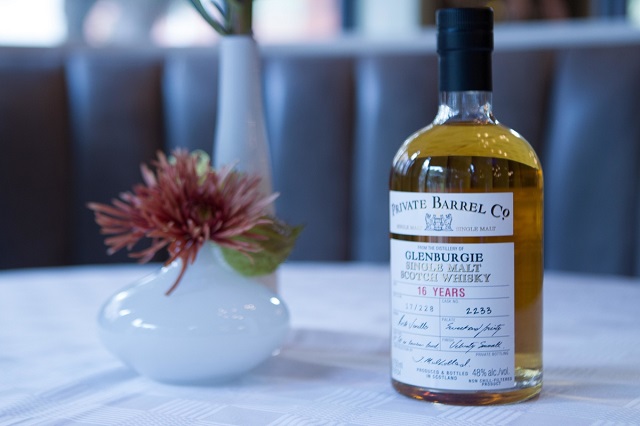
Private Barrel Glenburgie whiskyThe House of Fine Whisky at Checkers LiquorShop has unveiled a rare, single cask addition to the Private Barrel Co. Label in celebration of World Whiskey Day.

Glenburgie is a 16-year-old matured single-malt Scotch whisky that traces its origins back to 1810. As the newest edition of the privately bottled single cask range for Checkers, it is only the 10th whisky variant for the Private Barrel Co. label since its launch in November 2012.

According to Whisky Connoisseur, Marsh Middleton, “Private Barrel’s Glenburgie is from a first fill ex-Bourbon barrel, meaning the barrel in which the Scotch whisky was matured previously had bourbon whisky in it only. This is important because ‘first fill’ casks are highly active and usually make for richer and deeper flavours.”

Speyside whiskies are among Scotland’s lightest and sweetest single malts, and the maturation brings with it more body and complexity.

Glenburgie will be on shelf in July but pre-orders for the 228 bottles available are open from 20 May 2015 via the Checkers website at a cost of R999.99 per bottle.

Join the conversation: @CheckersSA #PrivateBarrelCo and #WorldWhiskyDay

Pongracz goes online to reach discerning customers

Pongracz MCCWhat with online retail sales looking to contribute 1% of total retail sales for the first time in history in 2016, brands are beginning to see the opportunities. The latest one to embrace the trend is Pongrácz, with its entire range now available online…

Pongrácz, South Africa’s leading Méthode Cap Classique, has become accessible to discerning bubbly lovers everywhere via the ecommerce wine shop, www.vinoteque.co.za.

According to Vinoteque’s Michael van Deventer, online retail sales are set to grow between 20-30% in 2016 and this growth is encouraging brands such as Pongrácz to join the stable: “It makes sense in that prestige products like the signature Desiderius 2008, in its singular fluted bottle, will now be more accessible to consumers everywhere.”

Made in the classic French tradition, Méthode Champenoise, Pongrácz (@Pongracz) may be delivered to homes at a cost of R55 per case of 6 or less. Delivery is free for purchases of R1 100 or more.

A step up into business class

SAA serviceSouth African Airways (SAA) has added a new product called Step-Up which, through a bidding system, gives customers the opportunity to upgrade seats from economy to business class where inventory is available.

How it works: Customers receive an email seven days before their scheduled departure, informing them of the possibility of available seats in business class. The email contains a link to the Step-Up tool, where they are able to place their bids.

All bids stop 72 hours before departure, and customers have the ability to view, modify and cancel bids before this cut-off. Nothing is confirmed immediately; the system creates a prioritised list of all bids. Customers are then notified 24 hours before departure of the outcome.

Comments Nico Bezuidenhout, SAA acting chief executive, “Innovation has become a key component of SAA’s customer experience enhancement programme. Besides these latest offerings our customers can expect many more innovation product offerings, in line with the strategic aim of improving customer service.”


Cheryl HunterShelf Life is MarkLives.com’s weekly column covering new product, packaging, design and food launches. Notify us of yours at shelflife at marklives dot com. Want to sponsor Shelf Life? Contact us here.

Cheryl Hunter (@cherylhunter) has written for the South African media, marketing and advertising industries for more than 15 years. A former editor of M&M in Independent Newspapers and contributor to Bizcommunity, AdFocus, AdReview and the Ad Annual, she has also produced for various television networks and currently consults on communication strategy and media liaison.

— MarkLives’ round-up of top ad and media industry news and opinion in your mailbox every Monday and Thursday. Sign up here!
Beyond Borders: What’s shaping the future of our industry — Advertising Week Europe 2015

by Craig Page-Lee (@cpl_ignite) I recently had the privilege of attending Advertising Week Europe 2015 — London (23–27 March 2015). A number of key themes emerged and, as expected, some of these were incredibly controversial, especially what the agency of the future will look like.

Originating in New York in 2004, and building off the incredibly successful platform created by the publication Adweek, this was the third year in Europe, again hosted by the City of London.

Advertising Week Europe logoA great success

It was a great success and achieved in delivering “a hybrid of inspiring thought leadership featuring the world’s best and brightest, with engaging special events that galvanize targeted constituencies.” It was an experience that I am grateful for and one that I genuinely look forward to attending again next year.

Attended by a broad spectrum of media, advertising, marketing and communications industry folk, the festival name is somewhat misaligned as the content is far from being just advertising-focused. I queried this with a UK colleague and intimated that it should possibly be titled “Marketing Week Europe” or even “Communications Week Europe”.

Little did I know that Sir Martin Sorrell of WPP would also challenge the name during his keynote address on the Wednesday afternoon. Let’s see what transpires next year.

No messy creative masturbation

There was no Riviera sunshine to write home about, no messy creative masturbation to worry about, and no decisions required regarding which champagne-filled yacht deck to stow away on. It was four days of intense listening, networking and tweeting up a storm. A wonderful gesture was having access to the free AWE 2015 branded brollies, scattered around the festival precinct to protect one from the ‘intermittent’ British rain showers, while standing in the long queues waiting to get into the next selected session.

As a single-minded industry festival goes, this was by far the best I have attended, and yes, South Africa did receive a mention or two, particularly the great Coca-Cola Rainbow experience delivered by FCB Johannesburg.

In terms of “single-minded”, I refer to the fact that there were no awards, creative or other, made. The sole purpose of the festival was to present topics relevant to the world of media, advertising and communications; to solicit debate and healthy conversation around those respective topics; and to evoke enough intrigue, interest and emotion to question what the topic actually means to one personally and how it is going to influence the industry that we operate in. It succeeded on all accounts.

Quoting the numbers verbatim

Because numbers are such a key component of our industry — especially the ROI type — I thought it equally appropriate to quote the numbers pertaining to AW Europe verbatim: four days; 209 events; 23 550 attendance; 113 seminars; 70 workshops; 4 059 delegates; 248 press; and 185+ hours of thought-leadership content.

What with close to 30 seminars to choose from each day, it was incredibly difficult to follow a single theme or topic throughout the week as many were delivered simultaneously by different keynote speaker at overlapping times. That said, one could follow many of the seminars via live streaming on digital screens set up in the Google Lounge (with wireless headphones) while waiting between sessions. This was also a great place to network and meet new people from the industry, especially the multitude of journalists and official bloggers covering the event.

A number of key themes emerged and, as expected, some of these were incredibly controversial, especially what the agency of the future will look like. Those that really stood out for me are ones that will fundamentally shape the future of the communications industry — and if we, the collective of advertisers, agencies and media owners alike, have not stopped to take serious note of the global conversation, we are going to be left out to die in the communications wilderness.

Key themes

These are defined as follows:

  1. The big data conversation and what’s more important — big tech or the big idea, or the merging of technology and creativity?
  2. Consumer engagement and the experience journey — the importance of understanding consumer behaviour and the role of consumer-generated content in the conversation
  3. The quest for seamless cross-screen message delivery and brand experience
  4. Programmatic and real-time buying, measurability and the quest for immediacy
  5. Millennials — the biggest influencers upon brands
  6. The agency of the future conversation (the emergence of full service agency again — or not)

This mix goes a long way to addressing aspects across all sectors of our industry and each of the points deserves further explanation and context, with the hope that this stimulates purposeful conversations and leads to an increased awareness of topics that we cannot ignore.

I am only addressing the first point here and will address the remaining ones another time. Please note that the commentary and context provided for each point is a consolidation of views expressed by the various speakers, notes from conversations that I had and some personal view points.

  1. The big data conversation and what’s more important: big tech or the big idea, or the merging of technology and creativity?

The opening point is that data and creative are separate things. Data should be used to drive creative (yes, creative!) and campaign efficacy, but it is only when an industry-wise educational drive has been implemented will we achieve understanding on this point.

The reason I emphasise this is that creative needs to meet the consumer where the conversation is — purposed for device and where in the conversation or purchase decision the consumer is.

Data is the way to find that out and to make sure that the right message is delivered in the right way, at the right time, in the right format and at the moment of truth/moment of engagement location. Creative execution needs to be fluid and purposed to meet the consumer’s expectations and mind-state on the respective device that the consumer may be engaging in at that point in time.

Location one of the most powerful things

A key point to note here is that “location” is already becoming one of the most powerful things in a marketer’s toolkit.

Interestingly, as developed as Europe may be in the collection and understanding of the benefits of big data, only 6% of data is being used in the UK to drive campaign and creative efficacy. Imagine the ROI over achievement that is possible on campaigns when all metrics are understood and creative is purposed to each stage of the experience and conversation flow, and leads to brand engagement or consumption fulfillment!

Data is, however, not just about performance; that’s the easy measure. It’s about how we track brand-perception shift and, in the instance of mobile, how mobile can change a consumer’s purchase intent. Digital, though, is also not just about technology. It’s about how brands reimagine their competitive advantage in the digital world — with data at the centre.

Break down into smaller chunks

Big ideas need to be broken down into smaller chunks — delivered by data, technology and experience. But don’t just think engagement, though: think transactional. Develop an innate understanding of behavior economics to create a real partnership with the consumer.

Unfortunately, over 90% of industry professionals still think that data is a product that you sell to someone for money; data will then always look like a product. When you look at data as a currency to achieve a goal that cannot be achieved by a product or service, and you combine it with consumer understanding and technology, you are able to tell brand stories — something we know that consumers want and, when consumers can’t separate technology and great ideas, we know that this will lead to enhanced consumer experiences.

At the heart of it, data is, however, still fragmented and no universal standards exist for collection, measurement or analysis, especially when it comes to cross-device measurement. Marketing effectiveness will therefore always be questioned until the universal standard has been achieved.

TV and digital measurement integration

This is also the reason that we are seeing such huge investments being made by the likes of WPP on technology platforms such as comScore (Unified Digital Measurement) and Rentrak acquiring Kantar’s US-based television measurement assets. These two events demonstrate the importance of integrating TV and digital measurement, and the impact it will have upon advertising expenditure.

The complexity of this paradigm in our industry is further complicated when applying the same expectations of data collection and interpretation for brands operating on the continent. We still have a long way to go on this journey, but progress is being made every step of the way and the end result will surely be one of benefit for all stakeholders.

In closing, it’s obvious to say that data is currency. The key question is when will there be a universal standard of this currency — like the way that bought media has a price and value, and what role will creative play in meeting the demands of the outcomes derived from this currency?

Faster than ever before

While considering all of this, remember that mobile is speeding up the attack on traditional advertising methodology more than any other medium, device or platform — and at a faster rate than ever before.


Craig Page-LeeCraig Page-Lee (@cpl_ignite) is the group managing director of Posterscope South Africa. He has over 21 years of working experience across the disciplines of architecture and retail design/brand communications and marketing management/advertising and media, across 11 pan-European and six pan-African regions. Craig’s monthly column on MarkLives, “Beyond Borders”, focuses on doing business in various African markets. Don’t forget to tune into his #eBizRetail slot on www.ebizradio.com.

— MarkLives’ round-up of top ad and media industry news and opinion in your mailbox every Monday and Thursday. Sign up here!

Ad of the Week: I’ll be waiting for you, oh-oh-oh!

by Oresti Patricios (@orestaki) The minute I heard the music for the new Tafel Lager adverts, I wanted to get up and dance. I wanted to dance on the table. I wanted to dance on the chairs.

The music for the new television commercial for the Namibian brewed beer comes, of course, from the up-tempo American soul duo, Gnarls Barkley (who are Danger Mouse aka music producer Brian Joseph Burton, and Thomas DeCarlo aka CeeLo Green) — a happy, clap-along song called “Going On”.

When you choose an incredible soundtrack for a commercial, you have to know exactly what you’re doing. Marrying the energy of sound and visual is a craft, and the director of this short commercial movie, Leigh Ogilvie, knows exactly what she’s doing.

Weathermen & Co. TVC for Namibian Breweries: “Tafel Lager — Moments”

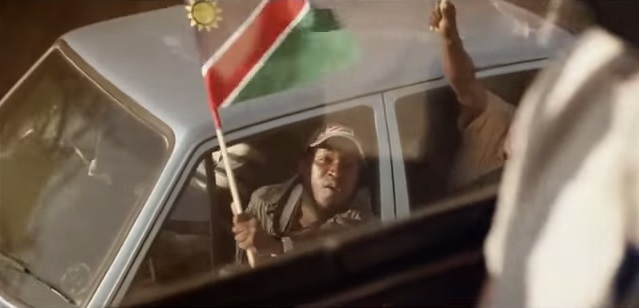
The commercial starts with a long-shot of a dusty Namibian road. A car full of flag-waving Namibians overtakes a bus, and the scene is upbeat and celebratory; it’s not clear where they are going, but one can assume it’s a sporting event. What follows is a montage of events, both large and small that illustrate why it’s great to be Namibian:

  • People dancing under the stars, with fireworks going off overhead
  • Namibians in a pub, watching the national team playing on TV
  • A match-cut to another TV, with Michelle McLean winning Miss Universe in 1992
  • Paralympian Johanna Benson — Namibia’s first Olympic gold medallist — getting off a plane surrounded by press photographers
  • The Namibian soccer team celebrating in their locker room
  • A festive outdoor meal where a group of youngsters is presented with a roast sheep’s head (known in local parlance as a ‘smiley’ because of the visible teeth)
  • An outdoor braai where a family is celebrating their daughter’s graduation
  • A traditional Namibian wedding procession
  • Finally ending with friends on a shady stoep (patio) enjoying the sunset, Tafel Lagers in hand.

The payoff line is: “Through every proud Namibian moment, we’ll be there. Tafel Lager, made of Namibia.”


The result is a patriotic ad that’s not patronising. A commercial that thrums with energy and humanity and gives us beautiful insights into what it is to be proudly Namibian. It also offers strategic insight into the brand. It tells us that the people who’re managing this brand are smart. Here’s why.

Tafel Lager Moments screengrabThe people who own the Tafel Lager brand are, of course, Namibia Breweries, those masters at creating national pride in their beers. Take a look at the “Beer That Brings The Most Cheer” map created by Vinepair, a media group that’s pioneering a new way for people to enjoy, understand and talk about wine, beer and cocktails.

The Vinepair beer map shows that Windhoek Lager is the most popular beer in Namibia. But brand loyalty isn’t just about popularity; it is also about love. Small surprise then Windhoek Lager is more loved in South Africa than Castle Lager. The NamBrew lager scored 84.8 in the South African Consumer Satisfaction Index (Sacsi), while Castle Lager scored 84.7. What this indicates to me is that NamBrew has nailed both, creating a brilliant product, and is incredibly intelligent when it comes to branding the company’s assets.

Like Windhoek Lager, Tafel Lager is brewed according to a tradition that was established in 1516 by Duke Wilhelm IV of Bavaria and according to the Reinheitsgebot, which is otherwise known as the German Beer Purity Law. This means that the only ingredients that may be used in the brewing of the beer are water, barley and hops.

Says Tafel Lager: “The combination of the best raw materials and craftsmanship of our German-trained master brewers offers you a world-class beer with superior quality. That’s why you’ll find the Reinheitsgebot symbol, the ultimate sign of quality, on the neck of every single Tafel Lager, born, brewed and bottled right here in the land of the brave!” The land of the brave being Namibia, of course.

Now take a look at an earlier Tafel Lager ad — this one is called “A World I Call Home”. The deep, rich timbre in the voiceover says: “I get life from this incredible land”. Genius. Like the ‘Moments’ advert that’s just broken in broadcast, the brand understands the very human need to belong. To have roots. To have heritage. To be part of a people and a place one can call home.


Congratulations to Namibian Breweries, its advertising agency Weathermen & Co and to Leigh Ogilvie from Velocity Films and everyone else for a remarkable ad that one wants to watch again and again, and again!

Credits
Agency: Weathermen & Co.
Managing director: Leon Crous
Creative director: Leon van Rooyen
Copywriter: Leon van Rooyen
Production company: Lemon Reel Film Services
Director: Leigh Ogilvie from Velocity Films
Producer: Bernd Curschmann
Director of photography: Jamie D Ramsay
Production art director: Max van der Merwe

Post production
Editor: Shaun Brode — Upstairs Post Production
Music: Gnarls Barkley — Going On
Sound & final mix: Wojtek Majewski– Audio Art
Post production online: Charmaine Greyling — Upstairs Post Production.


Oresti PatriciosAd of the Week, published on MarkLives every Wednesday, is penned by Oresti Patricios (@orestaki), the CEO of Ornico, a Brand Intelligence® firm that focuses on media, reputation and brand research.


If you are involved in making advertising
that is smart, funny and/or engaging,
please let Oresti know about it at info@ornicogroup.co.za.


— MarkLives’ round-up of top ad and media industry news and opinion in your mailbox every Monday and Thursday. Sign up here!

Grubstreet: Inside youth site Daily Vox

by Gill Moodie (@grubstreetSA) How do you get young people to read and consume your content? By keeping it short, sharp and getting them to drive the content agenda.

But that sounds easier than it is in practice and many youth-orientated news products have failed in this country because they simply do not resonate with the audience.

dailyvoxScreengrabApril2015Now the Daily Vox – which grew out of a youth-orientated website set up for last year’s general election called “South African Votes 2014” – is giving a voice to young South Africans and delivering it with online packaging savvy.

You’ll find listicles, vox pops, picture galleries, aggregated video and MP3s, opinion and bird’s-eye-view pieces on the site but the content is serious: the political economy, race relations and big news events such as the recent Rhodes statue saga and xenophobic violence

“You don’t have to dumb it down for young people,” Daily Vox managing editor Faranaaz Parker told Grubstreet. “They want to know what’s happening but you can’t write long. You need to tackle the story in short bites, especially if 60% of your readers are on mobile.

“It’s real journalism,” she says. “We try to keep it smart and we don’t talk down to our readers at all because they are smart people.”

This approach has helped the site reach an average 80 000 to 100 000 unique users a month in less than a year. Forty-two percent of readers are between the ages of 25 and 34 while 21% are between the ages of 18 and 35. Sixty percent are accessing the site via mobile.

Khadija Patel, one of the founders and executive editors of the site, told Grubstreet: “The election site was relatively successful for us and we received a lot of feedback from people who said: ‘You can’t let this die now’… So we decided to launch a more long-term project. ”

As with the vast majority of news websites in SA, Daily Vox is struggling with monetisation.

The Open Society Foundation, which was one of the funders of the election site, is still a Daily Vox funder and this

Khadija Patel
Khadija Patel

year the site stuck a syndication deal with SowetanLIVE to deliver content to it.

“It’s an exciting space but it’s also a very challenging space,” Patel says. “The SowetanLive revenue just about covers our expenses for the month, and for now that is sufficient for us. It gives us a position to be able to grow from as we obviously don’t want to be reliant on grant money.

“We’re not looking to make millions and billions of rands. We want it to be sustainable and we want it grow and to be able to hire more journalists and train more young journalists and reach more South Africans.”

Almost no one is fulltime at the Daily Vox – including Parker and Patel – and many of the reporters are journalism students.

It’s got a start-up vibe,” Parker says. “You check your mail in the morning and do work at 11pm and send SMS-es at two in the morning. We’re all very invested in it but it’s not fulltime.”

This means it is key for the reporters to maximise coverage of news events and slice and dice content so that the Daily Vox can get more than one post out of one event.

“We try to get them out to stories as much as possible,” says Parker. “It’s not always possible as they have lectures but when we do get them out, we look at: ‘What are you’re going to do? Can we get vox pops? How good are you with the camera? When you’re done can you write an opinion piece so we can get your perspective? And if it’s a really meaty topic can we get a feature out of this and explore it more?’”

Posts the do well at the Daily Vox involve politics, race, questions of inequality, she says.

“There is always that random internet meme that blows up so the readers do have a fun side but I think they’re very smart in that they don’t just read one post (on an issue). They’ll see what you’re saying and then they’ll go see what the Sowetan is saying and the Mail & Guardian, and compare and figure things out for themselves. And that’s not a bad thing. I think everyone wins.”

Because the reporters are mostly students, stories need active news editing, says Parker, and she and assistant editor Theresa Mallinson work closely together on this.

Parker would love to bring in new reporters from areas such as Limpopo and the Eastern Cape but money won’t allow for this at the moment.

“We want stories that people don’t hear about enough and from parts of the country that people don’t hear about enough.”

A big part of the Daily Vox is mentoring the young reporters, she says, and effort is put into getting them to drive the content agenda.

“Our biggest asset is our young reporters – and that’s where we have a bit of a niche. We’re always asking them: ‘What do your friends think? What do your families say? What are the people you know talking about? Let’s do a story on that.’”

Patel says: “Many young people in South Africa feel very disconnected from the political spectacle and the mainstream media doesn’t particularly speak to them so this is our challenge: to try to package stuff differently to reach that audience and make them feel like they are involved, and to include them consciously as well.”

She believes that contrary to popular perception that Generation Y is a shallow, tech-obsessed group, they are actually very engaged with their worlds.

“They don’t express it in ways that we expect. They are very interested in what is happening and very opinionated about politics. They have convictions.

“We want to reflect the experience of South Africans – to amplify the political spectacle in a way that is not usually described in traditional media. We are amplifying the individual human experience of South Africa because it goes a long way to telling a bigger story – and it makes for easier reading rather than having a text-heavy 800-word piece that is really well written but is not very readable for this generation.”

Grubstreet with BizNews logo

South Africa’s leading media commentator, Gill Moodie (@grubstreetSA) offers intelligence on media, old and new. Reprinted from her site Grubstreet with Biznews.


— MarkLives’ round-up of top ad and media industry news and opinion in your mailbox every Monday and Thursday. Sign up here!

Media Redefined: The fallacy of engagement

by Martin MacGregor (@MartMacG) Is the hashtag in fashion or what? It has been building momentum since the launch of Twitter, but in 2015 we seem to be drowning in a constant stream of #weare’s, #noto’s and #mustfall’s.

This is citizen journalism gone crazy but why the almost universal uptake? People want to feel as if they care, are involved and doing something, and the humble hashtag allows exactly that. It’s an easy-to-use, off-the-shelf product that shows caring and being part of an indefinable mass who all think the same way.

3d Image Hashtag Concept Word Cloud Background by David Castillo Dominici courtesy of FreeDigitalPhotos.net
Image by David Castillo Dominici courtesy of FreeDigitalPhotos.net

Marketers are looking at this with rising jealousy. For years, there has been much talk about the shift from brands interrupting a consumer with a broadcasted message to a more interactive conversation which results in brand engagement. Digital platforms have hurried this thinking along, as the potential for a two-way conversation has become a reality.

The hashtag has become the obvious way to own the conversation, and brands are falling over themselves to mirror the passion and intensity that that the social consciousness hashtags have been generating.

But there is a problem. Hashtags, as is the case with the Facebook Like, are easy to use and to make it feel as if something has been done — but is engagement any higher than after watching a particularly emotional TV ad?

I have been affected but, essentially, I am nothing more than more aware.

Facebook has recently recognised this fact. The initial excitement around Facebook as an advertising medium was the interactivity of the Like button and how every campaign could now have an engagement metric.

But, like a kid in a sweet shop, brands after a while started to question what the value of all these gathered Likes was. It felt good to have a community, but did this really replace proper face-to-face engagement? The answer is no, and Facebook has backed off on measuring activity on its platform around Likes and is talking more the language of using NewsFeeds to drive awareness.

It’s disappointing for those who have been talking revolution in the advertising industry, but the right dose of reality, I think.

So where does this leave brands which want to engage with their consumers? The origin of this word is French and its original meaning was “pledge”. If you pledge to do something, you have a moral obligation to do it.

As with social causes, hiding behind a hashtag or similar just doesn’t cut it. Tweeting #saynotopoverty on your way to Woolies should not give you any right to claim that you have done anything whatsoever to end the scourge.

For brands, there is only one pledge that really matters — purchase. All other “engagement”, if it’s really unpacked, is nothing more than an awareness driver, and should be seen and assessed at that. Super 15 and Premier League supporters would do so whether or not Vodacom or Barclays were involved or not.

What about brand-created events? Consumers watch Red Bull events for the extreme action — very watchable and cleverly wrapped by Red Bull — but it’s a wrapping that drives awareness.

Let’s hope we see less brand communication trying to engage consumers going forward. It should really be focusing on the one thing that really matters — awareness — and use everything from hashtags to TV ads to make that happen. The real engagement of purchase will naturally follow.


Martin MacGregorMartin MacGregor (@MartMacG) is managing director of Connect, an M&C Saatchi Company, with offices in Johannesburg and Cape Town. Martin has spent 18 years in the industry, and has previously worked at Ogilvy and was MD of MEC Nota Bene in Cape Town. He contributes the monthly “Media Redefined” column, in which he challenges norms in the media space, to MarkLives.com.


— MarkLives’ round-up of top ad and media industry news and opinion in your mailbox every Monday and Thursday. Sign up here!

The Word: Uzzi unceremoniously meets “Arfica”

by Mongezi Mtati (@Mongezi) Two brands recently took centre stage to add some unintentional yet much-needed humour to South Africa’s social web. The reactions (or lack thereof) of Uzzi and Cricket South Africa (CSA) made conversations spread through social media timelines — with different outcomes for both brands.

During the recent outbreak of xenophobic violence, the murderous attack on Emmanuel Sithole in Alexandra township made news headlines, capturing the attention of local and international media. A photograph of the attackers stabbing Sithole even made the front page of the Sunday Times.

Twitter Search results for UzziMob justice?

On Tuesday, 21 April 2015, Sithole’s attackers appeared in court, two of them donned in Uzzi-branded hoodies. The social web went viral with mentions of the brand and its unceremonious appearance in court, which was perceived as being the fashion statement of those who find themselves on the wrong side of the law and the perpetrators of violent acts in Alexandra.

This spread of conversation, from the court to the fingertips of the masses, was a little less than unforgiving and, in part, added some entertainment to timelines. Judgement for Uzzi continued as more people caught on to the conversations, with about five updates coming up every hour seven days later when I checked.

Comments by the public ranged from how one gets a criminal record with their receipt when buying Uzzi clothing to general mentions of how the brand had been unfortunate that day. On the face of it, the detractors were more vocal than the brand, with some curious as to how Uzzi would handle the matter, and the brand became a trending topic on the social web for at least two days.

Truworths Facebook UzziThe only official mention that surfaced in defence of Uzzi, during research, was by Truworths, which acquired Uzzi in 2006. The clothing retail store posted a Facebook updated about how Uzzi is against all forms of crime and xenophobia. Its Facebook community then expressed its distaste of the brand’s association with crime and the wave of violence that some parts of the social web were talking about.

Overall, it seemed as if Uzzi did not make a strong enough appearance or release a strong public statement while the social web was ripping the brand apart.

CSA’s Arfica mishap

Meanwhile, CSA had announced its Africa T20 competition for African cricket teams who would compete in SA. In an attention-grabbing moment, a misspelling of Africa on the competition logo appeared on the podium and various branding material at the media launch, turning attention away from the intended message.

“Arfica” became a trending word that led to a series of mentions which CSA could have ignored. Instead, CSA was a good sport, adding to the hilarity with the following tweet: “We apologize for the oversight on the #AfricaT20Cup logo. We’re glad we could provide you with a good (l)arf though…”

CSA Arfica tweetsThis continued the conversation and, as a brand, it seemed that the CSA was ‘(l)arfing’ at itself as much as everybody else was.

Take action

In conclusion, it is understandable that the two instances were handled differently by the two brands in question.

The CSA seized the opportunity to be more human and engage in a way that led to more positive conversations concerning its brand. Some media even published the light-hearted apology.

Xenophobia is a far more serious issue than a misspelled logo, though, and it was harder for Uzzi to respond, and the brand’s evident inaction fuelled the negative attention. Had the brand interacted more with its existing supporters and started more conversations against crime, violence and xenophobia, it could have mobilised the community positively and the watching media would have reported this — it was already the centre of conversation without lifting a finger to build a campaign.


Mongezi Mtati


Mongezi Mtati (@Mongezi) is the founding MD of WordStart (www.wordstart.co.za). Apart from being a kiteboarding and sandboarding adventurer, Mongezi connects companies and brands with measurable word-of-mouth. He contributes the monthly “The Word” column on word-of-mouth marketing and social media strategy to MarkLives.


— MarkLives’ round-up of top ad and media industry news and opinion in your mailbox every Monday and Thursday. Sign up here!

The Switch: Less adrenalin, more inspiration

by Alistair Mokoena (@AlistairMokoena) One of the biggest myths that clients believe about creativity is that adrenalin is the secret ingredient behind great work. In other words, they believe that great work is produced when the artist, composer or the writer is under time pressure. This influences the amount of time clients allocate to agencies to respond to briefs.

There is also a belief that being a good creative means you are able to churn out great creative quickly.

Fast Delivery Stamp Means High Speed And Courier by Stuart Miles courtesy of FreeDigitalPhotos.net
Image by Stuart Miles courtesy of FreeDigitalPhotos.net

Commonplace

We’ve unfortunately reached in a point in our industry where the following statements have become commonplace:

  • “creatives work best under pressure”,
  • “agencies produce their best work when they have competition”,
  • “just get your best creative brains in a room and you will crack a big idea in no time” and
  • “we’ve given you a big idea; what’s taking you so long?”

These statements point to serious misalignment between agencies and clients. I accept that clients are under pressure to deliver and often time is not on their side. Unfortunately, the creative process should not be rushed.

We all know what you end up with when you rush ideas. If advertising is the largest line item on the marketing budget, does it make sense to rush it and risk compromising the final product? This rush to get work out at all costs not only impacts upon the final product but it kills agency morale and enthusiasm.

Agency morale

My worry is I don’t think many clients realise that they play a big part in driving agency morale. Revenue and profits don’t drive morale. A great working environment does.

Clients can do a lot to provide to enable a great working environment for their agencies. They should embrace this responsibility because there is a strong link between agency morale and great creative.

Clients need to balance being demanding, on the one hand, with being compassionate and understanding on the other. Humility and passion go a long way in motivating agencies. Clients who possess humility and passion see themselves as facilitators of great work and not just judges or critics of creative work. Judges poke holes and do not see themselves as part of the solution. They are quick to blame and point fingers at the agency when the idea tests badly in research or when their colleagues criticise the idea.

True partners fight for the work. They share the blame when things go wrong. They trust their judgment and back themselves to win, even when pre-testing goes against them. They understand that theirs is to support and inspire, not to hinder progress by giving needlessly wordy and incoherent briefs and impossible deadlines.

In the trenches

They don’t stand on the sidelines waiting for the agency to fail; they are in the trenches with their agency partners to get the best work out.

I’ve seen agencies thrive under these conditions and I’ve also seen client-agency relationships last for decades — because of these conditions.

Agencies reward such partnerships by allowing a lot more client access to the creative process, something which is normally not open or accessible for clients. Clients get brought in at the tail end to critique the work. A trusted partner is brought into brainstorms and tissue sessions so that, when the final cake gets served, it is owned and promoted by everyone.

Another reason creativity should not be rushed is that advertising is both a profession and an art form. As such, it needs to be viewed in the same light as other art forms such as music, art, design and fashion.

Craft needs more time

Great ideas need time and craft needs even more. How long do you think it takes to write a script for a movie? How long do you think paintings such as the Mona Lisa took? How long does it take a musician to write songs for an album? Not a week and certainly not a day.

The advertising industry provides professional services to clients, pretty much like lawyers, architects, consultants and accountants do. What these professions have in common is that they all sell very important services. Services which should not be rushed.

My view is that advertising is also a high-stakes industry. It is a very expensive undertaking and, because it is consumed by almost everyone in society, it has a huge impact on a brand’s welfare.

You would never rush your lawyer or your accountant or your architect. Because we want the best service out of these professionals and because we respect their craft, we accept their turnaround times without much question. Why can’t advertising be afforded the same courtesy and level of trust?

Changing attitudes

Are there things that we, as advertising professionals, may learn from these other professions that will lend more credibility to our craft? Is there something in our image that needs correcting? Or do clients just need to change their attitudes?

We are all responsible. We all have a role to play in making advertising a great working environment.


Alistair Mokoena November 2014

Alistair Mokoena (@AlistairMokoena) — a Unilever-trained Chartered Marketer with lots of blue-chip marketing experience — joined Ogilvy & Mather Johannesburg as MD in January 2015). Formerly, he was MD of FCB Joburg. One of his favourite pastimes is driving around in the bush, photographing wild animals. Alistair, who switched from client- to agency side at the end of 2012, contributes the monthly “The Switch” column, covering relationships inside agencies and between agencies and clients, to MarkLives.com.


— MarkLives’ round-up of top ad and media industry news and opinion in your mailbox every Monday and Thursday. Sign up here!

Ad Feature: Does this colour look good on us?

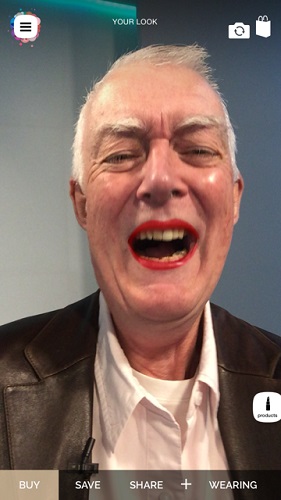
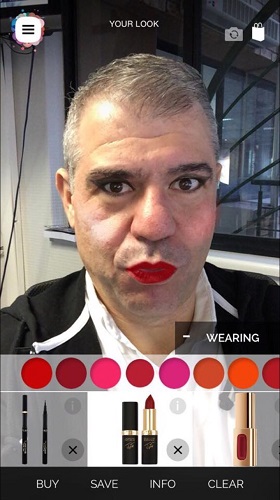
by MarkLives (@marklives) In the latest Ad Feature, branding expert Andy Rice is joined by digital entrepreneur Kali Ilunga and EWN’s Aki Anastasiou, who chats to Kerry Ogundana, L’Oreal Paris senior product manager, about its popular smartphone makeup app which has finally made it to South Africa, Makeup Genius.

L'Oreal app AndyL'Oreal app AkiL'Oreal app Kali
For the Wall of Fame or Shame:

  • Anastasiou awards a Superhero to a spoof ad for a TV series on UK Channel 4
  • Ilunga gives a Hero to Gill Shampoo’s latest ad, and
  • Rice hands out a Zero to Head and Shoulders in the same category.

Enjoy the show!


Ad Feature logoEvery week, discover the highs and lows of advertising in South Africa with The Ad Feature team from Primedia Broadcasting — consisting of ad and branding critic Andy Rice (@ricecommaandy), brand and communications strategist Sizakele Marutulle (@ZDivah), EWN anchor Jacob Moshokoa (@JayMoshokoa), and producer Gary Oberholzer (@goberholzer). For more, go to www.facebook.com/adfeature.

You may also catch Andy on The Money Show on 702 (@Radio702) and Cape Talk (@CapeTalk) on a Tuesday evening just after 7pm for the new feature #ButDoesItWork on The Money Show.

— MarkLives’ round-up of top ad and media industry news and opinion in your mailbox every Monday and Thursday. Sign up here!
Homegrown: Reinventing reasons to believe

by Lynne Gordon (@lynne_gordon) The ‘Reason to Believe’ — that building block of classical marketing concepts — has long been a topic of debate among brand-builders. Does my brand need one? What’s the most convincing choice of Reason to Believe (RTB)? And how should I communicate it in a compelling way?

Balkan Burger. Pic: balkanburger.co.zaIn a quest for convincingness, brands often suffer from RTB overload without delivering the desired result; a brand story consumers not only believe, but connect with. Far from the marketing debate, a food truck struck me with the solution to reinventing RTBs — not just as reasons to believe, but as levers for differentiation and an opportunity to bring life to the brand promise.

The what and why of RTBs

Brands have long fought the battle for market share using RTB ammunition. Ranging from product demos to magic ingredients, superiority claims to endorsements, RTBs are designed as proof points to support the believability or superiority of a brand’s promised benefit. And the need for believability is compelling; copy-testing experts will tell us that concepts with unique RTBs do generate significantly higher trial, lending credibility to the brand’s promise and driving convincingness.

Yet there’s something decidedly ‘old school’ about classical RTBs. Global celebrity endorsements, side-by-side product demos and expert stamps of approval may all deliver at a rational level, but do they really go far enough to provide a compelling reason to fall in love with a brand? Is the RTB dead, or is there a new way to win not only rational credibility but drive unique meaning and connection using reasons to believe?

Balkan Burger menuReinventing the RTB

Balkan Burger’s mission is about “redefining the burger experience”. It’s taking food-truck culture by storm and has done a good job of convincing me that its burgers — and its brand experience — are special and unique.

Created by a Serbian brother-sister team, Balkan Burger is a true homegrown gem: invented and run by the Ivanovic family, trading in food trucks and markets, and growing into a Jozi icon. The burgers are yummy; the food experience is engaging; the brand is genuine, simple, lovable. And it’s fuelled by smart RTBs that attract trial in a competitive market.

Balkan Burger describes its food with precision and passion. Showcasing a new ‘burger fold over’ method used to ensure no soggy buns, it focuses on two key aspects: the best ingredients, for the best consumer experience. I’m sold. After all, who wants a soggy burger bun? It’s not complicated science or proprietary technology but a simple, inventive way to improve the product and make better burgers.

Balkan Burger endorsementTaking it further, alongside a seamless product story, it makes smart use of endorsement: showcasing not lofty claims and institutes but genuine social media recommendations from local foodie culture. The stall proudly displays the accolade of “Best burger in Joburg” conferred by The Star. This is no stretch to celebrity fame and global expertise; it’s local, relevant endorsement by real people who eat at Balkan Burger.

The result is a warm, genuine brand and an offering clearly differentiated from competition by clever use of product stories and endorsements. That’s two classical RTBs, reinvented to support a simple brand promise of a new burger experience.

Lessons for marketers:

The RTB can be part of the modern lovemark but needs a facelift to become not just a reason to engage rationally and believe the brand but a reason to love its story.

  1. Tell unique stories of product creation that relate clearly to your benefit. “Magical science” may be receding as a compelling reason for consumers to believe, but that doesn’t mean ingredient stories hold no traction. The allure of beautycare lies often in the action of unique ingredients. Food brands face increasing consumer demands for transparency and quality in their ingredients. Ingredients still matter, especially when they support simple stories of quality, uniqueness or effectiveness. Weave the ingredients into beautifully-told stories of your product’s creation, and you might just strike gold!
  2. Use RTBs to support the consumer’s experience of your most unique and powerful benefits. Amazon uses “one-click buying” as an RTB for its promise of simplicity, creating what is truly a seamless and differentiated user experience that keeps me coming back to its brand to buy again. It’s a functional RTB that supports what is probably one of the most important benefits in an online world — ease of use. Relating your RTB directly to a superior experience of brand use provides compelling differentiation.
  3. Look for opportunities to create and leverage social endorsement as the new standard of believability and trust. Endorsement will always be most powerful when generated from impartial consumers just like me, not in a TV commercial, but in independent sources accessed via word of mouth or otherwise. Managing and maximising your social endorsements will trump other ‘stamps of approval’ every time.

So I’m a believer. The RTB is not dead.

But, as homegrown brands create seamless stories to support their benefits, so marketers need to challenge themselves to go beyond the obvious, reinventing RTB as reasons to love your brand.


Lynne Gordon


Lynne Gordon (@lynne_gordon) is the managing director at strategic marketing consultancy Added Value. She learned marketing on-the-job and is fascinated by the streets of South Africa, where small entrepreneurs — untrained as marketers — apply the art and science of branding to their businesses.

Her monthly MarkLives column, “Homegrown”, explores everyday businesses and the lessons corporate marketers can learn from the streets of Mzansi. Share your own observations, photos and examples of marketing from SA’s roadside with @lynne_gordon on Twitter.


— MarkLives’ round-up of top ad and media industry news and opinion in your mailbox every Monday and Thursday. Sign up here!
Online CPD Courses Psychology Online CPD Courses Marketing analytics software Marketing analytics software for small business Business management software Business accounting software Gearbox repair company Makeup artist