The US$100m digital business scaring adland

by Herman Manson (@marklives) Accenture Digital is already one of the largest digital service providers in the South and sub-Saharan African (SSA) market, with more than US$100m in sales, according to managing director Wayne Hull. The business marries together Accenture’s digital marketing, analytics and mobile capabilities to manage customer experiences for a number of large corporates plus government departments.

Accenture Digital logoHull recently returned home to South Africa after spending more than a decade working in various European and Middle Eastern markets, and it’s come with a couple of surprises: The digital needle has barely moved in SA in the intervening years. We are sitting in a bookstore in one of the most-visited tourist spots in Cape Town and there is no wifi. Which is why South Africans always carry around their own hotspots or internet dongles. For him, the store is at an obvious competitive disadvantage. The cost of connectivity in this country just keeps on costing us.

Scale and expertise

Accenture Digital aims to speed up the moving of said needle: it has scale and it has expertise — globally, the Accenture Digital business employs more than 41 000 people (and more than 1100 in SSA) and generates US$9bn in revenue.

The drive of tech and consultancy firms into what was traditionally the domain of ad agencies has been rapid. The Econsultancy Top 100 Digital Agencies Report 2016 of UK digital agencies only lists one agency group in its top five ranking by revenue (SapientNitro from Publicis Groupe); Accenture Interactive was listed in the second spot. In the US, Accenture Interactive, part of Accenture Digital, was named the world’s largest digital agency network by AdAge.

In SA, Hull intends increasing digital’s revenue, and that includes the interactive agency (with around 150 people) by more than doubling revenue over the next few years.

Unique value propositions

Accenture Digital, he says, offers a number of unique value propositions. It believes in the primacy of people in taking raw data and gaining real insight from it. Those insights are then used to design engagement with consumers. The team doesn’t only consist of data scientists but a broad spectrum of expertise, from content creators to entrepreneurs.

According to Hull, the business world today demands multifaceted and diverse skills, and his agency offers access to a pool of people with wide-ranging capabilities, including digital strategy, digital marketing, service design, content, ecommerce, platforms and operations. It also has platform capabilities so it can build the platforms brands need. Its focus on elevating the customer experience — taking data to insights and, finally, engagement — is another key differentiator for the agency. The business also takes risks with its own clients by linking parts of its fees to agreed-upon outcomes. He says this truly makes the business a partner with clients at a commercial level.

Hull expects to grow Accenture Digital’s already-substantial SA revenue base quickly by upping its game in terms of engaging existing Accenture client relationships (it offers services to the consulting group’s existing client base). With a strong organic base in place, it may well look at acquisitions in future. He wants Accenture Interactive, Accenture Digital’s agency, to become the leading interactive agency in SA — and quickly. Interactive already generates US$3bn in revenue annually globally. The analytics business is also growing fast and, of course, its ability to build platforms is a significant selling point for the business (and where it beats many traditional agencies).

Key African markets

Apart from SA, Accenture Digital is active in Nigeria, Kenya, Mauritious and Botswana. Hull is meeting key clients to discuss their two-year road maps for digital, and this will inform when and where Accenture Digital will invest and expand into other key African markets.

Hull says his team is focused on customer segment one: understanding individual customer behaviour — the what, when and where of individual customer requirements. The direction of consumer power is increasingly being driven by the digi-savvy millennial and Y generations, placing more pressure on business to transform and rapidly growing the digital marketspace. While traditional agencies have been working towards integrated offerings, Hull says none of them enjoys the scale that consultancies have the potential to achieve. As clients build in-house capabilities, it’s also become important to find new ways to partner with clients, something agencies with legacy business models find hard to achieve.

Accenture Digital is on a drive to actively educate the market and procurement departments on its digital offerings. That said, digital business transformation is a boardroom discussion, and this is a space Accenture as a whole is very familiar with. Ultimately, the business wants to help business clients as they tackle the process of transforming digitally. “We are looking to have mindful, informed discussions on what consumers want tomorrow,” he says.

Updated at 9.10am on 3 May 2017 to reflect that it’s “more than US$100m in sales”, not “revenue”. We regret the error.


Herman MansonHerman Manson (@marklives) is the founder and editor of MarkLives.com.

— Sign up now for the MarkLives email newsletter every Monday and Thursday, now including headlines from the Ramify.biz company newsroom service!

Big Q: Transformation isn’t dancing for chicken, airtime or policies

by MarkLives (@marklives) The marketing and advertising industries are transforming. So why are so many black professionals disgruntled with the rate of progress? And is the quality of most of the work specifically directed at a black audiences still sub-par? We emailed a panel of key industry executives for their take. This week it’s the turn of Mxolisi Goodman Buthelezi of June15 Advertising.

Mxolisi Goodman Buthelezi

Mxolisi Goodman Buthelezi by Jeremy Glyn.Mxolisi Goodman Buthelezi (@TheMxolisi) is the founder and CEO of June15 Advertising and an ACA board member. He started his career at Herdbuoys as an intern in 1996 and has worked for other agencies and media clients, including the Financial Mail.

Racial exclusion of black-owned agencies and black professionals

Yes, that’s correct. There seems to be a systemic and well-orchestrated effort to exclude black-owned and -run agencies from mainstream economic participation.

Nielsen figures show South Africa’s annual adspend increased by R3.5bn, or 8.8%, to R43,6bn in the first half of 2016. The market research company says the top four market categories accounted for 72% of all media spend in the first six months. At R10.6bn, the biggest — consumer goods — accounted for nearly R1 out of every R4 spent. Year on year, it grew R1.2bn, or 12.9%.

Black consumers account for 85% of the country’s population. Yet black-owned agencies are nowhere near managing these accounts. As matter of fact, from the Top 100 Advertisers list in the country (FM AdFocus 2015), none, not even a single black-owned black managed agency, services these clients as a lead agency.

Unapologetic, uncompromising and determined

In the early 1990s when, as a country, we were drunk on freedom, a few black advertising entrepreneurs ventured out of the multinationals and set up shop. Folk such as Peter Bunguza Vundla and company come to mind. They positioned themselves for this opportunity of being the perfect practitioners to talk to this market the way it should be spoken to. Unapologetic, uncompromising and determined. This didn’t go down well with the establishment, even though these multinationals didn’t even hire black people at the time, other than as dancing protagonists in the television ads.

Then entered the black economic empowerment (BEE) and affirmative action (AA) era in the mid-1990s. While the latter was ensuring that more and more young black people were coming to the industry (I’m the beneficiary of AA myself), the implementation of BEE policy ensured that politically connected fat cats benefitted as ‘shareholders’. For a moment, there was peace in the adland. Before you know it, being a black-owned agency didn’t mean much. Multinationals moved quickly to hire more and more black people. This was very good for transformation. Some clients demanded ‘black teams’ and they got their black teams. Problem solved; dancing buffoons were still there though. Suddenly black agencies didn’t actually matter.

What is it that they can bring that multinationals can’t? From time to time. there will be this transformation talk in the industry and then black staff will be promoted, together with a white counterpart to oversee them. For every black CD there’s a white ECD…and that goes for every department.

MAC Charter

Recently, the Marketing, Advertising and Communication Sector Charter (MAC Charter) was gazetted and it is in full swing. It’s the open season to appoint black MDs… again, ‘problem solved’.

After 23 years of our freedom, there are hardly any black-owned agencies handling blue-chip accounts, competing and matching others pound for pound. This isn’t because black-owned agencies aren’t up for a challenge. You’re lucky to even get on the pitch list. Try and chase government-aligned business; you’ll get nowhere. The South African Revenue Service (SARS) is actually no. 45 in the Top 100 advertisers and it employs a multinational agency, and the list goes on.

Of all the TV ad that the country sees every seven days, none are crafted by black-owned and managed agencies. It’s even frowned upon when you mention this. It’s become a taboo for black entrepreneurs in this space to own and manage their own agencies. It is very much accepted if black executives are senior employees at multinationals and local white-owned.

Stop asking

Dear clients, please stop asking for a ‘black team’ to work on your business and actually appoint a black-owned agency. If that black team is good enough to work on your business in a multinational establishment, imagine what they can do for your business on their own without some supervision that thinks the only way black people express themselves is through song and dance — dancing for a piece of chicken, airtime and a funeral policy.

See also


MarkLives logoLaunched in 2016, “The Big Q” is a regular column on MarkLives in which we ask key industry execs for their thoughts on relevant issues facing the ad industry. If you’d like to be part of our pool of potential panellists, please contact editor Herman Manson via email (2mark at marklives dot com) or Twitter (@marklives). Suggestions for questions are also welcomed.

— Sign up now for the MarkLives email newsletter every Monday and Thursday, now including headlines from the Ramify.biz company newsroom service!

MagLove: The best magazine covers this week (28 April 2017)

MediaSlut (@MediaSlut)’s choice of the best international and South African magazine covers this week:

  • DESTINY
  • Elle (South Africa)
  • GQ (South Africa)
  • M
  • Men’s Health (South Africa)
  • Woolworths TASTE
  • Wirtschafts Woche (Germany)

Find a cover we should know about? Tweet us at @Marklives and @MediaSlut.
Pinterest icon Want to view all the covers at a glance? See our MagLove Pinterest board!


DESTINY, May 2017

Destiny, May 2017 - Bassie Kumalo and Johanna Mukoki

Such a strong image and cover with two powerful sisters (yes, they are)! Basetsana “Bassie” Kumalo and Johanna Mukoki are both successful businesswomen, with Kumalo being “a trailblazer in media” and Mukoki “a front runner in the travel industry”. Together, with great styling, they make for a power cover! View their behind-the-scenes cover shoot here:


ELLE (South Africa), May 2017

ELLE South Africa, May 2017 - Rosie Huntington-Whiteley

It’s a flashback to the ’70s, as Rosie Huntington-Whiteley appears on what seems to be a ’70s-inspired cover for ELLE South Africa — and it works! Huntington-Whiteley is best known as a model but has also dabbled in acting; if you watched Mad Max: Fury Road, you might remember her as The Splendid Angharad, the pregnant wife everyone tried to protect, and capture. Get the latest ELLE to see her getting active in her active wear…


GQ (South Africa), May 2017

GQ South Africa, May 2017 - Faf du Plessis

While the GQ Girl cover is Minnie Dlamini (also worth checking out), GQ Guy Francois “Faf” du Plessis is the real attention-grabber with this black, red and white beauty! The cricketer is looking suave and laidback with this rocking cover. For more on this issue, read the editor’s letter.


M (Du Monde supplement), 22 April 2017

M Du Monde, 22 April 2017

This is M’s “Beauty Special” issue. Along with this striking picture, it also looks at feminism and LGBT migrants.


Men’s Health (South Africa), May 2017

Men's Health South Africa, May 2017 - Michael Markram

Sjoe, Michael Markram’s body is as clean and smooth as the subscriber cover of Men’s Health — not an imperfection in sight! This amateur boxing champ looks amazing here but, if you buy your copy in store, you’ll have to look out for a different cover image as it’s packaged in a bag…

https://www.instagram.com/p/BTRllhZA0YL/?taken-by=michaelmarkram1


Wirtschafts Woche (Germany), 21 April 2017

Wirtschafts Woche, 21 April 2017 - Ivanka Trump

American politics just keep on giving, and art directors are producing some of their best and most-creative work yet because of it! This is another one of these beauties! The cover line reads (direct translation): “The most powerful daughter of the world: A political princess is visiting the economic model Germany”.


Woolworths TASTE, May 2017

Woolworths TASTE, May 2017

With winter just around the corner, this venison pie by Ina Paarman is just what the doctor ordered! Definitely drool-licious!

Updated at 9.16am on 3 May 2017.


MediaSlutMagLove by @MediaSlut is a regular slot featuring the best local and international magazine covers every week, recognising well thought-out, powerful and interesting (and hopefully all three-in-one) covers and celebrating the mix of pragmatism, creativity and personal taste that created each of them. The anonymous (for now) blogger behind MediaSlut knows way too much for his own good about media in South Africa, magazines in particular. His mission is to show when SA magazines fail but, most importantly, also when they succeed. If you’re looking for a library about SA magazines and news, this is your one-stop pitstop.

— Sign up now for the MarkLives email newsletter every Monday and Thursday, now including headlines from the Ramify.biz company newsroom service!

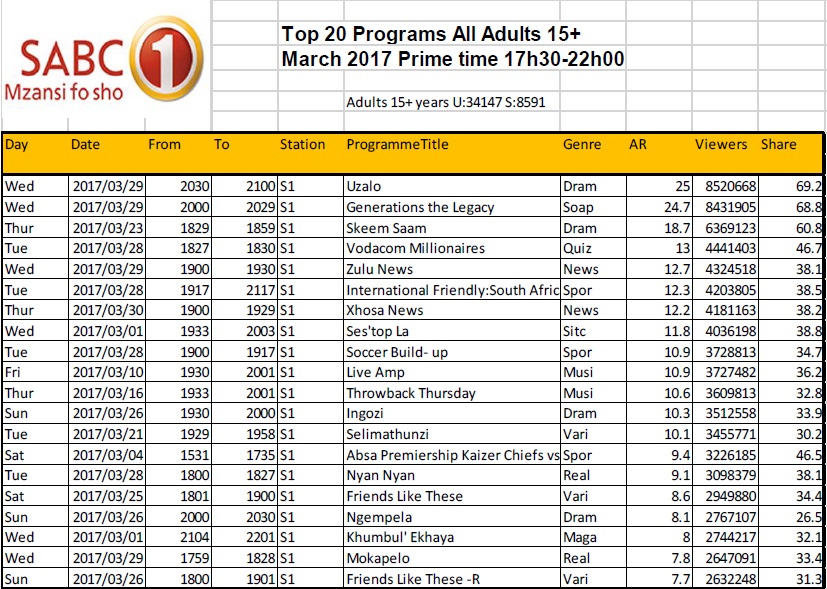
SA TV Ratings: SABC 1 — primetime top 20 for Mar 2017

by MarkLives (@marklives) The hottest primetime television shows on SABC 1 in South Africa revealed: TV ratings for March 2017.

In 2016, the Broadcast Research Council of South Africa (BRCSA) changed its policy about giving away TAMS and now only monthly reports, highlighting the top 20 or 30 primetime shows on several popular channels, are available.

SABC 1 March 2017

BRCSA TV Ratings March 2017 primetime SABC 1

Source: BRCSA March 2017

Broadcast Research Council of South Africa


The Broadcast Research Council of South Africa (the BRC) is a non-profit, industry body that was incorporated in 2015 to cater to the audience research needs of the radio and television industry in South Africa.

— Sign up now for the MarkLives email newsletter every Monday and Thursday, now including headlines from the Ramify.biz company newsroom service!

Media Redefined: Fake news and market research

by Martin MacGregor (@MartMacG) There is so much noise in the South African marketing, advertising and media industries at the moment around the future of research models that it is time for some perspective.

What has become clear is that the research that we relied on for all those years to make key marketing and media decisions was, at best, very top-level and, at worst, just plain wrong. The low weighting efficiencies (how much the sample mirrored the SA population) meant that the data ended up being very thinly based and filled with a huge amount of assumption.

New studies

This is now being corrected by the new studies the Broadcast Research Council (BRC) are putting out, as well as hopefully a new AMPS, developed by the Marketing Research Council (MRC), the replacement for SAARF.

The debate around the importance of independent research, and whether both of these are needed, has been well-documented, and the outcomes are presently playing themselves out.

More interestingly, the believability of research has now been seriously questioned. This has been spurred on by the diminishing confidence in all research after all the above came to light, as well as the surfacing of the era of fake news, where suddenly nothing seems to be as it looks. Just like there is a sudden realisation that there is a big difference between proper news, written by a professional journalist and fact- and source-checked and double-checked, and fake news, which could have been written by anyone, so it is with research and the “facts” that we need to make key decisions on.

In a potential world of no confidence in research, how can marketing decisions be made?

The answer is to approach the landscape like a journalist and start with the facts. And when it comes to facts, there are two irrefutable data points that could, if analysed correctly, lead to better quality decisions being made than ever before.

1. Actual media consumption

Not promised consumption, but what are consumers actually doing?

I will use a simple old-school media example of magazines and newspapers. Researched readership has always seemed to throw up some incredulous numbers. However, put together a simple trend line on circulations over the last 10 years across all print titles and that tells enough of a story.

The Sunday Times circulation has dropped from 500 000 to 300 000. That’s a 40% loss of readers, whichever way you look at it. But this still doesn’t answer who these Sunday Times readers are? Read the publication regularly and you will have a very rich idea of who they are targeting.

I have always found it strange how many media planners I know consume no media at all and rely totally on the research. Read, watch or listen to the content and it will tell you a lot more about psychographics than any research will.

Each medium has “no argument” data points that tell a whole lot of the story — whether it’s Ster-Kinekor ticket sales or MultiChoice subscription numbers, the real stories are there. Funnily enough, often these media owners don’t want to impart this knowledge. Like a good journalist, you just need to dig deeper — financial results are a good place to start.

Digital media lives off these factual data points almost to the point of too much data, and the real intent is sometimes lost. But the facts are the facts.

2. Actual sales

Yes, if we believe that advertising works, then the sales data that clients sit on holds a treasure trove of information about their consumers and the media that they consumed that led to their response.

Again, there is reticence to share this, which I always find strange. Why rely on outside research, where there is a high risk of misrepresentation, when there is so much fact-based data sitting at your fingertips?

So, as we enter the post-truth world, both in terms of news and research, let’s find the inner journalist in all of us and scour the existing landscape for those real facts. It may be harder work but it may just lead to more of the right marketing decisions being made.


Martin MacGregorMartin MacGregor (@MartMacG) is managing director of Connect, an M&C Saatchi Company, with offices in Johannesburg and Cape Town. Martin has spent 18 years in the industry, and has previously worked at Ogilvy and was MD of MEC Nota Bene in Cape Town. He contributes the monthly “Media Redefined” column, in which he challenges norms in the media space, to MarkLives.com.

— Sign up now for the MarkLives email newsletter every Monday and Thursday, now including headlines from the Ramify.biz company newsroom service!

Fair Exchange: Where crazy chaos must meet structure & fact

by Erna George (@edgeo23) Whether CEOs move around or stay, they do have the mandate to surround themselves with a board of experts who each aim for excellence which the CEO directs and sets the pace to be followed. In marketing, we don’t have this mandate. We do, however, expect marketing team members to be able to be brilliant at diverse areas — from the structure of detail, processes, analysis to leading people and projects all the way to being creative and innovative. But is it feasible for marketers to strive to be everything for all seasons and goals?

I’m of the school of thought that, for every season in a business, there’s a particular CEO. I’m sure you’ve heard about the ‘turnaround CEO’, who helps reverse negative performance and shape a positive future. Then there’s the ‘people’s CEO’, who helps develop a strong cohesive culture and moves people to consolidate and build. I’m not saying that CEOs don’t have the skills to cover everything from turnaround and efficiency to building but, typically, each CEO has a ‘go-to’ approach, a specialisation of sorts that may be matched and used effectively to a particular phase of a business for great effect — especially during tough times or significant changes.

Multiplicity of skills

I, like Jim Metcalf, am of the firm belief that marketers need a bit of crazy to come up with fresh thinking, challenge the norms and inspire others to see a new vision. Somehow, the eccentricities shown by engineers, or even accountants, are often forgiven or overlooked but, with marketers, the craziness is often seen as flighty and flimsy.

Marketers need to back up the ‘crazy’ with commercial acumen and data analysis. A highly innovative brand manager, known for stellar ideas, always needs the skills to showcase a strong business case, the strategic influencing competency and the sales skills to convince the most sceptical senior executive of its merit with little show of ego — a fair amount to ask. These people are hard to find, and those you train to deliver this are hard to keep, given the high demand out there.

I have worked with people who are geniuses at budget management, project management or writing briefs, yet ask them to lead people or engage with and persuade stakeholders and they bumble around like a bull in a china shop. Or people who have great skills for data analysis but struggle with critical thinking around less data-driven areas. Marketing people need a spectrum of skills and competencies that cover individual delivery and delivery through others to good commercial abilities and creative flair. How many realise this?

A multiplicity of skills is required, with the ability to balance the more-structured with the more-creative and the EQ to know when to play which skill. Many hear ‘marketing’ and think of the bright lights of big launches and new innovative media and advertising without considering the data-sourcing, number-crunching and effective influencing of others required. Great marketing has the power to shift brands and business towards success but, as Spidey says, “with great power, comes great responsibility” and I am still frustrated by the many new graduates I speak to who don’t understand what this looks like in the world of marketing!

Balance

While you can ensure that the marketing team has data experts and digital experts in support, each marketer still needs to develop skills that allow a holistic approach integrating multiple business disciplines and understanding how these relate to each other to manage them effectively, while creating fresh thinking and embracing new technology. Balancing the innovative with pragmatic implementation, commercial with consumer need and more. And, with the pressure on profits, must be willing to get their hands dirty wherever it is required.

Identifying and enticing these people to your team is a challenge. While much of this aptitude will develop with experience and skills may be taught, we need people who are flexible without being pushovers, resilient in dealing with change and failure, and with a strong desire, willingness and ability to learn. Therefore, a solid recruitment process is critical and having an HR team who ‘gets’ marketing will improve your success levels exponentially.

Once recruited, a solid learning programme is a must, be it on-the-job and/or formal training to learn your organisation, key people and processes, as well as essential skills. In addition to this, assisting team members in uncovering their core strengths and blind-spots helps unlock potential plus establish a common language to continuously shift from good to great.

For me, this was the personality-traits test, Insights Discovery Colour Energies, to which I was recently introduced. This system uses four colour ‘energies’ to explain more about who each person is and their preference or ‘go-to’ behaviour-style.

  • Fiery Red energy is authoritative — a director and extrovert
  • Sunshine Yellow is highly positive — these people radiate positive energy and focus on good relationships to persuade and bring others along
  • Earth Green energies focus on values and the reason things are or need to be. They are very personal in their approach and value people and relationships.
  • Cool Blues are introverted and want to understand and analyse all the details for the world around them.

Framework of understanding

By using this framework, you may improve individual effectiveness based on the understanding of development areas (eg both long-term development plans and quick preparation for critical interactions), harness collective strengths across team members more effectively, and encourage constructive feedback with a common language eg in my team you will hear, “I am embracing my blue today” or “I need a red perspective”. The former means ‘I need to analyse and connect more with data than people, please’ while the latter means ‘I need a clean-cut decisive view — no-more whys or why-nots’. It also means that the team is more cognisant and therefore more understanding of each person’s context, and this creates an atmosphere of support and acceptance — at least on some days.

The other great benefit is to identify how to build teams and recruit people. Too many reds and conversations would be short and details few, with too many chiefs overall. Too many blues and there could be analysis-paralysis. Having a blend of the energies ensure that there’s a good mix of detail focus, decisive action, emphasis on purpose and people leadership.

This is tough stuff and I don’t have a solution. All I know is that there aren’t enough people who come with the skills ready to go, and the search for the person strong in all fields may be like looking for the Holy Grail. So rather:

  • Ensure a well-rounded recruitment process that focuses beyond skills to competencies, such as adaptability, resilience and a hunger for learning, and personality traits to check fit
  • Have a clear training programme in place and mentors to drive learning through the team
  • Consider an internal tool to develop self-awareness and self and team development opportunities to unlock potential continuously

Demystifying marketing

What we may also need to consider is that, while we want to attract the best and the brightest, if we demystify what marketing is really about, it becomes known for the balance between crazy creative and solid structure and processes, and so we’ll gain more stature and attract the right people. Lastly, for those leading the teams, balance the needs and expectations of the perfect working team (needed now, please) with a robust programme to develop people for the future.

If anyone has a solution, please let me know — I’m keen to learn and try new approaches.


Erna GeorgeAfter starting at Unilever in a classical marketing role, Erna George (@edgeo23) explored the agency side of life, first as a partner at Fountainhead Design, followed by the manic and inspiring world of consultancy at Added Value. She has returned to client-side, leading the marketing team in the Cereals, Accompaniments & Baking Division at Pioneer Foods. Her monthly “Fair Exchange” column on MarkLives concerns business relationships and partnerships in marketing and brandland.

— Sign up now for the MarkLives email newsletter every Monday and Thursday, now including headlines from the Ramify.biz company newsroom service!

Ad of the Week: Beefcake sizzle for the mama

by Oresti Patricios (@orestaki) Jet, Joe Public and director Marc Sidelsky of Bouffant put a totally new spin on selling baby goods with an ad that combines conventional retail selling with self-referential, cheeky humour.

Having a baby is simultaneously the most exciting, stressful, emotionally draining and tiring experience most people may have. Taking care of this new life, this still-to-be-formed individual, may  be both uplifting and daunting. For many mothers, the disturbed sleep, hormonal changes and additional stress may result in depression and low self-esteem — particularly if it’s a first child. Having a baby is intense, and it is all-consuming.

That’s why this ad is so clever: it appeals to the playful, sexual, fun loving, real person at the core of motherhood.


Pinterest icon View all the Ads of the Week at a glance on our #AdoftheWeek Pinterest board!
YouTube icon Watch our 2017 #AdoftheWeek playlist on YouTube


The “A Moment Just for Moms” TVC in this #JetGetsMoms campaign features a delightfully hunky man by the name of Fezile Mkhize. His dry delivery reminds me a little of the ‘Old Spice Guy’ but with a softer, more metrosexual demeanour.

The ad starts with Mkhize addressing the camera: “Hey, baby,” he says, “we know as a mom you don’t get a second to yourself…” The camera cuts to a wide shot to reveal Mkhize, shirtless, holding a baby in the crook of his arm in a baby-blue nursery type environment. Mkhize is well-built — real ‘beefcake’.

He continues: “… so here’s 35 seconds, just for you,” and gives a big, sexy wink.

Sultry romantic music starts to play, and the camera focuses on a brightly patterned wall. A baby’s head rises into frame and, when the scene cuts to the wide shot, we see that the baby is balanced on the muscular model’s back while he does pushups. The text on the screen advertises the fleecy sleepsuit the child is wearing.

In the next scene, Mkhize has a different baby in the crook of his arm. “Hey, there’s nothing wrong with a little drooling,” he says, lifting up his t-shirt to reveal his well-defined abs. He wipes the baby’s mouth with the T-shirt and gives the camera a wry look.

The next scene finds Mkhize with another baby balanced on his hand as he does barbell exercises; the retail info for toddler tracksuits is displayed in text. In the following scene, he is reclining on the floor with a toddler running around while he presents the sales info for some branded diapers.

The camera cuts to a close-up of a bottle of baby oil, and Mkhize pours it liberally over his chest, rubbing it in, while the music swells.

The music suddenly cuts dead and Mkhize, a little regretfully, says, “OK, now back to reality,” and winks again. This is followed by the Jet logo, with the hashtag #JetGetsMoms.

That’s an apt summary — in this ad, I feel that Jet really does ‘get’ moms, making them feel visible and understood. So many brands make the mistake of seeing women as harassed housewives. Ugh! (You know who you are.) Yet Jet sees mothers as mature, sexual, humorous and people who should be valued and loved.

And that’s not all, folks. The campaign is totally integrated. The theme is continued on the Jet Facebook page, and www.jetonline.co.za.

A first look at what’s going down at Jet’s Facebook page shows that people are just loving this campaign:

DNV: OMG the guy <3 <3 .. just made me forget that ‘m a lesbian
Jet: He’s quite a hit ?, no matter your preference or age (as we can see from the pure joy in the little one’s eyes)

PBT: Never mind the baby clothes
Jet: The baby clothes are the most important part :)

NSD: I just want a baby from that guy..lol
Jet: He is quite the looker ?… Oh and of course most importantly so good with kids ?!

MJ: How much for the dude…? :-) :-) :-)
Jet: … We could never put a price on all of that ?

DP: What a treat thanx jet
Jet: Our pleasure Daisy ? glad you enjoyed!

ZV: He’s upstaging the baby lol

CK: this ad its so hoooooot i wl go to jet

LDM: R we supposed to look at the Baby or the yummy man..

SEK: What baby? lol….

Wow, how’s that for endorsement?! It seems as if Mkhize is having the required effect, with Jet is the winner.

Retail can be tough — just ask Edgars, which should pop over the corridor to learn something from Jet, [Edgars and Jet are owned by Edcon] — yet it seems as if Jet is having no problems. Thanks, Jet, for bringing a smile to my face, and to many moms and dads out there. Great work, great casting and great copy. And a big high five to Joe Public, which seems to consistently remain on top form.

Credits

Agency: Joe Public
Client: Jet
Group chief creative officer: Pepe Marais
Chief creative officer: Xolisa Dyeshana
Creative directors: Megan Perks, Heloise Byrne
Art director: Carmen van Rensburg
Copywriter: Sarah Forbes
Strategist: Ben Shapirio
Deputy managing director: Khuthala Holten
Account director: Elizabeth Mokatsi
Business unit director: Caree Ferrari
Agency TV producer: Tshepiso Moerane
Production company: Bouffant
Director: Marc Sidelsky
DoP: Clive de Klerk
Producer: Bryony Webster
Post Production: Deepend Post Production
Media planner: Rika Nell
Editor: Marcelle Mouton
Final mix: Jo Darling/Pink Noise


Oresti PatriciosAd of the Week, published on MarkLives every Wednesday, is penned by Oresti Patricios (@orestaki), the CEO of Ornico, a Brand Intelligence® firm that focuses on media, reputation and brand research. If you are involved in making advertising that is smart, funny and/or engaging, please let Oresti know about it at info@ornicogroup.co.za.

— Sign up now for the MarkLives email newsletter every Monday and Thursday, now including headlines from the Ramify.biz company newsroom service!

Multisensorial marketing — the tangible

by Marguerite de Villiers. Sometimes something just feels right, whether physically or emotionally. Yet researchers and marketers are only recently beginning to untangle the intricacies of feelings, desires, inclinations and intentions — and what implications these might have on the individual and collective experience.

Do not touch

The sense of touch is embodied in our engagement with the world. We use our sense of touch to judge the quality of a product: its weight, texture, strength and temperature. Based on consumers’ preferences of these qualities, we make particular judgments which influence our purchase behaviour. In a time of growing online shopping, marketing the sense of touch becomes limited and challenging, and marketers look for creative and innovative ways to draw on the symbolic connections that touch establishes between products and consumers.

Apple’s packaging is often considered to be part of the product as it adds to the overall brand experience. Apple has taken this a step further in the development of its concept store, where consumers are able to experience the brand more holistically — they may hold the product, try it out, listen to music, and examine it in person.

Coca-Cola’s familiar bottle shape is a prime example of ergonomics (the design of a product to be both functional and comfortable for human use). The bottle has been designed to be held comfortably, but also to be recognisable as unmistakably part of the Coca-Cola brand.

With feeling

In marketing, affect (to move emotionally) often leads to effect (to bring about change). To feel is to experience something; to have sense and sensibility. It is a shift from consciousness (feeling experienced the mind) to action (feeling embodied). In a world of uncertainly, distrust and change, consumers are drawn to brands that represent honesty, transparency, upliftment and authenticity. Messages of empowerment and inspiration are welcomed and positively received.

#LoveHasNoLabels was a campaign that challenges people to acknowledge and remove the prejudices they might have towards others, based on the labels they place on them. It called for a move away from judgment, stereotypes and generalisations. It did this through an interactive campaign that demonstrated — with the use of an x-ray screen — that the labels we place on each other have no physical grounding. It was an emotive campaign that moved people to re-evaluate their own perspectives, opinions and views of the world.

The challenge for marketers is to draw on consumers’ feelings — both in the physical and emotional sense — to create a holistic experience in which they can immerse themselves and to connect with brands in a real, authentic, and tangible way.


Marguerite de VilliersMarguerite de Villiers is an anthropologist at strategic marketing consultancy, Added Value.

“Motive” is a by-invitation-only column on MarkLives.com. Contributors are picked by the editors but generally don’t form part of our regular columnist lineup, unless the topic is off-column.

— Sign up now for the MarkLives email newsletter every Monday and Thursday, now including headlines from the Ramify.biz company newsroom service!

Shelf Life: Koto rebrands Gumtree South Africa

Cheryl Hunter (shelflife at marklives.com)’s weekly pick of all things new — product, packaging, design, insight, food, décor and more!

  • Gumtree SA grows its offering
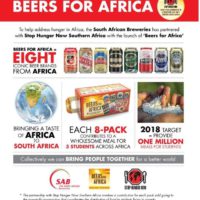
  • SAB exports Beers for Africa
  • Gold Brands opens local Las Iguanas

Green tree for Gumtree

Online classifieds portal, Gumtree South Africa, has launched a major rebrand and upgrade of its website, mobisite and apps, in order to offer consumers a simpler, safer and more-efficient experience with add-on features and a new design framework.

Created by London studio Koto and implemented internationally over a year ago, the new identity retains the brand’s tree motif, but moves away from the previous orange, white and green emblem to a more-modern, instantly recognisable icon that is functional too. While the new logo won’t have a direct impact on the consumer, it’s reflective of the new site — digital, modern and fun.

In the first significant overhaul since its inception in 2005, Gumtree looked at other classifieds sites and realised business was being done today much the way it was five or 10 years ago, without significant innovation.

According to Gumtree SA director-GM, Johan Nel, while the business model is simple (consumers selling to other consumers), it doesn’t mean that there shouldn’t be options: “For example, you might prefer to pay directly for an item with your credit card and have it shipped to you via courier, without meeting the seller face-to-face. (You can now do this on Gumtree via Pay With Shepherd). Or you might want to limit your trading to individuals in your area, narrowing your searches to ads in your current location.”

Aside from the new look and advanced functionality, the introduction of insertion fees in the Jobs and Services category has been implemented in hopes of reducing the amount of scams that occur as a result of listing on the site.

Nel says the redesign itself was done with improving the consumer’s experience in mind — more replies and faster posting: “The shift to mobile technology has been remarkable. Customers are buying and selling online, but they are doing it via their cellphones rather than their PCs. Instant messaging and social media have also become part and parcel of the experience as ads are shared and buyers are opting to chat rather phone or email. The introduction of Pay With Shepherd on Gumtree has also seen consumers transact very differently — introducing an element of traditional ecommerce to the classifieds’ scene.”

gumtree.co.za • Facebook • Twitter
studiokoto.co • Twitter


Beer feeding Africa

South African Breweries (SAB) has launched an eight-pack of iconic beers from various countries across Africa, “Beers for Africa”, with ambitions to export the new collection so consumers across the globe may enjoy these select African beers.

SAB has partnered with Stop Hunger Now SA (SHNSA), an international, NGO that packs and distributes meals to people living in poverty. For every pack sold, three students will receive a nutritious, wholesome meal.

Says Ricardo Tadeu, zone president of Africa: Anheuser-Busch InBev (AB InBev) and SAB, “Our goal is to provide 1m meals for students by 2018 and to continue to do this every year. “Beyond that, we will be supporting agricultural development in the different countries as each beer will be sourced locally, with the key ingredients grown by local farmers.”

Tadeu believes by bringing a taste of Africa to South Africa and the world at the same time, the company will be making a tangible difference in society.

According to Saira Khan, CEO of SHNSA, in SA alone, 3.165m children suffer from household hunger and malnutrition while, globally, supplies of food exceed demand: “Initiatives such as Beers for Africa which pledge to support students really do enable them to obtain an education and thus move out of poverty. SHNSA provides a sustainable solution to combat hunger and poverty,”

The first edition of the “Beers for Africa” pack will showcase Castle Lager (South Africa), St Louis (Botswana), Maluti Premium Lager (Lesotho), 2M (Mozambique), Laurentina Preta (Mozambique), Manica (Mozambique), Kilimanjaro Premium Lager (Tanzania) and Zambezi Premium Lager (Zimbabwe).

Tadeu says the number of imported brands in the US makes up about 10% of the beer market, which equals the size of the SA beer market: “The potential is enormous and, as a result, my vision is that we will be able to provide meals for students and support farmers across Africa.”

sab.co.za • Facebook • Twitter


Joburg Iguanas

Fast-food retail company, Gold Brands, is bringing UK restaurant brand Las Iguanas to Johannesburg, offering local consumers authentic Mexican, Brazilian and South American food and cocktails this winter (June 2017).

Gold Brands, the brainchild of restaurant-industry veterans Stelio Nathanael and his wife Praxia, was established in 2012. In addition to its existing brands — Chesanyama; Blacksteer; 1+1 Pizza Pasta; Opa!Pitaland; and Chicken Wild Wings — the company has added several UK brands to its expanding portfolio: Las Iguanas, Café Rouge, Belgo and Bella Italia.

Las Iguanas started in Bristol in 1991. Known for its vibrant colours and atmosphere, the outlet now has 53 UK sites.

According to Stelio, fewer South Africans can afford to spend money on indulgent holidays these days, so they’re spending their money on dining out instead: “The idea behind the brand was to create a fun, happy place that made people feel good about themselves and life in general. Twenty-five years down the line, it’s still doing just that.”

Las Iguanas will be open for breakfast, lunch and dinner seven days a week, with specials added daily. A bespoke children’s menu will available, designed with Aardman animations, the animation company behind Wallace & Gromit and Chicken Run.

goldbrands.co.za
iguanas.co.uk • Facebook • Twitter


Cheryl HunterShelf Life is MarkLives.com’s weekly column covering all things new. Notify us of yours at shelflife at marklives dot com. Want to sponsor Shelf Life? Contact us here.

Cheryl Hunter (@cherylhunter) has written for the South African media, marketing and advertising industries for more than 15 years. A former editor of M&M in Independent Newspapers and contributor to Bizcommunity, AdFocus, AdReview and the Ad Annual, she has also produced for various television networks and currently consults on communication strategy and media liaison.

— Sign up now for the MarkLives email newsletter every Monday and Thursday, now including headlines from the Ramify.biz company newsroom service!

Africa Dispatches: Julia Franco’s fashionable brand revolution

by Charlie Mathews (@CharlesLeeZA) Hundreds of kilometers away from Jozi, in the small North Coast town of Umdloti, Julia Franco could teach DA mayor, Herman Mashaba, a thing or two about compassion and innovation. Franco has created a socially relevant local fashion brand that gives migrants work, and which aims to revolutionise the fashion industry by offering more than fair pay for work.

Shwe — The Wearable Library exports to Brazil, the US and beyond. Founded by Franco, it is a social enterprise that employs 64 people at a handful of hubs in Durban’s city centre. The brand produces trendy female garments made out of wax print material (shweshwe) and is a living testament to her philosophy that fashion is a form of communication. Each garment has a tag that tells the story of the person who made it.

“Group effort”

Julia Franco. Photo by Jon Pienaar.
“The biggest lesson I’ve learned from Shwe is that you can’t do anything like this by yourself. It is a group effort,” says Julia Franco who learned to sew, and learned about life, alongside the refugee women she works with. Photo by Jon Pienaar.

“The biggest lesson I’ve learned from Shwe is that you can’t do anything like this by yourself. Shwe is a group effort. Every single woman linked to the garment-making process is important to the whole process,” says Franco, who also says that this operation has changed her life and the way she thinks about work, fashion and money.

The 33-year-old first studied fashion in Milan and got a dream job at the Italian icon, Roberto Cavalli, but, after falling in love with a South African during Fashion Week, what happened next changed her life. She says she met her boyfriend in Milan and followed him from Italy to SA five years ago, and that’s when she first encountered the traditional African fabric we all know as shweshwe. “It was love at first sight,” she admits, and the diversity of patterns and colours inspired her to craft a new place for herself in the world of fashion.

“When I first arrived in SA I started to look for a place to fit in. There were a lot of opportunities with Mr Price, but I couldn’t do that because of what cut-rate retail clothing is doing to the industry,” she explains. A sociologist friend introduced her to some social justice organisations in Durban that assist refugees and the destitute, and her path became clearer.

“Humbling experience”

Julia Franco with a sample. Photo by Jon Pienaar.
It took a year for Shwe to gain traction but now the fashion label with a conscience retails in boutiques in Brazil, Europe and the US. Photo by Jon Pienaar.

“I toured elderly homes, social justice projects and refugee centres, and found three different organisations that I could work with,” Franco said. “I arrived at the Denis Hurley Centre in Durban with fabric and we started straight away, and I became a part of the sewing group. I learned to sew with the group by taking a three-month course with them. It was a very interesting and humbling experience,” she says. Situated in Durban’s inner city, the Denis Hurley Centre acts as a refugee reception for people who travel to South Africa to escape poverty, violence or political instability.

“I think that fashion can make a strong political statement, and that’s how Shwe started,” Franco says, adding: “It is not really about what we make, but how we make it. I try to use Shwe as a statement that asks why so many people are excluded from fashion when they shouldn’t be. Everyone dresses themselves and has the right to express and communicate. Everyone should be integrated into and represented in fashion, because everyone has a voice.”

She shares a recent experience she’s had working alongside the garment makers who create Shwe fashion: “We recently did a collaboration with the Durban University of Technology. The university helped to teach the women in our group to learn the basics, like doing a good finish and putting in zippers. When we arrived at the university, we discovered that some of the refugees had never been to school before. Any kind of school. That is when I realised that this was beyond just giving a profession to someone. That this is about hopes and dreams.”

Living wage

The social entrepreneur mashes her Italian fashion-fu with the bright and tightly patterned shweshwe materials, creating garments fit for a Milan catwalk. But, unlike the multinationals that dominate the retail world, she ensures that all the seamstresses are paid a good living wage. They are given a per-garment commission, so those who can put in a full day can take home a decent package, while some prefer to work part-time to subsidise their continuing education.

The international garment industry is renowned for cut-price, mass-production manufacturing strategies, such as outsourcing to factories with sweatshop conditions and child-labour practices in countries that are less than fastidious about health, safety and welfare regulations. Low manufacturing costs allow for huge mark-ups by suppliers and wholesalers. A report by O’Rourke Group Partners in 2011 calculated that a $14 shirt sold in Canada would be supplied at only $5.67. The factory that manufactured the shirt would have paid its workers 12c per shirt, which is just 2% of what it’s sold for.

For Franco, this is not an option: she prefers to make less profit, and to ensure that people who work on Shwe are well-paid. The weak rand works in Shwe’s favour, as exporting makes the garment more-affordable in places such as Brazil, the US and Europe.

“Help more people”

Shwe item of clothing
In Shwe, Julia Franco has created a socially relevant fashion brand that gives migrants meaningful work at a living wage. Photo by Jon Pienaar.

When it comes to talking about the bottom line, Franco says she isn’t in this for the money. “I’ve lost money setting this up, and I invest everything that comes in. Because it is always a matter of deciding to take a bigger salary or helping five more people. I always want to help more people. If you want money in fashion, it would be best to take a traditional job or open an individual brand, and not create a social brand.”

Today, Shwe is beginning to make a small profit while at the same time offering refugee women an opportunity to work in the fashion industry and to earn a living wage, with work conditions that are largely set by themselves. A radical about-face at a time when brands such as H&M, with their cut-rate cost-clothing, have earned public ire and shame for exploiting refugee children.

Viva la Revolution, Shwe!


Charlie MathewsCharlie Mathews is a writer who likes to draw and is based in KwaZulu-Natal, South Africa, She is a contributing editor to MarkLives.com through her monthly “Africa Dispatches” column.

— Sign up now for the MarkLives email newsletter every Monday and Thursday, now including headlines from the Ramify.biz company newsroom service!

Online CPD Courses Psychology Online CPD Courses Marketing analytics software Marketing analytics software for small business Business management software Business accounting software Gearbox repair company Makeup artist