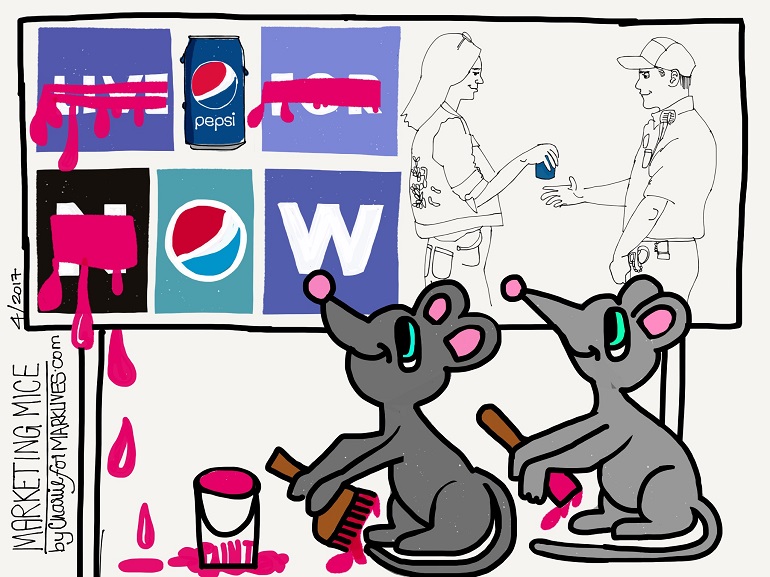
Charles Lee Mathews (@CharlesLeeZA) is a writer who likes to draw, such as this regular editorial cartoon — exclusive to MarkLives — in which The Marketing Mice offer their take on the world of marketing, media and advertising.
— Sign up now for the MarkLives email newsletter every Monday and Thursday, now including headlines from the Ramify.biz company newsroom service!
by Herman Manson (@marklives) Have you ever thought about how you think? I figured Ayse Birsel has and that makes her interesting. Her book, Design the Life You Love: A Step-by-Step Guide to Building a Meaningful Future, comes from her taking a moment to think about her own design-driven thought process. Which lead to her designing a guide to design thinking. Birsel was a speaker at the recently held Design Indaba. So you don’t have to make these things up.
How to be creative every day by Ayse Birsel
Remarkable story
If you are not big on self-help books, that’s OK. Ravi Naidoo didn’t bring Birsel to South Africa to sell her book. He flew her in as a speaker because her remarkable story is one many designers may easily relate to and it’s so very relevant to South African today — there is a moral in the lovely madness — which is like a thing with Design Indaba (a lovely thing, but a thing, nonetheless).
The story goes that, during the 2008 recession Birsel’s design business did what many SA businesses are doing just about now. It kinda tanked: clients went in-house; making money from design became harder and harder. All the ad people in the audience were nodding their heads. Maybe you should have completed that law degree after all (who are we kidding, but whatever)?
But then a friend said something rather wonderful to Birsel that would help turn things around. She talked about how she loved how Birsel thought about things, how she saw the world, and so Birsel wondered, “How do I think?” So she drew it (obviously). The book features handdrawn art and type.
Four steps
Her process involves four steps:
Deconstruction (taking the whole apart)
Forming a new point of view
Reconstruction (putting it back together) and
Expression (giving it form).
Life is your biggest project, says Birsel. Who are you and can you design a life you will love? Go think on that. Modern society no longer offers us road maps (school, varsity, marriage, 2.5 kids, retirement, RIP). Therein lies the challenge (draw your own map) and the opportunity (ditto).
It sounds simple, in an American-daytime-talk-show kind of way. But it is profound. If you could draw a vision map of your life now, and the life you would love to live, how would they differ, and how do you get them to match up? Most of us never get to the drawing bit — never mind actually working towards that drawn on the map to loving life.
The most powerful
Sometimes the simple talks are the most powerful. It’s obvious stuff we conveniently forget as it gets in the way of our current, urgent reality. It’s hard because it’s simple, and nobody makes time for simple things anymore.
Get designing, folks.
Herman Manson (@marklives) is the founder and editor of MarkLives.com.
— Sign up now for the MarkLives email newsletter every Monday and Thursday, now including headlines from the Ramify.biz company newsroom service!
by Sean McCoy (@TheRealMcCoyTRM) As neither political analyst nor commentator, I approach this space with caution — yet with equal passion and rigour — on the subject of the South African internal brand at such a tumultuous time in our young democracy. This column preparation coincides with two rating-agency downgrades following the dismissal of our minister of finance and the inexplicable midnight cabinet reshuffle announced by President Jacob Zuma, resulting in an unprecedented move by a diverse spectrum of South Africans and civil society to march upon our very president and demand his resignation in order to save the country.
What a diabolical mess in the context of nation-building and the internal country brand.
From hero to zero
I’m not talking about Zuma here. He entered the leadership role in a shroud of controversy at the time, with allegations ranging from the arms-deal transaction and corruption to rape accusations (characterised by cartoon depictions of HIV cleansing under the shower). I clearly recall an industry colleague committing to emigration on that very day; he undoubtedly knew what was coming under Zuma’s leadership and he wasn’t wrong.
I’m referring to the ruling party brought into power in 1994 as a transformative change to South Africa and the commencement of a new democratic country. A nation was energised, galvanised by this change and mesmerised by the inspirational leadership of Nelson Mandela, who must clearly be turning in his grave right now at the sight of what has been done to this country in the Zuma era. The moral standard, the spirit of reconciliation, the focus on a better future for all South Africans and the capacity for sustainable change all gave a clue to a set of national values that would take us forward as a country and mobilise a unified people toward a new dispensation.
What has become of that set of values and the behaviours of our people over the last 23 years?
Can the tail wag the dog?
It is uncharacteristic in the corporate world to see a situation in which business leadership is rotten to the core, yet people unite to stand against such leadership and drive the organisation forward. It is the norm in such instances to see leadership being held accountable by the market and, ultimately, the board, often resulting in immediate corrective action and resolution. Just ask Martin Winterkorn, the VW CEO who was forced out within a week of the emission-scandal breaking. Politics is a different animal, but how a leader in this position remains in power and defies the law of gravity is a mystery in itself. As is often said, you have to be careful what you wish for and we as a nation are responsible for putting him into the seat of power. This was never an Idols voting poll, but one of real consequence to this fantastic country and we need to undo it — fast.
So credit to the people of South Africa for rising up on 7 and 12 April 2017 and taking a firm stand against this expression of leadership. The message is very clear from a vast spectrum of South Africans from all race groups, religious groups and political parties — “Zuma must fall” is the voice of the people and the ultimate solution to restoring confidence and a half-decent internal country brand again.
We have the ingredients — tenacity, determination, intelligence and capability as a people — to do what I alluded to in last week’s column citing Senor and Singer, who describe the spirit of the Israelis in uniting against adversity and building a very successful national psyche. No, we are not Israel but we, too, have a troubled past, an extremely challenging present and require something special to build a better future.
So what will it take?
Leadership, for one.
A restoration of some national values, norms and behaviours of the right kind.
As we now approach the Nelson Mandela International Day on 18 July, perhaps our political leadership should reflect on the principles that he held out to this country and what he depicted for a new South Africa. We may even consider the strength of character of his compatriot, Ahmed Kathrada, who was recently laid to rest and who symbolised true democratic leadership and an ethos reflective of its time.
For that matter, we may even reflect on the merits of a competent and ethical minister of finance, such as Pravin Gordhan, rather than the facilitation of ministerial indiscretion, raiding of the treasury and blatant corruption at virtually every state level, symptomatic of financial anarchy.
At the most-fundamental level, the correct leadership will enable us to realign and restore our values, norms and behaviours inside state-owned enterprises (SOEs), the public service as a whole and then, ultimately all our people in the street. We are, in essence, good people in South Africa; people who want a better future for this great country and who work hard toward it — productive and constructive economic and social transformation, rather than the pillage and plunder of the Zimbabwean model under Mugabe leadership that we appear to be trying so hard to mimic.
Behavioural economics 101
In the quirky and sometimes irrational behaviour that is symptomatic of the human being, now is not the time for this in South Africa. We have allowed this to prevail for too long and it is time for the rational person to step forward as we did on 7 and 12 April and no longer allow the fundamental economic (and holistic) trade-off of our country.
This is what the people of South Africa are calling for and will no longer accept. Our internal brand is far stronger than Zuma cares to acknowledge and a spirit that will hopefully save the day.
Dr Sean McCoy, MD and founding member of HKLM, is a prominent figure in the branding arena, with his expertise centered on client service, brand strategy and business development. He contributes the regular “The Real McCoy” column focusing upon internal branding to MarkLives.
— Sign up now for the MarkLives email newsletter every Monday and Thursday, now including headlines from the Ramify.biz company newsroom service!
Cheryl Hunter (shelflife at marklives.com)’s weekly pick of all things new — product, packaging, design, insight, food, décor and more!
Africa offers premium surf gear
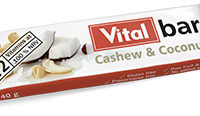
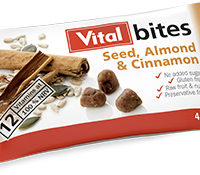
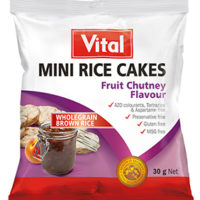
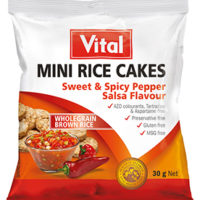
Vital hyper-functional foods
Absaville launches second season
The African Mermaid
Across Africa, from Madagascar to Morocco, Mami Wata is an African mermaid-like water spirit; it is said that those whom she takes for lovers return with a new spirit to become successful and good looking…this is the story of new brand Mami Wata.
“Mami Wata” is West African pidgin English literally meaning “Mama Water” or “Mother Ocean”.
The Mami Wata brand was founded upon a deep-rooted love of Africa and a passion for surfing — surrounded by four seas and oceans, Africa is a continent with some of the world’s finest surf. For those who ride her waves, Mami Wata designs and produces premium surf apparel, surfboards and accessories, inspired by the continent, its surf and its nature.
Based in Cape Town, Mami Wata wants to take Africa to the world with the debut of its first campaign story: “Woza” tells the story of a 22 year-old Transkei surfer, Avuyile Ndamase, who has been taken as a lover by the African water spirit. Created in-house by Peet Pienaar, the film aims to capture the spirituality of the surf culture and brand.
The film was produced by Pantera (Buenos Aires) and features music by BCUC (Soweto): “Asazani”.
Consumer interest in the relationship between diet and health has spiked in the last few years, while the information age has ushered in the age of instant gratification. This has resulted in a demand from consumers for snacks made from natural ingredients, with added vitamins but no added sugars or preservatives.
Says Bruce Dennison, president of the Health Products Association of South Africa (HPASA), “We’re seeing more and more how consumers are leaning on their diets, and not on pharmaceuticals, to prevent disease and optimise their health.”
So-called ‘hyper-functional’ foods, which combine ‘health-giving’ natural ingredients with added vitamins and proteins — think smoothies or fruit-and-nut bars — are gaining in popularity, as are natural and herbal tonics based on tried-and-trusted recipes.
Vital Health Foods nutritional expert, Andrea du Plessis, says: “Nutritious snack foods are playing an increasingly crucial role in our daily lives, as we no longer have the time to have three balanced meals a day, and rely on snacking for much of our nutritional intake.”
Many retailers are seeing the shift in how consumers are relying on snacking even more and are creating hyper-functional foods, in the form of health bars, raw food bars and energy bars, to meet the demand.
“Vital recognised how the consumer — namely millennials — were relying more on snacks for their meals, so we have developed some fantastic on-the-go snacks to fill this ever-growing market.”
The second series of Absaville, Absa’s bespoke storytelling campaign, hit the airwaves of nine SABC African Language Stations last week, bringing Absa’s Shared Growth strategy to life on radio.
Packaged as a 10-minute show-within-a-show, the series is perceived as programming rather than advertising.
Says David Wingfield, Absa’s head of marketing, “When we decided to roll out our Shared Growth strategy to the market, we knew we needed a multilingual storytelling campaign that could communicate our narrative. Absaville is a dynamic platform to speak with people in their mother tongue — young, old, rich, poor — who are passionate listeners of radio soapies on their favourite stations conveying memorable content with which they can resonate and identify. It’s an audience, not a market.”
Creatrix, an agency specialising in telling brand stories using multilingual, destination-driven radio content, will write and produce over 300 programmes in nine languages, knowing that the series must sustain interest and validity for a long period.
Absaville flights until 15 December 2017 on Thursdays, 2pm-3pm.
Shelf Life is MarkLives.com’s weekly column covering all things new. Notify us of yours at shelflife at marklives dot com. Want to sponsor Shelf Life? Contact us here.
Cheryl Hunter (@cherylhunter) has written for the South African media, marketing and advertising industries for more than 15 years. A former editor of M&M in Independent Newspapers and contributor to Bizcommunity, AdFocus, AdReview and the Ad Annual, she has also produced for various television networks and currently consults on communication strategy and media liaison.
— Sign up now for the MarkLives email newsletter every Monday and Thursday, now including headlines from the Ramify.biz company newsroom service!
by Mark Eardley. When is digital B2B really critical? And when is it dumber than dumb?
Critical digital: WWW
Website. Website. Website. WWW. That’s the triple-W where the world-wide web is really important in B2B. In B2B, WWW also translates into WHO you are, WHAT you do and WHY you matter to customers.
Who? What? Why? WWW. That’s your website content defined.
Hopefully, you know who you are and what you do and can express that really fast on your site. But are you as crystal-clear about why you matter to customers? Can they see — immediately — how you will contribute to their success? Are they in any way spurred-on to find out more? What do they see that will move them from browsing to buying? Yep, buying, buying, buying.
As a marketer, do you want browsers or do you want purchase orders that produce profitable sales? If all the visitors to your site don’t at the very least see what you will do for their business, then what’s the point of having a website? What’s the point of all those sterile industrial stock-shots and silly-snaps of clean-as-a-pin execs gazing in adoring amazement at something (unknown) on a colleague’s laptop?
Beware WWW: We, We, We
Check out a few high-profile B2B sites and you’ll find them infected with the WE-Disease. The symptoms are immediately apparent. They’re easy to spot and manifest themselves in three very obvious ways.: First, WE do this — in a world-class way. Second, WE do it this way — according to global best-practices. Third, WE deliver — internationally market-leading products and services.
Here’s an example of the WE-Disease taken at random from the home page of a local ICT big-boy: “[XYZ] provides the most advanced Information and Communications technology (ICT) products, services and solutions on the African continent.”
The lower case ‘t’ on technology is how it actually appears. Maybe it really does mean ICt. And stop being a pedant: why do details matter in ICt?
But wait, there’s more…
Wow! The most-advanced services and solutions on the African continent. Gee, Doc, where can I sign up for that? I’m just a moron-customer with a budget. What do I know about ROI, future business demands, total cost of ownership and like-for-like comparisons? I’m just a customer, Doc. Just a simple, lowly customer. Who’s interested in what I need?
The WWW people have a marcoms strategy that’s firmly inserted in the deep shadow behind them. You — the customer — simply don’t matter because WE are so mind-blowingly fantastic. This is us: we are WeWeWe. And you, moron, must kneel before us and prepare to be advanced…
When is digital dumber than dumb?
Fast answer? When you do anything digital that’s based on a website — aka: your digital handshake — that’s infected with the WE-Disease. This is where you start piling dumber on dumb.
www.what-we-do-for-you.com should be an invitation for customers’ to enter a world that proves how your business will advance their business. Disappoint visitors at the gate and they will walk away. And they won’t buy from you. They will then turn their backs on your irrelevant social media content. They will be affronted when you ram your incestuous fabulousness down their throats with smartass infographics, slick videos, and patronising webinars. They’ll go morgue-cold at the supposedly next-big-thing in the form of virtual reality (VR) or augmented reality (AR).
Which is nothing more than you deserve if you determinedly fail to address their concerns.
It’s 2017. Get with it.
It’s 2017. Get with it. Use the astonishing digital tools that are there right now to prove — yes, prove — how you contribute to your customers’ success. Use the tools; provide the proof. Engage whatever digital talent that will demonstrate that proof. Because, unless you do, you’ll watch your business die from a digitally lethal dose of the WE-Disease.
Mark Eardley is the author, together with Charlie Stewart, of Business-to-Business Marketing: A Step-by-Step Guide (Penguin Random House), which offers practical, actionable advice on how to make marketing make money. Both he and Charlie will be speaking at the forthcoming B2B Trade Conference on 18–19 May 2017, Emperor’s Palace Convention Centre, Johannesburg, organised by Vukani Communications. Mark contributes the monthly “Back2Basics” column, covering how B2B companies and their agencies should manage their marketing, to MarkLives.com.
— Sign up now for the MarkLives email newsletter every Monday and Thursday, now including headlines from the Ramify.biz company newsroom service!
by MarkLives (@marklives) The hottest primetime television shows on DStv in South Africa revealed: TV ratings for March 2017.
In 2016, the Broadcast Research Council of South Africa (BRCSA) changed its policy about giving away TAMS and now only monthly reports, highlighting the top 20 or 30 primetime shows on several popular channels, are available.
The Broadcast Research Council of South Africa (the BRC) is a non-profit, industry body that was incorporated in 2015 to cater to the audience research needs of the radio and television industry in South Africa.
— Sign up now for the MarkLives email newsletter every Monday and Thursday, now including headlines from the Ramify.biz company newsroom service!
Bullseye! ELLE Decoration has hit the mark with this cover —look out for all the shapes that draw your attention… Can’t wait to get my hands on this “Big Ideas Issue”! Last week it was announced that ELLE and ELLE Decoration will be moving from independent publishers, Isiko Media, to Ndalo Media. Both these titles will now sit alongside Destiny and Destiny MAN.
I’m not familiar with Kevin Tan (he’s one of the Philippines’ wealthiest and most-successful businessmen), but this profile shot is a real attention-grabber, and shows how profile cover shots may be brilliant and creative. Great photography and typography.
I never knew that these “big machines” could be so interesting, and that there are so many creative editorial angles for filling an issue! I also love the asterisk on the masthead, which leads your eye to the bottom where it reads “DO NOT READ WHILE OPERATING HEAVY MACHINERY”. We <3 clever cover lines.
In the lead-up to the 2020 Olympic and Paralympic Games in Tokyo, Time Out is launching “Open Tokyo” which celebrates and shows that anyone and everyone is welcome in Tokyo. With this issue in hand, people from the LGBT community, in wheelchairs, with disabilities, and also families with young children and babies, will find recommendations tailor-made for them!
MagLove by @MediaSlut is a regular slot featuring the best local and international magazine covers every week, recognising well thought-out, powerful and interesting (and hopefully all three-in-one) covers and celebrating the mix of pragmatism, creativity and personal taste that created each of them. The anonymous (for now) blogger behind MediaSlut knows way too much for his own good about media in South Africa, magazines in particular. His mission is to show when SA magazines fail but, most importantly, also when they succeed. If you’re looking for a library about SA magazines and news, this is your one-stop pitstop.
— Sign up now for the MarkLives email newsletter every Monday and Thursday, now including headlines from the Ramify.biz company newsroom service!
Charles Lee Mathews (@CharlesLeeZA) is a writer who likes to draw, such as this regular editorial cartoon — exclusive to MarkLives — in which The Marketing Mice offer their take on the world of marketing, media and advertising.
— Sign up now for the MarkLives email newsletter every Monday and Thursday, now including headlines from the Ramify.biz company newsroom service!
by Sean McCoy (@TheRealMcCoyTRM) It is always opportune to reflect on the state of the nation, insofar as our own internal psyche and behaviour are concerned when compared to other parts of the world. This idea was amplified again for me when reading Dan Senor and Saul Singer’s book, Start-up Nation: The Story of Israel’s Economic Miracle in an interesting account of how this tiny country, faced with immense adversity on multiple fronts, has achieved such amazing economic success.
The little nation that could
Senor and Saul offer that this small underdog country, which is in a near-constant state of war, has no natural resources and enemies on every border, has spurred an amazing adversity-driven culture that fosters a unique and intense combination of innovation and entrepreneurship. This is evidenced by its leading status in the technology sector, with more companies listed on the NASDAQ than Korea, Japan, Singapore, India and all of Europe combined. In their discourse, the two reveal and demonstrate why Israel’s policies on immigration, research and development, and military service have fostered a unique internal country attitude and have supported the country’s rise.
A key dimension of this internal national culture is attributed to the spirit of chutzpah. This modern Hebrew word that signifies gall, brazen nerve, effrontery and incredible guts is seen everywhere in Israel; it is the natural mode of being and this level of assertiveness is the norm, with reticence being something that risks you being left behind. It is a culture that is unusual to many people, but one that this nation of some 7m immigrants has put to work well, both in their now home country and in many markets around the world, if one briefly thinks of the commercial success they enjoy in multiple regions. South Africa is no exception and the Jewish community has excelled in myriad businesses in this country over the years.
As a persecuted people, they have risen from the many atrocities they have faced and, while always remembering their past, have forged ahead in building better futures wherever in the world they find themselves — and they are stronger for it.
And so, too, a little island
Another country that has experienced its fair share of strife over the years, too, is Ireland, yet it has risen beyond this and is a magnificent place today. Perhaps not quite an economic powerhouse and working toward the heady days of the Celtic Tiger again, but one that has an incredible charm, warmth and easy sophistication about it, clearly underlined by a very-resilient nation at heart. Their history of conflict notwithstanding, they are a united people aligned to a common cause and the celebrations around St Patrick’s Day are energising and patriotic to a fault. While the party is naturally good, the national pride is palpable, and stopping the English on the rugby field from setting a new world record for successive undefeated test matches was galvanising for them as a people, even at the most-fundamental level.
Like Israel, they are not without their problems and some will argue that the north vs south divide still stands and they are not as integrated as they need to be. The passing of Northern Ireland’s former deputy first minister, Martin McGuinness, is a stark reminder of the prevailing tensions and the fragility of the peace process and IRA legacy. However, on the surface, they function as a society — streets are clean, people are productive, and the courtesy and discipline while driving on their roads is eye-watering to a South African. One would go a long way to find a nation that has experienced the challenges that Ireland has over the years and is today so settled, happy and welcoming. Their internal culture is one of charm, warmth and hospitality in abundance.
What, then, of South Africa?
I’m not certain how we would describe our own internal culture. From a tourist perspective, we are likely seen as warm, hospitable and engaging, too, with an incredible diversity of people in arguably the most-beautiful country in the world. Once the tourists can get their head around that there are parts of the country that are safe to visit, pictures of Table Mountain, wine farms, game parks and extraordinary landscapes as far as you can imagine prevail.
Have we lost our way, however, as residents and the people who are building this new rainbow nation? Arguably, we have. The tremendous energy and belief that we had in 1994 has been replaced by periodic moments of nation-building and unity, but is mostly dependent on the role and influence of the ordinary South African, rather than our designated leadership. The moral decline, corruption, blatant state-entity incompetence and lack of discipline seem to prevail in many parts of our society today, with little-to-no accountability. An initiative such as Lead SA has become a tiny and distant voice that continues to deal hope as best it can and encourage ordinary people in our land, while leadership decay predominates around us.
We, too, have experienced hardship, strife and adversity as a country. We, too, are resilient, determined and enterprising people who can and should make a difference. While we continue to look backward and renounce the issues of apartheid and colonialism, so, too, should we look forward and focus on a better national future for all — with accountability. Transformation in our country should also include production and not just overt consumption — and it requires leadership.
Let’s rediscover that which makes us magical as South Africans and restore our unique flavour and potential as a country. Madiba would want that from us.
Dr Sean McCoy, MD and founding member of HKLM, is a prominent figure in the branding arena, with his expertise centered on client service, brand strategy and business development. He contributes the regular “The Real McCoy” column focusing upon internal branding to MarkLives.
— Sign up now for the MarkLives email newsletter every Monday and Thursday, now including headlines from the Ramify.biz company newsroom service!
by Oresti Patricios (@orestaki)For pushing the boundaries and exploring new ways to market a traditionally conservative product to a new generation, Mirum and Scottish Leader are this week’s Ad of the Week.
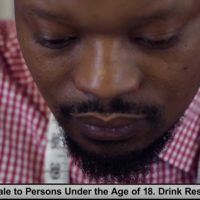
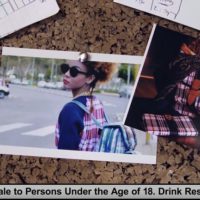
Mirum Agency and Scottish Leader Whisky profile a South African, Dennis Chuene, who has taken an everyday item and turned it into a fashion statement. The result is a charming little movie that shows you how an innovator turns a cultural staple into sought-after luxury.
What do Scotch whisky, a carry-bag made from plastic fibre and fashion have in common? Not much, you might think. But, then to make the connection, you’d need to have a new perspective, according to Mirum, the agency behind the latest online ad in Scottish Leader’s #newperspective campaign.
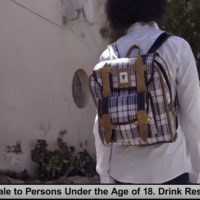
The familiar ‘china’ bag is used throughout Africa, and is a rugged, inexpensive carryall that may be used for shopping, luggage, fresh produce, or by hawkers to carry their goods. These bags continue to be so universally popular because they’re durable, accessible just about anywhere, and may be used to carry just about anything you might need to haul from one place to another. Iconic, this carryall is made from a virtually indestructible material woven from plastic fibres. What do they look like? The distinctive blue, red and white chequered pattern or tartan is this bag’s mainstay.
Upcycling
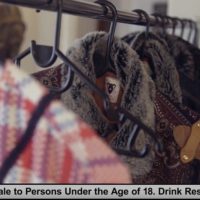
South African clothing designer, Dennis Chuene, drew inspiration from the china bag and decided to reuse the plastic material in a stylish new line of bags for his label, Vernac. The result of Chuene’s upcycling? The bags have been a major hit in Johannesburg and Cape Town, with enquiries coming in from as far afield as Germany. The innovative bags have also earned Chuene more than his 15 minutes of fame. Recently, he was featured on local TV and on CNN talking about these stylish backpacks, sling bags and tote bags.
Chuene tried to make other clothes and shoes from the material, but it just didn’t work. Undeterred, he got a graphic artist to copy the classic blue, red and white pattern, which he had printed on material, so that he could realise his vision for clothing that would match his bag collection. And, in that invention, Scottish Leader saw an opportunity to tell its own story. For several years, Scottish Leader has used the concept of ‘a new perspective’ as part of its marketing message. Scottish Leader is part of Burn Stewart Distillers that was bought by Distell from CL World Brands and Angostura Limited for £160m (R2.2bn) in 2013. It’s apparently the no. 1 selling blended whisky in Taiwan, and has shown good growth in South Africa.
In the mini-documentary, the brand celebrates people who apply a new perspective to what they do — such as Chuene, who’s taken a commonplace material and turned it into high fashion. The TVC is told with Chuene narrating the story of the ubiquitous bag. When he was young, he used to call the carryall a ‘mshana’ bag. But, when the designer travelled through Africa, he found that this bag was commonplace and had various names — including mme se keile, Ghana-must-go, and khumbul’ekhaya.
“Each one of these names has a story behind it, but each story has one thing in common: they’re all stories about a struggle for a better life,” says Chuene in the voiceover.
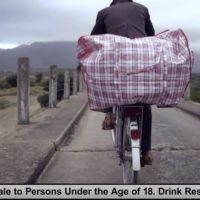
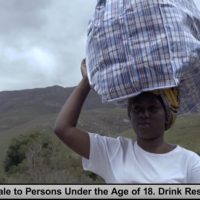
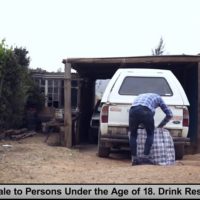
The visuals are beautifully shot images of people in rural SA. We see a man cycling across a bridge, with said bag balanced on the carrier behind his saddle. In another scene, we see a woman carrying one on her head while walking along a dusty road. The narration continues: “Because this bag, much like most people living on this continent, hasn’t had things easy.” At this point, the visuals of rural life are intercut with close-up shots of the bag material being cut and sewn.
The next scene is of Chuene walking through a rural village, dressed in his trademark denim and leather. The sky is moody and overcast, with clouds over the mountainous background. In voiceover he says: “But you know what? Things are starting to change, and more and more people are moving forward.”
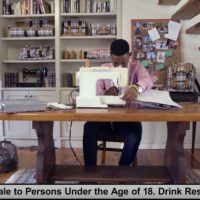
Then the ad moves to Chuene in his studio, working at the sewing machine with the bag material, stitching it into something new. His narration continues: “If I’d told someone 20 years ago that these bags would become a fashion statement, they would have laughed in my face.”
“You’ve got to see the potential”
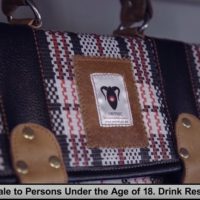
The camera pans across a corkboard with photos of various creations made using china bag material. The scenes that follow juxtapose the scenes of the old bags with more visuals of Chuene’s creations, including closeups on his label, Vernac. His narration concludes: “Maybe that’s the trick to life. You’ve got to try and not see things — or people — for where they are right now. You’ve got to try and see things from a different perspective; you’ve got to see the potential. Once you can do that, there’s no stopping you.”
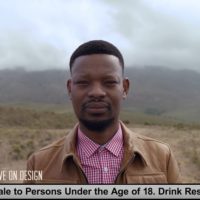
The final shot is of Chuene in front of a cloud-covered mountain, with his name on the screen, and the title, “A new perspective on design.” Following this is a simple packshot of the three Scottish Leader whisky bottles: Original, Signature and Aged 12 Years.
The conventional way of selling scotch whisky, more often than not, is to wax lyrical about the Scottish origins, the peat, the heath and the bagpipes — which doesn’t ring true with most South Africans. Especially the young, mobile entrepreneurial and artistic urban sophisticates for whom whisky is a good target market.
In this campaign, Mirum proves that local is more than lekker; it adds major brand relevance and makes a really cool connection. By celebrating an artist such as Chuene, Scottish Leader aligns its brand with the artistic and entrepreneurial spirit that we all hope will bring SA into a new era.
Credits
Agency: Mirum
Chief creative officer: Andrew Bloom
Creative director: Rod McCall
Copywriter: Charlie Gilbert
Art director: Rod McCall
Strategist: Gina Schreuder
Account director: Jared Epstein, James Booth Mirum UK
Senior digital project manager: Sonja ter Horst
Production/post-production: AVA
Director: Rod McCall
DOP: Tyron Kuypers
Editor: Timothy Weyer
Ad of the Week, published on MarkLives every Wednesday, is penned by Oresti Patricios (@orestaki), the CEO of Ornico, a Brand Intelligence® firm that focuses on media, reputation and brand research. If you are involved in making advertising that is smart, funny and/or engaging, please let Oresti know about it at info@ornicogroup.co.za.
— Sign up now for the MarkLives email newsletter every Monday and Thursday, now including headlines from the Ramify.biz company newsroom service!


 Charles Lee Mathews (@CharlesLeeZA) is a writer who likes to draw, such as this regular editorial cartoon — exclusive to MarkLives — in which The Marketing Mice offer their take on the world of marketing, media and advertising.