With a pat on the head, all is well again at Ogilvy
Last week it came to light that Ogilvy Johannesburg submitted ads created for AETN’s South African broadcast partner, Multichoice, to numerous trade publications and blogs as well as having entered it into numerous international ad awards in spite of it never receiving approval from client. In the meantime it has been awarded a silver Clio and was finalist at the One Show Awards en New York. One of the ads reportedly just ran in the latest issue of Migrate – the official Loerie Awards magazine.
In his original comment to MarkLives Graham Pfuhl, Marketing and Sales Director at Multichoice, stated that the campaign in question was in fact rejected outright by Multichoice, and confirmed “no History Channel ads can be published without the prior authorization of AETN.”
Having received a cease and desist order from AETN’s lawyers (these guys can’t even spell irony given the context of those ads and their own actions) it is quite obvious that not only MarkLives but also the local industry expect some answers.
MarkLives sent the following set of questions to Ogilvy;
1. Do you have a statement on the suspension (pending investigation) of the campaign in question by the CLIO Awards?
2. Why did Ogilvy submit a campaign rejected by client to numerous international awards?
3. What is Ogilvy’s view on scam ads and is this in fact what was submitted to said awards?
4. Will Ogilvy be issuing a formal apology to Multichoice , AETN or the media organisations and award organisers who received legal threats as a result of this campaign running without client approval?
5. Will Ogilvy withdraw the campaign from all awards it might have been entered for as well as return awards the campaign have already won?
Julian Ribeiro, Managing Director at Ogilvy Johannesburg, sent the following in answer; “It is clear that there has been a misunderstanding regarding the circumstances surrounding the flighting of the ad, and its subsequent entry into creative awards shows. Ogilvy Johannesburg did pass the work by the local client. However, Ogilvy acknowledges that we did not go through the full and proper approval process. Ogilvy Johannesburg is taking all commercially reasonable steps to ensure that the material is removed from publication. Ogilvy, AETN and Multichoice have been co-operating to clear up the misunderstanding, and the matter has been resolved.”
Having sidestepped most of our questions the statement does little but murky the water even further. What does Ogilvy mean when saying that it passed work by local client without going through the full and proper approval process? If it was rejected by client certainly it doesn’t matter how formal or informal the process – it should not have been submitted for awards. Would Ogilvy be returning the Clio and any other awards that might have been received given the information that has now come to light?
“Ogilvy Johannesburg is taking all commercially reasonable steps to ensure that the material is removed from publication – this includes its withdrawal from creative awards shows,” came the response from Ogilvy. So they are giving back the Clio. Yes? No? Guess…
We also queried the matter with Multichoice who earlier quite categorically stated that the campaign had been rejected outright. Pfuhl sent us the following statement; “This incident has caused extreme embarrassment to both Multichoice and Ogilvy as this campaign did not go through our rigid authorization channels, which always insist on written sign – off. I believe that some staff at Ogilvy were not informed of this and the ads were distributed and entered for awards. Naturally, as we did not have AETN authorization, efforts are being made to withdraw the campaign from all public showing, including award entries. Since this incident arose we have worked with both AETN and Ogilvy to reduce any damage done.” Does this mean the campaign wasn’t rejected, leading Ogilvy to submit the campaign to trade and to enter it into awards, but without actually having received final sign-off from top management?
Amidst the lack of clarity one point that can be made with reasonable certainty is that the campaign never saw the day of light outside limited trade exposure. Ogilvy could not launch the campaign without final sign-off, as certainly even ‘some’ Ogilvy staffers realised. In fact it remains uncertain that they even sought such permission.
With the discussion around the ads having been hi-jacked by ultra-conservative American commentators out to prove that the ads are anti-American, AETN, Multichoice and Ogilvy have all been opened to abuse by a radical fringe. With nobody acknowledging responsibility our industry has suffered a major setback in terms of good governance and transparency and future South African entries to international awards will face tougher scrutiny from organisers.
Managing the brand reputations of some of the largest companies in the world Ogilvy has failed to put in place any strategy to safeguard its own. It doesn’t seem to realise that business as usual is no longer acceptable. Accountability is the new name of the game – I guess not only bankers and brokers missed that memo.
The ads in question with their logos removed. Ogilvy Johannesburg created them for AETN license holder MultiChoice. Although never approved they were submitted at numerous international award shows.
Update: Statements in full as received from Graham Pfuhl
From: Zipporah Bikitsha On Behalf Of Graham Pfuhl
Sent: 25 May 2009 15:49
To: marklives.com
Cc: Graham Pfuhl
Subject: History Channel by AETN
Herman
Thanks for your email.
We have had a long and successful relationship with both AETN and with Ogilvy. I believe that Ogilvy has always had Multichoice’s interest at heart and certainly still does.
This incident has caused extreme embarrassment to both Multichoice and Ogilvy as this campaign did not go through our rigid authorization channels, which always insist on written sign – off. I believe that some staff at Ogilvy were not informed of this and the ads were distributed and entered for awards. ( I do not believe that this was done with any sinister objective).
Naturally, as we did not have AETN authorization, efforts are being made to withdraw the campaign from all public showing, including award entries.
Since this incident arose we have worked with both AETN and Ogilvy to reduce any damage done.
We sincerely hope that we can now put this matter to rest.
Kind Regards
Graham Pfuhl
Marketing & Sales Director
Multichoice Africa Pty Ltd
From: Graham Pfuhl
Sent: 20 May 2009 14:03
To: Ranjisinh.mahida@; nunu.ntshingila@; julian.ribeiro@
Cc: marklives.com; Georginah Machiridza; Colleen Goodman; Aletta Alberts
Subject: RE: History Channel ads challenged by AETN
Ranjisinh
As a client in this instance,and the company trusted with the marketing of The History Channel in Africa,,please may I apologize for the unlawful display of the ads in question.This was a campaign presented to us by our Agency,Ogilvy,and rejected.
At no stage did we authorize usage of the ads in question.In fact,,no History Channel ads can be published without the prior authorization of AETN.
May I apologize on behalf of Multichoice.I am sure separate apologies from Ogilvy will be sent to all concerned.
This will not happen again
Yours Sincerely
Graham Pfuhl
Marketing and Sales Director
Multichoice
Giant quilt turns into a great billboard
Hot off the heals of their Gold Loerie-winning Billboard of last year in which they built a billboard out of 6000 puzzle pieces over a four week period, Allan Gray and its ad agency King James have once again pushed the boundaries of outdoor media with their latest billboard that was erected at Cape Town International recently. In line with Allan Gray’s ongoing strategy of “anything worthwhile usually takes time”, over a three month period a giant three metre by twelve metre quilt was stitched out of twenty four different fabrics, with over nine hundred individual squares. The message ‘Patience is our virtue’ is patterned into the design. This quilt was then literally hung on the billboard.
Alistair King of King James comments “the billboard does much more than convey a message about Allan Gray, it demonstrates it in a very real way. Anyone who sees the billboard will appreciate the effort and the time that it took to make it happen, and that is exactly what Allan Gray is renowned for. It’s not what the billboard says that is important, but rather how it says it.”
Executive Creative Director: Alistair King
Art Director: Karin Barry-McCormack
Copywriter: Paige Nick
The History Channel issues cease and desist to bloggers
Update: CLIO removes campaign from list of winners on website
Update: Camaign won silver Clio – but where did it run?
Update: Conservative commentators took aim at campaign before lawyers stepped in
MarkLives received a cease and desist letter from AETN, parent company of The History Channel, demanding we remove advertising material for The History Channel from this site. For the record, the campaign in question was submitted by Multichoice agency Ogilvy Johannesburg, along with the information in the copy still below to MarkLives.com who published it in good faith.
The AETN letter read in part; “AETN is the owner of numerous trademarks associated with its History network, including the world famous marks THE HISTORY CHANNEL and the H logo (which are the subject of numerous trademark registrations worldwide).
Neither the use and display of AETN’s trademarks nor the purported advertisements themselves were authorized by AETN. As such, your display and hosting of this unauthorized content violates our rights under relevant law and constitutes, among other things, trademark infringement, dilution and tarnishment of our brands and marks, misrepresentation, interference with contract, and unfair business practices.
We therefore demand that you immediate cease and desist from all use and display of AETN’s trademarks, and take all necessary action to remove, delete, and disable the identified content from your website.”
It seems we were not the only site targeted by AETNs lawyers. Adsoftheworld.com removed the material from their site on the same day MarkLives.com received the threat of legal action.
MarkLives.com showcases great South African design. We believe in fair use. We believe in creative freedom and that governments and corporations have erred in insisting in ever tightening copyright laws. It stifles creativity and innovation rather than promoting it. Some laws are needed but we have allowed ourselves to be boxed in by greed and short-sightedness. Everything has to be inspired by something and piracy to our minds should be the primary concern of these laws rather than the diminishment of fair use.
Today corporations think they control calendar years – think 2010 – or letters of the alphabet. It has gone too far.
For the record we believe corporate lawyers are increasingly a threat to freedom of speech and therefore to constitutional democracy. They no longer have to win cases, only draw it out until under funded media independents go broke, as have been explained to me by one such lawyer trying to close down another unrelated article (in the end they failed).
Normally we would stand firm against such editorial interference. However, in an email to AETN, Ogilvy Johannesburg and MarkLives.com, Graham Pfuhl, Marketing and Sales Director at Multichoice, stated that the campaign in question was in fact rejected by Multichoice, and confirmed “no History Channel ads can be published without the prior authorization of AETN.”
Would an ad agency really go ahead and produce a campaign without some sort of authorisation? The point remains unclear as no official correspondence was received from Ogilvy Johannesburg at the time of publication.
While awaiting feedback from Ogilvy, we do believe everybody has a right to put their case after all, and having informed AETN of this fact, they sent us another note stating “We do not understand why, now that you have actual knowledge that this content was unauthorized, you continue to post it and to point to Ogilvy as the source, and this notwithstanding Ogilvy’s clarifications to you and apologies to AETN [Ogilvy has not yet publicly responded, only Multichoice has – ed]. We are sure that you realize that your continued actions subject you to liability regardless of who provided you the content or the circumstances of that delivery.”
This hard headed stance once it was clear that MarkLives.com had no malicious intent in publishing the images (they might be uninformed of this point in South African law) and that we needed some time to allow all the affected parties to respond should weigh heavily on AETN. The profound disrespect shown for proper journalistic practise in a country whose democracy is only 15 years old and where good media practice should be encouraged tells us much of the limiting stands corporations often seek out.
In the end MarkLives decided to remove the content in question though the ads can still be viewed elsewhere on the Web (mostly on Russian language sites it seems). Meanwhile the debate the ads sparked on other advertising sites, particularly Adsoftheworld and mostly around the perceived anti-American stance the ads take and from which we guess The History Channel wanted to disassociate itself has been cut short, brutally and effectively.
Herman Manson
Editor – MarkLives.com
As budgets dry up online looks up
Despite the global financial slowdown – as nice a way of saying ‘global recession’ as anybody and CNN has been able to come up with – at least one marketing medium will expand its share of the revenue pie, even as others prepare to face cutbacks and closures.
After online ad revenue grew 24% in 2006, 27% in 2007 and 32% in 2008, World Wide Worx researcher Arthur Goldstuck predicts it will grow 32% in 2009. This will see revenue jump from R319 million in 2008 to R419 million this year.
An informal survey by AdReview of members of the Online Publishers Association (OPA) reveals similar optimism. Members forecast that online’s share of advertising expenditure will double from the current 1.5% to 3% by the end of next year, 7.5% by 2013 and 13.7% by 2018. Interestingly, the survey showed that while there seems to be wholesale agreement on the decline in the percentage of ad spend going to TV, cinema, direct mail and print, increases are expected for radio and outdoor.
This trend isn’t only a local one. Globally, eMarketer.com notes that revenue for the US newspaper industry declined 16.4% in 2008 to $37.9 billion. By 2012, spending will slide to $28.4 billion. Yet most researchers predict growth in global online spend this year of between 3 and 15%. And a survey by PermissionTV of 400 senior-level decision makers in the US marketing and media industry revealed that they believed their digital marketing efforts to be least affected by budget cuts.
While growth will continue, it should be noted that forecasters have indicated that the pace of growth will slow. Most analysts have already adjusted their predictions downward to take into account the global crisis.
Henry Blodget, a senior Internet analyst at Merrill Lynch, notes on news site CNet.com that, historically, advertising spending on “new media” does not decline before, during, or after recessions, it simply grows less quickly than during normal years. “This trend was clearly visible in the growth of television advertising during the recessions of the 1950s and 1960s, and in the growth of cable advertising during the 1990s. One explanation for this effect is obvious: during the development phase of any industry, there are two main revenue growth drivers: new buyers and increases in spending by existing buyers.”
New buyers will continue to come online and online budgets in South Africa are expected to increase this year because of the Net’s accountability, lack of wastage through effective targeting and user interactivity. Also don’t forget 2010, when the World Cup will mean increased spend in sectors using the online market, including the hospitality, communication, travel and tourism and car hire industries, not to mention the actual sponsor brands. International accounting firm Grant Thornton estimate that 483 000 foreign tourists will visit the country during the World Cup. The Net will be a primary vehicle for research and communication for these visitors.
“I believe there will be multiple reasons why we’ll see an increase in online ad spend,” says Diane Charton, Managing Director of Acceleration Media, a South African online media planning company. “I think that the measurability of the medium and the ability to track and monitor ROI will become more critical for marketers as they need to ensure their money is working that much harder for them. As a medium, online provides this, and as more marketers begin to understand this and are educated about the opportunities and benefits, I believe we will see greater investment of their marketing budgets.”
Charton believes that many local marketers have been using the medium effectively and understand the metrics involved. These are the marketers and businesses who have developed models that measure ROI and show the proven value of the medium.
“We are also seeing increasing pressure coming from international elements within an organization questioning the lack of online in the marketing plans and strategies,” says Charton. “I think this will further force marketers to become educated on the medium, understand the potential value for their organizations and utilize the medium.”
Online consumers meanwhile are expected to spend more time online researching purchases, seeking out special deals, the best prices and comparing product features.
OPA members expect dramatic increases in the time spent online and time spent gaming. They expect moderate growth in time spent listening to the radio. However, they expect a decline in time spent watching television, going to the movies (in spite of a growing middle income segment), and reading of magazines or newspapers.
A number of factors are working in favour of online. Affordable broadband is finally set to take off during the course of 2009. Growth will be stimulated too by the arrival of Seacom, which will relieve congestion on the SAT-3 cable, networks laying fibre networks in major metropolitan areas and the EASSy cable connecting up in 2010. This in turn will see bandwidth limitations diminish and user engagement increase.
“The Internet usage and activity boom of 2006-2008 will flatten in 2009, but easing of broadband limitations and international interest in 2010 will compensate,” says Goldstuck’s State of Online Media in SA report. In 2008, 4.5 million South Africans were connected online (a figure expected to grow to 5.1 million in 2009 and 8.4 million by 2013), 1.05-million of them already have access to broadband.
South Africans are also flocking to social media applications like Facebook, MySpace and Twitter and this is driving increased openness to and comfort with online interactivity. It’s not all plain sailing, though – Goldstuck’s research shows an ‘Experience Curve’, which reveals that the average Internet user needs to be online for five years or more before engaging actively with high-level applications like online retail and interactive applications.
“The Experience Curve means that new users will still take five years to be integrated,” says Goldstuck, “meaning that the have-nots are more than ten years away from Internet integration – for online media, an ongoing growth path.”
By MarkLives editor Herman Manson
From Tony Koenderman’s AdReview, published with Finweek, May 1, 2009
Follow MarkLives on Twitter!
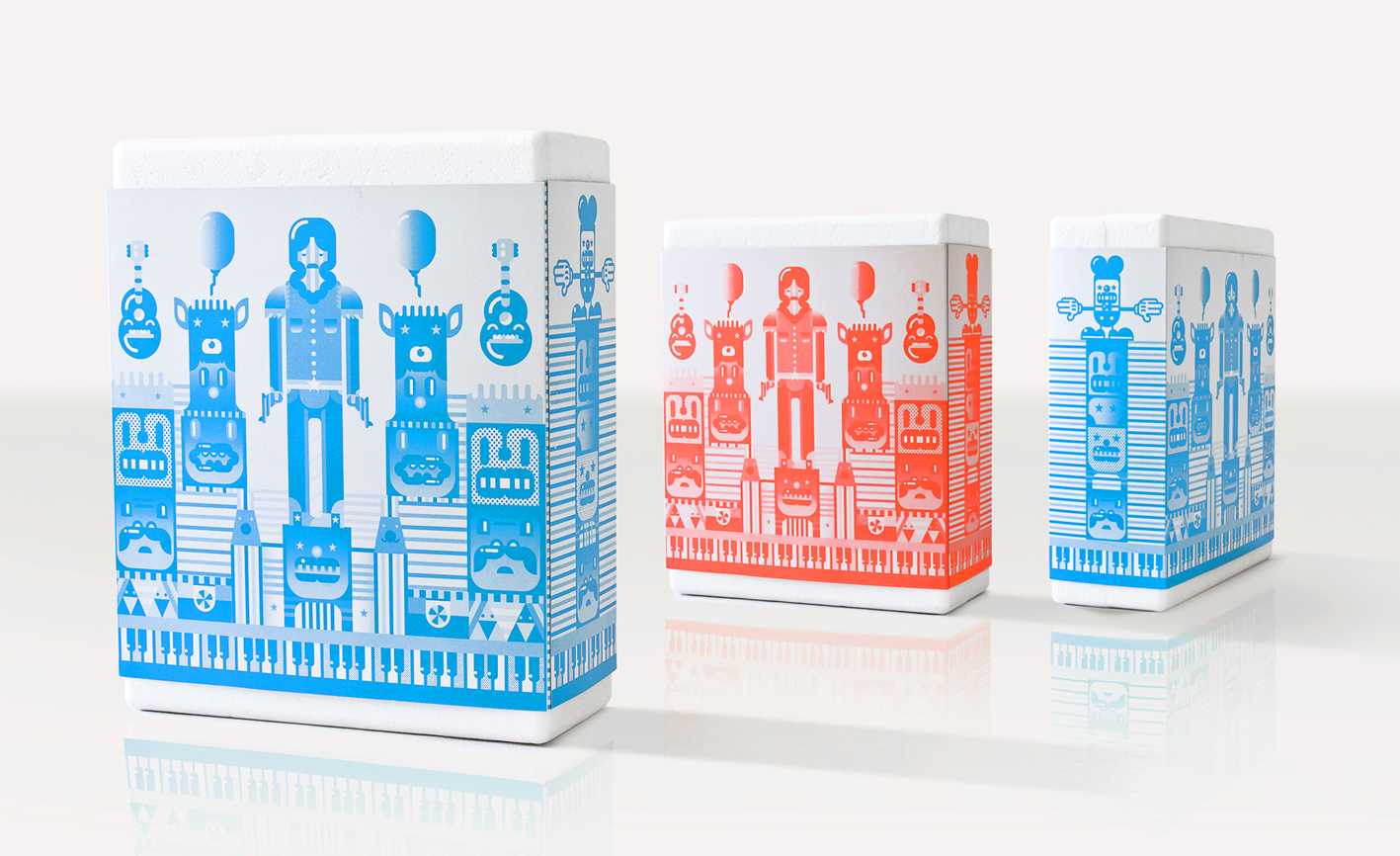
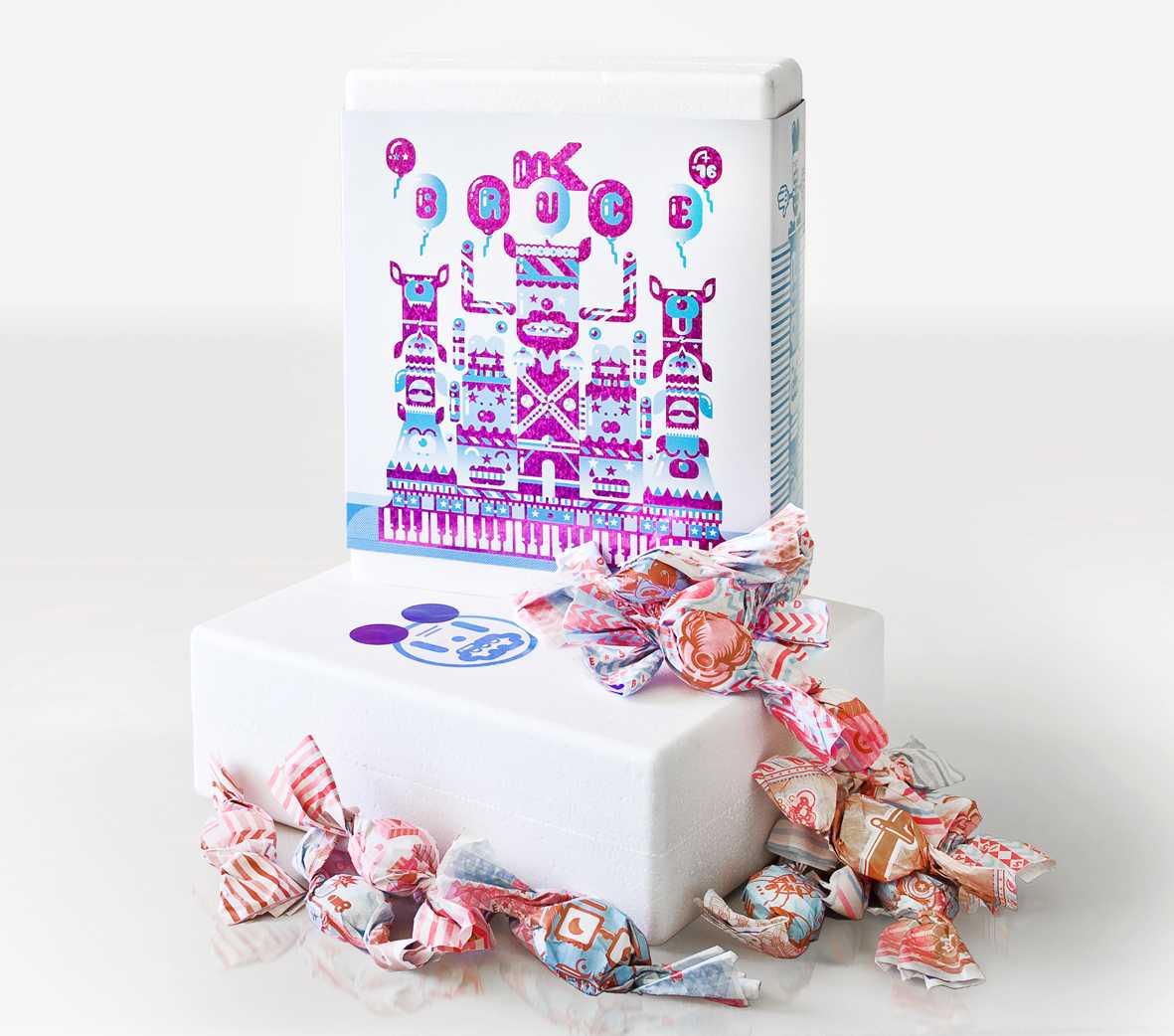
The MK Bruce Lee preview
The big 10and5 logo debate
Our friends over at 10and5.com managed to spark a lively online debate, pulling 68 comments in less than 24 hours, on the design for their new logo – before closing (sorry toning down) the discussion. We are green with envy (not necessarily about the logo though – we think ours is fab).
Brands & Branding for Good conference
The Encyclopaedia of Brands & Branding in South Africa is to host a new conference to focus on brands and
their relationship with consumers who are becoming more and more concerned with social and environmental issues. The Brands & Branding for Good conference takes place on 20th/21st October at the Gallagher Convention Centre in Midrand.
Explained publisher and organiser, Ken Preston: “Branding is at the heart of the sustainability debate because it is the interface between the forces of production and consumption and, global economic downturn or not, consumers are influenced by social and environmental branding issues. Furthermore, there is no doubt that responsible brands are more attractive to consumers, and are able to build more comfortable relationships with regulators, local communities, investors and the media.”
For more information contact Lynn at 011 442 2366
Haas Das & Bennie Boekwurm star in latest Pendoring poster campaign
For the latest campaign that promotes Pendoring, South Africa’s Afrikaans language advertising award, agency Joe Public uses well known Afrikaans characters to illustrate what could happen if the language continues to be neglected. The pay-off line reads: ‘Moenie die taal afskeep nie’ (Don’t neglect the language) and the call to action reads: ‘Skep in Afrikaans en keer dat ons mooiste taal sy glans verloor’ (Create in Afrikaans and prevent our most beautiful language from losing its lustre).”
“Although most previous campaigns highlighted the fact that Pendoring rewards winners in cash – 2008 campaign slogan being: Praat die taal, dit betaal (It pays to speak Afrikaans), Joe Public felt that there is a far bigger issue at play,” says Joe Public’s Pepe Marais.
“The majority of commercials are conceived in English and often translated into Afrikaans,” Marais continues. “In short, Afrikaans is being neglected. There are quite a few Afrikaans creatives in our industry and the majority of them are conditioned to think and create in English to such a degree that Afrikaans has become a second language. This campaign aims to remind them what would happen to this indigenous language if neglected.”
Executive Creative Director, Pepe Marais
Creative Director, Maciek Michalski
Designer, Simone Rossum
Copywriter, Antoinette Fourie
Client Service, Samantha van Tonder
The chicken run (Omo ad)
One of the latest TV spots for longstanding client Omo sees Lowe Bull once again bringing the Omo philosophy of ‘Dirt is Good’ to life. The action takes place in the streets of Sophiatown where a young boy finds himself in hot pursuit of an old lady’s runaway chicken. Naturally the chase sends the boy over and through several obstacles leaving his clothes dirty. Fortunately his mom uses Omo so she isn’t concerned about dirt.
Creative Director Rui Alves explains that the campaign theme of ‘Dirt’s biggest lessons’ aims to reinforce Omo’s ‘Dirt is good’ mantra to a cynical market that see laundry as a necessary chore, but a chore nonetheless. “Everything children do is a learning experience which comes with a stain. But that’s how kids pick up things like resilience, determination and courage, the important stuff. Omo can deal with the dirt that comes with it” says Alves.
The commercial which is currently on air was directed by Brett Wild from Hammersmith & Elephant.