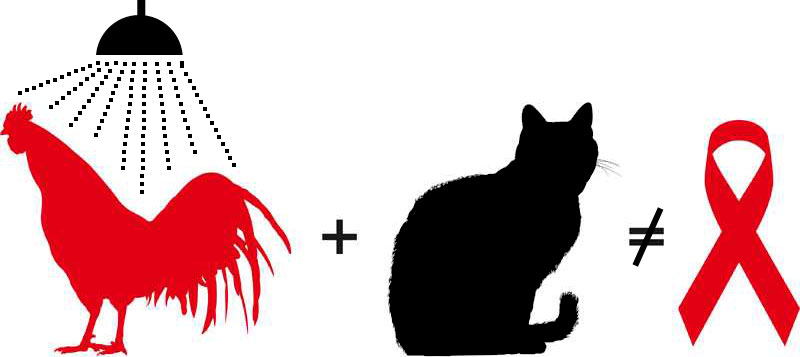
Get a free tatoo day for mom

Below the line specialists Mick and Nick took branding one step further for long time client Look & Listen. Over the Mother’s Day weekend in May, Look & Listen offered families the opportunity to show their mothers just how much they are loved by getting a free semi-permanent spray-on tattoo. The idea formed part of a wider in-store campaign where a number of suitable Mother’s Day products had been selected and prominently merchandised.

Creative Director: Nick Liatos

No thanks to scam ads – Loerie Awards

Recent scam ad scandals here and abroad refocused attention on an industry practice that sees work entered into awards that either wasn’t approved by client or never ran in the media. Both are required to legitimately enter into creative awards.

What is the official Loeries position on scam ads? Andrew Human, managing director of The Loerie Awards, provides some insight:

“The Loeries has had rules in place for several years which do not allow non-legitimate entries. All the rules of entry can be viewed here: http://www.theloerieawards.co.za/default.aspx?link=how2enter_legal. Notable points are:

– The Loerie Awards has the right to request written proof of initial publication/air/launch date, as well as written proof of all required permissions.

– Any entry that has infringed any of its country of origin’s laws or voluntary or regulatory codes of practice is not eligible. In the case of South African entries, any advertisements withdrawn or ruled against by the Advertising Standards Authority in terms of their Code of Advertising Practice are not eligible for entry.

– By submitting an Entry the Entrant warrants that … it has obtained all necessary permissions, usage rights and waivers of moral rights from all third parties who contributed to or commissioned the Entry, including without limitation the advertiser whose goods or services the Entry promotes…

In addition to the above, the eligibility criteria state:

– All work must be commercially published, launched or aired to a substantial audience for the first time between 1 June 2008 and 31 May 2009.”

Human also says that any member of the Jury may question the validity of any piece of work and that he is satisfied that the in place measures are adequate to prevent fraudulent entries from making it into the submitted entries.

SABC will be just fine – Loerie Awards

How does the woes at the SABC impact on its sponsorship of the Loerie Awards this year? MarkLives asked Andrew Human, managing director, The Loerie Awards:

“The SABC is the national broadcaster and is a vital communication medium for South Africa – both from the point of view of providing a communication platform for the general public, as well as to help build and promote a robust and growing economy. Television is a major component of the advertising mix and, conversely, advertising is a primary source of revenue for the SABC. As such, The Loerie Awards is committed to the broad promotion of television within the advertising mix, as well as promoting the SABC’s role as the national broadcaster. There is no doubt that the SABC will recover from its current difficulties, in time for a successful broadcast of the World Cup in 2010, and beyond.”

Kill fear. Build agency brands

Retrenchment is out. Innovative salary solutions and redeployment is in, as managers use inexpensive perks to motivate staff during the global financial meltdown. By Mandy de Waal From Mark Magazine Pages 8 & 9

“Am I going to be retrenched?” That’s the first question that runs through an employee’s mind in an economic down-turn.

Thanks to capitalism that gave us the sub-prime crisis and a full blown recession, the memory of Jack Welch, former CEO of General Electric, lingers: Neutron Jack decimated workforces, reduced pay rolls and cut 10% of management each year.

Loss of provision is a primal fear that strikes deep and is counter-productive to increasing revenues and innovation, the two things most needed when money is tight.

Good to see, then, that times are changing and the “Welch way” is out. New research from the Chartered Management Institute in the UK shows that lessons were learned from the 1991 recession and the trend now is to redeploy rather than retrench. Staff redeployment levels have doubled in the past year, as employers try to find an alternative to redundancy. Retaining competence is a far more cost-effective option than rebuilding a talented team from scratch.

In an effort to tackle retention difficulties and the drop in year-on-year earning power, companies are innovating and using inexpensive employee benefits to keep staff motivated. This includes increasing annual holiday entitlements, paying exam fees and covering book costs and looking at other incentives that can be offered to motivate staff without breaking the bank.

Gloria* is a 23-year-old brand executive who works for a Sandton-based marketing agency. She says that redeployment entrenches loyalty, because it shows good faith. “This would offer me more security and could mean new challenges for me to sink my teeth into. I would have more respect for the company I work for if they did this. This shows my needs are being considered instead of just the bottom line. If I commit myself and my career to a company, I feel it needs to be a two-way street.”

When asked whether she would consider a pay cut or perks instead of a bonus, Gloria said: “I am studying part-time so would welcome a perk like extended paid leave or flexi-hours, which wouldn’t cost the company anything.”

Agency owners are also hiring more carefully and looking at more innovative ways to beat the recession. “We have been employing very carefully on a permanent basis due to the fact that we are aware of the recession globally and want to avoid retrenchment,” says Nicole Capper, Joint-Owner, Mango-OMC in Cape Town. By keeping a small team of permanent staff and using a stable of self-employed, external consultants they can be flexible, well resourced and avoid layoffs. “We would definitely look at restructuring salary packages before we retrench, and laying people off would be the last possible decision for us,” says Capper.

Retrenchment is also not an option for Giles Shepherd, Managing Director of brandalive® who says: “We will always look at all other options first. Previously when we needed to dramatically cut costs we convened a meeting with staff to lay the cards on the table and get their input. People got into the same boat to row out the storm. It’s a much better approach to the brutality that is retrenchment and entrenches a positive sense of loyalty to the brand. Staff appreciate that the brand has real humanity to it and it is not just an inanimate object chopping off heads to make the numbers work.”

* Name changed

Mandy de Waal is an Associate Editor with Mark Magazine.

On Twitter green = #Iranelection

For news on the Iranian ‘green revolution’ use the following Twitter tools (with care as the Iranian government is also using them to distribute misinformation):

Twitter Search
#IranElection
#gr88

On Twitter make your profile picture green to show support for those protesting in Iran
#green
#greenscream

Green support Icons available here

Rose’s outdoor campaign uses Baroque art style

This outdoor series was developed by Draftfcb Impact to relaunch the Rose’s range of flavoured cordials. It comprises six executions – one for each of the flavours in the revamped range – of a young woman in a fantasy scene. Each evokes airbrushed Baroque album art, and each was conceptualized by one of the Draftfcb Impact creatives before being recreated by professional illustrator, Clive Kirk.

The team that worked on this campaign included executive creative director Marthinus Duckitt; creative directors Janine Kleinschmidt and Dawn Franke; designers Jenine Skinner, Adriaan van Vuuren, and Mike Estment; and writer Jane Askew.

Bafana Kaofela!

In a bid to share the enthusiasm about the Confederations Cup and the 2010 World Cup, and inspire  all South Africans to stand behind the national team, Absa bank has teamed up with The Jupiter Drawing Room (Jhb) to create an epic advertising campaign built around a rousing battle cry – Bafana Kaofela! The closest approximation is ‘in the spirit of togetherness’.

Abandoned bikes, cars, factories. Empty boxing matches, and empty theatres. Because everyone who is anyone in South Africa is following the ‘pied piper’ of Bafana Bafana to Greenpoint Stadium.

Breaking marketing’s rules and livin’

The traditional concept of ‘an industry’ is crumbling away. It presents the perfect opportunity for breaking the rules of marketing and livin’. By Dave Duarte. From Mark Magazine (Blueprint Issue, Pages 6 & 7)

I often have people come up to me, people who have successful businesses, who say: “I’m really good at what I do, but I’m bad at marketing.”

To which I often reply: “How do your customers feel about you? How do new customers get to hear about your business most of the time?” Then these people – the down-to-earth, short-sleeved, checked-shirt tucked into jeans, not-stylish-but-practical type – usually respond: “They’re happy, but word-of-mouth seems to be the main way we get customers.”

Of course, professional marketers know that word-of-mouth promotion is not easy to pull off, and you generally need to be doing something remarkable if people are going to be making, well, remarks about your business.

The point is these checked-shirt chaps wouldn’t be doing as well as they are if their marketing weren’t up to scratch. They wouldn’t have relevant products or services and their innovations would be out of touch with what people need or want. Marketing is fundamental to what a business does, and whether you have a marketing department or not – if you’re kicking ass and people are paying you for it, then you’re marketing.

Let’s take a step back though, and just clarify what I mean by “marketing”. In the most fundamental sense of the word, “marketing” is making sure that people will buy whatever it is that you produce – ensuring that there’s a market for it. It doesn’t require a department in order for it to happen. In fact, it gets better when it’s more of a mindset than a job title.

If you went to marketing school, you probably would have been taught about the 4 Ps of the Marketing Mix: Product, Price, Place and Promotion. All are fundamentally important, especially, as the Dalai Lama once pointed out: “You have to know the rules in order to break them properly”.

What I find interesting is that marketing tends to be more effective the less conventional it is. I’m not talking about advertising here, but marketing as a whole – the Mix, if you will. Its champions are those mavericks who break the rules, don’t follow the established order of things, and make decisions based on original insights about their customers, rather than broadly acceptable “best practices” for their industry.

The fact that benchmarking is becoming less relevant is perhaps indicative of the fact that our traditional concept of “an industry” is crumbling. It is becoming difficult to pigeonhole the best performing new businesses into an “industry” and still understand them properly. For example, is Google in the “internet industry”, the “media industry” or the “search industry”? Depending on how you look at it, each has different norms, benchmarks and best practices. In fact, as with most market leaders, it’s in a category of its own and defines its own industry.

Is Aston Martin in the business of creating vehicles to get people from point A to point B, or are they in the dream fulfillment business? Furthermore, with a product or experience of that level of exclusivity, I’d venture to say their customers are not just those who buy their cars, but those who buy their vision too.

One of the truest things I’ve heard recently is that because of the cornucopia of new products and services we all have access to, we’re moving from an era of finding customers for our products to an era of finding products for our customers.

So, a blueprint, which I base on the principles of Evidence Based Management:

# Face the hard facts, and build a culture in which people are encouraged to tell the truth, even if it is unpleasant.
# Be committed to getting the best evidence about and from your customers and use it to guide actions.
# Look for the risks and drawbacks in what experts recommend – most medicines have side-effects.
# Avoid basing decisions on uncritical “benchmarking” of what winners do.
# Treat your organisation as an unfinished prototype. Learn by doing.

Often, breaking the rules is the only way to ensure that you aren’t engulfed in the brutal competition of statically defined market categories. So, know the marketing rules, but more importantly: be prepared to rewrite them for your particular context.

– Dave Duarte is an internet and mobile marketing consultant for Huddlemind Labs. You can catch him on Twitter at: www.twitter.com/DaveDuarte

Musica launches “So You Wanna Be A Rock Star” lifestyle range

As music retailers face increasing pressure to find alternative revenue streams beyond the sales of CDs and DVDs, the opportunities have to lie in lifestyle products believes local retailer Musica. Its new “So You Wanna Be A Rock Star” range was conceptualised, illustrated and designed by The Jupiter Drawing Room Cape Town.

Creative team:
Creative Director – Joanne Thomas
Copy Writer – Keenon Daniels
Design and illustration – Jared Barbe, Johan (Johanna Montana) de Bruyn , Brandt Botes and Klea Ferriera

Online CPD Courses Psychology Online CPD Courses Marketing analytics software Marketing analytics software for small business Business management software Business accounting software Gearbox repair company Makeup artist