ASME magazine cover of the year announced

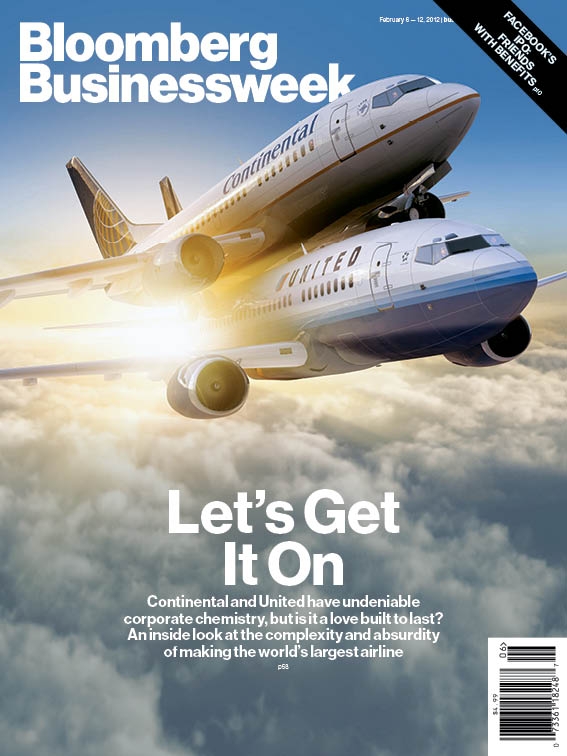
The cover of the November 12, 2012, issue of New York Magazine depicting Hurricane Sandy was chosen by magazine editors as “Cover of the Year” in the seventh annual ASME Best Cover Contest, which was open to all consumer magazines published in calendar year 2012.

ASME Cover of the Year AND News and Politics category Winner

Business and Technology

bloomberg-businessweek-cover

Entertainment and Celebrity

jerry2

Service

the rotarian

Fashion and Beauty

harpersSports and Adventure

deuce

Lifestyle

nysex

Brainiest

bloomberg-businessweek-cover-2012hhh

Most Delicious

GardenGunPic

Best Obama

obama

Shelf Life: Green wine ups marketing

Louise Marsland’s (@Louise_Marsland) pick of new product, packaging and design launches.

Kiehl’s opens second store; green wine ups marketing efforts; Hippo joins DeskBag project; and Bvlgari launches Man Extreme fragrance using mall media.

Second store for Kiehl’s in SA

Kiehl's first store in Africa, in Johannesburg, South Africa

New York’s Kiehl’s skin and hair care brand has opened a second store in South Africa following on the launch of the brand in South Africa last September. The new store is in the Eastgate Shopping Centre, Gauteng.

The first store was opened inside Edgars at Sandton City. Business unit manager of Kiehl’s in South Africa, Azhar Moosa, explains that high demand and good sales have motivated for the second store which will first open in a temporary location before moving inside Edgars Eastgate.

The Kiehl brand’s “try before you buy” philosophy is what has made it popular. Kiehl products are also available nationally through Edgars Fashion Hotline.

Green  wine ups marketing

Green Shebeen wine

It’s been two years since Marthinus Botha and De Vos Meaker introduced their upstart new organic wines from the Swartland to SA consumers and now they’re embarking on a marketing campaign to grow their base further.

The Green Shebeen range includes: an unwooded Chardonnay, a Merlot Rosé, The Blend which combines Cabernet Sauvignon with Merlot, and lastly a Cabernet Sauvignon.

Green Shebeen’s ethos is built around the idea of wine as an accessible, affordable luxury for the contemporary and younger consumer who is more concerned with the environment and less interested in the “jargon and mystery” around winemaking and tasting.

Their “sharp” local is lekker wine labels attest to the quirkiness of the product and the millennial audience they are targeting. The brand also contains 70% less sulphates than traditional wines and no pesticides or herbicides are used in the growth cycle.

Green Shebeen’s commitment to green principles behind winemaking scooped them the Blogger’s Choice award at the 2012 Nedbank Green Wine Awards, and has seen their product line the shelves of retail leaders in eco-consumerism locally and abroad, including Cape Town’s very own Wellness Warehouse, as well as The Whole Foods Market in Hawaii.

Hippo delivers to schoolkids

Victor Buthelezi and Nelisiwe Nhlapo demonstrating the DeskBags

We published BP’s call to other brands to donate their old billboards to turn into durable school bags and pencil cases on February 21 this year, and now Hippo is busy with an innovative CSI project to start recycling its used and expired vinyl billboard faces into ‘DeskBags’ for underprivileged children. This unique concept, conceived by PR Worx, is a functional and portable desk solution, as well as a school bag. The flap is reinforced with plastic, so that when it is folded open, it allows for instant desk support too.

Hippo has so far donated 13 billboard faces which will produce about 135 DeskBags.

PR Worx’s Madelain Roscher explains: “Basic Education Minister Angie Motshekga revealed in a written reply to a parliamentary question that schools across South Africa need three million desks, and with these alarming statistics in mind, DeskBags was conceived as a temporary solution to this immense problem.DeskBags offer a viable alternative to make learning more comfortable for children in poor and rural schools who do not get to use at a desk at school or at home.”

Achieving mall media dominance

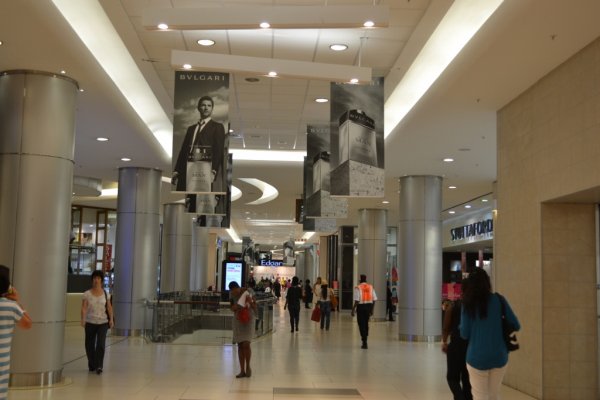
Bvlgari Hanging Banners

Shopper marketing and point of sale efforts are important to break through the clutter and influence a cash strapped consumer at the till point.

Recently, Bvlgari launched its new male fragrance, Man Extreme to men aged 25 – 49 years within the LSM 9 to 10 brackets. They used Primedia Unlimited’s Primall Media business to dominate the mall environment at Sandton City, the V&A Waterfront and Gateway shopping centres.

A combination of mall advertising, billboards, hanging banners and digital skyscrapers were strategically placed to maximise impact and visibility close to Bvlgari’s key retail distributors.

Louise Marsland– Shelf Life by Louise Marsland is a weekly column on MarkLives. Tweet new product, packaging and design launches to @louise_marsland or email her at louise.marsland at gmail.com.

– Want to sponsor Shelf Life? Contact us here.

Louise Marsland has written about the FMCG, media, marketing and advertising industry for 18 years of her 25 year media career as a former Editor of magazines AdVantage, Marketing Mix and Progressive Retailing; as well as websites Bizcommunity.com and FMCGFiles. She currently edits the weekly Wednesday Media & Marketing Page for The New Age newspaper; and is the co-founder and Publishing Editor of SA’s newly launched industry trendwatching portal, TREND. at www.trendlives.info, in partnership with MarkLives.com.

– Industry profiles you’ll make time for. Sign up for our free newsletter!

Fake followers are the greatest invention since inflatable girlfriends

by  Bob Hoffman (@adcontrarian), San Francisco Bay Apparently, the market for fake Twitter followers is exploding.

According to The New York Times…

“There are now more than two dozen services that sell fake Twitter accounts… there are now as many as 20 million fake follower accounts.”

Being the Luddite that I am, I am way behind the curve in attracting my fair share of fake followers. As far as I know, I don’t have any. I mean, unless you count Cinderella and Barney the Dinosaur as fake.

[pullquote]I think fake followers make great gifts. Let’s say you know someone who’s having a tough go of it. Can’t find a job. Nobody pays any attention to him. Just send him five thousand fake followers (only 60 bucks!) and pretty soon he’ll have his own social media company and be speaking at marketing summits.[/pullquote]
It seems that anyone who’s anyone has fake followers.  Mitt Romney, Rachel Maddow, Lady Gaga and even President Obama have been known to have thousands of fake followers. But stupid me? I’m stuck with these annoying real ones.

I think fake followers are way better. The fake ones retweet everything you send out. They don’t ridicule your stupid tweets or call you a douche bag.  And, according to The Times,  they only cost about 18 bucks a thousand. That’s about what I make from my book at Amazon.

I think fake followers are the greatest invention since inflatable girlfriends. By the way, do they sell inflatable boyfriends? Or just battery operated boyfriend bits?

I think fake followers make great gifts. Let’s say you know someone who’s having a tough go of it. Can’t find a job. Nobody pays any attention to him. Just send him five thousand fake followers (only 60 bucks!) and pretty soon he’ll have his own social media company and be speaking at marketing summits.

One of the great things about the web is that fake is realer than real. When I read something on the web, how do I know if it’s real or not? I don’t. I just assume that because it’s on the web it’s total bullshit. It’s fake. It’s fabulous!

It seems like only last week that a fake tweet from the Associated Press reported that there were two explosions at the White House and temporarily wiped out $136 billion in investor equity. Hold it. It was last week.dow drops fake tweet

It’s not like fake boobs or fake hair. You look at them and in about a nanosecond you know they’re not real. The girls with fake boobs always look like they’re about to topple over and the guys with fake hair look like they found a dead cat and slapped it on their head. But the web? Oh no, on the web, fake is just enhanced reality.

I think we need even more fake stuff on the web. Wouldn’t it be great if we could have fake “likes?” Oh, wait a minute. We have millions of those.

Well, how about fake emails that tell us we won the lottery and fake scam stuff from PayPal and eBay and…oh, yeah, we have a ton of that shit, too.

Okay, but what if Facebook did an IPO with a fake value of $100 billion? Oops, they tried that.

I know. I’ll start a fake blog. It’ll be huge! I’ll talk about how everything that’s supposed to be real is fake. And all the names of the people who leave comments on the blog will be fake. And I’ll focus on all the crap you read by fake experts…

…wait a minute. I already do that.

– The Ad Contrarian is Bob Hoffman, ceo of Hoffman/Lewis advertising in San Francisco and St. Louis. Hoffman is the author of The Ad Contrarian and 101 Contrarian Ideas About Advertising. Reprinted from his blog The Ad Contrarian.

– Industry profiles you’ll make time for. Sign up for our free newsletter!

Ad of the Week with Oresti Patricios – a ‘secret gardener’ & the guy who installed swings all over his city, just for the heck of it

MarkLives Ad of the Week with Oresti Patricios – Crazy for Good

In a time when everything revolves around profit, corporate growth and return on investment, it’s good to see a campaign that goes beyond the obligatory corporate social responsibility gambit. But that’s exactly what Coca-Cola’s ‘Crazy for Good’ campaign seems to do.

And thank goodness this agency, Draftfcb,  refrains from ‘talking down’ to its market – yes, it’s predominantly a youth market, but gladly they didn’t spell it “kraz-E 4 gud” or some other form of text-speak.

[pullquote]The campaign is all about ‘passing it on’ – people who perform random acts of kindness for the good of society. It’s not a centralised, coordinated effort – rather it revolves around real-life stories that feature people doing a wide range of things to benefit their fellow human beings. This is what is so cool about this campaign – it is just about ordinary Joes and Janes with a passion which they use to beneficially impact on the people around them.[/pullquote]

The campaign is all about ‘passing it on’ – people who perform random acts of kindness for the good of society. It’s not a centralised, coordinated effort – rather it revolves around real-life stories that feature people doing a wide range of things to benefit their fellow human beings. This is what is so cool about this campaign – it is just about ordinary Joes and Janes with a passion which they use to beneficially impact on the people around them.

This global campaign, which was developed at Ogilvy Brazil, Sao Paulo, highlights these special, giving people, like Zainab Imran, the Pakistani musician who sings and plays at her local children’s ward… despite the fact that she’s visually impaired. What motivates her to give up four days a week to perform for children? “When I sing,” she says, “I feel that the children forget that they are unwell. When they sing and clap their hands, I forget that I’m unable to see.”

Then there’s San Franciscan  Jeff Waldman, who installed swings all over his city, just for the heck of it. He was given a $1000 grant by the city Jeff Walmanof Los Angeles to do the same there; then he ran a Kickstarter fund to hang swings all over Bolivia. They hung them from trees, buildings, rocky outcrops, and even in the Salar de Uyuni, the largest salt pan in the world (image source: Jeff Waldman).

On his blog, Jeff wrote: “What started last year as a conversation about the simplistic pleasures of swings has launched into a multi-city experiment in unexpected joy and cerebral happiness. Via contact info we left on the wooden seats we’ve received notes from those that used them, talking about … how their days were made better and how the emotions that emerged from stumbling across and using a random swing permeated their afternoon and infected those they came into contact with.”

The South African campaign has been as quirky as the international one. There’s the young lady who calls herself a ‘secret gardener‘. She identifies places in the city in need of greening, and then under cover of night—along with some volunteers—she plants trees, shrubs and flowers. She says she does it at night so that it’s a surprise for people the next day. “I plant trees because people need greenery around them,” she explains. “They can’t live in concrete blocks and towers – they need some nature, because we are, after all, part of nature.”

One case-study, who’s been doing his project for quite a while, is Tom Hewitt, who has become something of a local legend in his hometown of Durban, by teaching street-kids to surf. Some of them have gone on to become surfing instructors, lifeguards and surf-store assistants – Tom has had a real impact on these lives, saving them from crime, prostitution or early death. A short documentary was made of Tom’s story, which can be seen on YouTube.

Donnay Carter, brand manager of Coca-Cola South Africa said:“Tom’s documentary is so inspiring, it is a perfect example of what we are trying to achieve in this campaign. We want all South Africans to get involved in showing kindness to others and help us make big changes in our country through one Random Act of Kindness at a time.”

And then there’s the guy who came into a lot of money, who tries to give away R10,000 every day to ‘kind strangers’ – someone whom he believes can do something good with it. “My hope is that with that money and that person’s energy and ideas, some magic happens – and it does. The money has gone in all sorts of directions all over the world – more than I ever could have imagined.”

There is a commercial aspect to the campaign, other than the social equity of associating one’s brand with worthy projects. Coca-Cola has also run a radio/SMS campaign in the Western Cape – although I fail to see the connection. The campaign on Jacaranda FM was a notch above, inviting people to send in their stories of kindness. The cola ‘meisters’ also created an interactive site at https://kindness.coca-cola.com/za/ that invites people to upload their pictures and stories of kindness – of course, it’s linked to Facebook, so the aim is for it to have some sort of ‘viral’ growth.

But, in my honest opinion, that’s not the point. When corporate types complain that they don’t get a return on investment from their CSI projects, I remind them that a) they are getting a tax break on the spend; b) they can also get BEE points; and c) the point is not ROI, it’s doing good, for goodness’ sake.

Of course, if you’re clever, you can get some ‘brandwidth’ by associating with the right project and promoting it cleverly. If that means sending a film crew to watch crazy people doing crazy stuff, well at least one can hope that a few people are ‘turned on’ to do similar things. And that will make the world a better place. There’s your ROI.

Ad of the Week archive

Ad of the Week is published on MarkLives every Wednesday. See past selections here.
Oresti Patricios is the CEO of brand and reputation analysis company Ornico.

– Industry profiles you’ll make time for. Sign up for our free newsletter!

News24′s leap into Kenya and Nigeria

grubstreet

by Gill Moodie (@GrubstreetSA) Type in www.news24.co.ke to your browser or www.news24.com.ng and you get a site that looks  familiar to the South African eye: it has the colour palette and lay-out of our biggest news portal, News24, but look a bit closer and you see the content is different: about Kenya and Nigeria respectively.

These two sites are, in fact, News24’s great big leap into Africa although they have started modestly and without much fanfare so that they can news24 nigerialearn about the two markets that are so different to South Africa’s.

You might also have noticed an isiZulu News24 (that you can go to from the English-language portal) and you get the picture: News24 – which so dominates the breaking-news scene in SA – is on the march, which is  interesting considering that Iqbal Surve, Independent Newspaper’s proprietor-in-waiting, has also mentioned Africa and the vernacular markets as key growth areas.

Grubstreet spoke to News24 editor-in-chief Jannie Momberg, who is overseeing the move.

GRUBSTREET: It looks like you’re mostly aggregating news on the Kenyan site but on the Nigerian one, it’s coming from a local news agency.

JANNIE MOMBERG: Ja,  the content strategy is roughly the same as News24 but we place different emphasis on different parts of it. At News24, we also aggregate and we also use wire copy and our own content and our user content… The difference is that, in Kenya for instance, there isn’t a national wire agency where in Nigeria there is one… so in Kenya we aggregate more  to be able to update the site more…

Kenya has a lot more content from our users than we have in Nigeria. The second-most popular section on the Kenya site is content from users after the national news section.

GRUBSTREET: That’s interesting. And when did you  guys launch these sites?

MOMBERG: Let me give you a little bit of background. About three of four years ago, we looked at how we could expand the 24 footprint… and we decided that we were going to do it two ways: 1). To look at other languages in South Africa, and 2). We were going to look at the rest of the continent… In 2009, the first site that we launched was our Afrikaans site, the idea being that it was easiest to launch because there was so much Afrikaans content available in Media24 (that owns newspapers such as Rapport, Beeld and Die Burger)… and we also launched the isiZulu site a couple of years ago.

So in South Africa, we now publish in three languages.

The other side of it was the rest of continent and we decided we were already strong in southern Africa so let’s look at West and East Africa, specifically Nigeria and Kenya. That was our thinking at the time, and also that if we started in Kenya then we would then be able to apply the lessons to the rest of East Africa – and the same for Nigeria and West Africa…

In November 2011, we launched the Kenya site and we launched the Nigeria site in June 2012… We read up a lot about the two markets but we decided that we were going to have to go in and test the market and learn on the job so we didn’t go in with a big bang.

nigeria24screengrabWe’re using the same technology as we do in South Africa so the two sites’ tech side is being managed and maintained from Cape Town. It exactly the same technology and  exactly the same CMS that News24 uses so that we are not over-investing in the tech side…

From the editorial side, we’re  using the same kind of editorial strategy that worked for News24 in South Africa: start small and appoint people in Cape Town and locally.

So we’ve got people in Nairobi and Lagos and Cape Town working on these sites.

GRUBSTREET: And how are they working out?

MOMBERG: The expectation was that it was going to be mostly a mobile audience – and that’s pretty much how it’s worked out so far.

GRUBSTREET: For both Kenya and Nigeria?

MOMBERG: Kenya had 35 000 unique browsers (in February) for the web and mobile had 82 000. Nigeria is a little bit more interesting: the web is 28 000 unique browsers (in Feb) – bearing in mind the website is only nine months old – and mobile 169 000…

The other very interesting thing with Nigeria is that we also launched a mobile application in these territories – and in February that app had 77 000 active users in Nigeria.

BlackBerry is massive in Nigeria and the app has taken off… If you put this together with the mobile and the web, it looks quite promising.

GRUBSTREET: It sounds like it’s growing nicely. You guys must be pleased.

MOMBERG: Ja, but it’s still early days.

GRUBSTREET: What are the competitors like in the two countries?

MOMBERG: My impression is that the Kenyan internet market is a lot more developed than in Nigeria although Nigeria is a lot bigger.

The two main newspapers in Kenya are The Nation and The Standard and they’ve got pretty decent websites – on par with what you find in South Africa. When we launched the Kenya site, those were basically newspaper websites – in other words, they updated once or maybe twice a day. Within a few weeks of us launching with our updates around the clock, they started updating their sites a lot more so they absolutely responded.

In Nigeria, the internet market is close to 50-million people already so that’s a hell of a market they’ve got going there. The biggest website in Nigeria is really just a forum – and they are about the size of News24 in South Africa.

I do think it will be a tougher battle for us in Kenya than in Nigeria – in the sense that the existing media houses are on a par with what we find here in SA.

Whereas in Nigeria, there is so much more potential because it’s such a massive audience.

Interestingly, the last stats I saw put both Kenya and Nigeria about about 28% (internet) penetration whereas SA is only about 18%. So there is a natural growth path laid out as, although penetration is at about 30% (in Kenya and Nigeria), there is a lot of room for growth.

In Nigeria, the internet market is close to 50-million people already so that’s a hell of a market they’ve got going there. The biggest website in Nigeria is really just a forum – and they are about the size of News24 in South Africa. Then there are two news organisations – Vanguard News and Punch – and their websites are not on a par with the Kenyan sites.

They’re not bad but they don’t update as frequently and the content is not as good as I’ve seen on the Kenyan sites.

So we’re operating in both markets but if I had to choose one because we could only win in one place, it would have to be Nigeria – because if you can win there, you can win big.

– SA’s leading media commentator, Gill Moodie, offers intelligence on media – old and new. Reprinted from her site Grubstreet.

Sign up for our free newsletter!

Media Future: Samsung’s long shadow over Apple

Lurking behind Apple’s share-price woes is the manner in which the Samsung Galaxy S4 further eclipses the iPhone 5, writes Arthur Goldstuck (@art2gee).

This past week, when Apple reported its first drop in profit growth in a decade, much was made of the fact that the market was punishing it unduly harshly. Descending from a $700 high in September 2012 to a bumpy ride along a $400 floor in April 2013, it is hard to believe it’s the same Apple.

Yet, the company reported record iPad sales, up to 19,5-million in the second quarter of last year, from 11,8-million for the equivalent period applelast year. iPhone sales were also not too shabby, up from 35,1-million to 37,4-million. Analysts were unanimous that Apple was being punished because its pace of innovation had slowed, and there were no killer products on the horizon to follow in the market-shfting footsteps of the iPod, iPhone and iPad.

There is a more fundamental force at work, however, and that is called competition. When Steve Jobs presided over the launch of the iPhone 4 in 2010, Apple was so far ahead of other manufacturers, its fans could not even countenance the idea of anyone catching up.

Just two years later, when it launched the iPhone 5, it was fighting a rearguard action against the new front-runner. Samsung had released its groundbreaking Galaxy S3 in May 2012, giving it a six-month head start over the new iPhone. And even then, Apple produced a device that did not match up to the S3.

Another six months on, and Samsung has made another leap. The Galaxy S4, released worldwide last week, is evidence not only of how far ahead Samsung has moved, but also of the massive shadow Samsung has cast over Apple. In the last quarter, Samsung sold an estimated 65-million phones, thanks to producing devices that meet every price point in the smartphone spectrum. From the entry-level Galaxy Pocket to the mid-range Galaxy S3 Mini, it serves the lower-end market that Apple didn’t even know existed until last year.

When Apple released the iPad mini, despite Steve Jobs’ infamous vow never to release a smaller tablet, it was acknowledgement that smaller, cheaper devices were destroying its market dominance. Samsung’s own Galaxy Note 8.0, released this month, is a shameless copy of the mini, but the resemblance has largely been ignored as the market focused on the real battleground. The question is no longer what Apple will do about being copied, but what Apple will do to address the market that Samsung owns – and the one it is about to own.

The answer will come in June, and is likely to come with several stripped own versions of the iPhone, at prices that will appeal to a broad market – especially in the developing world. If that is Apple’s strategy, there is no doubt that it will be hugely successful in terms of sales and market penetration.

But its success will also be its biggest enemy: in the same way that record iPad sales are being driven by the cheaper mini that produces lower profit margins, chances are that an “iPhone mini” will also deliver massive sales – but also at the cost of profit margin.

The real chink in Apple’s armour revealed in its latest results is the massive fall in gross margins – from 47.4% a year ago to 37.5% this year. As Apple finds itself playing catch-up with Samsung both in its flagship device and in its market strategy, that margin is likely to fall even further.  Investors dislike falling margins as much as they resent slowing profits, which means there is not likely to be too much respite for them too soon.

That alone is enough to cast a long shadow over Apple’s previously untarnishable shine.

But add the fact that expectations for the Galaxy S4 are for a wildly successful device that will put to rest the debate about which is the better phone, and Apple finds itself in total eclipse.

* Arthur Goldstuck heads up World Wide Worx (www.worldwideworx.com) and is editor-in-chief of Gadget. He is a Consulting Editor to MarkLives and our media tech columnist. Follow him on Twitter on @art2gee. Reprinted from Gadget.

Industry news you will make time for. Subscribe here. It’s free!

South Africa Top 4 revenue growth region for WPP

WPP has released its First Quarter Trading Statement for the three months ended 31 March 2013. Revenues in sterling up almost 6% at £2.532 billion. First quarter profits and operating margin were reported as above budget and well ahead of last year. Average net debt increased by £331m (-12%) to £3.015 billion. Net new business of $1.504 billion was acquired in the first quarter, compared to $1.855 billion in the first wppquarter last year.

Q1 2013 showed “a similar pattern to the final quarter of 2012 with strong like-for-like growth in Asia Pacific, Latin America, Africa and the Middle East and Central and Eastern Europe and advertising and media investment management and sub-sector direct, digital and interactive,” the group reports.

In terms of revenue growth by country Argentina grew by more than 20% followed by Brazil, South Africa and Thailand, all of whom achieved revenue growth of between 15-20%.

WPP recently acquired Strike Media,  a mobile marketing and technology agency, in South Africa though Ogilvy & Mather.

In South Africa it owns, or has significant stakes in, Acceleration, Added Value, Grey, Ireland/Davenport, JWT, MetropolitanRepublic, Ogilvy & Mather, Y&R, The Jupiter Drawing Room & Partners, The Brand Union, MediaCom and others.

Sign up for our free newsletter!

Green Sky Thinking: A nudge in the right direction

by Colwyn Elder (@colwynelder) The school of Behavioural Economics, or Nudge theory as it has popularly become known, has enjoyed increasing attention from our industry over recent years. It was pushed through the IPA (Institute of Practitioners in Advertising) by advocate Rory Sutherland, during his year as chairman (see one of Rory’s hugely entertaining talks here) and has been growing in popularity ever since.

But surely this is not new news? Surely, if advertising isn’t in the business of behaviour change, then we should all go home? Most advertising is colwyn elderrequired to meet a specific business objective, which in turn, usually requires overcoming a behavioural challenge of sorts. Traditional advertising models achieve this is by convincing customers that Brand A is more desirable than Brand B, through promising various rational and emotional benefits that satisfy customer needs and wants. When all things are equal, we create desire through softer stuff like brand image, aspiration and sometimes, just killer advertising that shows a gorilla playing the drums to a Phil Collins soundtrack, in lieu of eating chocolate.

When we look at the sustainability space, these traditional models are called into question, and often a very different type of “sell” is required. Using transport as an example; traditional advertising models may retain their relevance in the case of selling a hybrid or electric car over a less eco-friendly option (after all, it’s still a car), but convincing someone to cycle to work, take a bus, or carpool is a different story, as here a fundamental shift in lifestyle behaviour is required. In his new book: Inspiring Sustainable Behaviour, Oliver Payne says that this new behaviour is often perceived as “side or down shifting” and “rarely considered desirable – yet the creation of desire is where the communication business do their best work”. To make it even more challenging, the current behaviour is usually so habitual and embedded that it is often very difficult to shift.

So how can behavioural economics nudge people in the right direction towards more sustainable living? Oliver has successfully distilled a wealth of academic behaviour change theory into 19 simple ways to “ask for change”, which is well worth the read. What struck me, as a parent of two young boys, is that most behaviour change principles aren’t rocket science, but something every parent can relate to, particularly when managing a four-year-old. Following are my top five, including examples:

  1. Make it fun – VW Fun theory believes the best way to change people’s behaviour for the better is to make it fun. By turning a staircase into a piano, they succeeded in getting people off the escalator and onto the stairs.
  2. Reward good behaviour – In the UK, traffic police have found that flashing a smiley face at someone going below the speed limit, and a frowning face for going above the speed limit, has done more for traffic calming than issuing speeding fines.
  3. Let them eat cake (or the veggie option) – When the vegetarian option was made the default meal choice at a conference 80% ate this veggie option, vs. 17% when the default option was meat.
  4. Make it easy to fit into their lives – Cloth nappy laundering services that collect, launder and drop off reusable nappies, make adopting the new behaviour far more accessible to busy mums.
  5. Recognise the need to fit in – When an hotel tried to encourage guests to reuse their towels with the message “the majority of guests reuse their towels”, they saw a 29% increase in reuse. However the message “the majority of guests in this room reuse their towels” prompted a 41% increase. Interestingly both of these messages proved far more effective than asking guests to reuse towels as more environmentally friendly behaviour.

In a nutshell, what Behavioural Economics tells us is that there’s no moment of reckoning, or awakening, no one single great answer, but just lots of small tweaks that we can make to slowly move people in the right direction. And once enough of us are moving in the right direction, we’ll reach the tipping point necessary to turn sustainability mainstream. Perhaps then we’ll realise that living an unsustainable life is hardly desirable.

Y&R strategy director Colwyn Elder (@colwynelder) has 17 years of experience in strategic planning, together with specific credentials in sustainability communications, social marketing, corporate social responsibility and cause-related marketing. She contributes the monthly “Green Sky Thinking” column on sustainability issues to MarkLives.

Sign up for our free newsletter!


Men and guns. One of the most powerful covers we’ve seen this year.

MarkLives.com runs a regular slot featuring the best local and international magazine covers every week. We recognise well thought out, powerful and interesting (and hopefully all three in one) magazine covers and celebrate the mix of pragmatism, creativity and personal taste that created each of them. By media blogger MediaSlut.

INTERNATIONAL

ShortList

shortlist

This cover actually struck a cord with me.  For some reason, all (my) bullies at (my) school were the type of guys that would scratch their mark/territory on wooden the school desks, or would use tip-ex all over their school bags. ShortList takes a closer look at the male fascination with guns (The boys’ toys). You can read the complete article here.

FORTUNE, April 2013

Fortune

We’ve heard a lot about (frucking) Fracking in South Africa, and seen the creative wording on the posters and headlines (“Frack Off”, as an example). It seems like China is going to go through the same thing (Fracking, that is, and not necessarily the clever play on words, beware the censors & secret police), and Fortune is approaching this subject with this creative and strong cover (with the star from the Chinese Flag). You can read the article here.

Época, April 2013

Epoca 1

We’ve featured quite a few Época covers in this column in the past. The Steve Jobs cover (11 October 2011 issue) after his passing comes to mind, and also the 27 January 2013 cover  remembering the 238 students that died in the Club fire in Santa Maria. This time they’re once again touching on a big topic and news item; the Boston Marathon Bombing.As I understand it this cover (above) is the one that was actually published, and the covers below were considered and rejected. I personally prefer the image below – the above one just seems to ‘fake’ and ‘dramatic’.

Epoca 2

Epoca 3

INDIE, Spring 2013

Indie Spring 2013

Nice and unique cover concept, that fits 100% into the essence and theme of this title. You can page through the magazine by clicking here.

LOCAL

Go!, May 2013

Go 5 May 2013

In this issue of Go! (and Weg!), with a striking 2-tone-cover (Sunset-orange and Black-silhouette), they’re linking up their “Bumper Photo Edition” perfectly with the cover image of a photographer (make that 2 photographers if you look closely) trying to take the ultimate picture. It’s almost like a cover with a 360 degree message… And of course they also give loads of tips to also get the perfect shot (even with just your cellphone).

– The (for now anonymous) blogger behind MediaSlut knows way too much for his own good about media in South Africa. Magazines in particular. His mission is to show when South African magazines might fail, but most importantly, succeed. If you’re looking for a library about South African magazines and news, your one-stop pitstop is MediaSlut. #MagazinesForTheWin

– Find a cover we should know about? Tweet us @marklives and @mediaslut
Sign up for our free newsletter!

Online CPD Courses Psychology Online CPD Courses Marketing analytics software Marketing analytics software for small business Business management software Business accounting software Gearbox repair company Makeup artist