Shelf Life: new frozen yogurt chain in SA

Louise Marsland’s (@Louise_Marsland) pick of new product, packaging and design launches.

A ‘true’ brand relaunch for FleishmanHillard; new yummy yogurt Yogoorus; Carat’s mystery win; and Durex tries out a different marketing position.

FleishmanHillard refresh

FleishmanHillard logo

Global public relations firm, FleishmanHillard has undergone a brand refresh to reflect its positioning as a fully integrated communications company.

The company wants to be seen has having redefined the boundaries of traditional public relations by becoming channel agnostic and able to solve client business problems by working across paid, earned, shared and owned (PESO) media channels.

“Many years ago we recognised the changing communications environment,” reports Dave Senay, FleishmanHillard president and CEO. “We reimagined and reinvented our business. We invested in non-traditional talent and new capabilities behind four significant growth areas driving our business today: the alignment of brand and reputation; analytics and insights; social enterprise; and strategic integration.”

To reintroduce the firm, FleishmanHillard has unveiled a new brand platform with the tagline, ‘The Power of True’ and logo.

“True speaks to our unique ability to help clients navigate a world demanding unprecedented authenticity and transparency,” said Senay. “True also reflects our firm’s moral compass and commitment to the highest values. It defines who we are as a company, and the direction we are moving ahead.”

South Africa MD and partner, Kevin Wellman describes the new logo as elegant, clean, fresh and modern.

“Our logo positions us as an innovative leader. It stands out, makes a statement and invites conversation.  To incorporate an even greater metaphoric unity and strength to our brand, we eliminated the hyphen and bonded the two words together as FleishmanHillard. The vertical bars tell the story of a firm deeply rooted in the eight practices and eight sector areas most important to our clients. It also reflects the depth of our commitment to our employees and our clients.  The horizontal bars represent FleishmanHillard’s ability to innovate, integrate and redefine the boundaries of traditional public relations. The top bar is positioned above the two vertical bars to symbolise our ambition to always go beyond and find true for ourselves and our clients.”

And there you have it!

What’s your favourite sexual position?

Durex Z Card

It should be “safe sex” says Durex! Durex is really making a hard play for the student market with their safe sex campaigns – free condoms supplied.

After the successful ‘Durex sock’ campaign to select campuses, they used PocketMedia to get the safe sex message across to university students in a Z-Card presenter (with free condom) displaying the core message: “Kampus Sutra, what’s your position?”.

The card not only educated students about safe sex, but also promoted the Durex brand which is ‘the smart choice’ as its thinner, more lubricated and ‘feels gooood’. Okaaaay.

This campaign was developed by activation marketing specialists Mbongiworks and CSI firm Giacomo.

The campaign took the discussion about safe sex from under the covers to directly engage with students on their attitudes, by inviting them to photoshoots where they could invent new “positions”, name them for the campaign, and then participate in discussions to raise awareness.

Yummy frozen yoghurt

Yogoorus logo

You have to be careful when calling yourself a ‘guru’ these days, but a “yogurt guru”?! Well, that’s the name of a new frozen yogurt chain in SA. Yogoorus (pronounced ‘yo-gurus’) has opened a second store at Melrose Arch in Johannesburg, after opening the first at Cedar Square in Fourways a few months ago.

The concept has customers serving themselves from machine dispensers and then choosing from a wide range of toppings. You pay per weight and flavours range from the exotic pomegranate and Turkish delight, to toppings that include muesli and fresh fruit, among all the usual sweet nothings.

The décor, described in the press release as “retro-slick” has big screens featuring music DVDs and sporting events. I’m not so sure that gels… yogurt + sports?! Maybe yogurt + yoga would make more sense! Anyway, you’ll be able to judge for yourself soon, the entrepreneurial owners, Ruben Schoeman and the Pestana brothers, intend franchising the concept throughout SA.

Mystery win for Carat

Stimorol

Carat SA walked off with two major awards at the first African Cristal Festival held in Abidjan, Côte d’Ivoire mid-April 2013 for their Stimorol Mega Mystery campaign. They won a Sapphire Award (Silver) for the best overall integrated media campaign as well as a Sapphire in the Food/Drink category again in the Integrated Media division.

The campaign was for the Stimorol Mega Mystery campaign which ran in 2012 for Kraft Foods.

The objective of the Stimorol Mega Mysterycampaign was to re-entrench the brand’s positioning in the market. The solution was to create a ‘You Decide the Flavour’ platform hosted on Facebook, where consumers could vote for flavours, suggest their own or guess a mystery flavour created by Stimorol.

Broad awareness of the campaign was driven through unusual TV ads as well as activation stunts, outdoor advertising and interactive banner ads, all highlighting weird flavour suggestions. Ultimately, all communication drove consumers to social media platforms were voting and interaction took place.

Louise Marsland– Shelf Life by Louise Marsland is a weekly column on MarkLives. Tweet new product, packaging and design launches to @louise_marsland or email her at louise.marsland at gmail.com.

– Want to sponsor Shelf Life? Contact us here.

Louise Marsland has written about the FMCG, media, marketing and advertising industry for 18 years of her 25 year media career as a former Editor of magazines AdVantage, Marketing Mix and Progressive Retailing; as well as websites Bizcommunity.com and FMCGFiles. She currently edits the weekly Wednesday Media & Marketing Page for The New Age newspaper; and is the co-founder and Publishing Editor of SA’s newly launched industry trendwatching portal, TREND. at www.trendlives.info, in partnership with MarkLives.com.

– Industry profiles you’ll make time for. Sign up for our free newsletter!

Online Advertisers Getting Hosed

by  Bob Hoffman (@adcontrarian), San Francisco Bay Here at Ad Contrarian Worldwide Headquarters,  one of our axioms is that there is no bigger sucker than a gullible marketer convinced he’s missing a trend.

We’re starting to think that the same can be said of the entire advertising industry.

Our industry has been desperately trying to convince itself that the web is a fabulous advertising medium. We share each others’ anecdotes about the handful of meager successes (amid the thousands of failures.) We go to conferences and listen to case histories that are two standard deviations from normal and try to convince ourselves that they are typical.

But we can’t erase the facts. And the facts are dismaying.

Click-through rates are abysmal. The odds of breaking through on YouTube are in the million-to-one range. Facebook is a big fat turd that seems to have a new ad scheme every week. QR codes are a cruel joke. Content and social media are sounding more like religion, and less like business.

And now we’re starting to get a peek at massive advertising frauds being perpetrated on the web.

Listen to Mike Shields, senior digital editor at Adweek…

If you spend enough time in the murky world of ad exchanges, ad tech middlemen and real-time bidding software, you might come away wondering why any major brand even bothers with online advertising.

Not only are banners dull and clickthrough rates low, but all the technology flooding the industry promising perfect targeting perfection can’t even deliver real human audiences…

According to Business Insider…

…armies of computers unknowingly infected by hackers to drive fake traffic through ads, generating up to $400 million a year in fraudulent clicks. One botnet, dubbed “chameleon,” consists of 120,000 machines driving traffic to 200 dubious publishers, who then bill the likes of  American Express, AT&T, Ford, McDonald’s, and Petco for displaying their ads.

Solve Media says, 29% of mobile ad traffic acted “suspiciously” in first quarter of 2013, and 14% was “confirmed” as bots. The truth is, no one knows the extent of the fraud being committed on web advertisers. But one thing we do know — it’s huge.

  • 40% of all “captcha” traffic (those annoying words you have to type to prove you’re human) is suspicious.
  • 29% was bot traffic
  • Suspicious activity was up 44%
  • Spider.io claims that the above mentioned “chameleon” is resulting in a minimum of 9 billion phony ad impressions served per month.

To get a feel for the extent of the fraud, you really should read the abovementioned Mike Shields’ excellent Adweek pieces. They are eye-opening and very damning.

Of course, the online advertising industry continues to turn a blind eye to the fraud. There’s too much money in it. The IAB (Interactive Advertising Bureau) has formed a “task force” to “raise awareness” of this problem. Ohmygod, a task force!

If you want to get a sense of what a joke this task force is going to be, all you need to know is this. They already have a bureaucratic bullshit euphemism for the fraud — NIT, Non-intentional traffic. Gag me.

This reminds me of another useless initiative the IAB undertook two years ago called “Making Measurement Make Sense” in which they set out to create a common “currency across the ecosystem.” Thud. And two years later that common currency would be…?

If TV viewing were to drop 1% we would hear all kinds of wailing. But fraud of 25 to 40% in online advertising? No problem, we’ll appoint a committee or something.

When you take a gullible industry that has acted in an irresponsible and foolhardy manner to sell snake oil to its clients, add to that some very sophisticated crooks who are way ahead of the naive buyers and sellers of ads, and top it off with indecipherable metrics that are intentionally designed to confuse and mislead, you have yourself a very toxic blend.

Try not to be there when it explodes.

– The Ad Contrarian is Bob Hoffman, ceo of Hoffman/Lewis advertising in San Francisco and St. Louis. Hoffman is the author of The Ad Contrarian and 101 Contrarian Ideas About Advertising. Reprinted from his blog The Ad Contrarian.

– Industry profiles you’ll make time for. Sign up for our free newsletter!

Ad of the Week with Oresti Patricios – Chris Barnard, again and again and again


I have to admit to having mixed feelings about this ad… but I still have to give it credit for sheer production value.

We know advertising is meant to nudge consumer behaviour, to create an emotional response, to evoke a warm/fuzzy feeling towards a product or brand. We know that Advertising lives down the road from Propaganda, on Evangelical St (just one block over from Publicity Ave).

Perhaps one YouTube commenter put it best when he asked what the connection between the liberation of South Africa’s oppressed poor and this very expensive whisky was, bar the fact that it’s one of the favoured drinks of the new elite.

Which is why we prefer ads that challenge, engage or just tickle our funny-bone… because we never like to admit that we can be manipulated by advertising, but – damn it – we do like to be entertained.

Which brings me to the latest Johnnie Walker spot, ‘Strider’. No, nothing to do with The Hobbit, it’s a continuation of the ‘Keep Walking’ theme, transposed into a South African historical context.

Bartle Bogle Hegerty (BBH) of London was appointed as Johnnie Walker’s agency of record in 1999, after the whisky brand’s sales had been in decline for several years. BBH was tasked with coming up with an enduring campaign, along the lines of Heineken’s “Refreshes the parts other beers cannot reach” – which lasted 33 years. The brilliant response was the ‘Keep walking’ positioning and strategy. The campaign was adopted in 120 countries, and Johnnie Walker’s volume sales rose 94% in 9 years, during a time in which global whisky sales dropped by 8%.

The campaign recently morphed into the “Walking with Giants” theme: although it kept its classic “Keep walking” slogan, the campaign chris barnardfocussed more on inspirational people, such as Martin Scorsese, Jenson Button, Harvey Keitel, Ranulph Fiennes and Richard Branson.

But we all know localisation is everything, and different countries look towards their own heroes, so the campaign was regionalised. In Belgium it featured paraplegic triathlete Marc Herremans; retired Ethiopian athlete Haile Gebrselassie was another. The Caribbean market featured Vivian Richards and tied the campaign to responsible drinking messages, like “A true giant drives his team. Be a giant. Be the designated driver.”

The campaign has been expanded to social media, to accommodate the ‘new generation’ of whisky drinkers – connected, engaged, and savvy. The featurettes created for this had content that would be of interest: inspiring, interesting, challenging. More about a philosophy of taking action to achieve one’s dreams, than about whisky. But always with the ‘keep walking’ concept driving through every piece of media.

But let’s get back to the ‘Strider’ ad, conceptualised by King James, produced by Egg Films, directed by Kim Geldenhuys and lensed by Paul Gilpin, with special effects by Blackginger.

The 1-minute piece is shot in black-and-white, and it’s beautifully done. Almost perfect. Each scene is carefully crafted and masterfully lit and framed. The walking motif is well integrated: we see an archetypal man moving through various seminal historical South African scenarios, from Cape Town’s City Hall where Mandela made his first post-freedom speech, to the Rugby World Cup, to Vilakazi Street, amongst others.

In the ad, a man walks through these empty places, but as he does, the ‘ghosts of the past’ fade in and move around him. The ‘ghosts’ blur with movement, but every detail is carefully crafted: the Chris Barnard lookalike is eerily well-cast, and the ‘ghosts’ are all perfectly matched in terms of period clothing and hairstyles.

The black-and-white footage evokes newsreel footage; however every frame has been recreated, including the snaking lines of voters filmed from a helicopter, and the rugby players on the field. It had to be: motion-controlled camera rigs had to be used to match the movement of the man with the ‘ghosts’ in the same environment.

“Our future,” intones the voice-over, “will not be written by the great strides of yesterday, but by the ones we take today.”

OK, so far, so good. Visually, I love it – it’s a feast. And then there’s the emotive, uplifting voice-over and music. But overall, this commercial leaves me with mixed feelings. Yes, this would have been a great ad for Brand South Africa, but for a top-shelf whisky?

‘Strider’ sucked me in and had me until the end frame. I got goose bumps watching each faithfully recreated historical scene. I was with the walking man – I was the walking man. And then the slogan came up, modified to read ‘Keep walking South Africa,’ and I just felt a twinge of… a complicated emotion: regret/cynicism/resentment.

Perhaps one YouTube commenter put it best when he asked what the connection between the liberation of South Africa’s oppressed poor and this very expensive whisky was, bar the fact that it’s one of the favoured drinks of the new elite.

The next issue is that while visually brilliant, sadly the concept is not new. A few months ago, Standard Bank had their “Moving Forward” campaign (also known as the ‘Sh-boom’ ad). They used archive footage for the most part, both international and local, but once again featuring South African historical ‘milestones’ like voting in elections and yes, Chris Barnard.

Johnnie Walker made an attempt late last year to do something similar, but it suffered from a lack of clear conceptual thinking and production value, intercutting between the first flight at Kitty Hawk, walking in space, the first elections, and (once again) the first heart transplant… all musically woven in a montage that had not much more in common between the shots than the fact that they were all in black-and-white, and had a left-to-right movement.

‘Strider’ sucked me in and had me until the end frame. I got goose bumps watching each faithfully recreated historical scene. I was with the walking man – I was the walking man. And then the slogan came up, modified to read ‘Keep walking South Africa,’ and I just felt a twinge of… a complicated emotion: regret/cynicism/resentment.

Had I allowed myself to be manipulated by beautiful, evocative imagery, and my takeout was… what? Drink whisky?

I have to wonder why the South African agency hasn’t adopted the new, improved ‘Walk with Giants’ theme. Do we not have any inspiring ‘local heroes’? Not just sporting greats, but entrepreneurs and artists and mavericks abound in this crazy country? Maybe it is time for Johnnie Walker to look beyond the obvious and find our local heroes.
Watch:

The Ad:http://www.youtube.com/watch?v=JAqA6anXXnA

The Making of the Ad:http://www.youtube.com/watch?v=BG6GpX7VJbw
Ad of the Week archive

Ad of the Week is published on MarkLives every Wednesday. See past selections here.
Oresti Patricios is the CEO of brand and reputation analysis company Ornico.

– Industry profiles you’ll make time for. Sign up for our free newsletter!

Design Annotator: ‘Deco-Ndebele in Space’

uno de waalDesign Annotator with Uno de Waal is a  new column featuring the top design work from South Africa’s biggest online creative showcase, Between 10 and 5, curated by Publisher Uno de Waal @Unodewaal.


In this weeks post of Design Annotator we look at some of the more creative fields – Jess Lupton, Collin O’Mara Davis and Steve Marais’s new online magazine called Gaschette has been going from strength to strength, and creative duo Jana + Koos have finally shown us some of the new work that they have been busy with.

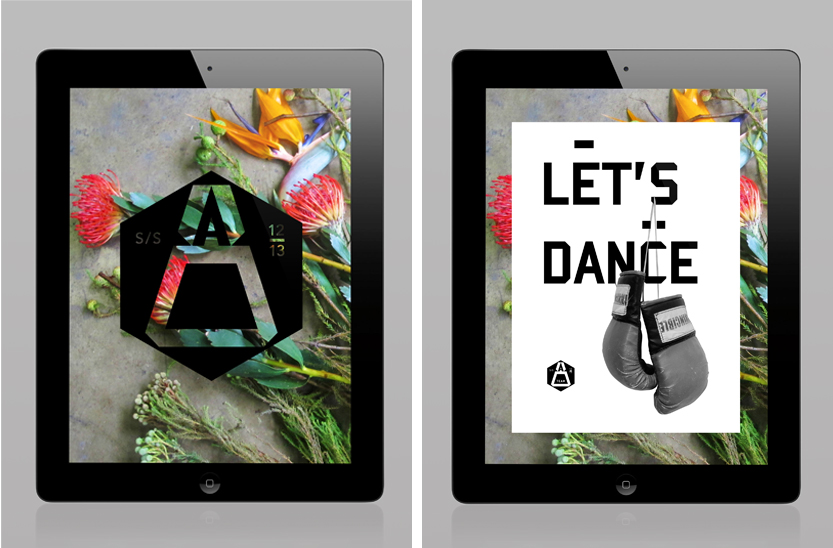
New Gaschette Magazine

Gaschette Magazine Issue

Launched in late-January this year, Gaschette magazine is a new(ish), online fashion magazine filled with fresh, exclusive content each issue – “probably the kind of stuff you’re not likely to see on newsstands.” Every month a new theme is introduced and submissions are accepted.

The theme for the fourth and latest issue is ‘Legacy’. Here’s a snippet of what Gaschette had to say about the choice of topic:

This month marks our biggest issue to date – this, of course, is no accident. I mean, we called it “Legacy” for Pete’s sake. It’s the month where we consider our national heritage, our cultural identity – our African-ness, if you will.

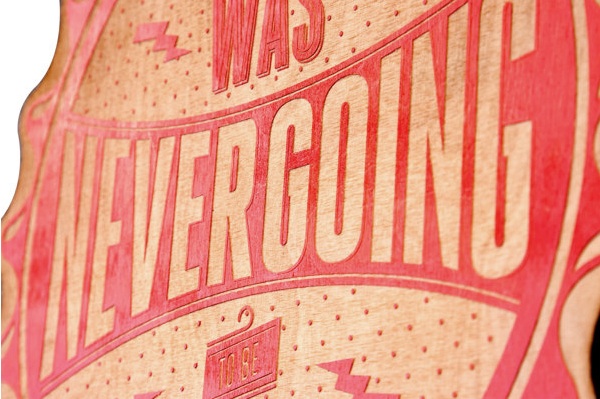
Ben Johnson Illustrated work

Ben Johnson illustration

Canadian born, Cape Town raised Ben Johnston has been hard at work this year so far taking on the daunting task of developing his own CI and completing a series of beautiful type-based pieces for the exhibition Back In Five Minutes. All in between freelancing for global clients including Disney, working on local magazine covers and editorial illustrations, and leaving his day job at Zoom, Ogilvy, after 14 months to explore the industry overseas – specifically the US and Canada.

Ben is self-taught and starting focussing on traditional graphic design after a brief stint in industrial design. He enjoys creating typographic illustrations from scratch and his industrial design experience allows him to bring these to life in both 2D and 3D.

With his sights set across the ocean, Ben still has plans to exhibit back in Cape Town over this year and next and is hoping to take part in more group shows at Salon91.

 Jana + Koos Uncreative

Jana and Koos feature

Joburg-based dream team Jana Hamman and Koos Groenewald, known collectively as Jana + Koos, have been doing some incredible work lately. Specialising in Concept Design, their big ideas are always impressively executed whether the job calls for advertising, design, illustration, photography or art. We’re super excited to be sharing some of their latest here.

Winter Sculpture Fair

IMG_4888

The first Winter Sculpture Fair presented by MasterCard took place over the weekend. The event offered visitors a new kind of experience – we’ve had food and wine, we’ve had art shows, we’ve even had food, wine and design– but an event with sculpture as its key focus is a first in South Africa. Internationally, sculpture as an arts medium is attracting more attention, with the likes of the Frieze Sculpture Park in New York now a prominent event on the arts calendar.

10and5logosmall1


– Uno de Waal is a social strategist and the publisher of creative showcase 10and5.com.

– Industry profiles you’ll make time for. Sign up for our free newsletter!


The Switch: What is the currency of aspiration?

by Alistair Mokoena (@AlistairMokoena) Ever wondered what life was like in ancient times, before money arrived on the scene? Were goods traded in exchange for other goods, or bartered in exchange for services. Or was there some form of quasi-currency? What if the ‘buyer’ had nothing to give in return, would this stop the ‘sale’? Were you considered poor if you had no possessions? And if you were, did you go hungry or was society charitable?

The reason I ask these questions is that money is so central to our lives today that it’s near impossible to imagine the world without it. It’s good to have a currency; it facilitates trade and generally makes life convenient. I can’t imagine using silver and maize to pay for parking at a mall. Money in itself is therefore a good thing.

The love of money, however, is problematic. Many of the problems we face today can be traced to our love of money. Greed, corruption, crime, alistair makoenacrass materialism, terrorism, wars, you name it, can be linked to a desire to possess more.

This is an important debate for us advertisers. Almost every client brief we receive asks for aspirational communication. The million dollar question is: What is the currency of aspiration? Is it material trappings of success or is it traditional values. In other words, is it about living ‘le good life’ or is it about being and doing good? I see these ideals as two sides of the same coin which must co-exist.

Let me just say that I believe that materialism is not a bad thing. In fact, it fuels the world economy. Many of us would be out of jobs if there was no market for the lovely trappings of success we peddle. Aspiring to better looks and a more chiseled body is also not a bad thing. Many of us enjoy the finer things in life and it doesn’t really matter what your motivation is.

For some of us, we get a kick out of living the good life. And for others it’s for external validation. It doesn’t matter how we end up possessing these things, what matters are the impact they have on how we relate to others.

But the minute values give way to materialism, humanity suffers. Having less is frowned upon and having lots is worshipped. Some even go as far as saying money is the world’s most dominant religion.

There has never been a bigger need for materialism to be tempered with ancient traditional values (updated to reflect our culture of human rights,  equality and liberty for all of course) as there is today. That’s what purposeful marketing is about. It’s about elevating regard for values such as ubuntu, self-sacrifice, hospitality, cooperation, respect for others and a sense of good human relations where ‘sharing is caring’. These values promote cooperation over competition and in that way leave they the world better off.

[pullquote]As advertisers we have a choice between turning a blind eye to the adverse effects of crass materialism on the one hand, and promoting a more socially responsive brand of material success, on the other. After all, material things come and go whilst good wholesome values last forever.[/pullquote]

Brands that have managed to imbue material success with wholesome values tend to have much stronger resonance. For example, Johnnie Walker’s promise of personal progress is not self-serving, it is rather about personal progress that is aimed at making a positive contribution to society.

Remember the famous Apple commercial which featured even more famous people who dared to be different like Albert Einstein, Arthur Miller and the Dalai Lama? All these people left the world a better place.

Remember the well-documented Dove ‘real beauty’ campaign which for the first time elevated regard for natural over Hollywood’s idea of beauty?

Then, Castle Milk Stout talks about ‘true greatness comes from within’. Coke promotes good old happiness, something that billions of people around the world strive for everyday. Old Mutual tells us ‘do great things’ as a rallying call for consumers to invest in a brighter future for themselves and their loved ones.

Other brands that manage to bring together the world of material success with traditional values include Klipdrift and Bells. Remember the Klipdfrit ‘met eish ja’ commercial that saw a white Afrikaner family hosting a black family? That commercial drove social cohesion and good human relations. Another is the latest FNB Stadium commercial which not only promotes the FNB brand but leaves one feeling incredibly patriotic.

As advertisers we have a choice between turning a blind eye to the adverse effects of crass materialism on the one hand, and promoting a more socially responsive brand of material success, on the other. After all, material things come and go whilst good wholesome values last forever.

We know what the client wants, but is this the right thing for the consumer and consumer’s children? At the end of time, man will be remembered for his deeds and not his worldly possessions.

Alistair Mokoena (@AlistairMokoena) is a Unilever-trained Chartered Marketer with lots of blue-chip marketing experience. He’s currently MD of Draftfcb Joburg. Mokoena contributes the monthly “The Switch” column to MarkLives.com.

Industry news you will make time for. Subscribe here. It’s free!


Digital growth for the Mail & Guardian

grubstreet

by Gill Moodie (@GrubstreetSA)  A short while back Mail & Guardian editor Nic Dawes told Grubstreet that the paper’s website was doing very well – with its traffic up by about 40% over the past year.

“We’re rolling out new products,” Dawes said in February this year. “We’re spending money on growing a digital business and our online traffic mgwas up 40% last year. We sell something like 1500 iPad editions and approaching 3000 Kindle. So we’re growing and things are happening.”

That’s great news from the tough little paper that has gone from strength to strength in recent years. It is, in fact, one of the few in SA to have stable or rising circulation so it’s heartwarming to hear that M&G online is also growing – especially in a market dominated by the giant News24. Grubstreet tracked down M&G online editor Chris Roper to find out more the website’s fortunes.

GRUBSTREET: So Nic said you guys were up 40% last year but what’s he talking about: page impressions, unique users?

CHRIS ROPER: Unique users. There was a 41% change to 1 122 078 unique visitors in February (2013). We had a big spike. We were at about 550 000 in April last year.

The reasons include  building a new website. We quite dramatically changed the way the website looked and worked (in June last year) and it included building a new CMS (content-management system).

The new look and feel is the kind that allows us to publish the right kind of content in front of the right people basically. There isn’t a whole bunch of clutter on the page. We kind of paired it down and pushed up things like multimedia. We also focused heavily on social media. So we hired a social-media editor, for example, and we got a spike in referrals from there.

GRUBSTREET: It must help to have an editor who gets online and  social media.

ROPER: Oh ja, hugely. That’s a huge advantage for us.

GRUBSTREET: And the website is doing quite a lot of unique content too.

ROPER: Ja, over the last three years we had a switch (in that) we (now) have more unique content  than we have feed content. So everybody here writes. One of my funny stats of the last three years is that of the top 20 stories for February, the second highest was done by a project manager.

GRUBSTREET: That’s cool.

ROPER: Ja, it is. Obviously, Oscar Pistorius contributed to the spike – and that’s the same for everybody – …but we’ve actually actively tried to pull it to a million (uniques).

We also paid quite a lot of attention to multimedia and I think probably 10% of our uniques are on multimedia now, which is pretty good.

Also, one of the ways we decided to try to build traffic was to mix up the kind of news we do so we have different demographics that we target at different times. We do a mixture of serious news and a bunch of online stuff about memes. If, for example, our social-media editor sends us the top search terms on the site or top search terms in South Africa or the world or top hashtags in South Africa and the world, we look  if there’s any stories we can get out of those.

So when we make editorial choices we’ll say: ‘Look, we’ve got 10 stories today but these two are really trending so let’s maybe pay more attention to that’.

GRUBSTREET: Very clever and so simple!

ROPER: Ja, very easy. It takes our social-media editor maybe three minutes to do, which is cool.

Then we also try to produce content for different kinds of readers that we wouldn’t normally get on the site. So, for example, we have an animated cartoon video every week, which is a kids’ take on the news basically. All these kinds of things – and mixing up the content – helps. So you don’t have one homogenous reader; you have a whole bunch that you interact with.

I think the tablet edition and iPhone and Android apps have also made a bit of a difference to us because we get more referrals – more people tweeting things because they’re accessing us on different platforms at different times.

GRUBSTREET: A lot of referrals must come from mobile.

ROPER: Ja, we also managed to grow our mobile traffic by 4 000% in one month because we eventually got round to giving the people the option to go to a mobisite instead of HTML. But that was just a technical change.

GRUBSTREET: It’s not all about the numbers is it – although it is partly?

ROPER: Well, we tend not to worry about the numbers too much. We’ve got a number in mind that is one that makes it commercially viable but we sell our advertising based on knowledge of our audience rather than the numbers and volume.

We also sell across  multiplatforms so, for instance, we have a radio show now on TwoOceans Vibe  every Monday for an hour, which is another  little touchpoint with the audience.

GRUBSTREET: And is it working, to sell on knowledge of audience? Does it differentiate you guys from News24, for instance?

ROPER: Ja, it does. It only works with a specific subset of clients. It’s the same as the newspaper. You’re not going to be getting Game or Dion Wired advertising in the Mail & Guardian but you do get academic advertising or high-end brands so it does limit the number of potential clients you have. But it also means you can up what you’re charging for the ad spots.

GRUBSTREET: And are online ads sold as part of a wider M&G package?

ROPER: No, we’ve got a separate ad sales team. Both teams are trained to be able to sell converged packages but our guys are specifically online.

Online isn’t a difficult sell but there’s such confusion among publishers and clients about what’s possible and what’s permissible. I don’t think there’s much of a standard yet so it’s a bit of a cowboys’ game out there.

GRUBSTREET: Have you ever thought of going for volume?

ROPER: We could double our traffic by just going for breaking news but it would be the death of the brand.

GRUBSTREET: Ja, if you look at IOL, one wonders if they should reposition themselves because they’ve long lost the volume battle with News24.

ROPER: Obviously, a brand online has a different nuance to that of a newspaper but, at the same time, we can’t mess with it too much. One of the interesting parts of our jobs is to see where we can take the brand into social-media spaces and multimedia without compromising the core: of what the M&G is.

You have to have your meme of the week, you have to buy into the Harlem Shake but, at the same time, get people to understand the seriousness of the brand. It’s quite an interesting juggling act.

– SA’s leading media commentator, Gill Moodie, offers intelligence on media – old and new. Reprinted from her site Grubstreet.

Sign up for our free newsletter!

Africa Style: It is time for Africa (to do it for itself)

by Masingita Mazibuko D’banj, a hip hop artist hailing from Nigeria, is topping charts across the UK and US. The African Report highlights his many achievements including featuring megastar Kanye West in his music video. For D’banj, however, conquering his mother country is clearly his biggest achievement. He self-confidently states that Nigeria is where the money is coming from.

D’banj is not alone in his belief that Africa is on the verge of a renaissance. The continent is regarded by many as the next frontier for growth. As the second most populous continent with over 1,02-billion people and accounting for 15% of global population, it proffers a market that is expected to be worth $1-­trillion by 20201.

But, tapping into this growth will not be without pain. Africa is diverse on many fronts, and with this comes challenges for brand owners and Masingita Mazibukotheir marketing suppliers.

At the same time, there is a challenge facing Africa. It is time for Africa to not lie passively waiting for the world to descend upon it but rather take proactive steps ensure its distinct qualities are appreciated worldwide.

Given that May 25th has been dubbed Africa Day, it is worth highlighting some of the homegrown success stories as evidence of what can be achieved, stories that show that Africa can influence as well as embrace.

There is Taste of Ethiopia which produces and packages Ethiopian dishes and sells them in supermarkets in New York.

African fashion has evolved at a furious pace and is taking the world by storm. David Tlale has become a household name by fusing local and international influences to show that Africa deserves a place on the world’s runways.

More recently, Africa mobile has been touted as the leapfrog technology on the continent with analysts anticipating approximately one billion users in 20152. Success stories here include Safricom’s M-Pesa in Kenya, the social network and free mobile instant and messenger service Mxit in South Africa, and more recently Zimbile, a website enabling anyone to build a fast-loading mobile website.

Of course, there’s also that chicken brand unlike any other, Nandos, which is now available in 30 countries on five continents. It has fused multi-cultural Portuguese and Mozambican history to create a brand that captures the hearts and minds of many while continuing to enrich that which is local through its way of social commentary.

There many examples that could be mentioned, these are just a handful. The sentiment is to encourage inward reflection on the creative spirit both within and around us so that we can leap-frog and game-change, thus lifting our continent to new heights.

Don’t make this your agenda; just park the idea in the back of your mind. I’m hoping for a Coleman and  Kaufman3 moment: “You’re  out for a jog, completely relaxed, your mind a pleasant blank. Then all of a sudden the solution to a problem you’ve been mulling over for weeks pops into your head. You can’t help but wonder why you didn’t think of it before.

“It is in such moments that one makes contact with their creative spirit, that elusive muse of good—and sometimes great—ideas. When the creative spirit stirs, it animates a style of being: a lifetime filled with the desire to innovate, to explore new ways of doing things, to bring dreams of reality.”

As we head toward Africa month, I find myself reflecting on the often talked about Soul of Africa and hope that this spirit infuses you in May and the months to come.

Sources:

1.        The Dynamic Africa Consumer Market Exploring growth in Sub-Saharan Africa – Accenture
2.        Sunday Times
3.        The Art of Creativity D. Coleman P. Kaufman , 1992

Masingita Mazibuko, marketing director at Unilever, contributes the monthly “Africa Style” column to MarkLives.com. The views expressed within this column are entirely her own.

Sign up for our free newsletter!

D’banj

Radar – now within range


radar2

by Herman Manson (@marklives) Radar has had its offices in the midst of a construction site for just over a year. It’s an easy allegory to describe the agency, which has been working hard to reinvent itself following the departure of three of its four partners just over a year and a half ago.

In 2006, four friends (Baphumze Msengana, Tricia Snowball, Karen Meyer and Jason Ray) left Ogilvy to launch Under the Radar (UTR), a radar1specialist below the line agency. They had, says Ray, the last of the four left at the agency, believed that it was time to launch a new kind of agency that backed away from its reliance on traditional media, and had been in advanced talks with WPP, through Ogilvy, to back them. They got as far as looking for premises, but final approval just never arrived, so they departed and set up on their own.

Ray, who was Head of New Business at Ogilvy before helping launch UTR, says he knew the start-up agency would be OK when Old Mutual gave him an access card to Mutual Park at his going away party. The agency had signed Old Mutual as one of its founding clients.

UTR would live by three core rules, still in place today, says Ray. They would only work with clients they liked, they would avoid communication layering so that the client would always deal with the most senior person on the job, and accessibility and a focus on quality time will mean real agility inside the agency.

Under the Radar had been just that, operating under the radar from most of the advertising and marketing industry, but this is set to change. Ray has bought out his three partners, amicably, he says (one is rejoining agency as a staff member), and has evolved its full service communications offering. The agency has been rebranded as Radar.

All the staff in the agency is client facing, from the ECD to the production department, and its orientation is to be strategically lead but creatively driven. Radar also decided it would not go for small accounts. It currently holds five pieces of business, from the Taj Hotel, Stoned Cherrie, Old Mutual, Sea Harvest and 22seven (recently bought by Old Mutual).

Taking sole ownership has been liberating, says Ray, with quicker decision-making. In January, he brought Andries Breytenbach (ex White House and Draftfcb) on board as Managing Director of Radar.

Ray and his team aims to sign one other client this year, and to eventually grow its client base to 10 accounts. The agency employs 29 people and has around R60 million in billings.

Ray is also keen to grow with his clients into the rest of the continent – especially Zimbabwe. He is also looking for international opportunities saying the work in some developed markets he had been visiting was uninspired – a possible gap for a smart SA agency.

Ray holds up Sea Harvest as a case study for what his agency can help clients achieve. Sea Harvest went from number two to number one in its market in the space of two years. It increased its market share from 37% to 58% by ditching expensive TV ads (which research showed was being associated with a rival brand) and focussing on point of purchase and direct communication, targeting the primary consumer – mothers, and positioning the product as a healthy, quick meal.

The new 22seven business will give it additional profile, it is by all accounts a hard driving but sexy piece of business, and was hotly contested. Success here will give Radar a definite boost in expanding its client roster and reputation.

radar3

– Industry news you’ll make time for. Sign up for our free newsletter!

Magazine cover tells of heart and how social is changing media

MarkLives.com runs a regular slot featuring the best local and international magazine covers every week. We recognise well thought out, powerful and interesting (and hopefully all three in one) magazine covers and celebrate the mix of pragmatism, creativity and personal taste that created each of them. By media blogger MediaSlut.

INTERNATIONAL

Boston, May 2013

boston_magazine

When this cover of Boston magazine was released, it immediately became a world wide hit and talking point.  People who had participated in the Boston Marathon were asked to bring in their running shoes for the shoot, and the magazine published a story of “the people behind the shoes.” A magazine with a heart.

Here’s a round-up if you want to know more:

Billboard, 4 May 2013

Billboard

“Every picture tells a story”. I found this cover with Rod Stewart very interesting, and in this case, the ‘cover also tells a story’! You can read his amazing story right here.

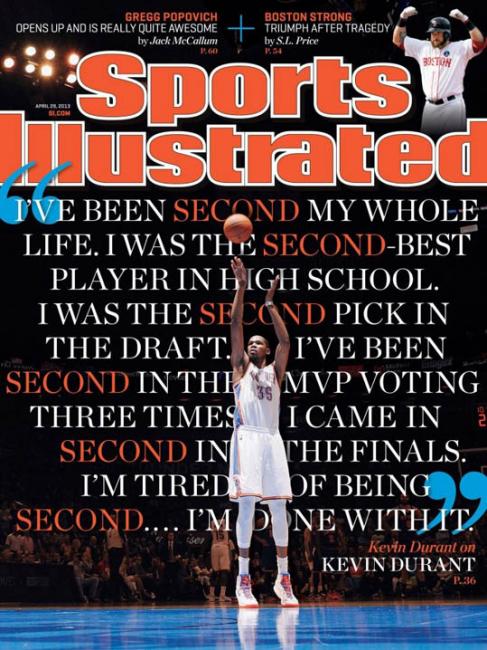
Sports Illustrated, 29 April 2013

Sports Illustrated 24 April 2013

If there’s a really strong quote in an issue, why not make it the main feature of a cover? It’s not really new (especially in the American magazine industry), but it’s still extremely strong and effective. You read the quote, right? So it works and it’s effective…

LOCAL

Signature, Issue 1 for 2013

Signature

Signature is the customer magazine for Diners Club international (published by Highbury Safika Media) and it had a little make-over recently. This is the first issue in the new look, and the cover image is what caught my attention immediately. I’m a big Sydney fan, and after reading the online edition of Signature (free if you register), I’m also now a fan of Signature magazine…

High Life (South Africa), May 2013

High Life 5 May 2013

Ever been to Maputo? What am I asking!? Then I’m sure this beautiful cover representing the A-Z of Maputo also immediately struck a cord with you. This is the South African edition of High Life, as British Airways is now also flying to Maputo (Yip, I’ve made a mental note!). If you’re a big fan of magazines like I am, and in-flight magazines, note that you can also download the complete High Life magazine (UK edition) every month via their iTunes app. An awesome read!

– The (for now anonymous) blogger behind MediaSlut knows way too much for his own good about media in South Africa. Magazines in particular. His mission is to show when South African magazines might fail, but most importantly, succeed. If you’re looking for a library about South African magazines and news, your one-stop pitstop is MediaSlut. #MagazinesForTheWin

– Find a cover we should know about? Tweet us @marklives and @mediaslut
Sign up for our free newsletter!

Online CPD Courses Psychology Online CPD Courses Marketing analytics software Marketing analytics software for small business Business management software Business accounting software Gearbox repair company Makeup artist