ABC Analysis Q1 2013: The biggest-circulating consumer magazines in SA

The ABC has released circulation statistics for the period January 2013 to March 2013 (ABC Q1 2013). Here are a couple of consumer magazine ABC numbers that popped out for us. We also updated our list of the biggest circulating consumer magazines in SA!

Total ABC member circulation fell to 6,207,891 from 7,004,714 in the previous corresponding period.

Note: We compare the current figures with the same figures for this time last year and not with the previous quarter!

Magazines not entertained

On the previous quarter we reported that the ABC figures for music magazine Tempo (from the Huisgenoot brand extension stable) dropped from 62,928 (Q4 2011) to 39,991 (Q4 2012). Well, in Q1 it managed to claim an ABC of exactly 39,991 once again. We smell BS.

Heat fell to 29,422 from 30,193 (but its up on Q4 2012 when it stood at 27,945). People fell to 82,464 from 87,179. TV Plus (Afrikaans) fell to 37,752 from 40,385 and twin title TV Plus (English) declined to 41,594 from 47,140.

Bona fell to 98,267 from 106,981, Drum fell to 121,768 from 138,007, Huisgenoot declined to 285,520 from 298,262 and YOU fell to 165,330 from 181,071 (up from 155,125 in Q4 2012). Reader’s Digest fell to 28,378 from 31,486 for the previous corresponding period. In Q4 2012 it had hit 40,269 – so it’s a bit of a shocker for a title than many have kicked to the curb already.

The Big Issue did very well for itself jumping to 15,074 from 10,651.

Rolling Stone was critised for not publishing its ABC figuires in the last two quarters. They are back in but shows a steady decline – down to 7,155 from 15,889 (total paid: 5,755). This can’t be a sustainable figure surely?

The Red Bulletin slashed circulation to 38,425 from 69,700 (total paid: 19).

Bad to worse for Finweek

FM dipped slightly to 23,049 from 23,413 for the previous corresponding period (total paid: 20,964). Finweek dropped substantially to 17,571 from 25,561 (and down from 23,456 in Q1). The magazine has been given some time to save itself, but these numbers are not positive at all. Finweek had a total paid circulation of 14,808 in Q1 2013.

Entrepreneur stayed steady at 20,272. Forbes Africa climbed to 21,471 from 13,908 (total paid: 10,029, single copy sales: 5,787). Noseweek climbed to 20,417 from 18,429.

Good news for Home category

Conde Nast House & Garden climed to 47,812 from 44,978 (paid for: 39,759). Easy DIY published an ABC of 23,414. Elle Deco climbed to 23,630 from 22,130. Food and Home Entertaining was up to 34,052 from 32,720. House & Leisure was up 54,551 to 43,605 (paid for: 44,237). Interesting that all editions of The Property Magazine has resigned from the ABC.

SA Garden and Home – up to 60,902 from 52,669 while Die Tuinier climbed to 24,038 from 21,158. Tuis/Home climbed to 85,654 from 80,457. VISI climbed slightly to 12,531 from 11,599.

It was a guy thing

Braintainment – oh dear – it just published the exact same figures for Q1 as it did for Q4 2012 -12,525 (up from 11,666). Destiny Man climbed slightly to 19,251 from 18,869.

FHM fell to 32,270 from 47,168 (but up from the 29,382 it reported for Q4 2012). GQ – down to 28,084 from 30,036. Men’s Health – down to 69,196 from 74,903. Popular Mechanics declined to 48,283 from 50,787 and Stuff declined to 25,317 from 26,018. Playboy SA resigned – remember we questioned their ABC figures in our previous update?

CAR fell to 89,620 from 91,198 and Speed & Sound declined to 41,143 from 44,594. TopCar fell to 17,706 from 19,308 and TopGear fell to 32,896 from 36,10219,308. SA4x4 climbed to 23,299 from 18,520.

Woman’s (dis)Interest

Cosmopolitan fell to 83,049 from 85,724 (and 86,885 in Q4 2012). Destiny is down to 28,337 from 30,321. Essentials declined to 37,147 from 40,944. Finesse fell to 69,562 from 80,979 (Q4 2012 – 72,661). Not that long ago they had a circulation of close to 100 000. Glamour fell to 72,676 from 77,588. Good Housekeeping is down to 66,169 from 71,760 while Move! fell to 119,480 from 144,078. O Magazine is down to 35,197 from 41,267. Real magazine collapsed to 48,216 from 63,907.

Rooi Rose – down to 96,621 from 104,533 while arch rival Sarie fell to 104,862 from 120,402. True Love? Down to 67,388 from 79,309. Women’s Health – down to 74,492 from 78,791. VOILA! was discontinued.

Elle is up to 32,544 from 30,083. Fair Lady climbed to 59,121 from 51,302. Grazia came in at 23,686. Ideas/Idees climbed to 89,321 from 85,679, Kuier hit 95,846 from 64,787 (94,926 in Q4 2012). Woman and Home is up to 90,830 from 86,160.

Travel

Getaway climbed to 55,424 from 54,585 as did Country Life (to 40,708 from 36,246). Weg/GO fell to 79,727 from 83,592.

Others

NAG climed to 21,329 from 16,624 (total paid: 16,941). Kick Off fell to 47,425 from 55,874. SA Hunter climbed to 38,517 from 33,994. Sowetan magazine climed to 20,373 from 17,857. National Geographic Kids fell to 27,848 from 30,487. Teenzone climbed to 16,044 from 14,206.

The MarkLives Big Magazine list*

1. Huisgenoot 285,520 –
2. YOU 165,330 –
3. Drum 121,768 –
4. Move! 119,480 –
5. Sarie 104,862 +4
6. Bona 98,267 +1
7. Kuier 95,846 +1
8. Rooi Rose 96,621 -3
9. Woman and Home 90,830 -3
10. CAR 89,620 Reentry

Ideas/Idees 89,321
Tuis/Home 85,654
People 82,464
Cosmopolitan 83,049

* By total circulation. Must have a cover price. Annuals Excluded.
Movement on the Big Magazine list compared to 2012 Q4 data.

huisgenoot-2-8-16-may-2013

Past ABC reports

Media news you’ll make time for. Sign up for our free newsletter!

Dentsu – not just big in Japan as group focuses on international markets, digital

Tokyo based communications group Dentsu Inc., which recently completed a deal to acquire Aegis Group, has released its 2012 financial report.

The group posted 1,941.2 Billion Yen in Consolidated Billings (Net Sales) (2.5% year-on-year increase), 58.4 Billion Yen in Operating Income (12.5% increase), 59.0 Billion Yen in Ordinary Income (6.1% decrease) and 36.3 Billion Yen in Net Income (22.9% increase).  It recorded a gross profit of 345,940 million yen, an increase of 3.9%

Dentsu reports a gradual recovery in the Japanese advertising market following the Great East Japan Earthquake of 2011, but continued dentsuuncertainty in Europe and a slow-down in China. Dentsu’s estimate for advertising expenditures in Japan for the 2012 calendar year was 5,891.3 billion yen, an increase of 3.2% compared with the 2011 calendar year – the first increase in five years.

For the fiscal year ending March 31, 2014, on a consolidated basis, Dentsu forecasts billings (net sales) of 2,283.4 billion yen, an increase of 17.6% year on year; gross profit of 571.8 billion yen, an increase of 65.3%; operating income before amortization of goodwill and intangible assets of 100.1 billion yen; operating income of 58.5 billion yen, an increase of 0.1%; ordinary income of 58.7 billion yen, a decrease of 0.6%; and net income of 19.1 billion yen, a decrease of 47.4%.

Dentsu has established a medium-term management plan for the group which starts from financial year 2013 and goes through to financial year 2017. It aims to achieve an annual organic growth rate in gross profit of 3–5%, to improve the ratio of gross profit generated from markets outside of Japan to reach 55% or higher, the ratio of gross profit generated from digital businesses to reach 35% or higher and an operating margin before amortization of goodwill and intangible assets of 20% or higher.

Ad of the Week with Oresti Patricios – hip hop hooray

MarkLives Ad of the Week with Oresti Patricios – hip hop hooray

The origins of hip-hop culture date back to the urban minorities of 1970s USA, when ‘battles’ were introduced as a way of settling neighbourhood scores. Instead of having a gang fight, two crews would face off and compete, either in breakdance, rap, ‘turntablism’ or even graffiti.

Probably most exciting were the breakdance ‘battles’ where different crews would face off and take turns in showing off their breakdance moves. The tradition continues today and can be experienced at hip-hop events, even here in South Africa – mainly in Cape Town, but also in other cities.

DStv’s promotional ads have a history of humour, and of using cultural genres to make a point about the brand and the strength of its content, and the latest ad which features a gangland type face off is no different.

This “Dance Battle” ad for DStv takes place in a suitably dingy downtown environment. It starts off with close-up shots of what seems to be two crews facing off to do battle. There is a DJ in the background, warming up his scratching and mixing.

“Yo, where your crew at?” asks the leader of one crew.

“They’ll be here,” replies the other, with bravado.

Cut to a wide shot as he glances over his shoulder. There’s no-one there but a dog. Now he’s not so sure.

There is an awkward moment, and the second crew leader looks decidedly uncomfortable.

Cut to what is obviously his crew, sitting in front of DStv, completely engrossed in what’s popping and locking on the box. No it’s not a nostalgic rerun of the John Singleton cult-classic “Boyz N The Hood”, nor is it one of the ever-popular CSI series… The gang have stood up their ‘homie’ to watch the latest from the cooking channel.

The inversion is delicious! Tough ‘hip hop types’ completely enthralled with baking is an absolute hoot, and it’s a brilliant punch-line that in my case delivered a fully belly laugh.

The payoff line? “With over 100 great TV channels on DStv, everything else can wait.”Cut back to a high wide-angle shot of the deserted basketball court as the crew leader slinks off, possibly to watch DStv.

The home entertainment space is owned by DStv in South Africa, and this ad consolidates the Multichoice brand’s position solidly. But then DStv has always been very inventive with its bright, entertaining promos that are flighted across all the channels.

Sometimes these take the form of the obvious trailer-style promos showing scenes from popular movie or series; while other times they are the generic montage-set-to-music pieces that hark back to the early days of M-Net. Remember when Queen’s “Don’t Stop Me Now” was used as the channel’s anthem? Who didn’t sing along to that campaign?

Every now and again DStv or M-Net produce a concept campaign, like the hugely popular, award-winning Gary the Tooth Fairy series, featuring comedian Bevan Cullinan…and in these instances, comedy always seems to work. Comedy has been a strong mainstay for building both the M-Net and DStv brands over time, a tactic that’s worked well for both brands.

Getting back to the “Dance Battle” spot, humour is used to great effect to sell a product that speaks for itself. The “Everything Else Can Wait” campaign has also been extended to other geographies where the digital television bouquet offers its content: for instance, in Tanzania, a bride keeps her groom waiting while she pays her DStv subscription in time to get a 10% discount.

The campaign has been tied in with an on-air competition, which uses a pop-up ‘Rewards Box’ device to get subscribers to enter via SMS; it’s a competition that’s appears to be running throughout Africa.

It’s a clever campaign, but one that’s predicated on DStv delivering on its promise – which of course is screening content that’s worth making everything else worth waiting for. Compulsive viewing that stops ones world.

With TopTV flailing and DStv literally owning the paid-for digital television market the gorillas in the market might be tempted to rest on their laurels. That would be a massive mistake – nothing attracts attention to an inferior product or service quicker than good advertising. DStv would do well to ensure that its content offering is better than the promise advertised in its promotional campaigns.

dstv

Ad of the Week archive

Ad of the Week is published on MarkLives every Wednesday. See past selections here.
Oresti Patricios is the CEO of brand and reputation analysis company Ornico.

– Industry profiles you’ll make time for. Sign up for our free newsletter!

The Dissident Spin Doctor: Dear Brand Manager, your social brand strategy bores us

by Emma King (@EmmainSA) We’ve all been cornered at some point in our lives. Cornered by an acquaintance or co-worker into listening to lengthy and detailed descriptions of holidays (we did not get to have), all while living through a computer avalanche of accompanying slides.

Surely, they know we don’t care.

We see brands spending more money and time trying to tell stories about themselves to their consumers, and it’s becoming ever more prevalent as we see digital and social media channels as a way to pump out our stories – our ‘content’ – to the reluctant consumer. Brands have become the yapping co-worker who cornered us to listen to a detailed account of their holiday itinerary.

Do we care that your brand product, for example, was first formulated by a nomadic people, eking out an existence in a remote jungle by making vodka from a rare root, distilled over the pure leaves of a rare orchid?

I’m not sure we do. In fact I’d go as far to say that all most of us care about is that the products tastes good (or feels good, or looks nice), is as cheap or as expensive as our wallet demands, and essentially makes us look cooler/hotter/thinner/more trendy when we are seen consuming it.

And when it comes to social media, I’d be willing to bet that the only reason most of us follow a brand is;

a)      To get something first, before our friends (like  the new Nando’s ad)
b)      To get something cheaper or for free
c)       To be entertained…or even better, if that entertaining thing will make us look funny/clever if they can share it
d)      [and to bitch – ED]

Not one of us, I would wager, are there to be bombarded with a brand story or ‘reason for being’.

So why do brands spend so much time trying to pump out this stuff?

There is of course the ego thing – when we are so consumed by ourselves we think that other people are interested in the minutiae that surround us. And then there is the attempt by brands to try to develop a personality, to be more human, often an attempt to try and differentiate in a crowded market place.

To be fair, some brands have done this well, spinning compelling stories about how they work and how they became to be. Google has created a mythology about how it operates, a fantastical story about its legendary offices and the way it works, a brilliantly spun story that positions them at the forefront of innovation, and attracts some of the best young talent to work there.

Ben and Jerry’s brand team, too, have worked hard to tell the story of their origins – a charming tale of two outcasts brought together by their love for ice cream and a passion for inventing new ways to make and eat it.

But most brands don’t have an authentic tale to tell about how they began or how they operate (apart from a non glamorous story of endless market research and being manufactured in a factory). And in an attempt to create one, they patronise a smart consumer, when their efforts could be better spent elsewhere.

Likewise the obsession with brands creating their own branded ‘participation platforms’ where they can pump out their own content. Do  consumers really want to join yet another social media platform or be dragged in to brand’s media channel?

I’d argue not.

Red Bull is a brand that does social well. There are no elaborate stories of how it is made, or where it comes from. It just focuses instead on developing a strong – indeed powerful – brand identity, and on being curators and publishers of entertaining content, rather than churning out brand stories. And they use these stories and engaging content in a way, and in places, where consumers already are and want to be.

We don’t all need to create convoluted stories about our brands. And we don’t need to force consumers to join or sign up to our exclusive brand platforms. We just need to be creative and entertaining in the places where they already are, and with the kind of stuff that they want to see and already are doing.

Emma King is Head of PR at The Jupiter Drawing Room (Cape Town). She is a columnist for MarkLives on PR and communication issues. You can find her on Twitter at @EmmainSA

– Industry news you’ll make time for. Sign up for our free newsletter!

How to save TopTV: let customers pick packages of channels at various prices

by Gill Moodie (@GrubstreetSA)  Don’t be afraid of competition in the market, say the business handbooks, but  rather assess you rivals’ strengths and weaknesses. Everyone does this in business plans and it helps new entries in the market or smaller players  to spot the gaps and opportunities.

But what do you do when you’re playing in a market that is utterly dominated by one big player – as On Digital Media’s TopTV that was rescued recently in a complex takeover deal by China’s digital pay-TV company StarTimes  – found with Naspers’ DStv Multichoice? toptv logo

Did TopTV ever actually stand a chance?

DStv was already so entrenched in the local market – and across Africa too. It had nailed down  that absolutely essential – and enormously expensive – element of pay-TV: local and international sports rights.

And it had the ability (and savvy) to counter the new entry’s threat by putting money into a big marketing drive for a cheaper bouquet, the Compact, to sign up  lower-LSM subscribers that were TopTV’s target market.

In the last available full-year financial results for Naspers – for the year to the end of March 2012 – DStv netted 684 000 more subscribers in South Africa and across the continent to reach 5.6-million households in Africa. Ad revenue was up by 18% in South Africa year-on-year.

What could TopTV – which began operating in May 2010 (and  put under business rescue late last year) – have done differently? Did it ever properly assess DStv’s weaknesses and strengths?

I should think that it did, which is why it went the lower-LSM route (without a back-up plan to counter DStv’s response, possibly) – and then later for porn (the one thing DStv does not offer in its content mix).

Personally, I don’t think porn will bring sustainable revenue growth for TopTV because that’s an online game these days but I do think – assessing DStv’s strengths and weaknesses  – there is one crucial opportunity not yet seized upon. Let’s weigh up DStv:

Strengths:

  • It ticks all the content boxes for a premium pay-TV operation. It offers movies, sport, doccies, music, news, family shows, kids’ shows, lifestyle. Hard to beat them there.
  • Customer service seems  good by SA standards. (I’ve personally never had a problem.)
  • It offers movies-on-demand so it’s moving with the times. (Don’t forget Naspers also owns Mweb so there are lots of synergies for the future for them to jump into TV-on-demand.)
  • It’s branding is excellent and it generally looks very slick – those in-house promos are very good – and there is not yet an irritating, time-wasting surfeit of adverts.
  • It has good original content that appeals to a broad range of people in South Africa.

Yikes! Does it have any weaknesses? And the answer is “not many” as it has not rested on its laurels but, chiefly, I’d say:

  • The premium bouquet is very expensive while the cheaper compact bouquet doesn’t offer too much of substance.
  • The TV-listings magazine is hard to navigate.
  • There is simply too much content on offer in the premium bouquet. I think many customers would be happy to pay a little less and get fewer channels or (pay attention TopTV) to be able to choose from different packages of channels at various prices.

I know this is complex for a pay-TV operator to manage but even years ago, when I lived in the UK, Sky offered different packages (have a look here for examples) and I do think it’s a key way to differentiate yourself from DStv – before they beat you to it and, once again, you’re scrambling to catch up.

Happily, TopTV now has plenty of financial clout behind it in StarTimes, which is operating in 16 countries in Africa and has seven-million pay-TV subscribers in China, so they should survive and thrive as a second-best in the market (and that’s not always a bad thing in business). However, first-to-market always has an advantage so it’s best TopTV gets moving.

Pay-TV is lucrative game but it’s also a ruthless one.

– SA’s leading media commentator, Gill Moodie, offers intelligence on media – old and new. Reprinted from her site Grubstreet.

Sign up for our free newsletter!

The Sell: Driving bigger baskets. Learnings from Mickey Mouse

by Mimi Nicklin (@MimiNicklin) Walt Disney once said “People spend money where and when they feel good.”

[pullquote]Quite simply, if there is no joy/reward/connection with your message, the stack ‘em high, sell ‘em cheap school of thought will indeed capture short term, easy come, easy go shoppers, but it wont create any medium term impact and it won’t necessarily reengage her throughout the duration of the promotion.[/pullquote]

This understanding led Disney to found one of experiential retail’s biggest-ever successes with 14+ theme parks across the globe that are an almost perfect, high margin,seemingly recession proof, experiential ‘shopping’ offering. But can you really learn from a theme park when looking at how to sell more in a supermarket in Benoni or hyper store in Phoenix? And are there ways that us as marketers (versus retailers who have the power to do what they wish with the physical store) can really effect the joys of shopping and in doing so, encourage more people, more often to choose our product?

Shopping is emotional. It has been proven time and time again, we shop based on the Limbic system in our brain. It is the part responsible for instant pleasure or immediate reward, and it reacts and responds much quicker than the Prefrontal Cortex which is the part of the brain which follows up, albeit very quickly, with the rational support for the decision we have just made. This understanding helps us explain why one promotion will work and another will fail. If you haven’t caught the shoppers’ emotional interest with something bigger than a functional “buy and win” then there are alternatives she will rather pay her attention to (in or out of your category).

When you fuse this with the fact that we know that levels of unplanned, impulse purchases are related to the type of shopping mission (i.e am I on my weekly shop or am I popping in specifically to buy those ‘hot roasted chickens’ that I know are on sale this week) allows us to start planning our in store messaging more smartly. Quite simply, if there is no joy/reward/connection with your message, the stack ‘em high, sell mimi nicklin‘em cheap school of thought will indeed capture short term, easy come, easy go shoppers, but it wont create any medium term impact and it won’t necessarily reengage her throughout the duration of the promotion. Your promotion may last 8 weeks but a purely functional offer is likely to capture her once during those multiple trips during the campaign period, and is less likely to encourage her to keep coming back for more.

There are of course ways we can override what is a very powerful, and subconscious, shopper brain and ensure that we fuse the joy we feel whilst shopping with very smart value rewards and hence drive repeat interest in the campaign and drive her relationship with the brand;

Firstly, if we are assuming, rightly so, that emotion drives instinctive response to communications, why is it that so often our POSM materials feature a whole host of words and price flashes and are devoid of imagery or lifestyle cues? A quick fix here would be to prioritise the visual over the words and to really consider what is the least you really need to say versus all the ‘stuff’ you want to say.

Secondarily, if we know she is looking for added value that makes her feel great, how do we shift from the purely financial gain to something that talks more to a lifestyle or emotional gain? For example, reframing a “buy one get one free” pizza promo message to “one for you and one for your hot date tonight” message. A small tweak that takes the message from ‘get this and save’ to “share a pizza with that hot guy and fall in love tonight” – okay that may be pushing it a bit for a pizza offer, but you get the idea!

Thirdly, understanding that the mindset she is in right now as she shops will have a huge impact on what she buys into and evaluates as worthwhile. Whilst first class tickets for a shopping trip in NYC will certainly grab her attention and pull her in, what can you support that with that rewards her now, as she shops, while she plans her today, her tomorrow, her next week? Instant cash prizes that will help soften the blow of the shopping bill? An offer to pay her electricity bill this week? Or an instant voucher sent by SMS that allows her R1,50 off that purchase right then and there? The balance between aspirational and instant is a key metric to get right if we are to balance the left and right side of her brain.

Finally, we can often intercept the habitual shopper journey by prompting forgotten or unrecognized needs and use our in store messaging to not just direct her to a financially beneficial promotion, but to actually remind her and direct her as to what she might, or did, want to buy. Prompt the consumer memory of a successful Sunday lunch or Wednesday game night supper with the family, and help her fulfil those happy occasions more easily, with superior value and of course, your brand. Stop her reaching for that same old packet of ‘store label’ chips and instead upgrade her to your family sharing pack of nachos based on the improvements it will bring to her Wednesday dinner occasion – happier kids, family moments to share and yes, subsequently a happy mom and shopper.

So, I state my case, that just as Disney ensures that as you approach the front gates of the Magic Kingdom you are hit with the incredible colours of thousands of flowers, the smell of freshly baked chocolate chip cookies, and Disney songs playing in the background, there are ways that brand owners can use the tools available to them in store to evoke more joy, more emotional connection, more response from shoppers. Of course, its not quite as good as having a life sized Mickey Mouse give you a hug and offer you an instant signed photo, but when shopping for milk, bread and bottles of soft drink, it might just be the next best thing and you’ll gain her loyalty as well as her Rands.


mimiMimi Nicklin (@MimiNicklin) followed her passion and experience in the consumer, retail and shopper space from regional roles in Europe and Asia, to South African shores in 2010. Having led global brands through the line for Procter & Gamble, and two of London and Hong Kong’s top agencies, her background gives her an international perspective to add to her depth of SA understanding. She serves as strategic director and a partner at 34 Group. Mimi contributes the monthly “The Sell” column concerning shopper marketing to MarkLives.

Hermaneutics: Awards or education? Guess which one agencies pick.

The advertising industry in focus from the editor of MarkLives.com. By Herman Manson (@marklives)

Yup. That didn’t take two seconds did it? You want to move on up in adland you better land a couple of awards. Who needs multi-skilled, educated self-starters anyways.

David Nobay, Creative Chairman at Droga5 in Sydney, last year told delegates at the Loeries seminar that modern award shows are oversimplifying what is considered ‘creative.’ And I quote: “Awarding winning work has become a matter of looking at a piece of work and having an immediate reaction (on the judges’ part) to it before moving to the next piece.” And while most businesses are running in maintenance mode, and need solutions that cater to this, award-winning creative has become all about the new.

On the other hand, the supposed juniorisation of marketing departments aside, more people on client side today have a good grasp on marketing and advertising fundamentals, making it harder for agencies to win any argument, unless they know more than all those young guns client side trying to impress the boss with their alternative social strategy.

Creative awards don’t carry the weight they did ten years ago. Creative rankings are less likely to get you on a pitch list in an age where the CEO has a direct stake in setting the marketing objectives of a business, and marketers are becoming more hardnosed about who they work with.

There is nothing new in this statement. In 2010, Maria Popova was already arguing in Design Observer that “the output of this flawed and incomplete system of evaluation [that would be at award shows] becomes the currency designers flash at prospective clients and use to bargain their billing rates. It makes clients lazy and designers complacent. Lazy because it creates a cheat sheet for judging the merit of a designer or studio, making the client uninterested in actual inquiry into the process, work and product of smaller studios and emerging designers who may actually have a better, fresher solution to the client’s problem than the award-encrusted top-biller. Complacent because it’s easy to buy into your own brilliance when you spend your days sitting across a shelfful of awards in your posh office. And between laziness and complacency, the whole marketplace for design becomes a self-contained universe isolated from the bigger cultural context in which it lives and from the human lives it touches.”

Agencies are still pushing more money into entering into awards, jetting ECDs to Cannes, London and New York, and holding them up as a path to career success in the ad industry, than they do on setting in place strategies to up skill and broaden the general skills base of the majority of their staff.

Too many agencies still reward awards rather than incentivise education. How many agencies are linking salaries and promotions to completing relevant accredited courses, now widely available through distance internet education? Who rewards employees spending nights and weekends toiling to come to grips with the nuances of copywriting for digital and social platforms?

Even if an agency decides to continue ranking awards as a way of identifying and promoting talent, why don’t they set alternative routes to career success, so that awards don’t seem like the only ladder to the top of the pile.

Look there are exceptions to the rule. I admire Ogilvy’s efforts with its internal Ogilvy Digital Marketing Academy (ODMA) initiative. Then there is OFyt who takes in a good many interns, not to make tea, but to learn from the old farts (I mean friends) who run the agency (of the eight they took on last year five stayed with the business as staffers).

But broadly speaking you plop down a Loerie or proof that you just upskilled (on your own time and dime), the Loerie will speak much louder, for the moment at least. It undermines the advertising business over the longer term, and at a crucial point in time, with the industry battling to redefine how it will look and operate down the line. And it discourages what ad agencies sorely need – the multi-skilled employees need for real through the line thinking.

First published on 10and5.com

– Industry news you’ll make time for. Sign up for our free newsletter!

Africa’s biggest animation studio – soon also its biggest gaming developer


k2

by Herman Manson (@marklives) Back in 1996 Triggerfish was a traditional stop frame animation studio. It did commercials for ad agencies and landed a contract to produce the South African version of kiddies show Sesame Street, Takalani Sesame, and did such a good job of it that it soon landed the US domestic version as well. It was in 2002 that Stuart Forrest joined the business as a junior animator. By 2005, he would be MD and have taken over the business with a handful of business partners.

“Africa’s Answer To DreamWorks, Disney And Pixar,” screamed a headline in Forbes magazine recently. ” Hollywood Reporter and Variety has also reported on the studio, currently the largest animation studio on African soil.

[pullquote]In another first, the movie is being dubbed in Afrikaans, and Stuart hopes to take on the box office success of the Leon Schuster movies (also distributed by Indigenous Films, which has taken on Khumba), and of course it ties in nicely with the merchandise angle.[/pullquote]

The fact that Africa can produce top quality kids content suitable for international markets are surprising many in the industry, and are certainly turning some pre-conceptions about the continent on its head. African cinema able to break into the global mainstream (like District 9 for example, or the so far well received kids animation movies put out by Triggerfish) helps break the stigma around what Africa can produce and can change the way the world sees this continent.

How does a junior animator take over a successful studio in less than four years? They don’t. Post Sept 11 the US owners of Sesame Street were cutting budgets and pulling back work into the States. Ad agencies meanwhile had come to view Triggerfish as a producer of kids’ content – hardly anything cutting edge in that – they reckoned. Work dried up. Then the bottom fell out of the stop frame market as CG took over.

The business was about to go bust. In 2004 Forrest became a Partner, in 2005, by which time the work finally dried up completely, MD. He bought Triggerfish with the assistance of four partners. It still had no in-house CG capacity but Forrest set about changing this immediately.

[pullquote]The company won’t be just an animation studio, it’s turning into an innovative content company, and aims to be one of the biggest gaming studios in Africa as well. In fact, Forrest says the business is not a film business at all, instead it creates characters and worlds, and then exploit those worlds across various platforms.[/pullquote]

In 2007 he teamed up with US partners to at first direct, and then produce, the animated film Zambezia. After spending several years raising the money, it went into production in 2009, and was finally released in August last year. The film is still rolling out in certain markets, including Mexico, where it was released May 9th. It did well in markets as diverse as the Netherlands (where it sat in the Top 20 for 12 weeks) and Russia. The only major markets where it did not hit the circuit were the United States and Brazil. Forrest says it made more sense to go straight to DVD in the States rather than spend the millions of Dollars needed to promote it in that market.

The movie did less well than he had hoped in South Africa, says Forrest, even through critics gave it the thumbs up, mostly because its local distributor (Nu-Metro) did very little to promote the movie. It’s currently on offer on DStv’s box office.

k4

Their next release, Khumba, will have a limited release in the US, which might grow depending on initial box office receipts.

Forrest has high hopes for Khumba, done in 3D, and which looks pretty amazing, if the short clip of the ending I saw is anything to go by. It will see its first release in Cannes later this year, features higher production values and is a more sophisticated product than Zambezia. It will hit South African cinemas October 25. Needless to say, Nu-Metro won’t be doing the distribution this time round.

In another first, the movie is being dubbed in Afrikaans, and Forrest hopes to take on the box office success of the Leon Schuster franchise (also distributed by Indigenous Films, which has taken on Khumba), and of course it ties in nicely with the merchandising angle.

Triggerfish is developing an innovative business model to cope with the changing nature of the global film industry and has its eyes firmly set on emerging markets. While companies like Disney might generate a relatively small percentage of revenue in these markets, for Triggerfish they are primary markets. They are also growth markets, and markets where a high percentage of the population are made up of kids, perfect for a producer of quality kids’ content.

The movies also don’t try to be all things to all age groups – Forrest notes that animated movies need to cater to adults in the West or they would not be willing to sit through the films with their kids. In emerging markets, this is not really the case – and his products are solely focussed on entertaining the little ones, for now at least, but growing more sophisticated alongside its market.

Revenue is coming from ancillary products, including games and eBooks – any digital product with global reach and little distribution cost. Khumba will take on Angry Birds, maybe even more so than it will Disney, in some ways. The aim is to build communities, connected via mobile and digital, who relates to Triggerfish products.

[pullquote]Khumba will take on Angry Birds, maybe even more so than it will Disney, in some ways. The aim is to build communities, connected via mobile and digital, who relates to Triggerfish products.[/pullquote]

The company won’t be just an animation studio, it’s turning into an innovative content company, and aims to be one of the biggest gaming studios in Africa as well. In fact, Forrest says the business is not a film business at all, instead it creates characters and worlds, and then exploit those worlds across various platforms.

Forrest aims to build out various departments at Triggerfish, so that the business develops a proper production cycle, with new movies permanently in development. It includes a distribution arm and a gaming division. The focus will remain on family entertainment, and on emerging markets. Cinemas makes sense in densely populated areas, where people want to get away from the confines of home, and remains an affordable and social experience. China can’t build cinemas fast enough, notes Forrest.

Forrest hopes his studio will look a lot more like the Disney’s and Pixars of the world, and create classics with long life cycles. He is currently negotiating with international investors to make this dream a reality, and quickly.

In the meantime the studio has started development on its third feature film, a sea monster story done differently than those that have come before it, says Forrester, who describes it as something along the lines of “How to train your dragon meets E.T.” It’s still a couple of years before it will enter production, he notes, the studio is about half way through the script at the moment.

A sequel to Zambezia is also in the pipeline.

Meanwhile Forrest is considering TV spin offs for Zambezia and Khumba as well, having received enquiries from various markets already. It’s not a sure thing just yet, but would give the IP some legs, and build exposure and awareness for brand future sequels.

Then there is the ten-year plan for a worldwide breakout hit managing a good mix of production value to budget. Triggerfish is bubbling just under the surface, and while it will take a lot of work to catch the wave that makes it a global player, it’s certainly seems like it’s only a matter of time before it does.

k3

– Industry news you’ll make time for. Sign up for our free newsletter!

Design Annotator: Digital offroading and the fastest film ever made

uno de waalDesign Annotator with Uno de Waal is a  new column featuring the top design work from South Africa’s biggest online creative showcase, Between 10 and 5, curated by Publisher Uno de Waal @Unodewaal. 

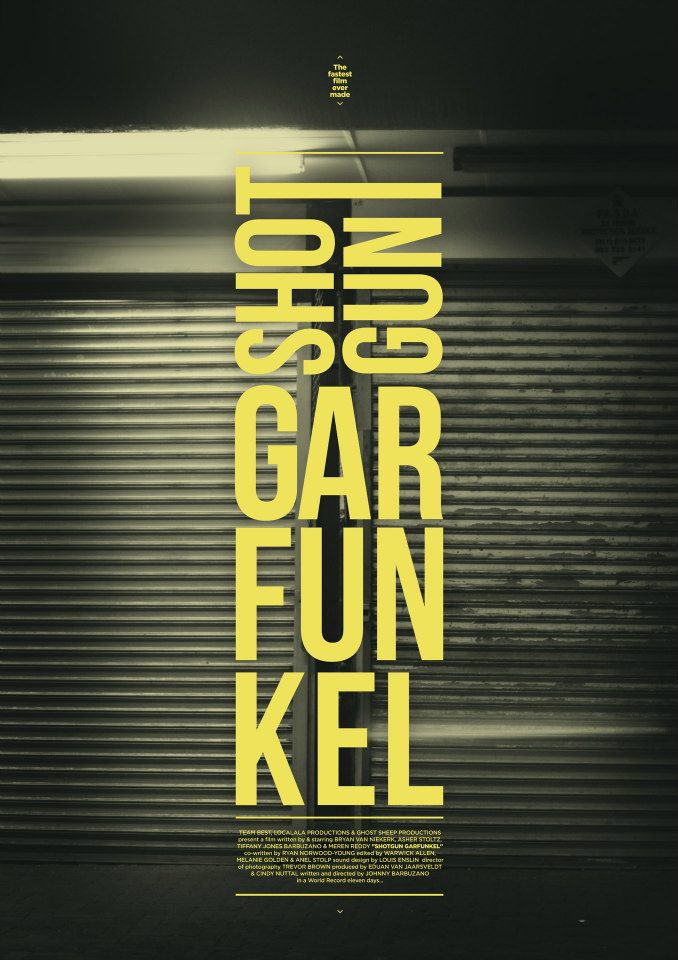
I’m really liking the production efforts behind the team that put together the Fastest Film Ever Made – the level of commitment is fantastic and the work produced is great for the constraints placed on it. We also have a quick look at some of the work produced by NATIVE, and if you find yourself in Johannesburg on the 16th be sure to check out the Postcard Revival project. The Portfolio review night coming up is also an event that we hope to see more of.

Fastest Film Ever Made

A group of 3 production agencies have tried their hand to create the fastest film ever made – within 9 days they’ve created a full length feature film that premiered at the Bioscope in Johannesburg. To help promote the event they also hosted an evening to create the fastest film poster, putting 8 creatives in a battle to produce a poster for the film. Check out more about the film here.
fastest film winning poster

Rooiwolf photography studio

 Rooiwolf photography

Rooiwolf, otherwise known as Juan Voges, is a photographer based in Woodstock, Cape Town. Initially studying electrical engineering at CPUT, it was in 2003 that he bought his first camera to revisit an old school hobby.

Having always been fascinated with the camera and light, Rooiwolf began shooting portraits of friends and landscapes while travelling. During this process he discovered his love for portraiture. He says, “People’s faces and their expressions can be quite interesting and very humorous.” Through his photographs Rooiwolf is interested in presenting beauty, nature, humour and the deeper aspects of being human. He is inspired by these things as well as the dream state.

The Postcard Revival Project

 map-of-joburg

14 of Joburg’s most creative residents have each contributed an original artwork to The Postcard Revival Project, depicting in a single image what makes this city unique for them. Each artwork has then been made into a limited edition postcard series.

A one night only exhibition will be held in the beautiful Barbican Building, aptly overlooking the old Rissik Street post office, on the evening of the 16 May 2013. Both the original artworks and the postcards will be on display and for sale on the night. If you’d like to attend, you must RSVP here.

You can read more about the creatives involved in the project here.

Isuzu Trail View by NATIVE

Isuzu approached digital agency NATIVE to create an exciting campaign to launch their new range of Isuzu KBs to 4×4 enthusiasts. The result is Isuzu Trail View, a Google Street View-style campaign that allows users to ‘go off-road, online.’

Isuzu provided vehicles, the Offroad Academy provided drivers and NATIVE climbed on board to map out 4X4 trails around the country with an innovative 360-degree camera mounted to the vehicle.

Portfolio night brought to South Africa

11

Portfolio Night is a global, annual event where aspiring young advertising copywriters, art directors and designers meet with several renowned advertising creative directors in a fast-paced evening of career-shaping advice, networking, and for some, recruitment offers. The 2013 event takes place in cities across the world on the 22nd of May.

While the event has been running for 11 years internationally, and has grown to be the biggest and best advertising portfolio review and recruitment event in the world, this year will be its first in SA hosted by advertising agency McCann in Johannesburg. Students and anyone else wanting to get involved can visit the website here.

10and5logosmall1


– Uno de Waal is a social strategist and the publisher of creative showcase 10and5.com.

– Industry profiles you’ll make time for. Sign up for our free newsletter!

Eric Bana’s S&M cover. Oh wait a minute

MarkLives.com runs a regular slot featuring the best local and international magazine covers every week. We recognise well thought out, powerful and interesting (and hopefully all three in one) magazine covers and celebrate the mix of pragmatism, creativity and personal taste that created each of them. By media blogger MediaSlut.

INTERNATIONAL

Stylist, 1 May 2013

Stylist

I’ve seen my fair share of ‘best places to eat’ covers. To stand out, everyone has to try and be different and unique. Stylist not only created a cover out of neon-lights (synonymous with diners…) but their main cover line (“You are where you eat”) is what got me thinking about it a bit more, because it’s extremely true! Think about it! To view this issue here.

Esquire (Malaysia), May 2013

Esquire Malaysia

Esquire Malaysia has created one of my favourite covers of 2013 so far. I think it’s extremely creative, smart, quirky and unique. And an amazing story told on the cover, with this simple little design and layout, to tell the reader exactly what they can expect to read about in this issue! Great planning and ‘execution’!

Esquire (UK), June 2013

Esquire

Staying with Esquire, I’m moving on to the UK edition that printed 5 split covers for their June issue themed HEROES. Featured on these beautiful covers (plain black and white striking pictures, and a different splash of colour for every cover…) are Jack Nicholson, David Bowie, Clint Eastwood, Keith Richards and Michael Caine.

Esquire 1

Esquire 2

Esquire 3

Esquire 4


LOCAL

Gaschette, Issue 4

gaschettemag 4 Legacy

This digital cover of Gaschette magazine deserves a spot on our list of favourite covers. Not just for it being so unique, but also it’s digital effects. It also reminds me a lot about the newly released The Great Gatsby Posters.

Ideas (Wedding Ideas), 2013

Ideas Wedding 2013

In January Ideas also made our list of favourite covers, with their February 2013 cover with this amazing masthead… This time they receive a nod for their Wedding Ideas issue (a stand alone brand extension). This cover deserves recognition because it’s staying true to the brand and this specific trend in wedding planning. It just feels … inspiring. You can read more about this issue, and see some layouts, right here.

– The (for now anonymous) blogger behind MediaSlut knows way too much for his own good about media in South Africa. Magazines in particular. His mission is to show when South African magazines might fail, but most importantly, succeed. If you’re looking for a library about South African magazines and news, your one-stop pitstop is MediaSlut. #MagazinesForTheWin

– Find a cover we should know about? Tweet us @marklives and @mediaslut
Sign up for our free newsletter!

Online CPD Courses Psychology Online CPD Courses Marketing analytics software Marketing analytics software for small business Business management software Business accounting software Gearbox repair company Makeup artist