Interview: Shopper marketing — it’s all about “me”

by Herman Manson (@marklives) Michelle van Trotsenburg, Y&R’s former business unit director: shopper conversion marketing, recently presented a talk at the POPAI Marketing at Retail Conference in Cape Town. The event focused on what brands, retailers and shoppers need to do to capture influential trend-setting consumer segments.

Van Trotsenburg (@Michelle_VanT) is a qualified marketer with over 15 years of experience, including heading up the marketing department at the Walt Disney Company in Johannesburg. Her talk identified key trends in the shopper environment, and offered practical examples and case studies on successful shopper marketing strategies.

Michelle van TrotsenburgMarkLives logo Give us a quick rundown of the top shopper marketing trends you have identified for 2014.

Michelle van Trotsenburg: I selected six trends which I covered in my presentation that I find perhaps the most relevant and topical in the shopper marketing discipline, especially this time of year. These include:

Brazilification: With the [2014 FIFA] World Cup [having dominated] social, broadcast and print media internationally, it’s a no-brainer for many brands to jump on the bandwagon. As demonstrated by what is now referred to as the ‘Suarez World Cup Controversy’, international brands like McDonald’s, Trident Gum and Whole Foods Markets use real-time marketing opportunities to capitalise on actual events.

Global brands like Coca-Cola also seized the marketing opportunity that is the opening match with their ‘The World’s Cup’ campaign, which saw over 200 000 fan images used for ‘The Happiness Flag’ to recreate a unique design developed by Brazilian street artist Speto, in collaboration with Tec, an Argentinian artist.

Perhaps less relevant in our local market after 2010, Brazilification is a catalyst for many international campaigns and certainly a trend to consider in the shopper marketing space as well.

Personalised engagement — it’s all about me: Personalised engagement has become a key strategic tool for shopper marketers in order to create customer experiences that are relevant, convenient and — most all — personal.

Coca-Cola and their ‘Share a Coke’ campaign can certainly be commemorated in the hall of fame of personalised engagement, but not every brand has relevant platforms to help achieve this level of success.

According to Marketing University, technology for personalisation has enabled brands to make use of services like dynamic insertion, customisation or suggestions for relevant content online. Locally, digital personalisation is on the rise due to the amount of data that brands are able to collect about their shoppers.

In my experience, retailers are leading personalised communication in South Africa. Supermarket chains make use of mobile coupons, personalised congratulatory birthday communication, and targeted messages to rate in- store experiences as shoppers leave the stores.

Disconnecting: In first-world markets, shoppers are always connected and might suffer communication fatigue, resulting in the trend of ‘disconnecting’, as illustrated by KitKat’s ‘No WiFi-Zones’ campaign. Y&R Advertising’s CEO, David Sable, even goes as far as to describe this trend as ‘Unplugging to Reconnect.’ In these markets, shoppers might need a break from the onslaught of marketing communication every now and then to avoid communication overload.

In South Africa there are still huge opportunities to get shoppers to connect more — mobile penetration is very high in South Africa, and brands need to increasingly leverage this trend going forward with relevant and engaging content.

Developing shopper solutions: The marketing budgets of brands have always striven to drive product awareness, to communicate key product features, and to offer consumers a reason to believe and purchase. In this scenario the brand manager optimises the media investment and strives towards reaching a certain ROI — but marketing communication does not necessarily reach consumers in the in-store environment. Grocery shopping is a particular example where shoppers are often driven by the line items of a shopping list or a casual stroll down the aisles.

A typical ‘shopper solution’ is displaying and merchandising complimentary categories/brands together in one area. This reduces shopping time and assists the shopper in their ‘autopilot’ mode because the merchandising acts as a reminder, ie baking utensils with cake mix and cold medicine with tissues and lozenges.

Although this strategy has been deemed very successful in global markets, locally it’s still proving a challenge due to retailers focusing on the brand and the category (displayed on the same shelf to benefit from habitual purchases) and not the shopper. Huge opportunities exist for brands to utilise their budgets to drive shopper centric campaigns that offer shopper solutions. This is relevant for all categories from FMCG right through to upselling Llumar tinting for motor vehicles.

The post-nuclear family: It has become a global trend for children to leave the nest later in life or for parents to move in. This rings true in the South African family as well — the high cost of living is a catalyst for this trend, but there also exists trade-offs by families, who choose to live in poorer areas in order to experience perceived luxuries like cars and DStv, that influence family structures and geographic profiles of shoppers.

Brands and retailers cater for larger families, by offering family-sized product packs, value packs, and ‘buy-two-get-one-free’ offers, but this trend will gain momentum in years to come and retailers have the opportunity to explore it further in order to maximise the ROI of their shopper marketing solutions.

SA malls: In a recent article by Jon Bird, global managing director of Labstore, the concept of physical retail and it’s future in the American retail landscape is called into question. He coined the title of ‘Zombie Malls’ — malls with vacancy rates with 35% or more — and call it the ‘Walking Dead’ of their economy.

In South Africa, however, this is not true. In fact, we are one of the countries with the highest concentration of malls per square kilometre, and the numbers are constantly growing. Location is still a key driver in terms of where shoppers shop and with the influx of malls into township areas, shoppers have more variety and choice than ever before.

MarkLives logoIn your presentation at the POPAI Marketing at Retail Conference, you mentioned the Pick  n Pay* smart shopper loyalty card as an example of smart and successful shopper marketing. What was key to its successful roll-out, and can you highlight some of the key stats and figures around its success?

Pick n Pay Smart Shopper cardMvT: As mentioned, retailers are in the fortunate position to infuse personalisation into their shopper messaging and communication, and I used the Pick n Pay smart shopper case study* as an example of how retailers have been able to obtain a wealth of data for personalising shopper communication relevant to shoppers.

On the Pick n Pay smart shopper card specifically, Pick n Pay has over 8 million registered Smart Shoppers, over 60% of all sales are driven by Smart Shoppers and, since, inception Pick n Pay has already paid over R1 billion out to members. The adoption of this loyalty programme during the launch phase was staggering and the campaign target (which was to acquire three million customers in the first 12 months) was reached shortly after two months.

In my opinion, one of the keys to their success was keeping it simple and using language that is easy to understand across all shopper profiles.

*Y&R is the advertising agency for Pick n Pay.

MarkLives logoYou also mentioned taking learnings from global trends and localising them for your brand/market/retailer. Who would you hold forth as having successfully adopted and localised global trends?

MvT: This is a very difficult question to answer — it differs from category, from retailer and from brand. Retailers are again at the forefront of what is happening globally and localising for the SA market from customer service right down to ‘green’ friendly packaging. Global multinational brands face these challenges on a daily basis with brands needing to adhere to global CIs,but communication needs to resonate in the local market.

MarkLives logoWhat are the key factors to keep in mind when localising global insights?

MvT: In order for communication to resonate with local consumers, brands need to understand the intricacies of local target audiences. It is also critical to consider relevancy of messages in a localised context.

MarkLives logoYou mention disconnecting as a global trend, but that SA isn’t following through on this one. Why do you think that is? Also I would argue that anecdotal evidence suggest that South Africans are thinking more seriously about how connected they are and want to be — maybe we will be talking about disconnecting two or three years down the line?

MvT: The demand for smartphones in South Africa has increased significantly since 2010 as more products enter the market. Currently, the smartphone penetration is at roughly 30%, and it’s set to grow to 45% by 2017.

Unit price has often been the key setback in demand growth for smartphones, but this is slowly changing as cheaper options enter the market. The overall result has been drop in volume sales growth for feature phones, as consumers continue to shift towards smartphones that can afford them easy access to a wealth of information in the palm of their hands.

According to Luke Mckend, Google South Africa manager, around 80% of South Africans have a cellphone, and much of this mobile resource is untapped due to data charges that many can’t afford. As data charges start reducing, South Africans will rely even more so on their mobiles to stay connected so I don’t see the local market ‘disconnecting’ anytime soon.

MarkLives logoWhat are the latest trends in terms of store navigation?

MvT: Extensive research has been done in stores with the likes of technology like eye tracking [enabling] retailers to understand the navigational habits of shoppers. Store layouts have, however, remained very static in the last couple of years. I have found that locally, shoppers get angry when retailers move products and break their ‘autopilot’ shop mode, resulting in them spending more time to locate product categories. I do have a few examples of trends in store navigation in the grocery category:

  • Retailers are shifting towards a preference for black shelving instead of white, as [it] assists with navigation on the products on the shelf.
  • De-cluttering of point of sale material in the store.
  • More promotional offers on shelf, like ‘mix and match’ (buy three and get the cheapest one free), as well as mobile coupon offerings.
  • Retail store ambassadors — permanent in-store promoters sampling goods in addition to paid for promoters.

MarkLives logoWhat would you say is key to increasing basket sizes?

MvT: Shoppers nowadays have more access to information and, with the number of malls opening in and around South Africa, they are spoilt for choice more than ever before. Shoppers are savvy and are looking for value for money, but are still time-poor and buy on auto-pilot in certain categories. The key to increasing basket sizes is to offer complimentary category solutions to help the shopper buy more, whilst spending less time in the store.

MarkLives logoWhat are the factors that are urging shoppers to covet the importance value so highly in their decision-making process?

MvT: Value is perceived differently, depending on the shopper’s needs and the category that they are interested in.  At the lower end of the market, disposable income is a key factor that drives decision-making; but, on the other side of the spectrum, perceived value ranges [from] more than just affordability. A great example would be the decision to buy a new car instead of a used one.  There are several factors that influence the purchase, such as reliability, resale value, the actual driving experience, petrol vs diesel — to mention a few that are taken into consideration to quantify the value, and not just the cost.

South Africans are feeling the pinch with the ongoing fluctuation in petrol and food prices, so no matter if you are at the bottom end or the top end of the market, the perceived value is what actually closes the deal and gives them the feeling that they have spent their money responsibly.

MarkLives logoIf you could offer some key advice for mall operators, what would that be?

MvT: Live and breathe shopper-centricity. Don’t just claim to be focused on driving shoppers into the mall, but actually deliver on it by making every shopping occasion a positive experience. If a shopper is popping in for a business occasion, facilitate the experience from the parking lot/taxi rank right through to the purchase and easy access to leave the mall. Invest marketing spend on creating a sustainable experience — the occasional sidewalk sale is not enough, nor is it enough just getting the shoppers into the mall and then [hand] over to the tenants to close the deal.

— MarkLives’ round-up of top ad and media industry news and opinion in your mailbox every three work days. Sign up here!

Smart Africa TV: New social platform connects broadcasters and TV viewers

by Russell Southwood (@BalancingActAfr) In this video interview, we talk to Ulrich Stark, founder of Wezwa, about how this new social platform works with broadcasters on TV shows such as Generations, Binnelanders and Muvhango:

  • Wezwa logothe programmes currently working with Wezwa;
  • the type of social content they are releasing on Wezwa;
  • the levels of social engagements;
  • an advertiser case study;
  • and future African expansion plans.

Smart MonkeyRussell Southwood is the founder of Balancing Act and the web TV channel Smart Monkey TV, and has been an analyst in telecoms, internet and broadcast in Africa for the last 14 years. Smart Monkey TV aims to capture the energy at the crossroads between African culture and technology. MarkLives is syndicating content from Smart Monkey TV on a weekly basis for the column “Smart Africa TV”.

— MarkLives’ round-up of top ad and media industry news and opinion in your mailbox every three work days. Sign up here!

AdForum Worldwide Summit NYC: Lowe rebuilding SA offering

by Johanna McDowell (@jomcdowell) NEW YORK: Breakfast with Lowe and Partners was how we began Day 4 (Thursday 9 October) of the 2014 AdForum Worldwide Summit in New York City. CEO Michael Wall, informed us of the renaissance that Lowe is going through, as well as the various structural changes in the work.

AdForum Worldwide SummitLowe

Lowe has merged its Lowe Profero (digital) business into Lowe so that the agency is now a fully integrated shop. Significant business has been won in the past 12 months throughout the network of 90 agencies and the work that we were shown was particularly strong.

The Lowe network is also very strong on effectiveness in advertising and is no. 1 in Asia for this attribute.

Creatively, the agency network is enjoying prominence once more and is winning against stiff competition from some of the more obviously creative agency networks. The Brazilian agency, Borghi Lowe, is the strongest agency in Latin America and is a highlight of creativity within the network.

When it comes to Lowe in Africa, it has always had a presence in Nigeria, Kenya and Ghana, and continues to operate in those countries at a good level. In South Africa, the agency will be acting slightly differently, with Lowe Cape Town being considered more of a boutique agency and with Lowe Johannesburg — soon to have Julian Ribeiro as group CEO — rebuilding its offering within the country.

Lots of positive news for this network that had — for a couple of years — started to disappear. Watch this space.

Saatchi & Saatchi New York

Saatchi & Saatchi New York was our next stop and, again, a lot of news within the network.

Restructuring at the top, along with a whole new team in New York, is setting the stage for a return to the leading-edge advertising that the network was famous for a while back — and for many years.

Saatchi New York is led by Brent Smart, an edgy Australian who knows exactly what he wants to achieve within the agency. It is building a “maker” culture within the agency, with a focus on building campaigns and products for clients.

The network is building hubs of excellence, and not replicating services. Saatchi Synergise (recently bought here) is seen as a centre of excellence for search and SEO, for example.

Martin Agency

The Martin Agency was next. This is an independent agency, largely US-based, but recently opened in London. It is part of the IPG network and uses that to distribute the campaigns it creates for such clients as Oreo.

Strong on craft, devoted to great design and copy, with some wonderful case studies of fully integrated advertising which it has practiced for years. Clear thinking and highly creative — it was a highlight of Day 4.

Brooklyn Brothers

Last stop was the Brooklyn Brothers, another micro-network and one we met three years ago in New York.

Famous for its work around Iceland and Iceland tourism, this agency network has expanded its client list to include Jaguar and Castrol, and is producing excellent creative work that again produces great results. Refreshing in its approach and lots of fun.

Offices are in London, New York and Sao Paulo, and network offices are in other significant places, including Cape Town, where it has a partnership with insights agency Tag.

And that was Day 4.

In the evening, AdForum hosted all of the agencies that we have met this week, including R/GA which we are seeing today, along with RECMA and the 4 A’s.

More soon!

Best
Johanna
@jomcdowell  @agencyselection
#adforumsummit

Johanna McDowellJohanna McDowell is managing director of the Independent Agency Search and Selection Company (IAS), which stands at the forefront of the complex world of agency selection in South Africa, and she is one of the few experts driving this mediation and advisory service in SA and globally. Twice a year she attends AdForum Worldwide Summits as an international consultant, which helps her lead the SA advertising industry forward to keep in line with international trends and remain competitive. Follow her on Twitter at @jomcdowell.

— MarkLives’ round-up of top ad and media industry news and opinion in your mailbox every Monday and Thursday. Sign up here!

MagLove: Striking, colourful, full of impact

by MediaSlut (@MediaSlut) My choice of the best international magazine covers in MagLove this week:

  • F*cking Young! Spain
  • Numéro (France)
  • The Sunday Times Magazine
  • TIME

INTERNATIONAL

F*cking Young! (Spain), Autumn/Winter 2014

F*cking Young! (Spain), Autumn/Winter 2014The new issue, titled “Mountain”, is accompanied by a truly striking (and oddly sexy) image. This is to celebrate F*cking Young! that launched five years ago, and “getting to where we are today [which] was like climbing a mountain, and a large one at that,” according to the editors.

You can read what the editors have to say about this issue, and the significance behind it, here.

[Please note that we have amended the title of this magazine slightly to avoid being blocked online — ed-at-large]

Numéro (France)

Numéro (France): StromaeSouth Africans might not be familiar with the cover model, or recognise him, but this is popular Belgian singer-songwriter Paul van Haver (or, as he’s better known, Stromae).

I’m loving the vibrancy and arty-ness of his Numéro cover!

[Here’s a video, with English sub-titles, of one of his hit pop songs — ed-at-large]

The Sunday Times Magazine, 5 October 2014

The Sunday Times Magazine, 5 October 2014: #IamMuslim 4The Sunday Times Magazine, 5 October 2014: #IamMuslim 3The Sunday Times Magazine, 5 October 2014: #IamMuslim 1The Sunday Times Magazine, 5 October 2014: #IamMuslim 2
With a four-way split-run cover, The Sunday Times Magazine makes a massive impact by saying a lot, by saying very little. What is it about? “Kickboxers, beauty queens, car enthusiasts and refugees reflect on what it means to be young and Muslim in Britain today.”

To continue the conversation, readers were invited to share their experience(s) by tweeting @TheSTMagazine with the hashtag #IamMuslim, which is also splashed on the covers, or to email in.

It’s definitely worth searching for #IamMuslim to view the mixed (but mainly positive) response.

TIME, 13 October 2014

TIME, 13 October 2014: The Umbrella RevolutionTIME, 13 October 2014: Chasing Ebola
TIME regularly has different covers for the same week/issue, but change its covers and cover story depending upon the region. This week, there are two which strike a chord with me:

One, unplanned and unstyled, captures the “Umbrella Revolution” currently happening in Hong Kong perfectly. The other is clinical, clean and styled — the direct opposite of Ebola.


Find a cover we should know about? Tweet us at @Marklives and @MediaSlut.
Want to view all the covers at a glance?
See our MagLove Pinboard!


MediaSlutMagLove by @MediaSlut is a regular slot featuring the best local and international magazine covers every week, recognising well thought-out, powerful and interesting (and hopefully all three-in-one) covers and celebrating the mix of pragmatism, creativity and personal taste that created each of them. The (for now anonymous) blogger behind MediaSlut knows way too much for his own good about media in South Africa, magazines in particular. His mission is to show when SA magazines fail but, most importantly, also when they succeed. If you’re looking for a library about SA magazines and news, this is your one-stop pitstop.

— MarkLives’ round-up of top ad and media industry news and opinion in your mailbox every Monday and Thursday. Sign up here!

Heroes & Zeros: Mercedes-Benz & DStv — best & worst brands of the week

Andy Rice (@ricecommaandy) talks about his best and worst brands of the week — Mercedes-Benz and DStv, respectively — with Jenny Crwys-Williams (@jcwLIFE) during The Ad Feature on Talk Radio 702 (@Radio702).

Find out why these feature in this week’s Heroes & Zeros webisode by watching below:


For a fresh look at the world of advertising, Jenny Crwys-Williams of 702 Talk Radio chats to advertising critic Andy Rice on The Ad Feature, every Wednesday 2.30pm — 3pm. The filmed Heroes & Zeroes will appear on MarkLives every Friday as a webisode.

— MarkLives’ round-up of top ad and media industry news and opinion in your mailbox every three work days. Sign up here!

AdForum Worldwide Summit NYC: Africa is DDB’s next major growth area

by Johanna McDowell (@jomcdowell) NEW YORK: Day 3 (Wednesday, 8 October 2014) of the 2014 AdForum Worldwide Summit in New York City was a spectacular day where we, as consultants, were exposed to work of a world-leading quality in our industry. It is extraordinary how talented the advertising community is and how adaptable.

AdForum Worldwide SummitDDB

Mark O’Brien, global CEO of DDB, treated us to an hour-and-a-half of fabulous DDB work from around the globe, and commented upon a few things:

  • Agencies these days need to come up with much more than just advertising
  • Advertising these days is a world of partnerships and collaborations, and this is a new skills set that agencies must acquire
  • DDBX is the mobile division of DDB which was started in Chicago and will be rolled out around the world
  • Key trends:
    • Talent
    • Activation
    • Technology
    • Storytelling
    • Culture

The visit to DDB was low key — they are a humble crowd — and high quality. Magnificent work.

O’Brien also commented on the importance of Africa to them and that they see Africa as their next major growth area. Very heartening.

Crispin Porter & Bogusky

Next up was Crispin Porter & Bogusky, which apparently has a relationship with our very own Joe Public — but just an association — no more than that at this stage.

CP&B, which I first met four years ago in Copenhagen, is micro-network, highly talented, deep digital. Superb work. Its mission is to create work that is talked about. Some wonderful case studies and a “real-time” client-tracking board so that it can keep up with its clients hourly and daily — a fabulous tool.

OMD

The very impressive OMD ended the day — the first time we have seen this agency ever on AdForum — and it is so much more than just a media agency.

OMD’s data and sales processes are way ahead of anything I have seen before, with a great deal of information at its fingertips and a unique operating system that has taken the place of any PowerPoint presentations. Clients can also be part of the operating system and this has been rolled out to all OMD offices worldwide. Another world.

And that was the day — lots of content, lots of input, and some stellar work. As consultants, we were completely inspired.

Best
Johanna
@jomcdowell  @agencyselection
#adforumsummit

Johanna McDowellJohanna McDowell is managing director of the Independent Agency Search and Selection Company (IAS), which stands at the forefront of the complex world of agency selection in South Africa, and she is one of the few experts driving this mediation and advisory service in SA and globally. Twice a year she attends AdForum Worldwide Summits as an international consultant, which helps her lead the SA advertising industry forward to keep in line with international trends and remain competitive. Follow her on Twitter at @jomcdowell.

— MarkLives’ round-up of top ad and media industry news and opinion in your mailbox every Monday and Thursday. Sign up here!

Tuned: When Jozi meets Soweto

by Thabang Leshilo (@Thabang_Leshilo) My birthplace is a melting pot of opportunities, a contrast between an enduring dream and the unapologetic realities of life.

The streets are forever alive with the sights, sounds and smells of human and mechanical traffic hurriedly going somewhere. The characters are truly an expressive bunch; unafraid to walk tall, speak swiftly, and at all times appear to know where they are headed — even if they don’t.

This is the city that raised me, matured me; it gave me spirit and character. Yet, to a large degree, it is a city ignored by marketers and advertisers, who often deliver project stereotypes.

Thabang Leshilo by Jeremy Glyn in June 2014 glynj@fm.co.zaA sense of community

In Europe, the constant hustle and bustle of the Metro in Paris or London’s Tube creates a sense of community, ‘sameness’ and equality. Business men and women travel alongside street vendors, school children and people of different socio-economic and ethnic backgrounds; all are simply trying to reach their various destinations. Even if people don’t verbally communicate or engage with one other, they are aware of each other, similarities and differences alike.

Jozi is a beast of a different nature.

On the one hand, township life epitomises ‘know your neighbours’. For decades, it has been a place that welcomes people from different places with open arms. An ever-thriving suburb of enterprise and cultural interaction, its street life never loses the essence of the genuine and warm-hearted nature in which people engage with one another.

Influenced street culture

Sowetans, who are unmistakably proud and optimistic, streetwise, socially inclusive and vibrant city dwellers, have certainly influenced Johannesburg’s street culture as they travel across the city into different areas. Be it through vernacular lingo such as ‘Sho Boss’, handshakes and gestures made with much generosity and spirit when greeting someone, everyone in Jozi does it! Unless you are the type to roll up your car window at the stop sign or disregard the security guard who gives you access to your office or home every day, I believe we owe our stamp of ‘friendly’ city to the residents of Soweto.

On the other hand, Jozi is notorious for its isolated suburban life, where the northerners stay north, where east is east, and west is … well, west, and the south continues to sprawl.

However, I believe there is a cultural shift taking place in this city, particularly in central Johannesburg, where people are beginning to move beyond their ‘borders’ and into more-shared public spaces.

Open to all

For example, on a recent visit to Zoo Lake Swimming Pool, I shared the grounds and pool with a mix of ages and races, from all walks of life. According to Wikipedia, when the land was gifted to the city during the time of Colonial South Africa, it was made under condition that the facilities were to remain open to people of all races. The multiracial nature of the park endured throughout the Apartheid era and still maintains this spirit to this present day.

And, with the urban renewal of the CBD, places such as Braamfontein and Maboneng have grown to become cultural street hubs and great facilitators of this very shift. I find moving among people in the street makes you less afraid of what or who you don’t know — a challenge that suburban life has always presented.

As marketers or creatives, I would urge you to get out there, and get a real sense of people. Step out of your comfort zone and into the streets; and, no, that doesn’t mean doing a visit into the trade once every six months. Make it a part of natural habit to place yourself in a different space and place from where you can simply observe.

Talk to people

And, if you’re more of an extrovert (or not), talk to people; get to know them by name if you see them every day. You have nothing to lose by getting to know another person who may live a completely different life to yours.

All too often, marketers and ad agencies design products and produce communication based on typecasts such as BEEs and Sandton soccer moms. Stereotypes are out — real people with real stories are in! And, to find them, you just have to get out there and look around.

Instead of waiting for the annual brand report to tell you who your consumer is, get a natural feel for the insight and step out on to the streets!

Thabang Leshilo (@Thabang_Leshilo) is a project manager (brand) at strategic marketing consultancy Added Value South Africa. As a ‘next-generation’ marketer with fresh and curious eyes looking into the industry, she has a keen interest for brands that are culturally in tune with and able to integrate and immerse themselves into the everyday realities of the consumer. She contributes the monthly “Tuned” column, sharing marketing insight and analysis, to MarkLives.

— MarkLives’ round-up of top ad and media industry news and opinion in your mailbox every three work days. Sign up here!

Shelf Life: Distinctive Black Bottle whisky back in black

Louise Marsland (@Louise_Marsland)’s weekly pick of recent product, packaging and design launches:

  • Distinctive Black Bottle whisky back in black
  • Sea Harvest’s new product fishing expedition
  • SA product Snuza impresses US parents, and
  • Samsung ‘owns’ the smart home of the future.

Black Bottle ‘back to black’

The new Black Bottle Blended Scotch WhiskyAfter a century and 18 months of development, Black Bottle whisky is back with its signature black bottle. The single-malt-and-grain whisky blend has also been updated to honour creator Gordon Graham’s original product, made in 1879 in Aberdeen, Scotland.

The smoky whisky was bottled in the distinctive black bottle from Germany until supplies were disrupted by World War I, forcing a change to green.

Now, a century later, Black Bottle is celebrating its origins with the retro look and blend. The new design has been inspired by a black bottle found in the company archives that dated back to 1906, while the blend has been adjusted to reflect the recipe created in Aberdeen by Graham and his brothers 135 years ago.

“The revised look and blend offer a more authentic version of Black Bottle’s history and was rigorously researched before the recent global introduction to rave reviews. It won the World’s Best Relaunch Award at this year’s World Whisky Design Awards, following its debut in Scotland a few months ago,” reports South African brand spokesperson, Taygan Govinden.

The new Black Bottle is available in SA from this month, retailing for between R240 and R260 per 750ml bottle. If you want to be invited to some of the exclusive launch events, register at www.theblackbar.co.za.

New Sea Harvest catch

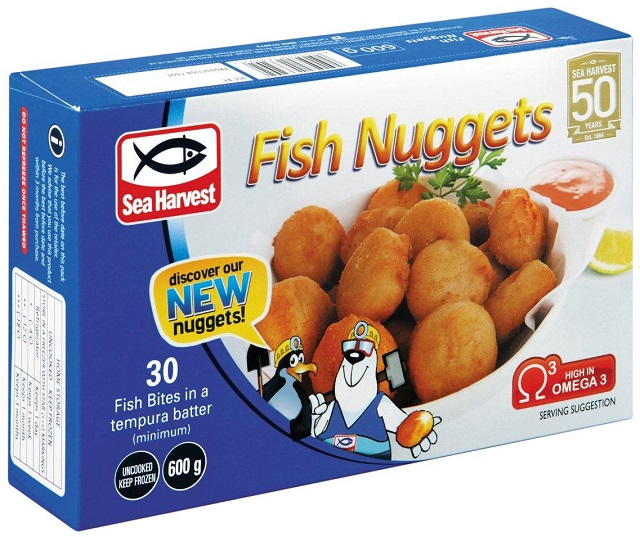
Sea Harvest Oven Crisp Southern StyleSea Harvest Fish NuggetsSea Harvest Fine Dine Tuna Steaks
Sea Harvest has launched three new frozen-fish products on shelf: tuna steaks, oven-crisp fish-fillet portions and fish nuggets.

Sea Harvest is promoting “fine dining at home” with the launch of its Yellowfin Tuna Steaks, which are Heart-Mark approved, freshly frozen and skinless. Sea Harvest’s ‘Fine Dine’ range also includes: Lightly Smoked Rainbow Trout, Rainbow Trout with Soy Chilli Sauce and Rainbow Trout with Lemon Butter Sauce.

The crumbed Oven Crisp Southern Style fish-fillet portions are available in family-sized 400g packs at most major retailers, including Checkers, Pick n Pay, Shoprite and selected Spar stores.

The new Fish Nuggets are aimed at the kids and each pack contains 30 bite-sized portions.

Lifesaving Snuza

Snuza Halo baby breathing monitorSnuza Hero
A Cape Town entrepreneur has been awarded accolades from the American organisation representing the US’s largest volunteer parent testing community of 70 000 members, for its portable baby monitor, Snuza. Capetonian design engineer and entrepreneur, Greg Gallagher, and his father, Roger Gallagher, co-own Snuza.

The Snuza Hero and Snuza Go! are portable, cordless devices that clip onto the front of a nappy, with a sensitive and flexible rubber tip that gently rests on Baby’s tum. Both devices detect even the slightest abdominal movements and sound an alarm, should movements be very weak or fall to less than eight ‘rise-and-falls’ per minute.

If no abdominal movement is detected for 15 seconds, the Snuza Hero will vibrate to rouse the baby. If movement still does not resume after five seconds, an alarm sounds as a call for urgent intervention.

The PTPA (Parent Tested, Parent Approved) Winner’s Seal of Approval has been awarded to the Snuza Trio Plus and Snuza Go! These are in addition to the PTPA accolade awarded in April 2014 for the company’s current flagship baby movement monitor, the Snuza Hero.

Greg Gallagher, who developed the technology, comments that the accolades have been immensely valuable in guiding product development: “We deliver approximately 80% of our Snuza devices to the USA, so this feedback from consumers is unbelievably good news for our business.”

Snuza devices are currently distributed in 64 countries, and available in SA through Dis-Chem outlets.

Samsung’s smart home

Samsung Smart Home logoSamsung is doing its utmost to make the ‘Smart Home’ a reality with more products and services launched this week. The new range is designed to increase home safety, improve energy management, adapt to in-home location and be operated by voice command.

The safety services let users monitor the interior of the home by connecting digital door locks and IP cameras so that they can remotely and securely assess who is entering and exiting their home. The amount of electricity used by energy-intensive appliances is also monitored.

New location-awareness services enable devices in the home to automatically turn on via location-recognition technology, eg lights and the air conditioner will switch on automatically when the user approaches the home.

The final newly announced service creates a more convenient home, as people can activate the air conditioner, robot vacuum cleaner and Smart LED lights anytime, from anywhere, through S Voice, the voice-recognition service embedded in the wearable GEAR series, as well as via GALAXY smartphones. Many detailed voice commands have been preloaded to allow the user to give specific instructions to a range of devices.

Samsung plans to expand the compatibility of its Smart Home offering to products from other device and appliance manufacturers, alongside additional Samsung products, to create a seamless home experience. As part of the ongoing acceleration of the growth of this ecosystem, Samsung will also unveil the Smart Home SDK later this year, which will enable partner companies to develop hardware devices supporting the Samsung Smart Home.

In addition, Samsung recently acquired SmartThings, creator of an open platform for the Smart Home and consumer Internet of Things. Using resources and support from Samsung, the intention is that SmartThings will continue to accelerate the development of a truly open ecosystem for connected homes. Samsung will also open its products to developers and partners on the SmartThings platform to help create experiences for the connected home.


Louise MarslandShelf Life is a weekly column by Louise Marsland on MarkLives. Tweet new product, packaging and design launches to @louise_marsland or email her at louise.marsland at gmail.com. Want to sponsor Shelf Life? Contact us here.

Louise has written about the FMCG, media, marketing and advertising industry for 19 of her more-than-25-year career as a former editor of magazines AdVantage, Marketing Mix and Progressive Retailing, as well as websites Bizcommunity.com and FMCGFiles. Until its cancellation, she edited the weekly Wednesday Media & Marketing Page for The New Age newspaper. She is currently the publishing editor of industry trendwatching portal, TRENDAFRiCA,for consumer insight, research and trends in Africa.

— MarkLives’ round-up of top ad and media industry news and opinion in your mailbox every three work days. Sign up here!

#Top40TVratings: 29 September–5 October 2014

by SAARF & MarkLives (@marklives) A collaboration between the South African Audience Research Foundation (SAARF) and MarkLives, this SAARF/MarkLives #Top40TVratings column is a weekly roundup of South Africa’s TV audience viewership.

Satellite dishWe reveal the best-watched shows of the week before (in this case, 29 September–5 October 2014), where they ran and how many South Africans tuned in to watch.

We offer two tables:

  • The first covers all households — free-to-air viewing (the various SABC channels and e.tv), as well as the DStv platform.
  • The second charts the best-watched shows on the DStv network of channels only.

SAARF/MarkLives #Top40TVratings Charts: 29 September–5 October 2014

National

Market Target Activity
National Total Indv (incl guests) Live + VOSDAL
Counter Description (grouped) Channel Level 1 Level 2\variable (r) AMR % AMR SHR %
1 GENERATIONS SABC 1 Soap opera Local 24.7 10 606 740 74.50%
2 SKEEM SAAM SABC 1 Drama Drama 17.8 7 616 015 58.44%
3 MFOLOZI STREET SABC 1 Drama Drama 16.2 6 932 603 53.06%
4 SOUL CITY SABC 1 Drama Drama 15.5 6 637 340 48.62%
5 STICKS AND STONES SABC 1 Drama Drama 13.3 5 694 086 43.33%
6 SELIMATHUNZI SABC 1 Variety Variety 12.6 5 399 396 38.91%
7 ZAZIWA SABC 1 Variety Variety 12.2 5 228 516 38.73%
8 SES’TOP LA SABC 1 Sitcom Sitcom 12.0 5 151 626 38.65%
9 MUVHANGO SABC 2 Drama Drama 11.7 5 024 967 43.48%
10 SHREDS AND DREAMS SABC 1 Drama Drama 11.0 4 716 956 38.62%
11 IHAWU SABC 1 Drama Drama 10.6 4 544 417 38.13%
12 XHOSA NEWS SABC 1 News News 10.5 4 506 255 36.64%
13 ZULU NEWS SABC 1 News News 9.8 4 189 356 34.10%
14 SCANDAL e.tv Drama Drama 9.0 3 880 723 29.23%
15 1’S AND 2’S SHOW SABC 1 Music Music 8.7 3 734 808 30.15%
16 REAL GOBOZA SABC 1 Magazine Magazine 8.3 3 571 725 32.30%
17 TELKOM KNOCKOUT CUP KAIZER CHIEFS VS MARITZBURG UNITED SABC 1 Sport Football (soccer) 8.2 3 525 376 35.16%
18 NGEMPELA SABC 1 Drama Drama 8.2 3 505 203 32.41%
19 POWERBALL SABC 2 Variety Variety 7.9 3 397 073 34.95%
20 SUNDAY LIVE SABC 1 Actuality Actuality 7.7 3 319 522 27.25%
21 WWE WRESTLING RAW e.tv Sport Wrestling 7.0 3 012 026 36.59%
22 STUMBO STOMP AMAPANSTULA SABC 1 Variety Variety 7.0 2 999 565 30.73%
23 THE X FACTOR SOUTH AFRICA SABC 1 Reality Reality 7.0 2 987 777 34.32%
24 FAST & FURIOUS SABC 1 Movies Action/adventure 6.7 2 872 633 27.76%
25 SKEEM SAAM -R SABC 1 Drama Drama 6.5 2 784 455 53.78%
26 KHUMBUL’ EKHAYA SABC 1 Magazine Magazine 6.3 2 713 732 25.91%
27 SA’S GOT TALENT e.tv Variety Variety 6.3 2 686 959 26.63%
28 VELAPHI -R SABC 1 Sitcom Sitcom 6.2 2 652 945 51.34%
29 SPEAK OUT SABC 2 Actuality Actuality 6.2 2 648 844 31.09%
30 MUVHANGO -R SABC 1 Drama Drama 5.9 2 534 739 49.29%
31 ISIDINGO:THE NEED SABC 3 Soap opera Local 5.8 2 504 740 19.83%
32 GENERATIONS -R SABC 1 Soap opera Local 5.8 2 473 780 51.05%
33 NOW OR NEVER SABC 1 Documentary Documentary 5.6 2 404 371 24.60%
34 NGEMPELA -R SABC 1 Drama Drama 5.6 2 390 763 48.98%
35 FAN BASE SABC 1 Music Music 5.3 2 283 296 26.66%
36 100% YOUTH SABC 1 Variety Variety 4.8 2 077 639 22.99%
37 TAKE ME OUT SA SABC 1 Reality Reality 4.8 2 072 977 20.92%
38 MOHLOLAHADI SABC 2 Drama Drama 4.8 2 070 868 24.95%
39 ISIDINGO -R SABC 1 Soap opera Local 4.8 2 066 304 47.47%
40 CUTTING EDGE SABC 1 Actuality Actuality 4.8 2 059 533 23.87%

DStv

Market Target Activity
DStv Total Indv (incl guests) Live + VOSDAL
Counter Description (grouped) Channel Level 1 Level 2\variable (r) AMR % AMR SHR %
1 GENERATIONS SABC 1 Soap opera Local 19.3 2 608 177 56.39%
2 SKEEM SAAM SABC 1 Drama Drama 11.2 1 516 823 35.76%
3 MUVHANGO SABC 2 Drama Drama 9.3 1 252 469 32.33%
4 SELIMATHUNZI SABC 1 Variety Variety 7.2 971 763 21.70%
5 ISIBAYA Mzansi Magic Variety Variety 6.7 907 366 21.35%
6 ZAZIWA SABC 1 Variety Variety 6.6 890 616 20.70%
7 SCANDAL e.tv Drama Drama 6.5 873 428 20.15%
8 SES’TOP LA SABC 1 Sitcom Sitcom 6.4 867 491 19.72%
9 MFOLOZI STREET SABC 1 Drama Drama 6.2 844 304 18.84%
10 SOUL CITY SABC 1 Drama Drama 6.1 821 411 18.16%
11 POWERBALL SABC 2 Variety Variety 5.5 748 443 21.60%
12 XHOSA NEWS SABC 1 News News 5.5 745 948 18.22%
13 SPEAK OUT SABC 2 Actuality Actuality 5.5 742 293 24.89%
14 STICKS AND STONES SABC 1 Drama Drama 5.2 704 793 16.28%
15 ZULU NEWS SABC 1 News News 4.8 647 952 15.34%
16 KHUMBUL’ EKHAYA SABC 1 Magazine Magazine 4.6 624 520 17.13%
17 THE CASTLE RUGBY CHAMPIONSHIP SOUTH AFRICA VS NEW ZEALAND SuperSport 1 Sport Rugby (all) 4.1 559 124 16.06%
18 SHREDS AND DREAMS SABC 1 Drama Drama 3.9 529 613 13.17%
19 ISIDINGO:THE NEED SABC 3 Soap opera Local 3.9 525 462 12.47%
20 7DE LAAN SABC 2 Soap opera Local 3.9 524 345 13.57%
21 1’S AND 2’S SHOW SABC 1 Music Music 3.9 522 442 12.72%
22 WWE WRESTLING RAW e.tv Sport Wrestling 3.7 502 009 14.94%
23 RHYTHM CITY e.tv Drama Drama 3.6 487 442 12.55%
24 SKEEM SAAM -R SABC 1 Drama Drama 3.6 481 165 26.76%
25 REAL GOBOZA SABC 1 Magazine Magazine 3.5 479 210 12.58%
26 GENERATIONS -R SABC 1 Soap opera Local 3.5 472 019 28.58%
27 THE X FACTOR SOUTH AFRICA SABC 1 Reality Reality 3.2 427 658 12.35%
28 MUVHANGO -R SABC 1 Drama Drama 3.2 427 649 24.45%
29 TELKOM KNOCKOUT CUP KAIZER CHIEFS VS MARITZBURG UNITED SABC 1 Sport Football (soccer) 3.2 426 067 12.41%
30 NGEMPELA SABC 1 Drama Drama 3.0 411 868 11.05%
31 IHAWU SABC 1 Drama Drama 3.0 411 737 10.56%
32 NEWS e.tv News News 3.0 411 556 10.51%
33 OUR PERFECT WEDDING (MAG) Mzansi Magic Magazine Magazine 2.9 393 497 9.71%
34 MOHLOLAHADI SABC 2 Drama Drama 2.9 385 668 12.68%
35 VELAPHI -R SABC 1 Sitcom Sitcom 2.6 354 362 19.70%
36 NOW OR NEVER SABC 1 Documentary Documentary 2.6 346 115 9.54%
37 NGEMPELA -R SABC 1 Drama Drama 2.6 346 001 20.77%
38 SA’S GOT TALENT e.tv Variety Variety 2.6 345 368 9.03%
39 TELKOM KNOCKOUT CUP ORLANDO PIRATES VS POLOKWANE CITY SuperSport 4 Sport Football (soccer) 2.5 342 611 11.32%
40 FAST & FURIOUS SABC 1 Movies Action/adventure 2.5 331 167 8.59%

How to read the tables:

AMR% refers to the number of people in a target market who were watching an event ie programme, expressed as a percentage of the population for that demographic: “On average, 16.3% of adults aged 15+ who watched TV from 28 Jan-3 Feb 2014 watched Society on SABC 1”.

AMR is the number of people in a target market watching a specific event ie programme per minute, expressed in absolute figures: “On average, 1, 541, 066 adults aged 15+ who watched TV from from28 Jan-3 Feb 2014 watched Society on SABC 1”.

Share % (SHR %) is the share or proportion of the available audience (people watching TV at that time) that a specific channel/programme has achieved at that time: “Society achieved a share % of 52.59% from 28 Jan- 3 Feb 2014 on SABC 1″.

saarf 150SAARF is the name by which the South African Audience Research Foundation is familiarly known. SAARF’s main objective is to direct and publish media audience and product/brand research for the benefit of its stake-holders, thereby providing data for target marketing and a common currency for the buying and selling of media space and time. SAARF has thus the responsibility to measure the audiences of all traditional media such as newspapers, magazines, radio, television, cinema and out of home media.

— MarkLives’ round-up of top ad and media industry news and opinion in your mailbox every Monday and Thursday. Sign up here!

AdForum Worldwide Summit NYC: Search, competition for best talent continue

by Johanna McDowell (@jomcdowell) NEW YORK: Day 2 of 2014 AdForum Worldwide Summit in New York City was a big day for us, as we saw three industry leaders during its course: Maurice Levy, CEO of the Publicis Groupe, Arthur Sadoun, CEO of Publicis Worldwide and Gustavo Martinez, global CEO of J Walter Thompson.

AdForum Worldwide SummitIn addition, we met with HUGE and its top team, as well as Story Worldwide, plus there was a good discussion about production decoupling — lots of experts!

Main takeouts

The main takeouts from the day were:

  • The search for the best talent continues, and agencies will pay top dollar to attract the talent that they need
  • Competing for this talent are not other agencies but Facebook, Google and the other digital empires that have been created in the past 20 years
  • Lots of mergers and acquisitions on the go — again driven by the need for talent
  • Machines talking to machines eg iPhones programming washing machines which time their cycles according to the needs of the electricity grid
  • Everything can be measured — but this should not detract from the approach to the idea
  • Doing business anywhere in the world is not easy — markets are flat; growth markets are not performing
  • Decoupling and recoupling are happening everywhere — mainly with print advertising and far less with TV, as this is a more complex process. This trend will continue.

It was an inspiring day being up close with these leaders and listening to their thoughts on the industry in general. What is fascinating is how much they love their industry and how committed they are to it.

Strategy and creativity — digital or otherwise — win the day.

Opportunities abound

The large network agencies are regenerating, reinventing themselves; it is a constant in their lives. The smaller networks are growing and searching for new experiences, new ways to communicate. It is a great time to be in the industry and opportunities abound.

Day 2 was a day packed with insights and information, outlook and expertise. Clients apparently continually want agencies to be able to tell them “what’s next” and are keen to be first with new solutions. So the pressure to be innovative is intense for everyone.

No wonder New York never sleeps.

Best
Johanna
@jomcdowell
#adforumsummit

Johanna McDowellJohanna McDowell is managing director of the Independent Agency Search and Selection Company (IAS), which stands at the forefront of the complex world of agency selection in South Africa, and she is one of the few experts driving this mediation and advisory service in SA and globally. Twice a year she attends AdForum Worldwide Summits as an international consultant, which helps her lead the SA advertising industry forward to keep in line with international trends and remain competitive. Follow her on Twitter at @jomcdowell.

— MarkLives’ round-up of top ad and media industry news and opinion in your mailbox every Monday and Thursday. Sign up here!

Online CPD Courses Psychology Online CPD Courses Marketing analytics software Marketing analytics software for small business Business management software Business accounting software Gearbox repair company Makeup artist