Old Mutual appoints Publicis Communications

by Herman Manson (@marklives) Old Mutual has appointed Publicis Communications as its new lead agency across the African continent, including South Africa. The account will be serviced out of both Johannesburg and Cape Town by a team pulled together from various Publicis agencies.

Creative hub

Publicis Communications is the creative communications hub of Publicis Groupe, bringing together the Leo Burnett, Saatchi & Saatchi, Publicis Worldwide, BBH, Marcel, Fallon, MSLGROUP and Prodigious networks. It will manage brand strategy, above-the-line, below-the-line, digital creative and production for all integrated campaigns.

Old Mutual moved its business from FCB Africa after the agency won the Barclays Africa account  from The Jupiter Drawing Room (Johannesburg) in late 2016. Old Mutual is a 54% shareholder in Nedbank Group.

“We’re excited about Publicis being handed the baton and responsibility to steward the Old Mutual brand as our company enters a new era,” says Andisa Ntsubane, acting chief marketing officer for Old Mutual. “We look forward to working with Publicis and connecting with our customers through creative campaigns that inspire them to do great things. At the same time, we’d like to thank FCB Africa for the great role they played in building our brand over the past few years.”

‘Iconic African brand’

Loris Nold, global chief operating officer of Publicis Communications, says: “Old Mutual is one of the truly iconic African brands and we are delighted to be their partner across the continent. We are inspired by the transformative possibilities that financial services offer customers in Africa, as well as Old Mutual’s commitment to this purpose.”


Herman MansonHerman Manson (@marklives) is the founder and editor of MarkLives.com.

— Sign up now for the MarkLives email newsletter every Monday and Thursday, now including headlines from the Ramify.biz company newsroom service!

Complexities make us human and unpredictable consumers

by Kate Snyder. Putting consumers into boxes is one of the most useful tools we have in our marketing toolkit. We rely heavily on demographics, psychographics, and an easily digestible notion of the values and behaviours that drive consumer decision-making. Relying on these stories informs much of our brand strategies but we all know that consumers are human. We act illogically by nature. Our complexities are what ultimately make us human, first and foremost, and unpredictable consumers, secondly.

Threads of insight

So we asked one burning question to a small handful of South African youth about how they identify themselves in a country that is rife with xenophobia: Do you consider yourself African or South African? We know that, economically, SA is a powerhouse on the African continent and one with distinct cultural ties to Europe and the US It’s also viewed (somewhat) admiringly by neighboring countries but with comparably little reciprocal regard. How connected do SA youth today feel to the rest of the continent, and is this influencing what they think and do?

The answer was not a simple one. As ethnographers, we look for threads of insight between all of the people that we talk to, even when the meaning and story seem obscure. The responses that we received fell fairly equally into either camp and depended wholly on the way the term “African” was interpreted.

Am I African from Instant Grass International on Vimeo.

Especially for the younger people we spoke to, “African” immediately connoted notions of race. Harping back to the legacy of apartheid’s racial classifications, “African” is still largely seen as a synonym for black, rather than a connection to the territories within the continent. Although this terminology was mostly described positively and proudly as black, those with this internalised understanding of “African” tended to identify more strongly with being South African overall. In this case, defining oneself as “South African” demonstrated a sense of Ubuntu and unity with our diverse country.

On the other hand, we heard a lot of people preferring to identify as “African”, rather than “South African”, as an almost idealistic way of assimilating with other countries’ and peoples’ plight on the continent. Our shared colonial legacies, our challenging infrastructure and irresponsible leaders, and collective, perceived inferior position by the global community inspired people to aspire toward a unifying identity throughout the continent at large. Together we need to show the world that Africa is in a dynamic, progressive, and emergent state, they said. Even those who didn’t particularly identify as fully “African” at this moment dreamily spoke of the day when we all cohesively share and exchange ideas through the arts, fashion, music, sports or travel.

A reminder to be continually curious

The unsurprising reality is that we still prioritise American pop culture above our own, much less our neighbours’. And the globalised world we live in is getting both smaller and bigger at the same time. The internet and social media are making the rest of the world more accessible, our knowledge and information more widespread. But it’s simultaneously helping us to ignore our own roots and heritage, be it South African or African overall, and focus on the prevailing (mainly American) cultural cues.

What this perplexing exploration demonstrates is that identity — be it racially, culturally, politically, economically, etc — is polarised. Our categorical boxes are helpful but limiting. It reminds us that we have to be continually curious, and always ask, “But why?”


Kate SnyderOriginally from the US, Kate Snyder is head of anthropology at Instant Grass International (IGI). As a researcher and strategist, she helps brands and organisations to better understand cultural and human behaviour throughout the African continent. Kate is s especially interested in how individuals and cultures shape one another — how cultural pretexts often dictate individual beliefs and behaviours but, equally, how we all individually play a role in shaping and changing cultural constructs.

“Motive” is a by-invitation-only column on MarkLives.com. Contributors are picked by the editors but generally don’t form part of our regular columnist lineup, unless the topic is off-column.

— Sign up now for the MarkLives email newsletter every Monday and Thursday, now including headlines from the Ramify.biz company newsroom service!

Big Q: What we need to achieve true transformation

by MarkLives (@marklives) The marketing and advertising industries are transforming. So why are so many black professionals disgruntled with the rate of progress? And is the quality of most of the work specifically directed at a black audiences still sub-par? We emailed a panel of key industry executives for their take. This week it’s the turn of Masego Motsogi of Ninety9cents (99c) Johannesburg.

Masego Motsogi

Masego MotsogiMasego Motsogi (@masegom) is the managing director at Ninety9cents (99c) Johannesburg. Her career in advertising and marketing spans over 15 years, having worked at Ogilvy & Mather, The Jupiter Drawing Room, South African Breweries and FCB Africa before joining 99c. She has a degree in community and health psychology and a higher diploma in integrated marketing communications.

While people of colour are the majority in South Africa, they still remain the cultural minority in so-called ‘white collar’ workplace environments; it’s no different in advertising. Although there has been some transformation in the marketing and advertising industries, assisted by scorecard measures that are in place, we still have a long way to go.

In order to achieve true transformation, we need:

1. A non-negotiable layer of empowerment

Coaching, training and mentorship are key to this. And not just the sort of training that teaches PowerPoint or Excel (not that these aren’t useful skills to have). Rather, I am referring to mentorship and on-the-job training that helps develop transferable skills. There are certain ‘soft’ skills that cannot be acquired from a textbook but rather emulated after watching them exercised by someone more experienced, particularly when these skills contribute or lead to a desirable outcome. Thus a formalised mentorship and development programme will pave the way for a more-confident, more-equipped future generation of leaders.

2. Fairness and equality

Over the years, I have noted white staff members being advanced ahead of their black counterparts (with both having the same qualification and level of delivery.) Business leaders need to examine their subconscious, and sometimes conscious, bias, and ensure that they are promoting genuine equal opportunity through real, tangible action — not just words. They need to reinforce these positive, fair behaviours through their team, so that the example is set from the top down.

The next aspect to address is how we as an industry perceive people of colour and reinforce stereotypes through the work we produce. Often the quality of work specifically directed at a black audience is not only subpar but misguided and misinformed.

Offensive and lazy

Advertising that plays to stereotypes is not only offensive — it is just plain lazy.

Last year at Cannes Lions, a hot topic was sexism in advertising and the use of one-dimensional female stereotypes in the work produced by the broader industry. Industry giant Unilever even denounced this, and pledged to portray authentic, three-dimensional women personalities in its brand ads going forwards.

I would like this same understanding to be extended to all people of colour. Don’t reduce us to simply a group of people who sing and dance for consumables. Treat us like the multifaceted individuals and consumers we are.

Essentially, transformation needs to go beyond the scorecard; it needs to be honoured in practical ways.

See also


MarkLives logoLaunched in 2016, “The Big Q” is a regular column on MarkLives in which we ask key industry execs for their thoughts on relevant issues facing the ad industry. If you’d like to be part of our pool of potential panellists, please contact editor Herman Manson via email (2mark at marklives dot com) or Twitter (@marklives). Suggestions for questions are also welcomed.

— Sign up now for the MarkLives email newsletter every Monday and Thursday, now including headlines from the Ramify.biz company newsroom service!

MagLove: The best magazine covers this week (24 March 2017)

MediaSlut (@MediaSlut)’s choice of the best international and South African magazine covers this week:

  • ELLE (Thailand)
  • Financial Mail (South Africa)
  • House and Leisure (Kitchen Issue)
  • Süddeutschen Zeitung — Langstrecke
  • WIRED (US)

Find a cover we should know about? Tweet us at @Marklives and @MediaSlut.
Pinterest icon Want to view all the covers at a glance? See our MagLove Pinterest board!


ELLE (Thailand), Spring/Summer 2017

Elle Thailand, March 2017: Emma Watson

Emma Watson, from the new Beauty and the Beast blockbuster, is looking absolutely radiant and stunning on this cover. Even the beast-like-hair works with this photo and cover! It was announced earlier this week that this movie “waltzes past $200m” in the US and “$400m Worldwide”.


Financial Mail, 16 March 2017

Financial Mail, 16 March 2017

A great conceptual cover to go with a great in-depth article about the “fallen icon Murray & Roberts”. There are just so many great aspects to the cover, ranging from Murray & Roberts’ iconic deep-yellow colour to using its hexagon logo as part of the coverline and, last, but not least, the great imagery of broken construction equipment and some of the iconic projects they’ve been involved in.


House and Leisure, April 2017

This cover immediately jumped out at me, even though it’s clear that a lot of photoshop and trickery has been involved. But it’s one of those covers that’s bold and with a clear message: the Kitchen Issue! To change things up a bit this year, there are three covers (see below) and readers may vote for their favourite and stand to win a prize. I’ll be voting for this orange beauty, of course!


Süddeutschen Zeitung — Langstrecke, Issue 1, 2017

Süddeutschen Zeitung Langstrecke, Issue 1, 2017: Donald Trump

Artists Craig and Karl have a very distinctive style, and you would have definitely spotted their work on the likes of National Geographic Traveler, New York magazine and Variety. Their latest is on the Langstrecke edition, which is part of the Süddeutschen Zeitung brand. On the cover is “America’s Biggest Baby” (as the artists explained it), with the outline of the US as his dummy. Read more about the works of these artists.


WIRED (US), April 2017

Wired US, April, 2017

Hacking. Spying. Wiretapping. These are all terms we’ve come to hear more and more often since the US election last year, and it seems it’s far from over… WIRED magazine went on the “hunt for Russia’s most notorious hacker”, and it makes for very interesting reading! Plus this mind-boggling cover is just perfect!


MediaSlutMagLove by @MediaSlut is a regular slot featuring the best local and international magazine covers every week, recognising well thought-out, powerful and interesting (and hopefully all three-in-one) covers and celebrating the mix of pragmatism, creativity and personal taste that created each of them. The anonymous (for now) blogger behind MediaSlut knows way too much for his own good about media in South Africa, magazines in particular. His mission is to show when SA magazines fail but, most importantly, also when they succeed. If you’re looking for a library about SA magazines and news, this is your one-stop pitstop.

— Sign up now for the MarkLives email newsletter every Monday and Thursday, now including headlines from the Ramify.biz company newsroom service!

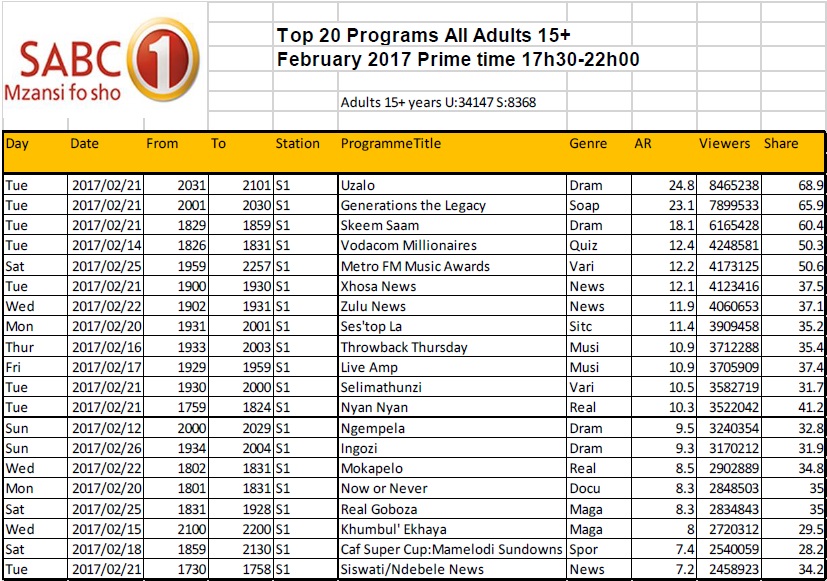
SA TV Ratings: SABC 1 — primetime top 20 for Jan, Feb 2017

by MarkLives (@marklives) The hottest primetime television shows on SABC 1 in South Africa revealed: TV ratings for January and February 2017.

In 2016, the Broadcast Research Council of South Africa (BRCSA) changed its policy about giving away TAMS and now only monthly reports, highlighting the top 20 or 30 primetime shows on several popular channels, are available.

SABC 1 February 2017

BRCSA TV Ratings February 2017 primetime SABC 1

Source: BRCSA February 2017


SABC 1 January 2017

BRCSA TV Ratings January 2017 primetime SABC 1

Source: BRCSA January 2017

Broadcast Research Council of South Africa


The Broadcast Research Council of South Africa (the BRC) is a non-profit, industry body that was incorporated in 2015 to cater to the audience research needs of the radio and television industry in South Africa.

— Sign up now for the MarkLives email newsletter every Monday and Thursday, now including headlines from the Ramify.biz company newsroom service!

Agency Life: The importance of accountability

by TJ Njozela (@tj_njozela) Accountability. It’s one of those words that you usually only hear when something’s gone wrong and someone needs to take the fall. Although it’s a word that rarely brings up positive sentiment, accountability is a crucial component to making sure that agencies get the job done — and done well. It’s also how you may grow and develop yourself, by adding value, and getting more responsibility for doing so.

There are far worse words in adland language, such as “You have to work this weekend”, or “Push it further”, or “I’m not a creative, but…”. Accountability, however, is one of those things that may really help you if you do it right by building a reputation of being reliable, efficient, and able to handle more responsibility. Here are a few tips to help you be more accountable:

Sweat the small stuff

The first place to start is with the small things. Be on time for meetings. And on time doesn’t mean when the meeting starts but a little earlier so you will be ready for the meeting to start when it’s supposed to.

As ad people, it’s kind of expected of us that we party until the break of dawn and carry on until breakfast. But, when you have work the next day, it’s not a good look to arrive wearing the night before all over you, or not rocking up at all.

Make sure you follow processes. Help out wherever you can, but also know when to say no if helping out will be a distraction or will become more of a priority than what you’re meant to be doing.

These may seem like small actions, but the more you consistently hold yourself accountable, the more you’ll build a reputation of being reliable.

Responsibility is taken before it’s given

When challenges come up in an agency, you get three kinds of people: some who have a don’t-know-don’t-care attitude; some point a finger at someone else faster than a Wild West shootout, or simply throw you under the bus; and then there are the few who take responsibility.

But taking responsibility is only the first step. The second step is to take action to solve the problem as quickly and painlessly as possible.

Similarly, when something good happens in an agency, there are three kinds of people: those who don’t know and don’t care; those who get salty (haters gonna hate); and those who are responsible for the success. If you show responsibility when things are going well and also when they’re not, you’ll be positioning yourself as a problem-solver, which might just get more responsibility given to you.

Trust strengthens or weakens relationships

If you’re constantly late for meetings and often arrive unprepared, how can you negotiate for an increase? If you’re always micro-managing and blame your juniors for your mistakes, how can they ever trust you? You’ll always be second-guessed, and everyone else will be working twice as hard because they’ll be planning a Plan B based on you not delivering.

On the flip side, if you’re always on your A-game, or you always deliver what’s required (and then some), who wouldn’t trust you when it’s crunch time? You’ll build relationships with coworkers where no one has to second-guess whether or not something will be done, or plan for contingencies, which means everyone will be more productive doing what they should be doing.

By being accountable, you build trust. By avoiding it, you break it.

~~~

It’s important to realise that accountability isn’t a one-way street. You’re responsible for adding value to your agency as much as your agency is responsible for your career development. But it starts with you. By doing the basics right, taking responsibility, and building meaningful relationships at work, you’ll be making it easier for both you and the agency to be accountable to each other.


TJ NjozelaTJ Njozela (@tj_njozela) is an award-winning senior copywriter at FCB Africa with several years of experience in the advertising industry. More than a writer, he is also a reader, a thinker, and an avid liker of things; and he once walked from Joburg to Cape Town in 30 days to raise funds to buy wheelchairs for people in need. #30Days30Wheelchairs. TJ contributes the regular “Agency Life” column, in which he gives career advice for working within the advertising industry, to MarkLives.

— Sign up now for the MarkLives email newsletter every Monday and Thursday, now including headlines from the Ramify.biz company newsroom service!

Criteria for tracking Africa-wide brands with 20/20 vision

by Peter Searll & Justin Schwellnus. Numerous companies have run into difficulties venturing into African markets over recent years, largely due to insufficient understanding as they step into new territory. It is critical to understand how your brand is perceived, and where the sweet spots are, before moving into a new market — otherwise you are asking for trouble.

The three Ps

Over the course of a decade in the industry, we’ve acquired a number of key insights into what is required in order to track brands effectively across African markets, beginning with three critical competitive areas where a brand needs to perform to be successful — the three Ps: presence, perception and propensity.

Presence is the starting point

Although it isn’t often the main driver of brand choice, presence is a critical foundation for building a brand. Do you have sufficient presence in the market? Are you visible — through advertising, on the shelf, or on social media? Are you noticed? Because, if you’re not known or visible, you can’t even be considered.

Perception is the reality check

Perception refers to the way that the brand is perceived in the hearts and minds of both consumers and potential consumers. This is usually made up of a combination of softer imagery and harder functional attributes.

Perceptions are influenced not only by sponsored communication and advertising messages but also by usage, word of mouth and, increasingly, social media. A product or service needs to deliver what the brand promises, because what is a brand, really? It’s a promise — of an experience, of quality, of a benefit, of a feeling. Once you’ve experienced a product, this influences your perception. If it is good, and you’re influenced positively, then you’re more likely to advocate the brand. If it’s negative, you won’t buy it again, and you’ll discourage others from buying it.

Different product and service categories have different drivers. For example, high-visibility products have more-social orientation; they fulfil different needs to, say, toothpaste, which sits in the bathroom cupboard where nobody sees it. Perception drivers may also vary widely between countries within the same product category: some markets are more price-sensitive and value is more important while others are more functional.

Not understanding what the drivers are in each market is one of the key reasons for the brand failures that we’ve seen in Africa recently. Brands can’t simply copy-and-paste the strategy they use in one market into another African market without understanding the local strengths and weaknesses of their offer and how they map against the relevant category drivers.

Correctly positioning your brand or portfolio requires insight into these distinctions.

Propensity is where the future lies

Propensity is a measure of the consumer’s tendency to use the brand in future. It takes into account the extent to which they are already using it, how loyal they are and how motivated they are to use it more.

Having strong presence and positive perceptions will help to drive propensity — but knowing which attributes to refine and adjust is the key to supporting brands that will grow. What is boosting your brand and what is holding it back? Focus on the key drivers of propensity in order to ensure healthy brands and business performance.

A simple and effective approach to brand tracking

These three Ps — presence, perception and propensity — are the basis with which to evaluate and track the health of a brand. There are several further points to be considered in tracking brands, especially across borders:

Social media can’t tell you WHY

The arrival of big data and social media has certainly helped to provide insight into the perceptions of a brand, and what is being said in the marketplace. However, despite the vast amount of transactional data around what people are doing and what they are saying on social media, neither of those actually helps you to understand why people are doing something. You may only really understand their motivations by asking this on a survey.

Think “glocal”

One of the key challenges is to balance a global brand understanding with local flexibility. You can’t have a coherent brand with 10 entirely different compositions in 10 markets. If you’ve got one brand, you want a consistent measure, a consistent message and a consistent branding strategy, obviously with relevant local tweaks.

Moreover, it’s important to develop a common language for all the brand teams within a business, enabling them to understand the metrics, dynamics and drivers of the brand, even if they move from one country to another. In other words, there must be a common language that is spoken in all the marketing departments across the group or the agencies. That’s important, because when there are many different approaches to brand tracking, there is no centralised or common theme; no way to look at the brand in a standardised fashion. How then do you compare markets?

How often should you track your brand?

The frequency with which you should track your market depends on what kind of product or service you’re selling, and the environment. If there are many new entrants, a wide variety of offers or changing category circumstances, it’s a good idea to track more frequently. If it’s a slower market, then once or twice a year is sufficient.

Plan or fail

When it comes to expanding a brand into new markets, “failing to plan is planning to fail”. It’s crucial to begin by understanding the new market and how your brand fits into it. An effective model of brand health and approach to brand tracking is key to doing just that.

The next step is using brand-tracking results to model and predict future outcomes, ie by simulating “what if” scenarios. This may be set up in such a way as to feed back actual market performance and so become more accurate over time. This will ultimately reduce marketing-spend risk, and enable marketers to get the most bang for their bucks!


Skip to main content Skip to toolbar About WordPress Marklives.com 00 comments awaiting moderation New View Post Howzit, Simone Puterman Log Out Edit Post Add New Post draft updated. Preview post Enter title here Permalink: http://www.marklives.com/2017/03/motive-key-crite…with-2020-vision/ ‎ Get Shortlink p » em Word count: 1059 Last edited by Simone Puterman on 22nd March 2017 at 3:50 pm Preview Status: Draft Edit Edit status Visibility: Public Edit Edit visibility Schedule for: 23 Mar 2017 @ 05:43 Edit Edit date and time Publicize: Not Connected Show Move to Bin globe world earth planet courtesy of Pixabay.com Click the image to edit or update Remove featured image All Categories Most Used Featured Adland S'HOT Media Marketing Columns Watch Tech MediaSlut – MagLove Oresti Patricios – Ad of the Week + Add New Category Add New Tag Separate tags with commas africa by Peter Searll & Justin Schwellnus Motive - By Invitation Only Excerpt by Peter Searll & Justin Schwellnus. It is critical to understand how your brand is perceived before moving into a new market. Excerpts are optional hand-crafted summaries of your content that can be used in your theme. Learn more about manual excerpts. Allow comments. Allow trackbacks and pingbacks on this page. Author Remarketing Code or Image URL Show sharing buttons. Thank you for creating with WordPress. Version 4.7.3 Insert Media Filter by type Filter by date Search Media Attachment Details Peter-Searll.jpg 22nd March 2017 159 KB 633 × 600 Edit Image URL Title Caption Alt Text Description Attachment Display Settings Alignment Link To Size 1 selectedJustin SchwellnusPeter Searll and Justin Schwellnus are managing partners of Dashboard Marketing Intelligence, a full-service market research and strategy business that offers customised research and analysis services.

“Motive” is a by-invitation-only column on MarkLives.com. Contributors are picked by the editors but generally don’t form part of our regular columnist lineup.

— Sign up now for the MarkLives email newsletter every Monday and Thursday, now including headlines from the Ramify.biz company newsroom service!

On My Mind: Smarter investment in social media advertising

by Jerry Mpufane (@JerryMpufane) For brands, the burgeoning interest in sociopolitical affairs — and its ever-stronger connection to powerful social media platforms — is creating endless opportunities to communicate to an already-captive audience via paid-for media. Provided the strategy and messaging are relevant, of course.

Boon

A highly connected and digitised world has proven to be a boon for news media. Beyond the lifestyle and entertainment news, the millennial generation in particular is very interested in current socio-political affairs. Just five years ago, we would not have been able to make the same assertion. Social media is surely the critical force here.

According to Hootsuite, a platform for managing social media, social media advertising budgets have doubled worldwide over the past two years—jumping from US$16bn in 2014 to US$31bn in 2016. It noted that Twitter advertising revenue totaled US$545m in Q3 of 2016, an increase of 60% year-over-year. To delve deeper, total Promoted Tweet engagements were up 91% year-over-year in 2016 — far higher than traditional banner ads.

An emerging player in the social advertising realm is Instagram. According to the International Business Times, Instagram ads earned US$595m when it first launched to market in 2015; last year, that number doubled. The platform reported that “across more than 400 campaigns measured globally with Nielsen Brand Effect, ad recall from sponsored posts on Instagram was 2.8x higher than Nielsen’s norms for online advertising”.

On its blog, however, Hootsuite acknowledges that 46% of B2B marketers remain unsure whether their social channels have generated any significant returns for business (business2community.com). So, although the money keeps flowing (perhaps momentum is at work here), there remains a deep-seated skepticism as to the wisdom in this spend.

Where the value lies…

Arguably, the key to efficacy and ROI through these channels depends not on the sheer amount of spend but on the strategy and intelligence behind it. For a start, brands must always be cognisant that social media campaigns are an interruption on the user’s timeline — in the same way that a radio ad will interrupt the listener’s radio programme.

A strict targeting strategy is therefore an essential requirement for any successful social media plan.

Notably, many marketers insist on definitive, concrete answers on signing off social media campaigns. The inherently digital nature of these platforms means that metrics are instantaneously available, which helps with establishing some accountability.

It’s also worth keeping in mind that social media platforms work off a bidding system that is affected by the brand campaign objectives. For example, a brand manager may choose to pay for results, or for views. Again, this depends on the overall campaign goals and objectives.

Undoubted value

When executed correctly, paid-for social media campaigns undoubtedly carry value for brands. It gives them immediate and direct access to a young and tech-savvy audience hungry for information both relevant and enlightening. Brands should be hunting for new ways to add value to their audiences, through smart storytelling and the ability to harness ever-evolving media.

Also, at a time when budgets are under pressure, the data and accountability attached to such campaigns are hugely attractive and beneficial for marketers and brand manager.


Jerry MpufaneJerry Mpufane has executive experience in both ad agency and client organisations, and has only one goal in life, which is to be an inspiring leader. He is currently chairperson of the M&C Saatchi Abel JHB Group of Companies; vice-chair of the Association for Communication and Advertising (ACA); a Loerie Awards board member; and a judge for Bookmarks, Loeries and PRISMs. His monthly column on MarkLives, “On My Mind”, focuses upon what it takes to run a great AND sustainable ad agency.

— Sign up now for the MarkLives email newsletter every Monday and Thursday, now including headlines from the Ramify.biz company newsroom service!

Hyundai South Africa appoints FoxP2

by Herman Manson (@marklives) Hyundai South Africa has appointed FoxP2 to handle its through-the-line advertising account. The company, currently the fourth-largest car brand in South Africa, leaves The Jupiter Drawing Room (Cape Town) after a relationship spanning 16 years.

FoxP2 logo“While we are both proud and honoured to be appointed on the brand, we became equally excited throughout the selection process about the wonderful team of people we will be working with at Hyundai,” comments Charl Thom, group CEO for FoxP2. “We look forward to a great partnership where we challenge each other to reach greater heights.”

FoxP2 started work on the business in mid-March 2017. Most of the account will be run through its Johannesburg office, with some digital work happening in Cape Town. The inclusion of the digital business is the result of continued investment in FoxP2’s digital capabilities over the last few years, according to Thom.

The account will be one of FoxP2’s five biggest and its first automotive client; however, Thom says, various members of his team have extensive experience in the field.


Herman MansonHerman Manson (@marklives) is the founder and editor of MarkLives.com.

— Sign up now for the MarkLives email newsletter every Monday and Thursday, now including headlines from the Ramify.biz company newsroom service!

Shelf Life: M&C Saatchi Abel creates Lancewood Emoji meals

Cheryl Hunter (shelflife at marklives.com)’s weekly pick of all things new — product, packaging, design, insight, food, décor and more!

  • Lancewood extends braai master experience
  • Olli launches meals for mums
  • Mudanga.com for African artifacts

Emoji meals

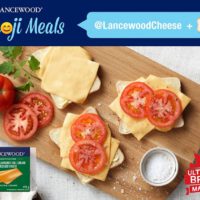
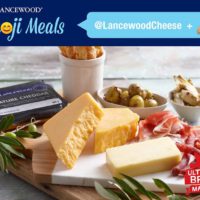
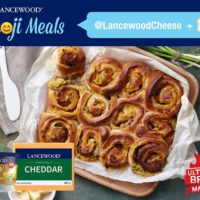
Keeping up with the trend of real-time social media consumer engagement, cheese brand Lancewood has brought an interesting addition to its Ultimate Braai Master campaign — Emoji Meals.

According to Shereen Anderhold, Lancewood marketing manager, the team recognised the need to provide their social media followers with an entertaining, interactive bot that enhances the televised Braai Master viewing experience. The Emoji Meals mechanic was conceptualised by M&C Saatchi Abel, which partnered with sister company, Creative Spark, to develop an app that would ensure viewers could easily access a variety of different content.

By sending a food emoji to Lancewood’s Facebook page via private message, the bot instantly responds with a recipe or tip related to the emoji. For example, a strawberry emoji returns a recipe for fruit cheese salad with strawberry vinaigrette.

“People are often bombarded with a slew of marketing messages on Facebook pages. These posts quickly lose their appeal as they lack the essence of what these platforms are about: engaging with customers, giving users the opportunity to receive information in a fun, educational way and speaking to their core interests via inspiring, relevant conversations. We wanted to take our support of the Ultimate Braai Master to another level and give followers of the series a quality, instant offering that is attuned to their passion for social media channels.”

lancewood.co.za • Facebook • Twitter
mcsaatchiabel.co.za • Facebook • Twitter • Ramify
creativespark.co.za • Facebook • Twitter • Ramify


Olli on the go

Olli Organic, a range of foods aimed at moms and their toddlers, has rebranded to Olli with a new look-and-feel, using illustrations on the packaging to set the brand apart from its competitors, and launching three new products.

Olli foods are made locally using ingredients from vetted suppliers and producers to ensure the foods meet exacting standards. The rebrand is a result of it becoming increasingly difficult to secure organic produce in the quantities and varieties needed to meet demand. Olli took the decision to increase the supplier network to ensure availability.

First on shelf are the new on-the-go-snack Olli Rice Bites, gluten-free and suitable for vegans, plus free of artificial colourants. Not forgetting the moms, OlliMoms are an on-the-go snack for breastfeeding moms whose bodies are working hard to keep up, making them hungry more often. The individually-wrapped handmade Just-For-Mom Biscuits are high in fibre, high in energy and protein and contain prebiotics Inulin and Oligofructose to stimulate the growth of good flora.

olli.co.za • Facebook • Twitter


Focus on Africa

Recently launched Mudanga.com is an online marketplace what essentially provides emerging creatives and small businesses an alternate avenue to market and sell their products, as well as tell their stories.

(Mu)Danga is an ancient Shona word describing the heart of every home — the kraal. Tino Gavaza, Mudanga CEO, says: “In Africa this is the lifeline of every tribe, carrying the base of ritual performances and, of course, showing the prosperity of the people. In a quest to shed light on African origins, we have designed a platform to educate, enlighten and invest in tribal distinctions weaved across the motherland. We live in a land that is rich in culture and tradition so it is our duty to expose the best of who we are to the world.”

The platform sells African products made in Africa by Africans — from fashion to wine and literature — while capturing the essence of an authentic African market, narrating the stories that represent the craftsmanship and creativity behind the scenes: “Our main goal is to uplift communities around us, firstly by providing a platform where our vendor partners can make a living and support their families; and secondly through community development projects in partnership with various non-profit organisations.”

A percentage of every sale made on Mudanga.com goes into the Mudanga Community Fund, which will be used to fund community-development projects.

mudanga.com • Facebook • Twitter


Cheryl HunterShelf Life is MarkLives.com’s weekly column covering all things new. Notify us of yours at shelflife at marklives dot com. Want to sponsor Shelf Life? Contact us here.

Cheryl Hunter (@cherylhunter) has written for the South African media, marketing and advertising industries for more than 15 years. A former editor of M&M in Independent Newspapers and contributor to Bizcommunity, AdFocus, AdReview and the Ad Annual, she has also produced for various television networks and currently consults on communication strategy and media liaison.

— Sign up now for the MarkLives email newsletter every Monday and Thursday, now including headlines from the Ramify.biz company newsroom service!

Online CPD Courses Psychology Online CPD Courses Marketing analytics software Marketing analytics software for small business Business management software Business accounting software Gearbox repair company Makeup artist