Brands continue to challenge gender norms

by Leigh Tayler (@LeighAnneTayler) In 2015, I started to feel a tremor within global discourse. By 2016, the tremors were unmistakable. As I sit writing this today, they have merged to form a massive movement in the seismic plates of society, and that movement is the growing consciousness around women, their rights and the unravelling of gender stereotypes.

By 2015, brands were beginning to recognise women, their dreams, their challenges, their idiosyncrasies and their handicaps more accurately.

This Girl Can

Sport England, a part of the Department for Culture, Media and Sport in the UK, broke down the typical portrayal of women in sports as fit, flab-free and fabulous, with its “This Girl Can” campaign. It showed that women of all shapes, sizes and sporting ability can do anything they feel like doing when it comes to sports and exercise; there are no rules and no judgements.

Sorry, Not Sorry

Not all of the brands challenging gender norms are traditionally provocative; Pantene, for example, a relatively mainstream brand, won a Gold Effie, an award that recognises effectiveness in marketing communications, for its “Sorry, Not Sorry” campaign that highlighted many women’s bad habit of over-apologising.

In terms of advertising, in 2016, the movement had a poster child — Madonna Badger. Badger, the chief creative officer of Badger & Winters advertising agency in New York City, took up the torch for all women and their objectification within advertising. She challenged the norms of how women are portrayed in advertising and the old ad adage of “sex sells”.

In my opinion, she turned this glib assertion on its head by ultimately questioning “sex sells”, but to whom? Definitely not to women, who are roughly 50% of the world’s population, a group that in most countries have incredible buying power, never mind their influence on purchases even when they are not the chief decision-maker. All around the world, this group have made their voice heard — no longer will they tolerate the undermining and objectifying that has been the norm in the media’s portrayal of women throughout history. Badger asserts that this shift is not only the right thing but also the smart thing to do.

I firmly agree, too, when a consumer segment, with the size and power of women, is telling brands that “she” no longer wants to have anything to do with them because of how they represent her; they would be foolish not to sit up and pay attention.

Cannes Lions and gender bias

2017 has shown no sign of the movement slowing down. The ad industry’s largest annual event and awards programme, the Cannes Lions International Festival of Creativity had an additional criterion to meet — no gender bias, thanks to Badger. The jurors were briefed to use empathy to determine if a submission is acceptable. Essentially, jurors were encouraged to ask themselves “What if…?”. Imagine the person portrayed in image or copy were you, or your daughter, or your mother; would you feel OK to reward this piece of work?

But this is just one example of many that have risen up in 2017. From the “Fearless Girl” sculpture, staring down Corporate America symbolised by the Wall Street Bull in New York, and marching on Washington one day after Donald Trump was elected, from the box office smashing “Wonder Woman” and Kate Winslet’s speech about overcoming fat-shaming to land the role in Titanic and to the resounding disbelief and exasperation received by Ivanka Trump’s book and its attempt to inspire women who work.

South Africa not exempt

South Africa is not exempt from this social shift. Increasingly, South African women are making their voices heard when it comes to gender stereotypes and inequity, and are joining the global movement, most recently with sister marches taking place in South Africa in solidarity with the US marches in protest of Trump’s election. The onus is on SA brands to stand up and pay attention, but the brands that have done so are few and far between.

A leading SA fashion retailer, which showed there’s no such thing as one perfect female form but many in a 2016 campaign, was taken completely by surprise by the response to its honest representation of women. There was an outpouring of emotion from consumers, and the campaign triggered honest conversations around SA in both social media and traditional media. This is a seemingly obvious sign that women in SA are more than ready for brands to start treating them with empathy and respect.

#DoItTogether

2017 offered yet another great example of gender-stereotype-busting campaigns, with a campaign for Indesit, a household appliances brand in the UK. The TV ad “#DoItTogether”, created by J. Walter Thompson Milan. It reverses the roles of men and women and uncomfortably depicts a husband and wife going about their day but the man and women’s traditional roles and behaviours have been swapped. It quickly reveals how we are all so rooted in these gender norms that even a women watching this may become uncomfortable at seeing this wife’s behaviour. What I really enjoy about this ad is that it isn’t saying the man must do more work than the woman; it’s just encouraging partners to be just that — partners — share the weight and work together as a team.

From a household appliance brand (the historical domain of the woman), that almost certainly played into gender stereotypes at some point in its 42-year history, to recognise the changing world within which it operates is not just refreshing or right; it’s smart.

Unfortunately, not everyone thinks shifting gender norms is right or smart. It’s interesting that, despite the groundswell of support for this movement, there are still those who refuse to budge and recognise the truth of this movement. There are still those who see this topic of conversation as just another example of the attention seeking that’s “typical” of hysterical females.

Breaking Gender Stereotypes award

However, in the past three years, the brands that have shown a new representation of women have reaped the benefits. Pantene’s volume share index grew 22.7 points vs the previous year and, as a haircare brand, it was recognised by the United Nations with the Breaking Gender Stereotypes award. At home, sales in intimate wear for the leader SA fashion retailer grew significantly and resulted in this department exceeding total sales YOY growth by 12% and achieved over R6m worth of earned media coverage.

So, if it takes more hysterical females to ensure that the narrative around women shifts, then let’s all become a little more hysterical. Because, if we as brands and advertisers don’t start speaking to 50% of our consumer market with the respect and empathy increasingly being demanded, we will fail to future-proof our businesses. As social influencers, our silence and inaction is not only wrong but foolish.

More examples

Interested in more examples of brands challenging gender bias and stereotypes? Have a look at these.

Axe: Find Your Magic

Finally, the absence of women falling all over themselves because he wears Axe.

https://youtu.be/-6TbWr-rf8Y

Under Armour: I Will What I Want

Celebrating women who use fitness to resist the social and cultural pressure applied to them and reclaim control of their lives.

Always: #LikeAGirl

Using #LikeAGirl as an insult is a hard knock against any adolescent girl. How do we change the dialogue?

https://youtu.be/XjJQBjWYDTs

Mattel, Barbie Evolution

Mattel made the cover of TIME magazine with the news that Barbie will now come in tall, petite and curvy body types, in addition to a variety of skin tones and hair colours.


Leigh TaylerLeigh Tayler (@LeighAnneTayler) is strategy director at Joe Public United. During her career of almost 11 years, she’s worked in just about every imaginable category and has fostered a well-rounded and instinctual approach to strategic thinking that she applies at every level, from big brand concepts to last-mile moments of truth.

“Motive” is a by-invitation-only column on MarkLives.com. Contributors are picked by the editors but generally don’t form part of our regular columnist lineup, unless the topic is off-column.

Sign up now for the MarkLives email newsletter every Monday and Thursday, now including headlines from the Ramify.biz company newsroom service!

Agency Life: Not all clients are created equal

by TJ Njozela (@tj_njozela) Knowing the type of client you’re dealing with may make it easier to understand each other. Here are a few types of clients you’re likely to encounter and some tips on how to turn the pressure of real-life challenges into a fairytale ending.

Agency life is fast-paced and highly creative, and collaboration is more often than not key to successful campaigns. This means that you have to deal with other people. All kinds of people. Some of those people will be clients who, just like the agency, dream of a strong relationship built on trust, respect and honesty to help their brands and agencies work together and grow together, so they may ride off into the sunset, living happily ever after.

Our job as advertisers is to help our clients solve business problems, particularly with their communication to the general public. To do this, it’s very important to maintain a good working relationship, and as with any relationship, it takes a conscious effort to get it right.

The serial panicker

This is the type of client who believes in only one law; Murphy’s Law. Anything that can go wrong probably will, and this keeps them constantly on edge. Having a time-machine is very handy in these situations because everything needs to be done yesterday. Instead of dismissing them as a nervous wreck, you need to understand the reason that your inbox is filled with emails asking “Are we there yet?” and why you’re on your phone every five minutes to answer the very same question.

Sometimes the anxiousness is based on previous partners who’ve let them down at a crucial moment. Sometimes it’s because they are under pressure from the higher-ups on their end.

The best way to manage this relationship is to put them at ease with proper planning and involvement. Create a clear timeline detailing milestones of a project and meet deadlines. Keep them in the loop and let them know that everything is on track. As the old axiom says, communication is the key to every good relationship.

The goalpost shifter

This is the client who, in nutshell, loves the work but wants you to change everything or has a concern that they just can’t articulate. This can be very frustrating because the agency may feel as if it’d have a better chance hitting a bullseye blindfolded in a dark room. No, the client doesn’t need to see a psychiatrist to be diagnosed with multiple personality disorder, but rather needs a partner who can help them clearly define and articulate the problem they’re trying to solve.

This might mean that you need to spend more time with them getting to the bottom of things before actually coming up with any solutions. Even after you’ve clearly identified the challenge, you might have to look at ways of solving it from different perspectives so that they can choose the one that makes them feel most comfortable.

Be patient and understanding because, most of the time, you’ll find that the reason the goalposts keep moving is that they don’t know how to express what the actual problem is. They’re not just trying to make life difficult for you; that would be counterintuitive as the agency is their brand custodian — in that case a trip to the looney bin might be needed.

The agency entruster

This client trusts the agency wholeheartedly and goes with the flow. Everybody enjoys the freedom of being able to work without too many restrictions and to make important decisions about where the brand needs to go. But with great power comes great responsibility.

It is liberating when a client gives you carte blanche and buys into blue-sky thinking, but the onus is on the agency to make sure that it’s not selling dreams but work that’s viable and feasible. There are few things as frustrating as being sold on something incredible, only to be told later that it’s not possible.

Another important factor is making sure that the work the agency does is coherent and communicates the brand message consistently to avoid making the brand come across as haphazard and erratic.

In a sense, the responsibility the client gives the agency is a double-edged sword. If handled incorrectly, the agency may ruin the brand and lose the client’s trust for good. If handled well, then both client and agency enjoy the good vibes forever. Or at least until the contract ends.

~~~

Most people believe that dealing with clients is the client service department’s job more than anyone else. That’s about as true as saying that it’s only up to reception to make your weekend stay at a hotel remarkable. As a business that offers solutions to clients, it’s everyone’s job to make sure that they’re happy.

It’s also important to remember that no client is better than the other but it’s the relationship with them that matters, regardless of their temperament. At the end of the day, work that everyone is proud of comes from agencies which value their creative product and care for the brands they work on. There will always be the occasional differences in opinion but, with a strong client-agency relationship, the road to iconic work becomes a lot less of a burden and a whole lot more rewarding.


TJ NjozelaTJ Njozela (@tj_njozela) is an award-winning senior copywriter at FCB Africa with several years of experience in the advertising industry. More than a writer, he is also a reader, a thinker, and an avid liker of things; and he once walked from Joburg to Cape Town in 30 days to raise funds to buy wheelchairs for people in need. #30Days30Wheelchairs. TJ contributes the regular “Agency Life” column, in which he gives career advice for working within the advertising industry, to MarkLives.

Sign up now for the MarkLives email newsletter every Monday and Thursday, now including headlines from the Ramify.biz company newsroom service!

Shelf Life: Waterless-cooking challenge H2ZERO kicks off

Cheryl Hunter (shelflife at marklives.com)’s weekly pick of all things new — product, packaging, design, insight, food, décor and more!

  • 140BBDO and SMILE 90.4FM launch Waterless Wednesdays
  • Yves Saint Laurent releases Y
  • The Crazy Store turns 20

Waterless Wednesday kicks off with H2ZERO

This initiative aims to inspire drought-stricken Western Cape residents to not only be more aware of daily water usage but also adopt the weekly water-saving technique in their own homes by using absolutely zero-water menus.

H2Zero waterless cooking challengeEach week, two chefs will create a waterless meal — no boiling, steaming, simmering, poaching, parboiling or blanching — or any process that needs water.

Creative agency 140 BBDO, in partnership with Cape radio station, SMILE 90.4FM, has brought renowned local chefs on board and challenged them to create menus that use absolutely zero water. According to BBDO chief creative officer, Mike Schalit, H2ZERO is another example of how creativity may be put to use solving our country’s challenges: “We’re hoping that the Waterless Cooking challenges can become a movement in which people, and establishments alike, see that responding to a problem is not synonymous with sacrifice but, instead, [can] offer an exciting and prospective venture.”

Every Wednesday during September 2017, Pete Goffe-Wood from Masterchef fame, Franck Dangereux from the Noordhoek Food Barn and Liam Tomlin from Chef’s Warehouse will be on the Smile Drive show with Bailey Schneider & Maurice Carpede, guiding listeners through their bespoke waterless menus. The menus will be available for download on the SMILE 90.4FM website so that listeners may recreate the menus at home.

facebook.com/H2zero
smile904.fmFacebookTwitter
140bbdo.comFacebookTwitterRamify


Y for Gen Y

Yves Saint Laurent is launching a new fragrance — Y — dedicated to millennials, with an ad campaign created by betc luxe & betc pop called “everything starts with a why”.

https://youtu.be/NMSfW3SxKlk

This name also pays homage to creator Yves Saint Laurent but primarily references Generation Y, seen to strive for freedom and feel a responsibility to accomplish something bigger than themselves. Millenials are a generation of people described as spontaneous, creative and entrepreneurial, and the campaign builds on this spirit, portraying young creators in their own creative process from the inspiration phase to collaboration through hard work that leads to success and accomplishment.

Three brand ambassadors have been selected to face this campaign: a rapper from south London, a researcher in the field of artificial intelligence (AI) and a New York sculptor. The campaign is brought to life by Manu Cossu, a French director, represented by production company, Iconoclast.

yslbeauty.comFacebookTwitter
betcluxe.com
iconoclast.tv


20 years of crazy

South Africa’s largest discount variety chain, The Crazy Store, is celebrating 20 years in 2017, having positioned itself as a one-stop-shop with a product range to delight the whole family.

The Crazy Store exteriorKevin Lennett, The Crazy Store managing director, says focusing on customer care and product development has helped it advance and maintain relationships with customers: “We are all about creating a memorable experience that leaves a story worth telling the next day. The Crazy Store brings out the fun in shopping, whether for occasional or everyday needs, keeping in mind the size of consumer’s pockets.”

crazystore.co.zaFacebookTwitter


Cheryl HunterShelf Life is MarkLives.com’s weekly column covering all things new. Notify us of yours at shelflife at marklives dot com. Want to sponsor Shelf Life? Contact us here.

Cheryl Hunter (@cherylhunter) has written for the South African media, marketing and advertising industries for more than 15 years. A former editor of M&M in Independent Newspapers and contributor to Bizcommunity, AdFocus, AdReview and the Ad Annual, she has also produced for various television networks and currently consults on communication strategy and media liaison.

Sign up now for the MarkLives email newsletter every Monday and Thursday, now including headlines from the Ramify.biz company newsroom service!

Thinking B2B: B2B is human-centric, not product-centric

by Warren Moss (@warrenmoss) When crafting a B2C communications strategy, marketing agencies tend to start with the specific need that the product or service they’re marketing will solve for consumers. Maybe it’s convenience, or safety, or entertainment… B2C agencies usually focus on how that product will plug that specific gap, and resolve the consumer’s pain points. As a result, the marketing communication is very product-focused.

This was something that was glaringly obvious the other day in a pitch meeting for a large banking brand that has both a B2C and B2B offering. The B2C lead agency’s communications strategy crafted for this brand was as outlined above: it revolved around how the product fitted into the business buyers’ lives.

Very different

But creating a B2B communications strategy is very different, and there are a few reasons why. For starters: when considering B2B marketing for companies such as banks or telcos, there’s no real product differentiation. Yes, there might be one product that is unique to a particular bank but, when comparing overall offerings across several banks or telcos, there are often no clear product differentiators: they all offer good rates, or have excellent trading desks, or have cloud services.

So, in B2B communications, the approach should start with the customer by trying to understand who they are and how we connect with them, before we try and sell them anything. For example, different B2B customers will gravitate towards different brands depending on the chemistry they have with them. On the one hand, one company may identify more with Nedbank because the bank is more cause-related and it’s looking for meaningful interaction. On the other hand, another company may connect with Standard Bank because it identifies with the bank’s ambitious brand and its new slogan, “What’s your next?”

It comes down to the fact that, in B2B communication, the emotional differentiation is stronger than the product differentiation. This is obviously easier to do with B2B communication as the number of people you’re communicating with is much smaller — whereas, with B2C, you could be trying to communicate with millions of people at a time, so it’s hard to connect emotionally with each one.

Market research

Some B2B agencies place much more emphasis on market research in the context of the life of the buyer, with anthropologists speaking to the target market, connecting with them and asking questions about their working lives: “Who are you? What do you connect with? What’s your context? What do we need to be saying to you?”

In this way, the obtaining of the “back story” gives a rich background that enables the agency to craft a campaign that really connects with them emotionally, instead of simply pushing a product. Because, after all, people are the ones who make the final purchasing decisions, even in a B2B context.

Ultimately, effective B2B communications strategies are ones that carry meaning, resonance and chemistry. Product-centric campaigns may drive a particular behaviour in the short term, but you won’t win long-term — human-centric campaigns are what you need for that.


Warren MossWarren Moss (@warrenmoss) is the CEO and founder of Demographica, a multi-award winning full service agency that specialises in the B2B category. He is the chair of both the Direct Marketing Association of South Africa (DMASA) and the Assegai Integrated Marketing Awards (Assegais), as well as the only African to judge the B2 Awards, which recognise the top performing B2B marketers in the world. Warren contributes the monthly “Thinking B2B” column, which looks at the latest trends in B2B communications and explains why it is fundamentally different from B2C comms.

Sign up now for the MarkLives email newsletter every Monday and Thursday, now including headlines from the Ramify.biz company newsroom service!

Big Q CMOs: The new pressures faced by today’s CMOs

by MarkLives (@marklives) Is there a new C-suite executive on the horizon? Is it time to redefine the role of the CMO, possibly by agreeing that the roles of CMO and CTO are aligning and need some level of collaboration? And can this result in more-effective growth strategies for organisations? We asked a panel of key industry executives for their take. Next up is Luca Gallarelli of Ogilvy & Mather Cape Town.

Once tasked with managing communications and brand, the modern CMO’s role has been expanding to include technology, data and impact (ie sales and the bottom line). Where this is not the case, anecdotal evidence suggests shorter tenures, and a loss of prominence and clout at board level.

Luca Gallarelli

Luca GallarelliLuca Gallarelli (@Gallarelli) is the managing director at Ogilvy Cape Town and is fast-approaching his fourth year in the role. Prior to this, he served in other senior executive roles including deputy managing director, head of account management and business director. His 15 years at Ogilvy are punctuated only by three years at The Jupiter Drawing Room (Cape Town). His interest in the industry was galvanised during a postgrad at the AAA School, which was preceded by a computer science undergrad, at the time a seemingly irreconcilable set of qualifications. Little did he know at the time how valuable this grounding in technology would be in preparing him for today.

First, a confession

Every advertising agency leader is acutely conscious of the tectonic shifts in the industry over the past two decades. The damned earth won’t stop moving for us as we constantly grapple with disruptive technology and disturbing media-consumption patterns. We’ve been staring down the barrel at our own mortality, wrestling with our roles and adapting furiously — and, I believe, we’ve done that pretty successfully so far.

Arguably what we’ve not been understanding enough of is the implications of all of this for our clients, and the CMOs especially. How has their role in their respective organisations changed and what are the new pressures they are being forced to confront on a daily basis?

The new pressures

First, we need to accept that the role of the CMO of today is wholly different from that of the marketing director of days past.

Once the custodian of brand value and the levers that helped to drive that, the CMO of today has entered the age of accountability in a dramatic way, more and more responsible for delivering not only significant efficiencies but compelled to show effectiveness, engagement and ROI in the context of changing technologies.

The data they have to measure is vaster and more complex. The budget pressures are more absolute and CEOs are not prepared to simply defer to the marketing professional’s instinct or the old “we know half of our advertising works; we’re just not sure which half” maxim. The room for whimsical or creative or bold maneuverings has been closed down.

On top of this, there are three dominant dilemmas burdening CMOs:

  1. The first is the problem of ‘exponential efficiency’. In other words, the ever-increasing expectation from CEOs and CFOs that marketing should be more and more efficient and a critical driver of commercial growth.
  2. The second is untangling the ‘complexity conundrum’. This refers to the problem that has emerged where the more specialised marketing gets, the more difficult marketing becomes to implement because of the gridlock caused by multiple agencies across different disciplines.
  3. The third is the ‘deluge of data’ and the problem of information overload, which inhibits action, clarity of thought, and decision-making.

The dangers

The real danger for marketers is that they become distracted from their real challenges. Too many marketers are sucked into spending too much of their precious time justifying their budgets, managing in-sourced resources and people, refereeing multi-agency processes and endlessly dissecting the data, rather than working to advance the brand conceptually.

The real work of modern-day marketers should still be measured in the value they add to the business by building superior customer experiences, and nurturing powerful and distinctive brands.

Contrary to many incorrect predictions and assumptions, brands still matter an enormous amount and the best CMOs understand their mandate to build more and more distinctive brands and that this requires communication that is both relevant and unexpected.

The CMO remains the custodian of the brand in the most-important way: defining what it means, what sets it apart and how will it resonate. We often talk about the north star. The CMO must be that kind of guiding light — determining what the brand does and doesn’t represent; deciding which agency (or agencies) can best deliver on that; and (the most-difficult part) being open to changing the brand, if necessary.

These are all key conceptual judgments — informed by data, yes, but not determined by it.

The Rubik’s cube

Somebody famous, whom I’ve now forgotten, once said, “Some companies plan years ahead, some for the next quarter, and some for right now… the best do all three.” That pretty much sums up the three horizons in the modern CMO’s role:

  • Focusing on today (the immediate horizon)

Staying on top of a world of always-on conversations, engagement and influence enabled by technology. Being part of culture. Being tactical; being in the social feeds. Ensuring day-to-day accuracy, inspiration, rigour and responsiveness. These, often, require the management of crises.

  • Focusing on the quarter (the medium-term horizon)

Developing campaign-based interventions that drive excitement and value, and get the feet in store and stock out of the store. This is about driving sales and getting results.

  • Focusing on years ahead (the long-term horizon)

Building purpose. Ensuring sustainability. Driving long-term brand salience. Making a brand part of the lexicon. Making a brand famous. Marketers need to ensure that everything done in the short- and medium-term is part of the long-term whole, which builds brand value.

The truth

This is a tough task and CMOs are entitled to demand that their agencies work with them in ways that make it easier. They should expect responses that orientate themselves towards the CMO’s realities and challenges.

We have to accept that everything, especially agency time, requires justification, explanation and outcomes in the required format for the company’s budget beast. We have to find ways to demonstrate that what we do (or want to do) warrants investment and delivers results. And we have to deliver the kind of work which elevates the brand in ways that builds trust at C-suite level in the CMO.

So I suppose the question really is not how the role of the CMO has changed but how have we shifted to meet the new challenges those CMOs face?

See also


MarkLives logoLaunched in 2016, “The Big Q” is a regular column on MarkLives in which we ask key industry execs for their thoughts on relevant issues facing the ad industry. If you’d like to be part of our pool of potential panellists, please contact editor Herman Manson via email (2mark at marklives dot com) or Twitter (@marklives). Suggestions for questions are also welcomed.

Sign up now for the MarkLives email newsletter every Monday and Thursday, now including headlines from the Ramify.biz company newsroom service!

Behind Exclusive Books’ deal with the Jozi Cats

by Charlie Mathews (@CharlesLeeZA) What do Exclusive Books and Jozi Cats have in common? A heck of a lot, given that they’re both brave brands which are working to make South Africa a safer, more-inclusive place to live in.

Jozi Cats is a rugby club that is home to SA’s first gay-and-inclusive competitive rugby team. The club also exists to provide a safe space for the LGBTQI+ community to play rugby, and campaigns to disrupt homophobia in sport, particularly in rugby. Exclusive Books recently signed on to become the lead sponsor of Jozi Cats, and CEO Benjamin Trisk tells MarkLives.com why this makes sense for SA’s best-loved bookselling chain:

Jozi Cats sponsored by Exclusive Books logo“We’re a highly innovative brand in the way that we present the architecture of retail to the customer. Innovation is fine and well for a bookseller, particularly a brand of our kind that’s curating the national taste, but we also need to be brave, stand up for what is right and be outspoken on the side of social justice.”

Financial and marketing assistance

The sponsorship of Jozi Cats includes financial and marketing assistance from Exclusive Books, and working together to integrate both brands into each other’s audiences and communities. The financial support that the Jozi Cats has been getting also means that the inclusive rugby club can play more competitive matches, do more development work and reach out to more communities.

Trisk says that, before buying Exclusive Books, he became aware that a large number of Exclusive Books staff member are LGBTQI+: “Our stores have always been safe spaces. I can give you a thousand apocryphal stories about people who’ve felt unsafe in a shopping mall, and have come to our stores to find safety.” Together with Mark Barnes (who is currently turning around SAPO), he purchased Exclusive Books from Times Media in 2013.

“Yes, Exclusive Books is a safe space. If you are in a mall and are being harassed, you can go to Exclusive Books and they will organise security to escort you to your car,” says Chris Verrijdt, chairman of Jozi Cats, who adds: “It has always been accepted in the gay community that Exclusive Books is a place where you can go to chill, read books. It is a safe place with no judgement, so it just made such sense for the brand to sponsor us.”

Founded in August 2015, Jozi Cats was born out of the desire to forge a competitive, social and diverse club that welcomes all players who love rugby. In February 2016, the club became a safe and welcoming environment for the LGBTQI+ community and for anyone who shares the club’s values, which include promoting inclusivity and diversity in sport and equality for all. The club has a competitive contact team, two touch-rugby teams, and does a lot to develop adult beginners.

Being accountable

“We don’t ask anyone to identify their sexuality or gender identity,” says Verrijdt, who explains that the club’s values are important, and that it’s not a matter of saying the right things but being accountable and living the values in a society that can be openly hostile, and at times violent, to people who identify as LGBTQI+.

“Sport, particularly rugby, is a place where homosexuality and homophobia exists side by side. This is because of the perceptions about what it means to be a man and the myths about what gay men represent,” explains Verrijdt, adding: “We want to confront and disrupt this bigotry wherever it exists, but our core focus is on creating a safe space for people who love rugby, to play.”

Research shows that homophobia and bigotry in sport are rife. Out On The Fields, the first large-scale global research into homophobic attitudes and behaviour in sporting environments, revealed that queer people don’t feel welcome and safe to play or engage with team sports without fear of discrimination.

Conducted in 2015, the majority of the thousands of queer participants who took part in the survey reported “hiding their sexuality from teammates with fear of homophobic discrimination cited as a main reason”. Seventy-six percent of participants believed youth sport was not safe for queer people. “Only 1% of participants believed LGB people were completely accepted in sport,” the report reads.

Beyond the field and locker room

“We want to say that it is unacceptable that homophobia exists,” says Verrijdt. “In an ideal world, a club like Jozi Cats shouldn’t have to exist, but people don’t come out in sporting environments because of what is said in locker rooms, as well as on or off the field.”

But Jozi Cats’ influence is being felt way beyond rugby fields and locker rooms. Club numbers have swollen from six to some 63; there is a club in Bloemfontein that it wants to engage with; and it hopes to start to a club in Pretoria, so it will be at Pretoria Pride on 7 October 2017 looking for champions.

In December 2016, the club went on a cross-country #GayRugbyTour to promote inclusivity and diversity in sport and equality for all. “The big idea behind this was to grow gay and inclusive rugby across the country, and to do something positive about homophobia in sport in SA,” Verrijdt says. During the tour, the club hosted rugby clinics in Cape Town, an initiative that inspired the formation of the Khayelitsha Cats, which comprises a group of lesbian slam poets who love rugby. “What’s great about the Exclusive Books sponsorship is that we are now in a position to help the Khayelitsha Cats with issues like uniforms and transport.”

According to Verrijdt, the Exclusive Book sponsorship challenges perceptions about what is possible in sport, and invites people to reconsider the way they think about sports and sports sponsorships. “At the end of the day we see both brands as being custodians of diversity, inclusivity and as a safe space for our communities,” he explains. “From the outset, it doesn’t look like the partnership makes sense but, when you understand what both brands stand for, it’s so simple and elegant; it’s just brilliant.”

Disrupt and reframe percecptions

The club is doing great work to disrupt traditional rugby, and reframe public perceptions about the sport and queerness. The Jozi Cats became the first gay-and-inclusive competitive rugby club from Africa to represent the continent at the Union Cup in Madrid in April 2017. But that’s just the beginning. The club will field a full squad for the Bingham Cup 2018 in Amsterdam, as well as the Union Cup in Dublin in 2019, and has big plans to bring the Bingham Cup — the biennial World Championship of Gay and Inclusive Rugby — to South Africa in 2022.

  • On Saturday 16 September, Jozi Cats will be celebrating its second birthday and will be playing at the Diggers Sevens at Diggers Rugby Club and then off to Babylon the Bar in Illovo, Sandton, for its birthday bash — all supporters welcome!

Find the Jozi Cats online at www.jozicats.co.za and on Facebook. For sponsorship enquiries, email chairman Chris Verrijdt at chris@jozicats.co.za.

Read more


Charlie MathewsCharles Lee Mathews (@CharlesLeeZA) is the founder of TheWriters.co.za, a boutique strategy and content shop that helps brands better connect — and engage with — the people who matter most. When not writing, or thinking about human behaviour, she is a contributing editor to MarkLives.com through her monthly “Africa Dispatches” column.

Sign up now for the MarkLives email newsletter every Monday and Thursday, now including headlines from the Ramify.biz company newsroom service!

Cover Stories: Thoughtfulness in design (1 September 2017)

by Shane de Lange (@shanenilfunct) Let’s delve into great media design from South Africa and around the world:

  • Chips — South African/print
  • Interview — international/print
  • Makeshift (Boundaries issue) — online
  • MyKitchen (Local is Lekker issue) — South African/print
  • Noble Rot (Wine on the Edge issue) — international/print
  • Print (Special Typography issue) — iconic

Find a cover we should know about? Tweet us at @Marklives and @shanenilfunct.
Pinterest icon Want to view all the covers at a glance? See our Pinterest board!


Print

MyKitchen (South Africa), Issue 35: Local is Lekker, August/September, , 2017

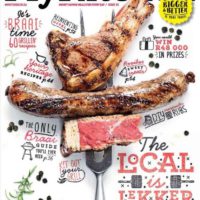
The current issue of MyKitchen magazine is animated and oozing with shelf-appeal, thanks to its illustrated hand-lettering, layout and art direction. Themed “local is lekker”, this issue captures a South African vernacular in a fun yet sophisticated way, without declining into a stereotypical cultural space. Two influences come to mind here.

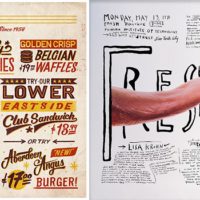
The first is the work of prolific Cape Town-based studio, Muti, which is known for its hand-lettering and well art-directed illustration work. The typographic chopping board that Muti created for Joseph & Joseph, a UK kitchenware brand, exhibits vernacular elements inspired by Americana — sign-painting and diner graphics in particular. And so, Americana meets Africana. Stefan Sagmeister’s classic Fresh Dialogue poster also comes to mind here, depicting two phallic tongues seemingly conversing with each other, illustrating through photography and hand-lettering a narrative for a lecture on design.

MyKitchen’s current cover shows how the mainstream feeds off of pioneering experimental design tendencies that often occur long before they become accepted norms, and how underground and avant-garde sensibilities eventually contribute to commercial and commonplace trends.


Interview (US), September 2017

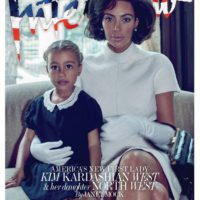
Imagine Jay-Z as the president of America, with Beyoncé as first lady. Now take that idea one step further and put Kanye West in Trump’s current seat of power. Perhaps meant as a prediction for the future of American politics, the September 2017 issue of Interview magazine reminds one of the episode of The Simpsons, which predicted Donald Trump as US president over a decade ago.

The cover portrays Kim Kardashian West as a future Jacqueline Kennedy Onassis, accompanied by her young daughter, North West. Photographed by cult-photographer Steven Klein, this cover is vintage in its appeal, recalling the tonality of Stephen Shore’s photographs from the ’70s, which implied elements of consumerism, materialism and vanity in American society, and the banality of it all. Suggestive of a potential future still-to-come, this cover uses Interview’s masthead as a clipping mask for the American flag, creating a kind of simulated, pseudo-patriotism. Simultaneously referring to the past and the future, the portrait is an intertextual image of history in the making, how it tends to repeat itself in the process, and the manner in which society currently consumes culture faster than it can produce it.


Chips (South Africa), Issue 2, 2017

Getting food to do the talking, Chips is an online magazine that connects art and eating. The magazine is published by Studio H, a multidisciplinary South African design studio based in Cape Town, known for its creative work for culinary events and services. Chips is also produced on a quarterly basis as a printed zine, extending storytelling about food and culture into an attractive and collectable package. The second issue is all about ‘dough’, read as money and food, suggested by the bread basket on the cover and advocating value (stokvel-style) focused towards community, rather than consumerism.

From meditating upon abandoned groceries that could not be afforded in the aisle and delving into the eclecticism of Johannesburg’s food culture to international topics such as how global politics plays a role Havana’s food culture and investigating the democracy of street food in Hong Kong, this issue is sure to add spice to your life.


Noble Rot (UK), Issue 14: Wine on the Edge, 2017

Launched in 2013, London-based Noble Rot magazine provides lively banter about wine and food culture, eradicating borders that would usually separate the gastronomical arts from various other creative industries. The magazine has an innovative approach, getting culinary gurus to mingle with established creatives and placing chefs such as Pierre Koffmann and Fergus Henderson in the same arena as Brian Eno and Francis Ford Coppola.

In the spirit of Noble Rot’s catchy tagline, “Sex, Drugs & Pinot Noir”, the cover illustrations for each issue are particularly eye-catching. The latest cover for #14 is by Lithuanian illustrator, Egle Zvirblyte; it depicts animated characters and lively figures. Quoting her work as “bright, sweet and a juicy world of offbeats”, Zvirblyte’s work arguably references the visual language of the Fauves, particularly the work of Henri Matisse, which provides insight into her acute awareness of historical practices and contemporary trends.


Online

Makeshift, Issue 15: Boundaries, 2017

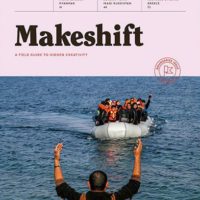
Here is a publication with no headquarters and no full-time employees, drawing from an international pool of creatives and edited and designed remotely from various cities around the world, including New York, Mexico City, Athens and Madrid. Makeshift is an online publication, also available as a quarterly print magazine (note the seamless design synergy between online and print media), focusing on creativity within informal economies and revealing undiscovered forms of creative improvisation, innovation and resourcefulness.

True to its name, driven by its descriptor, “A Field Guide to Hidden Creativity”, Makeshift tells stories about trailblazers who use their powers of intuition and ingenuity to creatively overcome pitfalls and uplift communities; it declares that great design can be unearthed anywhere. The current issue, themed Boundariesm touches on the concept of lines we draw, where lines are either crossed, confronted, or created. This issue includes articles about migrants in Greece, anti-ISIS barricades in Kurdistan, a spacecraft built in a shed in Australia, and arbitrage in Brazil and Paraguay.


Iconic

Print Magazine (US), Volume 1 Issue 1: Special Typography, 1940

Originally a limited-edition periodical focused on the graphic arts, Print has had at least six different iterations in the seven decades following its first publication in 1940. The first started as a journal-sized publication and remained so until 1953, often including original prints, tipped-in pages, and other bespoke elements. The first issue of volume 1 was published using the name “Print: A Quarterly Journal of the Graphic Arts” but, by 1953, the publication had changed its name to simply “Print”.

Print’s latest, its annual typography issue, shows how the magazine has evolved with the times while maintaining its traditional integrity and setting high standards throughout. Perhaps as a teaser for yet another change in its creative direction, with this issue the magazine looks a little different. Investigating the changing face(s) of typography and celebrating important women within the industry, the cover showcases a portrait of influential illustrator and type designer, Jessica Hische, shot by John Keatley as part of his Faces of Design photographic series.

The latest issue also calls upon the iconic legacy of Louise Fili, who designed the typography for the cover, which is succinctly wrapped around the silhouette of Hische. She worked for Fili between 2006 and 2009, when she was an emerging young talent in New York.

Iconic across the board, Print proves that print is not dead.


Shane de LangeShane de Lange (@shanenilfunct) is a designer, writer, and educator currently based in Cape Town, South Africa, working in the fields of communication design and digital media. He works from Gilgamesh, a small design studio, and is a senior lecturer in graphic design at Vega School in Cape Town. Connect on Pinterest and Instagram.

Cover Stories, formerly MagLove, is a regular slot deconstructing media cover design, both past and present.

Sign up now for the MarkLives email newsletter every Monday and Thursday, now including headlines from the Ramify.biz company newsroom service!

SA TV Ratings: SABC 1 — primetime top 20 for Jul 2017

by MarkLives (@marklives) The hottest primetime television shows on SABC 1 in South Africa revealed: TV ratings for July 2017.

In 2016, the Broadcast Research Council of South Africa (BRCSA) changed its policy about giving away TAMS and now only monthly reports, highlighting the top 20 or 30 primetime shows on several popular channels, are available.

SABC 1 July 2017

BRCSA TV Ratings July 2017 primetime SABC 1

Source: BRCSA July 2017

Broadcast Research Council of South Africa


The Broadcast Research Council of South Africa (the BRC) is a non-profit, industry body that was incorporated in 2015 to cater to the audience research needs of the radio and television industry in South Africa.

Sign up now for the MarkLives email newsletter every Monday and Thursday, now including headlines from the Ramify.biz company newsroom service!

Young, Gifted & Killing It: Jabu Nadia Newman

by Veli Ngubane (@TheNduna) Writer, filmmaker and photographer, Jabu Nadia Newman, is staking out her place at the forefront of the new generation of creatives in our country. Inspired by women she met during the #FeesMustFall protests at the University of Cape Town, this young and gifted creative started killing it! by putting her studies on hold to write The Foxy Five film web series, which tells the story of five friends grappling with different issues of feminism. Here we find out more about her.

Veli Ngubane: Tell us more about yourself: where did you grow up and what did you want to be when you were growing up?
Jabu Nadia Newman: I grew up in Cape Town in different areas as my parents moved around a lot. I’ve lived in Grassy Park, Kenilworth, Woodstock and Diep River. When I was younger I wanted to be many things: first it was a ballerina, then a concert pianist, then an artist and once even the first womxn president of South Africa LOL.

VN: How have your roots influenced your art?
JNN: My art is telling stories about being a womxn of colour in South Africa and what that means for different people.

VN: Please explain what you actually do and how an average day looks for you?
JNN: Usually my day starts [with] having coffee at a coffee shop, answering emails — usually answering interview questions, touching base with my producers, organising screenings, going to meetings and then watching a movie before bed. Sometimes I spend the whole day writing and sometimes I spend the whole day on set but mainly emails and meetings take up majority of my day.

VN: Tell us about The Foxy Five web series and how did it come about?
JNN: The Foxy Five concept came about in 2015 during the first #FeesMustFall protests. I was so inspired by the womxn-student-led movement that I started writing a script that wanted to tell the stories of what black womxn are experiencing today and what we’re discussing. After I had written the first episode I put together a team comprising mainly of black womxn and the crew and cast grew from there as more people reached out and more people wanted to be involved.

The Foxy Five is about five womxn who are best friends and who are just trying to navigate their way through a patriarchal society. They decide to try start fighting structural oppression on the streets but find that often internal issues or personal strife gets in the way of their initial plans to save the world. Each character represents a different struggle and oppression in society, as well as plays on the stereotypes on how society would portray feminists.

VN: How do you explain your nuanced version of feminism, and who influenced it?
JNN: Many different womxn have influenced my feminism. At first I was reading people like Bell Hooks, Simone de Beauvoir, Maya Angelou, even Laura Mulvey. Now I’m influenced a lot by my peers and the black womxn around me; especially my family, my late mother and 80-year-oldgrandmother influence my feminism daily. My feminism is intersectional and black.

VN: I’m interested in your thoughts on how women are portrayed on TV and in movies. Who do you think is the best example of a well-written strong female character in TV and movies you’ve seen in the last few years?
JNN: The representation of womxn in film and TV is getting better, but only better for white women. I was very influenced by HBO’s Girls and Broad City — but mainly I was influenced in the fact that they had no strong black womxn characters so I decided to create my own. Right now I’m enjoying Issa Rae’s Insecure, Cecile Emeke’s Ackee & Saltfish and Michaela Coel’s Chewing Gum. There have been many directors who have represented womxn in a truthful way; these just aren’t American directors. Directors like Pedro Almodovar and Park Chan-Wook. Sofia Coppola has done a good job of representing white women, I guess.

VN: What is it like to work as a female in a male-dominated industry and how do you think the industry may attract more female creatives?
JNN: It’s interesting in that I feel like I can always approach things in a different way or have a different perspective. There definitely is more interest in womxn-driven stories and projects, and the industry just needs to open its doors more and let us as womxn tell our own stories. We need to be the ones behind the cameras and directing the media that South Africa needs.

VN: What do you feel is missing in entertainment today?
JNN: We still need more representation and more real and authentic stories. We need to be more aware and accountable of the media that we put out, and owe it to South African audience to create intellectual and creative content.

VN: Where and when do you have your best ideas?
JNN: My best ideas come to me when I’m dreaming or when I’m pretending to listen to someone haha.

VN: What advice can you give to young women wanting to get into the business?
JNN: Find a mentor, shoot as much as possible, save your money and fund your own projects and work with other womxn.

VN: Tell us something about yourself not generally known.
JNN: I lucid dream a lot.

VN: What exciting projects are you working on at the moment?
JNN: I’m writing a script for a short film.

VN: Please would you supply two or three pieces of work you have been involved in?


Veli NgubaneVeli Ngubane (@TheNduna) entered the world of advertising with a passion after completing his BSocSci (law, politics and economics) at the University of Cape Town and a post-graduate marketing diploma at Red & Yellow, where he also currently serves as advisory board chairman. He is the chief creative officer and founding partner of one of the fastest-growing agencies in the country, AVATAR. A full-service marketing agency with digital at the core, its clients include Brand South Africa, FOX Africa, National Geographic, SAA and Chevron. Veli hails from Kosi Bay in the rural KwaMhlaba Uyalingana area of KZN. In his monthly column “Young, Gifted & Killing It”, he profiles award-winning, kick-ass black creative talent in South Africa.

Sign up now for the MarkLives email newsletter every Monday and Thursday, now including headlines from the Ramify.biz company newsroom service!

Clicks ’n Tricks: Bots, the sinners & saints of advertising

by Charlie Stewart (@CStewart_ZA) Back in March 2017, hot on the heels of the YouTube advertising debacle, Procter & Gamble announced that it was going to slash its digital adspend. With John Wanamaker’s famous words ringing in its ears, the marketing world held its breath. Was P&G’s decision set to portend a dramatic decline in sales, or was the industry that had so triumphantly toasted digital’s supremacy over its inefficient above-the-line counterpart about to be exposed for selling new clothes fit for an emperor?

Well, news came in late July that P&G had beaten quarterly earnings expectations on the back of a US$140m digital advertising cost saving. That amounted to nearly a percentage point of additional profit margin for the quarter, with reductions to agency and production fees delivering a further boost to profits. All the more galling to digital protagonists was the news that revenue had grown by 2% in category where rivals’ sales were flat.

In the face of such overwhelming evidence, the doomsayers were quick to call digital out.

GAFA’s gaff

The last couple of years have been troubling for Facebook and Google, which take roughly 77c in every US dollar spent online. The YouTube malaise, issues with the way Facebook reported on ad clicks and the general opacity with which GAFA (Google, Apple, Facebook and Amazon) operate have contributed to an environment in which many brands feel compelled to put the tech giants at the heart of their marketing strategies, even though they’d rather not.

But, while you can’t argue with the evidence, P&G’s data only tells part of the story.

Its decision to pull spend was based on concerns that its ads were being clicked on by bots. And P&G’s uptick in sales over the past few months suggests this was the case.

Bots create the problem — but offer the solution

So why did this happen and what do we do about it?

For starters, it’s pretty unlikely that GAFA has warehouses full of computers that click on ads flighted on their networks. Attractive as this theory might seem to conspiracy theorists, the tech companies have simply got too much to lose if they disenfranchise their primary advertisers.

The bot clicks were mostly taking place on websites which’d got themselves listed on a variety of programmatic exchanges. As most publishers work on an impression-based revenue model, it’s in their interests to demonstrate that ads flighted on their platforms have been shown and interacted with loads of times. Even if this means cheating.

Any human visiting many of these sites would see that they were pretty crappy and extremely unlikely to deliver the type of sales generating engagement brands such as P&G are after.

Smash the machines

Which is why some companies, such as JP Morgan Chase, have cut the number of platforms they flight ads on from 400 000 — largely picked by machines — to 5 000, all picked by humans. This approach makes sense. But to disregard programmatic advertising in totality, which some have been calling for, is a reactionary perspective that has more in common with the 19th century Luddites than that of an organisation with tech at its core.

Machine learning and artificial intelligence, on which programmatic is based, is in its infancy. It’s inevitable that, like the kid who’s just had the stabilising wheels removed from his bike, it’ll have the odd headlong dive into a thorny thicket.

We all need to make mistakes in order to learn. But, to do so, we also need to be taught. Slating the educators or the curriculum might, as in P&G’s case, appeal to short-term shareholder pressure, but it’s unlikely to shift the needle in the long term. To do that we need to back technology. Yes, we need to stamp out fraud but, instead of blaming the machine, let’s invest in the systems and processes that’ll help it learn.


Charlie StewartCharlie Stewart (@CStewart_ZA) is CEO of Rogerwilco, a multi-award-winning independent digital agency best known for its expertise with Drupal, SEO and content marketing. A Scot by birth, he moved to South Africa in the early 2000s in his quest to support a winning rugby team — a search he’s reluctantly forsaken. Together with Mark Eardley, he co-authored Business to Business Marketing: A Step by Step Guide, (Penguin Random House, 2016) and may be found on LinkedIn. Charlie contributes the monthly “Clicks ‘n Tricks” column, which looks at how brands are using digital channels to engage their customers, to MarkLives.

Sign up now for the MarkLives email newsletter every Monday and Thursday, now including headlines from the Ramify.biz company newsroom service!

Online CPD Courses Psychology Online CPD Courses Marketing analytics software Marketing analytics software for small business Business management software Business accounting software Gearbox repair company Makeup artist