Cover Stories: Thoughtfulness in design (8 September 2017)

by Shane de Lange (@shanenilfunct) Let’s delve into great media design from South Africa and around the world:

  • Batt Butt — local/print
  • Berlin Quarterly — online/print
  • ELLE Brasil — international/print
  • Friday (Mail & Guardian) — local/print
  • New Philosopher — international/print
  • The Face — iconic

Find a cover we should know about? Tweet us at @Marklives and @shanenilfunct.
Pinterest icon Want to view all the covers at a glance? See our Pinterest board!


Print

Friday (South Africa), 1-7 September 2017

Friday Mail & Guardian, 1-7 September 2017The cover of Mail & Guardian’s Friday magazine disrupts as much as it evokes. It features an artwork by Zimbabwean artist, Kudzanai Chiurai, titled “We Live in Silence XVIII”, which is part of his current solo exhibition at the Goodman Gallery in Johannesburg. Supporting a body of work comprising photographs, videos, drawings, paintings and installation, Chiurai was inspired by Mauritanian filmmaker Med Hondo’s 1967 film Soleil Ô, which is a story about a black immigrant who travels to Paris in search of his Gaul forebears. The exhibition is essentially a dissection of the film, remixing the scenes in the form of visual mashups.

Unpacking the post-colony, Chiurai’s appropriation of Hondo’s story contests dominant colonial narratives and questions expectations placed upon the African migrant to adopt the identity, language, and forms of representation of the coloniser. While taking the baton from Hondo, Chiurai recasts the main character as a female in this story of black liberation, contesting gender discrimination embedded within the narrative of the post-colony, which tends to favor the black male as the savior, or martyr.

Kudos needs to be given to Milisuthando Bongela (@missmillib), Mail and Guardian arts and culture editor, and the rest of the editorial team for making this cover happen.


ELLE Brasil, September 2017

ELLE Brasil, September 2017 - Alicia Keys 1-4

Alicia Keys first appeared on a magazine cover without make-up for Fault Magazine in July 2016, after she joined the #nomakeup movement. Since then, Keys has ceased to see makeup as a necessity in a woman’s life, liberating herself from a culturally engineered dependency on cosmetics. She takes her cause one step further here, appearing for the first time in Brazilian ELLE. Her discarding of socially constructed conventions surrounding female beauty is portrayed in four different cover portraits for the September 2017 issue, with four related messages: “Be Cool”, “Be Strong”, “Be Real”, and “Be Yourself”. Despite Keys’ minimal use of moisturiser and blush, and her styled braids, she makes herself vulnerable and challenges many accepted barriers and intuitionalised divides, showing her strength as a modern woman and raising an important debate.


Batt Butt (South Africa), Issue 2, 2017
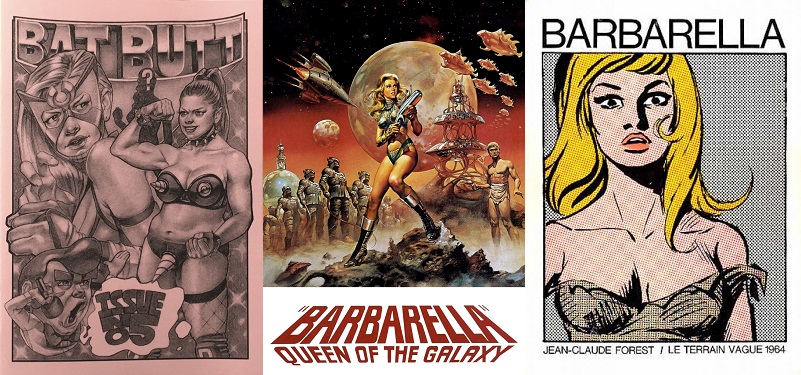
Collage - Batt Butt 5, Barbarella film poster, Barbarella comic 1 1964

South African illustrator, Shaun Hill, has attained cult status in certain creative circles with his independently published Bat Butt. This zine is so sought after that it is normally sold-out within the first few days of its release, mostly due to its limited-edition print run and its low-brow, anti-aesthetic that appeals to a growing offbeat artistic sensibility in South Africa. The release of issue 5 was announced last week on social media for pre-order, and all copies have already been sold.

Using a low-budget, DIY aesthetic and A5 in size, the cover stays true to many independent comics and punk-inspired zines which have come before it. B-grade in nature, the front cover is illustrated by US-based illustrator Marquis Fortune and recalls the poster for the 1968 sci-fi film Barbarella, starring Jane Fonda. This classic poster was illustrated by American illustrator Robert McGinnis, known for his prolific work in advertising, book covers, and film posters. The film itself was based on the original French comic published in 1964, also called Barbarella, created by Jean-Claude Forest.

International in its scope, paying homage to a variety of historic sources and contemporary trends and with contributors from across the globe, this issue comes in a pack that includes two stickers, two prints, and other extras.


New Philosopher (Australia), Issue 17, August/September 2017

Collage - New Philosopher, August-September 2017 and Olympic Games logo Mexico 1968

With all the developments in global politics, particularly in the US, it seems apt that the latest issue of independent quarterly, New Philosopher, is themed “communication”. The magazine is known for its investigation of contemporary philosophical ideas, and this issue places emphasis on the oft-quoted notion of fake news. As the cover illustration suggests, ambiguity exists between journalism and propaganda, portrayed here as crossed fingers; resonating, broadcasting. Reminiscent of a beacon transmitting information to the world, the beaming crossed fingers may be seen as a metaphor that describes either a conceited attempt at misinformation (fingers hidden behind one’s back), or a gesture of hoping for the best (fingers in plain view).

The cover recalls the iconic work of American designer, Lance Wyman, known for his logo and campaign work for the Mexico Summer Olympic Games in 1968. These games are important to South African history, as the country was provisionally invited to them during a time of increasing protest against the apartheid regime. Most African countries and many black American athletes threatened to boycott the games if SA were included. Our country was ultimately not included because it failed to guarantee that all forms of segregation and discrimination in sport would be eradicated by the 1972 gGames.


Online

Berlin Quarterly, Issue 6, Summer 2017

Collage Berlin Quarterly website September 2017, Berlin Quarterly 6, Andreas Gursky Paris Montparnasse 1993

The sixth issue of German-based Berlin Quarterly continues to present culturally charged, quality, long-form journalism from across the globe. Notably, this issue includes a short story titled “Remedies” by SA writer, and PEN International New Voices winner, Masande Ntshanga.

The cover is visually breathtaking, with a detail of an image shot by Milan-based photographer Francesco Jodice, titled “Ostend, T43” (2005). Taken from Jodice’s “What We Want” photographic atlas, the picture is a commentary on the fluctuating social landscape today. The influence of German photographer, Andreas Gursky, is visible, reminding one of his work titled “Paris, Montparnasse” (1993): a panorama compiled from various images of a vast housing estate that makes a similar comment about geopolitical states in constant flux.

The striking photographic visuals extend over onto Berlin Quarterly’s website, where the landing page continues to showcase of Jodice’s striking What We Want portfolio of work, starting with “Bethlehem, T62” (2010).


Iconic

The Face (UK), Issue 1, May 1980

The Face, Issue 1, May 1980

The rise of alternative culture during the ’80s and ’90s is synonymous with The Face. As the first magazine to focus on the youth market and urban identity, particularly in Margaret Thatcher’s Britain, The Face stood out because it focused on broader cultural issues, rather than placing all emphasis on music culture alone. It soon became the voice of indie and style culture in the UK, setting standards for trends in music, fashion, photography and film.

The magazine introduced the world to the work of artists such as Robert Mapplethorpe, Bruce Weber and Cindy Sherman, alongside musicians such as Spandau Ballet, Boy George, Wham!, David Bowie, Annie Lennox, Prince, and Adam Ant, to name a few. Historic covers include a young Kate Moss on her first-ever cover campaign in 1990, and Gisele Bunchen photographed by David LaChapelle on the 20-year anniversary cover.

In its infancy, The Face called upon the pioneering graphic design, typography and art direction of Neville Brody, currently dean of the School of Communication at the Royal College of Art in London, known for his visual identity work on Arena magazine (1987–1990), and his own cult independent magazine, Fuse, among a plethora of other important executions. The fashion photography of legendary photographer, Nick Knight, and fashion stylist, Ray Petri, is also worth mentioning here.

After surviving the dystopic acid house years, and the rococo-esque Britpop era, The Face saw its downfall in 2004. It was cemented in the annals of history in 2011 when it was included in the Design Museum’s permanent collection, and formed part of the Club to Catwalk exhibition at the V&A in 2013.


Shane de LangeShane de Lange (@shanenilfunct) is a designer, writer, and educator currently based in Cape Town, South Africa, working in the fields of communication design and digital media. He works from Gilgamesh, a small design studio, and is a senior lecturer in graphic design at Vega School in Cape Town. Connect on Pinterest and Instagram.

Cover Stories, formerly MagLove, is a regular slot deconstructing media cover design, both past and present.

Sign up now for the MarkLives email newsletter every Monday and Thursday, now including headlines from the Ramify.biz company newsroom service!

SA TV Ratings: SABC 2 — primetime top 20 for Jul 2017

by MarkLives (@marklives) The hottest primetime television shows on SABC 2 in South Africa revealed: TV ratings for July 2017.

In 2016, the Broadcast Research Council of South Africa (BRCSA) changed its policy about giving away TAMS and now only monthly reports, highlighting the top 20 or 30 primetime shows on several popular channels, are available.

SABC 2 July 2017

BRCSA TV Ratings July 2017 primetime SABC 2

Source: BRCSA July 2017

Broadcast Research Council of South Africa


The Broadcast Research Council of South Africa (the BRC) is a non-profit, industry body that was incorporated in 2015 to cater to the audience research needs of the radio and television industry in South Africa.

Sign up now for the MarkLives email newsletter every Monday and Thursday, now including headlines from the Ramify.biz company newsroom service!

Fair Exchange: Marketing rollercoaster never slows down

by Erna George (@edgeo23) While there are many specialisation areas within marketing, for the most part, brand-manager roles at their core require strong ‘general management skills’ to deliver a profitable mix, in addition to maintaining a strong connection to the external world to understand consumer needs and behaviours. Balancing these has become more challenging in this complex time — making shareholders, internal and external stakeholders, as well as your consumers, happy is an active performance that requires excellence at basics and innovative approaches.

All the balls in the air

Why am I writing about this? I submitted this article late as, over the preceding weeks, I’d been focused on finalising the marketing contribution to the next horizon business strategy and translating this into brand plans. At the same time, business as usual doesn’t come to a halt, plus there’s the pressure of ad-hoc projects and delivering required growth over the quarter. To do this, one has to develop a keen view on past performance and its drivers, as well as a view on growth opportunities based on consumer demand, in order to finalise a distinct approach to win in market. Many have access to similar data; it’s the thinking time given to applying this data that unlocks potential. Prioritising this future potential while still delivering current launches, run-outs on discontinued items, pack changes for some nutritional update, managing consumer complaints on low stocks of their favourite product and just getting the monthly budget done can be a nightmare!

In order to manage (not simply juggle) all the balls in the air requires a strong commitment to the objectives. The balance must come in judging which areas require 80% effort and which require more. Get it over your heart that, in some things or at some time, good enough is enough — this is tough to deal with.

In my opinion, if you’ve spent enough time developing a strong strategy at the outset (with some checkpoints to stress-test it every now and then), then you must get on with delivering against this. A strong foundation and solid strategy may be applied across most channel or new approaches. Re-questioning strategy on a regular basis is destructive. While not being relevant is a sure-fire way to lose market share, being desperate is in my view the most-reliable method to kill a brand over time. Fixing relevance is manageable. Resurrecting brands? Not so easy. Marketing teams with strong problem-solving and lateral-thinking skills — key skills — will allow for flexibility to respond with greater precision. With this team in place, focus on delivering your strategy in full before haphazardly darting from pillar to post.

Challenge

This challenge of being distracted by a shiny new toy or trend may impact internal and customer perceptions. A competitor’s new campaign or product launch via a ground-breaking new channel might drive frustration or panic when seen by the CEO or head of sales, causing a flurry of questioning emails. Managing these internal concerns and points of view from multiple stakeholders (aka internal politics) is yet another key area marketing must manage to maintain focus. While we must stay open to new possibilities and continuous learning, prioritising focus areas is vital, given limited resources time, people and funds.

These limited resources, driven by our current economic reality, means that teams are leaner than before as businesses have to manage costs. Budgets are more pragmatic, yet the growth targets aren’t as modest. The pressure to deliver short- and long-term growth will not dissipate. Balancing a long-term view with the ‘craziness’ of daily shifts and business as usual, given nothing happens in an iterative way, may feel like chaos. And we all know the consequence of trying to juggle too much at once — the likelihood of dropping one or two balls. Therefore, we have to make choices to manage and create the focus for success. Sometimes these will be less than optimal but, if you’re in tune with the market and keep the brand roots and strategy at the core, you’re likely to be mostly right.

Tips

To stay on track and avoid or manage the distractions:

  • Prioritise the long-term and spend enough brain space on strategy-development sessions, as this is your foundation
  • Be brilliant at the basics, such as project management, and have brilliant agency partners for support
  • Keep focus on the objective but be open to possibilities on the execution, as that which worked once may not work again

Don’t be too hard on yourself, either. Take a deep breath and keep going; the rollercoaster is not slowing down.


Erna GeorgeAfter starting at Unilever in a classical marketing role, Erna George (@edgeo23) explored the agency side of life, first as a partner at Fountainhead Design, followed by the manic and inspiring world of consultancy at Added Value. She has returned to client-side, leading the marketing team in the Cereals, Accompaniments & Baking Division at Pioneer Foods. Her monthly “Fair Exchange” column on MarkLives concerns business relationships and partnerships in marketing and brandland.

Sign up now for the MarkLives email newsletter every Monday and Thursday, now including headlines from the Ramify.biz company newsroom service!

Africa Dispatches: Isaiah Wakoli’s digital dreamscapes

by Charlie Mathews (@CharlesLeeZA) Disruptive. Bold. Audacious. The keen interest of digital artist, Isaiah Wakoli, in human behaviour reverberates in his work, which reimagines people and places and contexts in Africa. The 26-year-old digital art director, who calls himself a ‘curious artist’, is gaining attention because of his fantastical dreamscapes that mash the ordinary with the extraordinary.

A post shared by Noncompliant (@iwakoli) on

Wakoli says: “I am on a mission to do an image a day for 365 days, and then convert this into a book.” To do this the designer would pick an image and try and recreate it in a number of ways. This fantastical, trippy landscape, in which a child leads an elephant next to a series of pills, is one of the results of Wakoli stretching his imagination through a practice of daily discipline.

Wakoli hails from Kenya, and has been working in the creative industries since he turned 21. He says his biggest influences are the American comedian, filmmaker and screenwriter, Buster Keaton, as well as Chuck Jones. For those of you who aren’t obsessed with toons, Jones was a US animator and cartoonist who made more than 300 animated films and won three Oscars. He created characters like the Road Runner, Wile E. Coyote, Marvin the Martian, and Pepé Le Pew. Wakoli says an important lesson he’s learned from Keaton and Jones is discipline.

As an entrepreneur who runs a small design and animation studio, the best part is seeing something you’ve worked on come to life. “The worst part,” he admits, “is that there is always a rainy and a dry season. Sometimes you can’t tell how long a dry season will last. That’s my worst part.”

Given the brilliant, imaginative work Wakoli’s doing, it’s unlikely he’ll have a dry spell that will last for long. Africa Dispatches caught up with the young digital artist.

Africa Dispatches: Why should brands engage storytellers to tell their stories?
Isaiah Wakoli:
Stories are the simplest way to connect your brands with current and potential customers. They provide the basis of which people can understand not only the purpose but the origin of your purpose — in essence, why your brand exists. Your brand story is the human element of your brand, which otherwise can be considered an institutional entity.

AD: Have you always been creative? How did your creative life unfold?
IW:
Growing up I wasn’t really much exposed to the art scene, but I had always loved music and drawing. Music has always been my biggest influence. Watching music videos made me want to know more. We had a really old computer in the house when growing up, and I used to spend a lot of time working on Windows Movie Maker, just mashing up different homemade videos.

AD: In an age where there is so much information, how do stories capture attention?
IW:
I have always believed in these three things. One — tell people stories they want to hear. Two — give people stories that they can’t get anywhere else. Three — leverage the stories to co-create.

A post shared by Noncompliant (@iwakoli) on

“There is this hypothesis in technology that there will be a time where the invention of artificial, super-intelligence will abruptly trigger runaway technological growth, resulting in changes in civilisation, hence the name: ‘singularity’. In this piece I’m try to visualise how the Maasai people will look at that time without losing their culture.”

AD: Your work takes your audience to incredible new worlds. Is this your intention?
IW:
It wasn’t really my intention. I started doing this to break the cycle from the kinds of work I was doing. I wanted to work on something that had no brief and that allowed me to express myself as much as I could. I like the response I am getting. Sometimes I think people don’t get these images, but that is fine.

AD: What inspires you?
IW:
I’m inspired by light and colour. I love how light can fall a certain way onto an object. To me, colour always brings mood. I feel like you can communicate a lot with no words by just using light and colour.

AD: What motivates you?
IW:
Doing a good job and achieving the desired outputs or even better. I like the idea of different creative minds colliding and creating iconic work that will be still relevant years to come.

AD: What have you learned during the past few years?
IW:
There is a sea of creatives out there and the trick is to stand out. And the only way you do so is if you experiment a lot.

AD: What advice for young people wanting to enter the creative industries?
IW:
If you really want something, then you have to make it part of your life. Work hard and enjoy it.

Follow him on Instagram.

A post shared by Noncompliant (@iwakoli) on

“This image is based on the Asaro people in New Guinea. I thought it was interesting that ,when the village was raided, they hid on the river bed, and made masks out of clay, and covered themselves with mud. The Asaro emerged, thinking this was a disguise, and their enemies ran away, thinking they were spirits.”

Read more


Charlie Mathews

Charles Lee Mathews (@CharlesLeeZA) is the founder of TheWriters.co.za, a boutique strategy and content shop that helps brands better connect — and engage with — the people who matter most. When not writing, or thinking about human behaviour, she is a contributing editor to MarkLives.com through her monthly “Africa Dispatches” column.

Sign up now for the MarkLives email newsletter every Monday and Thursday, now including headlines from the Ramify.biz company newsroom service!

Adnalysis: “What”, “how” as important as “why” for brands

by Bogosi Motshegwa (@Thinkerneur) Whatever the brief, most often than not, the end goal or desired result may be consolidated into or boiled down to the following: “We just want to be the best in our category” — usually linked to the increase in sales or market share. As a result, that may be translated or interpreted as: “We want to be leaders or thought-leaders in our category.”

What does it mean to be a thought-leader?

I define “thought-leadership” as follows: “Thought leaders don’t fight within existing categories; they create new categories — they set the benchmark”.

With that said, it’s imperative to note that, to reach that sort of level, you need to think in a particular way. It’s a cliché but, to be a leader in your category, you need to do things differently. Literally. You need to discard everything that the category is defined by and create new category norms, new expectations that people will expect from every player in category eventually.

To be a leader is to set benchmarks. What benchmarks are you currently setting? Are your marketing efforts based on what is currently working or what you want to work? Are you following or are you setting trends?

To lead your category is to redefine key fundamental pillars

  1. Process > objectives: To be the best brand in your category; using ‘market share’, ‘market/share value’ and ‘sales’ as criteria for being the best, you need not be worried about these. To increase market share, don’t focus on the numbers. Objectives are easy to set; the difficult part is getting there. Because objectives are usually numeric and therefore measurable, the process to achieving them by default is informed by measurable ideas. For example, if the objective is to increase share value by 10%, then the solution will be driven by that. We will either increase price and maintain the same packaging size or decrease the packaging size and maintain the same price. But what value does that bring for the people that you are targeting? Instead, be obsessed with the process and not the objectives. If you think about it, meeting your objectives is a result of your process. This means that you need to think more about how to get there. Spend more time thinking about clever ways to achieve your objectives. Depending on your category and what you offer, you need to think of ways to create layers of value around whatever it is that you are offering.
  2. Competitors: Who you view as your biggest competitor or include in your list of competitors has major implications on how you act or react. Who you think is the “best” unconsciously sets precedence for how “best” you will be. If your competitors are players within your category or industry, then, by default, you are more likely to continue doing what the category has been doing and what people expect. If you stretch your competitor list outside your given category, you’re more likely to also broaden and stretch how you do things.
  3. What you do: You need to redefine what you do. There is a lot spoken about finding your ‘why’. Your purpose. Do not underestimate the ‘what’. You also need to be very clever and particular about what it is that you do. Linked to your redefined list of competitors, redefining ‘what’ you do may catapult your business. You need to be purposeful in defining your ‘what’. For example, Nike makes sneakers and sports apparel. But that’s not its business. According to its Nike On Demand case study, it’s in the business of “human potential”. That alone is enough to inspire creative work that pushes boundaries. What do you do? If you’re selling bread, what business are you really in? This may sound philosophical but redefining what you do will have critical implications on how you carry on with business going forward.

Value

When you look at brands that have gained astronomical growth and success, their value is in how they innovated around ‘process > objectives’, ‘what’ they offer, and their ‘competitors’.

For example, Uber didn’t reinvent transportation; it simply changed the process — redefined what it does. American entrepreneur, Gary Vaynerchuk, put it succinctly: “Uber is not in the business of transportation, they are in the business of time. They sell time”. Whether it’s conscious of this or not is beside the point; it’s also redefining its competitors. It overlooked traditional competitors in the form of yellow cabs and other forms of transportation and created new expectations by redefining category norms. Its business wasn’t transportation but rather making getting a taxi more simple. That was the value provided and, in return, it became the leader in the category.

The same principle applies for companies such as Airbnb, Google, and Nike. Success is underpinned by a purpose bigger than a product’s utility, its founders and numbers. “What” and “how” you do it is just as important as “why” you do it.


Bogosi MotshegwaBogosi Motshegwa (@Thinkerneur) truly believes that advertising can really change the world. Every single day he tries to prove this. He shares his thoughts on the industry and sometimes has unconventional views. Bogosi is the co-founder of Melanoid Éclat (for finding black entrepreneurs), a committee member of AMASA, an Advisory Council member and guest speaker at Vega, and also does speaker management at TEDxJohannesburg. He is currently a strategic planner at The Creative Counsel. He contributes the new monthly column, “Adnalysis”, which analyses adland from a strategist’s viewpoint, to MarkLives.com.

Sign up now for the MarkLives email newsletter every Monday and Thursday, now including headlines from the Ramify.biz company newsroom service!

Clicks n Tricks: Social advertising — brands to kill golden goose?

by Charlie Stewart (@CStewart_ZA) According to Forrester’s latest report on social media advertising, in 2016 brands spent more punting their wares on social platforms than the combined advertising revenues of Disney, Comcast, Fox and Time Warner — which were pretty decent.

Despite a number of setbacks, mostly centering on reporting opacity and ad fraud, global social ad spending hit US$36bn last year.

With people flocking to Instagram, Snapchat et al (Statista predicts 2.95bn people, a third of the world’s population, will have at least one social profile by 2020), it’s no surprise that brands are following them. They’re even doing so in such large numbers that American market research company, Forrester, has been encouraged to increase its forecasts for social adspend in the coming years; it now projects that, by 2021, advertisers will spend US$101.4bn (up from its previous estimate of US$84.3bn) promoting posts and running ads — largely in video content.

Social ad spending globally

Advanced targeting options

Advertisers love social because it offers a range of advanced targeting options.

While Google’s search advertising allows users to select basic demographic or geographic filters, social networks offer much more granular targeting based on the vast amount of user information they gather around interests, behavior and people’s connections. To a hungry target-focused marketer, that’s catnip of the highest order.

Video killed the radio star

Video, and particularly on mobile, is where social advertising’s at. Around 110 years of video are watched every day on Periscope, probably the least adopted of the popular platforms.

Naturally, Facebook, cognisant that its newsfeed inventory all but sold out, is making a big play with its video-ad project. Earlier this year, it announced that it was introducing mid-roll ads but user feedback was poor and rumours quickly began to circulate that Facebook would kill them off.

Advertisers kill the social star

Therein lies the advertiser conundrum: the goose is laying beautiful golden eggs, but there’s a real risk that consumers will turn their backs on social media if it becomes overly saturated with adverts. In a report published last year by Kantar TNS, 26% of consumers report that they actively ignore social posts from brands.

At a country level, Scandinavians are the most sceptical, with 57% of respondents stating they’re simply not interested in the messages corporates push into their feeds. The Saudis (15%) appear to be the most trusting, while South Africa is bang on the 26% average.

Celebrity endorsement

Interestingly, the Kantar study found that the best way for brands to engage young audiences is by using celebrity influencers. The youth, it appears, are far more likely to believe that a certain carbonated soft drink is good if the words come from Kendall Jenner’s mouth than if they’re uttered by Pepsi.

With social media still in its infancy (staggeringly, given its omnipresence, Facebook only became a teenager this year), it’s too early to determine what’ll happen when these youngsters who hang on celebrity utterances become more discerning. But it’s clear that the authenticity endorsement delivers means that it’ll continue to be the go-to tactic for brands looking to engage audiences. Compare Swedish vlogger PewDiePie, who has 57m YouTube subscribers and 13m Instagram followers to Coca-Cola, one of the largest-spending brands on social, which has just 1.5m and 2.1m followers on its respective YouTube and Instagram channels.

But finding the right endorser isn’t that easy. Aside from the documented challenges of dealing with vacuous celebs famous only for being famous, it’s also damned expensive to buy Kim Kardashian’s temporary loyalty — up to US$500 000 per Instagram post.

Developing countries

Notwithstanding this, Forrester’s confident that spend will continue to grow. A large chunk of this will come from developing countries — China and India have a social adspend roughly 80–90% below the global average. So expect to see more Bollywood coming to a phone near you.


Charlie StewartCharlie Stewart (@CStewart_ZA) is CEO of Rogerwilco, a multi-award-winning independent digital agency best known for its expertise with Drupal, SEO and content marketing. A Scot by birth, he moved to South Africa in the early 2000s in his quest to support a winning rugby team — a search he’s reluctantly forsaken. Together with Mark Eardley, he co-authored Business to Business Marketing: A Step by Step Guide, (Penguin Random House, 2016) and may be found on LinkedIn. Charlie contributes the monthly “Clicks ‘n Tricks” column, which looks at how brands are using digital channels to engage their customers, to MarkLives.

Sign up now for the MarkLives email newsletter every Monday and Thursday, now including headlines from the Ramify.biz company newsroom service!

Hello from the other side — views on creativity from Botswana

by Obakeng Kokwe (@obiedigital) Botswana flies under the radar in a many ways when one thinks of Africa and the world, generally. Mention it in the international domain and some will ask “where is that?” and, if they do know of it, it’ll mostly be in connection with the accolades that the country is associated with —as a tourist destination, a diamond-producing powerhouse, one of Africa’s strongest and steadiest economies, and a thriving democracy. Needless to say, they’ll most likely not refer to the country’s creative prowess.

Vibrant agency space

Yet young Botswana is moving about and setting things in motion; there’s a shift in the creative space that is challenging the establishment and the people behind this shift are very much unapologetic about the way they’re going about their business. The agency space is just as vibrant, with agency networks such as Publicis Africa, TBWA, FCB, Y&R, Ogilvy forming partnerships with the creative capital here. The independent agency space is continuously growing, too, and there’s a sense of this being a time where Botswana as a country is coming of age and announcing itself as one to look out for on the global stage.

I’m personally excited about developments in the creative and cultural industries as the country dialogues about economic diversification, and the lack of opportunity in the traditional spaces is fuelling a rise in individual creativity, skill and talent base, with a huge potential for wealth and job creation. Key to note is how the communications and advertising space stands to benefit through the generation and development of intellectual property.

Digital is a big part of it all, if not at the very heart of this exuberance. Cheaper and more widespread connectivity is enabling a more-democratic playing field, as there are alternative routes to market for startups and independents alike. It goes without saying, then, that there’s a need to transform it all.

Botswana has a population of around 2.5m and an astounding 3.5m active mobile phone connections. Marketers are steadily waking up to a domain where traditional ‘communications’ doesn’t necessarily achieve the impact that they hope for when rolling out campaigns “because the consumer is caught up in their own micro-moments” where the all-important human truths (or insights) are found.

Small market

Being a small market has its own challenges and pressures, so it would be amiss of me to paint a picture that it’s “all butter and gravy” in the Botswana marketing space. Clients’ budgets are being squeezed by toughening economic conditions; a lot of the work from international brands comes ready-made from outside the country; and the numbers sometimes don’t justify the effort and ambition that agencies set out in their visions for a campaign and what the client can or is actually willing to part with in the name of a campaign that achieves impact or a beautiful piece of communication.

At times, it even seems that agencies are putting in way more effort and lobbying to get impactful integrated communications projects going. We’re building an ambitious digital business in the country and are finding that we have to educate a lot until we break through. The industry itself is not blameless in this client/agency realm; a lot of us are still very much comfortable in selling full-on traditional campaigns as that’s what we know best — which also happens to be what the client trusts. In some cases, clients (validly) don’t trust that agencies have the expertise or capacity to execute digital communications projects; we’re having to challenge our own clients and constantly upgrade our own digital teams’ skillset as sometimes our personnel is not yet comfortable with initiating, owning and seeing projects through. Other times, there simply isn’t the budget to execute as the initiatives we’re trying to drive aren’t yet part of the larger organisations’ business strategy. The consequence is that traditional continues to dominate the campaign conversation, leaving digital pegged to the backroom.

I’ve recently taken a keen interest in driving conversations around the subject of transformation in the Botswana context but have first had to set the scene for those that might want to know. To quote myself, “I’ve had to ask myself questions about what it means to transform in this current time. How do organisations deal with inadvertent change?” These questions keep coming up as we now face up bravely to the fact that key decisions have to be made — and we as agencies mandate ourselves as the gatekeepers, the ones who has to make them.


Obakeng KokweObakeng Kokwe (@obiedigital) is chief technology partner at The Dialogue Group, a digital and creative agency in Botswana. He leads all creative, digital and innovation activities at Sturgeon, The Dialogue Group’s digital media agency, and is currently rebooting the vision and operations for the digital discipline across all accounts and new business at Sturgeon.

“Motive” is a by-invitation-only column on MarkLives.com. Contributors are picked by the editors but generally don’t form part of our regular columnist lineup, unless the topic is off-column.

Sign up now for the MarkLives email newsletter every Monday and Thursday, now including headlines from the Ramify.biz company newsroom service!

Ad of the Week: Absa Premiership turns up the rivalry

by Oresti Patricios (@orestaki) Laduuuuma! It’s soccer season again, and the Premier Soccer League (PSL) kicks off the Absa Premiership with an upbeat launch video from FCB Joburg and director Robin Goode of Figment Films.

The world’s most-popular sport, soccer is played by some 250m people in 200 countries and, although the world’s attention may be on the qualifiers for next year’s FIFA World Cup in Moscow, back home in South African, we’re all about the Absa Premiership. The local tournament runs from August 2017 until the middle of next year, with 16 participating teams playing each other home and away. All teams get sponsored throughout the season, and the winning team takes home a whopping of R10m.

Absa has grabbed this massive brand-building opportunity with both hands: its campaign in support of the Absa Premiership is a masterpiece, and one that invites everyone to champion ‘the beautiful game’. The creative concept behind this TVC espouses the truism that competition can make us stronger. Or, as Absa says: “We’re turning up the rivalry this season in the Absa Premiership because, when rivalry comes alive, the game gets better.”


Pinterest icon View all the Ads of the Week at a glance on our #AdoftheWeek Pinterest board!
YouTube icon Watch our 2017 #AdoftheWeek playlist on YouTube


The ad starts with a shot of an ultrasound screen, and the baby in utero is seen kicking — but with one leg. This cuts to another screen, another baby who is also kicking. The scene cuts to the dads holding their respective babies. Over the dads’ shoulders, the two babies eye each other menacingly. What follows is a montage that portrays the two boys as they grow up, competing in various games, including street soccer, foosball, and even breakdancing.

The entire ad is set to a piece of electronic dance music with a township vibe, with the chorus “Woza nazo” — which loosely translated means “bring it on”. This is the punchline of the ad, and the slogan for the Absa campaign.

The montage ends with both players now as young adults clashing on the soccer pitch, on opposing teams. Both are flying through the air towards the same ball to make a spectacular flying kick. As they are about to connect with the ball, the screen cuts to red with the slogan “Woza nazo” flying on. The voiceover declares: “You know what makes us better? Rivalry.”

But does competition make you stronger? Here’s an interesting business insight that comes from China. CNBC reports that the president of Didi Chuxing, the largest ride-share app in that country, says competition is good for business. “Competition makes you stronger,” Jean Liu told the business news service. “We love competition. It makes you more focused.” Liu has become a global technology rock star after securing a US$1bn dollar investment from Apple.

But, when it comes to sport, competition is a no-brainer. Getting your kids onto the sports fields makes them both mentally and physically fit. Importantly, sports such as soccer teach lessons about teamwork, winning and losing that may endure a lifetime. Soccer is a great sport to build friendships around, regardless of whether you’re playing, participating, or watching the game. But it’s also all about being stronger — through cooperation. Ultimately, it’s through working together (like a glorious soccer team) that we all win.

Thanks to Absa, FCB and Figment for an inspired advert that will make you fall in love with the beautiful game all over again. As for the Premier League — woza nazo! The games have begun; let’s enjoy every single nail-biting minute of it.

Credits

Agency: FCB Joburg
Chief creative officer: Jonathan Deeb
Executive creative director: Gareth Paul
Creative director: Simon Fabricius
Copywriter: TJ Njozela
Art director: Fezi Mpembe
Strategist: Siwelile Thusi
Account manager: Ayanda Masilela
Group account director: Kathryn Smyth
Agency TV producer: Sian Anicic
Production company: Figment Films
Director: Robin Goode
DOP: Devin Toselli
Post-production company: Left Post Production
Editor: Evy Katz
Online/grade: Blade
Sound mix: Freq’ncy Studio
Original music: Markus Wormstorm


Oresti PatriciosAd of the Week, published on MarkLives every Wednesday, is penned by Oresti Patricios (@orestaki), the CEO of Ornico, a Brand Intelligence® firm that focuses on media, reputation and brand research. If you are involved in making advertising that is smart, funny and/or engaging, please let Oresti know about it at clientservice@ornicogroup.co.za.

Sign up now for the MarkLives email newsletter every Monday and Thursday, now including headlines from the Ramify.biz company newsroom&nbsp:service!

PRCA expels Bell Pottinger

by MarkLives (@marklives) UK PR industry body, the Public Relations and Communications Association (PRCA), has announced the expulsion of Bell Pottinger. This follows an investigation into work the controversial PR agency did for the Gupta-owned Oakbay Investments. Bell Pottinger will not be eligible to reapply for corporate membership of the PRCA for a minimum period of five years. The announcement follows on the heels of the resignation of Bell Pottinger CEO, James Henderson.

Full statement by PRCA

The Public Relations and Communications Association (PRCA) announced today that it has imposed its most serious sanctions on Bell Pottinger, following the industry regulator’s investigation into Bell Pottinger’s work for Oakbay Capital in South Africa. The investigation followed a complaint from the Democratic Alliance.

Bell Pottinger’s membership has been terminated with immediate effect. Bell Pottinger will not be eligible to reapply for corporate membership of the PRCA for a minimum period of five years.

Francis Ingham MPRCA, Director General, PRCA, said: “Bell Pottinger has brought the PR and communications industry into disrepute with its actions, and it has received the harshest possible sanctions. The PRCA has never before passed down such a damning indictment of an agency’s behaviour.

“This outcome reflects the huge importance that the PRCA places on the protection of ethical standards in the business of PR and communications.”

Watch Francis Ingham speaking about the expulsion of Bell Pottinger:

Bell Pottinger has been found to have breached the PRCA Professional Charter and Public Affairs and Lobbying Code of Conduct, in the following respects:

PRCA Professional Charter clause 1.1;
PRCA Professional Charter clause 4;
PRCA Public Affairs and Lobbying Code of Conduct clause 12;
PRCA Public Affairs and Lobbying Code of Conduct clause 13.

The PRCA launched its investigation on 5th July, following a complaint from the Democratic Alliance. Bell Pottinger and Democratic Alliance were able to present written and oral evidence at a hearing of the PRCA Professional Practices Committee on 18th August.

The Professional Practices Committee was unanimous in its view that the Professional Charter and Codes of Conduct had been breached, and recommended to the PRCA Board of Management that Bell Pottinger’s membership be terminated. The Board approved that recommendation unanimously.

Bell Pottinger was given five days in which to appeal the Board’s decision, and submitted an appeal to the PRCA. The PRCA Board of Management met again on Monday, 4th September to make its final ruling.

Clauses

PRCA Professional Charter clause 1.1:

Have a positive duty to observe the highest standards in the practice of Public Relations and Communications. Furthermore a member has the responsibility at all times to deal fairly and honestly with fellow members and professionals, the Public Relations and Communications profession, other professions, suppliers, intermediaries, the media of communication, colleagues, and above all else the public.

The Democratic Alliance alleged during the hearing that Bell Pottinger had ‘exploited racial divisions on behalf of the Gupta family’.

The Committee understood the burden of Bell Pottinger’s response to be that the offending element was just one component of a single workstream in a large and complex programme. Further, that the programme was essentially corporate and financial by nature. The Committee tried unsuccessfully to reconcile these assertions with what actually happened in terms of the reaction to the campaign and the level of criticism which it provoked.
The Committee acknowledged Bell Pottinger’s eventual response to the problems but felt that a programme designed and managed in accordance with the highest standards of practice in PR and communications could not, and should not, have caused such problems in the first place.

The Committee, therefore, found that Bell Pottinger had breached PRCA Professional Charter clause 1.1.

PRCA Professional Charter clause 4

A member is required to take all reasonable care that professional duties are conducted without causing offence on the grounds of gender, race, religion, disability or any other form of discrimination or unacceptable reference.

The Committee found that the nature of the programme depicted in the documents submitted to Oakbay Capital by Bell Pottinger, and as conducted by Bell Pottinger on Oakbay Capital’s behalf, was by any reasonable standard of judgement likely to inflame racial discord in South Africa and appears to have done exactly that. The Committee did not find the suggestion that this theme of the campaign and its consequences were unintentional to be plausible. The targeting of white corporate South Africa is a material consideration here.

The Committee, therefore, found that Bell Pottinger had breached PRCA Professional Charter clause 4.

PRCA Public Affairs and Lobbying Code of Conduct clause 12

PRCA members conducting Public Affairs and Lobbying services must be at all times aware of the importance of their observance of the principles and duties set out in this Code for the protection and maintenance of their own reputation, the good name and success of their organisation, and the standing of the profession as a whole.

Certain aspects of the manner in which the Bell Pottinger campaign was conducted on behalf of Oakbay Capital fell so far short of expected standards that an apology was issued by James Henderson, CEO, in which he described the social media campaign highlighting economic emancipation to be ‘inappropriate and offensive’: ‘these activities should never have been undertaken’. The partner in charge of the campaign was dismissed and two employees were suspended.

Asked by the Committee if Bell Pottinger acknowledged that work undertaken by the account team fell short of Bell Pottinger’s own standards, Henderson answered in the affirmative. Henderson agreed that the PRCA’s standards, as set out in the PRCA Professional Charter and Codes of Conduct, could not be described as lower than those of Bell Pottinger itself. Bell Pottinger failed to maintain and protect its own reputation and the standing of the profession as a whole.

The Committee, therefore, found that Bell Pottinger had breached PRCA Public Affairs and Lobbying Code of Conduct clause 12.

PRCA Public Affairs and Lobbying Code of Conduct clause 13

A member shall not act or engage in any practice or conduct in any manner detrimental to the reputation of the Association or the profession of Public Affairs and Lobbying in general.

The Committee formed the unanimous view that the manner in which the Oakbay Capital programme was conceived and delivered indicated a failure on the part of Bell Pottinger’s senior management to oversee and control a campaign which, in the Committee’s view, required the highest level of scrutiny and supervision, given the sensitive political and social environment in which it was activated.

In probing this question the Committee was not satisfied that Bell Pottinger’s explanations were fully convincing. This was not in accordance with its members’ own experience as senior managers of large consultancies implementing opinion-forming programmes in sensitive or volatile climates.

One outcome was a large volume of highly-critical media coverage of Bell Pottinger’s work on behalf of Oakbay Capital, both in South Africa and internationally, which – in the Committee’s view – has caused damage to the reputations of both Bell Pottinger and the profession of public affairs and lobbying.

The Committee, therefore, found that Bell Pottinger had breached PRCA Public Affairs and Lobbying Code of Conduct clause 13.

Sign up now for the MarkLives email newsletter every Monday and Thursday, now including headlines from the Ramify.biz company newsroom service!

Online CPD Courses Psychology Online CPD Courses Marketing analytics software Marketing analytics software for small business Business management software Business accounting software Gearbox repair company Makeup artist