Smart Africa TV: Uganda’s underground music circuit

by Russell Southwood (@BalancingActAfr) In this interview, Alex Aheebwa, assistant director of Bayimba.org, gives his take on what’s happening in the Ugandan music scene.

The interview covers:

  • the popularity of reggae in Uganda and
  • the underground music scene.

Smart MonkeyRussell Southwood is the founder of Balancing Act and the web TV channel Smart Monkey TV, and has been an analyst in telecoms, internet and broadcast in Africa for the last 14 years. Smart Monkey TV aims to capture the energy at the crossroads between African culture and technology. MarkLives is syndicating content from Smart Monkey TV on a weekly basis for the column “Smart Africa TV”.

— MarkLives’ round-up of top ad and media industry news and opinion in your mailbox every three work days. Sign up here!

The Ad Contrarian: The limits of strategy

ad contra

by Bob Hoffman (@adcontrarian), San Francisco Bay Today we have a mystery for you to solve. Get out your pipe and deerstalker hat. But first, the set-up.

Recently Dave Trott had an excellent post about the limits of strategy.

I have always felt that in advertising, strategy is essential but it’s not enough. The problem with most of our agency strategists is that they complicate the shit out of the easy stuff and screw up the hard stuff.

For the most part, peoples’ purchasing behaviour is pretty easy to figure out. First, there’s the utilitarian stuff. They buy these things because they’re cheaper, nicer looking, more convenient, better tasting, or work better. No mystery there.

Next, there’s the emotional stuff. They buy these things because the brand makes them feel better. Also, no mystery.

Planners and other strategists take great pains to make these obvious behaviours seem arcane. After all, if a dumb-ass blogger can figure this shit out, who needs a “cultural anthropologist?”

Then there are the 10% of consumer behaviours that really are mysterious. This is the stuff that is very hard to explain and truly requires the help of a good strategist. Sadly, this is the stuff that many of them get wrong.

Here’s an example.

I get The New York Times delivered to my home in Oakland every morning. Yet when I’m travelling, I don’t buy The Times on Mondays or Tuesdays. I do buy it, however, on Wednesdays through Sundays.

Pretend you’re a marketing strategist, and see if you can come up with a logical explanation for this purchasing behaviour.

Before the answer, an observation.

While most of our purchasing behavior is done for obvious reasons, we each have little quirks that are very difficult for a strategist to intuit or even discover.

For example, there are restaurants I go to not because I like the food, but because I like the bread or the bar. There are also restaurants I avoid whose food I like, but whose bathrooms stink. Likewise, there are a number of categories I participate in in which my behavior is due mainly to personal quirks. I am sure we each have some of these.

The point is, it is easy to fool ourselves into thinking that data has all the answers. There are always personal behaviors that are not easily explained by anything other than knowing the person.

Now to The New York Times mystery.

The answer is this. I get most of my news on line, not from the newspaper. I get the newspaper for basically three reasons: the sports section, the business section, and the crossword puzzle.

The Times has a terrible sports section so I don’t read it for that. The business section is very good, but not compelling. The primary reason I get The Times is the crossword puzzle.

The Times crossword puzzle gets tougher as the week goes on. Monday and Tuesday are not challenging for me; Wednesday starts to be a challenge; Thursday is usually pretty difficult and contains a trick to it; Friday and Saturday are killers; Sunday is about as hard as Thursday, but it’s big so it’s fun.

So the explanation is, I don’t buy The Times on Monday or Tuesday because the crossword is too easy. It’s highly unlikely that this behavior is representative of anyone but me. Nonetheless, I think it demonstrates that synthesizing a correct explanation for a purchasing behavior – when not obvious – can be a tricky business.

The Ad Contrarian is Bob Hoffman (@adcontrarian), the author of The Ad Contrarian and 101 Contrarian Ideas About Advertising. This column has been republished from his blog The Ad Contrarian.

— MarkLives’ round-up of top ad and media industry news and opinion in your mailbox every three work days. Sign up here!

MagLove: Good enough to eat

by MediaSlut (@MediaSlut) My choice of the best international and local covers in MagLove this week:

  • FX
  • New York
  • TIME
  • Dossier (Art Issue)

INTERNATIONAL

FX, April 2014

FX, April 2014

I’m not too sure how real or photoshopped this is but for its April 2014 cover story, FX did “experiments with PLA bioplastics” and this seems to be the end result — good enough to eat!

Oh wait, that’s what it already says…

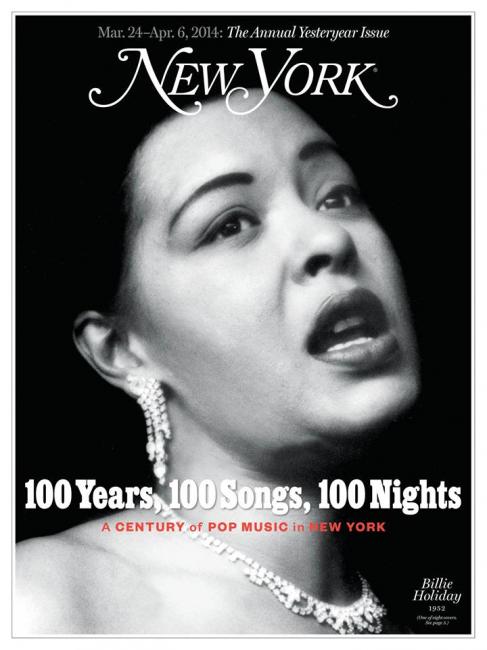
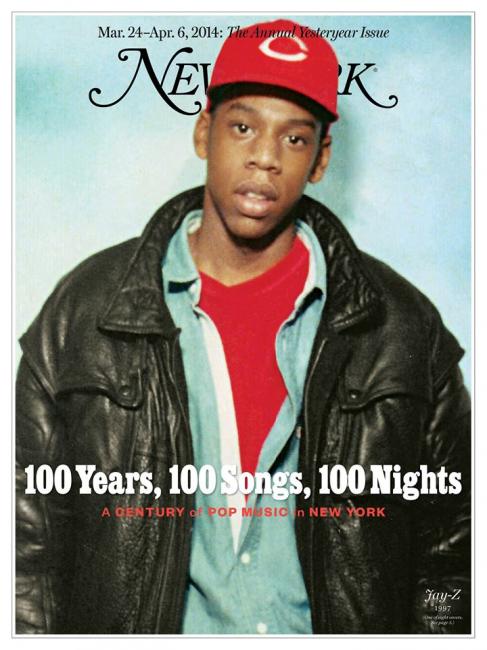
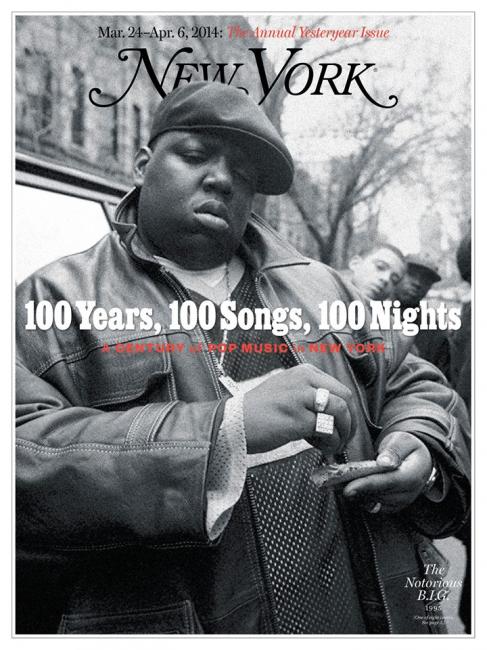
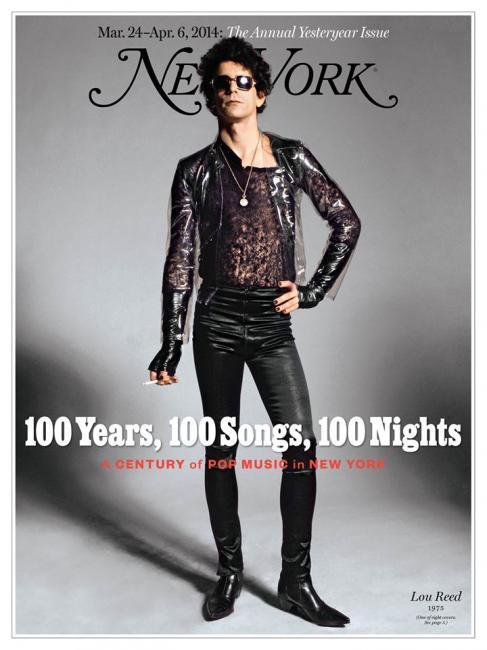
New York, 24 March 2014

New York, 24 March 2014, Billie Holiday New York, 24 March 2014, Jay-Z New York, 24 March 2014, Madonna New York, 24 March 2014, Barbara Streisand New York, 24 March 2014, The Notorious B.I.G. New York, 24 March 2014, Lou Reed
For New York’s annual “Yesteryear” Issue (love the theme!), it’s looking at “100 Years, 100 Songs, 100 Nights” and is running a split-cover with, from what I saw, six different artists that made the list in various stages of their lives…

The singers/performers featured on these covers include B.I.G., Barbara Streisand, Madonna, Jay-Z, Billie Holiday and Lou Reed. Very vintage-cool!

TIME, 31 March 2014

TIME 31 March 2014

Simple. Striking. Sad.

LOCAL

Dossier, April 2014

Dossier, April 2014, The Art Issue

Bonang Matheba is on the cover of the April 2014 issue of Dossier, which is its Art Issue, and also appears to have a 3D-element on the cover.

I love how the cover design picks up from Matheba’s dress, and displays her like the queen she is!

You can read the digital issue right here.


Find a cover we should know about? Tweet us at @Marklives and @MediaSlut.
Want to view all the covers at a glance?
See our MagLove Pinboard!


MediaSlutMagLove by @MediaSlut is a regular slot featuring the best local and international magazine covers every week, recognising well thought-out, powerful and interesting (and hopefully all three-in-one) covers and celebrating the mix of pragmatism, creativity and personal taste that created each of them. The (for now anonymous) blogger behind MediaSlut knows way too much for his own good about media in South Africa, magazines in particular. His mission is to show when SA magazines fail but, most importantly, also when they succeed. If you’re looking for a library about SA magazines and news, this is your one-stop pitstop.

— MarkLives’ round-up of top ad and media industry news and opinion in your mailbox every three work days. Sign up here!

Media Future: Coffee gadgets and the genius of Nespresso

by Arthur Goldstuck (@art2gee) Remember when coffee makers were kitchen appliances and not gadgets? In fact, for many, the typical coffee machine still is a kitchen appliance. But that’s mostly because they haven’t yet discovered Nespresso, which has all but reinvented coffee.

nespressoIn the process, it has also sparked a vigorous debate between coffee snobs and newly-minted coffee connoisseurs about what makes “real coffee”. Much as whisky lovers argue about the merits of “single malt” versus “pure malt” and blends, so do wannabe barristas bandy about the benefits of “single-origin coffee” over blends.

These are probably some of the reasons Nestlé invented the Nespresso, with the very name suggesting a short-cut to both coffee bliss and profit heaven. The concept, as first expressed 28 years ago is simple: “enable anyone to create the perfect cup of coffee”. The result, today, is an independent brand within Nestlé that has become a veritable industry on its own, with 8300 employees across the world.

What is not as well known is that Nespresso is protected by about 1700 patents, and many of these have begun to expire. As a result, compatible capsules are being manufactured around the world, including in South Africa. Nevertheless, the Nespresso pod remains the gold standard for the democratisation of coffee, despite being positioned and priced as a luxury item.

A basic Nespresso machine, the U, costs from R1800 upward, and each pod costs around R6-R8. That’s the signal for the coffee snobs to bleat about how that adds up to the equivalent of more than R1000 for a bag of coffee, when a high-quality equivalent costs one or two hundred rand, AND it’s so much better when you grind your own beans.

Of course, that misses the entire point of Nespresso: that you don’t HAVE to grind your own beans or figure out which bag of non-instant will make for a great coffee experience. Aside from the fact that even a terrible cuppa in a coffee shop will cost double or treble the price of a pod.

Recently, Nespresso brought its high end Gran Maestria to South Africa. Priced at a boiling hot R7950, it’s not going to get into the average South African kitchen. But it is a coffee dream machine, with a flip-out tray accommodating tall and short cups and mugs, a dial allowing for varied water flow, and a milk frother aiding in the ancient art of cappuccino and latte making.

Most Nespresso fans would settle for a U model with Nespresso’s separate accessory, the sub-R1000 Aeroccino Automatic Milk Frother.

Oh yes, you’re allowed milk with your Nespresso, since scientists have discovered that “coffee blends develop different aromatic profiles when combined with milk”. In other words, milk changes the taste of coffee. Again, that is anathema to the patrons of places like Truth Coffee in Cape Town and Father Coffee in Johannesburg.

Most of the debate around pod coffee culture is related to choice and knowledge, and it’s clear that Nespresso has expanded both, for those who don’t have the time or inclination to explore barista culture. However, it is less successful in recycling the pods, which contain a mix of plastic and aluminium. Recycling plants have been introduced in countries with high pod sales, but that apparently does not yet include South Africa.

The argument is reminiscent of criticism of Apple for relying on sweatshops in China to build its iconic iPhone and iPad. It is for a very different reason, however, that a British branding consultant has described Nespresso as “the Apple of pod-machine coffee”. Few fans would argue with the comparison.

Arthur Goldstuck heads up World Wide Worx (www.worldwideworx.com) and is editor-in-chief of Gadget. He is a consulting editor to MarkLives and our media tech columnist. Follow him on Twitter on @art2gee.

This article has been republished from Gadget.

— MarkLives’ round-up of top ad and media industry news and opinion in your mailbox every three work days. Sign up here!

Heroes & Zeros: Snickers — Andy Rice’s best & worst ads of the week

Andy Rice (@ricecommaandy) talks about his best (Snickers Australia’s “You’re not you when you’re hungry”) and worst (also Snickers Australia’s “Y0u’re not you when you’re hungry”) adverts of the week with Jenny Crwys-Williams (@jcwLIFE) during The Ad Feature on Talk Radio 702 (@Radio702).

Find out why this brand campaign features in this week’s Heroes & Zeros webisode by watching below:

For a fresh look at the world of advertising, Jenny Crwys-Williams of 702 Talk Radio chats to advertising critic Andy Rice on The Ad Feature, every Wednesday 2.30pm — 3pm. The filmed Heroes & Zeroes will appear on MarkLives every Thursday morning as a webisode.

— MarkLives’ round-up of top ad and media industry news and opinion in your mailbox every three work days. Sign up here!

Shelf Life: Functional foods category set to grow

Louise Marsland (@Louise_Marsland)’s weekly pick of recent product, packaging and design launches:

  • New functional foods category set to grow
  • Additional Findus veggie variants launched in SA
  • Regent Insurance refreshes brand, including new look offices
  • Pyrotec offers refrigeration printing solution

Next trend: functional foods

Futurelife Zero Smart Food Futurelife High Protein Smart Food
With all the sugar-free, dairy-free, low-carb, no-carb, high-protein, Paelo ‘caveman’ diets out there, it is no wonder that products are being produced to meet the demands of the new food fads.

Futurelife launched its new Zero Smart Food product with zero cane sugar recently, as well as energy bars, a new product extension from its existing meals range. The brand is also launching a 50g pack option to attract a lower LSM demographic.

With launches into the United Arab Emirates, this R200 million-a-year business is showing annual growth of over 110% — so clearly a growth market that will no doubt spawn a host of new brands and brand extensions from other FMCG players, too, in what is termed the “functional foods” category.

Initially born out of a desire to help disadvantaged people eat more nutritious food, Futurelife has become one of the fastest-growing health brands in South Africa, using Olympic swimmer Chad le Clos as a spokesperson. It is punted as a product that can be used by anyone who values their health, from professional sportsmen to diabetics and people with immune diseases.

Futurelife Zero Smart Food is formulated with no added cane sugar. It is low GI, non-GMO and high in protein, with only 1.5g of fat per serving and containing 25 vitamins and minerals, as well as Moducare. The product has been mainly formulated to be used as a smoothie or shake, but can also be eaten as porridge.

Futurelife has also soft-launched its new range of SmartBars, which offers consumers a quick on-the-go alternative. Each variant is created for specific use.

New Findus products

Findus Rainbow Carrots Findus Farmhand Mix
Six new Findus frozen vegetable products have been added to the European range currently available in SA through Sea Harvest: Rainbow Carrots, Asparagus, French Green Beans, Mixed Vegetables, Farmhand Mix and Specially Selected Mixed Vegetables.

Findus products range from R20 to R40 per item and are stocked exclusively in all Pick n Pays.

Findus Foods is a Swedish company which maintains that research has shown that frozen veggies often deliver as many or more nutrients than fresh ones.

Regent’s transparent designs

Regent reception

As part of the rebranding of Regent Insurance, a new flagship office has been designed by Inhouse Brand Architects to tangibly express the new corporate brand image — a concept that will now be rolled out nationwide.

In line with a soon-to-be-unveiled, large-scale repositioning of its corporate brand, Regent Insurance has had its regional office in KwaZulu-Natal redesigned. This new corporate direction has been revealed internally, and will be introduced to customers and key stakeholders throughout 2014.

Inhouse has refreshed existing furniture and desk systems, executing thorough space-planning research, and maximising open-plan spaces to promote communication and better output from staff.

The design team, led by Inhouse director Phillip Wyatt, has focused on increasing staff morale by providing an appealing work environment. In order to encourage a mix of different functions within the office space, Wyatt has incorporated what he refers to as “campsites” — zones that allow staff to break away and meet informally.

Regent waiting room

Directional and branded signage regularly makes use of perforated and cut-out elements that reveal the layer beneath, “denoting transparency”. Glass is also used throughout to create a feeling of spaciousness and to echo the recurring motif of transparency and visibility. A frameless glass wall system with integrated white boards has been installed.

“This is more than just an interior job,” Regent’s group head: marketing and communications, Michelle Ashen-Abrahams, explains. “This execution for us is about space-efficiency and effective long-term cost management, as well as executing our brand strategy in a different way and creating a space our employees can proudly call their corporate home.”

Colour is a key factor in the scheme and there is a bold and confident play on Regent’s new corporate colour, which has gone from deep blue to vermillion. “Colour plays a huge role in our psychological state,” explains Wyatt, “and derivatives of red relate to a positive, dynamic and energetic outlook that complements Regent’s new direction.”

Cool coding and printing solutions

 Pyrotec PackMark

For consumer health and safety, it is essential for product information and dates to be included and to remain on the packaging for products that have to withstand the moisture of a refrigerated and freezer environment in a range of temperatures.

Pyrotec PackMark is a robust coding solution that does not fade or wipe off, reassures Pyrotec. And it can include anything from best-before dates and batch numbers to ingredients, logos and barcodes on flexible packaging, rigid plastics, metal, paper-based containers or liquid cartons.

The technology is the Markem-Imaje range of printing solutions that Pyrotec is the sole SA agent for.

The printer is restocked with sealed percussion charges, which means that handling consumables is also clean and safe. Cartridge changes are described as being extremely fast, taking less than 30 seconds with neither spillage nor delay.


Louise MarslandShelf Life by Louise Marsland is a weekly column on MarkLives. Tweet new product, packaging and design launches to @louise_marsland or email her at louise.marsland at gmail.com. Want to sponsor Shelf Life? Contact us here.

Louise has written about the FMCG, media, marketing and advertising industry for 19 of her more-than-25-year career as a former editor of magazines AdVantage, Marketing Mix and Progressive Retailing, as well as websites Bizcommunity.com and FMCGFiles. She currently edits the weekly Wednesday Media & Marketing Page for The New Age newspaper and is the publishing editor of industry trendwatching portal, TRENDAFRiCA, for consumer insight, research and trends in Africa.

— MarkLives’ round-up of top ad and media industry news and opinion in your mailbox every three work days. Sign up here!

SAARF/MarkLives #Top40TVratings: Family Bonds enter Top 10

by SAARF & MarkLives (@marklives) The week of 24 March — 30 March 2014 saw Family Bonds (Ezomdeni in Zulu) on SABC 1 entering our into one of our Top 10 positions on the SAARF/MarkLives #Top40TVratings national chart.

Satellite dishNews in IsiZulu (SABC 1) was the most-watched news broadcast on our national chart, followed by news broadcast in IsiXhosa (SABC 1), News Headlines (SABC 1) the News on e.tv. Consumer watchdog show Speak Out, broadcast on SABC 2, was the top-rated actuality programme, coming in at number 21.

This weekly roundup of South Africa’s TV audience viewership, a collaboration between the South African Audience Research Foundation (SAARF) and MarkLives, reveals the best-watched shows of the week before, where it ran and how many South Africans tuned in to watch.

We offer two tables, the first covering all households — free-to-air viewing (the various SABC channels and e.tv) as well as the DStv platform — and the second charting the best-watched shows on the DStv network of channels only.

SAARF/MarkLives #Top40TVratings Chart: 24 — 30 March 2014

National (include all households — free-to-air viewing and DStv platform)

Market Target Activity
National Total Indv (incl guests) Live + VOSDAL
Counter Description (grouped) Channel Level 1 Level 2\Variable (r) AMR % AMR SHR %
1 GENERATIONS SABC 1 Soap opera Local 23.6 10 107 951 71.06%
2 NGEMPELA SABC 1 Drama Drama 16.3 6 998 055 51.52%
3 AMAZA SABC 1 Drama Drama 15.5 6 664 795 48.44%
4 LOXION LYRIC SABC 1 Drama Drama 14.6 6 281 405 45.26%
5 MUVHANGO SABC 2 Drama Drama 12.1 5 196 905 42.60%
6 INTERSEXTIONS SABC 1 Drama Drama 11.4 4 895 283 38.33%
7 TASK FORCE(DRAMA) SABC 1 Drama Drama 10.6 4 567 966 36.97%
8 ZULU NEWS SABC 1 News News 10.2 4 357 487 32.16%
9 SCANDAL e.tv Drama Drama 10.1 4 329 676 31.89%
10 FAMILY BONDS SABC 1 Drama Drama 10.0 4 288 561 35.33%
11 XHOSA NEWS SABC 1 News News 9.6 4 118 279 31.84%
12 POWERBALL SABC 2 Variety Variety 9.5 4 068 874 39.09%
13 SELIMATHUNZI SABC 1 Variety Variety 9.4 4 042 797 30.41%
14 FRIENDS LIKE THESE SABC 1 Variety Variety 9.0 3 866 794 33.44%
15 RHYTHM CITY e.tv Drama Drama 9.0 3 854 910 34.52%
16 SINGLE GALZ SABC 1 Sitcom Sitcom 8.9 3 811 339 30.10%
17 ZAZIWA SABC 1 Variety Variety 8.5 3 653 846 28.93%
18 MR BOX OFFICE SABC 1 Sitcom Sitcom 8.0 3 416 423 27.70%
19 FAST FIVE SABC 1 Movies Action/adventure 7.5 3 226 313 36.15%
20 ORANGE CAF CHAMPIONS LEAGUE KAIZER CHIEFS VS A.S VITA CLUB SABC 2 Sport Football (soccer) 7.1 3 025 596 25.82%
21 SPEAK OUT SABC 2 Actuality Actuality 6.8 2 935 163 31.84%
22 KHUMBUL’ EKHAYA SABC 1 Magazine Magazine 6.8 2 895 857 26.22%
23 NEWS HEADLINES SABC 1 News News 6.5 2 791 396 23.14%
24 DI WELE MAKGOLELA SABC 2 Variety Variety 6.3 2 707 336 29.45%
25 EKASI OUR STORIES:DRAMA KING e.tv Drama Drama 6.3 2 694 522 23.85%
26 NEWS e.tv News News 6.1 2 600 896 21.71%
27 IMAGINE THAT e.tv Movies Drama 6.0 2 587 775 23.69%
28 WWE WRESTLING RAW e.tv Sport Wrestling 6.0 2 557 319 28.59%
29 EMZINI WEZINSIZWA -R SABC 1 Sitcom Sitcom 5.7 2 440 206 47.08%
30 MUVHANGO -R SABC 1 Drama Drama 5.6 2 418 599 47.58%
31 REAL GOBOZA SABC 1 Magazine Magazine 5.6 2 407 499 25.88%
32 GENERATIONS -R SABC 1 Soap opera Local 5.4 2 310 374 47.82%
33 MAN ON FIRE e.tv Movies Action/adventure 5.3 2 268 667 24.30%
34 MUVHANGO -O SABC 2 Drama Drama 5.3 2 266 175 31.76%
35 IZOSO CONNEXION SABC 2 Sitcom Sitcom 5.2 2 247 840 18.84%
36 STOKVEL SABC 2 Sitcom Sitcom 5.2 2 215 405 22.61%
37 7DE LAAN SABC 2 Soap opera Local 5.1 2 186 958 19.70%
38 LOTTO DRAW LIVE e.tv Competition Competition 5.0 2 160 315 20.77%
39 90 PLEIN STREET SABC 2 Drama Drama 5.0 2 134 482 25.96%
40 THE BOLD AND THE BEAUTIFUL SABC 3 Soap opera International 4.8 2 067 443 22.71%

DStv platform only

Market Target Activity
DStv Total Indv (incl guests) Live + VOSDAL
Counter Description (grouped) Channel Level 1 Level 2\Variable (r) AMR % AMR SHR %
1 GENERATIONS SABC 1 Soap opera Local 16.6 2 244 255 49.48%
2 MUVHANGO SABC 2 Drama Drama 9.1 1 227 797 30.28%
3 ISIBAYA Mzansi Magic Variety Variety 8.4 1 128 501 25.31%
4 ZULU NEWS SABC 1 News News 6.4 858 908 19.82%
5 RHYTHM CITY e.tv Drama Drama 6.3 855 367 21.73%
6 SCANDAL e.tv Drama Drama 5.9 799 508 18.22%
7 NGEMPELA SABC 1 Drama Drama 5.7 773 992 16.95%
8 POWERBALL SABC 2 Variety Variety 5.4 732 544 20.18%
9 XHOSA NEWS SABC 1 News News 5.4 723 968 16.54%
10 BIG BROTHER SA Mzansi Magic Reality Reality 5.2 696 654 16.59%
11 LOXION LYRIC SABC 1 Drama Drama 5.1 688 770 15.30%
12 AMAZA SABC 1 Drama Drama 4.9 666 623 14.38%
13 ORANGE CAF CHAMPIONS LEAGUE KAIZER CHIEFS VS A.S VITA CLUB SABC 2 Sport Football (soccer) 4.8 654 243 15.83%
14 SPEAK OUT SABC 2 Actuality Actuality 4.7 638 749 19.96%
15 KHUMBUL’ EKHAYA SABC 1 Magazine Magazine 4.6 616 599 16.77%
16 TASK FORCE(DRAMA) SABC 1 Drama Drama 4.3 580 312 14.35%
17 INTERSEXTIONS SABC 1 Drama Drama 4.2 567 410 13.57%
18 NEWS e.tv News News 4.2 563 829 13.68%
19 SELIMATHUNZI SABC 1 Variety Variety 3.9 526 643 11.93%
20 SINGLE GALZ SABC 1 Sitcom Sitcom 3.8 516 430 11.89%
21 7DE LAAN SABC 2 Soap opera Local 3.8 512 986 13.09%
22 FAMILY BONDS SABC 1 Drama Drama 3.6 490 090 12.66%
23 FAST FIVE SABC 1 Movies Action/adventure 3.5 471 167 14.94%
24 FRIENDS LIKE THESE SABC 1 Variety Variety 3.2 432 535 10.52%
25 ROCKVILLE (DRAMA) Mzansi Magic Drama Drama 3.1 424 407 10.91%
26 ZAZIWA SABC 1 Variety Variety 3.1 422 733 10.14%
27 THE BOLD AND THE BEAUTIFUL SABC 3 Soap opera International 3.1 421 635 12.15%
28 DI WELE MAKGOLELA SABC 2 Variety Variety 3.1 420 112 13.02%
29 GENERATIONS -R SABC 1 Soap opera Local 3.1 418 116 23.88%
30 MUVHANGO -R SABC 1 Drama Drama 3.1 414 532 22.59%
31 STOKVEL SABC 2 Sitcom Sitcom 3.0 401 948 12.02%
32 NUUS SABC 2 News News 2.8 381 315 9.43%
33 WWE WRESTLING RAW e.tv Sport Wrestling 2.8 380 441 10.60%
34 IMAGINE THAT e.tv Movies Drama 2.8 374 810 9.82%
35 NOOT VIR NOOT SABC 2 Music Music 2.7 362 714 8.57%
36 MAN ON FIRE e.tv Movies Action/adventure 2.4 329 170 9.99%
37 LOTTO DRAW LIVE e.tv Competition Competition 2.4 326 705 9.05%
38 EKASI OUR STORIES:DRAMA KING e.tv Drama Drama 2.4 320 061 8.26%
39 SOCCER ZONE SABC 1 Sport Football (soccer) 2.3 315 198 8.28%
40 ISIDINGO -R SABC 1 Soap opera Local 2.3 309 443 19.32%

How to read the tables:

AMR% refers to the number of people in a target market who were watching an event ie programme, expressed as a percentage of the population for that demographic: “On average, 16.3% of adults aged 15+ who watched TV from 28 Jan-3 Feb 2014 watched Society on SABC 1”.

AMR is the number of people in a target market watching a specific event ie programme per minute, expressed in absolute figures: “On average, 1, 541, 066 adults aged 15+ who watched TV from from28 Jan-3 Feb 2014 watched Society on SABC 1”.

Share % (SHR %) is the share or proportion of the available audience (people watching TV at that time) that a specific channel/programme has achieved at that time: “Society achieved a share % of 52.59% from 28 Jan- 3 Feb 2014 on SABC 1″.

saarf 150SAARF is the name by which the South African Audience Research Foundation is familiarly known. SAARF’s main objective is to direct and publish media audience and product/brand research for the benefit of its stake-holders, thereby providing data for target marketing and a common currency for the buying and selling of media space and time. SAARF has thus the responsibility to measure the audiences of all traditional media such as newspapers, magazines, radio, television, cinema and out of home media.

— MarkLives’ round-up of top ad and media industry news and opinion in your mailbox every three work days. Sign up here!

Ad of the Week: An epic ride for Tracker

by Oresti Patricios (@orestaki) Tracker, the stolen-vehicle tracking company, has decided to get involved in cycling, and there appears to be sound thinking behind this sponsorship that takes an holistic approach, not just focusing on the ‘stars’ of the sport but also on the general public and newcomers.

2014 Cape Epic/Tracker tracking deviceSponsorships can be a great way of building a brand, even if it’s not the easiest way, by engaging with the communities that orbit these small universes of interest. A company that takes on a particular cause or event benefits from media exposure, social media and less tangible returns such as word-of-mouth and increased loyalty. The brand can even become synonymous with a sport or event — for instance, many people still refer to the ‘Rothmans’ Durban July.

Tracker’s “Ride Free” programme engages with its core target market by promoting educational initiatives on safe cycling, and sponsoring two cycle parks and various local cycle races. Of course, Tracker also advertises and promotes itself in more conventional ways.

Cycling is a young but growing sport in South Africa, with a middle-to-upper LSM market behind it. Some people can spend tens of thousands on their bikes, so it’s by no means a cheap sport. Triathlons, which consist of a race that includes swimming, cycling and running, have also taken off among the young executive set, with many claiming they are the ideal way to manage stress.

2014 Cape Epic/Tracker tracking boothThe longest-distance version of the triathlon is the Iron Man, which consists of a 3.86km swim, a 180.25km cycle and a 42.2km run. It’s a non-stop race, and you have to finish in under 17 hours. Another variation is the cross-country triathlon, or XTERRA, which — while it has shorter distances — takes place off-road, and the swim could be in the sea or across a dam.

Tracker became involved with an international mountain biking event held last week: the Absa Cape Epic, an eight-day stage race with a course that changes from year to year. For off-road cycling, a mountain bike is required, which uses bikes that are far sturdier than your standard ‘Tour de France’-style racing bike. Thicker tyres are fitted to be able to deal with rocky terrain and a hardier frame is required.

2014 Cape Epic/Tracker live trackingThe course this year was 718km and included 14 850m of climbing for the 1200 riders, through the scenic Cape winelands from Durbanville to Somerset West. Of course, riding over such rough terrain has its hazards, and the safety of riders is an important factor. Last year, German Robert Mennen crashed when he hit a duiker and broke his collarbone. (He made up for it by recovering and returning to win this year.)

To assist the doctors and nurses on standby, as well as provide fine-grained race information for everyone from organisers to commentators to the general public, Tracker fitted one rider from each two-man team with a specially-developed lightweight tracking device that delivered live information and also had an SOS button in case of emergency.

The Tracker GPS-based technology that is used to monitor and recover stolen vehicles in real-time was reengineered to trigger special ‘geo-fenced’ areas on the route. This information was fed through to the organisers and channelled to the participants’ Facebook and Twitter profiles, as well as an interactive map on the homepage that the public could use to follow the progress of the race.

2014 Cape Epic/Tracker gameTracker also developed a web-app game that added to the sense of fun of the occasion.

Engaging with a market through sponsorships or events takes a lot more effort and people power than advertising and promoting through more conventional ways

But there’s reward in the hard work: it builds massive loyalty among the market through word of mouth and social sharing.

Just looking at the Twitter stream, one finds comments such as:

2014 Cape Epic/Tracker tweet

That kind of equity can’t be bought for money, only through sweat and care.

Hats off to Tracker for taking the time and showing its target market — not just its customers, but all potential customers — that it is a company that is truly ‘switched on’.


Oresti Patricios

Ad of the Week, published on MarkLives every Wednesday, is penned by Oresti Patricios (@orestaki), the CEO of Ornico, a Brand Intelligence® firm that focuses on media, reputation and brand research.


If you are involved in making advertising that is smart, funny and/or engaging,
please let Oresti know about it at info@ornicogroup.co.za.


— MarkLives’ round-up of top ad and media industry news and opinion in your mailbox every three work days. Sign up here!

Fair Exchange: A highly functional trade between brands and consumers

by Erna George The fair trade between just how much information brands want and how much consumers should provide is as important a consideration for me as any of the other more ‘creative’ or ‘marketing’ issues my previous columns have addressed.

In 2014, brands will seek more and more information to target customers effectively. However, at the same time, consumers will be working harder at protecting their privacy from constant intrusions and their identity from fraud.

Erna GeorgeExploiting customer data

While consumers do want and are willing to pay hard-earned cash for excellence in service, great products and a great experience, more and more they are demanding that brands, and the companies that own them, do not sell and exploit their information.

As usual, a few experiences and stories have led me to this point.

I recently went to a retail luggage store, the “home of fine leather and luggage’, to purchase a voucher for a gift for a business colleague’s farewell.

The Fair Exchange? I would walk in, pay the retailer X amount for the gift voucher and walk out in five minutes tops, and the retailer gets two opportunities to wow customers — me, with my five-minute experience, and my colleague, who would probably add extra to double the amount and splash out on an extravagant purchase.

Feeling vulnerable

Unfortunately, pandemonium ensued. First, the sales assistants had to refer to a file on ‘how to sell and capture a voucher’ on the system. I was then asked to provide my name, my ID number, telephone number and, of course, my credit card to pay.

Whatever for? I would not have been asked for that information if I had handed over my credit card to buy a handbag! I truly felt vulnerable.

The response was to direct me to head office, as the system would not allow the transaction to proceed without that info. Desperate (I had left it until late on Sunday afternoon as I assumed it to be a simple transaction), I provided the details and called head office the next day. Head office stated that the ID number was not needed and the store should not have pushed but, given that credit card fraud is rife, there was a procedure to get authorisation from the bank.

No proper explanation

Again, I want to spend money, I have chosen your brand from a selection of options and your response is ‘Let’s get all her details, provide a rubbish experience and no proper explanation for what is happening with all her data’. No way, José!

Funnily enough, as I regaled my mother with this story, she told me about a retailer she’d opened an account with years ago that wanted to update her details, but pretty much asked for proof of salary before doing so. Why? Is this because retailers are becoming finance houses or is this to ascertain a different credit rating to her existing one?

It all gets confusing, especially when messaging and behavior do not match. On the one hand, especially financial services brands say ‘never hand your pin out to anyone’. But a brand I do love, FNB, asks me to punch in my pin number when I call the credit-card help desk to query a transaction or investigate a bank fee.

Options

I admit to being technically challenged, so understanding the security protocol is not my strong point. But it doesn’t seem to be a stretch that key strokes could be followed or the database hacked and there goes my credit limit. Surely there should be options?

Consumers are asked for information to register products, join loyalty programmes, get a credit note, buy a voucher. How do you protect it all?

In this supposedly tech-savvy and information-centric society, where a multitude of information bytes may be collected, collated and tapped into (think IT gurus) to create a probably highly accurate and complete picture of the consumer, it’s not in consumers’ best interests to provide all this information.

In the USA, the FBI has been using some of this tracking data to create cases against criminals. Yes, brand people, you can use this to target information more accurately but so, too, can the crooks!

Protection of personal information

Protecting Personal Identifiable Information is critical these days. Consumers have a reasonable expectation that the partners they choose to spend their money with, or give their loyalty to, will protect this with rigour. Consumers have a right to be concerned and to engage with a brand that is irresponsible with their information.

Let’s not wait for the laws to be cast from above or for the consumer market to become even more suspicious and cynical. While security might seem a boring topic for creative marketers to consider, it could have a big impact on brand trust in the future.

It is therefore vital for brands to behave responsibly with such precious commodities as their customers’ financial well-being and personal security. Ask yourself:

  • Which information may be optional to make consumers feel safe and that you have their interests at heart?
  • Why do you want the information, and does it benefit you as well as the consumer?
  • Do you have a privacy policy that keeps you honest and that is shareable with consumers to calm their nerves?

Read more:

Erna George is the business director heading up quality research at brand development and marketing insight consultancy Added Value. She works with diverse brands and categories — from FMCG, alcohol and agriculture to financial services and entertainment — in countries across many geographies, including South Africa, Mozambique, Nigeria, Kenya, India, Philippines and Brazil. She contributes the monthly “Fair Exchange” column about business relationships and partnerships in adland to MarkLives.

— MarkLives’ round-up of top ad and media industry news and opinion in your mailbox every three work days. Sign up here!

#trendMARK: From smart phones to smart things

a trendMARK feature by Dave Duarte (@DaveDuarte) The first phase of digital marketing was about display advertising on line. Then marketers started using search and social data to target that advertising more precisely. That’s where most advertisers currently are. What comes next is that targeting is hopping off the screen and into the lives of consumers, from smart phones to smart things.

Digital marketing is getting real. We mostly experience the internet through our various screens — computer, mobile phone, tablet, and TV. But besides screens there are many other input and output formats for the internet. For example, using a web-connected plug you can turn home appliances on or off in response to some online event — like your first tweet of the day, for example. The “Internet of Things” is what we’re talking about here. And it’s really exciting for marketers and consumers alike.

For example, I recently started using the FitBit Flex step counter. It’s a bracelet with a motion tracker in it that connects to the internet. I use it to track my daily activity and compete with other friends who use the device. This is pretty cool, but what is even cooler is that I also earn Vitality points with my health insurer, Discovery, based on my daily FitBit step count.

Discovery also have a tracker on my car that tells them precisely how well I drive. Now, I don’t open much commercial email, but because the emails Discovery sends me contain personal data based on the way I live and act in the world, I don’t hesitate to open that mail every time. I don’t want email, I want me-mail!

So already we can see how valuable personalised consumer databases can be in marketing, and many companies are getting into social media for that very reason. But one of the most common questions anyone who works in social media gets asked is, “What is the value of a Facebook Like?”

Well, I suspect that retailers will soon be able to calculate that figure precisely. Facebook already uses facial recognition technology that can identify when a picture of a person is posted.How long until retailers have cameras connected to Facebook’s fitbitfacial recognition database? It is only a matter of time before we can start tracking individual shopper behaviour from social network to store.

The reigning champion of consumer data collection, Google, is also investing in creating physical objects connected to the web – cars, glasses, and now a debit card. The Google Wallet card will be able to deliver shopper incentives at the point of purchase, as well as give consumers and marketers useful data about how they shop. They could, for example, find out if you go and make a purchase after seeing an online ad they showed you.

Besides these rather serious data-driven examples, I love how ad agencies are using connected objects to bring advertising to life. I enjoy following the Joburg Zoo’s “Live Tweeting Badger” that uses web-connected sensors tos end tweets based on what the badger is doing at that moment. I was also amazed by the British Airways billboard that connects to flight and weather data to point out where visible planes in the sky are headed to.

This is a new form of advertising that brings together Marketing and Making. Agencies like R/GA, Inventionist and South Africa’s ThingKing are leading the way. If Marketing is getting closer to IT through the web, then this new form will also bridge the gap between Marketing and the heart of the business — its products, services and operations.

So rather than virtualising more, the big trend to look out for in 2014 will be all the cool ways that the internet is used to make real-world objects smarter. For marketers the challenge will be to use this in ways that benefit consumers and improve the way people shop rather than simply creating more clutter. And we can finally move from interrupting what people are interested in, to being what people are interested in.

This feature first ran in trendMark, the discerning trends resource for African marketers and corporates. Read or download the full magazine via Issuu. For a PDF copy, click here.

Dave Duarte (@DaveDuarte) is a digital marketing educator and entrepreneur; the founder and principal of the Ogilvy Digital Marketing Academy (ODMA); and a trustee at Mxit Reach.

— MarkLives’ round-up of top ad and media industry news and opinion in your mailbox every three work days. Sign up here!

Online CPD Courses Psychology Online CPD Courses Marketing analytics software Marketing analytics software for small business Business management software Business accounting software Gearbox repair company Makeup artist