by Russell Southwood (@BalancingActAfr) In this video interview, we talk to Yossi Mlynsky, founder of Alt Tab Mobile, about:
how the company helps start-ups to do apps
the global spread of both its clients and its developers
examples of what its start-up clients do, and
how it contributes to the process.
Russell Southwood is the founder of Balancing Act and the web TV channel Smart Monkey TV, and has been an analyst in telecoms, internet and broadcast in Africa for the last 14 years. Smart Monkey TV aims to capture the energy at the crossroads between African culture and technology. MarkLives is syndicating content from Smart Monkey TV on a weekly basis for the column “Smart Africa TV”.
— MarkLives’ round-up of top ad and media industry news and opinion in your mailbox every Monday and Thursday. Sign up here!
This week during The Ad Feature on 702,Andy Rice (@ricecommaandy) and Jenny Crwys-Williams (@jcwLIFE)take a look at the brand strategies behind both Garmin’s “Where were you when you last felt alive?” and FNB’s un-Steve campaigns.
Find out why these feature in this week’s Heroes & Zeros by watching the webisode below:
For a fresh look at the world of advertising, Jenny Crwys-Williams of talk radio station 702 (@Radio702) chats to advertising critic Andy Rice on The Ad Feature, every Wednesday 2.30pm — 3pm. The filmed Heroes & Zeroes will appear on MarkLives every Friday as a webisode.
— MarkLives’ round-up of top ad and media industry news and opinion in your mailbox every Monday and Thursday. Sign up here!
The cover story on the Netherlands’ J/M magazine is about “fat kids” and the question being asked is “who’s fault is it?”. Its been illustrated so absolutely brilliantly and so cleverly (instead of just plonking a chubby child on the cover…)!
J/M magazine is a magazine for parents of children between the ages of 4 ad 16 years old.
For its “Food Lovers Guide” issue, Los Angeles created a three-way-split cover which I find beautifully styled and executed, and just so striking, especially when all three covers are placed side by side. I may not necessarily like all the food items on the cover but, as a collection, I think it’s great.
Time Out New York usually impresses me for its simplicity in getting the message across, but this week the Melbourne issue of Time Out deserves the honour!
I’m not sure how much is photoshop/fake/real photography and styling, but the Vancouvers’ Gift Guide cover for 2014 hits the nail on the head in getting the message of this issue across, and in a very smart way.
The TASTE team has outdone itself again with its 100th issue, which is also a Collector’s Issue! And no, that’s no ordinary cake on the cover, but rather a “Gorgonzola Cheesecake with white-chocolate frosting topped with golden toffee apple”!
The gold elements fit in perfectly with the gold finishing cover print , and the entirety just tells me ‘celebration, celebration, celebration’ (while staying stylish, tastefully).
Seeing a bunch of powerful, successful and inspiration people on a cover makes me extremely happy!
For DESTINY’s seventh birthday, it got together Nolitha Fakude, Futhi Mtoba and David Tlale; with them are “their impressive mentees” Christina Matapuna, Maruping Mangwedi and Nokwanda Ngcobo.
It’s a cover that makes me feel proud and inspired and this is why I’ve shared it this week.
MagLove by @MediaSlut is a regular slot featuring the best local and international magazine covers every week, recognising well thought-out, powerful and interesting (and hopefully all three-in-one) covers and celebrating the mix of pragmatism, creativity and personal taste that created each of them. The (for now anonymous) blogger behind MediaSlut knows way too much for his own good about media in South Africa, magazines in particular. His mission is to show when SA magazines fail but, most importantly, also when they succeed. If you’re looking for a library about SA magazines and news, this is your one-stop pitstop.
— MarkLives’ round-up of top ad and media industry news and opinion in your mailbox every Monday and Thursday. Sign up here!
by SAARF & MarkLives (@marklives) See who made it to the top of our National and DStv charts for the week of 20–26 October 2014! A collaboration between the South African Audience Research Foundation (SAARF) and MarkLives, this #Top40TVratings column is a weekly roundup of SA’s TV audience viewership.
We reveal the best-watched shows of the week before (in this case, 20–26 October 2014), where they ran and how many South Africans tuned in to watch.
We offer two tables:
The first covers all households — free-to-air viewing (the various SABC channels and e.tv), as well as the DStv platform.
The second charts the best-watched shows on the DStv network of channels only.
SAARF/MarkLives #Top40TVratings Charts: 20–26 October 2014
National
Market
Target
Activity
National
Total Indv (incl guests)
Live + VOSDAL
Counter
Description (grouped)
Channel
Level 1
Level 2\variable
(r) AMR %
AMR
SHR %
1
SKEEM SAAM
SABC 1
Drama
Drama
20.1
8 616 488
63.31%
2
KOWETHU
SABC 1
Drama
Drama
14.1
6 041 757
46.82%
3
SOUL CITY
SABC 1
Drama
Drama
13.4
5 737 529
44.95%
4
MY PERFECT FAMILY
SABC 1
Sitcom
Sitcom
12.4
5 318 508
38.31%
5
STICKS AND STONES
SABC 1
Drama
Drama
12.3
5 286 341
39.37%
6
MUVHANGO
SABC 2
Drama
Drama
12.3
5 263 085
44.48%
7
SHREDS AND DREAMS
SABC 1
Drama
Drama
11.5
4 942 157
39.09%
8
SES’TOP LA
SABC 1
Sitcom
Sitcom
11.5
4 916 235
38.01%
9
SELIMATHUNZI
SABC 1
Variety
Variety
10.4
4 467 936
33.76%
10
ZAZIWA
SABC 1
Variety
Variety
9.6
4 104 495
32.04%
11
WHEN WE WERE BLACK
SABC 1
Drama
Drama
9.3
3 990 451
32.31%
12
XHOSA NEWS
SABC 1
News
News
8.7
3 724 097
31.13%
13
SCANDAL
e.tv
Drama
Drama
8.7
3 713 054
28.49%
14
ZULU NEWS
SABC 1
News
News
8.4
3 607 022
30.04%
15
POWERBALL
SABC 2
Variety
Variety
8.1
3 476 576
34.69%
16
1’S AND 2’S SHOW
SABC 1
Music
Music
8.1
3 466 836
28.14%
17
TELKOM KNOCK OUT – KAIZER CHIEFS VS PLATINUM STARS
SABC 1
Sport
Football (soccer)
8.0
3 427 231
34.38%
18
TELKOM KNOCKOUT CUP PIRATES VS AJAX
SABC 1
Sport
Football (soccer)
7.7
3 283 678
33.07%
19
THE X FACTOR SOUTH AFRICA
SABC 1
Reality
Reality
7.0
3 016 121
29.60%
20
SHOOTER
e.tv
Movies
Action/adventure
6.9
2 940 434
30.38%
21
SUNDAY LIVE
SABC 1
Actuality
Actuality
6.5
2 799 312
22.14%
22
KHUMBUL’ EKHAYA
SABC 1
Magazine
Magazine
6.3
2 692 756
25.85%
23
SKEEM SAAM -R
SABC 1
Drama
Drama
6.1
2 598 059
52.49%
24
ISIDINGO:THE NEED
SABC 3
Soap opera
Local
6.0
2 575 292
21.29%
25
RHYTHM CITY
e.tv
Drama
Drama
5.9
2 527 754
23.75%
26
AMAZA
SABC 1
Drama
Drama
5.7
2 438 141
22.88%
27
THE LOSERS
SABC 1
Movies
Action/adventure
5.7
2 431 366
22.53%
28
VELAPHI -R
SABC 1
Sitcom
Sitcom
5.7
2 427 918
49.45%
29
SPEAK OUT
SABC 2
Actuality
Actuality
5.6
2 413 663
28.49%
30
MUVHANGO -R
SABC 1
Drama
Drama
5.4
2 334 018
47.54%
31
HOW I MET YOUR MOTHER
e.tv
Sitcom
Sitcom
5.4
2 324 984
18.39%
32
ENCHANTED
SABC 2
Movies
Fantasy
5.2
2 244 332
26.15%
33
MOHLOLOHADI 2
SABC 2
Drama
Drama
5.0
2 162 898
23.42%
34
7DE LAAN
SABC 2
Soap opera
Local
5.0
2 158 618
20.35%
35
WWE WRESTLING RAW
e.tv
Sport
Wrestling
5.0
2 149 031
19.76%
36
SA’S GOT TALENT
e.tv
Variety
Variety
4.8
2 077 031
17.48%
37
CAF WOMEN’S CHAMPIONSHIP:NIGERIA VS SOUTH AFRICA
SABC 1
Sport
Football (soccer)
4.8
2 058 535
23.69%
38
MUVHANGO -O
SABC 2
Drama
Drama
4.8
2 052 547
28.33%
39
MUVHANGO -R
SABC 2
Drama
Drama
4.7
2 028 031
31.16%
40
AMAZA -R
SABC 1
Drama
Drama
4.6
1 992 797
42.96%
DStv
Market
Target
Activity
National
Total Indv (incl guests)
Live + VOSDAL
Counter
Description (grouped)
Channel
Level 1
Level 2\variable
(r) AMR %
AMR
SHR %
1
SKEEM SAAM
SABC 1
Drama
Drama
12.6
1 705 481
38.50%
2
MUVHANGO
SABC 2
Drama
Drama
8.4
1 135 637
28.38%
3
ISIBAYA
Mzansi Magic
Variety
Variety
7.0
939 545
21.92%
4
MY PERFECT FAMILY
SABC 1
Sitcom
Sitcom
6.1
817 726
17.55%
5
OUR PERFECT WEDDING (MAG)
Mzansi Magic
Magazine
Magazine
6.0
807 785
18.42%
6
SCANDAL
e.tv
Drama
Drama
6.0
804 125
18.34%
7
SES’TOP LA
SABC 1
Sitcom
Sitcom
5.6
755 841
17.09%
8
SELIMATHUNZI
SABC 1
Variety
Variety
5.4
730 271
16.43%
9
POWERBALL
SABC 2
Variety
Variety
5.4
729 823
20.42%
10
RHYTHM CITY
e.tv
Drama
Drama
4.5
608 639
16.04%
11
ZAZIWA
SABC 1
Variety
Variety
4.5
605 178
14.47%
12
KOWETHU
SABC 1
Drama
Drama
4.4
596 324
13.81%
13
SPEAK OUT
SABC 2
Actuality
Actuality
4.3
582 040
20.22%
14
7DE LAAN
SABC 2
Soap opera
Local
4.2
572 562
15.12%
15
ZULU NEWS
SABC 1
News
News
4.2
570 429
13.70%
16
ISIDINGO:THE NEED
SABC 3
Soap opera
Local
3.9
533 209
12.76%
17
ABSA PREMIERSHIP KAIZER CHIEFS VS MOROKA SWALLOWS
SuperSport 4
Sport
Football (soccer)
3.9
528 079
12.28%
18
XHOSA NEWS
SABC 1
News
News
3.8
515 190
12.43%
19
SHREDS AND DREAMS
SABC 1
Drama
Drama
3.8
511 725
12.09%
20
1’S AND 2’S SHOW
SABC 1
Music
Music
3.6
481 500
11.49%
21
SOUL CITY
SABC 1
Drama
Drama
3.5
471 743
10.81%
22
TELKOM KNOCKOUT CUP PIRATES VS AJAX
SABC 1
Sport
Football (soccer)
3.5
469 668
13.88%
23
STICKS AND STONES
SABC 1
Drama
Drama
3.4
461 837
10.16%
24
NEWS
e.tv
News
News
3.2
435 066
11.12%
25
KHUMBUL’ EKHAYA
SABC 1
Magazine
Magazine
3.2
433 101
12.02%
26
SKEEM SAAM -R
SABC 1
Drama
Drama
3.1
418 505
23.49%
27
TELKOM KNOCKOUT CUP KAIZER CHIEFS VS PLATINUM STARS
SuperSport 4
Sport
Football (soccer)
2.8
380 334
11.06%
28
SAINTS AND SINNERS[DRAMA]
Mzansi Magic
Drama
Drama
2.8
375 098
9.06%
29
ABSA PREMIERSHIP BLACK ACES VS ORLANDO PIRATES
SuperSport 4
Sport
Football (soccer)
2.7
370 723
8.73%
30
MUVHANGO -R
SABC 1
Drama
Drama
2.7
370 210
21.32%
31
WHEN WE WERE BLACK
SABC 1
Drama
Drama
2.7
363 865
9.15%
32
RED 2
M-Net
Movies
Action/adventure
2.7
362 654
9.69%
33
THE BOLD AND THE BEAUTIFUL
SABC 3
Soap opera
International
2.7
361 357
10.76%
34
TELKOM KNOCK OUT – KAIZER CHIEFS VS PLATINUM STARS
SABC 1
Sport
Football (soccer)
2.7
361 268
10.60%
35
BARCLAYS PREMIER LEAGUE MANCHESTER UTD VS CHELSEA
SuperSport 3
Sport
Football (soccer)
2.5
343 533
8.22%
36
MOHLOLOHADI 2
SABC 2
Drama
Drama
2.5
339 491
10.64%
37
WWE WRESTLING RAW
e.tv
Sport
Wrestling
2.5
335 745
9.02%
38
E-NUUS
kykNET
News
News
2.4
324 701
7.82%
39
VELAPHI -R
SABC 1
Sitcom
Sitcom
2.4
324 680
18.14%
40
BINNELANDERS
kykNET
Soap opera
Local
2.4
324 090
7.38%
How to read the tables
AMR% refers to the number of people in a target market who were watching an event ie programme, expressed as a percentage of the population for that demographic: “On average, 16.3% of adults aged 15+ who watched TV from 28 Jan-3 Feb 2014 watched Society on SABC 1”.
AMR is the number of people in a target market watching a specific event ie programme per minute, expressed in absolute figures: “On average, 1, 541, 066 adults aged 15+ who watched TV from from28 Jan-3 Feb 2014 watched Society on SABC 1”.
Share % (SHR %) is the share or proportion of the available audience (people watching TV at that time) that a specific channel/programme has achieved at that time: “Society achieved a share % of 52.59% from 28 Jan- 3 Feb 2014 on SABC 1″.
SAARF is the name by which the South African Audience Research Foundation is familiarly known. SAARF’s main objective is to direct and publish media audience and product/brand research for the benefit of its stake-holders, thereby providing data for target marketing and a common currency for the buying and selling of media space and time. SAARF has thus the responsibility to measure the audiences of all traditional media such as newspapers, magazines, radio, television, cinema and out of home media.
— MarkLives’ round-up of top ad and media industry news and opinion in your mailbox every Monday and Thursday. Sign up here!
Louise Marsland (@Louise_Marsland)’s weekly pick of recent product, packaging and design launches:
Banting bonanza from Woolies
Cadbury’s releases Book of Joy
Philips’ new Airfryer, and
another winning wine.
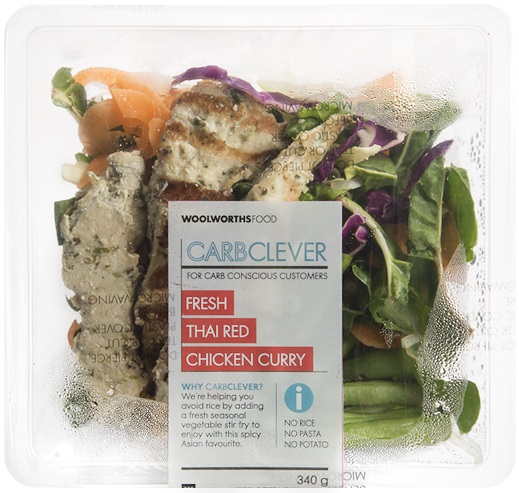
Woolworths is CarbClever
Especially for all you low-carb converts who can’t do without your Woolies convenience — the oh-so-clever retailer has jumped on the banting bandwagon and is offering a range of low-carb meals. The range, aptly labelled CarbClever, excludes pasta, potatoes and rice, and they are already on shelf as I spotted them this weekend.
There are nine meals, a soup and three vegetable dishes, which are being introduced countrywide. Dishes include Thai red chicken curry with a rich coconut sauce and a cauliflower, bacon and cheese bake. Woolies says the range also excludes wheat, grains, legumes and pulses.
“Many of our customers have been requesting easy meals that provide options for their lifestyles,” says Woolworths managing director of foods, Zyda Rylands. “After months of careful testing, we are proud to reveal these ready-prepared meals and accompaniments. As these products are also microwaveable and combine flavours and cooking styles, they should have wide appeal.”
Other flavour-packed meals are smoked pork with creamed cabbage and spinach in a sage cream sauce, and beef meatballs with cauliflower mash, roasted vegetables and tomato sauce. Yum, yum.
If I had a farm, I’d be planting almond trees and cauliflower right now as the use of almond flour and cauliflower as banting staples to replace carbs pushes prices higher in the more affluent neighbourhoods and results in a scarcity of product!
Joy to the world
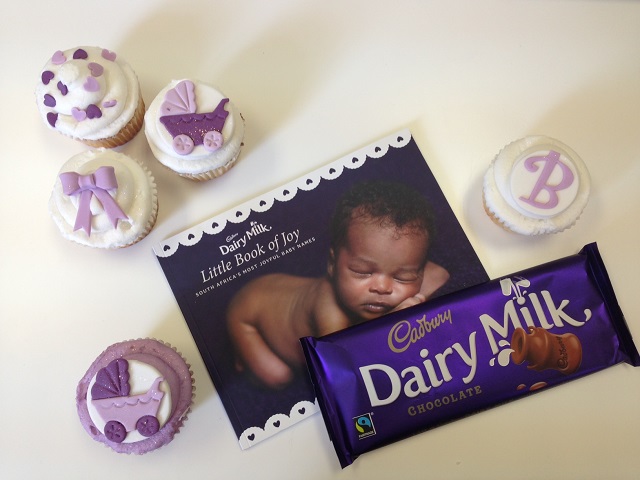
Cadbury has taken its Triplets campaign — featuring the animated triplets in the womb singing with joy because mom was eating a Cadbury’s Dairy Milk chocolate bar — to the next level, asking South Africans to ‘name’ the triplets in the integrated consumer-driven campaign which concluded with a book of baby names.
Select name ideas and entries contributed to the compilation of the Cadbury ‘The Little Book of Joy’ — a collection of uniquely SA names that celebrate the joy of name giving in SA. The book was launched this month at a special event with all the trappings of a baby shower.
In the three months since the campaign launched, the Cadbury Dairy Milk Facebook following has grown by over 900%, mainly due to the public response to the Triplets TV spot and engagement from the ‘Name the Triplets’ Facebook campaign.
With the launch of the book, the triplets have also ‘named’: Thabiso (“one who brings joy” in Sotho), Intokozo (meaning “joy” in Zulu) and Gcobani (which means “joyful” in Xhosa). The campaign will conclude with giveaways of the limited edition Cadbury Dairy Milk Little Book of Joy on the Cadbury Dairy Milk SA Facebook page.
“We were delighted with the passionate and creative manner in which South Africans captured the essence of our message of joy, evident in the heart-warming drawings, the many descriptive name entries and engaging fan art we received throughout the campaign,” comments Meredith Kelly, Mondelēz SA category lead for chocolate.
“South Africans are inherently joyful — we dance and sing to celebrate important occasions — and that’s something the ‘Triplets’ campaign has successfully tapped into. Cadbury Dairy Milk is the trigger to ‘Free the Joy’ that lives within each of us.”
Cooking on air
Philips has launched a new version of its Avance Collection Airfryer XL. The cooking appliance uses Philip’s proprietary Rapid Air Technology, which is described as combining rapid and precisely circulating hot air with an optimal temperature profile and unique ‘starfish’ design to cook meals.
The main health boast is that the appliance uses up to 80% less fat during cooking — using air instead of oil.
The Avance Collection Airfryer XL can ‘fry’, grill, bake, roast and cook a wide variety of foods, from brownies to whole chickens and beef fillet. The new model sports 50% greater capacity at 1.2kg yet still retains a compact size.
As well as featuring dishwasher-safe and non-stick parts, the Avance Collection Airfryer XL comes with a smart preset mode that remembers your most-used settings, automatic shut-off and digital touch panel controls. The set also includes a recipe book.
Winters Drift’s warm welcome
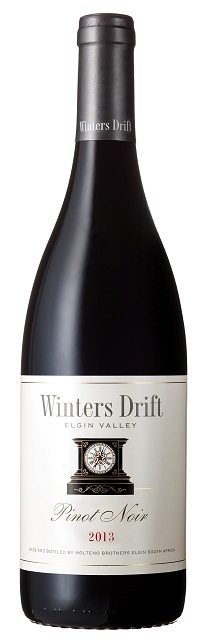
The Winters Drift Pinot Noir 2013, the second vintage but the first commercially available vintage from this Elgin producer, has been awarded a Double Gold at the 2014 Michelangelo International Wine & Spirits Awards. This accolade follows its recent Top Six award from Classic Wine.
The Winters Drift wines are grown on the historic Glen Elgin farm. The vineyards are cared for by viticulturist Christiaan Cloete, and the wines are made by Koen Roose at Spioenkop Wines in Elgin.
Tasting notes: this wine is described as delivering everything you would expect from a young Pinot Noir, including an abundance of red cherries, varietal spice, truffles, forest-floor notes and subtle oaking from 11 months in first and second-fill French oak. The palate should be complex and satisfying, with a softness that is unique to Pinot Noir. It is meant to age well over the next three-to-five years.
Shelf Life is a weekly column by Louise Marsland on MarkLives. Tweet new product, packaging and design launches to @louise_marsland or email her at louise.marsland at gmail.com. Want to sponsor Shelf Life? Contact us here.
Louise has written about the FMCG, media, marketing and advertising industry for 20 years as a former editor of magazines AdVantage, Marketing Mix and Progressive Retailing, as well as websites Bizcommunity.com and FMCGFiles. She also edited the weekly Wednesday Media & Marketing Page for The New Age newspaper. She is currently the publishing editor of industry trendwatching portal, TRENDAFRiCA, for consumer insight, research and trends in Africa; a regular industry columnist and speaker; a consultant on content strategy; and contributing editor to Fast Company South Africa magazine, which has just launched in South Africa.
— MarkLives’ round-up of top ad and media industry news and opinion in your mailbox every Monday and Thursday. Sign up here!
by Paul Jacobson (@pauljacobson) Conventional wisdom in the marketing industry seems to be that better targeted ads are more effective. It makes sense. If you can present an ad to a consumer whom you believe is actually interested in your services, surely that consumer will be more inclined to purchase from you?
A prominent example of this thinking in action is Facebook, where ads are customised based on your Facebook activity and profile data. If you start posting about your love for sushi and share that love in your profile, you can be sure you will soon see ads for sushi products and restaurants alongside your News Feed.
Image courtesy of Stuart Miles at FreeDigitalPhotos.net
Long argued
One prominent advocate for better ad targeting is Jeff Jarvis, a prolific writer and journalism professor based in New York. Jarvis has long argued for the benefits of better ad targeting to improve the quality of the ads that power the many services you use each day.
Jarvis recently wrote a post titled “Unoriginal sin” on his blog, Buzzmachine, where he argued for more transparency when better targeting ads. He describes part of the problem with current ad targeting methods:
“That is because advertising is still bought the way it is on billboards, TV, and pulp — on volume, by the thousands, by the eyeball-ton — so that marketers can just keep shoving their unwanted messages at us.
“When those advertisers do smarten up a little they start to target, but they do that dumbly, too. Here’s the second stupidity. The advertisers — and their serpents: agencies and media and technology companies — creep out their own customers by collecting data on them without being open about it, without revealing the reason and the benefits (free content! less noise!), without giving them any control over the data, and then by following us all around the web haunting us with that stupid pair of boots we looked at on Amazon once.”
Go the other way
If anything, Jarvis argues for better, more-informed targeting models, but what if marketers went the other way instead and didn’t use more than superficial personal information for their ad targeting?
I recently had an interesting discussion with Adam Oxford, editor of tech news site htxt.africa, about the benefits of not targeting ads. Our discussion touched upon a couple things I have been thinking about in the context of privacy and marketing which are worth considering.
To begin with, when you only target ads based on consumers’ personal information, you’re creating a sort of confirmation bias and your consumers remain oblivious to all the other options that may appeal to them, were they aware of them. It is a similar argument for not having consent-based mobile marketing which a client once put to me.
He argued that if his company were limited to only marketing to consumers who specifically opted in to receive marketing communications from his clients, they would likely never discover a range of products and services that may add tremendous value to their lives.
Reinforces existing without exposure to alternatives
The problem with a strict opt-in model is that it reinforces your existing preferences without exposing you to alternatives.
Fortunately, the Protection of Personal Information (PoPI) Act allows marketers to introduce themselves to new potential customers using a one-time information message inviting them to opt-in to further marketing communications. The act also implies consent based upon an existing relationship with a consumer, provided the consumer is given opportunities to opt out at various stages.
Another argument against targeted ads is that it may give marketers an option to circumvent the PoPI Act altogether. This is appealing from the perspective of being able to avoid the anticipated monetary and resource cost of complying with the act if this isn’t necessary. The reason that this may be possible is because “personal information” is defined as “information relating to an identifiable, living, natural person, and where it is applicable, an identifiable, existing juristic person…”
PoPI may not apply
The act regulates “the processing of personal information”. If a marketer is not processing personal information, the act may not apply.
Of course, unless a marketer delivers its products using some sort of anonymous collection point and receives payment solely in cash or Bitcoin, this isn’t going to be a complete answer, but what if the initial enticement weren’t dependent upon targeted ads which leverage personal information of some kind?
What if marketers took a few steps back and advertised their clients’ products and services in more generic terms, exposing consumers to new products and services in the process?
For one thing, these marketers may not require consent to market to these consumers because they wouldn’t be using personal information. Sure, they may begin processing personal information when a consumer responds to an ad but consent is easier to manage in that context.
In the meantime, marketers expand the possible choices available to consumers and sidestep the common “technopanic” that occurs when consumers are surprised by unexpected uses of their personal information for marketing purposes.
But at what cost?
So, yes, targeted ads have proven to be pretty effective and lucrative for the brands that use them — but at what cost? Perhaps brands should consider not targeting their ads again?
by Inge Hansen(@mecnotabene) According to Nielsen Ad Dynamix, television advertising spend (excluding self-promotion) in South Africa has been on a steady increase for the past few years.
In 2013, this increased by 11% from 2012 to a total of R17.9 billion which, although being a ratecard figure, speaks to the value that advertisers place on this high-reach medium as a part of their media mix. However, whether this is a real increase can be debated, thanks to continued fragmentation, package offerings and limited reporting of new satellite providers ie Starsat.
Changes to methodology
We are also sitting in a position where multiple changes to methodology has resulted in performance being excluded as an inflation metric in the official industry numbers.
In the US, a typical hit show has an average cost-per-thousand (CPT) of US$35, with advertisers clammering to place their wares during this timeslot, just to be associated with the prestige it offers.
New to South African screens, but in its second season in the US, is The Blacklist, which commands a 30” cost of US$285 975 for premiering episodes. If this seems pricey, it’s nothing compared to NBC’s Sunday Night Football, where advertisers pay US$627 300 for their 30”advert, more than any other primetime show on American broadcast television.
A disproportionately valuable space
What with US TV audiences in decline, it is becoming difficult for networks to justify increasing costs and a steadily rising CPT on even the most popular shows. In some cases, however, shows are targeted to such an elusive demographic (ie young males who watch The Walking Dead) that placing brands into that environment becomes a disproportionately valuable space.
The SA equivalent to this would be Carte Blanche, which airs during the coveted Sunday night timeslot just before the M-Net 8pm movie. Past performance and programme quality have established a superior perception of this show and we can see that advertisers are, in turn, paying a premium for this property.
Using September 2013 vs September 2014 figures against all adults (TAMS), we can see that Carte Blanche has experienced slight viewership declines year-on-year, which did not lead to a decrease in rates but rather an increase of 4.5% in 2014. This is an example of local programming creating the perception of value despite CPT for September 2014 standing at a ratecard average of R244.
A demand for local programming
If we look at the top 10 most-expensive programmes on SA TV, we see a demand for local programming which is viewed primarily on free-to-air channels, and it is no surprise that the top spot was held by Generations. The exception to this is sport, which brings with it real-time viewing to a specific consumer segment, for special-occasion viewing.
Many of the most-expensive programmes in the top 10 fall within the average primetime CPT (using September 2014 ratecard data) of US$4.37 (R48.26), which is calculated across a mix of free-to-air and pay-TV channels. While these top-rated programmes do come at a price which is hefty for smaller budgets, it can be a useful component of driving awareness as quickly as possible.
Top 10 most-expensive programmes on SA TV
Day
Date
Station
From
To
Plan Title
Ratecard Cost
Plan 000’s
Plan CPT
Mon
2014/09/22
S1
1959
2031
Generations
R 230 000
7978
R 29
Mon
2014/09/22
S1
2031
2058
Mfolozi Street
R 160 000
5423
R 30
Tue
2014/09/23
S1
2032
2101
Soul City
R 160 000
4975
R 32
Wed
2014/09/24
S1
2034
2103
Sticks and Stones
R 160 000
4154
R 39
Thu
2014/09/25
S1
2033
2128
Ihawu
R 160 000
3762
R 43
Fri
2014/09/26
S1
2031
2059
Shreds and Dreams
R 160 000
4465
R 36
Sat
2014/09/27
SUP1
1649
1851
Rugby Championship 2014: South Africa Vs
R 150 000
569
R 264
Wed
2014/09/24
S2
1828
1859
7De Laan
R 120 000
1487
R 81
Wed
2014/09/24
S2
2101
2134
Muvhango
R 95 000
3716
R 26
Sat
2014/09/27
SUP1
2254
2258
Absa Currie Cup H/L
R 95 000
40
R 2 375
Source: Telmar
Again, perceptions around primetime drive cost… Although advertisers start paying this primetime premium from 5pm, as defined by media owners, in this day of traffic congestion and post-work errands, the real audience lift starts closer to 6/6:30pm.
A disruptive year for TV
After a disruptive year for TV, it has been difficult for media planners to create behavioural pictures of their target audience and buy effectively against this to deliver results to client. Our data has experienced a population update, a major sports event in the form of the 2014 FIFA World Cup, new channels, an SABC lineup adjustment and, more recently, scheduling changes which include a hiatus of the most popular primetime soapie on TV.
These changes have a knock-on effect throughout time-bands and channels as viewers alter their habits in response. Coupled with this is how rates for new and untested channels are calculated, such as with new pay-TV channels, M-Net Edge and Vuzu Amp, which began in October.
In September, the channels which these replaced (M-Net Series Showcase and M-Nnet Series Reality) had primetime rates which started at R3000, with the new channels now commanding a primetime spot rate of R8500+.
Remains to be seen
Despite introductory packages, it will remain to be seen if these rates can be justified against the audience that the content will attract. The result is that media owners will need to continue to adapt to provide quality programming that continues to hit the viewership mark, and not just the budget.
Perhaps, then, the recent announcement from MultiChoice — which revealed that due to the rand’s weakness it might be necessary to ‘scale back’ by cutting non-performing channels from its bouquet, and thereby reducing audience fragmentation — is welcome news for planners.
Following two years at Media24 scrubbing for insights within the magazine division, Inge Hansen joined Nota Bene as an A&I analyst in March 2013. Working across multiple clients, including FMCG, alcohol and petroleum, she has the luxury of working with teams to develop robust insights that drive strategy while keeping abreast of media trends the world over. Inge loves having her pulse on the media landscape but far prefers raising her pulse mountain-biking on weekends. She contributes Thinking TV, a monthly analysis of South African TV viewership figures, to MarkLives. Follow @mecnotabene for regular media updates.
— MarkLives’ round-up of top ad and media industry news and opinion in your mailbox every Monday and Thursday. Sign up here!
by Oresti Patricios (@orestaki) This week I am nominating a digital/social media campaign for #AdoftheWeek. It’s called “Get Me to 21” and it’s an unusual concept in terms of marketing and publicity. The appeal is for organ donors to sign up, because Jenna Lowe needs lung-replacement surgery, and there are currently no donors available.
Yes, it’s a good cause, and what makes it special is not just the way in which the campaign is centred on a smart, young girl; while her face personalises the plight of people awaiting replacement organs, this campaign is about much more than this.
Lowe Cape Town online video for the Lowe family: “You are invited to Jenna’s 21st birthday party #getmeto21”
Planning her 21st
On the home page of microsite www.getmeto21.com, we are greeted first by a video of Lowe, talking directly to camera. She has an oxygen line under her nose, she seems to have a little trouble breathing, yet she is upbeat and engaging. She tells us she is 19, and she’s planning her 21st birthday party.
The basic message is that she’s inviting you to the party (whomever you are), if you sign up for organ donation. She finishes off by saying, simply and without pathos, “Because, in order to make it to 21, I’m going to need new lungs.”
jennalowe.co.za homepage
Presented without sentimentality
When I heard about the campaign, I was prepared for a message that tugged at the heart strings, that manipulated my emotions with a bit of guilt. But it does none of that. Yes, it’s a message that gets you in the gut, but it’s presented without sentimentality.
Lowe suffers from a rare condition known as Pulmonary Arterial Hypertension, meaning that the veins in her lungs become progressively more constricted and don’t allow proper blood-flow.
The result is decreased oxygen in the blood, and enlargement of the heart due to the increased strain of pumping blood through the lungs.
While the severity of cases may vary, in Lowe’s case the choices are limited. Medical treatments are palliative, but in the long run she will need a lung transplant.
50 000 people needed to sign
In South Africa, the number of donors is limited: the Organ Donor Foundation of SA (www.odf.org.za) says it needs 50 000 people to sign on as donors to meet the current needs, as there are some 4 300 people waiting for organ donations of one sort or another.
This year, signatures were being added at the rate of about 1 500 per month, for the first part of the year, and then showed an increase from July, with 5 727 new signups in October. On Lowe’s site, almost 3 000 people have signed up through a form on the site, a figure that keeps climbing — it clicked over a few notches while I wrote this — and may well have passed the 3 000 mark by the time you read this.
Organ Donor Foundation homepage
The hashtag #getmeto21 has been something of a viral hit on Twitter. Another hashtag that the Organ Donor Foundation has been using is #save7 — which refers to the fact that up to seven lives may be saved or assisted by one donation.
A real dynamo
Lowe has proven herself to be a real dynamo, despite the debilitating effects of the disease. She earned seven distinctions in matric last year, and was deputy head girl of her school. On Monday, she was selected as Lead SA’s youth hero, and she has continued to campaign for awareness of her condition and the plight of people awaiting organ donations.
Together with her younger sister Kristi, Lowe wrote a song to try and raise awareness of her condition and funds for her medication. Teaming up with local band Good Luck, they produced a single called “I Need More Time”, which went to number 3 on the iTunes SA download chart in one day. For more, go to www.jennalowe.co.za.
So who’s behind it all?
Lowe + Partners Cape Town’s talented team, led by Kirk Gainsford, originally came up with the idea for the campaign on behalf of the client — in this case, the Lowe family [the sharing of the name is merely a coincidence — ed-at-large], who seems to have been involved in branding, design and storytelling, both commercially and relating to causes — and Sascha Ruppert and his team at GSDH conceptualised the microsite and built it. Egg Films assisted with the video production.
Lowe + Partners CT is also the agency for the Organ Donor Foundation.
Some other companies that have contributed include John Brown Media, singer Kim Kallie Banner, TV production company Red Berry, 94.5 KFM, talk radio station 702, The Forge Web Creations, Independent Newspapers and Matthew Pearce.
A powerful lesson
It’s a powerful lesson of how a group of people can make a difference, if you understand how to use media, design and branding.
Using the low-cost tools of social media, Lowe and her team have managed to create a campaign that has made an important impact on people’s lives, and one that will be with us for a while. The thinking is smart and well-executed; the message is profoundly engaging; and the effort appears to have created a forward volition with momentum.
All hail to Jenna Lowe and her team — may they go on with strength.
Full credits
Client: Lowe Family (Jenna Lowe’s family)
Agency: Lowe Cape Town
Executive creative director: Kirk Gainsford
Copywriter: Erik Salamon
Art director: Dane Alexander & Melissa Raath
Producer: Riska Emeran
Client service: Grayson Rainier
Production house: Egg Films assisted with the YouTube film
Director: Dani Hynes
Production house producer: Kerry Horsford
Digital company: GSDH
Creative director: Sascha Rupert
Designer: Sophie van Duivenboden
Front-end developer: Sophie van Duivenboden & Richard
Back-end technical development : Lasse Manson
Ad of the Week, published on MarkLives every Wednesday, is penned by Oresti Patricios (@orestaki), the CEO of Ornico, a Brand Intelligence® firm that focuses on media, reputation and brand research.
If you are involved in making advertising that is smart, funny and/or engaging,
please let Oresti know about it at info@ornicogroup.co.za.
— MarkLives’ round-up of top ad and media industry news and opinion in your mailbox every Monday and Thursday. Sign up here!
by Craig Page-Lee (@cpl_ignite) I’ve previously covered the topic of the sheer physical size of Africa and the magnitude of the opportunity for brands operating there. Both are structured upon the concept of “numbers” and I have therefore decided to expand upon this and add another layer to the conversation, namely that of “measurability” and “information by numbers” on the continent.
Looking at recent report on global population numbers (dated July 2014) and obviously taking into account that there are a multitude of reports that provide different facts, figures and points of view, I reference the numbers with caution, but nevertheless have found some interesting insights that I want to share before expanding on the topic of measurability.
Image courtesy of ponsulak at FreeDigitalPhotos.net
The Total Global population is estimated at 7 264 billion people, with the top three countries, China (1 367bn), India (1 260bn) and the US (318 816m) making up 40.4% of the world’s population.
What is incredible to note is that Nigeria (178 517m people) makes up 2.5% of the world’s population and when combining South Africa (54 002m), Tanzania (44 929m), Kenya (41 800m), Uganda (35 357m) and Ghana (27 043m) — all countries are listed in the Top 50 nations by population size — the collective number (381 648m) makes up 5.25% of the world’s population.
An enormous opportunity
It is further estimated that, by 2050, the total population of Africa will make up nearly a quarter of the world’s population. This presents an enormous opportunity for brands to connect with consumers on the continent.
A recent McKinsey & Company report on Global Consumer Spending Growth predicts a CAGR for Middle East/Africa of 13% by 2017. Then consider that, by 2020, it is estimated that 50% of all Africans will be middle-class and that mobile penetration on the continent is expected to reach 84%. How can brands not want to be present on the continent?
This is where the topic of measurability really comes to life, especially when many markets on the continent remain unregulated, where media platforms are fragmented (in excess of 173 radio stations in Kenya alone, and 15-30 TVCs per break and in excess of 187 ads in a daily newspaper in another country on the continent) and where the highest-reaching TV channel in a particular country could possibly be the digital-screen network installed across all of a particular retail brand’s stores in that country.
Points to consider
There are:
in excess of 11 000 billboard faces (3mx6m and larger) in South Africa — excluding all streetpoles and small formats, all retail malls and all digital networks within airports and transport nodes and all mobile/moving media — and delivered by over 170 media/operators
in excess of 1 300 billboard faces in Uganda — predominantly in the cities of panels in Kampala, Entebbe and Jinja
in excess of 1 200 billboard faces in Tanzania — predominantly in the cities of Dar es Salaam and Arusha
in excess of 2 000 billboard faces in Kenya — predominantly in the cities of Nairobi, Mombasa, Nakuru, Voi, Ukunda, Malindi, Naivasha, Eldoret, Kisumu and Kisii
in excess of 10 100 billboard faces (3mx6m and larger) in Nigeria — predominantly in the cities of Lagos, Abuja and Kaduna and delivered by over 120 media owners/operators and 57% of the investment being made in Lagos.
This presents over 25 600 opportunities to reach consumers when out of home and 25 600 opportunities to deliver a clear call to action for brands using these faces in these economically active countries on the continent. Again, how can brands not want to use this medium on the continent?
Now consider that the Nigerian OOH spend has grown from US$59.1m in 2008 to around US$177.8m in 2013, with the top two sectors using this medium being telecommunications and beer.
Top four brands
The top four brands spending in the region are MTN, Glo, Etisalat and Airtel. The collective size of the market for Kenya (US$33m), Uganda (US$27m) and Tanzania (US$30m) is US$90m and the value of the total OOH market in SA is in the region of US$35m* — including previously unreported media income from a number of OOH platforms.
In Nigeria, OOH accounted for 23% of national advertising spend SOV in 2013 versus 47% for TV; in SA, the OOH* accounted for just over 10% of national advertising spend SOV versus about 45.4% for TV in 2013.
Digital OOH is available in the top 10 cities in Nigeria, including Lagos, Abuja and Port Harcourt, and this accounts for about 27% of national OOH advertising spend, a significantly higher allocation to the platform compared to SA, where huge investments have been made by the likes of Continental Outdoor Media and Primedia Unlimited in the roadside format, which will see a rapid increase in the amount of budget being allocated to this format in SA. In Kenya, DOOH accounts for less than 5% of national OOH spend and less than 2% in Tanzania and Uganda.
How do we prove the efficacy?
As detailed as the information is on spend value and SOV, the truth is that there is not a single country on the continent that can produce a measure of effectiveness for every one of the networks within its offering. So how do we then prove the efficacy of this far-reaching medium when no level of formal data-collection exists?
In most instances, OOH spend measurement is limited to past 7 days exposure in AMPS survey, or from bespoke on-the-ground billboard-by-billboard audits that take a huge amount of time and financial investment to complete across the vastness of Africa.
You may say that the digital networks will allow a greater level of measurability — certainly, but only if the campaigns are integrated and are developed with a strong call-to-action, driving consumers to mobisites or other interactive platforms that have been directly influenced by the message on these billboards. It is important to tailor messages across the regions to establish efficacy of the medium in a particular region vs another.
Stand up to interrogation
Advertisers demand measurement and ROI metrics that can stand up to interrogation by their executives, measurement on the real impact of campaign messages and beyond just numbers that list the frequency of an advert being aired — or seen, in the case of billboards.
Advertisers want insights on outcomes and not outputs, insights on conversation starters and sales conversions. This is nowhere more apparent than in Africa, as new brands embrace the opportunities in a low-margin, high-volume market. We do still have some way to go before this become a standard for any post-campaign reporting, though.
Creative agencies need to heed the call to create integrated campaigns that respond to the OOH medium appropriately; and produce relevant and purposeful messages that enable participation and lead consumers to a digital point of engagement or into retail stores where genuine measures can be derived.
Creative and media agencies need to work together to ensure that the industry gets to a point where we produce the metrics that actually measure if consumers are participating in the channel in an optimal way and not just viewing the channel.
Learnings from European counterparts
Technology obviously plays the biggest role in this regard, with the high levels of mobile penetration and access to the internet through mobile handsets rising at a rapid rate on the continent.
Another way to fast-track this topic is to take some learnings from what our European counterparts are achieving where partnerships have been established between mobile operators and media owners — this is not any different to the deals that digital agencies are making with the likes of Google and Facebook.
Mobile operators are able to identify where their customers are (location-based information), what search activity is taking place when these customers are out of home (only what categories are being searched as Protection of Personal Information Acts will not allow the granular details to be revealed). Then create a layer of hotspot proximity to billboards and we can develop totally integrated campaigns using the combination of these key platforms to allow advertisers a much more accurate opportunity of connection and engaging with consumers.
With data at the epicentre of all this, we can surely prove value for every marketing cent spent.
The biggest question of all
Who will be first out of the starting blocks in the race to mine the new “gold” of raw data on the continent? The media owners? The media agencies? The telecommunications companies? Or possibly a combination of all — something that I believe will be best for the industry?
Craig Page-Lee (@cpl_ignite) is the group managing director of Posterscope South Africa. He has over 21 years of working experience across the disciplines of architecture and retail design/brand communications and marketing management/advertising and media, across 11 pan-European and six pan-African regions. Craig’s monthly column on MarkLives, “Beyond Borders”, focuses on doing business in various African markets. Don’t forget to tune into his #eBizRetail slot on www.ebizradio.com.
— MarkLives’ round-up of top ad and media industry news and opinion in your mailbox every Monday and Thursday. Sign up here!
by Tom Fels (@thomasfels) The advertising equivalent of a Cup Final, great pitches are a wonderful example of our industry at its finest, with equally paired rivals slogging it out for the spoils. A well-orchestrated process offers the potential client adequate agency exposure to assess chemistry fit, as well as strategic and creative abilities, while all parties are implicitly committed to the partnership on offer. In this context, pitches are a deeply valuable tool.
The problem, however, is that the pitch mechanism is increasingly being abused by clients looking to mitigate their risk by pitching projects out to multiple agencies with no commitment of ongoing business. Often with no compensation on offer to unsuccessful agencies, it is a win-lose situation that is rapidly undermining the value of the advertising product, and the role of agencies in the marketplace.
There’s an app for it
I was astounded to see the launch of a new pitch app in the Netherlands that assists clients to select a roster of prospective agencies. Claiming to be like “Tinder for marketeers”, “Pitcher” features agency profiles that can be screened and selected or dismissed with the simple flick of the wrist.
It sounds like a great piece of tech — and that was not the cause of my surprise, but rather that it’s been built by an agency, because to my mind it is an accelerator of the second type of pitch culture in which clients are trading multiple agencies’ time, expertise and energy for short-term gain.
Un-checked, this behaviour will increasingly result in diminishing returns for agencies everywhere.
Does the traditional approach work?
As was recently highlighted at the 2014 Loerie Awards by Xolisa Dyeshana, creativity and smart business are the product of a two-way partnership between client and agency. If value-adding creativity cannot sit in isolation of insight and strategy, how can a pitch process enabled by an app for a single project successfully deliver on both short- and long-term brand objectives?
Look no further than the success of long-standing relationships between leading marketing brands and their agencies such as VW and Ogilvy & Mather Cape Town to demonstrate the benefits of effective partnering.
After decades, the agency continues to generate highly relevant and awarded work, while VW remains a powerfully compelling brand. The depth of the brand knowledge the agency must have developed over the course of time is no doubt significant but, as any good agency will do, it has evolved the brand story through many teams of creatives without losing its soul.
My lesson here is that pitches should be geared to courting a partner with long-term intentions, rather than a short-term fling with someone you’ll happily send packing at the drop of a hat.
Brand damage
Marketers who favour regular pitches may be missing a trick, as the two or three weeks typically allocated for a creative response offers little opportunity to absorb the brand before agencies invest significant effort in a creative process which could hit the mark — or miss it by a mile.
On the surface, you’d be led to believe that the agencies are the only ones to lose in this equation. Far from it — clients are equally at risk, exposed to first-base work and higher per-project costs, as well as an environment where credible challenge may fall on deaf ears due to a lack of established trust and where a big idea may seem an idea too far.
Most notably, clients are at risk of brand-fragmentation as a result of short-term planning and implementation with multiple partners who are not involved in, or aligned to, the long-term vision of the brand.
Pitch for the long run
The communications landscape is an interesting mix of business relationships between clients, agencies, suppliers and partners. At its very core, advertising agencies deliver a human product that relies on engagement, collaboration, salesmanship and deep insight.
The prospect of trivialising this through an accelerated culture of frivolous and short-lived relationships can only harm the work, as well as partnerships that may have otherwise been truly remarkable.
With a decade of local and international experience in leading brand consulting, design, shopper marketing and integrated advertising roles, Tom Fels (@thomasfels) has gained a deeply relevant understanding of the dynamics of agencies. His skills are put to work daily as group managing director of Publicis Machine. He contributes the monthly “The Ad Exec” column to MarkLives.
— MarkLives’ round-up of top ad and media industry news and opinion in your mailbox every three Monday and Thursday. Sign up here!

 by Russell Southwood (@BalancingActAfr) In this video interview, we talk to Yossi Mlynsky, founder of Alt Tab Mobile, about:
 Russell Southwood is the founder of Balancing Act and the web TV channel Smart Monkey TV, and has been an analyst in telecoms, internet and broadcast in Africa for the last 14 years. Smart Monkey TV aims to capture the energy at the crossroads between African culture and technology. MarkLives is syndicating content from Smart Monkey TV on a weekly basis for the column “Smart Africa TV”.