by MarkLives (@marklives) Faheem Chaudhry has rejoined the M&C Saatchi Abel Group as managing partner of the Johannesburg agency, where he teams up with the existing leadership team of Neo Mashigo (group chief creative officer), Adam Weber (executive creative director JHB) and Makosha Maja-Rasethaba (head of strategy JHB).
L-R: Neo Mashigo, Adam Weber, Makosha Maja-Rasethaba and Faheem Chaudhry. Supplied.
Chaudhry previously worked at M&C Saatchi Abel, between 2013 and 2016. before moving to M&C Saatchi London as a senior strategist and, finally, as strategy director. While at the M&C Saatchi London agency, he co-founded Black and White, a strategic consultancy within the PLC.
“Triple homecoming”
“This feels like a triple homecoming for me: returning to the city I grew up in, alongside a group of partners I admire and trust, in the agency where I spent my formative years,” comments Chaudhry. “Gaining global experience at M&C Saatchi’s HQ in London for the past few years has been fantastic but, ultimately, the pull of home and completing the M&C Saatchi Abel Johannesburg leadership, alongside Neo, MK and Adam, was too strong.
“I believe South African creativity is going to enjoy exponential success over the next decade. Trevor Noah, DJ Black Coffee, Dr Ester Mahlungu, Nelson Makamo, Trevor Stuurman, among others, are all building South Africa’s cultural capital on the world stage. A huge commercial opportunity for organisations will be to stake their claim in, and contribute to, South African culture. It’s the perfect climate to build brands that are locally transformative and globally admired. The chance to work with our people and in partnership with our clients to drive growth for their businesses and, for the SA economy, is a challenge I find both critical and irresistible.”
by Bradley Elliott (@BradElliottSA) From the rise of growth hacking, to digital transformation and the automation of marketing, being a chief marketing officer (CMO) has changed. Given the massive pressures today’s CMOs face, how do brands better understand their customers? How do they use technology for competitive advantage? We talk to Tim Allemann, Fedgroup CMO, in this second Only Connect podcast.
Full podcast transcript
Bradley Elliott: Welcome to month two of Only Connect, a MarkLives.com podcast. I’m Bradley Elliot, your host, the founder of Platinum Seed and Continuon. This month I’m talking to Tim Allemann, CMO of Fedgroup. For those of you don’t know, Fedgroup is the largest independent financial services provider in South Africa and they’re doing some really innovative stuff in the world of both marketing and financial services and beyond — in fact, they refer to themselves more as a technology business now, than a financial services business. And Tim will be talking to me about what marketers want in this day and age, given the big hype word around digital transformation, AI, IoT [internet of things], data. What does it mean for marketers? What does it mean for marketing departments? And, more importantly, what does it mean for agencies and agency bosses?
I’d like to first start off asking you a bit about your background: How did you start your journey and finally land up at Fedgroup?
Tim Allemann: I started off in the agency world, and spent about 20 years in the agency environment — really in the strategic marketing side of things. I found I was getting more and more into branding strategy. Eventually, I got a bit tired of the agency world, and went off on my own, doing marketing and strategy consulting to clients directly, as well as through some agencies. One of my clients that I was consulting to that stage was Fedgroup. I did quite a bit of consulting to them; absolutely loved the culture and organisation. Grant [Field], the CEO, eventually convinced me to join full-time. And that’s where I’ve been for the last two years.
BE: We read a lot of hype around AI, IoT, businesses going through digital transformation journeys, and the Fourth Industrial Revolution, etc. Personally, [I] believe that a lot of it is just nice, hyped buzzwords. But it’s good to get people thinking about these things. Talk to me a little bit about what what Fedgroup’s doing in terms of putting technology at the core of its business.
TA: We’re an interesting business in that we have traditional product lines sold through traditional channels, a lot of group- and B2B-based business — traditional financial services-type stuff. But, increasingly, we are expanding into far more innovative and retail areas of financial services, and really trying to stay ahead of the curve. So, we’re focusing a lot on innovations, new technologies, looking at new target audiences, needing to look at new channels to market, in order to service those customer segments. Increasingly, we’re looking at going to market with products that aren’t necessarily in the market as yet, and really giving customers out there something new to look at.
Better value, better options. So we, for example, recently launched something last year called Impact Farming, which is a completely different financial services model. Essentially, it’s direct ownership in assets, as opposed to traditional financial structures and funds. We tried to strip out the complexity. This gives us a far more tangible, direct contact with customers from a retail-type environment. We’ve actively embraced innovation in that concept but, from a product perspective, as well as in the use of technology. So, we have consciously made it an app-first product, which introduces its own complexity but also a lot of interesting dynamics to the environment. And along with that, I think we’ve put a lot of technology behind the platform as well as well the app.
So, at its core, Fedgroup actually operates off one central technology platform or system, which is different, I guess, to many of the bigger financial services companies out there that are operating on these multiple legacy systems that don’t speak to each other. We have one system that speaks to everything across the business, it plugs into everything externally — Home Affairs, SARS, the banks, etc. It has a single-view customer, where we can see what’s going on across the business. We have immediate access to data; we know exactly what is going on in the business in terms of sale, in terms of customer care, in terms of phone calls dropped, etc. So that’s the core that we operate the entire business on — this platform. We built the app on that same platform. So, essentially, we have this amazing system operating our business but now the app also has this backend off which it’s based. Which means that we have immediate access to customer information: we know exactly what’s going on, every segment of the day. And we can use that information to plan accordingly.
We’ve also plugged a bunch of other applications into the platform. We’re not necessarily trying to develop everything from scratch ourselves. Obviously, there are platforms and [people] out there who do certain things really well — these global businesses, these global software businesses and platforms, that do certain areas of the business fantastically — and we plug into those through APIs and so on. So, I think for us, we have a combination of developing our own technologies, where appropriate, and also plugging into best of breed where appropriate, and integrating those into our solutions.
We have particular interest in a number of technologies we believe are going to have an increasing play in the financial services sector and beyond. So, for example, technology such as IoT, AI and machine learning, peer-to-peer, and fintech. A lot of those will be plugged into as well. For example, we have formed our own IoT company that operates as an individual business on the side. We have a 50/50 shareholding in that business, that [is] actually plugged directly into the Impact Farming platform for example. We have formed an AI and machine-learning business. So, once again, we have a shareholding in that; it operates as an independent business but also plugs into our existing businesses, and also into the Impact Farming platform. So, we’ll use, for example, that machine-learning resource to do a lot of the analysis, in terms of what’s going on in the app, what’s happening in terms of customer behavioor and usage. It also gives us insight into how to further develop the app — using predictive learning to provide better UX and UI for our customers going forward. So, whereas Fedgroup was a really traditional financial services business, probably five years ago, I think at the moment we more consider ourselves a technology company that happens to have about 10 financial services licences.
BE: You spoke about putting technology at the core of your business, which you seem to have done. Everyone focuses on the technology, but there’s obviously a huge cultural shift that that goes along with that. Last month, I interviewed the head of Uber Eats in South Africa, and our whole conversation was on data and how to use that to become more customer centric. I think you touched on that — having a single view of customer is so important. And it’s something that a lot of the really big corporates still can’t seem to get right, because everything seems very siloed. So, making those initial technology decisions, is really, really important in terms of how you can then gather that data, which goes into IoT and AI and prescriptive and predictive analytics. How has this changed your own role, and that of the CMO, from where it might have been traditionally? TA: Whereas we formerly had a very traditional financial services business, we can now operate in multiple areas. Generally, in the past, marketers and CMOs operated perhaps a lot more out of intuition, gut feel, shooting in the dark and hoping that you can hit something. What data and access to information [have] given us is, perhaps, a lot more certainty, through access to information. That allows us two primary benefits. The one is it allows us to more accurately define the problem or opportunity that needs solving, or that we can capitalise on. Because obviously looking at the data, looking at information, one can isolate what the actual issue is, or “the what” more easily. Secondly, what tech allows you to do is it gives you more weapons in your arsenal, more possible solutions, in terms of how to address customer needs, or capitalise on those opportunities going forward. In a nutshell, the data and information [give] you just a bit more certainty, and a bit more direction, as opposed to always just shooting from the hip and hoping that you had the right solution.
BE: I think it’s also made marketing departments a lot more accountable. Traditionally, marketing would go to the CFO, ask for a budget, and come up with their strategy. Come the end of the year, the questions are asked — how has production done, how has sales done? Then, when it comes to marketing? “Oh, you [people] put up a couple of billboards; you run a TV campaign.” But it’s very hard to measure impact. The result has also meant that marketing as a business function has become more measurable, and therefore, there’s more accountability around it as well. Would you agree with that? TA: Ja, I would agree with it. I also think there’s a danger inherent in that: one needs to be careful about not falling into short-termism.
I think far too many companies are focused on the short-term effect. And it is obviously a lot easier to measure short-term effects of marketing than the longer terms. I think one of the challenges of a good CMO, or good marketers, would be to walk that line between lead-generation, short-term sales, short-term growth, short-term measurability of marketing effects, vs always ensuring that one is looking to the end goal, and that one has a long-term view of where one’s going as a company, or what one is trying to achieve with customers, in terms of building the brand. And those long-term growth and sales effects that marketing, no doubt has a massive effect, in terms of achieving, just more difficult to measure. So there has to be that balance in my mind.
BE: My view is that agencies are often guilty of retrofitting insight to an idea, as opposed to being driven by insights themselves. So, are agencies adapting fast enough to what marketing departments and CMOs are really focusing on? TA: I always find it remarkable that often agencies are supposed to be these real lateral-thinkers and breaking-the-mould-type people, yet often they’re pretty stuck in tradition, and the old way of doing things. And, unfortunately, I think egos also get in the way, so what you often may find is that a traditional agency would understand the need for technology, understand the need for other types of thinkers beyond your traditional above-the-line thinkers, may buy a digital agency or may buy tech capability, for example. Then what happens is that bought resource is absorbed into the main agency, into the traditional way of thinking, and is essentially almost forced to toe the party line, as opposed to augment and change and strengthen the overall agency proposition over time. So, for me, these new technologies, these new resources, the new ways of thinking, should be welcomed and absorbed into the traditional models, and seen as in additional weapons in the arsenal, as opposed to threats to people’s livelihoods and careers. They should be tools to enhance creativity and allow for greater certainty, better access to information that allows to enhance creativity, as opposed to being a threat to it.
BE: I think that’s the big misconception, that AI and these sorts of things will take out humans one day, but creative thinking is such a critical skill set that we still possess that technology just can’t keep up with at the moment. TA: Absolutely, I think that is one of the things that agencies shouldn’t lose. I think the flip side of it is that there’s this onslaught of other competitors into the agency realm — the likes of the consultancies and so on. I think agencies need to play to their strengths, and their strengths, generally, lie in the lateral-thinking and creative realm. So, whereas in a consultancy market, giving you a solution based on best practice, or some sort of traditional model, I think where agencies should be coming to the fore is to provide the lateral thinking, the different view of the world, the innovative, never-tried method or solution that the consultancies, for example, aren’t going to give you. I think, too often, agencies are trying to do what these other [people] already do, as opposed to play to their own strengths.
BE: On that note, what do you look for a marketing partner, and what are the most important decision-making factors for you? TA: I think a lack of ego, an ability to collaborate. I think you’re looking for people who are essentially commercially minded. I’m not talking about everybody within agencies, but the agency leaders that you engaging with need to be commercially minded; they need to be business people; and they need to understand the commercial intent of the organisation, including, obviously, the client — that their solutions need to have a sales result or have a growth result, some kind of commercial results at the end of things. So, they need to understand what the client is looking for, from a commercial perspective, and find creative solutions that achieve that goal, not some secondary goal that happens to have a better creative solution. We need to be solving the commercial problems.
BE: Ja, and I think that’s sort of what I was alluding to, earlier on, when I was saying I think that the role of marketing has changed to become more accountable. Agencies can’t hide behind the fluffy metrics anymore, because marketing does actually have a measurable way that it adds to the bottom line now. TA: I guess maybe what I didn’t say, because primarily what I’m looking for in an agency is creativity, I’m looking for a high level of creativity, something that is going to cut through the clutter, that is going to be massively impactful, that is going to create an impact on the customer, is going to be spoken about in the marketplace, is going to generate fame for the brand. So I am absolutely looking for a highly creative solution that is going to stand out from the wallpaper. But the creative solution needs to be focused on solving the commercial problem, or challenge, or opportunity, as opposed to just fluffing some egos.
BE: Do you think we do you think we have the talent in this country to pull that off? Or in general? TA: I do think we have the talent, ja. I think there’s a lot more collaboration needed these days. I’m talking within organisations, as well as within the service providers. So, whereas people, in the past, were happy to go off in their silos and do their little bits and come back to the table, I think the world is moving way too quickly for that, these days. We’re looking for far more agile solutions, far more prototyping, formal design thinking, agile methodology, where we have iterative processes, that can be adapted to change in the short term. For example, even if you just look within organisations that marketers work for, often you need a lot more collaboration within the departments; within the various functions, you need to be aligning the entire organisation to customer-centric thinking, to a marketing disposition, and focus on the world, where the customer is at the centre of everything. But you can’t do it all yourself — you need to rely on other functions; you need to rely on your service partners, at a collaborative level. And I think what marketers are looking for is way more collaboration between the various marketing service providers — there are just too many silos, too many egos at play, that aren’t in the best interest of the brand.
BE: Ja, I could not agree more. As an agency — not to blow our own trumpet — but we’ve always prided ourselves on collaboration. I mean, literally on our wall is written “No egos, no bullshit.” I think a lot more collaboration is needed, and to understand that the pie is big enough to share, and that it also grows, the more you collaborate. And we should be worrying about the end results for clients, not what lands up in our bank account. Because ultimately, now that it’s measurable, the more growth we can prove, from a commercial viewpoint, obviously, if we grow people’s businesses, as marketers, then the pie increases in size, right?
TA: Ja — for example, when we did the Impact Farming launch last year, my big message to all the partner agencies was: this is an opportunity for all of us. There’s an opportunity for the Fedgroup brand, in terms of an innovative platform, putting our product as well as our brand on the map. But it’s equally an opportunity for all the partner agencies.
But, from a revenue perspective, going forward, as well as the creative opportunity where, if we make this work and it works for the brand, and it’s a commercial success, you know, there’s more of it going forward. If we’re all sitting in our silos and just worried about our own bottom line, it doesn’t help anybody going forward.
BE: Just one final note on that point, when you’re talking about collaboration between service providers, I think one thing I’ve noticed is that clients don’t want to, or marketers don’t want to, be the ringleaders, right? They don’t want to have to sit and coordinate everyone. They want everyone to go off and be mature enough to sit down and sort it out among themselves and collaborate naturally, as opposed to them having to be a ringleader, and always bring people around the table. TA: I completely agree with you; I think it’s absolutely fair to say [that]. I think often you sit on the agency side, and you wonder what the hell are clients doing all day. You know, we’re busy, we’ve got a lot going on. A lot going on, that is not necessarily sitting in the comms side of things. And I think you’re wanting, absolutely, to rely on your agencies to act like adults and act in your best interests.
BE: Finally: any recommended reads or podcasts that you listen to? TA: There’s a great book that I’m reading at the moment called Modern Monopolies.
BE: Apparently, I have some inside info that that’s like a must-read for everyone inside Fedgroup! TA: [laughs] Absolutely — we do have some exco reading material, just in terms of aligning us all in terms of where we’re going as a company and I think, if you’re wanting to understand the structure and the business models of future companies, I think it’s a great book to read, Modern Monopolies, just in terms of understanding platform businesses vs old-school, linear-type businesses.
BE: And How Brands Grow? TA: I am an absolute evangelical about Ehrenberg-Bass [Institute for Marketing Science] and [Prof] Byron Sharp. And all the thinking that goes beyond, behind that. I think that any marketer who hasn’t read How Brands Grow, and the subsequent books and papers and research articles, is losing a lot. I think that Ehrenberg-Bass [is] at the forefront of understanding the reality, and the empirical evidence of what is going on in markets, and how to nudge consumers forward.
BE: Be sure to subscribe by hitting the subscribe button below the video. Until next month, keep connecting!
Read more
Marketing Science: How Brands Don’t Grow — marketing scientist, Kevin Gray, asks Prof Byron Sharp of the Ehrenberg-Bass Institute for Marketing Science about key mistakes many marketers are making.
Transcribed using otter.ai and then edited lightly.
The founder of Continuon and Platinum Seed, Bradley Elliott (@BradElliottSA)has created a number of businesses in the digital and technology sectors. He believes that marketing needs to be reinvented so that it becomes more useful to humans and brands. He’s also a collector of fine whisky. Bradley contributes “Only Connect”, exclusively to MarkLives.com. In this podcast, he chats to custodians of the world’s top brands about what matters most to them.
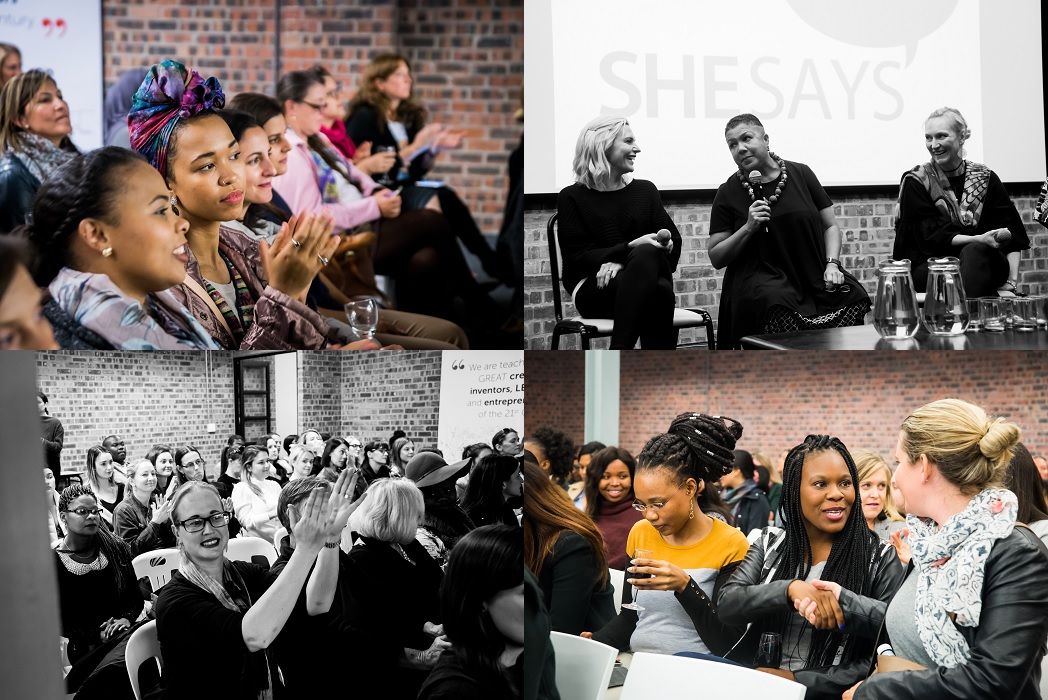
by Carey Finn (@carey_finn) Following in Cape Town’s footsteps, Johannesburg has established the second South African chapter of the global SheSays creative network. The leadership team is passionate about uplifting women and addressing inequality in the workplace, particularly in the media and advertising industries. Here’s how Kirigo Kamore, Lilian van der Merwe, Nicole Adolph and Kgomotso Taje plan to do that.
Credit: SheSays Cape Town.
Q5: What are the biggest obstacles to achieving real gender equality in the workplace in South Africa? Kirigo Kamore: I think there are myriad factors that contribute to the lack of gender equality in the workplace: culture, age discrimination (which my mother is currently facing), unequal pay, policies that don’t cater to working mothers, national regulations that don’t fully hold companies accountable for transparent practices in gender equality and inclusive growth, and the age-old tendency to look at leadership characteristics with a masculine lens, among other issues. In the World Economic Forum’s Global Gender Gap Report, SA ranks 19th, well above the global average, though far from the national ideals stated in the Employment Equity Act.
These are just a few or the issues working women face, but we also need to consider the nuanced differences women of colour face in the workplace in SA, as I wouldn’t paint all these barriers with a broad brush.
Q5: What learnings can you share from other markets with regard to improving equality? KK: For me, Iceland — which often tops the WEF Global Gender Gap rankings and is considered the most gender-equal country in the world according to the report — is always a great case study of how they’ve addressed and scaled gender equality both in the private and public sectors.
Like many cultures, SA culture in all its multiplicities is still rather patriarchal. This continues to influence how people see women within society, as being supporting rather than leading figures, and this mindset is unfortunately carried over into the workplace and in politics. I think Iceland has created policies, that have helped to shape societal behaviour around how women are regarded, by ensuring women are empowered participants of the economy. This includes reducing the gender pay gap, increasing their place in the workforce (Iceland has the highest proportion of women in workforce in the world), increasing access to education for women, and allowing for parental leave for both men and women. Of course, it doesn’t hurt that their prime minister happens to be a woman.
Similarly, Rwanda has transformed societal culture around women, in both the public and private sectors, in such a short timespan, which is quite impressive.
Q5: How can we bring more young women into careers in the advertising and marketing fields? Lilian van der Merwe: As a first step, we can ban the ‘free internship’. It’s the biggest barrier for young talent. The majority of graduates can’t afford to work for free, so the industry is losing great talent before they even enter [it]. This is also why we’re not transforming like we should, why the work we put out is mostly one-dimensional, and why youngsters (-stars) are losing interest in the creative industry.
Secondly, we want to see where we want to go. So, seeing more women in senior or more-powerful positions is the biggest motivator for younger women to pursue a career in these fields.
Q5: What does membership of SheSays entail, and how can women get involved? Nicole Adolph: Becoming a member of SheSays means adding your voice to a collective of powerful women that believe in stopping the gender leadership imbalance and focus on solving the challenges standing in the way.
Being a member means having a voice as an individual and a collective. There are no barriers to entry, and everyone can learn and participate equally. We don’t just discuss women’s issues; we provide a platform that acts as a support structure for work and life in general.
You can become a member by simply attending our free events, and, if you’re feeling generous, become a part of your local chapter’s committee.
Q5: Besides supporting SheSays, what practical steps can advertising, marketing and media organisations in SA take to ensure equal treatment — and pay — in the workplace? Kgomotso Taje: Any organisation that is serious about promoting equal treatment and pay can begin by simply creating educational forums within the company, where employees can access information such as how to negotiate pay, education on discrimination, etc. These could be seminars or workshops held by experts or thought-leaders in the field as a way to equip their staff.
Empowerment comes also in the form of knowledge and education, and, as individuals, we need to create more of these open conversations where we discuss in the media what the fair rate is and stop this vicious cycle in the media industry of withholding information, whether it’s on opportunities or education.
Carey Finn (@carey_finn) is a writer and editor with a decade and a half of industry experience, having covered everything from ethical sushi in Japan to the technicalities of roofing, agriculture, medical stuff and more. She’s also taught English and journalism, and dabbled in various other communications ventures along the way, including risk reporting. As a contributing writer to MarkLives.com, her new regular column “Q5” aims to hone in on strategic insights, analysis and data through punchy interviews with experts in media, marketing and design.
by Jason Harrison. Every company has a big client that gives it its big break. A client who, against conventional wisdom, trusts you from a host of brilliant competitors to take their beloved brand to new heights together. Ours came in the first week of October of 2011. One week later, the handover hard drive from the incumbent agency, with five years of history on it, got stolen from my drawer*.
To say the new client was mad when he found out is an understatement of note. He sent me an absolute bomber of a mail, telling me that I had personally lost five years of his brand’s history in South Africa. He ended the note saying that, if I couldn’t even keep a hard drive safe, how on earth would he be able to trust me with his brand every day?
I was gutted. How on earth was I going to sort this out? So, I did the only thing I could think of. I invited him to meet me for a coffee the next day, where I told him I would make it all right. But making it all right didn’t involve getting the hard drive back — by now it was long gone — it involved something far harder.
A simple promise
When I arrived at the coffee shop, I could see that he was still madly angry. I calmly sat down and said to him, “There is nothing I can ever SAY that will make this better; there is only what I can DO from now on that will show you how committed I am to your business. I am promising you now that I will give you everything I have, every single day”.
To his eternal credit, he lifted his cup, took a sip and said, “And I promise you the same”.
I worked with that client every single day for five years and they were some of the most-rewarding of my career. His job was to stick to global guidelines but he defended great local work with his life. He was hectic in meetings but he was the first to arrive with champagne for our birthday. He pushed us to the limit to deliver excellence but then organised team dinners, after campaigns were done, to say thank you. He stuck to his promise and we remain great friends to this day.
Behaviour is truth
Over those five years, I learnt a very simple lesson in building enduring relationships with clients: Behaviour is truth.
Either you will love them, or you won’t.
Either you will answer that call at 11pm, or you won’t.
Either you will work your whole weekend to help them, or you won’t.
Either you will stay out for that tequila when you really shouldn’t, or you won’t.
Either you will tell them the truth because you care, or you won’t.
And either they will do all of that for you, or they won’t.
Simple, really.
Transactional relationships
I have always said that great agencies don’t make great work. Great clients make great work with great agencies — and great suits realise that you don’t make great work by having a transactional and arm’s-length relationship with your client.
You have to go all in.
All in means less email and more “I’ll pop in rather”.
All in means less paperwork and more “let’s have a chat over a drink”.
All in means less meetings and more “let’s brainstorm in the canteen together”.
Going all in has an unexpected benefit: you become happier, you feel more fulfilled, you learn more and you grow more. Of course, it has to be reciprocal and respectful but most clients I’ve worked with are equally as keen to go all in with their suit partner to make something far greater together, too.
It reminds me of a quote I recently saw: “Be all in, or get all out. There is no halfway.”
*We eventually tracked that hard drive down to a pawn store. It had been stolen by a renegade IT contractor who had the good sense (post-theft) to wipe the hard drive before flogging it for R150. I bought that worthless piece of hardware out of pride. Best R150 I ever spent.
*Updated at 3.22pm on 28 May 2019.
Jason Harrison started as a 23-year-old account executive at Ogilvy & Mather before moving to London five years later to run three agency teams in three different European countries. He joined his old mates again in 2011 as one of the founding partners of the M&C Saatchi Group at 33. He believes that creating beautifully simple solutions for an increasingly complex world will, in fact, save the world. His MarkLives column, “The Suit” is about inspiring and helping up-and-coming suits to be better at their craft. He is no longer on Twitter.
by Kirsten Dewar.Remember when Victoria’s Secret was on top of the world? Two years ago, the brand staged a fashion show in Shanghai, China, that engaged some 1bn people in 190 countries across the globe. A year later, the brand’s blockbuster fashion show tanked spectacularly, so much so that the brand’s premier event has been cancelled indefinitely, as the brand owners have a ‘rethink’ about this global event.
You don’t need to be an economist to understand what’s happening at L Brands, the US-based fashion retailer that owns Victoria’s Secret, its flagship brand. The share-price trajectory shows a strong decline. Summing up the brand’s woes, financial and investor news service Barron’s had this to say: “L Brands stock (LB) has been in free fall after sales reports showed that its Victoria’s Secret brand was resting on what was once sexy. Padded bras and ‘angels’ aren’t appealing to customers now as they did in the 1990s. Merchandise margins thinned as management reached for discounting to clear out inventory instead of pivoting to meet changing underwear preferences. Mistakes, compounded. Sales did not.”
This should come as no surprise to L Brands because, as far back as 2008, it had access to profound contextual insights that would have saved the owners of Victoria’s Secret a whole lot of pain and loss, if the sage advice offered by the writers of a study on how the world has changed had been heeded. The analysis, called “Victoria’s Dirty Secret: How Sociocultural Norms Influence Adolescent Girls and Women”, produced by academics at Wilfrid Laurier University with the University of Waterloo in Canada, stated: “Women’s body dissatisfaction is influenced by sociocultural norms for ideal appearance that are pervasive in society and particularly directed at women.”
Flawed metric
How the media and social norms affect young people was thrown into sharp focus for me after I had my first child — a daughter. I feel more strongly than ever that the norms created by brands, advertisers and the media shouldn’t tell women to devalue their bodies, attractiveness or physical appearance. Certainly, and obviously, physical appearance is a flawed metric for valuing a human. This has created a world where girls as young as eight or nine are dieting, and feel they’re not ‘pretty’ enough.
The advertising industry has helped create this problem and, having recently been appointed to a leadership position in this sector I feel profound accountability. We have to find a new way to market to women. We can’t have our daughters comparing themselves to unrealistic ideals, and encouraging an industry that relies on objectification and stereotyping. We can absolutely tap into human truths to connect with our consumers, but we need to acknowledge that we are responsible for young minds.
We must challenge ourselves to find better role models for our young girls, so that they grow strong and confident. In my book, the dignity, strength and intelligence of a Caster Semenya outclass what Kendal Jenner can teach a girl child any day of the week.
Strong human values are so much more worthwhile communicating. Victoria’s Secret will only begin to improve once it fully appreciates this archetypal human truth.
Kirsten Dewar started her career in data and research, before moving into technology, which took her to Platinum Seed; today, she is the managing director of the digital specialist company. She contributes the new monthly MarkLives column, Always Learning, which aims to teach marketers more about digital marketing, from how to conquer Facebook’s algorithms to what LinkedIn’s new company pages mean for B2B brands.
by Sabrina Forbes. “Banking is just in between your life’s dreams and your hard work,” says Sbusiso Kumalo, Capitec head of brand marketing, explaining that true value lies in creating the right gateways for clients to make financial decisions in their best interest, and that being there to guide them through these decisions is what’s going to build long-lasting relationships.
Four fundamentals
Capitec’s unwavering commitment to improving the financial lives of its clients is fulfilled by following four fundamentals that govern the actions of everything the bank does, every day.
1. Simplicity
The brand believes that simplicity, delivered transparently, puts its clients in control of their money. Every touchpoint is designed with this in mind, from the design of the 840 branches around South Africa to the way it designs its banking solutions, pricing models, and digital services. Francois Viviers, Capitec executive: marketing and communications, explains how the design of each branch has purposefully been done to be accessible, open, and welcoming. An open environment with no double-security doors and a first-of-its-kind ticketing system, based on each client’s individual banking needs, create an experience he believes is key to the bank’s success.
“We have an open environment. A client is greeted when they enter the branch and receives a ticket based on [their] need and when [they sit] in front of a consultant, [they’re] served end-to-end by that consultant and never pointed to another queue somewhere else. The system is designed for side-by-side consulting so the client sees what is on the screen while the consultant is busy inputting it … the client feels in control of the process,” he adds.
Capitec keeps its pricing simple by having only five key, rounded, and fixed price points that clients need to know, making them simple and easy to understand. It’s not only the pricing that has been designed to be simple, according to Viviers, but also all communication, contracts, product design, app, UX and screen design, too: “All of that is there to communicate in a simple way and to make people feel in control of their money. It’s very much entrenched in our culture and I think in there lies the key to the success.”
2. Value for money
Capitec’s cost-conscious culture may easily be seen when visiting its offices. The office of Gerrie Fourie, Capitec chief executive officer, looks no different to the rest of the offices in the building. There are no plush carpets, mini-bar fridges, or expensive furniture. Every part of each office is functional. Viviers shares that it’s this cost-conscious mindset and how it pulls all the way through the business that allows the bank to take these savings and put them back into the pricing it gives its clients, adding that there has been a massive amount of backend functionality built into Capitec’s digital banking to further reduce pricing: “Our price-positioning is not about being the cheapest in the market and we know we’re going to be challenged on that by the new competitors. It’s not about the cheapest price; it’s about the best value for money.”
The consistent approach to cost savings has allowed the bank to reduce electronic funds transfer (EFT) rates from R1.60 to R1.00 and debit order fees from R3.72 to R3.50. It is leading the industry when it comes to real-time payment fees, reducing its from R10.00 to R8.00. “Other banks charge six times that amount,” says Viviers. “Our price is affordable. Our price is always affordable. We’re not running promotions or special[s]. Everybody gets the best value proposition and the best offer. What we’re doing fundamentally different than the traditional financial services model is that we are not segmenting the market, thereby discriminating our value proposition to the market. We’ve got one solution; we call it Global One. It consists of your transaction account with low fixed fees, four additional savings plans that you can personalise, access to a credit card and a funeral plan. Everyone gets exactly the same proposition… we’re fundamentally designing something that we believe will serve the needs of 95% of the market.”
Within every branch, there are just 10 client-facing consultants and one branch manager. No Capitec branches have any back-of-house admin offices. Less staff ultimately leads to more savings, again. Everything back-office or admin-related is done digitally and managed by a central team who assists every one of the 840 branches nationwide. The brand has also put effort into ensuring every product and service is rolled out into every branch, no matter the size or location. Examples of these are on-demand ticketing and real-time fingerprint authentication. “Capitec was the first bank to pilot biometrics and fingerprint recognition, and to link that to the department of home affairs in real time. Clients can open up an account in real time, which means a client walks in and walks out with an active [cheque or credit] card that works anywhere in the world,” says Viviers.
Are you one of our 11.5 million clients? RT to show that you bank with SA’s number 1 bank and we’ll send you a personalised Capitec profile picture. We’re also giving away R5k to 3 lucky participants #IBankwithCapitec#BankBetter. pic.twitter.com/DJdLhCAL44
With 840 branches, extended trading hours of over 300 Sunday banking branches, and an in-house digital engagement team, Capitec aims to ensure that, whenever a customer is in need of assistance, accessing it is easy and effective. “This is how you design your processes to reinforce what you want the client to experience. It should almost become an unconscious thing, because we do it so often. We’re so pedantic about how much time a person waits to be served, how much time it takes to serve them. Even if you send a complaint or compliment on any channel, we’re pedantic about how much time and [whether] we [are] giving the right service as well. You have to reinforce your training. It has to be a part of the culture. We’ve spent quite a lot of time on people,” says Kumalo, reinforcing Capitec’s addition to the traditional Four Ps of marketing. For it, people and processes are just as important as product, price, place, and promotion.
“The complexity of the challenge we face going forward is our competitors and other bank’s competitors are not banks. We have experiential competitors. You use Uber once and, once you have used Uber, you leave… that experience with your perceptions and your expectations being significantly changed and you project that experience expectation on every other brand, so now suddenly, because Uber was such a slick and simple experience, you expect that same experience from your insurer, from your bank, from your cellphone service provider, from your retailers. It’s just not acceptable to wait 24 hours to get a service anymore; people want it right now and they want it seamless and they want it delivered on digital channels, and affordable,” says Viviers.
4. Client experience
The fourth fundamental encapsulates the others and stands as the basis for everything the 13 774 staff members work towards each day. Capitec aims to differentiate itself through a personalised, omnichannel client experience that aims to build long-term relationships with its clients. “The way that our fundamentals [are] ingrained in the business actually becomes a sense check. Whenever we make a decision, design a product, have pricing discussions — even marketing meetings — we can check it against whether it will be simple for a client, will it be affordable for a client, will it be easy to access it either through our 840 branches or on our digital channels… our fundamentals of simplicity, affordability, accessibility and a personalised service experience are entrenched through everything we do at Capitec, and you see that building the brand acceptance. We are seeing more and more now that people are not shy to take out their Capitec card when they pay in a restaurant; in fact, some people are very proud of it and they’re very vocal about it on social media. We have a very strong following of people on Facebook and Twitter that would not just promote Capitec but viciously defend Capitec if anyone said anything bad about the brand, which is a fantastic space to be in,” says Viviers.
Our oldest client, Pumane, will be turning 106 in June. We’re planning a surprise #LiveBetter celebration, which includes a giant birthday card with wishes from all the other Capitec clients. Share your message in the comments & we’ll make sure it’s on the card. #ShareYourWishespic.twitter.com/ZkQ0hkmUDR
In March 2019, and for the sixth consecutive year, Capitec won the latest South African Consumer Satisfaction Index, which measures overall customer satisfaction. In October 2018, Capitec was ranked as the best bank in South Africa in the latest Lafferty Global Ratings, being one of only eight banks worldwide to achieve a five-star top-quality rating.
Where it all started
Capitec Bank Holdings Limited was incorporated in South Africa on 23 November 1999 and registered as a bank controlling company, as envisaged by the Banks Act, on 29 June 2001. Capitec was listed in the banks sector of the JSE Limited on 18 February 2002.
Its 2019 financial results report headline earnings up 19% to R5.3bn with 11.4m active clients, 2.4m active banking app clients, and more than 360 000 active funeral policy holders.
What started as a small microlending financial services company has grown into a bank that, in January 2019, reportedly signed 266 000 new client accounts (with a large portion of account holders being under 30). In relative terms, that’s just under five times the capacity of Greenpoint Stadium.
“We evolved out of the ashes of microlending, which immediately posed a difficult challenge as a brand. because you ideally want to position a brand at the top end of the market and gradually make it available to a broad market. Capitec had to grow from the entry-level market and the unbanked, and start building stature to a place where it’s not [only] acceptable for people in higher-income segments but it’s actually becoming the preferred, smart way to bank. I think in the last couple of years we’ve seen that tipping point happen. We’ve seen people forget the legacy [of banking]” says Viviers, adding that there is a generation right now who have entered the space of banking and who don’t know or remember Capitec from 10 years ago. They aren’t jaded by the legacy of a stoic banking system and, for them, Capitec resembles a new way of banking where everything is affordable, transparent, client-centric and client-focused. “We truly and honestly not only just communicate the brand in that way; we actually run the business in that way,” he adds.
Changes & challenges in consumer education
Capitec currently has a client relationship with a third of the entire banked population of SA. Viviers states that the SA context is one of high levels of financial stress and pressure, and low levels of financial literacy. He understands that the bank not only has a responsibility to drive affordable, transparent banking but that it has, and recognises, its responsibility in helping people understand money better.
We are excited to announce that we are launching a new feature on our app 🔥Find your perfect match based on their bank balance and funeral policy. No images, no dating profile, just financial transparency. Swipe right to find your perfect match and #LiveBetter together. pic.twitter.com/bgZm3qJAQo
The bank has built in communication processes that, at every touchpoint, give its clients access to usable and relevant financial education, allowing them to make better decisions with their money. This is at the heart of what Capitec wants to offer its clients — an understanding of how to manage their money better to secure a strong financial future. Kumalo believes that the need for financial education has and will always be necessary, especially since, as people become more digital-connected and things become more accessible, so too does the temptation to buy.
The communication style Capitec adopts to educate its clients (and potential clients) is simple and uses straightforward thinking and terminology. “It’s important for a consumer to understand what it is that they’re doing and not have jargon or fancy words… ultimately, they need to feel confident because it’s them that we need to put in control of their money,” says Kumalo, adding that the bank’s communication focuses on client benefits, with the understanding that clients need to know clearly how something will empower them and allow them to better manage their finances.
“A lot of the times [a client’s] financial decisions are a result of other lifestyle choices, and often those choices are influenced by people’s ability to understand the implications of their decisions. It’s interesting how Christmas comes every year and still people never plan for it. They rather take credit to pay for their Christmas expenses. And people who own cars know [they] will need to be serviced at least once a year but still they don’t plan for it and they end up putting it on a credit card. There is a consumerism that drives the need to have badges and labels, and people would rather have that than planning for the future. We have behavioural data on our clients. We know where they spend their money and how they spend their money and, through machine learning and better data analytics, we can start sending clients messages at the relevant point in time to inform them on how they can spend and manage their money better,” says Viviers.
Branding a client-centric bank
Kumalo recalls that previously, the brand had a very rational argument for joining Capitec, fueled by the cost and ease of the product. Lately, with an increase in a higher-income client, it has found the need for a combination of the rational but also the emotive side of the human element to be added to marketing communications. “They have to feel more emotionally connected with the brand. We started our “bank better, live better” ad [and] launched it in 2017 and continued last year, and we’re still using that as our campaign platform,” says Kumalo.
In 2018, the team started to work on brand stature and reputation and, in October 2018, went live with a credit campaign using well-known businessman, entrepreneur, and self-made millionaire, Vusi Thembekwayo. The aim was to educate clients on the differences between good and bad reasons for applying for credit, with the ultimate goal of making clients question their behaviour around and relationship with credit.
For example, Kumalo asks which would improve your life: a R100 000 loan for a holiday or financing an MBA? The brand wants to show how clients may apply credit in a smart way to improve their lives. “Credit is like a chocolate cake: you eat one slice, it’s good — but, if you eat the whole cake, you’ll get sick. It’s not an issue with the chocolate cake; it’s an issue with the user. We really discourage consumption credit,” he adds.
“A lot of our marketing is becoming non-marketing. We are doing communication pieces where we’re telling people ways to better use their money, and this is how Capitec as a brand can be your financial partner. What we’re not doing is saying buy this, on promotion, special deals, and that kind of behaviour… marketing in many companies becomes the department that takes whatever the business or some actuaries have developed [and] they wrap it and they sell it to the market. At Capitec, marketing strategy and business strategy is one and the same. Marketing strategy informs business strategy and vice versa,” adds Viviers.
Changing the financial future of South Africans
The multidisciplined approach to the way Capitec uses marketing to educate, sell, and advise its clients (and potential clients) shows that its focused on not only pushing product but on changing the financial future of South Africans. It understands its power and that with it comes the responsibility to engage in a meaningful way, through whichever channel the consumer chooses, with the expectation of immediate response.
In conclusion, Viviers shares that the SA financial services industry is busy doing a lot of catching up development and that, in order to stay ahead, this is becoming more important as an increasing amount of disruptor brands are being birthed. “I think there are a number of other industries in SA that are very open to be disrupted in a very similar way that Capitec has disrupted banking, with an offer that is more client-centric, simpler, easier to access,” he adds. It’s just a matter of time to see which industries these might be.
“#AgencyFocus/#BrandFocus” is an ongoing weekly series updating the market on ad agency performance and brand, including innovation, initiatives, the work, awards, people and business performance.
Sabrina Forbes (IG) is an experienced writer covering the food, health, lifestyle, beverage, marketing and media industries. She runs her own full-stack web/app development and digital-first content creation company. For more, go to moonwrench.com. She is a contributing writer to MarkLives.com.
by Johanna McDowell (@jomcdowell) At our IAS and SCOPEN masterclass last month, César Vacchiano, global CEO and cofounder of Scopen (the originators of AgencyScope which operates in 12 countries, including South Africa), shared with us some global trends in the advertising and communication industry.
[Full disclosure: Scopen Africa was launched in South Africa in 2016 in partnership with the Independent Agency Search & Selection Company (IAS). IAS now owns 26% of Scopen Africa (Grupo Consultores Africa). The IAS, in association with the AAR Group (UK), was founded in SA in 2006.]
Highlights
Some highlights were as follows:
Marketing clients want to have an understanding of agencies’ working methods, so these are important to include in agency credentials presentations. What is key here, though, is to make the methods easy to follow, and to highlight any unique tools that the agency might employ in order to be more efficient in delivery — that’s what clients are looking for in the methods of working.
Marketers are working with a lead agency, more often than not, as that agency has a co-ordination role to play. This means that the lead agency is not necessarily the creative agency, and more and more media agencies are being asked to fulfil the role of lead agency as they have the data and the information to hand.
The need for consultants such as McKinsey, Deloitte, EY etc seems to be growing among clients at CEO level, not necessarily at CMO level. However, these consultants are also making inroads into the marketing and communication industry through buying agencies, attracting creative talent etc.
Media owners such as Facebook, Google and Amazon are making big moves into the industry and are supplying creative resources, as well as channels and media options. Their encroachment is happening at a much-faster pace than that of the consultant companies.
Specialists vs integration: the need for specialists continues, particularly in the digital area where there are so many different services and products that digital agencies are required to provide.
Marketers mention more disciplines when defining “integration” and 66% of marketers in South Africa would like their media requirements to be met by the creative integrated agency and to not have to deal with a separate media agency.
More and more marketers are solving more and more of their marketing needs in-house. This tends to change year-on-year.
The three most important attributes that a marketer looks for in an agency are:
Creativity
Quality of the agency team
Strategic planning skills
Conflict is less important as an issue, with only 22% of clients in SA seeing that as a problem when selecting an agency. We believe that this is also as a result of clients working on a project-to-project basis, rather than on retainer, in which case it’s not so easy for them to stipulate a “no-conflict” situation.
by Tafadzwa Muzuwa.There is a Shona proverb that says, “Mviromviro yemhanza mapfeka”. This means “Big events are predicted by early signs.”
Previously, when we said “Africa is rising”, we got excited for finally seeing our African influence on the world and (hopefully) getting credit for it. We became hopeful for what Africa would look like in the exponential rise of the tech and creative expression in this digital era. And now I say, “Africa has risen.” We saw the early signs, and the big event has finally arrived.
I am finding that, now more than ever, we need to dream, do, defend, and dignify Africa. We need to give Africa the same excitement and investment we give to the West and East, and we need to be the case studies we share with clients. Because, as Africans, we are doing absolutely incredible work in every sector. And what makes it so incredible? We are doing it our own way.
This is #BragTime. This is for the next time someone tries to paint the picture of Africa as the desperate, lagging-behind, safari-wallpaper, juju-messed, blacked-out continent. This is for us to defend brand Africa with great examples, for once.
Tech in Africa
There was a total of 442 active tech hubs in Africa as of 2018, 50% up on 2016. This is a positive sign that innovation is being invested in to create more-nuanced solutions for surrounding communities.
mScan
Phyllis Kyomuhendo and her team have developed a low-cost mobile ultrasound device called mScan. This device and software were created to answer the critical call to over 16 mothers who die every day in Uganda while giving birth in low-resource areas, due to reasons that could have been picked up with an ultrasound.
Matibabu
Sub-Saharan Africa accounts for 90% of the world’s 580 000 annual malaria deaths, and most of the children under five years of age die every day due to malaria in this region (source: Unicef). Brian Gitta has therefore created Matibabu, a device designed to test malaria without needing blood samples, and which sends test results within minutes to a mobile phone linked to the device.
We know that, across Africa, traffic congestion is a norm. In Kinshasa, the capital of the Democratic Republic of Congo, an incredible engineer called Thérèse Izay-Kirongozi has reduced congestion, made by a population of over 10m people, with giant traffic robots that assist traffic and pedestrians.
Google has launched its first AI lab for Africa in Ghana, so we will see more African innovations that will not only solve African problems with African intelligence but will also further showcase the continent’s brilliance.
Innovations in Africa have proven that imagination, tech, and understanding true African problems drive simple, and incredible, sustainable solutions.
Our stories
Storytelling is the genetic core of Africans. So, content for us is not a new boom but rather where we continue to pay homage to our roots and heritage, show our similarities and uniqueness, and expose family truths and global lies. What digital has done is simply allowed us to share this across cultures, across time, and to have a capsule of content to share with future generations and keep the gene authentic. Here is a list of my favourite key players:
OM Films
My favourite production company and storyteller is OM Films. Owned and run by a South African married couple, Ofentse and Nelisiwe Mwase, their comedic skits are constantly relevant and hilarious, and set the benchmark on how to provide quality content that people keep coming back for.
Magamba TV and Bustop TV
In Zimbabwe, Magamba TV and Bustop TV are satirical comedy platforms that bring humour to family stories and the political and economic brilliance of Zimbabwe (basically, everyday life).
Nollywood
Lastly, Nollywood. What I respect most about Nigeria is its storytelling style and narratives being told its way — so much so, it got Netflix to massively invest into this industry. If you still haven’t given Nollywood a chance in 2019, check out Netflix’s Chief Daddy.
Ads
We’re not all just stories and innovation; what we’re doing in the advertising space is genius, too.
ZOL
ZOL is one of the largest internet providers in Zimbabwe. Its ad, “Where else”, gave national pride in a very critical moment (the coup-not-coup-but-coup time). It captured the hope and strength of Zimbabweans at an opportune time that, no matter when you watch this ad, you remember why everyone finally took a stand together.
Sanlam Kenya
Sanlam Kenya for Father’s Day gathered a group of dads to share their experiences in raising daughters in this day and age, against the backdrop of their upbringing. What makes this powerful is taking African men, well-known to be traditional and restrictive at times, and having them share their views and open that conversation that every African father should have.
Glo
Glo, a telecoms company in Nigeria, has a variety of great ads that helps the rest of Africa to get a better picture of the nation. I believe, for us to form better and updated perceptions of other nations, we need to continuously watch their ads and stories. It takes a simple search to find ads such as Rhythm and Always in Your Corner to erase stereotypes, appreciate their craft, and connect with the insights they share that, often enough, is relatable to the rest of us.
A lot to share
There’s is a lot to share with your counterparts in life and work concerning the wonders Africa is creating. And for those who are creators, thinkers, innovators, dreamers, and African, I encourage you to be persistent and proud. At the end of the day, all of these wins build up Brand Africa. We are together when we win; we should be together when we struggle. Let’s educate ourselves on other nations and their works. Let’s dream, do, defend, and dignify Africa persistently.
Africa has risen.
Africa Day 2019 is Saturday, 25 May 2019.
Tafadzwa Muzuwa (IG: @teaandnickles) is a strategist at The Jupiter Drawing Room (Cape Town) when she isn’t writing poetry, listening to Afrobeats and Afro-Soul, drinking plenty of vanilla chai, or reading any and every African Fiction book out there. She’s a Pan-Africanist at heart who’s passionate about people, purpose, and belonging (possibly due to having a life of various homes in southern Africa). For more African innovations, view the Deeply Insightful: Tech in Africa report from Jupiter CT.
“Motive” is a by-invitation-only column on MarkLives.com. Contributors are picked by the editors but generally don’t form part of our regular columnist lineup, unless the topic is off-column.
In 2016, the Broadcast Research Council of South Africa (BRCSA) changed its policy about giving away TAMS and now only monthly reports, highlighting the top 20 or 30 primetime shows on several popular channels, are available.
The Broadcast Research Council of South Africa (the BRC) is a non-profit, industry body that was incorporated in 2015 to cater to the audience research needs of the radio and television industry in South Africa.
by Sabrina Forbes. This year’s IMC Conference looked to strip down marketing to its bottom line and reveal its naked truth. MarkLives asked four industry leaders — Melissa Attree, Palesa Madumo, Bridget Johnson and Mike Abel* — to share their broader thinking on some of the key themes that emerged out of “Marketing Gets Nak*d:
Trust is becoming more valuable than attention
Brands need to have a greater purpose
Purpose-marketing: is there a purpose to purpose and does it pay?
The only real risk is to take no risk at all
Melissa Attree, creative director (social & PR) at Ogilvy South Africa, says she’s been hearing the same stuff packaged with different buzzwords for too long and believes that, because trust is more important than attention, it’s becoming more relevant for brands to find a greater purpose, and stick to it. As an industry, we’re going back to basics, she says. It’s become key for brands and agencies to use their power to create good purpose-led work and continually ask how they can effectively send messages that have more purpose and weight.
Periods of greed
Palesa Madumo, executive director of strategy of Vuma Reputation Management, is personally passionate about the discussion around brand trust. Industry and people all over the world have gone through periods of greed and the ramifications of this has seen some major firms taken down from an ethics perspective. While she dislikes the phrase “fourth industrial revolution”, she understands why it’s becoming a catchphrase with everything. “It means the way we interact is completely changing and affects the trust. Consumers can put their stories immediately out there, whether they are true or not. And other consumers seeing these stories don’t put effort in proving the validity or the news or opinion. Brands have to respond quickly and in a satisfactory manner. Trust is no longer a warm and fuzzy feeling that takes ages to build and maintain; it’s built and broken much faster now,” she says.
According to Bridget Johnson, recently appointed Riverbed executive creative director, we’re living in a “VUCA world” — volatile, uncertain, complex, and ambiguous. She believes that brands which align their purpose to what society cares about will build trust and affinity with consumers in leaps and bounds. Consumers are becoming tired and distrustful of inauthentic communication and, for Johnson, a brand’s challenge is to be transparent on how it does business and what it stands for.
For Mike Abel, chief executive partner and founder of M&C Saatchi Abel, without attention it makes no difference how much trust you have.
Power to change human behaviour
https://youtu.be/j3L1Pb_RF-I
Aligning a purpose with a brand message that resonates with its audience, no matter how big that purpose might be, has the power to change human behaviour. Attree makes mention of the Carling Black Label #NoExcuse campaign, which fights against alcohol-induced woman abuse [full disclosure: Carling Black Label is a client of Ogilvy SA], and Dove, Getty Images and Girlgaze creating stock images representative of all women with Project #ShowUs, as well as H&M, which keeps bringing its message back to its core, the recycling and reusing of materials. These are examples of work she believes is more purpose-led, not just lip service.
Madumo remembers a time when consumers would, well, consume for the sake of it but the state of our economy no longer allows for that and we’ve had to become more critical in how and where we spend our money. A well-constructed, purpose-led brand message will show consumers what you do, other than sell product. CSI is no longer a plug-on, and all messages and campaigns need to reflect that.
https://youtu.be/HI3dhMVjjdw
“Consumers and brands are creating an ethics drive. People and society-centric brands are being demanded by consumers,” says Madumo, making mention of Cadbury returning to its glass-and-a-half positioning, bringing everything back to its core message and launching a campaign centred on generosity. For her, the brand clearly said ‘yes, we sell chocolates, but this is what we’re about’.
Even more beautiful
#SiemensFABRIC is another campaign Madumo says works when it comes to purpose-marketing. According to her, while the prints are beautiful to look at, that they’re manufactured by a female-led sewing project in Alexandra, Johannesburg, is even more beautiful. “It’s not about spending your 1% CSI budget; it’s about recognising your role in changing people’s lives. It’s no longer good enough just to do; ask why you’re doing stuff and use your position of power to do great good,” she adds.
Abel was recently invited to present the Grey Foundation Memorial Lecture, part of the Old Greys’ Union Annual Reunion Week 2019 for past students of Grey High School in Port Elizabeth, where he shared his thoughts on purpose and gratitude. He believes that problems are essential to purpose but that, as South Africans, we haven’t been raised to believe in the importance of a sharing culture and how we can all play a role as a force for good in our societies. For him, too many people with power sit on their hands and say nothing because it’s ‘good for business’ but bad for the soul. “I think that one has to put one’s head above the parapet. If you don’t stand for something, you stand for nothing,” he says.
However, simply standing for something isn’t going to get you very far. Brands need two things — permission from their audience to champion a cause and consistent evidence that they are doing so. A good example Abel mentions is Nando’s [full disclosure: Nando’s South Africa is a client of M&C Saatchi Abel]. “If you look at Nando’s, Nando’s over 30 years [has] earned a right to poke fun at South Africa, to probe, to push, to challenge. I think that purpose-advertising is an interesting challenge… You’ve got to look at what is the DNA of the brand and how authentic is this, and what have you done before and what are you doing since,” he says.
Abel also believes Diesel’s #BeAFollower campaign and an old Levi’s advert, where the character puts his jeans on right out of the washing machine, are good examples of how anti-establishment thinking actually resonates when executed properly. A final example he mentions is the long-held positioning of Swiss luxury watch and clock manufacturer, Patek Philippe, that “[y]ou never actually own a Patek Philippe. You merely look after it for the next generation.”
“Now that is genius,” says Abel, “because it’s saying, you’re not a pretentious F&@k, basically, and you haven’t spent a disproportionate amount of money in a world where people are starving; you’re buying an heirloom.”
Purpose without evidence
Examples of brands pushing their purpose without evidence for him are Gillette and Coca-Cola; an example of purpose-marketing gone wrong is the collaboration between Pepsi and Kendall Jenner.
https://youtu.be/dA5Yq1DLSmQ
https://youtu.be/koPmuEyP3a0
Although Gillette’s new masculine sentiment might work well as a once-off in a cultural vacuum, this isn’t the case. For Abel, it still sells pink razors for girls and blue razors for boys, and hasn’t done much more at the heart of it after the “We Believe: The Best Men Can Be” ad aired in January 2019. As for Coca-Cola, it’s “[g]lobal harmony, happiness, all of that space but the product itself isn’t rooted in that at all. Then you say, well, how authentic is it? A lot of those brands [which] are all powerful could actually see their fortunes dwindle,” he adds.
According to Johnson, “the purpose of purpose-marketing is to connect meaningfully with your audience in a way they’re demanding we do. For those who commit authentically and consistently, it’ll be hugely rewarding.” For her, Coca-Cola, Nike and Unilever are doing purpose-marketing right but still need to prove the power of a higher purpose as a marketing strategy. “What remains to be seen, however, is the level to which brands will actually make a difference. This is a much-harder and long-term thinking. If ever there was an opportunity for brands to define real social purpose, it’s now. I would love to see more South African brands commit to sustained purpose in truly meaningful ways,” she says.
Vanilla work
Not taking a risk as a brand could be as risky as taking a big one. In an industry that has become more fearful, Johnson believes that fear makes clients risk-averse, which makes for vanilla work. This is where boldness and bravery come into play.
For Attree, risk is a weird thing. Brands are taking researched, data-backed decisions that, while still necessary, all produce the same message and don’t lead to purpose-led work. “Risk should sit in your gut and, as agencies, we should hope that people trust us enough to take these risks. It’s our job to produce something that is edgy and ask: ‘Do you want to make safe work?’ It’s about doing less but doing better,” she says.
*The four people interviewed here didn’t attend the 2019 IMC Conference but are commenting on some of the key themes our writer (who did attend) identified as having emerged out of the “Marketing Gets Nak*d” conference.
Sabrina Forbes (IG) is an experienced writer covering the food, health, lifestyle, beverage, marketing and media industries. She runs her own full-stack web/app development and digital-first content creation company. For more, go to moonwrench.com. She is a contributing writer to MarkLives.com.
“Motive” is a by-invitation-only column on MarkLives.com. Contributors are picked by the editors but generally don’t form part of our regular columnist lineup, unless the topic is off-column.


 — Sign up now for the MarkLives newsletter, including Ramify.biz headlines, emailed every Monday, Wednesday and Friday!