Behind the 76 MotherRussia and Morrisjones merger


mojo motherrussia

by Herman Manson (@marklives) Nina Morris, the CEO of Morrisjones, had known for a while that her business partner and agency ECD Angel Jones wanted to move back to Cape Town. Jones also wanted to focus on a project that was taking up more and more of her time, the Homecoming Revolution (an independent organisation that encourages and assists the African Diaspora to return home).

The duo had launched their agency as part of the M&C Saatchi network in 2001 – and helped launch budget airline Kulula.com into the South African market. After 18 months M&C Saatchi divested (it only returned in 2010 with the launch of M&C Saatchi Abel). Morris and Jones renamed their agency morrisjones&co (and Morrisjones). The agency won some decent business early on and received numerous industry accolades but the past few years had been tough. The agency went from a staff complement if 47 in 2010 to 26 in 2012. Clients include Debonnairs Pizza, Avios, Mugg & Bean and Nestle.

76 MotherRussia, the product of a merger by MotherRussia and 1976, kept a relatively low industry profile in spite of the creative muscle and impeccable BEE credentials it held. Its client list includes Selati Sugar, the Government Employees Pension Fund, Pernord Ricard, SABC and Rand Refinery.

Morris, looking around for potential creative partners, had worked with Melusi Tshabalala, now at 76 MotherRussia, years ago at Leo Burnett. She decided to give him a call. 76 MotherRussia was a relatively young, creative heavy agency, and lacked systems and procedures, relying heavily on outsourcing production. Morrisjones had a smooth running operation in need of new creative thinkers. Neither agency held conflicting clients. The deal was done.

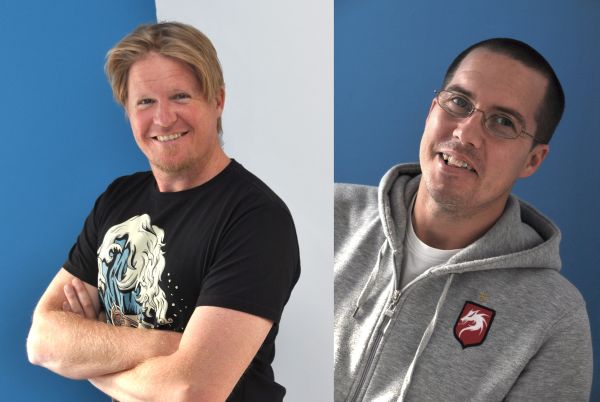
Holding 60% of the equity in the combined agency, now named Mojo MotherRussia, the former 76 MotherRussia partners have taken key roles in the business, with Thando Dingaan becoming MD, Festus Masekwameng and Melusi Tshabalala Executive Creative Directors and Kholiwe Sinuma Head of Design & Art Direction. Morris becomes the CEO of the new agency.

The combined agency employs 35 people and operates in a revenue band of between R45-50 million according to Morris, who adds that because of the very different operational models of the two previous agencies, there are no issues of job duplication in creating Mojo MotherRussia.

Although this wasn’t a BEE deal – Morris rather describes it as a sensible marriage between two agencies that complements each other well – its BEE credentials will obviously make it attractive to clients in both the private and public enterprise. The combined agency also has the scale to go after bigger pitches. All the shareholders are also working partners, as Masekwameng points out, who notes it’s important for a creative business to be run by creative leaders.

In the short term the agency is focussing on bedding down the merger says Morris, to decide on focus areas, and then to look at the continent for further opportunities. Morris says she sees no reason why brands need to work through international networks to access African markets when there are capable independent agencies right here who could do the job.

The 76 MotherRussia team had already moved into the old Morrisjones building, and it’s a snug fit, but it forces people to work together quickly, says Morris.

Masekwameng says the new creative team will focus on upping the output of existing clients. He expects East Africa will be first in line to be investigated for further expansion. Clients will be able to expect a full service offering from the new agency. Having access to a digital team, who isn’t siloed from the rest of the agency, will add to his own thinking in terms of media neutral big ideas, says Masekwameng.

– Industry news you’ll make time for. Sign up for our free newsletter!

NASA’s Mohawk Guy now sells magazines

MarkLives.com runs a regular slot featuring the best local and international magazine covers every week. We recognise well thought out, powerful and interesting (and hopefully all three in one) magazine covers and celebrate the mix of pragmatism, creativity and personal taste that created each of them. By media blogger MediaSlut.

INTERNATIONAL

Jetzt, No 1, 2013

Zetzt

I only know him as “NASA’s Mohawk Guy” but his name is actually Bobak Ferdowsi. Jetzt magazine (a supplement from Süddeutsche Zeitung for students and school kids) has used his well-known Mohawk to promote their “Against the Grain” issue. Perfect and relevant choice, and cool crop of his head. If you want to read more about Mohawk Guy himself, make sure you read Washington Post’s article “NASA’s ‘Mohawk Guy: 5 reasons the Internet is obsessed with him”, including reasons like “He changes his hair for every mission” and “He’s challenging stereotypes of rocket scientists”.

Süddeutsche Zeitung Magazin, 8 March 2013

Suddeutsche Zeitung Magazin

And then the sister-publication of Jetzt (above) is also making our list for striking make-up, photography and art direction.

Stuff UK, April 2013

Stuff UK

We’re starting to see more and more magazines play around with their logo and having some fun (think Chalk board, metal, paper, cut-outs, objects), but this one is also quite simple but very effective, and a method that I haven’t seen before. Just a pity that the execution doesn’t really have anything to do with the theme, or main story, of the April 2013 issue…

PAGE, April 2013

Pace

One of their main stories is about “Information Visualization” – basically infographics that’s all the rage at the moment. They were able to take something that belongs IN a magazine and present it on the cover in a creative way.

TIME TURNS 90!

An extra little bit of magazine news. This TIME video celebrates the news weekly turning 90 and presents ‘modern history in 90 cover stories’. Just shows the power of TIME, and it’s consistent strong covers and/or messages. To read the complete article, and watch the video, you can click here.

– The (for now anonymous) blogger behind MediaSlut knows way too much for his own good about media in South Africa. Magazines in particular. His mission is to show when South African magazines might fail, but most importantly, succeed. If you’re looking for a library about South African magazines and news, your one-stop pitstop is MediaSlut. #MagazinesForTheWin

– Find a cover we should know about? Tweet us @marklives and @mediaslut
Sign up for our free newsletter!

EXCLUSIVE: Sekunjalo Group company buys digital agency World Wide Creative

by Herman Manson (@marklives) Saratoga Software, a subsidiary of  JSE listed Sekunjalo Investments Limited, has acquired a majority shareholding in Cape Town digital agency World Wide Creative.

Sekunjalo is lead by Dr Iqbal Survé, who recently made headlines thanks to the successful bid (still subject to approval world wide creativefrom shareholders and authorities) by the Sekunjalo Independent Media Consortium to acquire the South African division of Irish owned Independent Newspapers in a R2 billion deal.

Independent titles include The Star, Cape Times, The Mercury and Isolezwe amongst others as well as the online news portal IOL.

(A recent SENS statement by the company points out that Sekunjalo Investment Holdings (Pty) Ltd is a party to the Sekunjalo Independent Media Consortium and not the JSE Listed company, Sekunjalo Investments Limited. Sekunjalo Investment Holdings (Pty) Ltd (part of the consortium) “will work closely with the technology business of Sekunjalo Investments Limited (which owns Saratoga Software) to ensure that thereis synergistic benefits for Sekunjalo Investments Limited.”

Survé recently told media journalist Gill Moodie that innovation and digital transformation was key to make Independent newspapers competitive and to take on arch newspaper rival Media24. He had hinted in that interview that the imminent acquisition of digital assets to help achieve these goals were on the cards.

World Wide Creative is known for its expertise in the production and development of digital assets. Current clients include Hyundai, The Foschini Group and Virgin Mobile. World Wide Creative was launched in 2003 by business partners Fred Roed and Mike Perk.

“We now form a critical part of an exciting group of companies,” says Perk. “The partnership with Saratoga enables us to ramp up our service provision in the key areas of e-commerce, application development, search and digital media advertising.”

According to Roed the company purposefully avoided acquisition by a ‘traditional’ ad agency – saying it preferred to keep its identity and focus on mobile, large project development (hello IOL? – ed), media and search. World Wide Creative employs a team of 30 in Johannesburg and Cape Town and no job restructuring is expected to take place. Industry sources put the revenue band for the agency at between R15-20 million.

Saratoga Software is 51% owned by the Sekunjalo TSG group of companies. It is focussed on architecture design and IT strategy, business analysis, project management, software development and support. In 2011 Saratoga also acquired Digital Matter, a specialist in mobile applications.

Last year the Information and Communications Technology division (ICT) of Sekunjalo saw profits jump by 191% from R13m to R38m. Revenue grew 22%. Saratoga Software, part of the ICT division, grew its profits to R4.3m from R2.7m.

World Wide Creative co-founders Fred Roed and Mike Perk


– Industry news you’ll make time for. Sign up for our free newsletter!

Shelf Life: Snapp! It’s a win for Hardy Boys!

Louise Marsland’s (@Louise_Marsland) pick of new product, packaging and design launches.

A couple of international awards, a new baby range coming soon and attempts to promote the humble rice flour as a wheat and gluten alternative.

Winning wine

Indaba Range lowres

The rebranding and relaunch of Indaba Wines in the United States, which we wrote about on MarkLives.com in February, has won a global award for producers, Cape Classics.

Indaba Wines was named the Best Paper Label at the World Wine Championships Packaging Competition, where it was up against hundreds of other wines from all over the world.

Indaba is one of the most successful South African wine brands in the US market and underwent a radical rebranding in 2012 to return the brand to its “African roots”.

Indaba was also presented with a gold medal for Graphic Design, a silver medal for Form and a silver medal for Style, as well as a bronze medal for Creativity.

The awards are run by the Chicago-based Beverage Testing Institute.

“Receiving these industry awards is confirmation we’ve achieved our goal to create a design that is authentic, will resonate with consumers and truly represent the quality and deliciousness that’s inside the bottle,” commented Molly Choi, marketing and sales EVP for Cape Classics.

Snapp! It’s a win for Hardy Boys!

Snapp Nigeria bottle

Durban-based agency The Hardy Boys, was named a Global ‘Innovation’ agency winner at the recent Diageo Marketing Brilliance Awards in London, along with UK agency Bloom, for the African launch and design of Snapp cider.

During 2012, The Hardy Boys was selected as the lead creative agency for vodka brand Smirnoff’s expansion into Africa, and brought onboard to create a campaign to support the launch of Snapp, a natural fruit-flavoured cider specifically created for the expanding African female consumer market. Bloom, a London-based branding design agency, was tasked with creating the bottle and can design for the Snapp fruit range.

The Hardy Boys focused on creating “a sophisticated and empowering”through-the-line campaign to position Snapp as “a refined, stylish alcoholic beverage”, ultimately creating a connection between the brand and the new age African woman.

Snapp launched in 2012 in Kenya and Nigeria.

Rice is a staple… flour?

rice flour

Pouyoukas Foods has embarked on a campaign to promote rice flour as a grocery staple and substitute for wheat flour. It is also gluten free.

Despite its relative obscurity, rice flour is readily available and if you haven’t seen it, it’s probably because you didn’t know where to look for it! Or maybe a campaign like this is exactly what was needed to promote it! And bright orange packaging!

The product can apparently be found in all major supermarkets and makes a crunchy batter and sauce thickener and can be used in baking too.

New baby food player

Romy making her modelling debut

Fore Good and Vital Baby South Africa have joined forces to create ForeBaby, a new player in the Southern African baby market.

“We are very excited about the strategic offering that ForeBaby will bring to ForeGood in this very important channel,” says Leron Varsha, CEO of the Fore Good Group.

Loren Young, founder of Vital Baby, will assume the role of MD of the new company and plans on growing the distribution of existing brands into the Southern African retail market. ForeBaby recently took over the Olli Organic baby food brand and will relaunch it with a new pack design shortly, which is why there are current stock shortages on shelf at major retailers.

Louise Marsland– Shelf Life by Louise Marsland is a weekly column on MarkLives. Tweet new product, packaging and design launches to @louise_marsland or email her at louise.marsland at gmail.com.

– Want to sponsor Shelf Life? Contact us here.

Louise Marsland has written about the FMCG, media, marketing and advertising industry for 18 years of her 25 year media career as a former Editor of magazines AdVantage, Marketing Mix and Progressive Retailing; as well as websites Bizcommunity.com and FMCGFiles. She currently edits the weekly Wednesday Media & Marketing Page for The New Age newspaper; and is the co-founder and Publishing Editor of SA’s newly launched industry trendwatching portal, TREND. at www.trendlives.info, in partnership with MarkLives.com.

– Industry profiles you’ll make time for. Sign up for our free newsletter!

The Content Con

by  Bob Hoffman (@adcontrarian), San Francisco Bay It doesn’t take a rocket scientist to recognize that this year’s online magical marketing word is “content.”

All the hustlers who were selling us “the conversation” a few years ago and “social media marketing” for the past two years have suddenly all become “content” experts. The great thing about content is, it’s anything you want it to be. If you can upload it to the web, it’s content.

It may be “content” in the digital world. In the real world it’s mostly garbage. 99% of it will go unnoticed and will live and die anonymously.

Like all the online wonder drugs, there will be a few winners. They will be the same really smart people and the really smart agencies who know how to do things right. They will be a tiny, tiny minority.

As usual, the 99% talent-free mediocrities will attach themselves to these winners as proof of the magical powers of “content.” And, also as usual, the vast majority of content “providers” will produce nothing but drivel that no one will pay a moment’s attention to.

A growing number of marketers and agencies have already quietly given up on over-hyped online marketing marvels. Websites that aren’t transactional lay around like a lox waiting to be upgraded “next year.”

Between 2010 and 2011 over 25% of “fast-growing” companies identified by Inc magazine who had blogs dropped them. And according to USA Today, only 23% of Fortune 500 companies have a blog anymore. A far cry from the days when websites and blogs and podcasts were going to be the fast track to marketing stardom.

Now, of course, everyone has a Facebook page and a Twitter feed. Why? Because everyone else has one.

They’re the lazy mans’ blogs. It’s just so much easier to write a tweet or an update than a blog post. And you get the same credit for “doing social media.”  In fact, you are not doing social media. For the most part you are doing nothing. But it’s masquerading as social media.

Plus you don’t need brains to Tweet or update a Facebook page. Here is Coke’s last tweet, as of this writing:

For your to-do list today: “pay a compliment to one friend and one stranger” #HappyMonday

This abominable idiocy could have been written by a half-bright 9-year-old. In fact, it probably was. Pepsi’s latest Facebook update (again, as of this writing)

One way to make this the best week EVER is to ____. (With a picture of a Pepsi can.)

This pathetic nonsense drew over 4,000 likes.

The essence of social media is democracy. Everyone has something to say. Unfortunately, everyone doesn’t have something interesting to say. Or intelligent to say. As a matter of fact, almost no one has anything interesting or intelligent to say.

As user-generated-content has become the standard, and as marketers’ content tries to emulate and imitate user-generated-content, it is being relentlessly dumbed down. It is devolving into empty platitudes and boosterism.

We are in for a period of truly vapid online marketing in 2013. It will be the year of content without content.

– The Ad Contrarian is Bob Hoffman, ceo of Hoffman/Lewis advertising in San Francisco and St. Louis. Hoffman is the author of The Ad Contrarian and 101 Contrarian Ideas About Advertising. Reprinted from his blog The Ad Contrarian.

– Industry profiles you’ll make time for. Sign up for our free newsletter!

Ad of the week with Oresti Patricios – For Doctors’ Ears Only

MarkLives Ad of the Week with Oresti Patricios – For Doctors’ Ears Only

This week I want to tell you about an ad that cuts straight through the clutter to reach a niche group with an elegantly simple message. And the target audience is perhaps one of the hardest, most stressed, hard-working and difficult people to reach – doctors.

As everyone knows, South Africa’s public health system is not quite what it should be. For marginalised and rural communities, access to health services is (unfortunately) hopelessly inadequate. This is desperately sad because of the government’s good intentions and the fact that this country has a very competent minister of health. But despite good intentions and excellent policies, and fair budgets being in place, this country is missing a key ingredient to assuring better health care across the country – qualified healthcare professionals.

Approximately 35% of posts in public health are vacant. While equipment and buildings are often well-equipped, because of the lack of personnel, patients are under-serviced, outpatient facilities are crowded and long waiting lists are the norm. Conditions like these often put healthcare professionals off working for the public sector, so growing human resources within the public health sector becomes a bit of a Catch-22.

South Africa’s medical schools are world class, but of the 1200 doctors that graduate each year, half emigrate at some stage in their career. 75% of qualified doctors elect to work in the private sector, and of those who choose the public sector, the vast majority prefer to work and live in urban centres. Less than 3% end up serving rural communities.

Africa Health Placements (AHP) has the difficult task of recruiting foreign doctors to fill these much-needed positions in South Africa. To get the attention of busy doctors around the world, they needed to “speak directly” to them in a unique and powerful way. Rather than a brochure or letter that may end up in the bin without a second glance, AHP, together with strategic brand agency Boomtown, came up with a bespoke campaign to arouse curiosity and interest in potential recruits. Not to mention to cleverly penetrate a really difficult target audience.

The direct advertising appeal took the form of a package, delivered directly to the doctors. Even if their secretary opened it, there was a high likelihood it would be passed on to him. In the package was a plain wooden box containing a hessian “envelope”, inside of which was a card labelled “Place stethoscope here.” A pressure activated device triggered a low frequency MP3 that is only audible through a stethoscope.

Here is the “script” for the ad:

SFX:    Heartbeat

MUSIC/SFX: African style drum beat joins at the same rhythm and mixes with the heartbeat.

MVO: Do work that gets your heart racing. Africa needs doctors like you. Visit ahp.org.za to find out more.

SFX:    Fade out on heartbeat.

Simple.Effective.Targeted. And smart – which is important, because after all, the target audience are intelligent people AHP and Boomtown were talking to. Using an essential tool of the trade, doctors are given just enough information to raise interest and to drive their engagement with the ad. And then the mechanism which communicates the appeal is so considered that hopefully it drives a large percentage of potential volunteers to the AHP site. The homepage itself is well laid out: simple and stylish, with links to further information, a few inspiring first-hand accounts written by previous recruits, and an easy “call to action” in the form of a very short application form, or the option to email a CV.

The ad makers and recruitment brand clearly recognise that doctors are busy and have a lot of clutter in their lives, so this message acknowledges that, yet feeds on their curiosity and intelligence.

The ad won a silver Clio Healthcare award, which rewards creative excellence in advertising in the medical industry. As readers know the Clio is one of the world’s most recognized awards competitions for advertising, design and communications. High praise indeed.

adw


Ad of the Week is published on MarkLives every Wednesday. See past selections here.
Oresti Patricios is the CEO of brand and reputation analysis company Ornico.

– Industry profiles you’ll make time for. Sign up for our free newsletter!

Tim du Plessis on how the JSE rule change is hitting Sake24 hard


grubstreet

by Gill Moodie (@GrubstreetSA) We’re only just more than two months into the year and we are already seeing the effects of  the change to the JSE rule governing the publishing of financial notices.

BDFM’s Business Day completed a round of voluntary retrenchments in January in which 32 people took packages from editorial, sales and sake24thisOnemarketing while Tim du Plessis, head of Media24’s Afrikaans newspapers, told Grubstreet recently that Sake24 has reduced its editorial positions from 33 budgeted jobs to 24, effective from April 1, through  a combination of retrenchment and  scrapping of vacancies and transferrals.

“We’re adjusting as it’s a small team but, you know, business news in Afrikaans is important to quite a lot of our readers,” Du Plessis said.  “Readers in Jo’burg and Cape Town don’t pick up Beeld and Die Burger to read business news in the same way that people don’t pick up Business Day to read sports news. But it’s important. They want it there and it’s got to be well presented.”

No doubt there is a measure of both companies being proactive before the new financial year kicks in but it is also a measure of how both Business Day and Sake24 benefited from the JSE rule that required  JSE-listed companies to publish results and price-sensitive information in an English national daily newspaper and in one other in another official language (usually Sake24, the business supplement carried in Media24′s Beeld, Die Burger and Volksblad).

With the change that kicked in on January 1, a short-form announcement now suffices in a daily newspaper in any official language.

Du Plessis told Grubstreet: “We battling. We’ve lost a significant amount of the company notices. It’s really hitting us hard. We’ve maintained some of them and we are constantly surprised by those who have stayed with us and those who didn’t.

“But we are making new plans and are going out to convince the companies that they still need to advertise their results with us. We have all manner of innovative ideas that we are taking to them and saying here’s your space, tell your company’s story here.

“We’ve really caught on with integrated reporting (digitally and in print) and are making it part of our campaign. So we are saying in terms of the principles of integrated reporting you must continue to communicate with people who don’t have access to the internet and here is a solution.”

In January Peter Bruce, BDFM publisher and Business Day editor, told Grubstreet about the effect of the retrenchments on his paper and how Business Day has come up with a new offering for companies as part of its plan to combat a loss in revenue.

It is also involves integrated reporting.

“It’s a package of things we’re going to offer companies,” said Bruce, “live-streaming their results, obviously some form of advertising in print, archives of the company next to the stories, the latest stories of whatever sector the company happens to be in…  where we can bring a lot to bear in any package which involves the company wanting to tell its investors what it’s doing… The company gets to choose what it wants to say.

“Obviously, we will write our own stories but around that, we will package all this stuff… In a way, you can do it in digital much more easily than you can in print.”

– SA’s leading media commentator, Gill Moodie, offers intelligence on media – old and new. Reprinted from her site Grubstreet.

Sign up for our free newsletter!

EXCLUSIVE: JWT Cape Town appoints new ECD, managing partner


jwt

Willem van der Merwe, formerly Managing Director at Trigger Isobar, has been appointed as Managing Partner at JWT Cape Town (@jwtmea & @JWTSouthAfrica). Van der Merwe, 33, will report to Jim Faulds, COO at JWT S.A.  Jonathan Lang also joins JWT Cape Town as ECD on April 1.

Van der Merwe (@WillvanderMerwe) is expected to beef up the digital savvy and through the line thinking of JWT CT. Prior to Trigger Isobar, a digital specialist agency, he held the position of Head of Digital Media at Digital Fire, an email marketing and digital media specialist.

Faulds says the role of Managing Partner tips the hat to a new structure in the agency and hands van der Merwe responsibility for agency strategy rather than day-to-day operations. The new role will be client facing.

Lang (@jonolang) joins JWT Cape Town from Ogilvy CT where he worked on various brands including VW and Carling Black Label. Lang is proficient in all sorts of channels and will help drive change, alongside van der Merwe, to make JWT competitive in a fast evolving market.

Faulds says his aim with the appointments is to bring a diverse set of skill sets into the agency rather than ‘simply appointing ad people.’ This will ultimately ‘future proof’ the agency in a time of fundamental change in the marketing landscape.

Industry news you will make time for. Subscribe here. It’s free!

The Sell: Is ‘pretty’ enough?

The Sell, a regular MarkLives column on shopper marketing, by Mimi Nicklin (@miminicklin)

It looks prettyMimi Nicklin
It’s pretty effective
It’s pretty social, a few thousands people have shared it
It pretty much won every award last year
And sure, it’s pretty much, reaching our goals
But in 2013 is pretty, really, enough?

I strongly believe in the power of brands and of the emotional connection we have with them. When you look into the psychology of buying you notice it is often based on those emotional connections that we have made as consumers of these brands. However, when you stop and really look at how these brands live in the worlds of shoppers, beyond the world of their consumer selves, there is ‘pretty much’ a gaping hole that remains unfilled.

Happiness becomes ‘buy 2 for less’, trust becomes ‘buy one get one free’ and your childhood love mark gets discounted to an ‘enter and win a car’ promo. Quite a sad state of affairs I’d say. What was pretty on TV, and pretty fantastic as an app on Facebook, has become pretty much benefit less and dull, not to mention commodotized, at the critical moment when we are asking the person to ‘pick up and buy us today.’

Surely in a post recession world, in a country where private labels increase almost daily, and within which consumer confidence is scarily low, we should be more than ‘pretty confident’ that the messages we communicate are those that our shoppers will buy into and crucially, become loyal to?

It is amazing to me that as an industry, a creative industry, we are so conservative, and perhaps even lazy, when it comes to change in the shopper space. There always has been amazing consumer communications, there always will be, but unquestionably we should be pushing for a faster speed of change within the mediums that talk to our shoppers directly.

We work constantly to perfect consumer models relevant to our fast paced, ‘always on’ and digitally savvy consumer. But whilst we recognise our shoppers are no longer loyal to just a couple of stores, but a proliferation of stores that meet their mission of the moment, and we see how shopping habits have changed, the communication model seems to have got stuck.

Our shoppers  swap from spaza to Shoprite and from offline to online quicker than they swap their newspaper, radio station or TV channel choice. Yet, we continue to talk in store as we always have. A price flash here, a promo girl there and a prize worth SMS’ing for when they sit and ogle our packs back at home. Or so we hope!

The good news?! We are in South Africa, the developing world, the tip of a region growing faster overall than Asia, and our opportunity is huge. Our country’s speed of change is fast, our middle classes booming, our retail growth indicators are positive, and we have all the opportunities in the world to turn this around, get it right and build our brands. Before our shoppers forget to shop on anything other than price.

As far as I am concerned, gone are the days of one beautiful campaign made for consumers, and ‘in’ are the days of marketing that realizes that the consumer and shopper hold a different relationship with brands. They don’t consume the brands in the same way and they certainly don’t follow the same decision making process. In fact cognitively, they couldn’t be much more different.

So how must we change the way we talk to our shoppers? Well, that’s pretty simple. We start by realizing that the very moment they decide who goes in, and who goes out, of their basket, presents an important opportunity to state your case. At shelf, in store, behind a trolley and not in front of their computer, TV or mobile phone screen.

Simple? No. But a challenge we either face head on or we risk losing their share of Rands even if we keep their hearts. And that, however you look at it, would pretty much be a disaster.


mimiMimi Nicklin (@MimiNicklin) followed her passion and experience in the consumer, retail and shopper space from regional roles in Europe and Asia, to South African shores in 2010. Having led global brands through the line for Procter & Gamble, and two of London and Hong Kong’s top agencies, her background gives her an international perspective to add to her depth of SA understanding. She serves as strategic director and a partner at 34 Group. Mimi contributes the monthly “The Sell” column concerning shopper marketing to MarkLives.

Samsung sales figures for Africa shows strong appetite for top-of-the-range phones

by Arthur Goldstuck (@art2gee) Thursday night will see one of the biggest product launches in the history of the technology. Samsung’s new flagship phone, expected to be called the Samsung Galaxy S4, has already been declared the new all-things-to-all-people smartphone, further dethroning the faltering Apple iPhone 5 even before the S4 is unveiled.

It’s easy to see why so much is expected of it: the current top-of-the-pile, the Galaxy S III, was declared by many (including this column) the 2012 phone of the year. Its successor, due out as much as six months before the next iPhone, will rule the roost by default.

As a result, many will see the phone market as a war between the S4 and the iPhone 5, with the Sony Xperia Z and BlackBerry Z10 scrapping samsung Galaxy S3with each other for the number three position, the Nokia Lumia 920 fighting for the scraps, and the Huawei Ascend P2 as the dark horse.

But that is only the top end of the market, where the flagship phones play. While these phones also represent the highest profits on phones, and shape market perceptions, to take them as the whole would be a massive misreading of the cellphone market.

For one thing, the Galaxy S III remains, for now, the most popular high-end phone in the world, as well as in South Africa. By mid-January, it had sold 40-million units, making it Samsung’s best-selling phone yet. Now, for the first time, sales figures for South Africa and the rest of Africa have been revealed.

According to George Ferreira, chief operating officer and vice president of Samsung Electronics Africa, it has sold 200 000 units in South Africa since June 2012. In the rest of Africa, it has sold close to 400 000. Nigeria, Ghana and Kenya are the main markets for the device outside South Africa, but strong sales – in the tens of thousands – have also been seen in Tanzania, Angola, Uganda, Senegal, Namibia, Botswana and Mauritius.

The phone thus provides the first evidence that developing markets also have a strong appetite for top-of-the-range phones. It also suggests that, once the S4 arrives and the price of the S III drops, the latter will continue to sell.

If it were Samsung’s only play, though, the next big thing and the next big marketing budget could quickly knock it off its pedestal.

The underlying reality is that Samsung has quietly taken over the Android market at every smartphone price level. In the last two years, it has sold close to 1,4-million Android devices in South Africa, almost unobtrusively moving past the 10 percent mark in smartphone market share. It claims around 95% of the local Android market, with the Sony Xperia range making up the rest.

The biggest contributor to these sales is one of the cheapest Android phones on the market, the Galaxy Pocket, which sells for less than R900. Between the low and high end, the new Galaxy mini, selling at around R3000, neatly slots into the space previously dominated by the BlackBerry Curve.

Even the Galaxy Note – a cross between a small tablet and a large smartphone, dubbed a “phablet” – has surprised the local market, with close to 120 000 units of the Note 1 and 2 sold. At initial launch, it was derided as being too big for a phone and too small for a tablet. Worldwide, Samsung has had the last laugh thanks to selling well over 10-million Notes.

And all of that before the launch that will keep the tech world holding its breath on March 14.  The event, which will all but close down New York City, will naturally be a triumph of marketing budget over substance. However, Samsung is expected to announce more than just the phone, and we can expect to hear about an evolved and expanded Samsung ecosystem, to take on the iOS universe that had been one of the keys to Apple’s technology leadership.

That strategy will be critical to Samsung’s long-term success, if it wants to avoid being dethroned by the next big phone.

Ferreira concurs.

“I’ve not seen true loyalty in any smartphone brand where people will stay 100% on a brand unless they get value,” he says. “But I do see that loyalty in an operating system. If they like Android, and it keeps giving them what they want, they will stay with it. People become loyal to an ecosystem.”

On Thursday night, we will discover just how well such loyalty is to be rewarded.

* Arthur Goldstuck heads up World Wide Worx (www.worldwideworx.com) and is editor-in-chief of Gadget. He is a Consulting Editor to MarkLives and our media tech columnist. Follow him on Twitter on @art2gee. Reprinted from Gadget.

Industry news you will make time for. Subscribe here. It’s free!

Online CPD Courses Psychology Online CPD Courses Marketing analytics software Marketing analytics software for small business Business management software Business accounting software Gearbox repair company Makeup artist