Effective media planning in a recession

A MarkLives column by Odette van der Haar (@odette_roper), CEO, Association for Communication and Advertising Media planning is an ever-shifting discipline.  It is a continuous process of reviewing media data (ratings, demographics, rankings, clicks) combined with a great deal of research and, of course, negotiation to deliver the best media schedule for a campaign. In a recession, a good media planner becomes even more crucial.

This is because clients and agencies are held to deliver value, a return on investment and/or a return on objectives. It is also because different Odette van der Haarchannels are clamouring for marketing spend, making it critical for the media planner strategically develop the communications campaign strategy.

In the run-up to the APEX awards which are all about on defining effectiveness in advertising and communications, I thought it appropriate to scrutinise what makes for effective media planning in a recession.

APEX judge and CEO of media specialist organisation Mindshare, Maria Phillips, had this to say:“If clients can manage it in their budgets, we try to encourage them to ensure their Share of Voice (SOV) is higher than their Share of Market (SOM)in a recession. Over the years, research has regularly proven that if you do outspend relative to your competition, an increase in market share tends to follow, as you come out of the recession.”

“However, even more importantly and especially when we talk about double-dip recessions, is that if good, solid investment is made in a brand, it actually becomes recession-proof, thereby increasing its resilience in hard markets as opposed to competitors.”

It may sound counter-intuitive but this is a time to gain a competitive advantage and really entrench the brand in the market. Likewise, companies that retract branding during a recession have real trouble emerging once the economy has turned around.

Phillips also notes that in a recession, brands tend to cut down on the number of channels used. “If, for example, a brand usually spends on TV as a primary medium, in an economic downturn, it will put all its remaining funds into only television. However, we recommend that medium-to-large brands be brave and cover at least three to four different mediums in order to achieve effective reach. Consolidating spend into a single channel works to the detriment of the brand in the longer-term.”

I also found an interesting snippet that furthers this insight and bears outs the advice that many marketers and agencies give in the boardroom, i.e. if you have a brilliant ad campaign, make sure it’s supported with a great digital media strategy.

A recent study conducted by Harris Interactive around TV and tablet usage showed that there is a symbiotic usage of television and the Internet. What happens is that television prompts users to research a product or service on a tablet. 71% of people between the ages of 18-34 indicated that they use their tablet to look up information on a product/service after seeing a television commercial. And, by the way, if you want a case study, just look in my living room on a Saturday afternoon.

It is an ever-changing world and the job of media planning has become an increasingly strategic function. Whilst questions like: how an audience utilises media, whether some media are dying and which are growing ahead of others, as well which makes the most sense for the target audience will always be worrying for an advertise – media planning is one of those disciplines in  advertising and communications that truly balances magic and logic to deliver effectiveness.

– Odette van der Haar (nee Roper) is the CEO of the Association for Communication and Advertising (ACA) which is the recognised industry body of the advertising and communications profession in South Africa.

Inflation Watch figures show the march of DStv in ad wars

grubstreet

by Gill Moodie (@GrubstreetSA) The big story of the recently released Inflation Watch figures from Ibis Media Data Services for 2012 is the march of Naspers’ pay-TV giant DStv.

The media inflation figures – that measure the cost of reaching consumers by buying adverts in the media – go out to Ibis’ subscribers, which are mostly in the advertising and marketing industries. The data includes media delivery (performance in terms of print circulation, radio listenership and TV viewership) and value (the “Media Inflation Watch” or “MIW”, that is, performance versus the ad rates).

The recent figures compare those of 2012 to that of the previous year, 2011.

Bearing in mind that new weighting measures were introduced to RAMS and TAMS (that measure radio and television audiences) in the third quarter of 2011 so that the only real trend measure for these sectors is the Rate Index rather than the performance-linked MIW, Ibis said  that television ad rates were up by 1.82% . It also said:

“The pace of SABC’s rate increases continues to slacken (SABC 3 is in negative territory). The guys at eTV remain consistent. Thus Free-to-Air’s rates are up by 4.7%.…Over at DStv Media Sales the picture is again very different. In 2012 Q2 the rates for many of the packages were cut and/or additional spots provided. This carried through to to the balance of the year so as to enable a very buyer friendly -5.4% Rate Index over 2011.”

Mike Leahy, originator and owner of Ibis Media, told Grubstreet that: “The biggest trend (in the figures) is the march of DStv and whether they dstvcan sustain it. They are making very handsome profits if you look at (parent company) Naspers’ revenue space but not a great deal of that is from advertising… But they don’t actually need advertising, It’s a very nice cherry on top of a very handsome cake.”

In the last available full-year financial results for Naspers – for the year to the end of March 2012 – DStv netted 684 000 more subscribers in South Africa and across the continent to reach 5.6-million households in Africa.

However, the pay-TV firm could get to a stage when it might want to start optimising revenue rather than  turnover as the various DStv stations get to optimum on ads, said Leahy. “When that happens, we can expect some increases in rates and they will be justifiable.”

The Media Inflation figures’ tale that television – especially DStv – in the South African ad wars is an ever powerful more force is consistent with what consumer-magazine publishers say.

DStv – which sells a combination of ad packages and spots – has become much more competitive, said Leahy, because it reduced the price of packages last year and gave advertisers more spots in the packages.

“So it’s effectively a massive rate decrease. If we take BBC Entertainment, for example, the cost of a package was kept the same – at R90 000 – but in April last year they gave 60 spots in that package compared to 34 previously… They’ve got the availability and they want to sell it rather than filling it with promotions and the like.

“The advantage of selling packages is that gives them more flexibility in terms of when they place them and how they place them,” Leahy said.

For advertisers, this meant a large increase in the number of spots given for no extra money with a station with increasing performance as DStv continues to grow its subscribers aggressively.

“That is fairly consistent across the board (of DStv stations),” Leahy said. “The cost per thousand is still higher than free-to-air TV but it’s still very competitive compared to magazines and daily newspapers. If you look at the latest cost-per-thousand analysis, the cost per thousand in Q4 last year for a pay-TV station such as BBC Entertainment was close on R59 per thousand. If we’re looking at the average for consumer magazines, it was R119 and for daily newspapers it was R115. For weekly newspapers it was R88.”

If you’re an advertiser – especially an FMCG brand and you have a TV commercial made – there is a very compelling argument to go for the  DStv rather than print, Leahy said, “because you’re getting the niche audiences and you’re also getting them fairly cheaply”.

By comparison, print – where daily newspapers are hardest hit by circulation decline – the media inflation showed:

“Rates were up by 5.56%

Performance -5.59%

MIW Index (CPM) +12.84%

The Print media category is little changed since the last release of Inflation Watch,” said the release about the figures. “Circulation is continues downwards for many but not all titles. This is most notable amongst Dailies which put on +5.3% in rate but lost -9.45% in performance (circulation). This got them a +17.19% MIW Index (CPM).

Most of Media24′s dailies had a rate freeze. Thus Burger, which had a smallish circulation decrease, managed to come in at +4.6% MIW (CPM) Index. Herald and Isolezwe put on circulation.

In contrast the Independent’s Dailies Star and Cape Argus has lost heavily in the circulation race and delivered a +31.7% and +49.3% MIW Index (CPM) respectively.

Weekend and Weekly newspapers Consumer Magazines were a mixed bunch but generally fared better the Dailies. Some lost circulation only lightly. Soccer Laduma put on circulation which, with a +10% rate increase, meant a lowish MIW Index (CPM) of +6.6%. Consumer Magazines were also a mixed bag. Most rate increases were low, and even some decreases. Circulations of some notable magazines were up by. However most were down. Cars in Action, FHM, PC Format, Sawubona and Your Family all registered MIW (CPM) Indices of over 25%. In all Consumer Magazine Rates were +5.3%, Performance -4.6% and MIW Index (CPM) +11.1%.”

Across all media sectors, the story is:

“Rates indicate a significant slackening over previous periods, largely due to a slowdown in the growth of TV’s rates. Remember there is no Performance reading for TV, Radio and Cinema. 2012 has yielded the lowest Rate Index since the analysis started back in 1986. It is the first time the Index has dipped beneath 4% (albeit only just). And in only 2 years has the Rate Index fallen beneath 5% – 2002 (4.67%) and 2009 (4.24%).”

Leahy said that TV comprises a large part of the index – about 46%.

NOTES on understanding media inflation and print:

Because of circulation decline, many newspapers are asking more (of advertisers as they put their ad rates up) for delivering less but  Leahy points out that if a title’s circulation is declining it doesn’t necessarily follow that its advertising value is declining by the same proportion. The title may be getting more targeted in terms of audience.

“Sometimes a lower circulation that is matched up with other factors can mean a better advertising buy,” he says. “All publications are niche publications so if you’re getting more of the niche that you want it may mean that, if the rates are held at a reasonable level, the value could be better.

“If there was one easy answer to declining circulation, then print-media owners would have fixed it but there’s a lot more to this,” says Leahy, pointing to six key drivers behind circulation decline:

  1. There are simply more titles around – especially magazines and including imported titles – and, therefore, there are fewer people per title than before. This can offer more targeted advertising but it also means more expensive advertising as smaller publications do not have the economies of scale that big titles do.
  2. Distribution policies: some of the bigger titles have intentionally cut back on distribution (especially to far-flung areas) to bring costs down.
  3. Cover-prices increases in South Africa have outpaced the consumer price index and some consumers will have stopped or cut back in frequency the buying of newspapers.
  4. There is competition from free “custom” magazines – many of which are very well edited – such as those of clothing retailers or medical aids.
  5. Print titles are generally getting thinner because of less advertising, which may be perceived as lower value (especially with higher cover prices!) by consumers.
  6. Because other media such as online, social networks, radio and TV can break news faster, many newspapers have become more like magazines rather than newspapers. “Given the other five factors, I think a number of people are still in the market for a newspaper but they’ll only buy it when there are major breaking news stories like an election or Zuma’s Spear picture.”

– SA’s leading media commentator, Gill Moodie, offers intelligence on media – old and new. Reprinted from her site Grubstreet.

Sign up for our free newsletter!

The growing digital footprint of Huisgenoot, YOU and Drum

by Herman Manson (@marklives) In the world of print publishing the three sister magazines of Huisgenoot, YOU and Drum make for a formidable powerhouse – they are three biggest circulating consumer magazines in the country.

Until recently that offline brand and circulation power hasn’t been effectively utilised online, but it’s changing, and quickly, according to Wilmer Müller,huisgenoot oscar pistorius Head of Digital at Huisgenoot, YOU and Drum.

The three brands started rolling out digital strategies at the beginning of 2010 and soon found success on Facebook, especially in the case of Huisgenoot, whose community of Afrikaans speaking readers were looking for a safe online space in which to engage with one another in their home language. Growth has been organic says Müller and on Facebook the number of Huisgenoot fans currently stands at over 205 000.

The Facebook presence of Drum is growing at the same breakneck pace as that of Huisgenoot in 2010, but Twitter has really been its success story, as the channel is well suited for breaking news on black celebrity culture – a key point of interest to Drum readers.

Talking of Twitter, Huisgenoot hasn’t seen as much success here as on Facebook. Müller suggests that this is due to slower take-up amongst Afrikaans speakers – English seems to be the default language South Africans use on Twitter. The Oscar Pistorius story, first broken on Twitter by Beeld, has changed this, and Huisgenoot has seen a substantial take-up of its various social media platforms, including Twitter, over the past two months. This was mostly tied to the Pistorius story, says Müller.

YOU has been tougher to grow digitally since it competes with a wider range of English language sites, many of them international, but its numbers are far from insubstantial.

Let’s step back quickly and look at the numbers behind the story. In February 2013 the Huisgenoot website had 154 728 unique browsers and served 651 886 pages. Only around 5 258 unique browsers accessed the site via a mobile device. On Facebook it had 203 550 fans and 35 819 Twitter followers. It served 44 807 YouTube views – yes each of the three magazines have their own YouTube TV channel with content generated by journalists – mostly as add-ons to stories that ran in the print magazine (but this is about to change – video will play an important part in the digital futures of all three titles). The print edition had a circulation of 270,310 in the last quarter of 2012. So it’s quite clear that in the print product still enjoys the largest readership, for now at least, but it’s audience figures on Facebook and the website is catching up.

Drum had 85 886 unique browsers on its website and served 368 879 pages. It served more mobile pages than Huisgenoot – 20 755 pages to 5 429 unique browsers. Its Facebook page had 77 689 fans, and on Twitter it had 43 797 followers. It served up 32 641 YouTube views. Drum has an ABC of 118,793 for its print product.

YOU had 72 133 unique browsers on its site and served 220 689 pages, had 52 061 Facebook fans, 21 111 Twitter followers (celeb gossip rival heat is closing in on 54 000) and served 20 050 YouTube views. YOU has a circulation of 155,125.

Müller acknowledges that the digital strategy for the three brands had up to now focussed on social media and that the web and mobile sites had been playing second fiddle. This is changing and the revamped Huisgenoot site will be rolled out in the next month or so. It will offer more original content, and sections dedicated to topics like education and food recipes will benefit from the extensive content archive of the print title. A new site for YOU will follow on the Huisgenoot.com relaunch and a new site for Drum will be launched later in the year.

drumBy early next year around 30% of the newsroom resources for each of the titles will be focussed on generating content for digital channels, says Müller. Editor-in-Chief Izelle Venter has committed to helping drive this process. Part of all the journalist KPAs (key performance areas) will be to generate video content for the online TV channels. MS tags appear alongside print stories to drive views to the videos. Step-by-step how to videos, especially in the beauty and food categories, will play an important role on the new relaunched websites and will be made available to sponsors.

Exclusives won’t only run in print any longer – the magazines wants to own stories across multiple channels. It’s a need driven home, again, by the Pistorius story, and the interest it generated online. Müller also acknowledge that as print budgets move online the three sister titles need to position themselves so they don’t lose out on future revenue.

Ecommerce will play an important role across all three relaunched sites with a focus on fashion and accessories. Sarie was the test case for Media24 in this regard and its ecoomerce initiative seems to have achieved significant success. Müller says all relevant Media24 sites will eventually include such an offering with a dedicated team within Media24 managing them across a range of titles. Some content will also be monetised – especially in the education space.

Interestingly digital editions (like you would find on Zinio) doesn’t fall in Müllers’ portfolio. Instead it falls in the Media24 markets division.

Although relatively late in the game in terms of web and ecommerce functionality the success of the social media strategy for Huisgenoot, Drum and YOU seem to have awakened the appetite of their publishers and brand managers to further commit to investing and growing the digital footprint of all three titles.

The social component certainly provides interesting insight into how South Africans are embracing various social platforms (for Huisgenoot and its Afrikaans readers, Facebook first and foremost, while Twitter found traction with a large number of Drum readers). The large numbers of followers on social platforms will certainly makes it easier to justify further investment in their web and mobile sites.

The real power of course lies in the interactive nature of social platforms, especially on Facebook, where a simple question like ‘What’s for dinner tonight’ (posted on the Huisgenoot Facebook page) can elicit as many as 300 replies quickly. Another question on ‘How do you get along with your mother in law’ recently drew over 700 replies – a gold mine of interest for any journalist (and marketers frankly).

– Manson is the editor of MarkLives.

– Industry news you’ll make time for. Sign up for our free newsletter!

Tech Law: Processing, personal information and direct marketing under POPI

by Paul Jacobson (@pauljacobson)  I touched on consent as a key consideration in the Protection of Personal Information Act (expected to be passed shortly) in our recent post titled “POPI is a steep, uphill climb for direct marketers“. As I pointed out in that post, the consent issue (the video below summarises consent as a key concept and why it is so important in direct marketing), while critical, just scratches the surface. There is a lot more to the anticipated Protection of Personal Information Act and, in this post, I’d like to give you an overview of two further important terms used in the Protection of Personal Information Bill, namely “personal information” and “processing”.

Personal Information and Processing

Before you can understand the conditions, you need to understand two further terms used in the Protection of Personal Information Bill, Paul Jacobsonnamely “personal information” and “processing”. The “personal information” definition is pretty broad. It includes all the usual categories of personal information and a great deal more:

‘‘personal information’’ means information relating to an identifiable, living, natural person, and where it is applicable, an identifiable, existing juristic person, including, but not limited to—

(a) information relating to the race, gender, sex, pregnancy, marital status, national, ethnic or social origin, colour, sexual orientation, age, physical or mental health, well-being, disability, religion, conscience, belief, culture, language and birth of the person;
(b) information relating to the education or the medical, financial, criminal or employment history of the person;
(c) any identifying number, symbol, e-mail address, physical address, telephone number, location information, online identifier or other particular assignment to the person;
(d) the biometric information of the person;
(e) the personal opinions, views or preferences of the person;
(f) correspondence sent by the person that is implicitly or explicitly of a private or confidential nature or further correspondence that would reveal the contents of the original correspondence;
(g) the views or opinions of another individual about the person; and
(h) the name of the person if it appears with other personal information relating to the person or if the disclosure of the name itself would reveal information about the person;

I highlighted some of the interesting aspects of “personal information” because these categories of personal information are not always recognised as such. For example, “any identifying number, symbol” or “online identifier” could include a Twitter handle or pseudonym (assuming it could be associated with an identity). “Personal opinions, views or preferences” covers a wide range of questions marketers often ask people in surveys and competitions. Add to this other people’s “views or opinions” about your data subject and you’re now dealing with personal information about person A which you obtain from person B and which is also person B’s personal information so you potentially need to obtain consent from both people.

The next important term is “processing”. This is the term used for a variety of activities pertaining to how personal information is handled. It is also fairly broad:

‘‘processing’’ means any operation or activity or any set of operations, whether or not by automatic means, concerning personal information, including—

(a) the collection, receipt, recording, organisation, collation, storage, updating or modification, retrieval, alteration, consultation or use;
(b) dissemination by means of transmission, distribution or making available in any other form; or
(c) merging, linking, as well as restriction, degradation, erasure or destruction of information;

This definition basically categorises virtually any action relating to personal information as “processing” and subject to consent by the data subject. As the definition’s lead-in indicates, this covers both single actions and groups of actions or, as the definition puts it: “any operation or activity or any set of operations”. Like I said, it is broad, very broad.

Both of these terms form part of the foundation of an adequate privacy model that direct marketing businesses should have in place already or, at the very least, should be actively developing. We will explore more POPI themes in an upcoming series of posts about the processing conditions in this anticipated legislation in more detail. The processing conditions establish a series of parameters that will shape direct marketing campaigns and other activities that make use of personal information for quite some time to come.

Paul Jacobson is founder and director of Web•Tech•Law. Web•Tech•Law / CC BY-SA 2.5

– Industry news you’ll make time for. Sign up for our free newsletter!

The boring BIC pen turns into a cover model

MarkLives.com runs a regular slot featuring the best local and international magazine covers every week. We recognise well thought out, powerful and interesting (and hopefully all three in one) magazine covers and celebrate the mix of pragmatism, creativity and personal taste that created each of them. By media blogger MediaSlut.

INTERNATIONAL

B (Brand. Balance), March 2013

bic

The boring BIC pen turns into a cover model. Who would have thought!? But that’s the beauty of B (Brand. Balance) magazine – taking general objects that have a very strong brand and featuring it on the cover.  And have a look at  their beautiful layouts!

Playboy USA, April 2013

pb usa april 2013

The perfect cover to showcase the marriage between their “Sex & Music Issue”. Very smart, and still close to their brand.

Usbek & Rica, March – May 2013

Usbek & Rica

The coverline like reads “Faire l’amour en 2050” (Making love in 2050). I’m sure you’ve noticed the positioning of the barcode…

LOCAL

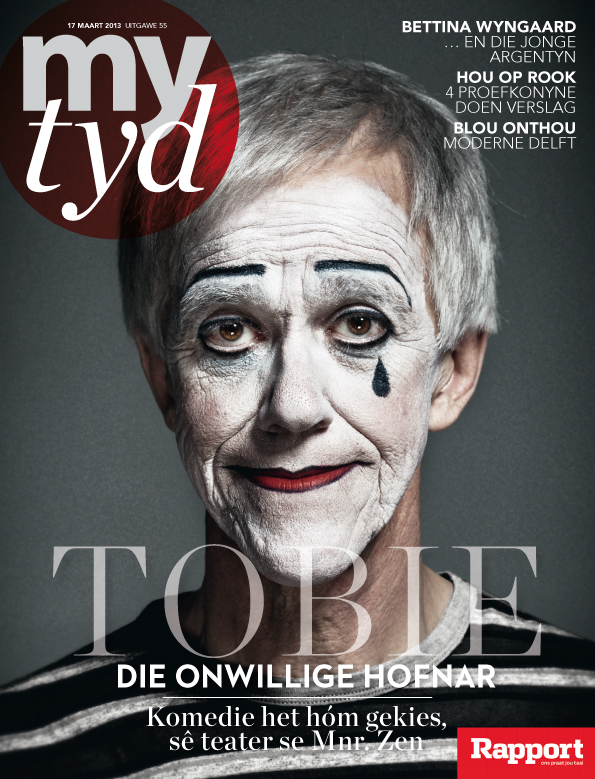
My Tyd (Rapport), 17 March 2013

55MyTyd_OFC.indd

This Tobie Cronje cover is really magical! The photographer who took Tobie’s pictures, Antonio del Hoyo, sadly passed away on 21 February 2013 after a motorcycle accident. This cover also serves as a tribute to his amazing work! You can read the full story on Tobie here and also view more photos.

Country Life, April 2013

Country Life 4 April 2013

The cover of the April 2013 issue of Country Life just tells a beautiful story!

Huisgenoot, 21 March 2013

Huisgenoot 2.0 21 March 2013

Shock. Horror. A Huisgenoot cover made our list of favourite magazine covers! Get over yourselves. The photography is stunning. It’s the perfect moment between these two South African personalities (Karlien van Jaarsveld and Derick Hougaard) and it’s the type of cover you don’t really expect from Huisgenoot. It’s completely different from what they’ve previously done with their wedding covers. It’s less interested about the contact and connection with the reader, instead focussing the connection between the two of them, and it draws all of us in.

– The (for now anonymous) blogger behind MediaSlut knows way too much for his own good about media in South Africa. Magazines in particular. His mission is to show when South African magazines might fail, but most importantly, succeed. If you’re looking for a library about South African magazines and news, your one-stop pitstop is MediaSlut. #MagazinesForTheWin

– Find a cover we should know about? Tweet us @marklives and @mediaslut
Sign up for our free newsletter!

Ad of the Week with Oresti Patricios – When a brand invests in the human spirit

MarkLives Ad of the Week with Oresti Patricios – When a brand invests in the human spirit

When we think of the exemplars of the human spirit, it’s easy to think of sporting heroes, artists and other remarkable people who have truly excelled. One’s mind easily turns to extraordinary South Africans like multi-award winning paralympic swimmer Natalie du Toit; or the internationally acclaimed singer Miriam Makeba; or renowned  author and anti-apartheid activist, Alan Paton. Then there’s the man who suffered greatly but overcame to lead a nation and in the process became a global icon – Nelson Mandela.

All these people have something in common: a spirit of determination to persevere, to overcome and to triumph. These are the kinds of role models we hope our children will emulate. But there are other, more everyday heroes, whose successes don’t always play out on a public stage.

Recently I heard a story from a friend who stopped at a garage near Estcourt, and happened to pull up alongside a KZN hospital outpatient bus. Whilst filling her tank, she watched as the emergency worker helped an old man with Parkinson’s up the bus’s narrow stairs. One slow step at a time, the man painstakingly climbed the vehicle’s stairs to take his seat.

All the other pensioners in the bus were grumbling and impatient, waiting to be taken to the local hospital timeously for their check-ups and medical visits. It must have taken at least 15 minutes for the man to board, but not once did the medical employee show any sign of impatience. He just calmly and compassionately supported the old man, as they worked to achieve a common objective.

Is this man a hero? How many times a day does he have to exercise such supreme caring for his fellow human beings? Can this be defined as heroism? In my book it does. Obviously he is just doing his job, but he could find plenty reason for being grumpy, curt, impatient… as many people do.

Nobody’s going to give him a medal, but one has to look at the core of people just like him, and I believe there are many in this country. How did he end up like this? A good upbringing, and good role models, no doubt moulded him. It’s to this end that many companies seek to invest in socially responsible ways – to bring about positive change and to meaningfully effect a more compassionate society.

One hopes (perhaps cynically) that it’s not just for the BEE points, but rather because corporates understand why it’s important. Investing in the human spirit is an investment in the future, in stability and prosperity for generations to come. It’s about as indirect an investment as one can make, but it’s one that governments acknowledge as important enough to promote with tax incentives. It’s what makes society human, as well as humane.

Absa has chosen to celebrate this spirit, in its latest campaign which showcases its sponsorships. “The Human Spirit: it’s not just for heroes,” begins the ad. The imagery juxtaposes successful sports-people with aspirant ones; it shows the youngsters practising, working late at night to perfect their abilities in soccer, rugby and mountain-biking, echoing the three main sports supported by Absa.

The commercial continues, showing a young girl who gazes in wonder at a piece of installation art comprising red bricks and strings – Absa also supports the Arts. “It’s inside us, it gives us the strength to push on, to follow in the footsteps of giants.” The ad focuses more intently on the potential of youngsters, steering clear of gratuitousness by not concentrating on actual ‘heroes’ – except for a glimpse of a Springbok or two, almost incidentally.

Absa supports the Currie Cup, the Springboks, Bafana Bafana, the PSL, the KKNK and Aardklop Arts Festivals, and several others. But they don’t focus on that; the subject of this ad is the young – the aspirational and inspirational human spirit that embodies the pure potential of what people can become.The pay-off line is a clever twist: “And that’s why we don’t sponsor rugby, soccer, mountain-biking or art,” the ad declares. “We sponsor the human spirit.”

The point is that for Absa, sponsorship is more about inspiring the everyman and woman, rather than just associating their brand with a successful team or personality – or hitching their wagon to a star, so to speak. It’s not about the team that wins, or the ‘hero’ who scores the goals – it’s about each individual, child, teenager, adult, whether you’re in the premier league or playing in a dusty rural field, whether you prefer dancing or acting: the human spirit is what we have in common.

In its own way the Absa ad, created by The Jupiter Drawing Room Johannesburg,  is an inspiration for our times. It speaks to a magnificent quote by author, political activist, and lecturer Helen Keller – the first deaf-blind person to earn a Bachelor of Arts degree who said: “No pessimist ever discovered the secret of the stars, or sailed to an uncharted land, or opened a new doorway for the human spirit.”

absa ad - we sponsor the human spirit

Ad of the Week is published on MarkLives every Wednesday. See past selections here.
Oresti Patricios is the CEO of brand and reputation analysis company Ornico.

– Industry profiles you’ll make time for. Sign up for our free newsletter!

Janet Warren Likes Walmart (but does she?)

by  Bob Hoffman (@adcontrarian), San Francisco Bay Janet Warren was one one of those impossibly wonderful girls. Not just pretty, not just smart, but nice and pleasant and friendly. Often her father would have letters to the editor published in The New York Times. She was a cheerleader with actual cheer.

Naturally, she had no idea I existed. But she lived in the next building, and her sister was friendly with my sister.

I was in Los Angeles once, years after high school, and I saw her in a popular restaurant. She was with a group of obviously high-performance individuals, and she was the star of the crowd. I studied her from across the room. She was in her early 30’s and had an ethereal almost-hippie, almost-executive look and manner. I found out, years later, that she had been the producer of some pretty important movies.

Years passed and as circumstances sometimes unfold, I had occasion to have lunch with her. I explained to her who I was, and of course, she didn’t remember me. She was still lovely in that way that women over 50 can be lovely if they dress simply and tastefully and don’t have surgery and don’t try to be 20.

She had adopted a child. She was active in many organizations that worked for social justice. She was no longer an active producer, but still had great poise and presence.

We exchanged a few emails following our lunch. I wanted to become friends, but after a while she gracefully stopped emailing, saying she was too busy. I knew what that meant. Several months later I was surprised when she friended me on Facebook.

Lately, on my Facebook page, I find ads that tell me that “Janet Warren Likes Walmart.”

If there is one thing that I would bet my house on, it is this — Janet Warren does not like Walmart. In fact, I would bet she has never set foot in a Walmart. I’d bet that if she knew Walmart was using her to sell their wares, she’d be horrified.

But that’s what Facebook does. It uses you, without your specific permission, to create advertising for its clients. You are the leverage. It’s not like a testimonial in any other medium where they need a signed release to use your name and likeness. Facebook has rigged the system so that if you are somehow connected to someone who said something about Walmart and you happened to “like” what they said, well then as far as Facebook is concerned you like Walmart. And if their algorithm likes you, then you are now the new spokesperson for Walmart. Congratulations.

This is not healthy. It is uber-false advertising. It is not ethical. Our billionaire friends in the tech industry try to pass themselves off as high-minded visionaries. In fact they are turning out to be corrupt and unconcerned about our rights and privacy.

Janet Warren does not like Walmart. But Faceberg is trying to build an unscrupulous empire by claiming that she does.

Also see ‘Why are dead people liking stuff on Facebook?‘

– The Ad Contrarian is Bob Hoffman, ceo of Hoffman/Lewis advertising in San Francisco and St. Louis. Hoffman is the author of The Ad Contrarian and 101 Contrarian Ideas About Advertising. Reprinted from his blog The Ad Contrarian.

– Industry profiles you’ll make time for. Sign up for our free newsletter!

The 2nd internet revolution

by Louise Marsland (@trendlives) This year, the number of mobile devices in circulation will reach 7 billion – more than the total number of humans on this planet. It is our “mobile moment” as a generation.

Mobile has also become as big a disruptor to the way we communicate, as the dawning of the internet age. With mobile devices as powerful as desktop computers, itis being called the dawn of the second internet revolution.

And for many on this planet, the mobile device has become their ‘first screen’.

bannerThe advent of social media and tablet mobile devices, coupled with the integration of digital strategy, including mobile, into marketing plans and enterprise-wide applications – driven by the exponential uptake of the technology among consumers – has transformed the way we communicate, shop, move money, interact with entertainment, and so on and so on.

Our latest indepth Dissect report on TREND. at www.trendlives.info on mobile, is entitled, ‘The First Screen’. Co-sponsored by Prezence Digital and M&C Saatchi Mobile, we ask whether marketers are doing enough with mobile; whether mobile is being properly integrated into brand campaigns; what is the key to great mobile content and creative; and where the opportunities lie for brands in the future?

M&C Saatchi MobileMobile is already the first screen for many of us and will be the first screen for most of the world’s population, particularly the way it is being integrated with television viewing. Yes, TV is still the first screen and mobile the second screen for many, particularly in their leisure time after hours, but it won’t be for long.

With integration and further innovation in this space, there will be no difference as TV’s are integrated with our mobile phones and mobile devices include television.

These are the trends we highlighted after our research and interviews with local and international thought leaders in this space:

  1. The First Screen: mobile, from phones to tablets, is set to replace television as the first screen of choice for entertainment, communication, comment, interaction, gaming and socialising.
  2. The 2nd Internet Revolution: mobile has created a massive paradigm shift in communication as the cellphone transitions into a computer.
  3. Mobile Moment: this is the first year that the number of mobile devices in circulation will outnumber the human population, reaching 7 billion mobile devices in 2013.
  4. Responsive Design: one digital eco-system for brands, one content strategy, not a multiple of different sites for each device, feature or smart.
  5. Hacking Reality: much of mobile innovation is being driven by the need to improve life in developing economies in Africa and Asia.
  6. Mobile Money: the mobile phone as a wallet and bank.
  7. Convergence Communications: the mash up between mobile and television will spawn a new way of consuming entertainment, news and user engagement and feedback.
  8. T-commerce: tablets drove an online shopping surge over the 2012 festive season, globally, and will lead to an e-commerce boom worldwide.
  9. 24/7 Campaigns: the future of mobile marketing is video, loyalty schemes and 24/7 campaigns.
  10. Simplify: marketers need to create new brands for the digital space and simplify existing brand equity to compete.
  11. Big Data: making sense of the data to deliver real relevance to digital marketing campaigns.
  12. Storytelling: digital content is all about storytelling and great content. Still is. Even more so with mobile.

Louise Marsland is the Publishing Editor of TREND. at www.trendlives.info. Find the full mobile report, ‘The First Screen’ here.

Mobile girls

The Dissident Spin Doctor: Bloggers, freebies and the readers’ right to know

by Emma King (@EmmainSA) This week I was bemused to read the British papers up in arms over the revelation that BBC bosses accepted free tickets and hospitality to various Olympics event. The chattering classes and BBC critics were alarmed that their supposedly objective media may have been swayed by something akin to bribes.

It seems almost laughable here in South Africa. We’ve become almost immune to stories of corruption and bribery, and our state owned media Emma Kingoutlets have given up most pretence at objectivity.

However, it raised a question for me, and got me thinking about the power of the freebie – and how it’s taken for granted in the world of PR.

We know that if we want a journalist to review a product, we need to send them that product to try out. Or if we’re running an event that we want them to cover, or have them interview a client, we cover the costs. Make sense. Fair play.

But when does this cross the line? When does a free sample become a gift? When do travelling costs become all expenses paid holiday? And what is demanded in return? At what point does it become akin to Faustus making a deal with the devil?

I spent some time working in West Africa. The PR industry is different there, and although we diligently prepared press releases and held press conferences, we knew that in order to secure any traction with media we needed money to pass hands – to “pay for the journalist’s or cameraman’s time”.  And so editorial integrity is chipped away, as the man with the deepest pockets wins.

Back at home, like most European countries, many media outlets ban the acceptance of that which can be construed as a gift.

But this doesn’t yet extend to the brave new and unregulated work of social media, and as such the ubiquitous ‘blogger drop’ becomes ever more commonplace. Beautifully designed packs are sent out to those who are seen to matter and entered into awards shows. And rightly so – they are, one would say, a beautiful evolution of the staid press folders of old. A way in which to exquisitely bring to life our brand’s promise to those who are influential.

The public approaches the blogger or ‘online influencer’ with a certain set of expectations. We expect that when they write about something, they are endorsing it on their own accord. We buy into the concept that when they feature a product, or rave about a service, that they really do believe in it.

The problem arises when bloggers get paid to write a post or are given expensive gifts in order to review something positively.

In the States and in Europe tighter legislation is being introduced to manage how bloggers work. Posts that are paid for need to be marked as such (in the same way that a magazine needs to mark an advertorial as a ‘promotion’). It would be interesting to see whether the DMMA will be introducing similar guidance here.

I have no problem with paying bloggers for their time in return for securing content on their site. And we too put together beautiful ‘blogger drops’ to launch campaigns and introduce our products to the people that are forming others’ opinions.

But key to this are a couple of guiding principles that I believe the industry should consider working by:

  1. Work with a blogger and develop sponsored posts and content – by all mean compensate for the time they are spending promoting your campaign – and ensure paid for content is identified as such. Keep in mind whether your content or story is interesting and relevant enough for them to have covered it even without the payment. If not, is it really interesting and relevant enough for their readers?
  2. Bloggers drops are an exciting way to communicate and provide content – but only when seen within a greater relationship building strategy. There’s nothing worse than the obvious ‘spray and pray’ method – where stuff is sent out to all and sundry, in the hope of a random tweet or instagram post. Instead, use gifts or campaign launch materials as a tool to open up conversations and start new relationships with key people who really matter to your brand. What happens after you’ve dropped off a pack, is when it really starts to matter.
  3. Bloggers need to be accountable too. Don’t accept payment for reviewing a free product – it questions your integrity. Charge for creating content, but then don’t cut and paste the blurb you’ve been sent. And know your worth.  Keep humble until you have built a loyal following and a fearsome reputation.

Emma King is Head of PR at The Jupiter Drawing Room (Cape Town). She is a columnist for MarkLives on PR and communication issues. You can find her on Twitter at @EmmainSA

– Industry news you’ll make time for. Sign up for our free newsletter!

Highbury Safika on Ramsay, SA Sports Illustrated and more

grubstreet

by Gill Moodie (@GrubstreetSA) Highbury Safika Media is a publisher that flies largely under the radar.

Sure, we’ve all heard about controversial rugby writer Mark Keohane – who resigned from Highbury last year –  and of it’s most high-profile consumer magazine,  SA Rugby, but  although it’s a similar-sized company to Associated Media and RamsayMedia we don’t know too much about it. This is probably because a lot of what it does is custom publishing such as for the Foschini Group.

However, the Cape Town-based company was  in the news recently when MarkLives  revealed that Highbury and Ramsay – the publishers of Car, Getaway and Popular Mechanics – were in merger talks  last month.

This month Highbury CEO Kevin Ferguson told Grubstreet the talks were off (and he confirmed it again this week after Ramsay said the talks were still on the table).

He also told Grubstreet why the company was happy to have a low profile, why it’s taken so long to launch a website for SA Rugby and why he thinks Media24’s Sports Illustrated could have avoided shutting up shop.

Gill Moodie: If Ramsay and Highbury did merge, it would make for a very interesting company. You would be the biggest of the independent publishers.

Kevin Ferguson: Yes, they are very similar in size but, you know, the word “independent” is a bit interesting because Caxton owns 30% of Ramsay so it’s difficult to say they are completely independent and that’s where the complication in the (merger) deal came in.

There’s a certain charm in being an independent publisher. You have the ability to make quick decisions and you don’t have to go up the chain of command.

It seems to me that the independent companies such as Associated and Ramsay and you guys have moved faster than most of the big companies into online and social media.

Yeah, but even I think that we don’t move fast enough sometimes. And sometimes people want to move for the sake of moving. People don’t always know where they’re going to… It wasn’t that long ago that everybody had to have a website in order to survive without actually thinking about what the purpose of the website was.

Ramsay and Associated are very much family businesses and for generations. They really are the blue bloods of the publishing business. And I think that Highbury in terms of its culture is still small enough to encompass every Highbury employee (about 200 people).

Paul Kerton commented on Grubstreet a while back that Highbury and Ramsay would have made a great combined company and he said that Ramsay are too “nice”. What does that say about you guys then?

Well, I think companies like Media24 and Ramsay have inflated salaries.

If you want to look at it as a football analogy, we tend to be a feeder system to these companies that want to take a three-year view on a break-even of a publication, bring in the best and poach staff. It’s tough (for us) to retain staff.

Is that what you’re happy to be? Why don’t you pay staff more so that you can retain them?

Well, we do retain staff. We’ve got staff who work for us for a few years who have career paths… But we can’t double and treble salaries in a market that’s in trouble – as everybody says. That would be suicide.

There is talent that we really value who buy into the culture of the business and who we really try to hang on to… We do have people who don’t accept every bigger cash offer that is out there.

Is the sports publishing the core of the business?

Not really. You know, consumer publishing gives you a presence and people know about SA Rugby but not HSM (Highbury Safika Media) – and that’s not a bad thing.

Companies can get too full themselves and can start believing their own press…

You know, SA Rugby, SA Cricket and Wedding are consumer titles. I bought them in an auction in 2002 from Struik, who’d run up over R30-million in debt on those three publications.

It was incredibly stressful because it was a sealed bid. On the opening of the envelopes, Touchline was the second highest bidder at R350 000. I put in a bid for R1-million and was thinking that we could probably spend up to R3-million.

I was shocked to get it and was then accused of overpaying – as people do. Not one person said to me: ‘Wow, you got it at a great price’. But in its first year, it made R4-million profit and turned over collectively R11-million. And that was 10 years ago.

It gave us an identity in publishing as everything up until that time was contract (publishing). SA Rugby is an incredibly strong brand and it’s doing very well.

What do you think about Media24 shutting down Sports Illustrated? They said the title didn’t have enough advertising support. Do you think it was too general a sports title?

It was schizophrenic… I’d love to have it.

Have you put in a bid to get the franchise?

We’ve put in a bid for the swimsuit issue. We used to do it.

I grew up (in Canada) with Sports Illustrated  and collecting all the issues. And to see it close here is unbelievable, especially at 18 000 to 20 000 (circulation) copies. If you have to close a magazine on those benchmarks – only selling 18 000 copies – you know, we make a profit on those kinds of ABCs.

It’s  got an infinite market – maybe up to 30 000 or 35 000 – but my opinion of it was that it was probably schizophrenic and didn’t appeal to readers. The content can’t lie.

Why do you think the content was schizophrenic?

Because it tried to be a bit of everything to everybody. There was a little piece on surfing and a little piece on skate-boarding and a little piece on something else.

Do you think they should have focused on the big sports codes?

Yes: rugby, cricket, soccer – Premier League and Pirates and Chiefs and maybe Sundowners – and used a bit of the overseas content.

I think the editors of the publication – for the past 10 years that I’ve read it – have always been more fans than experts.

So why have you only put in a bid for the swimsuit issue?

Because that’s all that’s on offer (by Time Warner)… We asked to put in a bid, to look at the licence for Sports Illustrated and we were told we couldn’t. I don’t know what they meant by “couldn’t” and they wouldn’t expand on that.

So what’s up with digital?

We’ve given Keo.co.za back to Mark (Keohane). One of the things that was always an issue for us was that the Keo brand was  a person. What do you do with it (as a company)?

We launched SA Rugbymag.co.za this month and it is going better than I thought it would.

I’m amazed you’ve only launched SA Rugby’s website now? Is that because you had Keo? I would have thought SA Rugby was a dead cert a long time ago.

We’ve learned a lot from Keo. It was launched eight years ago and made money from Day One.

You know, we were owned by a UK plc up until 2005 and so there wasn’t the autonomy to be making those kinds of decisions. There was a young guy who registered SA Rugby.com and SA Rugby.co.za was also gone. The laws to protect domain names came in later and we didn’t want to lose energy and money fighting for domain names… and then Mark joined us…

I imagine you want to deliver your content on many platforms, which then also opens up multiple revenue opportunities.

Yeah, absolutely…

BDsportSo are you happy with where Highbury is and where it’s going?

I think we’re the most successful independent. Am I happy with where we’re at? No. I’m happy with our products but we challenge ourselves.

When we bought this business from the London plc, I thought we were one of the worst publishers in the country. It was my firm beliefs that our products weren’t good…

But it you look at the magazines that we put out now, we can hold our own with anybody in South Africa. I think Business Day Sport is one of the best sports magazines around. We are constantly told that by people about products like SA Rugby and Business Day Sport.

– SA’s leading media commentator, Gill Moodie, offers intelligence on media – old and new. Reprinted from her site Grubstreet.

Sign up for our free newsletter!


Online CPD Courses Psychology Online CPD Courses Marketing analytics software Marketing analytics software for small business Business management software Business accounting software Gearbox repair company Makeup artist