Design Annotator: Urban signage gets fresh with ‘Back in 5 minutes’

uno de waalDesign Annotator with Uno de Waal is a  new column featuring the top design work from South Africa’s biggest online creative showcase, Between 10 and 5, curated by Publisher Uno de Waal @Unodewaal. 

The past week on 10and5 we’ve seen some great work popping up from South Africa’s illustration community, as well as new TV ad work produced by SA’s top agencies. It’s also great to see new, younger talent coming through the ranks. Here are my top picks this week:

Dani Loureiro

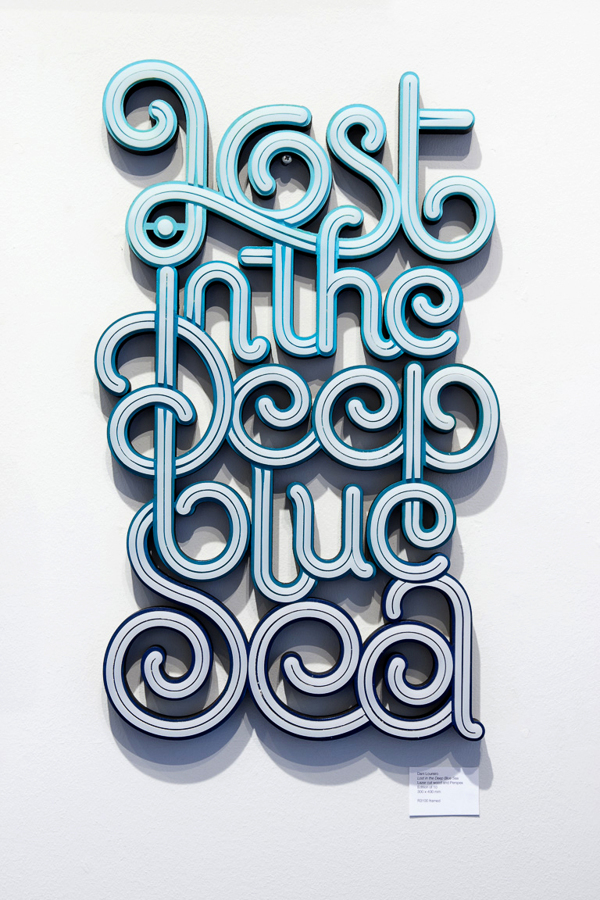
Illustrator and graphic artist Dani Loureiro produced some incredible pieces for Back in 5 minutes, a typography and custom lettering exhibition at Salon91 in March. exhibition at Salon91 in March.Dani Loureiro Illustration

All of these pieces were completed specifically for the show inspired by urban signage. Dani used the opportunity to experiment with a number of different techniques such as laser cutting wood and perspex and engraving into plexiglass.

Dani Loureiro Illustration 2

Ogilvy Cape Town new TV ad for VW’s Polo Vivo

In The Answer, the latest TV commercial for Volkswagen’s Polo Vivo, Ogilvy Cape Town explores the idea: If Volkswagen can make Polo Vivo’s available for such a crazy price, then who knows what other crazy things might happen?

Dutchie Surfboards collaborates with artist Rudi de Wet

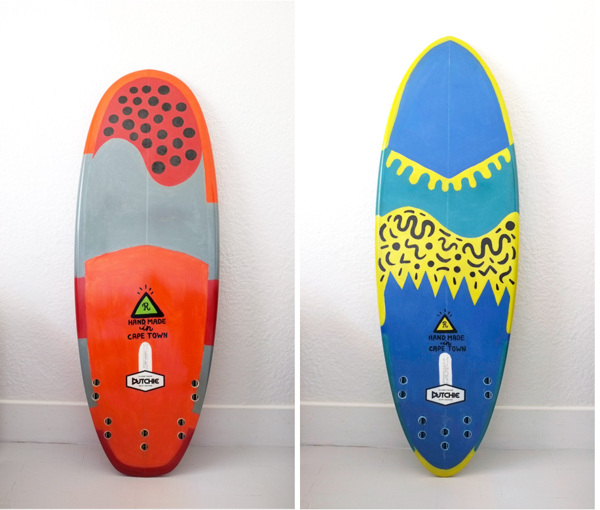
Personally, I’m already a major fan of Dutchie surfboards. This collaboration with Rudi de Wet is even more thrilling and features some of the best designs so far.

Dutchie surfboard collaboration with Rudi de Wet2

Rudi is no stranger to designing for unusual surfaces. His bold hand-lettered type can be seen on interior walls across the Southern Hemisphere and he has just completed a limited edition range of Weber BBQs. You can see some of the previous works of his that we’ve featured here.

Coming from a design background himself, Dutchie makes sure each of his boards is an individual piece of art and design innovation is a most important aspect to the custom shaping brand.

For this collab, Dutchie shaped a 5’6 Junkie Spoon and a 5’8 Caviar model to be Rudi’s canvas. Rudi handpainted directly onto the foam, including all logo and type work, before the boards were laminated and finished. We hope this isn’t the last of their projects together. Dutchie surfboard collaboration with Rudi de Wet


Saatchi & Saatchi create a classic for Otrivin Nasal spray

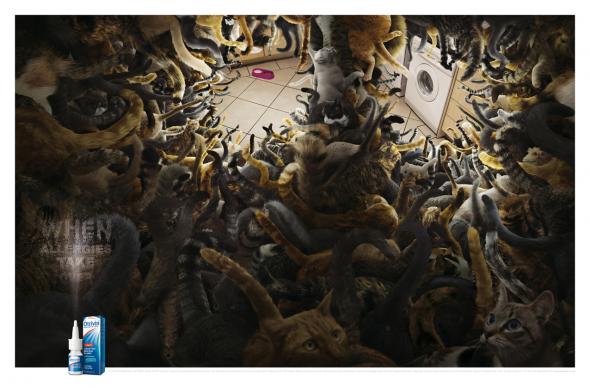
Saatchi & Saatchi Johannesburg imagines the view from inside allergy-ridden nostrils in this print campaign for Otrivin Nasal Spray. The pay-off line reads “When allergies take over.” Readers might be familiar with the visualization style – it’s a familiar technique, but the team from Saatchi have executed it flawlessly here.

cats_1

Engen and Wimpy Love Story TV Ad by Draftfcb

Love Story is a sweet 50 second TVC  by Draftfcb Cape Town for Engen and Wimpy.

The brand pair launched the micro rom-com in mid-March, just before SA hit the road for school holidays and long-weekend season. The agency says, “A holiday isn’t just about where you’re going. It’s about the experiences you have along the way. Engen and Wimpy bring together everything you need to have the ultimate roadtrip experience. It’s a place where you can stop, relax and really love the journey.”

10and5logosmall1


– Uno de Waal is a social strategist and the publisher of creative showcase 10and5.com.

– Industry profiles you’ll make time for. Sign up for our free newsletter!


Hermaneutics: In digital, associations are losing relevance

The advertising industry in focus from the editor of MarkLives.com. By Herman Manson (@marklives)

In the early to mid-1990’s the commercial internet was just grabbing a toehold in South Africa. In ’96/’97 I was still one of only a handful of journalists covering ‘new media’ in this country. I was classed a ‘tech journalist’ even though I didn’t know anything about gadgets. You see people who worked on/with/through the internet were easy to silo (at that point as ‘tech’).

Then digital went all Big Baboon House on every industry you can imagine. No more silos. If you work in media, part of your job is working on/with/through the internet. Ditto for advertising, marketing and a host of other industries.

This brings us to an interesting point. If you are an association created for people functioning in the digital silo, in a time when (dear senior big agency management please place your hands before your eyes – just for a moment) the digital silo is bust, just how relevant are you?

It seems to be one of the questions facing the Digital Media & Marketing Association (DMMA) – an association focussed ‘on growing and sustaining a vibrant and profitable digital industry within South Africa.’ Its members consist of a bunch of publishers and agencies that value their digital capacity and skills, and often have a digital legacy, but are no longer necessarily digital pure plays.

The question of the DMMA’s influence (if not yet of its relevance) has come under the spotlight with revelations that its current management structure have, and this is putting it kindly, outpaced its constitution. Without its members really noticing. Ahem.

The eight member elected executive committee, whose mandate is limited to one year terms, was replaced by a reduced board which extended its own mandate and then appointed a (nominated but unelected) steering committee, all without the organisation updating its constitution (which would require a vote in favour of changes by 75% of its members).

The board of any industry organisation or association holds a fiduciary (ethical and legal) responsibility to members, which is generally set out in a constitution. In fact, in the case of DMMA, its constitution specifically states that ‘The Chairperson shall preside at all meetings at which he/she is present and shall enforce observance of the Constitution [of the DMMA].’

Failure to do so represent a failure in the fiduciary duties of the board and directors. In the instance of the DMMA, it also represents a failure by members to hold their board, who oversees a good deal of money paid in membership fees, to account. Members had been informed of the decision by two of the eight persons elected to the 2012 board to effectively extend their own mandates by eight months (to the next AGM – rescheduled from January to August) and to appoint a third director and the steering committee.

Either members felt it was worth ignoring the constitution set up to protect their interests in the hope that the new team would deliver a better functioning organisation (this seems increasingly unlikely given the nature of the current comment thread below the original story) or they felt intimated to voice an opinion within the structures of the organisation (which would be a devastating indictment on the culture of the organisation and/or industry it represents). Finally it could simply be, to put it bluntly, that they considered the body to be of so little influence that they could not be bothered.

And who can blame them? The digital silo is dead.

First published on 10and5.com

– Industry news you’ll make time for. Sign up for our free newsletter!

Best magazine covers & coverlines plotted like a game plan

MarkLives.com runs a regular slot featuring the best local and international magazine covers every week. We recognise well thought out, powerful and interesting (and hopefully all three in one) magazine covers and celebrate the mix of pragmatism, creativity and personal taste that created each of them. By media blogger MediaSlut.

INTERNATIONAL

Field, Launch Issue

Field

From what I can gather Field is a new, soccer related publication. What I really like is the creativity of the logo, the simple design, but yet so relevant to soccer. And as this is the launch issue, it seems like the massive number (did you spot the “1”?) will change with every issue. And the coverlines plotted like a game plan is just genius.

Metropolitan, April 2013

Metropolitan

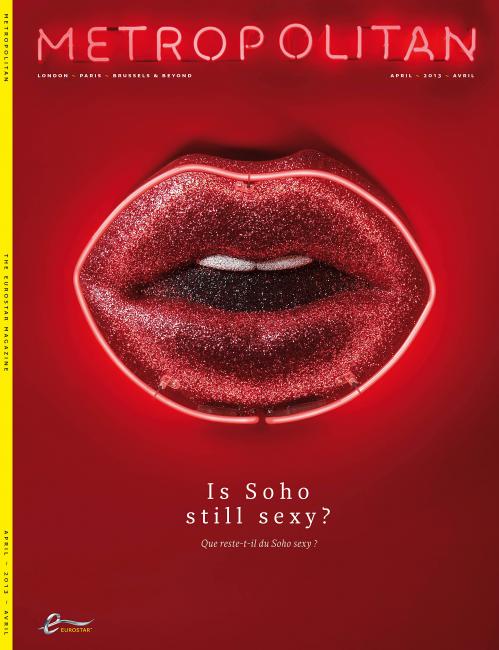
A very noticeable cover asking “Is Soho still sexy”, and from what I can gather from this article on CoverJunkie, the neon light effect of the logo and the mouth was actually designed by a Soho sign maker specifically for this cover. You can also page through this issue, here.

Elephant, #14


Elephant

This cover with its dark photograph and bright orange side is exquisite… You can page through this issue here. You’ll notice that they are also featuring quite a few South African artists in this issue.

Houstonia, Launch Issue

Houstonia

I spotted this launch issue of Houstonia magazine (proudly from Houston, it seems…) on CoverJunkie, and it was really interesting to see the process their launch cover took to get to what was printed in the end. You can view the quick process below.

Houstonia giff

– The (for now anonymous) blogger behind MediaSlut knows way too much for his own good about media in South Africa. Magazines in particular. His mission is to show when South African magazines might fail, but most importantly, succeed. If you’re looking for a library about South African magazines and news, your one-stop pitstop is MediaSlut. #MagazinesForTheWin

– Find a cover we should know about? Tweet us @marklives and @mediaslut
Sign up for our free newsletter!

Shelf Life: A tall order for the Heineken brand

Louise Marsland’s (@Louise_Marsland) pick of new product, packaging and design launches.

Alcohol brands dominate this week with Glenfiddich whiskey celebrating 125 years this year; Avondale wines launching sustainable new packaging; a tall order for the Heineken brand; and Danone extends its school programmes.

Groove with Glenfiddich

rf3192_bot_box_cutout_dk 006

Premium whiskey brand Glenfiddich, which this year celebrates its 125th anniversary, is launching an exclusive Groove Lounge Series of events nationally to celebrate and expose a younger, upwardly mobile consumer to the brand.

The 20 events will launch in May and are intended to be a sensory experience for the few hundred invited guests, clients and competition winners.

Lauren Kuhlmey of Edward Snell, the marketing manager for Glenfiddich in South Africa, says they want to rejuvenate the brand and open it up to new consumers.

“We often find in a whiskey malt category, that whiskey drinkers are more mature. But there is a younger consumer out there with disposable income, looking for premium brands and who is open to being educated in single malt whiskeys.”

She says they hope to provide a total experience with the pop-up Groove Lounge at selected venues around the country, by introducing food parings and partnering with neo-soul artists to provide the Afro-jazz vibe.

“It is not a large scale party. It is an exclusive event. We want to educate consumers by offering a platform to come and engage with the brand, taste the brand and understand the brand,”Kuhlmey said.

Green wine

Avondale-Anima-Chenin-Blanc-2010-400-x-600

Paarl’s Avondale wine estate has imported lightweight and sustainable glass bottles from Vereria Etrusca in Italy for its 2010 vintages of Cyclus, Camissa and Anima.

Avondale’s approach with its wine farming is to combine organic and biodynamic farming methods with modern science.

Avondale owner, Johnathan Grieve explains: “We consciously choose packaging materials that reflect our environmentally-aware approach to farming, and we are guided by our belief that a healthy environment is integral to the creation of premium wines.”

In addition, Avondale uses FSC-accredited corks for its range of nature-friendly wines.

Grieve says the brand intends rolling out the new packaging across its entire range as each new vintage is released. “We view our packaging as a progressive endeavour – one that will constantly evolve as we continue to grow and improve our methods.”

Healthier education

Danone

More brands need to look for opportunities to assist in the sectors in our country that need it most, such as health and education. Danone covers both bases by sponsoring a programme to educate children and their parents about healthier eating habits.

The aim of course is to promote dairy and specifically, Danone’s NutriDay yogurt brand.

The NutriDay branded educational material does cover specific learning outcomes for primary school kids across various subjects with the core message being good nutrition among children, such as personal care for a healthy body; sustainable living for a healthy planet by re-cycling; and making healthy food choices for a healthy mind.

The 2013 NutriDay programme will be rolled out in 1000 schools nationwide.

Ole for Olay

Olay Pack Range1

Oil of Olay is as synonymous as drive-ins, sunny skies and Chevrolet. Our moms used it and it was often the first skin cream used by their daughters. Olay, as it is called now, has just launched New Olay Even & Smooth Day Cream with local brand ambassador, Gail Mabalane (nee Nkoane) as the face of a new campaign.

New Olay Even & Smooth Day Cream formula helps to even skin tone, protect against sun damage, control oil and moisturise.

Mabalane describes the new 4-in-1 skincare regime as “no frills and a necessity”.

Olay is 60 years old and was created by South African Graeme Wulff in 1952. It is part of the P&G stable.

 It’s a wrap with Heineken…

Heineken Penmore

It’s been getting a fair bit of media attention, but if you haven’t yet seen it yet, here’s the spectacular Heineken building wrap in downtown Johannesburg. The building is the Penmore Towers and the total area size of the 3D wrap is 6000 metres. It’s all part of a brand awareness campaign for Heineken, from lead agency M&C Saatchi Abel in conjunction with Notabene and Kinetic. Encyclomedia was brought on board to enhance the original artwork.

Louise Marsland– Shelf Life by Louise Marsland is a weekly column on MarkLives. Tweet new product, packaging and design launches to @louise_marsland or email her at louise.marsland at gmail.com.

– Want to sponsor Shelf Life? Contact us here.

Louise Marsland has written about the FMCG, media, marketing and advertising industry for 18 years of her 25 year media career as a former Editor of magazines AdVantage, Marketing Mix and Progressive Retailing; as well as websites Bizcommunity.com and FMCGFiles. She currently edits the weekly Wednesday Media & Marketing Page for The New Age newspaper; and is the co-founder and Publishing Editor of SA’s newly launched industry trendwatching portal, TREND. at www.trendlives.info, in partnership with MarkLives.com.

– Industry profiles you’ll make time for. Sign up for our free newsletter!

The Hidden Danger Of Precision Targeting

by  Bob Hoffman (@adcontrarian), San Francisco Bay There is very little difference between your customer and your competitor’s customer.

And get ready for a shock. To them there is very little difference between you and your competitor.

Most consumers are oblivious to the positioning subtleties among major brands. The average consumer has no idea why Coke is different from Pepsi, or Crest is different from Colgate. They see no difference between Jif and Skippy. They are unimpressed and uninformed about the arcane positioning distinctions between Bounty and Brawny paper towels.

Most of their purchasing habits are just that — habits. Interpreting their behaviour as some sort of ideological commitment to your brand is a delusion.

In fact, most of the positioning and differentiation work done by advertisers and marketers are academic exercises that are lost on consumers. Consumers have more important things on their mind.

This is why trying to draw precise targeting differences and grand strategic insights between your buyers and your competitor’s buyers is such a fruitless endeavour. Being too precise in your targeting means you are missing one of your biggest prospects – your competitor’s customer.

Heavy users in your category are promiscuous. They may have a favourite brand, but they are generally not fiercely brand loyal.

Advertising vehicles that allow you to “engage” and have “conversations” with your brand’s heavy users by promising precision targeting provide very limited opportunity to grow your business. In fact, they often distract you from your proper objective – attracting new customers.

This is why social media have proven to be highly suspect in building sales. Who follows you on Facebook and Twitter? They are mainly your committed customers. They are not your primary source of growth. Should you ignore them? Of course not. But neither should you be obsessed with them, as is common practice in the world of social media.

One of the great benefits of mass media is that it lacks precision targeting. It reaches all the users in your category, including the users of your competitor’s brand.

These people – the ones who are not your loyal fans – are the ones who can grow your business.

– The Ad Contrarian is Bob Hoffman, ceo of Hoffman/Lewis advertising in San Francisco and St. Louis. Hoffman is the author of The Ad Contrarian and 101 Contrarian Ideas About Advertising. Reprinted from his blog The Ad Contrarian.

– Industry profiles you’ll make time for. Sign up for our free newsletter!

Ad of the Week with Oresti Patricios – the Robot with a Taste for Tea

MarkLives Ad of the Week with Oresti Patricios – the Robot with a Taste for Tea

bev 2

Back in the ancient history of the internet (we’re talking 1982 here), four students at Carnegie Mellon University designed the first ‘internet appliance’ – an internet-accessible vending machine. The story goes that these computer science students were working quite far from the departmental cold-drink vending machine, and would have to deal with frustration and disappointment when, having made the trek across the campus to get a cold beverage, they would find either an empty machine or one that was filled with warm drinks.

So the people others would say were ‘geeks’, but whom I’d call pure genius, got together and hacked a solution. They installed sensors in the vending machine that interfaced with their departmental mainframe, a DEC PDP-10. From then on, these four students could be anywhere in the world and by merely using a program called Finger they could to get the vending machine to tell them exactly how many drinks were available, and how cold they were. To appreciate the marvel of this, we’re talking a time when most people had faxes.

The very first internet-accessible vending machine spawned many successors, making it—in effect—the first ‘internet meme’: vending machines in campuses across America, coffee pots being watched by webcams, a toilet being watched by a webcam (a gag – this was just a single pic, so nobody’s privacy was invaded) . Oh, the fun that was had in the days of the Arpanet (aka the pre-Internet).

Well, times have moved on and the internet has changed. Now we have Twitter. And yes, vending machines have evolved too: they have LED displays, soft lighting and wonderful clear-glass fronts, so we can watch the robot arm as it reaches up to the correct place and collects our desired beverage (or snack) for us.

In our modern era, we also have clever marketers who don’t miss a trick, like BOS’ digital agency Cow Africa, who were asked to come up with an original marketing tool to persuade people to try the product out.

According to Cow Africa, “Our job was to come up with an innovative sampling mechanic that would put BOS Ice Tea a step ahead of the crowd and introduce it to the rest of the world. We wanted to link the real life experience of tasting BOS Ice Tea into something that is immediately share-able via people’s social networks.”

In the old days, to get people sampling would have involved sexy girls in skimpy outfits handing out free samples, but why get a human to do what a robot can do, only better? Cow Africa, together with designers Marc Nicholson and LyallSprong from Thingking, got their hands on a Bevmax 4-45 vending machine – very shiny-shiny – and tricked it out with microphones, cameras, screens, LED lights and speakers. UK-based social media agency, RAAK, was called upon to develop software that would achieve full Twitter integration.

The resulting robot was renamed ‘Bev’, and she was introduced to the public for the first time at the 2012 Design Indaba. Bev was an instant hit with consumers. Some jumped for joy and some squealed with delight when their tweet triggered the machine.

The overall design keeps with BOS’ unique African-flavoured brand, mashing in a sort of 8-bit digital robot vibe that works surprisingly well. BEV ‘knows’ through geo-location services if the Tweeter is in front to the machine or not, and screens display what is going on inside, while the LED display counts down the seconds until your cold iced tea is delivered. A robotic voice says, “Enjoy your drink… human,” – which seems to delight young and old alike.

The campaign spread quickly through social media across the globe and was featured on the BBC, Forbes and AFP, amongst others. Best of all, it was featured on Google’s Creative Sandbox, which describes itself as “A showcase of marketing campaigns that blend creative genius with digital innovation.” High praise indeed! Coverage also appeared in France, Italy, Spain, China and India, and Cow Africa received calls from a number of brands who wanted tweet-activated vending machines of their own.

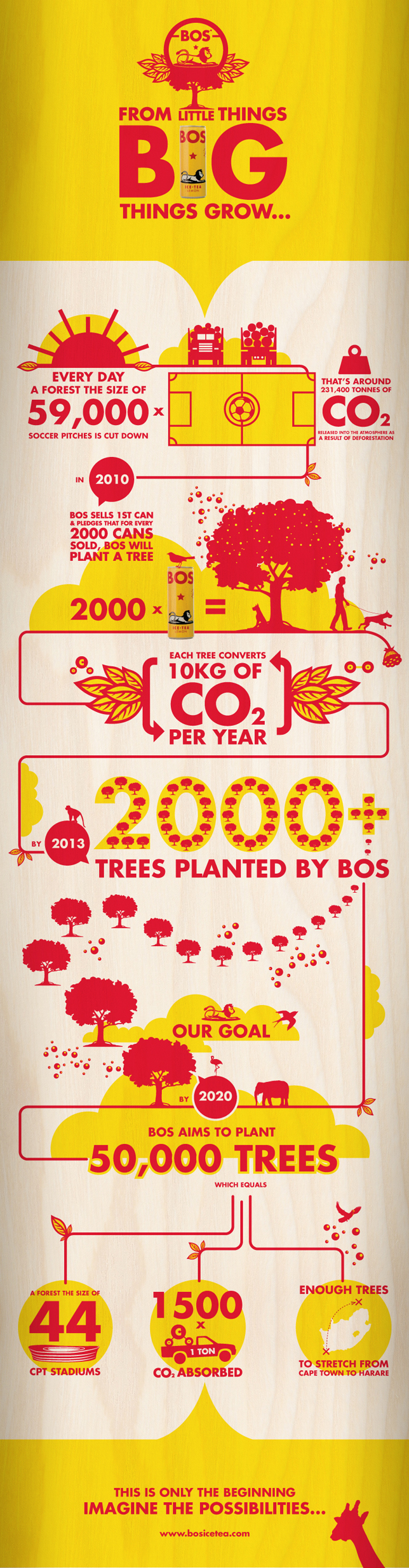
So if you haven’t met Bev before and you’re in Cape Town between now and Friday 22 June, visit her at Wembley Square, where you can tweet in exchange for a free BOS Ice Tea. Not in Cape Town? Well, have a peak at the Bos infographic created by Cow, marvel at how smart the brand and its agency are, and then go and get yourself a nice, long, drink of cold tea.

bos ice tea

Ad of the Week is published on MarkLives every Wednesday. See past selections here.
Oresti Patricios is the CEO of brand and reputation analysis company Ornico.

– Industry profiles you’ll make time for. Sign up for our free newsletter!

“Harder than hard”: Iron Lady front pages across the world

grubstreet

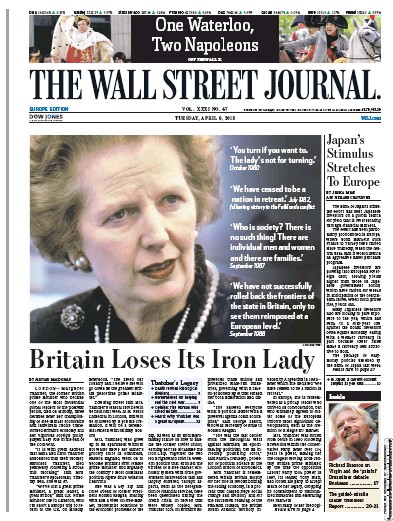
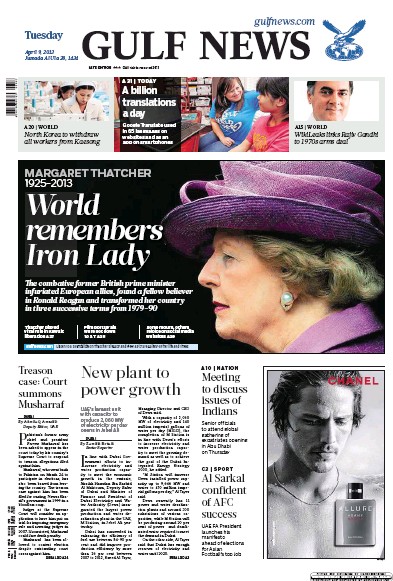
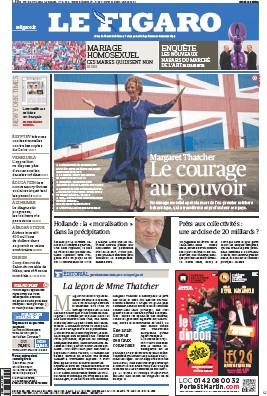
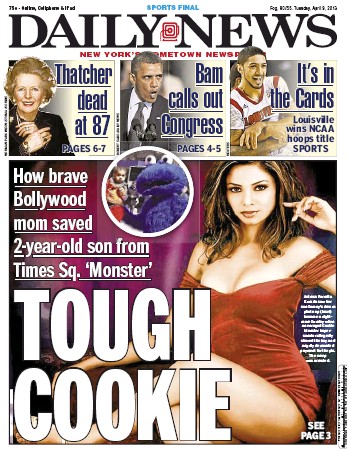
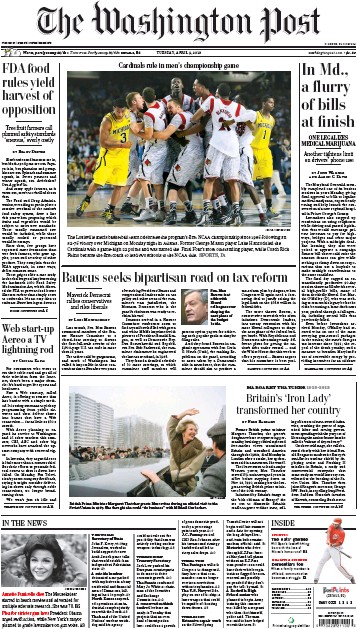
by Gill Moodie (@GrubstreetSA) It’s all about Margaret Thatcher today on most of the front pages of newspapers across the world so I thought it would be interesting to survey some of the big papers from around the globe.

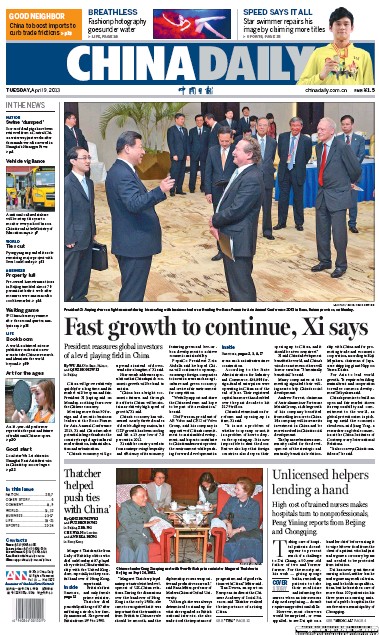
The Daily Mail’s poster pic of the Iron Lady with the headline “The woman who saved Britain” says so much about that doggedly conservative paper while a similar treatment by The Guardian with the quote “She became harder than hard” speaks volumes for its liberal, working-class stance and history.

I really like The Guardian’s treatment because I think it goes beyond ideology. It pays tribute to the massive effect Thatcher had on Britain but also projects the paper’s view that she tore the guts out of the country.

It’s very interesting to see how on opposite sides of the globe that the China Daily and The New York Post don’t give two hoots about the Baroness while Le Figaro is seemingly paying tribute to her courage. (Let’s not forget how Thatcher loathed Europe!)

Most papers used “Iron Lady” in the headline – rightly so – as it was very apt and she herself rather fancied the nickname, we believe. If you’re wondering where Iron Lady comes from, this entry on Russiapedia says:


On January 24, 1977, the Krasnaya Zvezda (Red Star) newspaper, in an article about Margaret Thatcher, the then-Prime Minister of Great Britain, called her “Iron Woman,” which, translated by the British Sunday Times newspaper as “Iron Lady,” sparked the universally known moniker Thatcher had been known by her entire political career.

On January 19, 1976, Thatcher, the Conservative leader at that time, claimed in one of her speeches that the Russians were striving for world domination. In response to that, the Soviet Defense Ministry, in the official Krasnaya Zvezda paper, published an article by military journalist Yury Gavrilov entitled “The Iron Woman Threatens…” The author said that was the name Thatcher had received in her own country. In reality, Thatcher did have a likely moniker prior to that — she had once been dubbed by a British journalist as “Iron Maiden,” after the midieval German torture device.

However, it was the Russian version she herself liked. By then, Thatcher had already earned herself a reputation as the “anti-communism crusader.”

“Here I am, standing in front of you in my green evening dress, with a touch of makeup, and fair curly hair. How am I not the ‘Iron Lady’ of the Western world?” she joked once at a banquet in London. She used her new “name” during her electoral campaign in 1979, which was conducted under the slogan “Britain needs an Iron Lady.”

Daily-Mail_20130409

The-Guardian_20130409

Wall-Street-Journal-Europe_20130409

Gulf-News_20130409

Le-Figaro_20130409

China-Daily_20130409

International-Herald-Tribune_20130409

Le-Monde_20130409

New-York-Daily-News_20130409

The-Washington-Post_20130409

The-Hindu_20130409

The-Australian_20130409

The-Philaelphia-Inquirer_20130409

die burger

The Sell: Giant Footsteps, Local Shoes.

by Mimi Nicklin (@MimiNicklin) I recently presented on this topic at the Shopper Indaba and enjoyed it so much I can’t help but write further on it. The premise here is that while the globe looks onto the emerging markets with interest, and deep pockets, it is questionable as to what we are really doing to ensure that our retail environment is learning from the giants out there (Tesco, Walmart) whilst effectively tailoring our stores and brands to local demands.

Walmart claims that, as they wander the world looking for takeovers and mergers, they “buy companies that know the markets in which they Mimi Nicklinoperate and know local conditions.”So, the largest global retailer is recognizing that local know-how is key when it comes to driving business success, but are our local brands and retailers grabbing the opportunity to tailor what the world has to offer on local soil?

I believe the solution lies in what a Procter and Gamble marketer would call effective ‘search and reapply.’ Searching the globe for learning’s that can be addressed here, but reapplied with careful planning and detail. After all, a Checkers shopper may hold a similar need for value as a Walmart shopper, but the home and family they take those goods home to are likely to be vastly different.

A recent McKinsey Global Institute Report claimed that one billion people will enter the global consumer class by 2025 and six hundred million of these will live in emerging markets. We are in the right place, but how will we capitalize on these new spenders to the benefit of our brands, our retailers and indeed our shoppers?

Here is my three ‘giant’ learnings that we can take from the giants and reapply here:

1)     Recognising that retailers are no longer the sales ground of brands. They are the brand. They demand recognition from their suppliers that they have their own strategy and shopper in their stores, and that product strategy should be adapted by store and not blanketed out across all retailers. If your brand has the exact same campaign across all retailers, your brand may be ok, the shopper may be ok, but the retailer will undoubtedly question whether you understand their shopper & category objectives. And with this in mind, are you therefore getting the best ROI on your investment if you pay no heed to adapting your offer to the person buying it? If the worlds’ most red brand, Coca-Cola, is willing to turn their bottles yellow for Selfridges, surely we can tweak our messaging or pack size to suit the different needs of a Woolworths versus a Boxer mom? They might both buy Coca-Cola, bread and milk on their shop today, but their use, role and investment will vary substantially.

2)     Digital is not coming. It has arrived. The introduction of Eezi coupons at Shoprite Group, 89% of South African households owning a cell phone (Census 2011) and smart phone penetration on an upwards trajectory daily, paints a moving picture. Our shoppers are no longer short on choice, but they are short on time. In store digital, whether through a cell phone, a tablet at shelf or a kiosk at the entrance to help you plan and fill your shopping list, is a key facet we are not yet exploiting to its full extent. We are seeing this pop up with Porche’s interactive ‘design your car’ technology, 8Ta’s interactive windows, Sandton City’s touch screen directory’s, but overall there is much room to grow here. NuMetroBlackBox DVD rental kiosks are a great example of using a digital asset to allow the shopper to fulfil their needs more simply and more quickly – with the swipe of a card – outside of the normal DVD shopping environment. Ironically, I believe shoppers need help spending their money and the leverage of digital tools can help us squeeze that larger basket size more often.

3)     A shelf is not just a shelf. It is a tool to make decisions. It teaches us how to shop.It may be the retailers shelf but it is your brand and your category, and the learning going forwards surrounds the understanding of how you fuse what the retailer gives you with what you’re offering. Clutter, screaming promotional messages and a sea of messy colour doesn’t help our busy, attention starved shopper. The beauty category segment their shelves phenomenally well, as do brands like Colgate with their recent shelf categorization driving you to the smaller, larger, softer or electronic versions within their range depending on your needs. Indeed Campbells’ huge revamp of their soup shelves in the USA entirely changes the way the shopper shops, increases the size of their facings and elevates the simplicity with which shoppers can navigate the shelf. The approach here is to think beyond POSM and to work with the retailer to create category solutions beyond a short term brand fix.

So, in summary, what am I advocating here? I am suggesting that we look wide but think local. Let’s allow for global retailer and shopper marketing inspiration, and begin to drive our buyers and key account managers from a shopper centric, not margin specific, approach. In a nutshell? Lets learn from the giants how to move from consumer comms that are in a store, to shopper solutions that are born in store, but that live well beyond a shelf.


mimiMimi Nicklin (@MimiNicklin) followed her passion and experience in the consumer, retail and shopper space from regional roles in Europe and Asia, to South African shores in 2010. Having led global brands through the line for Procter & Gamble, and two of London and Hong Kong’s top agencies, her background gives her an international perspective to add to her depth of SA understanding. She serves as strategic director and a partner at 34 Group. Mimi contributes the monthly “The Sell” column concerning shopper marketing to MarkLives.

DMMA board denies governance crisis

by Herman Manson (@marklives) The Digital Media & Marketing Association (DMMA) earlier this year announced a new management structure that saw an elected Executive Committee replaced by an appointed steering committee. However, it had neglected to update its constitution, which requires a 75% vote in support by members, before doing so.

Currently the DMMA constitution requires members to elect a Chairperson, a Deputy Chairperson and six additional Members from their ranks to serve a one-year term of office. “These elected persons, totalling 8 (eight) persons, will form the Execo,” according to the DMMA constitution.

“The Execo will be entitled, but not obliged, from time to time to co-opt such additional members to the Execo as the Execo may deem dmmaappropriate, to assist the Execo with specified projects. Such co-opted members shall not, for the purpose of this Constitution, be deemed to be members of the Execo,” the document reads.

This seems at odds with the current, revised structure of the DMMA, which now contains an Executive Director (for which no function exists in the DMMA constitution), a Chairperson and a team of eight other members on an appointed steering committee.

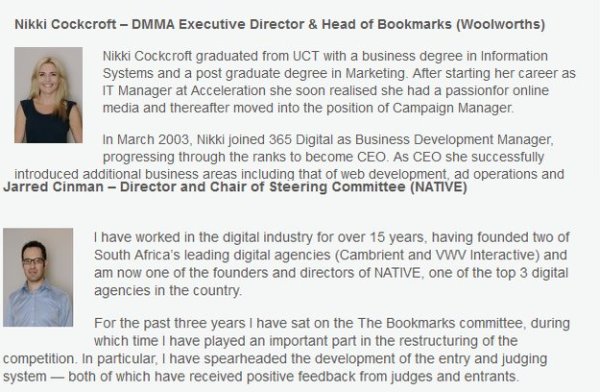
Previously the DMMA Executive Committee effectively functioned as its board, which is not the case of the current Steering Committee. It sits below a Board of three members who are Nikki Cockcroft (DMMA Executive Director & Head of Bookmarks), Jarred Cinman (Director and Chair of Steering Committee) and Theresa Vitale (Director).

Cockcroft, who has a lengthy affiliation with the DMMA, and Cinman were both elected (in the case of Cockcroft re-elected) Execo members of the DMMA in 2012. Vitale is a full time employee at the DMMA. According to Cinman he and Cockcroft became the only defacto board members of the DMMA after none of their colleagues on the 2012 board made themselves available for re-election (Cockcroft notes “A few stepped down and no response from others”). The exception was Gustav Goosen who stayed on in the Research Role and is part therefore part of the appointed Steering Commitee but who doesn’t sit on the board. The AGM, which should have taken place in January, was postponed to August, and according to Cinman so then did the mandate of its remaining Execo members (The DMMA constitution provides only for one year terms for Execo members – ed.) .

The DMMA, a section 21 (not for profit) company, is in its own words “a member-driven voluntary association seeking to grow the digital industry.” It represents over 189 members including 96 local online publishers and over 93 agencies.

The thinking behind the appointment of a steering committee was explained in a FAQ post on the DMMA website in January. “In the past we have voted in an Executive Committee at the AGM held in January, but history has shown us that even though the Exco has the best of intentions we find ourselves in a position where some portfolios are not looked after throughout the year as a result of the much needed time and commitment,” the post reads. “As a non-profit organisation with a rapidly growing member base it is pertinent to relook at how we appoint the right committee, as we are 100% dependent on this team to drive the annual initiatives.”

DMMA Executive Chair Nikki Cockcroft says a larger revamp of the DMMA constitution is being investigated and the (reduced) Board did not want to make piecemeal changes. She was surprised to hear that there had been complaints about the way the new Steering committee was appointed, saying that during initial discussions no DMMA members had raised red flags on the proposed changes.

Cinman says the option was to hold an AGM and election in January or to hold the course in the interim while the organisation ensured it met all legislation governing Section 21 companies. As no members raised any concerns, he and Cockcroft decided to follow the current route.

Part of the reasoning was that some portfolios had been not been delivering. Effectively this resulted in the organisation as a whole under performing. “We were not meeting the mandate if our members with our previous structure,” says Cinman. Cinman certainly believe that without their intervention there would be no DMMA left to serve members.

At the upcoming AGM in August members will vote on a number of changes which will proposed to the DMMA constitution, including that members elect the Board, which in turn will appoint the Steering Committee, in line with the changes that have already been implemented on an organisational level.

The extension of the mandate of only two Execo members for eight months and the appointment of a steering committee as well as a third director without a vote by members does not seem to have caused much of an uproar amongst the DMMA membership (Cockcroft notes that she considers the email and other notices sent out to members on the structural changes to the organisation, and the lack of subsequent feedback, as indicating permission from DMMA members to proceed with the changes).

Either members believe that the revised, temporary structure will lift the organisation to finally delivering fully on its mandate, as suggested by its current leadership, or it suggests that members no longer view the DMMA as an industry body of influence.

Right of reply: MarkLives offered the DMMA Board a Right of Reply to this article. Nikki Cockcroft made the following notes in reply:

Cockcroft notes that she serves as Executive Chairwoman (rather than Executive Director) of the DMMA “as elected by members and as per the constitution I will be in place until voting at the AGM later in the year.” She notes that Jarred Cinman is the Deputy Chair (rather than the Chair) of the Steering Commitee. [The DMMA constitution states that terms in office are limited to one year. “There shall be one annual general meeting not less than once every calendar year, which meeting will be held not less than ten months and not more than fourteen months after the previous annual general meeting, and Members will be given at least 14 days’ notice of such meeting”. The DMMA website identifies* Cockcroft as ‘DMMA Executive Director & Head of Bookmarks’ and Cinman as a ‘Director and Chair of the Steering Commitee.’]

Cockcroft notes that ‘An email was sent to all members for feedback and comment on the new structure, a notice was put on the website and we had a special meeting held at industry events in JHB, CPT and DBN.’  [The DMMA constitution notes “This Constitution, or any part thereof, may be altered by a resolution passed by not less than 75% of the Members present in person (including via a teleconferencing link) or by proxy and entitled to vote at a general meeting or a special meeting convened for this purpose, provided that notice of the proposed amendment is given to members not less than 14 days before the date of the meeting”.]

‘I like to deliver results and I believe we needed to make a few changes to ensure that we did exactly that,’ Cockcroft concludes.

* See screen grabs below:
dmma board

– Industry news you’ll make time for. Sign up for our free newsletter!

Online CPD Courses Psychology Online CPD Courses Marketing analytics software Marketing analytics software for small business Business management software Business accounting software Gearbox repair company Makeup artist