Pulp fiction with Jungle Jim

So you want to start a magazine. How far do you think R1500 will take you? Quite far, it seems, as Sean O’Toole brings you a true story about the impossible.


Jungle Jim is a cheaply printed magazine from Cape Town. Wrapped in a hand-printed cover, it features mainly words. Original genre fiction from Africa. Cop stories. Sci-fi. Mall stories. Underground stuff. African fiction. Here’s a sentence from issue one: “The impossibly good-looking Detective Sergeant Chikata, [Detective Inspector Darko] Dawson’s junior in rank in the Criminal Investigations Department, looked up as Dawson approached.”

And another from issue two: “Tall, broad shouldered men with red, bulging eyes and faces that might have belonged to criminals came wearing bullet proof jackets with Special Anti-Robbery Squad written on them.” And here are two sentences from issue three: “I sped out of Spruitview and through Katlehong like a lunatic. How many yelping stray dogs and shocked old ladies I missed by inches is a tale best left untold.”

This is the story about how the magazine that published these sentences came about.

“We were talking about it yesterday,” says filmmaker Jenna Bass. She is seated next to illustrator and designer Hannes Bernard. We’re on the first floor of a retrofitted warehouse space on Hope Street, near the infamous Stags Head Hotel in central Cape Town. It’s a Wednesday. Jenna: “I remember coming to the office one day…” Hannes: “That was the start of it, getting this office last year.” Jenna: “I came in – I think I had a really frustrating day – and I was just like, ‘Hannes, let’s start a magazine!’ And he said, ‘Yes.’ That’s how I remember it, but Hannes doesn’t remember this at all. I think it was just one of those days when I was thinking about something that I wanted to buy but wasn’t out there.”

Onerous enterprise

Typically, publishing is an onerous enterprise. It involves convoluted business plans, advertising staff, distribution agents, subscription drives, contributor contracts and other boring necessaries. Literary publishing, however, is to a degree freed of these imperatives. Not many people are interested in fiction, the literary sort less so than the fast-paced pulp variety.

So, print runs of these little magazines (essentially the hothouses for future talent) are small. Cold calling at two or three favourite bookstores usually sorts out distribution. And word of mouth, which nowadays includes whisper networks like Facebook, helps spread the good news. “Ja look,” says Hannes, who used to work with designer Peet Pienaar before going solo, “we made a decision early on that there isn’t really a good reason why this should exist. If you look at it from a business or publishing perspective, Jungle Jim doesn’t really make sense as a venture. But we decided we would completely disregard that, and it wouldn’t be a choice ever whether it makes sense to do this or not.” “Ja,” agrees Jenna, an AFDA graduate who created a splash with her 2010 short film The Tunnel. “So we just find a way of doing it.”

“We also knew that the second large amounts of money became involved, we would just get discouraged – we’re not good with money. We thought the only way this would work is if we actually have a small amount to get it going.”

“How much did you put into it?” My question makes Hannes and Jenna laugh. Hannes: “We came up with an amount we could both pay per month. Basically, it was how much money we could lose per month.” Jenna: “Which was obviously not very much, because neither of us has money to throw around. It was a little, not much.” Hannes: “Very little.” Jenna: “A small amount.” Hannes: “Very little.” Jenna: “A really small amount.” Hannes: “Much less than you can imagine.” “Like two or three zeroes?” I push. Hannes: “Our original budget was about R1500 for ten months.”

For their launch issue, the Jungle Jim duo produced 200 handmade copies of their A5 magazine. The unbound launch issue of the biweekly featured the work of cartoonist and lyricist Nikhil Singh, filmmaker Richard Stanley, Somali writer Abdul Adan and Ghanaian novelist Kwei Quartey, whose detective fiction is set in Agbogbloshie electronic dump in Accra.

This “notorious slum”, as Quartey describes it, is also the subject of photographer Pieter Hugo’s most recent photobook, Permanent Error. To announce the new birth, Hannes and Jenna organised a reading at Book Lounge, Mervyn Sloman’s energetic independent retail store on Roeland Street. Singh read his pirate story (“Eyes like foglights, calling in all the lost ships of the soul”) and an actress read a piece by Kola Boof, a former model-actress said to be the mistress of Osama Bin Laden.

The launch issue was quickly snapped up. “I think a lot of people didn’t pay for them,” sighs Jenna, admitting to a problem that perplexed the publishers of Tessa and Kid Colt a generation before.

Republican Press

Founded in the mid-1960s by Hint and Boet Hyman, two Kimberly farmers turned publishers, Republican Press is a name synonymous with South African pulp fiction. At its height this Durban-based independent publisher was releasing 20 photo comics monthly, including the popular titles Tessa, Condor and Kid Colt.

Averaging sales of about 30 000 units per issue, the brisk trade in pulp fiction made Republican the “biggest printing organisation in the southern hemisphere,” according to Ron Roderick, a retired executive who started his career at the company as a print apprentice in 1968. “The photo stories were the foundation,” says Roderik, 65, now retired. “They gave Republican the opportunity to go into the magazine market. he Hymans got sufficient wealth to buy into established magazines like Garden & Home.”

Perhaps better known as the publisher of Scope magazine, Republican started out as a Kimberly-based publisher. When the workload got “too big” for the Diamond Fields Advertiser, a Kimberley based newspaper and press established in 1878, the Hymans decided to import a used gravure press from Germany. “It was used by the Germans to print propaganda and counterfeit during the war,” says Roderik, who spent ten years obscuring the nipples and pubic fuzz of the naked women showcased in Scope during the years of apartheid censorship.

Too large to transport upcountry, the Hymans summarily relocated their business to Durban. Roderik is a fount of knowledge on the production of the photo comics. Tessa, the original bikini-clad blond – there were two, the second less successful – was a woman named Erna van der Westhuisen. “She came from Dirkie Uys Primary School on The Bluff,” says Roderik, referring to the skollie neighbourhood south of Durban harbour where many of the actors came from. Aside from Tessa, Mark Condor, played by Martin Paulse, was one of Republican’s more popular titles.

According to Roderik, the male actors were “big, hard chaps who had a certain appeal”. Like the young female actresses, they hoped to use the photo comics as vehicle for a film career. Catering to lower- and middle-income white families, the photo comics functioned as portable, if static soap operas. The stories were uncomplicated. “All you need for a movie is a girl and a gun,” said filmmaker Jean Luc Godard. Republican applied the same philosophy to its photo comics. The sets were improvised and included a Catholic church in Athlone Park and factories in Prospecton, the cast sometimes venturing as far south as Warner Beach.

The quick uptake and national popularity of the photo comics prompted Republican to professionalise their production, an Italian photographer, Franco Gardini, contracted to handle the shoots. “He joined the company in 1972 and arrived from Italy with his Hasselblads and what-not,” says Roderik. “There was big fanfare. He lasted about 10 or 12 years.”

Television, which was introduced to South Africa in the mid-1970s and refined during the 1980s, was death knell of photo comics locally. They are now a byword for white nostalgia for a past that doesn’t exist anymore. It is partly the anachronistic quality of photo comics that prompted Hannes to start Jungle Jim.

Instead of the fatal fallback of nostalgia, he wanted something new, something now. Not that he puts it quite as bluntly. It is only hinted at when I quiz the pair about their reason for starting Jungle Jim. “That’s a good question,” laughs Jenna. “I actually dunno,” pitches in Hannes. “I think we were fascinated by the idea of doing pulp fiction in an African context. I think even though we have a vintage appreciation for photobooks and that kind of thing, it is not something that I can directly relate to, culturally. There is like a huge gap between that and me.

Other forms

I was also really interested in other forms of African DIY publishing. In Nigeria, especially, they have a form of market literature called Onitsha.” Onitsha is a port and market town on the Niger River in southern Nigeria. A gateway to the north, in the 1950s and 1960s it was the site of a flourishing trade in pulp fiction. Produced by local presses, this ‘market literature’ – it mostly consisted of pamphlets and novellas – was consumed by taxi drivers, mechanics, white-collar clerks, primary school teachers, small-scale entrepreneurs and traders. Simplistic, moralistic and sentimental, this ‘semi-literate’ pulp fiction is nonetheless credited with establishing a literary appetite that is reflected in contemporary Nigeria’s vibrant media culture.

“Their media industry is much more active than ours,” Pieter Hugo remarked in 2005, shortly after returning from photographing his career-defining work of Hausa men with their hyenas. “There is an active press. They are very big on reading. People debate contemporary issues. It is not an apathetic society.” “There was a link between Onitsha’s bracing moralising stories – about men who treat their women badly, or how to spend your money wisely – and something genuinely African and pulp fiction,” says Hannes. “That was the original interest. We wanted to see what happens when you take extremely westernised ideas of aliens and sci-fi archetypes, and see how that gets applied in an African context.”

“What I loved about pulp was that they churned the stuff out,” adds Jenna. “It wasn’t always the best quality, but even if they were recycling things, they were always trying to come up with new ideas and stances. There were always these narrative drives.”

I put it to Jenna, whose duties on Jungle Jim are chiefly literary and editorial, that Nollywood, Nigeria’s brazen DIY film industry, is essentially the pulp fiction of now. “Do you really think the written word can compete against it?” “It was definitely a concern,” she says. “It is one of the reason’s Jungle Jim is so cheap.”

A R20 note will get you a copy of the magazine plus a silver R5 coin in change. “We don’t want this thing that costs R60 and then your money for the month to entertain yourself is gone. But that isn’t answering your question. I like to think not. I still think there is something special about reading something as opposed to having someone tell it to you or watching it on television.”

_Sean O’Toole has no hair and vertically long head. His nose is pointed downward and his mouth resembles that of a fish. To further quote Abdul Adan, “The guy was unlike anyone I have ever seen before.” Reprinted with permission from Enjin magazine.

We rate the Apple iPhone 4S

by Arthur Goldstuck We put the new Apple iPhone 4S through a Ten Task Test.

Apple fans make many excuses for the iPhone 4S, mainly insisting that it is indeed a significant step up from the 4, and Apple never promised a 5, and there’s nothing wrong with incremental improvements, and millions are lining up to buy the 4S.

All of which is true, but it doesn’t change the fact that the hype machine that is normally so kind to Apple, let the brand down this time. Apple usually rides the tide of expectation leading up to a new product launch, and then delivers in spades. This time it did nothing to manage those expectations, and the result was a let-down to all but those already converted. The company and its evangelists put a beligerent face on it, blaming the ignorant media for creating heightened expectations. Naturally, when it worked in their favour in the past, there had been nary a word of blame.

That is still relevant because the 4S is a great phone, but suffers by comparison with the assumed leap forward that the 5 was supposed to represent. Simply because there had been such a long wait for the new version – almost 16 months from the launch of the 4 – a mere refinement of the old version would naturally result in many opting to wait a little longer for the next really big thing.

So much for the hype. What about the phone itself? We put it through the Ten Task Test to see if the long wait has been worthwhile.

1. General look and feel (aesthetic judgement, differentiation in look and feel)

It looks exactly the same as the iPhone 4. After using them side by side, we had to check the apps on each phone to figure out which was which. Eventually, we noticed the identifying mark: a ridge next to the earphone jack.

After spending more than a year with the 4, and continually comparing it with newer phones, one limitation cropped up immediately: the screen size is beginning to look decidedly pokey at 3.5”. As a result, the phone itself sends the message that it is waiting for a new look and feel. However, the iPhone 4 design remains iconic and satisfying, and still leaves most other phones playing catch-up.

8/10

2. Slippability (Weight and size, ability to slip into a pocket unnoticed)

The phone is compact, but beginning to show its size in a thin-obsessed world. Remember when the iPhone was regarded as the last word in slim design? You’re older than you imagine.

7/10

3. General performance (speed, responsiveness, multi-tasking)

The 4S uses the Apple 5 dual-core processor built by Samsung for the iPad, along with the improved iOS 5 operating system. As a result, it delivers among the finest performances to be had on a smartphone. It downloads and installs apps seamlessly, browsing is faster than its already nifty predecessor, and the double-tap on the control button to bring up active apps provides a semblance of multi-tasking. It is simply superb.

9/10

4. Life as we know it (How’s the battery life?)

The iPhone 4 battery had among the worst performances of any phone on the market. The 4S, at launch, was even worse, due to poor energy management of the operating system. The new iOS 5 sorted out that problem, and does give the 4S slightly better battery life than its predecessor. But don’t venture our for a full day’s work without a charger or back-up.

6/10

5. Vision of the future (picture, video and browsing quality)

The phone’s Retina Display remains lovely. However, there is just not enough of it, and maneuvering your way round the screen for finicky tasks can be frustrating.  Under the hood, though, there has been a major tune-up. The phone now supports full HD, allowing video recording in 1080p, as opposed to 720p on the iPhone 4. (see (9) below for more on the camera)

Music and video are separated into different icons, addressing an irritation of the 4. The browser remains one of the best in cellphones anywhere, but the limited screen size is beginning to count against it.

8/10

6. Talk to me (quality of audio)

Siri The Killer App is, outside the USA, more like the Concussion App, as you hit the phone against your head in frustration. For most purposes, you would need to activate location services – a privacy issue avoided by many, although, of course, not by 4Square exhibitionists.

It remains a mystery why so many insisted Siri would change the future of phones; it is still in beta, meaning there are numerous limitations; and most other smartphones can approximate it with apps like Vlingo, although they aren’t as well integrated with the phone. Oh yes, it talks back to you. Mostly, you will find yourself using it as a novelty and to get a gasp (or laugh) at parties. But redefine the smartphone? Get real.

The quality of voice calls is rather average, and will probably encourage many a user to default to text messaging of one kind or another.

7/10

7. Message in a bottle (range, speed and efficiency of messaging solutions)

Talking of which, iMessage is a vast improvement on what went before, which was essentially relying on third party apps like WhatsApp. In effect, it takes on the BBM on the BlackBerry, allowing unlimited threaded text chats for the cost of the data you use to send those few characters. In other words, it costs next to nothing. It is compatible across any iPhone, iPad or iPod Touch using iOS 5, allows integration of photos, videos and contact, and simply looks great. Its real strength lies in the fact that it can default to SMS or MMS when you send a message to someone using a non-Apple phone. Like BBM, it is instant, but it is so much more.

9/10

8. Keep control (How effective are hardware and software controls?)

Die-hard fans sing the praises of the single control button, but new users will find it frustrating at first, as they look for ways of calling up additional options in an app. The virtual keyboard is also too small – thanks again to that pokey screen – to allow efficient typing of anything longer than a brief message. Great for instant messaging, terrible for longer e-mails. At the same time, however, the classic simplicity of the iPhone’s controls does set it apart, and has set the tone for many competitors, who are increasingly attempting to emulate it.

8/10

9. The new new (innovations , unique features)

The camera, an 8 Megapixel monster, is magnificent. A wide f/2.4 aperture lens gives better performance in low light, and its improved ability to autofocus and control colour makes the iPhone 4 look silly. It has more options, including HDR, better cropping and colour-correction, video stablisation and a camera shortcut from the phone’s locked status, similar to that offered on the Motorola Razr. Yes, Apple has been playing catch-up in the camera department, so these are not innovations, but really a case of finally coming to the party.

In terms of storage capacity, the 64GB option (cheaper versions come in 16GB and 32GB) means the phone becomes a true storage device in its own right. That’s important and useful for those who can’t get the iCloud working for them, or don’t want that heavy data overhang in countries like South Africa where the cost of mobile data remains prohibitive.

The phone comes with two antennae built into the casing, and it defaults to the better signal regardless of how you’re holding the device. No more PR disasters around dropped signals here.

8/10

10. The wallet test (Is it competitively priced?)

At R299 a month on a Vodacom contract that includes 100MB of data per month, the typical iPhone user will need to budget another R100 or so a month to meet the insatiable data demand that builds up around the iPhone’s universe of apps. Even at that price, however, it is excellent value for money. The 32GB version comes in at R399 a month, and the 64GB at R499. Compared to its direct competitors, it’s become almost a benchmark.

9/10

Total score: 79% (excellent, but not the cutting edge)

Conclusion

If you already have an iPhone 4, you’re missing little here. Siri is so US-oriented, it’s like a bad joke on foreigners. You can also upgrade your 4 to iOS 5, so you won’t notice too many differences in the new device. For you, the long wait for the iPhone 5 continues.

However, if you don’t own an iPhone and you’ve been pining for one, there will be few regrets with acquiring the new model. If photo quality is a deal-breaker, this phone will indeed take you to your happy place.

* Arthur Goldstuck heads up World Wide Worx (www.worldwideworx.com) and is editor-in-chief of Gadget. Follow him on Twitter on @art2gee. Reprinted from Gadget.

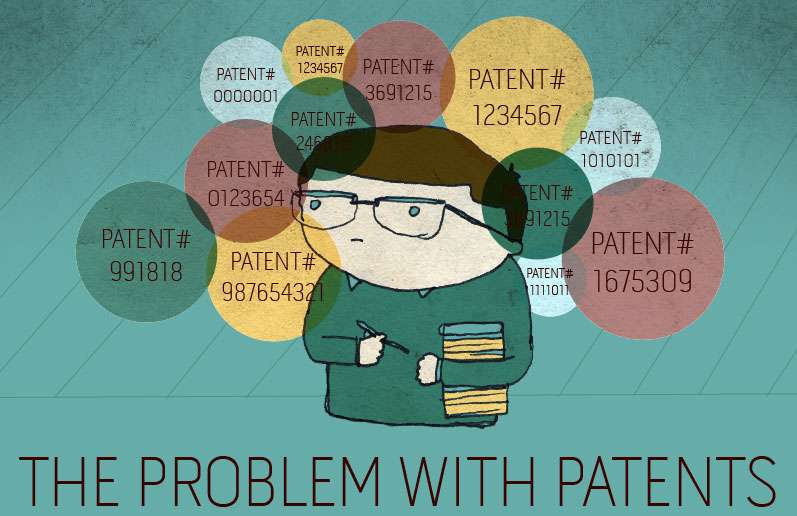
The Problem With Patents (Infographic)

Another great infographic from our friends at Frugaldad.com. “This infographic discusses some of the facts behind the patent industry and how it’s changed as software, technology, and the internet have developed at an incredible pace. I find the information to say a lot about the state of development and innovation; both how important it can be to everyday life, and the problems it can face on a larger scale.”

patents infographic

Source: http://frugaldad.com


Pitching Shouldn’t Be Speed Dating

by Charl Thom, MD, FoxP2 Being appointed as the agency of record for a brand can be a process taking place in various guises ranging from straight-forward appointments by clients that you’ve known for years to fully fledged pitches by clients you’ve never worked with before.

The Association for Communication and Advertising (ACA) has made great strides towards improving pitch processes and protecting agencies to ensure that valuable intellectual property is not given away for free. The basic rules (warning: link contains PDF file) that both agencies and clients must adhere to when participating in a pitch are:

1) The number of agencies shortlisted should not exceed five.
2) At least fifteen working days is required to prepare submissions.
3) Ideally, only credentials and case studies should be submitted. Providing creative and strategic work is costly and it places agencies’ intellectual property at risk. When strategic and creative work is asked of the shortlisted agencies, the agencies may only proceed with the pitch if:
– There is absolute confirmation that the agencies’ intellectual property is protected and retained by the agencies during and after the pitch process; and
– A pitch fee of at least R50,000 is paid to each unsuccessful agency. This pitch fee does not entitle clients to intellectual property.

There is no doubt that these guidelines have improved new business pitch processes for both clients and agencies in South Africa when compared to the relative free for all that took place historically. There is no industry body that acts in this regard in the United States for instance, and our New York based sister agency has to go through round after unpaid round when participating in pitch processes.

The guidelines from the ACA offer clients an option to appoint an agency based on a credentials and case studies only pitch, or a fully-fledged creative and strategic pitch. However, in between these two extremes there is much that can be done to ensure that the best match is created between brand and agency, and doing this is a two way street.

Homework

Do as much homework on each other as possible. It goes much deeper than understanding the agency’s client list and historical work. It’s about understanding the agency culture and the people under its roof. During a recent pitch process, a prospective client requested a visit to the agency. They specifically asked not be shown around by the CEO or MD, but by an agency staffer instead. This meant they could have genuine conversations with both staff and management during their walkabout.

Likewise for the agency, it’s important to find out and understand as much as possible about the prospective brand, its people and its culture before the pitch process has even begun. We try not to take on new business unless one of the partners feels a genuine connection with the brand and its culture, as that internal brand ambassador is imperative to ignite a passion for the brand within the agency that ensures everyone goes above and beyond to deliver world class work.

Quality time

The cultural match between client and agency will often make or break the success of the relationship. Pitches are like speed-dating. Between the briefing process and the final pitch, the client and agency will sometimes spend no more than a total of three to four hours together, which makes it impossible to establish a cultural match, or to determine what the chemistry of a future working relationship will be like.

Jack Welch, the former CEO of General Electric said “Never hire people (or acquire other companies) whose corporate culture doesn’t match your own. No matter how good the numbers look, culture matters as much as financial profile”. Given the nature of relationship between clients and their agencies, I believe this is good advice. He also never hired someone without playing a round of golf with them first…

A series of quality time sessions should form a part of the process to ensure that the prospective partners spend a decent amount of quality time together inside and outside their respective working environments which will allow them to determine whether there is a cultural fit, and if the potential for good chemistry exists.

Project work

Nothing beats the experience of actually working together. Wherever possible, the client and prospective agency should work together on a paid-for real live project with real objectives and deliverables. Some of the most successful client and agency relationships have been borne out of clients giving an agency a once-off project to work on. In some cases it has led to an entire piece of business shifting to the “project agency” as a result of them delivering better work than the incumbent.

Through doing the homework and spending quality time together, the brand team should be able to narrow the shortlist of prospective agencies to two or maximum three agencies. Working with this shortlist of agencies on projects will provide an in-depth working experience, which will provide the basis for a far better informed decision on agency partner.

Two way interviewing

Something we’ve done from time to time is to request an opportunity to visit clients’ premises, and to interview them and their staff. It allows the agency an opportunity to ensure that the genuine cultural fit is in place from both sides. Whilst the agency may run the risk of appearing “arrogant” it’s a risk worth taking as a prospective client that is not open to a sincere request for something like this as a matter of principle, probably has something to hide, and will more often than not end up treating the agency as a supplier, rather than a partner.

Going through some or all of these processes should ensure a solid foundation exists for a successful long-term agency and brand partnership.

Reprinted from the blog of Charl Thom.

Arthur Goldstuck calls 2012

by Arthur Goldstuck. Smartphones, tablets, undersea cables, fibre networks and the Cloud will all contribute to a storm of change in 2012.

The year 2012 is already shaping up to be a big year in hi-tech.

Seldom has so much been expected and anticipated of device manufacturers even before the New Year has started.

The main focus will be on Apple, as the market waits to see what it produces in a world without Steve Jobs. The next iPhone, version 5, will certainly be released, but will it live up to the groundbreaking impact of its predecessors? The next iPad, too, or rather iPad 3, will also see the light, and will tell us much about continued innovation at Apple.

While most do expect to see the iPhone continue setting the pace for cutting edge smartphones, the iPad will be the true test.  By the time it appears, competitors will have had two years to catch up.

Already, Samsung has shown that it can match and surpass Apple’s offerings in the device, producing variations in almost every size from 5” to 10”, against Apple’s one-trick 10” pony. The one arena in which it has failed dismally has been price. If their 2012 devices both take technology higher and prices lower, Apple CEO Tim Cook will have to find Jobs-like inspiration to keep Apple ahead. A range of iPad sizes is just one option.

Beyond the tablet wars, the real action will occur in the smartphone environment. Nokia has already heralded its comeback with the Lumia range of Windows phones, while Motorola has continued its own astonishing comeback with the RAZR phone, claimed to be the thinnest – and certainly one of the most gorgeous – on the market.

Along with Motorola, HTC, Sony and LG are expected to roll out a new generation of phones using the next version of the Android operating system, 4.0, curiously named Ice Cream Sandwich. It is regarded as a worthy competitor to Apple’s iOS, and is likely to cut deep into the latter’s market share in smartphone operating systems.

At the other end of the mobile phone spectrum, cheap and sometimes nasty phones will carry on selling in vast numbers. That prospect was underlined just last week when MTN announced its own name-brand phone, the S50S, going on sale in PEP stores at just R79 on a pre-paid account. The phone is manufactured in the Far East, as are most phones nowadays.

Rival networks also have sub-R100 phones, notably the Samsung E1080 from Vodacom, the Cell C MF Live and 8ta’s G2101, all at R99. Such phones continue to dominate the lower socio-economic segments of the market – which also happen to make up the biggest slice of the market.

However, in 2012, smartphones will come down so rapidly in price, they will begin making serious inroads into this market, and by the end of the year may even overtake normal phones in total sales. Chinese manufacturer ZTE, selling low-end and often rebranded phones, has quietly emerged from below the radar to become the fourth largest phone maker in the world. They are expected to move up the smartphone ladder with new Android phones combining high specs with low prices.

These developments will all set the scene for a smartphone-dominated market, and a rapid rise in data demand.

Talking of data, 2012 is also the year when the West Africa Cable System (WACS), the massive new undersea cable that recently landed north of Cape Town, is switched on. At the same time, many of South Africa and Africa’s national and urban fibre network projects will near completion, and data capacity of all networks and telecommunications providers will rise dramatically. So don’t be too shocked when you see data costs plunge yet again, and even data quality improve.

On the back of all this data demand and supply, the Cloud can also be expected to come into its own. That’s simply a nebulous term to describe services and applications that can be accessed directly over the Internet. It’s never been feasible as a wide-scale option in South Africa due to our lack of broadband infrastructure.

But, in the business world, that is changing, and by the end of 2012 more than half of South African corporations will be using Cloud services. Small businesses and consumers will follow in their wake – if not leading the climb into the cloud.

It won’t be calm in this Cloud, however. A storm of change is headed our way in 2012.

* Arthur Goldstuck heads up World Wide Worx (www.worldwideworx.com) and is editor-in-chief of Gadget. Follow him on Twitter on @art2gee. Reprinted from Gadget.

2011: The best of MarkLives // Agency stories we covered

2011: The best of MarkLives // Agency stories we covered

February, 2011
Ogilvy & Mather expands investment in local office
Ogilvy & Mather has upped its stake in local subsidiary Ogilvy South Africa from 49.9% to 59%.

February, 2011
Clickthinking bought by international network
South African Internet and SEO agency Clickthinking was purchased by Aegis Media, one of the world’s leading media communications and market research groups, for an undisclosed amount.

February, 2011
The green agency
We talked with the boys behind Derrick (Livio Tronchin, Mark Stead and Myles Hoppé), an agency that hopes to combine business sustainability with environmental friendliness, a collaborative approach to communication and media neutrality. We also got to squeeze Livio’s cock (a plastic rooster that crows, thankfully).

March 2011
Renee Silverstone leaves Jupiter
Renee Silverstone resigned as CEO of The Jupiter Drawing Room (Johannesburg) after 22 years with the company. Silverstone had co-founded the company with Graham Warsop in 1989.

April 2011
DDB/Draftfcb furore highlights industry confidentiality issues
A sparring match between Vodacom and Cell C upended the advertising industry and lead to heated debate on whether or not it’s possible for agencies to effectively protect confidential client information. A spoof campaign by Cell C, developed by DDB South Africa on a project basis (Ogilvy remains Cell C’s agency of record – see box below) and poking fun at Vodacom rebranding its corporate colour red, has, according to tech news site Techcentral, lead to Vodacom’s agency Draftfcb threatening legal action against the creative director behind both the Vodacom rebrand and the Cell C spoof campaign.

April 2011
Quirk set to become a R100 million revenue company Most popular read
The team at emarketing agency Quirk is so busy two years after moving into their offices they haven’t had time to finish off interiors properly. So busy in fact they have grown from 60 to 150 people in the past twelve months and will probably just fall short of doubling their R50 million in 2010 revenue over the next financial year.

May 2011
Global agency groups find growth in digital, emerging markets
Financial results for the first quarter of 2011 from some of the world’s largest ad agency networks are showing rapid growth in emerging markets. Increasingly, agency networks expect their future, and future profits, to be tied in with markets outside the US or Western Europe. The stars of the show? China and Latin America. Digital spend, also in emerging markets, is driving quite a bit of the growth as well. Read more.

May 2011
Dave Duarte joins Ogilvy promising the “geekification of the ad industry”
Ogilvy Cape Town made a tangible move towards integrating digital skills companywide and across traditional agency silos as ad spend continues its shift online. The agency has rolled out a comprehensive educational initiative with lecturer and digital strategist Dave Duarte, who joins the company to lead its Ogilvy Digital Marketing Academy (ODMA).Read more.

May 2011
Brandt Botes plots a new design course
Designer and illustrator Brandt Botes has set up his own design studio called Studio Botes in Cape Town. The agency will specialise in corporate identity work, packaging design and illustration. Brandt is one of South Africa’s best known graphic designers and was until recently design group head at The Jupiter Drawing Room (Cape Town).

August 2011
TBWA, Zille deny Sunday Times tender scandal report
The Sunday Times published allegations that the office of Western Cape premier Helen Zille has awarded the province’s communication budget to agency TBWA\Hunt\Lascaris without following proper tender procedures. It values the contract at R1 billion over two years. The newspaper is basing the story on information supplied by an anonymous “whistle-blower.”

September 2011
The Joe Public revival
Leck and Marais initially launched Joe Public in Cape Town off the ‘take-away’ advertising concept – clients picked and paid standard rates for services from a menu – and, while successful, Marais says it wasn’t sustainable over the long run as the agency grew. Joe Public was later bought by FCB which merged it and its ‘second-agency brand’ sibling Azaguys in 2004. It also closed the Cape Town office.

September 2011
Matthew Bull, Andrew Whitehouse launch NY shop
Matthew Bull, former chief creative officer of Lowe & Partners (an Interpublic Group company) and founder of South African agency Lowe Bull, has teamed up with Andrew Whitehouse, executive creative director at FoxP2, to launch a New-York-based agency, The Bull-White House, which will be a sister agency to South Africa’s FoxP2.

September 2011
Loerie time: Ad award success no longer sole arbiter of agency and industry respect Must read
The 2011 Loerie Awards are done and dusted (no pun intended), with Cape Town agencies grabbing three of the top five (first, third and fifth) spots on the official overall ranking table. Two of the three Grands Prix were awarded to Cape-based agencies. With the ceremony over, I for one cannot help but feel that the industry is shifting away from judging their peers based on award results. Read more.

November 2011
Gloo eyes expansion to Middle East
Digital agency Gloo is seeing budgets dedicated to digital going up by as much as 50%, says Gloo ECD Pete Case, as corporate South Africa keeps shifting budget towards digital platforms. And it’s going towards more than marketing in its traditional sense, says Case, who cites Spur as one client investing in digital as a means to manage brand material going out to franchises. The agency announced Gloo it is seeking to expand beyond SA to the Middle East. It is already doing work in Doha for the Qatar Foundation.

December 2011
Damon Stapleton on picking Saatchi & Saatchi Australia
Damon Stapleton, executive creative director at TBWA\Hunt\Lascaris, announced that he is heading to Saatchi & Saatchi Australia to take up the role of ECD at that agency. This follows initial reports that he would be heading to London (additional job offers landed on his desk as soon as initial reports revealed he was preparing to leave TBWA).

December 2011
Jupiter loses Woolworths
The Jupiter Drawing Room (Cape Town) has confirmed that Woolworths, one of the largest advertising accounts in Cape Town, has given it notice that it is moving its account into an in-house studio. AIS/ADEX valued adspend from Woolworths at R104 million during 2010. Jupiter Cape Town held the account for five years.

2011: The best of MarkLives // Marketing & brand stories we covered

2011: The best of MarkLives // Marketing & brand stories we covered

January, 2011
We didn’t like the talking Cell C ads
Associated Magazines has just placed an audio ad featuring Trevor Noah on behalf of Cell C in the latest editions of Cosmopolitan, Marie Claire, O, The Oprah Magazine and new collector’s edition House and Leisure Food. “Welcome to the World of Cell-C,” the sound insert squeaks out as you flip through the special four-page ad, “The power is in your hands.” And, indeed, it is as users of social network Twitter launched an initiative to document sightings of torn-out Cell C adverts.

February, 2011
Bafana Bafana belongs to the people
We take on the South African Football Association (SAFA), then investigating a name change for Bafana Bafana. “While a lot of talk and opinion is being bandied about regarding the colloquial context of the name, SAFA is on record as to why it is planning to throw out the name three Sowetan sports writers coined in the early 1990s and adopted by the nation. It’s about money, plain and simple.”

March 2011
Groupon reaches our shores
In January 2011, they were two guys working hard to keep their group media buying site Twangoo running with a handful of freelance sales staff. Less than three months later, they have 40 staffers, a new office in Loop Street, Cape Town, and possibly the hottest thing since Facebook as their backers. That’s because Groupon acquired Twangoo in January 2011 and tasked its co-founders, Wayne Gosling and Dan Guasco, with establishing the Groupon brand in South Africa.

April 2011
Vodacom goes red (and its agency sees red)
Discussions on rebranding Vodacom had been happening since the world’s biggest telecom brand, Vodafone, announced it would take a majority (65%) share in late 2008, in line with its global practice for majority shareholdings to trade under its corporate branding. Enzo Scarcella, Vodacom’s managing executive for marketing, says it simply hasn’t happened in southern Africa before now as ongoing negotiations with minority shareholders, concerned with cost and sceptical over rebranding campaign benefits, were only recently resolved.

May 2011
For youth market mobile access to information and communication is the answer
Mobility no longer simply refers to motion, it has also come to describe the untethered use of technology on devices like smart phones, both of which seems to have come together in a perfect storm to enable the revolutions currently sweeping the Middle East and North Africa. Setting these revolutions in motion, is the youth, who organise and spread their message using social networks primarily accessed through mobile devices. These platforms are not only changing how young consumers engage with politics but also with commerce and one another.

August 2011
Design Capital 2011: Finding Cape Town’s Design Voice Most popular read
Can Cape Town become to Johannesburg what Austin is to Dallas, Barcelona is to Madrid or San Francisco is to LosbAngeles – not as big, not as industrial but certainly more creative, entrepreneurial and tech-centric? Gavin Levinsohn, CEO of Ogilvy Cape Town asks the question, but already it seems rhetorical.

October 2011
Tale of two outages #seacom #blackberry
On 10 October, South Africans wrestled with two major connectivity outages: the SEACOM undersea cable and the BlackBerry Internet Service both went down. But the outages were one thing; how users were treated was another, writes ARTHUR GOLDSTUCK. They provide a case study in both successful and disastrous public relations.

November 2011
More than a million South Africans active on Twitter
Research findings on social media in South Africa highlighted the rise of Twitter. Arthur Goldstuck digs deeper into the data to explain what it all means.

November 2011
The silence on COP17 and its unintended lesson for South Africans
South Africans have an extraordinary social conscience, says Thomas Kolster, the Danish communications consultant and author of the soon-to-be released book The Bible of Goodvertising (from Thames & Hudson) who was visiting South Africa in the run-up to the COP17/CMP7 conference held in Durban, 28 November – 9 December 2011. Which is why the lack of public debate on and interest in COP17 here is so surprising to him.

December 2011
Framing the alcohol advertising regulation debate Must read
The advertising and media industries are bracing for stricter government regulation of alcohol advertising. It is an incredibly complex and global issue, so here is a framework to help contextualise what is actually going on.

2011: The best of MarkLives // Media stories we covered

2011: The best of MarkLives  // Media stories we covered

January, 2011
Media24 Magazines restructures: end of line for well-known publisher brands
The restructuring of Media24 Magazines saw the end of the line for some of South Africa’s best known publisher brands including Atoll Media, 8Ink Media, Creative Living Magazines, Touchline Media and Uppercase Media. At the time CEO John Relihan said his company is no longer a traditional print-only magazine publisher, and its structures and business processes should reflect this.

January, 2011
Mandela ‘death’ hoax exposes weakness of Twitter as news platform Most popular read
The retweet didn’t kill the newsman, after all. As it turns out, the growth of Twitter simply reiterates the essential role of journalists in sifting through and filtering the rumour mill that hangs around the neck of the information economy. And a good thing it is, too, as reports of Madiba’s health swirl around the media and on Twitter.

March 2011
SABC News “unprofessional”, “reckless” and “duplicitous” – BCCSA
The Broadcast Complaints Commission (BCCSA) has found that the SABC was “unprofessional and actually reckless”, as well as “duplicitous” and deceptive, in its broadcast of allegations by controversial businessman Robert Gumede that investigative journalist Sam Sole was ‘bribed’ with a R900 air ticket by John Sterenborg, a former business partner of Gumede, to investigate him.

June 2011
The first daily iPad paper in SA announced
First there was Maverick – the best business magazine ever published in South Africa. Next came The Daily Maverick, Brkic’s ass-kicking daily website that has emerged as the go-to source for analysis of South African politics and media (with a good dose of sport and a bit of culture thrown in). Now comes iMaverick, which Brkic describes as a daily reading menu for people with brains and money, will cover business, politics, sport, lifestyle… well life, promises Brkic.

July 2011
Wine magazine closes down after nearly 20 years in print
Wine magazine, the wine-focused consumer monthly published by RamsayMedia, will be publishing its last edition in September 2011, after nearly 20 years in print. The magazine has only turned an annual profit three times in its existence.

July 2011
NOW scandal: Media-regulation glee club has a new hit show
In the wake of the massive phone-hacking scandal playing out in Britain, its prime minister, David Cameron, has called for the scrapping of media self-regulation and for stronger press regulation by government. Rupert Murdoch’s News of the World, one of the largest circulation English newspapers in the world, was found to have hacked the phones of celebrities, politicians, sport stars, even a murdered school girl, victims of the London subway bombings – the list goes on. In calling for the doing away of media self-regulation, Cameron joins a long line of politicians hoping to legislate away the problems they face staying in and exerting power while dodging and diving their way around a free press.

September 2011
NewsNow misses chance for print/digital integration
The concept, its editors say, is to adapt the way people access and digest news online for print. That means short snippets containing the thrust of a story before you flip to the next item of interest. The problem, for NewsNow at least, is that news stories accessed in this manner online is usually current, whereas in printed form and a week later, skimming over the basic facts seems pointless and a waste of time, especially if your target market is probably well-informed.

September 2011
Knott-Craig Jr on the future of Mxit
MXit was bought out by Alan Knott-Craig Jr’s World of Avatar – at a time when it faces its greatest challenges. He talks frankly about competing with BBM and WhatsApp – and more.

September 2011
i magazine promises to shake up Sunday paper market
City Press launched a high quality magazine to be inserted with the Sunday newspaper. The new magazine, i, will be produced for City Press by New Media and the first issue will appear on Sunday, 2 October 2011. It will be distributed with the paper in Gauteng and KwaZulu-Natal; other regions will follow later.

October 2011
Finweek relaunches
The recent repositioning of business magazine Finweek has upped the stakes in what many consider a rather stale magazine segment. Not that a lot isn’t happening in the business press, or that it isn’t already highly competitive – take the recent entry of Forbes Africa into the fray, or how the tablet market has opened up access to publications such as Bloomberg Businessweek to South African consumers.

November 2011
What the POI Bill says about the gradual erosion of our democracy Must read
The Protection of Information Bill had just been steamrolled through and rubber-stamped by Parliament – a body tasked with balancing the demands of the executive with the best interests of their constituents – something it has consistently failed to do. In favour – and seeking the favour of – the executive. For me, this is really the debate civil society should be having – how some of the institutions set up to protect the democratic system we value so highly have failed in their task – while others are gradually being diminished in a war of attrition that will see the executive emerge as more powerful than our constitution allows or public will favours.

Stand-alone GPS navigational devices taking on a new life

by Arthur Goldstuck. When mapping moved onto phones, the obituaries were written for stand-alone GPS navigational devices. But they are taking on a new life.

Cellphones have been getting rather full of themselves lately, in more ways than one.

They are becoming so feature-laden, it is sometimes absurd to call them phones. They are cameras, camcorders and calendars. Games consoles, web browsers and word processors.

Oh, and navigational devices too. Why would you need a separate device to direct you in the traffic, when most smartphones can do the job just as well? That’s the argument of almost any former user of standalone GPS devices, arguing almost as vehemently as ex-smokers against their old way of life.

Considering that the digital mapping leaders, Tele Atlas and Navteq, are respectively owned by TomTom and Nokia, with Google also staking a claim to this territory and pushing maps onto all devices using their Android operating system, it is no surprise that almost any mobile gadget is now also a navigational device.

In truth, though, there is an enormous gulf between the navigational capacity of an “also” device and an “only” gadget.  For simple mapping and basic directions, the “also” does fine. My BlackBerry phone, using Google Maps, and my Nokia, using Navteq, have got me through a good few directionless moments. But they’ve always left me wishing for a little more – although never quite knowing what the “more” means.

Revisiting the “only” worlds of TomTom and Garmin, however, reveals that, less on the device is definitely more in what it delivers.

Rather than being overtaken by mobile technology, standalone GPS devices have evolved to a level of sophistication and utility far beyond what the phone offers. While Garmin is the best known GPS brand in South Africa, it is TomTom that appears to be claiming the fast lane on this particular information highway.

Its local office has just been rebranded from Tele Atlas to TomTom Africa, and is ramping up capacity to provide live mapping, That’s another way of saying that the maps change as you watch them. By tracking fleets that are fitted with navigational devices, as well as individual users who allow their devices to be tracked individually, it becomes possible to map traffic patterns, and for the device itself to incorporate “knowledge” of those patterns to direct a motorist away from traffic snarls.

But they go a step further. Their users are able to submit information on changes to routes, road names and traffic conditions, which are then assessed and fed back into the maps by a team of updaters sitting in TomTom Africa’s Pretoria headquarters.

“It’s like a call centre, but consisting entirely of people who work on updating the digital maps,” says Nicola Thomson, who looks after sales for the brand.  “And our users in effect become a community of updaters, feeding the information through to the team, using a function called MapShare.”

In one year alone, 45 000 reports were received from South African motorists. You could call this social media for maps: it’s not only Facebook that thrives on user-generated content.

This depth and breadth of mapping information has a further benefit: it provides an on-the-ground sense of what is happening to traffic, in which direction the flow is affected and how long the delay is likely to last.

“Pushing information out to the consumer doesn’t have any meaning,” says Thomson. “You need to know how the traffic is affected, and how long the delay will last. The device will detour you, but also tell you how heavy the

congestion is on alternative routes. It takes into account the fact that other people will deviate on the same route, so you may need an even greater deviation.”

Strangely, this is all good news for their main rival, Garmin: they use TomTom Africa’s maps for their own GPS devices in South Africa.

It is bad news, however, for the makers of fixed, in-car navigational systems that come as optional extras with new cars. These add as much as R15 000 to the cost of a car, but are instantly obsolete. For a tenth of the price, you can get a top-of-the-range device that will keep updating itself.

* Arthur Goldstuck heads up World Wide Worx (www.worldwideworx.com) and is editor-in-chief of Gadget. Follow him on Twitter on @art2gee. Reprinted from Gadget.

Online CPD Courses Psychology Online CPD Courses Marketing analytics software Marketing analytics software for small business Business management software Business accounting software Gearbox repair company Makeup artist