Nic Dawes on the biggest challenges of being the M&G editor


grubstreet

by Gill Moodie (@GrubstreetSA) Mail & Guardian editor Nic Dawes is off to India in September, when he will take up one of the top positions at the Hindustan Times in New Delhi, it was announced recently. In this second part of an interview, Grubstreet talks to Dawes about change in the M&G newsroom, his legacy to the paper and the press’ recent battles with the ruling party.

Grubstreet: Do you think the converged newsroom – how you’ve integrated print and online – is the main mark that you’re nic dawesleaving on the M&G?

Nic Dawes: I certainly think it’s probably the most obvious thing that I’ve tried to do here – to bring some of those (online and social-media) practices into our newsroom, to open us up so that the audience is not so much the audience anymore but participants in what we do.

You have to be really very sanguine and welcome the changes that are going on in our industry because I think they genuinely make us better journalists and make us produce better news products.

I think the other thing is the way we’ve tried to build capacity inside the paper, to keep on doing more thorough public-interest journalism without having new sources of commercial funding. So there’s AmaBhungane (non-profit investigative centre) and the Eugene Saldanha fellowship – these sorts of things, which do substantially broaden the base of what we do and also makes a contribution that goes beyond the M&G in terms of training journalists from other papers and from other countries in terms of advocacy.

And maybe the final thing is opening up a bit more to Africa – trying to bring more Africa coverage into the paper and into the website.

Grubstreet: How are the Zimbabwean sales going (of a special Zimbabwean edition launched earlier this year).

Dawes: They’re solid. I haven’t got the latest figures but I think they’re up from about 500 before the new edition to somewhere in the 2 500-to-3 000 region. They’ve been held back a bit by the fact that we’ve been trucking the paper up to Zimbabwe. It hasn’t been getting there early enough but the edition is really nice.

It’s a nice little bump (in sales) but it’s not absolutely enormous. If we could add another 1 000 on to that, I’d be very happy.

Grubstreet: What has been the biggest challenges of being the M&G editor, do you think?

Dawes: You know, the Mail & Guardian has a very valuable, very rich institutional culture, which makes it resilient and makes its strong. But it can also mean that change is harder even though it’s a small organisation.

I think that you can do things that respect the very, very precious core that the Mail & Guardian is about in a deeply different way – that was the thing that probably took the longest time. I feel that we’ve moved an enormous distance on this but that was probably the toughest thing.

I took over in the teeth of the recession so my initial impulse was to preserve so that we didn’t take deep job cuts and make sure that we were able to produce the minimum core of what we’d always had. So my first period (as editor) was defensive but then we move quite quickly from that to a process of trying to look to the future.

That was tough but it was, ultimately, incredibly satisfying – and I think we have kept the core.

I don’t think anybody feels differently about what the Mail & Guardian is fundamentally about as an investigative, political paper but we are able to do it in so many new ways.

And I hope we also diversified the mix a little bit – put in some detours in the read which are still highly relevant but which take you to other parts of the country and other ways of seeing the world.

Grubstreet: Do you mean, for instance, the reporting you guys have been doing on poverty?

Dawes: Yes, exactly. About six weeks before the Marikana massacre, we published a three-page feature investigation into life around Marikana and how tough it was. So that’s one kind of story.

We’ve also done other kinds of features. Two weeks ago we ran, for instance, a piece on the trade in eggs and fertility between South Africa and India, which I though was fascinating and well written.

We’ve recently started upping our science content, which I think will lighten the paper quite a lot.

It’s very important that the Mail & Guardian not be a miserable trudge from Page 1 to Page 25. The (investigative and political) stories are incredibly important. They’ll always be core to what we do but I don’t want readers to feel that they’re punched in the face on every page. It’s also important for them to laugh a bit or simply to get insight into what is an incredibly textured, complex country.

Grubstreet: Dealing the ruling party must have been a big feature of your editorship. It’s become more difficult in recent years for most editors, hasn’t it?

Dawes: It has by and large become more difficult, I would say.

It certainly felt at times that people had adopted a very deliberate strategy of confrontation rather than engagement, which is disappointing… because it means that one of the most important institutions in national life doesn’t get the coverage that it should get – or that it could get if the leadership and ordinary members of that organisation were capable of engaging more effectively.

I don’t really mind if someone wants to phone me up and yell at me, which they do.

I can take it. But what disappoints me is that we don’t get all the data that we should into the paper because people are reluctant to engage. So that’s a pity.

Some like to make it sound terribly heroic to deal with political pressure but if you just do your job as a journalist, it’s not actually that hard. If you have a very clear set of guiding principles on how you do your work and if you just carry on doing those things, political pressure is actually quite easy to deal with.

Grubstreet: And generally comes with the territory.

Dawes: Ja, exactly.

Grubstreet: So you start at the Hindustan Times at the beginning of September. It sounds like such a massive job. What are you expecting?

Dawes: It’s an immense job and, in the first few months, I will spend quite a lot of time looking very carefully at all the operations, understanding how things work, why things work and why and where they don’t work – and then thinking about what sorts of interventions are appropriate.

But the opportunity to do really, really great journalism is immense. Firstly, the sheer scale of India and its diversity makes it an incredibly rich place for journalists to work and for a newspaper.

Grubstreet: And is the Hindustan Times profitable? Is it on a good wicket?

Dawes: Yes, it is.

It’s an enormous, very complex, very contested social, political and geopolitical country… It’s undergone very, very rapid growth, which has pulled a lot of people out of poverty but which has also produced grave inequality and environmental concerns.

So these are huge stories and there are some brilliant journalists so I think there is great opportunity to try and do the best job possible and reflect that to readers and engage them.

It’s one of the great media markets of the world – and in many ways the last great print opportunity in English. And because print is strong in India, the opportunity is to innovate from a position of confidence rather than from a position of fear.

– SA’s leading media commentator, Gill Moodie, offers intelligence on media – old and new. Reprinted from her site Grubstreet.

Sign up for our free newsletter!

Ramsay shapes up to sell

by Herman Manson (@marklives) Ramsay Media is being whipped into shape in preparation for the sale of shares currently held by the Ramsay family (mostly through a family trust). Ramsay Media, publishers of popular magazine titles such as CAR, Getaway, Leisure Wheels and Popular Mechanics, was established 1933, and has seen four generations of Ramsay family members employed in the business.

The last members of that generation has however now left the business to pursue other career and business interests, and the family, minus Alan Ramsaydirect involvement in the business apart from Alan Ramsay (who turns a fit 71 next week), its chairman who took back the day to day running of the group at the end of last year, feels it’s time to sell.

Ramsay took a firmer hand in running the business after Ramsay Media MD Stuart Lowe left at the end of 2012. His replacement, yet to be appointed, will probably be a private equity manager with media experience who will be tasked to put the business on surer financial footing and make it more appetising for possible investors.

Ramsay says the business had a very tough 2012, but had stabilised significantly in the last few months, with budgets exceeding targets. Even in the digital age publishers need to keep their eye on fundamentals such as distribution, marketing, sales targets and of course the content of their titles, notes Ramsay.

Some internal restructuring has now taken place to give each of the major brands in the stable more agility and control over how it functions. Each now has a focussed team, rather than having to share resources, while the smaller brands have been clustered together. The events arm, which manages popular events for Getaway and CAR, will be boosted significantly, possibly through an acquisition.

In terms of the failed deal to merge Ramsay Media with content marketer Highbury Safika Media (HSM), Ramsay explains that the initial proposal was put together by Caxton, which owns a 30% stake in Ramsay. The combined business would have been a formidable presence in the publishing trade with a good footprint in both the consumer and custom publishing markets.

Caxton, who would have financed the deal, would have owned a significant stake in the combined business. Ramsay says the deal failed when both businesses questioned whether their corporate cultures would have matched and possibly doubts by HSM to add a new stakeholder (that would be Caxton) in their own business.

Ramsay says Caxton has not increased its direct stake in Ramsay Media as it is focussed on acquiring and absorbing digital assets.

Ramsay says the tough economic environment in general, and for print media in particular, affected the business quite badly last year. He also feels that the content the company produced were not meeting market needs as efficiently as it should. The scale of the business had also changed. Getaway and CAR once featured circulations of over 100 000 each. Today the websites have breached that figure while print has dwindled (Getaway to 55,424 and CAR less dramatically to 89,620) – but it hasn’t managed make up in digital for disappearing print revenue. All together it contributed to a bad financial year in 2012 – not the best time to sell a business in any case as Ramsay freely admits.

The company has also lost a number of senior personnel over the past couple of months. These include Lowe and Getaway publisher Jacqueline Lahoud as well as Robyn Daly  (contract division). Ramsay argues new talent motivates business change – and that the business would ultimately benefit.

Financial figures for March and April looked great, with a renewed focus on sales, and improvements in the advertising market, says Ramsay.

Going forward the business will maintain its investment in print, increase its investment in its digital properties and develop its events business further. Focus will remain on existing brands and Ramsay promises the company will work harder to make its content great. The reward, he believes, will benefit staff and shareholders alike.

– Exclusive industry news you’ll make time for. Sign up for our free newsletter!

MarkLives Best Read May 2013: NY, the Guptas and magazine circulations

The ten best read stories on MarkLives during the month of May.

1. The biggest circulating consumer magazines in SA
May 15, 2013

The ABC has released circulation statistics for the period January 2013 to March 2013. Here are a couple of consumer magazine ABC numbers that popped out for us. We also updated our list of the biggest circulating consumer magazines in SA! Total ABC member circulation fell to 6,207,891 from 7,004,714 in the previous corresponding period.

2. Newspaper circulation decline continues
May 15, 2013

The ABC has released circulation statistics for the period January 2013 – March 2013. Here are a couple of numbers that stood out in terms of newspaper circulations.

ABC member circulation totals:
Weeklies: down to 630,268 from 697,254 for the previous corresponding period
Weekend: down to 2,292,053 from 2,443,855
Hydrid: down to 157,975 from 167,119
Dailies: down to 1,541,488 from 1,672,658

3. An immigrant to New York, building an ad agency
May 21, 2013

by Matthew Bull, The Bull-White House, New York. There was an ad for Porsche many moons back that I have never forgotten.  It was a picture of a Porsche flying over a rise on a road.  The headline said:  “It’s like children.  You can’t understand until you have one.” That’s kind of how I feel about owning an agency in New York – you never really know what it’s like until you own one.

4. Africa’s biggest animation studio – soon also its biggest gaming developer
May 13, 2013

Back in 1996 Triggerfish was a traditional stop frame animation studio. It did commercials for ad agencies and landed a contract to produce the South African version of kiddies show Sesame Street, Takalani Sesame, and did such a good job of it that it soon landed the US domestic version as well. It was in 2002 that Stuart Forrest joined the business as a junior animator. By 2005, he would be MD and have taken over the business with a handful of business partners.

“Africa’s Answer To DreamWorks, Disney And Pixar,” screamed a headline in Forbes magazine recently. ” Hollywood Reporter and Variety has also reported on the studio, currently the largest animation studio on African soil.

5. How to save TopTV: let customers pick packages of channels at various prices
May 14, 2013

by Gill Moodie (@GrubstreetSA)  Don’t be afraid of competition in the market, say the business handbooks, but  rather assess you rivals’ strengths and weaknesses. Everyone does this in business plans and it helps new entries in the market or smaller players  to spot the gaps and opportunities.

But what do you do when you’re playing in a market that is utterly dominated by one big player – as On Digital Media’s TopTV that was rescued recently in a complex takeover deal by China’s digital pay-TV company StarTimes  – found with Naspers’ DStv Multichoice?

6. Millennial ad-grad: How to impress in post-recessionary Adland
May 23, 2013

by Faheem Chaudhry (@FaheemChaudhry) ‘Never waste a good recession’ were Warren Buffet’s witty words of advice during the financial downfall of recent years. While this sort of philosophy has become synonymous with his unrivalled investment and business success, many business leaders will argue it’s easier said than done as they still fight the battle to full financial recovery.

As the next generation entering the advertising game, we are entering the industry at a time when marketing budgets are under the spotlight and need to prove their full worth in the boardroom.

7. Great #GuptaGate Tweets
May 3, 2013

Great #GuptaGate Tweets “South Africans should be thankful for the investment the Gupta family is bringing to the country, businessman Atul Gupta says.”

8. Pistorius the ultimate litmus test for declining circulation (ABC Q1 2013 figures)
May 21, 2013

by Gill Moodie (@GrubstreetSA)  That SA newspaper circulation is in decline is common cause these days but the latest set of figures from the  Audit Bureau of Circulations of SA (ABC)  figures – for the first quarter of 2013 –  really rubs it in.

Consider that we had the biggest, most compelling news event to hit SA in many years – the arrest of Paralympian superstar Oscar Pistorius for the murder of his girlfriend model Reeva Steenkamp in that quarter – and it had little effect on the circulation figures!

9. Chillibush – no pretensions or clutter
May 27, 2013

by Herman Manson (@marklives) Dale Hefer and her agency, Chillibush, are significant players in the South African ad market, but have maintained a relatively low profile in a space still cluttered with egos and an awards obsession bar none.

Hefer has avoided the awards rush, instead building an agency that isn’t precious about itself. Chillibush employs 35 people and billings recently hit R90 million, without help form a clutter of little statuettes. It is independent, management owned and BEE level 3 accredited.

10. Ad of the Week with Oresti Patricios – hip hop hooray
May 15, 2013

The origins of hip-hop culture date back to the urban minorities of 1970s USA, when ‘battles’ were introduced as a way of settling neighbourhood scores. Instead of having a gang fight, two crews would face off and compete, either in breakdance, rap, ‘turntablism’ or even graffiti.

Probably most exciting were the breakdance ‘battles’ where different crews would face off and take turns in showing off their breakdance moves. The tradition continues today and can be experienced at hip-hop events, even here in South Africa – mainly in Cape Town, but also in other cities.

DStv’s promotional ads have a history of humour, and of using cultural genres to make a point about the brand and the strength of its content, and the latest ad which features a gangland type face off is no different.

This “Dance Battle” ad for DStv takes place in a suitably dingy downtown environment. It starts off with close-up shots of what seems to be two crews facing off to do battle. There is a DJ in the background, warming up his scratching and mixing.

– Industry news you’ll make time for. Sign up for our free newsletter!

Magazine cover lays it all on the line…

MarkLives.com runs a regular slot featuring the best local and international magazine covers every week. We recognise well thought out, powerful and interesting (and hopefully all three in one) magazine covers and celebrate the mix of pragmatism, creativity and personal taste that created each of them. By media blogger MediaSlut.

INTERNATIONAL

Anthology, Spring 2013

Anthology

I’m not familiar with Anthology magazine at all, but I can see that it’s a magazine that the Ideas / Idees reader would just love! The colour-scheme, font and styling of this cover is what guaranteed it a spot on my  list of favourite covers.

Esquire Malaysia, June 2013  

Esquire Malaysia

Esquire Malaysia’s May 2013 also made my list of  favourite covers, but they seem to keep pushing the boundaries and they’ve done it again with their June 2013 cover featuring Brad Pitt.

Runner’s World, July 2013

Runners World

After the Boston Marathon bombings, we’ve seen a few very strong (and emotional) covers paying tribute to those that died or were injured. The May 2013 cover of Boston springs to mind, and I also featured it in my 3 May 2013 column. You can read more about the story behind this Runner’s World cover here, but basically, their June issue went to print when the bombings happened, so they could only pay tribute in their own special way, with their July 2013 issue. And they have succeeded.

People Management, June 2013

People Management

Business-2-Business (B2B) covers are usually Boring (with a capital B), but I thought this cover of People Management stood out. The Purple cover might be a bit too much, but ‘reveal’ of  “the best ever company for HR” is pretty cool, especially on a B2B title. Locally, the B2B covers that regularly stand out for me, are the JSE covers.

LOCAL

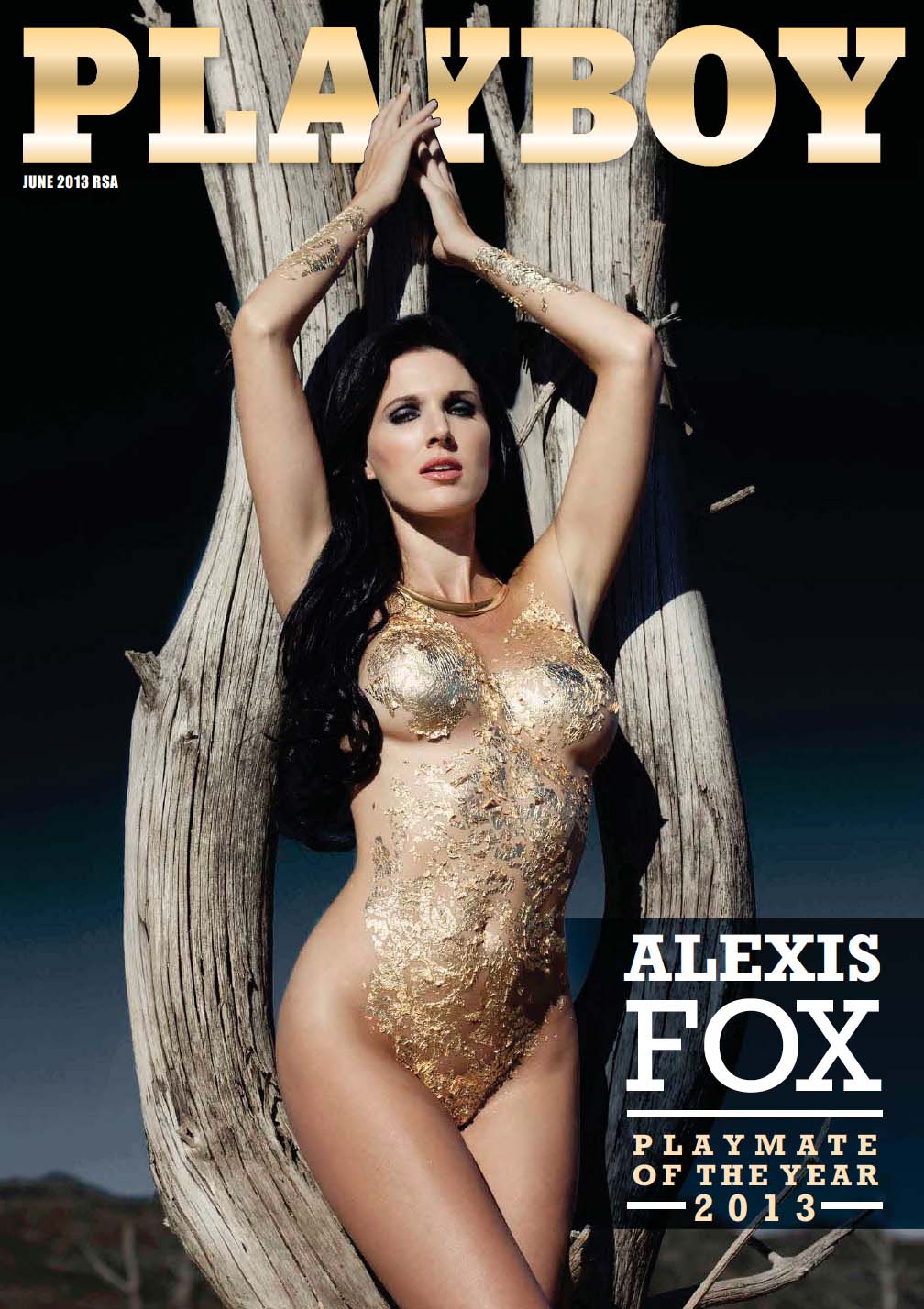
Playboy South Africa, June 2013

Playboy 6 June 2013

What a stunning cover and also cover-image, with the gold-foiling on Alexis Fox’s body! I also like that they dropped most of the cover lines. Why, do you ask? Because since the May 2013 issue, Playboy South Africa is only available digitally so it doesn’t have to compete so hard on shelf with a lot of coverlines, and I like it! And it’s DIRT CHEAP to subscribe to the digital issue!

– The (for now anonymous) blogger behind MediaSlut knows way too much for his own good about media in South Africa. Magazines in particular. His mission is to show when South African magazines might fail, but most importantly, succeed. If you’re looking for a library about South African magazines and news, your one-stop pitstop is MediaSlut. #MagazinesForTheWin

– Find a cover we should know about? Tweet us @marklives and @mediaslut
Sign up for our free newsletter!

Shelf Life: Burger King sizzles

Louise Marsland’s (@Louise_Marsland) pick of new product, packaging and design launches.

Have it your way with Burger King; Checkers has it in the bag; a new liqueur from BlueSky; and the designer new Lancôme makeup range campaign preview.

Burger King sizzles

Burger King6

The biggest food and branding story this past month has been the launch of American fast food franchise, Burger King, into South Africa, with the opening of its first store in the Cape Town CBD. People queued around the block for their first taste of a Big Whopper.

A ‘celebrity Burger King’ – some poor oke in a burger suit – accompanied by an ‘entourage of fans, stylists, bodyguards and dudes’ toured Cape hot spots to create a vibe around the launch, handing out Whopper vouchers and providing photo ops.*

King James was retained for a year to launch Burger King into South Africa and they briefed Clarion Printed Products to action the retail branding side of things, including all the internal signage through to wallpapers and spray painted logos.

The décor is enticingly fresh for a fast food brand and more upmarket than what South Africans are usually subjected to from many franchise chains. Expect the competition to up their game to meet the challenge of this vibrant new competitor head on!

It was also announced in the last week that Carat has been appointed media agency for Burger King.

Burger King’s brand strategy is simple – and was developed over 30 years ago – and centres on the tagline, “Have It Your Way”. According to Burger King lore, it is about having the fans control the experience that they have with the brand and is still relevant in today’s social media world.

They’ve become famous for their clever online content – who can forget ‘The Subservient Chicken’ viral campaign on YouTube, where a guy in a chicken suit would carry out fan instructions – within the bounds of common decency and the law!

The ‘Home of the Whopper’ was launched by Grand Parade Investments which owns the Burger King rights in southern Africa. They plan to launch six more Burger King outlets in Cape Town before the end of the year, Joburg in 2014. Franchise applications will be available from next year.

Burger King7

Burger King5

Burger King3

In the bag

checkers bag

Despite the costly campaigns and handy branded shopping bags given away at almost every industry event in the past few years, South Africans on average use 60 plastic shopping bags per individual, each year. So Checkers has become the first national retailer to launch a 100% recycled plastic bag to try help reduce plastic waste in the environment.

Checkers reports that its initiative will divert 2 100 tons of plastic waste from landfill sites each year and provided some handy stats to make you think next time about your plastic consumption: this is  the weight of 525 elephants or 2 100 cars! And it equates to a further saving of 726 600 kgs of CO 2 in one year.

The green bags are also free from all heavy metals, toxic colourants, chemicals and bleach.

Checkers has assured shoppers that the new bags are as strong as the old ones and will cost the same. The new bags will be phased in, in Western Cape stores from now, with national roll-out expected to be completed by December.

Well, this old bag feels suitably chastised about her bad bag habits!

Indulge yourself

magnum

With all the freakishly cold weather (in the Cape at least) and massive storms all over this winter already, lashings of hot chocolate, soup and liqueurs are prescribed to get through the worst. An interesting new blend has been launched by the equally interesting BlueSky Brands, established by the former CEO of Pernod Ricard South Africa, David de Mardt.

It’s called Magnum Cream Liqueur and is described as a “rich, velvety indulgence created from a blend of the finest vatted Highland Scotch Malt and real Dutch cream, with delicious hints of caramel chocolate and rich toffee”.

Quite a mouthful, but it is packaged in a really cool reusable stainless steel flask with screwtop and handles, which is unique on its own.

It can be served chilled or added to cocktails and even coffee.

Joyful luxury

Earlier this year, Shelf Life wrote about the animated collaboration with fashion designer Alber Elbaz for the design of its new product range being unveiled this year, and here’s a preview of the animated campaign, the Lancôme Hypnose Show by Alber Elbaz, launching 15 June, globally.

The product range will be available in South Africa in September.

Elbaz believes in luxury that triggers joy and has redressed Lancôme’s four iconic bestselling mascaras for the summer and the new Hypnose eye palette in a “tender, yet daring celebration of femininity”, as described by Lancôme president Youcef Nabi.

The collaboration is hailed by the brand as “a brand new way of celebrating a love of fashion and of beauty”.

* Earlier we incorrectly attributed the Burger King BTL activation to Isilumko Media. This information was incorrect. Isilumko Media only supplied staff used in the activation. We apologise for the error.

Louise Marsland– Shelf Life by Louise Marsland is a weekly column on MarkLives. Tweet new product, packaging and design launches to @louise_marsland or email her at louise.marsland at gmail.com.

– Want to sponsor Shelf Life? Contact us here.

Louise Marsland has written about the FMCG, media, marketing and advertising industry for 18 years of her 25 year media career as a former Editor of magazines AdVantage, Marketing Mix and Progressive Retailing; as well as websites Bizcommunity.com and FMCGFiles. She currently edits the weekly Wednesday Media & Marketing Page for The New Age newspaper; and is the co-founder and Publishing Editor of SA’s newly launched industry trendwatching portal, TREND. at www.trendlives.info, in partnership with MarkLives.com.

– Industry profiles you’ll make time for. Sign up for our free newsletter!

Time for Sorrell to go

by  Bob Hoffman (@adcontrarian), San Francisco Bay There is a small group of men who have ruined the advertising industry.

[pullquote]Advertising was once an industry of craftsmen and craftswomen. Industrious people would start their own agencies. There were dozens of independent, entrepreneurial agencies in every major city. The largest agency in the U.S. had a 1.5% share of market. Today four giant globalized monstrosities control over 70% of U.S. advertising.[/pullquote]
They have made it leaner and meaner. They have made it more efficient. They have made it more productive. They have squeezed all the fat out of it. They have also squeezed all the life out of it.

They have replaced ideas with data. They have replaced value with efficiency.

They are accountants and investors and financial wise guys. The one thing they are not is advertising people.

Advertising was once an industry of craftsmen and craftswomen. Industrious people would start their own agencies. There were dozens of independent, entrepreneurial agencies in every major city. The largest agency in the U.S. had a 1.5% share of market. Today four giant globalized monstrosities control over 70% of U.S. advertising.

The advertising business has been consolidated into submission. As Dave Trott says, we have become an industry of bank managers.

Martin Sorrell, CEO of WPP, the world’s largest advertising agency holding company, gave a talk in London recently.  According to website The Drum, he told the attendees…

‘The medium, or media, has become “more important” than the message…’

This is the grotesque outlook of a publisher who thinks the paper is more important than the writing. It is the delusion of an impresario who thinks the instruments are more important than the music. It is the chirping of a philistine who thinks the paint is more valuable than the painting,

This is not acceptable. Sorrell and his clones who head up other agency holding companies need to find new businesses to rape. Their day is over. Their time has passed. They have been a massive, tragic failure. They have enriched themselves and impoverished an industry.

It’s time for these people to go.

– The Ad Contrarian is Bob Hoffman, is the author of The Ad Contrarian and 101 Contrarian Ideas About Advertising. Reprinted from his blog The Ad Contrarian.

– Industry profiles you’ll make time for. Sign up for our free newsletter!

The Switch: The great talent migration

by Alistair Mokoena (@AlistairMokoena) As someone who vacillates between running an ad agency and relaxing through wildlife photography, I find the seasonal migration of various animal species fascinating.

Some animal species migrate from North to South and back. Others migrate vertically from high altitude forests to low altitude forests. These species migrate mostly in search of food and warmer temperatures as well as for breeding purposes.

[pullquote]What I’m learning pretty quickly though, is that this musical chairs phenomenon is pretty normal in our industry. As European swallows are attracted to Europe’s abundant food supplies and long days in their breeding period, creative talent is attracted to agencies that are seen to be on the up and up.[/pullquote]

The wildebeest migration in the Serengeti and the migration of European swallows come to mind. European swallows spend their breeding period in Europeso they can access food supplies and longer days. In winter, they migrate to the warmer southern hemisphere.

Before embarking on their journey to Southern Africa and the Indian sub-continent, they go on a feeding frenzy, which provides sustenance for their long sojourn. They travel in a large group on this long journey that takes them through North Africa, down the West Coast of Africa, all the way down to the South. Come spring, the swallows migrate back to Europe for their breeding season.

As MD of one of South Africa’s larger agencies I’m struck by the similarities between the migration of animal species and the movement of creative talent within our industry. Talent migration used to be limited to advertising agencies. Now we are witnessing lots of movement of talent from traditional advertising agencies to small below the line shops, digital shops as well as to the client side, and vice versa.

[pullquote]Another observation I’ve made is that talented people tend to have a following, which means, when they move agencies, others migrate with them. It matters not how hard you try, using water tight contracts, to preclude them from poaching key staff or to stop key staff from following their heroes.[/pullquote]

Many employers in our industry are starting to use employee propositions to differentiate themselves. Employment contracts and remuneration packages are becoming a lot more creative. We are starting to see a combination of flexi time, relative job security, career paths as well as participation in share schemes.

Ironically all of this makes staff retention a nightmare for many agency MD’s. What compounds this retention problem is the fact that, unlike our parents’ generation, this generation of employees does not value tenure and loyalty. Not only is the world their oyster, it’s also a travelator, constantly on the go.

What I’m learning pretty quickly though, is that this musical chairs phenomenon is pretty normal in our industry. As European swallows are attracted to Europe’s abundant food supplies and long days in their breeding period, creative talent is attracted to agencies that are seen to be on the up and up.

Agencies that win pitches attract masses of creative talent. Agencies that boast a “sexy” client list and have an impressive collection of silverware are also quite alluring to talent.

Another observation I’ve made is that talented people tend to have a following, which means, when they move agencies, others migrate with alistair makoenathem. It matters not how hard you try, using water tight contracts, to preclude them from poaching key staff or to stop key staff from following their heroes. At the end of the day birds with bright feathers cannot be caged. Is this perhaps what Bob Marley had in mind when he sang “exodus, it’s the movement of the people.” There’s got to be a better way, methinks.

Everyone who runs a business knows the disruption this migration causes to business operations. As an advertising agency, your creative talent is your lifeblood. The more senior the talent, the greater the disruption because these highly decorated folk often have a team reporting into them and many more idolising them.

Even clients idolise them, which makes it difficult for clients to imagine you producing great work without these swallows. It would help immensely if clients put a higher premium on the “big idea” or “creative platform” than they do on individuals. The former is more enduring than the latter.

Having said that, an agency does not stay on top or “en vogue” forever. There are swings and round-abouts in the circle of life. Accounts come and go and great talent migrates when seasons change. True migrators leave and come back to the same agency even as many find new homes along the way.

As soon as they realize that an agency’s financial success and an impressive client list are not enough to guarantee job satisfaction, they take flight again in search of inspirational leadership, better values, better career management and growth opportunities.

So when a talented individual comes to my office to hand in their resignation, the first thing I check with them is which part of our employee proposition is lacking. If it’s something we can fix, I try to talk them into staying and if I fail, I take comfort in the knowledge that theirs is a two-way migration that will end up where it started.

At some point they will realize that it’s better to sort out your grievances with an employer you know and like, than to hedge your bets on a future employer you know little about. If, however, the issues are beyond our means, I bid them farewell knowing that there will be other swallows migrating our way from colder shores, who will bring a nest full of great ideas.

Alistair Mokoena (@AlistairMokoena) is a Unilever-trained Chartered Marketer with lots of blue-chip marketing experience. He’s currently MD of Draftfcb Joburg. Mokoena contributes the monthly “The Switch” column to MarkLives.com.

Industry news you will make time for. Subscribe here. It’s free!

Ad of the Week with Oresti Patricios – the cellphone wars

Cellphone companies in SA are waging war with each other. What was a de facto monopoly has been challenged by upstart Cell-C, driven by former Vodacom boss Alan Knott-Craig Snr. Cell-C threw down the gauntlet in an apparent price war by offering cheaper data bundles and introducing the concept of discounting rates on same-network calls. Cell-C’s latest campaign is being flighted with numbing regularity on SABC and e-TV, promoting the concept of switching networks, while keeping your number.

Cell-C’s Knott-Craig has set himself up as the consumer champion, taking on ICASA to get the industry regulator to lower termination rates – in other words, the fees that mobile operators pay to carry each other’s calls on their networks.

The new battleground, as smart phones become more pervasive, is data. Every iPhone or iPad owner knows that all that browsing, chatting, downloading and photo-sharing chews up your data allocation like nothing else can, so data is becoming an even bigger component of the mobile phone bill than talk. In response to Knott-Craig’s salvo, MTN and Vodacom have hit back hard at Cell-C with a dizzying array of deals of their own.

Whatever way you look at it, this competition is good for the customer. There’s more choice and better value is offered in the fight for errolsubscribers and cellular supremacy. For too long the big networks were suspected of colluding with one another and were regularly pulled before parliament for high prices and a lack of service. With Knott-Craig having dug in behind enemy lines, the industry, thankfully is now changing.

One of Vodacom’s unique claims is that it has better 3G coverage, and the Ad of the Week has not been flighted much despite the fact it was released 3 months ago, so I’m giving it a thumbs-up for humour and a clear message. It starts with a long-suffering character, Errol, who just wants to read his newspaper in peace. But his wife interrupts his idyll.

“What are you doing just sitting?” she asks. “The grass is this high. If you don’t mow that grass now…” But her nagging falls on deaf ears. Errol just gets up and leaves.

OK, so it’s a pretty stereotypical scenario, one might think, but there’s something about Errol’s face as he walks off, studiously ignoring his wife, that is quite charming. Your heart goes out to this poor guy, who just wants to relax and read the paper.

Unfortunately, even though he drives off to a remote restaurant, he can’t escape his wife, who video-calls him to nag him some more: “Errol! This grass is not going to cut itself…”

The music that covers the scene is an excerpt from ‘I will Follow Him’, a song made famous in 1963 by Little Peggy March, which then made its reappearance in the 1992 hit comedy, ‘Sister Act’.

The lyrics, “I will follow him / There isn’t an ocean too deep / A mountain so high, it can keep /Keep me away…” are poignantly ironic, as Errol tries to escape the wife from hell. Driven to desperation, Errol gets into a boat, crosses a lake and treks into the wilderness. But alas! his Vodacom reception is still too good: even in the middle of nowhere, the nagging wife’s face appears on his phone.

Voice-over: “With 50% more 3G Internet, you’ll be connected whenever, wherever you are, with Vodacom. Sorry Errol!” It’s a clever twist: the very thing that prevents Errol’s escape, is the benefit that Vodacom is promoting: being connected everywhere.

The ad was produced by Spitfire films for agency Ireland Davenport; executive creative director was John Davenport, agency producer was Yoli Mes and copywriter was Anthea Webber, with art direction credit going to Gina King. What’s really interesting about this ad is that it uses creativity to promote a product benefit, which is fairly smart for an industry that normally fails dismally in the way it communicates packages, product features, services and the like.

The casting is great – both husband and wife are archetypal – even the old Merc Errol drives is an extension of his personality. It’s an interesting cast, as they are in their 60s, which is not really the target market, nor the obvious age that one might have expected to be put in this situation. This is something that—for me—gives the ad some of its charm.

I know I’ve featured humorous ads a lot lately, but that’s because they’re the only ones that grab my attention. Perhaps it’s the economy, or the political climate, but it feels like we need things to cheer us up. Soap powders and cars and supermarkets that take themselves too seriously don’t cut it. And the fact that Vodacom’s so smart in communicating a benefit ordinary consumers (or tech luddites) could find a bit baffling gets a big round of applause from me.

Mobile brands have a lot of work to do to make their offerings more accessible and consumer friendly, so it is great to see that good thought has gone into this. Besides this week creativity has to triumph over mind numbing frequency – Cell-C might be reinventing the market but the current campaign is flighted so frequently and is so lacking in originality that it has become a viewing irritation. Thank goodness for the sweet relief brought by Vodacom’s ‘Errol’.

Ad of the Week archive

Ad of the Week is published on MarkLives every Wednesday. See past selections here.
Oresti Patricios is the CEO of brand and reputation analysis company Ornico.

– Industry profiles you’ll make time for. Sign up for our free newsletter!

South African agency shortlisted for Cannes Innovation Lions

Draftfcb Cape Town has been shortlisted for the first  Cannes Innovation Lions.

“The Innovation Lions have been designed to reward technologies and innovations. Lions arre awarded to such things as (but not limited to) thefire blanket most innovative platforms, apps, tools, programs, hardware, products, and radical software which allow brands and creatives to communicate with their customers in a new way, or which stand alone as significant innovations in their own right,” according to Cannes Lions.

“The Innovation Lion honour more than a campaign or communications idea. It could be SaaS (software as a service), a new mobile platform, or a revolutionary piece of software that enables a new kind of customer engagement.”

Twenty five finalists from fifteen countries made the shortlist. Shortlisted countries are the USA, UK, Brazil, Japan, Canada, Sweden, Russia, Denmark,  Finland, The Netherlands, Singapore,  Australia, Poland and Ecuador. Shortlisted agencies includes Dentsu, ID\, Google Creative Lab and AKQA.

Draftfcb was shortlisted for its Fire Blanket. “In South Africa over 10% of the population lives in informal settlements. Every year devastating fires sweep through these densely populated shanty towns. It is estimated that 10 shack fires break out every day, causing over 200 people to lose their lives each year. This year, Draftfcb Cape Town took Engen’s educational paraffin safety calendar one step further, with a quick shake the calendar unfolds into a flame retardant fire blanket 4 times the size, ready to suffocate a fire as it starts.”

Africa Style: Managing comeback kids

by Masingita Mazibuko Her ascension seems instantaneous. In fact, it is as if she was never gone. I recall all the girls seeking her out.

She dominated all conversations, and all wanted her in their homes. She was a part of all childhood games such as house, dress-up and the like.

[pullquote]This re-emergence of brands deserves consideration, for there are those instances when it has been botched, and those when it has succeeded stunningly.[/pullquote]

Now she is back in my world, winning my four-year old daughter’s heart. Her name is Barbie and my daughter is steadily becoming an avid Masingita Mazibukocollector.

Whether it is heroes of the silver screen, toys or clothing, many a brand of yesteryear is making a resurgence and winning a place in our hearts all over again.

We seem to be inundated with yesteryear brands, those one may have considered old and gone but are today seemingly gaining increasing presence. A classic example movie goers and comic buffs will be familiar with is Marvel’s Iron Man. There’s also been the Avengers, Batman … and Star Trek.

This re-emergence of brands deserves consideration, for there are those instances when it has been botched, and those when it has succeeded stunningly.

For instance, when Mini came back to the fore in the United States, it flew in the face of a SUV trend. It managed to grow brand awareness through a clear articulation of its target audience beyond demographics to psychographic qualities that embodied the Mini mindset and coupled this with an innovative take of traditional media; for instance, the Mini riding atop SUVs as outdoor.

Alison Cenna1 highlights four key elements that inform brand revival. The first, allowing for rediscovery, talks to cross-generational appeal that provides nostalgic appeal for one generation while still engaging first timers.

Think Sean Combs, a.k.a. Puff Daddy of Bad Boys records, who released the song ‘I’ll be missing you’ based on the 1983 Police hit, ‘Every Breath you take’. This evoked sufficient nostalgia yet was able to have the necessary present day appeal. Or think the TKZ hit, ‘Palafala’, which sampled Joni Mitchell’s ‘Big Yellow Taxi’.

The second element highlighted by Cenna addresses authenticity, identity, independence and membership as key underlying timeless consumer values to connect with.

For example, Converse All Stars are highlighted as tapping into a sense of authenticity and simplicity. In South Africa, All Stars have always been known as quintessentially township, popularly worn by Pantsulas. You always kept your pair slightly dirty to reflect a level of authenticity.

Interestingly, Converse All Stars currently has a campaign highlighting that ‘shoes keep it clean, sneakers get dirty’ thus tapping into a social dynamic.

The third element is the need to stay true and contemporise. In the evolution of any brand’s positioning, it is necessary to ensure that the brand’s root strengths are understood and are used a foundation for present day.

Audi has remained true to its ‘Vorsprung durch Technik’ as the way it does things from functionality to the way in communicates. It has managed to pull through its strengths to broaden its appeal today – the same brand with a new flavour to it.

The last element entails building a community. Communities are social constructs and brand communities emerge when the interests of the community and the brand’s behaviour and interests dovetail.

Consider Harley Davidson and the number of bikers one sees on the open roads on sunny Sunday afternoons. Think Nike and its Run Jozi events, which have created a community where aspiring runners can urge each other on.

So, one may think that a brand is dead, but at times it is worth taking a second look. Who knows what can be ignited.

1.  Everything old is new again: Staging successful retro revivals by Alison Cenna

Masingita Mazibuko, marketing director at Unilever, contributes the monthly “Africa Style” column to MarkLives.com. The views expressed within this column are entirely her own.


Sign up for our free newsletter!

Online CPD Courses Psychology Online CPD Courses Marketing analytics software Marketing analytics software for small business Business management software Business accounting software Gearbox repair company Makeup artist