The Sell: 50 Shades of Same

The Sell, a regular MarkLives column on shopper marketing, by Mimi Nicklin (@miminicklin) It seems to me that in general people like to talk ‘shopper’, and agencies like to claim ‘shopper’, but that often underlying this trendy new money maker is a disinterest from the industry that is so powerful that the discipline is not only an afterthought, but avoided all together.

[pullquote]The industry is changing, there are experts emerging and the biggest brands in SA are changing their briefs, their thinking and their budgets and showing us how shopper is done.[/pullquote]

The perception is that the ‘in-store bit’ is the less interesting, less exciting sister of the rest of the communications mix.Whilst we know this is the final and critical point of actually selling the product, it gets dismissed, forgotten or left to the last minute. The shopper concept gets left with no time to research, to create or to innovate, with a belief that an on-pack sticker or a busy wobbler will be enough to convert the habitual shopper mom as she flies down the aisle.

In a previous life I may also have fallen into this group of people so I am not totally naïve. I know that producing a TV ad is more glamorous than designing a gondola end, and I know that the photography behind a print ad can, literally, stop one in their tracks. However, I have spent the last few days wondering why it is that ‘shopper’ in the USA, Europe and even Asia is a discipline full of change and innovation and excitement, yet in SA we are so often stuck with‘matching luggage’ linked to the consumer campaign that fades into the clutter of retail messaging. Why can’t we see what the rest of the world is seeing so clearly?

My conclusion, for today at least, is that it is our fault. Sorry reader, that includes you.

Firstly I blame agencies, specifically BTL and shopper agencies, for not selling better work conceptually or innovating with retail mechanics. For not putting more time and money into real shopper insights or understanding the spaza shelf as well as the Shoprite one. For not hammering down the doors of retail buyers and understanding their footfall, their basket data and their broadsheets versus just the brand problem at hand.

And talking of buyers and retailers, I blame them too.Walmart, Target, Tesco’s and Carrefour – all examples of retailers working with their suppliers to change shopper behaviour, to make their stores more ‘shoppable’ and to offer their shoppers superior experiences and offers that help them buy! In SA the retail teams are so often averse to trying something new that when the innovation, from the above mentioned agencies, is created and innovative, it runs in the boardroom alone.

And finally, I blame marketers and brand managers. The global ones for not embracing the phenomenal work that their foreign counterparts are making happen abroad, and all of them for not understanding the excitement and pride (and sales!) that can be garnered from a unique and tailored retail execution that talks to their shoppers as well as their consumers. For not pushing their agencies to do better and for leaving the shopper requirements off the brief entirely.Simply adding ‘POSM’ to the list of deliverables without a separate shopper insight, objective or trial barrier is not going to help SA catch up with the world, nor is it going to help our shoppers buy more, more often. In fact, it’s going to ensure we continue on our journey to 50 shades of same when it comes to in-store execution and shopper marketing.

So, beyond just moaning about the state of the nation (and potentially offending half my industry!) I thought that perhaps quarterly I would use my column to showcase some of the work locally that is bucking the trend and doing things differently. It is out there! The industry is changing, there are experts emerging and the biggest brands in SA are changing their briefs, their thinking and their budgets and showing us how shopper is done. Whilst it may still be a wobbler or a simple airtime hook, there is work that is swapping the same for the standout, and providing our shoppers with ideas made for them-ideas that are as engaging & smart as the work we give our consumers.

My Top Three in Q2:

  • Starting with the simple, take Finish Dishwasher tabs, currently offering a DVD in every pack, in partnership with NuMetro movies. A genius partnership that sees mom’s shopping decision made infinitely easier by offering her added value (versus financial value) in choosing the Finish pack over the store and competitor brands. An obvious bribe? Yes, but a smart one. It creates relevance to their shoppers’ mindset via a guaranteed reward at shelf that will have her telling her friends about her ‘freebie’ and her kids about their new gift. Finish knows that the housework will be infinitely easier if the kids are occupied with their new copy of Happy Feet and mom feels great for bringing home a present with the shopping. Emotional reward balanced with rationale shopping decision? Check.

finish

  • Next up, KFC’s “Let the Colonel Pay for your Lobola – Win 11 Cows’ shopper promo currently in store. Utterly genius. Put simply, it’s a cash incentive to increase your ‘purchase size’ per visit. They encourage shoppers to increase their spend in store to R40 and in return offer you a cash prize that is totally on brand, stands out well beyond a standard ‘win cash!’ headline and talks directly to the reality of their shoppers. So yes it uses a cheeky tone of voice to reference a serious discussion point, but this makes it worth talking about to your friends in and out of the store. The inclusion of ‘the more times you enter the higher your chances’ means it is worth increasing your shopper trips as well as hard earned cash spend. Chicken Licken’ just fell off the shoppers’ radar this month…

kfc lobola

  • And finally, the below in-store campaign for hair care brand M. This one is a couple of months old now, and no, this is not the world’s most engaging or beautifully designed shopper comms, but it has an insight that is worth its weight in gold. ‘Win a VIP experience at SA Fashion week for you and your hairdresser.’ If there was ever an example of a piece of shopper marketing that understands who their shopper is and can link the shopping decision with the consumer’s emotional mind, this is it.

m

So there we have it, three examples that prove all is not lost! There are smart shopper ideas out there that are driving short-term behaviour change and ROI. And none of them cost the earth. They may not be as emotionally compelling as a 30” ad, and they may not win creative awards, but they talk to their shopper simply and make them ‘buy today.’ Surely that is, at least in part, why we as agencies, retailers and brand marketers come to work?

I therefore conclude this month that amongst the 50 shades of same, there are at least 30 shades of smart, so perhaps all is not lost for the shopper in SA after all.

mimi nicklin– Nicklin followed her passion and experience in the consumer, retail and shopper space, from regional roles in Europe and Asia, to South African shores in 2010. Having led global brands through the line for Procter & Gamble and two of London and Hong Kong’s top agencies, her background gives her an international perspective to add to her depth of SA understanding. Nicklin serves as Strategic Director and a Partner at 34 Group.

– Industry news you’ll make time for. Sign up for our free newsletter!

Ad of the Week with Oresti Patricios – Satirical ads sell the Times

Ad of the Week with Oresti Patricios – Satirical ads sell the Times


Newspapers have come under increasing pressure recently. According to the Audit Bureau of Circulations (ABC), circulation figures are falling year-on-year for most dailies and weeklies. The exception is, of course, the so-called ‘vernacular press’, with titles like Isolezwe holding firm despite economic pressure.

English and Afrikaans papers have to increasingly compete with digital, and at this stage many of them are in a fight for their lives. Lowe CT, Cape-Times_20130626agency for Independent Newspaper’s Cape Times, has produced a spunky radio ad campaign that does a great job (using humour) to market its brand.

Imagine getting people like Helen Zille, Jacob Zuma and Julius Malema to read news articles about themselves. Well, of course, that’s not going to happen, but with the help of impersonators, you can create the desired effect.

The choice of news article is key, and part of the humour is in hearing these voices referring to themselves in the third person. That, and the fact that these impersonators are really top-notch.

So we have “Helen Zille” reading an article that goes: “DA leader Helen Zille has sparked controversy with her party’s ‘Know Your DA’ campaign…”

Then there’s “Desmond Tutu” reading this Cape Times piece: “A furious Archbishop Desmond Tutu warned the ruling ANC to ‘watch out’ after the Dalai Lama was denied a visa to attend his 80th birthday party.”

And of course, there’s “Jacob Zuma” reading about Nkandlagate – punctuated with his trademark throat-coughs at odd breaks in the dialogue.

There’s a pretty convincing “George W. Bush” reading about the Iraq invasion in search of ‘Weapons of Mass Destruction’.

Finally we have “Julius Malema” reading: “Former ANC Youth League President Julius Malema is homeless, penniless and carless…”

They all sign off with the Cape Times slogan, ‘You can’t get any closer to the news – Cape Times.’

Considering the sound-assualt that is regional radio currently, these spots seem guaranteed to break through the clutter and create a humorous ‘lift’ for the listener. It’s the kind of ad that makes you want to turn up the volume, and they bear repeated listening. Especially the “Desmond Tutu” one, which I’m pretty sure is comedian Nik Rabinowitz – nobody does it quite like he does.

I’m glad to see Cape Times taking a chance on a humorous angle. Generally radio ads these days are dull, dull, dull, and it would have been too easy (and so forgettable) to do a “straight” CNN-promo style ad, with brassy music and a punchy male voice-over talking about “our uncompromising investigative reporters” and using phrases like “we dig deeper.” Thank goodness, because this is so much more refreshing and enjoyable.

And here’s to the papers, because they are the vanguard of good journalism. Much as I love digital, I’d hate to see newsprint disappear from our lives.

Ad of the Week is published on MarkLives every Wednesday. See past selections here.
Oresti Patricios is the CEO of brand and reputation analysis company Ornico.

– Industry profiles you’ll make time for. Sign up for our free newsletter!

Design Annotator: Afrikaans Creatives, Spoek Mathambo & CI by algorithm

uno de waalDesign Annotator with Uno de Waal is a  new column featuring the top design work from South Africa’s biggest online creative showcase, Between 10 and 5, curated by Publisher Uno de Waal @Unodewaal. 

It might be because of my Afrikaans background which makes me biased, but I’m loving the new Pendoring Awards short films that have been released. The Pendorings have often played second fiddle to the bigger award shows, yet some of South Africa’s most creative people speak Afrikaans. The videos produced by Now&Partners certainly help tell a deeper side to Afrikaans creative’s story. Speaking of creative gatherings – have a look at the Open Design Conference happening in Cape Town soon. We also have a in-depth chat with artist Givan Lötz – it’s difficult to understand how this prolific artist manages to produce all the work he does. Also have a look at the agency PUNK’s new logo and identity. An ever-changing, genetic morphing logo. For our artist studio series we visit Let There Be Light, and we also showcase a favourite spot of our’s Field Office, for our Out-Of-Office series, a guide to interesting wi-fi hotspots for creatives.

Featured: Givan Lötz

Givan-Lotz-Print-Art-Work

Although we’re still trying to wrap our heads around precisely how Givan Lötz — visual artist, musician and designer — does it all, we are quite certain that he does it all well. Recently he kindly agreed to answer some of our questions, giving us a bit more insight about who he is and what he does.

 Check out more of Givan’s work with music and design.

The Pendoring Awards Short Films | Now & Partners

Now & Partners produced this incredible series of three short films for The Pendoring Awards featuring outstanding South African creatives. The films feature painter Zander Blom, musician Markus Wormstorm, and The Essop Twins who are conceptual photographers. They were directed by James Yeats Smith and shot by Kent Andreasen and Tao Farren.

 See the other short films created for the Pendorings.

OPEN DESIGN Cape Town: Talk 100 and Designing our Democracy

open-design-conference

The very first OPEN DESIGN Cape Town Festival begins soon, with an incredible line-up of events set to take place. We’ve picked two of the many events you shouldn’t miss during the 10 day festival – Talk 100 and Designing our Democracy.

Get more information on the OPEN DESIGN Cape Town conference.

Made In Woodstock: Let There Be Light Studio

IMG_0421

Nicola ‘Nix’ Davies is a conceptual artist. Her studio, Let There Be Light, is in the chirpy, upbeat Side Street Studios in Woodstock, where she collaborates and interacts with people with different backgrounds, skills and interests. We caught up with Nix to chat about her studio, her work and her collaborations:

 See more of Nicola’s studio.

Out of Office: Field Office

Woodstock-Showroom

The concept behind Field Office is simple; it serves as an office-out-of-the-office. South African product designers Pedersen + Lennard first opened the space in Barrack Street to show off some of their slick furniture and smaller household items. Recently they expanded to The Woodstock Exchange, which now hosts the new Field Office, as well as the Pedersen + Lennard factory and office.

 See more photos of Field Office’s coffee shop and out-of-office workspace.

Spoek Mathambo ‘Awufuni’ Music Video

Shot on location in Johannesburg and released on Women’s Day in South Africa, Spoek Mathambo’s music video for his track ‘Awufuni’ pays homage to Izintombi Zesi Manje Manje, the female group that took South Africa by storm in the late 1960s. The song is off Spoek’s acclaimed mix tape ‘Escape to 85.’


Featured: Mr Fox Furniture

fox-furniture

Founded by Durban based design duo Zayne Holl and Brad Wedderburn, Mr Fox Furniture creates a range of beautiful and effortless furniture and lighting. Here, we chat to Zayne to find out how it all happens.

See more of Mr Fox’s furniture range.

Genetics-based Algorithm CI by Punk

punk-logo-CI

Punk – the digitally led, future-facing advertising agency within the King James Group – has recently launched its new corporate identity and we’re pretty sure you’ll want to see it. Why? The company developed an algorithm based on genetics that constantly creates new versions of its identity, by itself, infinitely.

 Try out some of the incredible CI’s from PUNK.

– Uno de Waal is the publisher of creative showcase 10and5.com.

– Industry profiles you’ll make time for. Sign up for our free newsletter!

Major TV shake-up great for consumers

by Gill Moodie (@GrubstreetSA)  There’s a real shake-up of TV coming South Africa’s away – especially of television news – and none of it bodes well for our newspapers.

The SABC launched its 24-hour news operation on the DStv satellite network (on channel 404) last week while the Gupta family –  owners of TNA Media, parent company of The New Age newspaper –  is getting ready to take their 24/7 news  operation live (on channel 405) very soon.

The Guptas’ Africa News Network 7 – or “ANN7” – already has a rather slick-looking beta website up and Atul Gupta has been tweeting recruitment ads:

Meanwhile, Sabido – the owners of e.tv and the eNCA news channel – recently announced it would launch a new free-to-air satellite TV service called Openview HD later in the year and, this month, Icasa started a new round of hearing for pay-TV licences. One of the applicants was Kagiso TV, a subsidiary of Kagiso Media that owns East Coast Radio and Jacaranda FM.

All this, as the ill-fated TopTV is getting its house in order with a financial bail-out from its new owners, StarTimes, a Chinese firm with pay-TVaan7 operations in 10 African countries. (The Electronic Communications Act caps foreign ownership in licensed broadcasting entities at 20%.)

There is speculation that eNCA will be moved from Naspers’ DStv to Openview while SABC GCEO Lulama Mokhobo made it clear in this interview at the launch of SABC’s 24-hour news channel that the plan is for it to move to digital terrestrial television after it finally arrives in South Africa. The international deadline for the final switch from analogue to digital over is June 2015.

Digital terrestrial television (DTT),  when it comes, is in itself going to be a game-changer as it literally opens up the TV air waves with many more spaces on the frequency.  For consumers, it will mean cheaper, easier access to other channels as this  quote from an interview I did with Naspers CFO Steve Pacak’s earlier this year about the company’s  launch of DTT in Nigeria illustrates: “If you live in Lagos, you don’t need a satellite dish (as we do with DStv Multichoice in South Africa). It’s literally a plug-in-and-play system and we’re offering 15 to 20 channels at a very low price. The price point is less that $10. We started this business in the past year and it’s grown approximately 70 000 subscribers in its first year.”

The DStv MultiChoice behemoth is certainly facing more competition in the South African market but will these new TV-news operations have an effect on newspapers?

I think it will as it makes it ever easier for consumers to get news on the run and, crucially,  it slices the advertising pie even thinner. DStv is already stealing advertising away from print – especially magazines, the experts say – because it offers greater reach at more competitive prices.

There’s been quite a bit of sniffiness about SABC’s new DStv venture but I think it is foolish to write it off.

I’ve been dipping in and out of the 24/7 SABC news on 404 since it launched and I think it’s got a bum rap.  It’s not going to win any awards but aside from technical hitches, hokey promos and a lot of gratuitous backslapping at the launch, I don’t think it’s bad at all – especially the morning show, where they have co-opted the Morning Live team from SABC 2. Clever use of existing resources there!

The 24-hour SABC news channel seems quite informative to me, strong on Africa, there’s good weather, sport and traffic news, and I haven’t seen a particular bias towards the government.

It’s not as sophisticated or as fast with breaking news as eNCA but it does the job.

Last year I did a story of how the 7pm prime-time news show on e.tv was stealing viewers from that of SABC 3 news and Alette Schoon, a Rhodes University TV lecturer who has worked in the industry, pointed out to me the strengths and weaknesses of both eNCA and SABC. The important thing to remember is one is a commercial enterprise and the other is a public broadcaster. How interesting is this analysis from Schoon:

“In terms of quality in terms of visual storytelling and writing for the ear I must say I personally appreciate e,tv. US journalist Al Tomkins summarises the technique of producing good TV news in three phrases – shoot for the eye, write for the ear, and aim for the heart .  Just in terms of the principles of producing TV news, one should work within the confines of a medium that uses pictures and the spoken word.

“This means that a story for TV or radio should be written very differently from a print article – it demands strong verbs and short sentences, for example. Visuals need to pull in viewers and relate to content of the story. Journalists should also recognise that TV is a very personal emotional medium, and put people into their stories.

“I often find that SABC journalists don’t bother to change Sapa copy much and visuals are often just journalists listening to a ministerial press conference.

“While there is an attempt to introduce ordinary people as characters, these don’t go far beyond a grateful beneficiary of some project or a short comment from a victim. In terms of’ shooting for the eye, writing for the ear and aiming for the heart, e.tv seems to invest a lot in training to induct their new journalists in these techniques, and it shows – allowing them to produce more compelling television.

“However, adopting the strengths of the medium also puts one at risk of veering towards its great weakness, which is that of sensationalising news, making it purely an issue of individual dramas devoid of more substantial critique or context.

“While e.tv does a fine job in terms of making stories personal, I believe there can be a lack of broader context, particularly in terms of relating stories to issues that are not that familiar to middle-class viewers – such as the realities of poverty, for example, the gross underfunding of township schools.

“This is the danger of conceptualising the news audience in terms of a middle class ‘market’ and not as a public consisting of citizens who need to be confronted with issues that may sometimes be difficult for them to digest – such as the very unjust inequalities of our country and the responsibility of middle-class citizens in terms of social transformation.

“While it may be wonderful for e.tv’s investors that it is doing so well in terms of the market, I believe news should be more than just a commercial product as it enables democratic deliberation amongst citizens – and there is the danger that if issues are not popular with the market they may be swept under the carpet…

“While SABC, in my opinion, also does not give adequate voice to the poor and activists dealing with issues of poverty, and often over-emphasises the voices of officials and, therefore, the ruling party, I do think there is often more of a sense of our country as struggling with these difficulties and life beyond a middle-class bubble.”

– SA’s leading media commentator, Gill Moodie, offers intelligence on media – old and new. Reprinted from her site Grubstreet.

Sign up for our free newsletter!

Dear Digital Grandad: get the best out of LinkedIn

MarkLives’ digital agony uncle @DigitalGrandad1 is now taking questions on all issues digital. Tweet them to him or email DigitalGrandad@marklives.com.

DigitalGranddad

Dear DigitalGrandad…

Righti-o Grandad! Here’s my question:

There’s a lot of buzz about LinkedIn but I can’t decide if its a good place to do social-media marketing. I have about 350 plus connections on LinkedIn and although I don’t get a lot of referrals from it, these people do spend more time on my site if they come from LinkedIn.  

It does suggest this is a good place to be active (and all my posts go to my LinkedIn timeline) but LinkedIn itself is quite counter-intuitive in its design. I find LinkedIn hard to navigate and, therefore, time consuming. What are your tips on how to get the best out of LinkedIn as a marketing tool for a website? (The endorsing of skills is particularly irritating. Should I be endorsing connections back? That will be very time-consuming. Will it be worth it?)

Regards and thanks very much!
Gill Moodie, Grubstreet

Dear Serial Connector

Look at you with 350+ connections, aren’t we popular in the virtual space…? Forget about the buzz, it’s buzzing if you know how! But…

“Just because you have 100’s of connections, it doesn’t mean you have 100’s of people who want to do business with you  or want to go to your website. They may just want to hear from you”

In my experience, LinkedIn has evolved drastically from its early days when it was formed in 2002 and launched in 2003 from being a very exclusive portal based on trusted and recommended connections to today,where it is like a frenzy-buzzing ground of the most like-minded through to the yin and yang for everyone, connecting with each for no reason whatsoever (bar a popularity race& self career-promotion), through to stalkers and the obvious head-hunters (not literally obviously) and yes businesses driving business.

“LinkedIn still has many positive attributes for many businesses today – just avoid the Sharks & Stalkers”

But another key point you raised is the actual website usability and user-experience (you didn’t mention if you accessed it via the web, mobisite or App – as the platform is better on some than others).

So being serious for a second, you mention you have 350+ connections and of those how many do you know personally, trust and would do business with?My key question to you iswhy you joined LinkedIn, have made so many connections and what are you hoping to gain from being on the site – as your reason maybe very different to why others connect with you.

In my opinion, the old way was a great way. Connecting with like-minded people you trusted, or wanted to connect with for mutual gain. So being a Grandad, with lots of kids, I am quite picky who I connect with or accept connections from – I have a very clear strategy.

“Using LinkedIn is like attending a business conference or forum on steroids!”

So lets start by listing out some of the basics in what LinkedIn is all about:

  1. LinkedIn is all about networking. Making connections, and connections through connections. It’s like having access to the list of all the attendees to a business conference, with all their details for you to make a connection. Did you know that LinkedIn is growing at a rate of c.2+ people per second (so by the time you have read this article, depending on how good your eye-site is, LinkedIn would have gained over 500+ people).
  2. It’s a place where you can increase your contacts, raise your profile online, get referrals, learn from your connections, hear breaking news, read whitepapers and keep up to date on what’s happening in your business sector
  3. Its other powerful angles is the ability to join desired groups, where you can get advise, give advise and seek advise. This is one of my biggest reasons I use it daily. It’s like being at a forum on steroids. I love posting questions to my selected groups. I usually get at least one great idea back each time or referals
  4. It’s a place to do straight talking business. But like any marketing, you need a strategic plan in how you are using LinkedIn as a channel and tool in both attracting and engaging new business for any company.

So here’s to “DigitalGrandads“#TopTweetTips” on ways to improve your connections on LinkedIn and drive business”

  1. “Always add a picture” logo (otherwise you look doggy, unless you are a Grandad and shy). You need to be authentic. People now want to know and see who you are. In the early days, only the brave and extrovert posted a picture. But today it is the total opposite; if you don’t then it makes people think you have something to hide!
  2. “Set up a professional profile” (It may sound obvious – but trust me it’s not. Just like your website or any other brand material – it needs to have the same attention to detail and professionalism)
  3. “Create a summary” of your business (concise and to the point)
  4. “Grow your connections”. But remember ‘quality’ outweighs ‘quantity’. Otherwise you will be getting online survey requests from people you have never head of, asking you to rate the quality of their work. Really! Please stop it! My response – see your real-life line-manager in the real world.
  5. “Join relevant groups”and engage with them – be an active member / ask questions – remember people love giving advise and answers / useto promote your business / add content to group posts / be proactive
  6. “Set up a Group” – If you are really good at what you do set up a group – for example – Intelligence Group for Intelligent People
  7. “Leverage recommendations” and thank your recommenders
  8. “Link to your other digital assets” / blogs, website, mobile sites etc. / promote and share links to your landing pages. Did you know you could customize your links? For example – customize links to your website to say “for the latest media Intelligence”
  9. “Use LinkedIn plugin” on your website
  10. “Keep your profile and status updated”
  11. “Update relevant contentregularly”. Take the effort and time. Ask questions as prompts to greater interactions. Maybe even set up auto-publishing

So if you wouldn’t say it in the real world –  don’t post it in the virtual world

Now Usability – well that’s a topic in its own right. BTW I do presume this is the website question? as their App is brilliant and even an old Grandad like me can navigate through it seamlessly. If you don’t believe me read this.

Happy Monday

@digitalgrandad1

11

– DigitalGrandad is a Marketing Professional with over 140 dog years of practical digital experience working with both global and local brands. From SME’s through to Multinational’s and across industry sectors he has seen and embraced the changes technology has given to us to better our lives. Yes he remembers the old days, but is now a firm traDigitalist born through traditional marketing.

If you have a digital dilemma and are too afraid to ask your boss or your agency, but feel you need to ask for some straight no-nonsense advice, please email me at DigitalGrandad@marklives.com with your question, or better still tweet to @digitalgrandad1. I’ll answer one every week on MarkLives.com.

– Industry news you’ll make time for. Sign up for our free newsletter!


Local agency focuses SA as digital outsourcing destination


BLUEGRASS LOGO_RGB_LO

by Herman Manson (@marklives) Bluegrass Digital  is positioned as a digital production agency for ad agencies. Unlike many of their contemporaries, the agency isn’t trying to break into a through-the-line positioning. Instead, it focuses on what it believes it does best – implementation and high quality digital production.

Born in the late 90’s as a hardware and networking company it evolved into a digital production agency and by 1999 had an office in London to Nick Durrant, MD Bluegrass Digitaltake advantage of an outsourcing model that saw work done in South Africa, where labour was less expensive than in the UK, and a client facing team operating in London.

Nick Durrant, MD at Bluegrass Digital had joined his brother James, the founding partner of the business, to run the UK operation after four years in the world of banking. His focus was targeting agencies with skill, capacity or even budget constraints and convincing them that South Africa could produce and implement digital solutions in a cost effective and efficient way.

Durrant says around 72% of business still comes from the UK, where James still manage client relationships, even though it no longer runs a client management team at that office.

Thanks to a roster of clients that have included Société Générale, Shell, Dunlop, Honda, Unilever, Britax and a range of Diageo brands, the agency has been picking up direct clients, but its core focus remains working on projects on behalf of other agencies, including some very well known South African digital outfits.

The business suffered a major setback in 2001 with the first .com bomb which saw it scale back operations in the UK, but which strengthened its cost-saving outsourcing proposition in the UK market. The 2009 global recession following the financial crisis in the US and Europe also hit the business as agency budgets were slashed.

Durrant (Nick) returned to South Africa in 2010 to run the business from Cape Town. He says a lack of digital skills in some South African agencies offers Bluegrass an opportunity to grow its marketshare here.

It recently built an Facebook app for Europcar through King James, an iPad app for Kalahari.com, a website for Converse (with DDB) and it was recently commissioned to build a new internal marketing platform for Monster Energy.

Durrant sees various opportunities in the medium sized business sector and also says that digital spend in South Africa has lots of scope for growth.

The company has been putting out feelers into other African markets and has done some work (alongside local agencies) in Lagos, where the digital market is still in its infancy, says Durrant.

Bluegrass Digital currently employs a team of 22, mainly in Cape Town, and the value of its SA based work is steadily increasing. Durrant foresees that the business might well be sold in the next four to five years, possibly to international digital production specialists wanting a strong base on the continent or a local firm wanting access to a strong production team.

Bluegrass Digital Show-reel 2013

– Industry news you’ll make time for. Sign up for our free newsletter!

Media Future: DStv Explora


dstv explora

The new DStv Explora decoder is about to deliver on the unmet promise of previous versions, but leaves the have-nots even further behind, writes Arthur Goldstuck (@art2gee).

The dithering of successive administrations at the Department of Communications has deferred the digital dreams of South Africa’s TV viewing public.  The migration to digital terrestrial TV (DTTV), originally set for 2011, still has no due date. The Department has yet to issue tenders for set-top boxes needed by 5-million households to convert digital signals into an analogue feed for their old TV sets.

It was something of an irony, then, that a major announcement was made last week of a new set-top box. Sadly for the 5-million, the box had nothing to do with DTTV. For them, the dream remains deferred.

On the other hand, the new set-top box is good news for 4,4-million households that already have digital TV in the form of Multichoice’s DStv. In the past year, the number of subscribers grew by an astonishing 1,128-million subscribers.

When the DTTV migration strategy was first announced exactly five years ago, the DoC estimated that 7-million households would need set-top boxes. However, successive Ministers of Communication placed more emphasis on who would get the rights to manufacture the boxes than on digital migration itself.

Now we can see the exact cost of the delays created by this debate: the pie waiting to be shared out in terms of manufacturing requirement has shrunk by a third. And Multichoice has happily begun filling the digital donga left behind.

Not that the DStv set-top boxes have been a cure-all. Great things were expected when a high-definition version of its PVR decoder was launched in 2008, but it turned out to be a deep disappointment. It had lesser menu functionality than a standard decoder, and was a nightmare to synchronise with the standard version.

Finally, on 31 July, the future of set-top boxes arrived in South Africa. Multichoice unveiled the DStv Explora, a device sleeker than its predecessor, but with four times the recording capacity. It houses a 2 Terabyte hard drive, four times the size of the older model. This, says Multichoice, is enough to store 220 hours of HD content.

DStv BoxOffice has also been expanded, with 20 recently released movies, while DStv Catch Up now offers 30 movies on demand.

“We’ve expanded the number of series available and now also started to introduce series stacking, i.e. making two episodes of selected series available on demand,” says John Kotsaftis, CEO of DStv Online.

The most visible symbol of these changes lurks in the Explora’s more user-friendly remote control: it sports dedicated shortcut buttons to DStv Central, BoxOffice, Catch Up, Playlist, Search and Live TV.

Most dramatically of all, according to Multichoice South Africa CEO Collins Khumalo, is that the decoder will soon also allow for delivering content via broadband and remote recordings via the Internet.

The DStv Explora will arrive in stores from 15 August, selling at R2 499. While the have-nots are kept waiting, the haves are about to have a whole lot more.

* Arthur Goldstuck heads up World Wide Worx (www.worldwideworx.com) and is editor-in-chief of Gadget. He is a Consulting Editor to MarkLives and our media tech columnist. Follow him on Twitter on @art2gee. Reprinted from Gadget.

Industry news you will make time for. Subscribe here. It’s free!

Shelf Life: General Mills launches Nature Valley Crunchy Granola Bars in SA

Louise Marsland’s (@Louise_Marsland) pick of new product, packaging and design launches.

Nature Valley granola bar launches in SA; Promoting wine tourism; adidas is a scream; Armani celebrates the modern woman; and there’s still time to enter Product-of-the-Year.

New healthy snack launches

Nature's Valley

The world’s category leader in granola bars, General Mills, has launched its Nature Valley Crunchy Granola Bars into South Africa as “the perfect snack”.

“Snacks are a growth spot for packaged food companies worldwide, particularly with the growing trend of ‘better-for-you’ on-the-go eating,” says Jackie Foster, SA Brand Manager for General Mills. General Mills pioneered the granola-bar market in 1975 with the launch of the Nature Valley brand in the US.

“The healthy, active consumer group in South Africa is large and growing fast, and we wanted to bring a snack to the market that people can take with them when they’re on the move – whether they’re biking, hiking, running, walking…or just want to have a wise snacking choice on hand during a busy work day!”

The granola/muesli bar category is worth over USD$11 billion globally, and the Nature Valley brand contributes almost USD$1 billion to global sales, explains Foster.

And South Africa is experiencing double-digit growth in this category.

Nature Valley Crunchy Granola Bars are available in three taste variations: Oats and Honey, Canadian Maple Syrup and Oats and Chocolate. Each flavour is sold in singles and in 6ct multipacks.  There is also a 6ct variety pack available for those who want to try out all three flavours.

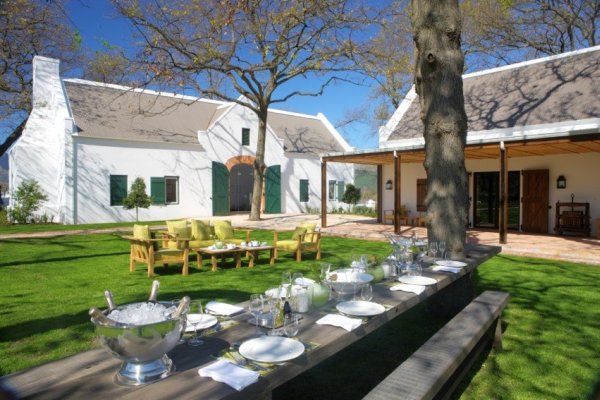
Wine seduction

Wine Tourism pic 2

Marketing the atmospherics of wine tourism is becoming big business, says Monika Elias, the founder of the first consumer-driven Klink Wine Tourism Awards.

“Wine tourism is about the successful seduction by the context and product of the wine brand. If a visitor is successfully seduced, they will want to relive the experience by telling friends and family.”

Wine tourism, she says, cuts out the ‘middleman’ by enticing winelovers to the farms and the “authentic and enticing” adventures on offer.

Elias elaborates: “Wineries acknowledge they are no longer simply selling products; and they are doing more than just associating their wares with a desirable lifestyle. They are creating ‘atmospherics’ that trigger an emotional need: to be part of a world that is different to the everyday reality.”

Atmospherics, in the world of brand marketing, include architecture, furnishings, lighting, sound, temperature and kinetics, which combine in ways that the brand experience is enhanced. By creating a variety of ways in which consumers can engage with the brand at the place of origin, as well as once they leave the farm, wineries increase the sense of satisfaction felt by the consumer.

Social media, in particular, allows wineries to create useful connections, she says.

Wine consumers are now choosing to take the time to distinguish what they really want as it is through these direct communication channels that consumers can voice their opinions of products, and wineries can best create and drive brands.

Monster fashion (@adidasZA)

adidas Kids_Monsters_Scream O Meter_01

To commemorate the highly successful Monsters movie franchise, Adidas and Disney Pixar have collaborated on a range of footwear, apparel and accessories called ‘monsters in training’, inspired by the recent release of the new Monsters animated movie, Monsters University.

As part of the launch, kids in Cape Town and Durban were invited to test out the ‘Scream-O-Meter’ and win various prizes. Over 2000 entries were received.

Scream-O-Meter designer Craig Bellingham, managing director at Kirmack Designs, explained that the machine was a specially-designed booth which used a microphone and audio amplifier circuit to measure each scream, converting it into an electronic signal that represented the volume level.The louder the scream,the better the chances of winning.

I could use a Scream-O-Meter in my office some days. Particularly Mondays. Tuesdays too sometimes, possibly Wednesdays, even Thursdays.

And it should be mandatory for every creative director and agency head.

 Tribute to modern femininity

Cate Blanchett 1

Just in time for Woman’s Day is the launch of Giorgio Armani’s new fragrance ‘Si’, which he describes as his “tribute to modern femininity, an irresistible combination of grace, strength and independence of spirit”.

As representative of ‘Si’, actress Cate Blanchett fronts the campaign.

The fragrance is described with opulent verbosity as “chic, sultry, intense and soft… a chypre reinvented, lingering, captivating… with an olfactory signature that is rhythmic, elegant and unique, combining an inflection of three accords: blackcurrant nectar, modern chypre and light musky wood…

“As an intoxicating nectar, this creative mixture exposes all of its femininity and its passion – it is the power of darkness.”

Who writes this stuff? Oh, wait…

Enter Product-of-the-Year (@poy_sa)

There is still time to enter South African Product of the Year as the entry deadline has been extended to 16 September 2013. Enter at: www.productoftheyear.co.za .

Product of the Year, an international brand, showcases the most innovative and useful new products on the market, and those that save the consumer time and money. Research is conducted by Nielsen.

Manufacturers of the winning products can use the Product of the Year branding to increase awareness and sales.
Louise Marsland– Shelf Life by Louise Marsland is a weekly column on MarkLives. Tweet new product, packaging and design launches to @louise_marsland or email her at louise.marsland at gmail.com.

– Want to sponsor Shelf Life? Contact us here.

Louise Marsland has written about the FMCG, media, marketing and advertising industry for 18 years of her 25 year media career as a former Editor of magazines AdVantage, Marketing Mix and Progressive Retailing; as well as websites Bizcommunity.com and FMCGFiles. She currently edits the weekly Wednesday Media & Marketing Page for The New Age newspaper; and is the co-founder and Publishing Editor of SA’s newly launched industry trendwatching portal, TREND. at www.trendlives.info, in partnership with MarkLives.com.

– Industry profiles you’ll make time for. Sign up for our free newsletter!

Media Future: How to fix SA’s fast tanking Internet connection speeds

South Africa has slumped to a dismal ranking in global connectivity speeds. But we know what is needed to fix our broken Internet, writes Arthur Goldstuck (@art2gee).

The news this week that South Africa was ranked 80th in the world in average Internet connection speeds didn’t come as a surprise, but it did shock many. The same report, from global network services company Akamai, showed this country was ranked an even more dismal 126thin average peak connection speed.

While that does not measure the number of people or devices using the Internet, it is worth noting that, in 1996, South Africa ranked 14th in the Arthur Goldstuckworld in number of computers connected to the Internet. From ranked to tanked, one could say.

The key question now being asked is, what can be done about it?

Quite coincidentally, this month also saw the appointment of a new Minister of Communications, Yunus Carrim, who has declared himself open to listening to the needs of telecommunications users.

In this context, as was noted in the Internet Matters report produced by World Wide Worx and Google in mid-2012, Government does indeed have a central role to play in ensuring universal access to Internet services. Moreover, it must create an enabling environment for infrastructure development and competition, and a policy framework that allows for the lowering of costs, the promotion of digital literacy and innovation.

Practically, what does this mean? The excuse often given is that the problems are obvious, but the solutions complex.

That may well be the case, but much of the complexity is of the Government’s own making. The one overriding recommendation made in the report was that regulators and Government policy-makers apply the greatest urgency to removing obstacles in the way of Internet access evolution in South Africa. In the past year, instead, every effort appeared to be made to keep the obstacles in place.

In particular, it made no progress in licensing high-speed access technologies, specifically LTE. It made no progress in Local-loop Unbundling (LLU), which would allow other service providers access to Telkom-controlled exchanges, and to roll out fixed-line broadband services made possible by those exchanges.

The result? Mobile broadband speeds were kept artificially low, and fixed-line broadband was confined to a single, monopoly provider.

It short, it should therefore be obvious to the new Minister what is needed. But, in case there is any confusion, these are 14 key steps – all still unsatisfied more than a year later – we recommended in the Internet Matters report:

1.     Allocate spectrum for high-speed wireless access, in particular 4G or Long Term Evolution (LTE), according to ability to make such access available to the highest proportion of the population, in the shortest possible time.

2.     Ensure that licensing of new broadband technologies, such as LTE, be treated with urgency, in order that South Africa not be seen to be falling behind, or in reality falling behind, in the roll-out of those technologies that make the Internet more efficient and effective.

3.     Harmonise contradictory, conflicting or constraining national, provincial and municipal laws regulating communications infrastructure roll-out, such as way-leaves and other right-of-way laws.

4.     Immediately withdraw spectrum allocation from entities that have “owned” it for many years without using it, and reallocating such spectrum.

5.     Refine the broadband policy framework developed by the Department of Communications to ensure that the definition of universal access takes into account the need for Internet access in every home, rather than at a community level.

6.     Ensure that roll-out of high-speed technologies, such as Fibre-to-the-Home and LTE, is not constrained by regulatory delays and unrelated priorities or agendas that result in inaction.

7.     Assist in the lowering of costs of access devices and equipment, through lowering or removal of duties and taxes relating to these products.

8.     Remove all bottlenecks in the way of digital terrestrial television migration, and providing a clear framework for utilisation of the “digital dividend” of broadcast spectrum that will be freed up subsequent to this migration.

9.     Provide more incentives for investment in Research & Development.

10.  Provide greater funding for centres of technological excellence and entrepreneurship.

11.  Provide greater incentives to small enterprises to engage with the Internet economy.

12.  Reduce the red tape and paperwork required to leverage these opportunities.

13.  Provide easier and more transparent access to Government tenders, both in terms of the initial tender opportunity and the eventual tender award.

14.  Make as many Government services as possible available online.

Quite easily done? Of course not, but let it not be claimed that we don’t have a roadmap for what needs to be done.

* Arthur Goldstuck heads up World Wide Worx (www.worldwideworx.com) and is editor-in-chief of Gadget. He is a Consulting Editor to MarkLives and our media tech columnist. Follow him on Twitter on @art2gee. Reprinted from Gadget.

Industry news you will make time for. Subscribe here. It’s free!

The Ad Contrarian: The ad world’s desperate attempt to remake itself as a tech industry will lead to failure

adcontra

by  Bob Hoffman (@adcontrarian), San Francisco Bay Over 20 years ago I left the agency business for the first time. We had sold our agency to a “global” network and after two years of working for them I decided it was not the life for me. I took the money and ran.

For three years thereafter I did creative services (mostly TV spots) directly for clients. In that three-year period I pitched against ad agencies half a dozen times. I only lost once. I learned a very important lesson during those three years — clients hated agencies.

Behind their backs, they laughed at agency “strategic abilities.” They put no value on “account service” (“all it does is keep the agency from fucking up, it doesn’t do a thing for me.”) They thought media planning and buying were commodities they could get anywhere. The value they saw in agencies was in creativity. They believed the only place they could get good advertising was from an agency. If they could get it somewhere else, they would.

Apparently, the advertising industry has decided that it is no longer in the creativity business.

According to the OmniPub press conference in Paris on Sunday, and the analyses in the news media yesterday, the primary rationale given for the merger between Publicis and Omnicom had nothing to do with creativity. It was mainly about their ability to compete with Google and Facebook in the collection and utilization of data.

It is not clear to this shallow mind how this new entity will be any more competent to collect and utilize data than the two old entities. I am not alone.

“I think it’s a total misdirection to think that you can leverage the scale and advantages of big data if you’re bigger. Quite the opposite,” says Simulmedia’s Dave Morgan. “These aren’t technology companies, and you don’t get better tech development out of consolidation.

Having run ad agencies myself, it is my experience that the important data about consumer behavior comes primarily from 1) the brand, and 2) media and media research companies.

Traditionally, the agency’s role has been to 1) misinterpret the data 2) create questionable strategies from the data,` and 3) buy media carelessly. The idea that the agency will now be the collector and keeper of data and the go-to developer of media technology seems highly unlikely.

There are still a few agencies around that do terrific creative work and still a few clients who value it. But if we are to judge by the rationale these two agencies gave us for their merger, the agency business is betting its future on the assumption that clients will believe that the value they can get from data and technology is greater than creativity.

Let’s assume for a moment that all this techno/data hysteria is valid. Since Google and Facebook essentially control web advertising, OmniPub’s strategy must assume that their clients will trust them to know Google’s customers better than Google does and Facebook’s customers better than Facebook does. Otherwise, why not just use the data Google and Facebook (and every other online media channel) will give you for free when you make a buy?

It is hard for me to believe that even clients are that stupid.

The ad industry has decided to play the other guy’s game. They are now competing in an arena in which they have distinct disadvantages. They are not as good at data or technology as their competitors. They are quietly abandoning creativity, although it is still the one and only thing that clients can’t get somewhere else.

Richard Pinder, former COO of Publicis says…

“…the bulk of the enterprise’s activity is still about finding, creating and executing inspirational ideas to motivate the world’s population to choose one brand over another…there is a point beyond which scale can actually be a disadvantage—talent feels lost, ideas get killed by people who have no idea what the clients’ needs are and everything takes too long and costs too much”

Or as we like to say:

“Creative people make the ads. Everyone else makes the arrangements.”

It is very tempting to predict that the ad world’s desperate attempt to remake itself as a technology industry will lead to failure. But I’ve been around business too long. I am too  cynical to underestimate the remarkable power of big and dumb.

– The Ad Contrarian is Bob Hoffman, is the author of The Ad Contrarian and 101 Contrarian Ideas About Advertising. Reprinted from his blog The Ad Contrarian.

– Industry profiles you’ll make time for. Sign up for our free newsletter!

Online CPD Courses Psychology Online CPD Courses Marketing analytics software Marketing analytics software for small business Business management software Business accounting software Gearbox repair company Makeup artist