Shelf Life: For art — blood, sweat and tears

Louise Marsland’s (@Louise_Marsland) pick of new product, packaging and design launches.

An extraordinary campaign and product created with real bodily fluids; Magnum ice cream feeds your personality; Yum Yum Peanut Butter goes on a 3D ride; and Primedia has even taken over the changing rooms in-store.

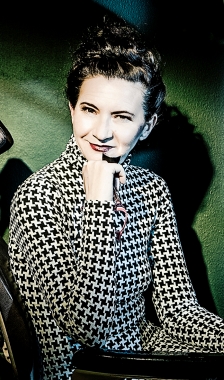
Blood, Sweat & Tears

PaintWe all know that working in the creative industries takes a lot more than money and drugs. It takes passion — and blood, sweat and tears, too. The Jupiter Drawing Room has taken this literally in a new campaign which includes a new product paint range aimed at artists, all to promote the 2014 AbsaA L’Atelier Art competition.

Aptly named ‘Blood, Sweat and Tears’, the special paints incorporate the bodily fluids of artists who take their craft very seriously, it seems.

The Absa L’Atelier art competition is a prestigious competition that has helped kick-start young artists’ careers by giving them international exposure and experience through residencies at the Cite Internationale des Art in Paris, the Sylt Foundation in Germany and the Ampersand Foundation in New York.

In order to win this competition, one needs to enter a piece of art of the highest quality. After interviewing numerous artists, the team at Diane VictorJupiter came to a single insight: in order to create great art, you need to put in the hard work — great art takes blood, sweat and tears.

Jupiter CD Dana Cullinan elaborates: “This became our campaign idea, but because we were targeting artists, a group of people who seek the provocative and controversial, we knew that a traditional campaign wouldn’t cut it.

“So, we created a campaign that was a little different. A campaign that would get them talking and inspire them to put in the necessary hard work to create great art — we created a range of acrylic paints using blood, sweat and tears from established artists.”

Jupiter Johannesburg CEO Jerry Mpufane says: “Nothing like this has ever been done before and it took a lot of hard work to pull off. After extensive research and many awkward phonecalls, we found a medical partner, an artist paint maker and three established artists to get involved: Diane Victor, Willem Boshoff and Bambo Sibiya.”

Lancet Laboratories took on the challenge and provided the sweat of Diane Victor, the tears of Bambo Sibiya and the DNA of Willem Boshoff.

The whole process was documented, creating a series of films which showed the individual artists’ stories of hard work and dedication, as well as the paint-making process.

Cullinan says Lancet made sure the fluids were non-infectious and in liquid form to use in the paint-making process, and Willem Prinsloo from Zellen Paints in Kleinmond, Western Cape, came on board to create the paint, using quality ingredients and pigments from around the world to create the premium range of art paint.  The whole process, from mixing to tubing and labelling, was done by hand — an art form in itself.

The paints will be distributed in art stores across the country and all proceeds will go to Assemblage, a non-profit organisation for artists.

So, not only colourful in its execution and application, but utterly brilliant. Easily my favourite product/design and direct campaign of the year so far.

Magnum moments

magnum pink and black

Magnum SA’s new limited edition Pink and Black new products have launched for different moments.

Magnum Pink Pomegranate and Magnum Black Espresso are two new delicious ice-cream variants for the different sides of your personality, according to the PR spiel.

Magnum Pink with pomegranate sauce is wrapped in a layer of pink pearlescent Magnum chocolate to bring out your “fun, flirty side”. And Magnum Black Espresso can be unwrapped for “sophisticated, elegant confidence”… It contains ripples of intense black espresso coffee swirl covered in a thick dark Magnum cracking chocolate.

So here’s me off to get myself some of that “sophistication and elegance”.

Smooth ride

Yum shelterWith out-of-home media being one of the fastest growing media in South Africa, it’s no wonder the application and graphic properties of campaigns are increasing in sophistication, like this 3D Yum Yum Peanut Butter campaign on buses and bus shelters.

Colourful and eye-catching graphics extend the Yum Yum Peanut Butter “Serious About Smooth” campaign,which last year saw three creative executions (the Sumo wrestler, a WWE champ, and Steamroller) on billboards nationally to promote Yum Yum’s dedication to creating the smoothest peanut butter on the market.

As Wesley Shunn, brand manager for Yum Yum, explains: “Yum Yum has a fun and quirky personality that allows us to really push our creative. Consumers responded well to what was initially developed last year.”

So Yum Yum challenged its agencies, both creative and media, to explore even more impactful angles to further extend the successful campaign’s life, which lead to the development of the “structure-crushing” illustrations which have been extended to include buses and bus shelters.

Together with Mediology, Joe Public created a funky hologram effect on some of the bus shelters for the Sumo wrestler, where you can literally see the character hammer the peanuts into smoothness, making the campaign more significant and eye-catching for consumers.

The outdoor media campaign includes bus wraps and bus stops.

Yummy.

Mirror mirror…

Mnet WigAnother massive growth media category is in-store and mall media, which Primedia dominates with a wide variety of branded options in almost every available space in store and in the mall — from the loos to shop windows, the shelf, and now even changing rooms!

To generate hype around the new DStv channel, Mnet Movie Zone on 139, wig decals were strategically located in Primedia Unlimited’s TLC change room media environments in Jet, Ackerman’s and Edgars stores around the country.

“The campaign is intended to drive tune-in and capture the intended target market’s attention in a unique, fun and interesting way,” says TLC’s Brett Tucker.

Booked by BlackMarket Media, the TLC advertising campaign also persuades the intended target audience — lower LSM consumers — to subscribe to DStv.

I hope they’re using ‘thin’ and not ‘fat’ mirrors, or their advertising will be wasted. Every woman knows that some retail mirrors make them look worse, while others are more flattering. Solve that problem and sales will increase by trillions, no matter what the product or store!

Louise Marsland Shelf Life by Louise Marsland is a weekly column on MarkLives. Tweet new product, packaging and design launches to @louise_marsland or email her at louise.marsland at gmail.com. Want to sponsor Shelf Life? Contact us here.

Louise has written about the FMCG, media, marketing and advertising industry for 18 years of her 25-year media career as a former editor of magazines AdVantage, Marketing Mix and Progressive Retailing, as well as websites Bizcommunity.com and FMCGFiles. She currently edits the weekly Wednesday Media & Marketing Page for The New Age newspaper; and is the co-founder and publishing editor of South Africa’s industry trendwatching portal, TREND. at www.trendlives.info, in partnership with MarkLives.com.

Tech Law: Yes, you can be sued for sharing a defamatory Facebook post or tweet

by Paul Jacobson (@pauljacobson) In the recent Isparta v Richter and Another case, Acting Judge Hiemstra found that the first defendant’s comments were defamatory. Reading the judgment, you may be forgiven for forgetting to ask whether the second defendant is also liable, particularly given that the second defendant was only tagged in the offending Facebook posts. Hiemstra’s finding on this question was very brief and, at the same time, pretty profound:

[35] The second defendant is not the author of the postings. However, he knew about them and allowed his name to be coupled with that of the first defendant. He is as liable as the first defendant.

Pretty powerful findingPaul Jacobson

This is a pretty powerful finding. In the context of Facebook it means that, if you are tagged in defamatory content and you don’t do anything about being tagged (or perhaps even mentioned), you could be liable, too. This argument likely extends to other platforms such as LinkedIn, Google+ and perhaps even Twitter.

In the case of Facebook, you can control who can tag you (you can choose to approve any tags before the posts become public). As with Facebook, you can mention LinkedIn users, although it’s not clear whether you can control this and remove tags. It’s the same issue with Google+ mentions.

Of course, on Twitter it isn’t possible to control who @-mentions you. At least on Twitter you can report a tweet as abusive and that may address Hiemstra’s concern that the second defendant “allowed his name to be coupled with that of the first defendant”.

Practical difficulty, if not impossibility

Hiemstra doesn’t seem to take into account the practical difficulty, if not impossibility, of removing these tags or mentions, and it’s not clear what a person would need to do to disassociate him or herself from defamatory comments.

This also links to a debate about what a retweet means: is it an endorsement or, in some other way, a sign of approval? Unfortunately, the trend that has continued to emerged from a number of courts is that —

[a] person who repeats or adopts and re-publishes a defamatory statement will be held to have published the statement

The recent UK McAlpine case highlighted this in the context of Twitter and retweeted defamatory statements, and that approach is probably going to be expanded in our courts as defamation claims based on retweets are heard.

The takeaway here is that you should carefully consider whether to reshare or retweet any material which could be regarded as defamatory, unless you are comfortable that you have a defence to a defamation claim available to you in the event you are sued.

Apologising can help

Fortunately, an adequate apology can help you reduce your exposure to liability or perhaps even avoid it entirely. This depends almost entirely on the nature of the apology. Hiemstra made several references to apologies including the following [Media24 link added]:

[40] An apology in the same medium (Facebook) would have gone a long way towards mitigating the plaintiff’s damages. In fact, there is much to be said for the proposition that orders for damages for defamation are inappropriate. Nugent JA, in a minority judgment in Media 24 v Taxi Securitisation referred to a 1995 report of the New South Wales Law Commission, referred to by Willis J in Mineworkers Investment Co (Pty) Ltd v Modibaneu which called damages as the sole remedy for defamation “remedially crude”. Nugent JA said in para [72]: “As it is. an order that damages are payable implicitly declares that the plaintiff was unlawfully defamed, thereby clearing his or her name, and there can be no reason why a plaintiff should be forced to have damages as a precondition for having the declaration.”

An apology to the plaintiff, or a retraction in writing, in the same forum that the offending statements had been made, also clears the name of the plaintiff

In the Isparta case, the defendants didn’t apologise for the defamatory comments and seemed to maintain their entitlement to comment as they pleased.  Hiemstra wasn’t persuaded by the defendants’ “specious technical defences” and I suspect tha,t if the defendants had made a timeous and sincere apology, the finding would have been different.

In the 2009 Supreme Court of Appeal decision of Tsedu and Others v Lekota and Another, Judge of Appeal Nugent made the following comments about an apology that was made prior to the trial at a lower court:

I do not think much weight can be attached to that retraction and apology, coming as it did on the eve of a trial that was destined in any event to vindicate the respondents. One might expect that the appellants, having retracted and expressed their ‘sincere regret’, would then have turned their attention to the monetary value of the offence that they had caused, but that was not to be. Instead they persisted in compelling the respondents to find their full vindication in the courts. There has been nothing, in my view, that the appellants have done to mitigate the harm that they caused, and the respondents are entitled to a full measure of damages.

What the judges seem to be saying is that, for an apology to be effective in helping a party reduce exposure to liability, the apology should probably be sincere and essentially amount to a clear retraction of a previously defamatory comment. Equivocal apologies may be insufficient and, if you are going to apologise, do it sooner rather than later. Apologising on the steps of court may not be convincing to a judge.

Obviously, your particular facts may require a different approach (and you really should talk t your lawyer about this in the context of your specific case — this really isn’t legal advice!).

Think again about resharing that

A common and persistent misconception about social media is that the ordinary legal rules don’t apply.

I still remember the incredulous tweets around the time of the Oscar Pistorius bail application from people who were astonished that a tweet can be defamatory. How often have you retweeted something amusing or even outrageous without a second thought about the possibility that you could be sued for that simple action?

As the law stands, both in South Africa and elsewhere, this is a very real risk, so the next time you see something scandalous and are about to reshare it, think again.

— Paul Jacobson (@pauljacobson) is the founder and director of Web•Tech•Law/CC BY-SA 2.5

Ad of the Week with Oresti Patricios — KFC imaginary friend

by Oresti Patricios (@orestaki) KFC is a global brand with a family-focused, everyday food brand promise. Like most fast-food brands, the emphasis is on fun, so most advertising messaging uses humour to create a light-hearted feel. The latest ad from KFC also manages to sneak in another message: that KFC is also for special occasions.

The ad starts with little Sipho arriving at his grandmother’s house  for a family visit. Sipho is talking to an invisible person called Lewis, but Dad tells Gogo not to worry – “It’s his imaginary friend.” In various ensuing scenes, Sipho is seen playing with Lewis, looking for Lewis, even stopping Gogo from going into the loo, while Lewis is busy in there.

So everyone just plays along, because that’s what families do. Gogo sets a place for Lewis at the table and gives him his own piece of KFC. The punchline comes when Sipho takes Lewis’s piece, explaining that “Lewis isn’t hungry.”

The young boy who plays Sipho is very sweet and pulls off the role convincingly, so hats off to the director for eliciting a great performance.

Viewers may remember a similar concept being done in the USA, where the dad inadvertently runs the mower over his daughter’s imaginary friend, and the only thing that cheers her up is an ice-cream cone from KFC. I think this is an improvement on the concept, because it sets the story in the context of a nuclear family.

It’s a warm, feel-good ad with endearing characters and a story that’s cute without being cloying. The overall message of the ad is very smart, because there is a very “warm, fuzzy” mood to the ad; a sense of caring and kindness; so it’s a scenario that is associated with love and being at home. Nothing says “home” quite like a family meal with Gogo.

By inserting itself into this everyday narrative, KFC has also attached all those qualities to its brand; so instead of the negative connotations one might have of “fast food”, KFC is part of this special occasion. On top of that is the feel-good factor created by the story of the cute little boy and his imaginary friend.

The ad was conceptualised and produced by Ogilvy South Africa, and the creative team was led by creative director Mike Martin, with art direction by Marion Bryan and copy by Tessa Weakly.

— Ad of the Week is published on MarkLives every Wednesday. See past selections here.

— Oresti Patricios (@orestaki) is the CEO of brand and reputation analysis company Ornico.

BrandAlert: Consumers will pay more for products from ‘good businesses’

by Shauneen Procter (@procter101) There’s an old saying that goes something like this: “You can’t make a silk purse out of a sow’s ear.”

In the world of branding and reputation, this idiom has  never been more relevant, particularly when you figure out that the silk purse can be a metaphor for a company or product. No matter what you do, a wallet made of pig’s skin isn’t going to become silk.

Shauneen ProcterIn branding terms, this aphorism is translated into the understanding that the quickest way to hasten a bad product’s downfall is to advertise or promote it.

Is the converse true?

The intelligent question, of course, is whether the converse is true: Do good companies perform better than others, and what happens when you promote them properly?

Questions about the morality of business reached a head after the 2008 ‘Global Financial Crisis’ which saw a massive fiscal earthquake rip across the world, and fell the banking sector. The greatest financial ‘heart attack’ since the Great Depression of the ’20s, the crisis realised the death of Lehman Brothers and almost bankrupted Merrill Lynch, the Royal Bank of Scotland, Fannie Mae and many more.

There was a forerunner to this great crisis — its name was Enron. A Texas-based energy and commodities company, Enron was America’s darling before 2001. A US$101 billion empire until it floundered and fell in spectacular fashion, Enron’s demise had much to teach the world — if only the world had been willing to learn.

Distilled in a book

The take-out from Enron is distilled in a book called Building Public Trust: The Future of Corporate Reporting, which suggests a new way of public reporting —  a communications model that puts transparency, integrity and accountability at its core. Written in 2002 by Robert G. Eccles and Samuel A. DiPiazza Jr., both of whom were at PricewaterhouseCoopers (PwC) at the time, the book suggests a new system of open information flow for companies.

Today you’ll find Eccles at The Harvard School of Business where he is the professor of management practice, while DiPiazza remains on the global board of PwC, holds other distinguished directorships and is involved as a trustee of a number of social impact initiatives.

In a world where public trust in big business and banking in particular has eroded significantly, Building Public Trust has never been more relevant. In it Eccles and DiPiazza propose a model of corporate reporting that transparently reveals information about key business indicators. The authors also say that companies must embrace technology for communicating openly.

A shift for brand builders

The system Eccles and DiPiazza proposed some 10 years ago indicate a shift for brand builders. In the wild west days of advertising — the opaque era of the ‘Mad Men’ — what the product was about didn’t matter. All that mattered was selling it. That’s why we balk today when we look at advertising of the ’50s which shows babies smoking and depicts misogyny.

Thankfully, the marketing sector has moved from selling at all costs to the understanding of building brands, protecting brands and, more recently, to creating real and enduring value. In a more connected and open world, consumers know the difference between silk and pig skin.

The future, then, is not about being smarter at selling but being smarter about producing or how business is done. It is about morality, sustainability and impact. Here the function of the brand and reputation manager changes from being a corporate protector  to becoming a communication enabler. The new role is all about educating and coaching businesses about how to open their operations to public scrutiny.

Aphorism or scientific fact?

As Simon Anholt often says, “The only remaining superpower is public opinion”. In a hyper-connected world, consumers have much more power than they’ve ever had before, which means being good is its own reward. But is this just an aphorism, or a scientific fact?

Research shows that, while it may take a little more effort to be good, good companies do better than others. The brilliant duo from Freakonomics asked the question, “Is Good Corporate Citizenship Also Good for the Bottom Line?” in one of their radio shows last year. The answer from New York journalist and author Stephen J. Dubner, together with award-winning economist Steven D. Levitt, was a resounding “Yes!”

It comes as no surprise to find out that the Freakonomics show was based on new research by Eccles in tandem with a colleague of his from Harvard, and a top thinker on corporate sustainability at the London School of Business.

Very recent research

If that’s not enough to convince you, a research report by the Economist Intelligence Unit shows “global companies that have delivered strong share price growth over the past three years are more proactive on corporate sustainability issues than those that have seen their share price stagnate or decline.” There is also very recent research from Nielsen that shows consumers will pay more for products from ‘good businesses’.

In a Global Survey on Corporate Social Responsibility of 29,000 Internet respondents in 58 countries, Nielsen examined the relationship between consumers who say they’d pay more for products from socially responsible companies, and people who actually do. “[Forty three] percent of global respondents in Nielsen’s survey agreed they spent more on products and services from companies that have implemented programs to give back to society — just 7 percent fewer than said they’d be willing,” Nielsen says in this research.

The evidence for being good is overwhelmingly positive and encouraging, and hopefully heralds a new era for business and economics where industry becomes about more than just making a mere profit or growth.

The take-out for companies and brands? Make a better purse — it’s as simple, and as difficult, as that.

— Shauneen Procter is a founder member of Idea Engineers, a brand, advertising, social media and reputation management agency that engineers bespoke marketing solutions for companies in a complex, socially networked world. Procter is an advertising veteran who started her career at Grey Phillips in the ’80s. She was the founder of Sorcery Advertising, voted by clients as the “Best Local Advertising Agency”. A champion for sustainability, Procter is an investor in smart new businesses; a mentor to emerging brand talent; and an iconoclast who eschews awards but believes in building value and respect.

— MarkLives’ round-up of top ad and media industry news and opinion in your mailbox every three work days. Sign up here!

Grubstreet: Getaway — we won’t bamboozle you like Google

by Gill Moodie (@GrubstreetSA)  RamsayMedia’s Getaway is updating its ethos to reflect a more sophisticated view of travel among the South Africa’s growing middle class – a move that the magazine’s editor, Cameron Ewart-Smith, describes as “a fundamental shift in the very fabric of our magazine”.

This also means that the iconic outdoor adventurer’s magazine that was launched in 1989 has been redesigned. You’ll see the changes in the GetawayOctober edition that is already available in store. They  include a glossy, more sophisticated cover, bolder use of typography and pictures, more graphics and a brighter palette of colours.

Ewart-Smith told Grubstreet last week: “(The change) was borne out of looking at South African travellers and realising there is a much more diverse community of travellers than waspy, (national) park-going traditional Getaway readers.

“All our stats tell us our audience travel overseas once every two to three years. Our audience has much loftier  ideals. In fact, our audience are not the people who are committed campers and never, ever do anything else. Our audience goes camping because they want to go camping and they go to London because they want to go to London or they go diving in the Maldives because they want to.”

“We’ve been pigeon-holing South African travellers into a vision of them that was probably born in 1989, when we started.”

So, for instance, the cover story of the October edition is Bali.

Ewart-Smith says that Getaway will also now strive to be more opinionated, for example, recommending THE best places to stay rather than giving a large range of options without any particular recommendations.

“Travel  magazines are not just about giving information,” he says. “They have to do a double job of inspiration and information so this new design and content strategy is very refined. It’s aimed at telling people the places they MUST go and the things they MUST see.”

By comparison, says Ewart-Smith, if you are looking for travel options via a Google search you are bamboozled by a ton of options.

“It’s too much to know. We’ve had a lot of soul searching and are investing more in more opinionated content so we can say: “Stay here”. Rather than: “You COULD stay in one of these hotels”.

“You can spend hours and hours on the web searching but our job is to make sense of it all and present to you the things that you must do. It’s not a competition with the web. We’re adding value.

“Our job as magazine editors – and it doesn’t matter what magazine you edit – is to surprise and inspire people on a content discovery journey. So it could be small upfront news piece in a magazine that you would never, ever have Googled – and it could be the best holiday of your life. It could be a multipage feature where you find the contact information (for the destination) in the article and you actually phone it.”

When it comes to advertising revenue, Ewart-Smith says that the  classified ads are down in travel magazines  across the board while Getaway’s gear advertising and upfront ads remain healthy.

“People page through the gear pages because they don’t know what they’re looking for. They’re on a discovery mission.” he says. “When it comes to destination advertising, most people have a pretty good idea where they are going… and you kind of go (and find accommodation, flights, etc, ) from there.”

Getaway’s website – which is a key part of Ramsay’s 360-degree multiplatform strategy – is doing very well, says Ewart-Smith, who is also online editor.

“We are winning on a number of fronts – and on the most important front:  audience. We’re on about 150 000 unique users a month now. We are growing every month and we are putting a lot of effort into that. The bookings are increasing steadily so more and more people are finding the usefulness of going online with us to find places to stay. And our own travel packages, which we are working on in collaboration with a whole lot of travel operators, are also doing well.

“It’s not winning any profit awards yet but I don’t think there are many content websites that are profitable at this point. I think it will be very profitable in the future and the vision is well thought through. It’s well understood where it can go. It’s a case of making sure that we don’t overspend in the short term and that we think cleverly the whole time.”

Like many magazines, Getaway’s circulation is down and the revamped mag is certainly an attempt to expand its target market.

In the most recent ABCs – for the second quarter of 2013 – the magazine was at 44 470 total circulation compared with 56 624 a year earlier.

“We are certainly not going to sit back and say: ‘Print’s over. No one’s reading it anymore’,” Ewart-Smith told Grubstreet. “We know people are reading – and they are reading quality content.

“It’s tough and you’ve got to work harder. People are buying fewer magazines and they are being more picky about what they buy – and they chop and change more.

“But having said that, I’m very positive about where our circulation will go… If you’d asked me about this in January, I would have said print is being killed by digital, and magazines can’t keep up. But in the last six month – with that soul searching, the analysing of data, looking at what people are saying and strategising  – I feel pretty confident saying: ‘Hang on a second. We have good products as magazines. We need to be better at telling people why they need to buy us. We need to be more exciting.’”

— South Africa’s leading media commentator, Gill Moodie, offers intelligence on media — old and new. Reprinted from her site Grubstreet.

New digitally-led content marketer lands Sanlam

by Herman Manson (@marklives) Habari Media, one of the digital sales houses for Facebook in sub-Saharan Africa*, among others, has entered the content marketing business with the recent signing of two publishing veterans, Neal Farrell and Robyn Daly, as well as its first client, Sanlam.

Farrell and Daly both left Ramsay Media, where they’d launched that publishing house’s content-marketing business, and signed clients such as Sanlam and Toyota, to found Habari Media Content Marketing.

habariFirmly planted in the digital age

What excites Farrell and Daly about the Habari business is, of course, its strength in digital and mobile media. Most content marketing agencies in South Africa were born of print, which remains the mainstay in the business. Habari Media Content Marketing is born with both feet firmly planted in the digital age.

Which makes it maybe just a little ironic print will be such a core focus for its first client, Sanlam (the Habari team won the business in a closed tender after they had left Ramsay, says Farrell). “We lead with content and then look at the publishing solution,” he insists, and since the Sanlam contract is for a magazine unlocking its award scheme, print was, in this instance, the most relevant medium.

Daly says the new agency aims to tell the brand story across multiple relevant channels and, since the Habari business already has strong links to the web, Facebook and LinkedIn (for which it is also a sales partner) add tremendously to the depth and scope of what they can achieve.

For the Sanlam project, they are launching multi-segmented email newsletters and will run content across the web, print and social media. Farrell promises no pdf-converted-to-digital magazines — any digital magazines will be bespoke and developed for computer screens.

Investing heavily in content

Daly, who serves as content director, is excited to be part of a business that is investing heavily in content at a time when consumer publishers especially are divesting. Daly says it’s been easy to attract top writing talent due to these changing dynamics in the media marketplace.

According to Farrell, digitally-led content marketing opens the market up to middle- and large-sized businesses, rather than being the exclusive domain of the Edgars or Vodacoms of the world. Also making it easier for these businesses to play in the content marketing space will be Habari’s expertise in monetising media real estate.

Apart from links to the sales house, the new content-marketing business also enjoys access to Answered, the Habari research division, and Machine Rewards, the rewards specialist unit in ad agency Machine which remains a sister agency while running separately from Habari.

Content is the glue between customers and rewards as it builds awareness around reward schemes, says Daly. You know how many loyalty cards sit in your wallet (probably too many!). Content and rewards work together to help drive understanding of benefits and redemption of awards.

Putting readers first

Farrell considers the Sanlam win a tip of the hat to the strategic relevance of Habari Media Content Marketing, as it won without any existing clients on its books. The agency aims to marry editorial independence and credibility with commercial thinking (quite a tricky line that!). Ultimately, any project they tackle needs to take on the marketing objectives of the client while still putting readers first, says Farrell.

If the Habari team can produce on this promise, it would potentially transform the rewards mags you flip through and then toss in the bin into something of value and worthy of our time, which is ultimately what brands are competing for. We will see, come November, when the first issue of its Sanlam magazine hits the post box.

In the meantime, the duo are eyeing various other sectors for potential clients, including retail banking, travel, leisure and lifestyle firms, retail and automotive.

* Correction: A previous version of this story might have created the impression that Habari Media is the only sales house for Facebook in sub-Saharan Africa. This used to be true but it is no longer the case.  We apologise for any confusion.

[Digital Grandad] Will QR codes ever take off here?

MarkLives’ digital agony uncle @DigitalGrandad1 is now taking questions on all issues digital. Tweet them to him or email DigitalGrandad@marklives.com.

Grandad

Dear Digital Grandad,

We are a SME and been around for decades selling products B2C. But my MD has just asked me to consider using QR Codes in our Marketing, as his son (graduate from overseas), think’s it is so cool and thinks we are so behind to the rest of the world and not seeing the trend or being innovative! Firstly I am not too sure what it is and if it any good? Please help Grandpa

Regards
Mr QR Just-maybe

There’s nothing like a back-seat marketer in every company. Ask your MD to give me a call and I am more than happy to speak to his graduate son and tell him a few things about marketing, life in general, and the birds and bees before he starts throwing around one-liners to egg on his dad. Before his dad gets egg on his face!

Let’s get local

So, Mr QR Just-maybe, let’s get to the basics and firstly understand that South Africa is not like the rest of the world. Just take our smartphone penetration — 80:20, the other way around.

So let’s get local, buddy! We don’t necessarily have the smartphone penetration, so will QR codes ever take off here? I’m not too sure!

QR codes aren’t a new thing and maybe they’re just a trend that dies or gets replaced with the next big thing (NFC). But, before I say anything, let’s start with the basics to arm you with some knowledge and refer you back to my friend Wikipedia.

QR codes (abbreviated from Quick Response code) is a specific matrix barcode (or two-dimensional code) that is readable by dedicated QR barcode readers and camera telephones. The code primarily consists of black modules arranged in a square pattern on a white background (can be customised, though). The information encoded may be text, an URL or other data and, when scanned by a QR barcode reader or camera phone, it will instruct a user’s device to perform a specific action.  These actions can range from simply opening a mobisite or webpage and purchasing a product through to other engaging interactive experience like gaining access to a venue.

You need a QR Code Reader to read it!

WOW — sounds pretty cool, hey? But, remember, you have to have a QR code reader on your phone to read it. I know it sounds obvious but, trust me, it isn’t. I have had a barrel of laughs with my kids watching punters around shopping malls and in shop windows, just pointing their phones waiting for something to happen (and it doesn’t, bless). That’s the first hurdle!

Its usage and growth (hence why I will come back to NFC in a bit), is based on everybody downloading a reader.

Now, kiddo, here’s a quick history lesson in 140 characters

“QR Code technique was pioneered in Japan in the 90’s to help maintain stock control on car parts!” Apparently 100% of Japanese people have a reader and often use it as it comes as a standard on their phones. So you can see why they use it.

The key for a QR code is the simplicity in true consumer interaction, a pro-active call to action by the user, the ultimate hand-raiser, especially where retail-and FMCG-product brands use QR codes to drive sales, sends users to promotion vouchers to be printed and taken in-store, and to push users to interactive engagements — from downloading free music, games and wallpapers (a potential winner for SA mobile users) through to just maximising real-estate on their packaging to allows customer to find out more. Opportunities are endless, and the engagement exciting on both emotional and rational levels.

But let’s get creative with it use — otherwise, another pointless digital interaction

From a creative marketing point of view, there are still very few agencies around that have really exploited these opportunities. But some brands and agencies have cracked it as innovators (see below) and, if anything, we can all learn from them for inclusion in our next marketing campaign (if relevant — be sure to consider the reason you are doing it, where you are sending them and, where possible, maximise the landing for mobile devices to ensure the experience isn’t flawed or cut short).

I have also heard of real-estate companies having great success and even magazines, extending their engagement with readers. Like anything, it depends on what you are trying to achieve and what you are selling. Otherwise, it is another gimmicky digital engagement that will be deemed pointless

Still in its infancy — success depends on its adoption and awareness

In my view, however, while the QR code is still in its infancy in South Africa (and other countries), it is growing fast in popularity and has shown promise of great returns in case studies around the world. For me, especially with our mobile penetration, QR code marketing could be a sure winner for our pond, but it depends on its adoption and awareness! NFC is also picking up traction, especially with its greater usages and security and adoption by Google.

But, to get your mind thinking, here are a few QR code campaigns that I thought are worth a share!

QR Code Turntable: this campaign was just brilliant, especially for a granddad like me who still has his vinyl collection. Basically, one of world’s largest dance music labels wanted to promote a new track and chose to send out a mailer to advertisers with a turntable vinyl record inside – but how could they play it? Simple: by using a QR code, it converted the DM piece into a QR code turntable!

Another great old case study was by FirstBank QR code campaign. Commuters passing through the International Airport in Denver, with time to kill and a digital device on their hands, were provided with electronic books, crosswords or Sudoku FREE, courtesy of FirstBank. Simple billboards with backlit posters were placed inside the airport, headlined “Free Books”, “Free Crosswords” and “Free Sudoku” and displaying QR codes linked to a URL where travellers could download novels, crosswords and Sudoku puzzles free of charge, under the strap line of “We’re here to help you save”.

qr QR QR

And one of my favourites is Hidden Sounds. Leo Burnett won a gold Lion a few years back at the Cannes advertising festival for its ‘Hidden Sounds’ QR Code campaign promoting 14 indie bands (the hidden sounds) for Zoo Records, an alternative music store in Hong Kong with low awareness. The QR codes were cleverly assembled into the shapes of animals that live hidden in the city and posted all over the streets. Scanning the codes in the animals allowed users to read more information about a band and hear their music. They could also purchase the songs directly, as well as share them. The interactions that counted? More than half of the 14 bands sold out their albums within the first week.

Another video which highlights all the pros and cons of QR codes is this great video created by a digital agency in Toronto, the best and worst scenarios of QR Codes.

So, Mr QR Just-maybe, maybe it will be great for your company, maybe it won’t. But now you know what it is all about. You decide and then #JustMaybe it will be worth embracing and hiring the MD’s kid to run the campaign for you. If not, tell him why!

Best of luck
@digitalgrandad1

— DigitalGrandad is a marketing professional with over 140 dog years of practical digital experience working with both global and local brands. From SMEs through to multinationals and across industry sectors, he has seen and embraced the changes technology has given to us to better our lives. Yes, he remembers the old days but is now a firm traDigitalist born through traditional marketing.

If you have a digital dilemma and are too afraid to ask your boss or your agency, but feel you need to ask for some straight no-nonsense advice, please email him at DigitalGrandad@marklives.com with your question or, better still, tweet to @digitalgrandad1. He’ll answer one question every week on MarkLives.com.

MagLove: Miss Miley is here to stay

mediaslutzaMarkLives.com runs a regular slot featuring the best local and international magazine covers every week. We recognise well thought-out, powerful and interesting (and hopefully all three in one) magazine covers and celebrate the mix of pragmatism, creativity and personal taste that created each of them. By media blogger MediaSlut.

See our archive of previous MagLove cover selections

INTERNATIONAL

Taste Magazine (Australia), September 2013

Taste Aus

A cupcake with a twist (or Pop!) and definitely a cover that looks good enough to “lick”! I not only like the delicious-looking cupcake that just oozes yummy-ness, but I also love how they’re showing the final efforts by their readers trying to replicate it on their website. Readers took pictures of their own creations, created a mini-magazine-cover on the website, and then tweeted #tastemagcover.It’s actually really interesting to see how every reader interpreted the recipe, and to see who has the ‘touch’, or who definitely not…

Newsweek, 20 September 2013

Newsweek

One thing definitely leads to another, and everything has an effect on something else. And Newsweek illustrated it so beautifully, with the words “Rampage. Regret. Repeat”. Completely true. This article is also in reference to the horrible shootings and hostage dramas in the US recently… You can read the complete article here on their fight for gun control.

Rolling Stone (US), October 2013

Rolling Stone US

Get used to it. Miss Miley is here to stay, and I’m fine with it. Personally, I’m loving her work more and more, and I think she’s extremely smart and knows how to promote herself, and get people to talk about her… This Rolling Stone cover will surely also get peoples tongues wagging (pun intended)! My opinion is that it’s a Hot cover, and that Miley looks Hot (and wet) and that deserves a spot on their Hot List of 2013… You can read the complete article and interview with Miss Miley Cyrus right here.

LOCAL

ELLE Decoration (South Africa), October / November 2013

Elle Deco, Oct/Nov 2013

This beautiful and creative cover-artwork is the work of artist Johan de Lange, and is the perfect choice for ELLE Decorations’ October / November 2013 issue which signals SPRING to them and their readers!

House and Leisure, October 2013

House and Leisure 10 October 2013

For their 20th Birthday edition, House and Leisure treated their readers to a beautifully indulgent issue, complete with gold finishes on the cover, celebrating their past 20 years! It’s a true collectors’ issue, and a great way to celebrate this amazing accomplishment (in today’s difficult times for print media…). Here’s to the next 20 years!

Getaway, October 2013

Getaway 10 October 2013

Getaway fans will definitely notice a few changes to their favourite travel magazine from the October 2013 issue… Firstly, they’ll notice a complete redesign, and they’ll notice that they’re also featuring International destinations on the cover, as they previously only featured South African and African travel destinations. The new-look magazine and cover has a great international feel to it, and in this instance, they’re marrying travel and lifestyle perfectly, and it screams, “Wish I were there…”!

— The (for now anonymous) blogger behind MediaSlut knows way too much for his own good about media in South Africa, magazines in particular. His mission is to show when South African magazines fail but, most importantly, also when they succeed. If you’re looking for a library about South African magazines and news, your one-stop pitstop is MediaSlut. #MagazinesForTheWin

— Find a cover we should know about? Tweet us @marklives and @mediaslut

Shelf Life: KFC surrenders the Colonel

Louise Marsland’s (@Louise_Marsland) pick of new product, packaging and design launches.

KFC puts aside its iconic branding to promote hunger relief; Clorets breathes new life into Alex; Google and KitKat collaborate; Brand Union explains the new Vodafone ‘Power of Red’; and Kiehl’s finally opens up in Cape Town.

KFC surrenders the Colonel

KFC 1

What makes a brand? KFC clearly believes values are at the heart of a brand, giving up its iconic Colonel branding on its restaurants to highlight the plight of hungry children in South Africa. Instead of the Colonel logo, smiling faces of children will look down on the restaurant entrances for October and November.

The gesture is to mark World Hunger Relief month and draw attention to the plight of the 12 million South Africans, many of them children, who go hungry every day (source: University of Cape Town’s African Food Security Unit Network).

From 1 October to 9 November, customers will see six little faces at 114 KFC stores, one in each major city and town across the country. These faces represent the children that benefit from KFC’s corporate social responsibility initiative, Add Hope.

Since its launch in 2009, Add Hope has raised over R183 million towards feeding hungry children, as KFC Africa managing director Doug Smart explains: “KFC Add Hope brings our brand, customers and staff together to make a difference, because we quite simply believe, a hungry nation can never be a growing one.”

Through Add Hope, KFC feeds more than 40 000 children every month. KFC’s goal is to raise R2 million during the month of October from its customers to continue to spreading hope.

The Add Hope initiative which runs all year, lets customers purchase a menu item, “Add Hope” for just R2 and add it to their order.

A breath of fresh air

clorets

Clorets chose a novel campaign activation to launch its new two-piece box format packaging. The Supa Fresh through the line campaign began in Alexandra, Gauteng, where Clorets ‘refreshed’ a barren corner in the township using trash and junk from the street, turning it into a community park.

The aim is to “breathe fresh air” into an underutilised and dilapidated space, creating a “fresh” area for the community to gather in.

The refreshed packaging of the Clorets two-piece box is designed to give consumers access to fresh breath anywhere, anytime

Georgina Harpur, brand manager for Clorets Chewing Gum at Mondelez South Africa, comments: “The Clorets Supa Fresh project has truly brought to life the brand’s promise of freshness and confidence in the direct environment of our consumers.”

The gum showcases its fresh look across a full marketing campaign with a new TV commercial, national radio slots, OOH executions as well as a Supa Fresh public relations’ community-based project, ‘Supa Fresh The Street’.

“We wanted to bring back the box packaging in line with the Supa Fresh confidence that Clorets delivers anytime and anywhere,” says Harpur.

Clorets two-piece is sold in two flavours, Original and Fresh Mint, nationally.

Have a break… Google KitKat

KitKat

More than 50 million specially branded Nestlé KitKat bars have been made available in 19 countries across the globe after Google named its new operating system, KitKat – in line with its trend to name operating systems after confectionery!

The bars were produced to mark the partnership and promotional packs directed consumers to a dedicated site where there is an opportunity to win prizes such as Google Nexus7 tablets, or exchange for credit to spend in Google play.

SA mobile airtime and rewards company TMARC was appointed as the mobile platform activation provider for the South African part of the global launch.

The competition uses unique technology provided by TMARC that enables customers to dial in a USSD short code and the last four digits of the bar code, which the TMARC system instantaneously validates and decides if the entrant is a winner. Once a winning mobile number is selected, the owner is contacted by TMARC to verify details and complete the delivery of the brand new Nexus 7.

TMARC will also provide Nestle with the data obtained from its profiling system, allowing Nestle to understand its consumer and shopper base more clearly and inform future strategy.

Vodafone’s Power of Red

Vodafone

The Brand Union has helped Vodafone create a new visual brand identity. The Brand Union’s teams in Singapore, Stockholm, London and New York, alongside digital brand consultancy partner Digit, were tasked with developing a new visual identity that was unique, adaptable across Vodafone’s markets, future-proof and modern.

The final design selected was conceived in Singapore and developed in London.

The new identity, Power of Red, uses the bright red synonymous with Vodafone to convey confident energy and progression. Central to the new identity is a flexible rhombus shape that anchors to the Vodafone roundel, positioning Vodafone as a catalyst for progress. It is being introduced across Vodafone’s markets over the next few months.

Vodafone group brand director, Barbara Haase said the new visual brand identity was a true representation of Vodafone: never static – always moving – and ensuring that their technology empowers users.

Christina Futcher, client director, The Brand Union, said: “Today, every moment of interaction between brand and user must feel like a real relationship; a consistent experience wherever you are. To fall short on that authenticity test and the consumer will not allow you to progress any further. Our team at the Brand Union has been collaborating with Vodafone, evolving its visual brand identity for over a decade.”

Kiehl’s Cape Town opens

Kiehl's Store in Edgars PavillionUPDATE: The first Kiehl’s store will open in Cape Town, 1 October, inside the Edgars at Canal Walk. Since the opening of the first Kiehl’s store on the African continent in September last year, there has been an ever-increasing demand from customers for this iconic 162-year-old New York skin- and hair care brand, from around South Africa.

Kiehl’s has also launched  its Super Multi-Corrective Cream to simultaneously lift, firm and visibly redefine skin contours and re-texturise skin within two weeks with double efficacy shown within four weeks. It will be available 1 October in South Africa.

Louise Marsland– Shelf Life by Louise Marsland is a weekly column on MarkLives. Tweet new product, packaging and design launches to @louise_marsland or email her at louise.marsland at gmail.com.

– Want to sponsor Shelf Life? Contact us here.

Louise Marsland has written about the FMCG, media, marketing and advertising industry for 18 years of her 25 year media career as a former Editor of magazines AdVantage, Marketing Mix and Progressive Retailing; as well as websites Bizcommunity.com and FMCGFiles. She currently edits the weekly Wednesday Media & Marketing Page for The New Age newspaper; and is the co-founder and Publishing Editor of SA’s newly launched industry trendwatching portal, TREND. at www.trendlives.info, in partnership with MarkLives.com.

Green Sky Thinking: The need for thneed

by Colwyn Elder (@colwynelder) In March last year The Lorax came to our big screen in all its 3D glory and with a star-studded cast of voices including: Zac Efron, Taylor Swift, Danny DeVito and Ed Helms. If you missed it, you can listen to the story here, a charming fable of corporate greed (represented by the Once-ler and his superfluous, but fast selling thneeds) and its consequent environmental damage.

Narrated by The Lorax who ‘speaks for the trees’, it’s a pertinent story and the cinematic release seemed timeous and considered, until you realise (or remember) that the original story was in fact written in 1971. That’s right, Dr. Seuss warned us against the dangers of not caring for our environment 40 years ago.

The fact that this film educates a new generation about the importance of nature and our responsibility to look after it is all well and good, but colwyn elderwhy has taken so long? My own Dr. Seuss memories are very much limited to ‘The Cat in the Hat’ eliminating pink spots with ‘voom’ and being encouraged to try new foods a la Sam-I-am in Green Eggs and Ham.

The Lorax is just one example of many sustainability related themes in popular culture. This increasing evidence is good news, a significant signpost that sustainability is becoming less marginal and more acceptable – more normal. By becoming part of mainstream culture it is less likely to be rejected as ‘out-there’ and more likely to be accepted by society as a whole. In his Green Marketing Manifesto, John Grant coined the term ‘Greenormal’, and talks to our role in marketing as ‘making breakthrough green stuff seem normal’, as opposed to green-washing, which is about making normal stuff seem green. Thomas Kolster, another prominent voice in our industry, calls it ‘Goodvertising’ and believes advertising has a crucial role to play in making a sustainable future more attractive, desirable, fun and accessible. They have a point.

Last year US fast food chain Chipotle won a grand prix at Cannes for its Back to the Start campaign. The jury chairman commented that, “the best winners at Cannes always have a message…factory farming is such a big issue everywhere in the world…for a fast food company to do this will, we hope, change the industry, change the world”. Creatives across the industry argued that its just great creative. And it is. Though one hopes that recognition at Cannes will not only go on to inspire a host more creative ideas, but also convince more marketing directors as to the creative opportunities within sustainability. This year’s Cannes results show exactly that with McCann Melbourne winning a record five Grand Prix for its Dumb Ways to Die train safety video and Dove’s Real Beauty Sketches from Ogilvy Brazil, co-winning the Film Grand Prix. To add to the sustainability metal, Y&R South Africa was awarded two Silver Lions for its Hope Soap campaign.

Interestingly, all three overlay a behavioural lens on a societal challenge and then apply creative problem solving, verses traditional models of ad persuasion. ‘Dumb ways to Die’ reframes metro safety as the preferred and socially acceptable behaviour – nobody wants to be called dumb after all. Dove’s ‘Beauty Sketches’ encourages self-esteem by holding up a virtual mirror that calls to question one’s self-perception verses reality. By placing a small toy inside a see-through bar of soap, ‘Hope Soap’ is designed to instill a habit of hand washing among children in a community where hygiene is an issue. It’s a very different solution to the more traditional placing of a reminder poster in a community clinic. Once again, let’s hope marketing directors are paying attention, as the creative opportunities for this type of behavioural nudging are as many and varied as societal issues looking for solutions.

At first glance, ‘Back to the Start’ appears to tell the same story that The Lorax does. It’s a narrative of big corporate take over verses taking responsibility, plus it highlights the importance of looking after and caring for our environment. Or does it? The Lorax carries a warning: “Unless…” and delivers a literal ‘seed’ of hope lest we end up in a tragic wasteland of I-told-you-so desolation. A common storyline in the early days of the green movement (see this 2009 ad for Act on CO2), but thankfully we seem to have moved on.

‘Back to the Start’, ‘Dumb Ways to Die’, ‘Beauty Sketches’ and ‘Hope Soap’ tell a different story; one that is less fearful and more optimistic; less about negative consequences and more about positive action; less finger wagging and more active participation. By involving people in the making of a better world, we are more likely to enjoy the prospect of a happy outcome.

Y&R strategy director Colwyn Elder (@colwynelder) has 17 years of experience in strategic planning, together with specific credentials in sustainability communications, social marketing, corporate social responsibility and cause-related marketing. Elder contributes the monthly “Green Sky Thinking” column on sustainability issues to MarkLives .

Online CPD Courses Psychology Online CPD Courses Marketing analytics software Marketing analytics software for small business Business management software Business accounting software Gearbox repair company Makeup artist