Brand View: The anti-Apartheid posters that helped design a democracy

by Emile Maurice, exhibition curator — Interruptions: Posters from the Community Arts Project Archive, on behalf of the Centre for Humanities Research at UWC During the 1980s and 1990s, hundreds of ordinary people from all walks of life interrupted their daily roles to become makers of images that eventually helped revolutionise South Africa. Sixty of these powerful hand-made posters will be on display in Interruptions: Posters from the Community Arts Project Archive, an exhibition at Cape Town City Hall that is part of the Cape Town Open Design Festival, 13-23 August 2014.

The exhibition of resistance posters comes from the Community Arts Project Archive, located at the University of Western Cape (UWC), and is free and open to the public. These posters are something all South Africans should see – they made a vital contribution towards changing South Africa, and you could say, were part of ‘designing our democracy’, just as was the speech given by Nelson Mandela on the steps of Cape Town City Hall, after his release from prison in 1990.

Interruptions: Posters from the Community Arts Project Archive can be viewed daily at the Open Design Cape Town Festival, 10h00-17h00, at the City Hall (2nd floor) from Wednesday 13 until Saturday 23 August.

D68 Angola bevrijd 21.5MB-1

Above: Anti-Apartheids Beweging Nederland (AABN) (Anti-Apartheid Movement Netherlands), Angola bevrijd; Vrijheid voor Zuidelijk Afrika (Angola freed; Freedom for South Africa), 1975. Offset litho poster printed in Amsterdam. Artist unknown. CAP Collection, UWC-Robben Island Museum Mayibuye Archives.

L 118 Asiyi eKhayelitsha 1.5MBOrganisation unknown, Asiyi eKhayelitsha (We will not go to Khayelitsha), 1985. Silkscreen poster produced and printed at CAP, Cape Town. Artist(s) unknown. CAP Collection, UWC-Robben Island Museum Mayibuye Archives.

B 28 Release Nelson Mandela 2MB

British Anti-Apartheid Movement, Release Mandela, c 1988. Offset litho poster produced and printed in London. Artist: Surinder Singh. CAP Collection, UWC-Robben Island Museum Mayibuye Archives.

L Looking Back  (2)-1

Community Arts Project (CAP), Looking Back, 1989. Silkscreen poster produced and printed at CAP, Cape Town, to advertise CAP’s 1989 annual exhibition. CAP Collection, UWC-Robben Island Museum Mayibuye Archives.

resistance poster 3

United Democratic Front (UDF), Congress of South African Trade Unions (COSATU), National Education Crisis Committee (NECC), Stay-Away: June 16 – S.A. Youth Day, c 1987. Offset litho poster printed at Esquire Press, Cape Town. Artist unknown. CAP Collection, UWC-Robben Island Museum Mayibuye Archives.

resistance poster 4

Congress of South African Trade Unions (COSATU), COSATU Rally, 1987. Silkscreen poster printed at Esquire Press, Cape Town. Artist) unknown. CAP Collection, UWC-Robben Island Museum Mayibuye Archives.

resistance poster 1

Cape Youth Congress (CAYCO), Save the Patriots, 1988. Silkscreen poster produced and printed at CAP, Cape Town. Artist(s) unknown. This poster was made as part of a campaign against political executions. The face featured on the poster is that of Solomon Mahlangu, the Umkhonto we Sizwe (MK) cadre who was executed by hanging at Pretoria Central Prison in 1979. His execution provoked international protest. CAP Collection, UWC-Robben Island Museum Mayibuye Archives
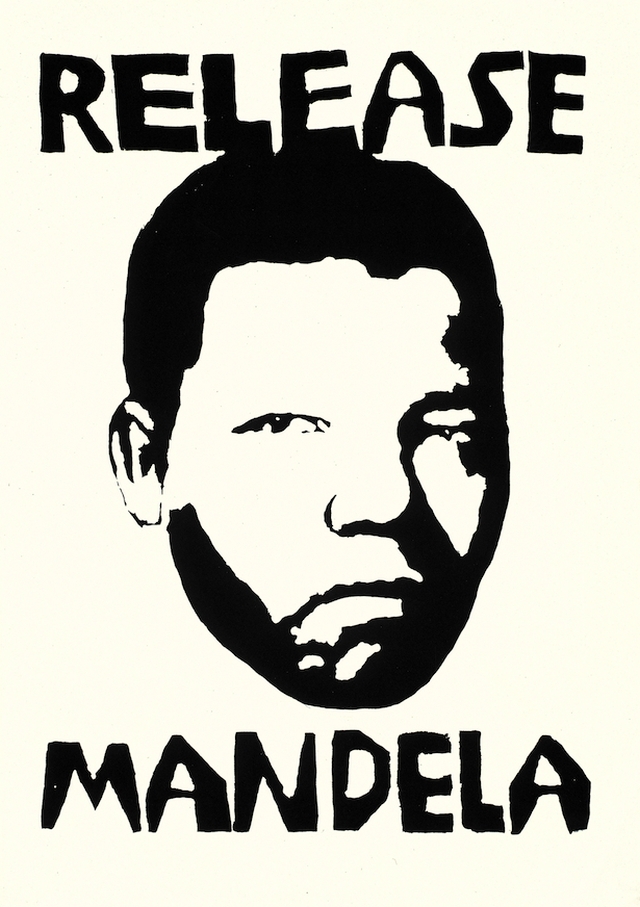
resistance poster 2Organisation unknown, Release Mandela, c 1988. Silkscreen poster produced and printed at CAP, Cape Town, in support of the campaign to release Nelson Mandela from jail. Artist(s) unknown. The Release Mandela Campaign was launched in 1980 by Oliver Tambo and the ANC in exile. In 1985 the United Democratic Front (UDF) launched a new campaign for the release of Mandela, warning the government that there would be no peace in South Africa until he was freed. CAP Collection, UWC-Robben Island Museum Mayibuye Archives.

L 272

Grassroots Community Newspaper, Youth Jive, c 1986. Offset litho poster printed at Esquire Press, Cape Town. Artist(s) unknown. In the 1980s Grassroots gave expression to people’s culture through organising many concerts featuring musicians associated with the liberation movement, such as Basil Coetzee and Winston Mankunku, and bands like the Sharptown Swingsters and Workforce, which featured the legendary alto saxophonist, Robbie Jansen. CAP Collection, UWC-Robben Island Museum Mayibuye Archives.

L 184National Education, Health and Allied Workers Union (NEHAWU), Have you joined NEHAWU? 1990. Silkscreen poster produced and printed at CAP, Cape Town, to recruit workers to the union. Artist(s) unknown. CAP Collection, UWC-Robben Island Museum Mayibuye Archives.

L 187

Congress of South African Trade Unions (COSATU), COSATU Rally, 1987. Silkscreen poster printed at Esquire Press, Cape Town. Artist(s) unknown. This poster inviting workers to a rally at the University of the Western Cape (UWC) is designed using the symbolic colours of COSATU. Red stands for the working class; black for the struggle against racial oppression by the black majority; and gold for the wealth of South Africa. CAP Collection, UWC-Robben Island Museum Mayibuye Archives

L 034Cape Youth Congress (CAYCO), June 16: Viva the Youth, c 1986. Silkscreen poster produced and printed at CAP, Cape Town. Artist(s) unknown. After the 1976 uprising, the liberation struggle entered a new phase, characterised by an ever sharpening confrontation between the masses and the apartheid regime. This poster celebrates the contribution of the youth to this renewed offensive against apartheid. CAP Collection, UWC-Robben Island Museum Mayibuye Archives.

L 197

Congress of South African Trade Unions (COSATU), Let’s Fight for Our Rights: Farmworkers! 1988. Silkscreen poster produced and printed at CAP, Cape Town. Artist(s) unknown. This recruitment poster was made after COSATU had started the Farm Workers Project (FWP) in 1985, with a view to organising these workers. CAP Collection, UWC-Robben Island Museum Mayibuye Archives.

— MarkLives’ round-up of top ad and media industry news and opinion in your mailbox every three work days. Sign up here!

ABC Analysis Q2 2014: The biggest-circulating newspapers in South Africa

by Herman Manson (@marklives) The Audit Bureau of Circulations of South Africa has released newspaper circulation statistics for the period April — June 2014 (ABC Q2 2014).

Daily newspapers have increased circulation to  1 571 532 – up from  1 494 023 in the previous corresponding period. Copy sales stand at 1 thetimes200 894. Digital editions come in at 6 250.

Circulation at the weeklies have fallen to 585 872 from 619 400 (and 621 750 in Q1 2014). Weekend newspapers have fallen to 2 000 983 from 2 205 462 in the previous corresponding period.

Local papers have declined to 410 140 from 437 815. Free newspapers jumped to 6 599 464 from 6 281 506.

The ABC notes in its quarterly presentation today that “while circulation has dropped 4.7% major newspapers titles still claim ‘growth’ by adding copies in under the “distribution below 50%” of the cover price category.”

Note: we compare the current figures with the same figures for this time last year, and not with the previous quarter. Green equals growth, red equals decline. For magazine circulation figures, click here.

ABC member circulation totals:

Daily Newspapers: up to 1 571 532 from 1 494 023 for the previous corresponding period
Weekly papers: down to 585 872 from 619 400
Weekend papers: down to 2 000 983 from 2 205 462
Local papers: down to 410 140 from 437 815
Free papers: up to 6 599 464 from 6 281 506

Daily papers

In Gauteng Beeld has fallen to 59 544 from 64 073 (The ABC notes that Afrikaans daily titles have declined by 7.1% annually, 95,000 copies, over the period) , The Star to 96 029 from 102 498 and Pretoria News to 16 914 from 17 750. Sowetan has held steady at 99 529 from 99 517.

die burgerOn the coast Die Burger (Eastern and Western Cape editions) has declined to 57 423 from 59 704. Cape Argus has fallen to 29 170 from 33 297 and the Cape Times to 31 784 from 35 396. The Daily Dispatch (East London) has bucked the trend by growing to 26 915 from 25 956 as has The Herald (PE), growing to 22 987 from 22 255. In the Northern Cape the Diamond Fields Advertiser (Kimberley) has shown slight growth to 9 519 from 9 378.

KZN’s Daily News has fallen to 29 457 from 31 383, The Mercury to 28 938 from 30 121 and The Witness to 17 308 from 17 908. Isolezwe has declined to 104 860 from 110 764.

On the tabloid front Daily Sun has gone down to 274 165 from 287 222 and Die Son to 84 726 from 91 735.

Business Day has fallen to 30 901 from 32 486. The Citizen has dropped to 57 096 from 61 623. The Times has come in at 144 440 (up from 142 603 in the previous quarter). Volksblad has fallen to 19 576 from 20 059.

The MarkLives Big Daily Newspaper List*

1. Daily Sun: 274 165
2. The Times: 144 440
3. Isolezwe: 104 860
4. Sowetan: 99 529 +1
5. The Star: 96 029 -1
6. Son: 84 726
7. Beeld: 59 544
8. Die Burger: 57 423
9. The Citizen: 57 096
10. Cape Times: 31 784

Business Day: 30 901

Weekly and weekend papers

Among the weeklies, Ilanga has fallen to 93 914 from 107 102. The Mail & Guardian has declined to 39 999 from 42 496. The Post is down to 43 463 from 44 072. Soccer Laduma has grown to 295 964 from 292 328.

rapportIn terms of the Saturday press (including Saturday editions of the dailies): Beeld has fallen to 53 408 from 59 944 and Die Burger to 71 141 from 74 256. The Citizen is down to 36 901 from 37 947 and Independent on Saturday to 41 070 from 42 635. The Saturday Star has fallen to 70 963 from 75 128. Saturday Dispatch has grown to 21 412 from 20 186.

On Sundays The Citizen has fallen to 118 956 from 120 666, the Sunday Times to 390 738 from 422 869 and Rapport to 175 552 from 192 328 (The ABC notes that Afrikaans weekend titles have declined by 7.1% annually, or by 95,000 copies, over the period.). Son op Sondag has fallen to 49 762 from 54 367 and Sunday Tribune to 68 920 from 73 521. Sunday World has declined to 106 812 from 127 659. Holy moly – The Sunday Independent has resigned from the ABC. Grubstreet offers an explanation, but I’m not sure I’m buying. Sunday Sun has grown to 177 304 from 170 843.

Ilanga Langesonto has fallen to 52 361 from 59 152 and Isolezwe ngeSonto to 85 700 from 91 368. Isolezwe ngoMgqibelo has fallen to 79 476 from 79 874. Weekend Argus has fallen to 55 017 from 60 076.

The MarkLives Biggest Circulation Per Issue Newspaper List*

1. Sunday Times: 390 738
2. Soccer Laduma: 295 964
3. Daily Sun: 274 165
4. Sunday Sun: 177 304
5. Rapport: 175 552
6. The Times: 144 440
7. City Press: 118 956
8. Sunday World: 106 812
9. Isolezwe: 104 860
10. Sowetan: 99 529 New Entry

The Star: 96 029 Falls out of Top 10
Ilanga: 93 914

*South African titles only. Must have cover price. Excludes free papers.

ABC: The biggest circulating consumer magazines in South Africa
ABC: The biggest circulating newspapers in South Africa
ABC Magazine Round-up: Even the good news is bad news
ABC Newspaper Round-up: Depressing doesn’t even describe it

— MarkLives’ round-up of top ad and media industry news and opinion in your mailbox every three work days. Sign up here!

ABC Analysis Q2 2014: The biggest-circulating consumer magazines in South Africa

by Herman Manson (@marklives) The Audit Bureau of Circulations of South Africa has released circulation statistics for the period April — June 2014 (ABC Q2 2014). Here are several consumer magazine ABC figures that stand out for us (see our newspaper ABC analysis here). We’ve also updated our list of the biggest circulating consumer magazines in SA.

Note: we compare the current figures with the same figures for this time last year, and not with the previous quarter. Green equals growth, red equals decline.

Overall, circulation has fallen to 5 917 838 from 6 163 028 in the previous corresponding reporting period (but grew from 5 882 195 in the huisgenootprevious quarter). Single copy sales stand at 3 859 455 (down from 3 964 472 in Q1 2014) and total paid (includes subscription figures) stand at 4 722 323 (up from 4 718 243 in Q1 2014). Paid-for replica PDF copies (digital copy sales at 50% plus of retail price) stand at 80 561 (down from 89 144 in Q1 2014).

The Q2 2014 data shows that almost 5% (217 366 copies) of total consumer magazine paid circulation comes from distribution at less than 50% (on average) of the title cover price.

This has largely been driven by the inclusion of digital copy sales through bundled subscriptions offered by Media24 Magazines through its Kaboedel/The Bundle service. These copies are indicated as paid PDF replica edition sales below 50% of cover price. Kaboedel/The Bundle launched in April 2013 and offers access to the PDF replicas of 14 Afrikaans titles and 22 English titles at a fixed monthly subscription rate (currently R110 a month for all 14 Afrikaans magazines, or R110 for all 22 English titles).

It bounced Finweek’s circulation with 12 637 copies or 56,55% yoy and and with 98,93% over the previous quarter. TV Plus (Afrikaans) added 10 431 copies to its circulation, Huisgenoot 10 331, Landbouweekblad 10 337, Tuis 12 950, Drive Out/Wegry 10 533, Baba & Kleuter 10 532, SA Hunter/Jagter 10 470, Weg/Go 12 847, WegSleep 10 464, Idees 12 904, Kuier 10 424, Leef 10 478 and Sarie 10 518.

On average the bundle offer means consumers are paying less than R10 per PDF copy per magazine. There is no guarantee that a household accesses all the magazines in the bundle.

It looks like a good deal for consumers, and it’s important that media houses experiment with digital distribution models. I don’t know any other SA consumer content play that potentially generates close to R16 million a year in subscription revenue through digital channels. The fact that bundled subscriptions count to 14 Afrikaans titles or 22 English titles are problematic in that they don’t offer even a vague description of the take-up on individual titles. It skews the rate card numbers and offers a false reflection of the circulation health of individual titles. For this reason numbers shown in orange indicates  circulation figures we believe were significantly skewed by bundle subscription offers.

Some insights

  • Media24 Magazine’s decision to add digital bundle subscriptions to their circulation figures makes of mess of it.
  • Kuier continues to show strong growth.
  • Bona has fallen out of our Top 10 – to 74 939 from 87 683 (and 96 572 in Q1 1014).
  • RIP Rolling Stone.
  • There is life in the men’s category yet – good showing Blaque Magazine, Destiny Man, Braintainment and Stuff.
  • TopGear at 23 374. To quote the man: Speed never killed anyone, suddenly becoming stationary, that’s what gets you.

The business press

Financial Mail has fallen to 19 866 from 22 249 in the corresponding previous period (and 23 400 in Q1 2014). Financial Mail editor Tim Cohen says the circulation decline is due to a decision to reduce the number of partly paid copies the magazine delivers to airports by around 3000 copies. Cohen says actual circulation is flat – but in the current tough market that is better than average.

Finweek jumped to 23 782 from 15 191 in the corresponding previous period (and 11 955 in Q1 2014). Take out the Kaboedel bundle numbers and and it stands at around 11 145.

Entrepreneur has climbed to 20 294 from 17 984 in the corresponding previous period and Personal Finance has grown to 13 334 from 11 647. Forbes Africa has fallen to 16 381 from 18 531. Noseweek has fallen slightly to 17 040 from 18 836. Succeed Magazine made no ABC submission.

Farmer’s Weekly has fallen to 13 860 from 15 809 and Landbouweekblad has grown to 43 703 from 37 376 (33 366 minus the PDF stats).

Biggest-circulating business magazines in terms of paid-for (sales, bulk and subscriptions) circulation:

Finweek: 21 279*
Entrepreneur: 19 831
Financial Mail: 17 781
Noseweek: 17 032
Personal Finance: 13 319
Your Business: 9 155
Forbes Africa: 7 307

Biggest-circulating business magazines in terms of total circulation:

Finweek: 23 782*
Entrepreneur: 20 294
Financial Mail: 19 866
Noseweek: 17 040
Forbes Africa: 16 381
Personal Finance: 13 334
Your Business: 11 088

* Bullshit

Entertainment & celeb news

heat magazine has climbed to 29 401, up from 27 929. Media24’s bundle subscription offering might have added as many as 2 354 copies to this figure. People falls to 79 810 from 82 644. TV Plus (Afrikaans) jumps to 46 151 from 37 647.

Bona has fallen to 74 939 from 87 683 (and 96 572 in Q1 1014) and Drum to 107 504 from 121 025. Huisgenoot has declined to 270 772 from 280 593 in the corresponding previous period and YOU to 153 709 from 165 130. Rolling Stone has been discontinued.

Home & gardening, leisure

elle decoIn the home category, Conde Nast House & Garden has seen a decline to 42 519 from 44 483. Home Handyman has seen a decline to 10 034 from 11 664. Food and Home Entertaining has fallen to 32 007 from 36 014. House & Leisure has fallen to 42 547 from 45 356 and SA Garden & Home to 56 300 from 59 898.

Habitat has held steady at 12 805 – up slightly from 12 129. Elle Deco has climbed to 25 026 from 24 044 and SA Home Owner to 41 288 from 36 562. Visi has grown to 15 778 from 11 026 (with single copy sales of 10 994). Sarie Kos has grown to 50 720 from 48 524. Die Tuinier is up to 24 206 from 21 925. Tuis/Home has grown to 94 415 from 85 561 (thanks to Kaboedel).

Easy DIY has crashed to 12 284 from 23 379. Frankly its circulation figures makes little sense – in Q1 it claimed 20 000 copies sold below 50% of the cover price and single copy sales of 2983. In Q2 those 20 000 copies become 0 and single copy sales equal  8 534.

Men’s market

Blaque Magazine has grown to 16 089 up from 14 638 in Q1 2014 (no previous corresponding reporting period data available) and Destiny Man to 22 517 from 18 730. Braintainment has grown to 15 443 from 13 133. Stuff has grown to 19 392 from 19 379.

GQ comes in at 27 045 – down slightly from 27 435 in Q1 2014 (no previous corresponding reporting period data available due to frequency change).

Men’s Health has declined to 53 778 from 61 722 and NAG to 19 121 from 19 813. Popular Mechanics has fallen to 42 187 from 44 280.

Health, fitness, sport

Amakhosi has declined to 22 306 from 41 260 and Kick Off to 39 696 from 48 129. Compleat Golfer has fallen to 9 910 from 11 075 and Golf Digest to 9 747 from 12 002. Magnum has fallen to 17 368 from 18 211. SA Rugby has fallen to 19 922 from 20 029. ZigZag has declined to 8 312 from 9 286.

SA Hunter/Jagter has grown to 54 506 from 42 449. Longevity has grown to 21 080 from 20 443 and Fitness His Edition to 10 857 from 9 694.

Hitting the road

Getaway has grown slightly to 44 824 from 44 470 and SA Country Life has grown to 41 934 from 38 921. New member Weg/Go Platteland has come in at 35 219. Weg/Go itself has fallen to 75 488 from 80 270 in spite of a boost by Kaboedel.

On the motoring magazine front TopGear has declined to 23 374 from 33 111, Speed and Sound to 35 088 from 38 763, SA4x4 to 17 657 from 18 694, Leisure Wheels to 19 775 from 22 945. CAR has fallen to 74 204 from 79 848.

Caravan and Outdoor Life has grown to 18 559 from 18 252. Topcar has grown to 20 472 from 19 124 (thanks to The Bundle) and WegRy/Drive Out to 39 742 from 31 557 (thanks to Kaboedel).

New moms

Baba & Kleuter has grown to 31 067 from 22 157. Living and Loving has fallen to 18 602 from 24 159 and Mamas & Papas to 26 270 from 26 641 (11 574 copies came from back issues). Your Baby has declined to 21 182 from 23 959 and Your Pregnancy to 33 463 from 33 824.

Woman’s general

New kid on the block Bella has come in at 9 324 for its first ABC reporting period. Cosmopolitan has fallen below the 70k mark – to 64 938 sariefrom 78 619. Destiny has fallen to 27 884 from 31 091 and Essentials to 34 715 from 35 198. Finesse has fallen to 55 601 from 70 145, Glamour to 63 507 from 70 805, Good Housekeeping/Goeie Huishouding to 54 190 from 67 311, Grazia to 20 778 from 22 790 and Ideas/Idees to 76 076 from 88 930.

Marie Claire has declined to 33 198 from 36 599. Rooi Rose has fallen to 92 848 to 95 891 (but up from 83 899 in Q1 2014). True Love has fallen to 55 704 from 59 271, Vroue Keur to 67 753 from 69 809 and Your Family to 47 595 from 48 472.

Sarie has grown to 104 925 from 102 223 with the help of Kaboedel. Elle has grown to 31 437 from 30 816 and Fair Lady to 55 745 from 50 738. Kuier is up to 121 512 from 97 135. Leef has grown to 44 068 from 36 476, Move! to 127 635 from 124 187 and Woman and Home to 86 118 from 83 863. Women’s Health has grown to 58 686 from 55 675 (but down from 72 306 in Q1 2014).

O, The Oprah Magazine, has been discontinued.

The MarkLives Big Magazine list*

1. Huisgenoot: 270 772 –
2. YOU: 153 709 –
3. Move!: 127 635 –
4. Kuier: 121 512 +2
5. Drum: 107 504 -1
6. Sarie: 104 925 -1
7. Tuis/Home: 94 415 New
8. Rooi Rose: 92 848 +1
9. Woman and Home: 86 118 -1
10. People: 79 810 –

Ideas/Idees: 76 076
Weg/Go!: 75 488
Bona: 74 939 Falls out of Top 10
CAR: 74 204

*By total circulation. Must have a cover price. Annuals excluded.
Movement on the Big Magazine list compared to 2014 Q1 data.

ABC: The biggest circulating consumer magazines in South Africa
ABC: The biggest circulating newspapers in South Africa
ABC Magazine Round-up: Even the good news is bad news
ABC Newspaper Round-up: Depressing doesn’t even describe it

— MarkLives’ round-up of top ad and media industry news and opinion in your mailbox every three work days. Sign up here!

ABC Newspaper Round-up Q2 2014: Depressing doesn’t even describe it

Extracts from the ABC Q2 2014 presentation released today, Wednesday, 13 August 2014, show a significant decline in weekly and weekend newspaper sales.

The ABC goes so far as to note that even the depressing circulation stats for daily newspapers isn’t a true indication of the severity of the problem facing newspapers. While circulation has dropped 4.7% major newspapers titles still claim ‘growth’ by adding copies in under the “distribution below 50%” of the cover price category. This component is now 5 times larger than PMIE distribution, which, as the ABC notes, is concerning.

In the weekly category circulation figures has dropped by a further 4.1% on Q1 while  Afrikaans tiles are generally declining twice as fast over the period.

Graphs, analysis and data courtesy of the ABC.

Four-year total newspaper circulation trend by quarter

abcnews1

Total Newspaper circulation decreased by 175,000 compared to the previous quarter.

4 Year category trend by quarter: daily newspapers

abcnews2

Circulation has declined annually by 4.2% since 2010, equivalent to  271,000 copies. However, Q2 declined 4.7%, compared to Q1.

Titles showing largest growth: daily newspapers

No Publication name TOTAL CIRCULATION Corresponding previous period Variance — prior year Previous quarter Variance — previous quarter
1 Daily Dispatch 26 915 25 956 3,69% 30 199 -10,87%
2 The Herald 22 987 22 255 3,29% 23 605 -2,62%

Titles showing largest decline: daily newspapers

No Publication name TOTAL CIRCULATION Corresponding previous period Variance — prior year Previous quarter Variance — previous quarter
1 Cape Argus 29 170 32 297 -12,39% 30 319 -3,79%
2 Cape Times 31 784 35 396 -10,20% 33 986 -6,48%
3 Son (Daily) 84 726 91 735 -7,64% 84 870 -0,17%

4 Year trend analysis by language: daily newspapers

abcnews3

English titles have declined by 3.9% annually (182, 000 copies) over the period. Afrikaans titles have declined by 7.1% annually (95,000 copies) over the period. Vernacular titles have increased by 1.4% (6,000 copies) over the period.

Four-year category trend by quarter: weekly newspapers

abcnews4

Weekly newspapers reflect an erratic performance. Q2, however, declined by a further 35,000 copies compared to Q1.

Four-year category trend by quarter: weekend newspapers

abcnews5

Circulation has declined annually by 5.6% (542,000 copies) over the period. Q2 declined by 4.1% (74,000 copies) compared to Q1.

4 Year trend analysis by language: weekend newspapers

abcnews6

English titles have declined annually by 5.6% (391,000 copies) over the period. Afrikaans titles have declined annually by 8.9% (223,000 copies) over the period. Vernacular titles have grown annually by 11.5% (71,000 copies) over the period.

Four-year category trend by quarter: local newspapers

abcnews7

Local Newspapers have declined by 3.2% (68,000 copies) over the period. Q2 declined by 5.2% (23,000 copies) compared to Q1.

Four-year category trend by quarter: free newspapers

abcnews8

Distribution has increased annually by 6.1% (1,339,000 copies) over the period. Q2 remained static compared to Q1.

Graphs, analysis and data courtesy of the ABC.

ABC: The biggest circulating consumer magazines in South Africa
ABC: The biggest circulating newspapers in South Africa
ABC Magazine Round-up: Even the good news is bad news
ABC Newspaper Round-up: Depressing doesn’t even describe it

— MarkLives’ round-up of top ad and media industry news and opinion in your mailbox every three work days. Sign up here!

ABC Magazine Round-up Q2 2014: Even the good news is bad news

Extracts from the ABC Q2 2014 presentation released today, Wednesday, 13 August 2014, show a continued decline in consumer magazine sales year-on-year. Circulation declined annually by 1.7% (456,000 copies) over the period, although the decline has reversed in Q2 compared to the previous 6 quarters (we offer an explanation below, the headline is a hint).

Overall  magazine circulation declined by 63,000 copies over the previous quarter. Consumer magazines increased by 0.4% (35,000 copies) over the previous quarter.

The Q2 2014 data shows that almost 5% of total consumer magazine paid circulation comes from distribution at less than 50% (on average) of the title cover price.

Media24 Magazines is the publisher behind much of the increased consumer circulation figures and they offered the following explanation: “The April – June 2014 ABC quarter saw Media24 Magazines include for the first time the digital copy sales through subscriptions to its bundled offers – led by Kaboedel/The Bundle. These copies are indicated as paid PDF replica edition sales below 50% of cover price, in terms of the ABC regulations. Kaboedel/The Bundle launched in April 2013 and offers access to the PDF replicas of 14 Afrikaans titles and 22 English titles at a fixed monthly subscription rate (currently R110 a month for all 14 Afrikaans magazines, or R110 for all 22 English titles).” We offer further analysis on our overview of consumer magazine circulation figures.

Graphs, analysis and data courtesy of the ABC.

Four-year magazine circulation by quarter

abcq2_mag2

Total magazines circulation declined by 63,000 copies over the previous quarter. Consumer magazines increased by 0.4% (35,000 copies) over the previous quarter.

Four-year category trend by quarter: consumer magazines

abcq2_mag3

Circulation declined annually by 1.7% (456,000 copies) over the period, although the decline has reversed in Q2 compared to the previous 6 quarters.

Four-year category trend by quarter: consumer magazines — home

abcq2_home

Circulation has declined by 25,000 copies over the period, Q2, however, increased by 17,000 copies compared to Q1.

Four-year category trend by quarter: consumer magazines — sport and hobby

abcq2_sport

Circulation declined annually by 3.4% (68,000 copies) over the period. Q2 remained static compared to Q1.

Four-year category trend by quarter: consumer magazines — travel

abcq2_travel

Circulation increased annually by 31.3% (333,000 copies) over the period, fluctuating considerably as a result of biennial reporting titles. Q2 increased by 64,000 copies compared to Q1, mainly because of new entrants.

Four-year category trend by quarter: consumer magazines — woman’s general

abcq2_womgen

Circulation declined by 2.8% annually (190,000 copies) over the period. Q2 remained static compared to Q1.

Four-year category trend by quarter: Business to Business magazines

abcq2_b2b

Circulation has remained static over the period. Q2, however, increased by 21,000 copies compared to Q1.

Four-year category trend by quarter: Custom Magazines

abcq2_custom

Circulation declined annually by 1.6% (843,000 copies) over the period. Q2 declined by 60,000 copies compared to Q1.

Four-year category trend by quarter:  Free Magazines

abcq2_freemag

Circulation declined annually by 18% over the period. Q2 decreased by 11.4% (60,000 copies) compared to Q1.

Graphs, analysis and data courtesy of the ABC.

ABC: The biggest circulating consumer magazines in South Africa
ABC: The biggest circulating newspapers in South Africa
ABC Magazine Round-up: Even the good news is bad news
ABC Newspaper Round-up: Depressing doesn’t even describe it

— MarkLives’ round-up of top ad and media industry news and opinion in your mailbox every three work days. Sign up here!

Ad of the Week: Don’t skip this

by Oresti Patricios (@orestaki) It’s a short one this week. Very short. Only 5 seconds long, in fact.

YouTube has, for a quite a while now, been selling ads which are placed before highly popular clips. It’s been a way for the video sharing site to collaborate with contributors to ‘monetise’ clips that get a high viewership.

As you may have noticed, there is a 5-second period which has to play before you can click a button to skip to the clip you originally wanted to see – and for most people this is a reflex action. Sometimes, very occasionally, there’s an ad that grabs you enough to watch all the way through. I can think of one or two occasions recently when I actually voluntarily postponed watching a YouTube clip in order to view an ad. But what if you could cram your entire message into that 5-second gap?

5 seconds is the new 30 seconds

That’s exactly what JWT Cape Town decided to do when briefed by Ford as part of a campaign to promote road safety. Every year, especially over the holiday season, a high number of South Africans are involved in road accidents. In the 2013 Christmas period, there were 1 147 serious accidents, with 1 376 fatalities. I has been proven that many deaths and injuries can be prevented by wearing a seat belt, and yet so many people don’t bother to buckle up.

The ad is very simple. It’s a close-up shot of a seatbelt buckle, as it is being fastened. The copy that follows is: ‘A few seconds you just can’t skip.’ This is followed briefly by the Ford logo; the five seconds is up, and the YouTube ‘Skip’ button appears.

JWT Cape Town’s creative director was Jonathan Lang and the Art Director was Stephen Roth. The copy (short, sweet and smart as it was) ford road safetywas by Stuart Mccreadie.

Supplementing TV

As more and more people migrate to online services like YouTube, Hulu and Netflix for their entertainment—not necessarily replacing their TV watching, but supplementing it—the more advertisers are going to have to come up with clever ways of grabbing their audience’s attention. That critical first five seconds is going to become even more critical.

In the YouTube scenario, if we want our viewers not to click that ‘Skip’ button, we need to engage with them quickly and forcefully. It’s no good just playing the current TV ad as it is – we need to rethink our whole approach. We are communicating with an increasingly more distracted marketplace, so we need to engage with them through entertainment (humour or drama) or information that is valuable and of interest to them (ie. The much-vaunted ‘content marketing’ approach).

So thank you, Ford and JWT, for a well-conceived ad that might actually change behaviour and make the roads a safer place to be.


Oresti PatriciosAd of the Week, published on MarkLives every Wednesday, is penned by Oresti Patricios (@orestaki), the CEO of Ornico, a Brand Intelligence® firm that focuses on media, reputation and brand research.


If you are involved in making advertising
that is smart, funny and/or engaging,
please let Oresti know about it at info@ornicogroup.co.za.


— MarkLives’ round-up of top ad and media industry news and opinion in your mailbox every three work days. Sign up here!

The Word: The customer is the story

by Mongezi Mtati (@Mongezi) Increasingly, smart brands are encouraging their followers, fans and evangelists to share their own stories. More brands are setting up themselves up as platforms for customer stories that are worth sharing, rather than placing themselves as the headline act, ahead of the customer.

Brand evangelists, of whom there are many — as revealed in this Urban selfies campaign — come out in support when called upon to do so. They are the willing participants and evangelists of a brand story, a story that expresses both their support and individual personality.

Here are some examples:

No. 1 fans

The film industry is grappling with a lot, from consumers’ attention deficit to the ongoing debate about whether piracy affects the industry’s box-office sales as much it claims it does. In recent times, filmmakers have been finding ways to generate more multiplatform content that builds excitement and draws audiences to cinemas when the film is released.

Twitter - TheRock: Our training is key
Picture by: @TheRock on Twitter

Several months ago, Dwayne “The Rock” Johnson (yes, the loud wrestler and actor who refers to himself in the third person on WWE) shared his and diet training regime in an attempt to build Team Hercules ahead of his lead role in the upcoming movie Hercules.

The intention was to challenge his fans to join the team and become part of the community. Enter film, tv and music journalist Stuart Heritage, a fan who not only took on the challenge but who also shared the record of his regime (which seems more like a daily dose of suffering than anything else).

In a recent article in The Guardian, Heritage shared his and The Rock’s slightly glamorous — read equally unappetising — diet of that day. He kept at it the whole day and went on to give his account where he also added some gruelling training, with humorous results.

Incidentally, in the first 10 days of opening at cinemas mostly in the US, some parts of Asia, Europe and Australia , Hercules (according to Box Office Mojo), has already grossed ​over $52 million – more than half of its production budget of $100 million. It opens in other regions, including Africa, between the first of August and 5 September.

Allowing people to write their own scripts means they become part of a story that spreads organically, building interest and appeal for the film.

Life-changing

Influential customer stories happen all the time; sometimes, they don’t follow campaign processes or brand messaging.

Natasha Clark, a blogging mother of two boys who writes Raising Men, recently took up marathon running and, with eight weeks to prepare, accepted a challenge that would change her life: the 21-kilometre Momentum Cape Times Knysna Forest Half Marathon.

Knysna Forest Marathon by Natasha Clark
Pic by Natasha Clark at Raising Men

A number of brands, such as Pick n Pay, Women’s Health and TomTom, partnered with her through the journey and supported her in her quest to change her lifestyle, something she shared on her blog and used to engage her readers.

According to Clark, she was supported with training, dieticians and meal plans by these brands. The story was picked up by a few platforms over the eight-week preparation and, although Clark can’t confirm where and how far it was shared, she says they reached 100 000 people. Many of her readers have since taken up running and are more likely to test the brands that supported her cause.

These brands, aside from what they say about themselves through campaigns, now have an authentic story told through the blogger’s change in lifestyle.

Place the customer first

Research by Nielsen shows that the level of trust, in recommendations from people they know, was at 84% in 2013 as compared to 78% in 2007. Most brands would go with branded websites, which people across the globe have responded to as saying they find those websites as 69% trustworthy.

We all tell our stories every single day and, as with Heritage, some brand evangelists become more vocal in influencing the buying decisions of their peers. But when you place the customer first, your brand’s story is more likely to spread organically as people share their experiences in an authentic way.

Customers’ stories, because of their sincerity and the trust they have built, foster more meaningful relationships that in turn increase sales and reach.

Listen

In this age where some customers have more influence and reach than the brands they gravitate towards, it’s worthwhile to listen — more than ever before.

Mongezi Mtati


Mongezi Mtati (@Mongezi) is the founding MD of WordStart (www.wordstart.co.za). Apart from being a kiteboarding and sandboarding adventurer, Mongezi connects companies and brands with measurable word-of-mouth. He contributes the monthly “The Word” column on word-of-mouth marketing and social media strategy to MarkLives.


— MarkLives’ round-up of top ad and media industry news and opinion in your mailbox every three work days. Sign up here!

Brand Politics: Fighting to get noticed

by Alistair Mackay (@almackay) An obvious marketing objective of the Democratic Alliance is to shift perceptions around race. With a disproportionately high number of white supporters, the DA has long suffered from the ANC pigeonholing it as a party “for whites”. As the marketing wisdom goes, if you fail to position your brand, the competition will position it for you.

The DA has tried a number of things over the years to break this association in voters’ minds, including a comprehensive campaign last year to establish its own Struggle credentials.

Alistair MackayMost interesting, however, has been the party’s attempts to pick fights with the white right wing.

A tricky path to tread

The strategy is to get noticed for standing up for South Africa’s moderate, multiracial centre in the face of a conservative right, and to differentiate the party from ‘white’ parties such as the VF+ without alienating its own centrist white supporters. It is a tricky path to tread, but absolutely essential if it wants to remain relevant in modern SA politics.

The interventions had to be noticeable if they were to have any effect on the public consciousness. And so the party didn’t shy away from controversy.

Helen Zille declared in a speech in 2012 that the DA was “not a party for homophobes”, a brave thing to say in a country with such conservative views on the matter, and that sexists, racists and xenophobes are not welcome in its ranks.

Now-infamous poster

The DA Student Organisation (DASO) released a now-infamous poster depicting a multiracial couple that said, “In OUR future, you wouldn’t look twice”, implying, of course, that all other political parties would like to keep South Africans separate.

DASO posterApartheid is Over - DA poster
In early 2013, the DA Youth decided to march on Kleinfontein, a white ‘Afrikaner-only’ enclave just outside Pretoria. The DA’s posters, designed to drive home a strong message that the DA is against racial exclusivism by white people, read “Apartheid is over. Deal with it.” By picking a fight with the right, it hoped to show that it is a party of progressives.

The problem for the DA was social media. The poster went viral almost immediately, and it was taken completely out of context. Because of existing prejudices against the party, it was assumed that the poster was addressed at black South Africans, and intended as a callous and infuriating call for black South Africans to get over Apartheid and move on — a sentiment that is all too often still expressed by the right wing.

Huge home-goal

It’s difficult to imagine any other piece of communication scoring such a huge home-goal. It reinforced the very brand positioning it was trying to shatter.

It makes you realise how explosive and divisive communication can be in this country, without meaning to be.

Politics is particularly emotionally charged, but just the other day Ogilvy’s Feed a Child campaign was whipping the whole country up into a froth of anger and resentment. Woolworths got into trouble a few years ago for simply trying to follow employment equity law.

Where does that leave brand-builders?

It’s tempting to think the answer is to keep your head low and stay out of trouble. But brand strategy dictates that bold is better. Marketers who are afraid to take risks in their communications will simply create dull, forgettable brands.

Consumers want to connect with a strong point of view. Without that, your products are just commodities, playing it safe and trying to stand for everything but ending up standing for nothing.

In a hyper-sensitive market such as ours, the consequences of offending people are enormous. But the consequences of being bland are just as damaging for long-term brand growth. How can marketers get their brands noticed without getting them hated?

  • Think about the context. Does the message rely on a specific context or point of view, and does it lose or change meaning when spread through social media?
  • Think of every potential viewer. You’re creating an ad for your target market and your prioritised segments. It needs to connect with them. But imagine you’re someone very different to that target market for a second — how does the communication make you feel?
  • Steer clear of stereotypes — especially racial ones. It should be obvious but it doesn’t seem to be. Make your point without relying on stereotypes of any kind, even if the intention is light-hearted. Question and subvert any stereotypes in your thinking. And find human truths that unite people instead of polarising them.
  • Don’t pick fights with the powerless. If you’re using conflict to get noticed, use it to stand up for the underdog. Feed a Child went wrong because it degraded a black child and tapped into a narrative of oppression. Samsung, though, picks fights with Apple and generates nothing but laughs.

Get it right

Conflict and controversy can be excellent ways to get your brand noticed and reinforce your positioning. Having a strong point of view connects with your customers and makes it clear why people should care about your brand.

It won’t appeal to everyone, but great brands seldom do.

The trick is to be controversial without being insensitive. You’ll need a good grasp of history, power structures, sensitivities and context to get it right.

Alistair Mackay (@almackay) is marketing manager and head of content at Yellowwood, (@askYellowwood) a leading marketing strategy and brand development consultancy. He has experience both as a brand strategist and as the digital media manager for the Democratic Alliance, and believes that innovative, insightful and generous marketing is both good for business and social change in South Africa. He contributes the monthly “Brand Politics” column, exploring lessons brands can learn and apply from politics, to MarkLives.

— MarkLives’ round-up of top ad and media industry news and opinion in your mailbox every three work days. Sign up here!

Media Future: Alcatel competing from top to bottom

by Arthur Goldstuck (@art2gee) A new flagship smartphone from Alcatel signals the brand’s intention to compete on design as well as price. And that’s just one element of its strategy.

When Alcatel unveiled the One Touch Idol Alpha, it didn’t aim for the stars with regard to features and specs, but produced a rather decent smartphone that would compete very effectively on price.

Nevertheless, it still managed to startle the market. The Alpha has a “mere” 4.7-inch display with 720×1280 resolution, 13 megapixel (MP) One Touch Idol Alpharear camera and 1.3MP front camera. It runs off a 1.2GHz quad-core processor, with 1GB of RAM and provides 16GB internal storage, and microSD storage of up to 32GB.

It has been given an Oleophobic coating, the same fingerprint-resistant treatment given to the iPhone 5s. So far so ordinary.

Clearly, it’s not the features that will attract attention. Until the phone is switched on, and receives a call. That’s when the heads turn.

In a dramatic departure from the standard rectangular design of almost every smartphone on the market, the Alpha has a curved top and bottom made of translucent plastic, which lights up when a call is received.

That doesn’t make it a better phone, but it sure puts it on the attention map. It also happens to be one of the lightest smartphones on the market, at 117g, just a shade heavier than the lightweight champion, the iPhone 5s at 112g.

Not coincidentally, that echoes one of the features of the best feature phone Alcatel has ever made, which also happens to be one of the best feature phones made by any brand in the past year. It’s called the OneTouch Tribe 30.03, and weighs but 76g. Unlike the Alpha, however, this phone is indeed defined by its features, not to mention its price.

It’s a BlackBerry lookalike – wave it quickly past young South Africans and they will invariably identify it as a BlackBerry Curve – with QWERTY keyboard and an attractive blue backlight when the phone is in use. The display is only a 2-inch screen, but that’s enough for the large BlackBerry-aspiring market at the entry level in South Africa.

More significantly, despite only having GPRS connectivity for Internet use, it comes with a range of the most popular social networking apps, including Facebook and Twitter. It also features a wonderful Fake Call app, which allows the user to set the phone to ring at a specific time – say during a meeting or date – and to display a pre-set name of the person ostensibly making the call.

Both of these phones – at the top end and bottom end – are priced at a level that belies their appeal. The Alpha will sell on pre-paid deals at R5999, making it the cheapest flagship phone from a major phone brand on the South African market. The 30.03 holds an even bigger surprise: it sells for R280, which is arguably the best value-for money in the phone market today.

Arthur Goldstuck


Arthur Goldstuck heads up World Wide Worx (www.worldwideworx.com) and is editor-in-chief of Gadget. He is a consulting editor to MarkLives and our media tech columnist. Follow him on Twitter on @art2gee. This article has been republished from Gadget.

— MarkLives’ round-up of top ad and media industry news and opinion in your mailbox every three work days. Sign up here!

Africa Dispatches: The US$19.9 billion media market

Between the linesa Mark Magazine: Africa Dispatches feature  Growth in media spend in Africa is outpacing the US and Western Europe, while media investments are alive, thanks to the politically connected or business people with big egos and pockets to match. Mandy de Waal (@mandyldewaal) reports.

Media USD m, current pricesMedia spend in Africa isn’t growing as fast as it used to, but that’s not all bad news. Some seven years ago, year-on-year media spend growth rates peaked at over 20%, but a forecast by GroupM indicates that the growth rate for 2014 will be a modest 5.4%. GroupM estimates advertising spending in measured media in Africa will reach a new high of US$19,9 billion for 2014.

Mark Magazine: Africa DispatchesHowever this is still good news for Africa. The year-on-year media spend growth rate for North America is pegged at 4.1% according to the GroupM report, “This Year, Next Year: Worldwide media and marketing forecasts.” GroupM is the media investment management firm owned by WPP, that oversees the global advertising giant’s media buying agencies, including Maxus, MediaCom, MEC and Mindshare. In Western Europe the forecast is a paltry 1.8%, while the highest growth is predicted for Latin America at 8.6%.

“There’s quite a good correlation between media spend and GDP (gross domestic product),” says Monique Leech of Millward Brown (also part of WPP Plc). “The more income consumers have, the more product buying power they have, therefore buying will follow suit to advertise in those markets,” says Leech, when asked $19,9 billion in media spend forecast for Africa in 2014 by GroupM is expected to flow.

Africa’s best performing economies by GDP, according to the International Monetary Fund, are Nigeria, South Africa, Egypt, Algeria and Morocco. Ghana and Kenya are in the top while Ernst & Young’s 2013 Competitive Survey—which forecasts GDP growth from 2012-2017—identifies Malawi, Mozambique, Angola, Ethiopia and Zambia as the economies that will outperform everyone else in the next five years.

The spend forecast excludes digital, because, says Leech, “there are no digital spend metrics available that can be curated.” Leech says this in itself is interesting because telecommunications and mobile infrastructure has a direct impact on GDP. “We know that infrastructure has a direct bearing on GDP, so the better the ICT (Information and Communications Technology) infrastructure, the more people that are connected, the better the GDP,” she says, adding that ICT infrastructure drives the growth of media environments as well.

“There’s a lot more focus on Africa from our global clients, and we’re seeing increasing numbers of global brands entering Africa, and investing more. This, in part, is what’s driving media spend and pushing its growth 0.4% over the global forecast average.

When it comes to a breakdown in terms of which media the spend is going to, Leech says in ‘developed’ markets like the US, Europe and UK there’s a lot more digital investment because of the infrastructure. “In Africa the ICT infrastructure has hampered digital spend, and what we see is that there’s a big reliance on traditional media. Television takes the lead, followed by radio and then print,” says Leech.

NigeriaNigeria continuedSouth Africa top categories and advertisersSouth Africa % shares of mediaThe continent’s two biggest economies tell their own story in terms of share of media spend according to medium, and the top categories and advertisers. Mobile operators are the biggest advertising spenders according to the GroupM report, but in South Africa retailers and consumer goods take the lion’s share. In Nigeria television is massive, but print is in free fall and digital is climbing off a small base. In South Africa newspapers haven’t seen the same degree of media spend flight, and the internet continues its steady climb.

“We haven’t seen the same kind of capital flight out of the media sector that you see up north, or the nervousness evidenced in more mature markets,” says Justin Arenstein a former investigative journalist turned media start-up star, and consultant to Google and the International Centre for Journalists. “You still see a fair degree of investment into traditional media, but with the caveat that a lot of this investment is an ego-driven media asset purchase.”

These investments are characterised by large personalities—either successful business people or politically connected individuals—who create media assets for reasons that aren’t purely business. “This isn’t an unusual ownership trend in Africa, including South Africa,” says Arenstein. “But obviously there has to be a solid commercial model underpinning any of those assets, otherwise it’s a very quick way of losing a fortune – you know the cliché.”

The biggest themes in media in Africa? Spend is driven by big brands and big GDP, while investment in media is stimulated by infrastructure and big, politically connected personalities.

Print

This feature first ran in Mark Magazine: Africa Dispatches — the sister print magazine of marklives.com. Sample or buy the launch issue of Mark: Africa Dispatches #1 here.

Mandy de Waal

Mandy de Waal. Curious scribbler. Born-again atheist. Author on training wheels. Thought activist. Amateur human. Collector of stories. Lover of the long form. Consulting editor to MarkLives.com. Editor of Mark Magazine: Africa Dispatches.

— MarkLives’ round-up of top ad and media industry news and opinion in your mailbox every three work days. Sign up here!


Online CPD Courses Psychology Online CPD Courses Marketing analytics software Marketing analytics software for small business Business management software Business accounting software Gearbox repair company Makeup artist